
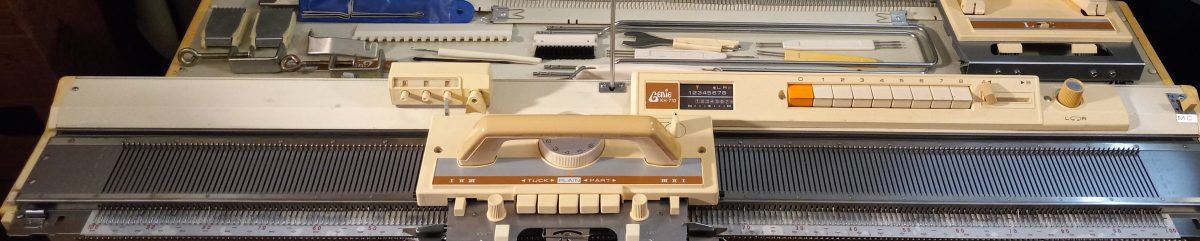
Last updated on January 12, 2024
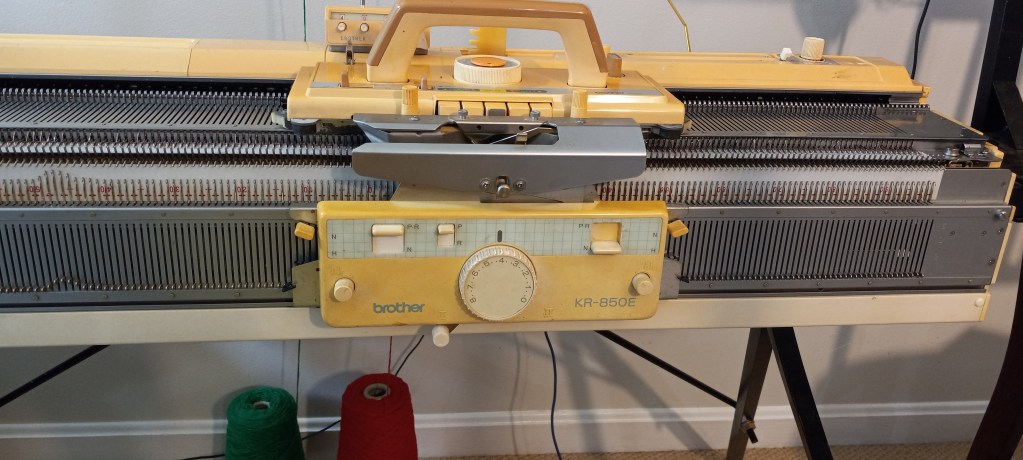
The article below is dedicated to the ribber refurbished for a customer in January 2024. For specifics of Brother KR850 ribbing attachments, read my KM Encyclopedia.
Brother KR850e, tested and serviced in January 2024, underwent all my usual tests: inspecting all needles, cleaning the bed and tools from old grease and lint and testing on all needles (made two hats while doing it – read below). Read in detail the typical steps I undertake while servicing the ribbers. Also, check out the tips on the first tests for your new ribber.
The setup includes all assesories mentioned in the manual. The hard copy of the manual is included as well. The machine will also come with its original box and Styrofoam pads.
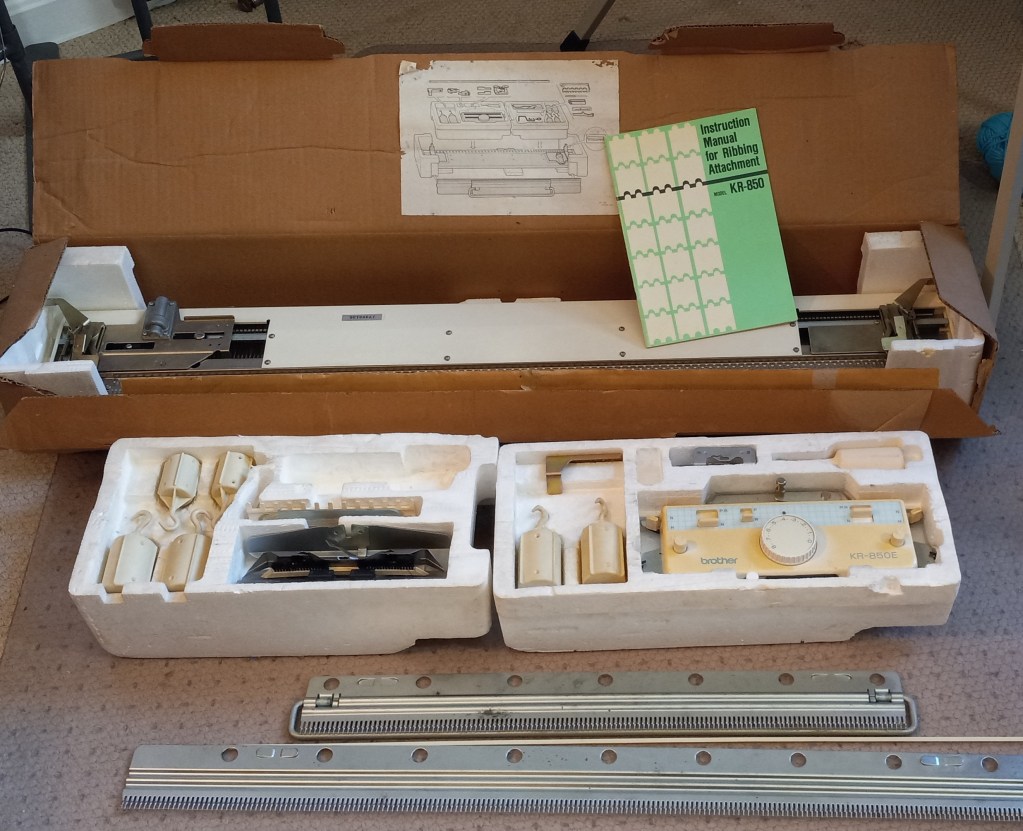
Although the Styrofoam linings have seen better days and are a bit dusty but still service it protective purpose.

The functioning of the carriage was checked by knitting a 1×1 rib swatch on just 20-30 needles and on a full bed (all needles with the exception of 2 and 3 needles on each side for the ease of knitting). These tests were performed with 3 different yarns: thicker acrylic with some polyester (not as stretchy), thin wool-containing (wool is sometimes staticky) and thin 100 acrylic yarn (probably most stretchy out of the latter two). Watch the full video of theses tests in my YouTube channel.
All needles were inspected very thoroughly before and after all the tests to ensure no bent ones and no sticky latches.
Even on a full bed, the carriage-setup (ribbing carriage, connecting arm and a main carriage) was very easy to move – watch the video: I could move it with just one hand. (but of course it is always a combination of yarn, tension and potential static)
Both swatch knitting and knitting on a full bed (1×1 rib, in two different needle configurations to ensure all needles got tested) showed excellent performance from the ribber and not flawed stitches.
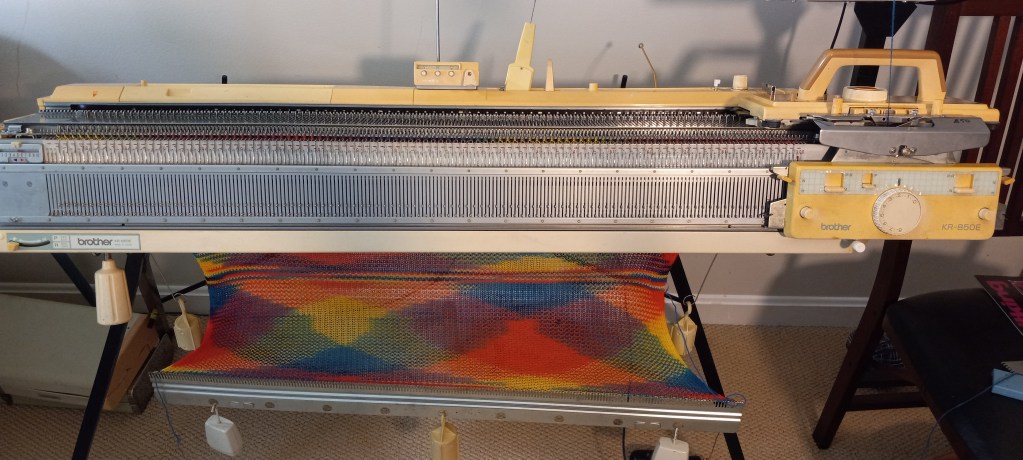
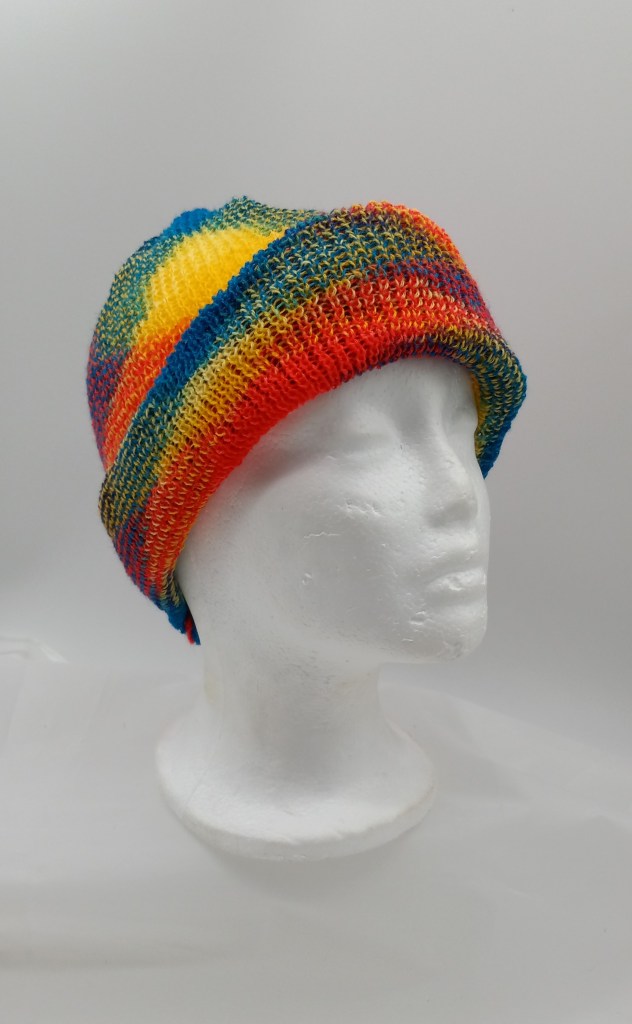
Below are the items I knitted while testing this ribber. They are going to the local charity.

Now about the imperfections and minor flaws of this ribber:
1. Couple of large barrel weights have small cracks.
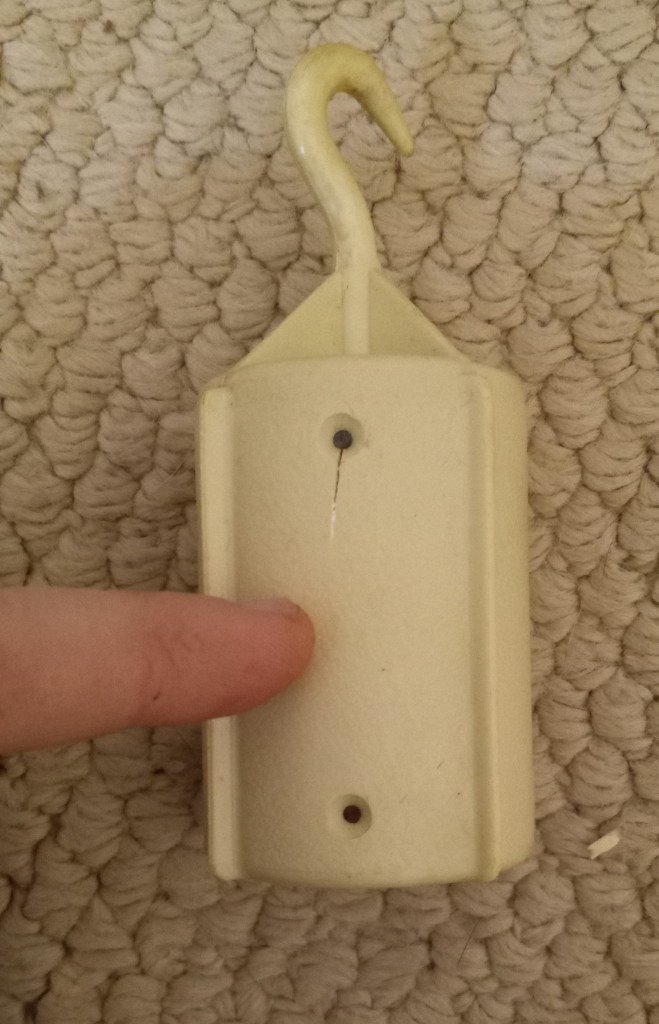
2. Some of the tools (especially with plastic components) have visible scratches (too many to list here).
3. Cast-on combs have some minor rusty spots (even my brand new (but old stock) cast-on combs have some black rust spots. Probably due to age.) I covered the spots with corrosion stopping oil, which offers temporarily protection from further rust. Despite these cosmetic imperfections, the combs are smooth and function well: the yarn did not snag on them.
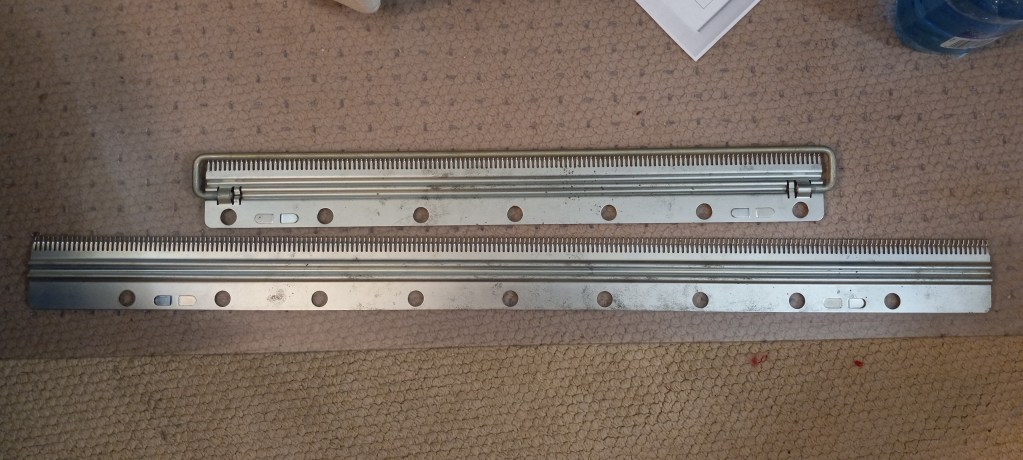
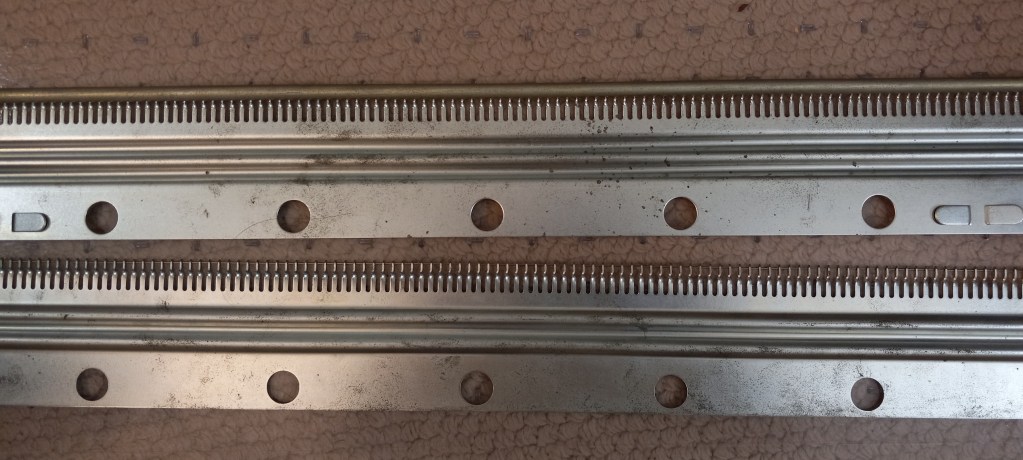
4. Connecting arm has some minor rust spots as well (they might not show well on the pictures below because they are very small).
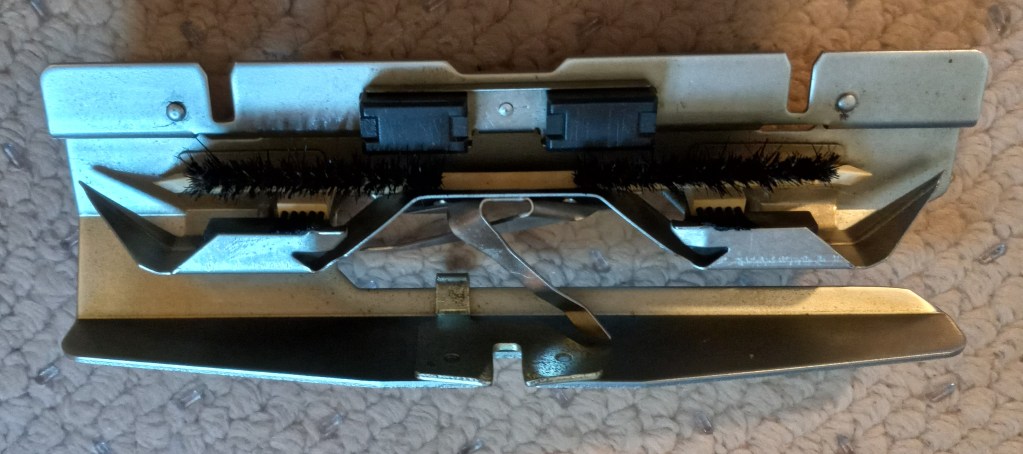
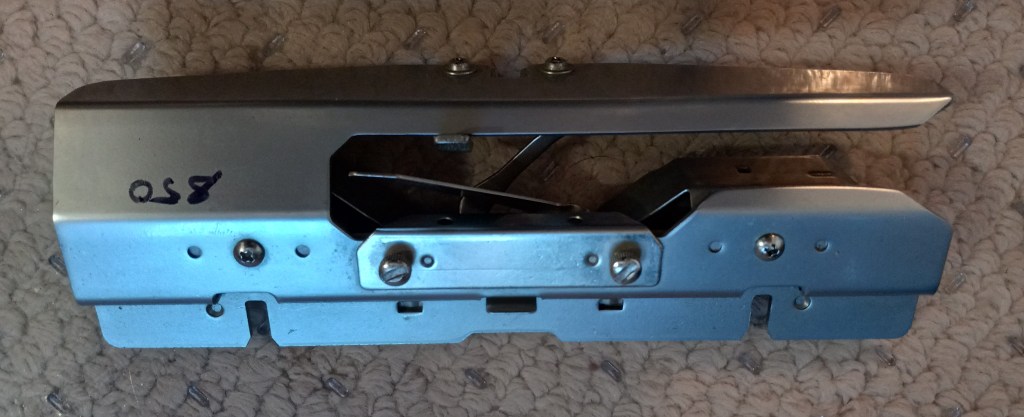
5. The carriage has some minor rust spots too as well las some minor scuffs. But under-carriages looks very nice. Plastic components of the bed and the ribber itself show typical yellowing/aging from the exposure to the sun light.

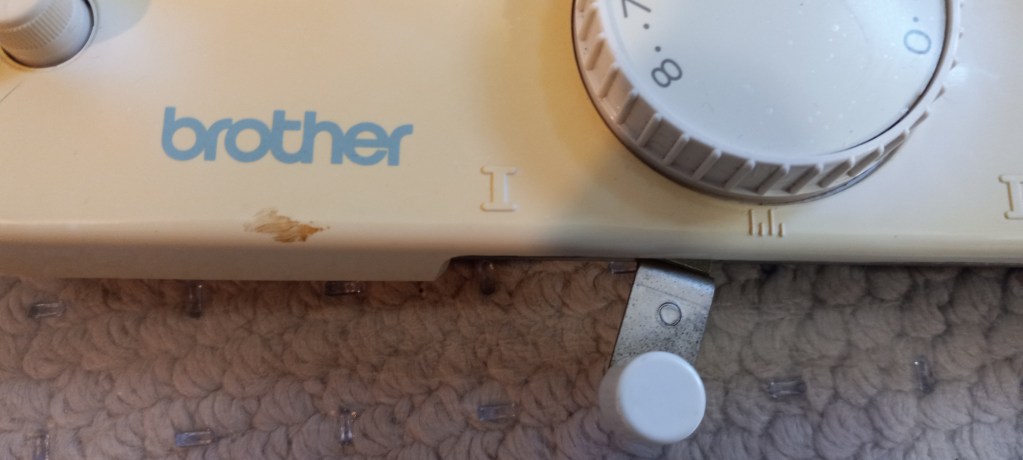
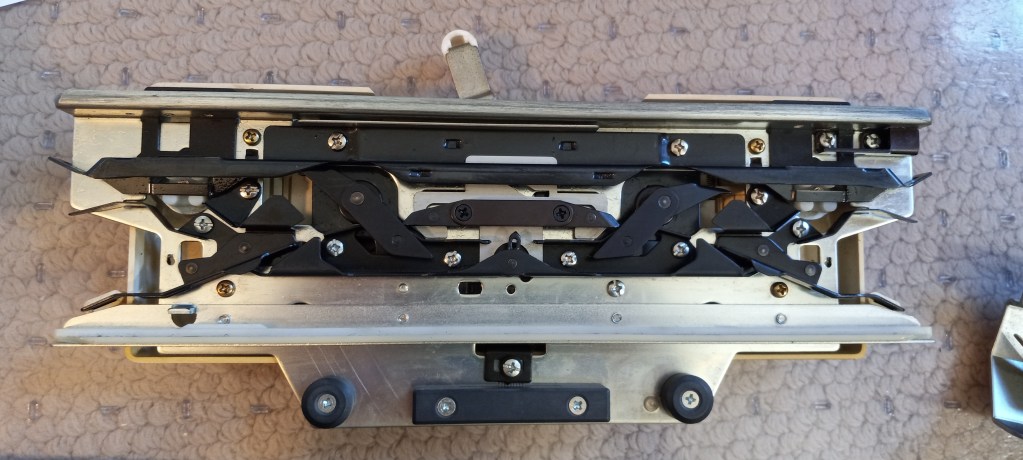
The ribber worked well even with these rust spots, so I do not anticipate any future issues. Honestly, almost all ribbers that come to my possession have some sort of rust issues. Since the quality of the metal on the parts for the vintage machines is much better than the quality of the metal on the parts for modern machines (Chinese knock-offs/copies), my strong preference still goes to the vintage parts (even with minor rust) than to more modern new/old stock parts. Also, extensive polishing/rubbing (with the goal to remove rust completely) damages surrounding yet-uncorroded surfaces, making them prone to corrosion. So, if i do not see a lot of issues with the moving levers and knobs as well as with static (or static is manageable), I only gently polish the rust and cover it with protective oil. More tips on rust are in my other article.
Bottom line: since the sinker plate and the carriage did not have any issues, I did not replace them. With Regular oiling and wiping and storage in dry place, these parts will serve you a very long life. I did not have any issues with the static as well but I did have a wax in my tension mast just to make sure because of the dry season and because my shop is right by the fire place room (dry air causes more static).
Despite all these flaws, the ribber worked well. I used all the assesories and tools that will be included with this ribber.
Happy knitting! Do not forget to use the tips on how to learn to operate new-to-you ribber to avoid frustration and damage to new-to-you ribber.
