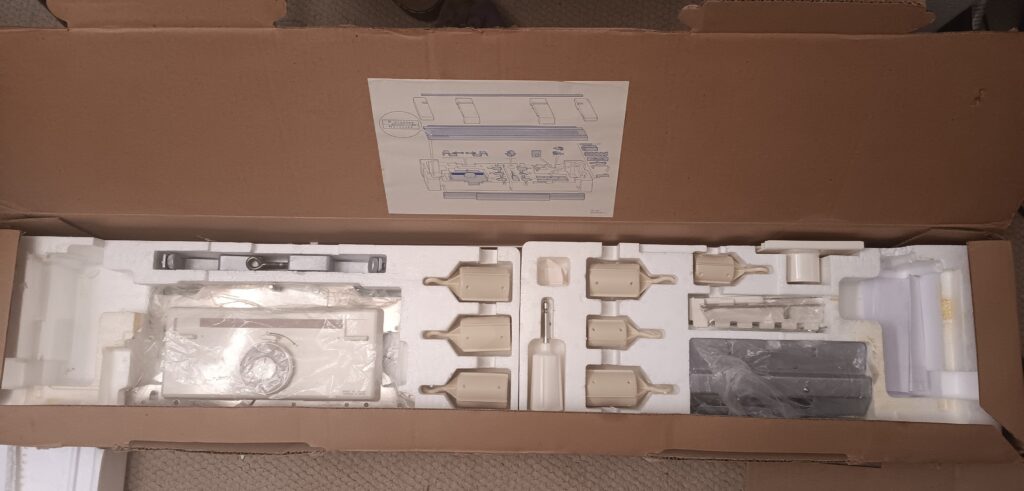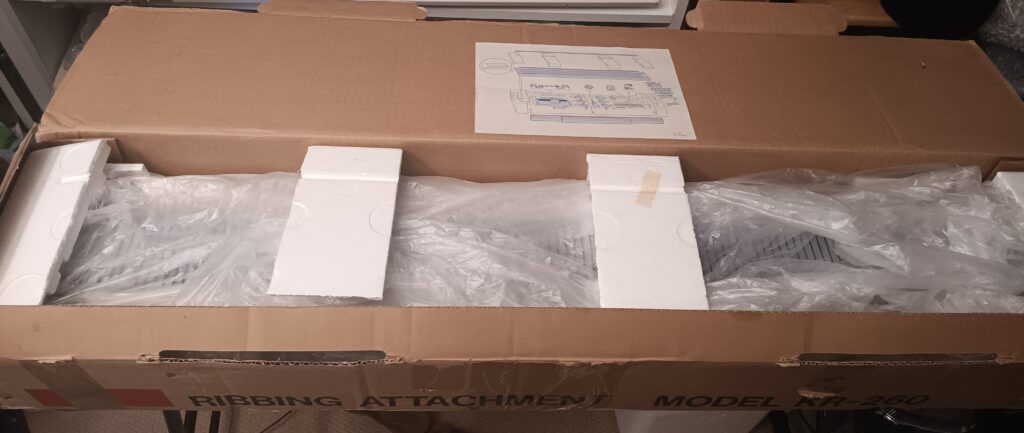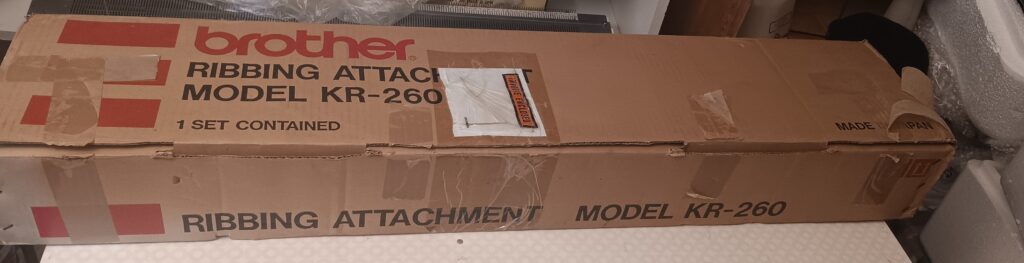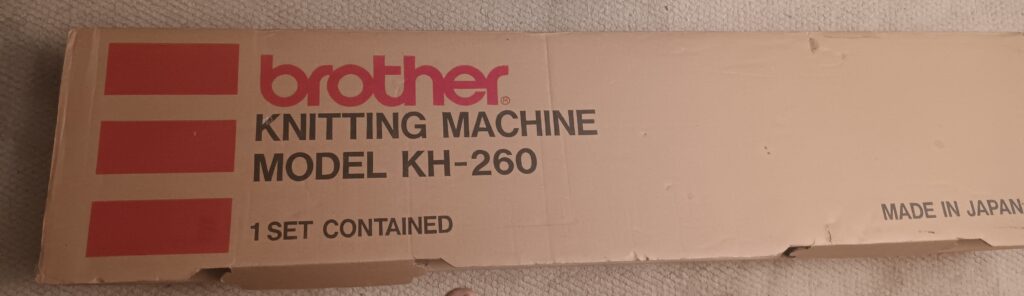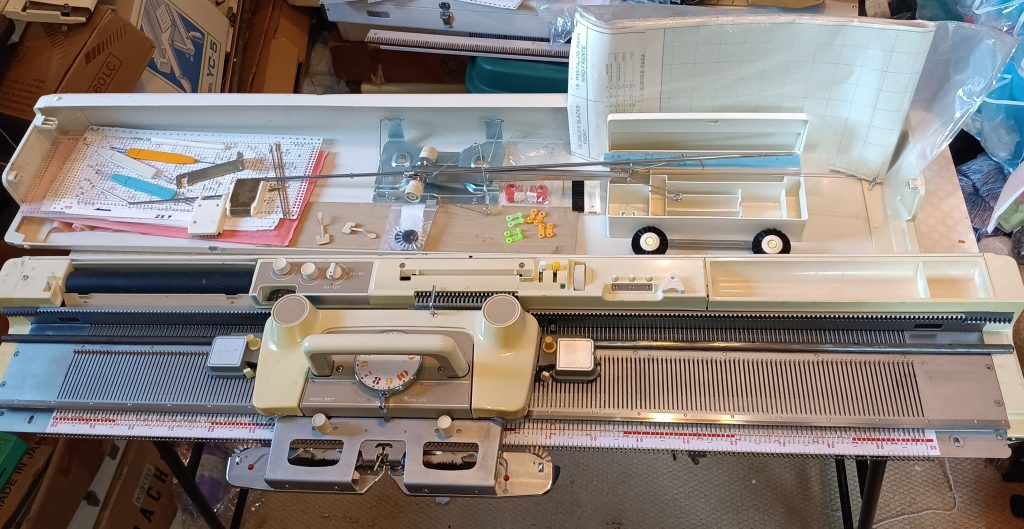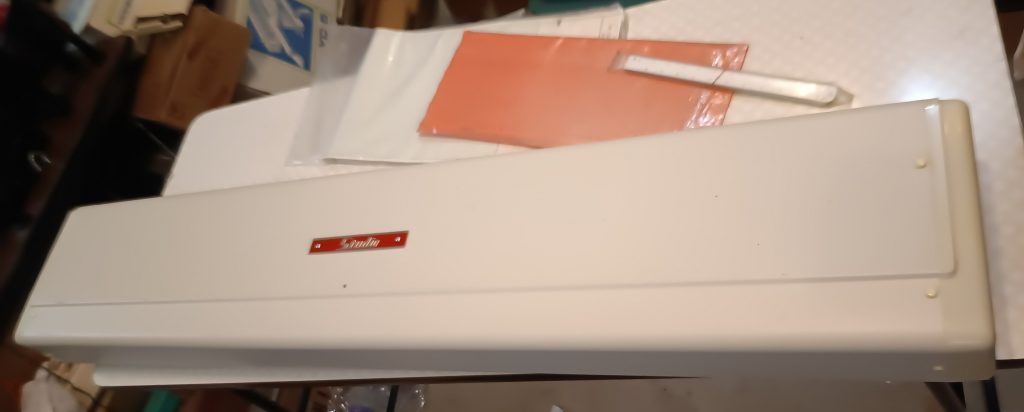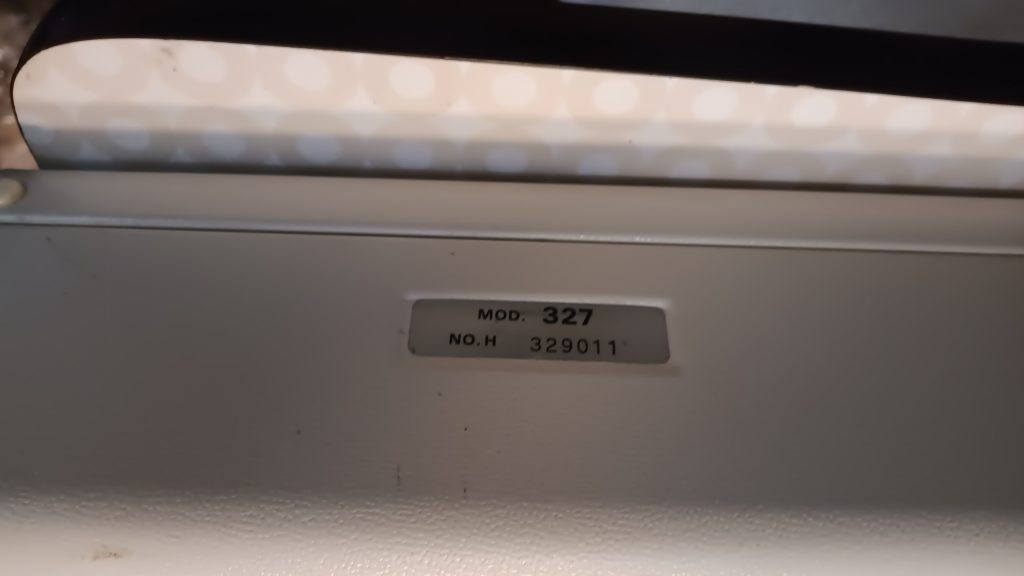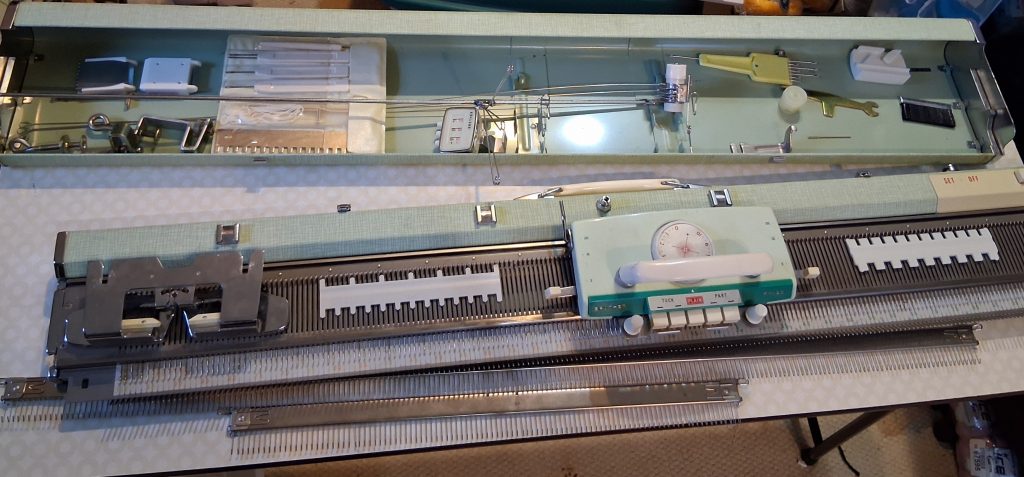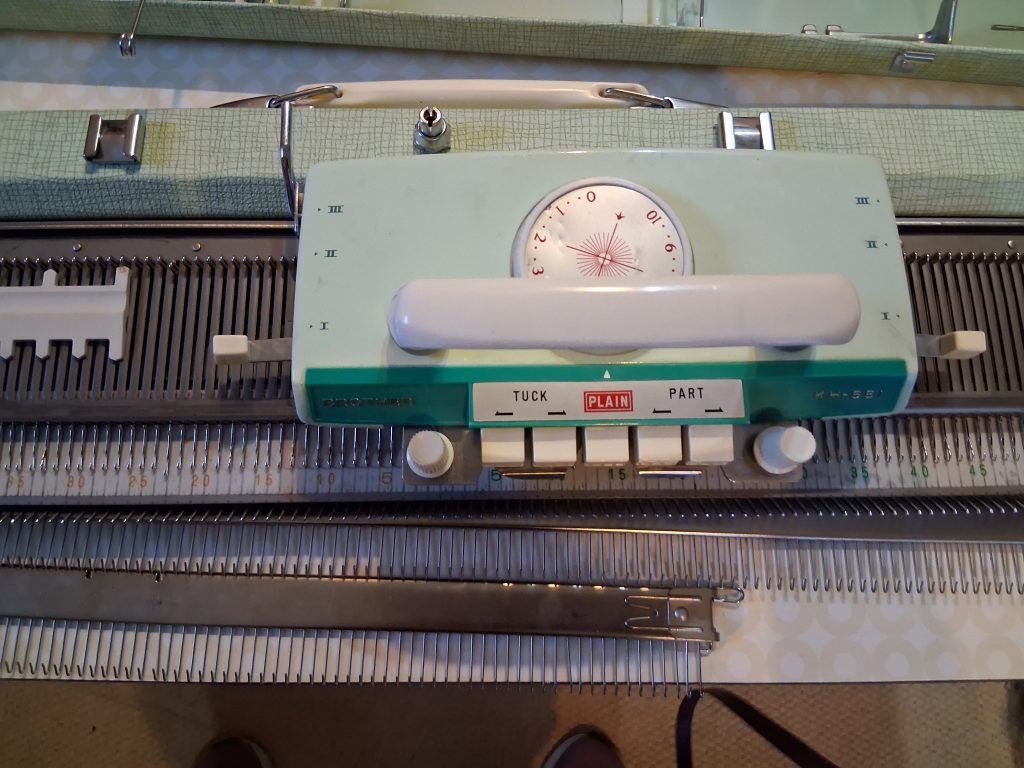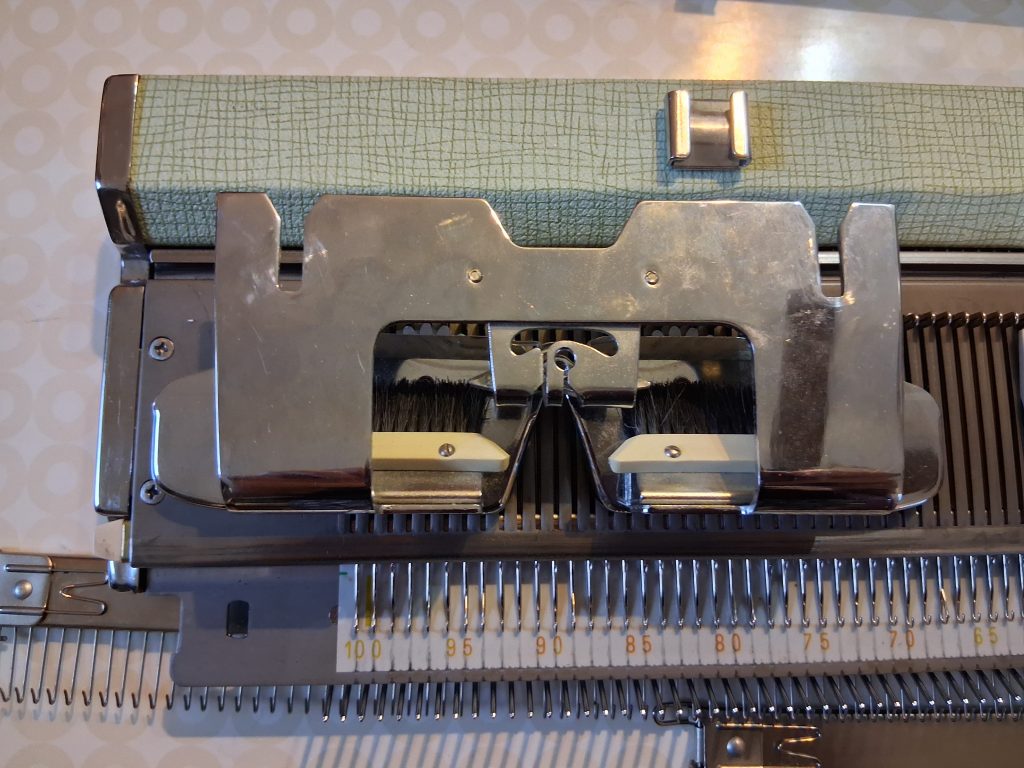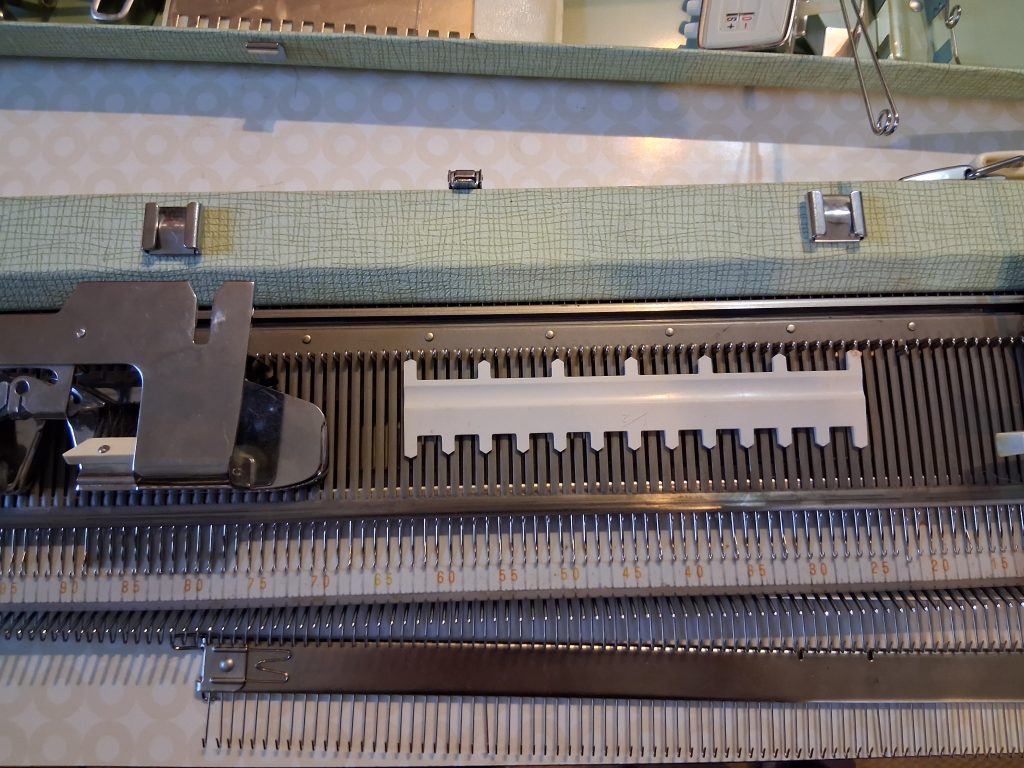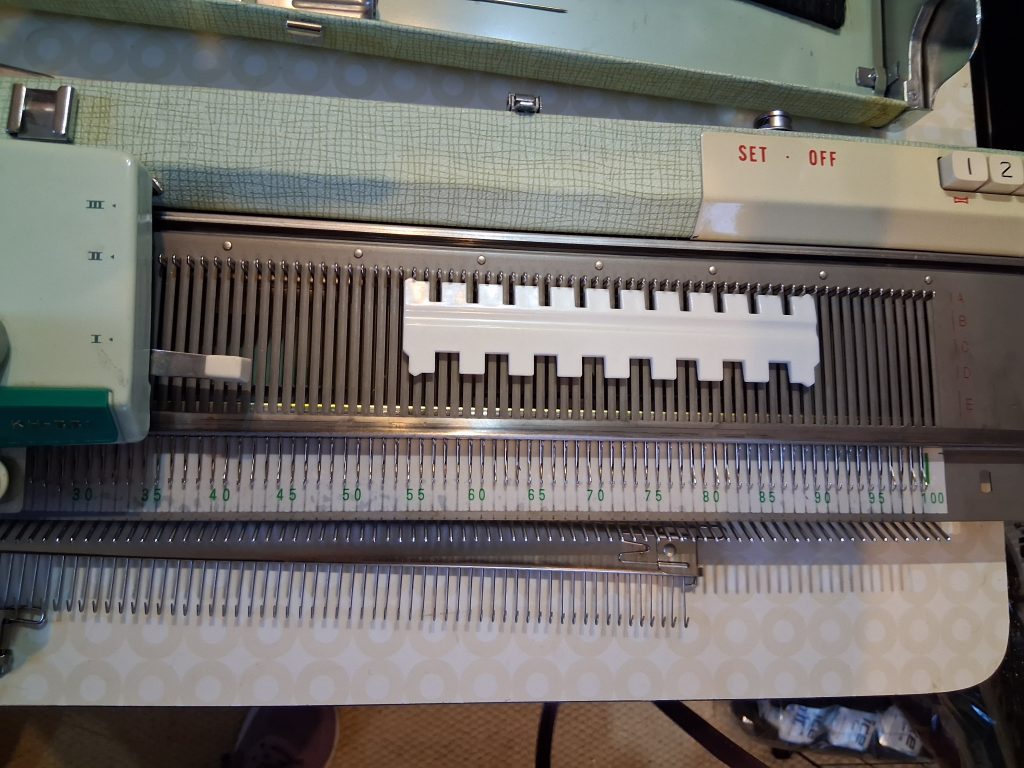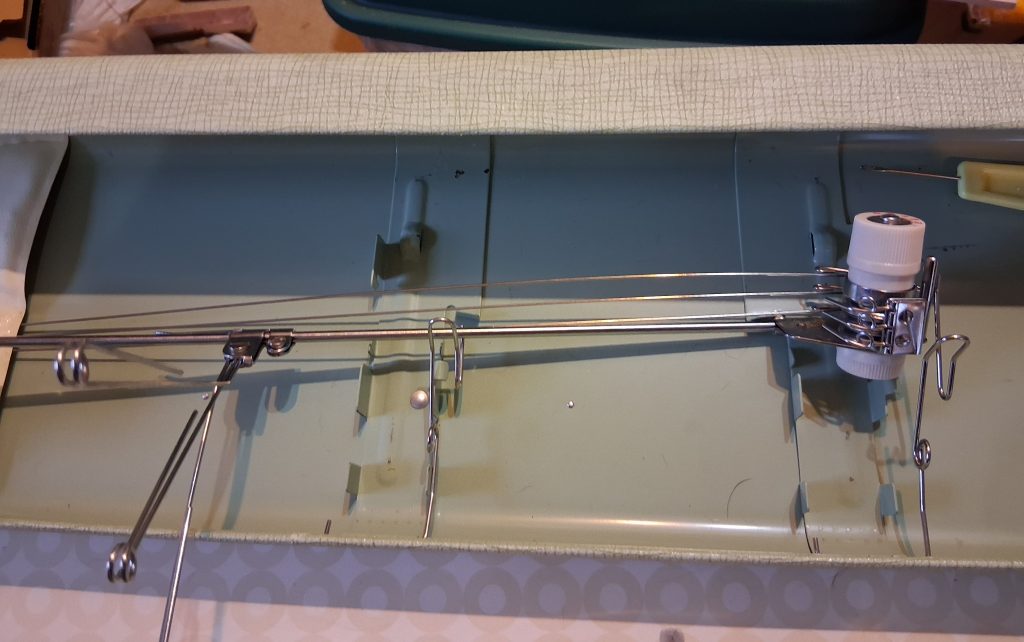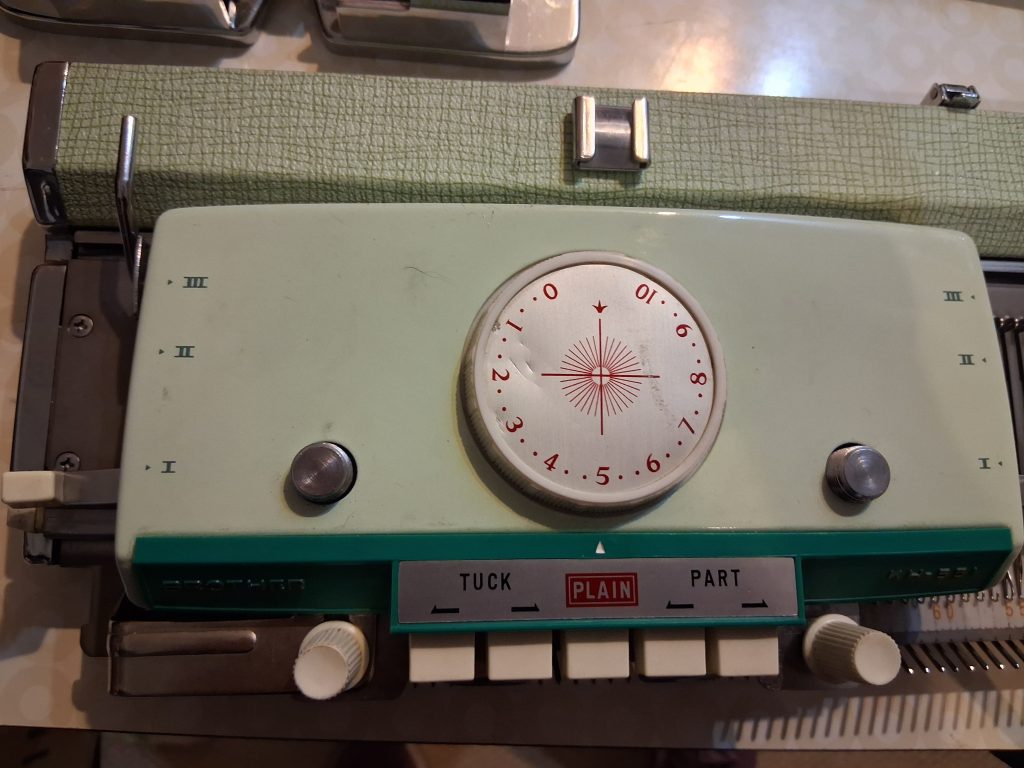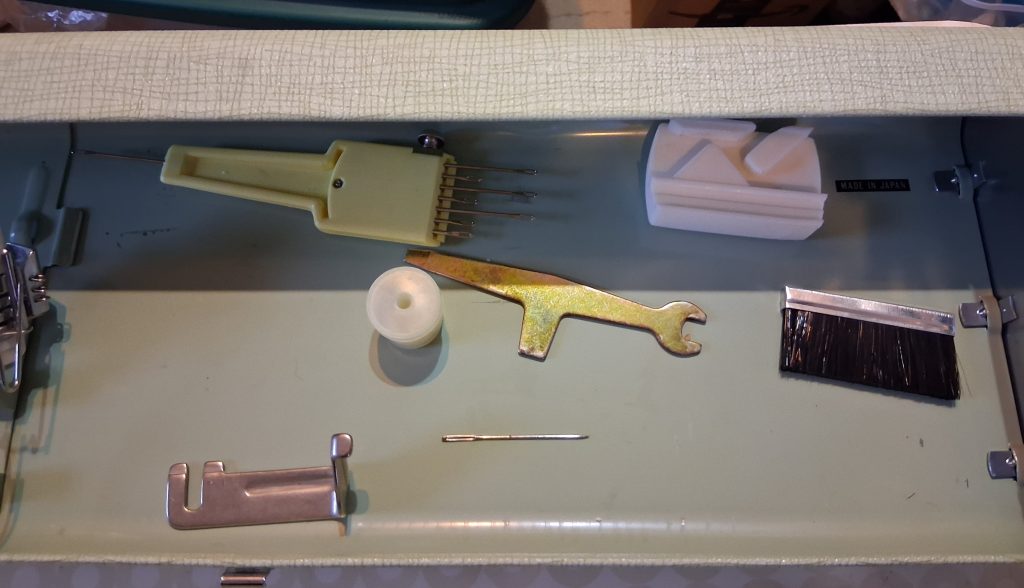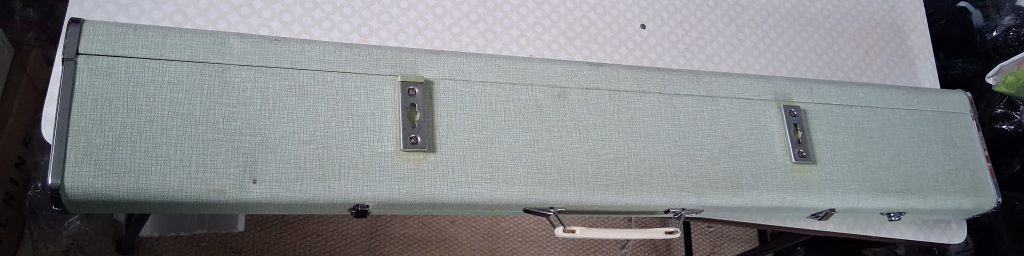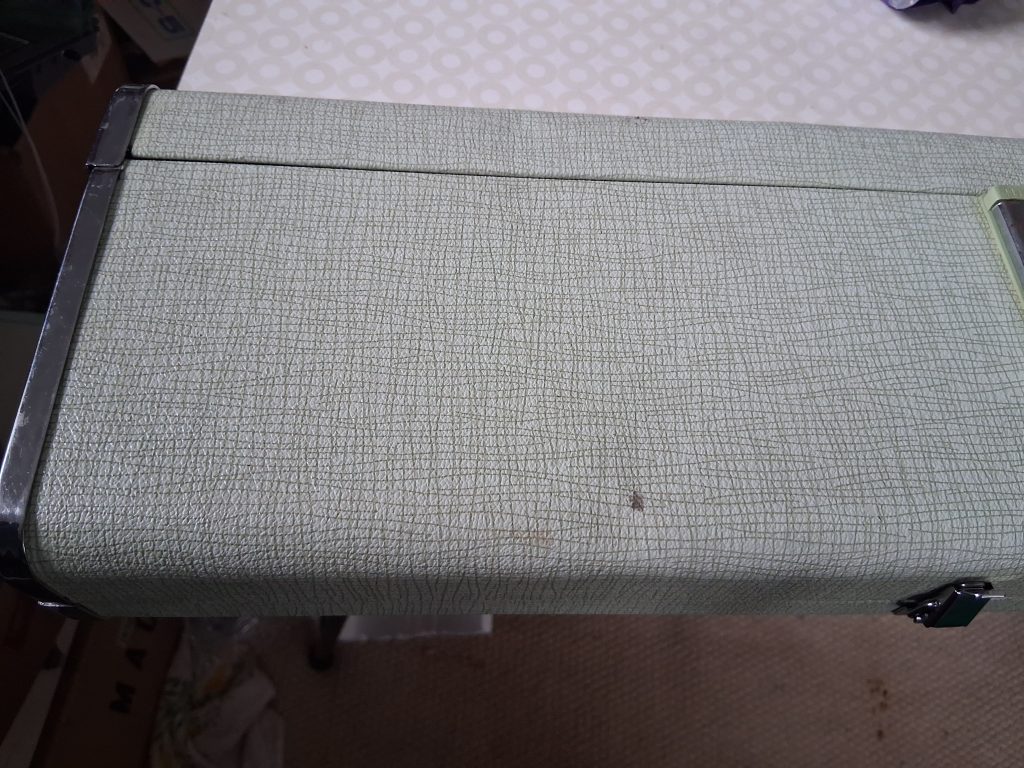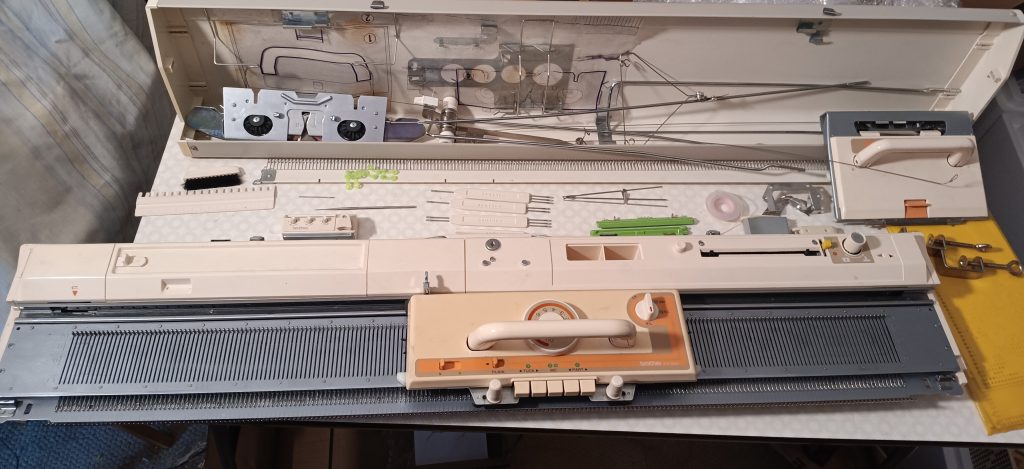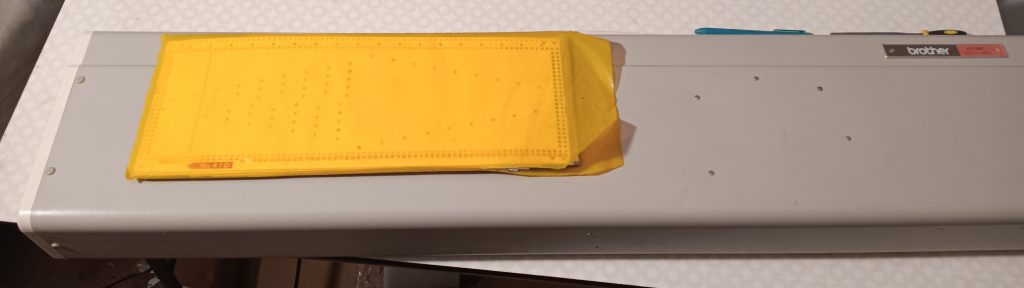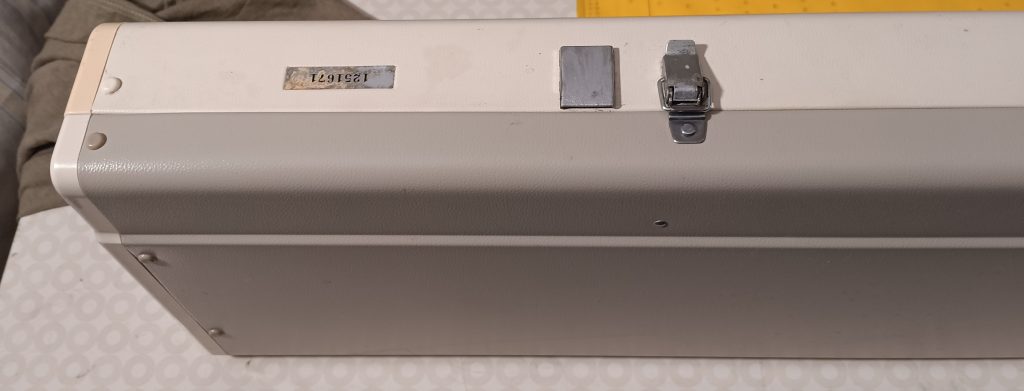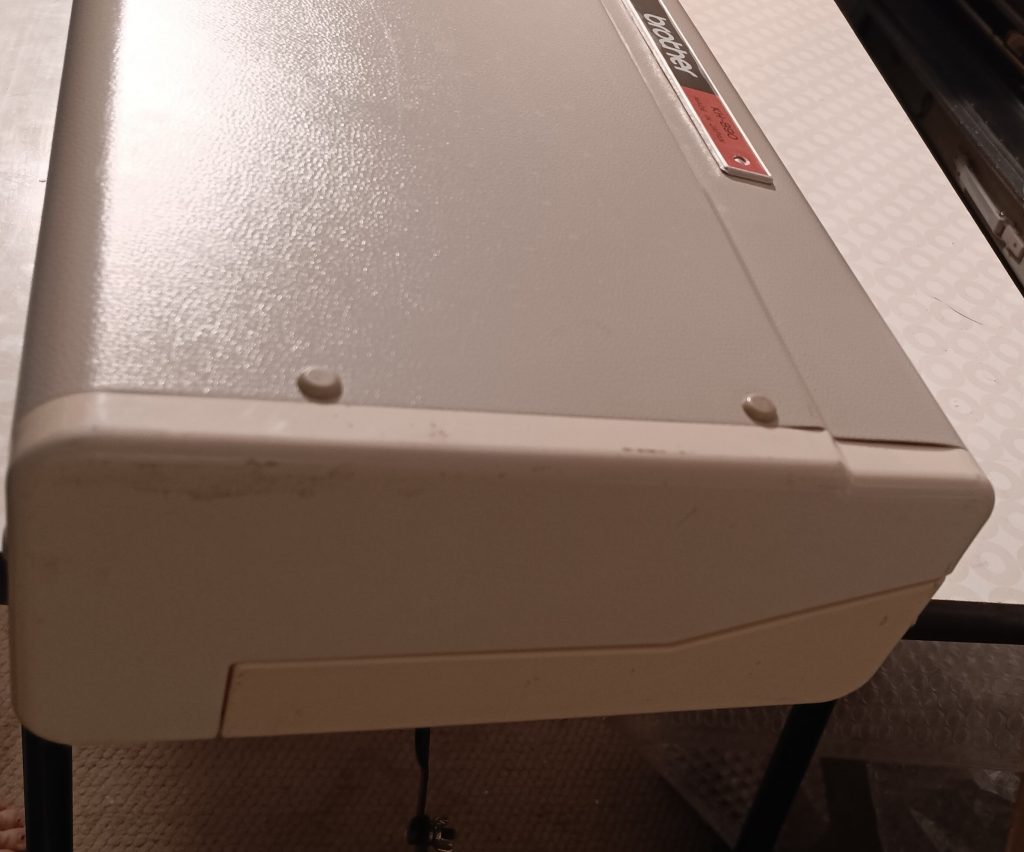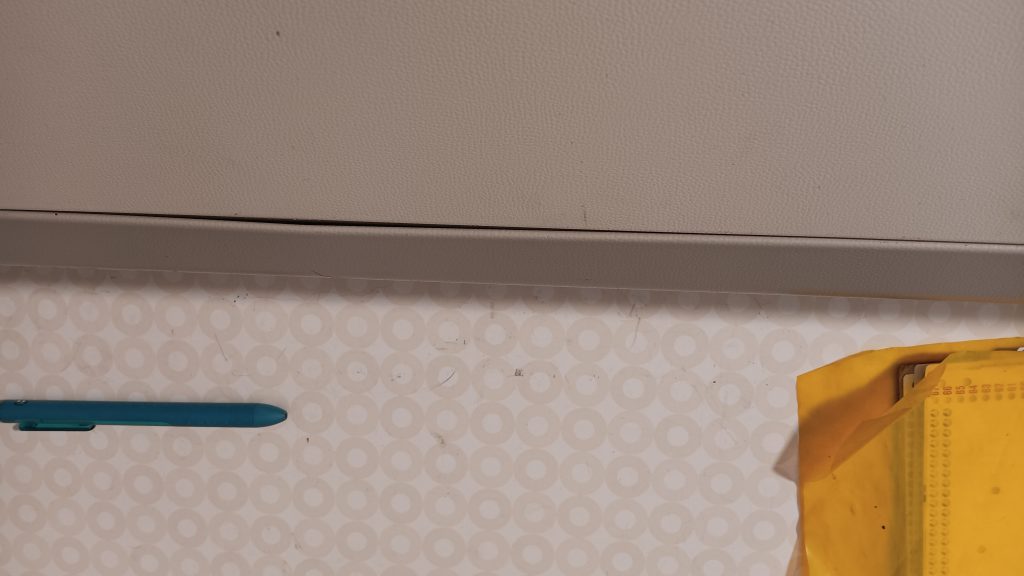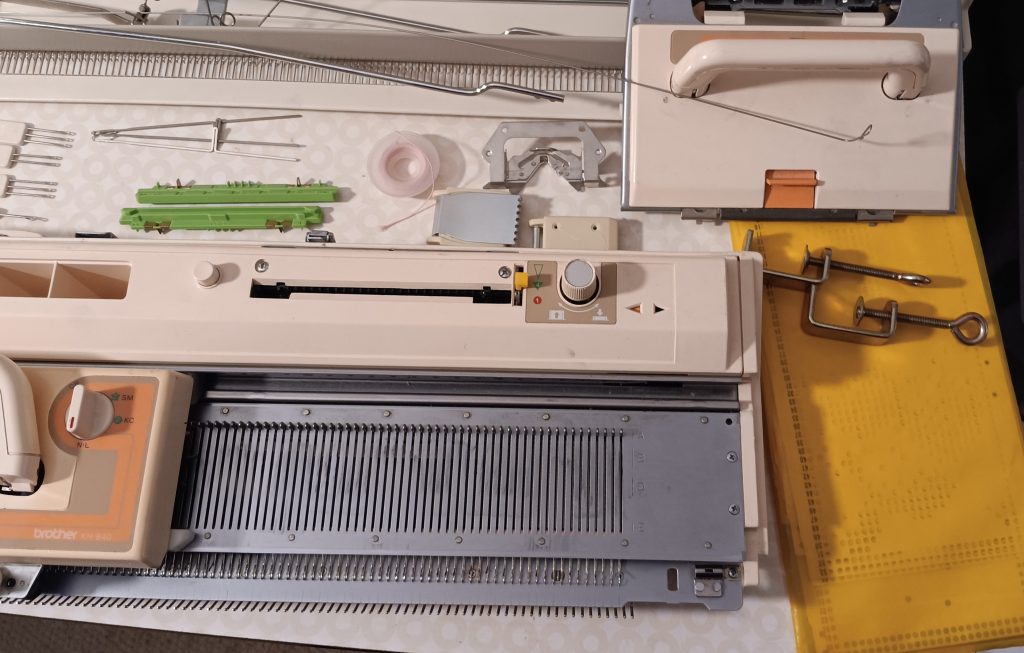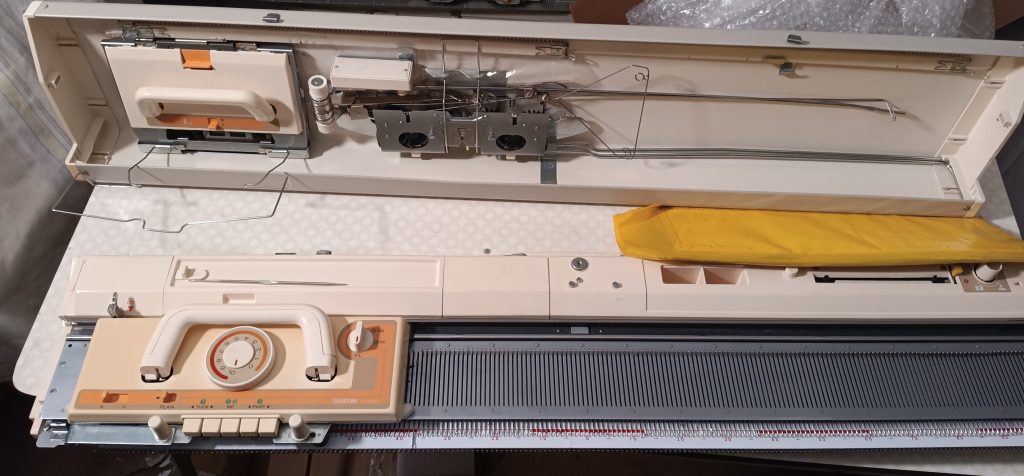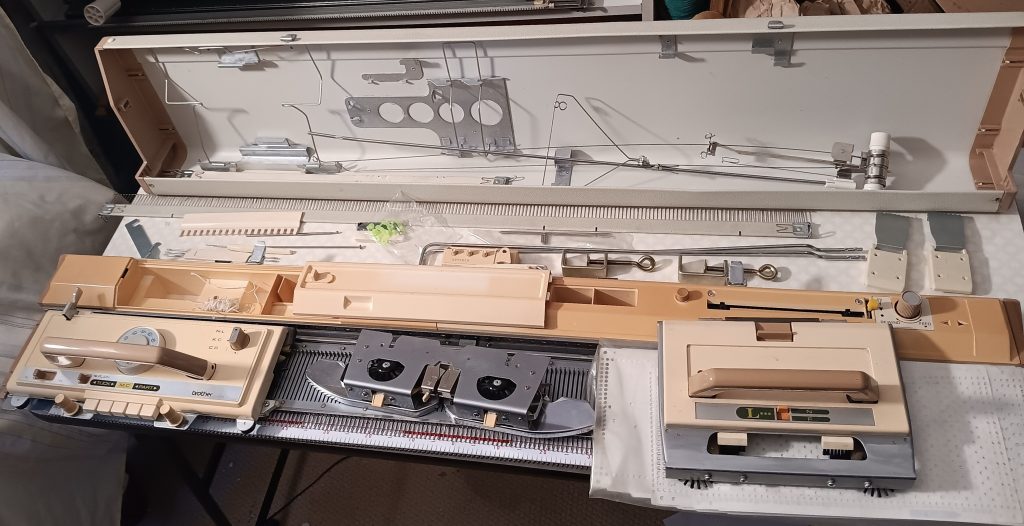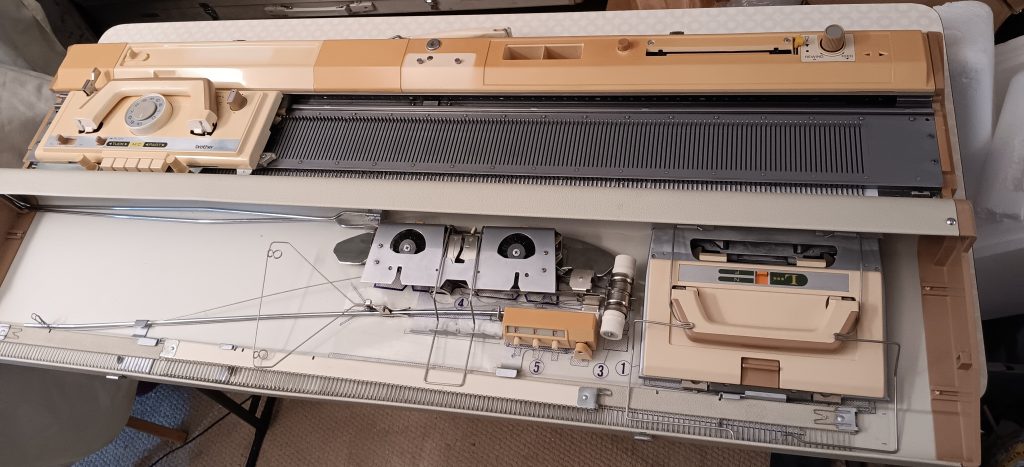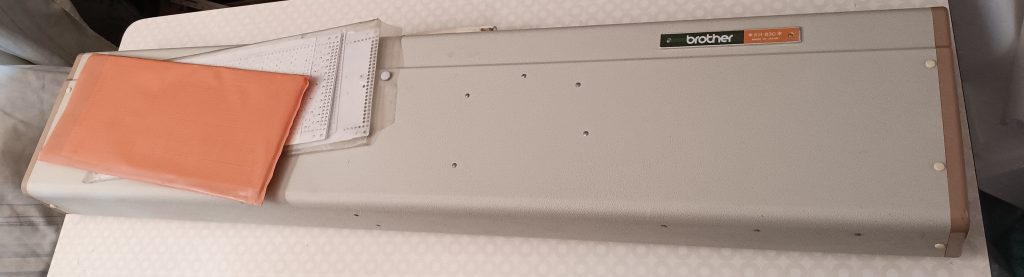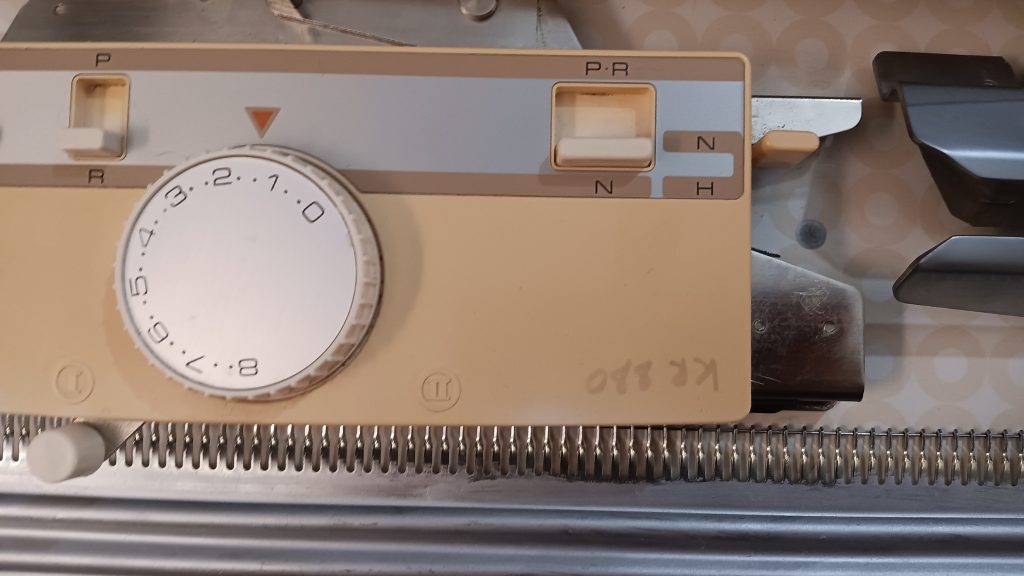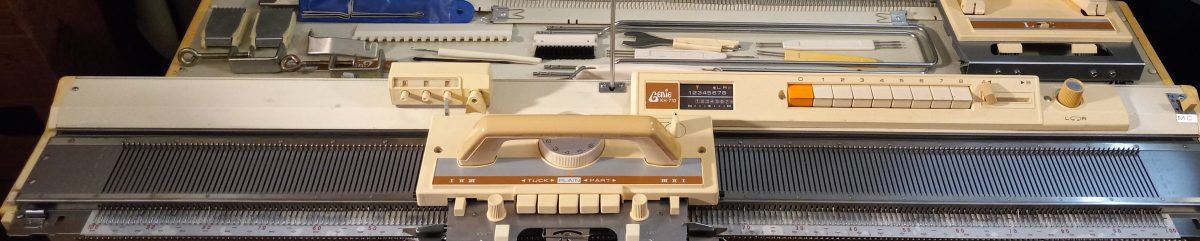
Brother KH260, especially with a matching Brother KR260 ribber, is a highly sought-after setup. Read more about the wonderful Brother KH260 knitting machine and KR260 ribber in their corresponding posts in the Knitting Machine Encyclopedia. This post is dedicated to the setup I serviced and tested in August-September 2026.
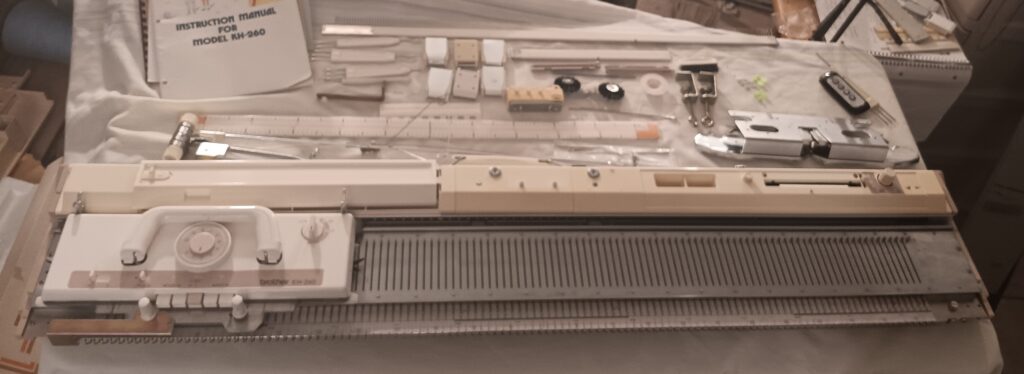
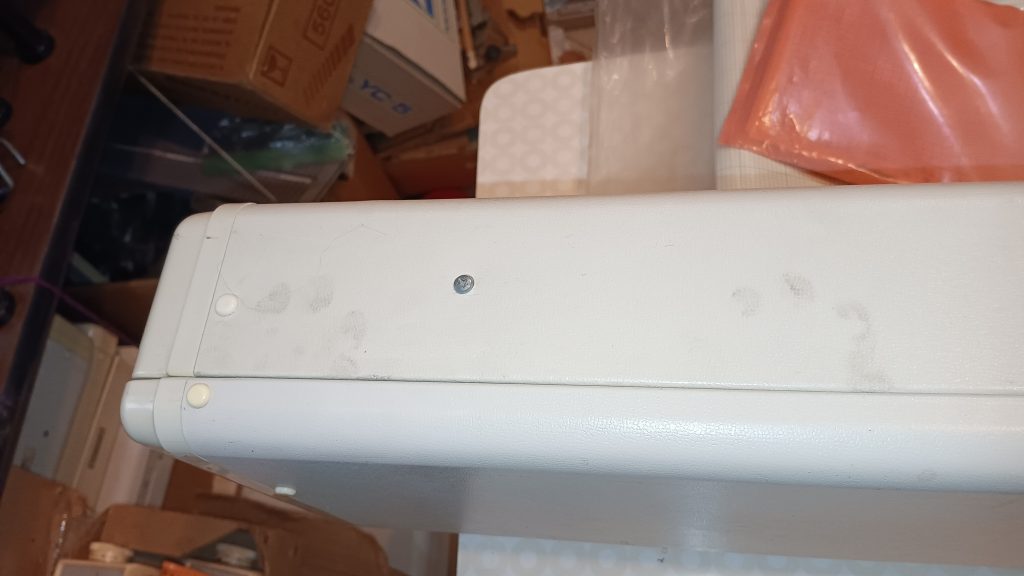
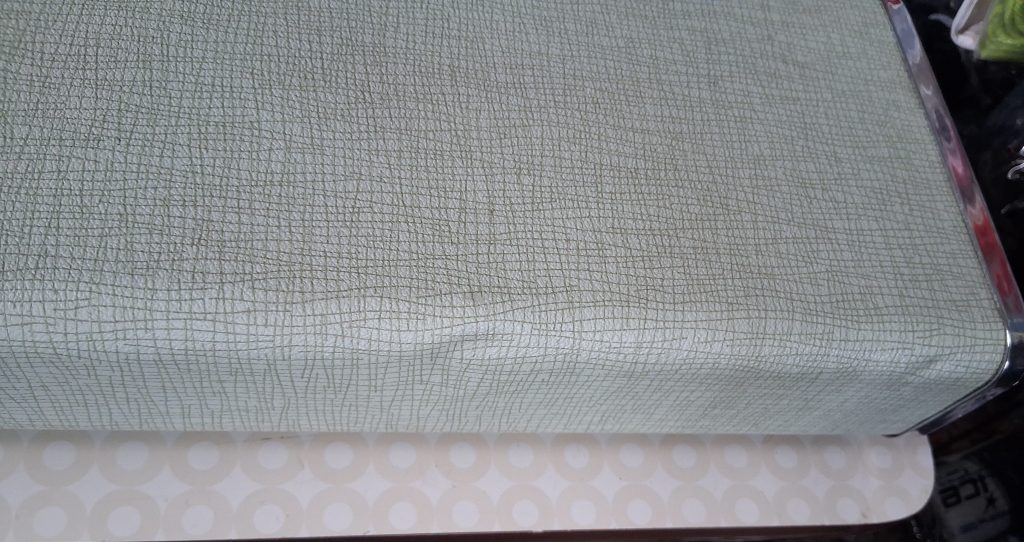
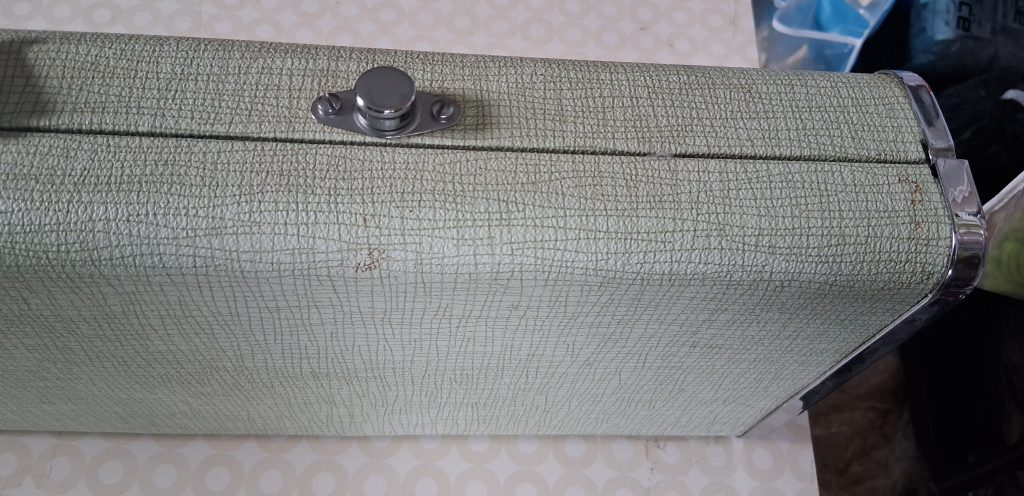
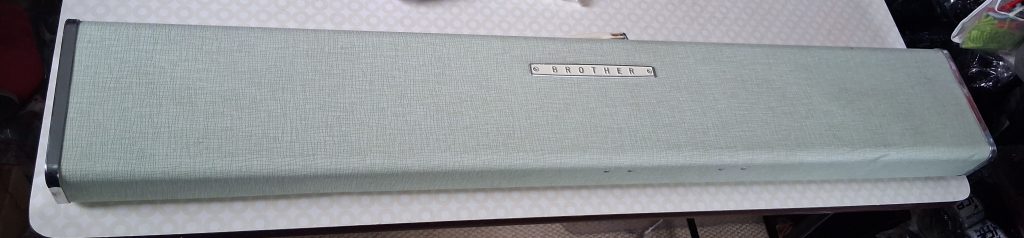
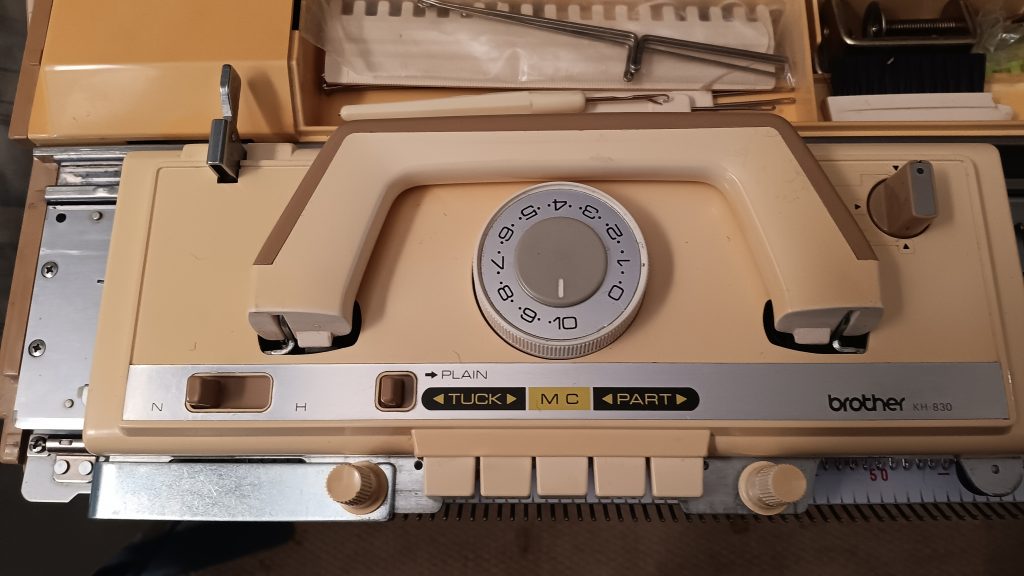
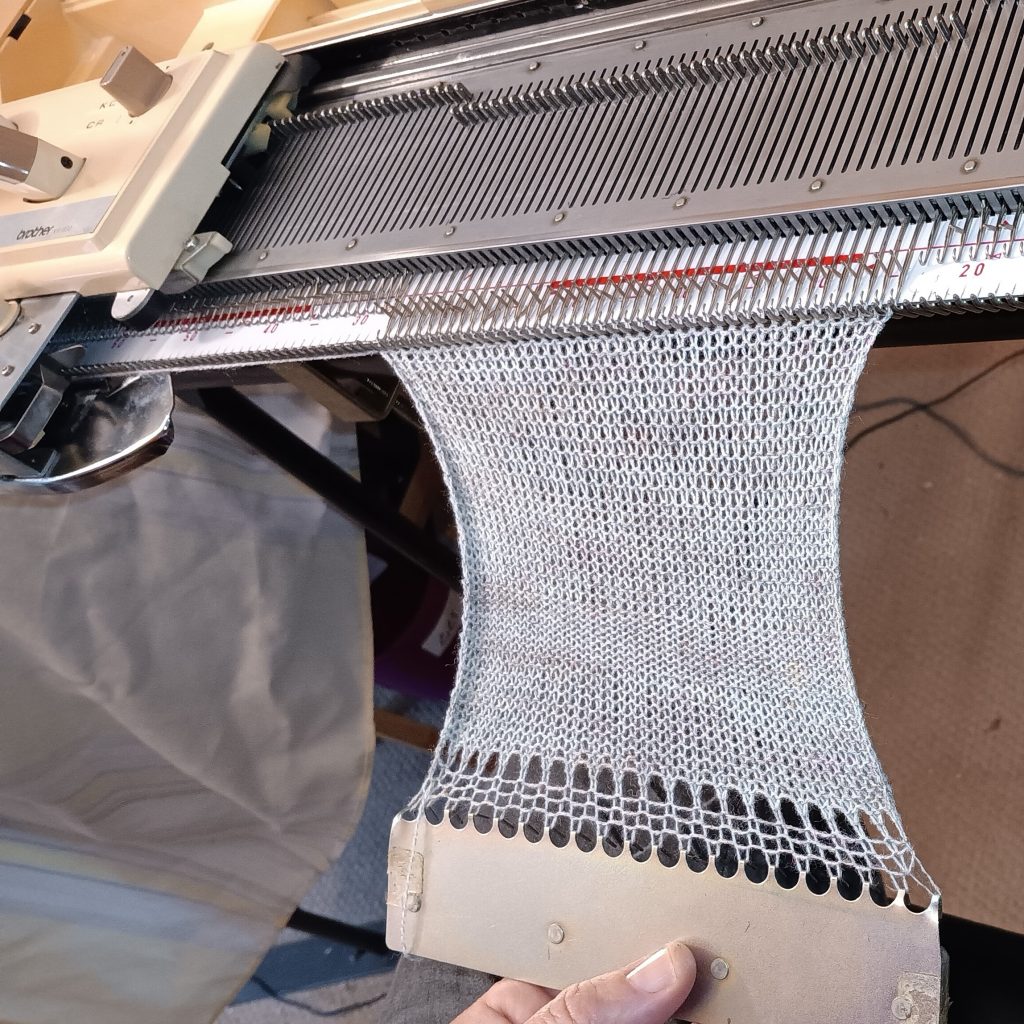
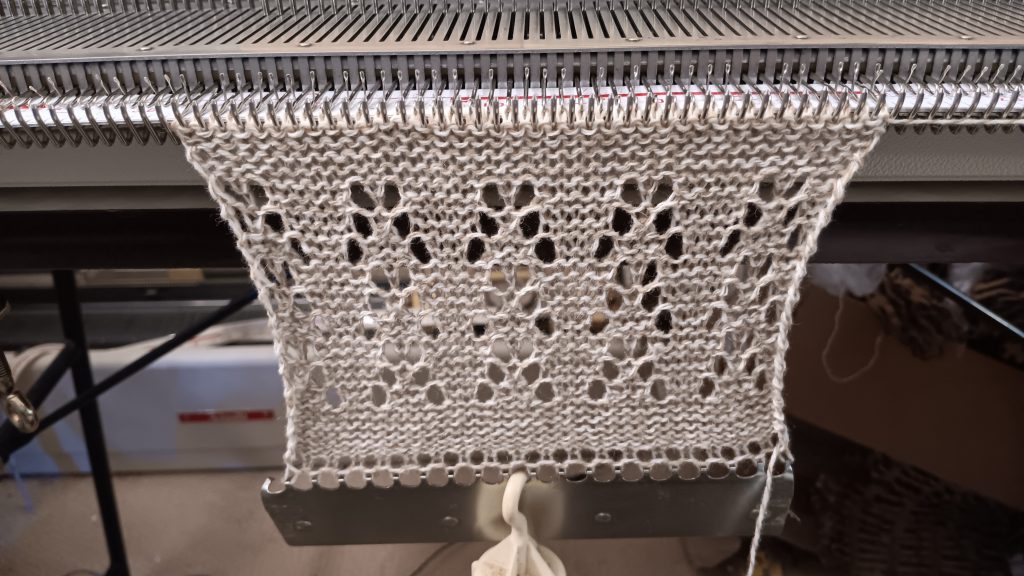
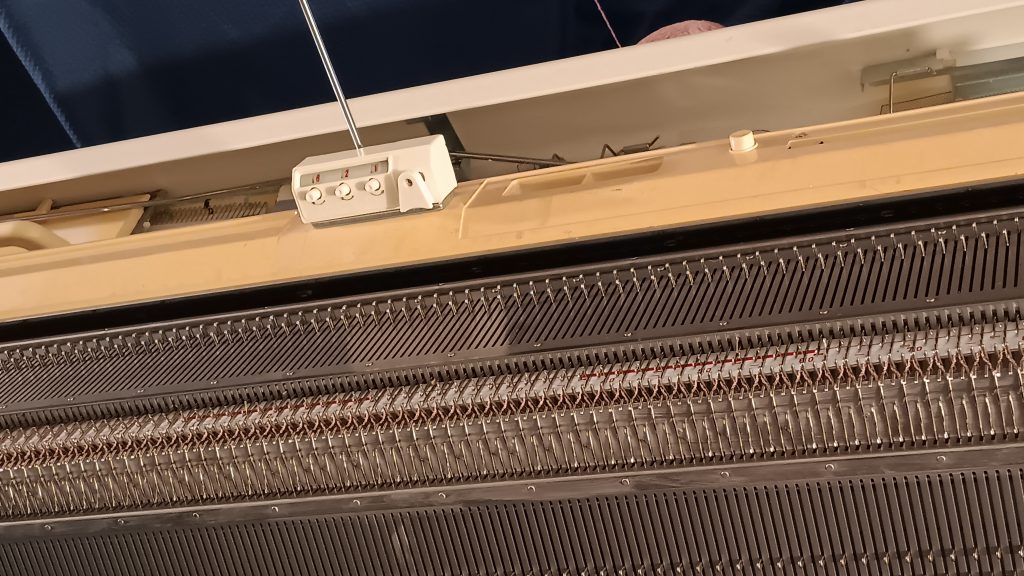
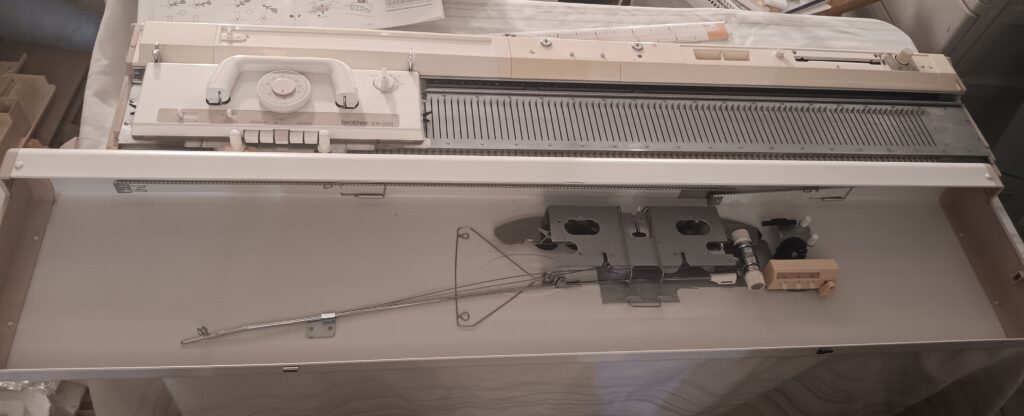
The machine is in great shape and worked very well (see the video of the tests). I tested the machine by itself, with a ribber, and with a ribber+color changer setup. I used three different yarns, two of which were problematic ones (based on my previous experience with them). The machine handled all stitches (stockinette, slip/part, tuck and even plating) all very well. The thickest yarn, as shown in the video, was the light green one. The case and the lid are in great shape too. Despite some minor discoloration (which sometimes indicates rust starting to form), there were no static issues, and I tried several yarns, including difficult ones.
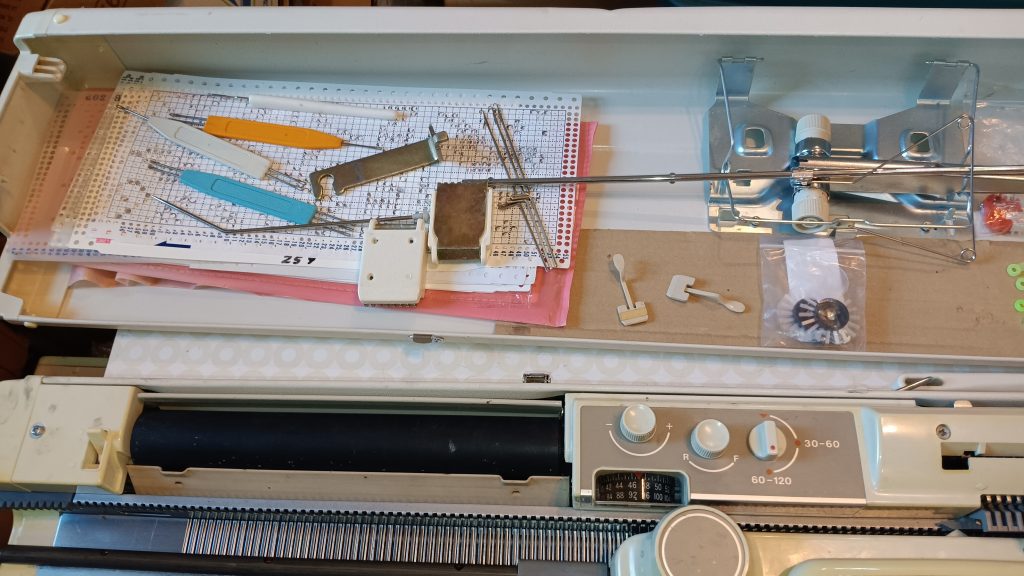
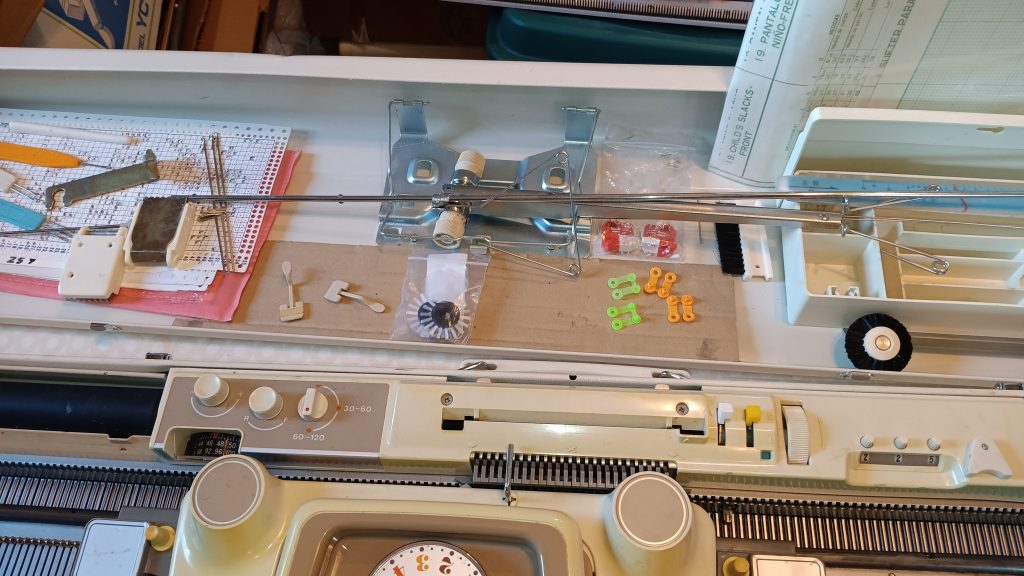
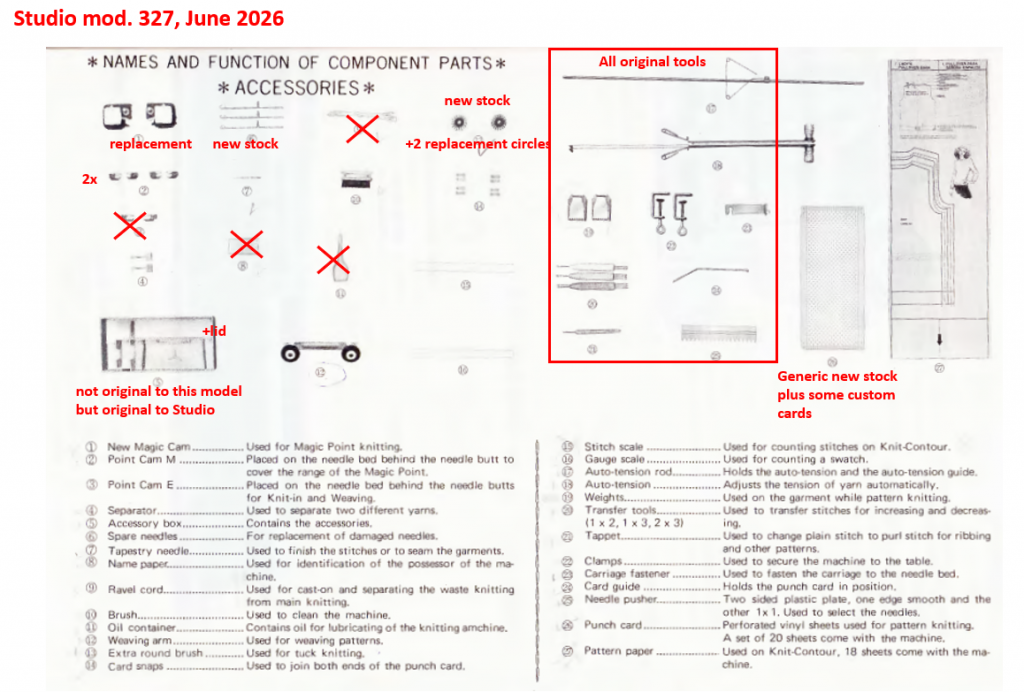
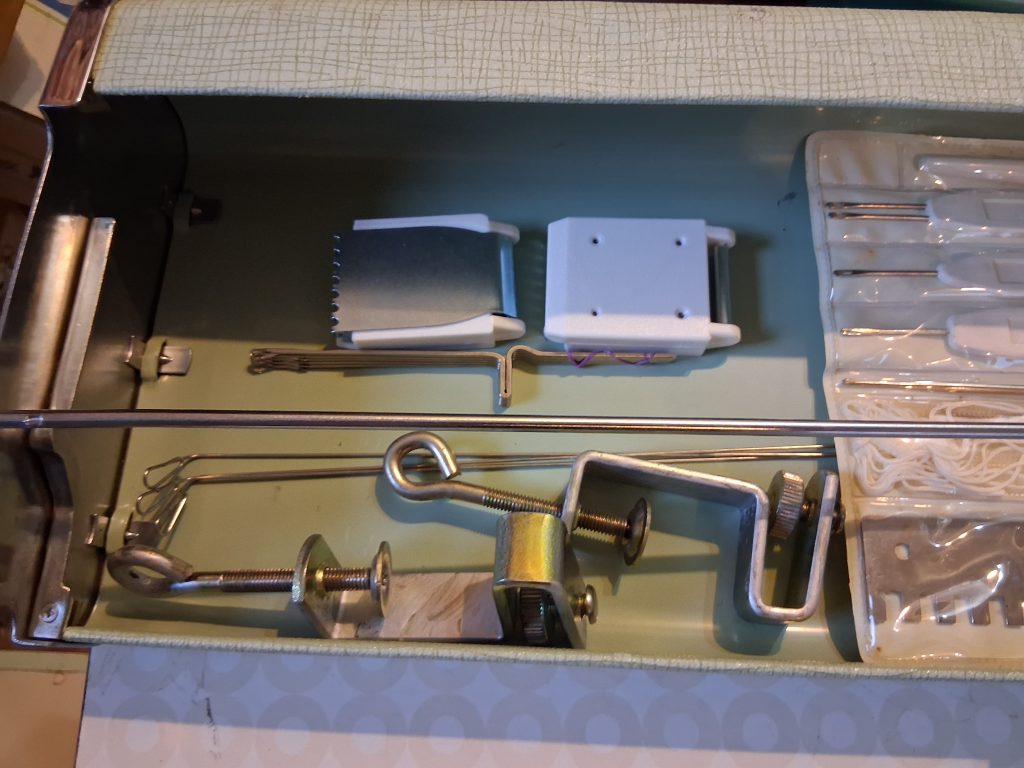
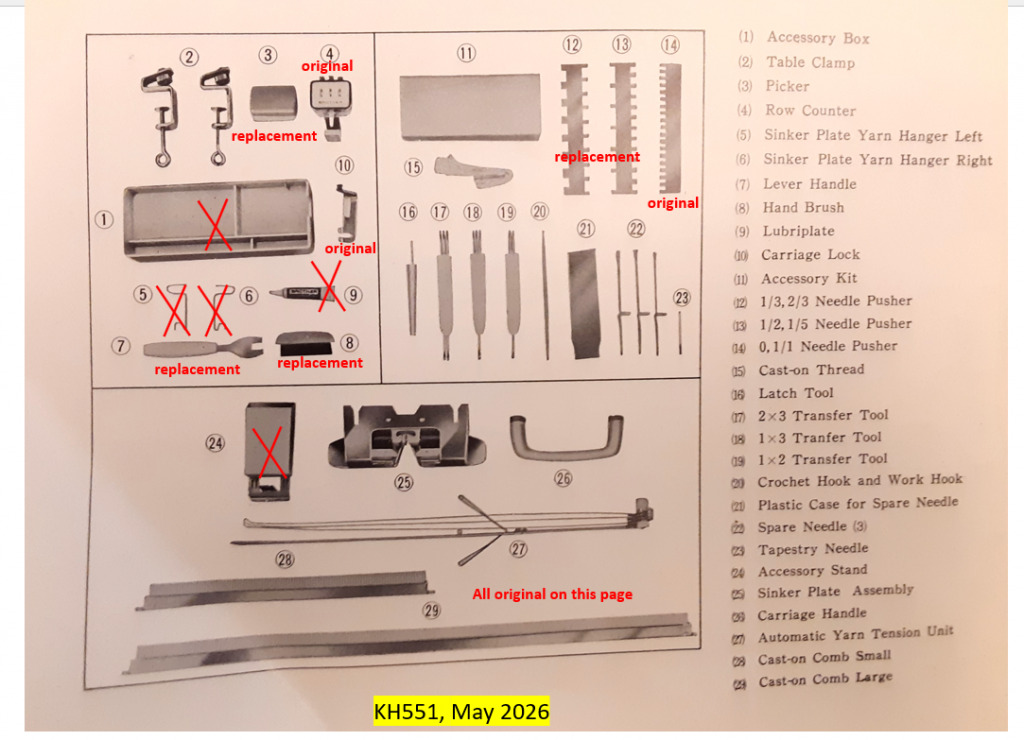
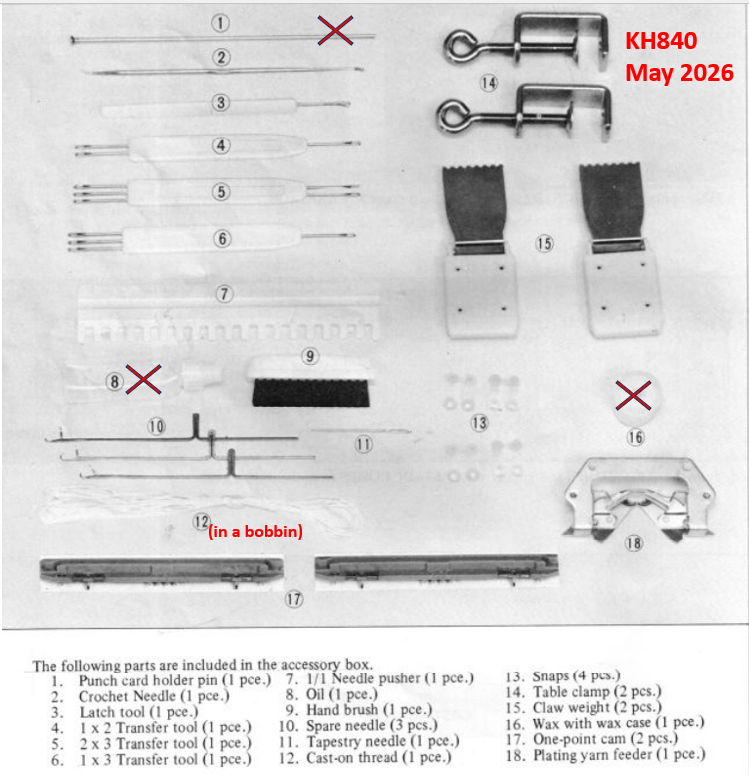
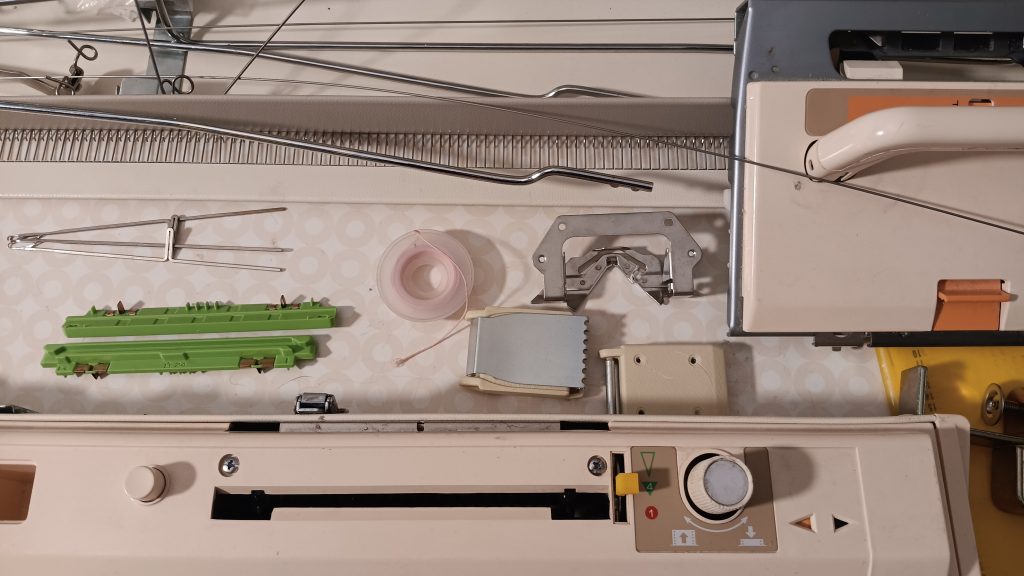
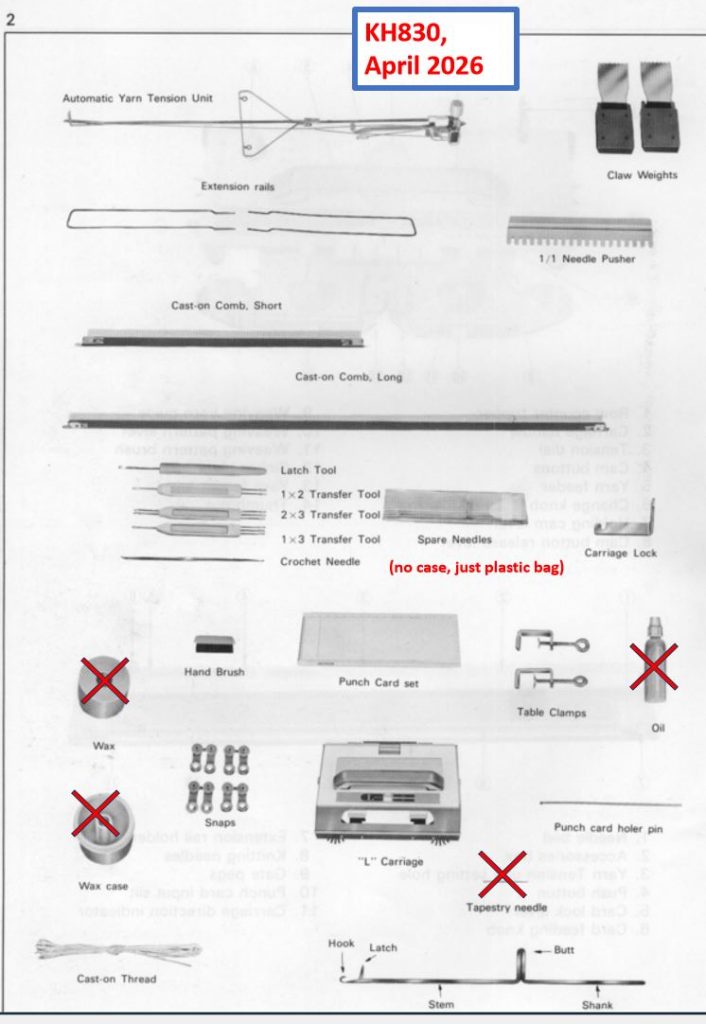
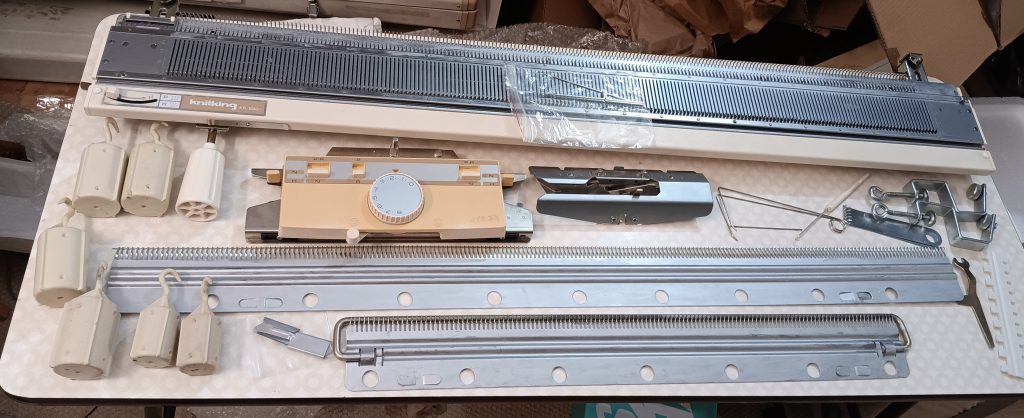
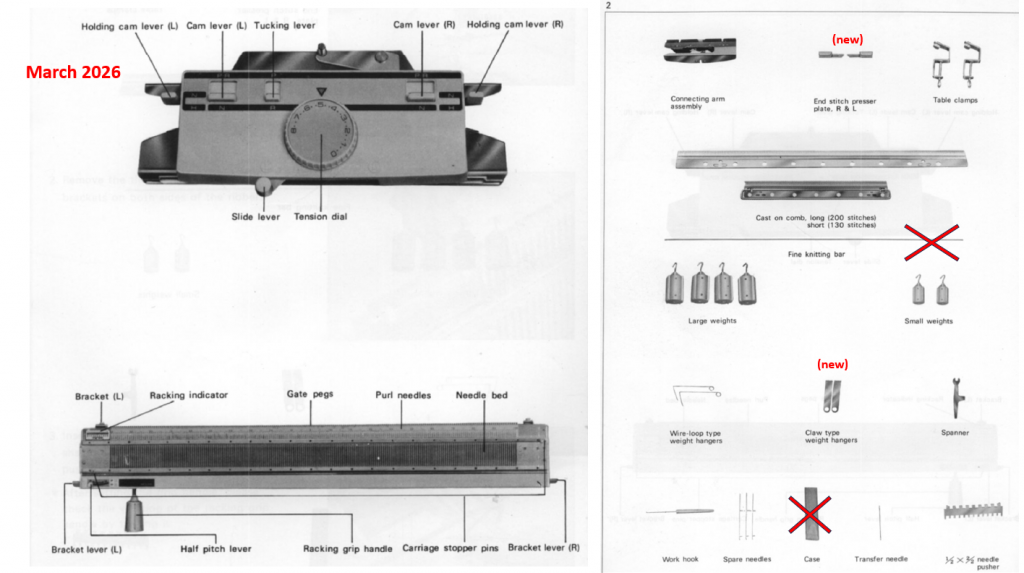
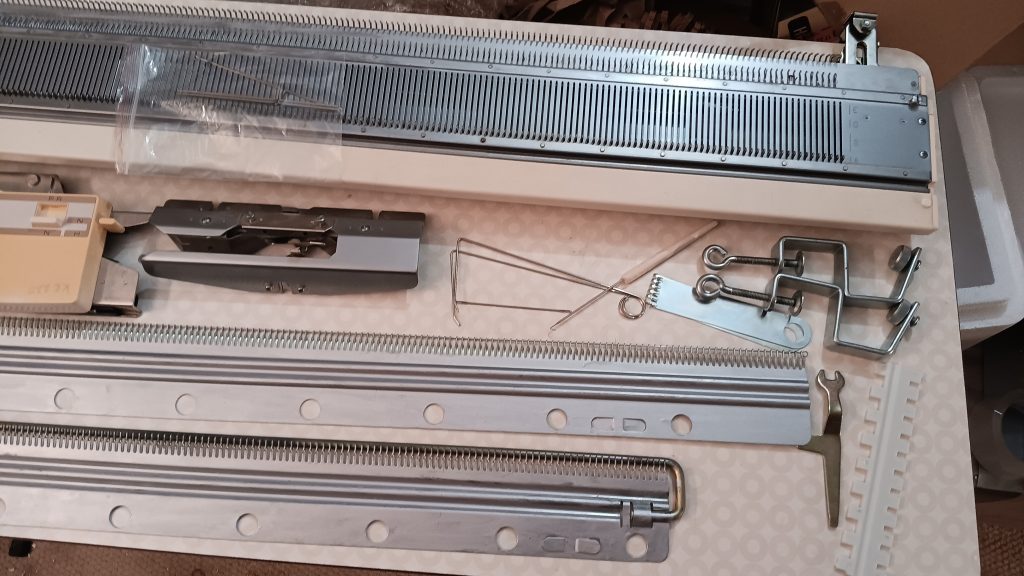
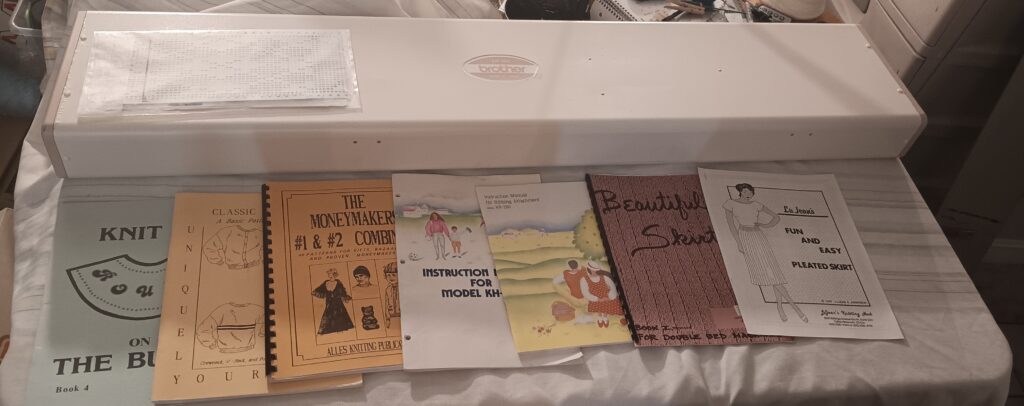
All accessories will be included with some minor exceptions (see below). A hard copy of the manual, with some additional brochures and additional punchcards included as well.
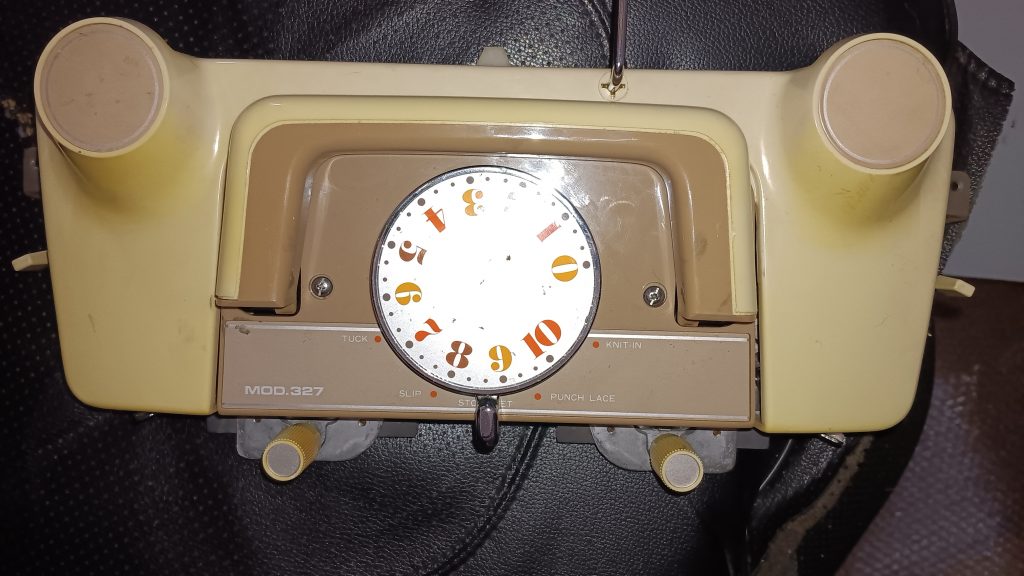
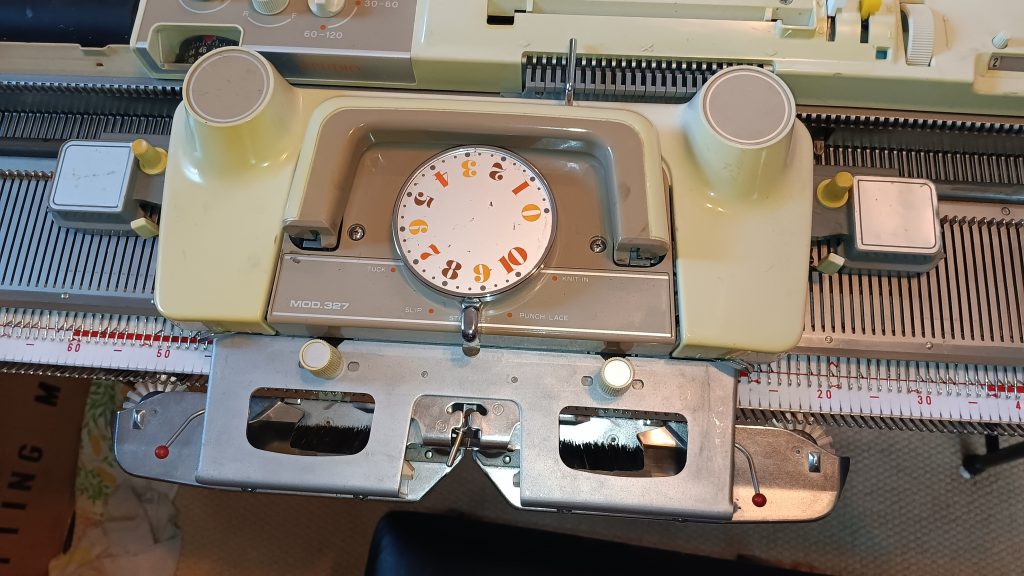
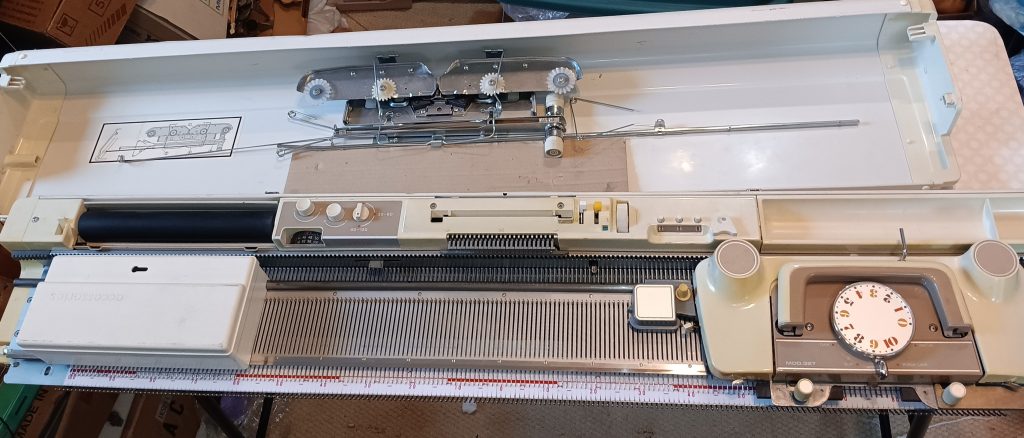
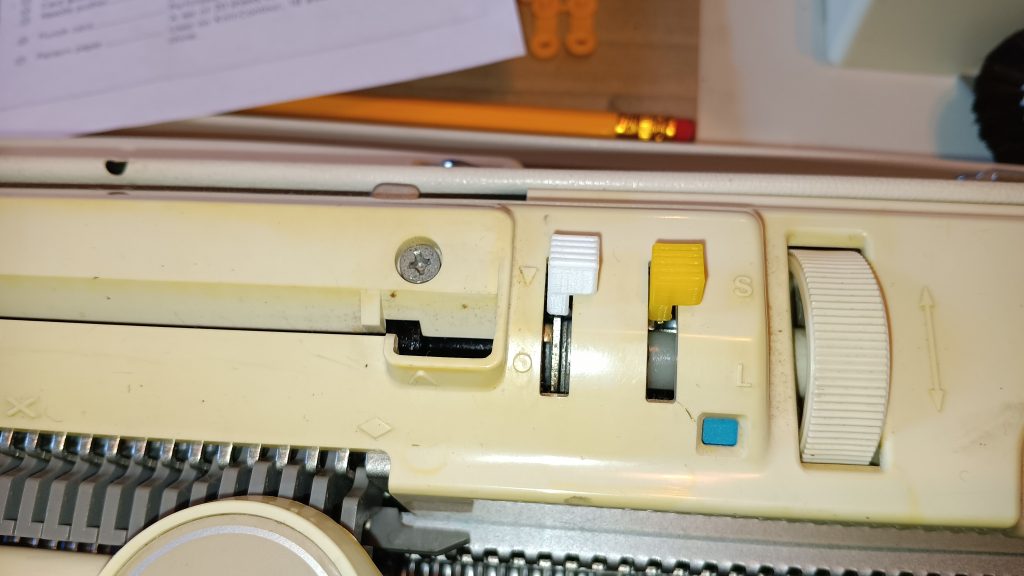
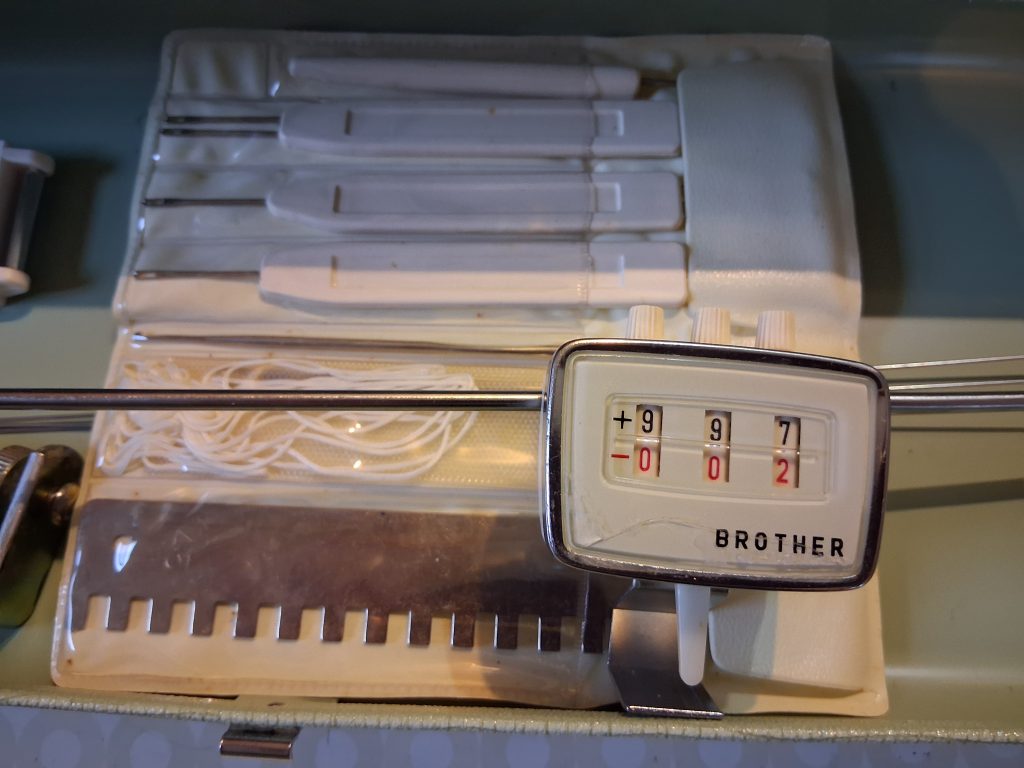
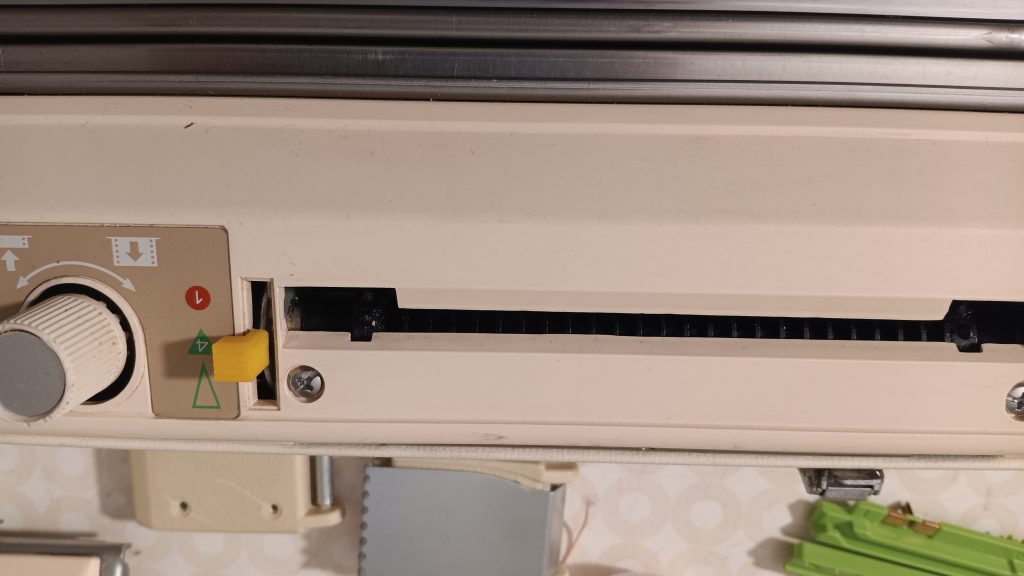
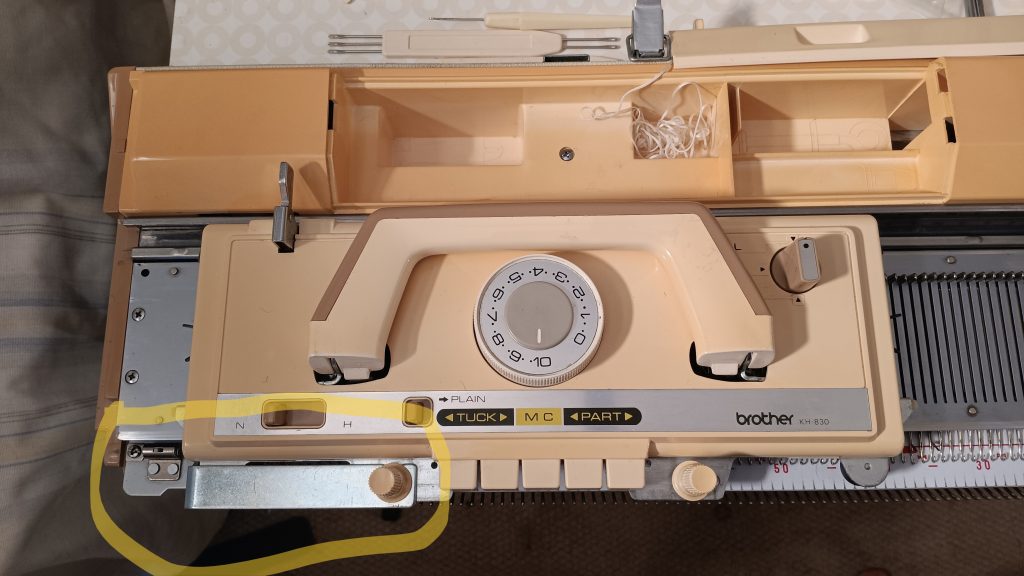
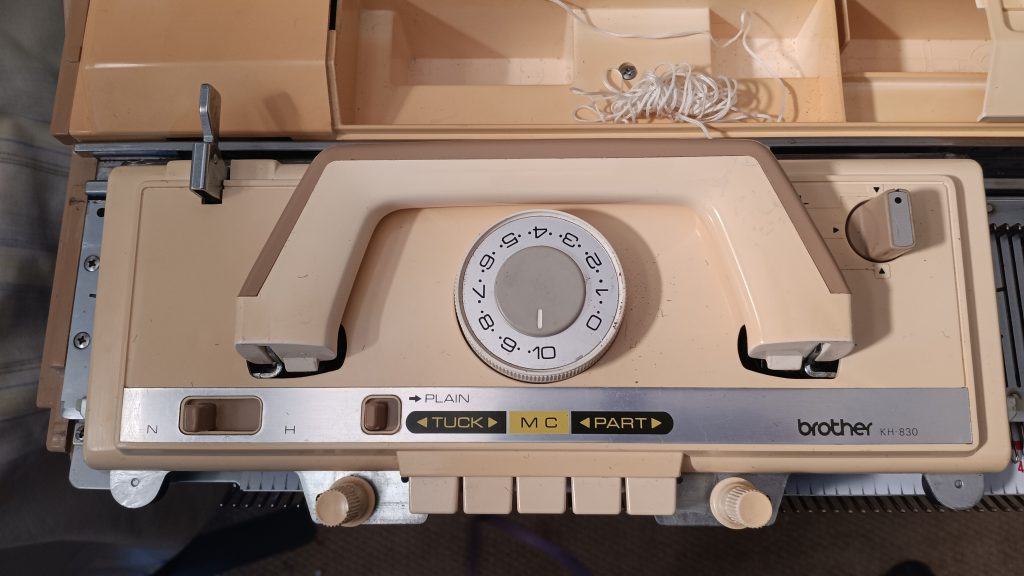
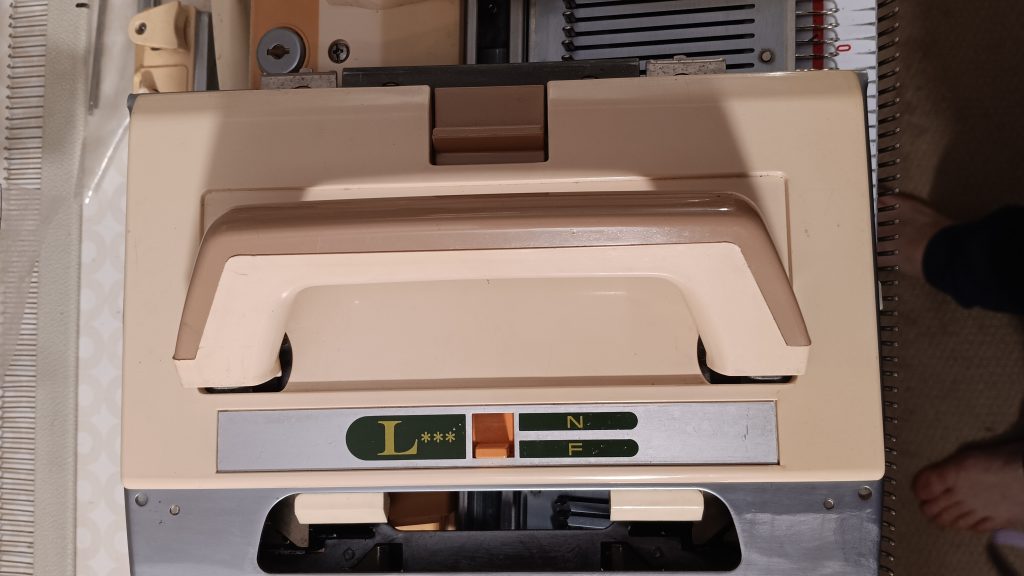
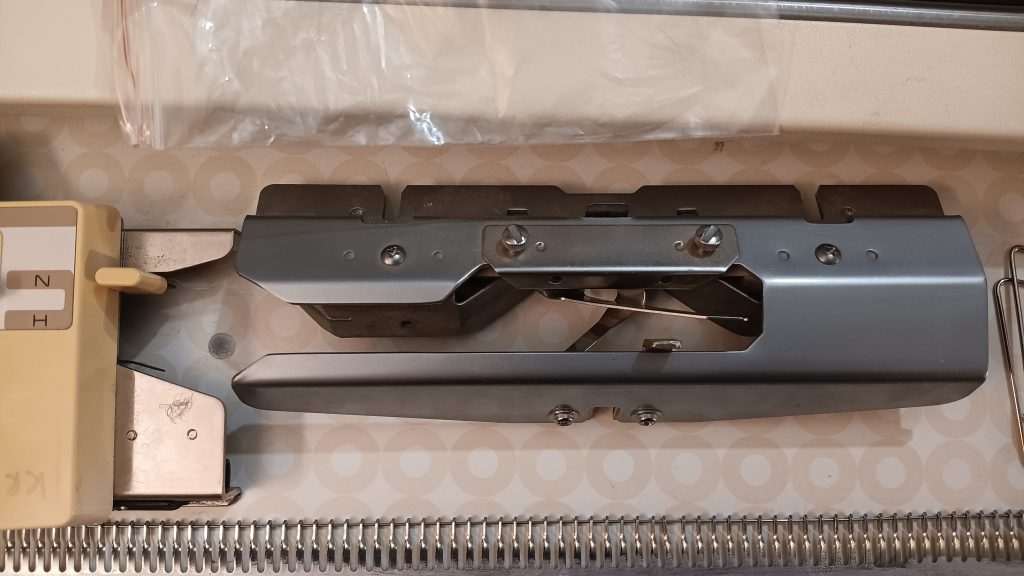
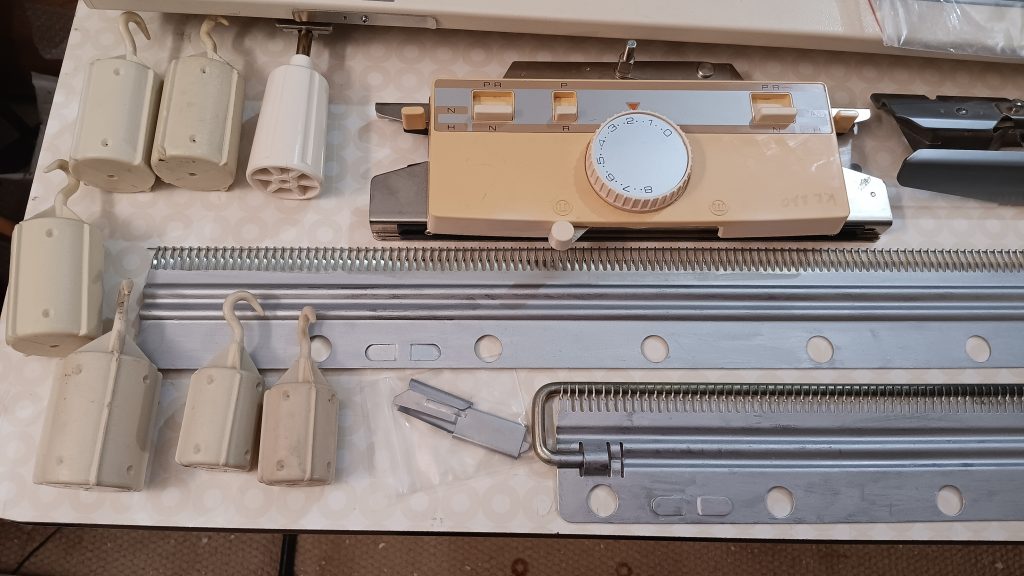
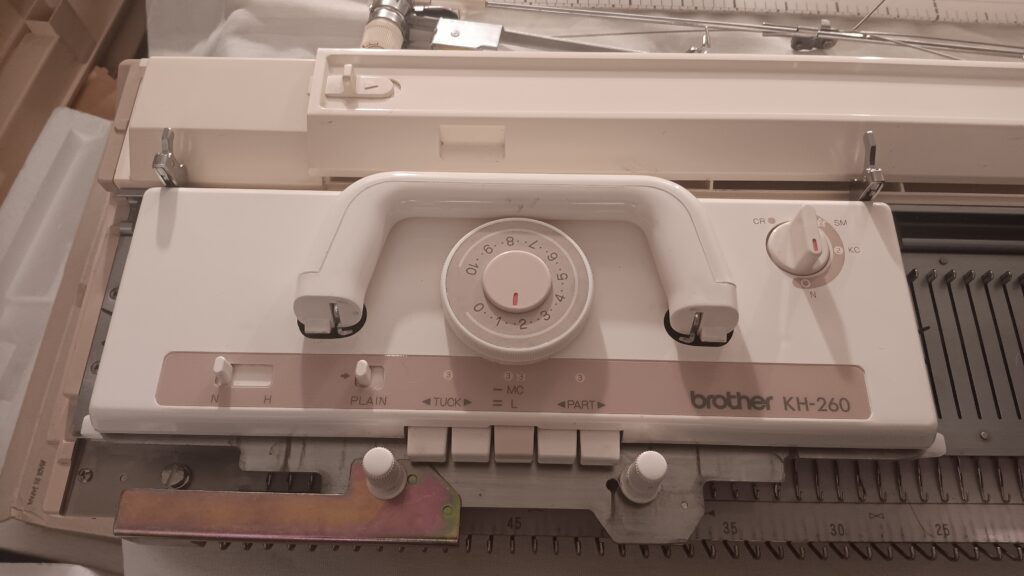
The carriage is in great shape. I left the carriage in the settings that correspond to the “last pair of needles being selected” (read the manual on that). Because I left the ribber insertion brackets in, I used the ribber lock for the machine. The machine-only lock is included as well with the accessories.
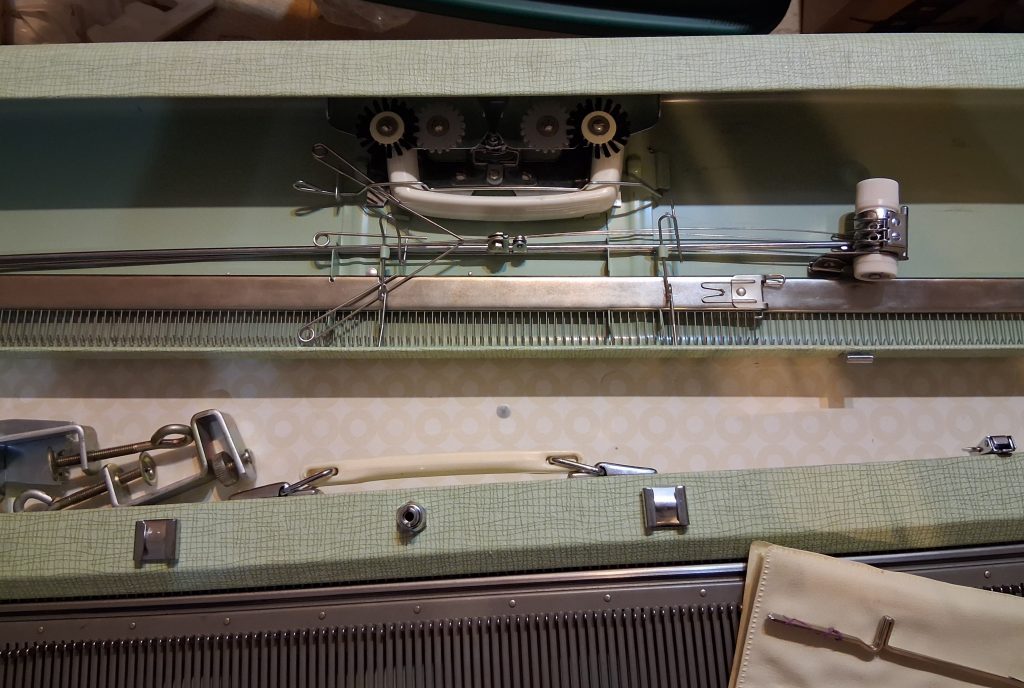
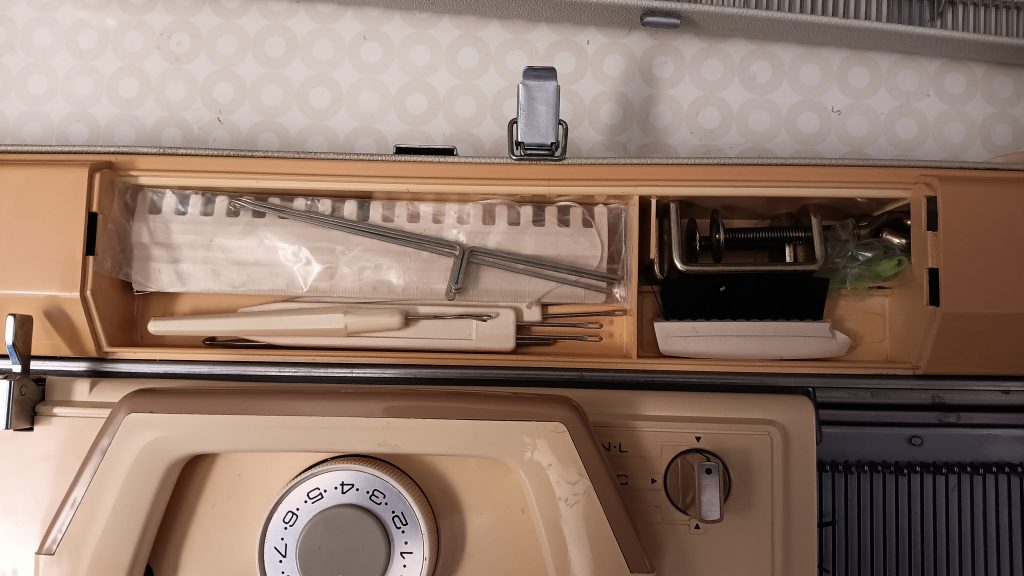
The tension mast came with the machine, and there was usable wax in it (although a bit yellow). I am sending it along. The cast-on combs are also original and are in great shape. Three of the claw weights are brand new (new stock), and three are original ones (thus, they are slightly different in color).
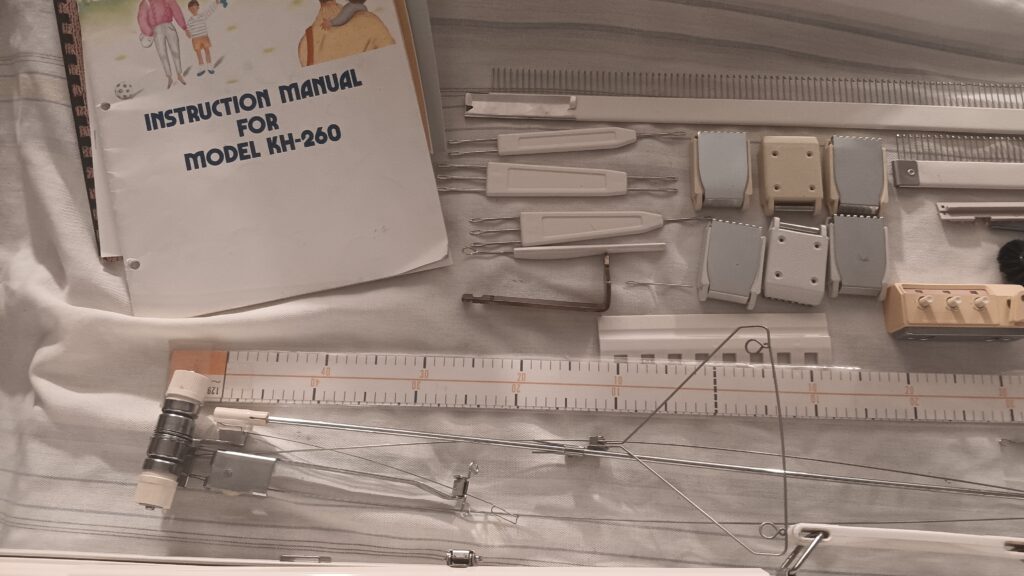
One pair of card clips is original (white); one is new stock but used. The needle selection ruler and the set of transfer tools is original. Card holder pin/rod is included, but I did not even use it during my tests.
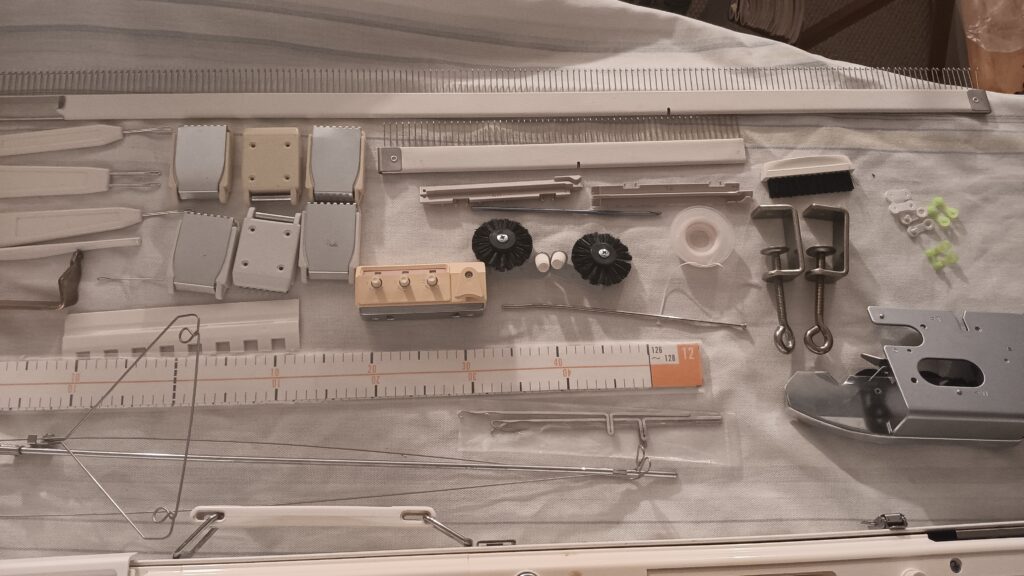
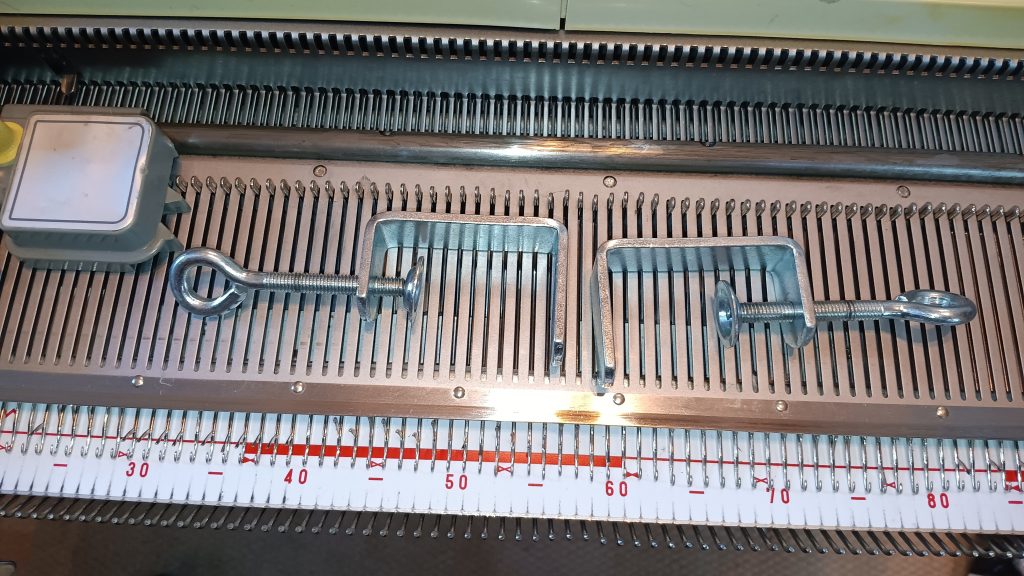
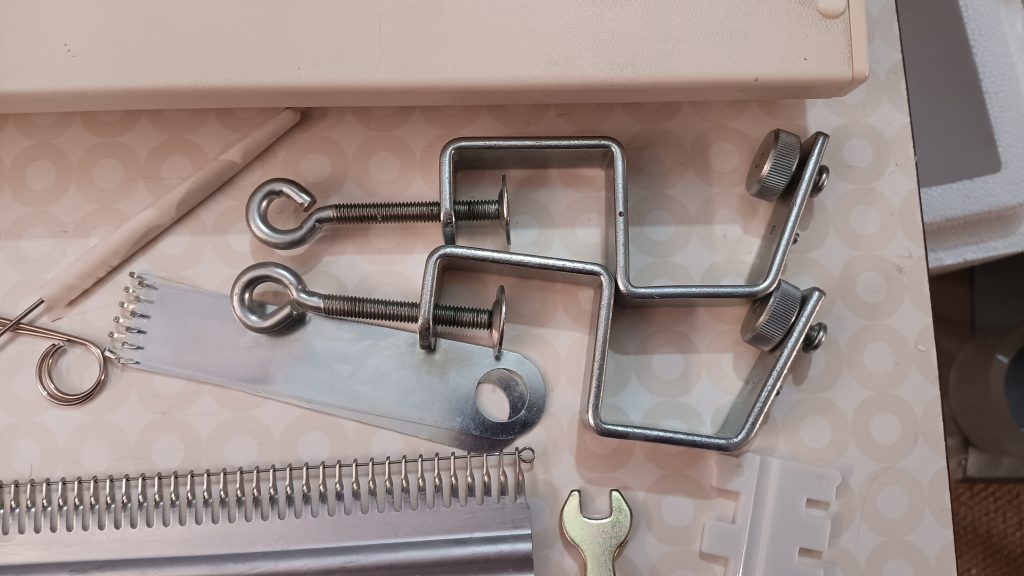
A brand new knit leader scale (part of the machine setup) is also included. The cast-on thread is in a bobbin. Table clamps are original and look brand new, in my opinion.
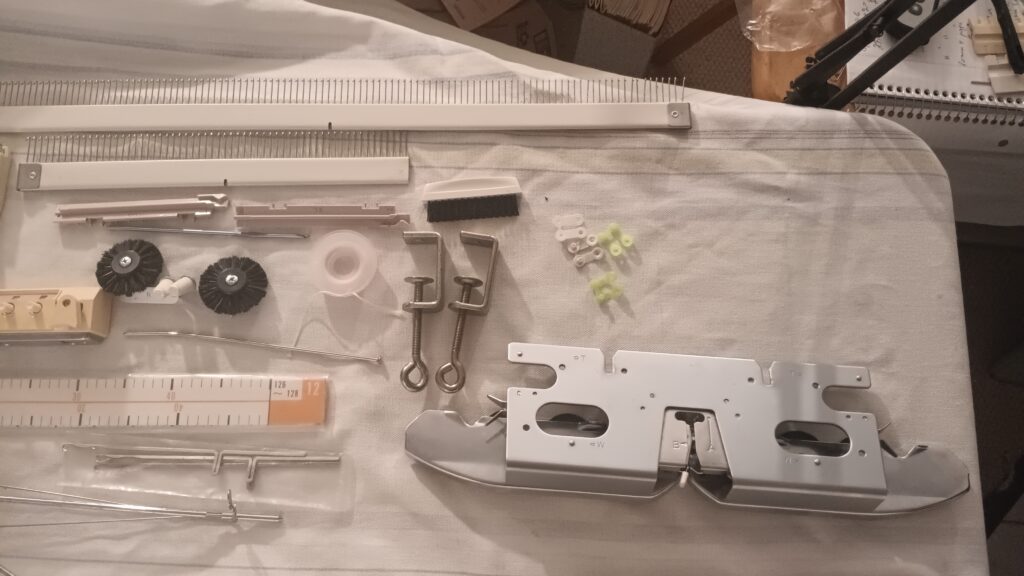
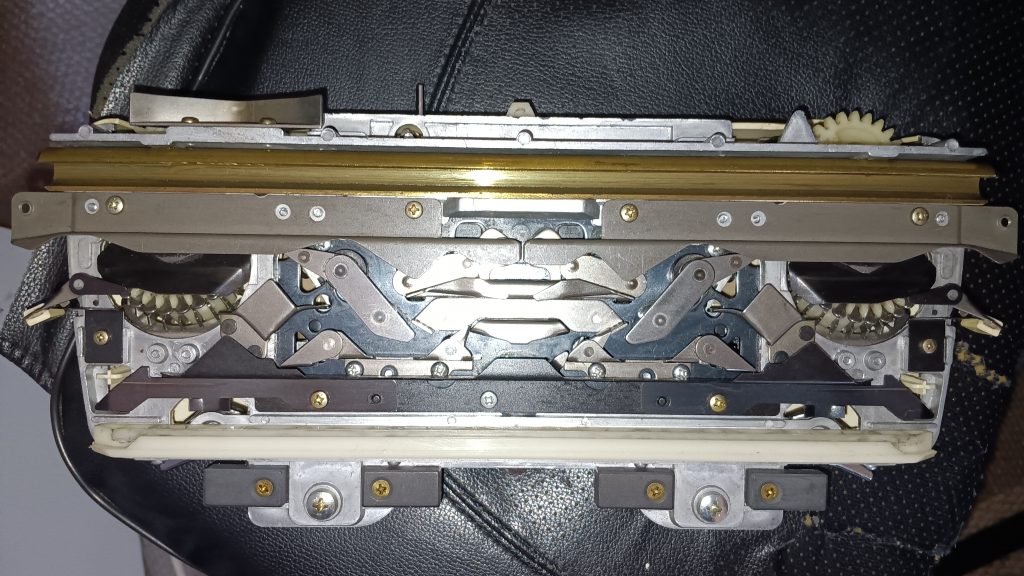
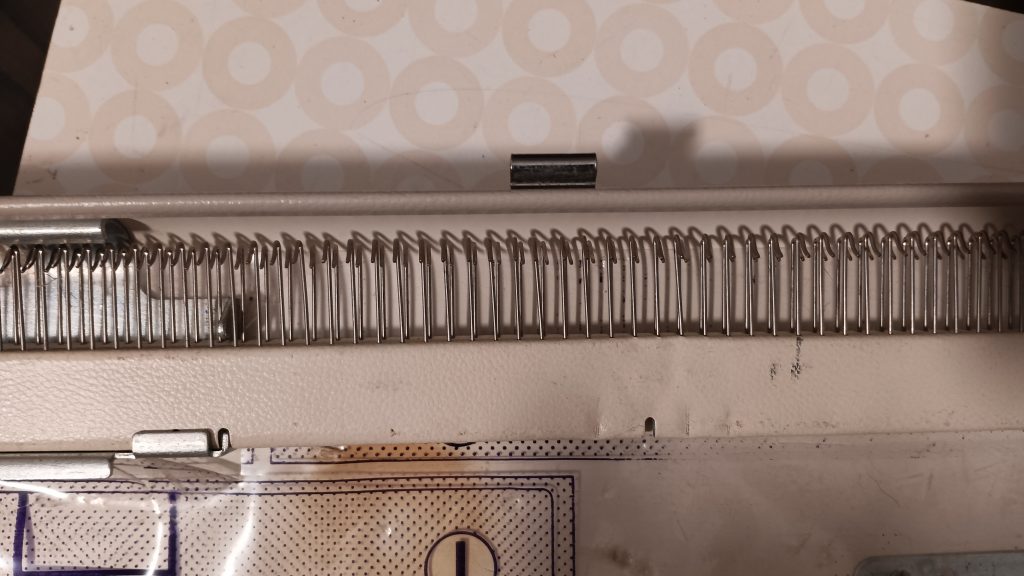
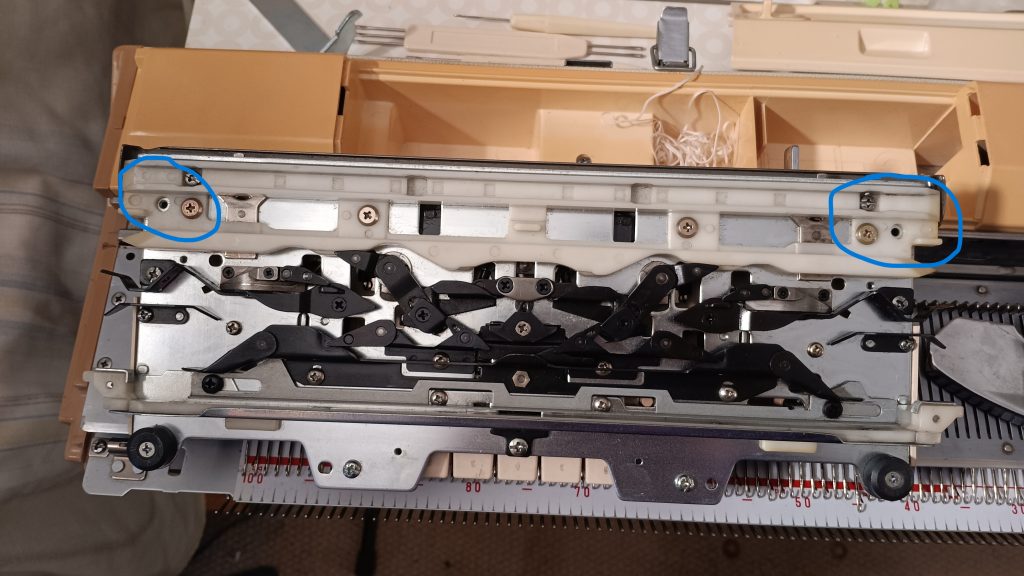
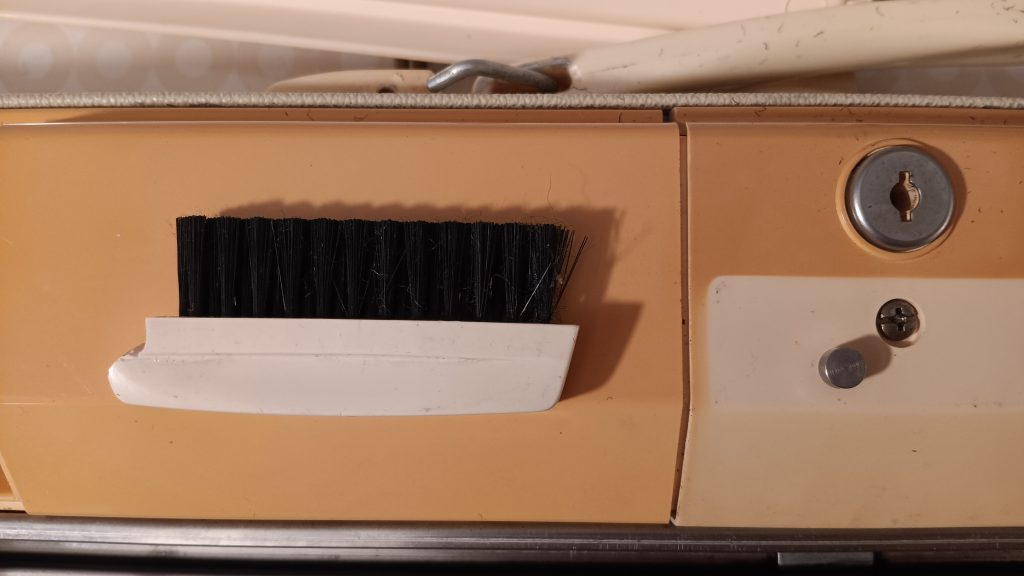
All needles were removed, cleaned, and inspected (according to my standard procedure). I paid special attention to the latches because I had some minor problems with the tuck stitches. I deep cleaned everything, including the card reader mechanism. The sponge bar is new, not refurbished.
I cleaned the sinker plate, the needlebed, and the carriage again after the tests, but some residual lint accumulated after my tests (very minor) might remain.
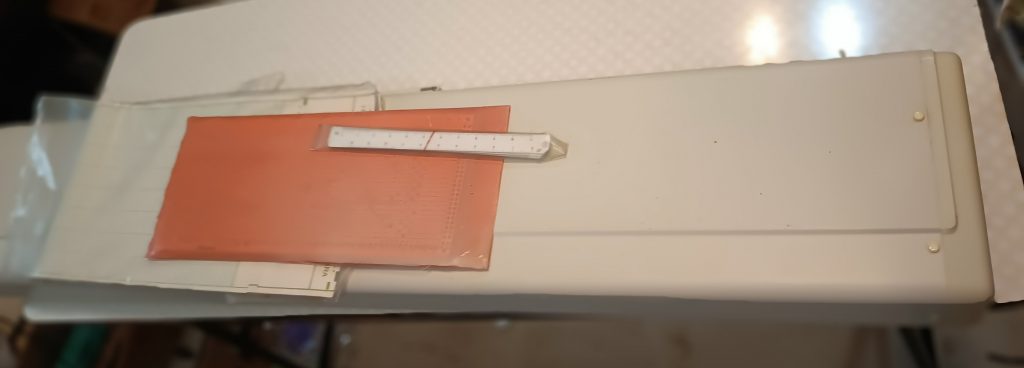
Punchcards are a new set (new stock), but it matches the original one (thus, correspond to the patterns shown in the manual). Unfortunately, I damaged card #1 slightly from this set, but I am including another one from another set. It is made on a bit thicker paper and is marked as 1s (others are marked with “p”). I am also including, as a thank you, two original Knittery cards and four custom-punch cards (punched by hand but not by me).
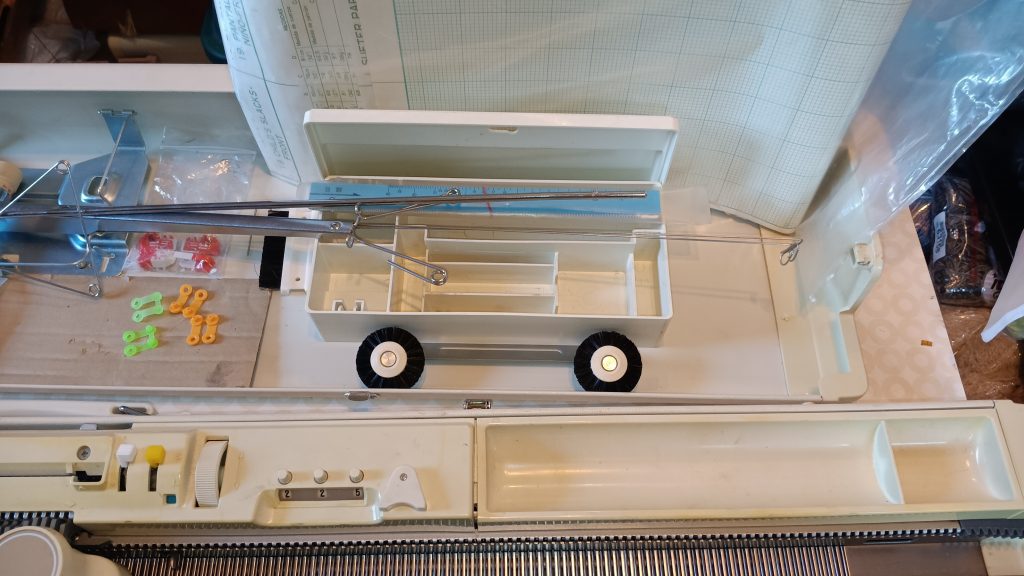
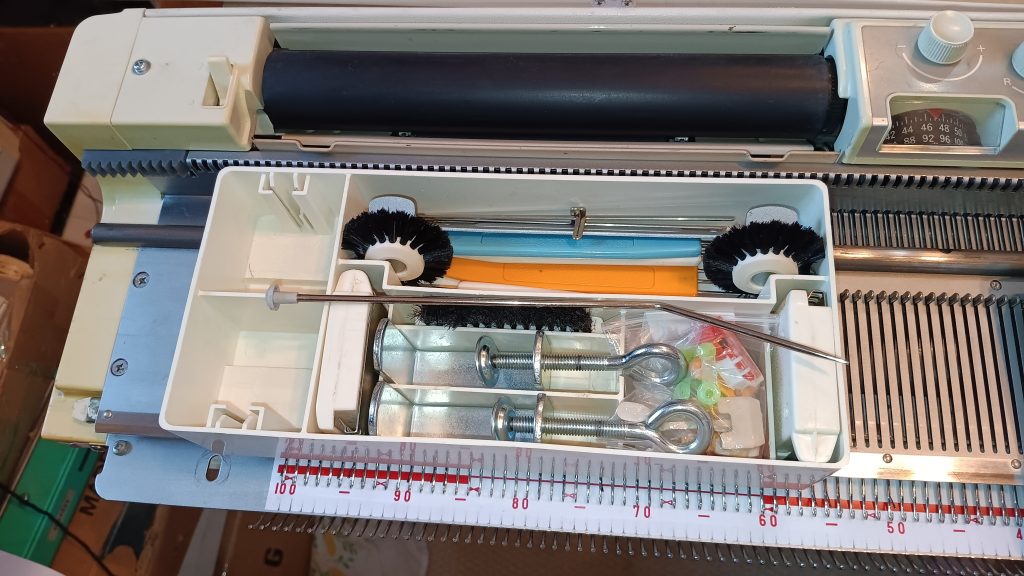
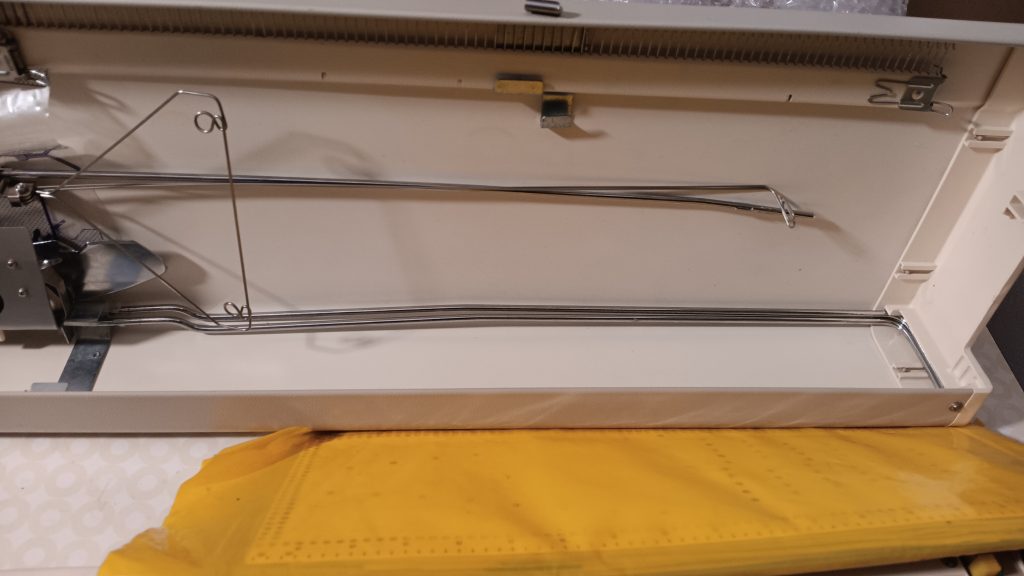
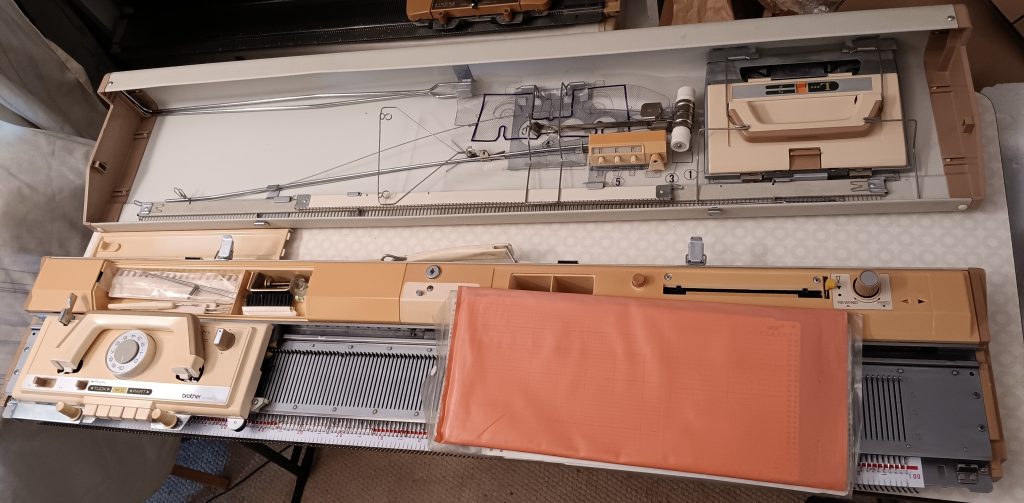
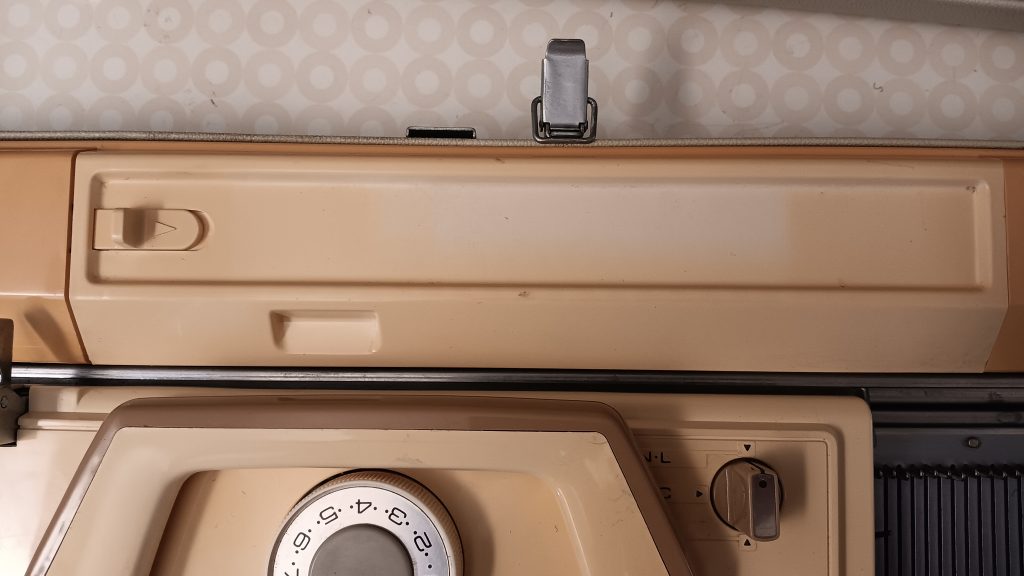
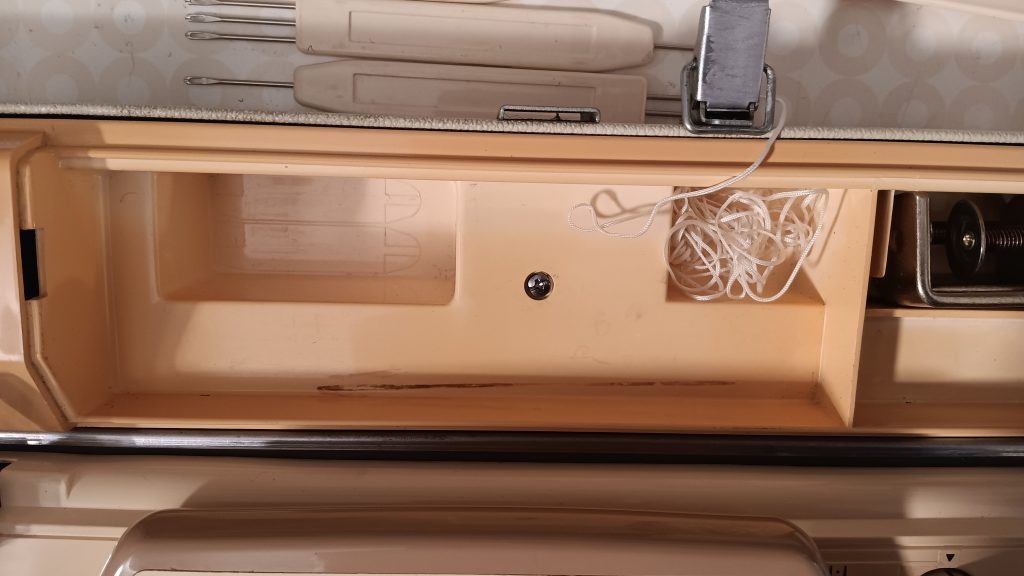
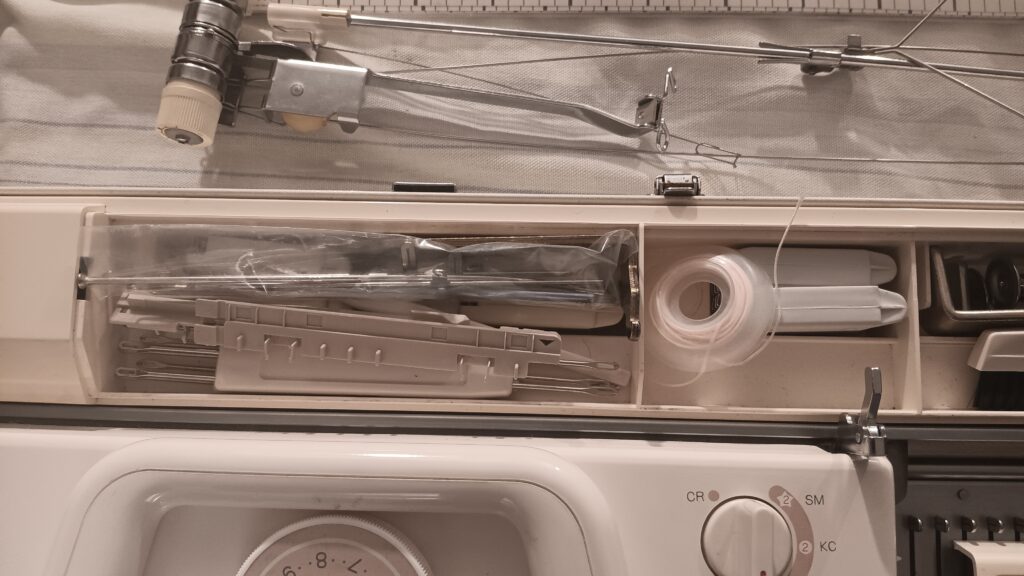
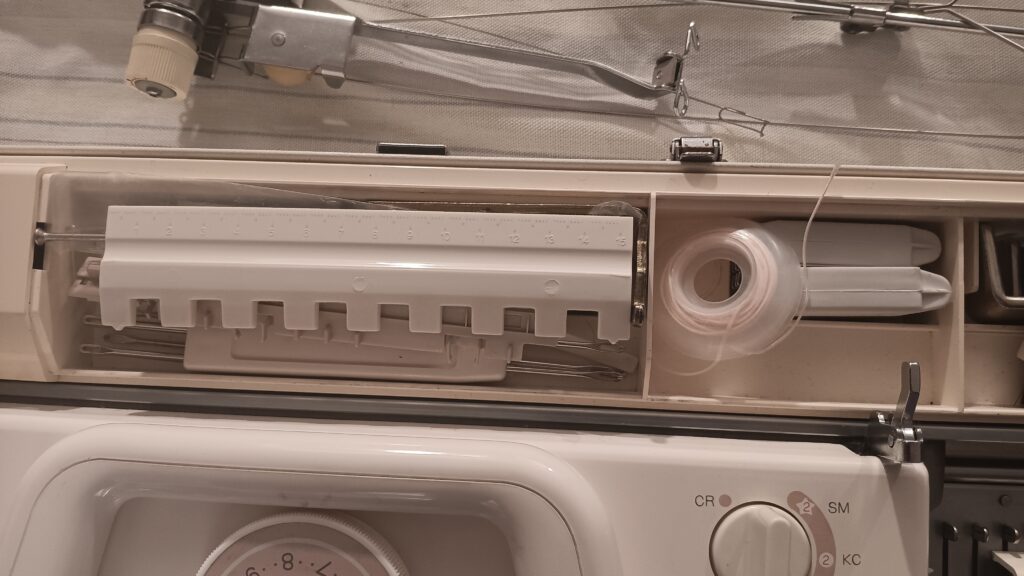
The accessories are stored in the built-in storage box.
During my tests, the only issue I experienced was when I knitted tuck. First, I knitted tuck when the ribber was attached to the machine (so, the machine was at an angle to the table). Some of the stitches did not slide easily, and I had to manually inspect them. When I removed the ribber and the main needlebed was parallel to the table, I was able to tune the tension for that particular yarn with the amount of weights to knit tuck without checking the needles too much. Additionally, I knitted tuck without engaging the tuck wheels and the brushes (the manual describes it pretty well) and still got good results. Read my article on tuck and how to troubleshoot it. The article emphasizes the importance of swatching (aka, figuring out the right tension and weight combinations) for tuck.
Minor imperfections of the machine:
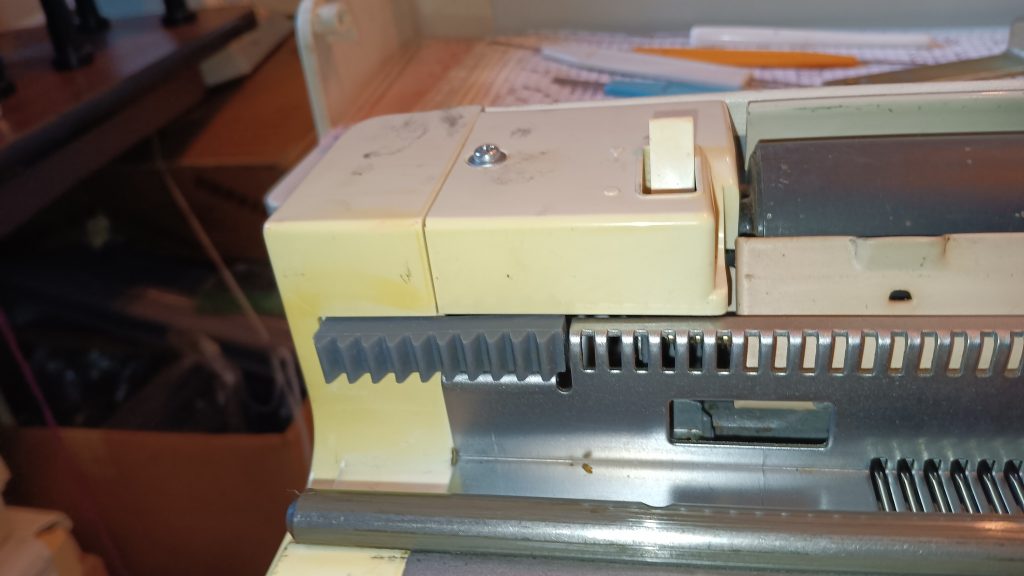
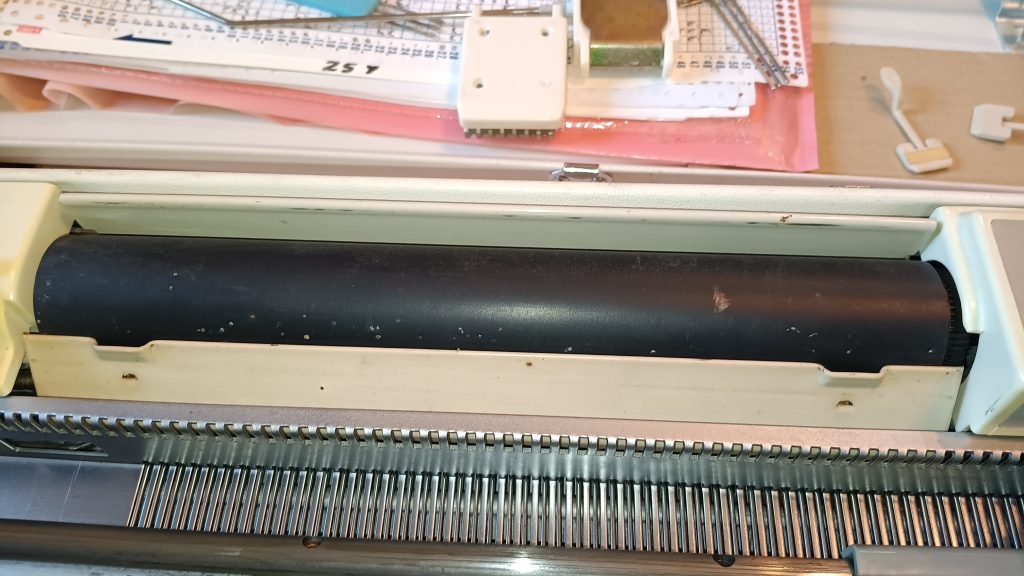
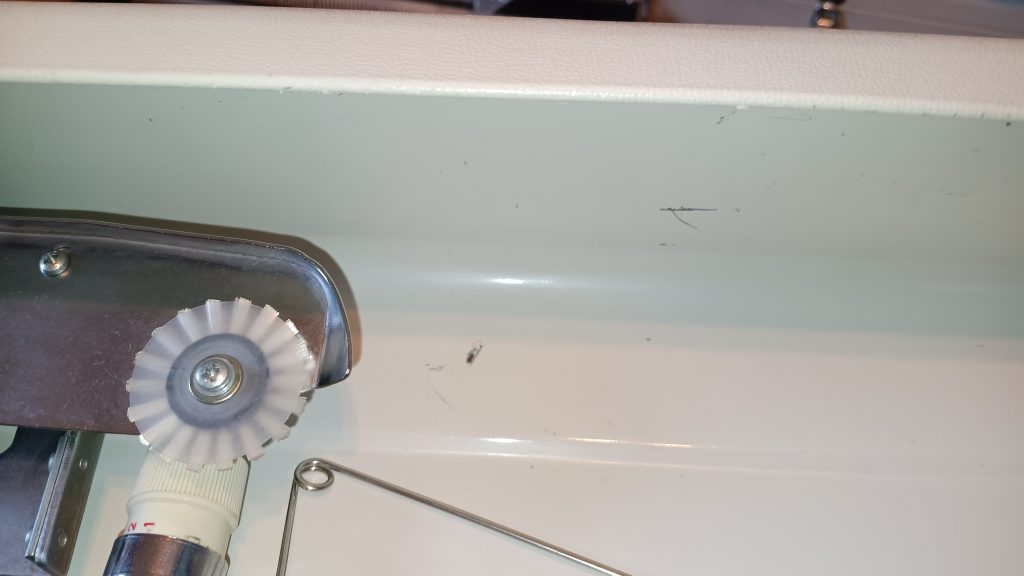
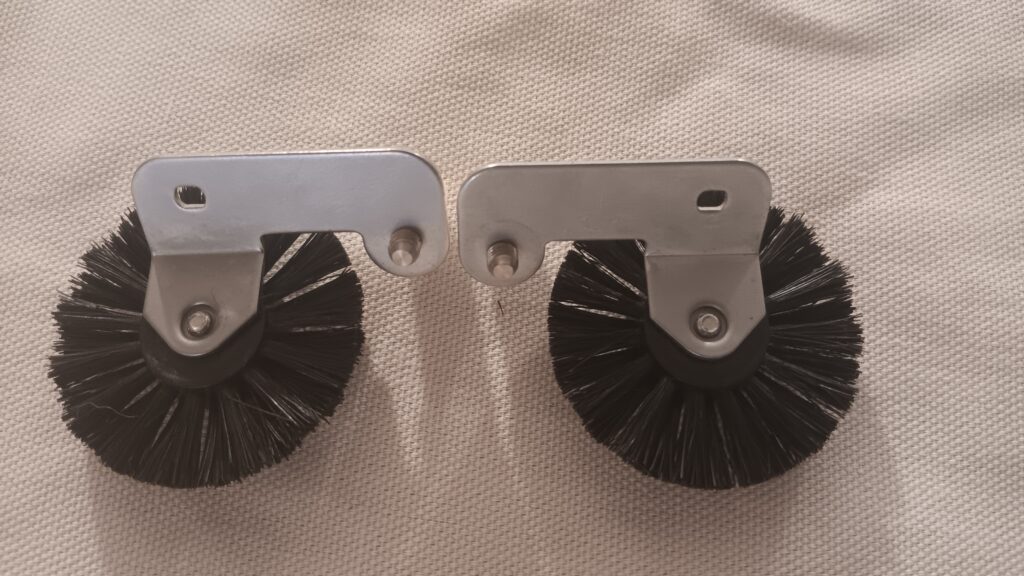
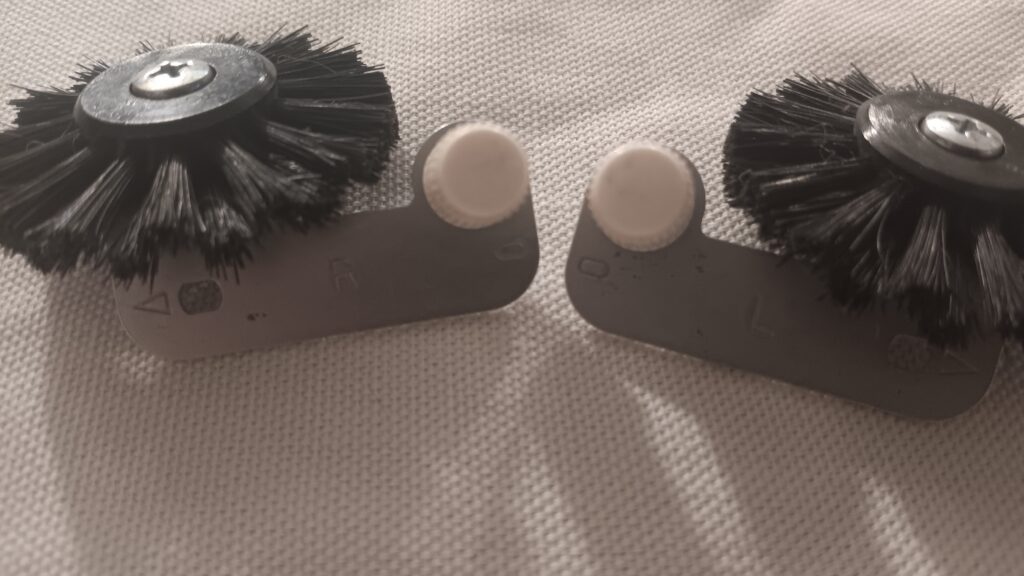
- Wheel brushes for waving and tuck have some discoloration, but nothing too serious to mess with it (it is even hard to see in the pictures).
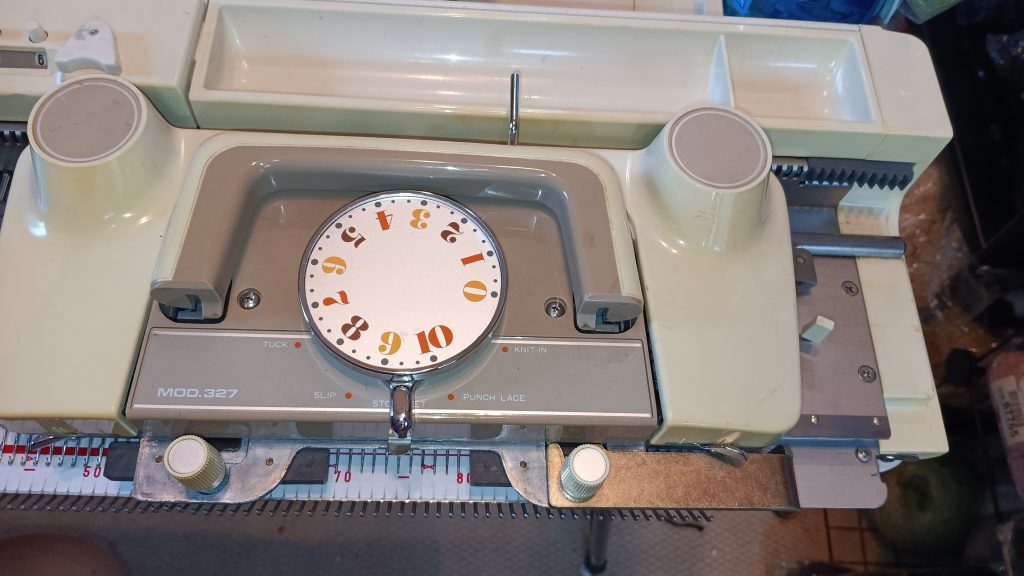
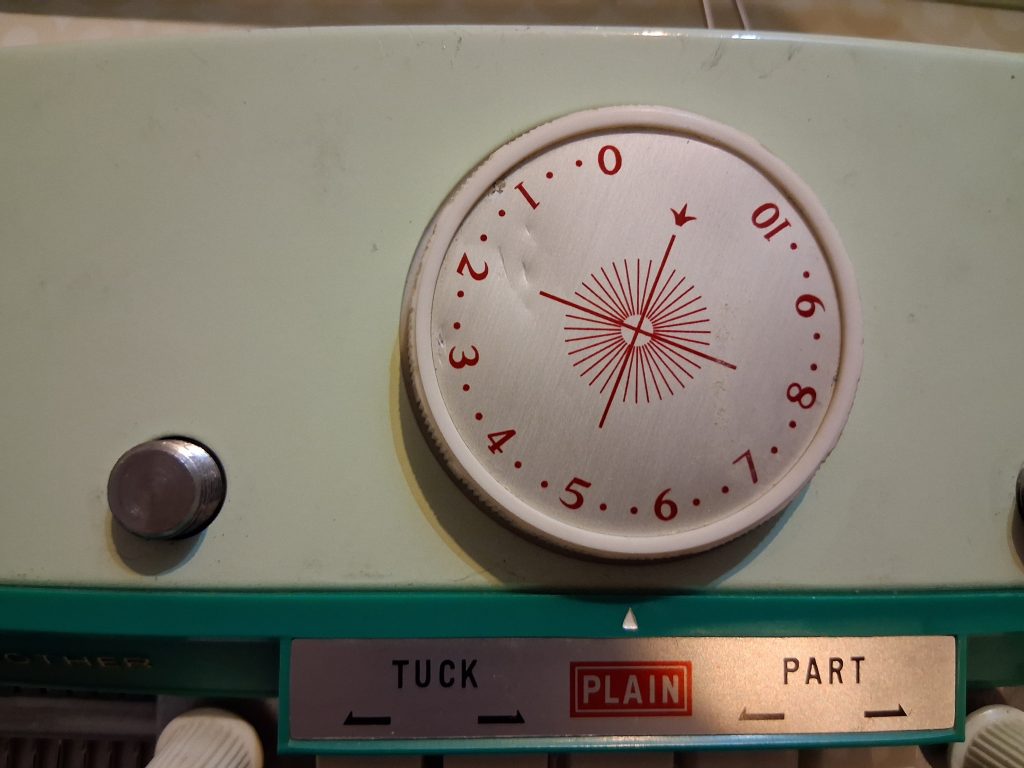
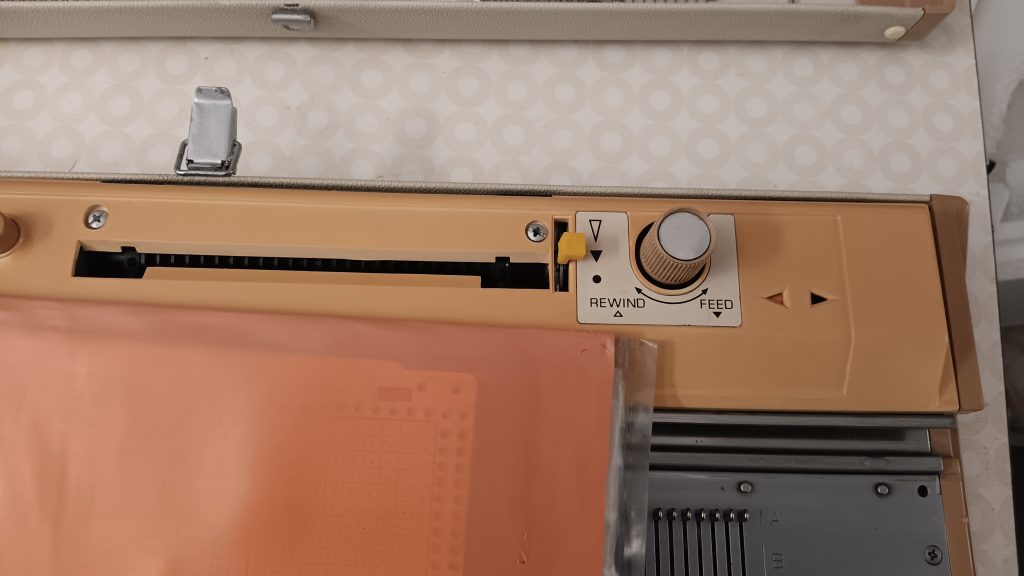
- The row counter has typical yellowing/discoloration, but it does not affect its functioning. It is original: the pink insert on the dial gives it away.
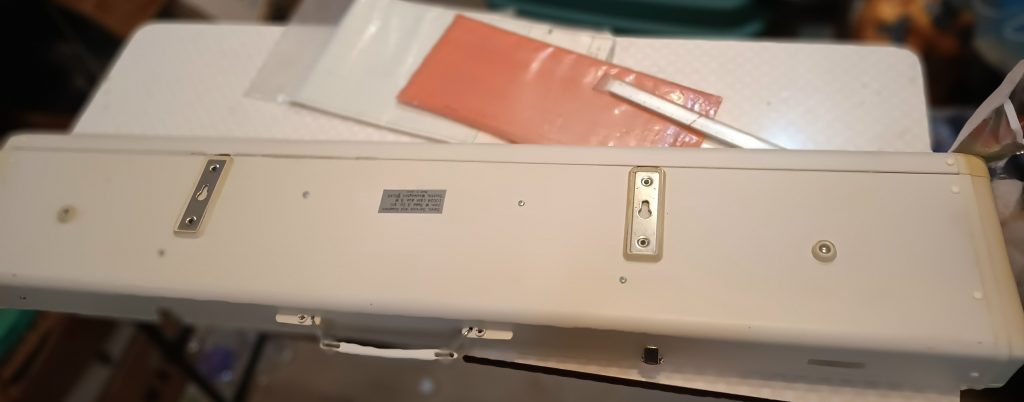
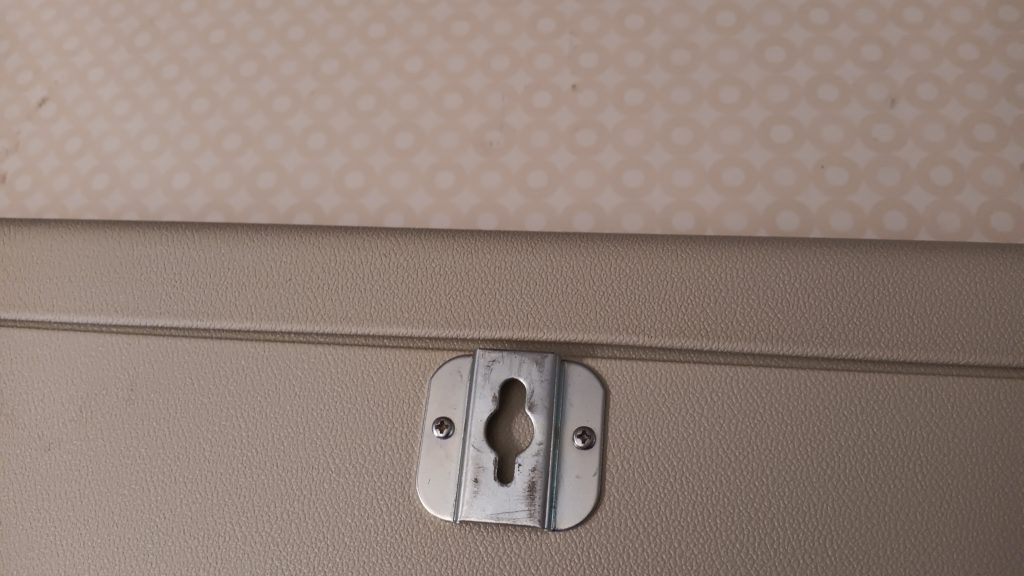
- The metal insert to hold the parts inside the lid was a bit rusty, so I covered it with my favorite Rust-Oleum.
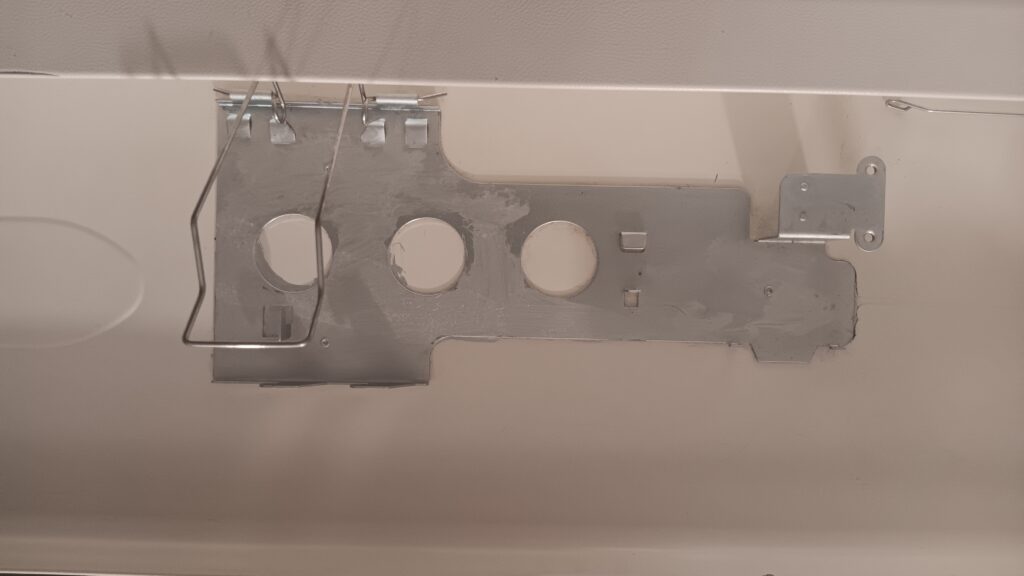
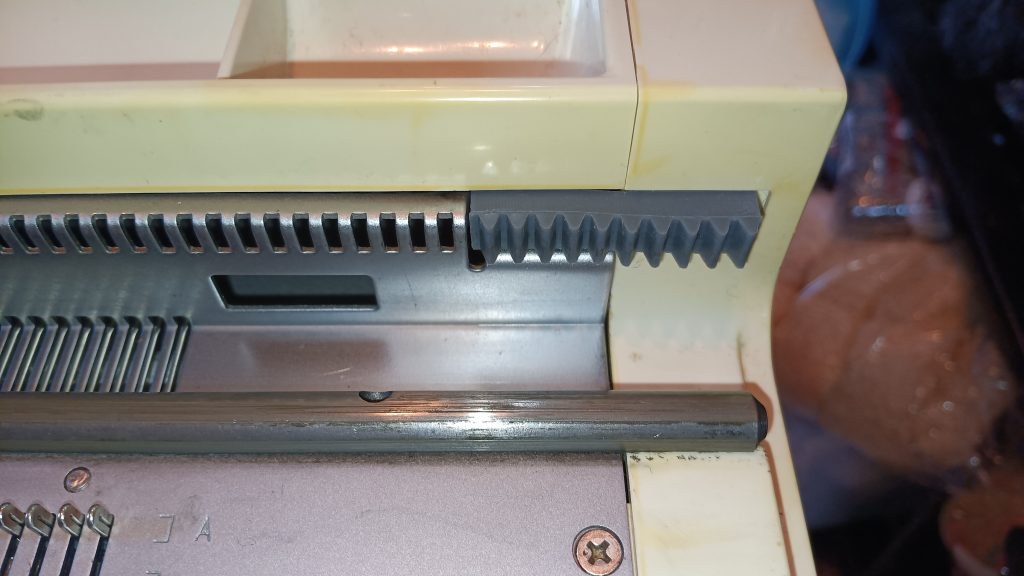
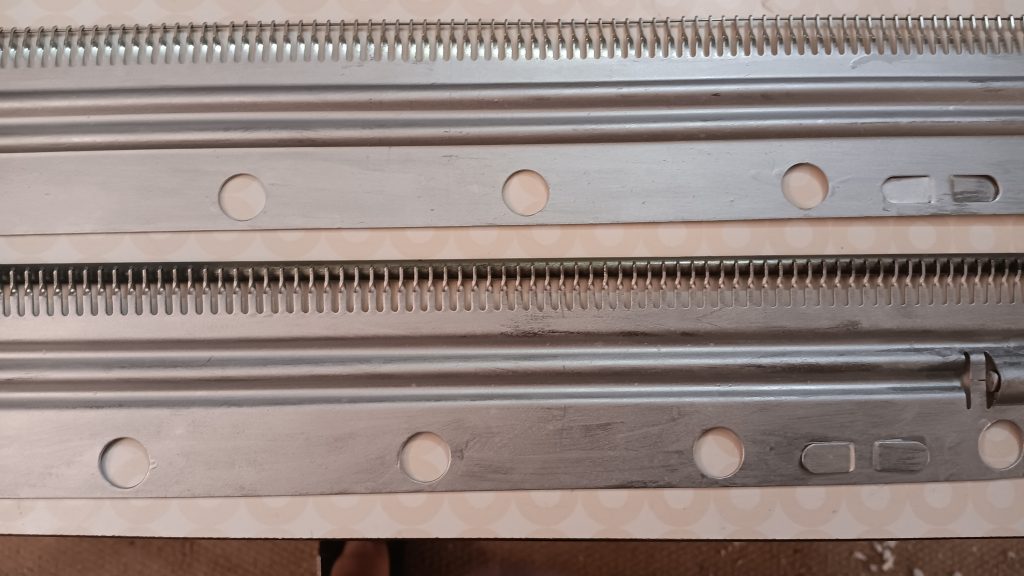
- The needlebed had some discoloration as well, so a layer of Rust-Oleum was applied as well.
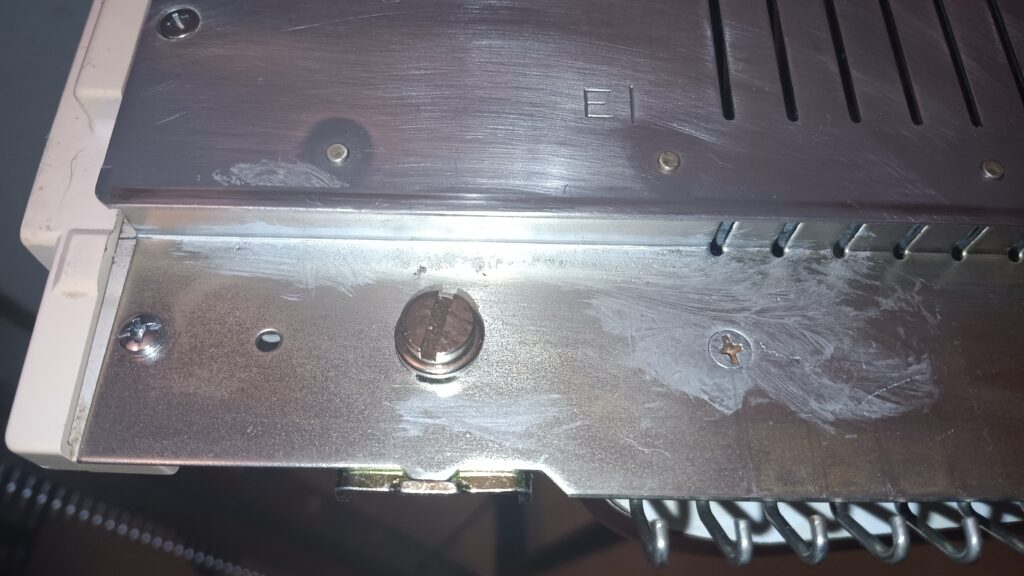
- There is some minor straining/discoloration on the needlebed itself. But it does not affect the functioning of the machine.
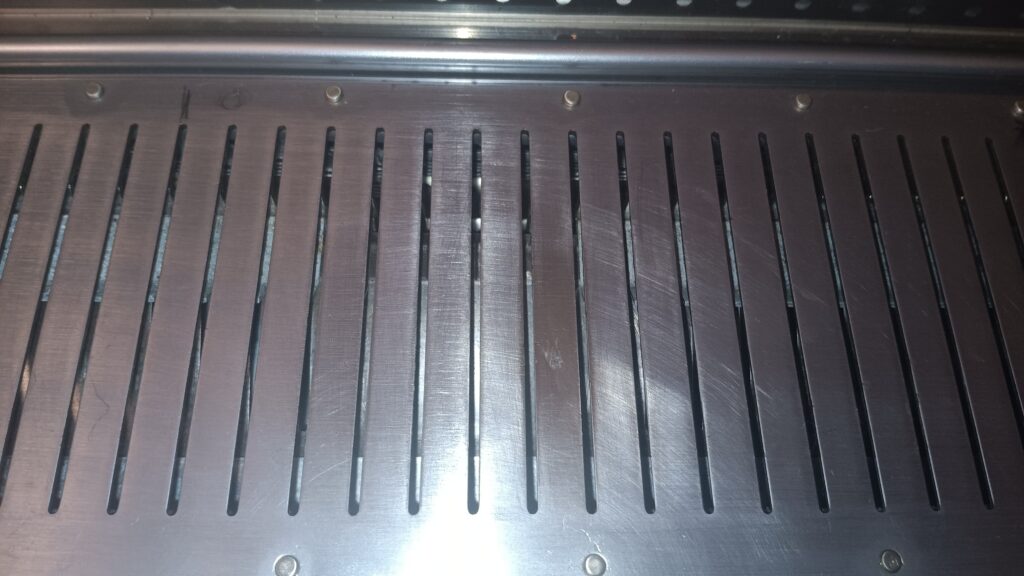
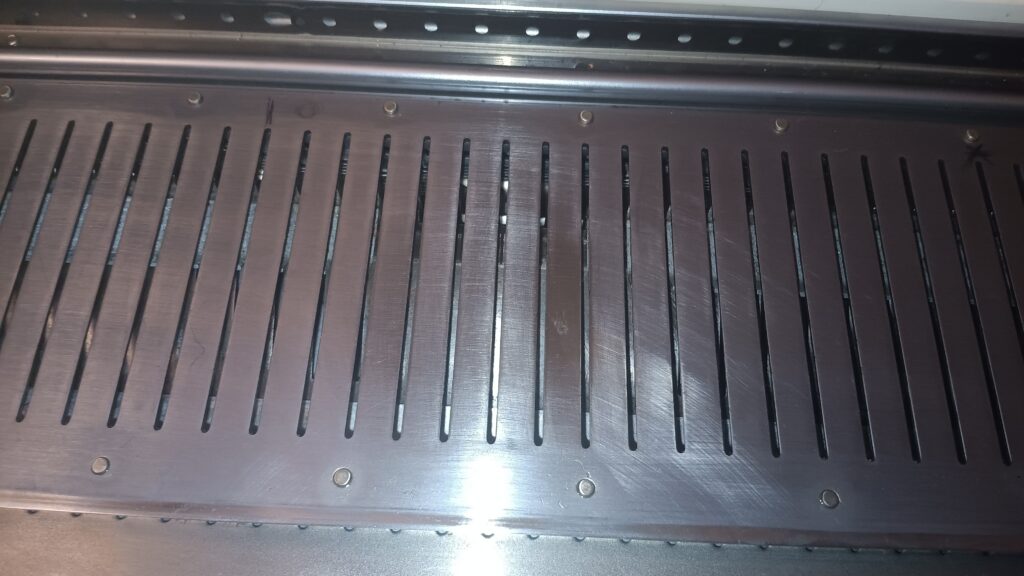
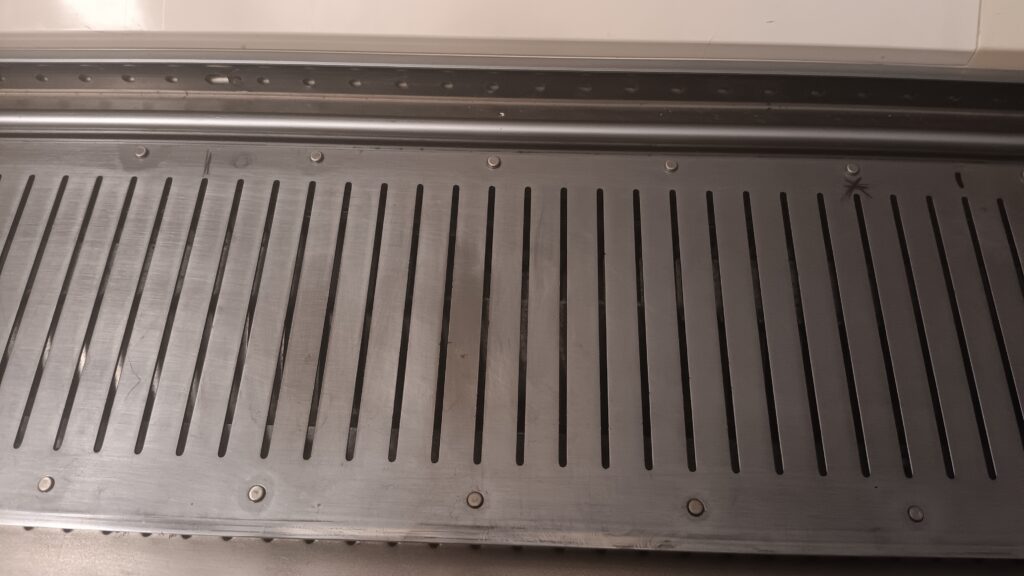
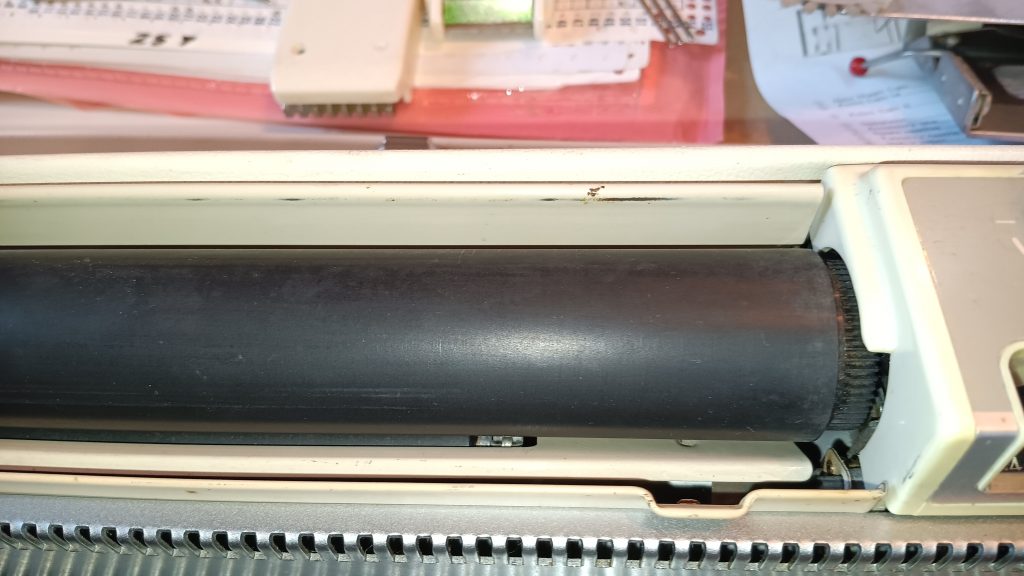
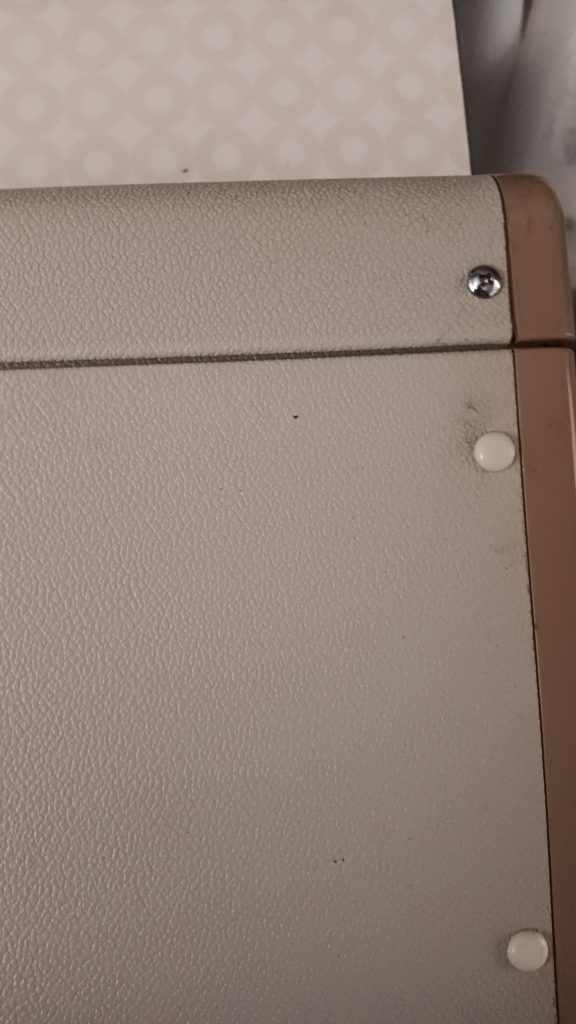
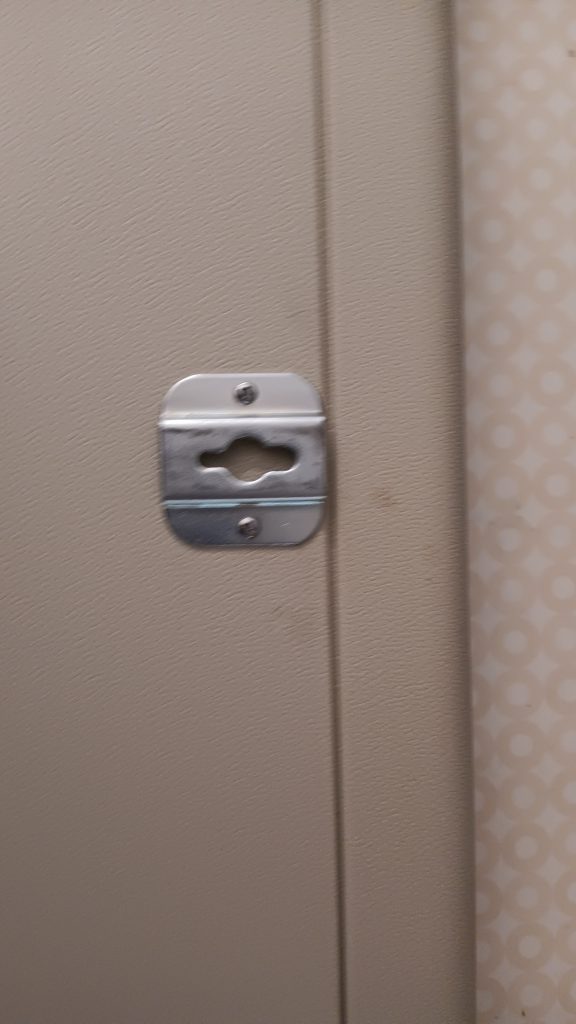
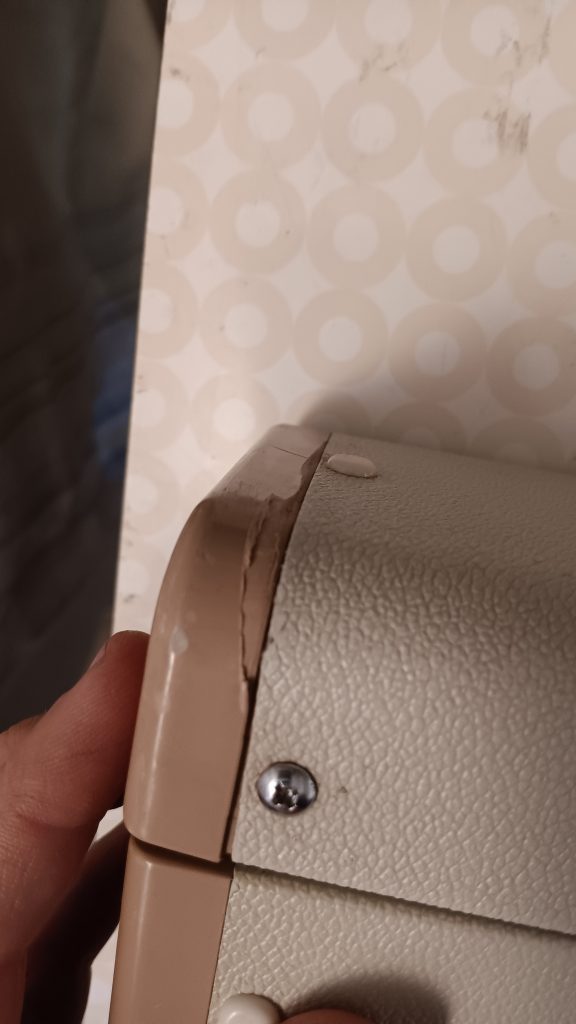
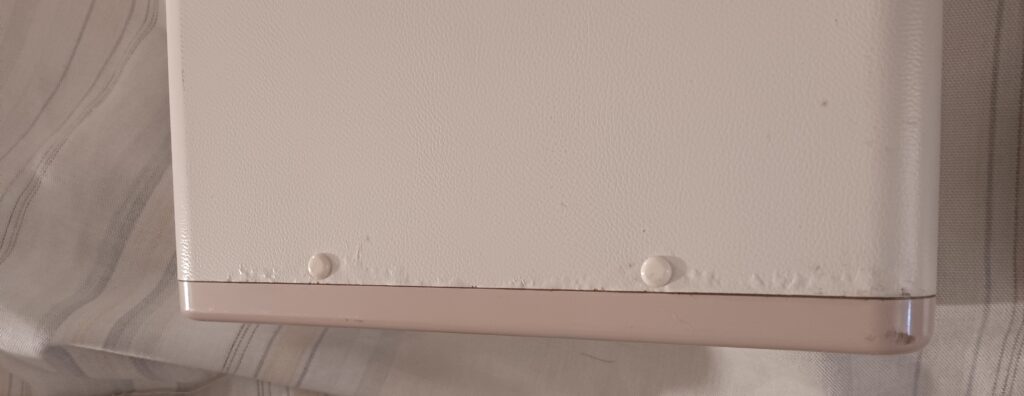
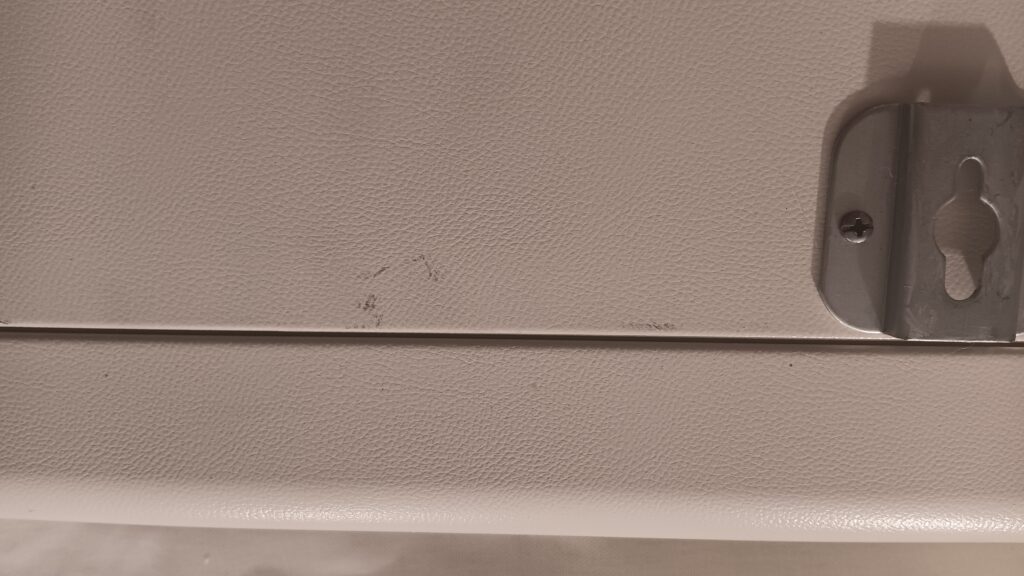
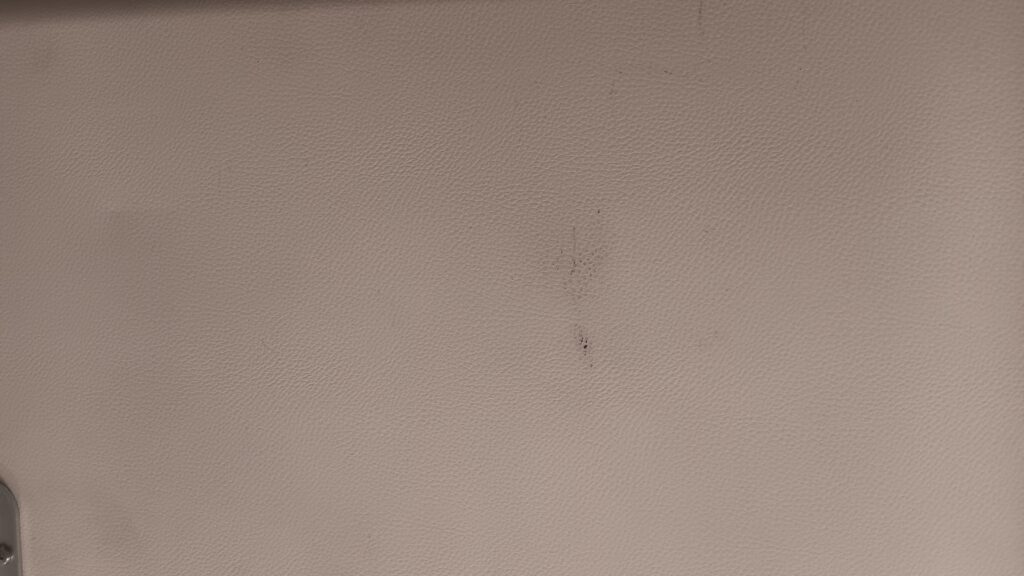
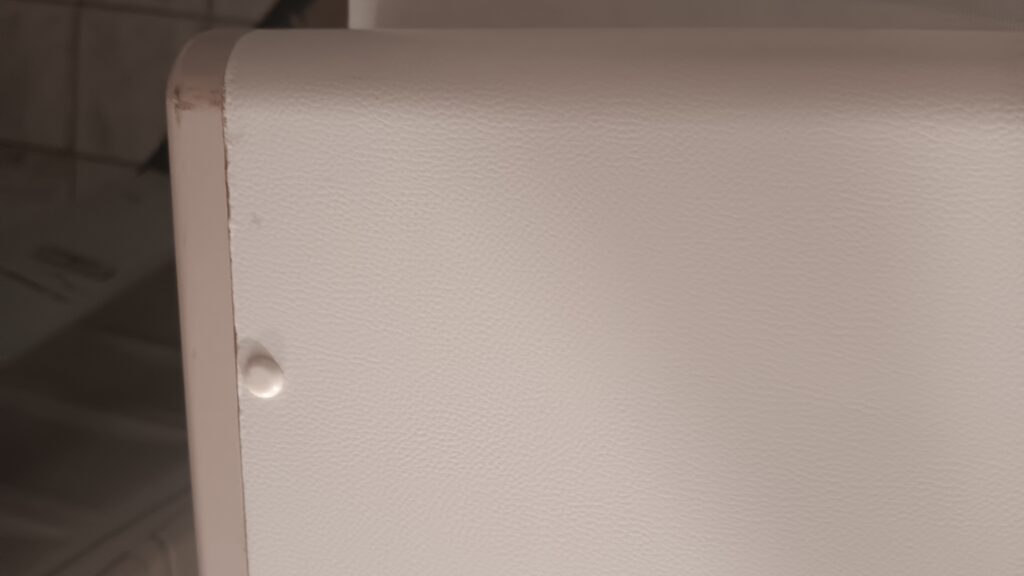
- Minor staining and unevenness on the needlebed main bed and/or lid.

The ribber is set up at the moment perfectly for the machine (distance-wise): the first knitted zig-zag row looked perfect.
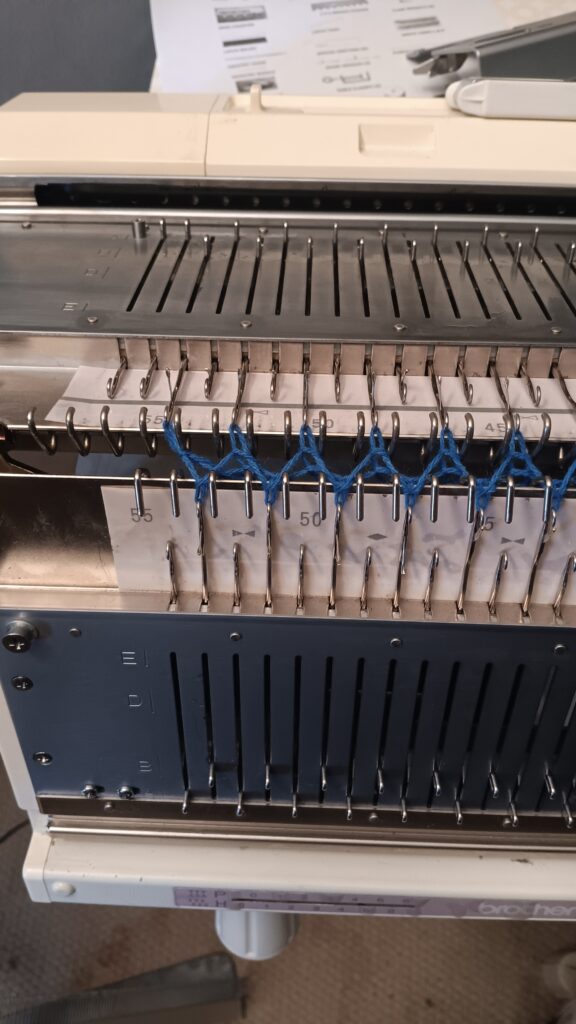
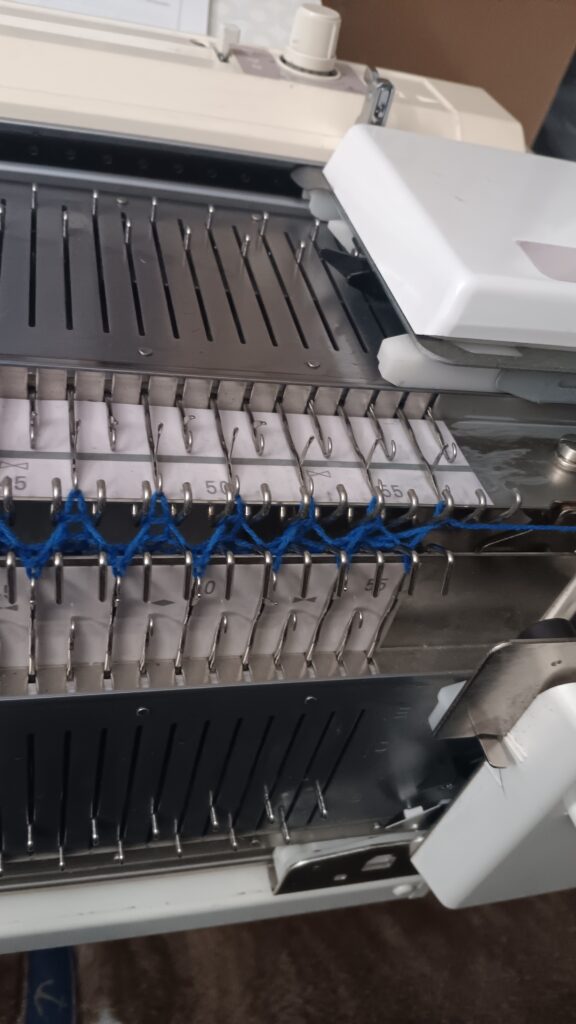
I suggest using the settings that the ribber came with, and if there are problems, then try to adjust them. I knitted on the ribber+machine 1×1 ribbing at two different needle combinations (shown in the video) and got excellent results for both.
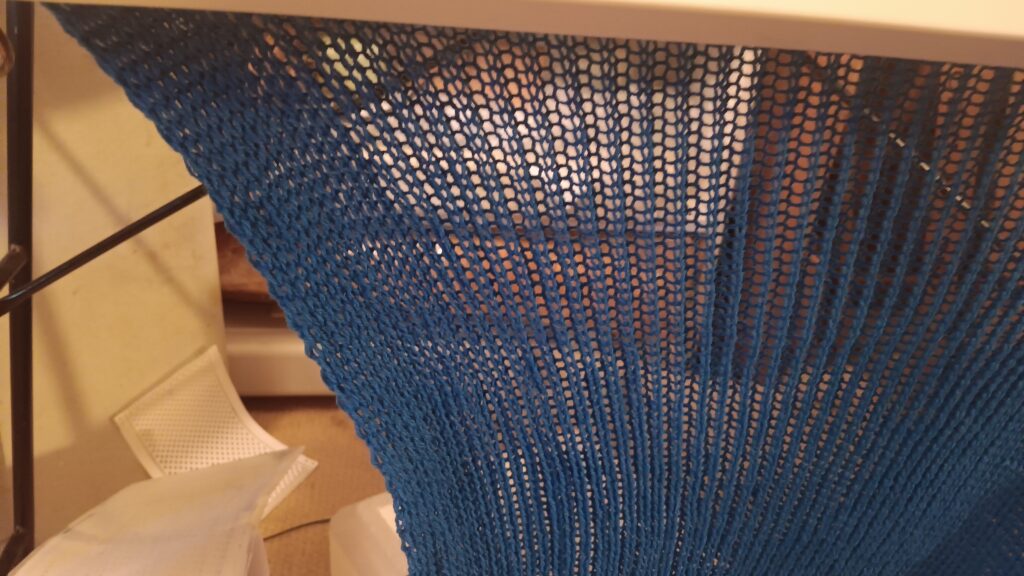
The only comments I have about the ribber are to pull on the fabric when the yarn is worsted-weight to make sure nothing gets caught. The weights sometimes rest against something on the machine stand, and it is something to watch for as well. I feel a tilt stand would be ideal for this setup, but those are hard to find. Even I don’t have one in my possession.
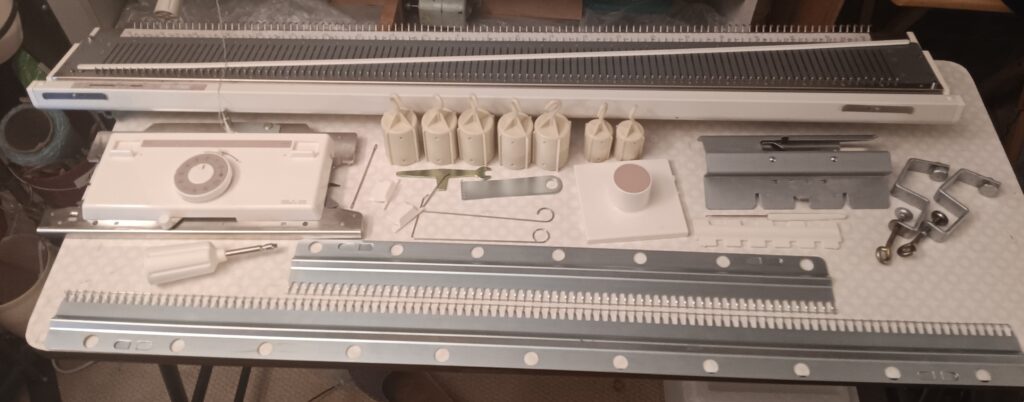
The ribber will also come with ALL accessories. Most are original. Only some are replacements, but still original to Brother. A hard copy of the manual is also included (typically I do not have spare copies to include). It is with the knitting machine package and all other brochures.
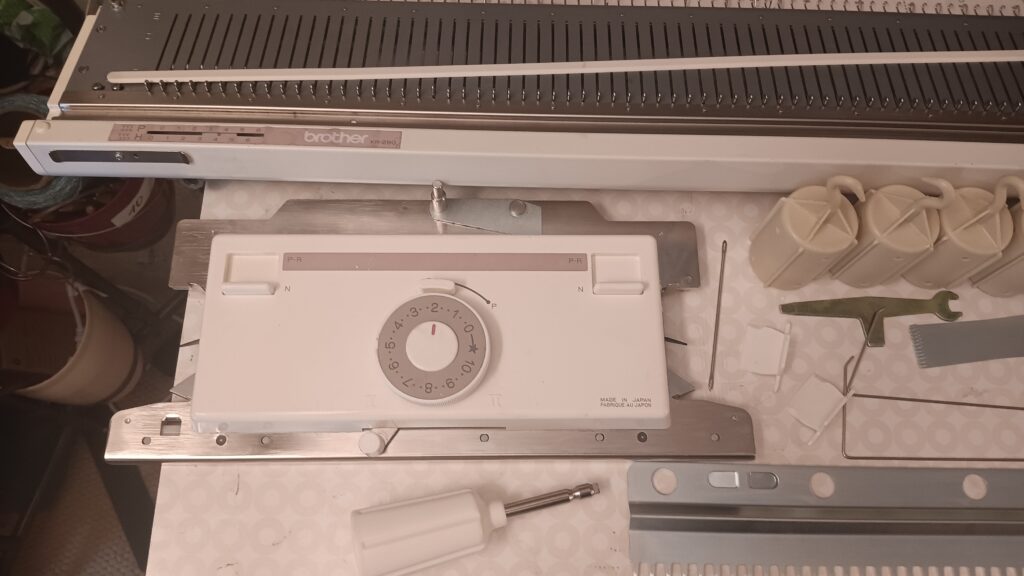
The ribber carriage is in great shape. The spanner is the original but is a bit rough to the touch. It is not a big deal. I feel that the spanner has not been used at all.
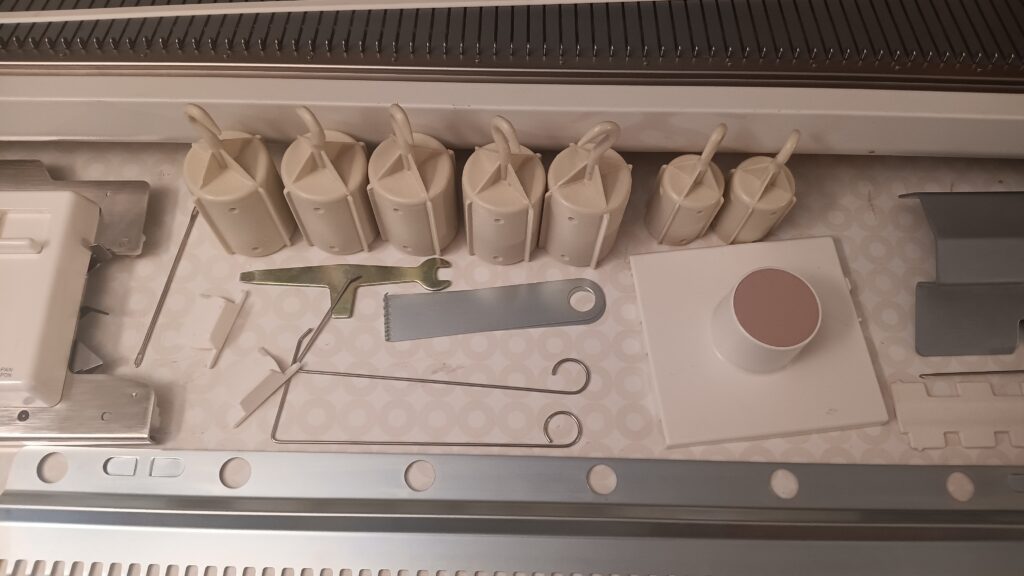
The claw hangers are new (new stock). The D-slider is original.
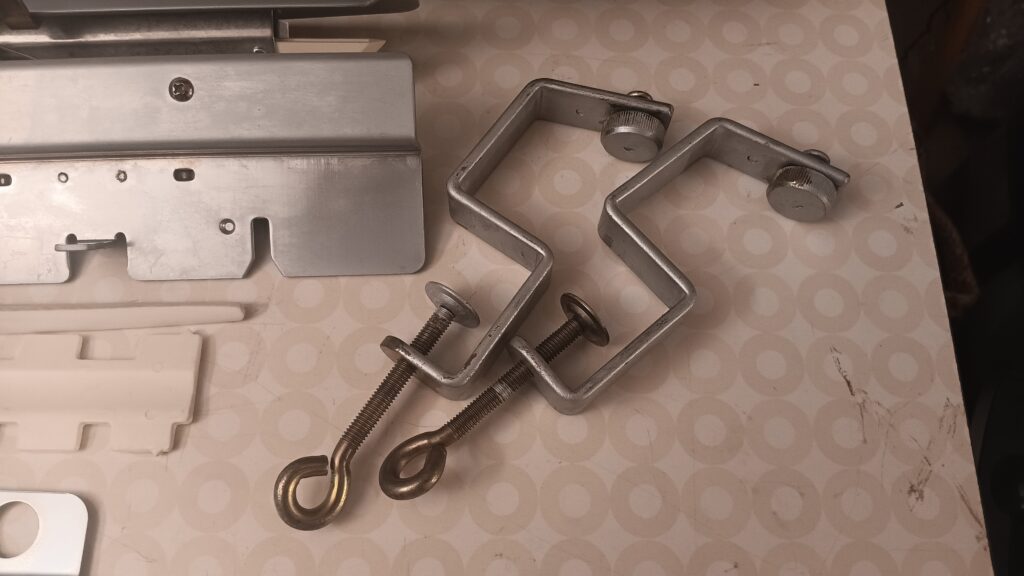
Table clamps are original but showed some discoloration, and I applied a layer of Rust-Oleum.
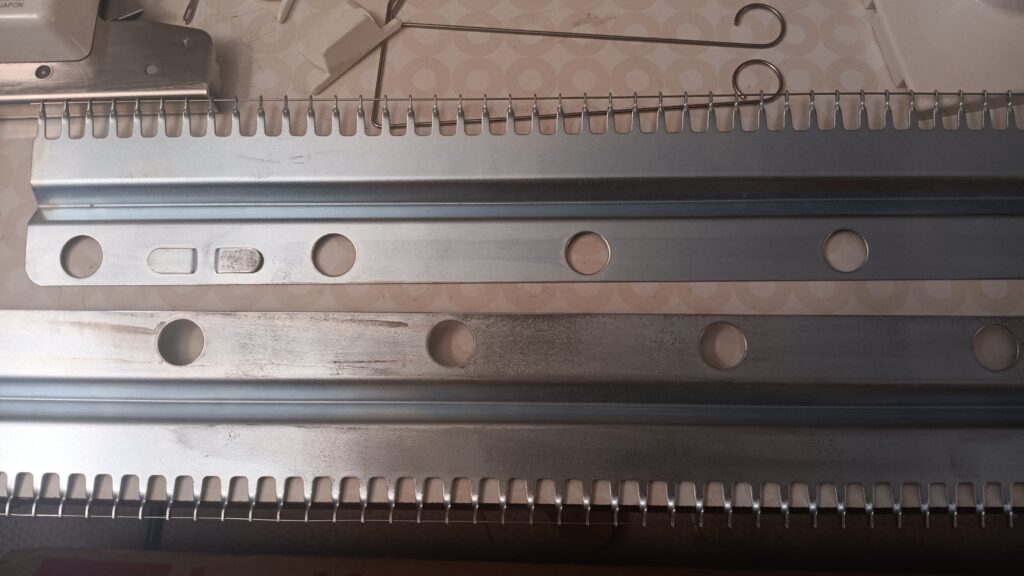
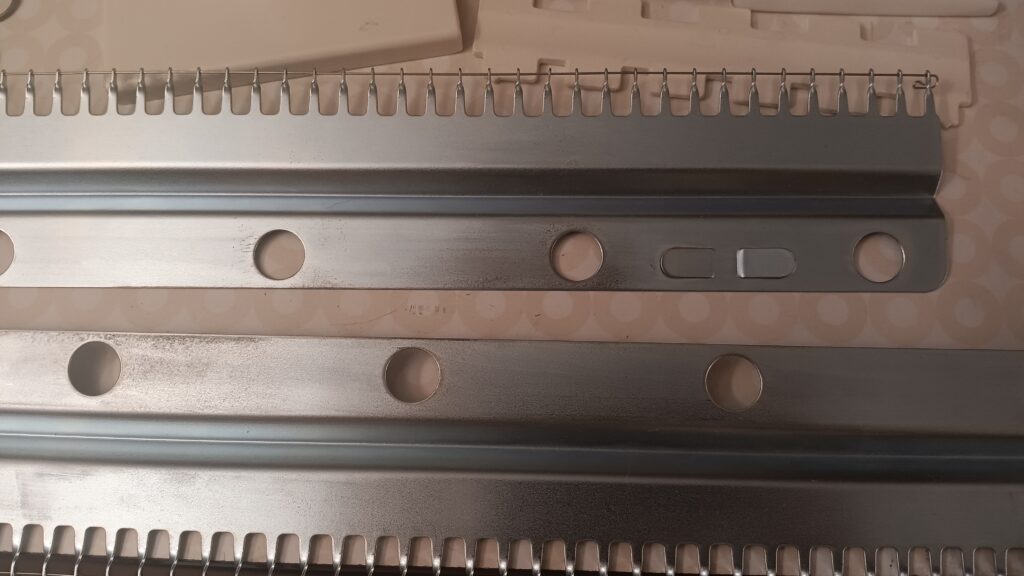
The cast-on combs are original too and have some discoloration, but I decided not to make them uglier with my mediocre painting skills. The combs are still smooth to the touch. Only one side is discolored. The other looks perfect.
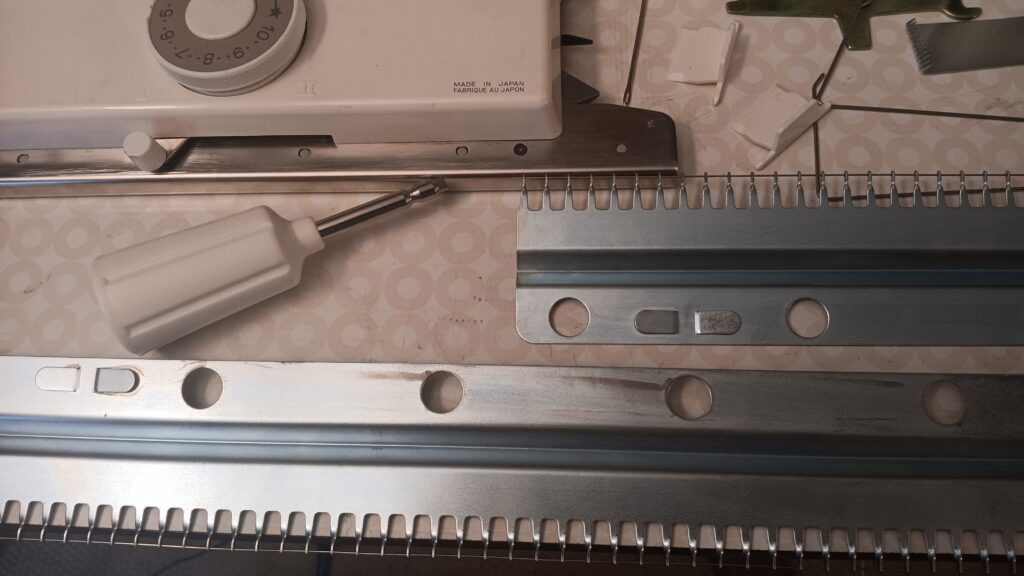
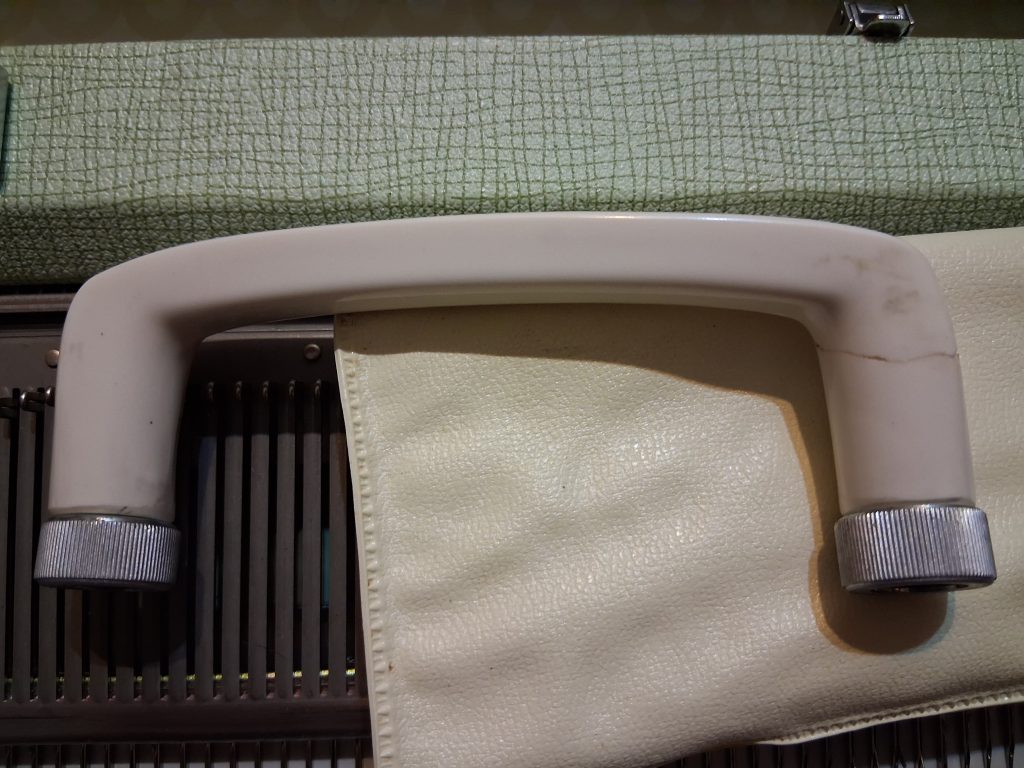
The handle is new stock (thus, it is a bit whiter than the rest of the plastic).
Both the ribber and the machine will come with their original packaging, which I will then put in another box. The resale value of the machines with original packaging is a bit higher, and it is also nice to have them for storage, especially the ribber packaging since it has all these nice compartments.