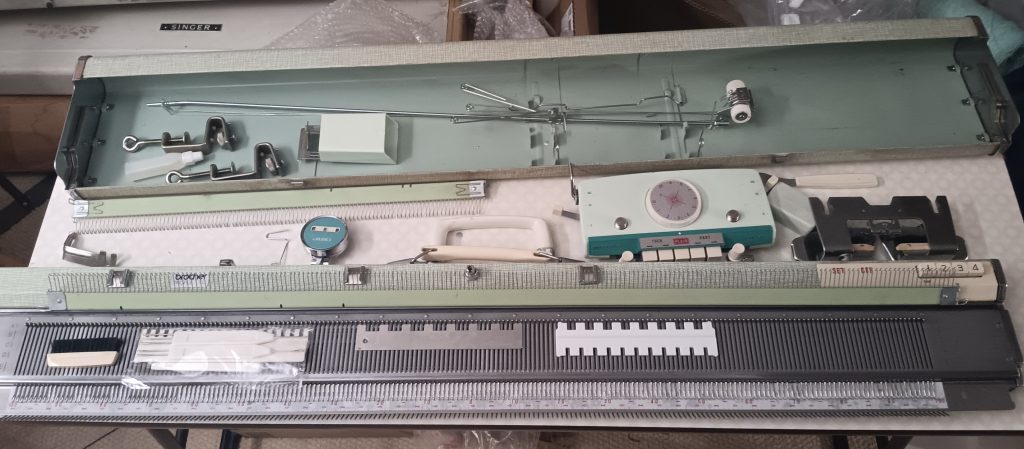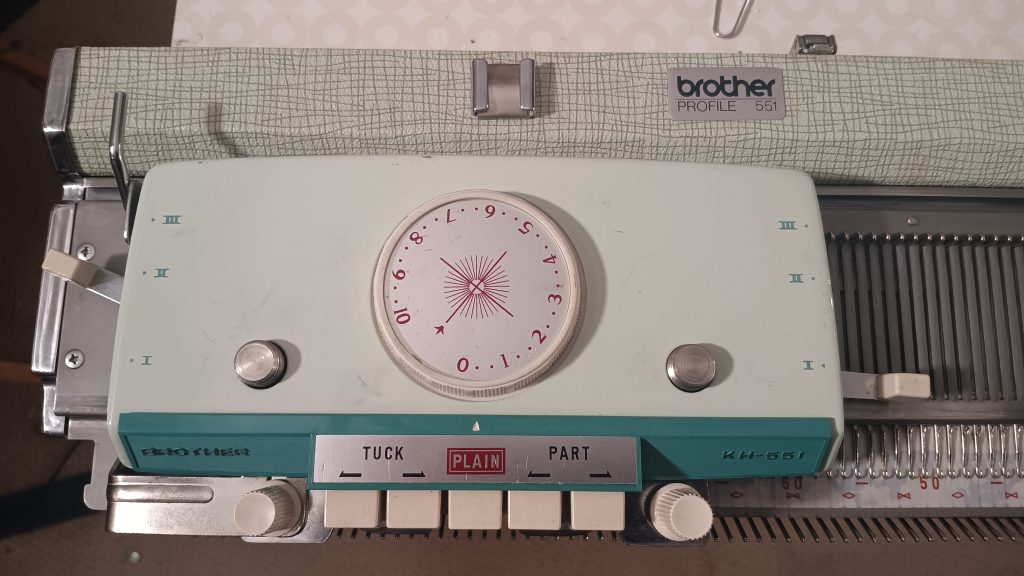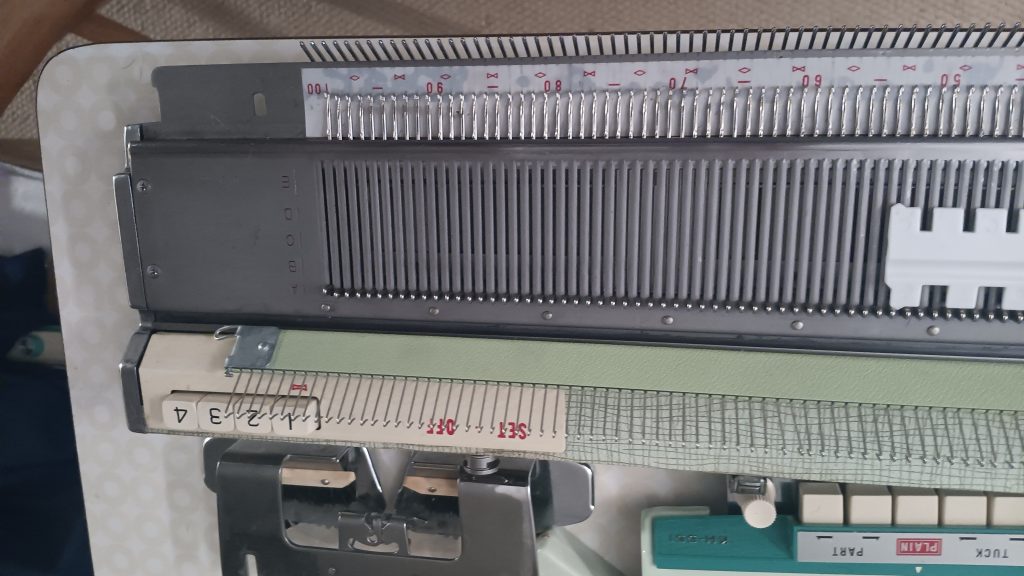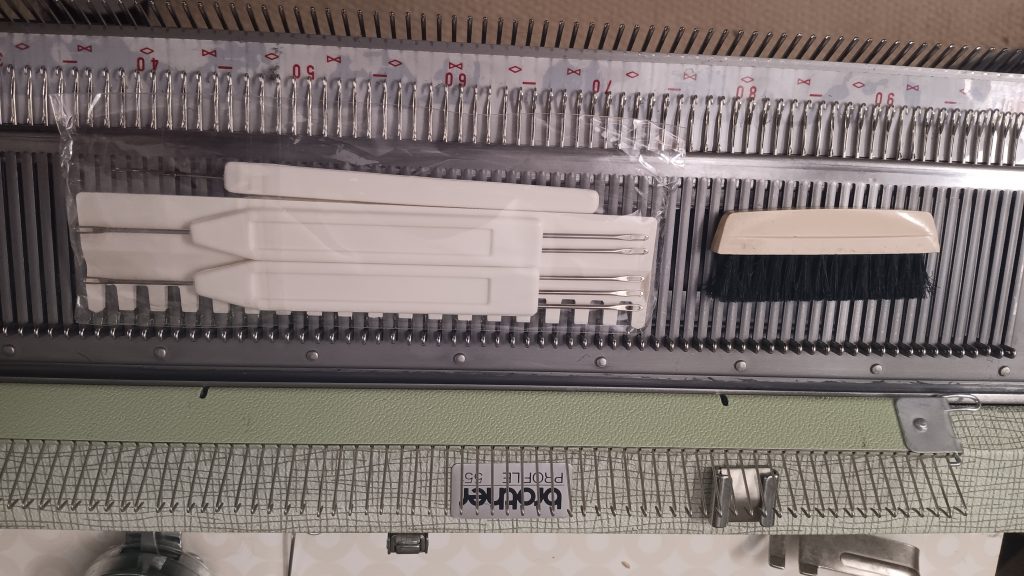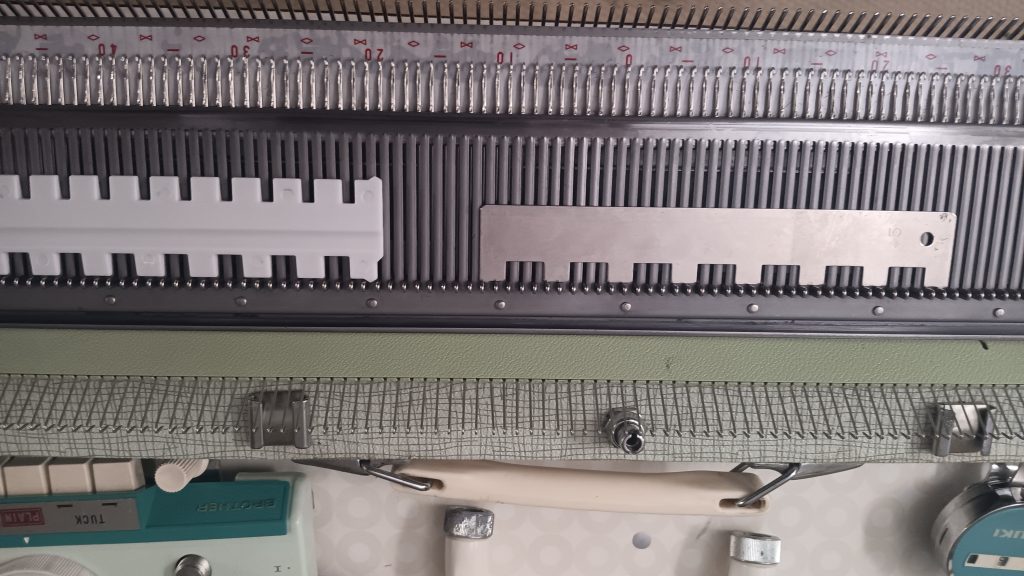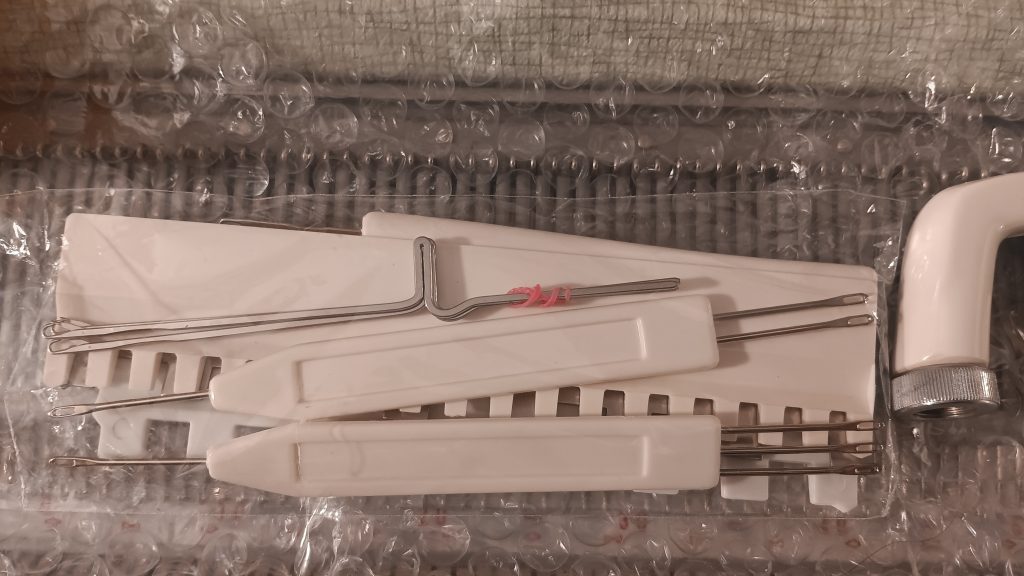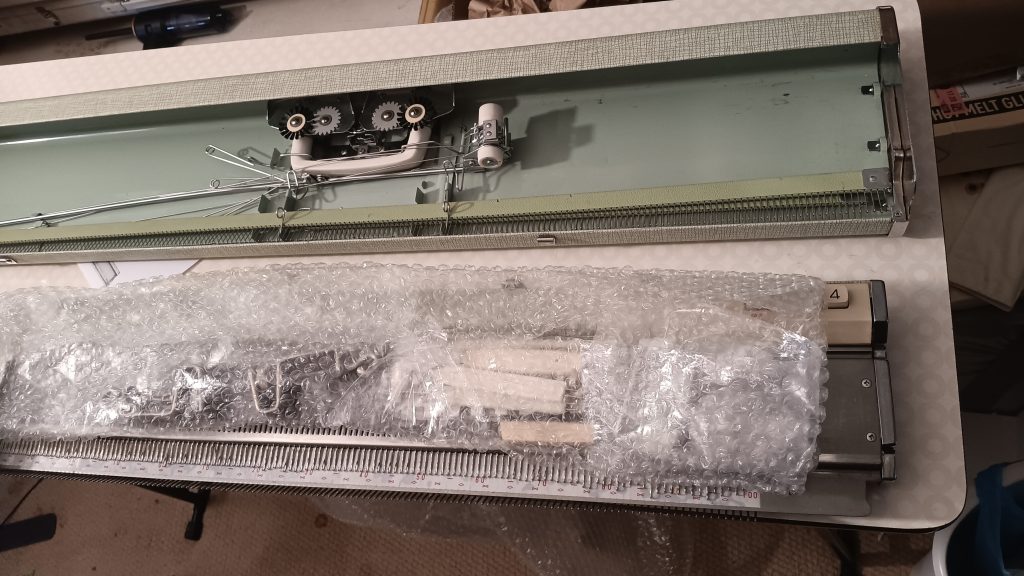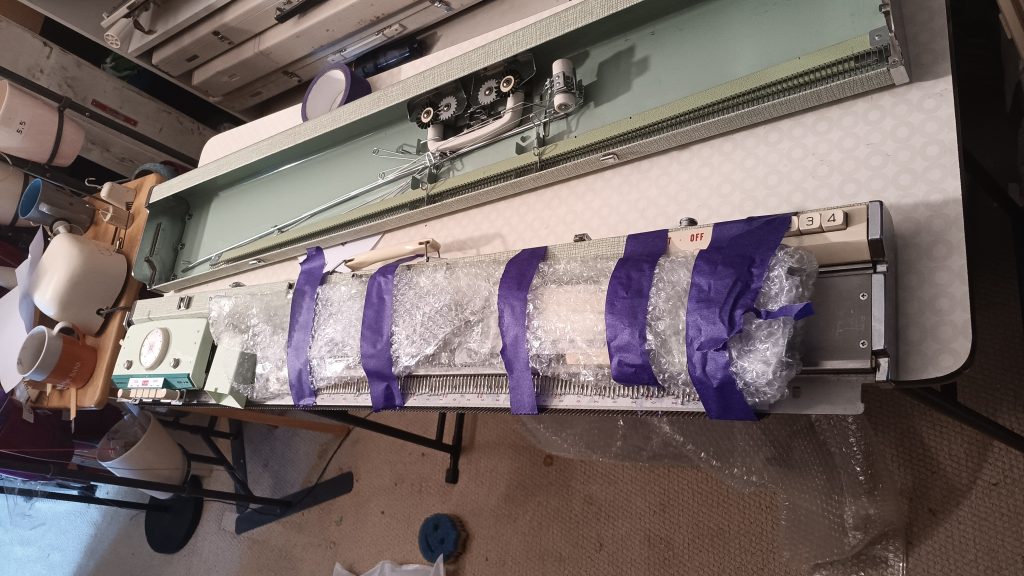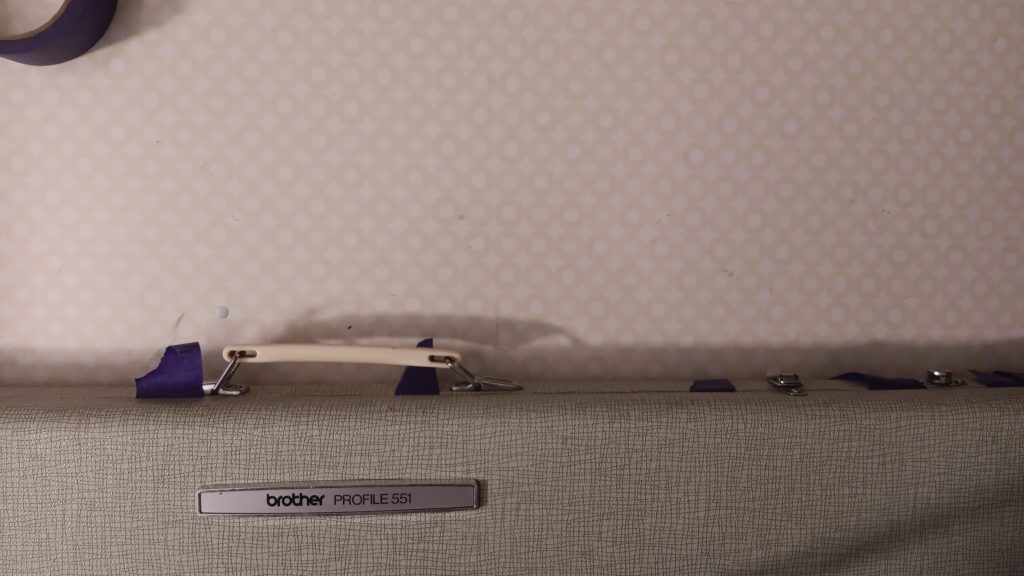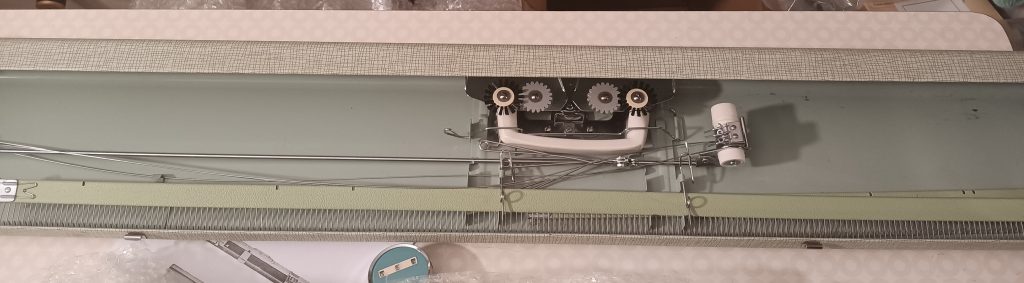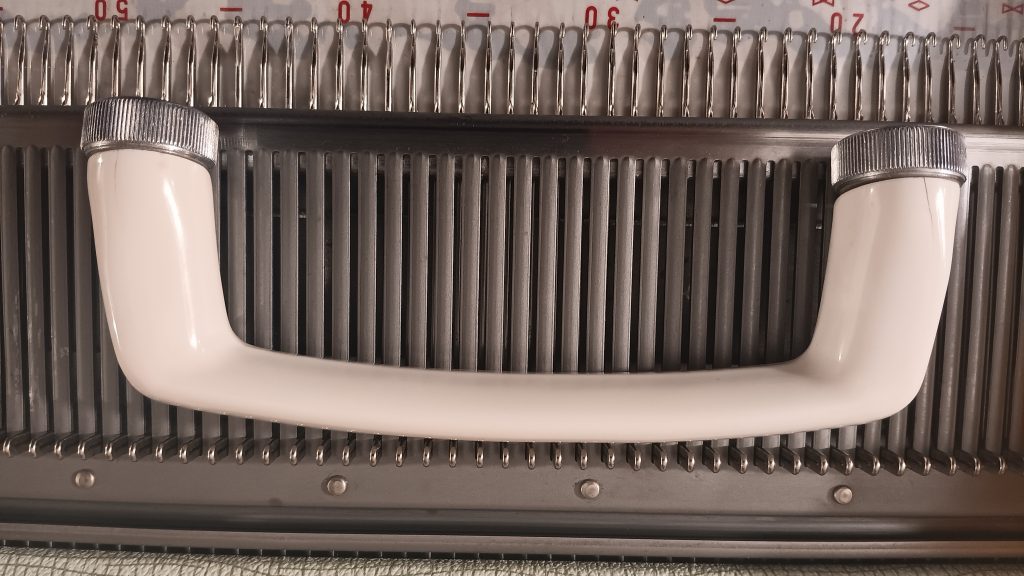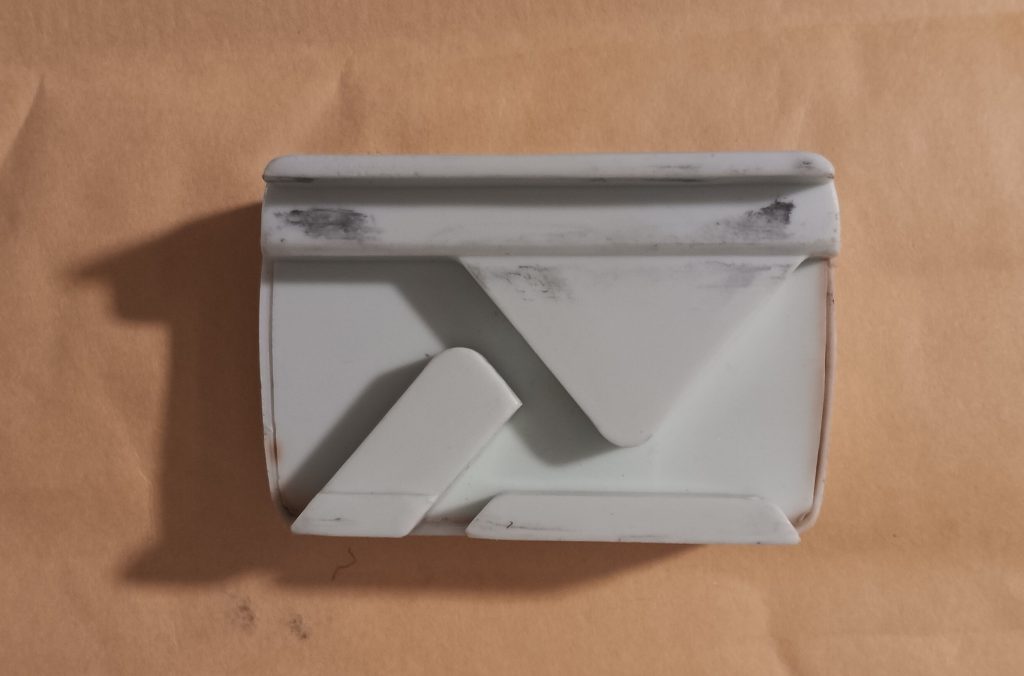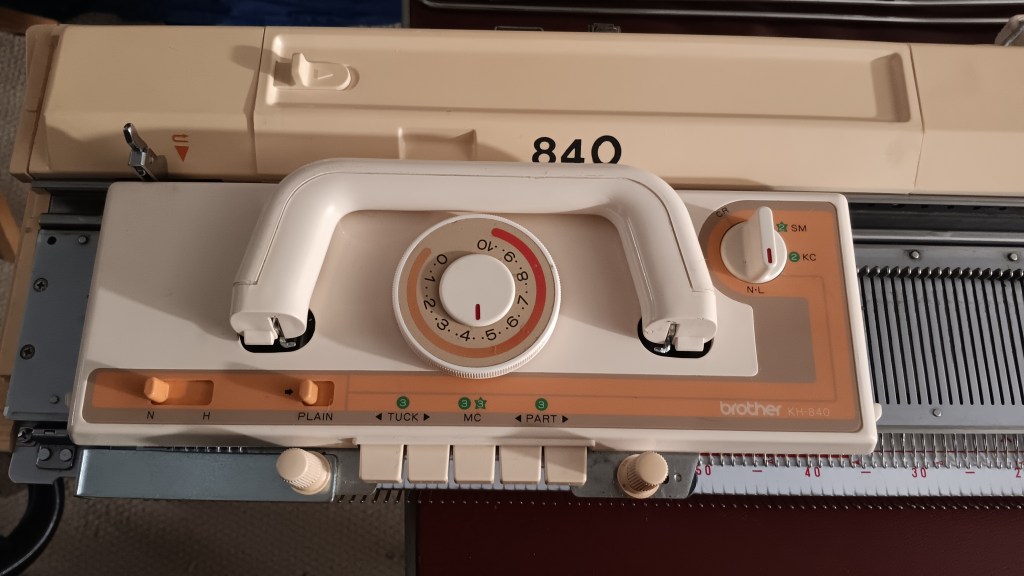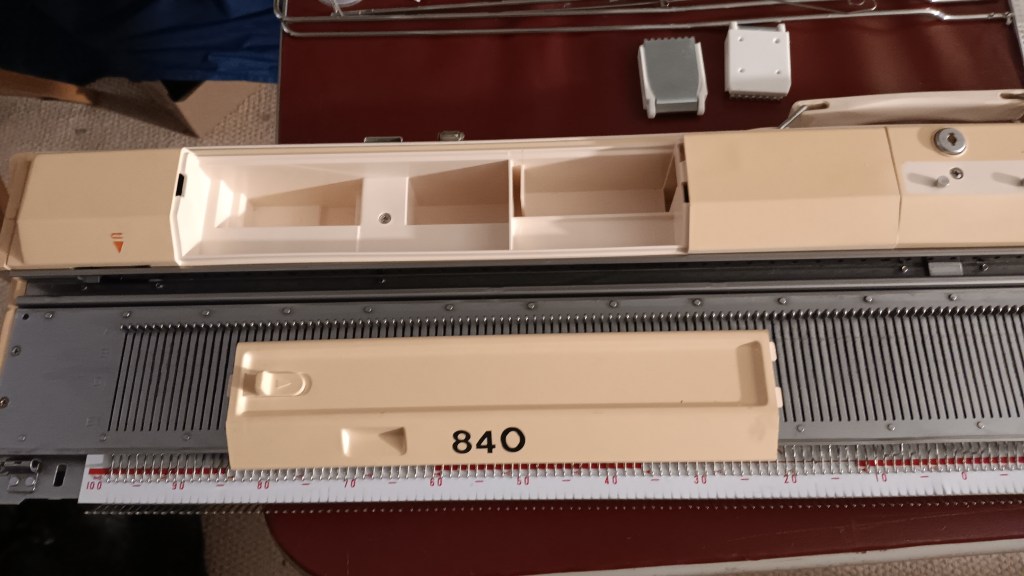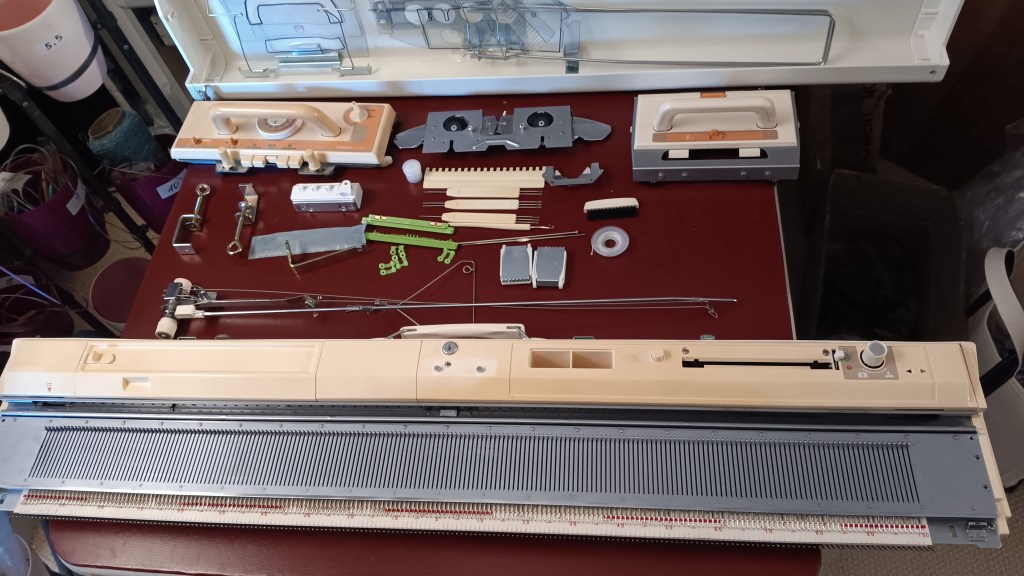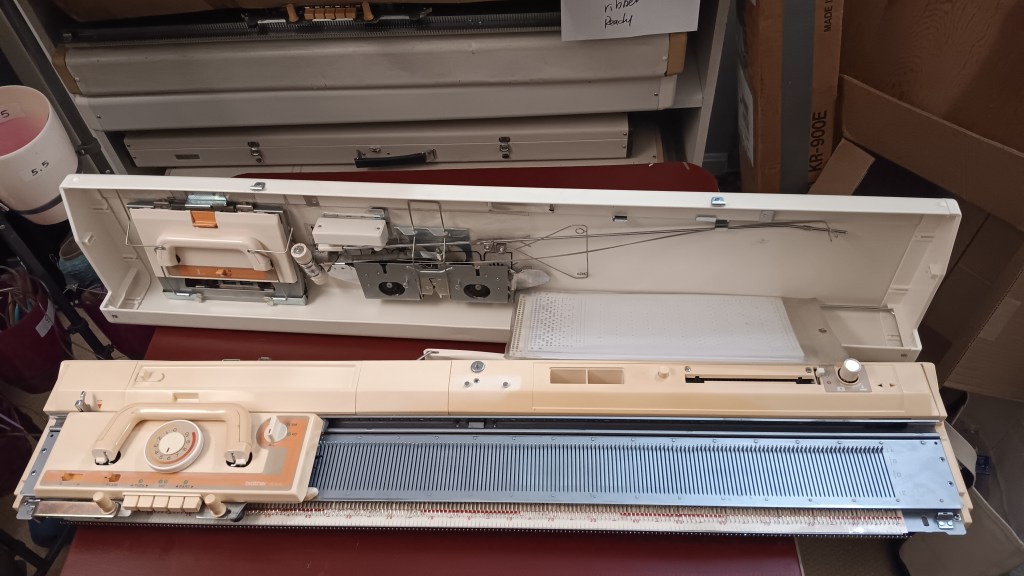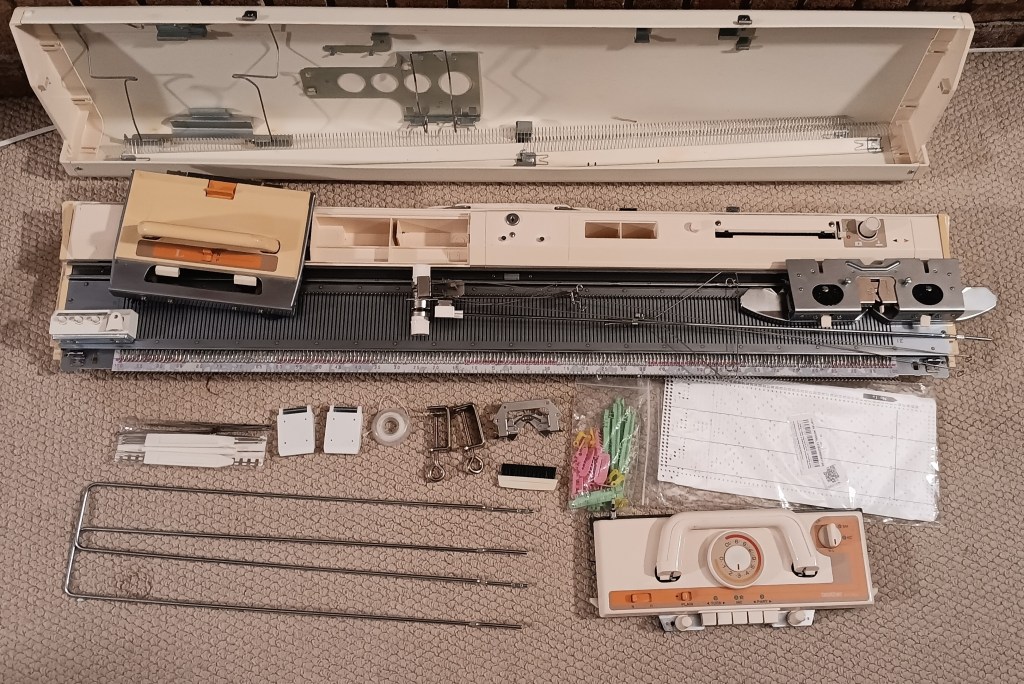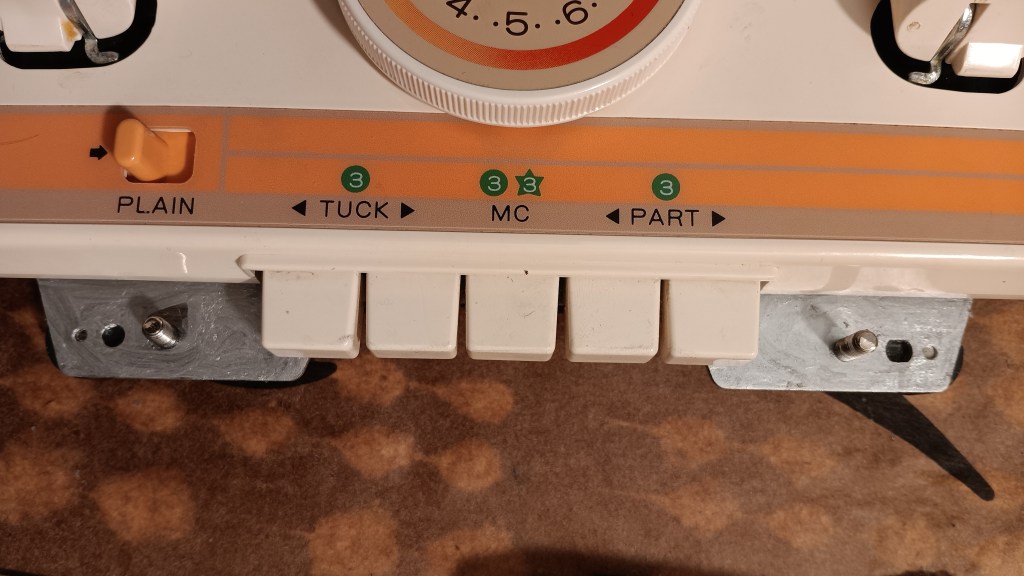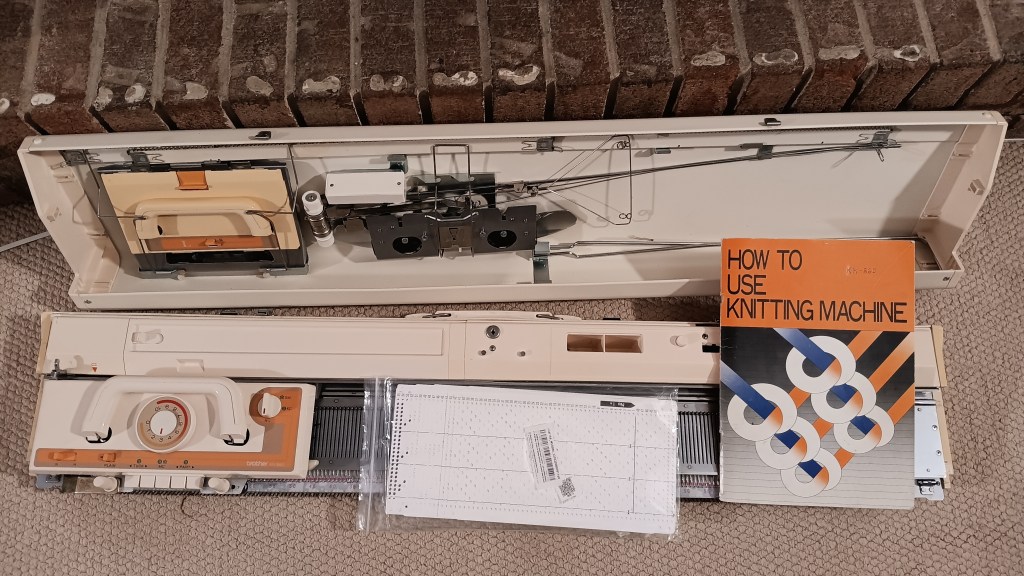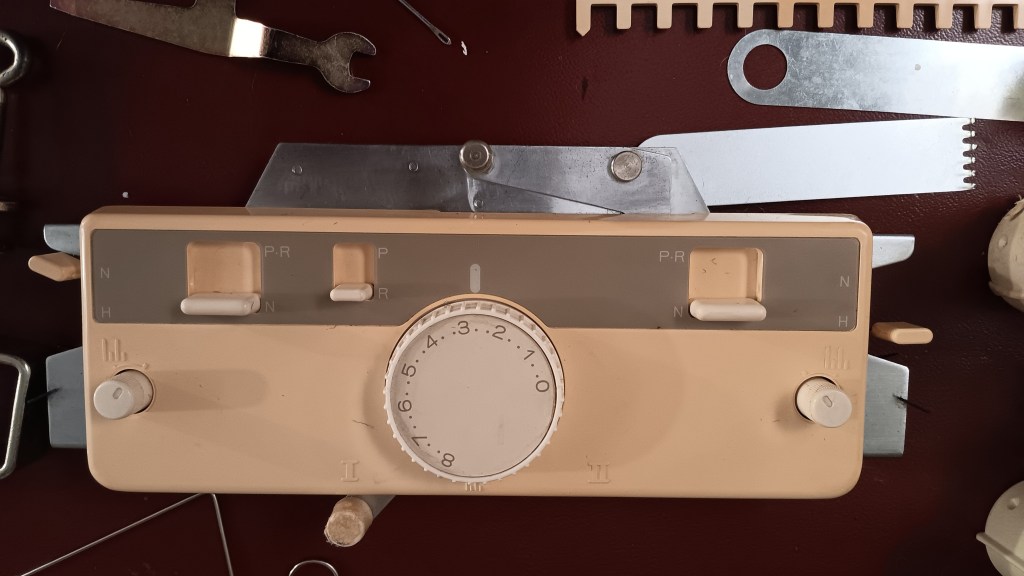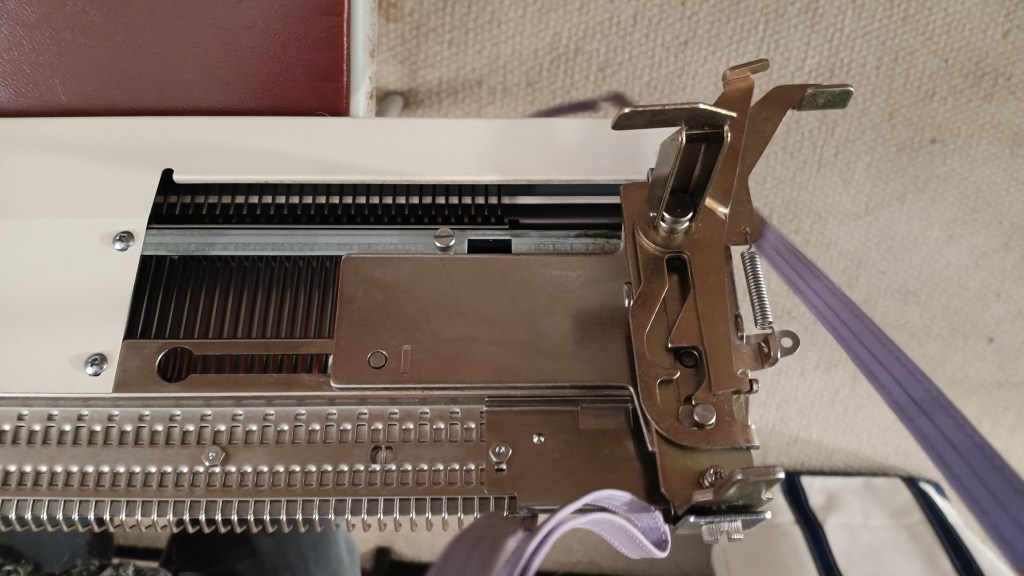
Brother KH840 prepared for Rose in December/January

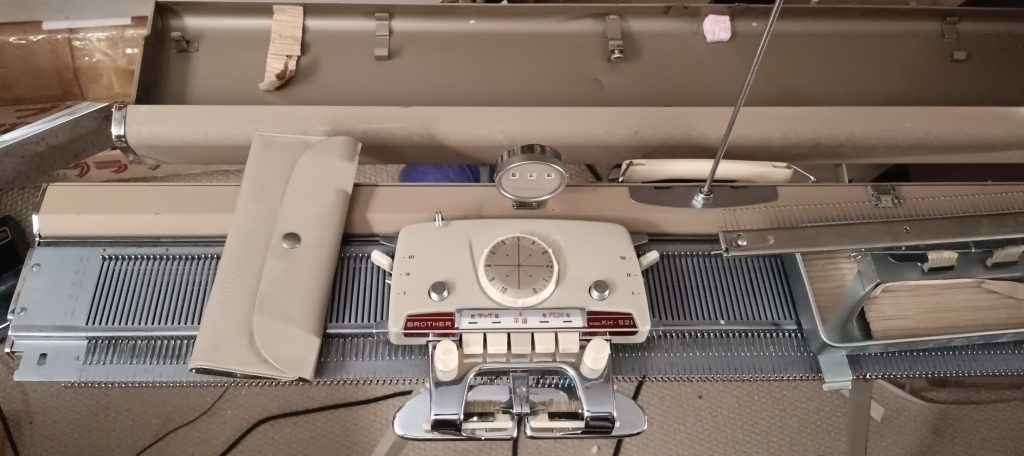
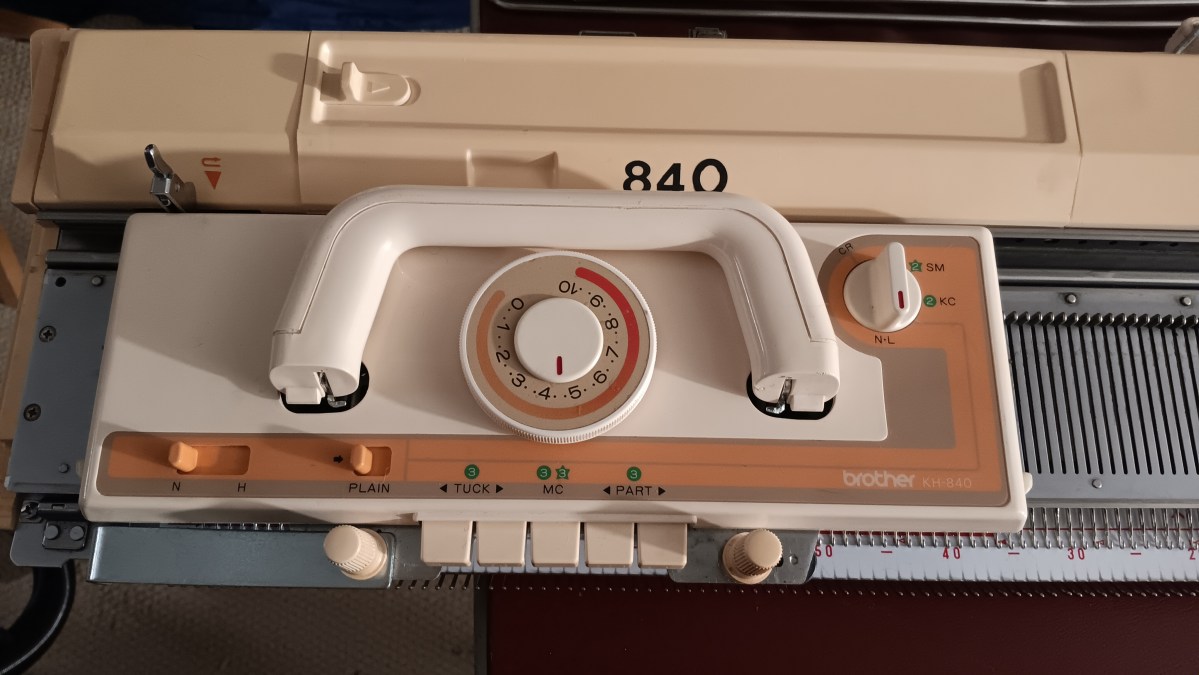
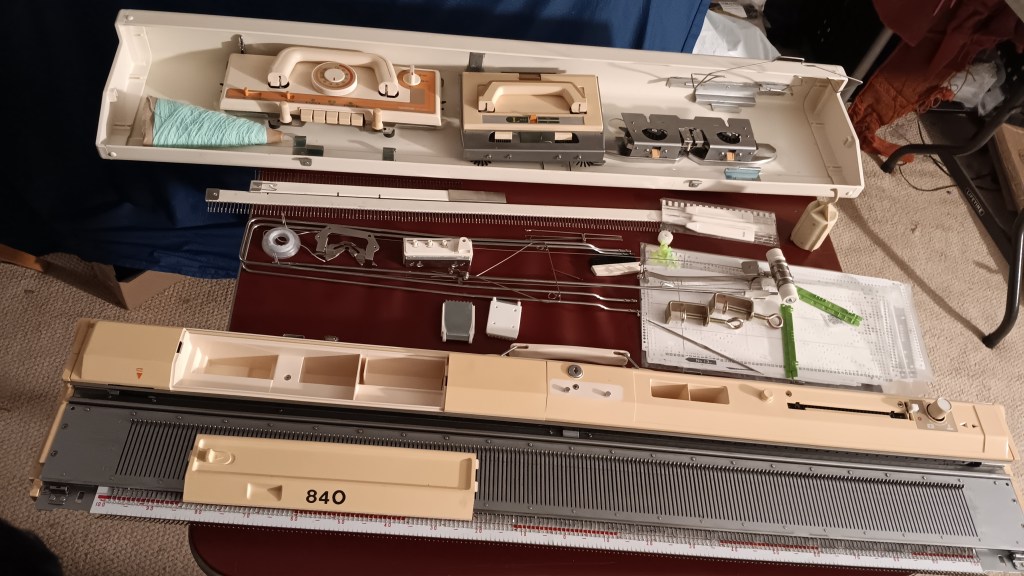
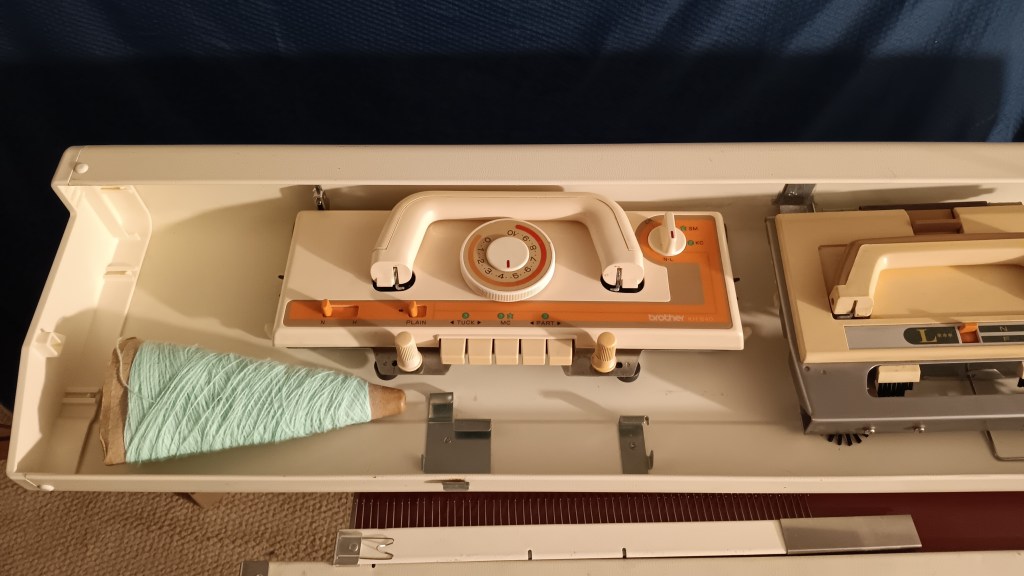
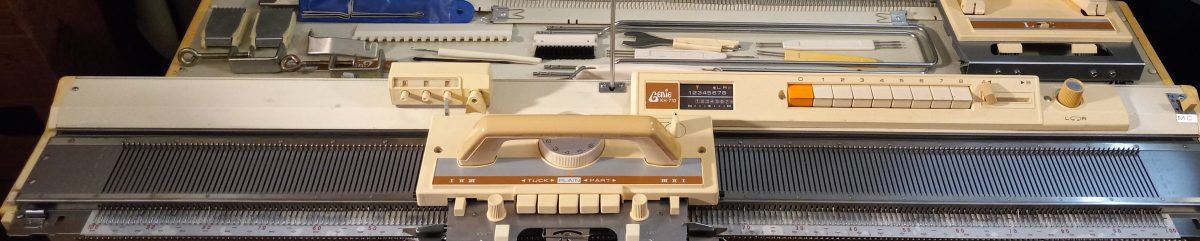
Brother KH840 knitting machine has 200 needles, 4.5 mm apart. Read about the pros and cons of this model in my Knitting Machine Encyclopedia. This article is dedicated to a specific Brother KH840 machine serviced and fully tested in my shop in January 2026.

The machine was opened, cleaned, oiled and inspected for rust. It had some minor rust spots (mostly on the case) but they were all treated. All needles were removed, cleaned, inspected, and replaced (with new ones from new stock) if they were faulty.

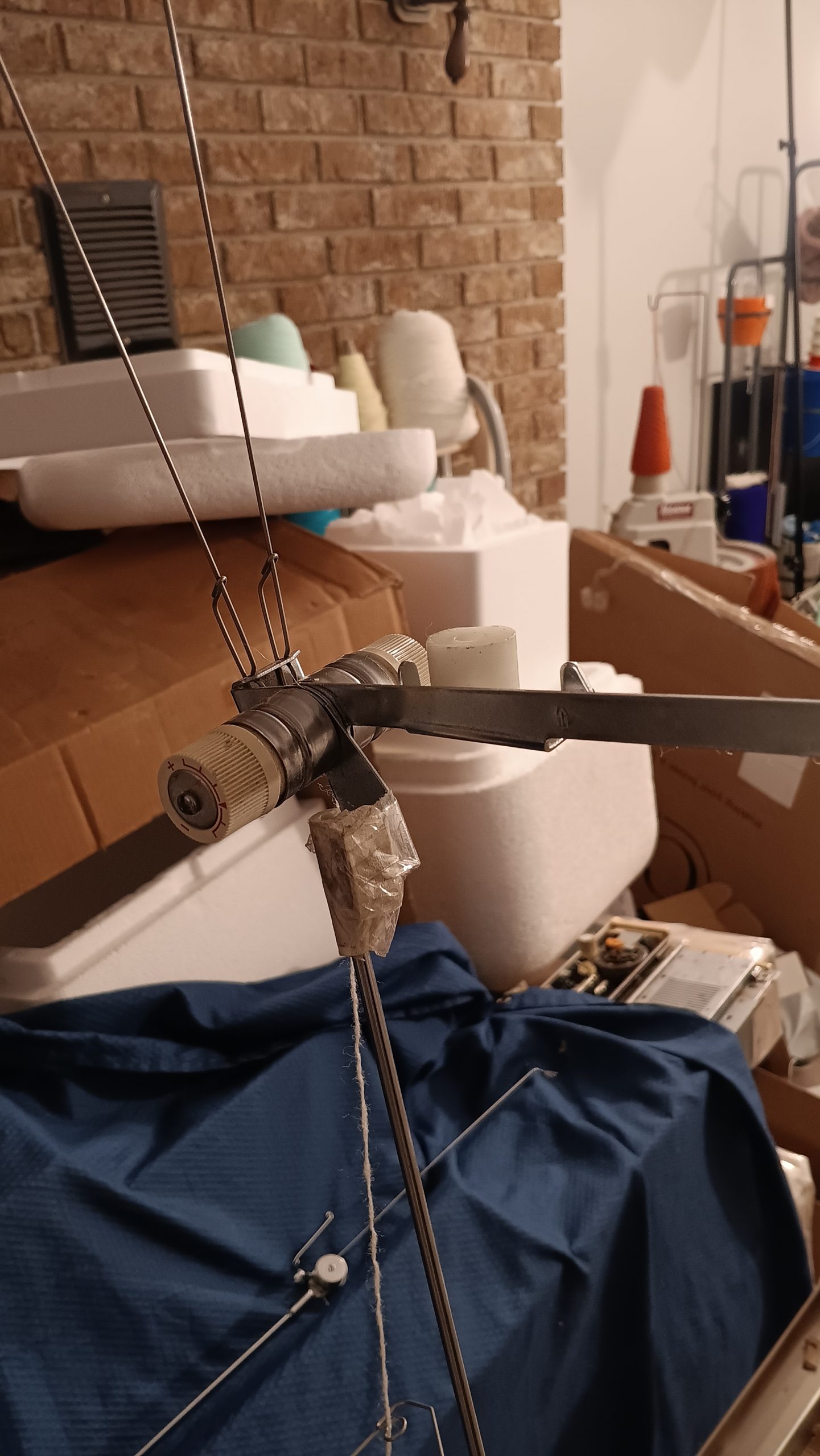
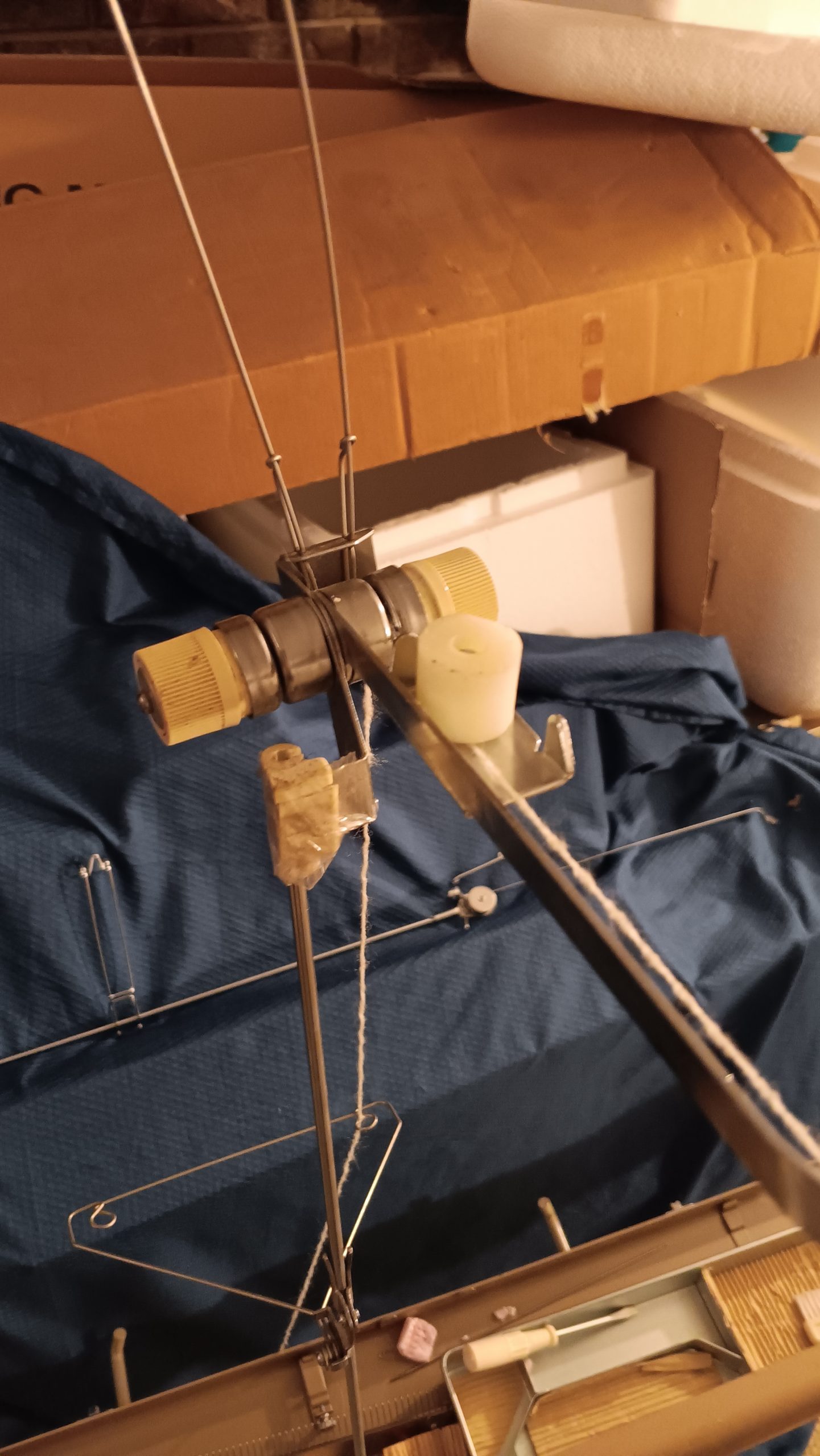
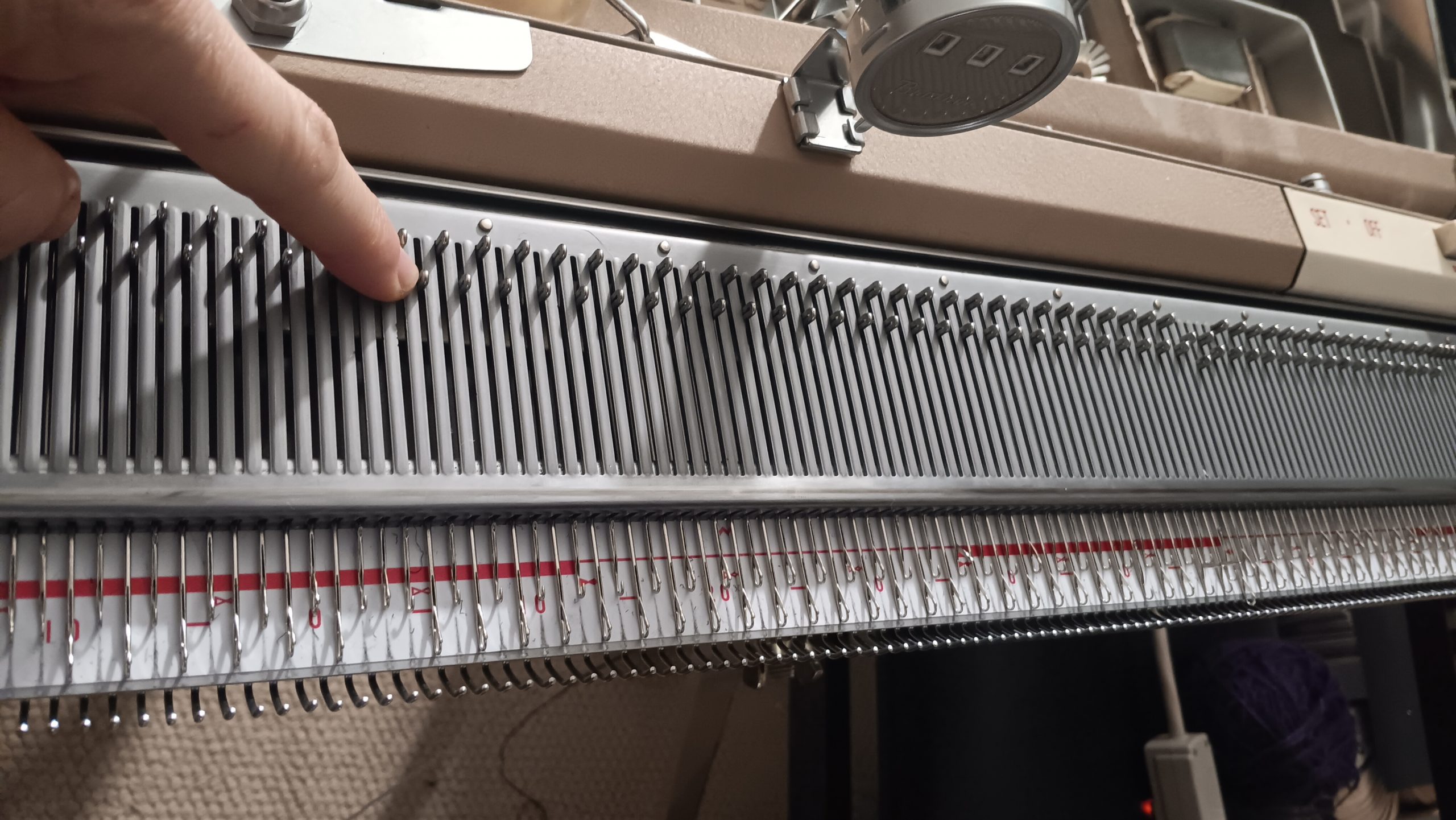
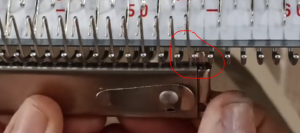
The sponge strip in the retaining bar was replaced. I placed medical tape on the end to prevent the sponge strip from buckling. I recommended getting some medical tape because if you remove the retaining bar (for example, to replace needles), the tape might come off because the retaining bar with a new sponge strip sits pretty right in its channel.

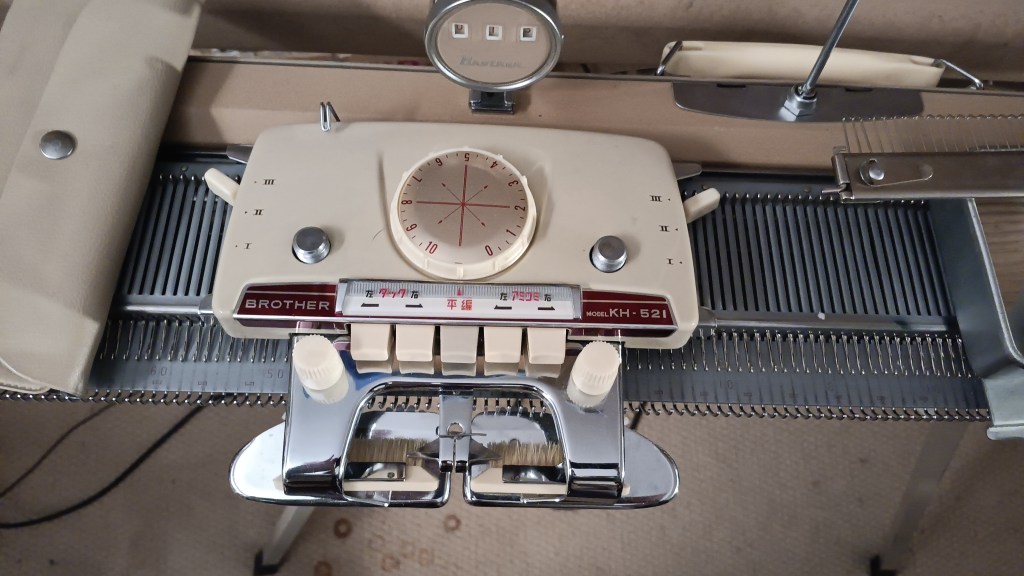
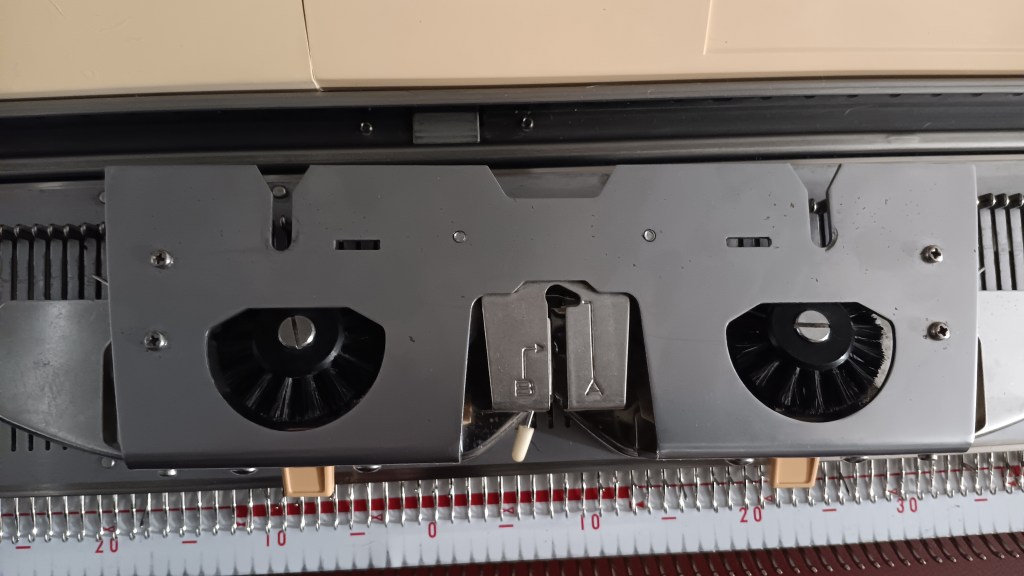
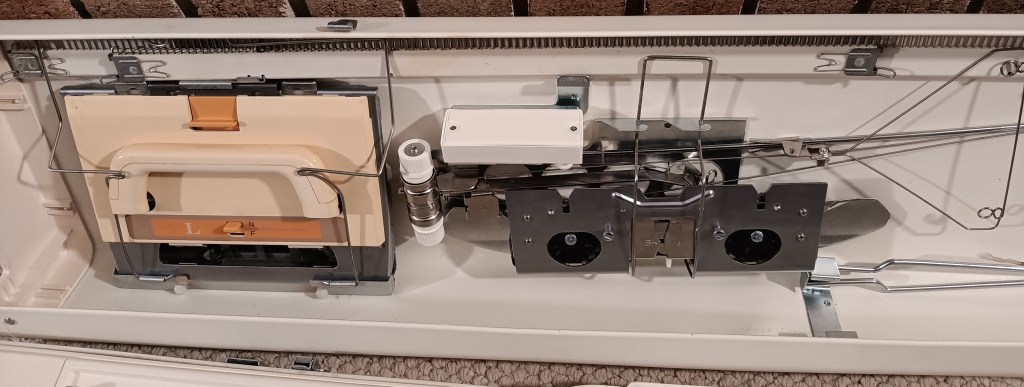
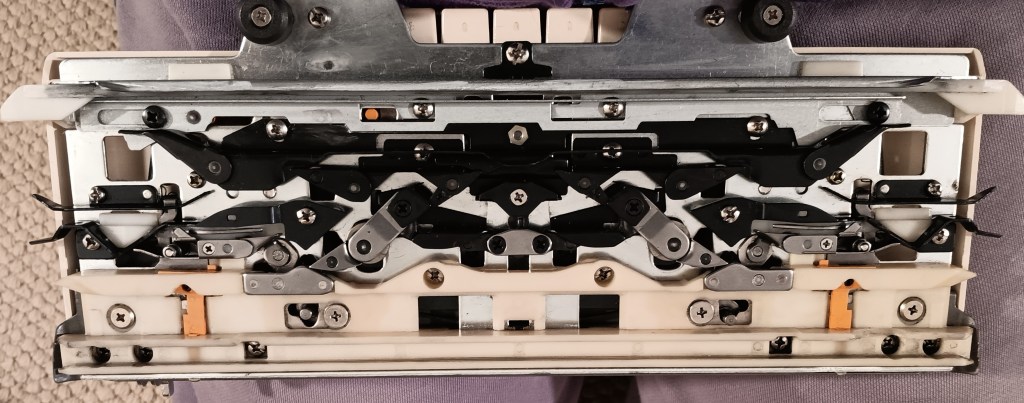
The carriage was thoroughly inspected and deep-cleaned as well. All buttons push with ease. All levers and flippers move freely, too.

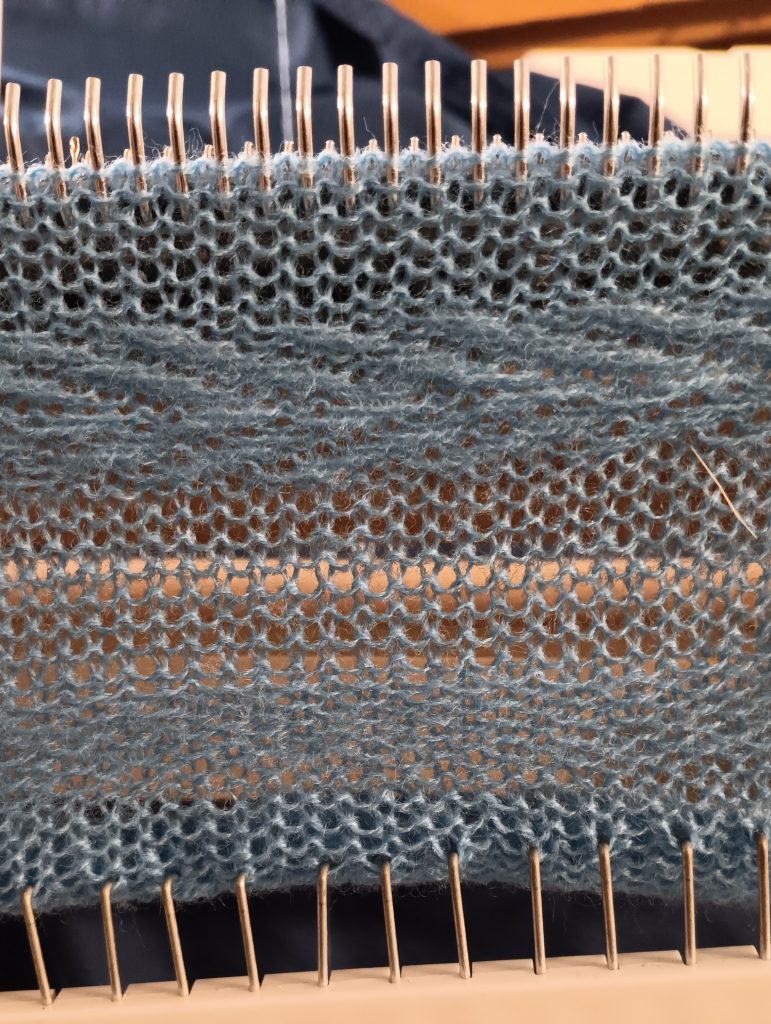
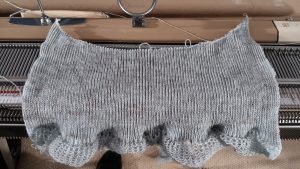
After the machine was deep-cleaned, I tested it on a full bed by knitting tuck, slip/part, and two-color fair isle. I used two different yarns. All tests went well (watch a video of these tests) and demonstrated that the machine patterns without any flaws and that all needles form correct stitches. In fact, during the testsm I discovered that one needle (despite a thorough inspection) did not form correct stitches and I replaced it. After that, no more faults in the fabric.

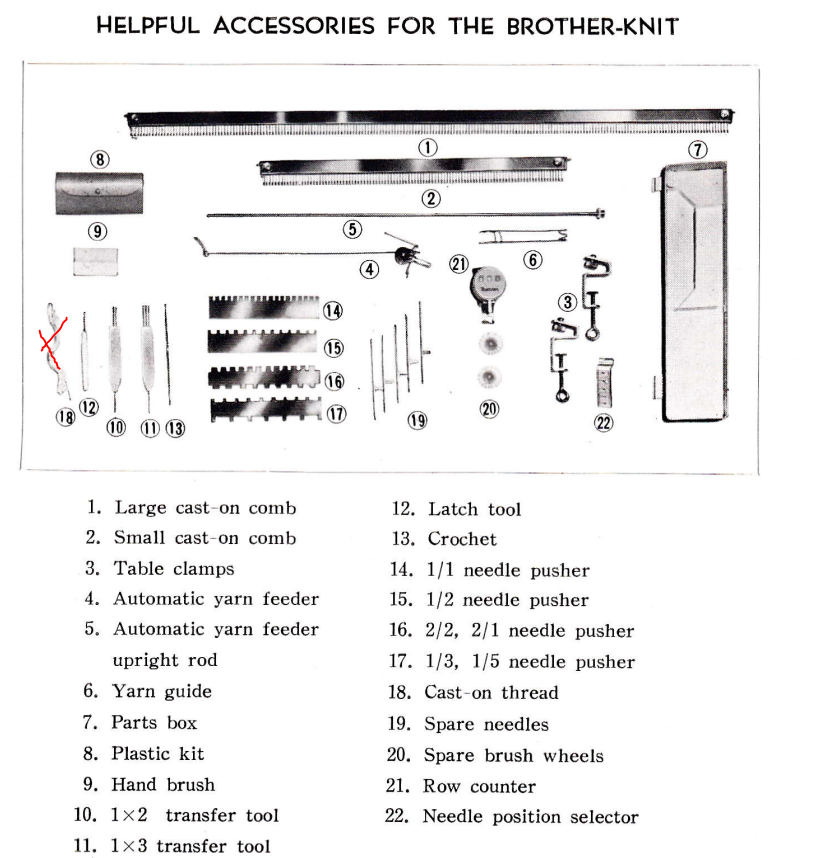
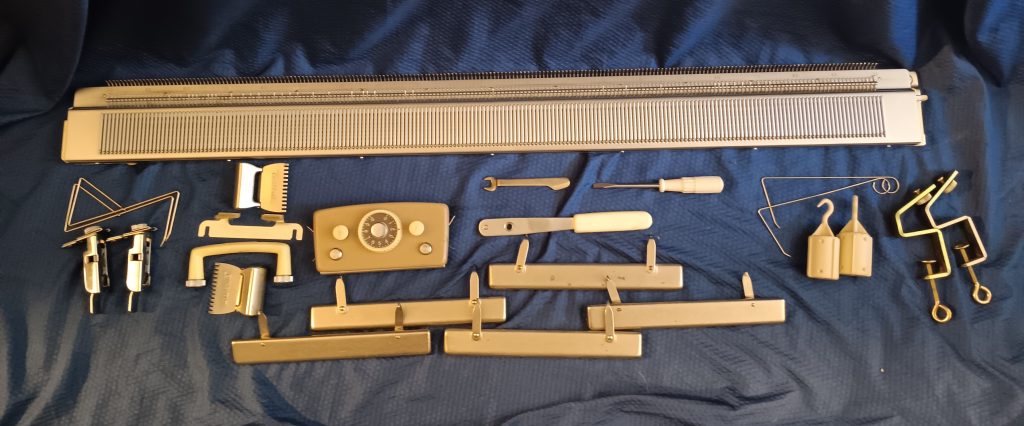
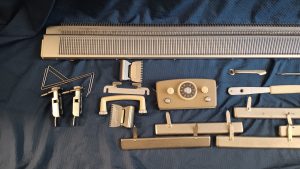
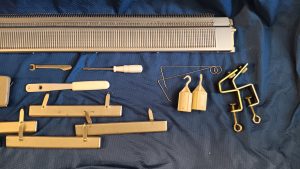
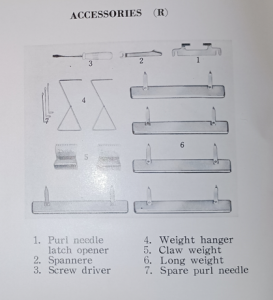
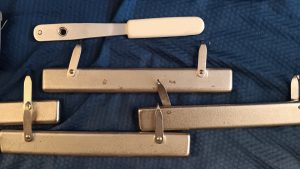
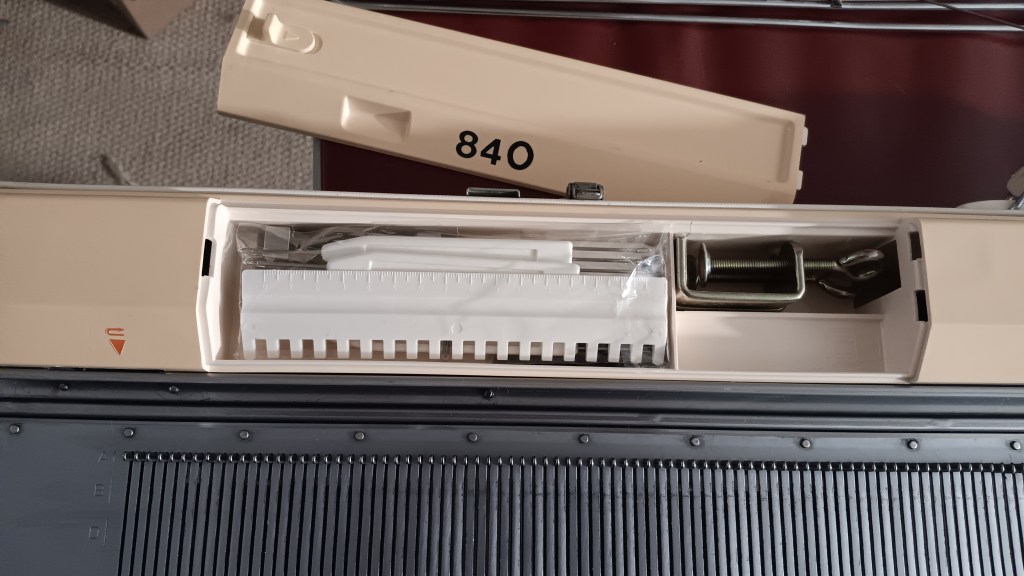
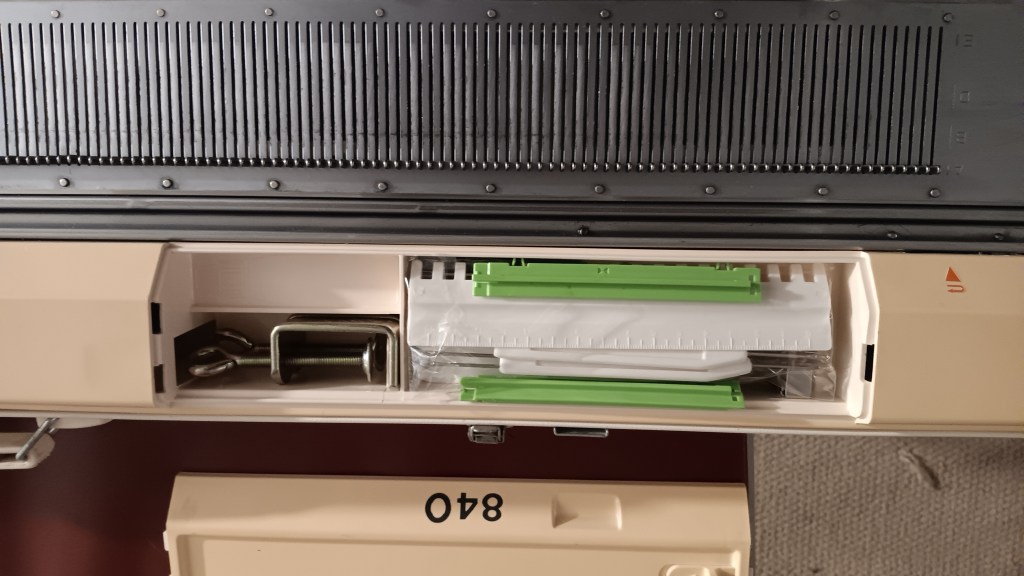
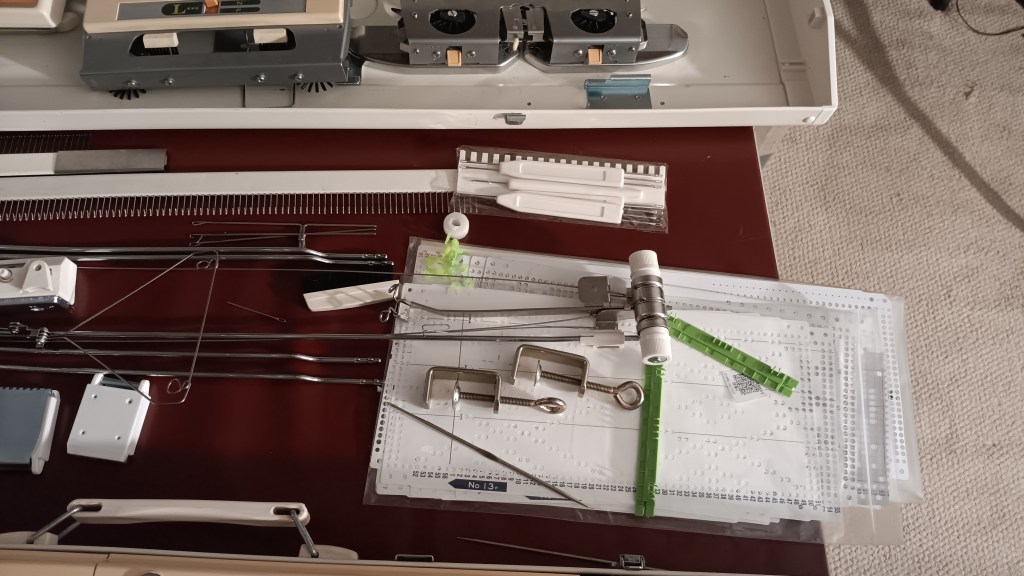
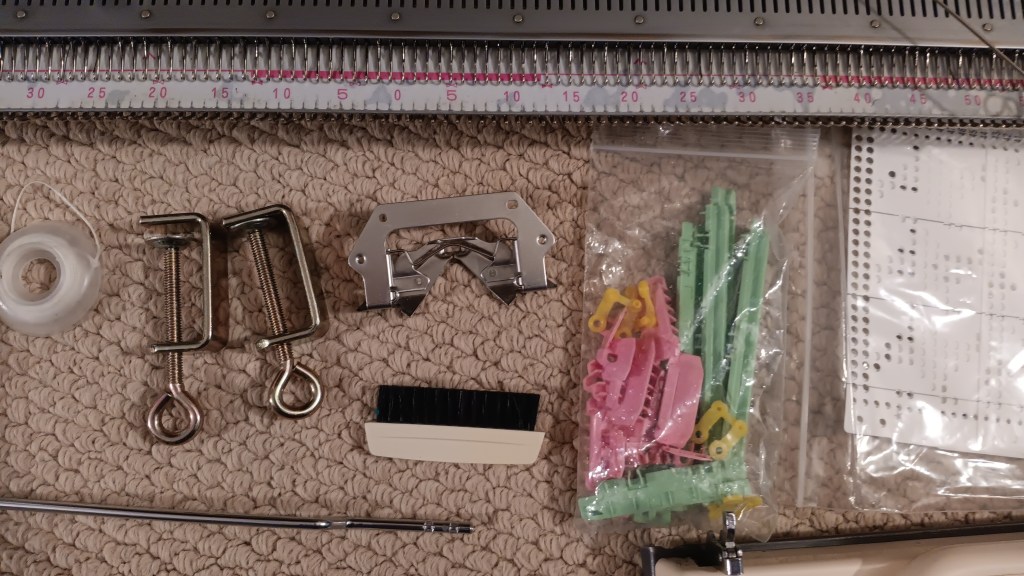
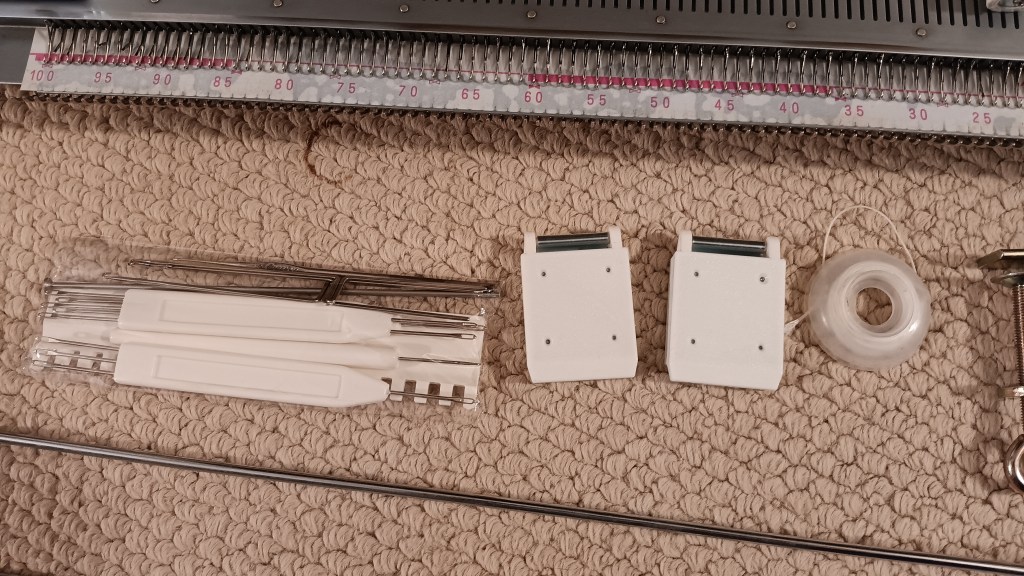
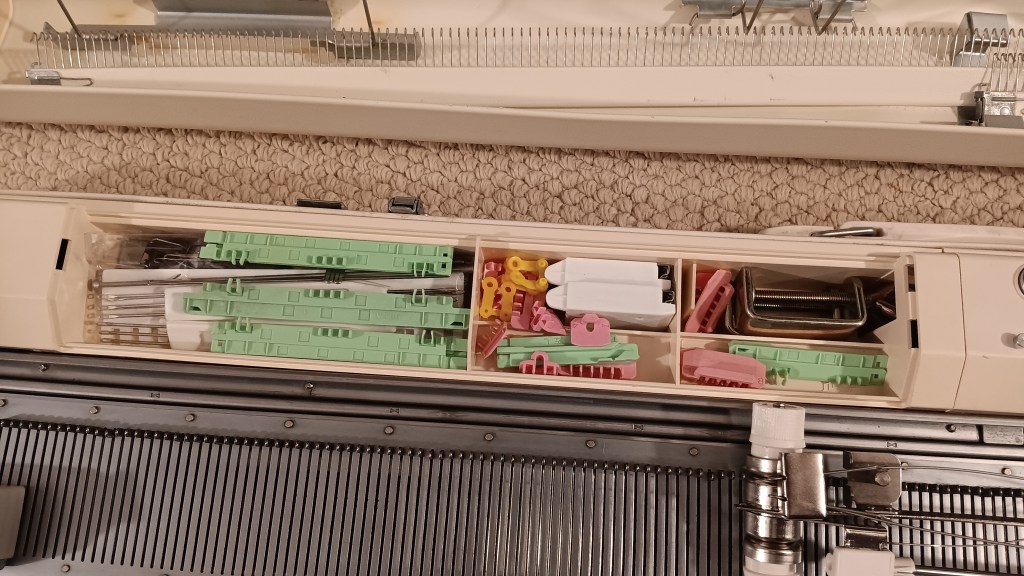
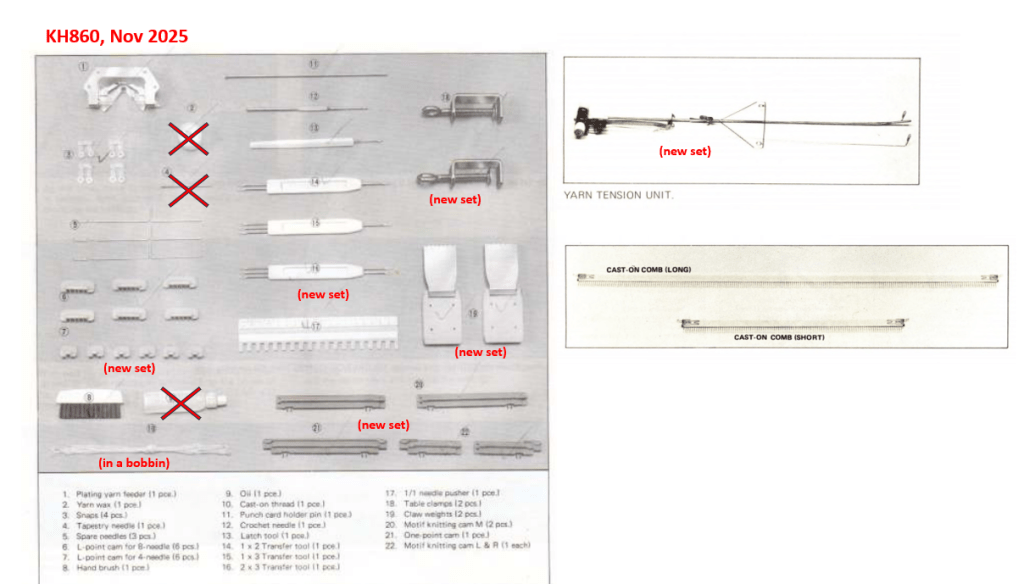
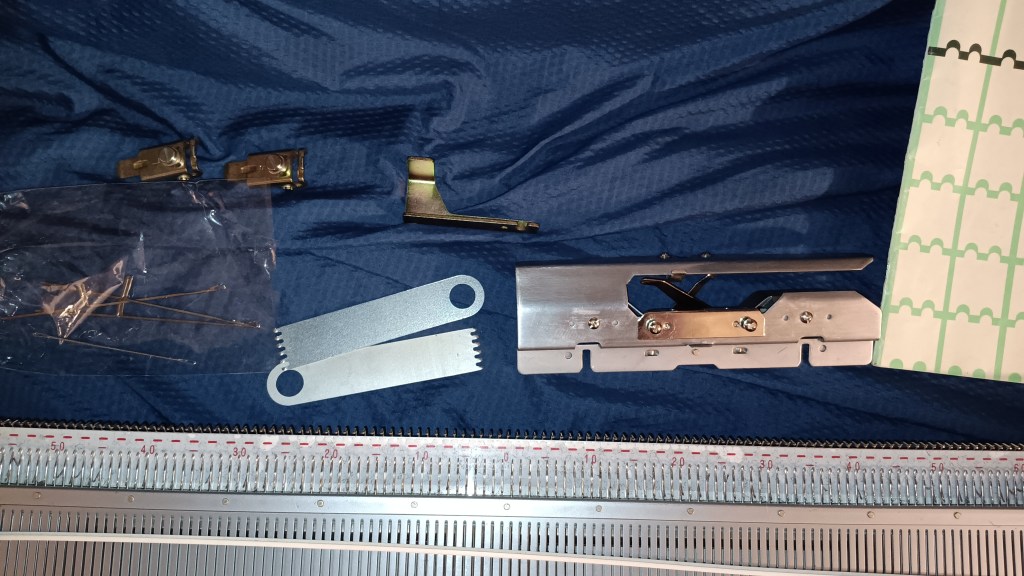
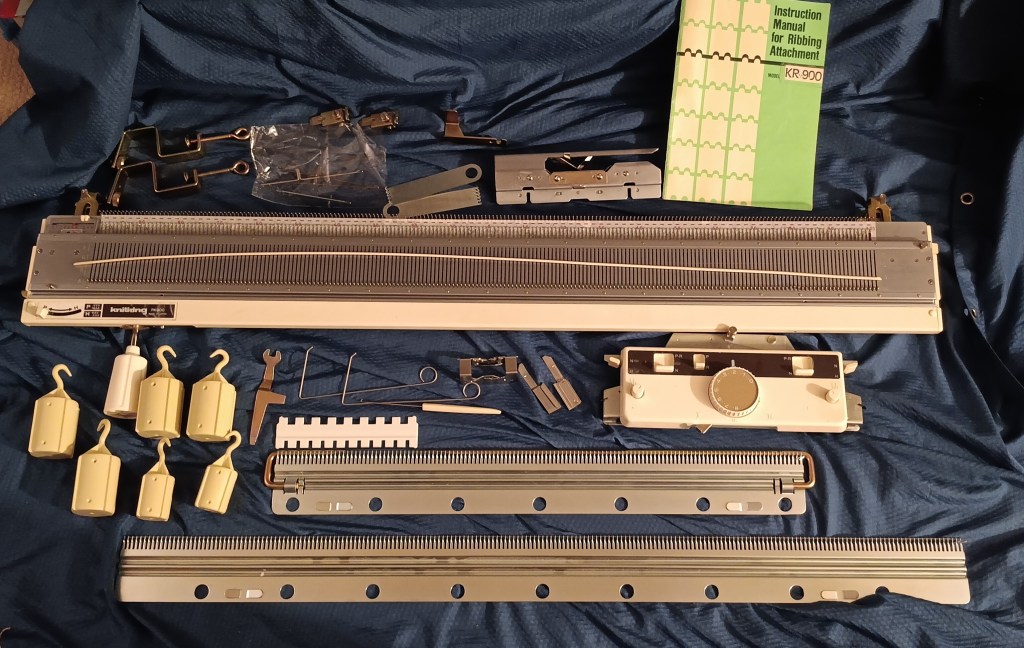
The setup will include all major and almost all minor accessories, some of which are new: tension mast, carriage lock, claw weights, table clamps, row counter, button for the punchcard mechanism and needle selection tool set. The accessories are stored in the built-in toolbox.

The missing accessories are the oil (but Hope’s gun oil on Amazon). Hard copy of the manual will NOT be included but a manual in English as well as in other languages is available online for free.

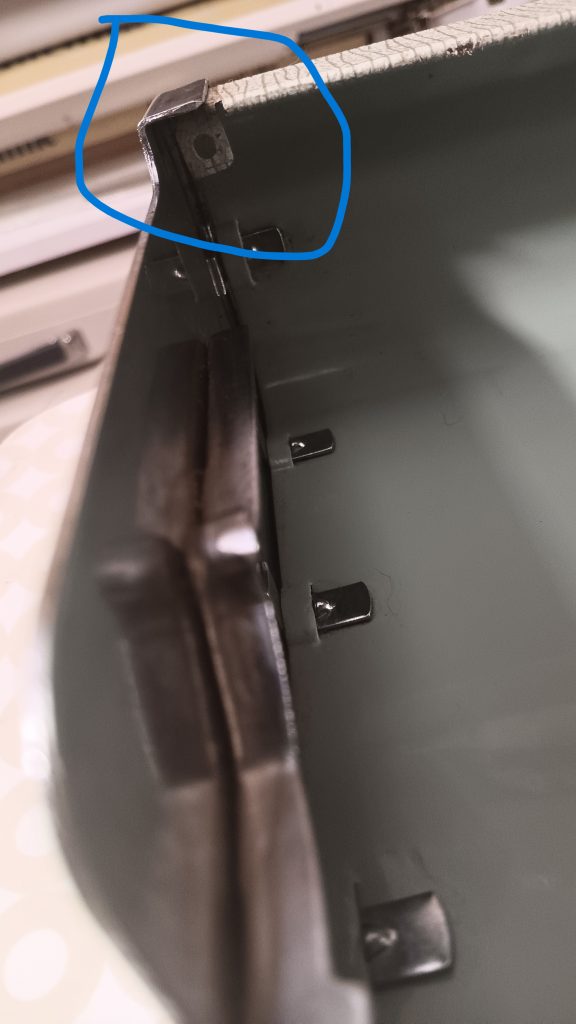
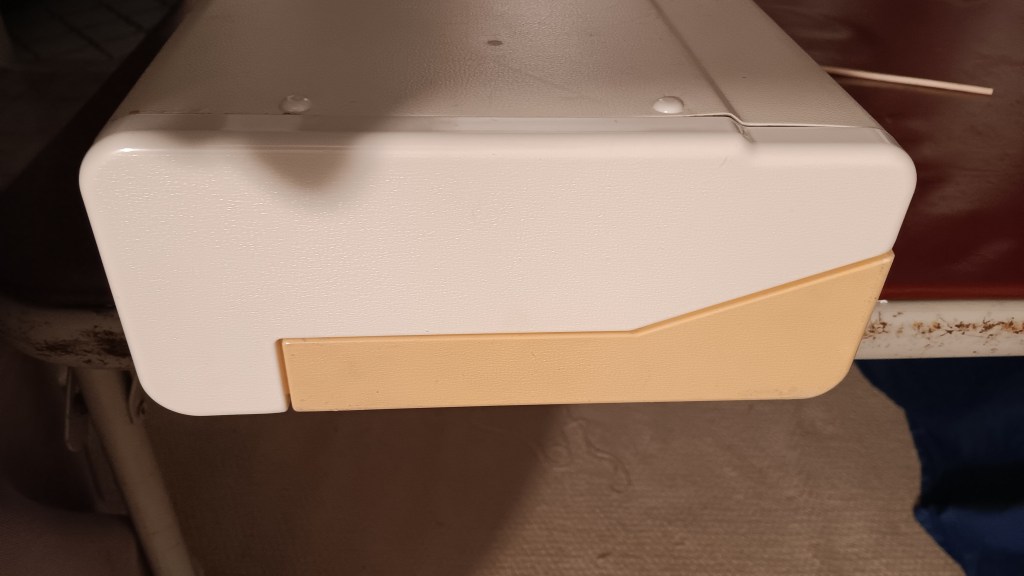
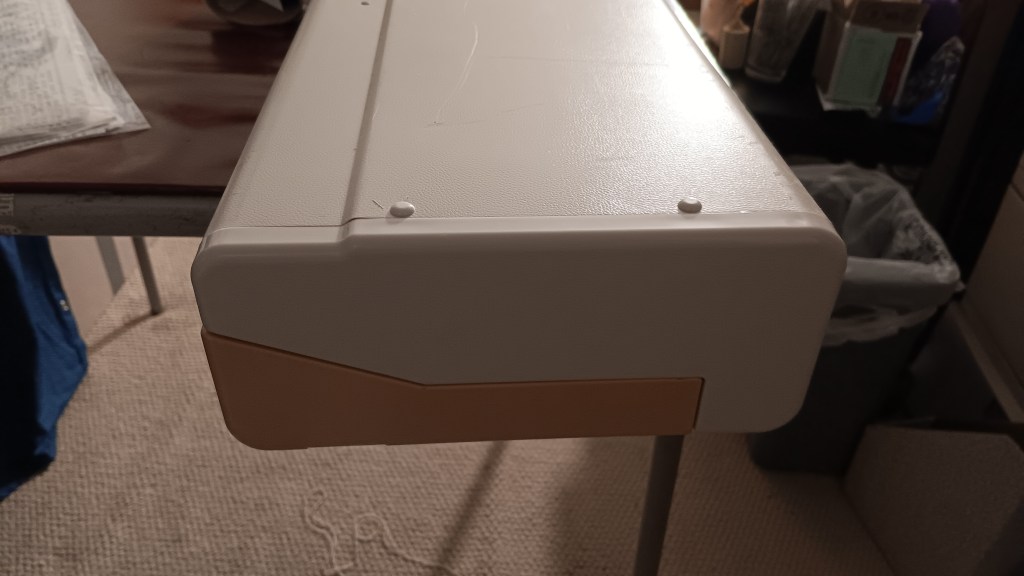
Additionally, the original end caps for the case were cracked so I replaced them with the new ones. Thus, you will see some color mismatch. All plastic rivets are also new.

I will include a new set of 15 punchcards for tuck, slip, and fair isle, 10 additional cards for lace (typically only 5 are included in the standard card set), and additionally 5 custom cards. I will also include a small sample of yarn that will work really well for this machine, so you can learning how to use it with problem-free yarn.

Pros:

  • The machine was deeply cleaned and inspected
  • The punchcard reader was deep-cleaned and tested; no mispatterning
  • A lot of accessories included are new
  • I typically do not test lace carriages, but I did in this case because the lace carriage included is not from the original machine but from Brother KH910. In fact, I tested two carriages for this customer and picked the KH910 lace carriage. Here is a video of this particular KH840 on your machine that I tested specially for you. You are welcome! 🙂
  • including additional punchcards: 5 extra cards for lace and 5 extra custom-punched cards from my stash

Cons:

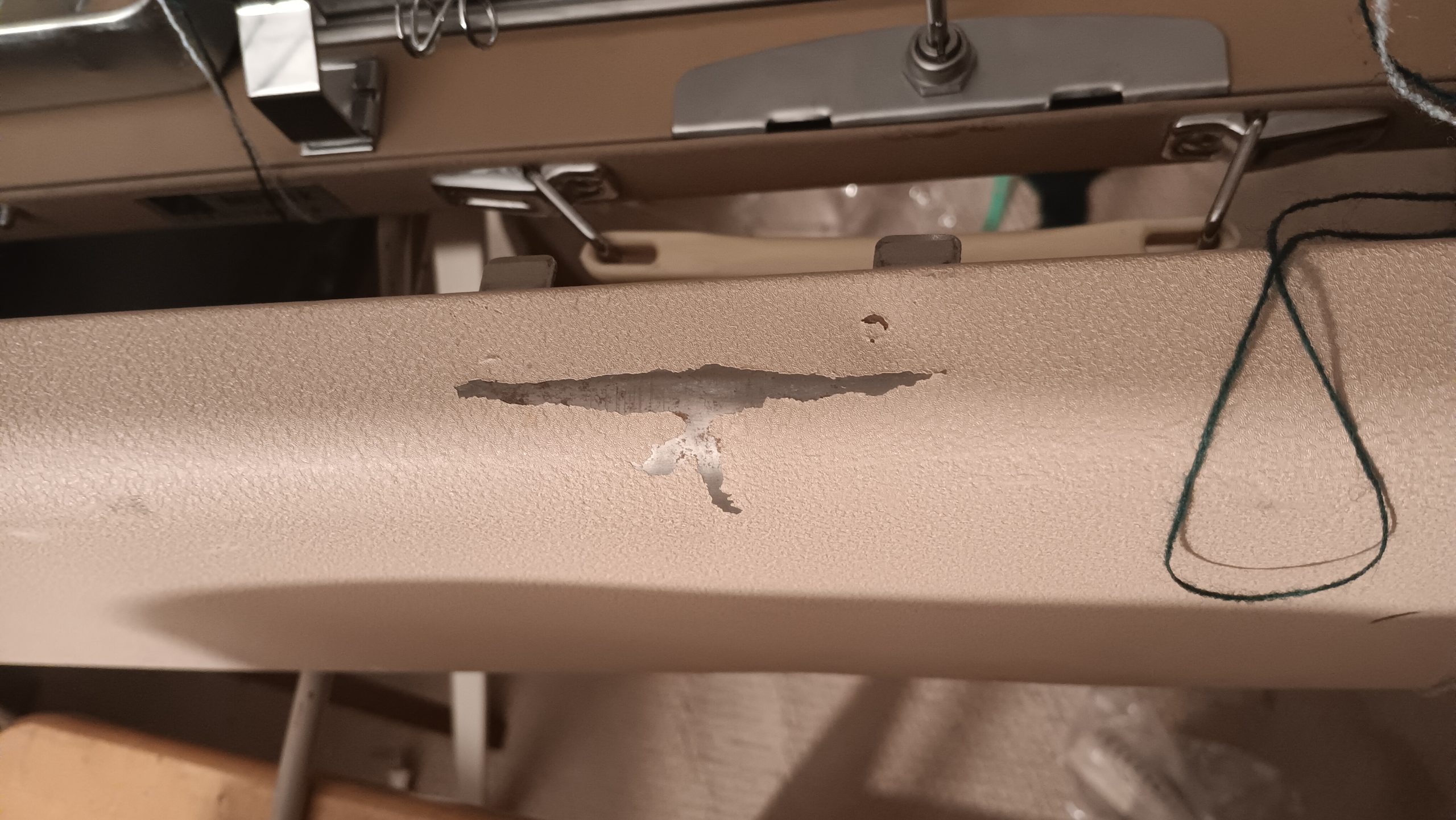
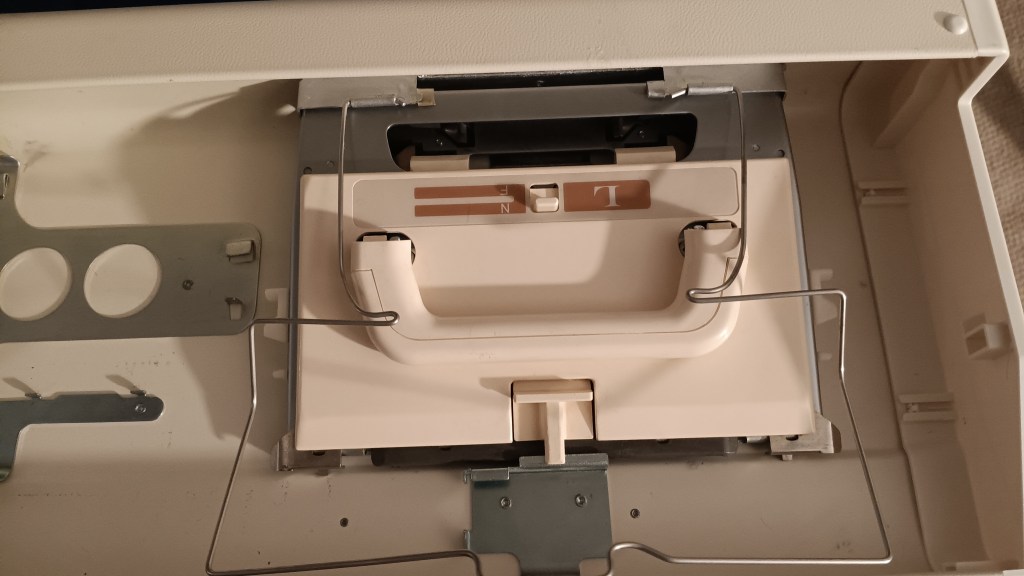
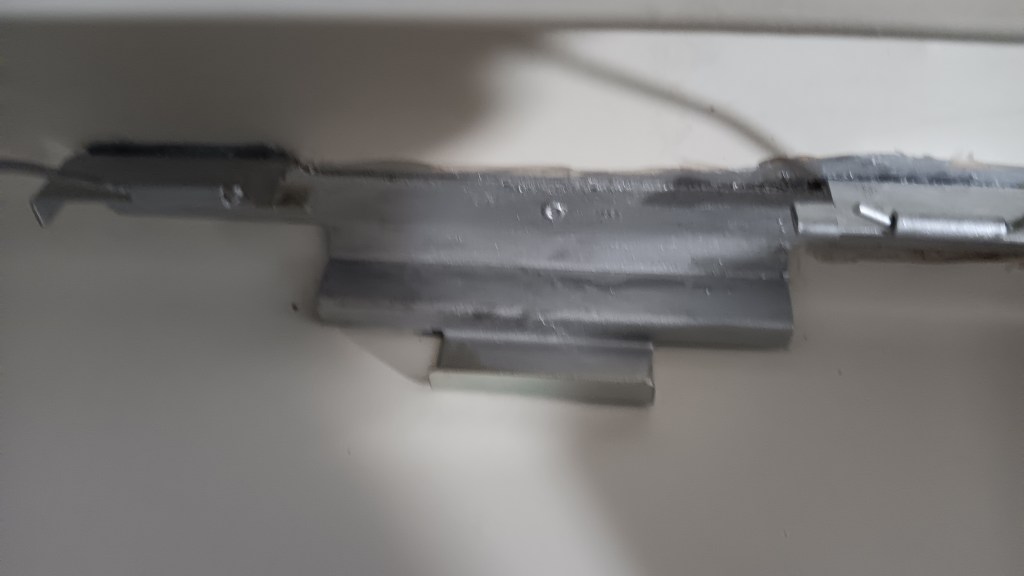
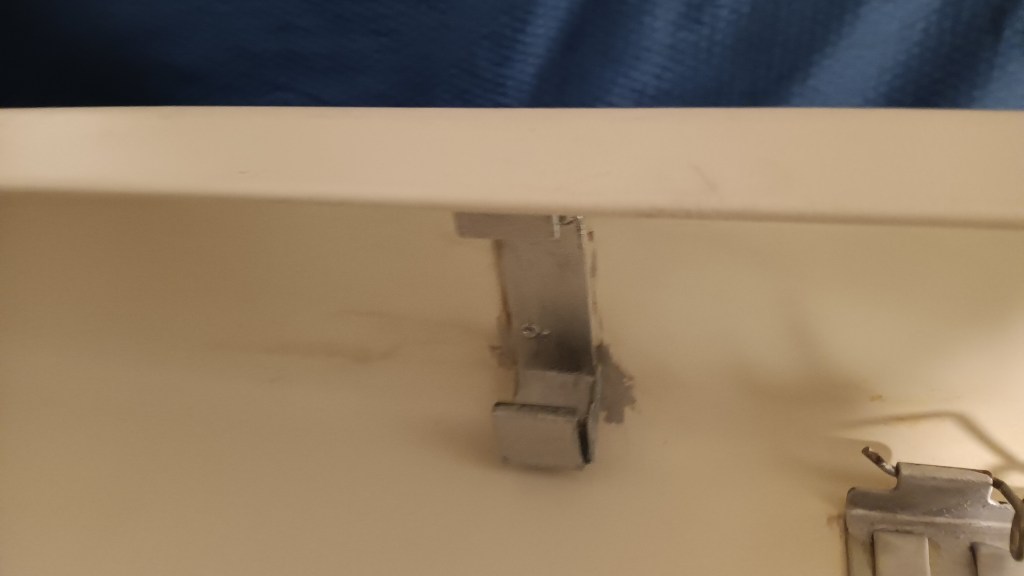
  • The insides of the case had some minor rust, which I treated and covered with silver rustoleum. The bed itself did not have any rust.
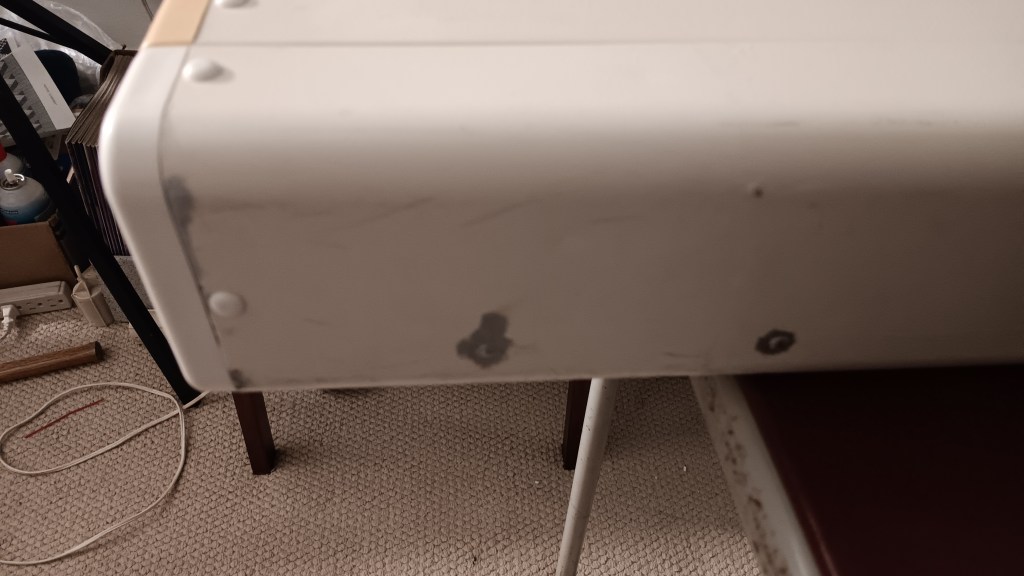
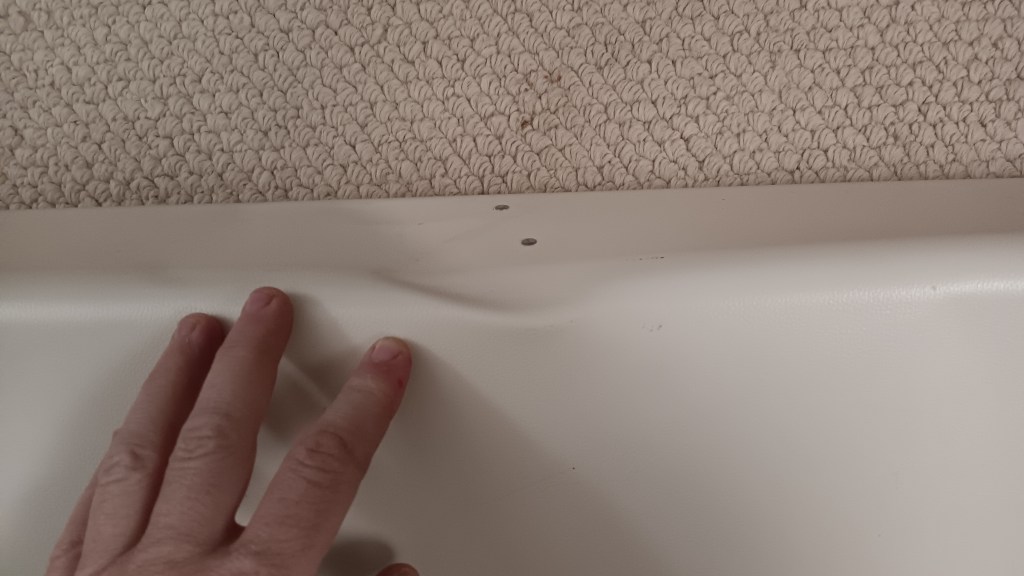
  • The lid has some minor scratches and scuffs
  • Some color mismatch due to newly installed plastic rivets and end caps
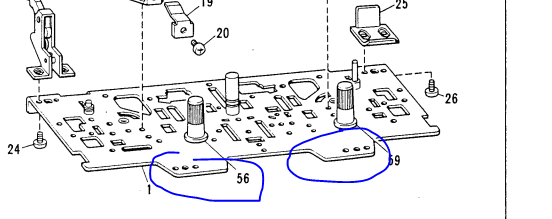
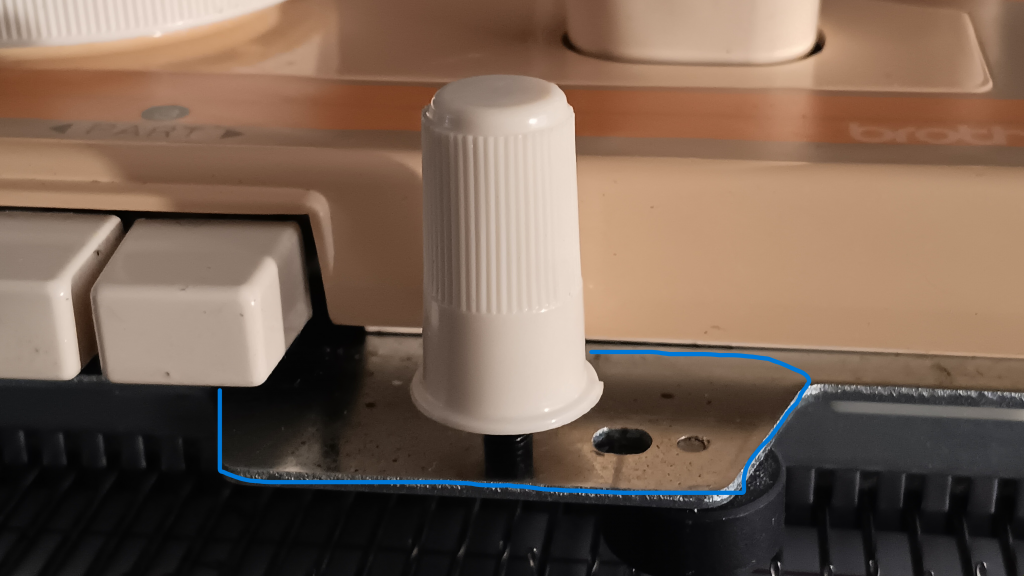
  • The sinker plate has some minor roughness, but it does not affect its working.
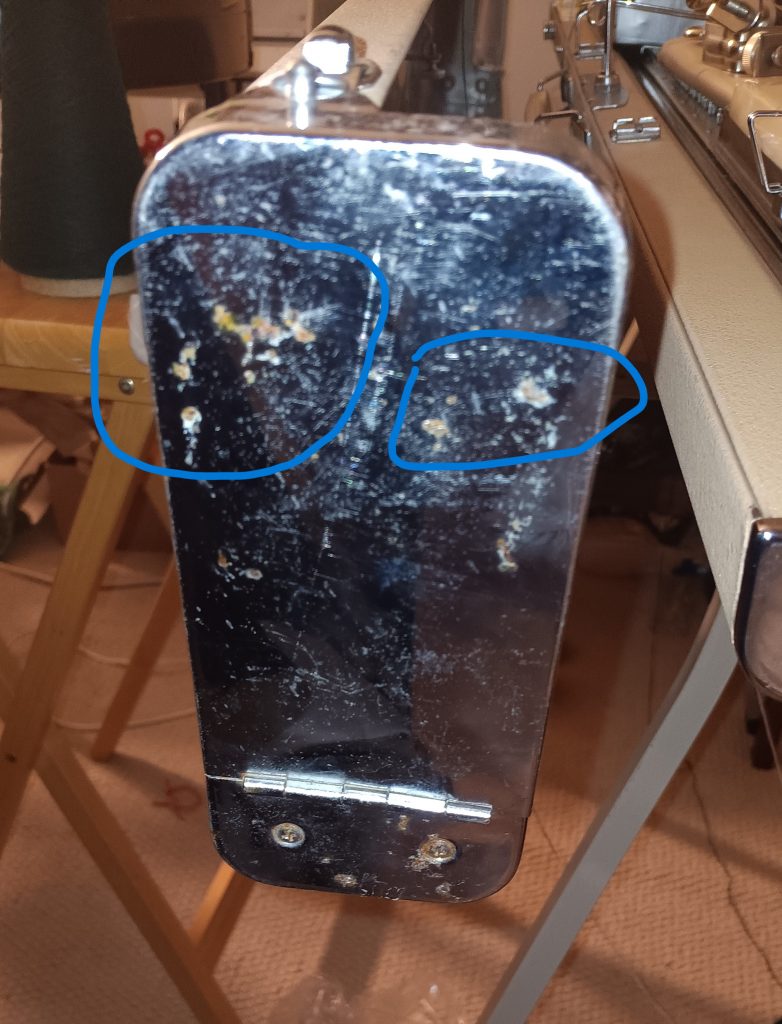
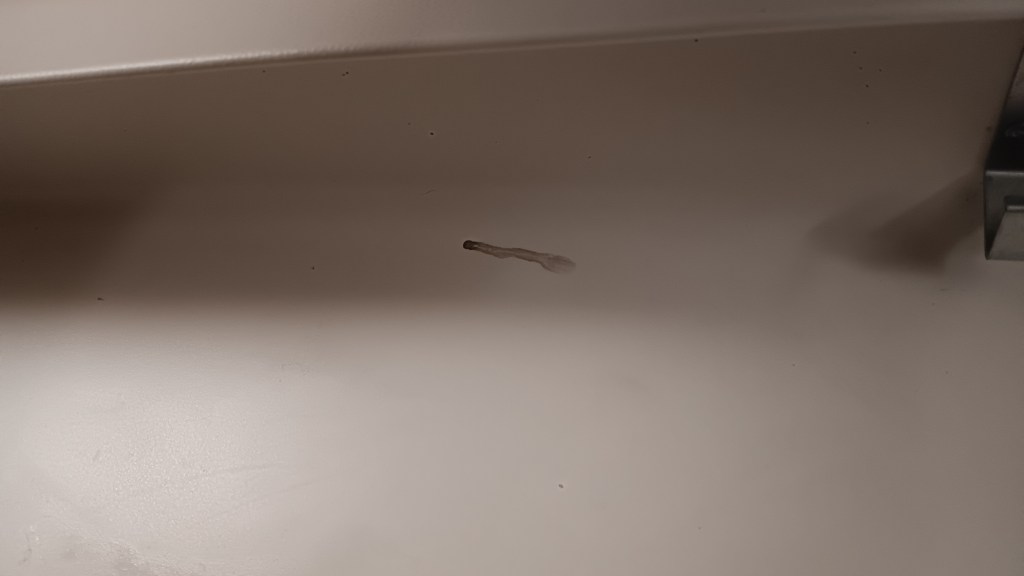
  • The tool holder on the front panel has some staining inside it.
  • The lid had some rust, and I covered it with special protective paint.
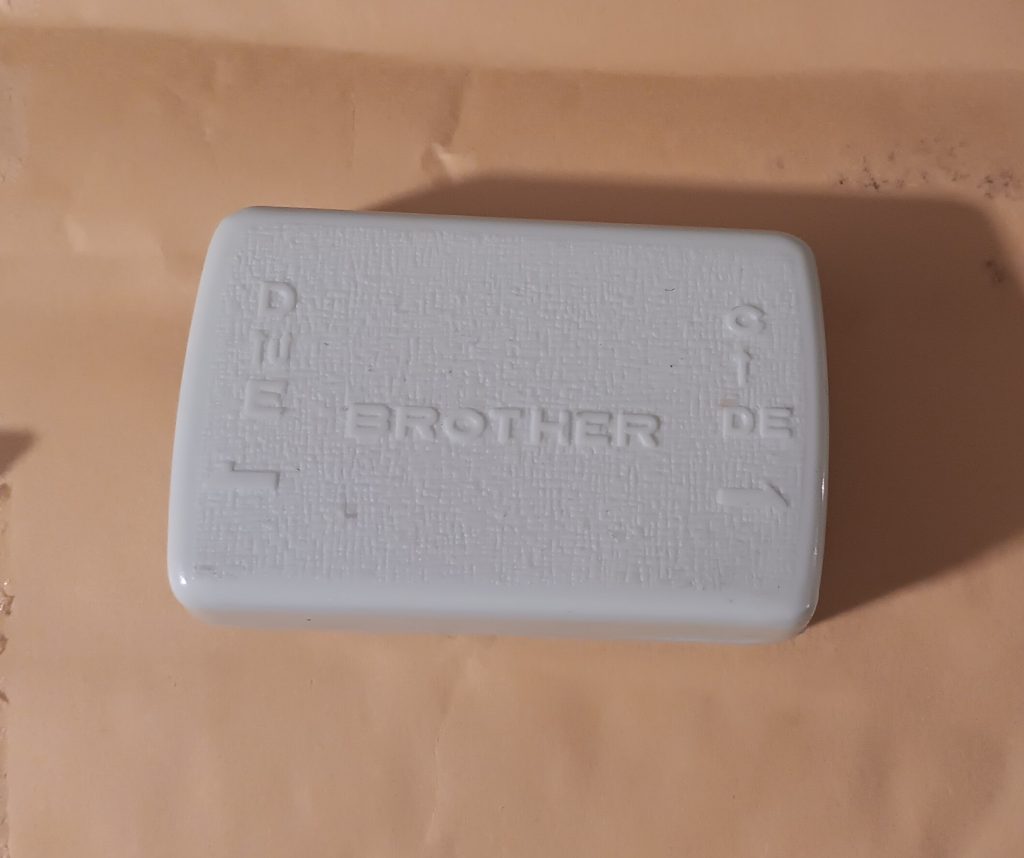
  • The model name tag is a bit discolored

The pictures of these imperfections are below. Happy Knitting!

Making button holes when knitting using Brother garter carriage.

It is very easy to make horizontal button holes for small buttons when knitting projects using garter carriages. This blog is a text version of the video posted on the same subject.

First, decide the position of the button holes. Pick two stitches (in my demo, I decided to pick two sets of two stitches where I knew the machine needles, not the carriage’s, would knit). Move the left stitch out of these two to the stitch to the left of it and the right stitch to the right of it. Push the freed needles back to B position.

Knit one row with your usual pattern. The needles that were empty, now have yarn hooked on them (no stitch formed). Using a double eyelet tool, take the yarn off one hook, twist it, and then put back into a needle. You just formed a loop. Do it for the remainin needles in the button hole.

Continue to knit as usual.

Brother KH840 knitting machine for Ray, December 2025

Brother KH840 knitting machine is a standard-gauge machine with 200 needles, 4.5 mm apart, and punchcard reading capabilities for patterning. Read more about the pros and cons of this model in my Knitting Machine Encyclopedia. This post is dedicated to a specific Brother KH840 serviced and tested in my shop in November/December 2025.

Per my usual routine, I deep-cleaned the punchcard reader, the timing belt cams, and the carriage. I removed all needles, cleaned them, and inspected. First visually and then while knitting on the full bed to ensure all needles (even after they passed the visual inspection) form the correct stitches. See the video of these tests. I knitted tuck, slip/part, and two-color fair isle. All tests went great with no mispatterning.

In the video, I forgot to attach the row counter during my tests. But a new row counter (new stock) will be included with the setup. The lace carriage was not tested but all buttons and levers move freely. It is a simple carriage and does not need extensive testing.

I treated minor rust spots on the inside of the case cover with a protective coating and Rustoleum. The needlebed itself did not have any rust spots.

The machine will come with all major accessories and with only some minor accessories missing.

The lid has new plastic end caps. The old ones were cracked. Thus, you might see some color difference between the case end caps and the lid end caps. I also attached the lid end caps with brand new snap clips instead of old, yellowed ones.

Table clamps, row counter and claw weights are new (new stock).

The missing accessories are:

  • Tapestry needle (any needle of your choice will work)
  • Lubricating oil (use Hoppe’s oil available on Amazon)
  • A hard copy of the manual will not be included, but it is available online for free.
  • The cast-on combs are not original to the KH840 setup but I am including a two-part Brother cast comb with a clip for extension.

All 25 punchcards are included but they are not the original Brother KH840 cards but they are for the Brother punchcard machine. The lace card #25 was damaged, so I replaced it with a card from another set. Some cards match those in the manual, and some don’t.

Imperfections:

  • The case has some very minor scratches (not shown)
  • some mismatched discoloration because of the age-related yellowing and some parts being new(er).
  • handle for the main carriage has some very minor scratches

After this thorough cleaning, the machine behaved really well despite some minor imperfections.

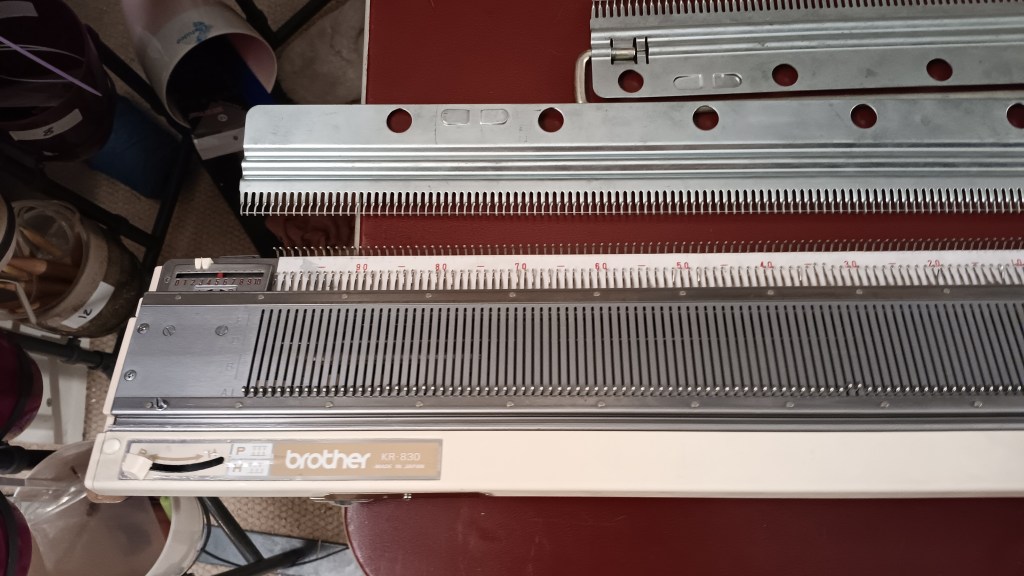
Brother KH860 machine and Brother KR830 ribber (with KR850 carriage) serviced and tested in November 2025 in my shop

Brother KH860 knitting machine combined with Brother KR830/850 ribbing attachment is a powerful standard-gauge knitting setup capable of producing garments, blankets, and other knitted items. Read more about pros and cons of KH860, KR83,0 and KR850 in my Knitting Machine Encyclopedia. The post below is dedicated to the particular setup serviced and tested in my shop in November 2025.

A typical first step for any needlebed is to remove, clean and inspect all needles. Bent needles or those with bad latches are replaced with new stock. Then I clean the needlebeds and carriages from old gunk and grease. I opened both carriages and cleaned under the lids as well. All the needles were then tested while knitting various fabrics: tuck, slip, fair isle and ribbing (see the videos of the ribber and the machine).

Knitting machine:

I replaced the end caps for the lid and the main bed as they were cracked. You might see slightly different colors between left- and right-hand side plastic caps.

The machine was tested on all needles. I knitted tuck-, slip- (same as part) and two-color fair isle. I discovered several faulty needles during these tests and replaced all of them.

Punchcare reader was cleaned from old grease, insides were cleaned from lint and old gunk. Its functionality and needle selection were tested using card #1, where every other needle is selected on every other row (easy to see if there are any problems).

The machine came without many accessories, but I collected a nice, almost all-new stock of accessories.

The missing items are: oil (use Hope’s oil, available on Amazon); a tapestry needle (any needle of your choice will work); and wax.

Brand new (new stock) Brother row counter. Because it is new, its color is lighter than the plastic panels of the needle bed (they show yellowish discoloration due to the sunlight, which is typically seen with these machines).

The cast-on combs are in good shape, too.

New tension mast (new stock). A tension mast that came with this machine did not include a slot for the wax and a slot for the garter carriage sensor. The only “original” accessory is probably the carriage lock.

This KH860 does not include built-in garter carriage rails (in the past, I worked with some KH860 that indeed include those).

Imperfections:

  1. Overall, the machine is in great shape. The case and the case lid are in good shape. The lid has one medium-sized ben,t but overall is almost free from scratches and scuffs.

2. Carriage has some minor rust spots on the plate where the sinker plate attaches, which I treated but not painted with Rustoleum (it sometimes creates too thick of a layer and might prevent smooth gliding). No rust inside the carriage or on the undercarriage side.

3. The lace carriage has a superficial crack and some minor scuffs on the handle.

4. The retaining bar with a newly replaced sponge strip goes in with a bit of effort. This configuration is the only one out of several I tested (I had to reglue several different sponges) that provides 100% accurate patterning on the whole bed. If the tape on the ends wears out (which happens if you remove the retaining bar often to replace needles, etc.), just tape with very thin medical tape with just one (non-overlapping) layer. Medical tape is the best because if it comes off, it is not as gluey as other tapes (like electrical tape).

Despite all the imperfections and a couple of missing minor accessories, the machine works great (see the video). The carriage slides on all needles (without yarn) very easily, with just one hand, with different carriage settings. Even with the yarn, it glides easily.

RIBBER:

The ribber bed is KR830 model but the carrigae is for the KR850 (the lili buttons are a give-away).

The carriage was deep-cleaned and inspected. All buttons, levers, and pressers work and move smoothly (see the video).

The ribber brackets were cleaned of old grease to ensure smooth movement (but you don’t want it too smooth to prevent the ribber from unplanned sliding down).

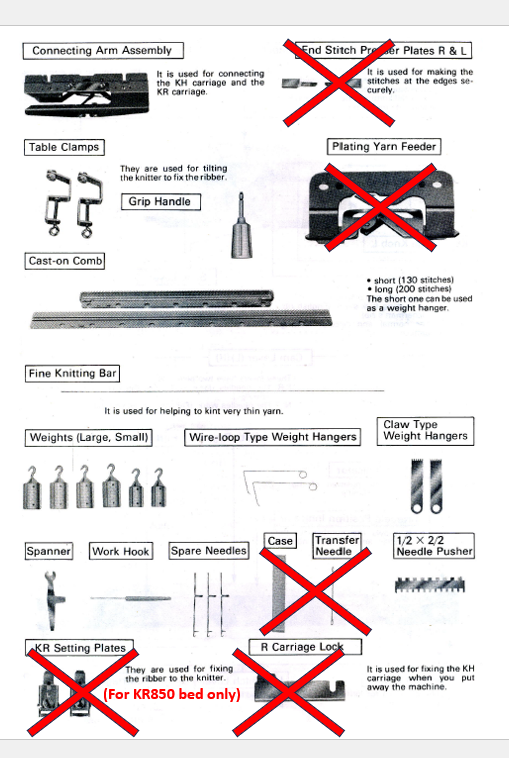
The machine comes with all accessories (including a hard copy of KR850 manual; KR830 can be found online). When attaching the needlebed, refer to the KR830 manual. When operating the carriage, refer to the KR850 manual. I do not have a plating feeder at the moment; that is an accessory to the KR850 carriage. Nor do I have the pressers (when I knitted, I did not use them at all). My understanding is that these are not all that critical. Most knitters do not get that advanced in choosing plating.

KR830 accesories
KR850 accessories

The ribber was tested using two different combinations of every other needle (it is easier to knit on every other needle than on all needles: problems associated with yarn and tension selection are less pronounced) to ensure that all needles form the correct stitches. I used two separate yarns but they are only different by color.

BTW, I am including the yarn I used while testing the ribber (the bluish one) for you to practice with a knwon-to-work thread

I am also including a manual for the KR850 for the carriage functions. I do not have a spare manual for the KR830 but it is available online for free. The only difference between KR830 and KR850 beds is the brackets: how they are inserted and attached to he main bed. All other settings and functions are the same. As a result, some of the accessories that typically come with the KR850 ribber bed will not be included with this KR830 bed.

Imperfections of the ribber:

  1. The cast-on combs are not as smooth as I wished, but the yarn does not get pulled. So I left them alone.
  2. The knob for the I-II change lever (at the bottom of the carriage) is in a bit rough shape. But it sits pretty tightly, so I left it along.
  3. When attaching the connecting arm to the main carriage, sometimes the plastic from the oister screw-on knobs comes off as small shavings (the metal screws rub against the thread on the oister knobs). It is pretty typical for these old machines.

These imperfections are mostly cosmetical. They still did not interfere with me knitting several pieces of fabric that I converted into the items below.

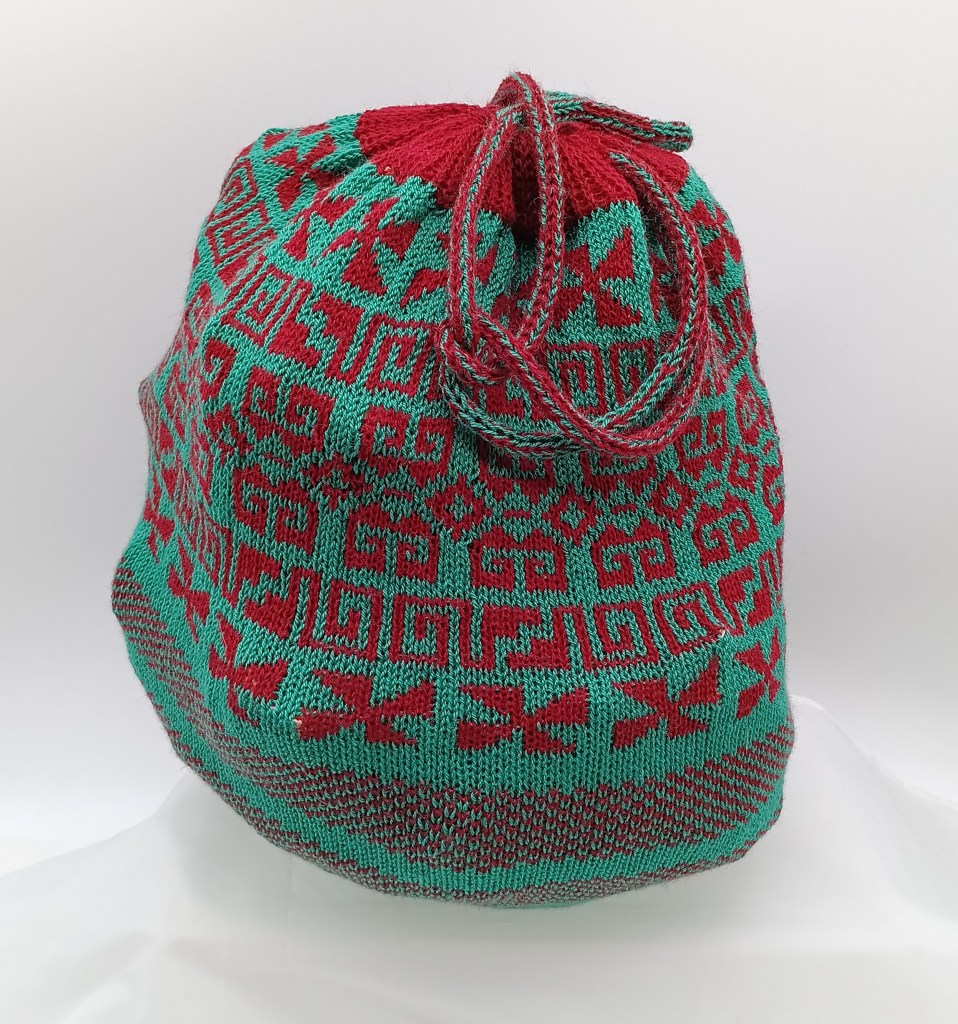
Gift bag

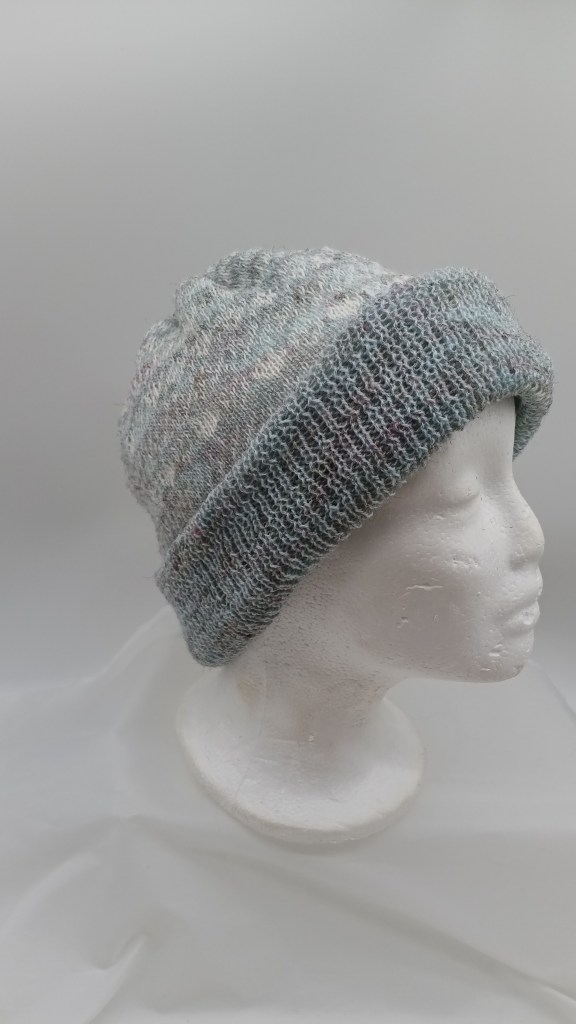
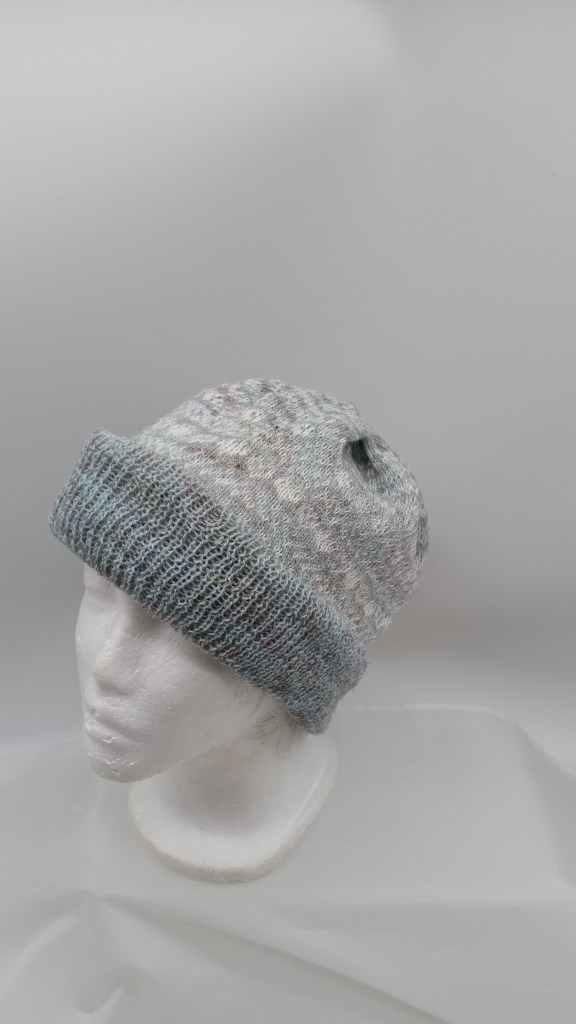
Hat:

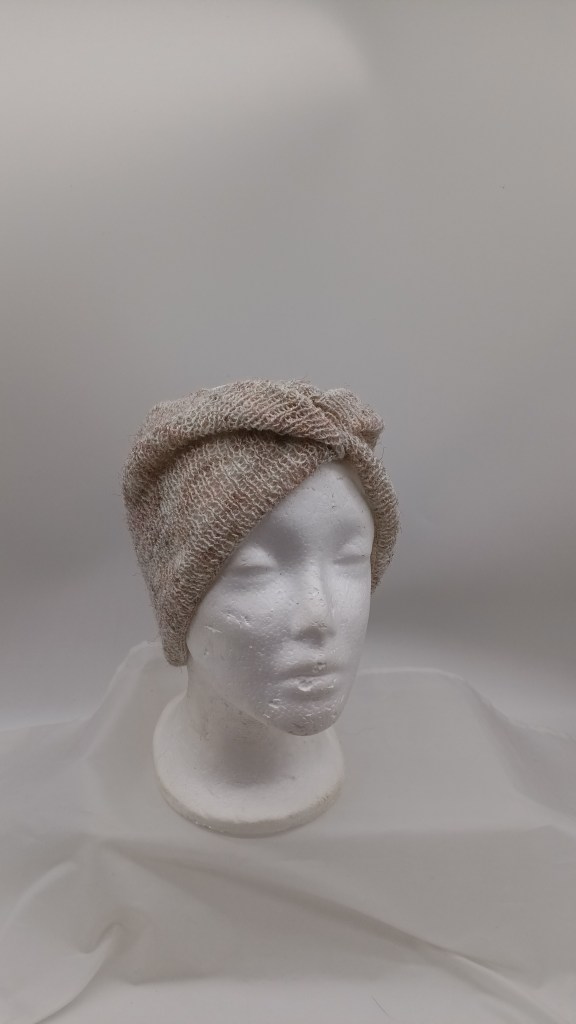
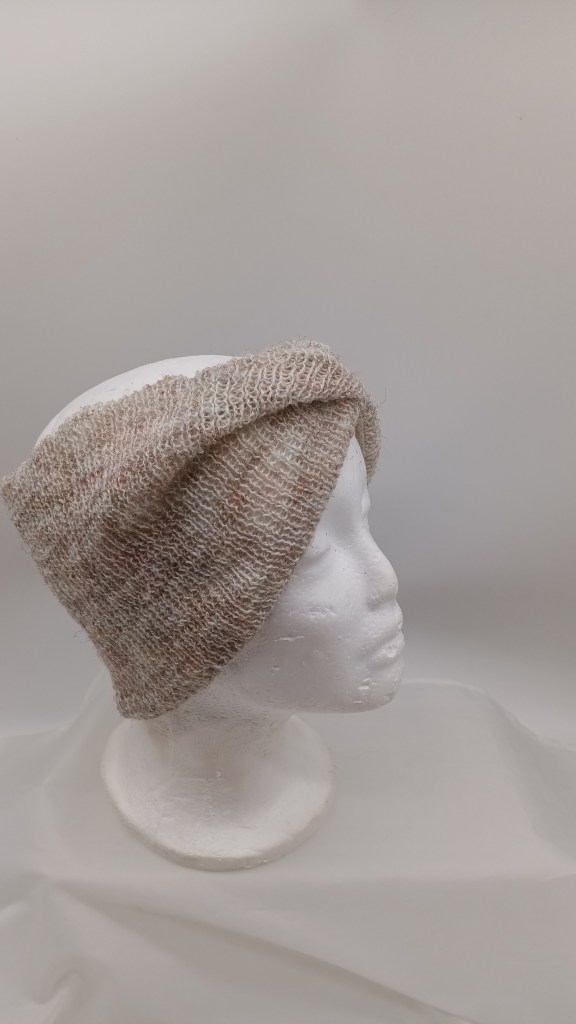
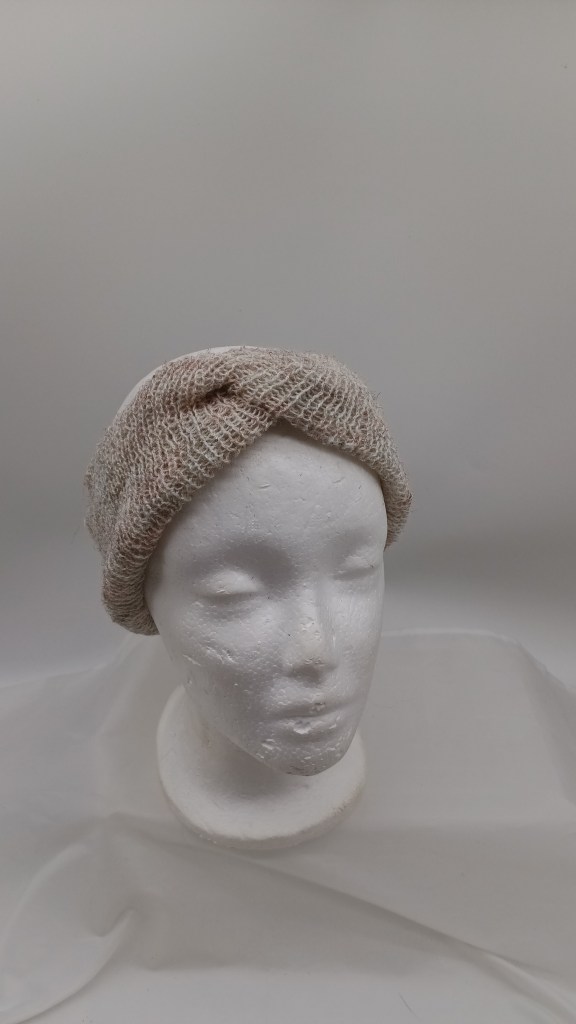
Ear warmer/head band:

KnitKing RK900 ribber serviced and tested in October 2025

Knitking RK900 ribber fits most Brother and Knitking knitting machines with punchcard and electronic capabilities. It is identical to the Brother KR850, KR890 and KR900 ribbers. Thus, read the corresponding articles about their pros and cons in my Knitting Machine Encyclopedia. The rest of the blog post below is dedicated to a specific ribber, serviced and tested in my shop in November 2025.

Before I even started testing the ribber, I removed all needles, cleaned them and inspected each individually for any bents, flaws, sticky latches, etc.

I then tested the machine using three different yarns. One yarn is a sport-yarn thickness with wool content (50%), and two others ones are thinner 100% acrylic yarns. The machine handle all of those wonderfully. The tests were done on small number of ever-other-needles, on two configurations of every-pther-needles, but on the full bed and on all needles on a select number of needles. The machine behaved really well during the tests: watch a video I recorded to confirm that.

On one of the knitted panels, I saw an area with an ok-formed stitch but not super even. I was not sure what it was (probably because I mistakenly moved forward several needles on the main bed to B position, not every other one). I tested that middle section on ALL (not on every-other-one) needles. Because all the needles were selected, the carriage moved a bit harder. But all stitches formed beautifully. So: false alarm.

All carriage buttons and level move freely. The little round knob on the carriage bottom lever is missing but will be replaced soon.

The machine will come with all accessories. A lot of these accessories look brand new (from my personal stash), especially the cast-on combs and the barrel weights. Several are indeed new from new stock (double eyelet transfer needle, needle selection comb, ratchet tool, claw hanging weights).

A hard copy of the manual is included as well (it is marked as Brother KR900, which is the same model).

CONS and IMPERFECTIONS:

  • Carriage cover has some minor scratches and spots (none affect the functioning)
  • The only, very minor “accessory” missing is a spare needle case
  • Attaching the connecting arm might need paying attention (see below)
  • Cam lever knob is missing (but is replaced soon)

The way I figured out the best way for this setup to attach the connecting arm is this: insert the connecting arm into the main carriage, slightly fasten the oister knobs, move the carraige+connecting arm to connect to the ribber carriage; after it snaps into the ribber carriage, finish fastening the oister knobs, but do not overtighten it. I found out that this is the best way to securely and reliably tighten the connecting arm to the main carriage and to the ribber carriage. When I tried the usual method (completely insert the connecting arm, tighten and then attach to the ribber carriage positioned to the left of the carriage, they did not feel all reliable and did not nest as snugly. My TLC-method is also shown in the video.

The panel knitted while testing this ribber were converted to a hat (the brown ribbing in on the “right” side and the greyish ribbing is on the inside), which will go to charity during our local Thanksgiving and Christmas hat and scarf drive.

Happy Knitting on this wonderful ribbing setup!

Studio by White SK740 knitting machine restored in my shop

Studo by White SK740 knitting machine is a standard-gauge knitting machine manufactured by the Silver Reed company under the Studio brand name. The machine has 200 needles, 4.5 mm apart, which makes it a standard-gauge knitting machine. Read more about this model in my Knitting Machine Encyclopedia. Also, read the general details and pros and cons of a similar machine, Singer mod. 740. The post below is dedicated to a specific Studio by White SK740 knitting machine, refurbished, served, and tested in my shop.

I performed the regular maintenance on this machine.

  • The drums were oiled, inspected, and serviced to ensure they move freely.
  • All needles were removed, cleaned, and individually inspected.
  • The spongy strip in the metal retaining bar was replaced.
  • The side racks were also replaced with new ones.
  • Deep cleaned inside.
  • Cleaned the punchcard mechanism
  • Thoroughly wiped on the outside (I do not apply too many harsh chemicals to not cause further long-term damage to already fragile plastic components)
  • The machine was oiled thoroughly. Some lubricating oils might still bleed during your first knits. Just wipe them with a cloth.

The lid for the machine was rusted, so I covered the rust on the lid with a special coating and then applied silver-colored Rust-Oleum. It might not look super artistic and pretty, but the rust is stopped and the cover looks very presentable.

End caps on the main bed have discoloration. End caps on the lid are new (I specially 3D printed them out of a very durable material because they were cracked). The plastic rivets are also brand new.

Additional maintenance performed:

  • completely replaced the plastic top cover for the carriage; replaced with new stock
  • I installed new rubber wheels on the sinker plate
  • The lever covers (little knob-like plastic pieces) are replaced with new 3D printed ones.
  • I cleaned the minor rust spots inside the punchcard mechanism and then covered them with Rust-Oleum to stop further corrosion

I tested the machine by knitting several patterns on all needles. The video of these tests can be seen here. I demonstrated that the machine successfully knitted tuck, slip/part, and fair isle patterns. I made three different items (hats and neck warmers) from the panels I knitted while testing this machine.

The brim on the last hats was made with the matching Studio SRP50 ribber (which is also available for purchase).

The machine will come with all the major accessories needed to knit.

Some of the accessories will not be included and this is why the price is lower than other machines of the same type sold in my shop. Also none of the missing accessories and imperfections prevented me from knitting and making beautiful things on this machine.

They are:

  • cast-on thread (any silky and strong thread can be used)
  • tapestry needle (any needle of your choice will work)
  • pattern paper for the knit leader
  • stitch scale
  • oil (it was old and I discarded it; use Hoppe’s oil from Amazon)
  • Magic Cams: They can be purchased on Amazon for under $30. They are neded for single motif knitting.

The knit leader accessories are missing, but my experience shows that knitters who are just starting do not even use the knit leader for garments. In fact, I do all my calculations for sweaters still by hand (its just how I was taught and I am just used to it).

All accessories fit inside the built-in box:

Twenty punch cards will be included. The fifteen cards are generic ones with just one line on them, but most correspond to the cards mentioned in the pattern book for Studio mod. 700 machine. The other five cards were made in the 1980s specifically for the Studio/Silver Reed/Singer machines. The markings on these cards are in red, and they have three lines. These are not generic but cards from a special edition set that I am including to complement the punchcards set to 20.

Some other imperfections (besides missing accessories) of this machine:

Some of the silver-colord rustoleum pain blead on to the cover because I also had to cover some rust spots on the cover.

Table clamps need to be whiggled in a bit with force, but i like that they sit tightly.

There are some dents on the case, but they do not prevent the machine from functioning and closing well.

Hoping you will adopt this great machine for your knitting needs.

Brother Profile 551 tested and serviced in my shop in October 2025

Brother Profile 551 (Or KH551) knitting machine is a standard-gauge knitting machine with 200 needles, 4.5 mm apart. Read more about the pros and cons of this model in my Knitting Machine Encyclopedia.

The article below is dedicated to a specific machine tested and serviced in my shop in October 2025.

The machine was cleaned and oiled. All needles were removed, cleaned, and inspected individually. Their latches and straightness were checked and confirmed. The carriage was cleaned and serviced (oiled and inspected). The sponge in the metal retaining bar was replaced with a new one.

I first knit a swatch while testing the machine to demonstrate that the carriage, all its levers, buttons and knobs as well as the needle selection mechanism, work well.

Additionally, I tested the machine on all needles to ensure the needles form correct stitches. The video of these tests is posted on my YouTube channel. I used several different yarns. All tests went really well. I tested the machine using several different yarns. I will include a skein of one of the yarns I used and liked the most for this machine.

In the video, you will see that I first checked how smoothly the carriage runs on the needlebed. I moved forward (to B position) one section of needles at a time and ran the carriage in different settings across these needles. Thus, I ran the carriage across the needlebed after moving the Russel levers to I, II< and III positions and pushed the “tuck” and “part” buttons on the carriage.

When knitting the “butterfly” pattern (the very first “holding” pattern) I deviated from the pattern and instead of alternating between pressing buttons 1 and 3, I pressed 1 and 3 and then 2 and 4 to demonstrate that machine, buttons and needle selection function properly.

The machine will come with all major accessories and almost all minor.

The accessories that are not included are:

  • one of the yarn hangers, used in the plating type of knitting (page 19 in the manual). On one of the previous machines, I used a paper clip. My experience also shows that knitters rarely use these.
  • oil. It was too old and I discarded it. Use Hoppe’s gun oil available on Amazon.
  • A tapestry needle was rusty and I discarded it as well. Any needle will suffice.
  • A hard copy of the manual will not be provided.

The original manual can be found online, but the resolution is poor. For patterns, it is better to use this manual, which is for the 8-pushbutton machine, but the functions of the carriage are all the same. When converting those patterns, in the pattern table, cut the number of buttons by half and just follow the rest of the directions.

I noticed that the claw weights do not come with this machine. But you can easily order them on Amazon (as well as a smaller cast-on comb for swatches). The price on Amazon is even better than I would offer.

When knitting tuck patterns, especially on every other needle, watch that the stitches come off the round section of the needles. Always remember that the tuck (other stitches too, but tuck especially) is always an interplay between the correct yarn, tension, carriage settings, and static, among a few aspects. I will include a skein of yarn I used for my tets to use as a reference yarn.

A couple of hints to avoid mistakes with the set lever and pushbuttons:

  • Make sure the ratchet tool goes ALL THE WAY to the left when activating the needle selection and all the way to the right (to the OFF position); otherwise, incorrect (or incomplete) selection might happen.
  • general rule of thumb: tuck requires higher tension (smaller number on the tension dial) than stockinet. So does slip/part.
  • Notice in the video that I am adjusting the tension as I am going from stockinet to tuck/slip.
  • For consistency, I recommend the very last two needles (on each side) to be in B position. For example, in the video when i was knitting tuck stitch, I was checking if the last needles are in B or C position. I like my last needles to be in B position, so I moved the needles pushed to C position up.

PROS:

  • Overall the machine is in great shape with no visible rust
  • cast on combs are in great shape: all teeth are straight, and there are only a couple of minor scratches
  • Most of the tools are original

Imperfections:

  • couple of missing minor accessories and a hard copy of the manual
  • minor scratches (some of them are shown below)
  • some minor discoloration on the pushbuttons (shown below)
  • cast on combs have just couple of minor scratches (not shown)
  • The case and the lid are in great shape with only minor, barely noticeable, scratches (not shown)

Picture showing minor scratches on the carriage:

Picture showing pushbutton up close to demonstrate the minor discoloration and minor scratches:

Please keep in mind that my house is a dog-friendly household, so some dog hair is unavoidable.

Hope all looks good and if it does – Happy Knitting!

Hats with snowflakes knitted with two-color garter carriage

I loved this pattern so much that I tried a few combiantions of yarns and i am will experimenting. Basically, all hats have 21 rows of 1×1 ribbing (pattern 532 in the stitch book), then one full pattern with snoflakes (pattern #541 in the stitch book). For bigger/deeper hats I sometimes finished with 1×1 ribbing.

Color combo #1: The main yarn (on the right-hand side) is 50/50% wool/acrylic blend for handknitting. It is a teal color more on the green spectrum

Color combo #2:

Studio SRP50 ribber tested on Studio by White SK740 knitting machine in my shop in August 2025

Studio SRP50 ribber fits a vast majority of standard-gauge Singer/Silver/Silver Reed/Studio/Empisal Knitmaster/Riccar knitting machines.

Read about Studio SRP50, Empisal Knitmaster SRP50, Silver SRP50 and Singer SRP50 ribbers (which are the same, just different branding) in the Knitting Machine Encyclopedia. The post below is dedicated to a specific ribber I serviced and tested in my shop.

This Studio SRP50 ribber was tested on Studio by White SK740 standard-gauge knitting machine with punchcard reading capabilities.

I performed the usual cleaning routine: took out all needles, cleaned and inspected each, replaced bent or those with sticky latches; cleaned and serviced the needlebed. I spent a lot of time making sure that the distance between the main and ribber beds is optimum for my knitting. I used very thin and medium-thin yarns. If you use slightly thicker yarns or thinner ones, you might need to adjust the distance. There are a lot of online resources on how to do it.

This image has an empty alt attribute; its file name is 20250802_215450-1024x768.jpg

The correct distance between the beds is one of the most critical aspects of successful knitting.

This image has an empty alt attribute; its file name is 20250805_180339-1024x768.jpg
This image has an empty alt attribute; its file name is 20250805_180348-1024x768.jpg

I cleaned the carriage and cleaned the retaining bar (which is a plastic strip; no sponge).

The ribber will come with all major and most minor accessories.
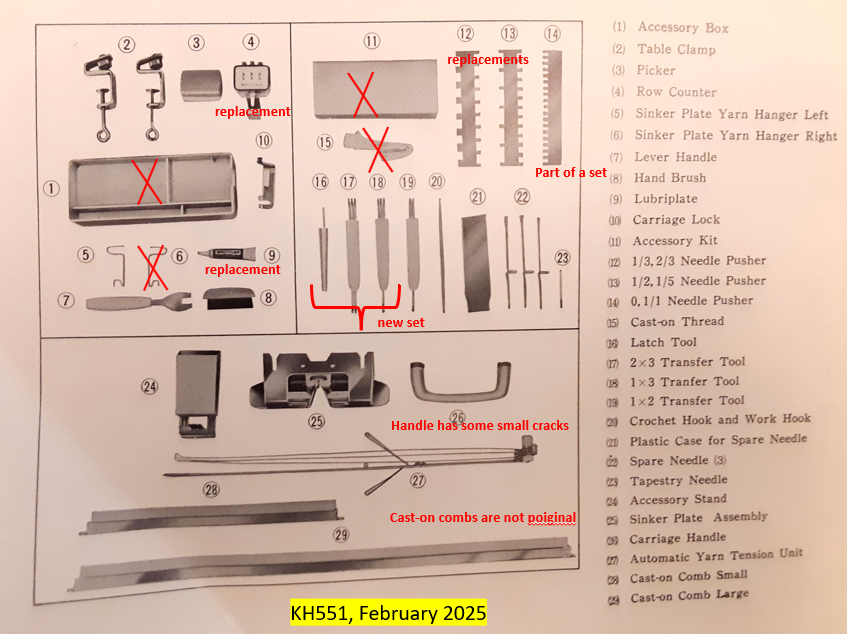
The missing accessories are:

  • close-knit bar. It is a narrow (1 x 910 mm) piece of plastic. According to the forums and even the manual itself, it gets misplaced and lost very often. The same forums mention that it is rarely used – maybe for very fine yarns.
  • The “screw driver” did not come with this setup either. I am adding a ratchet tool instead. I used it for all adjustments of the ribber. For some adjustments, a regular flat-head screwdriver might be needed.

I recommend first swatch tests to be on every other needle and/or with a very thin yarn to get to know your machine without worrying about yarn adjustments. This is what I did when I tested this ribber. The knitted fabrics were then converted to hats, a band (made from a swatch) and a neck warmer below.

I knitted on every other needle but used two different combinations to ensure that I knit on ALL needles. Combination one was three needles on the left of the ribber not selected, and combination two was two needles on the left of the ribber not selected. See the video of those tests. The tests on a full bed are also important not only to assess how smooth the carriage runs, how well the needlebed is oiled, but also to ensure that all needles form correct stitches. Check out the video to see that all needles indeed knitted well.

This image has an empty alt attribute; its file name is 20250827_132033-768x1024.jpg
This image has an empty alt attribute; its file name is 20250827_131955-3-768x1024.jpg
This image has an empty alt attribute; its file name is 20250827_132120-3-768x1024.jpg
This image has an empty alt attribute; its file name is 20250827_132305-768x1024.jpg

Studio SK-303 knitting machine serviced and tested in my shop in July 2025

Studio SK303 is a metal flat-bed knitting machine with 200 needles, 4.5 mm apart, which makes it a standard-gauge knitting machine. Studio SK303 is capable of creating patterns with automatic needle selection governed by the turn-knob control center and buttons and levers on the carriage.

This post is dedicated to a specific machine serviced and tested in my shop in July 2025. To learn all the pros and cons of the Studio SK-303 model, refer to a post in my Knitting Machine Encyclopedia.

The machine will come with almost all major and most minor accessories.

The toolbox (and its lid) is pretty sturdy (normally, those boxes become so fragile with time and exposure to elements that they just crumble apart).

The S-shaped table clamps are original. I am also including two brand new claw weights (which are not even part of the original setup) because they are very useful, especially for beginners, to put on the edges of the fabric or to assist with the cast-ons.

The missing minor accessories/tools are:

  • hard copy of the manual. You can refer to a manual available online for free.
  • card copy of the pattern cards. They can also be downloaded for free. The manual also has some basic patterns. The pattern shown in my video for a blanket is a variation of the pattern in the manual. I also include patterns that I printed out from that pdf file.
  • original metal carriage lock is not included but I am including a 3D printed plastic replacement
  • clips to hold the cards did not come with the machine, and since there are not cards, they are not really necessary.
  • the case for the spare needles was falling apart and thus will not be included
  • oil was too old and I discarded it. I use Hoppe’s gun oil available on Amazon.
  • the yarn tension guide will be included but it is not the original one: it does not look like two bunny ears but more like a triangle.
  • the cast-on wires also did not come with this machine but I will include two identical medium (in between the short one and long ones shown above) wires.

I did all standard maintenance on this Studio SK303 machine: cleaned the retaining bar from the old gunk, replaced the sponge strip in the retaining bar, inspected all needles, cleaned inside and oiled the machine as well as the turnknob and patterning mechanisms.

I tested several acrylic yarns with this machine (just small swatches and also on the full bed), from super smooth to a textured wool yarn to a relatively thick one. Smooth fibers are sometimes problematic because a lot of static might form. The machine handled the slightly thicker (than I normally use on standard-gauge machines), almost sport weight, very well, although there were some hiccups. Additionally, it handled a two-thread 2-color fair isle pretty well, too. Textured wool yarn was not ideal – I should have selected every other needle, but still knitted a decent-sized swatch. All the tests are shown in the video I put together. The machine behaved pretty well, especially with thinner yarns. I tested two-color fair isle, tuck- and slip-stitches and all stitches and knitted fabric looked great.

The full bed tests are necessary because very often faulty needles might not show up during just visual inspection. In fact, I did discover a needle with a bad latch – it formed tucked stitches (shown in the video as well). After I replaced it, no more bad stitches formed on the full needlebed.

Below is a picture of a pattern I accidentally discovered while testing this machine. It is a combination of needles in A position (to create a lacy opening) and a hold-tuck combo.

I converted this knitted panel to a blanket (the pattern is coming soon). I like the look of it so much that I knitted little booties, hat and mittens to make it a matching reversible set.

Now, about imperfections:

One of the metal slide-ins (where the row counter or the card holder are attached) is missing.

The row counter is similar to the original ones but branded as “Silver”, not “Studio”. There is an identical knitting machine model but branded as Silver SK303.

The row counter has some minor staining but it does not affect its functioning.

The turn-knobs have some minor discoloration but still feel solid (they will not crumble easily).

The case has some minor stains and scratches but nothing too major (not all are shown). The scratches do not affect the functioning of the case.