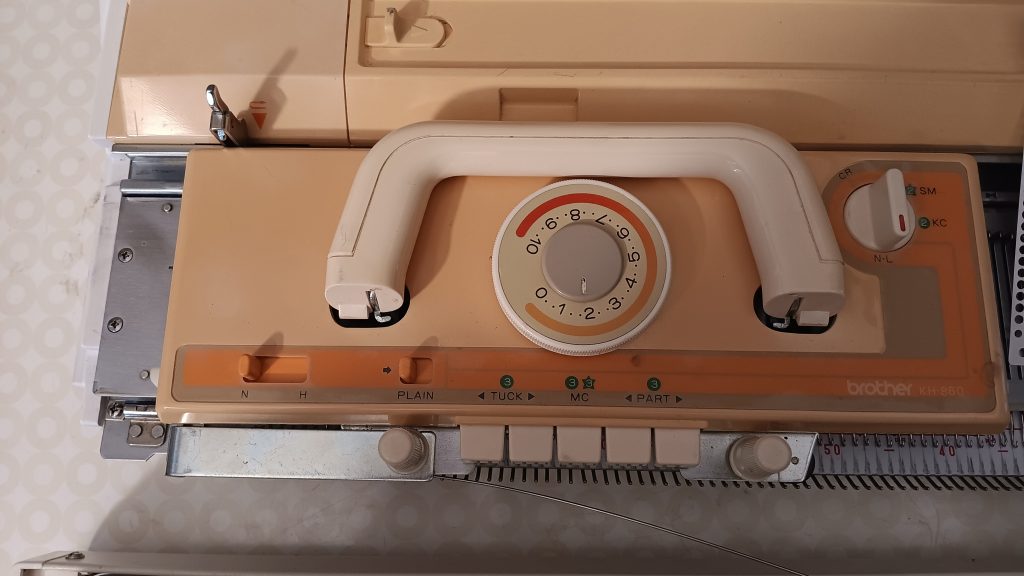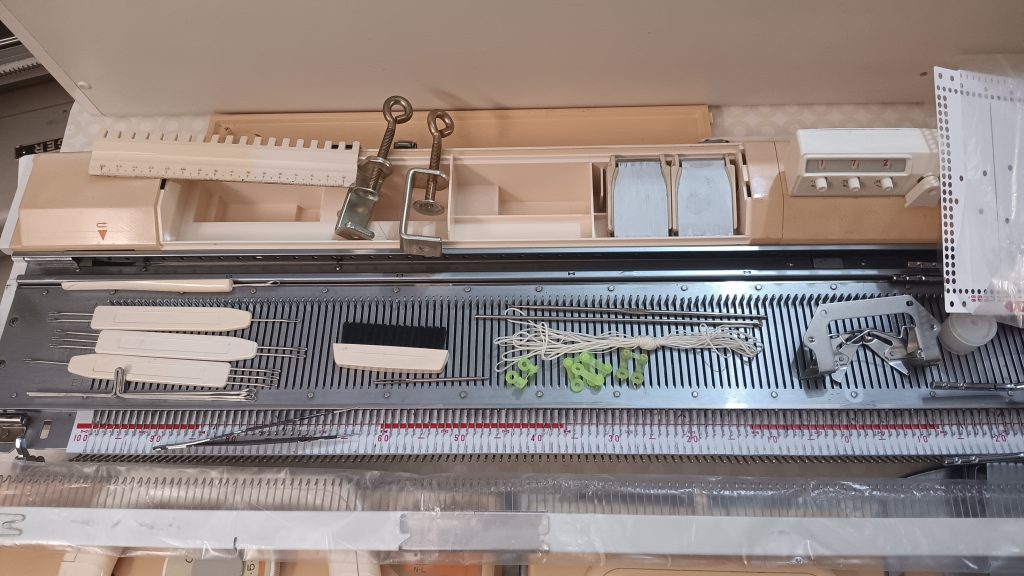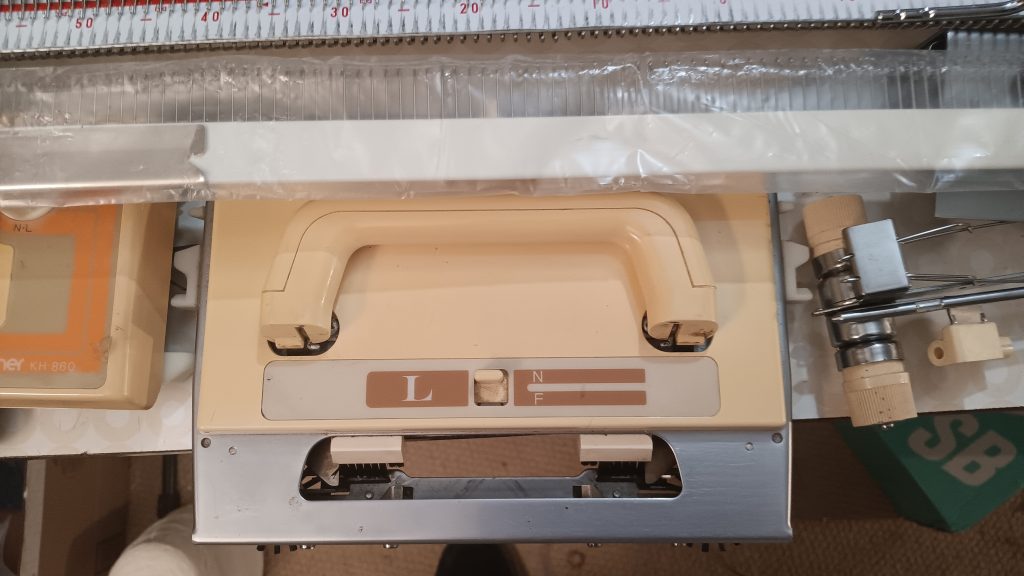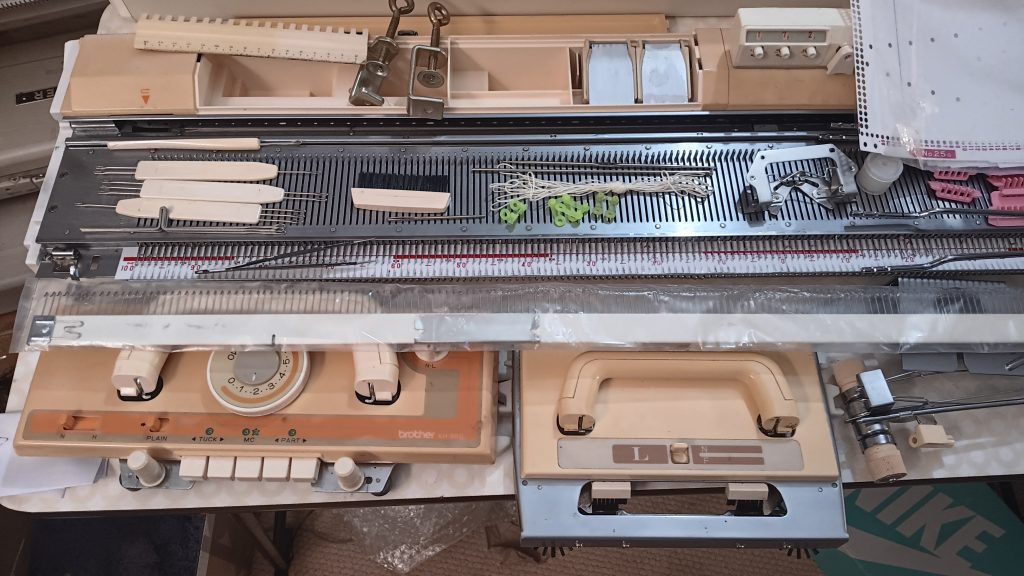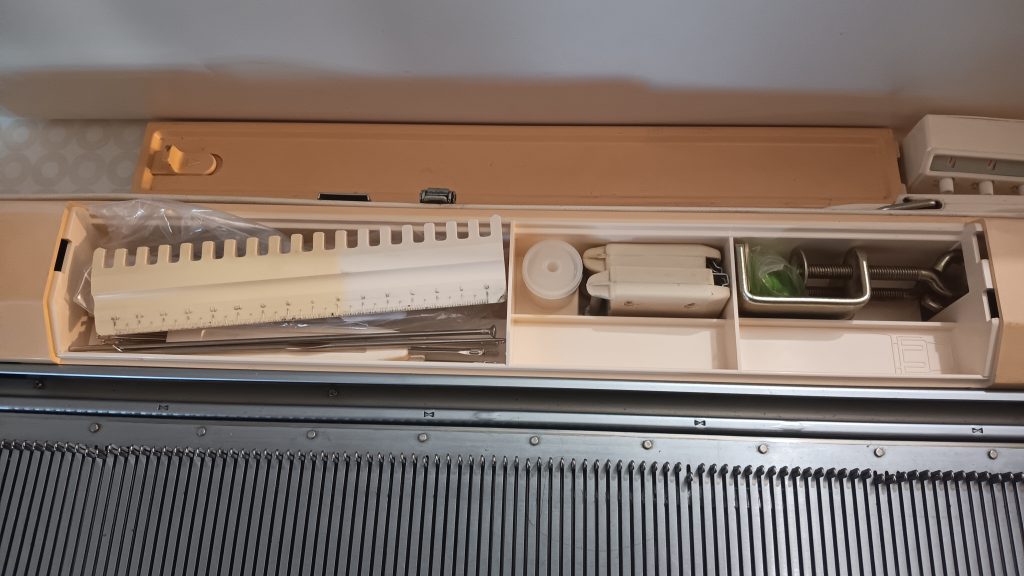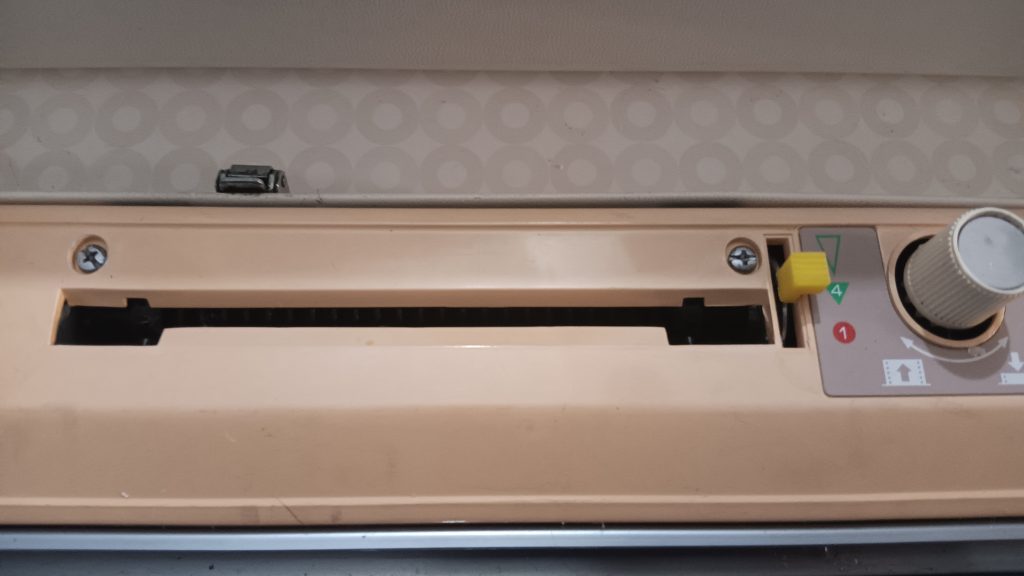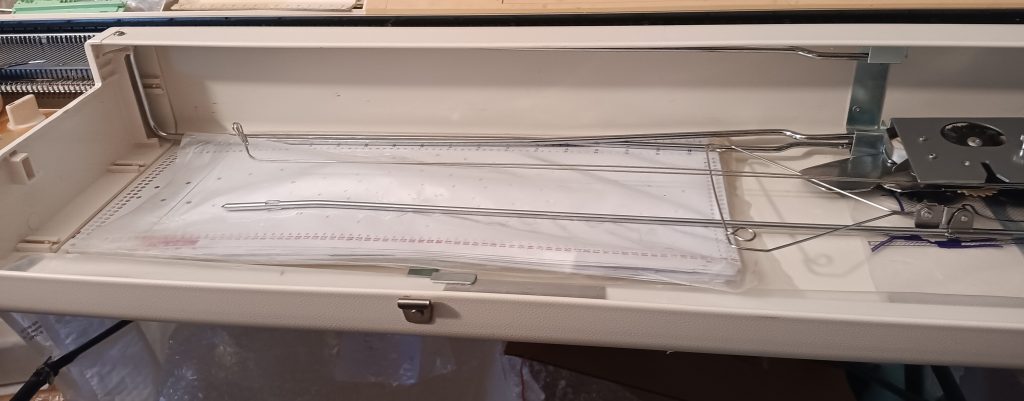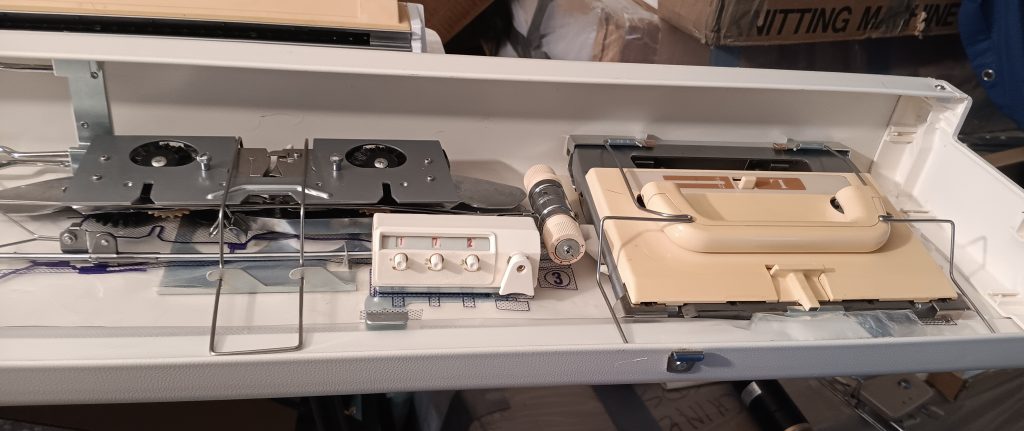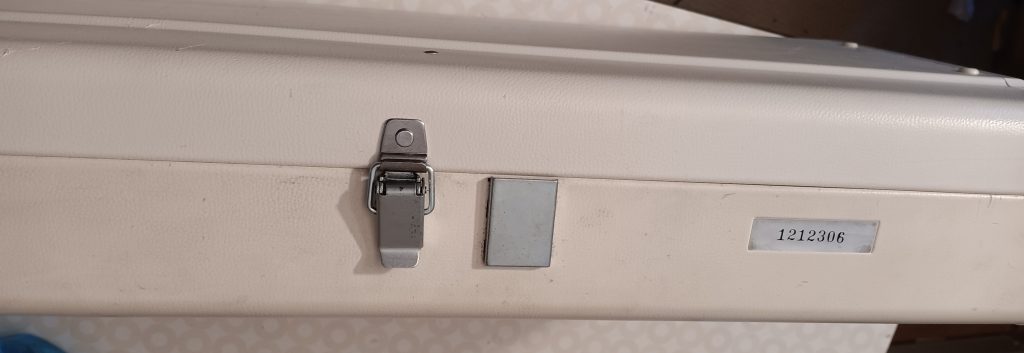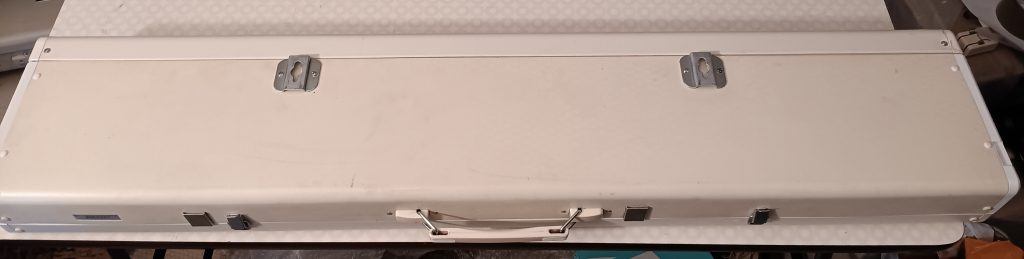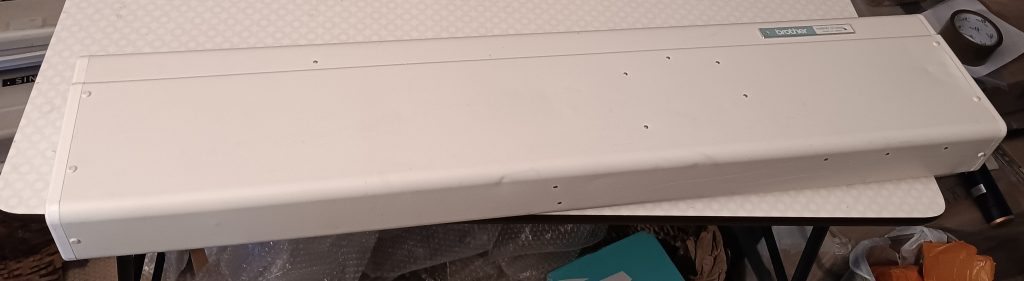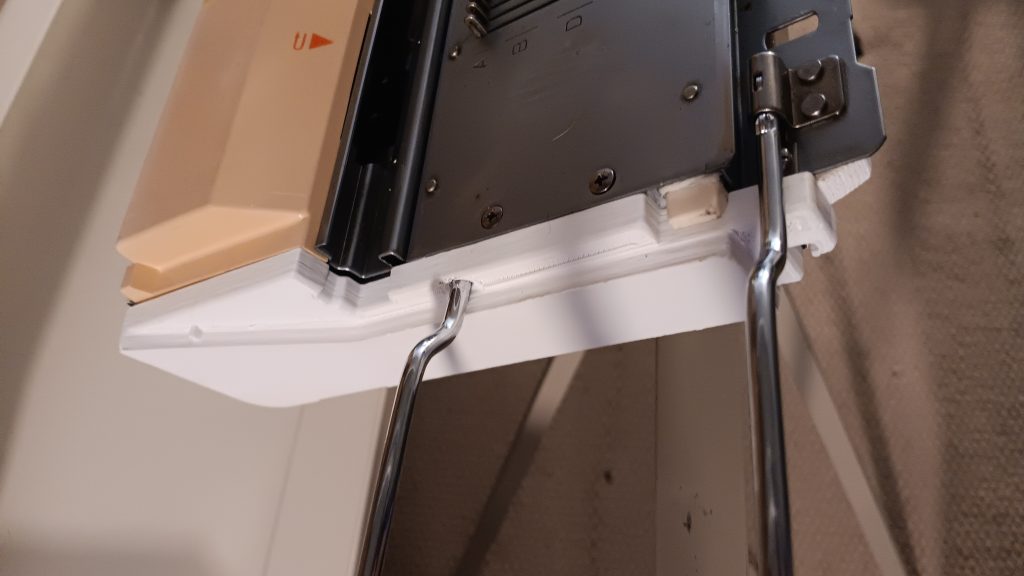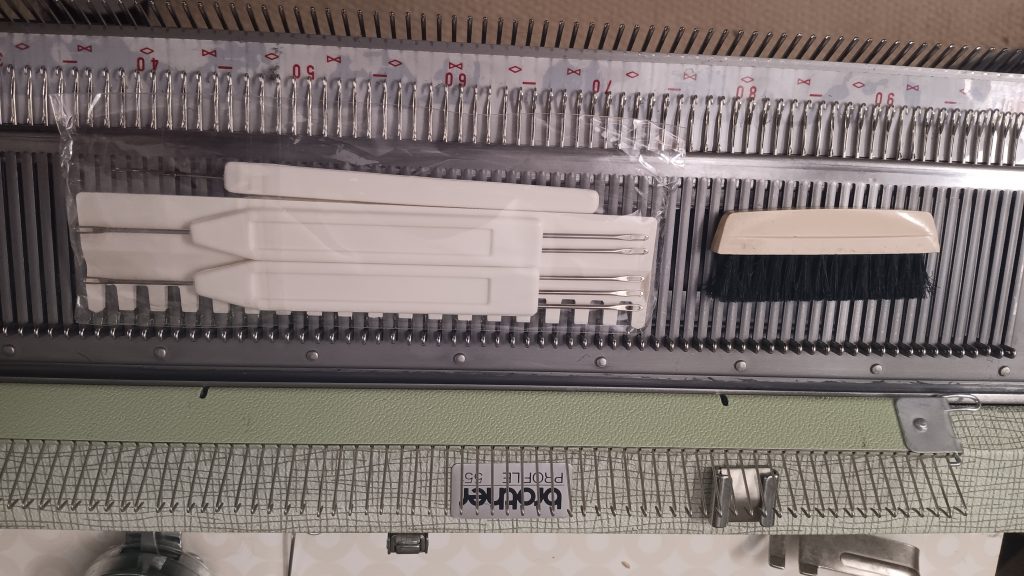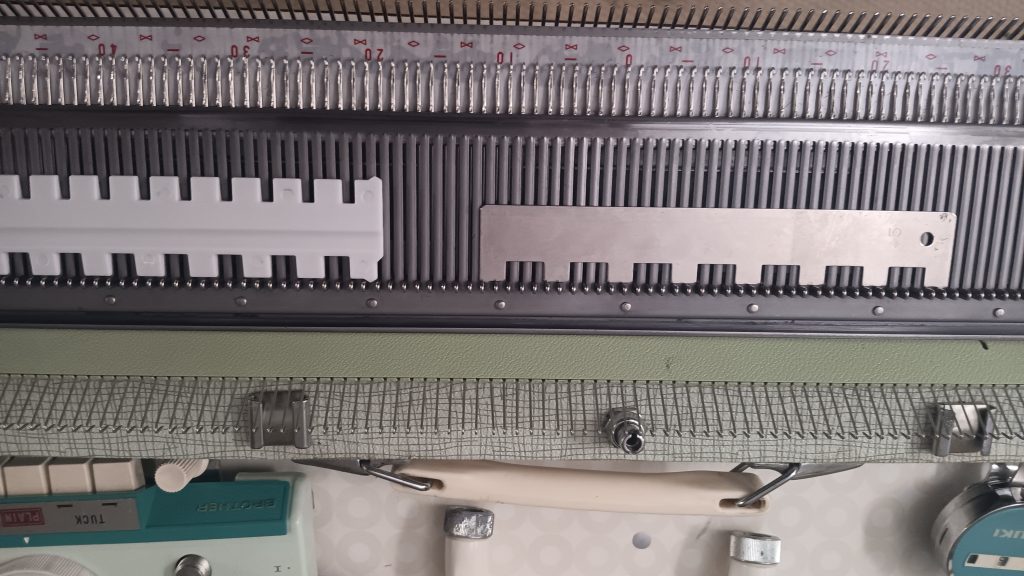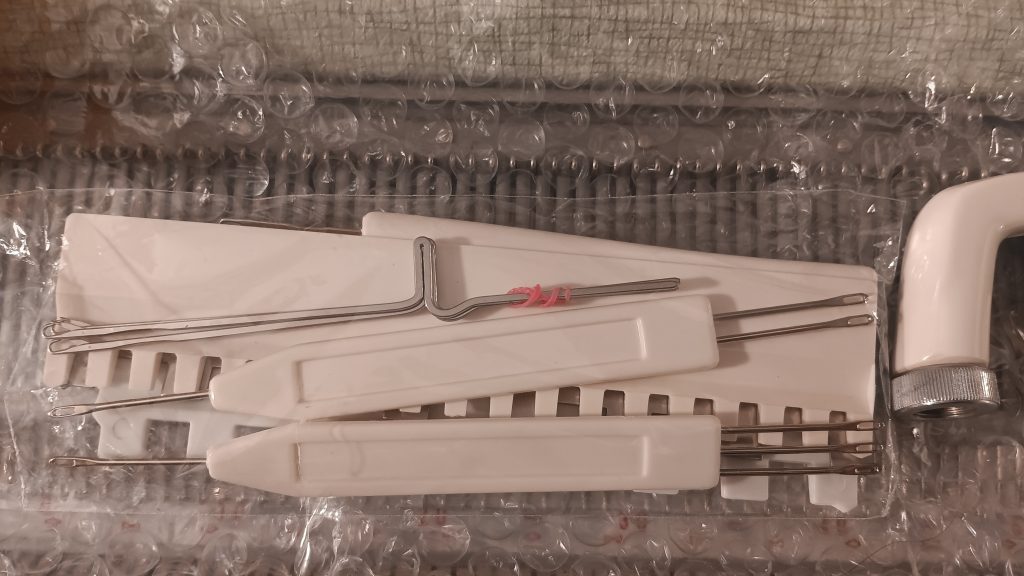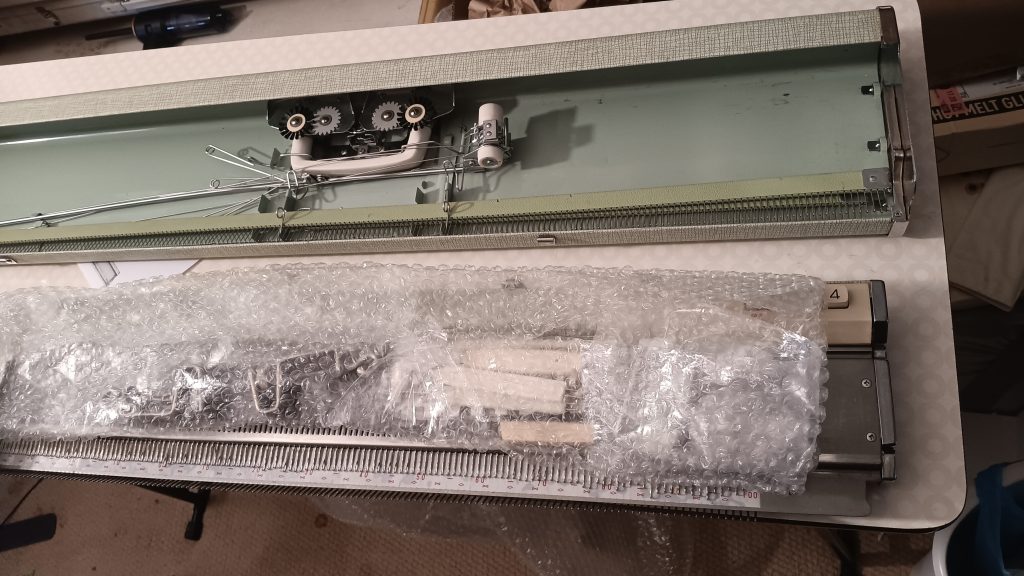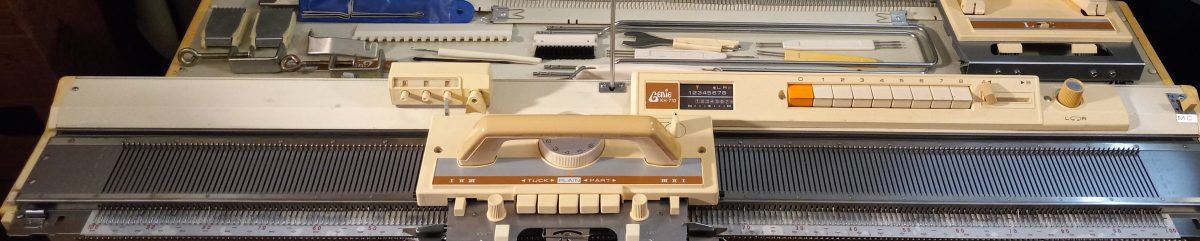
Knitking KR880 ribber serviced and tested in my shop in March 2026

KnitKing KR880 ribbing attachment fits standard-gauge Brother, Defendi and KnitKing punchcard and electronic knitting machines. It is identical to Brother KR830 ribber. Read more about KnitKing KR880 and Brother KR830 ribbers in my Knitting Machine Encyclopedia. The rest of the post below is dedicated to a specific ribber serviced and tested in my shop in March 2026.
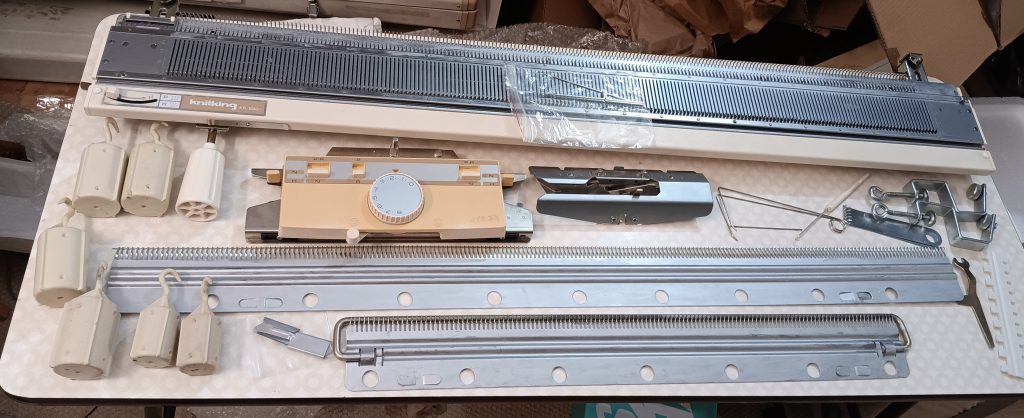
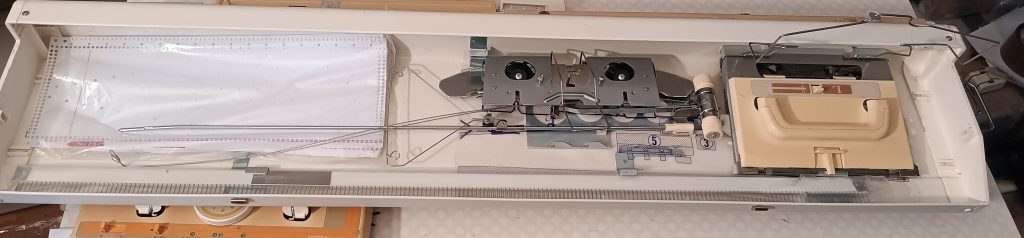
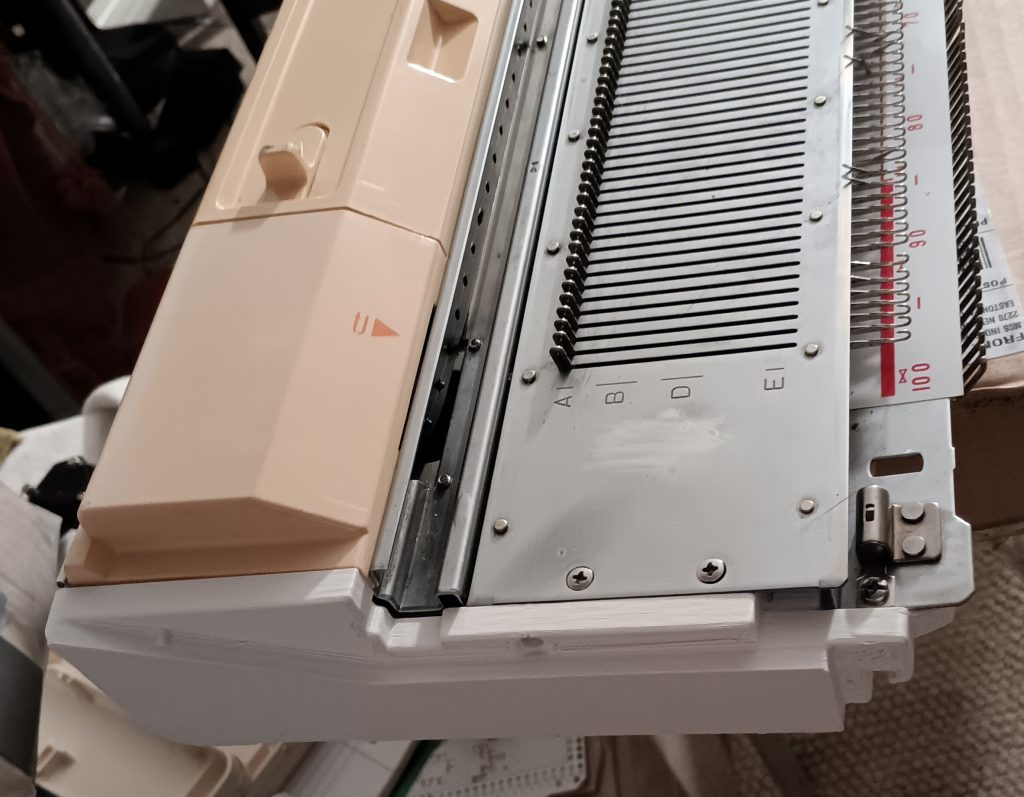
The carriage of the KnitKing KR880 ribber was cleaned and serviced. All buttons and levers move freely and function properly. All needles were removed, cleaned, and inspected. The connecting brackets are new (read more on that below).

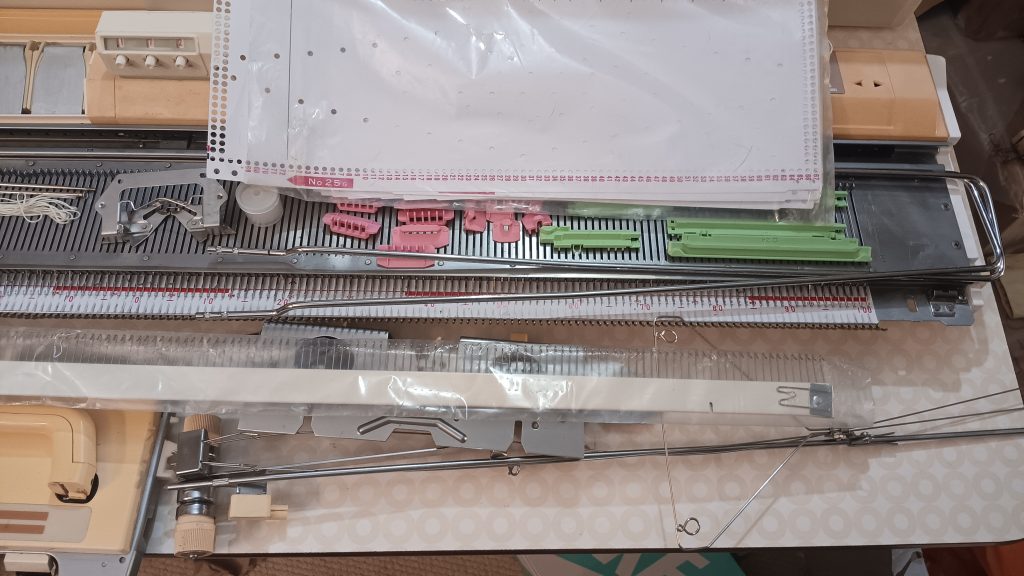
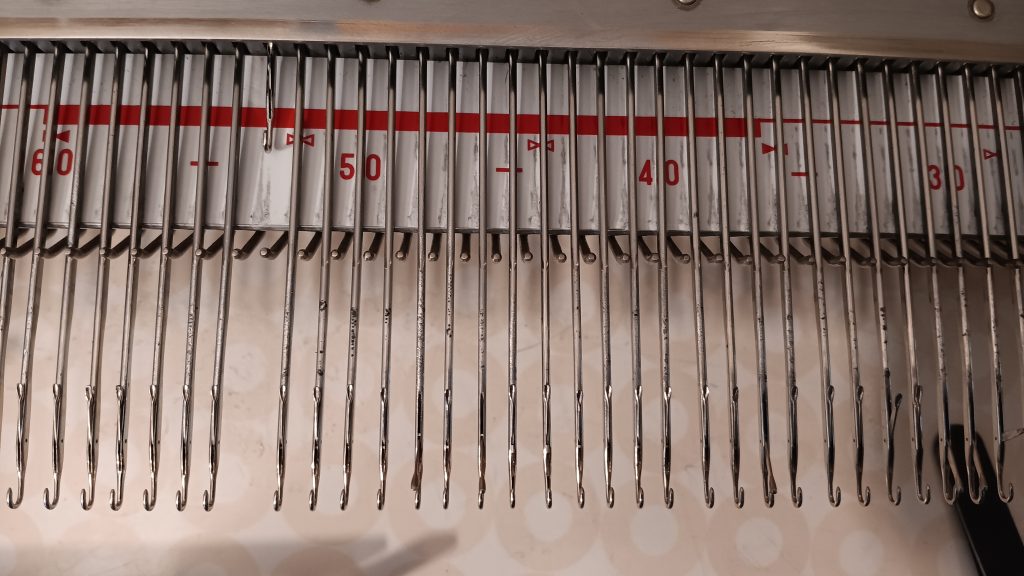
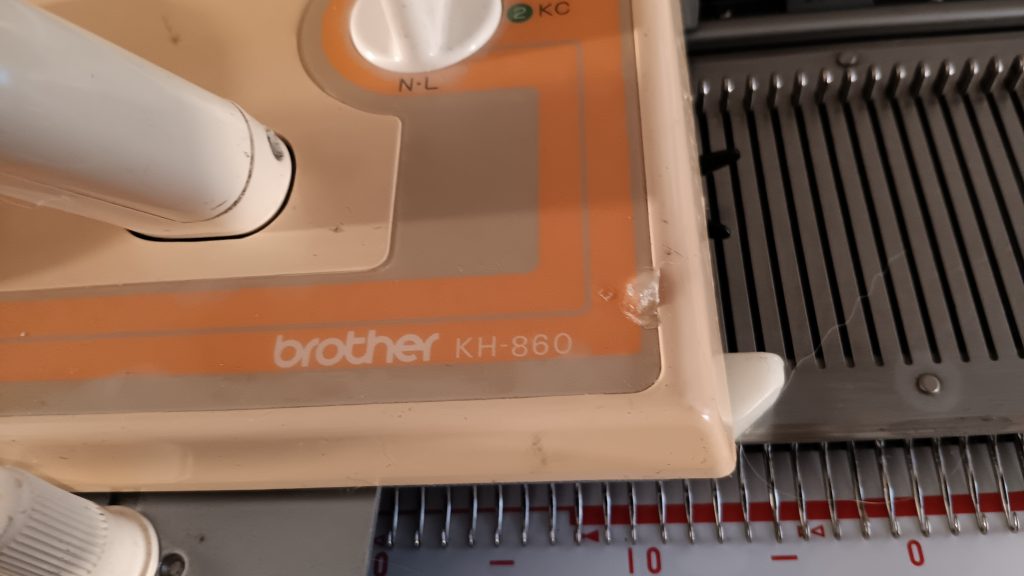
The ribber was tested on the Brother KH860 machine. I’ve spent a good amount of time making sure the correct distance between the ribber and the main bed. The zig-zag cast-on row looked even across the full bed (see the picture below) with no dropped stitches.
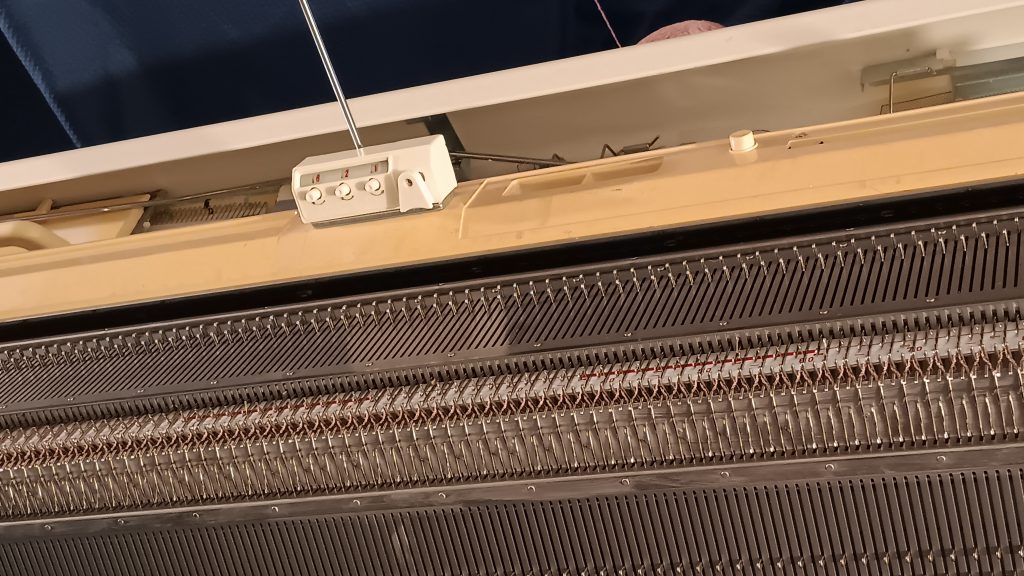
When you get this ribber, I recommend using my settings first, and if the ziz-zag does not look even or the stitches on the first row do not form, only then adjust the distance. In general, the zig-zag might not form necessarily due to incorrect distance but due to yarn issues (if too thick, a wider distance might be needed and vice versa), type of knitting, etc.

The machine will come with all accessories but one: the fine bar. The one that came with the machine is in rough, unusable shape and I don’t have a spare one. It is absolutely not the main accessory (a lot of knitters posting on social media that they don’t even use it).
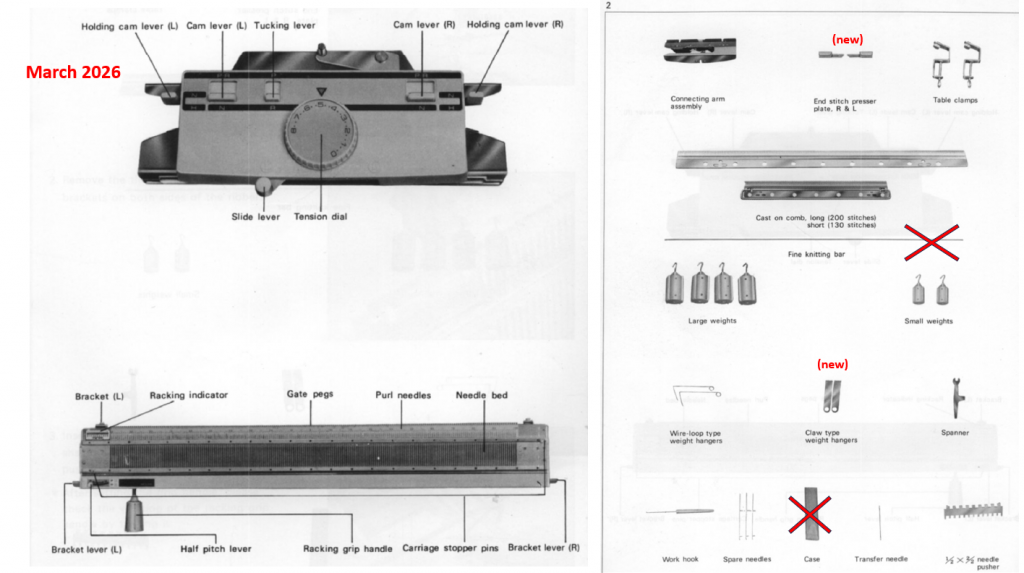
The connecting arm is not the original one to KR880 but a replacement from the Brother KR850 ribber. That connecting arm is a bit more “advanced” since a plating attachment can be added if desired. I do not have one at the moment to spare, otherwise I would have included it. The hard copy of the manual will not be included as well, but its free pdf copy is available online for free.
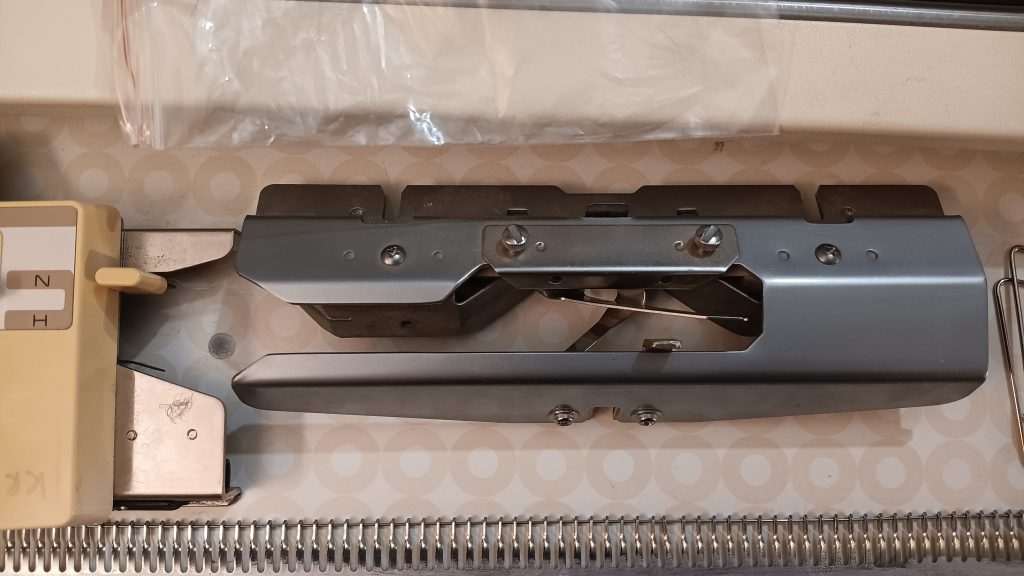
End-stitch presser plates, the racking lever and replacement needles are new.
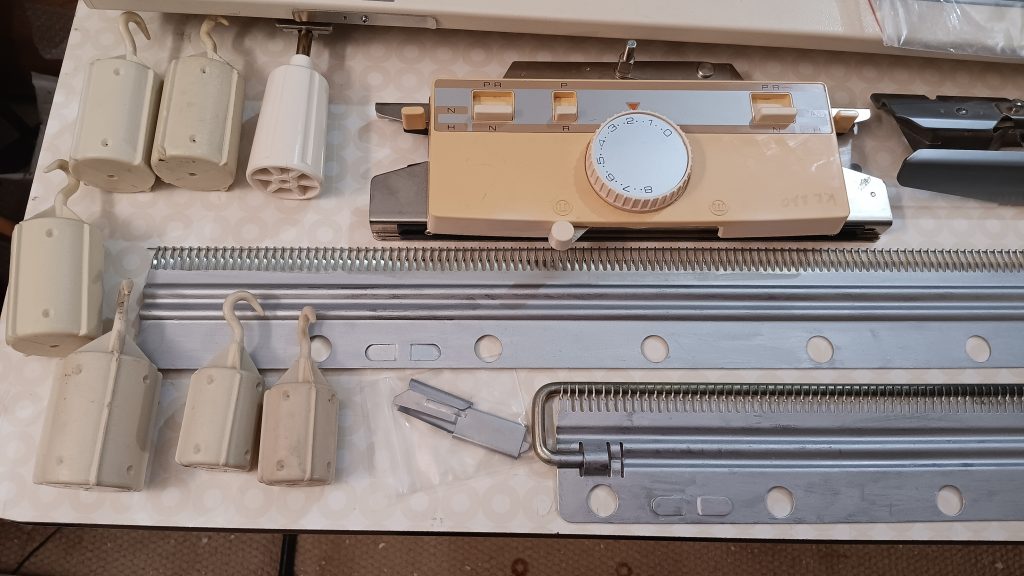
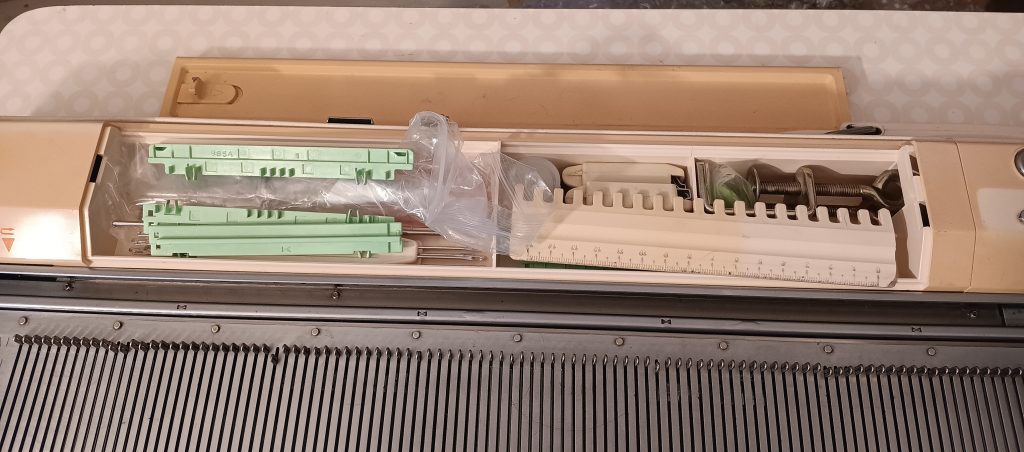
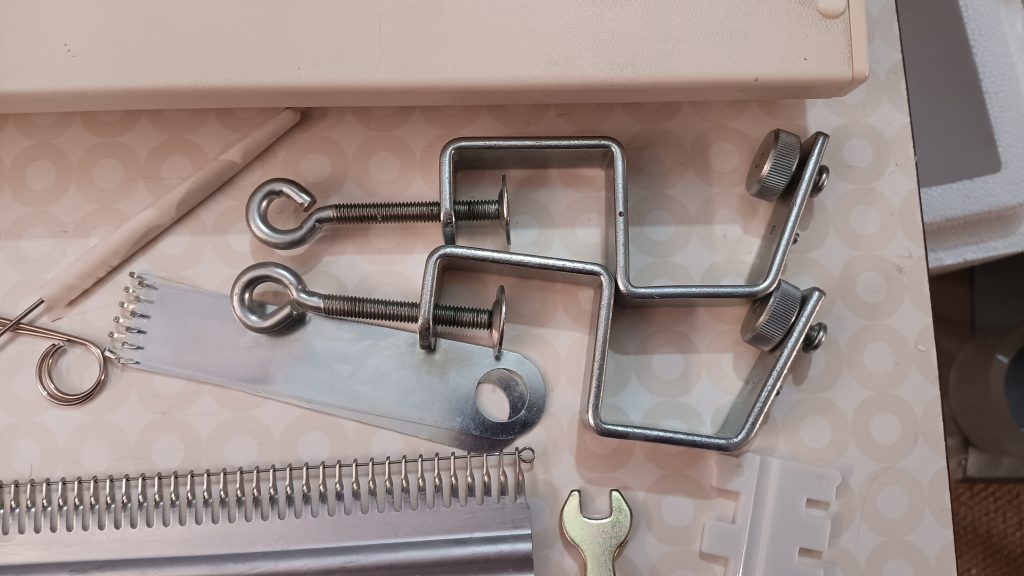
The cast-on combs and the table clamps are original, but they had some discoloration. I cleaned and polished them and covered them with silver Rustoleum.
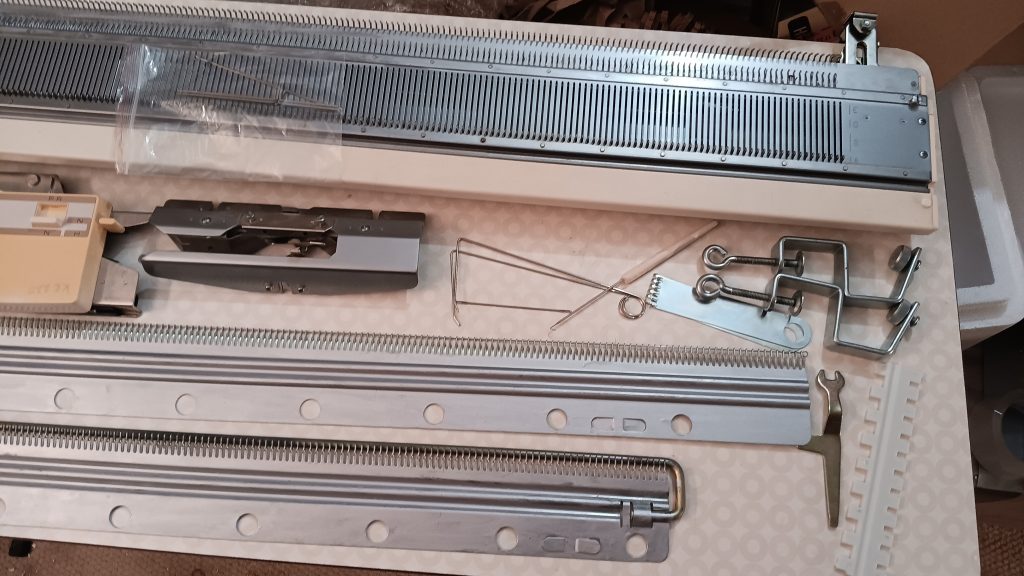
Aluminum claw weight hangers are new as well.
Imperfections:

  • Even though I oiled the machine and the brackets, since the brackets are new, they are a bit resistant when moving the bed up and/or down. Thus, practice lowering the ribber needlebed before knitting. I’ve had ribbers in the past that were too easy to lower, and it was somewhat inconvenient. So, I’d rather have a ribber that is a bit resistant to lower than a ribber that can drop down without a warning.
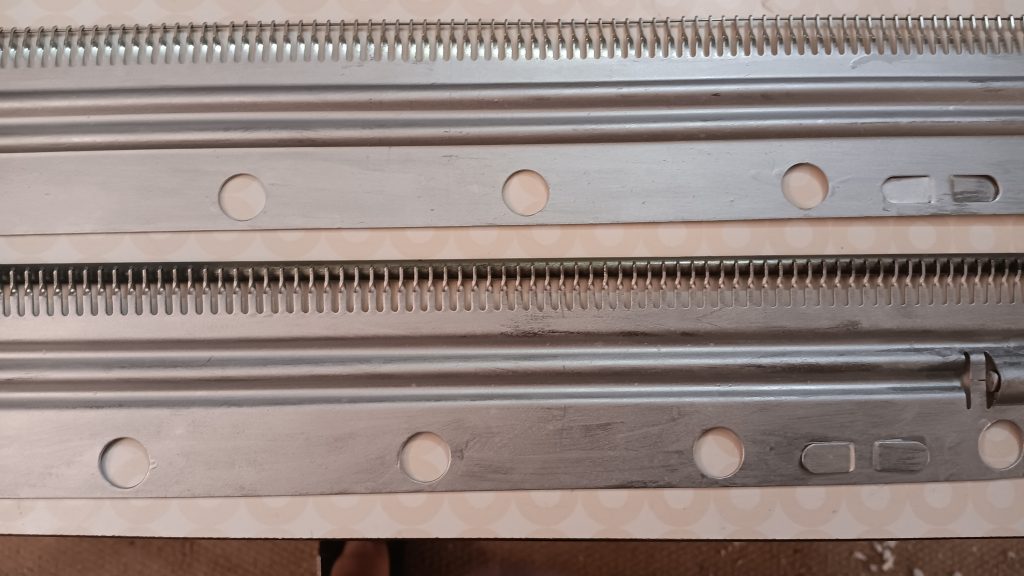
  • Rustoleum does not always cover the surfaces that are smooth. I did not want to roughen the cast-on combs just to get an even coat of paint. Thus, you’ll see some unevenness in my paint job.
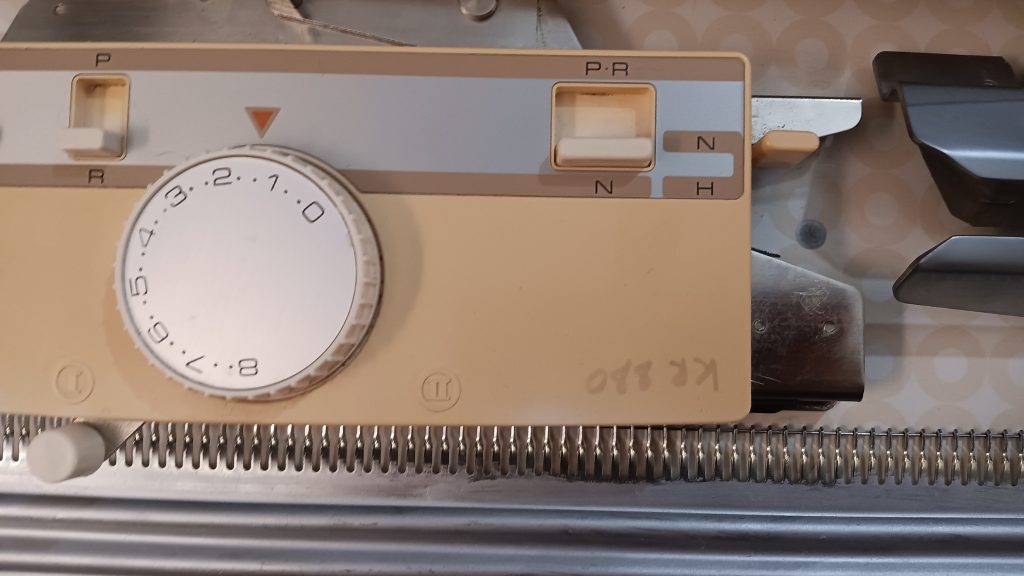
  • The carriage has a Sharpie marking and typical sun-related yellowing/discoloration
To ensure that the carriage functions well and that all needles form correct stitches, I knitted on a full bed but on every other needle. Thus, I tested two sets of every other needle position. Everything went great: watch the video of my tests here.

Happy knitting!!
Brother KH860 knitting machine

Brother KH860 is a standard-gauge knitting machine with 200 needles and a punchcard reading mechanism for automatic needle selection and patterning. Read more about this model in my Knitting Machine Encyclopedia. The article below is dedicated to a specific machine prepared in my shop in March 2026.

The machine was cleaned, including the deep clean of the carriage and the punchcard reader. All needles were removed, cleaned, and individually inspected. So, about 75% of the needles are the original ones, and 25% are new. After all the knitting tests, I check the needles again: first visually and if they look suspicious (out of alignment, for example), I remove them and check against new needles. The needles that were even a bit suspicious were replaced with new ones.

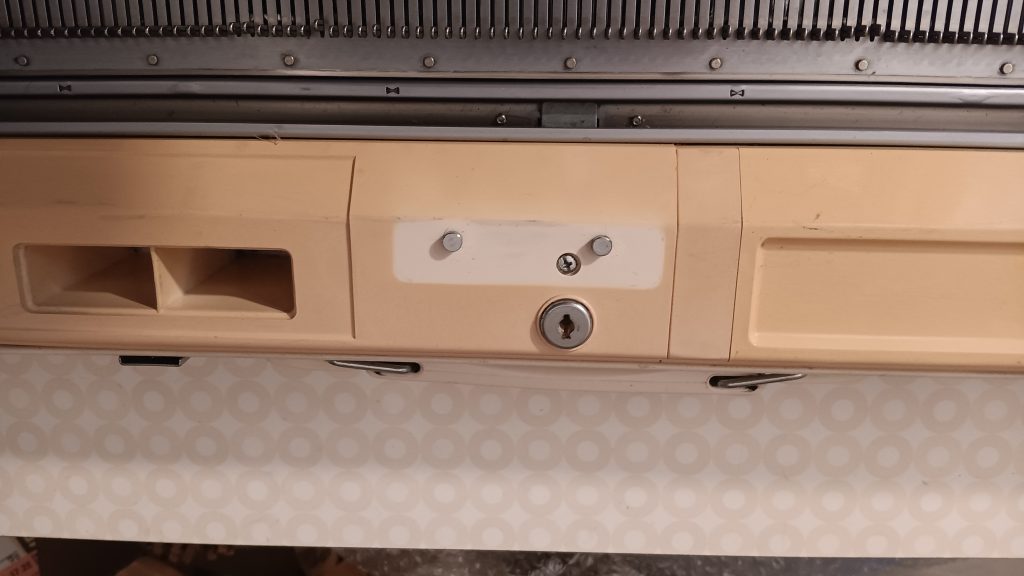
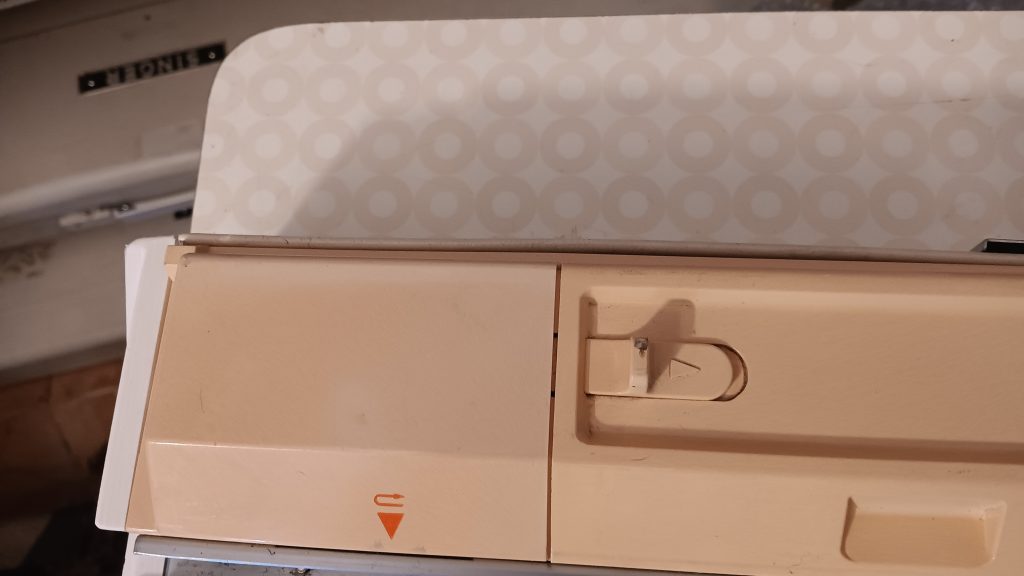
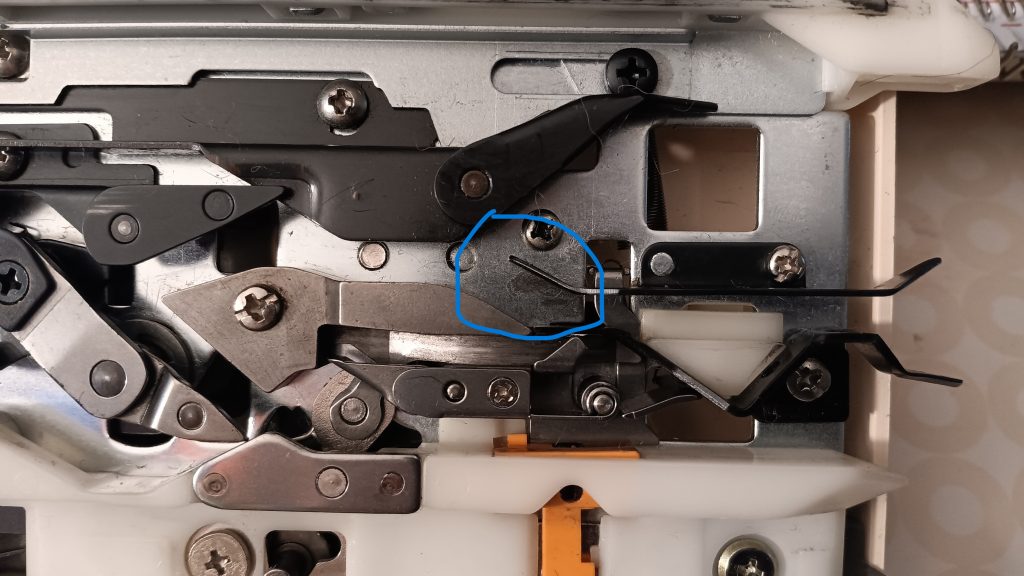
The carriage is in great shape and was cleaned and serviced thoroughly (I opened it and removed old grease). I had to replace the knob, the handle, and the tension dial cover. Thus, there is some color mismatch. But all buttons and levers move freely. Please, wipe the carriage with Q-tips and brushes after each use to prevent lint build-up.

To further check the needles and the carriage functions, I knitted on the full bed (all 200 needles). The video of these tests is here. I knitted tuck-, slip (part)-, stockinette, and fair isle stitches. During these tests, I like using card #1, where the machine selects and patterns on every other needle. Thus, mispatterning or needle selection issues are very easy to see.

A couple of needles formed incorrect stitches, and I replaced them. After that, all tests were great. I used two different yarns: a thinner acrylic one and a slightly thicker one with potential static problems. The machine handled both yarns really well. The tuck was best on the second, silkier yarn. Read my blog on tuck-stitch issues and how to deal with them.

The machine did not come with the lace carriage. Thus, I included one from the KH910 model. This lace carriage was tested (see the same video) and worked great with this machine. All buttons and knobs move freely.

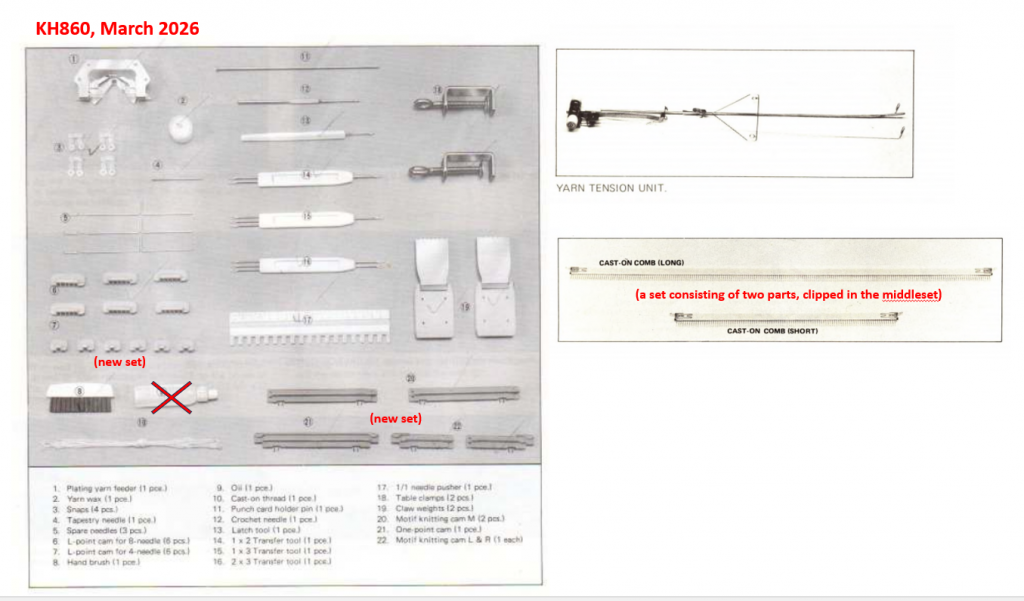
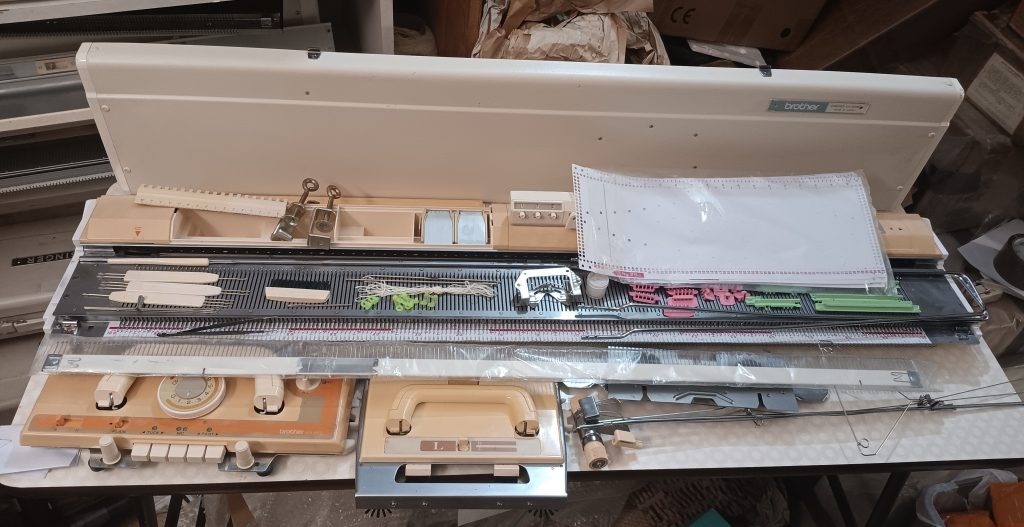
The machine will come with all major and most minor accessories. The row counter is new; thus, its color is lighter than the orange-ish color of the machine covers.

The only thing missing is the machine oil (I do not trust the oils that come with machines because they are old and yellow). I recommend getting Hoppe’s gun oil on Amazon. The hard copy of the manual will also not be included, but its electronic copy is available online for free.

The original cast-on comb set will not be included. Instead, I am providing a new cast-on comb that detaches into two sections (a typical cast-on for later models).

The sponge in the retaining bar was replaced. Because I used the original retaining bar, the sponge strip is attached with medical tape to the end (a typical procedure for refurbished machines). It might come off when you remove it to exchange needles. Just apply a small section of medical tape (one or fewer layers; if too many layers, it might get stripped again).

I am including a set of original Brother cards, but they are slightly different from those mentioned in the manual. Card #5 is missing, but I am including six custom-punched (by hand but good quality) cards, mostly for fair isle knitting.

The accessories for the single motif knitting are a new replacement set. The rest of the accessories are original; thus, some discoloration on them.

The punchcard mechanism lever is a 3D printed replacement.

When not in use, the major accessories are stored in the lid case. The extension rails are new (not sure if old or new stock, but the machine did not come with them).

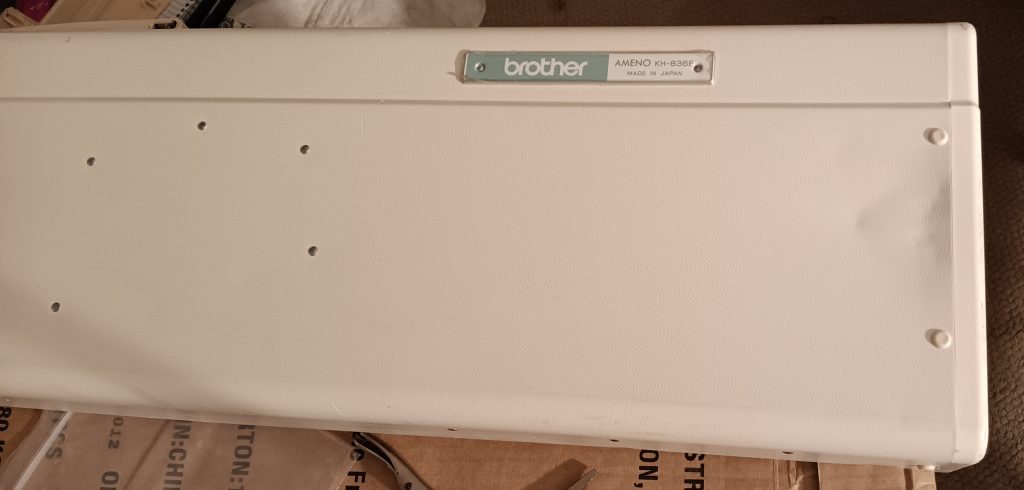
The machine did not come with the original lid case. But I found one in pretty good shape, but from Brother KH836e. Its color is whiter than the case.

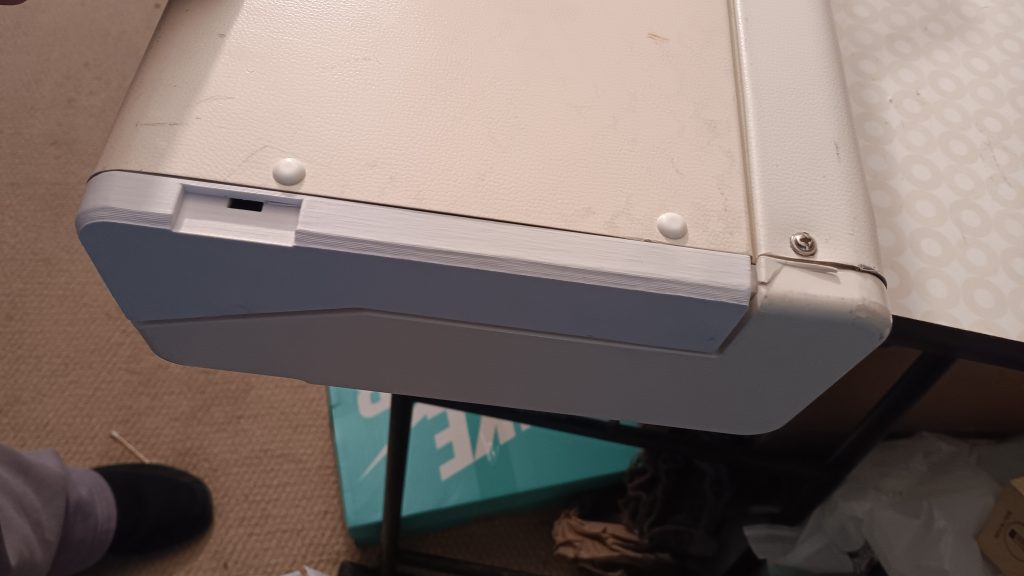
The original end-caps were cracked, and I replaced them with 3D printed (from a strong UV-resistant material) ones. Thus, you will see more discoloration.

Other imperfections:

  • Because the lid did come with this machine, its color is a bit off. The lid has some minor bends, scuffs, and scratches, which I documented. Some are shown below. They are very minor to worry about.
  • The case has some sunlight damage and discolorations as well. Unfortunately, this is pretty typical for these vintage machines. Cover it with a light curtain or a sheet when not in use.
  • Because the machine comes with 75% of the original needles, you will see some visual imperfections in them. However, the needles are smooth to the touch, and during my full bed tests and afterwards, they did not show any flaws.
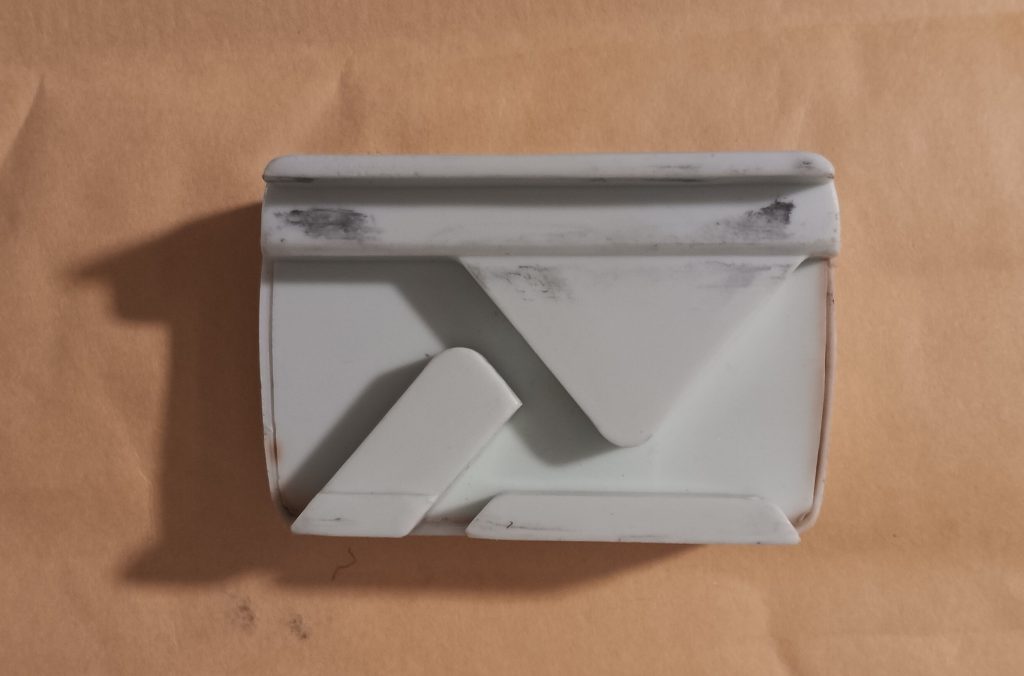
  • In addition to a color mismatch on the carriage, it has a small blob on the side. I decided not to touch it to risk damaging the plastic cover.
  • There is one minor discolored spot on the undercarriage. It does not look like rust, but I still treated it with a special oil. I did not notice extra static on the carriage (which is sometimes typical for machines with moderate rust).
  • Because I used cleaning oils, the carriage might still bleed some of it. Just wipe with an absorbing towel.
  • The needle bed also has some minor discolorations. I treated some of the with silver Rustoleum

I was very pleased with how this machine worked. With the right yarn and tension, it will work flawlessly, like it did for me.

About knitting machine stitches: tuck

… constantly in progress. Last updated: April 2026

Despite being one of the prettiest, tuck-stitch is the most finicky stitch in my opinion. So, below couple of tips for everybody on how to make it less painful to knit beautiful tuck-stitch patterns.

  1. Make sure the tuck brushes or wheels (if your machine/sinker plate/carriage are equipped with those) are pushed forward. It is possible to form nice tuck stitches without them, but it is way better WITH them.
  2. Tension should be set on lower numbers; it will also depend on your yarn. Swatch, swatch, swatch before using tuck for a garment to discover the right combination of tension and yarn.
  3. Poorly formed tuck stitches could be because of the static (yarn is prone to static, the air in the room is dry, there is minor rust in the machine or carriage, insufficient oiling): a dryer sheet on the nedlebed, attach wax to the tension mast, spray your yarn with anti-static.
  4. Tuck needs even weight across the knitting.
  5. Sometimes I move the carriage a bit slower when knitting tuck to check if all stitches rolled off the needle heads correctly. If you see that some stitches did not slide off the needle heads, do it manually. This might happen if the yarn is textured, the needle heads are not as smooth, due to static, or insufficient weight.
  6. The carriage is moved too quickly or too slowly.
  7. Needle heads are not smooth enough: oil them, polish them or replace
  8. Latches for tuck-stitch need to be ideal: not bent or sticky latches. Thus, check the needles especially thoroughly if you see mis-patterning or poorly formed stitches.

Always remember that tuck-stitch takes twice as many rows to form. Thus, pay attention to it when calculating your gauges and yarn consumption.

tension

Tuck comes up shorter than stockingette, therefore you will have to do more rows. I don’t want to say here what mine comes out at, it depends on yarn, tension and individual machine, so yours may be different. If you need help working it out, just ask.

wax

All tuck does. You have all these extra threads on the needles and not much room to move before they will fall off. Even weight all the way across.

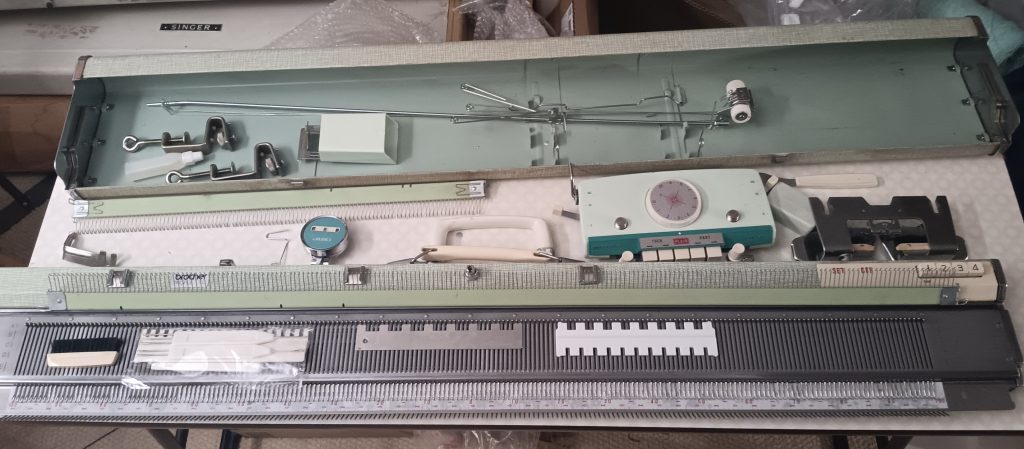
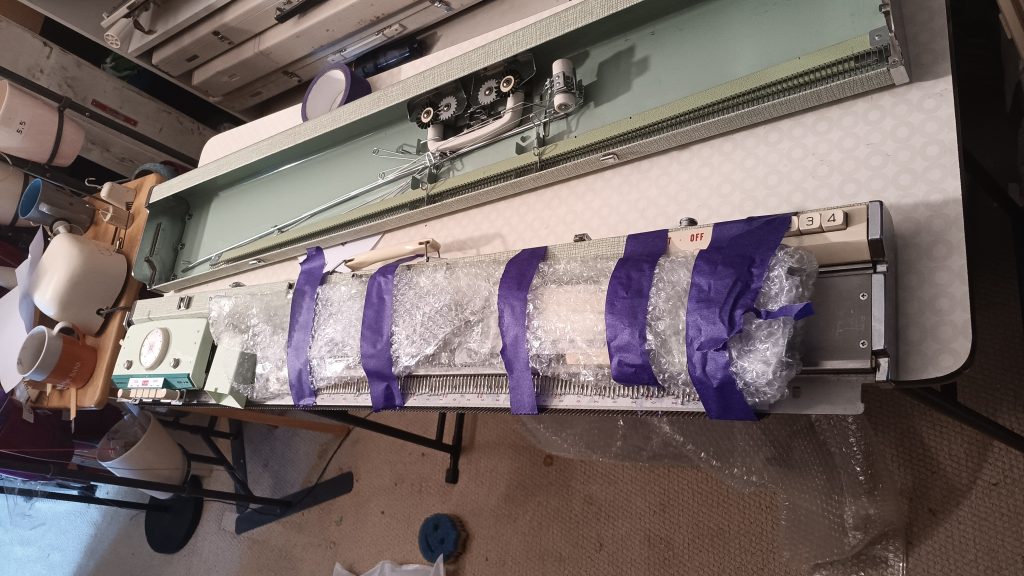
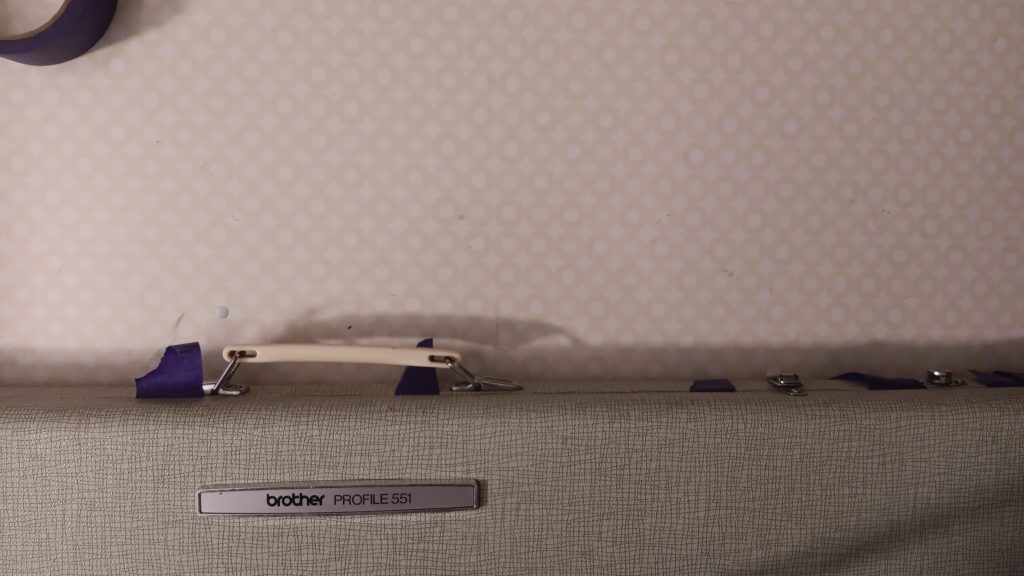
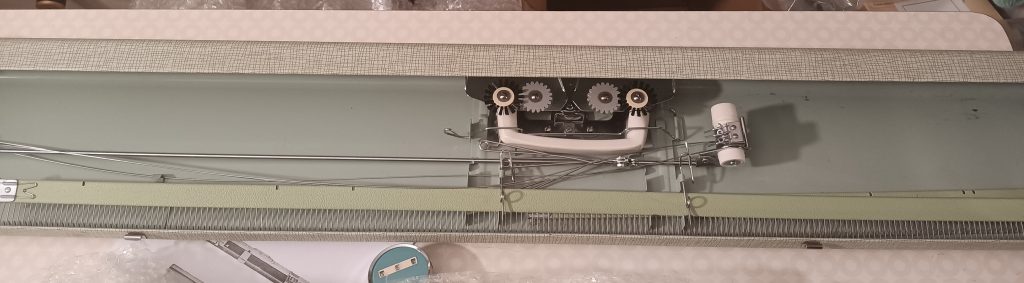
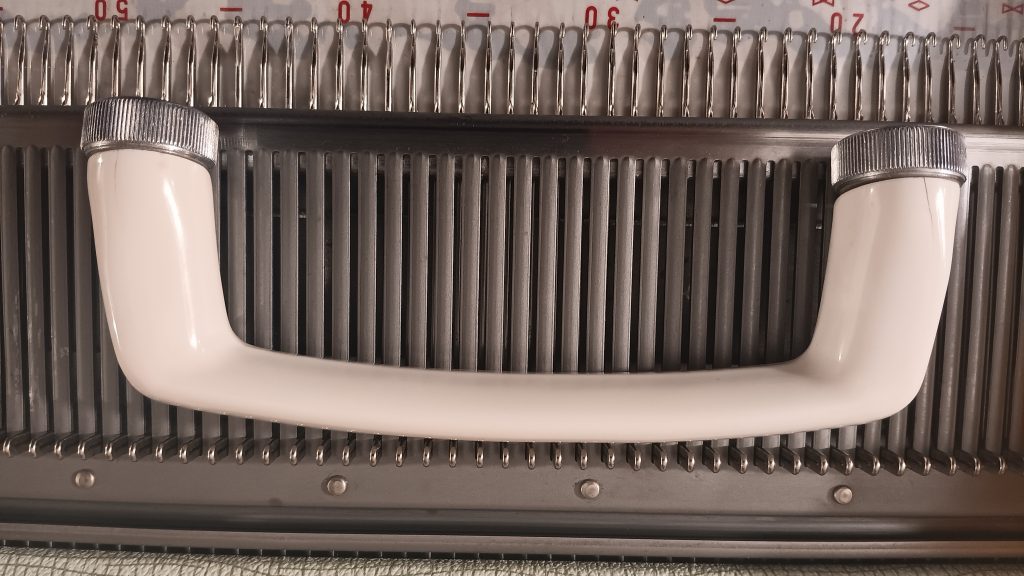
Brother Profile KH551 serviced in February 2026

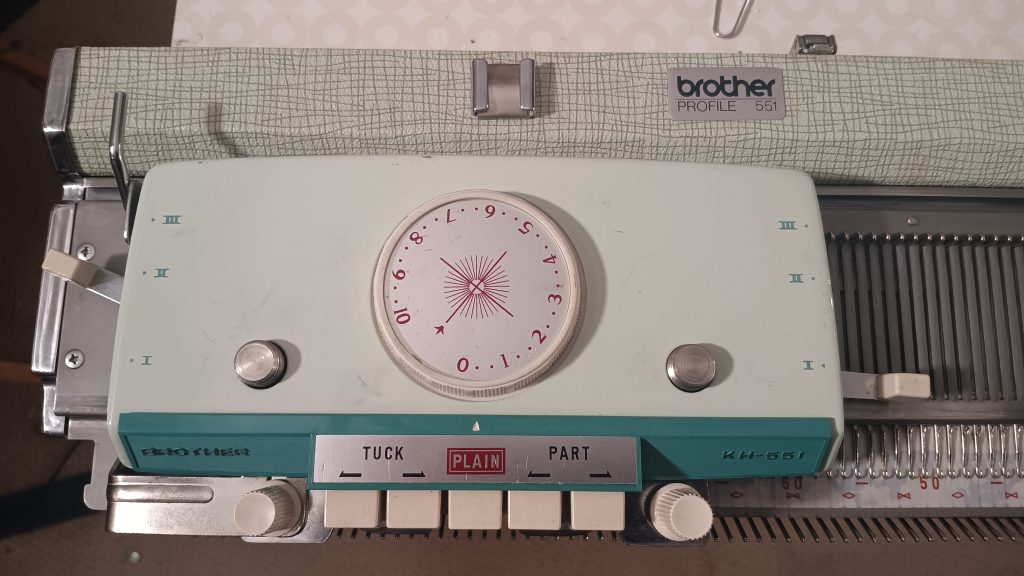
Brother Profile knitting machine is a standard-gauge machine with 200 needles, 4.5 mm apart. It has a push-button needle selection mechanism that allows to knit patterns. Read more about the pros and cons of this model in my Knitting Machine Encyclopedia. This post is dedicated to a specific Brother Profile 551 serviced in my shop in February 2026.

The carriage was cleaned and serviced (oiled as well). All levers and buttons move freely.

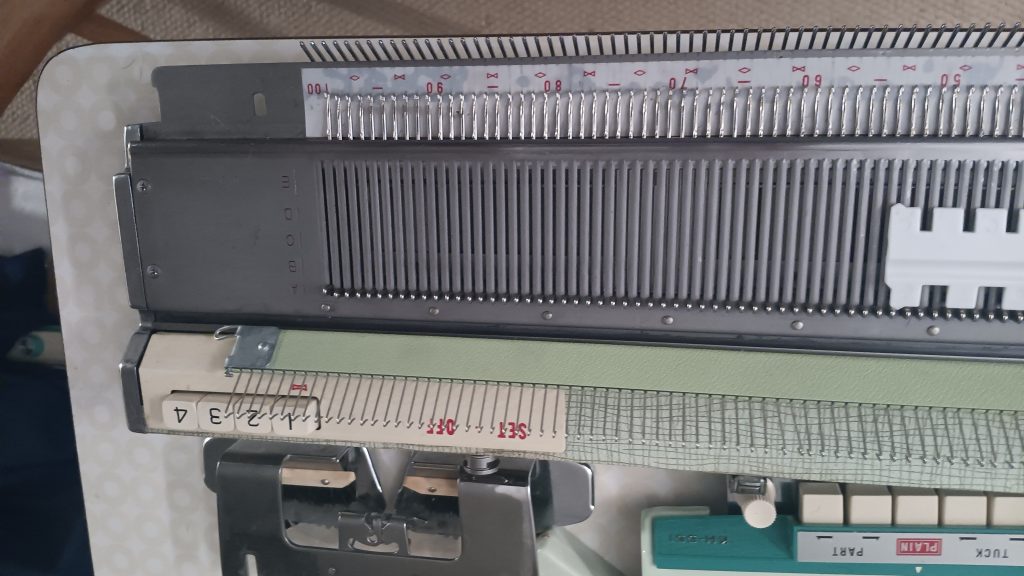
The machine was cleaned and oiled. The sponge strip in the retaining bar was replaced with a new one. The retaining bar is the original.

All the needles were inspected; first visually while I cleaned them, and then by knitting on all of them. I did discover a couple of faulty needles (one ofthe “finds” is shown in the video), which were replaced. To test all needles, I knitted several different patterns: plain stockinet, slip (or part) stitch with the patterning on every other needle as well as tuck-stitch. See the video. All needles formed correct stitches (but read below more on tuck).

I included a new needle indicator strip.

The machine comes with all major and most minor accessories.

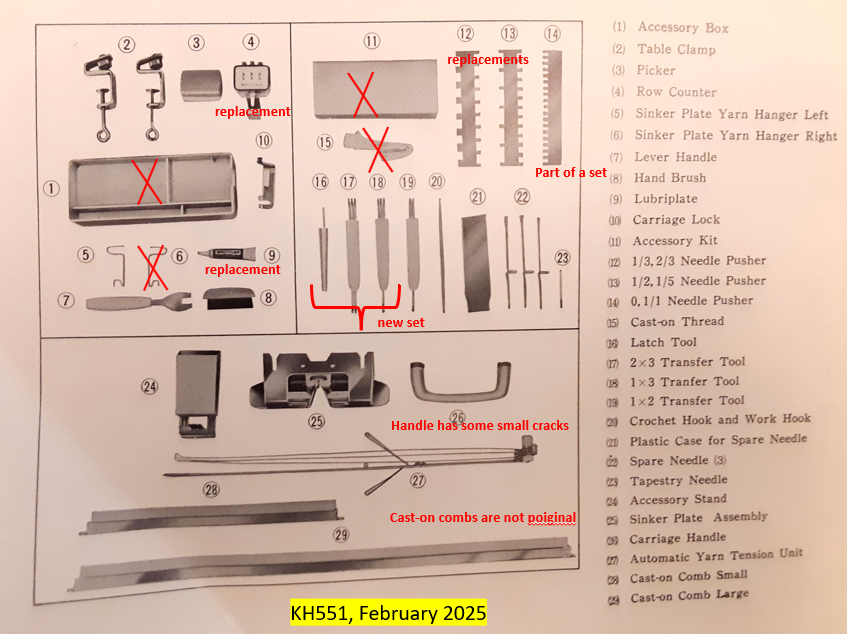
Among the major accessories, the tension mast, the ratchet lever (it the video I used a different one but later replaced it with the original one), and the table brackets are original. The missing minor accessories are 1) one of the sinker plate yarn hangers (I am including the second one and if needed, one of a similar shape can be made from a paper clip. These are only needed for fair isel and/or weaving (refer to the manual)); 2) tool box, 3) case for the minor accessories and 4) the unravel cord (any silky strong thread will work as well). I forgot if I included a tapestry needle (sorry 🙁 ) but any needle of your choice with a wide eye works. I even included a small tube of good lookingmoriginal knitting machine oil. But for future lubing, order Hope’s gun oil on Amazon.

A hard copy of the manual, unfortunately, will not be included. I don’t even have my own copy. But it is available online for free.

The transfer tool set is not original (the original one has metal needle pushers/combs), but it is brand new. It includes the transfer tools, latch hook, and the 1×1 needle selection comb. The two other combs are not original either, but in great shape, and the selection-“teeth” correspond to those mentioned in the manual.

The replacement needles are not in the picture, but they are indeed included (I placed them inside the kit).

Things to pay attention to:

  • When removing the retaining bar to inspect the sponge strip or to replace the needles, the tape on its ends might come off. Securing the sponge strip ends with some sort of tape is a typical way of replacing these sponge strips. Just apply a fresh section of medical tape. Make sure not to wrap too much around: not even once, but just enough to attach the sponge and leave the top surface of the retaining bar exposed.
  • Check the position of the row counter once in a while. Because I had to loosen up the sliding bracket, it might become loose if the machine is not fastened strongly enough by the table clamps and vibrates a bit.
  • If the carriage starts making strange noises, check the sinker plate positioning (described in the video).
  • The manual online has a poor resolution. There are a couple of pdfs for the manuals for other pushbutton machines on that website. The position of the levers is the same. So, when uncertain: refer to those or message me.
  • If the cast-on comb teeth are slightly bent, apply gentle pressure (just with your hand) to bent them back. No extreme bent please so they dont snap.
  • Since there is no toolbox, I placed the tools inside the bubble wrap and placed it on the needlebed. They might fall out when you open the lid. I fastened the bubble wrap with purple masking tape. So if you see this tape, it is not to secure the lid and the case but to prevent the bubble wrap from sliding inside.

Imperfections:

  • it turned out that the cast-on ruler set that came with this machine is not the original one (the original ones are metal). They do not quite fit inside the lid’s brackets. But they are in such a great shape and match the color that I felt they should go with this machine. So, it might be quite frustrating to put them back into the lid, but this is the best way they are stored/travelled.
  • The handle has some minor cracks.

  • The row counter is not the original one, but it works great. I had to expand the socket a bit to accommodate its wider base so it will only go inthe middle position. The left- and right-hand rail-like placement slots can accommodate the tool holder. One in a while
  • Needle picker has some age-related discoloration but works fine. Watch a video I put together on how to use it.
  • There is a small section on the lid where a small connecting plate broke off. It was either glued or soldered on. It is such an awkward place and I just let it be. The lid is a tiny bit loose in that area but nothing too bad.
  • Other than that, the lid and the case are in great shape. There was some staining on the outside, which I cleaned, but some minor stains are still there (or maybe I am just seeing them after spending so much time trying to remove them 🙂 )

General advice on knitting, which is applicable to any machine:

  • pull the yarn up a bit when knitting on a large number of needles and turning the carriage to knit in the opposite direction; it will help to avoid looping on the edges and dropped stitches due to the tension change.
  • also, to avoid looping and dropped stitches on the sides, especially when a lot of needles are active, apply claw weights. I just realized that they are not in a typical setup but I’ll throw a couple into the package. Please, look for them.
  • Tuck-stitch might be a steep learning curve (see above) but with patience, you can do it!! General advice, especially when just learning your machine: when knitting tuck stitch, move the carriage slowly, watch for any signs of incorrect tension, watch for stitches that did not slide correctly, apply weight for tension on the fabric, and pull the yarn up when turning the carriage. All this might not be needed for some yarns but for some, it is a must, especially at the beginning of familiarizing yourself with your machine and its likes and dislikes. In the video, I made a mistake during yarn switching and some of the needles dropped stitches. This is why the tuck with pink yarn was not on all needles. But notice that I am not adjusting the stitches as I did with the grey yarn. Tuck overall is finicky: certain tension is needed, low static, oiled needles… just to name a few “issues”. The video shows some tricks.
Happy knitting!
Solving mispatterning problems with Brother punchcard machines.

….in progress. Last updated: April 2026

KnitKing, Defendi and, most famous, Brother machines accepting 24-stitch cards, bulky and standard, for automatic needle selection, and, thus, patterning, can be quite finicky, especially if you inherited the machine that has not been recently serviced. There is myriad of reasons; some are simple, some are more complex. Below is my attempt to identify and summarize them.

The bullets below are NOT listed in their troubleshooting order.

  • old sponge in the retaining bar: replace
  • carriage is not seated properly: Brother carriages have a small lip; make sure it is “hugging” the needlebed (and not sitting on top of it).
  • old grease in the carriage, which causes some of the levers be stuck. See my demo on how to check for stuck flippers.
  • Problems with sinker plate: it might manifest itself by expected needle selection when ONLY the carriage is used but when the sinker plate is attached, the needles are selected incorrectly. More on this here.
  • The timing belt was reattached incorrectly. A small demo of correct attachment is here.
  • The timing belt and the rotating shaft are misaligned (shown here).
  • The relative position of the patterning pins and square brackets is incorrect. See examples of correct and incorrect positions here. Watch how fix an incorrect installation.

Solving problems with mis-patterning Brother punchcard machines: problems with sinker plate alignment

… in progress. Last updated: March 2026

The advice below applies to Defendi, KnitKing, and Brother knitting machines accepting 24-stitch cards, bulky and standard-gauge.

I came across this problem right after I spent hours cleaning the insights of the machine, aligning the timing belt, all pins and plates, and removing old grease. I was very confident that the insides and alignment of the machine was in excellent shape. In fact, when I was passing the carriage back and forth, fast and slowly, while card #1 was inserted, every other needle was selected in each pass like a clock.

However, when I attached the sinker plate, some of the needles started being selected incorrectly (watch a video of what I mean). I was very puzzled because this was the first time I ever experienced something like this.

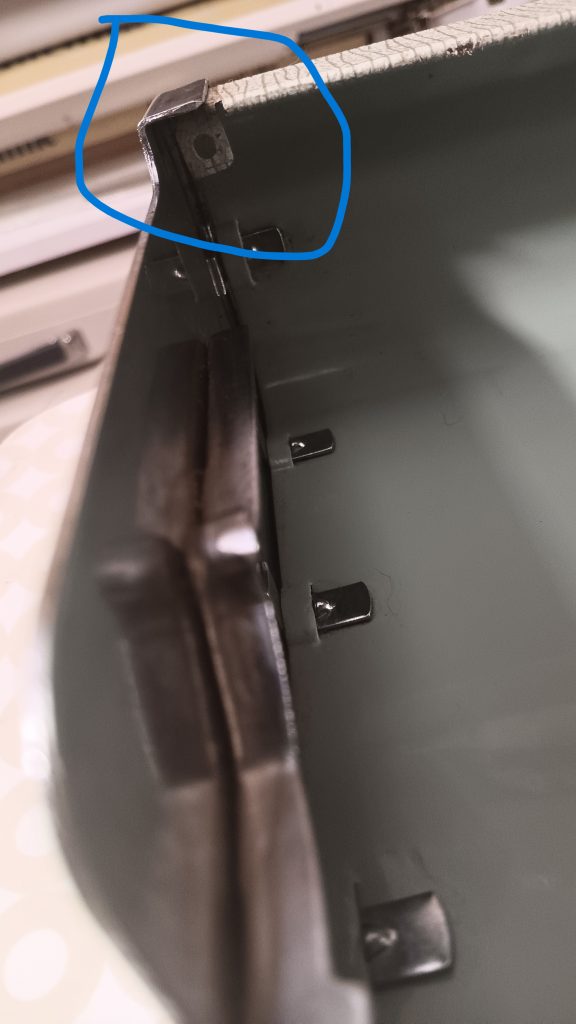
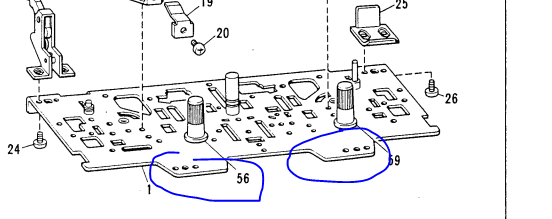
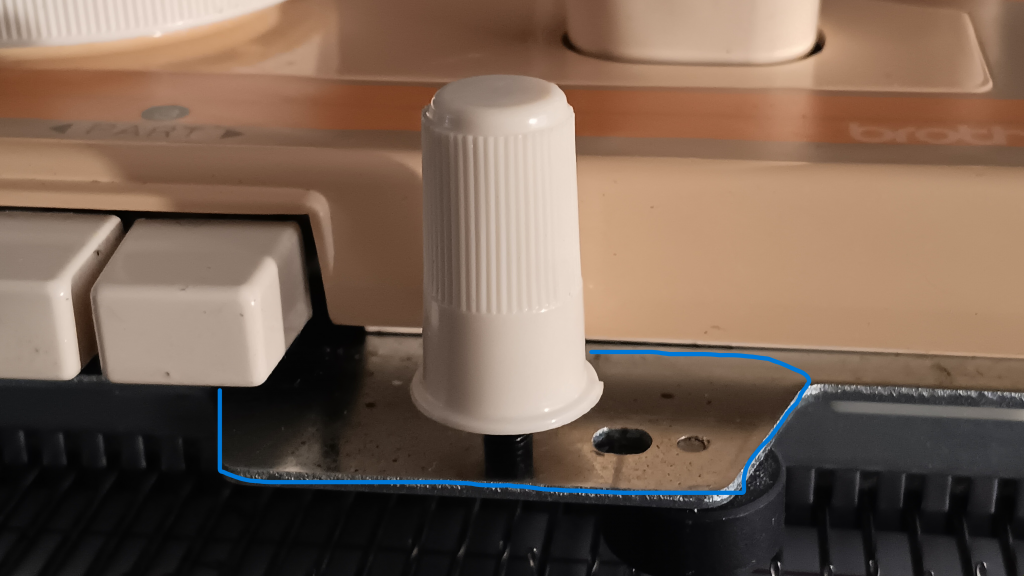
One of the most probable causes is a sinker plate alignment (on the carriage itself). So watch closely how the sinker plate goes onto the carriage. If both sides slide in easily without any (even minor) drop-in. The misalignment can be due to a bent versus just damaged sinker plate. I noticed that if I loosen up the sinker plate, it does NOT mispattern. So, after lots of staring and measuring, I noticed that the carriage plate underneath the thumb nuts was a bit bent on one side. I straightened it and the sinker plate was attaching more evenly and mispatterning disappeaed.

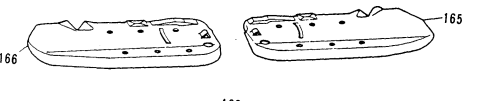
On another occasion, I noticed that the left and right sections of the sinker plate assembly were not symmetrical. One was slightly above the other. There was a small bend in one. I straightened it and adjusted the screws to make both parts symmetrical relative to each other.

I will be collecting pictures of sinker plate misalignments (but it would still be hard to cover all angles). So in the meantime, just stare at your sinker plate and watch for any asymmetries, weird angles, loose sections, etc. It helps if you have another (good/non-faulty one) sinker plate for comparison.

Good luck, and let me know how it went!