… this post is constantly in progress. I’ll update with pictures when I can.
If you are one of those lucky people who inherited a knitting machine, got one passed down from your grandmother’s attic, or got a set for free, you can ignore this post. Just know: we are all already jealous, no matter how small or big your inheritance is.
If you are looking for a machine on Marketplace, below are a couple of things to look for. None of these are deal breakers, depending on the price, on what you need, whether or not you are ready for a project machine…
Look that the carriage is present. You cannot knit without the carriage.
Look that the sinker plate (sometimes called fabric presser) is present. You will not be able to knit without it either.
Look for other major accessories: tension mast, cast-on combs (for Brother machine), needle transfer tools, etc. You will be able to knit without them, but those are nice to have. Even on the used market, you are looking at an additional $100 or so of investment if the tension mast and the cast-on combs are not present.
Look for pictures of needles moved from A to D position: make sure there is no rust or very little rust. Very often, a decomposed retaining bar that was sitting for a long time in the machine will rust the needles at the point of contact. However, believe it or not, this rust might be ok to fix. If the needles are rusted beyond that point, then there is a very big chance there is rust inside the needlebed, which might pose more serious problems down the road.
Importance of demonstrating knitting on the machine:
Ya’ll heard by now how hard it is to find replacement parts, especially needles, for Toyota knitting machines. So, why are Toyota knitting machines still so desirable? Is it worth buying a Toyota knitting machine? Should I really accept that vintage present out of my aunt/grandmother/neighbor attic?
A lot of users emphasize that Toyota machines with Simulknit are most desirable because no other Japanese or European manufacturer makes something as easily manageable as Toyota’s Simulknit. There is a stand-alone Simulknit kit (Toyota Simulknit K80), and some setups have built-in Simulknit. Setups of the knitting machine compatible with ribbers with model numbers 5XX do not need any additional attachments because the Simulknit function comes with those 5xx ribbers.
Toyota Simulknit K80 attachment can be fitted onto the Toyota KR460 ribber.
A lot of users mention how wonderful the lace-knitted fabric looks on Toyota. Most Toyota machines that offer lace-knitting capabilities come with a two-carriage system for lace. Toyota KS950 has a carriage with built-in lace-knitting capabilities. Toyota KS950 (same as Elna EK2400) with its matching ribbers are the most desirable machines from this maker.
Many emphasize the ease with which Toyota carriages slide across the needlebed.
Many are just in love with everything Toyota and will buy a second second-hand machine to keep for parts.
The majority of the needles are used and sold by people who either have old stock supplies or disassembled machines for parts and have needles remaining. Often, people buy a second Toyota machine just for parts and needles and are willing to let go of some of their inventory.
Once in a while on social media, a manufacturer surveys for people who are willing to buy in bulk so it will be worth it to manufacture a lot of needles, but to the best of my knowledge, nothing has materialized yet.
Some needles are interchangeable among the models. However, needles for the 787 model are not compatible with the 747 one, and vice versa. Needles for the Toyota 747 have a small tail curved up. Needles for the 787 are similar in dimensions but lack this curved tail. Some sources say that needles for the Silver Reed SRP50 and SRP60 studio might work on Toyota 787.
Needles from the 950 will not work on the 901. Some sources state that needles from Silver Reed 321 model might work but the butt is a bit taller.
Brother needles currently available new are a bit shorter and will jam the carriage. So, if the Brother needles installed on the Toyota 901 are extended all the way to “hold” position, their ends will very likely pop out.
Needles for Toyota KR501 ribber are the same as needles for the Singer 313 and similar to the needles for the Studio SRP50 and SRP60 needles. Some sources state that needles for Toyota KR501 ribber are similar to the needles of the main bed of Toyota 787
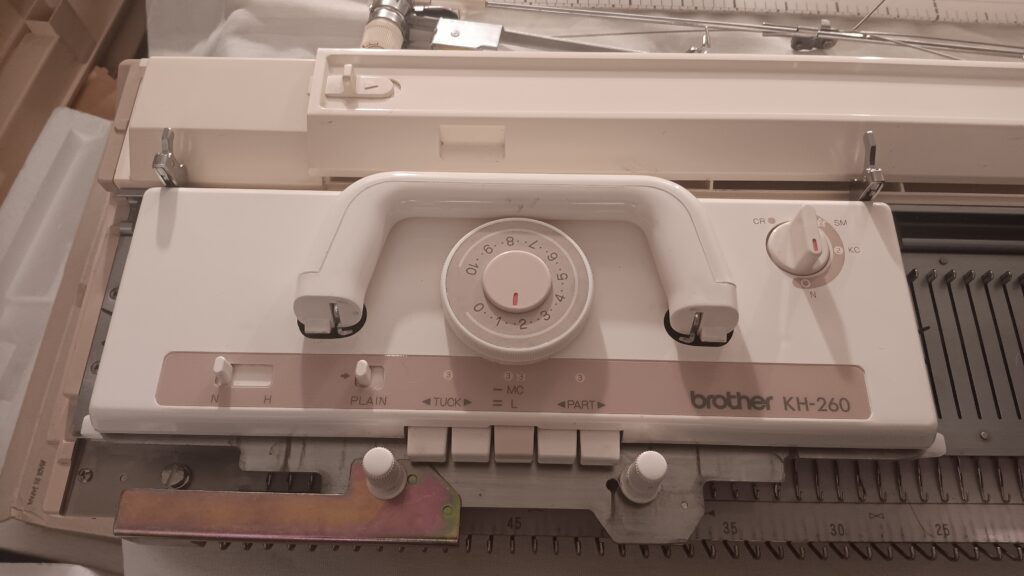
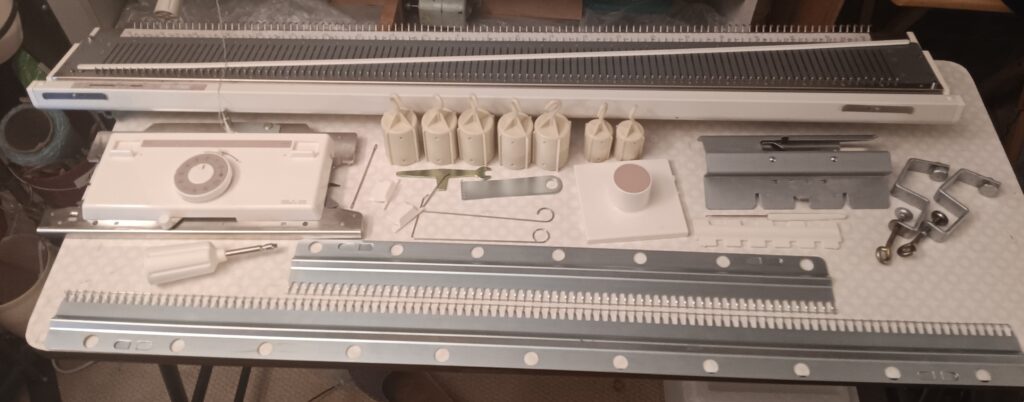
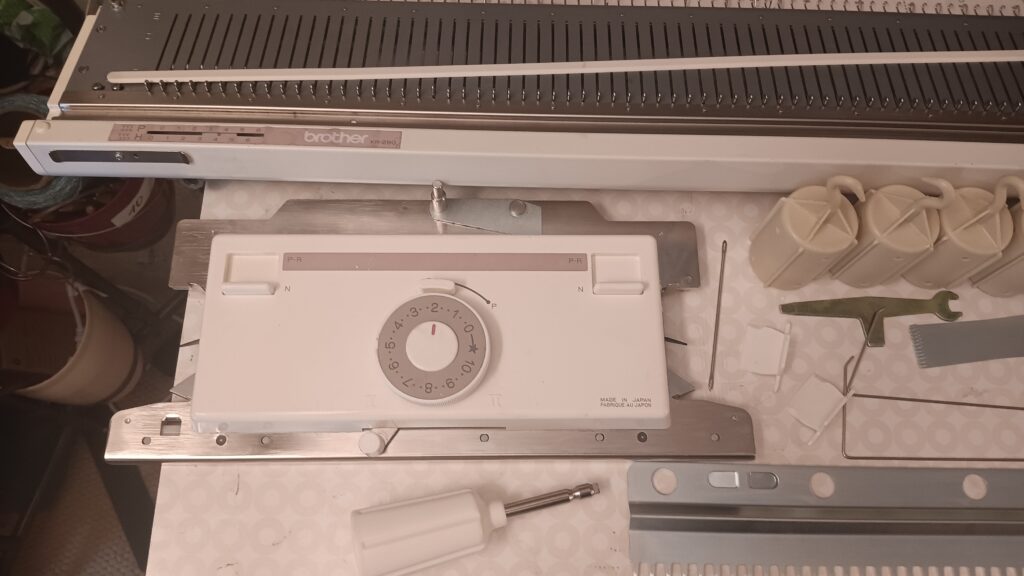
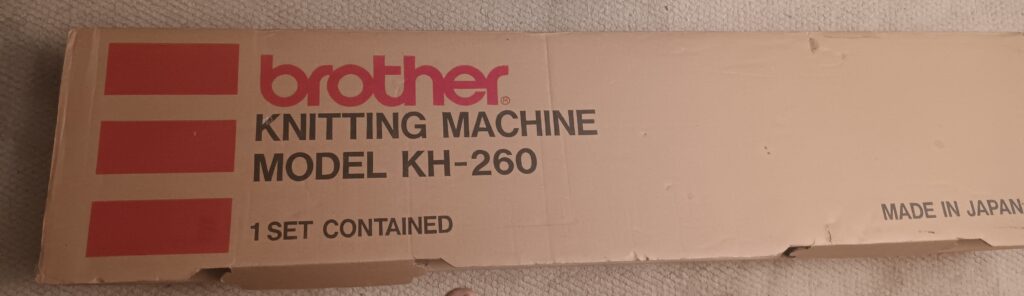
Brother KH260, especially with a matching Brother KR260 ribber, is a highly sought-after setup. Read more about the wonderful Brother KH260 knitting machine and KR260 ribber in their corresponding posts in the Knitting Machine Encyclopedia. This post is dedicated to the setup I serviced and tested in August-September 2026.
The machine is in great shape and worked very well (see the video of the tests). I tested the machine by itself, with a ribber, and with a ribber+color changer setup. I used three different yarns, two of which were problematic ones (based on my previous experience with them). The machine handled all stitches (stockinette, slip/part, tuck and even plating) all very well. The thickest yarn, as shown in the video, was the light green one. The case and the lid are in great shape too. Despite some minor discoloration (which sometimes indicates rust starting to form), there were no static issues, and I tried several yarns, including difficult ones.
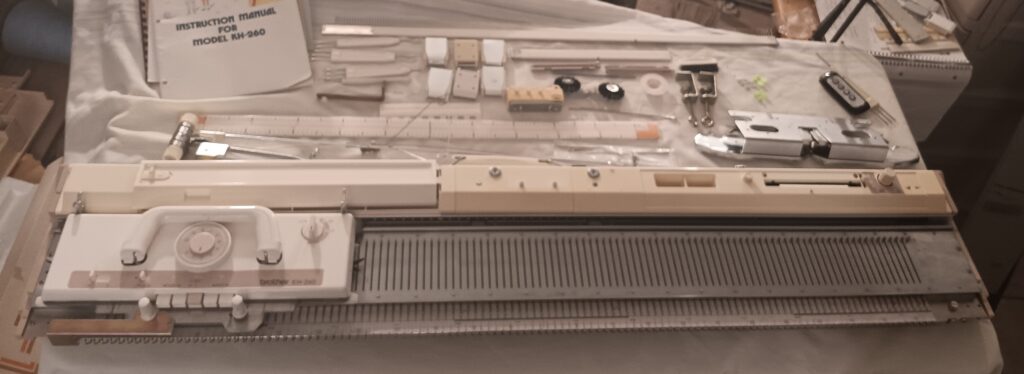
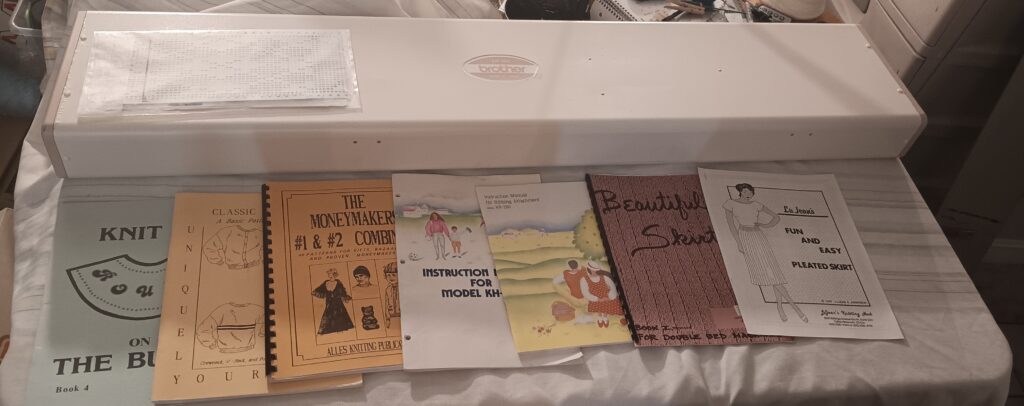
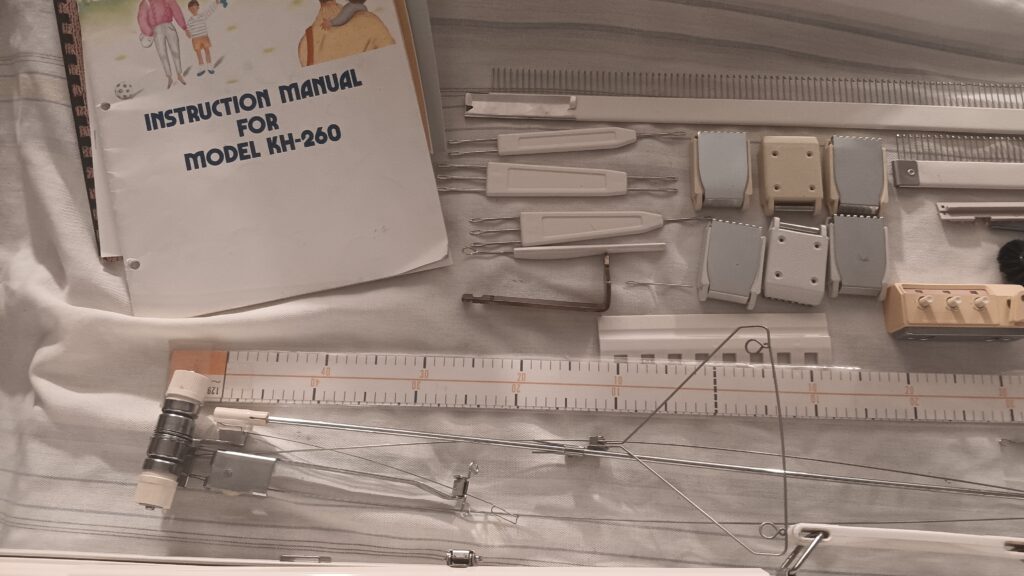
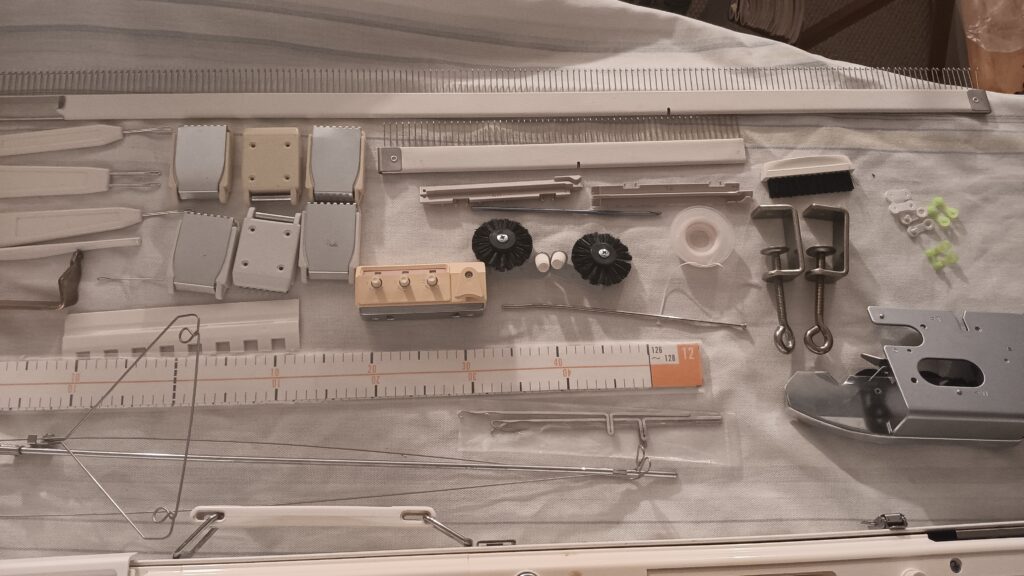
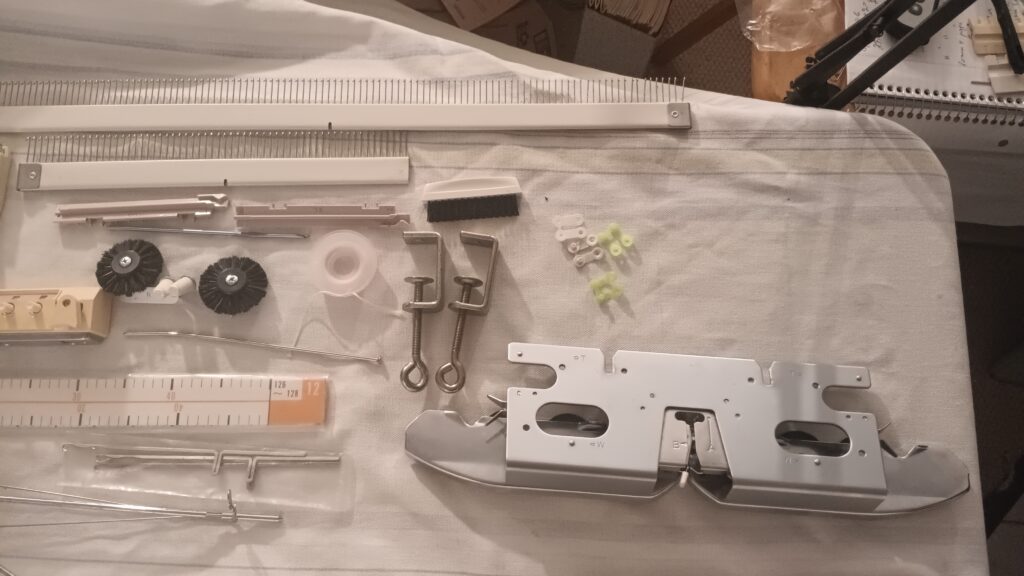
All accessories will be included with some minor exceptions (see below). A hard copy of the manual, with some additional brochures and additional punchcards included as well.
The carriage is in great shape. I left the carriage in the settings that correspond to the “last pair of needles being selected” (read the manual on that). Because I left the ribber insertion brackets in, I used the ribber lock for the machine. The machine-only lock is included as well with the accessories.
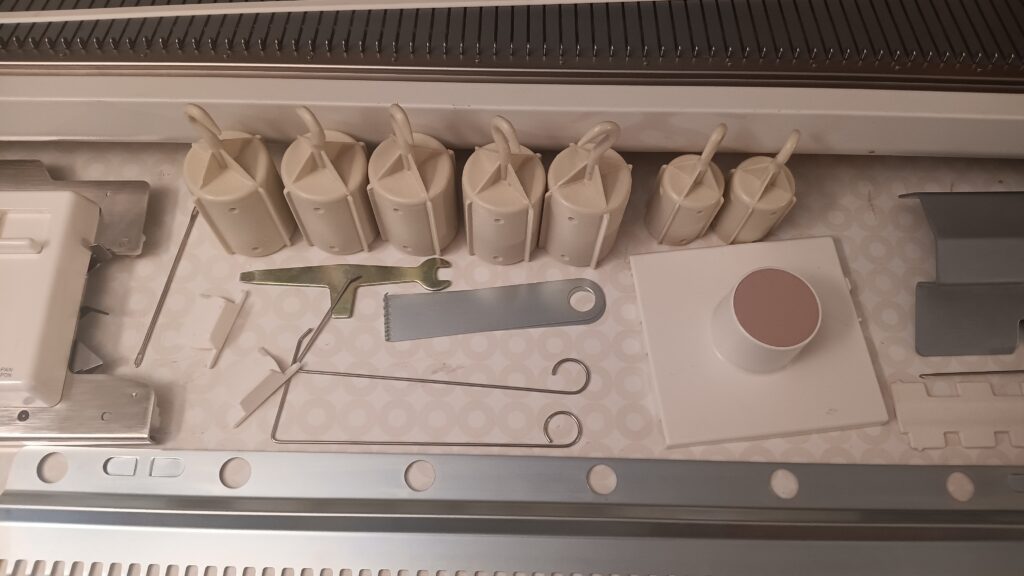
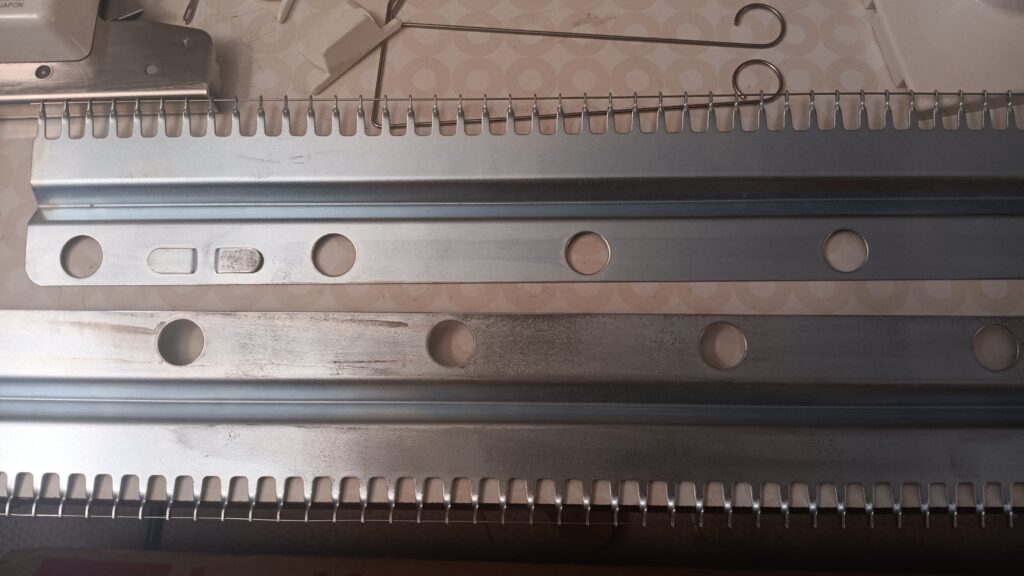
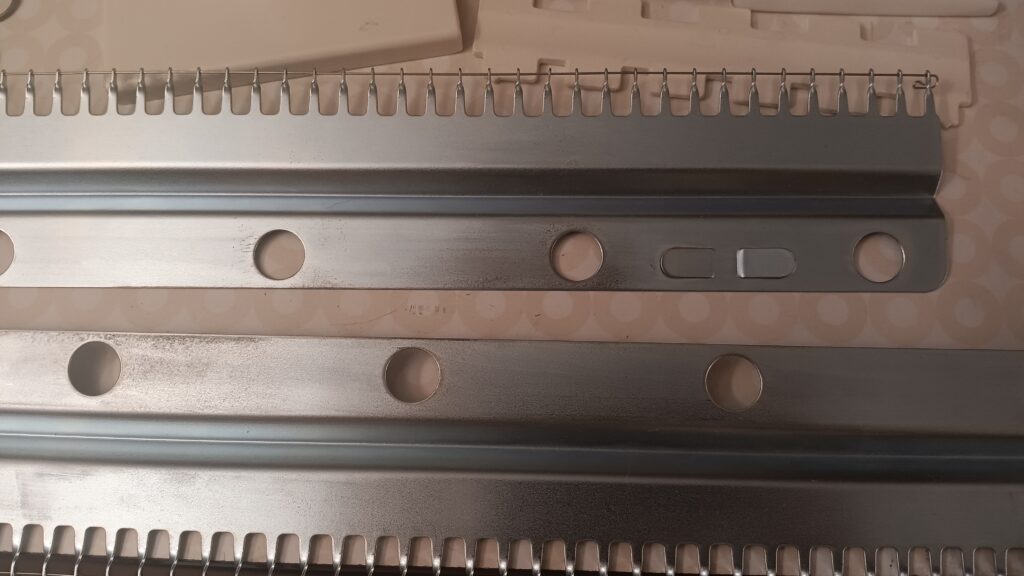
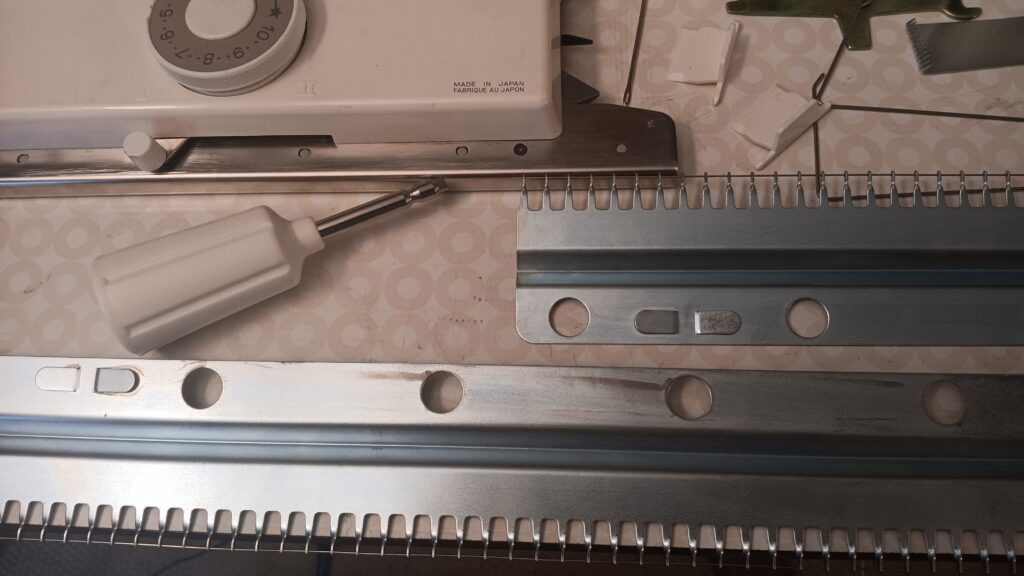
The tension mast came with the machine, and there was usable wax in it (although a bit yellow). I am sending it along. The cast-on combs are also original and are in great shape. Three of the claw weights are brand new (new stock), and three are original ones (thus, they are slightly different in color).
One pair of card clips is original (white); one is new stock but used. The needle selection ruler and the set of transfer tools is original. Card holder pin/rod is included, but I did not even use it during my tests.
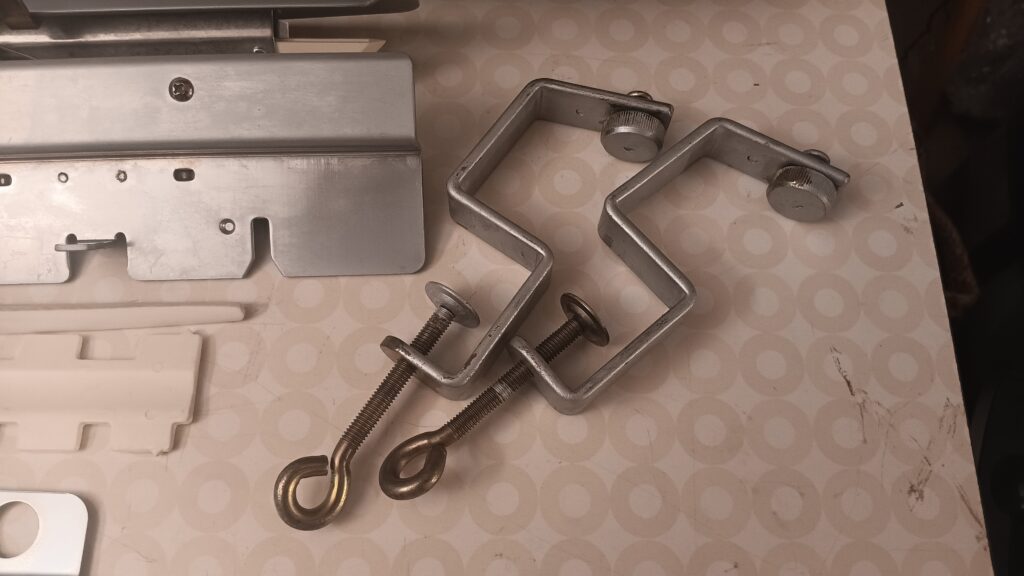
A brand new knit leader scale (part of the machine setup) is also included. The cast-on thread is in a bobbin. Table clamps are original and look brand new, in my opinion.
All needles were removed, cleaned, and inspected (according to my standard procedure). I paid special attention to the latches because I had some minor problems with the tuck stitches. I deep cleaned everything, including the card reader mechanism. The sponge bar is new, not refurbished.
I cleaned the sinker plate, the needlebed, and the carriage again after the tests, but some residual lint accumulated after my tests (very minor) might remain.
Punchcards are a new set (new stock), but it matches the original one (thus, correspond to the patterns shown in the manual). Unfortunately, I damaged card #1 slightly from this set, but I am including another one from another set. It is made on a bit thicker paper and is marked as 1s (others are marked with “p”). I am also including, as a thank you, two original Knittery cards and four custom-punch cards (punched by hand but not by me).
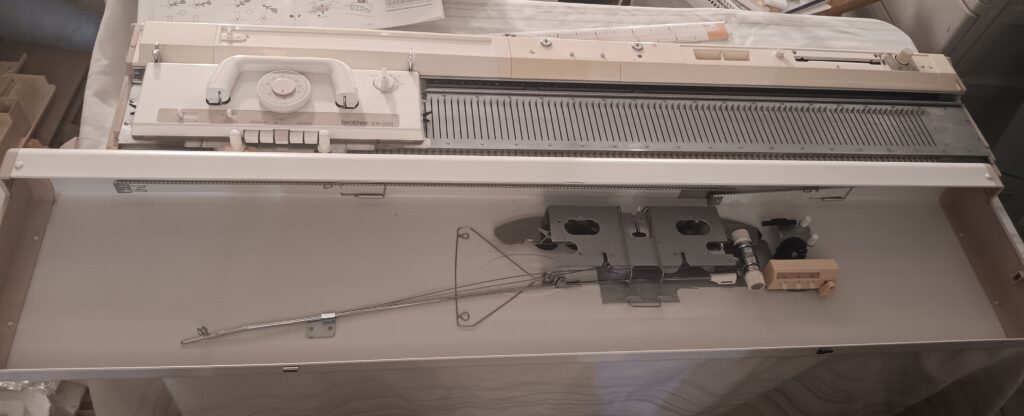
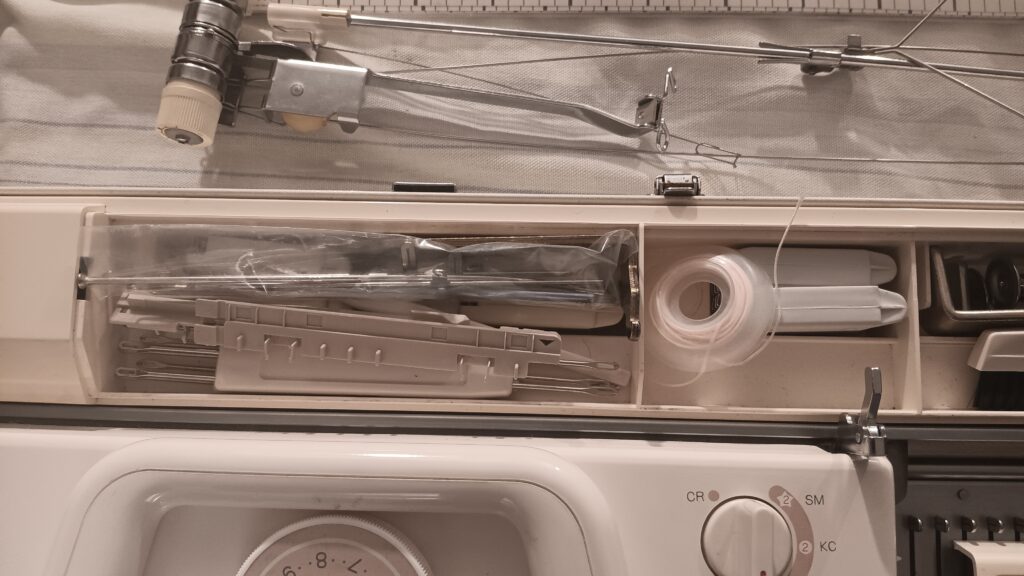
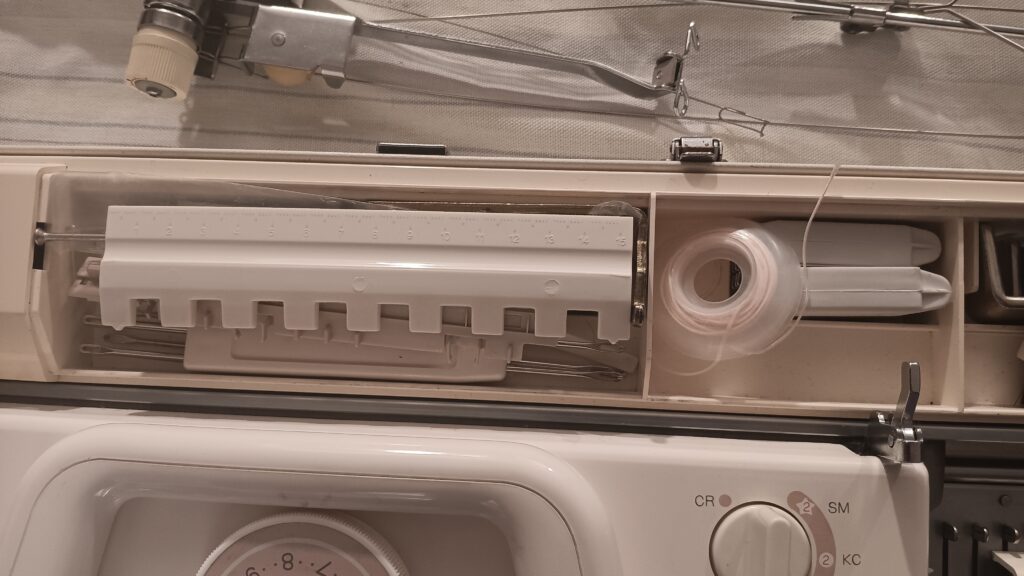
The accessories are stored in the built-in storage box.
During my tests, the only issue I experienced was when I knitted tuck. First, I knitted tuck when the ribber was attached to the machine (so, the machine was at an angle to the table). Some of the stitches did not slide easily, and I had to manually inspect them. When I removed the ribber and the main needlebed was parallel to the table, I was able to tune the tension for that particular yarn with the amount of weights to knit tuck without checking the needles too much. Additionally, I knitted tuck without engaging the tuck wheels and the brushes (the manual describes it pretty well) and still got good results. Read my article on tuck and how to troubleshoot it. The article emphasizes the importance of swatching (aka, figuring out the right tension and weight combinations) for tuck.
Minor imperfections of the machine:
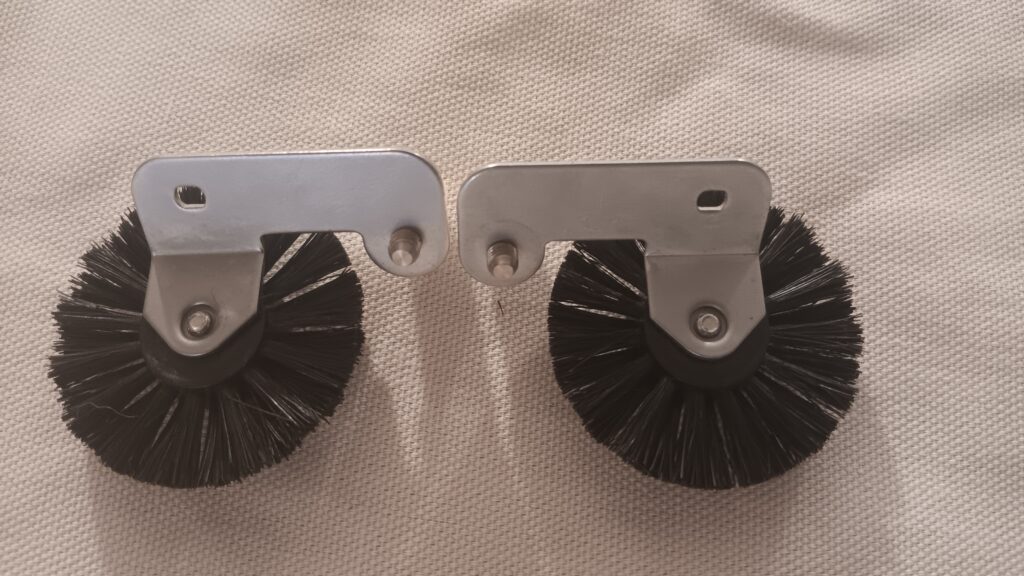
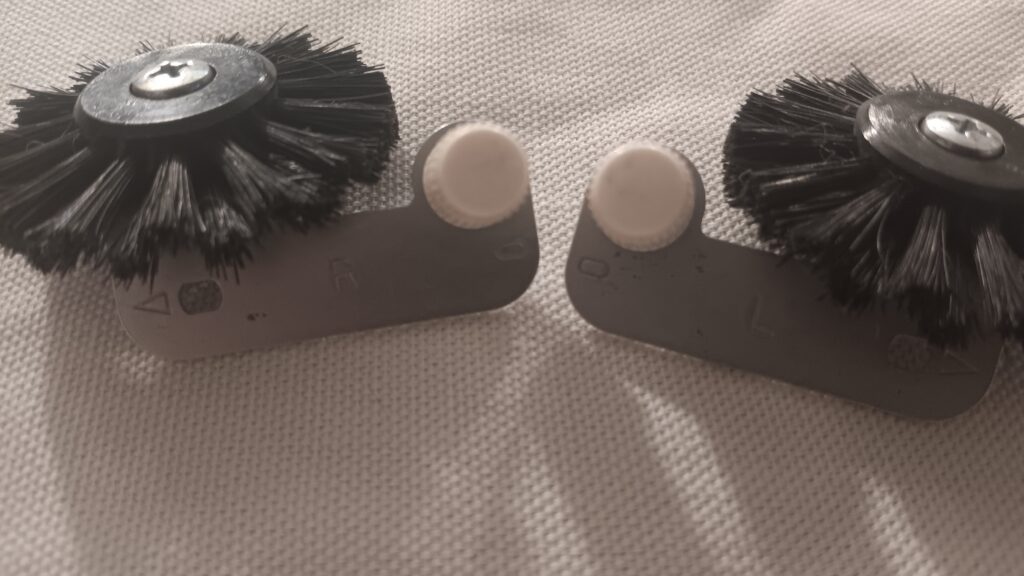
Wheel brushes for waving and tuck have some discoloration, but nothing too serious to mess with it (it is even hard to see in the pictures).
The row counter has typical yellowing/discoloration, but it does not affect its functioning. It is original: the pink insert on the dial gives it away.
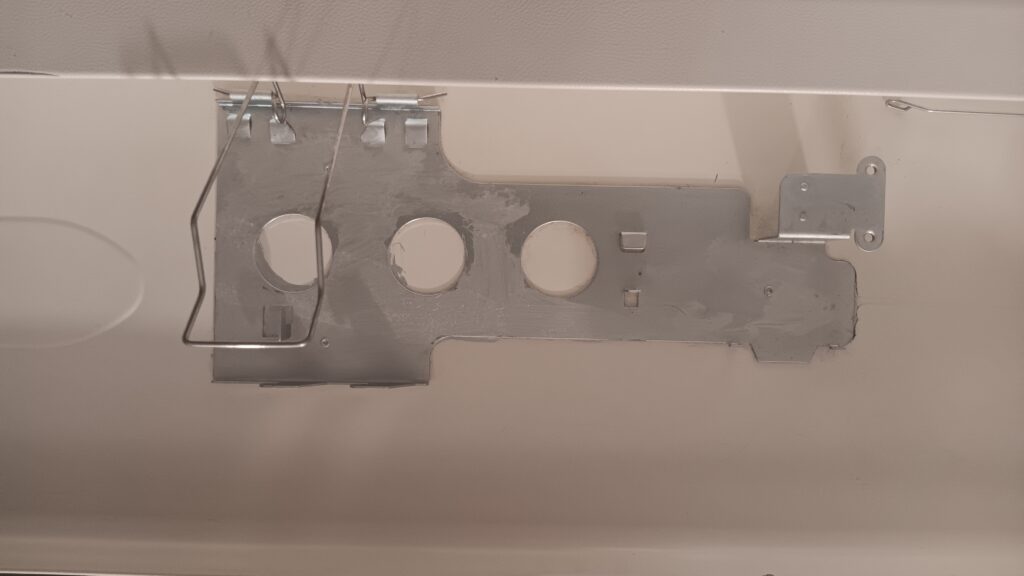
The metal insert to hold the parts inside the lid was a bit rusty, so I covered it with my favorite Rust-Oleum.
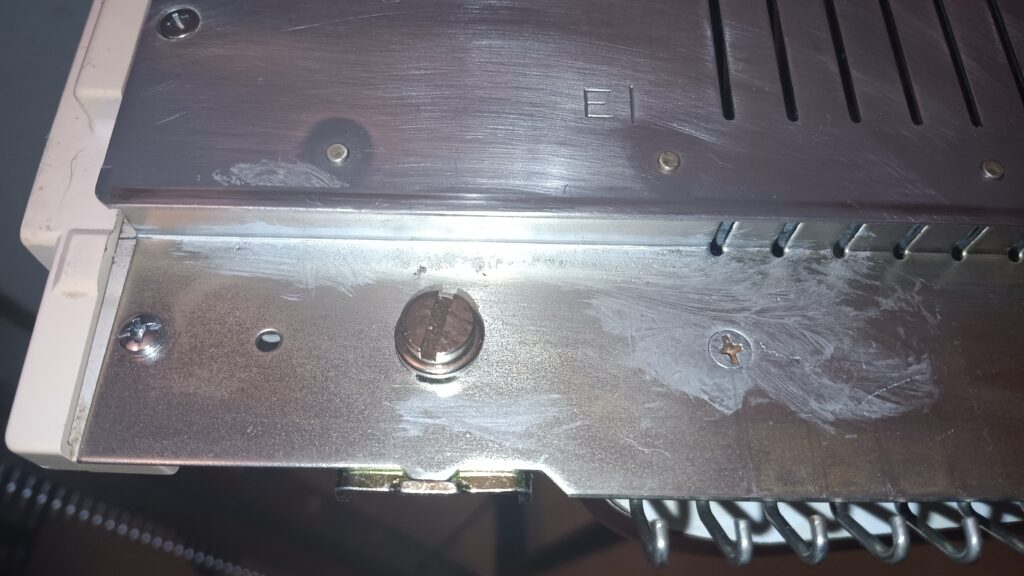
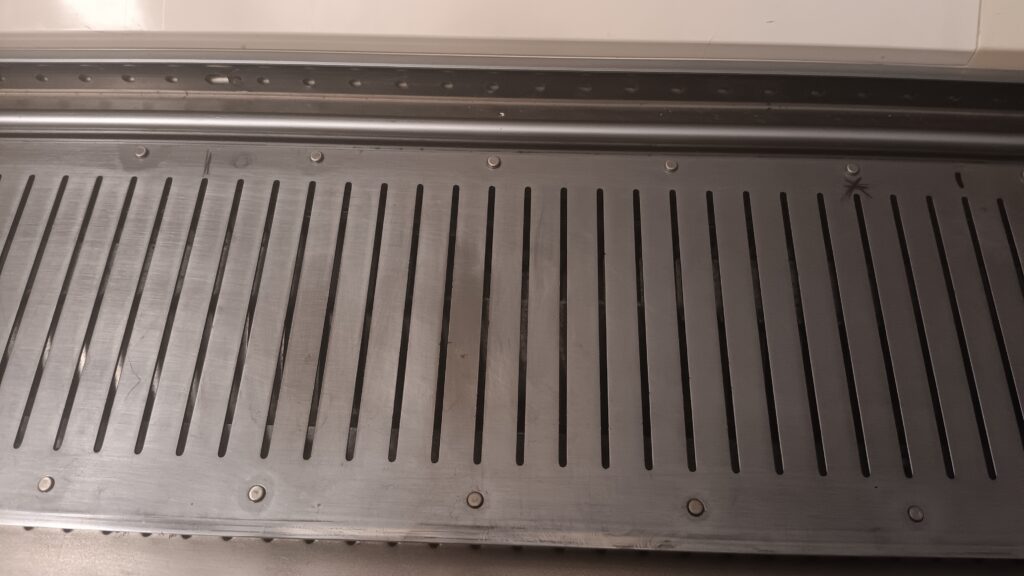
The needlebed had some discoloration as well, so a layer of Rust-Oleum was applied as well.
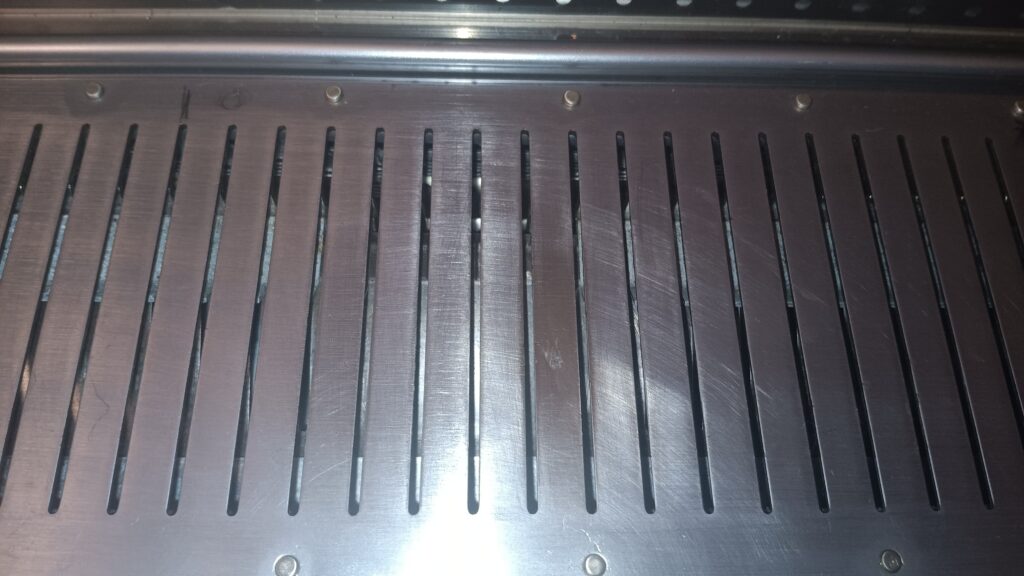
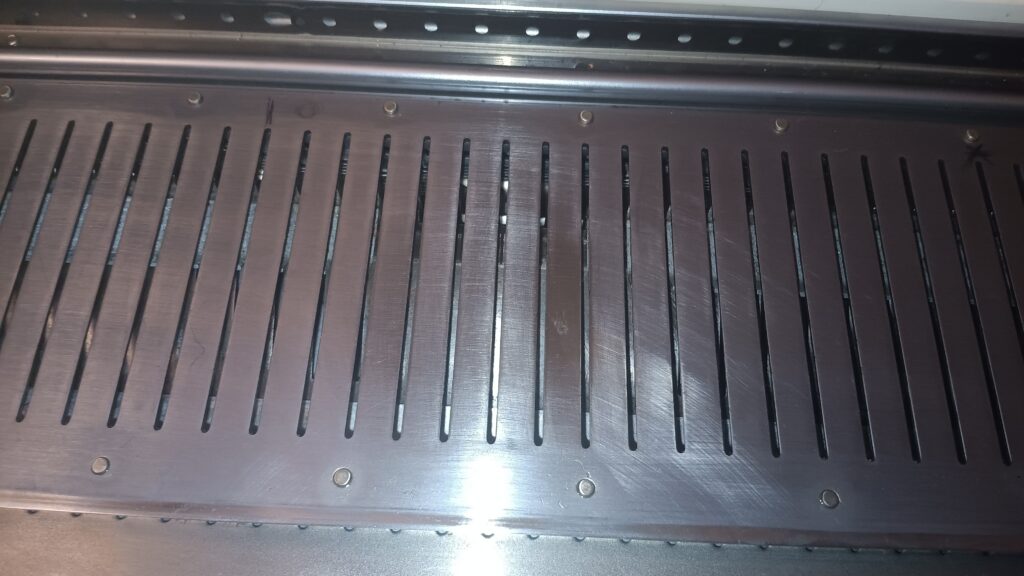
There is some minor straining/discoloration on the needlebed itself. But it does not affect the functioning of the machine.
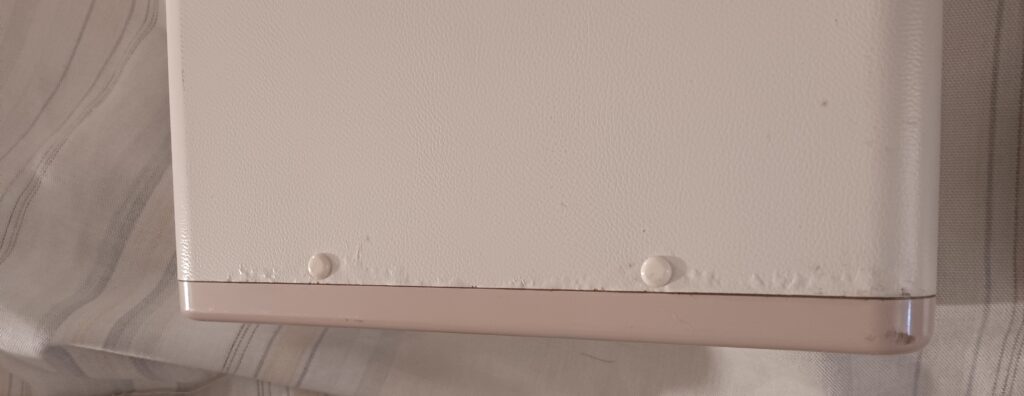
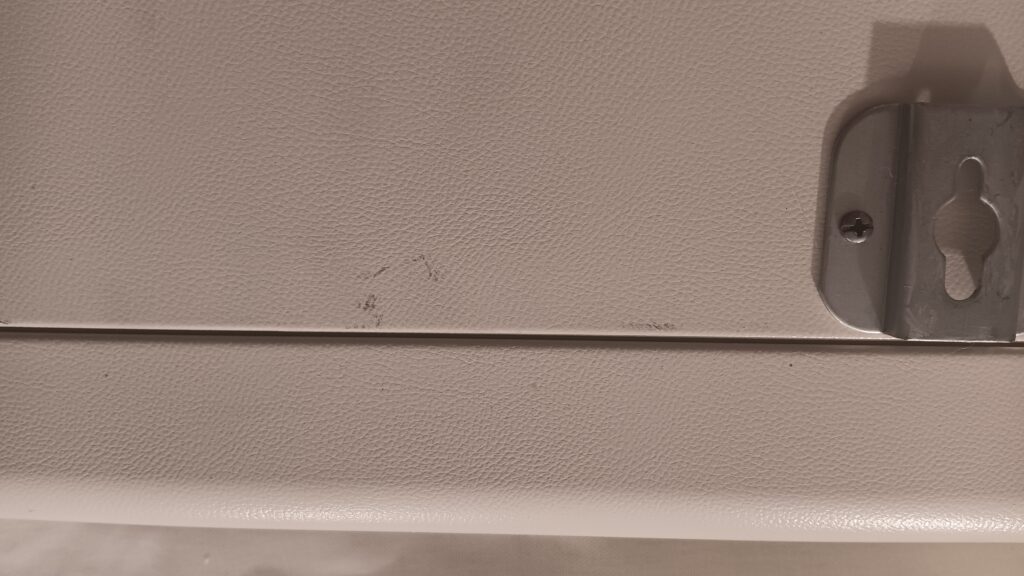
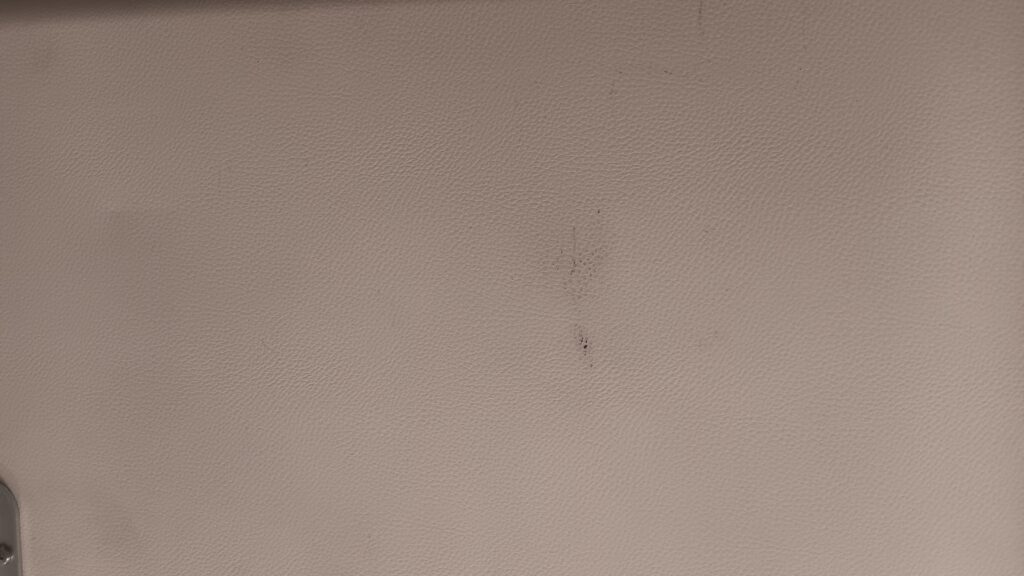
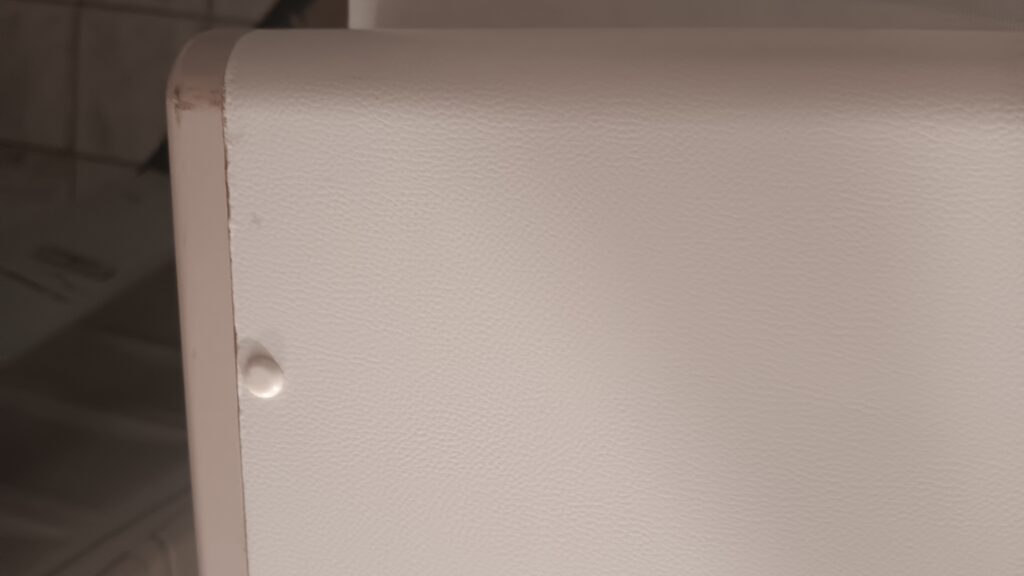
Minor staining and unevenness on the needlebed main bed and/or lid.
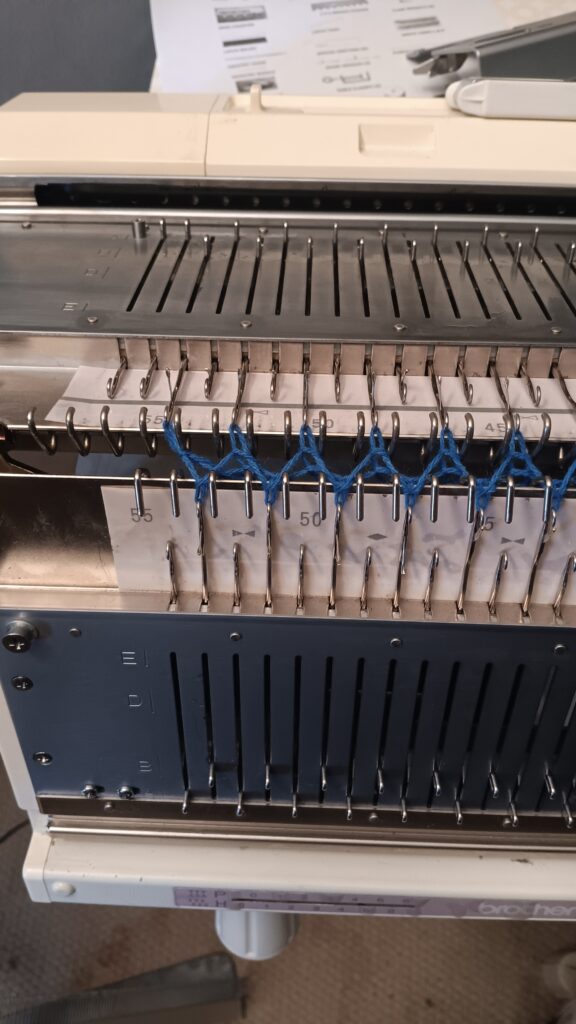
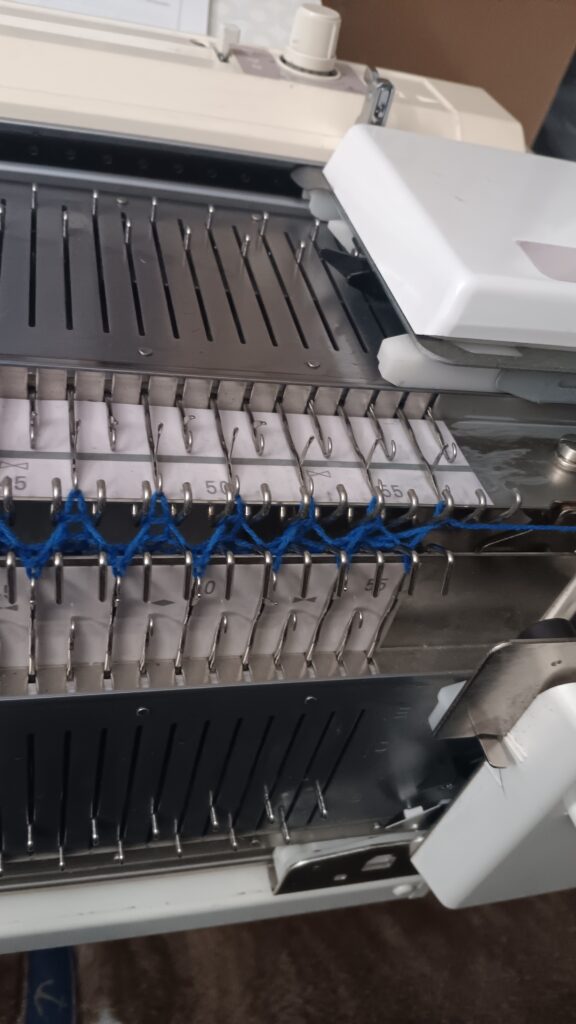
The ribber is set up at the moment perfectly for the machine (distance-wise): the first knitted zig-zag row looked perfect.
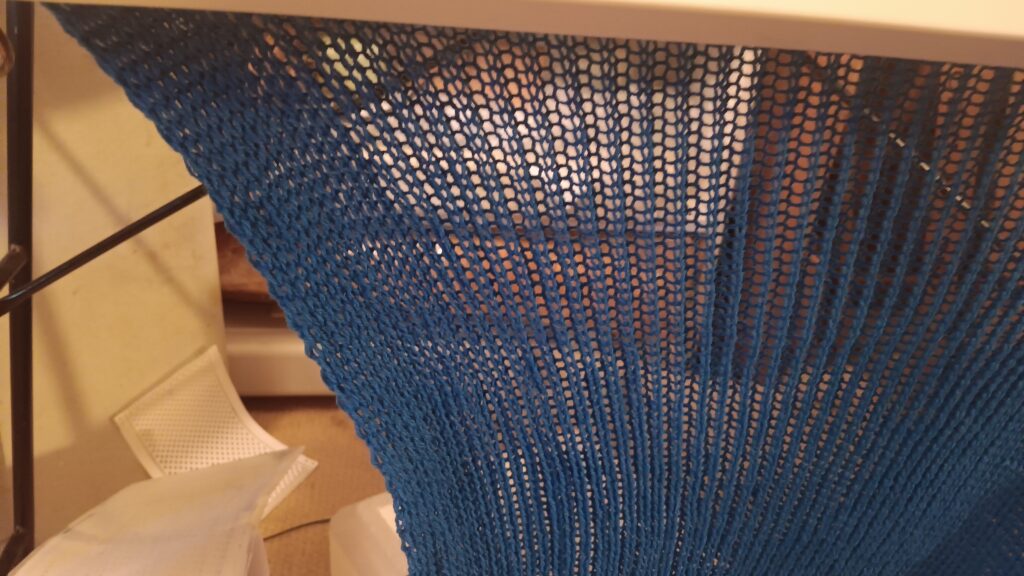
I suggest using the settings that the ribber came with, and if there are problems, then try to adjust them. I knitted on the ribber+machine 1×1 ribbing at two different needle combinations (shown in the video) and got excellent results for both.
The only comments I have about the ribber are to pull on the fabric when the yarn is worsted-weight to make sure nothing gets caught. The weights sometimes rest against something on the machine stand, and it is something to watch for as well. I feel a tilt stand would be ideal for this setup, but those are hard to find. Even I don’t have one in my possession.
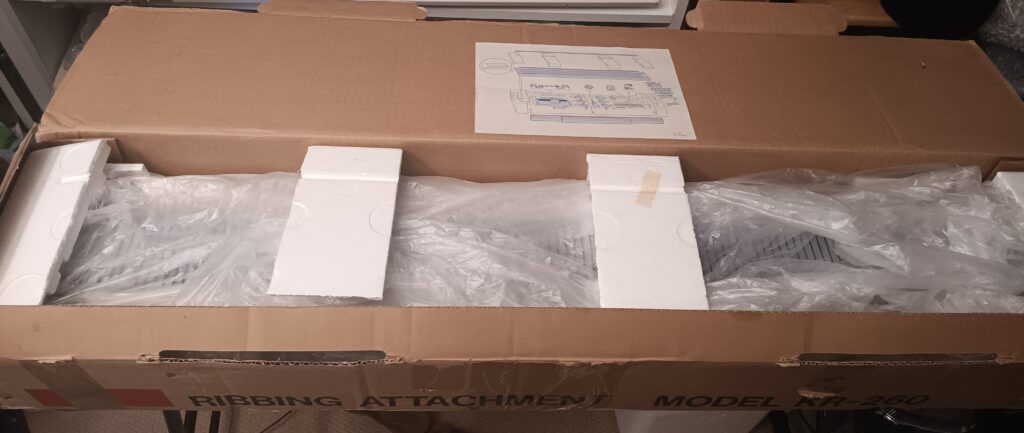
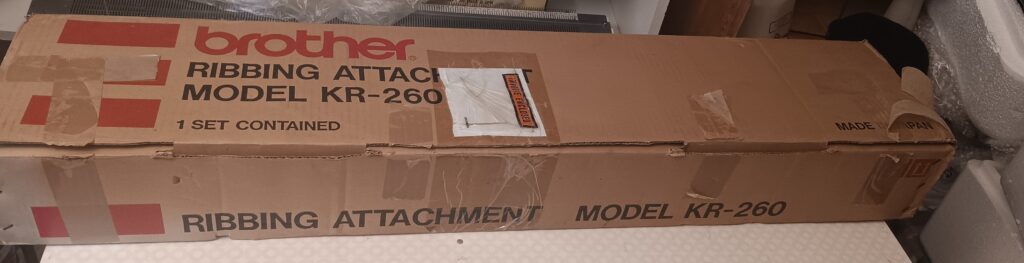
The ribber will also come with ALL accessories. Most are original. Only some are replacements, but still original to Brother. A hard copy of the manual is also included (typically I do not have spare copies to include). It is with the knitting machine package and all other brochures.
The ribber carriage is in great shape. The spanner is the original but is a bit rough to the touch. It is not a big deal. I feel that the spanner has not been used at all.
The claw hangers are new (new stock). The D-slider is original.
Table clamps are original but showed some discoloration, and I applied a layer of Rust-Oleum.
The cast-on combs are original too and have some discoloration, but I decided not to make them uglier with my mediocre painting skills. The combs are still smooth to the touch. Only one side is discolored. The other looks perfect.
The handle is new stock (thus, it is a bit whiter than the rest of the plastic).
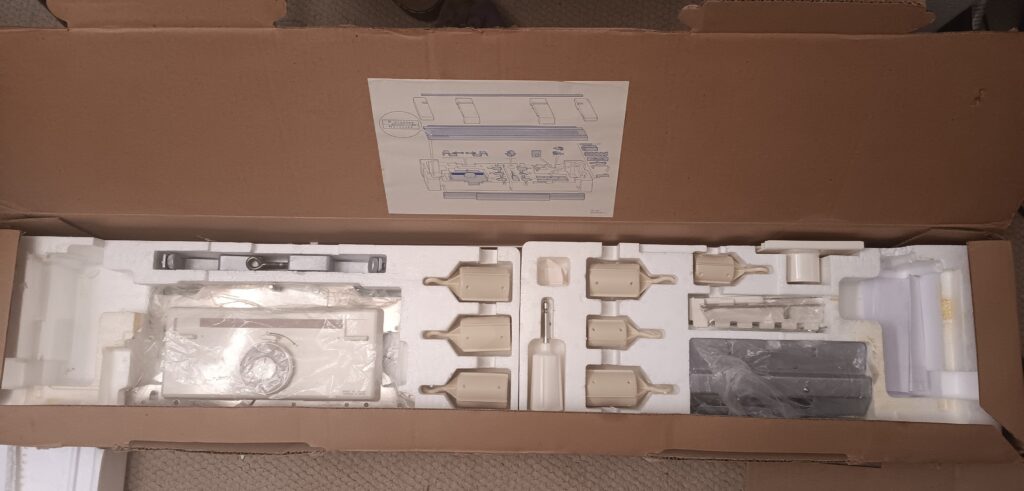
Both the ribber and the machine will come with their original packaging, which I will then put in another box. The resale value of the machines with original packaging is a bit higher, and it is also nice to have them for storage, especially the ribber packaging since it has all these nice compartments.
… in progress while I am organizing my thoughts on this subject.
The comparisons below are done for the 4- and 8-pushbutton machines versus the 24-stitch repeat punchcard machines. This means Brother KH800 and KH801 are not participating in this comparison. The hybrid model, Brother KH811, is also not considered here. A full current list of machines included in this article is at the end of this post.
At first sight, Brother pushbutton and punch card machines have different patterning mechanisms. However, the actual needle selection occurs using the same patterning plates, a basic mechanism of almost ALL Brother knitting machines.
Pushbutton machines need a ratchet tool to activate the needle selection. Punchcard machines just need a prepatterned punchcard inserted into a slot of a card reader, and after that the needle selection is automatic.
Pushbutton machines offer an 8-stitch repeat pattern, while punchcards 24. However, the users are still limited to the punchcards themselves: there is somewhat limited selection of premade punchcards unless knitters hunt down knittery and other custom cards or punch them themselves. It would seem that pushbutton would offer more variety but more of a more involved (some are by hand manipulations) process.
I feel that keeping track of knitting cables spread at even distances from each othter is easier on pushbutton machines: I can memorize which buttons to press to move the needles (that mark my cable positions) forward.
It seems that the list of accessories compatible with punchcard machines is much bigger. Ribbers for pushbutton machines are hard to find and there is only a limited number of models that fit. Ribbers for punchcard knitting machines are all interchangeable, and they are easier to find on the used market. Thus, I feel pushbutton machines offer more flexibility in terms of creating patterns, which might be important to designers and those who ar enot ready to give up satisfaction of manipulation stitches by hand. Punchcard machines offer faster automation of knitting patterns.
Additionally, minor accessories, like linking, transfer, and intarsia carriages, as well as color changers were NOT made for pushbutton machines.
I heard that lace patterns come out very nice on pushbutton machines.
Pushbutton machnes are somewhat lighter than punchcard ones. Most pushbutton machines have all-metal robust case. It is sometimes prone to rusting when not stored properly. Out of dozens pusbutton machines I only saw two that were not really fixable. Punchcard machines have metal lid and the case but the end caps and covers are plastic. These plastic parts are prone to sun light damage. Visible damage is yellowing but the over time degradation makes the plastic fragile. These plastic components often break during shipping.
However, if a pushbutton machine misbehaves, it is easier to troubleshoot it: punchcard machines have way more complicated timing-belt-based patterning process, which might be overwhelming to tune up.
There is no bulky gauge pushbutton machine. On a flip side, Brother’s only fine-gauge machine is pushbutton.
My personal choise would be to keep pushbutton machine for creating patterns and having a punchcard for quick patterned design of already established (in my head/skill level) garments/items.
List of 4- and 8-pushbutton machines as well as 24-stitch repeat punch-based knitting machines: