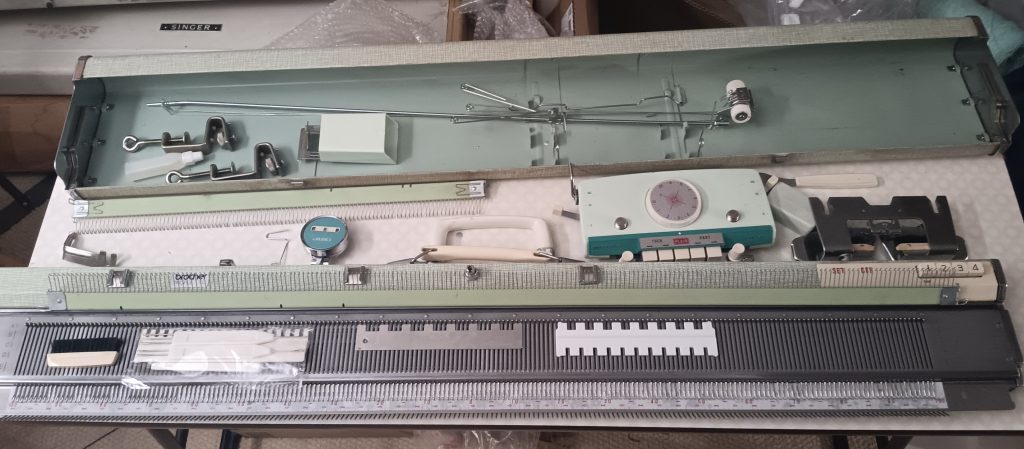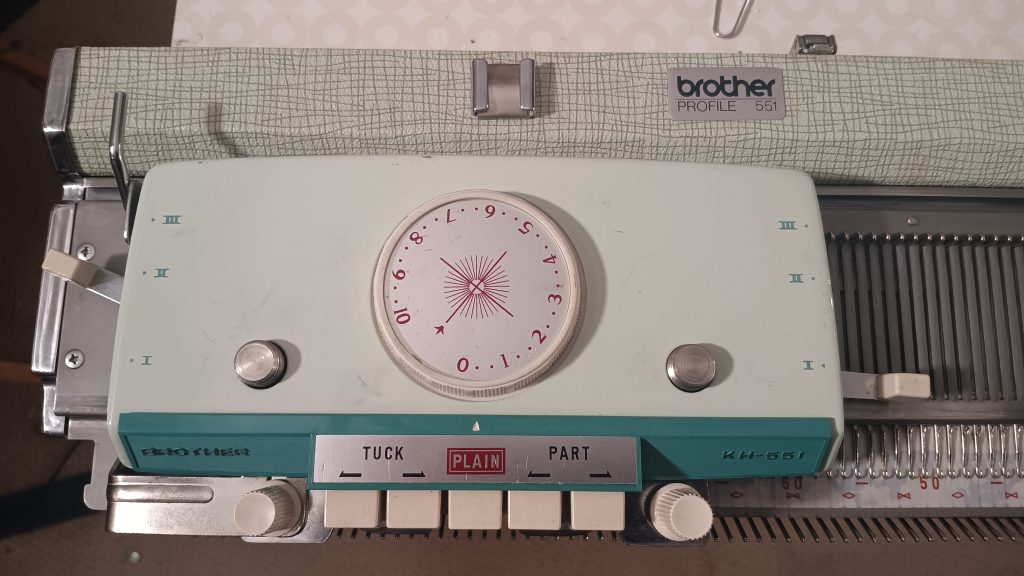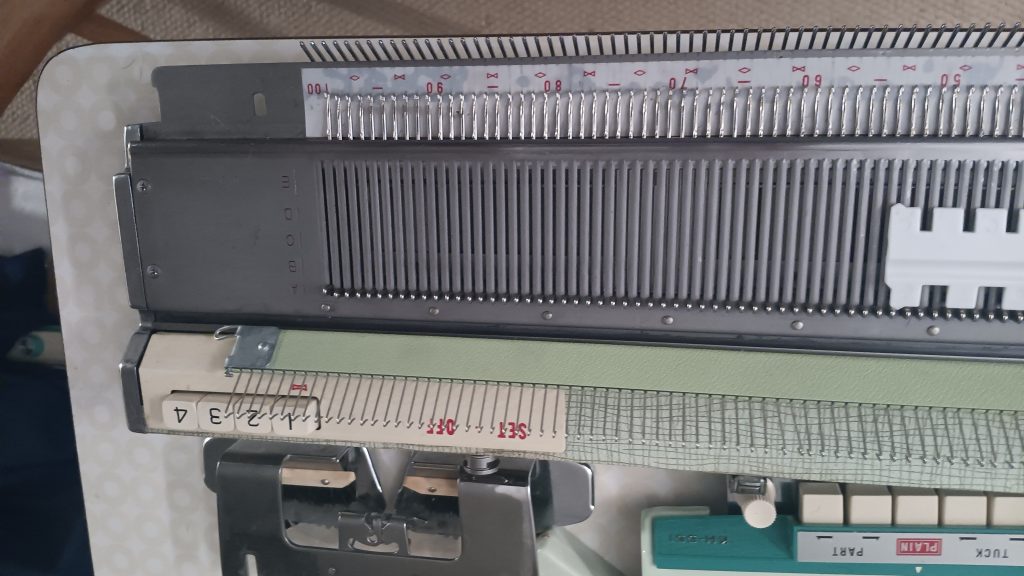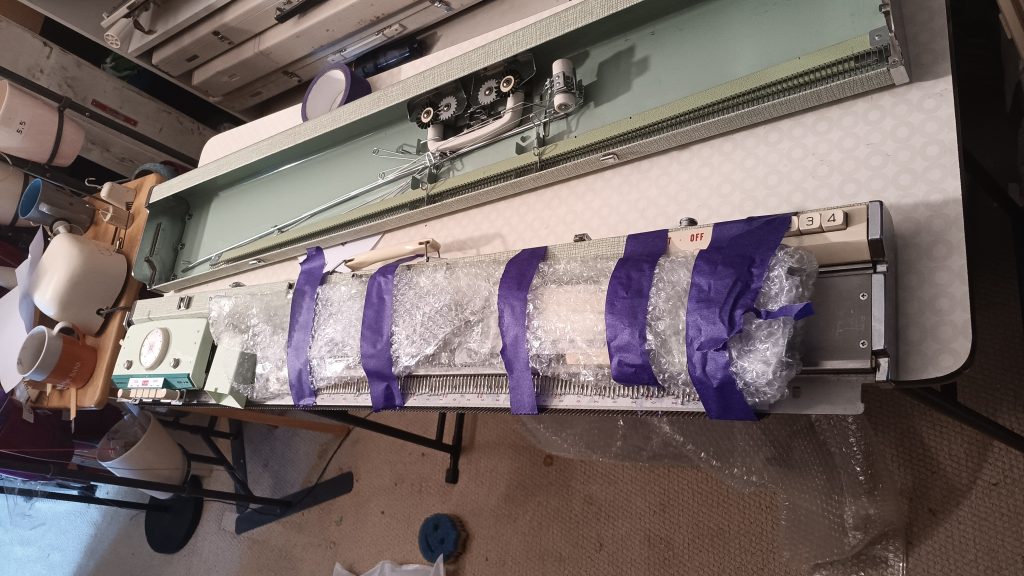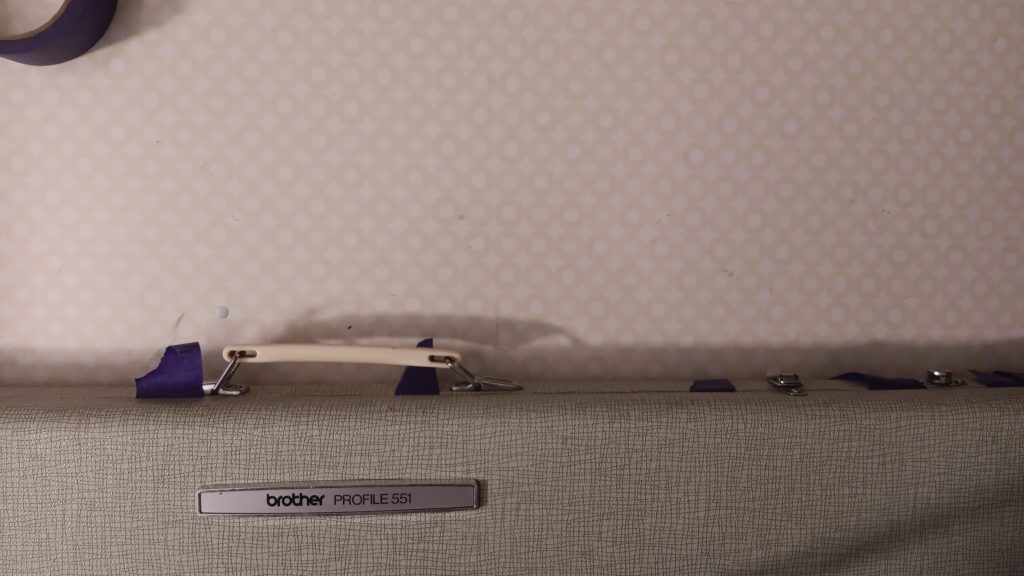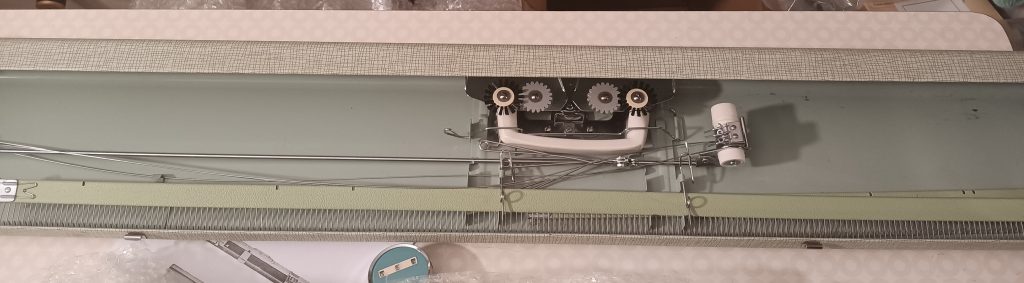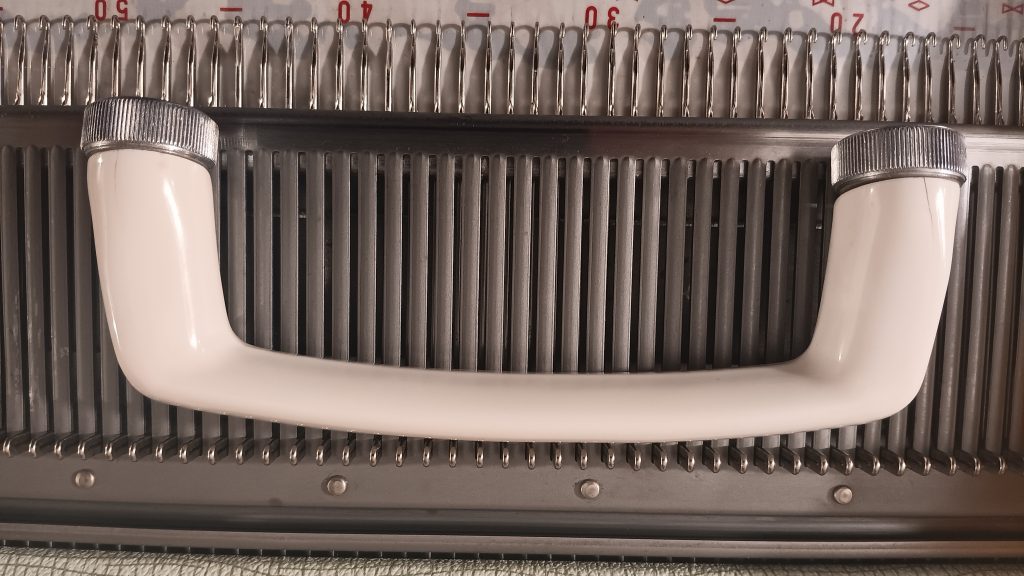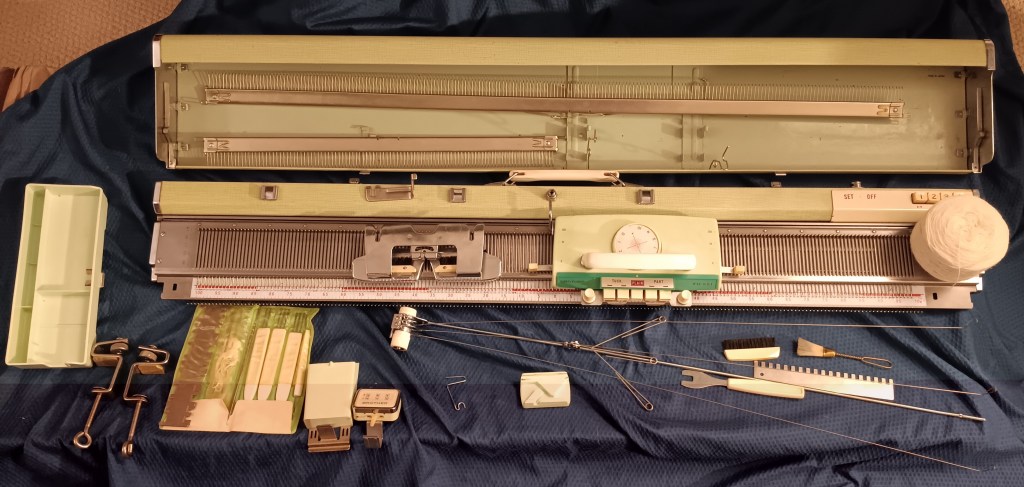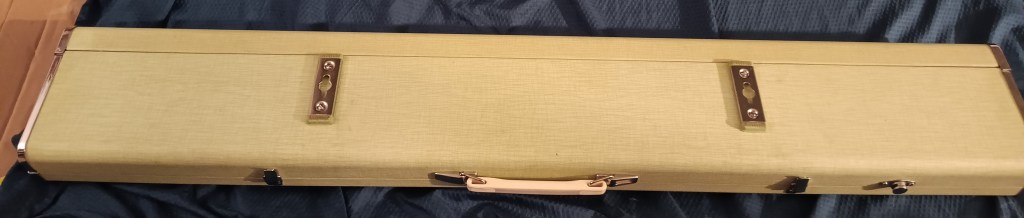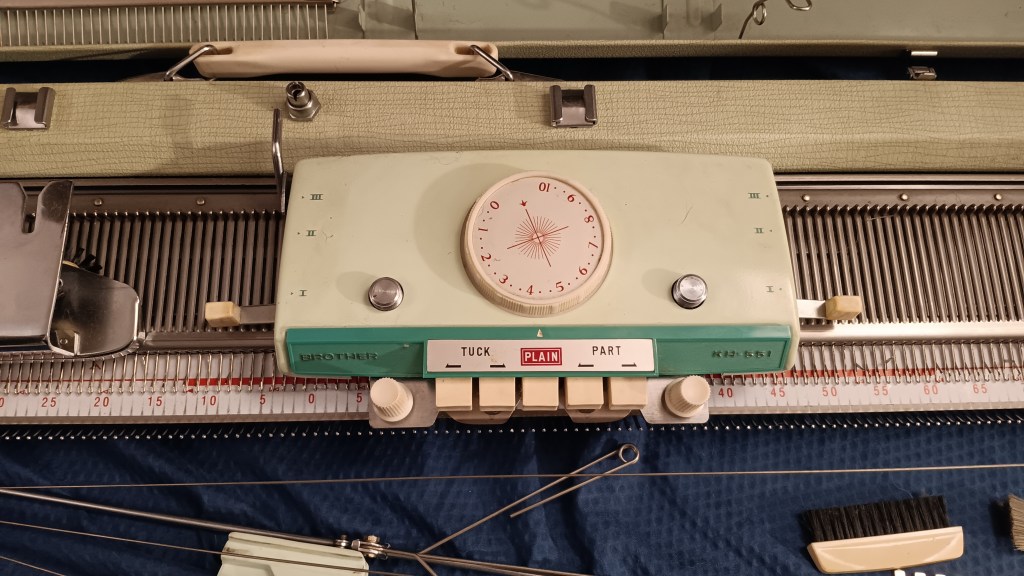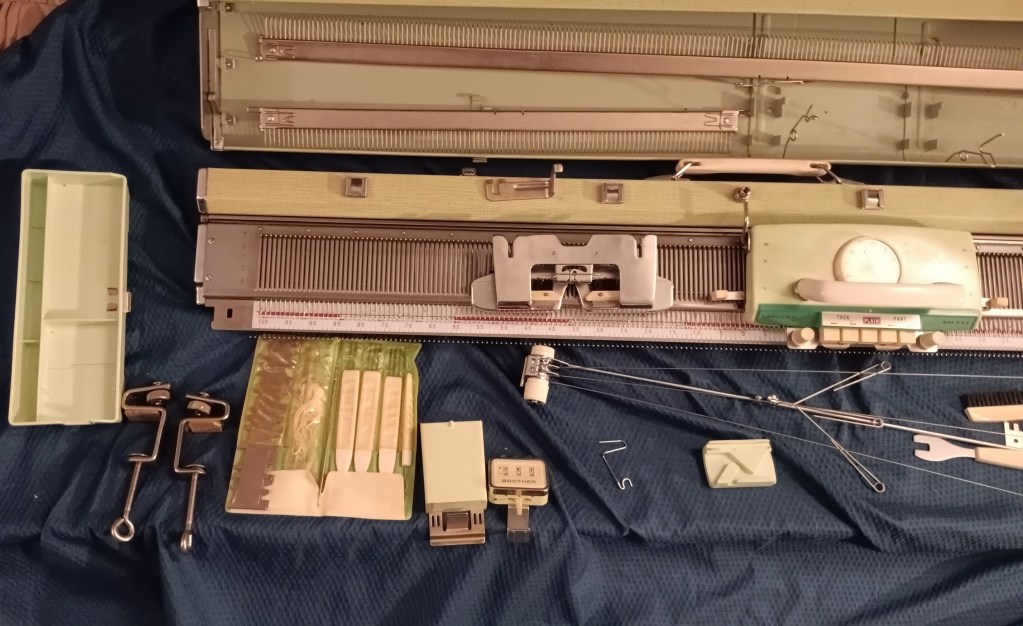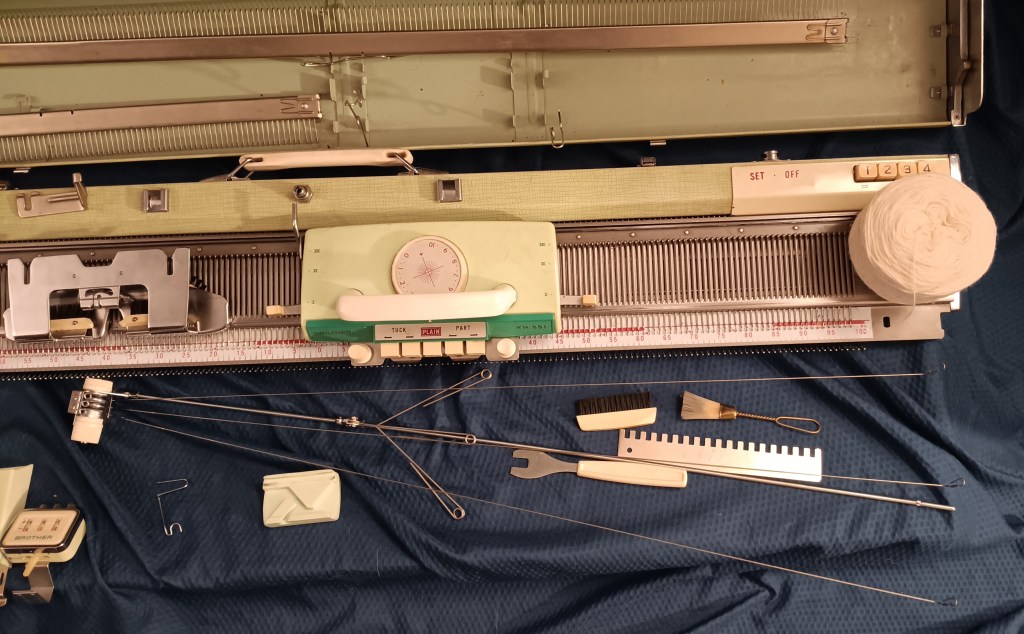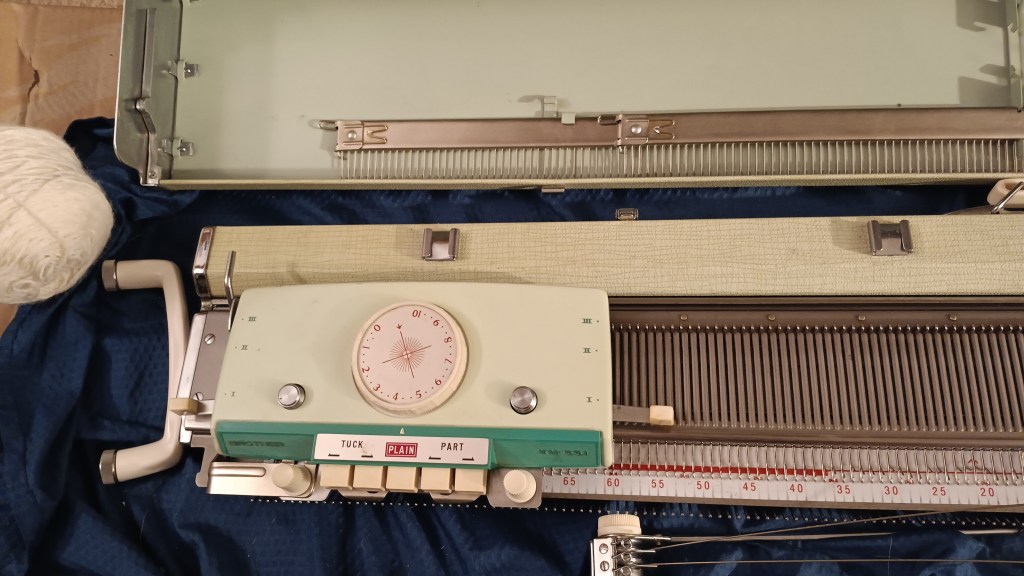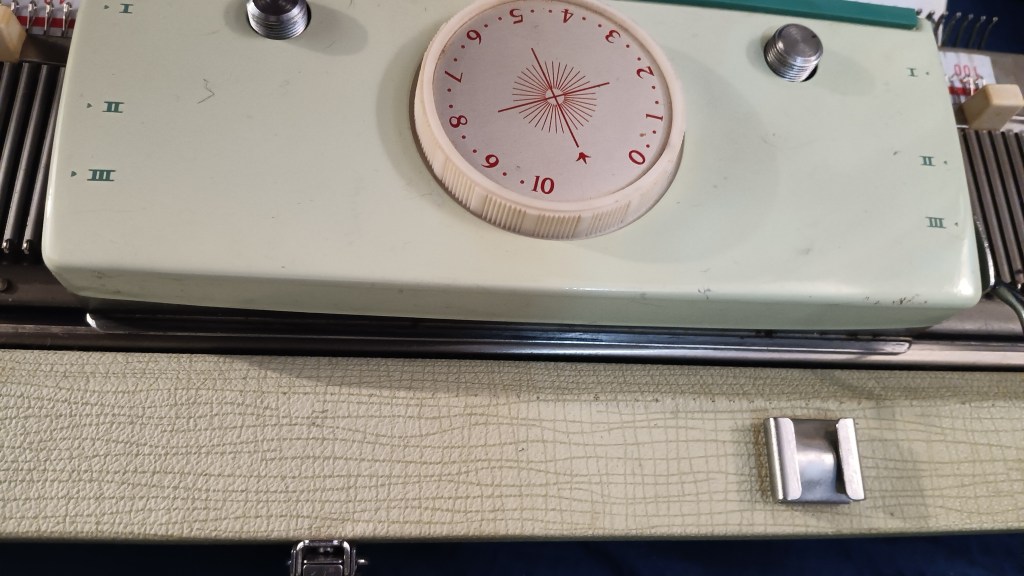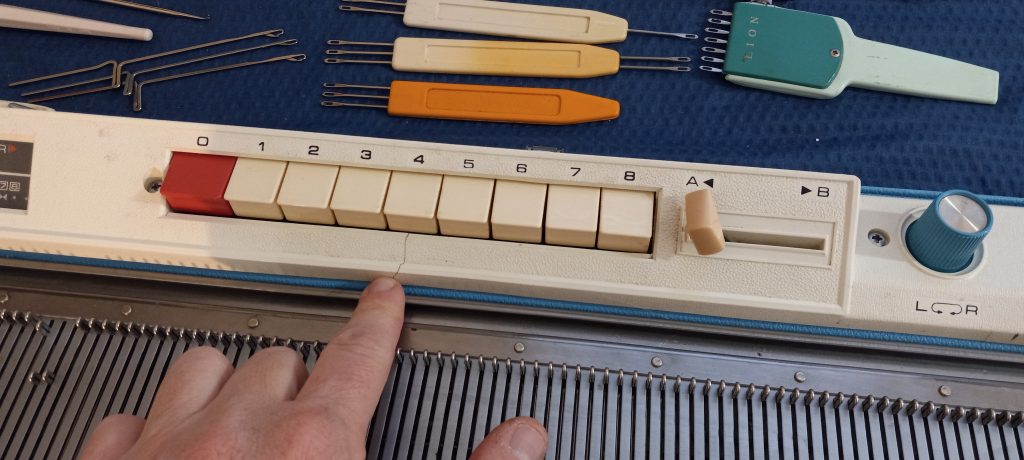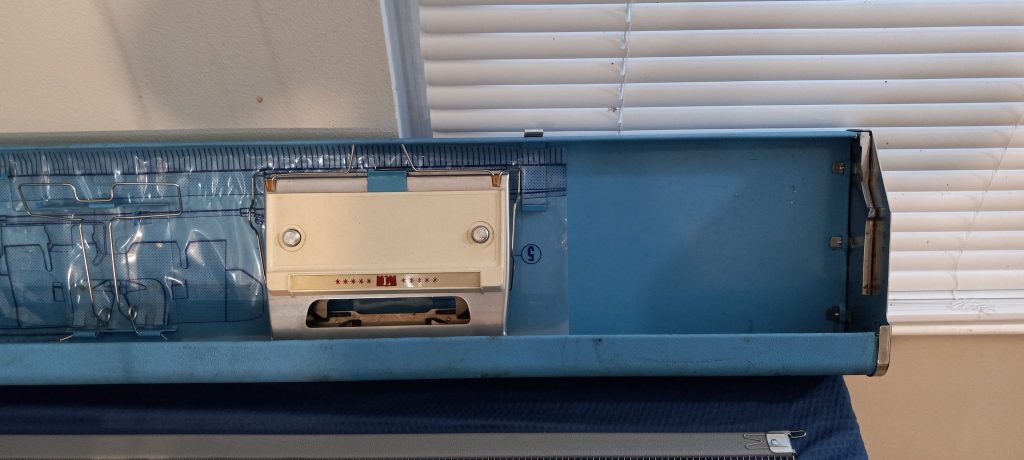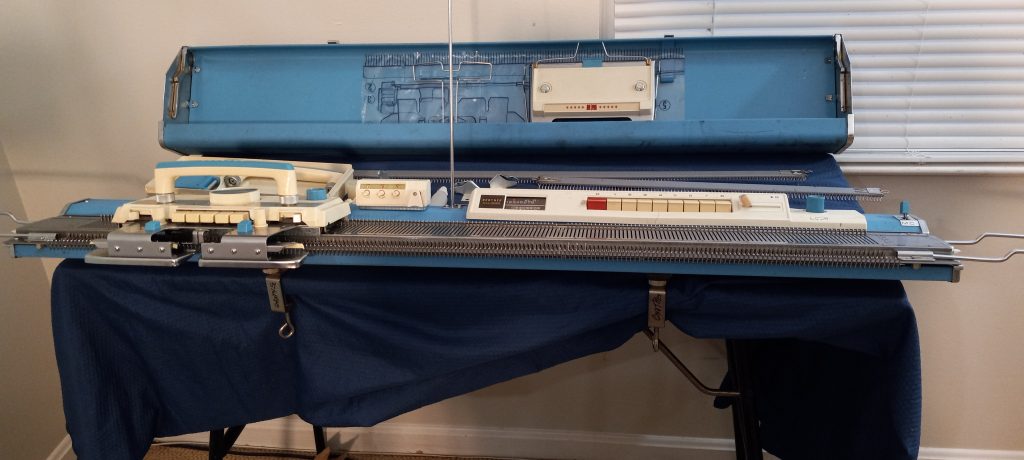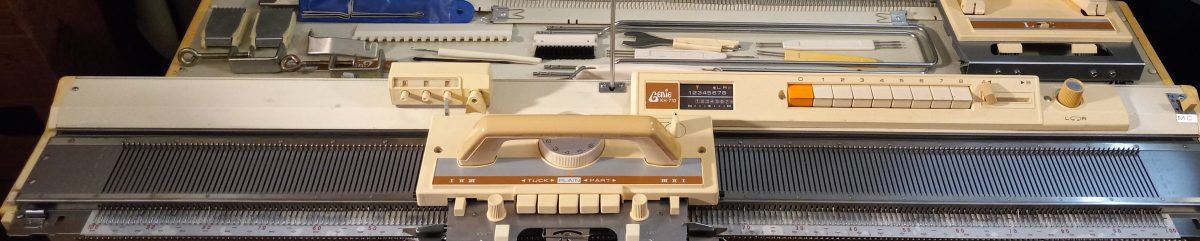
Brother KH521 knitting machine for Kate

… still in progress. Last update: February 10, 2026

Brother KH521 knitting machine is a standard-gauge machine with 200 needles and four pushbuttons to activate the needle selection mechanism with an automatic 4-stitch repeat pattern. Read more about the pros and cons of this machine in my Knitting Machine Encyclopedia. The article in the Encyclopedia was put together using a lot of information I got while testing a specific machine described further in the post.

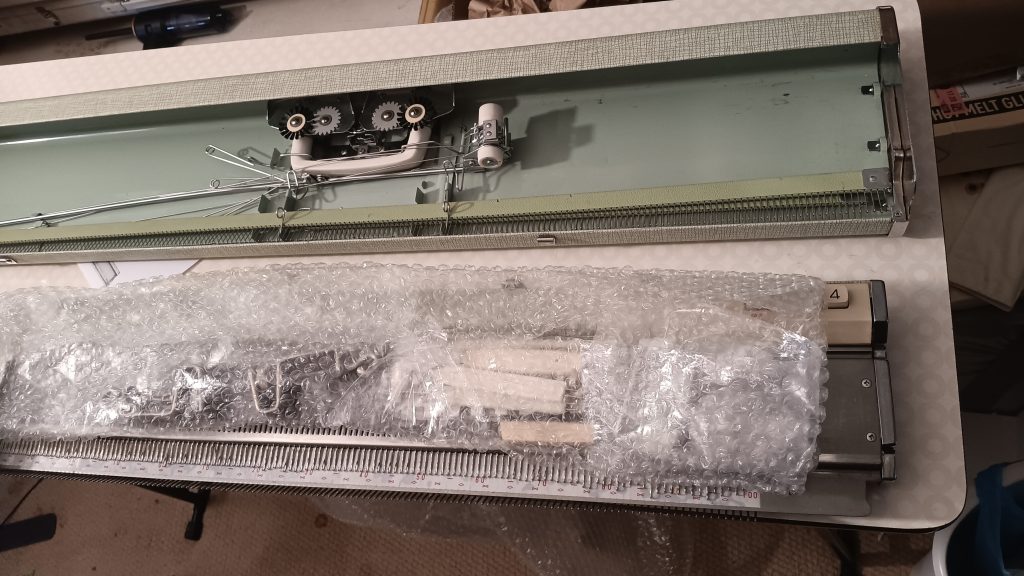
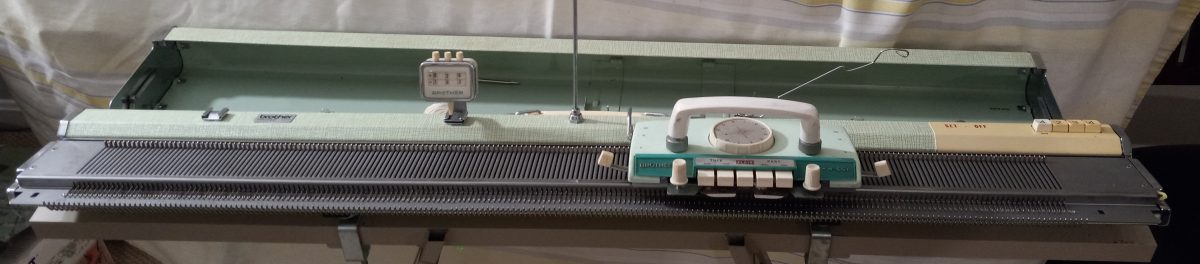
This post is dedicated to Brother KH521, serviced and tested in my shop in January 2026 for a customer.

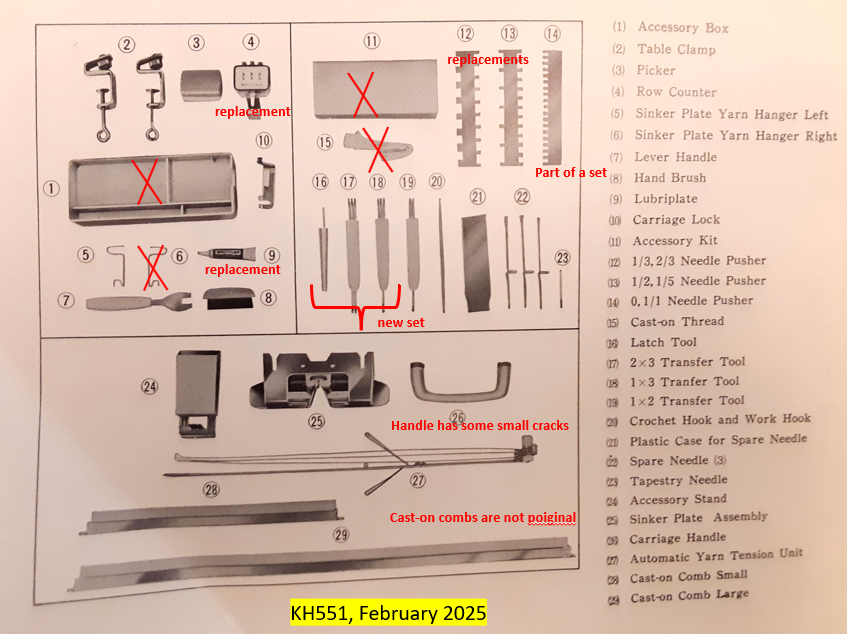
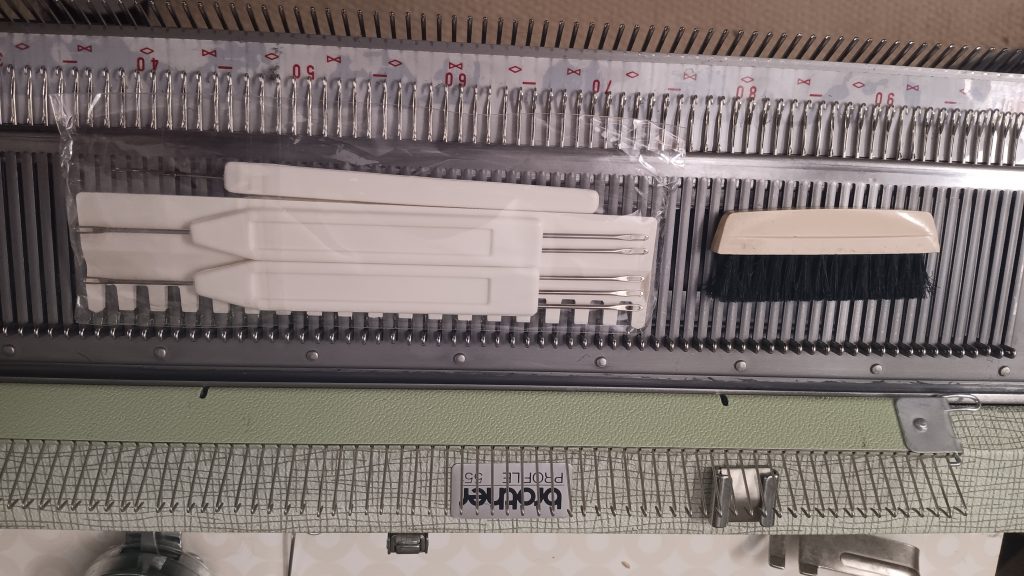
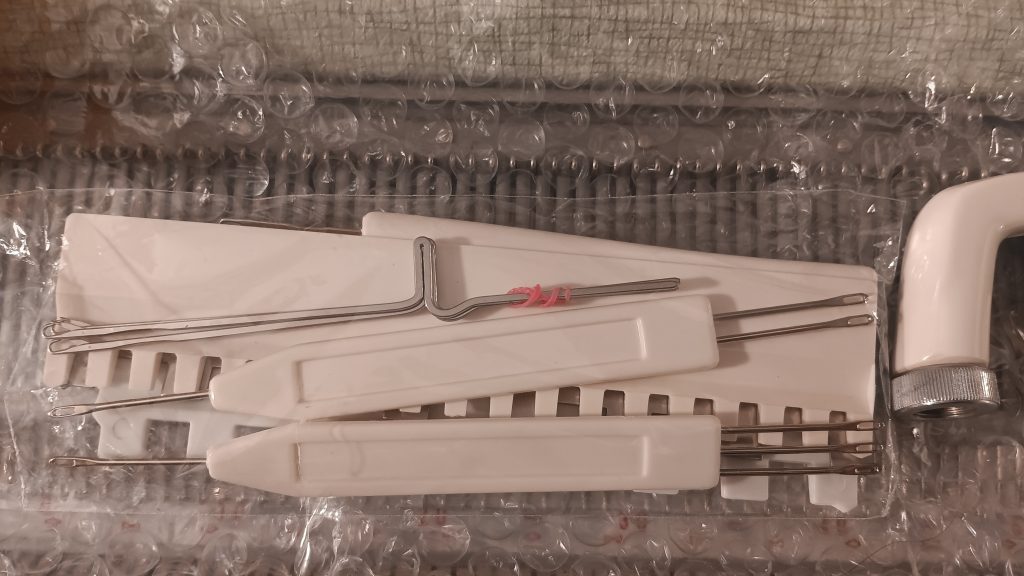
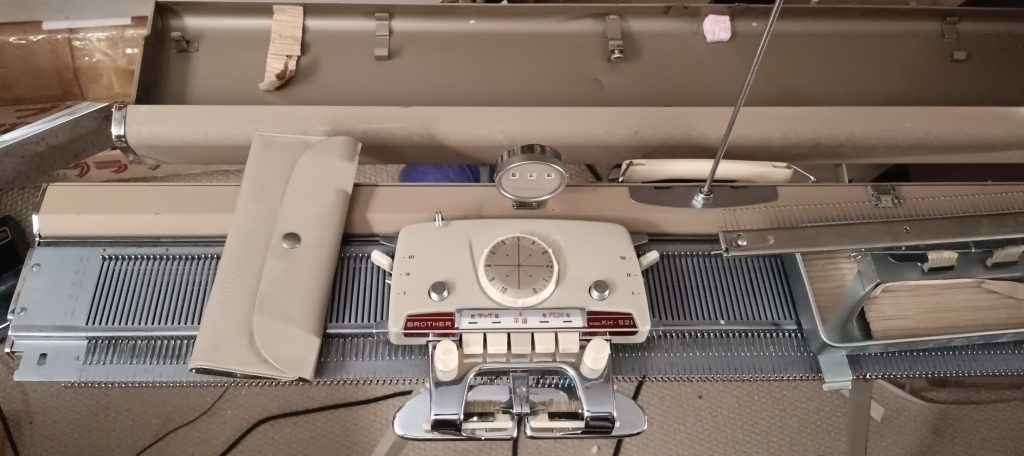
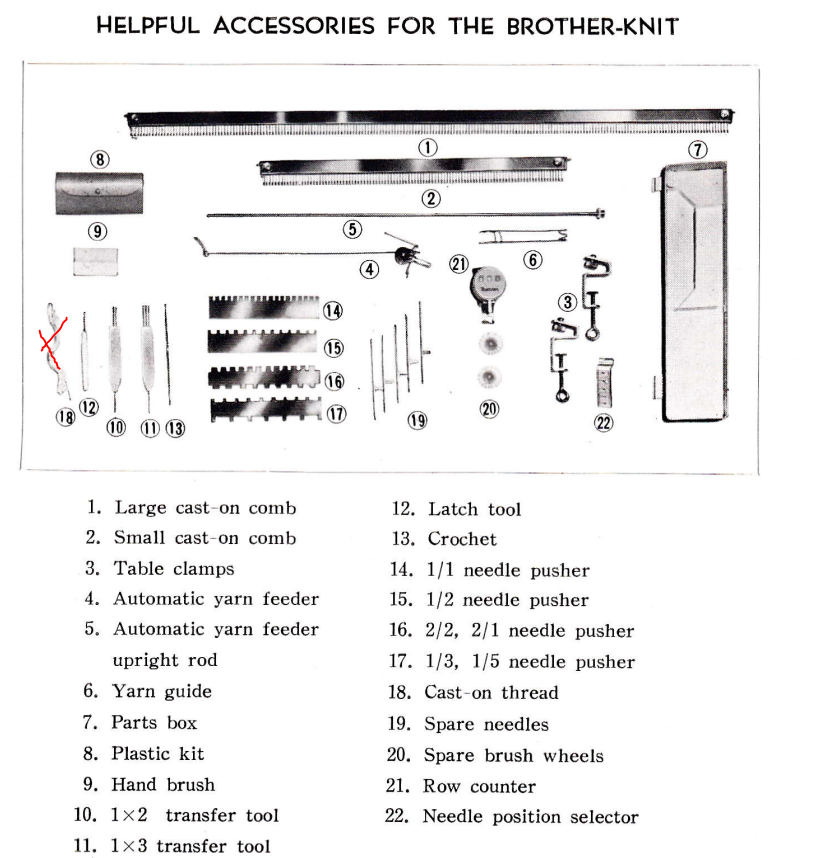
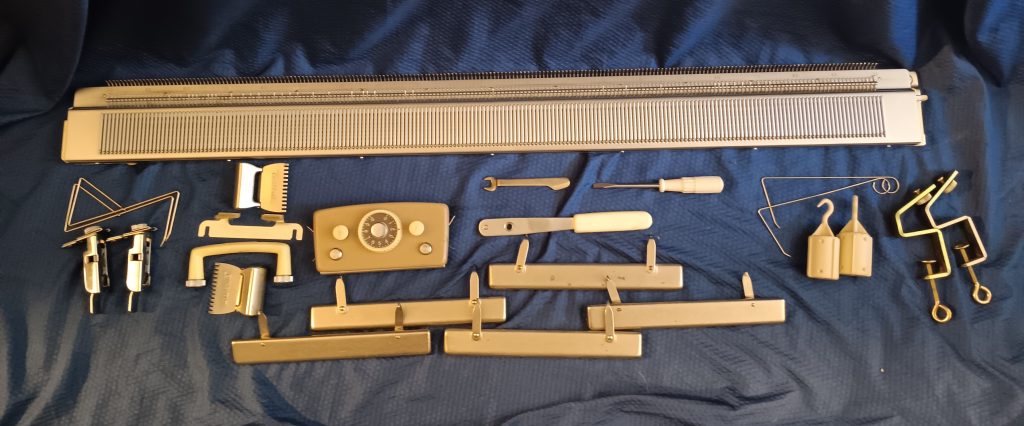
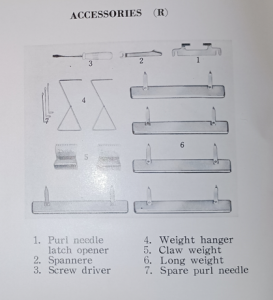
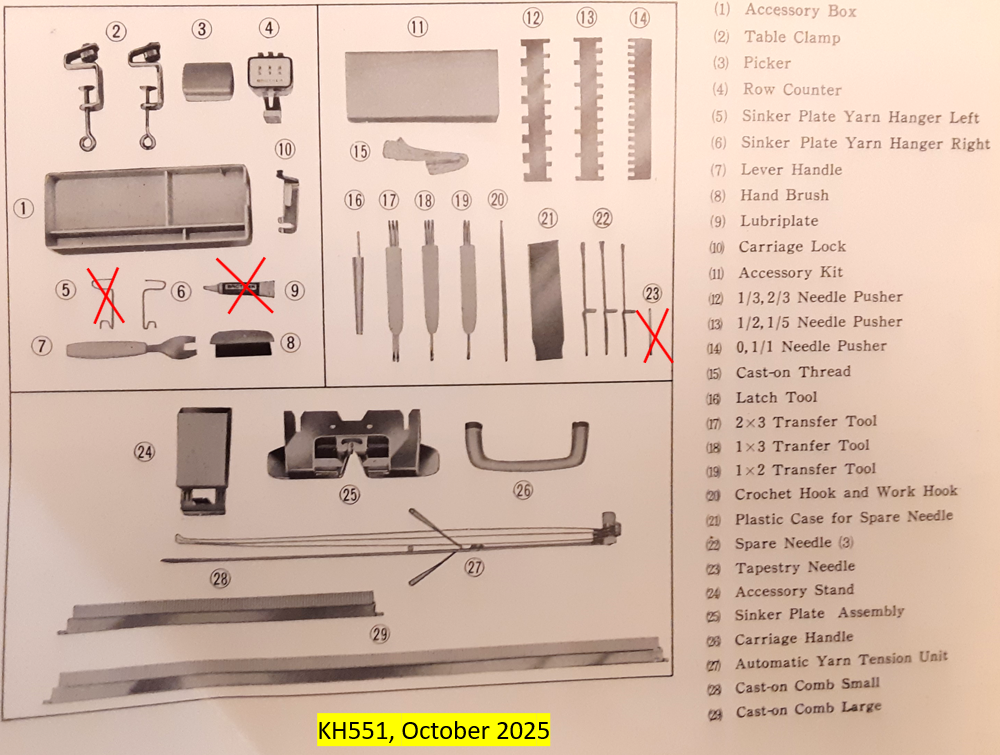
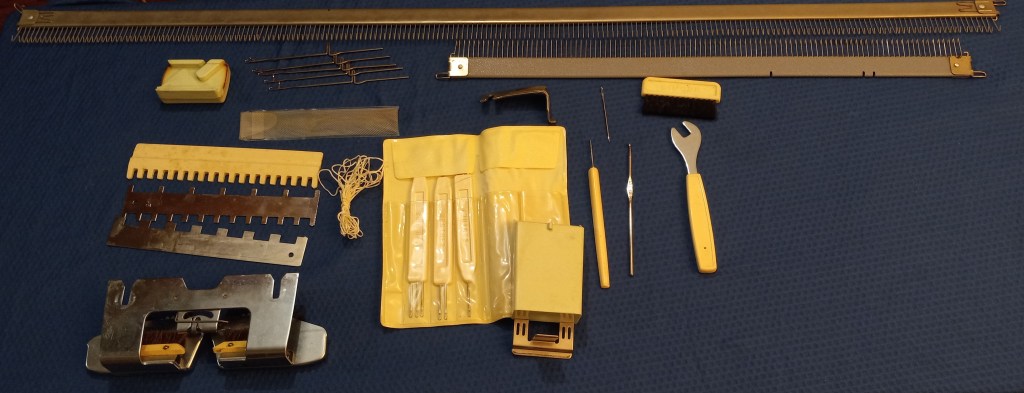
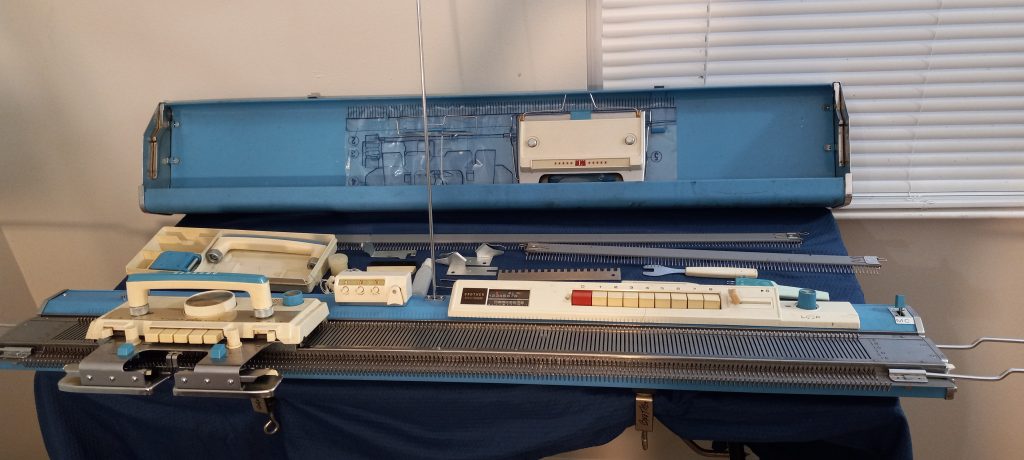
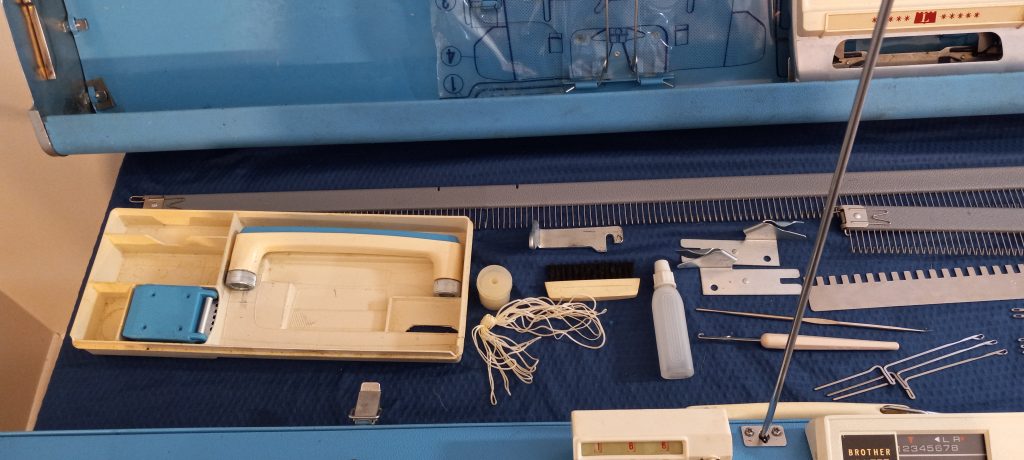
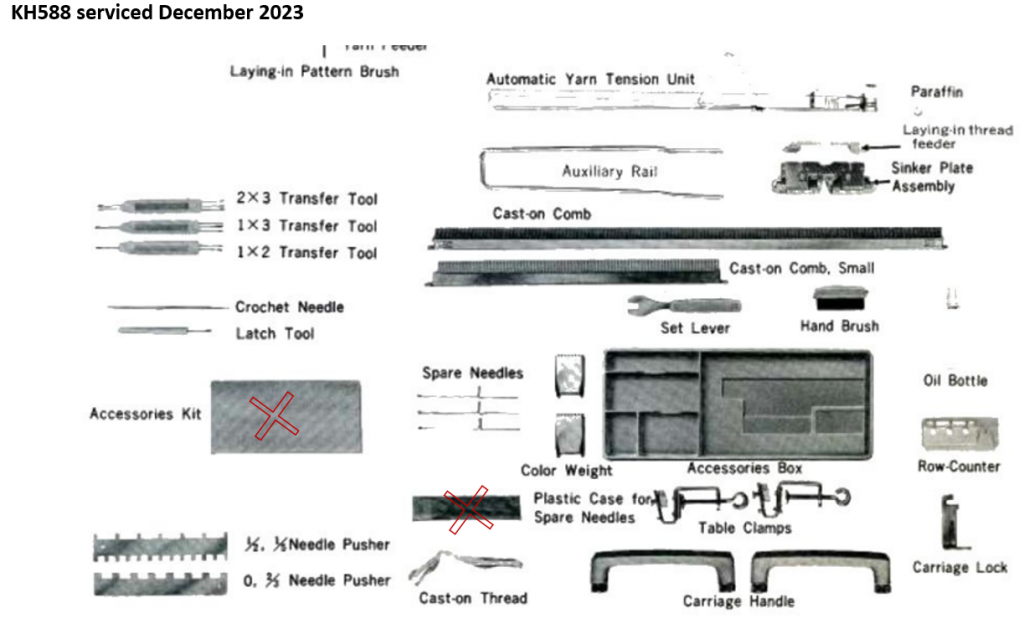
First of all, this machine is so cute, and even though it looks vintage, it works like a trooper! It is overall in great shape, no rust, and has most of the accessories. The picture below shows accessories for the Brother KH511 machine. The setups between KH511 and KH521 are identical, with the exception of the carriages: they look different but work under the same principle and are interchangeable. So are their corresponding sinker plates.

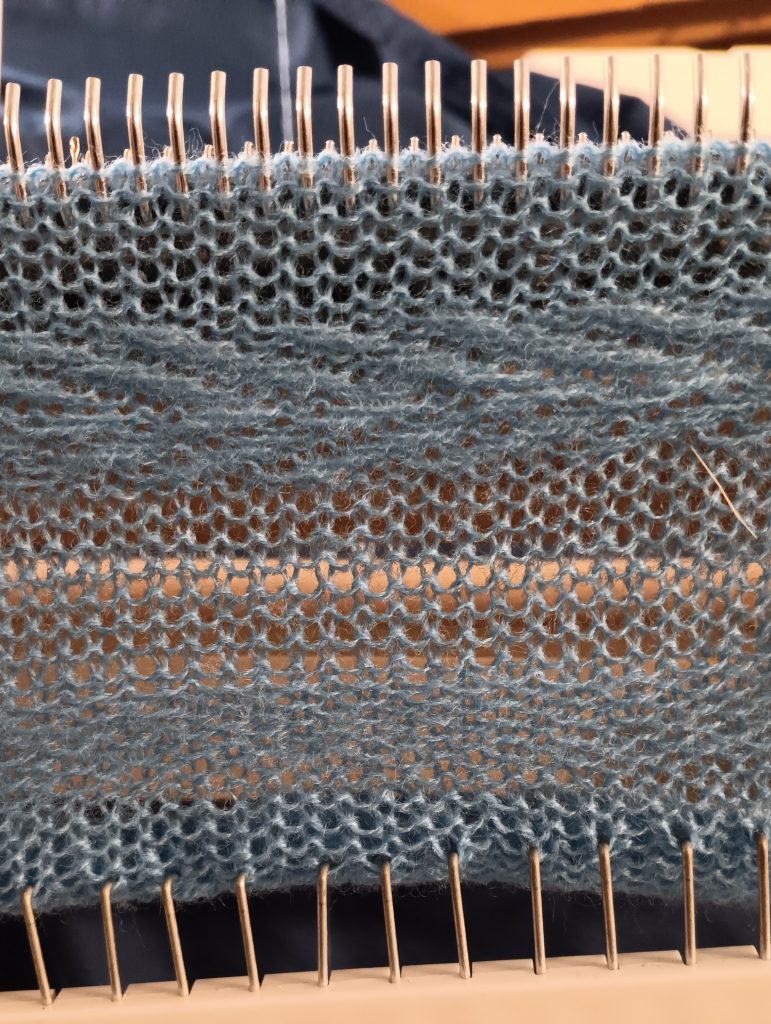
After the usual maintenance (cleaned, inspected, and oiled the needlebed, needles, and carriage; replaced sponge in the retaining bar), I ran numerous tests on a small number of needles and on a full bed to make sure all the needles form correct stitches, and the machine operates over the whole needlebed correctly. All the tests are documented in this video. Sometimes needles knit stockinet stitch OK, but struggle with tuck. Therefore, I want to make sure ALL needles form correct stitches. The main stitches are: stockinette, slip and tuck. fair isle is knit as slip/part and was not tested.

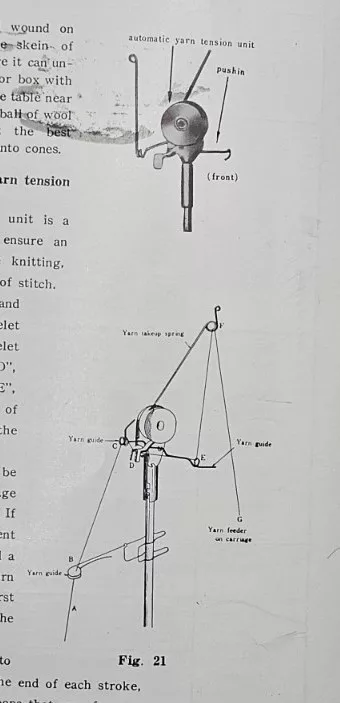
Plain (stockinet) and slip-stitch were very easy and straightforward to knit, on both swatches and a full needlebed. However, please, still pay attention to the tension on the mast: if after finishing the row, two or more needle butts are pushed forward due to the yarn tension, the tension is very likely too high. Adjust it accordingly. If only one or none, the tension is ok. If the loops are forming on the sides, the tension is too loose. Paying attention to the yarn on tension on the mast is especially (and extremel important) when knitting on a full bed with a tuck-stitch or with more than just a swatch number of needles.

To adjust tension, experiment with how the yarn is fed through the steps shown in the manual. For example, if the tension is too high, skip step D, or pass the yarn on different sides of the small lever in D. At the end of my tests video, I briefly show how I threaded skipping step D becuase the tension was too high and the mast bent too much.

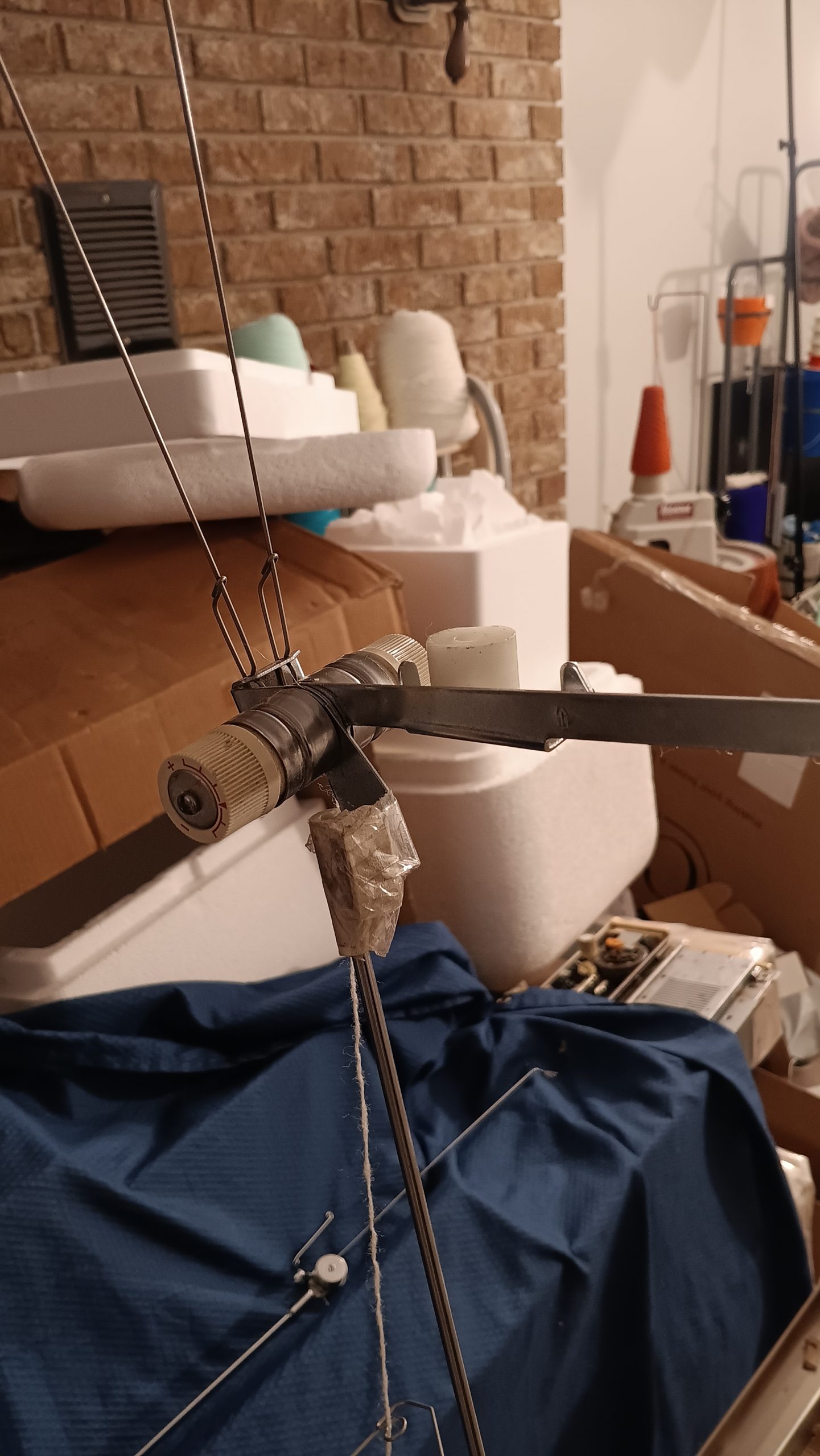
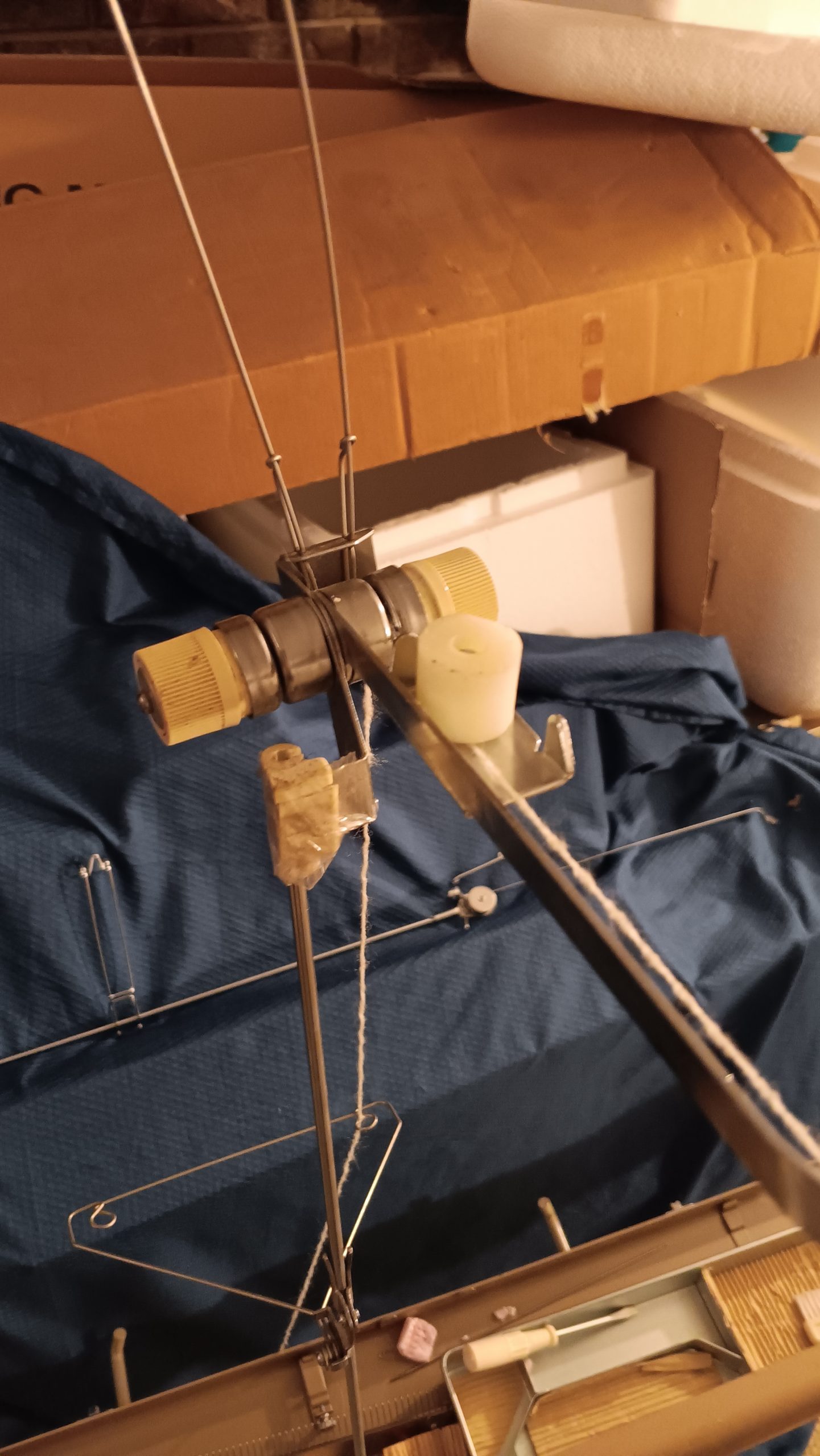
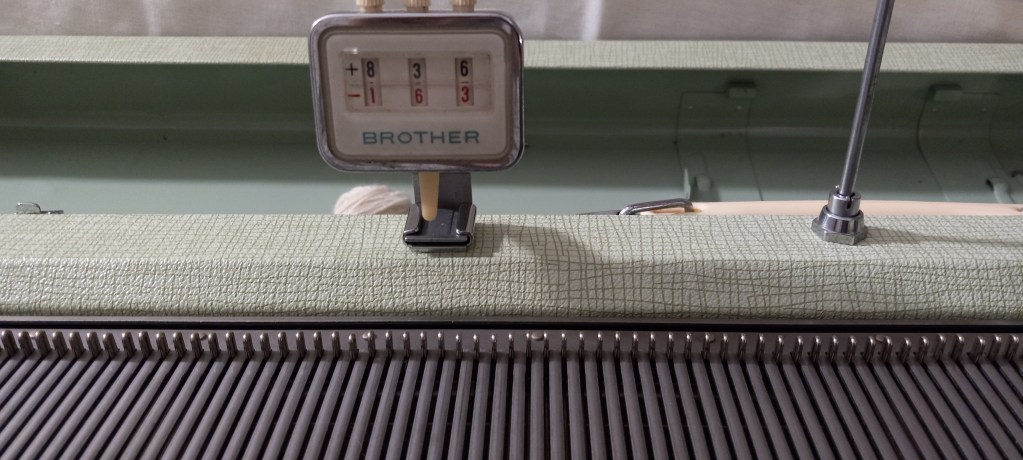
If the tension is still problematic, use the extra tension mast I am providing (see below).

In fact, when I knitted tuck-stitch on the full bed, I could not achieve an even enough tension with the original mast but had no problems when I used the replacement mast. Its adjustable tension cylinders provide more even tension even if the carriage is moved to the far left or far right sides.

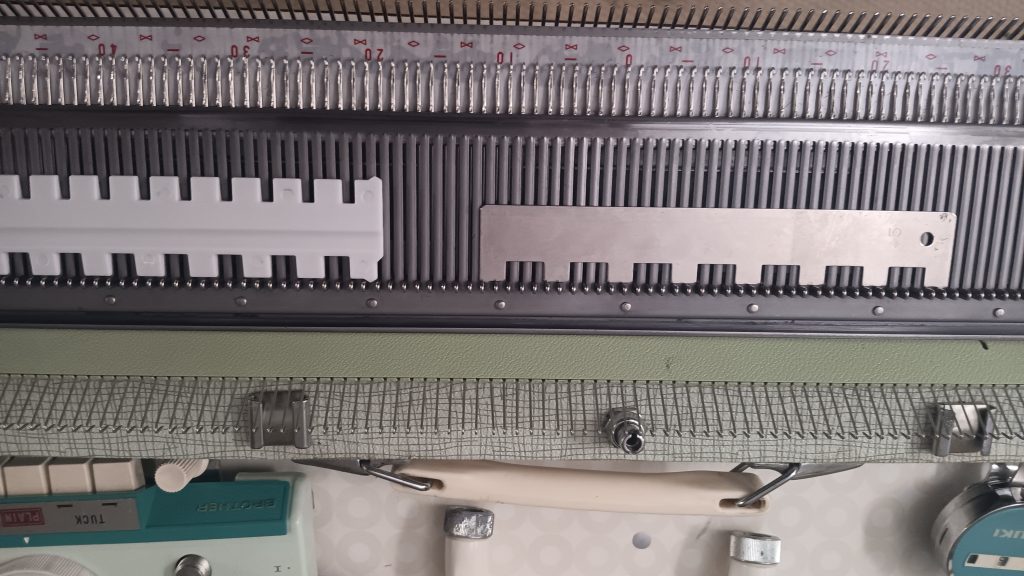
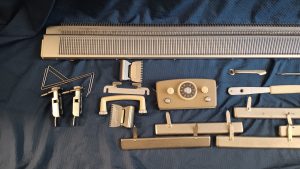
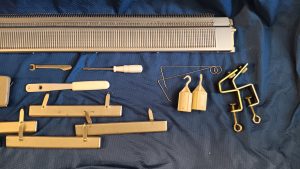
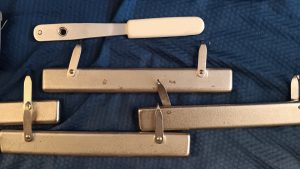
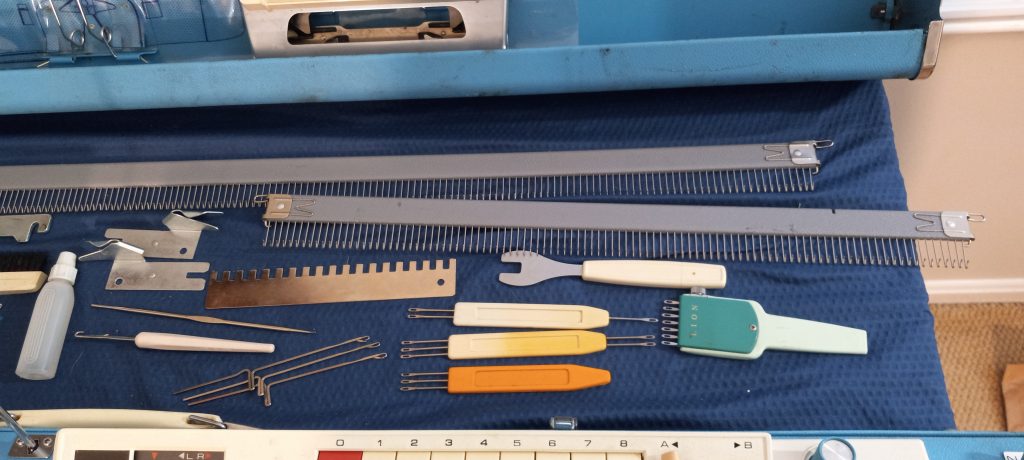
The machine came with a full set of all original accessories. Cast on combs are in great shape. In fact, all accessories are in great shape.

The accessories that will not be included are:

  • hard copy of the manual. Use the combination of the manuals: KH531, and KH551 for patterning and setup. For general tips, manuals for other 4- and 8-pushbutton machines are useful too.
  • Cast-on thread is not included. Use any silky, and strong yarn/thread.
  • Although not shown in the diagram above, the original setup contained an oil bottle, but it is too old to use. Use Hoppe’s oil available on Amazon.

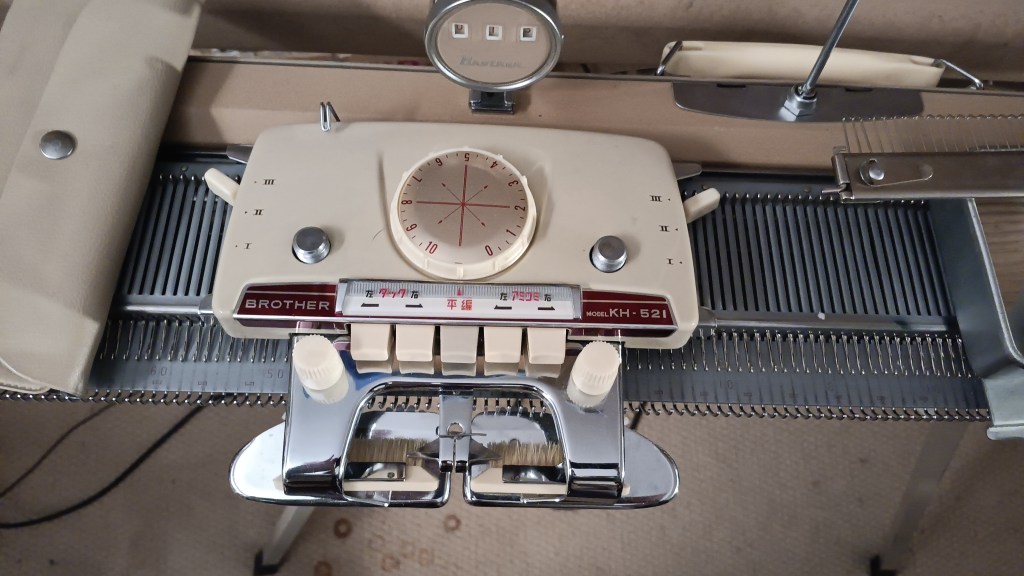
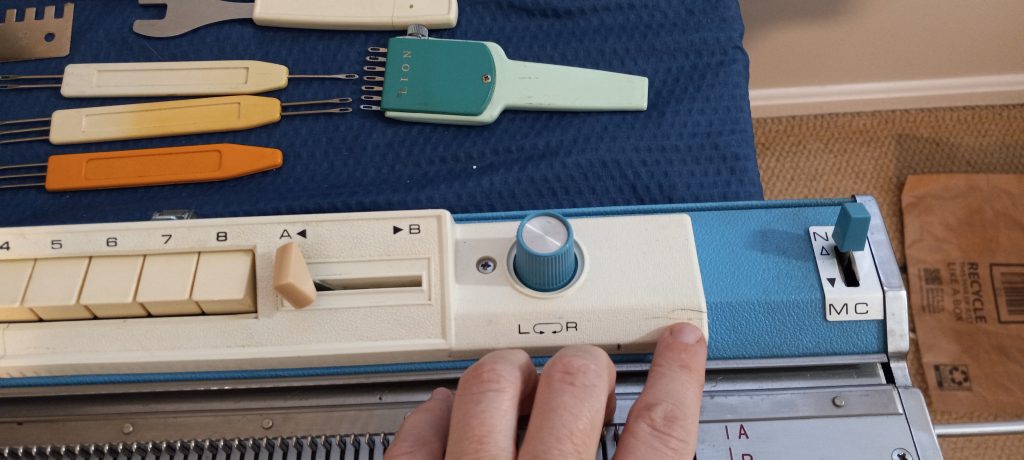
The writing on the carriage is in Japanese. Refer to the manual for details. As a quick reference, the two left-hand side buttons are “tuck”, the middle button is “plain” knitting or to reset the buttons and the right-hand side buttons are “part” or “slip”.

The row counter works great. Since it is a bit on the super vintage side, the knobs on the back (to change numbers) move only in one direction. So, to rezero, simply keep rotating the knobs until you reach zero. (In later models, the knobs on the row counters rotate in both directions). I kinda like it because I never remember in which direction to rotate to faster achieve zero… and then if I move in the wrong direction, the second dial switches…. Well, it turns out to be the same number of rotations 🙂

I included a new needle indicator (the strip under the needles showing the needle numbers). I will also include (new-stock) light-weight claw weights as I think they are important to have (put them on the edges of the fabric). The matching ribber Brother KR321 will have claw weights but they are somewhat heavy-duty and might be too heavy for knitting on just a single bed.

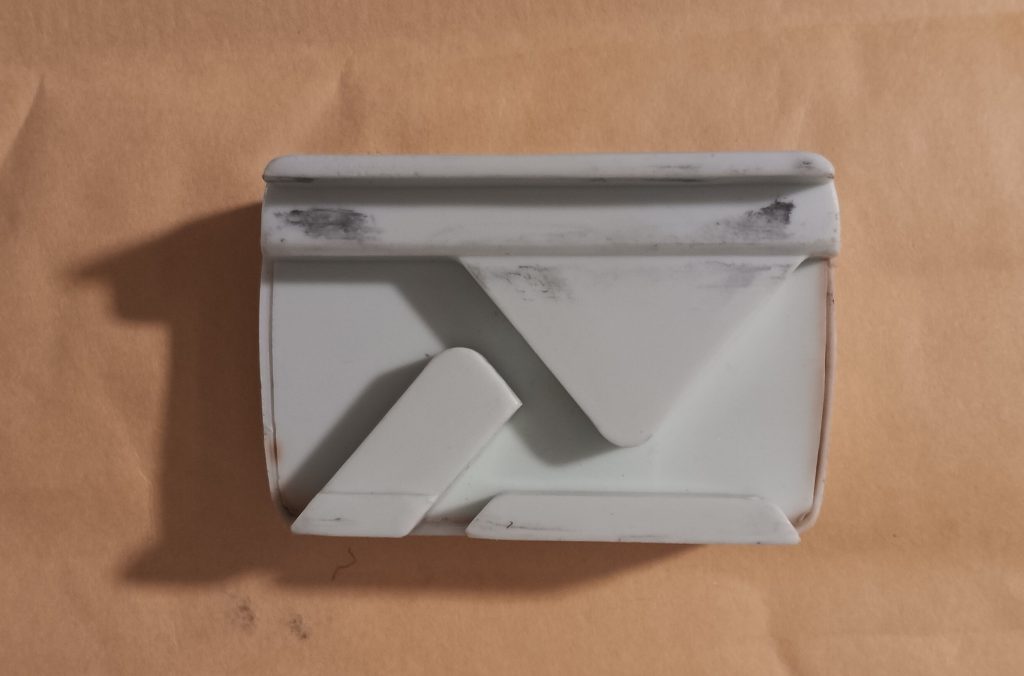
I will include an additional tension mast: it is not perfect but it is what I can spare at the moment so you will have the original tension mast and an additional tension setup to avoid problems with tension like I did when knitted tuck. The wax disk on the tension mast below will come with it too. It is not new but still has a lot of life in it.

A couple of words of wisdom.

  • When learning how to work with this machine (all machines are so different and all have their own temperaments), experiment with different speeds and how you shuttle the carriage back and forth. Sometimes is moving too fast, the carriage drops stitches. Moving too slowly might create loose tension and loops on the ends of the knitted fabric

ABOUT IMPERFECTIONS:

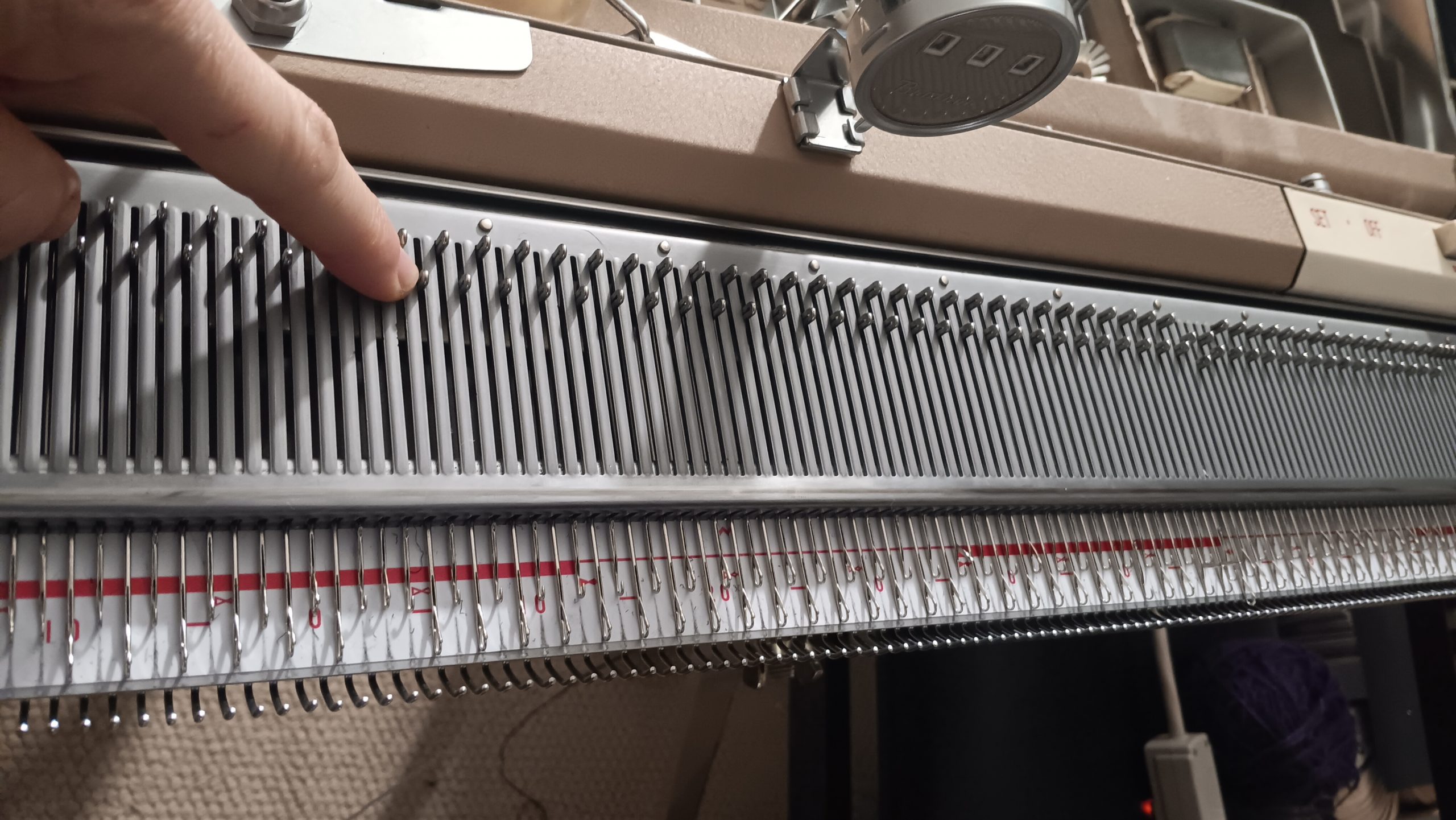
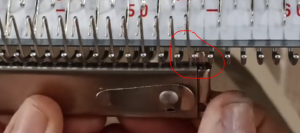
  • there are a couple of uneven spots on the needlebed (you see them in the video and in the pictures below, although it is hard to see). I see a lot of those in these vintage machines. It does not interfere with quality knitting.
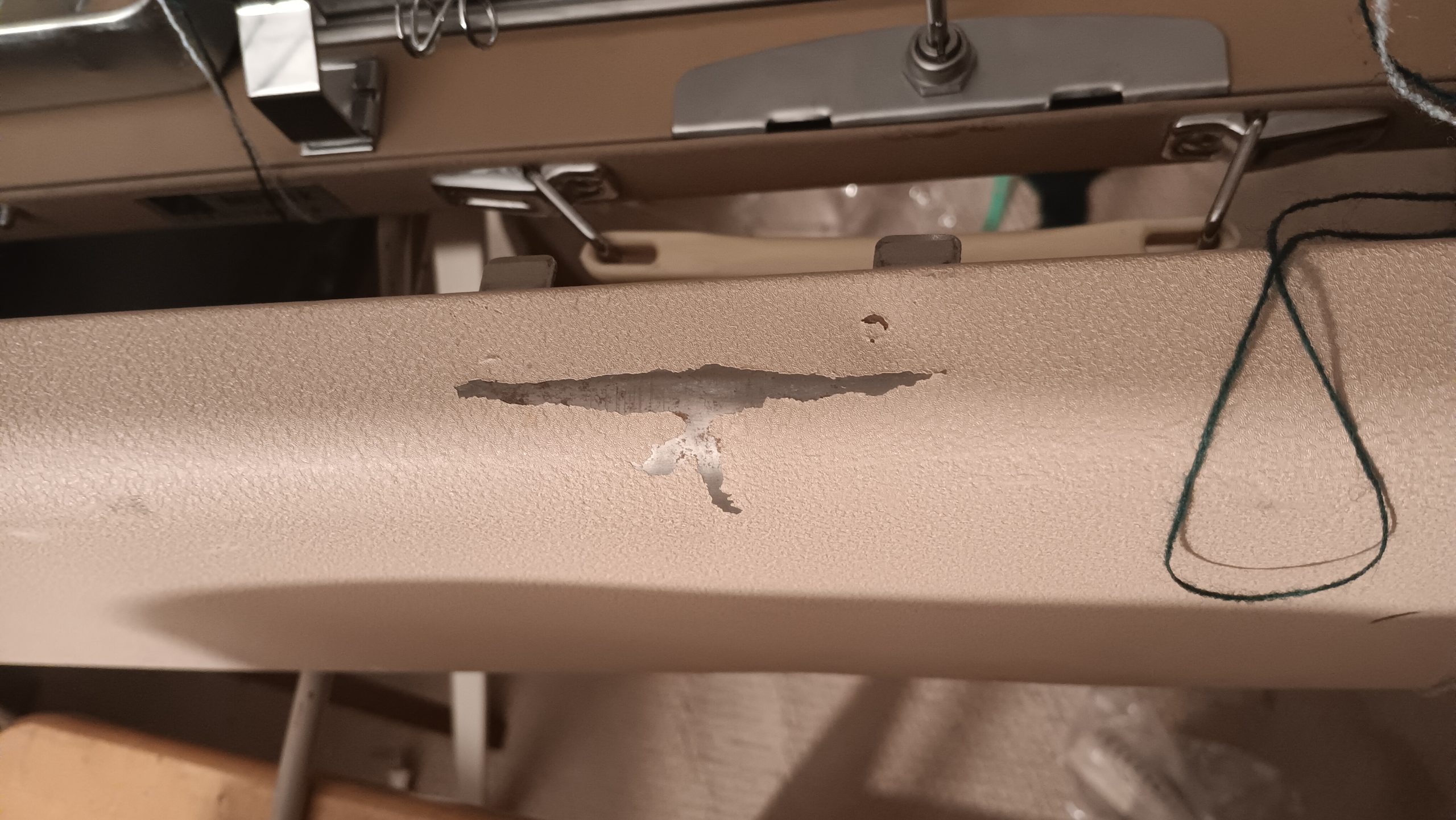
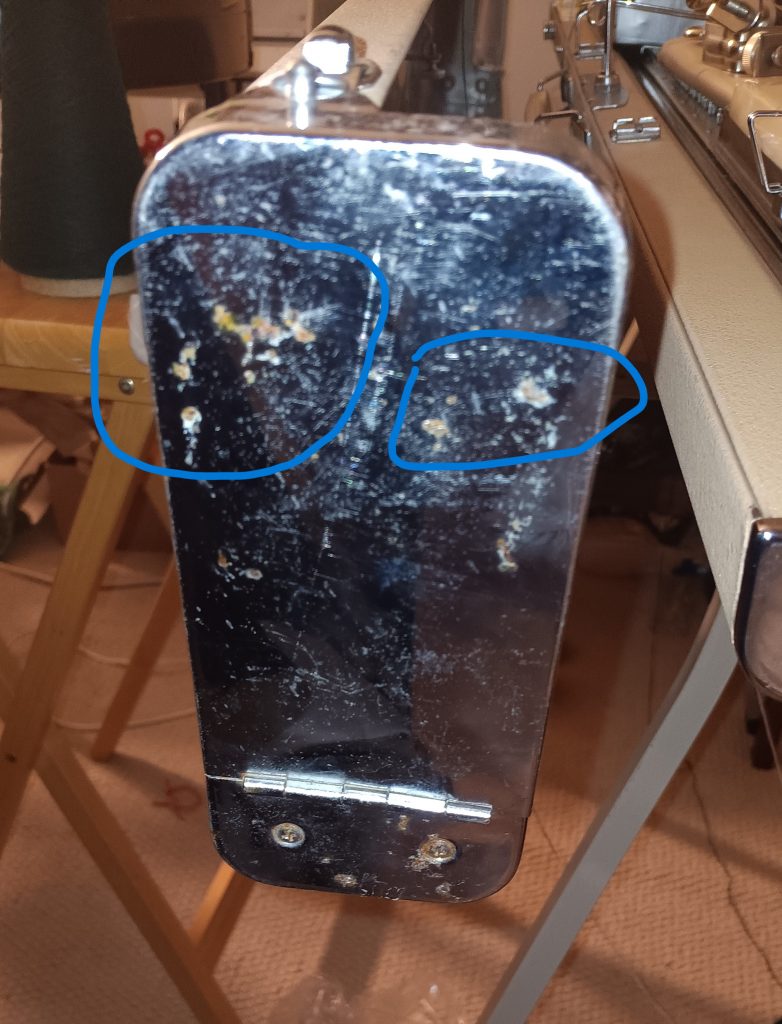
  • the lid has some spots where the paint came off. However, it is in great conditions otherwise especially considering the age of the machine: no major bumps or scratches.
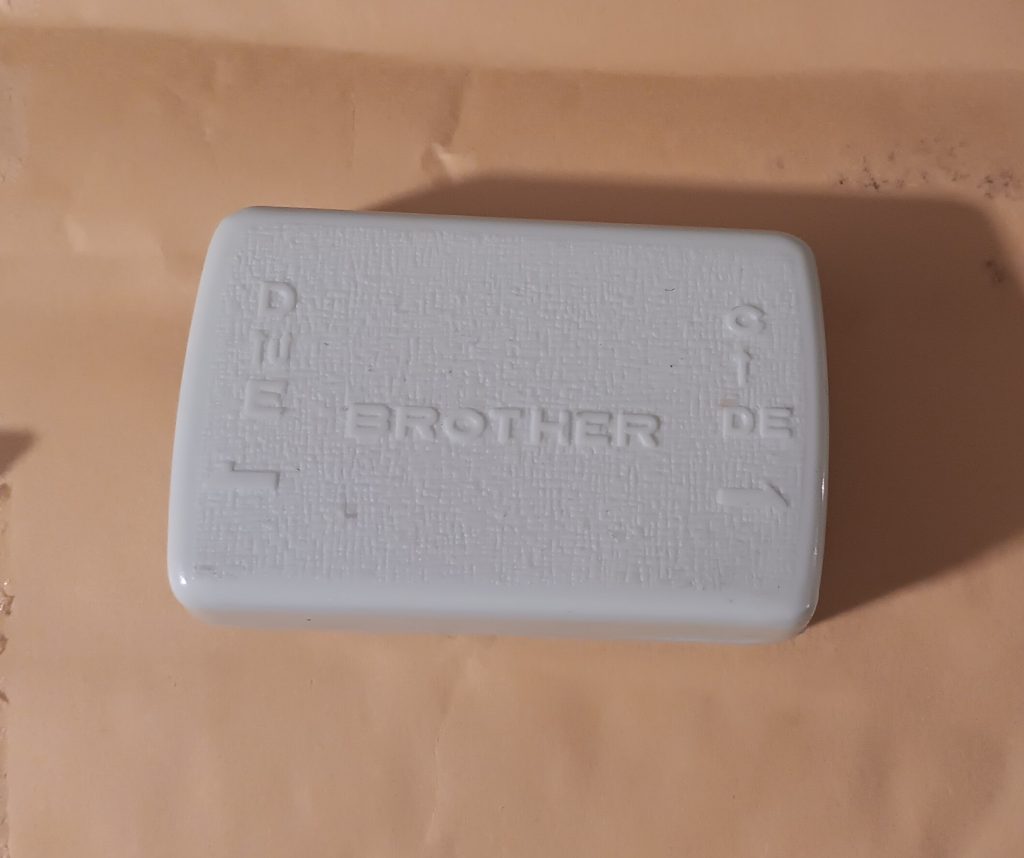
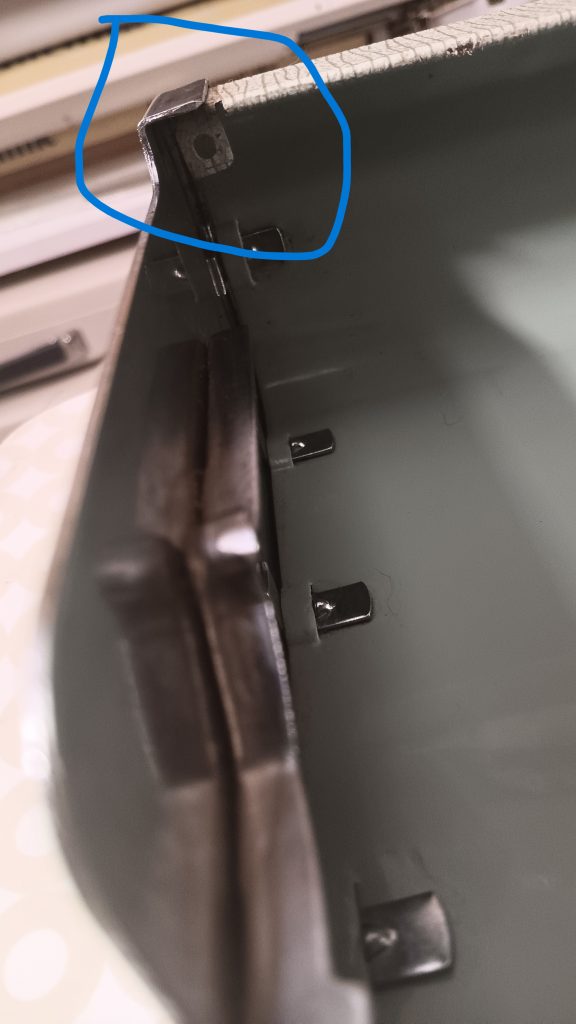
  • One end cap has some rust spots. I typically cover those with silver Rustoleum, but this time I feel it would damage the authenticity of the machine. The endcaps are smooth and shiny, and a layer of Rustoleum would ruin it. The other end cap is in much better shape.

Brother KR321 ribber tested in my shop on Brother KH521 knitting machine

Brother KR321 ribbing attachment complements vintage manual/basic and four-pushbutton Brother knitting machines. Read more about this model in my Knitting machine Encyclopedia. The post below is dedicated to a specific ribber serviced in my shop in February 2026.

The ribber is in very good shape. However, I still cleaned it, inspected the needles, serviced, oiled and cleaned the carriage. The sponge in the retaining bar was replaced. The metal retaining bar is original.

The ribber is very easy to install/attach. It is easy to maintain distance between the ribber and the machine (which is important).

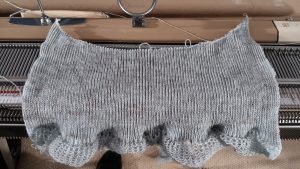
To test the ribber, carriage functions, and to check if all needles form correct stitches, I knitted on the full bed. All this is documented in this video. All needles formed correct stitches. I knitted on two sets of every-other needle to check that. The machine knits beautiful ribbing. Please be mindful when choosing thicker yarns or textured yarns. I will include a partial cone with yarn that I used in my tests (the dark green yarn),

I spent quite a lot of time familiarizing myself with this ribber and learning about it. I followed the manual for the original cast-on instructions. They are shown in this video. This original method recommends suspending the cast-on comb on the needlebed before the first row is knit. However, the cast-on can be hung after as well (similar to just the usual knitting).

However, I quickly discovered that the original wire hangers do not attach well when too many needles are used for knitting. Thus, I am including the wire-hangers from KR830 with smaller ends to get through the free section between the ribber and the main bed. The small barrel weights (also from KR830) seem to be a better fit than all weights included with the standard setup, so I am including those as well.

I also think, if not absolutely necessary, it is better to knit, leaving 5-6 needles on each side in a non-working position. In this case, it is easier to insert the side weights (on wire-hangers), to distribute weight evenly on the cast-on comb and to better see if the cast-on comb and other weights are not getting caught on something.

The ribber will come with all its “official” accessories, according to the manual. The setup comes with a generous number of replacement needles.

I am including additional accessories: barrel weights, wire-hangers with a round end, and table clamps with a less sharp S-angle. I’ll also include remaining strip for the sponge bar (please, keep it in a dark place away from fumes and light to extend its longevity).

Imperfections:

  • Retaining bar with a fresh sponge strip is a bit hard to insert and remove (see below).
  • couple of the bar-weights that came with the ribber have minor rust spots on them
  • Carriage knobs have tiny cracks. I super-glued the most cracked, and it holds well. It did not affect the knitting and the knobs move up and down well.
  • I am not sure what the original design of the handle is supposed to look like, but this metal feature on the handle protrudes a bit.
  • Well, talking about the handle: it is not critical, but screw it on evenly: a little bit on one side, then a bit on the other, so it goes on evenly.

Several more words of wisdom and things to pay attention to:

  • when assembling and disassembling the sinker plate to remove or accommodate the brush-arm assembly, pay attention to how the brush arm assembly goes in. It has the yarn guide, which is important for correctly forming the stitches. It might touch the pegs if incorrectly set up or cause problems when knitting tuck.
  • If you need to remove it to replace the needle, stick a pencil (with an eraser on its end) into the retaining-bar channel and gently hammer on it until the other end of the retaining bar shows on another end. Then grab pliers and remove it. I noticed that with time (for those couple of weeks I was testing the ribber), it became easier as the sponge was probably being compressed a bit). I tried to use different kinds of retaining bars: plastic ones like in later models, but they did not hold the needle,s and they were not even staying in the working position (sliding back). And I could not find any other narrow enough spongy material to fit.
  • If you feel that the arm-brush assembly is touching the ribber needles, pull the arm a bit towards you and then fasten the oyster clamps.
  • When knitting a small section on the ribber, using the original setup is ok (I did not encounter any dropped stitches when knitted swatches). However, for wide panels, I strongly suspect you will need the “new” table brackets. Those gave me the most reliable weight across the comb and no dropped stitches.
  • be patient and learn one technique at a time, do not start complex projects until feeling confident with less sophisticated ones. Ribbers, in general, are honestly a pain in the butt: so many (additional) things to keep track of.

Brother Profile 551 tested and serviced in my shop in October 2025

Brother Profile 551 (Or KH551) knitting machine is a standard-gauge knitting machine with 200 needles, 4.5 mm apart. Read more about the pros and cons of this model in my Knitting Machine Encyclopedia.

The article below is dedicated to a specific machine tested and serviced in my shop in October 2025.

The machine was cleaned and oiled. All needles were removed, cleaned, and inspected individually. Their latches and straightness were checked and confirmed. The carriage was cleaned and serviced (oiled and inspected). The sponge in the metal retaining bar was replaced with a new one.

I first knit a swatch while testing the machine to demonstrate that the carriage, all its levers, buttons and knobs as well as the needle selection mechanism, work well.

Additionally, I tested the machine on all needles to ensure the needles form correct stitches. The video of these tests is posted on my YouTube channel. I used several different yarns. All tests went really well. I tested the machine using several different yarns. I will include a skein of one of the yarns I used and liked the most for this machine.

In the video, you will see that I first checked how smoothly the carriage runs on the needlebed. I moved forward (to B position) one section of needles at a time and ran the carriage in different settings across these needles. Thus, I ran the carriage across the needlebed after moving the Russel levers to I, II< and III positions and pushed the “tuck” and “part” buttons on the carriage.

When knitting the “butterfly” pattern (the very first “holding” pattern) I deviated from the pattern and instead of alternating between pressing buttons 1 and 3, I pressed 1 and 3 and then 2 and 4 to demonstrate that machine, buttons and needle selection function properly.

The machine will come with all major accessories and almost all minor.

The accessories that are not included are:

  • one of the yarn hangers, used in the plating type of knitting (page 19 in the manual). On one of the previous machines, I used a paper clip. My experience also shows that knitters rarely use these.
  • oil. It was too old and I discarded it. Use Hoppe’s gun oil available on Amazon.
  • A tapestry needle was rusty and I discarded it as well. Any needle will suffice.
  • A hard copy of the manual will not be provided.

The original manual can be found online, but the resolution is poor. For patterns, it is better to use this manual, which is for the 8-pushbutton machine, but the functions of the carriage are all the same. When converting those patterns, in the pattern table, cut the number of buttons by half and just follow the rest of the directions.

I noticed that the claw weights do not come with this machine. But you can easily order them on Amazon (as well as a smaller cast-on comb for swatches). The price on Amazon is even better than I would offer.

When knitting tuck patterns, especially on every other needle, watch that the stitches come off the round section of the needles. Always remember that the tuck (other stitches too, but tuck especially) is always an interplay between the correct yarn, tension, carriage settings, and static, among a few aspects. I will include a skein of yarn I used for my tets to use as a reference yarn.

A couple of hints to avoid mistakes with the set lever and pushbuttons:

  • Make sure the ratchet tool goes ALL THE WAY to the left when activating the needle selection and all the way to the right (to the OFF position); otherwise, incorrect (or incomplete) selection might happen.
  • general rule of thumb: tuck requires higher tension (smaller number on the tension dial) than stockinet. So does slip/part.
  • Notice in the video that I am adjusting the tension as I am going from stockinet to tuck/slip.
  • For consistency, I recommend the very last two needles (on each side) to be in B position. For example, in the video when i was knitting tuck stitch, I was checking if the last needles are in B or C position. I like my last needles to be in B position, so I moved the needles pushed to C position up.

PROS:

  • Overall the machine is in great shape with no visible rust
  • cast on combs are in great shape: all teeth are straight, and there are only a couple of minor scratches
  • Most of the tools are original

Imperfections:

  • couple of missing minor accessories and a hard copy of the manual
  • minor scratches (some of them are shown below)
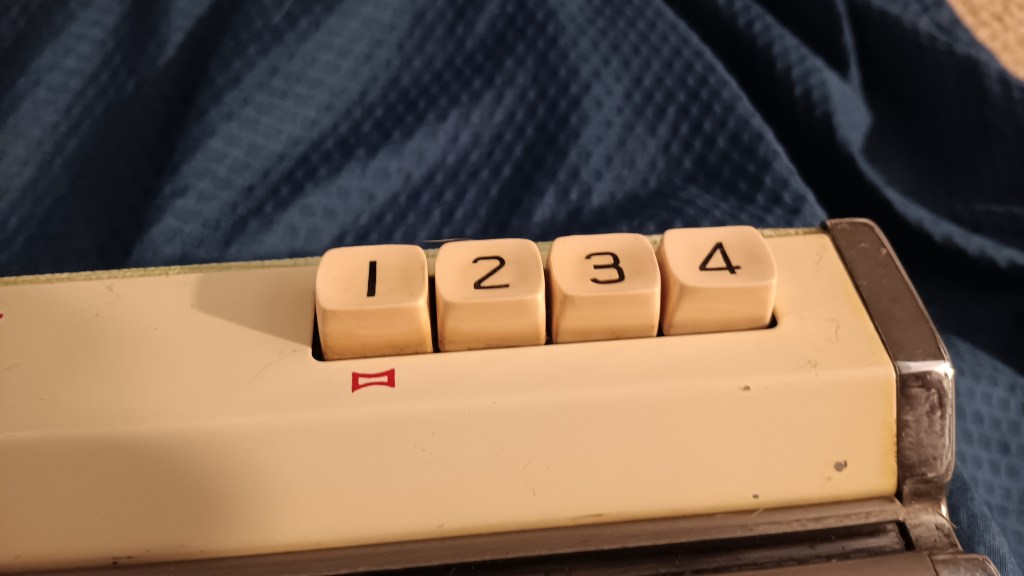
  • some minor discoloration on the pushbuttons (shown below)
  • cast on combs have just couple of minor scratches (not shown)
  • The case and the lid are in great shape with only minor, barely noticeable, scratches (not shown)

Picture showing minor scratches on the carriage:

Picture showing pushbutton up close to demonstrate the minor discoloration and minor scratches:

Please keep in mind that my house is a dog-friendly household, so some dog hair is unavoidable.

Hope all looks good and if it does – Happy Knitting!
Needle positions of various flat-bed knitting machines and ribbers

Brother Knitting machines

A – non-working position

B – standard working position

C, DI, DII – patterning positions

E – holding position

Machine Model number
Needle Positions
Basic (manual) knitting machines
KM100, KH355, KH360, KH370, KH380, KH390, KH395ABCD
KH210, KH220, KH311ABCDE
KX350, KX395ABDE
KX355unknown
4-Pushbutton machines
KH35, KH212, KH218no indicators
KH511ABCDE
KH521, KH531, (Profile) KH551ABCDIDIIE
8-Pushbutton machines
KH110, KH120, KH552, Profile 585, KH587, KH588, KH705,
(Genie) KH710, KH601
ABCDIDIIE
KH561, KH571, KH581, (Profile) KH583, (Profile) KH585ABCDE
KH811 (also 24-stitch punchcard)ABDE
12-stitch punchcard machines
KH800, KH801ABCDIDIIE
24-stitch punchcard machines
Bulky: KH260
Standard: KH810, KH811, KH820, KH821, KH830, KH831, KH836, KH840, KH850, KH851, KH860, KH864, KH871, KH881, KH890, KH891, KH893, KH894
ABDE
Electronic machines
KH900, KH910, KH920, KH930, KH940, KH950, KH965, KH970ABDE
Ribbers
KR551ABC
KR110, KR120, KR586, KR710, KR810, KR830, KR840, KR850, KR890, KR900, RK900ABDE
KR582unknown

KnitKing Knitting machines

A – non-working position

B – standard working position

C, DI, DII – patterning positions

E – holding position

Machine Model numberNeedle Positions
24-stitch punchcard machines
Bulky:
Standard: KH881, KK91
ABDE
Electronic
Compuknit IV,ABDE

Silver Reed Knitting machines

Machine Model number
Needle Positions
SK120,ABDE

Retaining bar vs knitting machine model chart

The table below lists the lengths and widths of various knitting machines I measured myself. Use this table as a reference to ensure you purchase the correct retaining bar for your machine.


Model
Retaining bar
materialsponge?length, inch/cmwidth, inch/mm
Brother KH500metalyes41/1040.375/10-10.5
Brother KH551metalyes41/1040.375/10-10.5
Brother KH552metalyes41/1040.5/11-11.5
Brother KH581metalyes41/1040.5/11-11.5
Brother KH585metalyes41/1040.5/11-11.5
Brother KH588metalyes41/1040.5/11-11.5
Brother (Genie) 710metalyes41/1040.5/11-11.5
Brother KH800metalyes41/1040.5/11-11.5
Brother KR810 ribberplasticno
Brother KR830 ribberplasticno
Brother KR850
ribber
plasticno
Silver Reed SK120metalyes42/1095 mm/0.2 inch

About retaining bars in knitting machines and ribbers.

… this article is in constant progress as I learn about various knitting machines and their retaining bars.

Almost all knitting machines and ribbers have retaining bars. Some machines have retaining bars with a sponge attached to them. Some machines (the majority of plastic flatbed machines) have only a long and narrow sponge (without the metal holder). Ribbers come with either a “retaining bar+sponge” assemble or only with the plastic retaining bar (no sponge strip).

The main role of these retaining bars is to hold the needles in place and to prevent it from bouncing up and down when knitting.

Below are the situations when you want and need to remove (and inspect in many cases) the retaining bar:

  1. When you just purchased your machine (especially used and NOT recently serviced), the first thing you need to do is to remove your retaining bar and inspect it. I made a short video on how to do it because I have been asked about it so many times by my customers.
  2. When you need to replace faulty needles.
  3. When you need to clean your machine.
  4. When you notice your knitting machine mispatterning without any good reason.

Hopefully, you purchased your knitting machine new or recently serviced. In this case, the sponge should be 1-2 cm above the metal edge of the retaining bar.

But in most cases, this is not the case. Thus, it is possible that when you remove the retaining bar, you will see a disintegrated sponge. I’ve seen some spongy strips being just a gooey mess. The old sponge needs to be removed as soon as possible (since it often corrodes the needles) and replaced.

There are two ways to approach this replacement.

First approach: just replace the spongy strip

If you decide to replace the sponge, you will need to remove all this goo. I first use a flat-head screwdriver to scrape all the residue out of the retaining bar canal. Then, I use “Goo Gone” to remove the rest of the residue. I typically do it outside because it is a very messy process. I pour a thin layer of “Goo Gone” liquid into the retaining bar and wait for hours. Then I scrape the remains of the old sponge again with the screwdriver. Lastly, I wash the retaining bar with soap and water, wipe it really well and let it dry (or blow dry it). You can purchase just the sponge in my store.

I sometimes read in forums that some thrifty machine knitters get a simple weather stripping and use them as sponge strips. Well, those have different dentistry and sometimes do not have a silky ribbon on one side. Also, they are not suited to be exposed to oils and might decompose rapidly leaving a sticky (potentially unremovable) residue inside your machine.

I read that experienced machine knitters use different ways to attach the spongy strip to the retaining bar. (By the way, the width of the spongy strip is not as critical and it can be a little bit narrower than the channel of the retaining bar but not by much). I tried different glues and my current choice is hot glue. Some machine knitters use wood glue. I apply the glue to the metal part of the retaining bar and attach the strip to the metal by the sponge side (not the silky ribbon side). I then tape the ends if the sponge to the plastic ends. I like using medical tape. Only one layer of the tape is enough to secure the ends of the sponge. More layers will only get stuck when you insert the newly refurbished retaining bar back into the machine. To avoid stripping this tape, push it down on the ends of the retaining bar while inserting it into the machine.

Second approach: buy a new retaining bar

Or if you do not feel like dealing with all this mess, you can purchase a retaining bar with a sponge already in it. Before you order a new retaining bar, make sure you measure the dimensions of your old bar: its width and its length.

Most commonly used by machine knitters Brother, Studio/Silver Reed/Singer, and Toyota knitting machines have somewhat similar retaining bars but there are some differences depending on the model and the gauge of the machine.

For the retaining bars for these machines, there are three different lengths (41, 43, and 47 inches) and two different widths (0.375 and 0.5 inches). This is why it is important to measure your old retaining bar to ensure that you are getting the retaining bar suitable for your machine. Most JUKI, Toyota, Silger/Silver Reed/Studio, Artisan knitting machines use 0.375-inch wide retaining bars. The lengths are either 41 or 43 inches (depending on the model).

I’ve read stories on FaceBook groups, where the new machine knitters were puzzled by the fact that they JUST replaced the sponge bar and the needles do not move, advance, or retract the way they are supposed to. I especially see I happen to be the owner of 8-push button Brother knitting machines. There is somewhere out there some incorrect information on the retaining bar for these machines. 4-push-button machines use a 0.375-inch wide retaining bar and the 8-pushbutton machines use a 0.25-inch wide retaining bar. (I’ve refurbished over a dozen pushbutton machines and I know the difference first-hand).

Brother ribbers use plastic retaining bars without sponges. When (re) inserting the retaining bar into the Brother ribbers, the concave surface (the “channel”) should face you.

There are machines with unique retaining bars – I will update the blog soon when I learn more. I am also putting a table on machines (and models) and retaining bar compatibility. Stay tuned!

In the meantime, enjoy your adventure in retaining/sponge bar replacement!

PS. I measured several dozens of retaining bars with my calipers. Even though the “official” measurement is 0.375 and 0.5 inches, mine are measured as 0.40-0.41 and 0.44-0.46 inches respectively. This inaccuracy in inches makes me like the mm scale (aka metric) a bit better. So the narrower retaining bars are 10.0-10.5 mm while the wider are 11-12 mm wide. Who knew that just 1 mm would make such a difference but it does! I had an incorrect bar installed on my KH581 8-pushbutton machine and the needles would not go back from E to B (or A) position!!!

Brother KH551 knitting machine serviced in November 2023

Brother KH551 is a standard gauge knitting machine with 4-pushbutton-based patterning mechanism. This blog is dedicated to one specific machine I serviced. If you want to know more about the Brother KH551 knitting machine model, refer to my Knitting Machine Encyclopedia article.

The machine (including carriage and all needles) was cleaned and serviced. All levers and the buttons on the carriage were checked and they moved and worked without problems. These levers were also tested while knitting. All needles were also checked while knitting on a full bed. No faulty needles were detected.

The 15 needles on each side (30 total) came from my refurbished stack. Thus, when I was knitting on the full bed, I was inspecting the edges especially closely to make sure all these refurbished needles worked well. Also, because of such a high number of refurbished needles, I am including the set of 5 spare needles (instead of usual 3).

The machine comes with all major assesories.

Several missing minor assesories are:

  • A hard copy of the manual is not included but can be found online.
  • Sinker plate yarn hangers, left and right. It can honestly be replaced with a regular paper clip (just unbent them to a desired shape). The manual describes their usage on p. 18. manual
  • The tool storage box is not included
  • Oil is not included also but I recommend Hoppe’s Elite Gun Oil.

Additionally, the small cast-on comb is not all metal – I pulled it out from my own stash.

On the full bed, I knitted stockinet, tuck, slip and hold patterns (see the video of tests – all went well). Butterfly stitch is my favorite on this machine.

Now about flaws and imperfections:

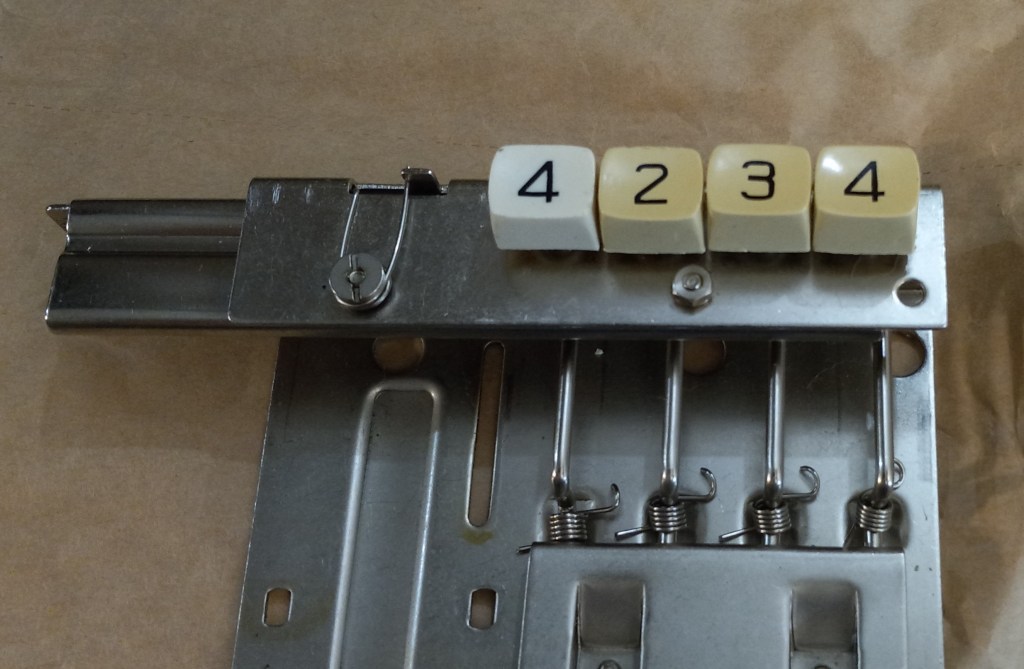
I had to replace the push-buttons but I did not have a part for the button marked #1. So, I replaced it with the button marked as #4 but it is of different shade of white. If you want, you can put a sticker on it with “#1” (I prefer not to put stickers on machines since it damages and stains the vintage plastic).

Despite being vintage, this machine will still serve your craft needs for many years especially if regularly serviced.

Happy Knitting!
Tension spring for Brother Knitting machine

Carriages of Brother knitting machines have several types of springs to ensure smooth needle handling. This article is about a medium size spring, part of the intricate mechanism of Brother knitting machine carriages. These springs can be purchased in my store.

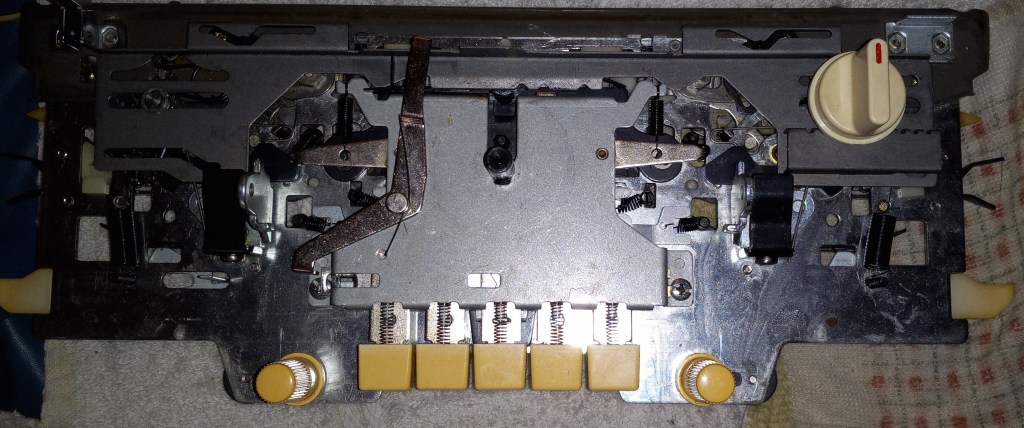
In particular, this short blog article is about a tension spring responsible for smooth the movement of the middle button on the carriage. (At the end of this article, I show other places in the carriage where the same type of spring can be used). This button is typically used to knit fair isle or/and to reset all other buttons.

To expose that spring, one needs to remove the plastic carriage cover (this step NOT covered in this article) and then remove the metal cover.

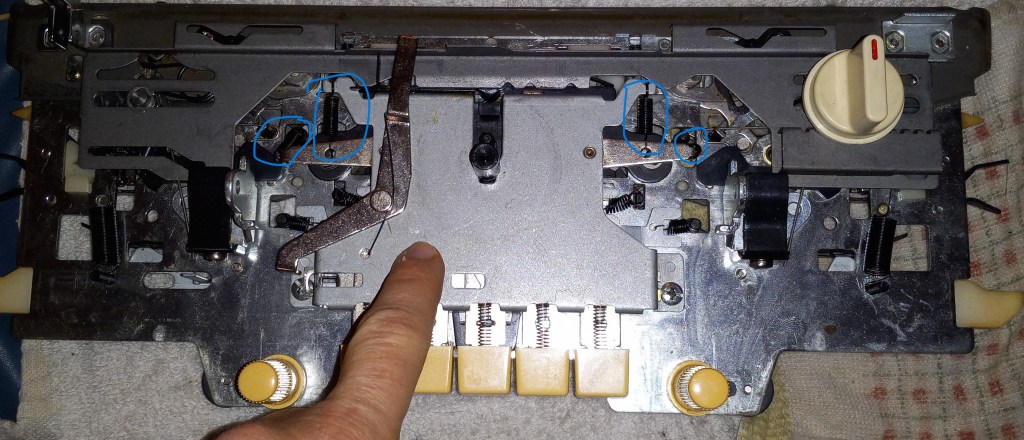
For that purpose, remove the two screws marked below.

The plate will then hang by the springs marked in the picture below but they do not have to be removed. Just push the metal plate out of the way. If the springs detach, they are easily to put back. Just take a picture of the agreement before removing the cover.

Once the cover is removed, you will see the springs right away. In my case, one of the springs was simply missing and the mechanism was not retracting automatically the way it was supposed to.

So the replacement spring was placed where one was missing. I made a short video showing where the spring was installed.

“How” the spring was installed is NOT shown in that video because it is kind of hard to capture how to attach the spring. But the loops of the spring need to grab the posts marked in the picture below.

The same spring can be used in positions shown below. The springs marked with crosses are either small/bigger in size or a spring without the loops (springs for the buttons) and thus, cannot be used.

Brother KH588 machine serviced in December 2023

This machine was ordered as a Christmas present from a loving husband to his crafty wife.

It is a very nice vintage setup with blue hues. This post is dedicated to this particular machine. To know more about this model, read in my Knitting Machine Encyclopedia about its pros and cons.

The machine was cleaned from old dust and gunk and tested. The sponge in the retaining bar was replaced and will come inserted into the machine. I completely replaced the weaving brushes on the sinker plate as the old ones completely decomposed.

All needles were removed, cleaned and inspected, first visually and then by knitting on a full bed. The full-bed knitting tests were on stockinet, tuck, slip and holding patterns. The video with all these tests demonstrates that the machine did not have any problems knitting these stitches and none of the needles showed any signs of forming misshapen stitches.

Lace carriage was not tested but all knobs and levers move without problems.

While knitting on a full bed all patterning buttons, knobs and levers were tested in action (with the exception of the N/MC lever but it moves freely) and are fully functional.

The machine comes with all major assesories (lace carriage, rails, row counter, sinker plate) and the majority of the minor assesories.

The row counter is from the new stock – the original row counter was missing from the setup.

The minor assesories missing are:

  • the assesories kit: it is simply a cover with pockets to keep assesories inside
  • the lid for the assesories box. The plastic was so weak that it crumbled when the machine arrived to me and I had to discard it.
  • hard copy of the manual will not be included but it is available online for free. I strongly recommend following the manual step-by-step as it is the best resource to start knowing your knitting machine.

The 3/1 needle selection/transfer tool is missing the one-prong therefor I will include a universal stitch transfer tool as well.

I will include an old wax in its tube that came with the machine. Also, there is half a bottle of still decent looking oil. I will include it as well. If it runs out, I recommend using Hoppe’s Elite Gun Oil, available on Amazon and in local hardware stores.

The manual lists mostly basic patterns but additional patterns are in this brochure.

Despite working flawlessly, the machine had some minor imperfections:

The pattern center panel has two cracks: on the right-hand side and in the middle. additionally the knob on the AB lever is from another machine and thus is not blue in color (the original knob was missing).

The assesories box has a crack on the side and a broken piece on the bottom. The plastics from the 1960s and 1970s were not as weathering resistant as current plastics and thus severely degrade with time especially when exposed to the UV light and moisture.

The case has some minor scuffs on the outer side.

Some of the stains on the lid will remain as they did not come off completely (and I do not subject the old plastics to extensive exposure to harsh solutions).

The lid has some minor rust stains on the inside.

The ratchet tool has a minor crack.

None of these imperfections and some minor missing assesories affected the functioning of the machine, as you can see in my test videos.

Brother (Genie) KH710 for Larissa

This would be my 10th push-button machine cleaned, serviced and tested for customers. I love push button machines for their reliability, resiliency, simplicity and hard work.

Brother KH710 (aka Genie) is a metal-flat bed knitting machine with 200 needles, 4.5 mm apart from each other. This distance (4.5 mm) makes this machine a standard gauge.

Brother (Genie) KH 710 is an 8-push button machine with a full pattern center that makes needle selection much easier and more automatic. The pattern center consists of the slide display, 8 push buttons to select the needles, one push button to deselect all selected needles, A-B lever to select the needles according to either pushed (position A) or unpushed (position B) buttons and a L/R sliding knobs which enables knitters to slide the needle selection by the corresponding number of positions. I know it might now make any sense now but refer to the manual – it explains everything very well.

The machine is in excellent shape including needles and there are absolutely no signs of rust. I still cleaned and inspected the needles. Additionally, all the needles were tested on a full bed to make sure all latches function properly. (In my video, you will see that one needle started mispatterning, which I identified by the tucked stitches first but then by its bent latch. This needle was replaced and the swatch- and the full-bed-tests were performed again to make sure all needles function properly).

A completely new sponge was attached. I reused the retaining bar. Because the sponge is still very puffy, it is somewhat resistant to go into the retaining bar channel. The ends of the retaining bar need to be pushed down when inserting it to make sure the tape does not come off.

The machine comes with all major accessories.

The minor ones not included are:

  • Cast-on thread: any smooth strong yarn will do (not too thick though)
  • Wax – the one that came with the machine was too old and just crumbled
  • Oil – the one that came with the machine was too old and yellow so I discarded it. A good oil for knitting machines is gun oil available on Amazon.
  • A toolbox and a toolbox lid will not be included. They did not come with the machine. The toolbox is to store the tools right on top of the bed when the machine is put away. The way the toolbox sits on the main bed and clings to it is convenient for storage. However, I find that I do not use the tool box when the machine is out because it is hard to easily get the tools out of it. All the tools will be packed carefully for transport.
  • A hard copy of the manual will not be provided but an electronic copy can be found here.

The machine was tested on a full bed and everything works great. I knitted hold-stitch pattern (butterfly pattern), tuck-stitch pattern and stockinet. The lace carriage was not tested but all the buttons move freely. It is not a complex carriage and it is very unlikely it will not work. The fabric I knitted during these tests was converted to these two cowls/neck warmers:

A general recommendation: tuck-stitch requires somewhat higher tension than stockinet on the same machine with the same yarn. However, for slightly thicker yarns (even sport weight) it might be a problem because on higher tensions the machine might choke up). This is why I tested the tuck-stitch with 1×1 needle selection using two different yarns: a thicker one (green) and a thinner one (power pink color). I was able to knit a nicer tuck-stitch using the thinner yarn.

However, with the cast-on on every other needle (also shown in my video), even yarns slightly thicker than sport weight can be used.

A couple minor flaws and hiccups that came up during tests are:

  • The wrench tool has a cracked plastic handle. I could still use it without problems.

  • When using a pattern that requires switching between A and B positions, I strongly recommend putting the L/R indicator onto the 2 or above position (but not at 8). When L/R indicator was on one, the switching needle position when A/B knob was used sometimes did not work as expected. I suspect that the gear is not engaging properly at the very starting position but it engages very well when the L/R is on two. I opened up the machine and checked and there are no visual wear/tear signs on the plastic gear. When I used the settings I just described to knit tuck-stitch (where every other needle was brought to C position and those needles were alternating on every row), I absolutely did not have any problems. My video confirms that.

  • I discovered that the ratchet tool (the wrench) needs to be used with confidence and medium-strength force, especially when a significant amount of needles needs to be moved to C positions (like, in my video, where I had to move 100 needles to C position). Force lighter than medium might result in not all needles being moved forward. Just be on the lookout for that while adjusting to this machine and to which force to use to move the needles forward.

Despite these two potential hiccups, which just need a bit of adjustment and a bit more paying attention, everything else was great on this machine. I hope you will enjoy using it.