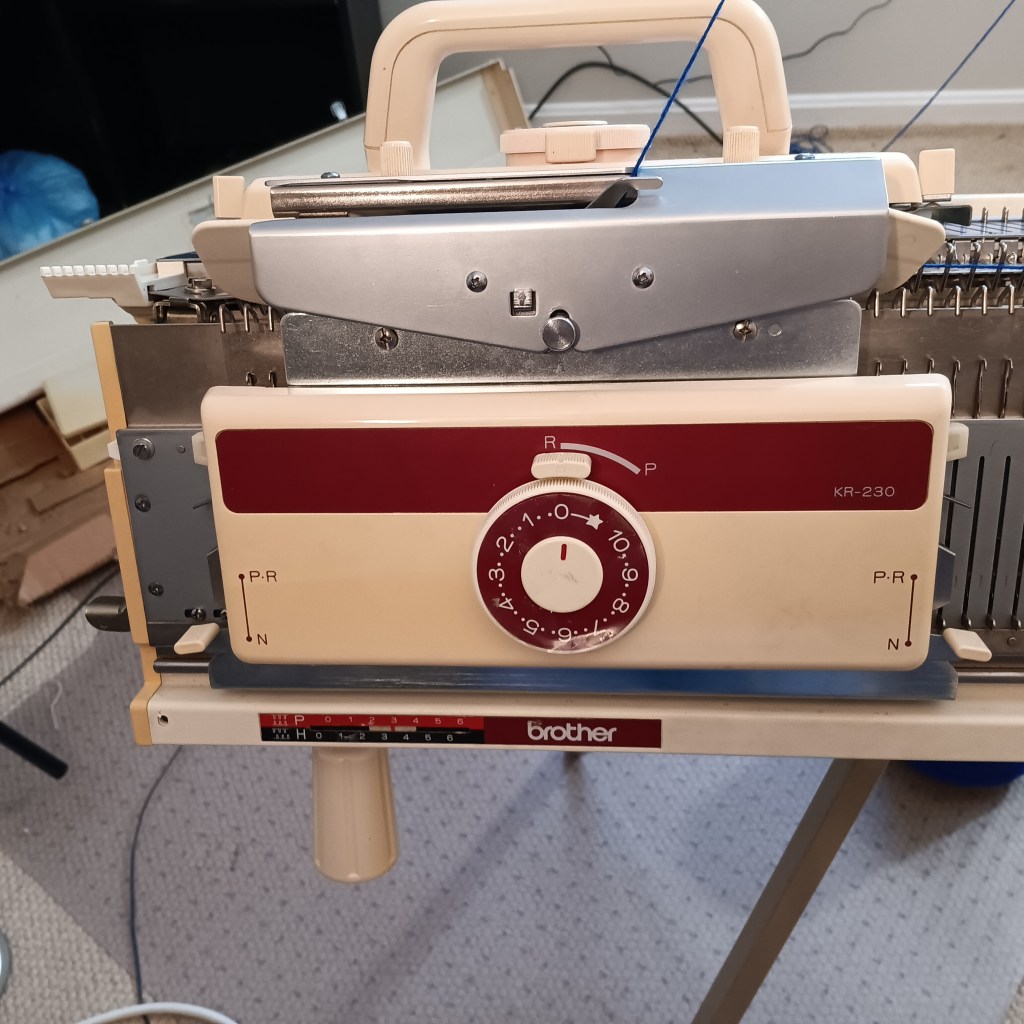
Brother KR230 ribber tested on Brother KH230 knitting machine

Brother KR230 ribbing attachment works with only one knitting machine: 9 mm -gauge (bulky) Brother KH230.
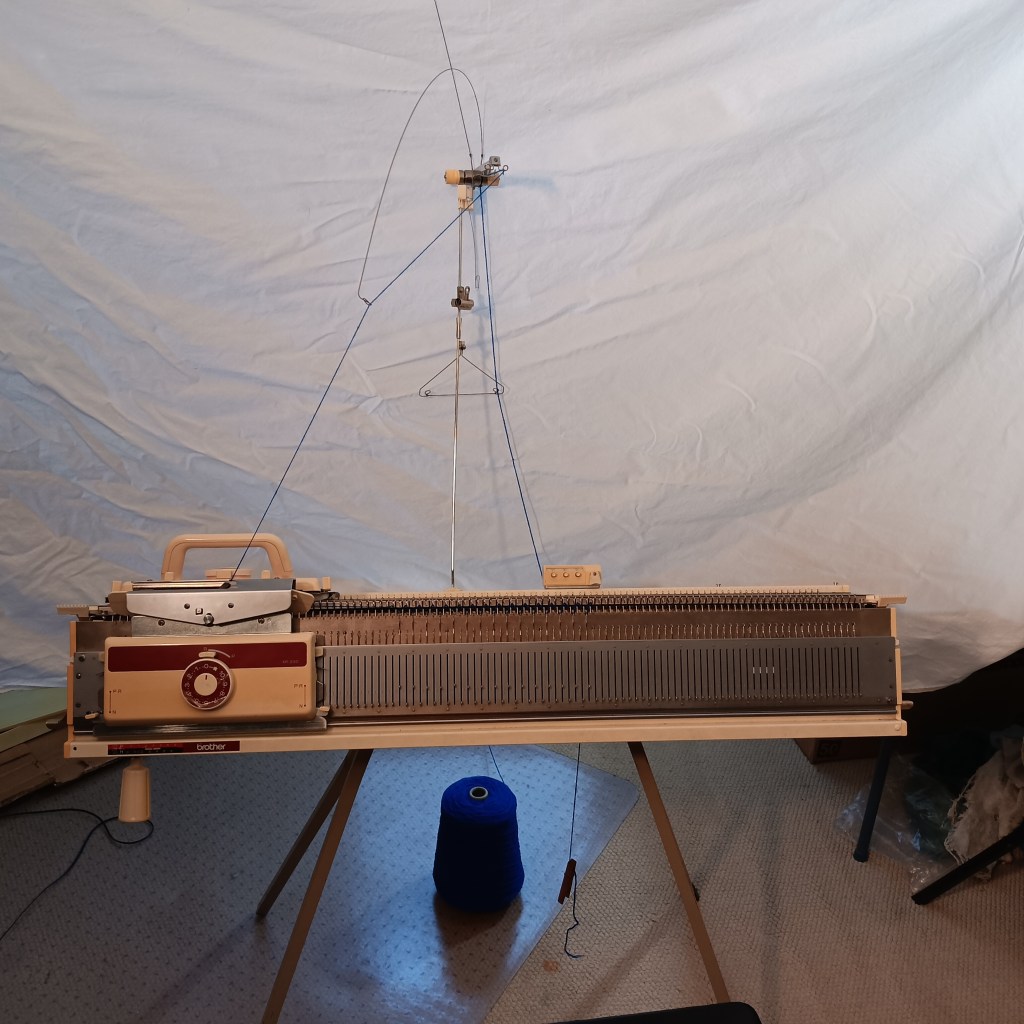
This post is dedicated to the KR230 ribber I refurbished in my shop.
To learn about the overall pros and cons of Brother KR230 ribbers, refer to my other blog post in my Knitting machine Encyclopedia.
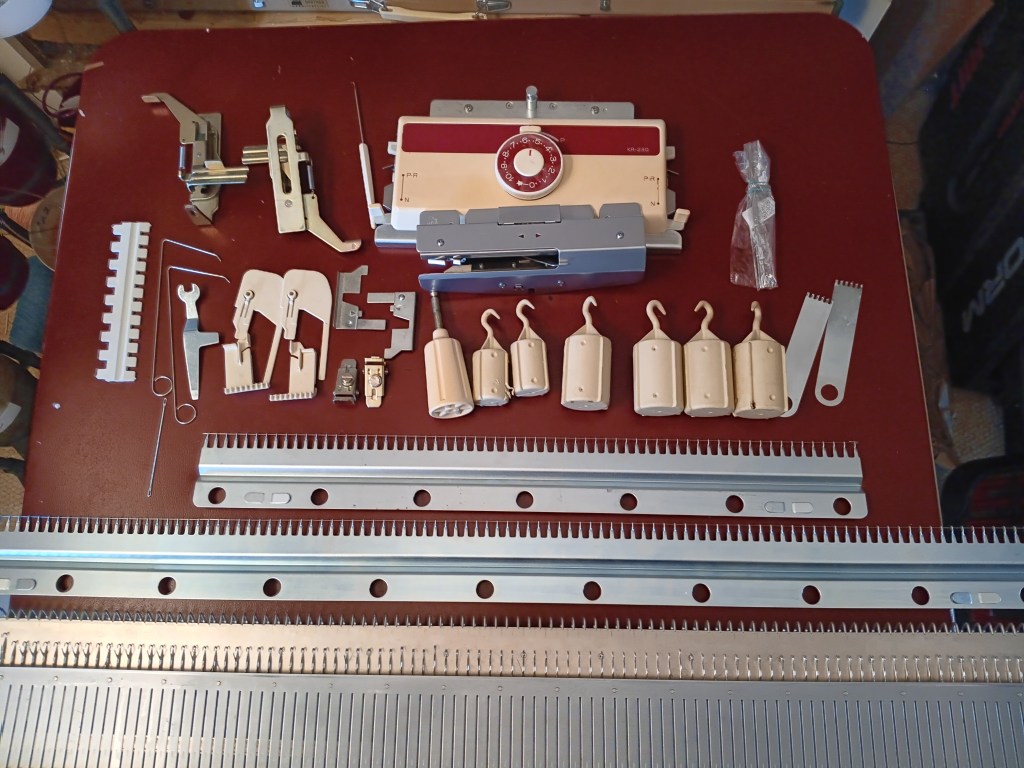
The ribber came without a lot of accessories but I was able to collect most important ones.
Thus, all major accessories will be included with the ribber with the exception of:
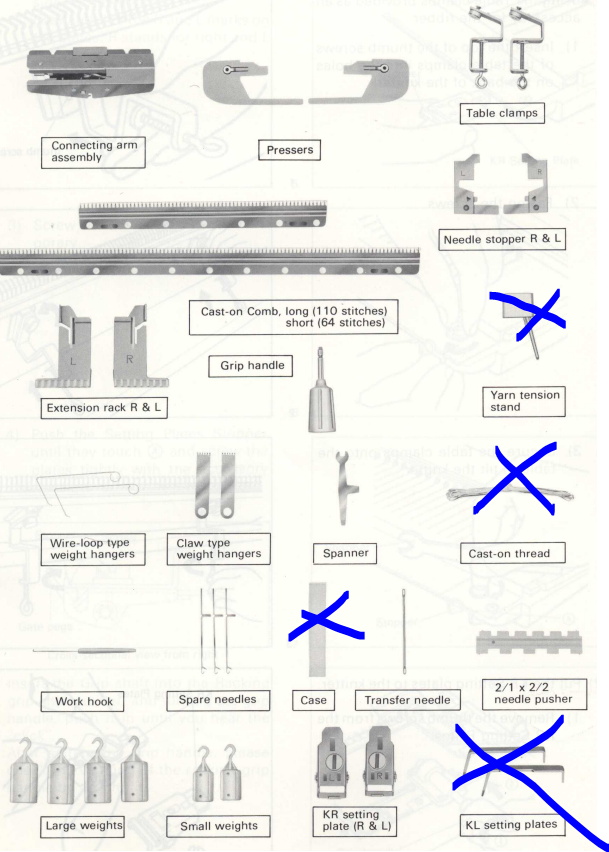
  • yard tension stand: since the machine I tested did not have the original (to the KH230) tension rod but a generic Brother tension rod, the yarn tension stand was unnecessary. But if you are buying JUST the ribber from me, and your Brother KH230 has the original tension mast, contact me, and I might be able to source the original yarn tension stand for you. I am actually not quite sure why the ribber came with this special yarn tension stand – maybe to create a right angle for the tension mast because it is quite unique and is unlike any other Brother knitting machine tension masts.
  • cast on thread: any silky and strong yarn will work
  • case for the needles
  • Knit leader setting plates: the machine did not come with those. Typically, new knitters new to machine knitting rarely use the knit leader and as a result, these parts get misplaced. If you advance enough to use KH230/KR230 setup with knit leader, these setting plates are available online for a reasonable cost.
  • hard copy of the ribber will not be included, but it can be found online. Keep in mind that the manual is written pretty poorly with typos.

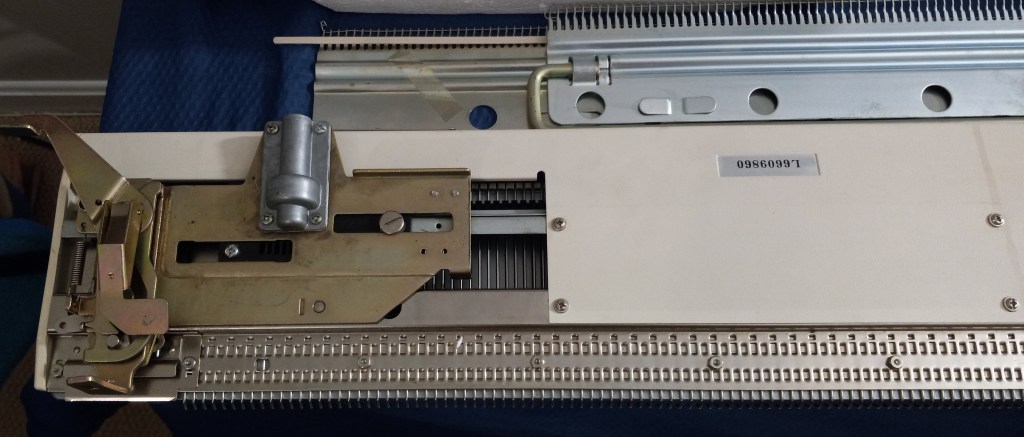
I cleaned the needle bed, and side brackets. I cleaned and inspected all needles individually. Needles in good condition but with some minor rust were polished until they are smooth to touch (however, some discoloration might still be visible but it does not affect the needle functioning). I inspected the carriage and the connecting arm thoroughly too and replaced some broken plastic parts in it.
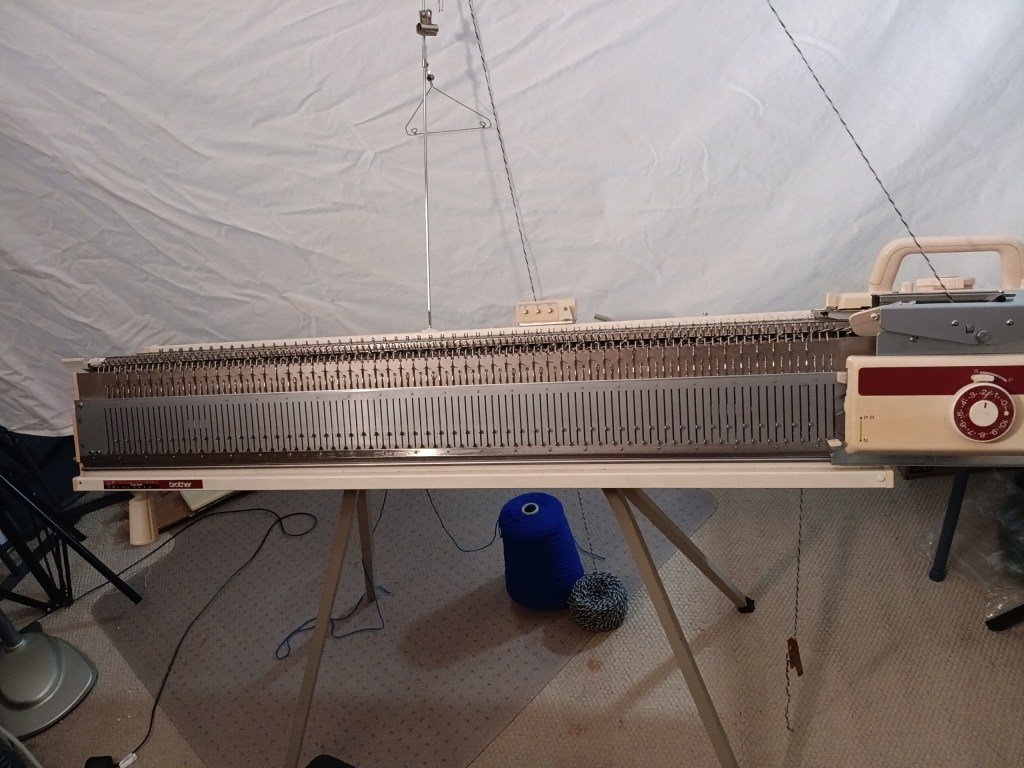
I included a brand new retaining bar with a brand new sponge.

I am also including new table clamps for the ribber (not shown). All tests were done with these table clamps (incorrect table clamps can create an incorrect angle between the main and the ribber beds and cause misalignment and, as a result, missed/dropped stitches).
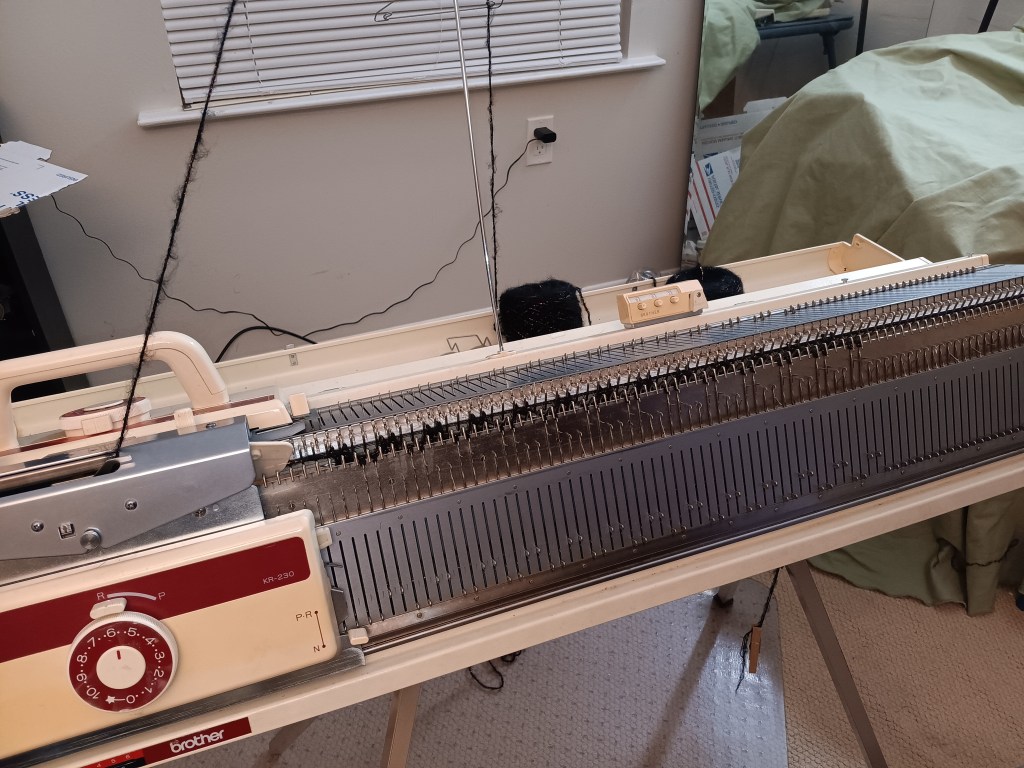
The cast on combs that came with the ribber are in great shape.

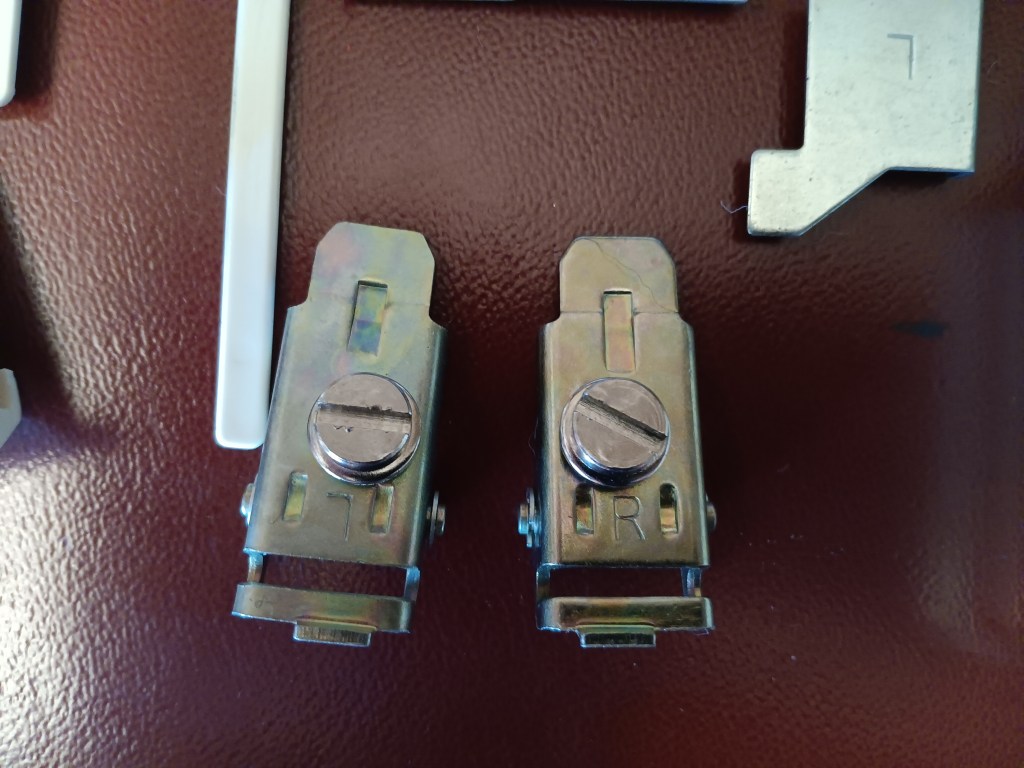
I also sourced out completely new setting plates for KR230. Notice that the setting plates are asymmetric, unlike settings plates for all other ribbers.
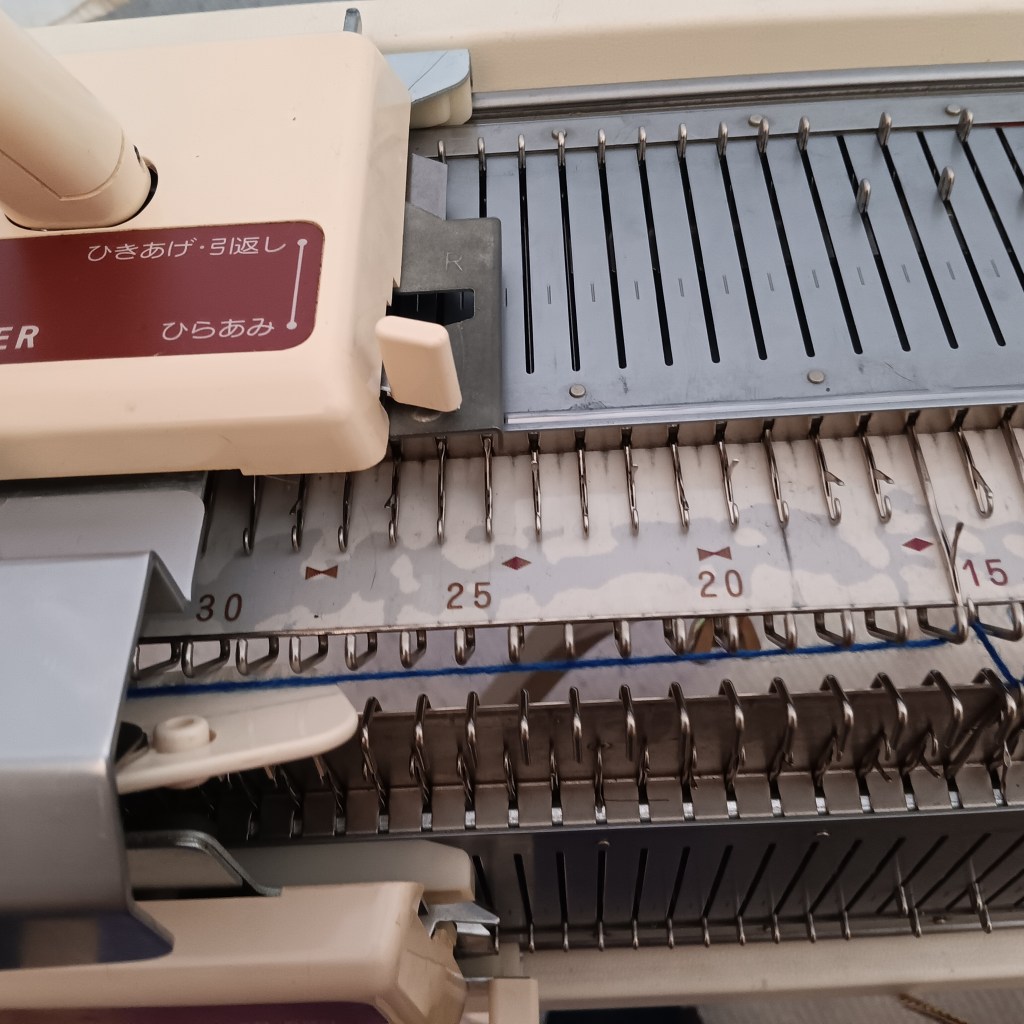
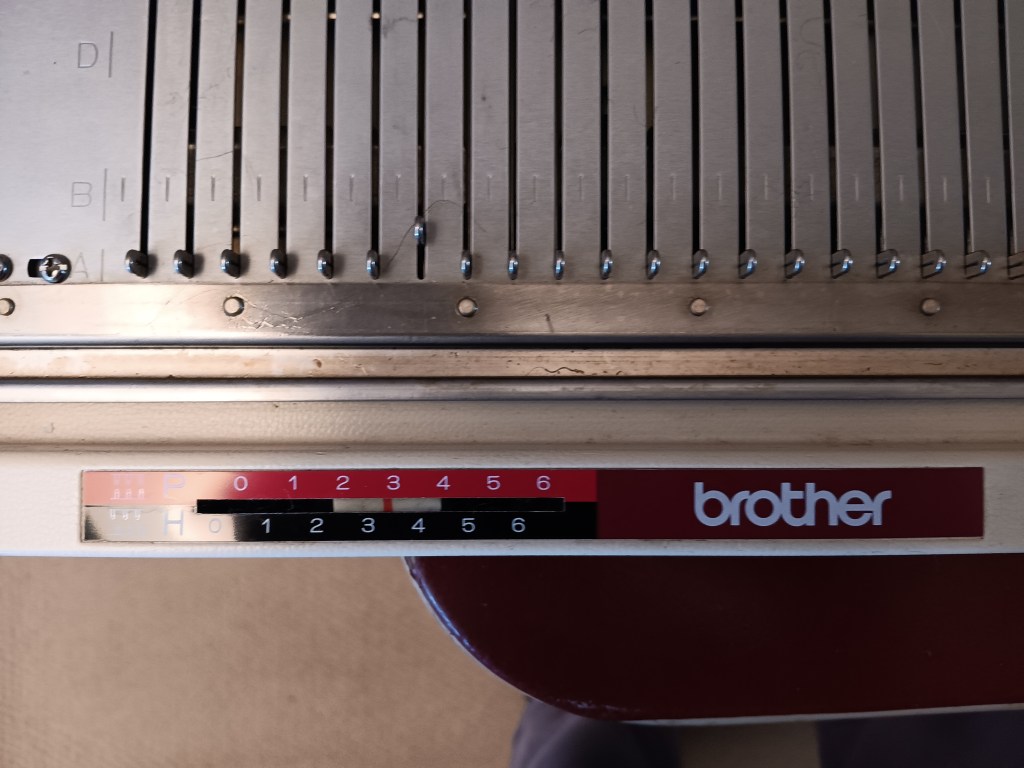
One feature that I like about the KR230 ribber is that there are markings on the needle bed for the working position (position B) of the needles.
I serviced and oiled the connecting arm to ensure that the wheel inside it moved freely as it is responsible for the indicator arros as well as for lifting the pressers to assist with pushing the stitches down.

To ensure all needles knit properly as well as other are no hidden problems, I knitted on 20-30 needles as well as on all neeldees using several different yarns: acrylic sport-weight yarn, double-thread worsted-thickness acrylic-wool blend yarn, and a mohair-blend with Lurex thread in it. The machine handled all the yarns like a champ!

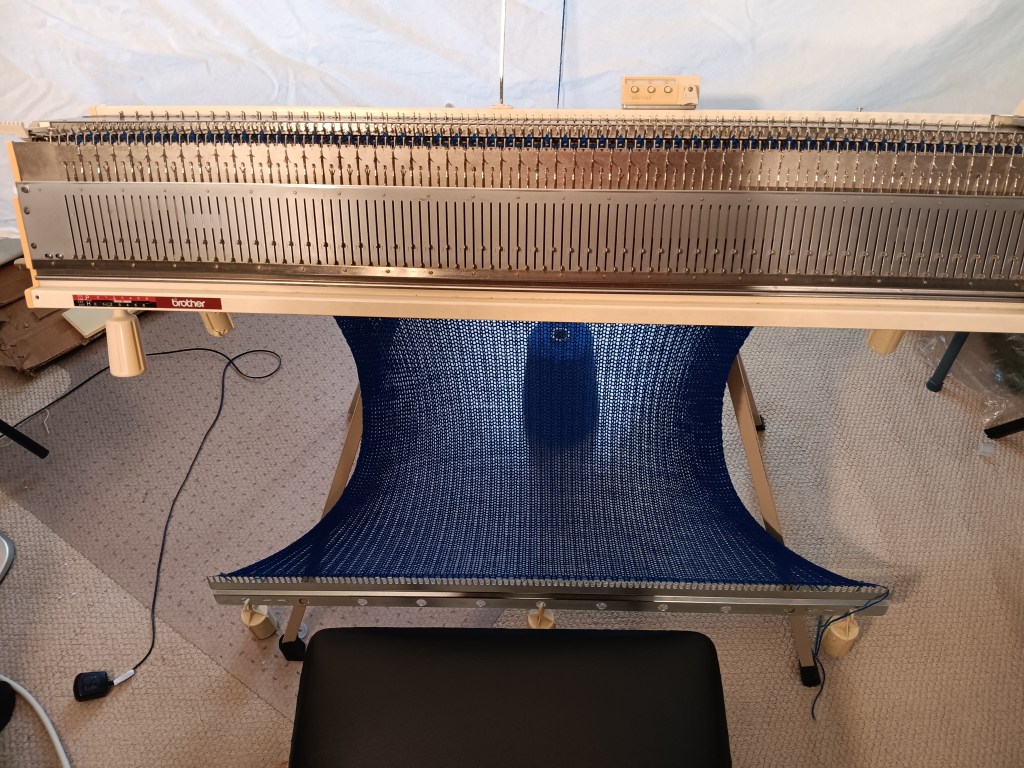
These tests are shown in my video. Prior to the tests, I made sure the distance between the needlebeds was adjusted to the optimum to ensure no missing stitches during the cast one and further one.
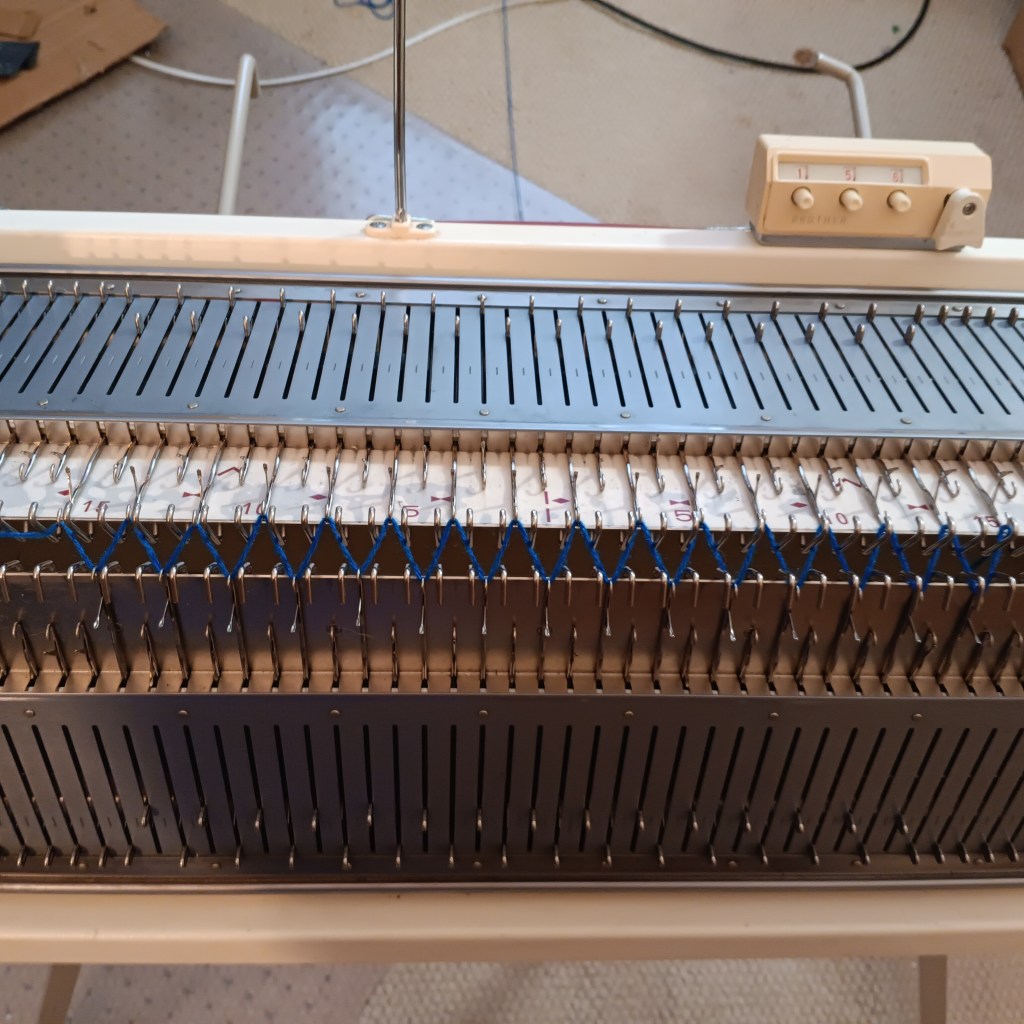
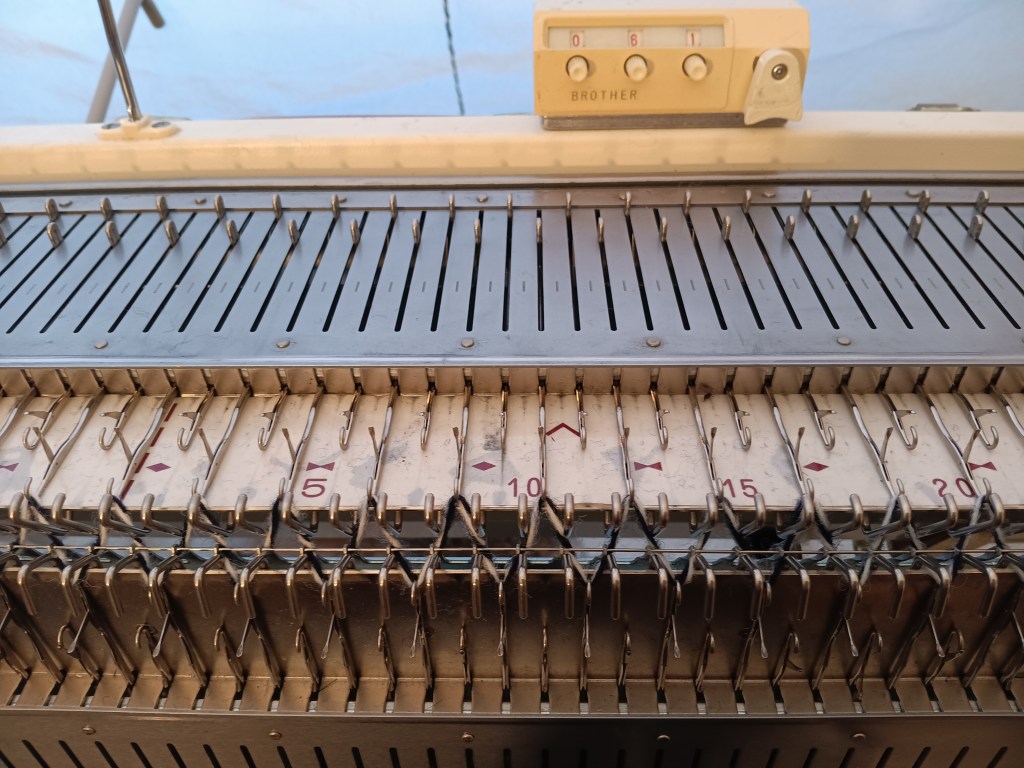
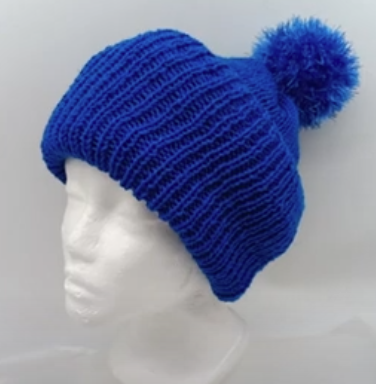
Below are the finished projects made from the panels knitted on Brother KH230/KR230 setup using the two out of three yarns I mentioned above.
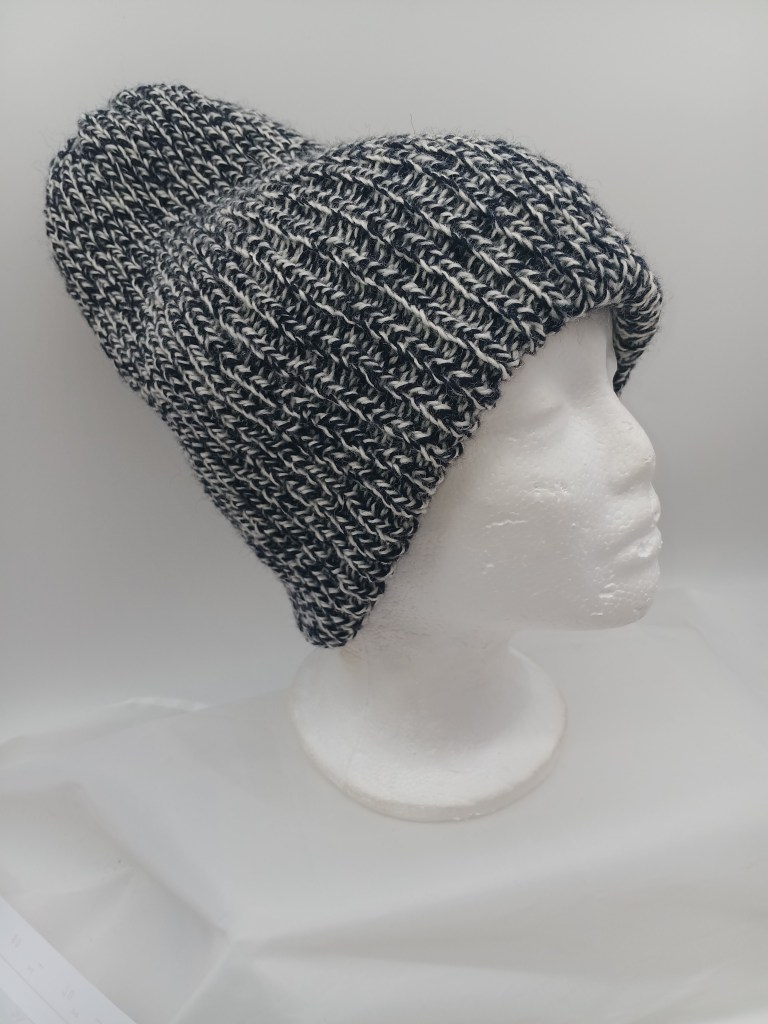
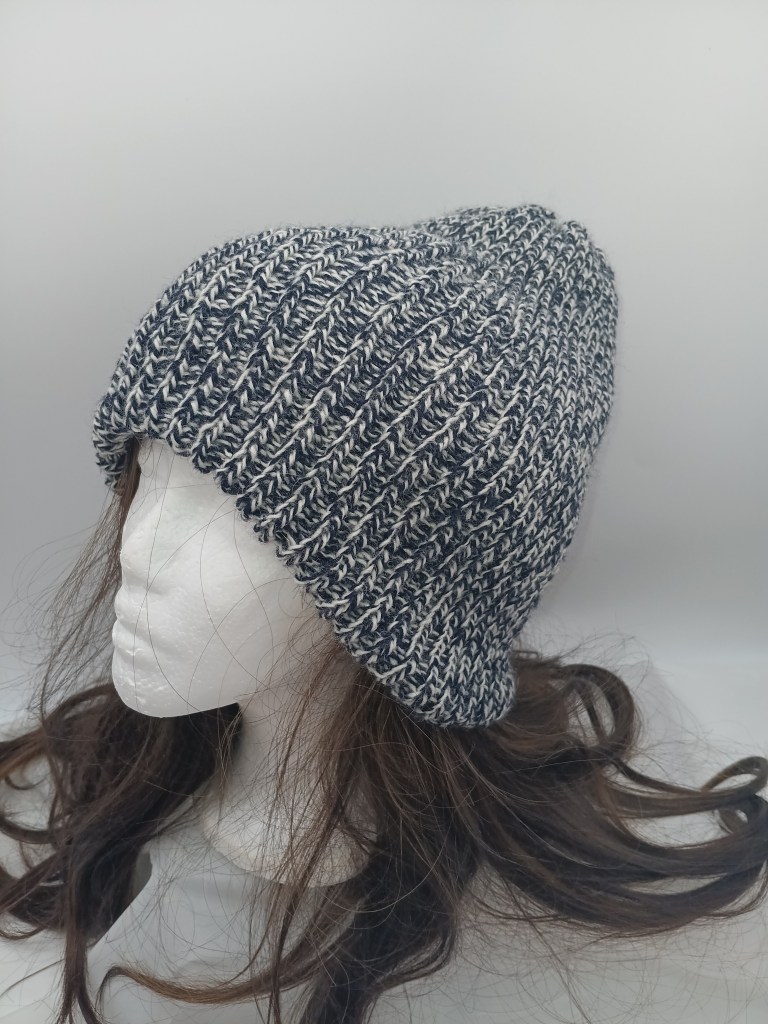
Let me know what you think.
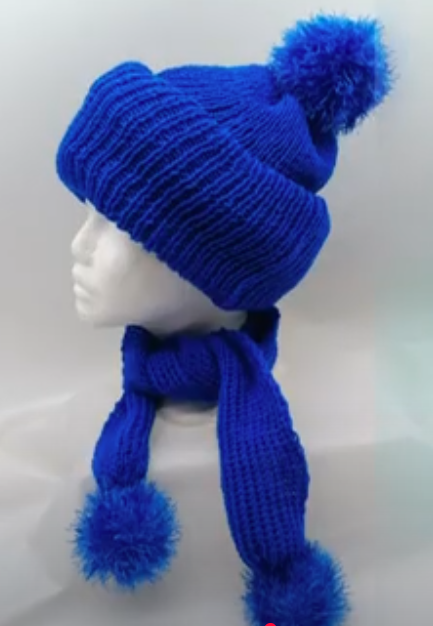
The ribber does not come with its original packaging. It will very likely be shipped in two different packages – long one for the needle bed and a smaller one (in size) for all other parts.

Below are the pros and cons of the Brother KR230 ribber I serviced in my shop (to read overall pros and cons of Brother KR230 ribber, refer to my Knitting Machine Encyclopedia):

PROS:

  • easy to set up
  • takes a variety of yarns (thickness- and texture-wise)
  • comes with all major accessories

CONS:

  • some minor accessories are missing (see above); however, their absence does not affect the functioning of the ribber.
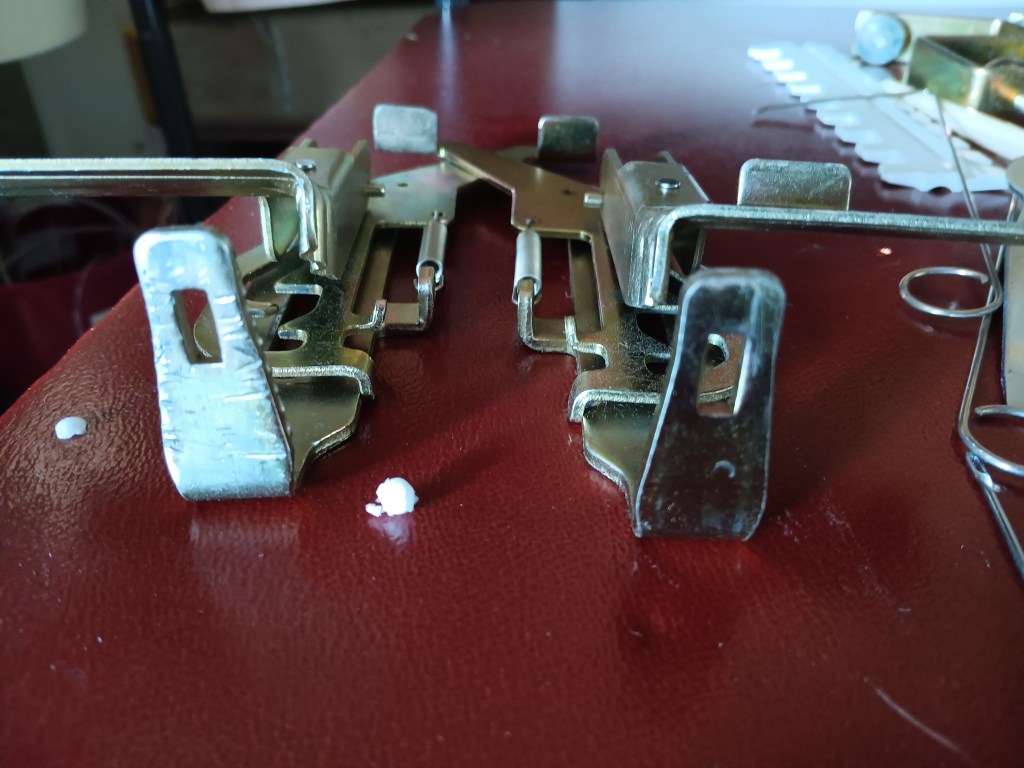
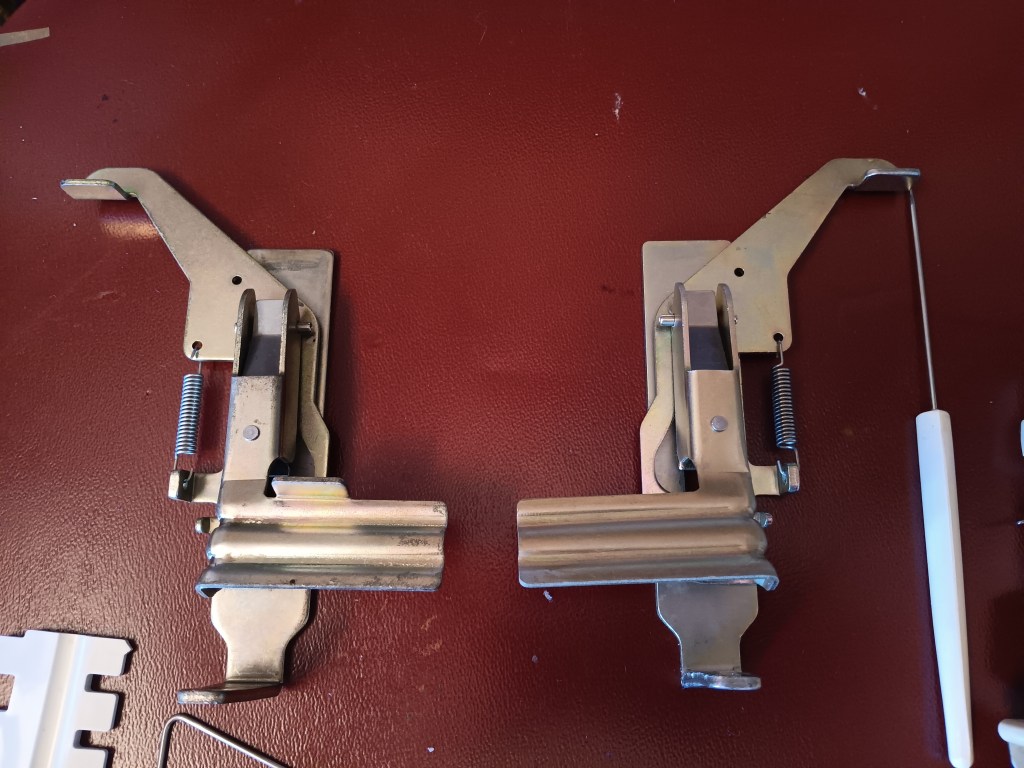
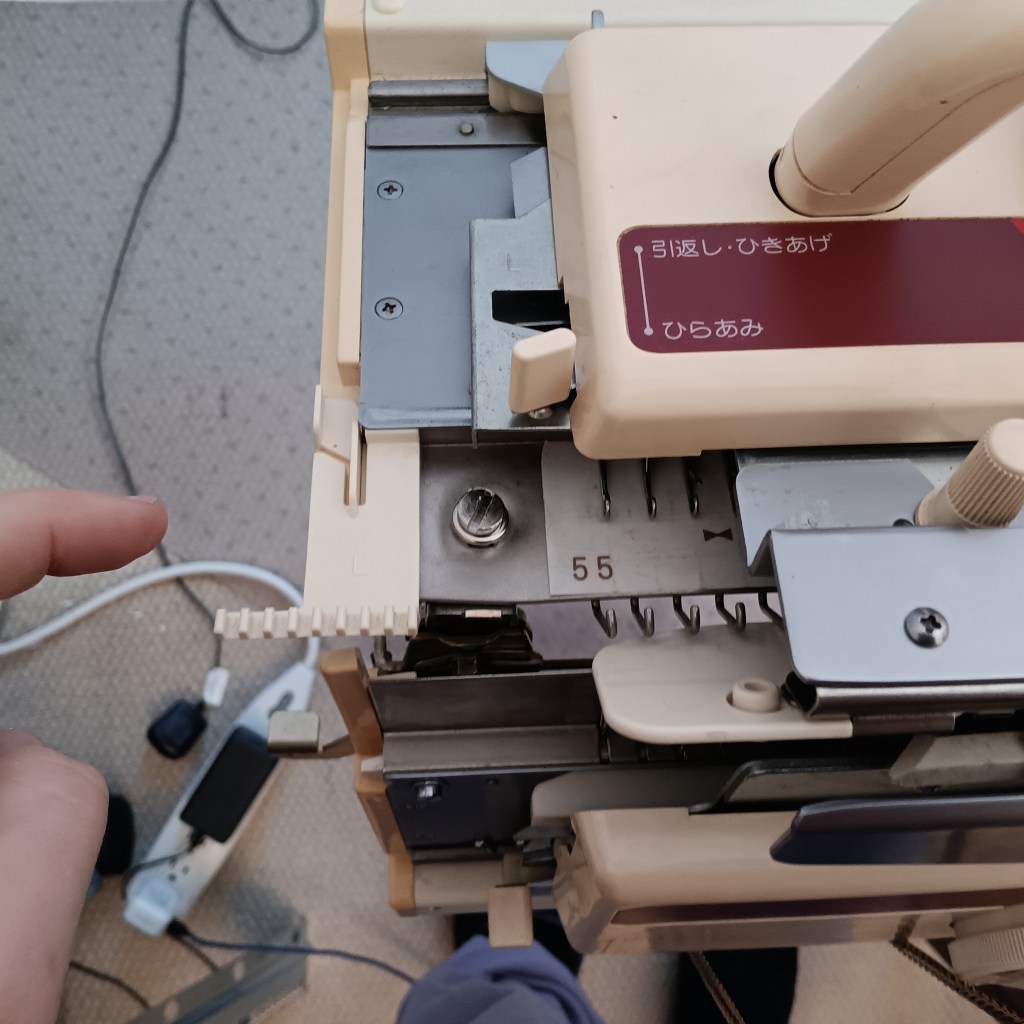
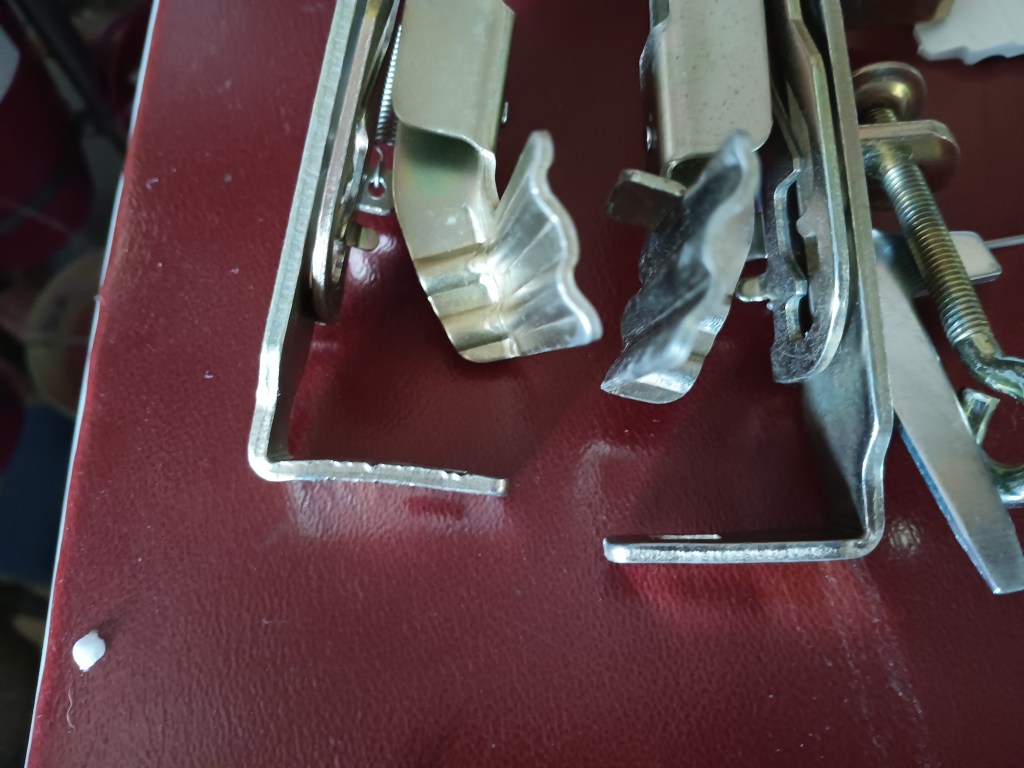
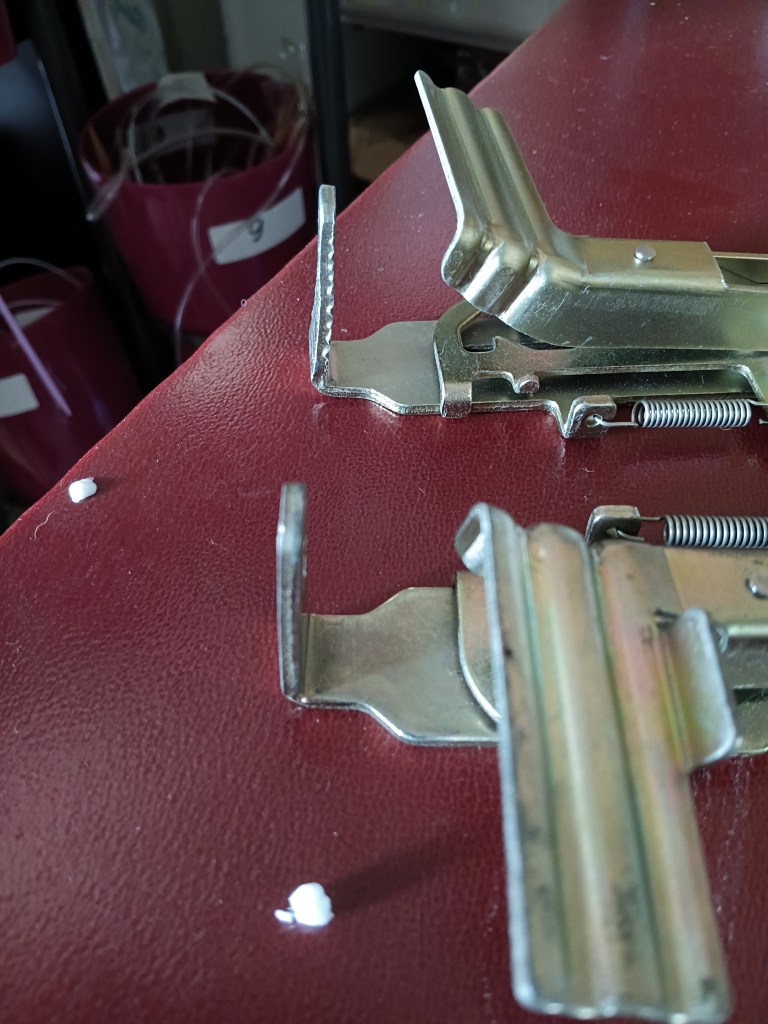
  • The part of the side bracket that gets inserted into the machine on the left-hand side was a bit bent and I straightened it. (The top surface of that section has scratches as a result of my strainitening it). The series of pictures below shows that bracket and that area from different angles. Again, it did not affect setting up the machine but the bracket needs to be pushed in with a bit more force than the other one. Just something to keep in mind when connecting the ribber to the main bed.
As you can see, I invested a lot of both time and money into this ribber to ensure it has all accessories and that it functions well before I pass it on to other knitting machine enthusiasts.

Retaining bar vs knitting machine model chart

The table below lists the lengths and widths of various knitting machines I measured myself. Use this table as a reference to ensure you purchase the correct retaining bar for your machine.


Model
Retaining bar
materialsponge?length, inch/cmwidth, inch/mm
Brother KH500metalyes41/1040.375/10-10.5
Brother KH551metalyes41/1040.375/10-10.5
Brother KH552metalyes41/1040.5/11-11.5
Brother KH581metalyes41/1040.5/11-11.5
Brother KH585metalyes41/1040.5/11-11.5
Brother KH588metalyes41/1040.5/11-11.5
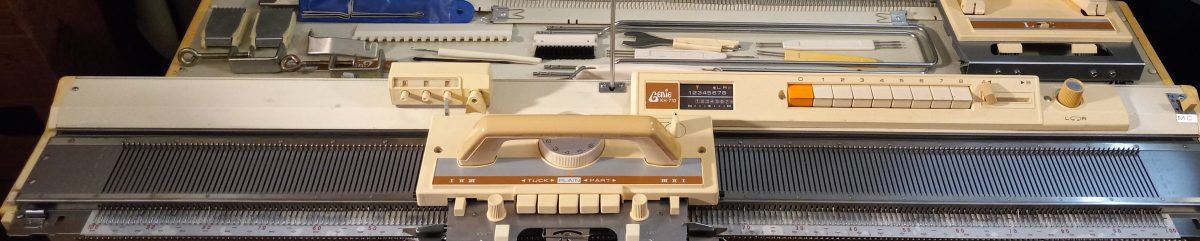
Brother (Genie) 710metalyes41/1040.5/11-11.5
Brother KH800metalyes41/1040.5/11-11.5
Brother KR810 ribberplasticno
Brother KR830 ribberplasticno
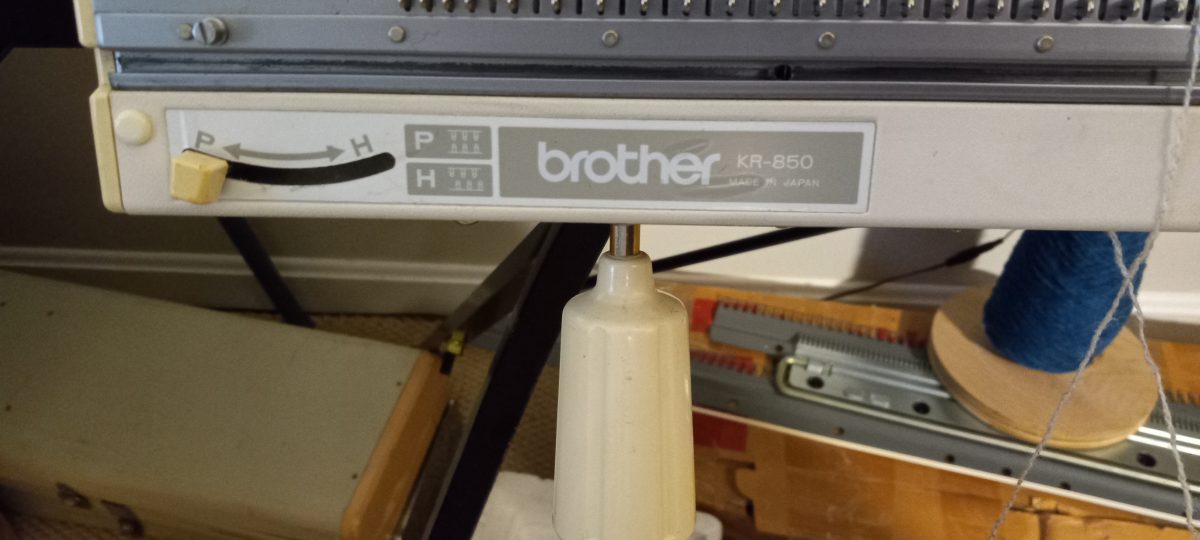
Brother KR850
ribber
plasticno
Silver Reed SK120metalyes42/1095 mm/0.2 inch

About retaining bars in knitting machines and ribbers.

… this article is in constant progress as I learn about various knitting machines and their retaining bars.

Almost all knitting machines and ribbers have retaining bars. Some machines have retaining bars with a sponge attached to them. Some machines (the majority of plastic flatbed machines) have only a long and narrow sponge (without the metal holder). Ribbers come with either a “retaining bar+sponge” assemble or only with the plastic retaining bar (no sponge strip).

The main role of these retaining bars is to hold the needles in place and to prevent it from bouncing up and down when knitting.

Below are the situations when you want and need to remove (and inspect in many cases) the retaining bar:

  1. When you just purchased your machine (especially used and NOT recently serviced), the first thing you need to do is to remove your retaining bar and inspect it. I made a short video on how to do it because I have been asked about it so many times by my customers.
  2. When you need to replace faulty needles.
  3. When you need to clean your machine.
  4. When you notice your knitting machine mispatterning without any good reason.

Hopefully, you purchased your knitting machine new or recently serviced. In this case, the sponge should be 1-2 cm above the metal edge of the retaining bar.

But in most cases, this is not the case. Thus, it is possible that when you remove the retaining bar, you will see a disintegrated sponge. I’ve seen some spongy strips being just a gooey mess. The old sponge needs to be removed as soon as possible (since it often corrodes the needles) and replaced.

There are two ways to approach this replacement.

First approach: just replace the spongy strip

If you decide to replace the sponge, you will need to remove all this goo. I first use a flat-head screwdriver to scrape all the residue out of the retaining bar canal. Then, I use “Goo Gone” to remove the rest of the residue. I typically do it outside because it is a very messy process. I pour a thin layer of “Goo Gone” liquid into the retaining bar and wait for hours. Then I scrape the remains of the old sponge again with the screwdriver. Lastly, I wash the retaining bar with soap and water, wipe it really well and let it dry (or blow dry it). You can purchase just the sponge in my store.

I sometimes read in forums that some thrifty machine knitters get a simple weather stripping and use them as sponge strips. Well, those have different dentistry and sometimes do not have a silky ribbon on one side. Also, they are not suited to be exposed to oils and might decompose rapidly leaving a sticky (potentially unremovable) residue inside your machine.

I read that experienced machine knitters use different ways to attach the spongy strip to the retaining bar. (By the way, the width of the spongy strip is not as critical and it can be a little bit narrower than the channel of the retaining bar but not by much). I tried different glues and my current choice is hot glue. Some machine knitters use wood glue. I apply the glue to the metal part of the retaining bar and attach the strip to the metal by the sponge side (not the silky ribbon side). I then tape the ends if the sponge to the plastic ends. I like using medical tape. Only one layer of the tape is enough to secure the ends of the sponge. More layers will only get stuck when you insert the newly refurbished retaining bar back into the machine. To avoid stripping this tape, push it down on the ends of the retaining bar while inserting it into the machine.

Second approach: buy a new retaining bar

Or if you do not feel like dealing with all this mess, you can purchase a retaining bar with a sponge already in it. Before you order a new retaining bar, make sure you measure the dimensions of your old bar: its width and its length.

Most commonly used by machine knitters Brother, Studio/Silver Reed/Singer, and Toyota knitting machines have somewhat similar retaining bars but there are some differences depending on the model and the gauge of the machine.

For the retaining bars for these machines, there are three different lengths (41, 43, and 47 inches) and two different widths (0.375 and 0.5 inches). This is why it is important to measure your old retaining bar to ensure that you are getting the retaining bar suitable for your machine. Most JUKI, Toyota, Silger/Silver Reed/Studio, Artisan knitting machines use 0.375-inch wide retaining bars. The lengths are either 41 or 43 inches (depending on the model).

I’ve read stories on FaceBook groups, where the new machine knitters were puzzled by the fact that they JUST replaced the sponge bar and the needles do not move, advance, or retract the way they are supposed to. I especially see I happen to be the owner of 8-push button Brother knitting machines. There is somewhere out there some incorrect information on the retaining bar for these machines. 4-push-button machines use a 0.375-inch wide retaining bar and the 8-pushbutton machines use a 0.25-inch wide retaining bar. (I’ve refurbished over a dozen pushbutton machines and I know the difference first-hand).

Brother ribbers use plastic retaining bars without sponges. When (re) inserting the retaining bar into the Brother ribbers, the concave surface (the “channel”) should face you.

There are machines with unique retaining bars – I will update the blog soon when I learn more. I am also putting a table on machines (and models) and retaining bar compatibility. Stay tuned!

In the meantime, enjoy your adventure in retaining/sponge bar replacement!

PS. I measured several dozens of retaining bars with my calipers. Even though the “official” measurement is 0.375 and 0.5 inches, mine are measured as 0.40-0.41 and 0.44-0.46 inches respectively. This inaccuracy in inches makes me like the mm scale (aka metric) a bit better. So the narrower retaining bars are 10.0-10.5 mm while the wider are 11-12 mm wide. Who knew that just 1 mm would make such a difference but it does! I had an incorrect bar installed on my KH581 8-pushbutton machine and the needles would not go back from E to B (or A) position!!!

Tension spring for Brother Knitting machine

Carriages of Brother knitting machines have several types of springs to ensure smooth needle handling. This article is about a medium size spring, part of the intricate mechanism of Brother knitting machine carriages. These springs can be purchased in my store.

In particular, this short blog article is about a tension spring responsible for smooth the movement of the middle button on the carriage. (At the end of this article, I show other places in the carriage where the same type of spring can be used). This button is typically used to knit fair isle or/and to reset all other buttons.

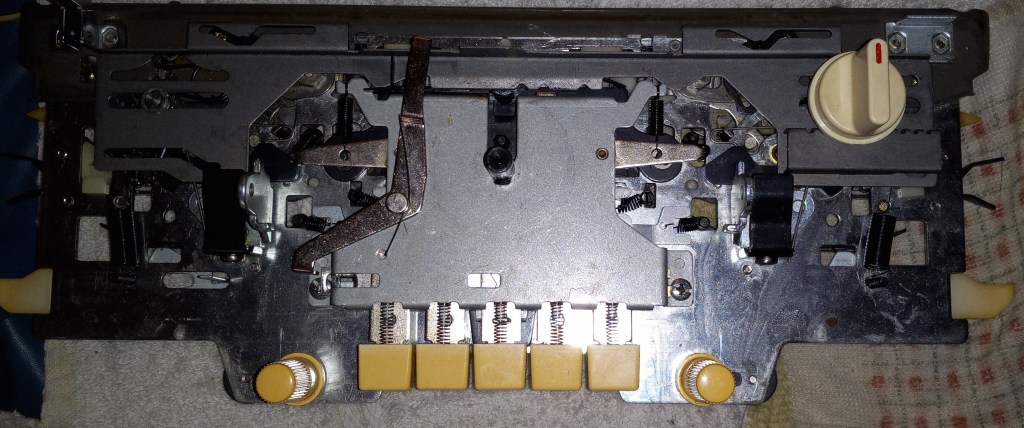
To expose that spring, one needs to remove the plastic carriage cover (this step NOT covered in this article) and then remove the metal cover.

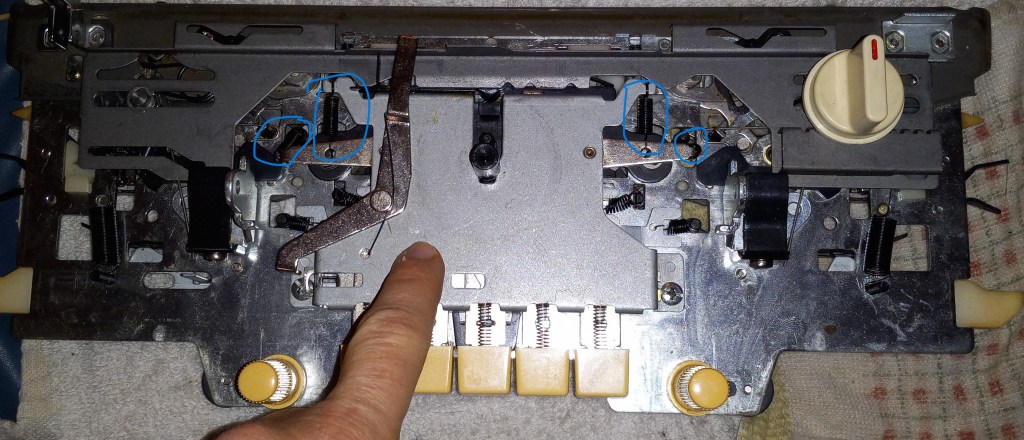
For that purpose, remove the two screws marked below.

The plate will then hang by the springs marked in the picture below but they do not have to be removed. Just push the metal plate out of the way. If the springs detach, they are easily to put back. Just take a picture of the agreement before removing the cover.

Once the cover is removed, you will see the springs right away. In my case, one of the springs was simply missing and the mechanism was not retracting automatically the way it was supposed to.

So the replacement spring was placed where one was missing. I made a short video showing where the spring was installed.

“How” the spring was installed is NOT shown in that video because it is kind of hard to capture how to attach the spring. But the loops of the spring need to grab the posts marked in the picture below.

The same spring can be used in positions shown below. The springs marked with crosses are either small/bigger in size or a spring without the loops (springs for the buttons) and thus, cannot be used.

Brother KR850 ribber prepared for Judith in December 2023

Brother KR850 ribber fits numerous standard-gauge Brother knitting machines. Read more about Brother KR850 ribber in my Knitting Machine Encyclopedia. The blog below is dedicated specifically to the ribber serviced in December 2023 for my customer.

Brother KR850 was serviced and tested for Judith in December 2023. My store offers other ribbers for Brother and other knitting machines.

This ribber comes with all assesories including a hard copy of the manual (not shown in the pictures).

The bed, carriage, and assesories were cleaned, inspected and tested. All needles were cleaned and inspected individually, first visually and then by knitting on a full bed 1×1 ribbing (in two different combinations to make sure all needles were tested).

Swatch test was performed first. Swatch tests are useful to ensure that the carriage functions work well. In the case of swatch tests, we do not have to worry about artifacts and problems (such as the correct tension of the yarn, yarn thickness, yarn texture, correct number of barrel weights, side weights, etc.) associated with large number of needles in working positions.

Then the machine was tested on a full bed in two different configurations to ensure that all needles form nice and correct stitches. Carriage is very easy to move on swatch and on a full bed.

All tests went great. See the video of these tests in my youtube channel.

When knitting on the ribber, tension, the correct number of weights and the distance between the ribber and the main bed play a very important role. This machine handled really well two different distances between the ribber/machine beds and three different yarns (with different thicknesses and texture, see my video). One of the yarns was a mohair-containing fuzzy yarn. The machine handles it well too although some tests on the correct tension was needed as well as some wax (fuzzy yarns are more prone to static formation than other yarns).

The machine will come in its original packaging: two Styrofoam forms to fit all assesories …

… and pads inside the bottom of the cardboard box to support and protect the machine.

The only obvious flaw was the tape attached to one of the cast-on combs. I did not remove it because actually it is convenient to have that tape to store the fine bar ( the long plastic and very fragile rod-like bar) more easily (often it is overlooked during unpacking and thrown away).

This machine would serve long years especially if regularly oiled, cleaned and stored in controlled environment.

Second brother Profile KH500


Brother Profile KH500 Knitting machine is a lightweight machine with manual-only needle manipulation capability. It looks very similar to 4-push button machine, like Profile KH 551. But since it has a more advanced row counter, I assumed that it was manufactured after it – maybe in the very early 1970-ies. A could not find any specific information anywhere on the web or in printed brochures. Other indications that this machine was a later but simplified version of push-button machines is KH500 still has slots for the extension rail (but does not come with the lace carriage) and slots to attach a ribber. The original cardboard box still shows the older version of the row counter….

The standard setup comes with cast-on combs but without a case lid and without a lace carriage. To the best of my knowledge, this model does not have a compatible ribber but, based on my experience with similar machines and compatible ribbers, ribber KR551 and KR560-580 might be compatible with this machine.

The absence of the lid and needle selection mechanism makes this machine very light-weight, which is excellent for people with smaller complexion or with weaker upper bodies. It also makes this machine easy to transport. I kind of even like that this machine does not have a lid – it often takes a while to close the lid (after all major parts are tucked inside it), especially, if case or a lid were bent during the long life of this machine.

Despite only manual needle manipulation capabilities, this machine can still produce patterns: you just need to push needles to the desired positions by hand. With the several needle pushers with various gauges, it is easy – just need to keep track of which needles to select next! Some might say that it is a limitation, but some will argue that needle manipulation by hand is more satisfying and is closer to hand-knitting…

About this specific machine:

I inserted a brand-new retaining bar and sponge (not remade, but purchased from a supplier). I cleaned and inspected all needles: one by one. Cleaned under the main bed. I did not see any rusty on the machine or on the carriage. Overall the machine is in great shape and works great! A video of it being fully tested is here. In that video, I showed a couple of examples of how to create patterns on this machine (by manually selecting needles) and also stockinet on a full bed. The fabric knitted on a full bed was then converted to a bag/pouch to hold a pickleball paddle. My friend needed a new pouch with pockets and I needed to test a machine and practice how to create pockets!!! My favorite thing – combining education with producing something useful and something that makes people happy!!

The machine came with minimum assesories so I had to put together a set. To you, this machine will come with all major assesories with a couple of exceptions. So, this leads us to discuss minor flaws of the machine and the whole setup.

The minor assesories not included are:

  • Cast on thread: any thin, strong thread/yarn will work instead
  • Oil bottle – none came with the machine. A good oil for knitting machines is gun oil available on Amazon for purchase.
  • The toolbox and its lid are not included.
  • The carriage lock was missing but I fastened the carriage with a 3D-printed carriage lock.
  • Paraffin will not come with this machine.

The left-hand side screw on the carriage that holds the knob to hold the sinker plate was bent really badly so I replaced it with a different, shorter, one. It is a bit wobbly while ONLY the clamp screw/knob is on top but is secure and not wobbly when is tightened on the carriage with the sinker plate attached. See a video – it shows what I mean.

The left-hand side claim on the tension mast is a bit cracked. To fold the tension mast and the yarn tension wires, loosen a screw (by just a notch) and fold it. When unfolding, secure the position by tightening the screw on the left-hand side end cap.

The fasting plate on one of the clamps comes off. In the past, I attempted to fix such a loose plate and honestly, it destroyed completely the thread making the whole clamp unusable. So, since these clamps just needed a bit of an adjustment (holding the plate while screwing the clamps to the table), I decided not to try to tighten or glue them to the threaded rod. These clamps are hard to find these days and since it worked with some adjustments, I decided not to mess with it.

.

I hope you will find these minor flaws not being flaws but just small things that add character to this machine. I believe that this machine in the hands of a designer or a hand-knitter trying to accelerate their masterwork or to knit more even pieces will create wonderful knitted gifts and garments!

Brother Profile KH500

Brother Profile KH500 knitting machine is a simple metal flat-bed machine without any automatic needle selection capabilities.

I cannot find information in which year this machine was introduced to the market. It looks very similar to earlier 4-push button machines but the row-counter is a bit more modern than the more vintage row counter which typically comes with the KH551 knitting machines I refurbished. So, it might be earlier 1970-ies when this machine was manufactured (but before the punch-card machines were introduced to the market). Other indicators that this machine was introduced to the market after the standard push button machines is that 1) the toolbox has a ratchet tool place (the ratchet tool is used in push button machines), and 2) there are slots for the extension rails (present in 8-push button machines equipped with a lace carriage). I suspect that it was a lightweight alternative to the push-button machines.

Like most standard knitting machines (with the gauge, or distance between needles, of 4.5 mm), it has 200 needles. With manual needle selection, this machine can knit sli-, tuck- and fair-isle type patterns. In my video, I showed some of these patterns on couple of swatches. After the corresponding needles are selected, pushing the buttons on the carriage (two left ones for tuck and two right ones for slip) allows knitting with texture/pattern.

This machine is simple but offers tremendous potential for those who want to continue to feel the satisfaction of knitting manually. This machine is excellent for those transitioning from hand-knitting to machine knitting, for those who are not quite ready to give up control over stitch manipulations to the machine, for those who like simple knits but can’t quite get the stitches even, and for fiber artists.

The standard setup comes with cast-on combs, a tool box to store all minor assesories, a tension mast, a row counter, a carriage, and a sinker plate.

The main bed has slots for the extension rails but the rails are not included with the standard setup. Lace carriage is NOT included.

The machine is lightweight, potentially because the bed is narrower than later knitting machines and also because the KH500 setup does not include the lid. In a way, no lid is another advantage – those lids are sometimes so hard to close, especially if they are a bit bend (these machines are old and who knows what happened to them during all those years of storage and transport from place to place) or if the parts inside the lid (often it is recommended in later models with lids to fit the sinker plate, cast-on combs and tension mast inside the lid) are shifted or mounted incorrectly. The bottom line: I struggle so often with the lid closing in other machines that I was kind of relieved that this model does not have a lid.

About this particular machine:

A hard copy of the manual will not be provided. But an electronic copy can be accessed online for free.

The machine comes with all assesories. It will come with the original cardboard box (although it is somewhat beat up). The cast-on combs, brand-new looking from old stock, like never being used, will be included as well. The small claw weights are, for some reason, are not mentioned in the manual. They are pretty important – so I included them.

There are some minor rust spots on the sinker plate.

The name tag on the carriage fell off. (If I find it – I will ship it to whoever buys this machine. But I suspect the name tag was not included and simply got lost). The two left-hand side buttons are tuck, the middle button is reset/stockinet and the two right-hand side buttons are part/slip.

The yarn tension dial is a bit chipped off. The carriage worked well regardless. The chipped area does not have any cracks and the dial moves freely.

The two round pillars to screw the handle onto the carriage are a bit discolored. I decided not to polish it not to remove even more of a protective coating. The handle still crews on without problems.

All these flaws are very minor and did not affect the working of the machine. I hope you will consider purchasing it and if not, I hope you enjoyed reading this article about this wonderful machine.

Brother KR580 ribbing attachment, cleaned and tested in May 2023

Brother KR580 ribber was first introduced to the market in 1966 to knit with 8-push button machines (KH552 and above all the way to KH560-KH588). According to some charts by creationgroup.com, KR580 ribber can even fit KH800 knitting machine. Genie 710 machine (sometimes called Brother KH710) is also an 8-push button machine but I could not information anywhere whether KR580 ribber will fit it. KH710 had some innovative design features (like all-plastic end-caps) that none of the earlier 8-push button machines have (KH562, KH581, Profile 585, KH588) but the width of the bed is the same and the needles are all interchangible among all 8-push button machines.

Because it is an older model, capable to create purl stitches when coupled with older models, the main carriage knits first and then the ribbing carriage moves the needles to working position.

The ribber needles simply latch on the yarn hanging between the needles on the main bed creating purl stitches. See a full demo in my video.

I feel that this gives a knitter a better idea which carriages causes troubles (if any) and see that needles are knitting and what not. Later ribber setups (equipped with a connecting arm, that attaches main carriage and a ribber carriages) work the same way but they ensure that only one movement is needed because the main and ribber carriage move at the same time.

About this particular ribber:

It was tested on Brother Profile 585 machine.

It has a pretty white color This is the first ribber for 8-oush button machines I’ve seen in real life and worked on. So, maybe all of them come in this pretty white color but I like it. It has such a classic 60ies look, like those corvettes you see on the road that cost nothing for the car insurance companies but are so pretty and so valuable on the used market.

The retaining bar is plastic – big PLUS: no need to replace it and worry about decomposing sponge in retaining bar corroding needles.

The machine comes with ALL assesories. Hard copy of the manual will not be included but it can be found online for free.

Tested a swatch on 1×1 ribbing

and 1×1 ribbing on the full bed but when every-other-needle was selected.

Hard copy of the manual will not be included but it can be found online for free.

Photos below show how the ribber fits onto the machine. The manual describes step-by-step instructions how to attach the ribber to the main bed.


The large screw goes into a place where a rail guard normally attaches.

Brother Simple Seven, also known as KX350, knitting machine

KnitKing Simple seven is a plastic flatbed knitting machine. It is also known as Brother KX350.

It is considered mid-gauge but it can actually knit pretty bulky yarns (like RedHeart Super saver).

This model of knitting machine is excellent for beginners as it is easy to maintain, operate, handle, and lift.

I have a lot of experience with Brother KX350 and can tell you it can handle many tough situations other machines often struggle with. I knitted cables (shown in my video specifically for this machine in here).

It packs nicely into an original box with the styrofoam pieces cut out for all the parts so there is no confusion about where each part goes. The box is a bit beat-up but still holds everything nicely.

The machine will come with all major assesories except for:

  • A can of oil. The oil that came with this machine was old and I discarded it. A good oil can be purchased on Amazon.
  • A hard copy of the manual will not come but can be found online for free.
  • A typical setup includes a videotape with instructions. But this machine did not come with a videotape. With a myriad of youtube videos available on this machine, I doubt you will miss that videotape.

Additionally, I will include 3 extra needles in case you need replacement.

A brand new sponge was inserted (the black strip shown under the needles in the under-carriage view of the machine shown below). So you will not need to replace it for several months.

This particular machine was thoroughly cleaned, and every needle was inspected and tested to make sure that they were all straight and no stuck latches. I knitted two headbands shown below and all stitches formed nicely.


I hope this blog convinced you to consider Simple Seven for your craft needs. It is a wonderful machine and is excellent not only for beginners but also for advanced knitters (who sometimes combine two or more beds to knit wider panels). If you got this machine and do not know where to start, patterns specific for Brother KX350 can be found online but any other pattern for the chunky machine will work too.

Read more about the Brother KX350 model’s pros and cons in my previous blogs.

https://thoughtsandknits.com/2022/11/07/kx350-cleaned-and-tested-in-november-2022/

https://thoughtsandknits.com/2022/10/11/flat-bed-brother-kx350-knitting-machine-cleaned-and-tested-in-october-2022/

SRN321 ribber, suitable for Singer/Studio/Silver Reed knitting machines.

This ribber is sold out but check my Store for other ribbers and machines.

If you came here because you are looking for a ribber for your Singer 321 or earlier model knitting machine, you came to the right place.

Ribbing attachment SRN321 is so easy to install (aka, attach to the main bed) and so fun to use! Need one now? Check out my Etsy store.

Want to know more? Keep on reading!

Studio SRN321 ribber is an attachment that allows alternating knit and purl stitches. It was released in 1972. The ribber has 200 needles. Studio SRN321 ribbing attachment fits the following knitting machines: Singer/Studio 321, as well as models MOD. 315, 313, 312 and 305. SRN321 ribber adds so many patterning possibilities, as mentioned in the instructions and beyond. I did not see in the instructions if this ribber can provide double jacquard possibilities and I did not test it myself yet.

About this particular ribber.

I tested it in combination with Singer 321 knitting machine. The carriage slides very easily on the full ribber bed. I feel that the instruction explain really well how to knit all kinds of ribbing.

Tested on 1k 1p rib, double rib (see the cast on-thread and the first several rows below) on 30 needle swatch and on the almost full bed with the singer 321 knitting machine (not shown – forgot to take pictures but check out my video). The 1×1 ribbing created on this machine was so stretchy and pretty! I fell in love The carriage is so easy to move although it might take some time to get used to it (as opposed to using only the knitting machine).

I also tested the partial ribbing on this machine while the main bed was knitting the tuck-stitch pattern (see my video for that as well).

All major assesories included. Minor assesories missing are:

  • Hard copy of the manual will not come with this machine but could be obtained online.
  • Oil (it was old and I discarded it). Good oil to buy for any knitting machine is Gun oil.
  • Screw driver but any flat metal piece would work. It is mostly to screw the large bolts onto a machine. I used a thin coin.
  • Replacement needles: I am currently outsourcing them and hopefully I will have them soon.

I personally did not find any cons with this ribber. It does the job so well. It was absolutely not overwhelming to use and was extremely easy to set up. I think it is an excellent ribbing attachment for beginning machine knitters.

I hope you will be as excited as I was using this ribber. It is available in my Etsy store.