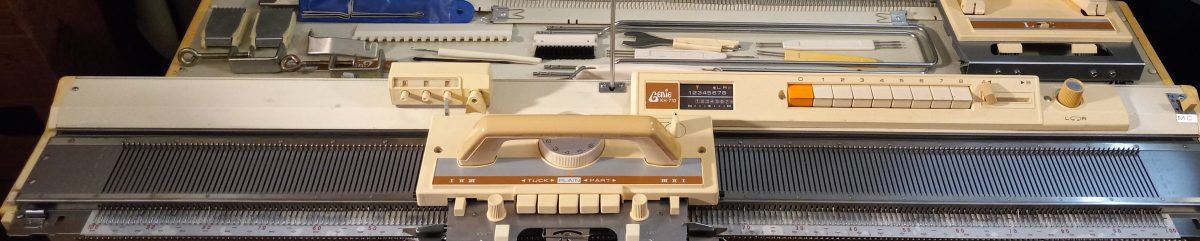
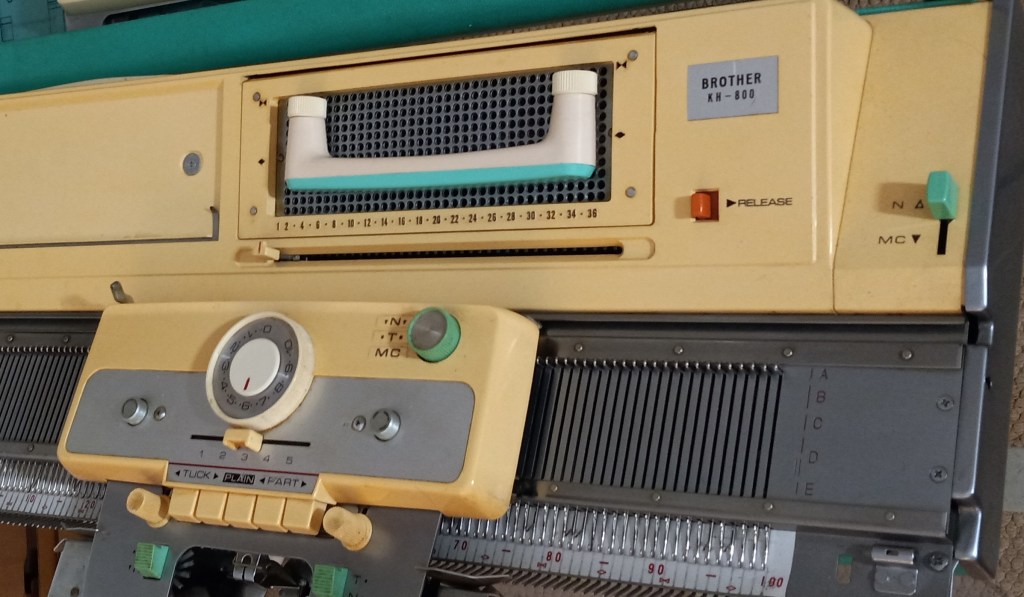
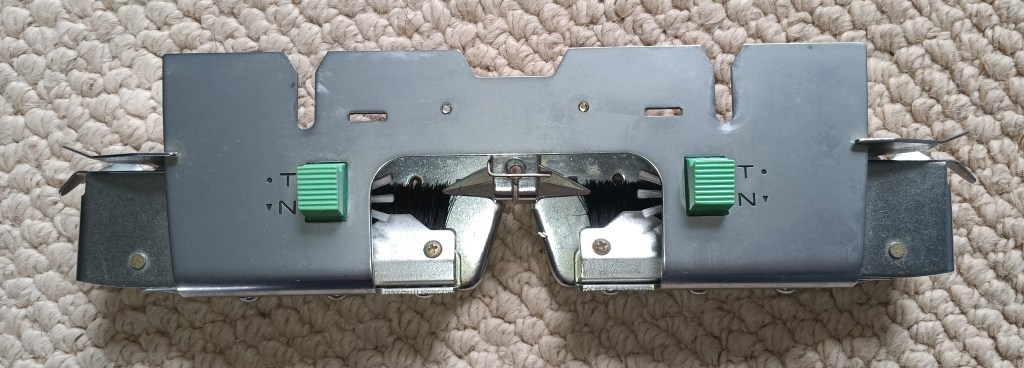
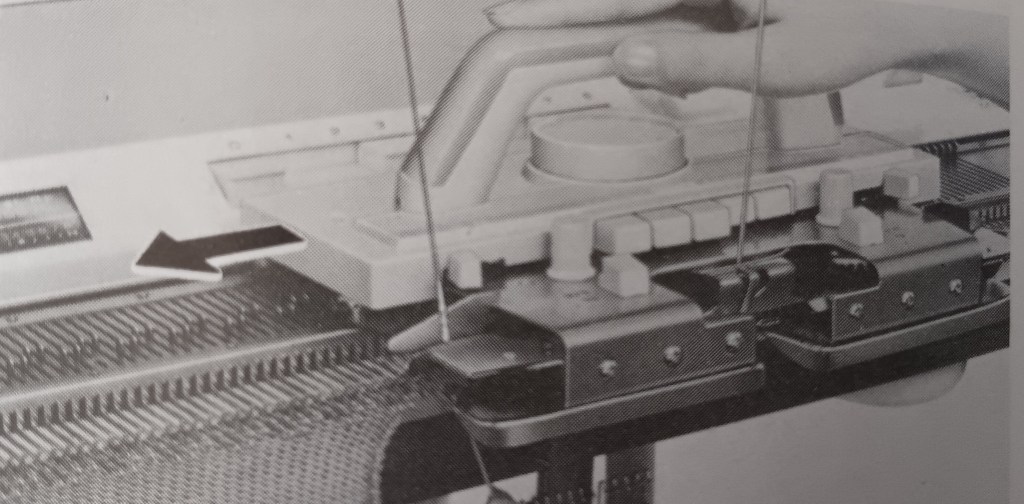
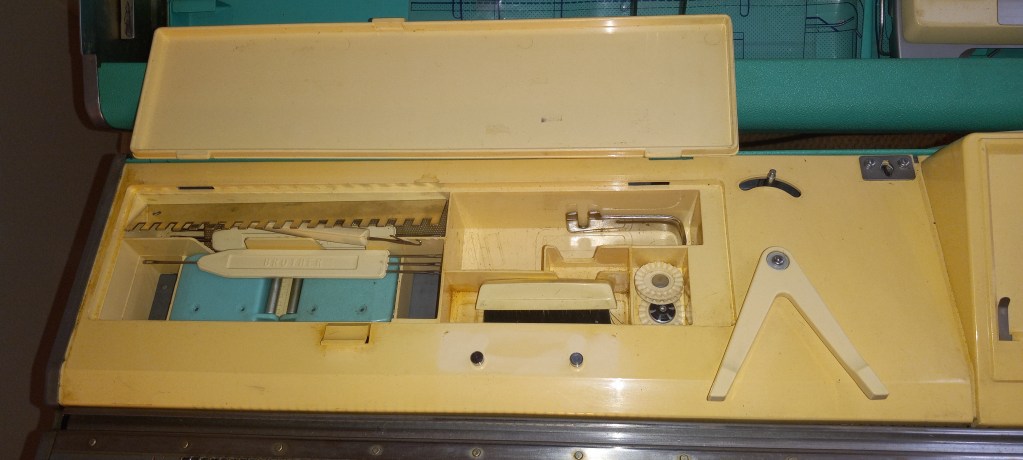
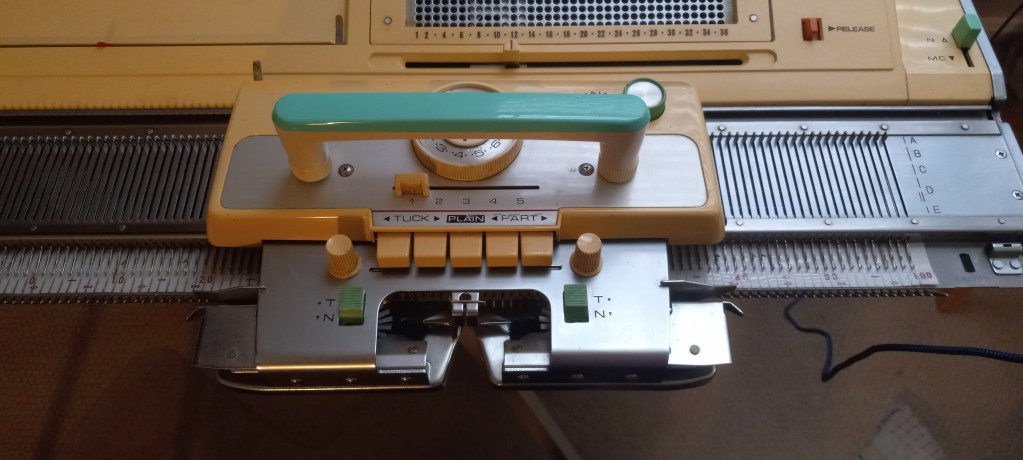
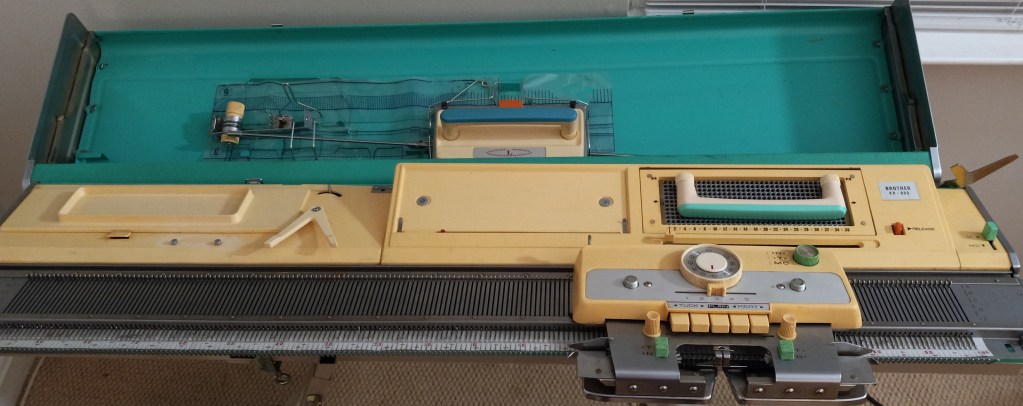
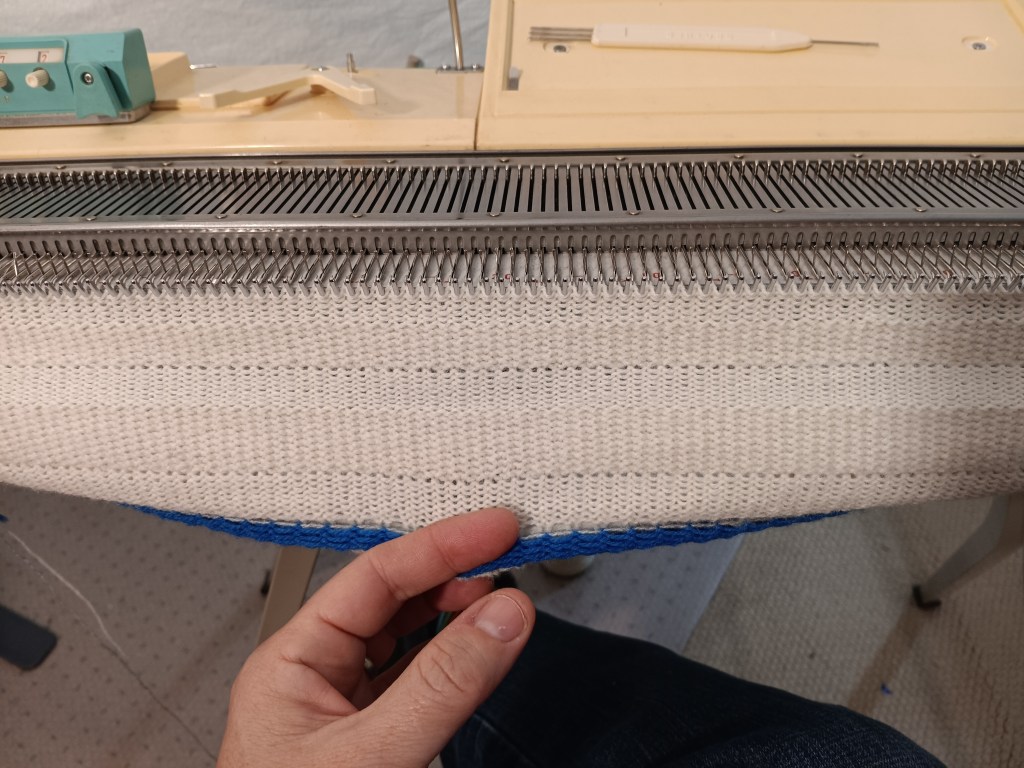
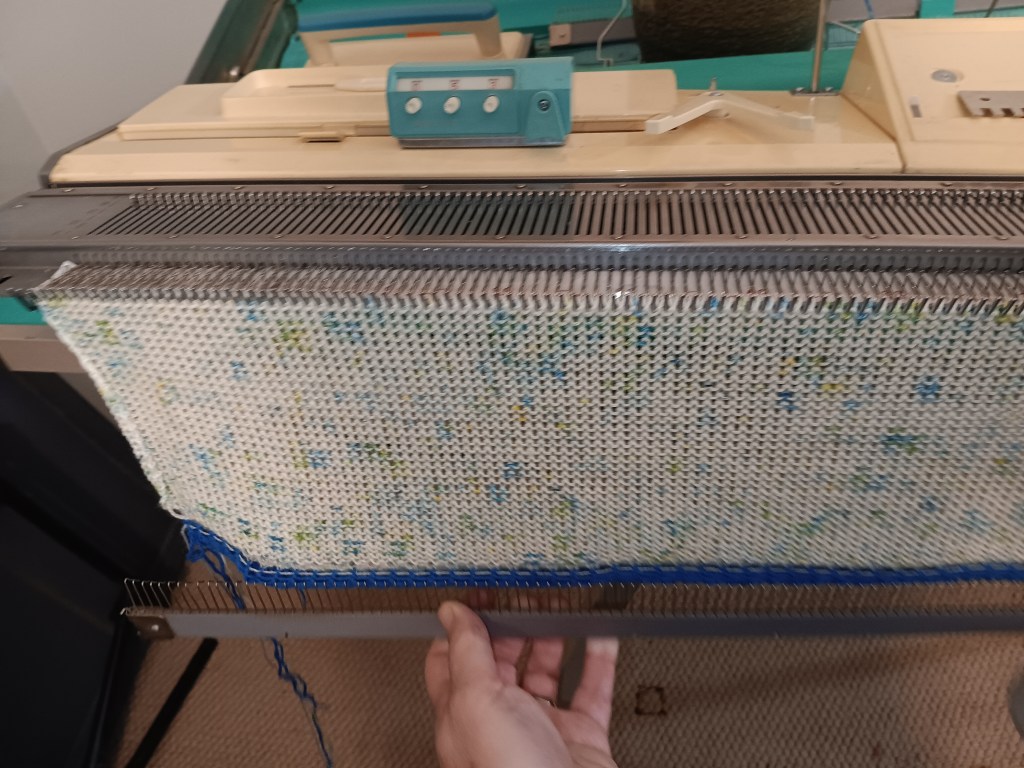
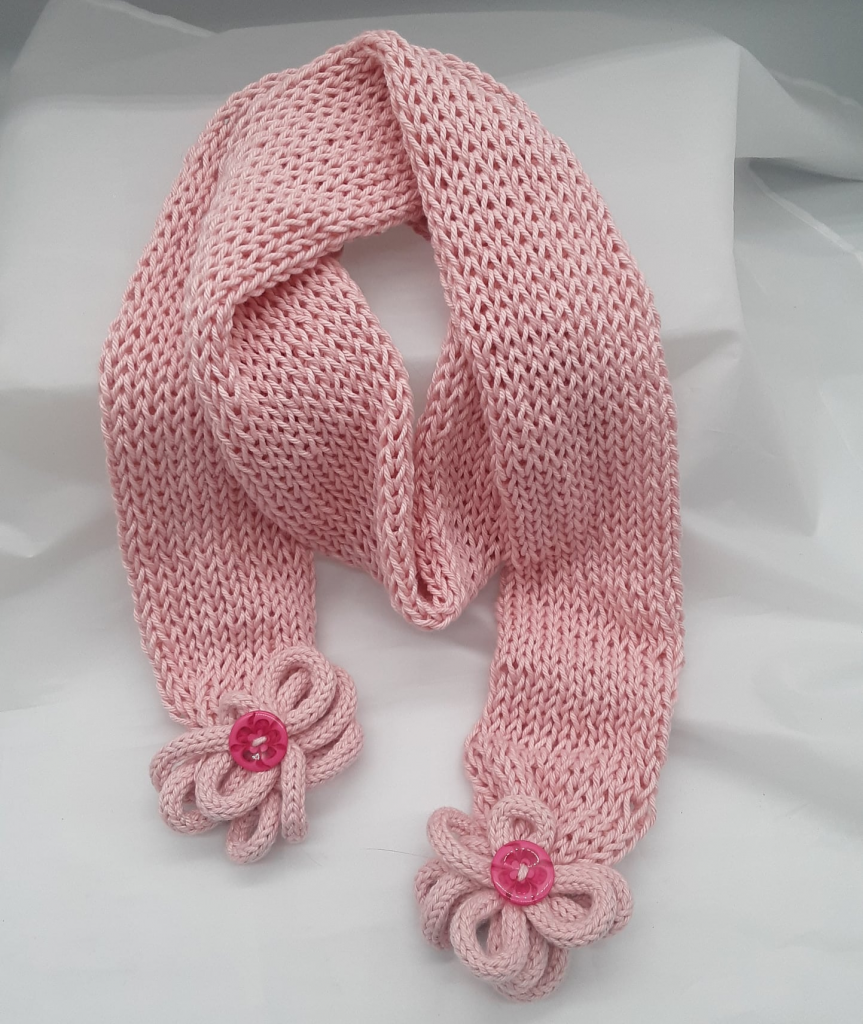
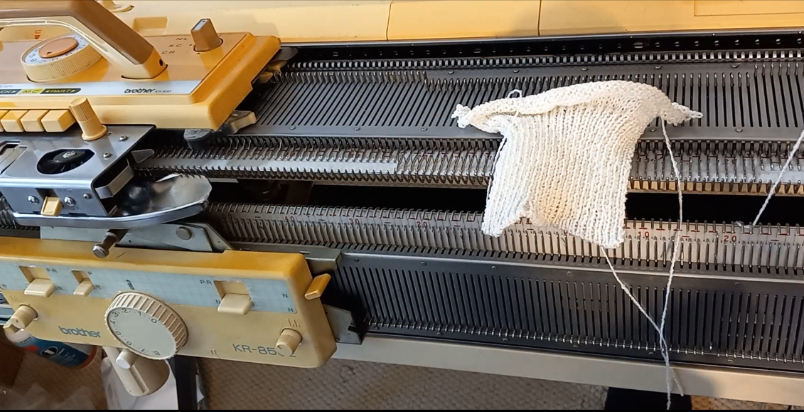
Knitting cord on Brother flat-bed knitting machine.

If you own a Brother flat-bed knitting machines, like pushbutton KH551, KH585, KH588 and KH710, or Brother punchcard machine like KH830, KH840, KH860, KH890, etc., or even electronic models, like Brother KH910, KH930, KH940, KH950, KH965, and even KH970, you can make cords on these machines in just quick 5 minutes or less.

The steps are outlined below. Or, if you are a visual learner or some terms in this article are not quite clear, watch this video.

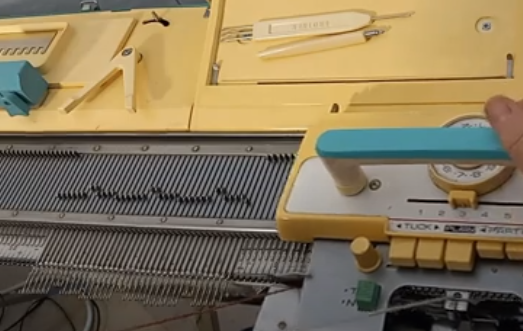
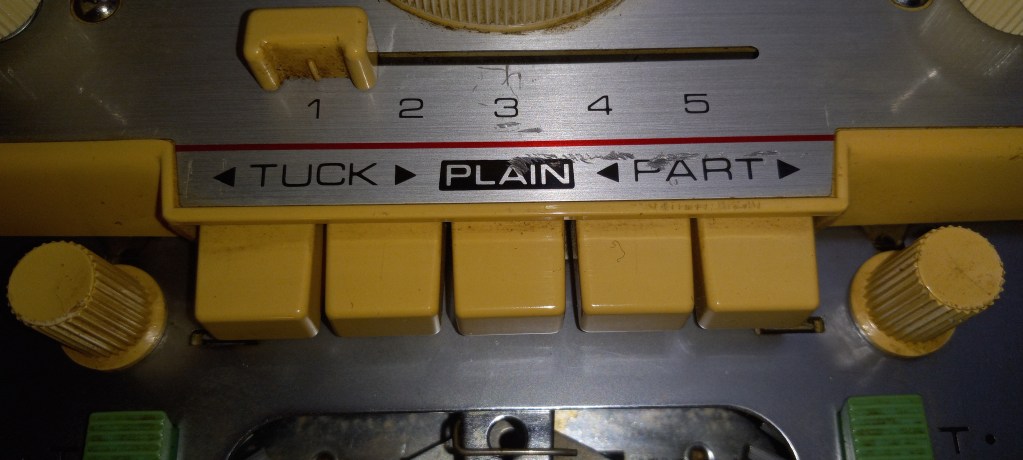
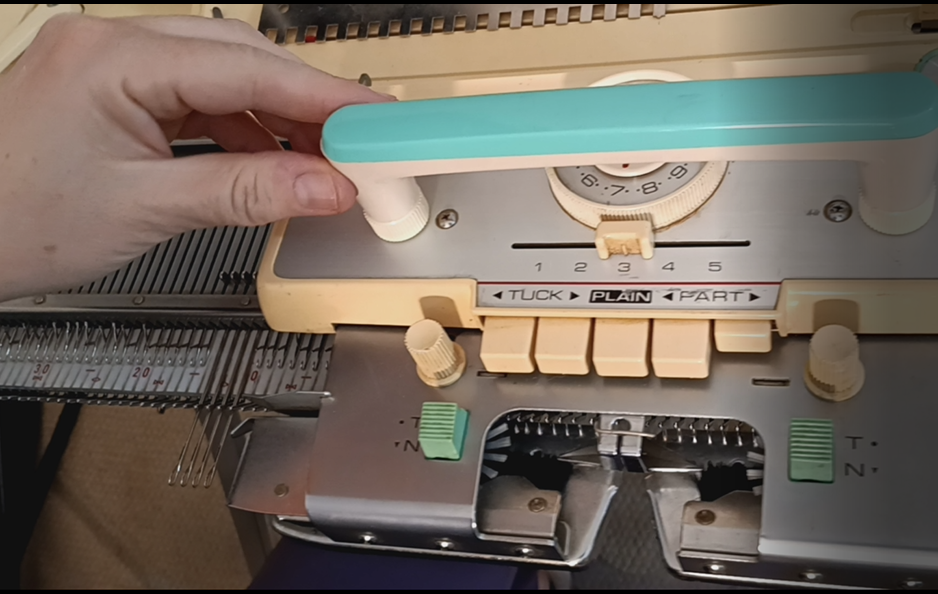
1. Move the carriage to the right-hand side of the needle bed and press the right-hand side PART button.

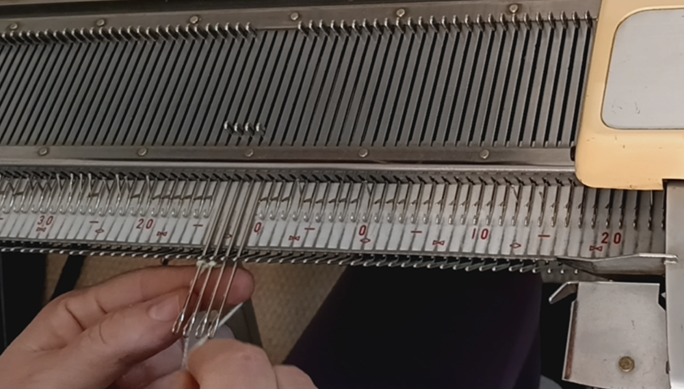
2. Move to the most forward position 3-4 needles and perform an e-wrap cast-on with the short end of the yarn being on the left side. This post does not go into details into e-wrap cast-on, so if you are unsure how to do it, there are a lot of online resources on it.

3. Thread the long piece of the yarn through the carriage as usual.

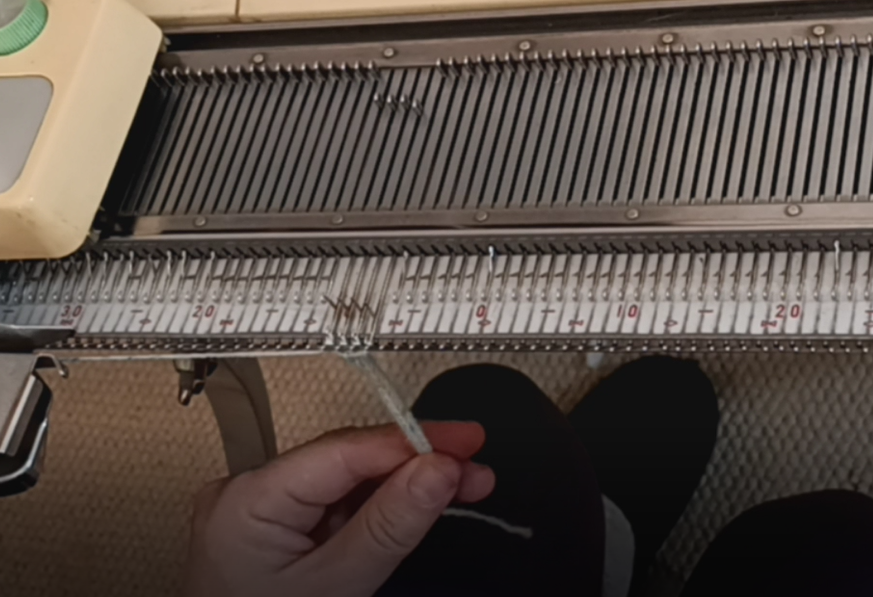
4. Move the carriage from left to right while pulling the short end of the yarn down. After the first tow is knitted, if you prefer, attach the claw weight to the formed stitches. Or, pull the knitted fabric down by a free hand.

5. Continue knitting with the carriage moving it side to side while pulling the formed cord with the free hand.

6. When a desired cord length is achieved, cast off with your desired method. Tie a knot on each end and fasten the knot by sewing several stitches over the know with the yarn left on each end.

The cord can be used for hoods, hats, neck warmers, or for decorations.

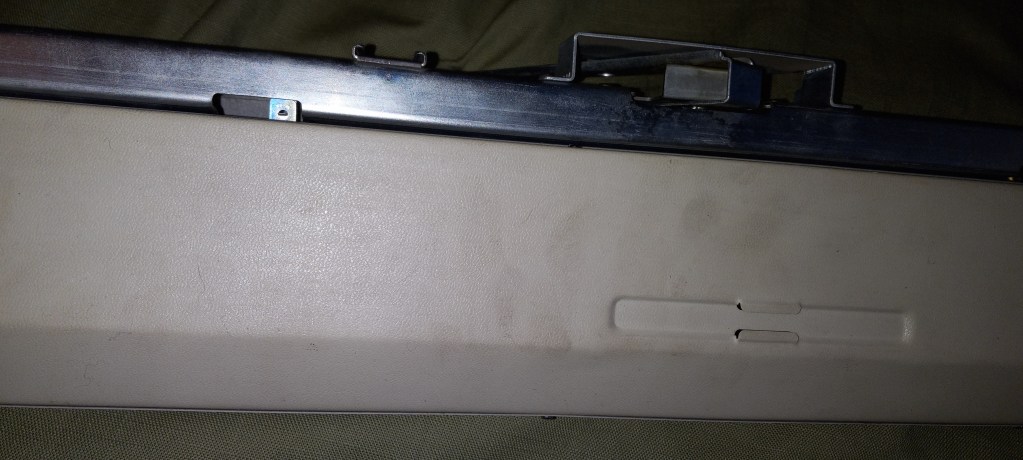
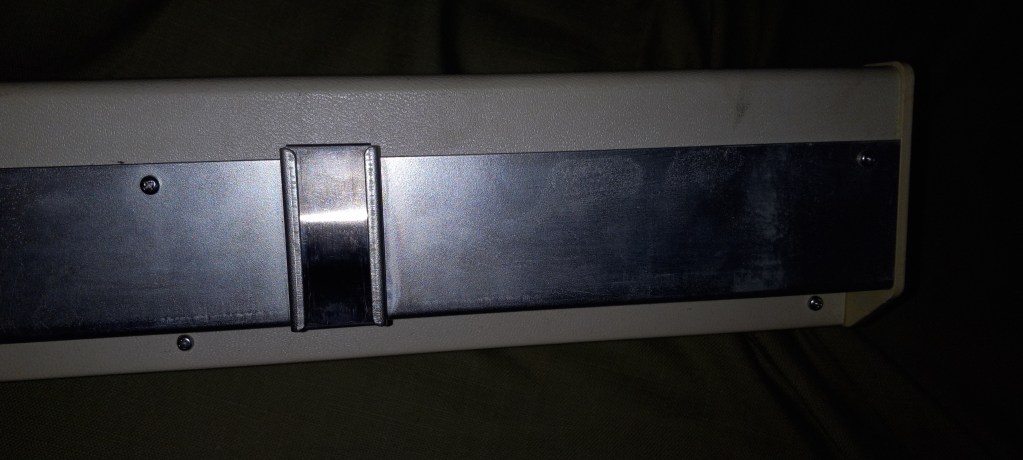
Retaining bar vs knitting machine model chart

The table below lists the lengths and widths of various knitting machines I measured myself. Use this table as a reference to ensure you purchase the correct retaining bar for your machine.


Model
Retaining bar
materialsponge?length, inch/cmwidth, inch/mm
Brother KH500metalyes41/1040.375/10-10.5
Brother KH551metalyes41/1040.375/10-10.5
Brother KH552metalyes41/1040.5/11-11.5
Brother KH581metalyes41/1040.5/11-11.5
Brother KH585metalyes41/1040.5/11-11.5
Brother KH588metalyes41/1040.5/11-11.5
Brother (Genie) 710metalyes41/1040.5/11-11.5
Brother KH800metalyes41/1040.5/11-11.5
Brother KR810 ribberplasticno
Brother KR830 ribberplasticno
Brother KR850
ribber
plasticno
Silver Reed SK120metalyes42/1095 mm/0.2 inch

About retaining bars in knitting machines and ribbers.

… this article is in constant progress as I learn about various knitting machines and their retaining bars.

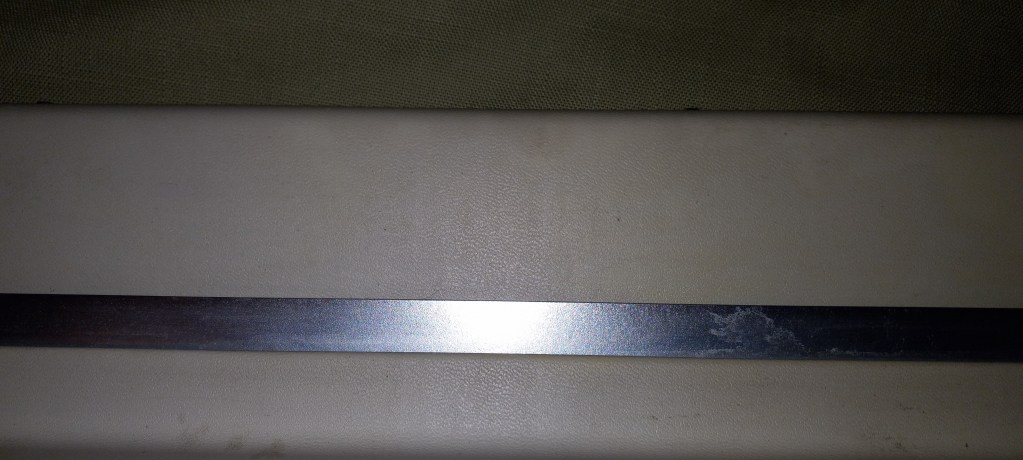
Almost all knitting machines and ribbers have retaining bars. Some machines have retaining bars with a sponge attached to them. Some machines (the majority of plastic flatbed machines) have only a long and narrow sponge (without the metal holder). Ribbers come with either a “retaining bar+sponge” assemble or only with the plastic retaining bar (no sponge strip).

The main role of these retaining bars is to hold the needles in place and to prevent it from bouncing up and down when knitting.

Below are the situations when you want and need to remove (and inspect in many cases) the retaining bar:

  1. When you just purchased your machine (especially used and NOT recently serviced), the first thing you need to do is to remove your retaining bar and inspect it. I made a short video on how to do it because I have been asked about it so many times by my customers.
  2. When you need to replace faulty needles.
  3. When you need to clean your machine.
  4. When you notice your knitting machine mispatterning without any good reason.

Hopefully, you purchased your knitting machine new or recently serviced. In this case, the sponge should be 1-2 cm above the metal edge of the retaining bar.

But in most cases, this is not the case. Thus, it is possible that when you remove the retaining bar, you will see a disintegrated sponge. I’ve seen some spongy strips being just a gooey mess. The old sponge needs to be removed as soon as possible (since it often corrodes the needles) and replaced.

There are two ways to approach this replacement.

First approach: just replace the spongy strip

If you decide to replace the sponge, you will need to remove all this goo. I first use a flat-head screwdriver to scrape all the residue out of the retaining bar canal. Then, I use “Goo Gone” to remove the rest of the residue. I typically do it outside because it is a very messy process. I pour a thin layer of “Goo Gone” liquid into the retaining bar and wait for hours. Then I scrape the remains of the old sponge again with the screwdriver. Lastly, I wash the retaining bar with soap and water, wipe it really well and let it dry (or blow dry it). You can purchase just the sponge in my store.

I sometimes read in forums that some thrifty machine knitters get a simple weather stripping and use them as sponge strips. Well, those have different dentistry and sometimes do not have a silky ribbon on one side. Also, they are not suited to be exposed to oils and might decompose rapidly leaving a sticky (potentially unremovable) residue inside your machine.

I read that experienced machine knitters use different ways to attach the spongy strip to the retaining bar. (By the way, the width of the spongy strip is not as critical and it can be a little bit narrower than the channel of the retaining bar but not by much). I tried different glues and my current choice is hot glue. Some machine knitters use wood glue. I apply the glue to the metal part of the retaining bar and attach the strip to the metal by the sponge side (not the silky ribbon side). I then tape the ends if the sponge to the plastic ends. I like using medical tape. Only one layer of the tape is enough to secure the ends of the sponge. More layers will only get stuck when you insert the newly refurbished retaining bar back into the machine. To avoid stripping this tape, push it down on the ends of the retaining bar while inserting it into the machine.

Second approach: buy a new retaining bar

Or if you do not feel like dealing with all this mess, you can purchase a retaining bar with a sponge already in it. Before you order a new retaining bar, make sure you measure the dimensions of your old bar: its width and its length.

Most commonly used by machine knitters Brother, Studio/Silver Reed/Singer, and Toyota knitting machines have somewhat similar retaining bars but there are some differences depending on the model and the gauge of the machine.

For the retaining bars for these machines, there are three different lengths (41, 43, and 47 inches) and two different widths (0.375 and 0.5 inches). This is why it is important to measure your old retaining bar to ensure that you are getting the retaining bar suitable for your machine. Most JUKI, Toyota, Silger/Silver Reed/Studio, Artisan knitting machines use 0.375-inch wide retaining bars. The lengths are either 41 or 43 inches (depending on the model).

I’ve read stories on FaceBook groups, where the new machine knitters were puzzled by the fact that they JUST replaced the sponge bar and the needles do not move, advance, or retract the way they are supposed to. I especially see I happen to be the owner of 8-push button Brother knitting machines. There is somewhere out there some incorrect information on the retaining bar for these machines. 4-push-button machines use a 0.375-inch wide retaining bar and the 8-pushbutton machines use a 0.25-inch wide retaining bar. (I’ve refurbished over a dozen pushbutton machines and I know the difference first-hand).

Brother ribbers use plastic retaining bars without sponges. When (re) inserting the retaining bar into the Brother ribbers, the concave surface (the “channel”) should face you.

There are machines with unique retaining bars – I will update the blog soon when I learn more. I am also putting a table on machines (and models) and retaining bar compatibility. Stay tuned!

In the meantime, enjoy your adventure in retaining/sponge bar replacement!

PS. I measured several dozens of retaining bars with my calipers. Even though the “official” measurement is 0.375 and 0.5 inches, mine are measured as 0.40-0.41 and 0.44-0.46 inches respectively. This inaccuracy in inches makes me like the mm scale (aka metric) a bit better. So the narrower retaining bars are 10.0-10.5 mm while the wider are 11-12 mm wide. Who knew that just 1 mm would make such a difference but it does! I had an incorrect bar installed on my KH581 8-pushbutton machine and the needles would not go back from E to B (or A) position!!!

The difference between Brother KH965e, KH965i and KH965.

Just a quick note on the differences between Brother knitting machines under the model numbers KH965, KH965e, and KH965i. The reason there is a lot of discrepancies and misunderstandings about the additional “i” in the model number is that these machines are very scarce and because the functionality seems to be . They are very desirable and those that are still available on the used market are still in great shape.

First, about “e” :

Even if Brother KH965e indeed exists, it would simply mean an anniversary edition since “e” stands for “eleganza” (the latest anniversary edition model to the best of my knowledge is KH950E). This machine would be identical to the functionality of the KH965 knitting machine but the color combination of the carriage, end caps, and control panel might be different (like in the case of KH930/930e and KR850/850e setups). However, I’ve seen only the KH260/KH260e, KR850/850e and KH930/KH930e combinations. Brother KH965 was released to the market significantly later (by about 5 years), so there will be no even for an “anniversary edition”. If you’ve seen the KH965e model and want to prove me wrong, shoot me a message.

Now about “i”:

The differences between the KH965 and KH965i models of electronic brother knitting machines are subtle and might vary depending on which market the machine was made for.

Some think that “i” in KH965i stands for “intarsia”. However, both KH965 and KH965i have built-in intarsia knitting capabilities according to the instructions (as well as their a bit older analogs, KH930 and KH940).

I researched pictures of a lot of pictures of various KH965(i) machines and all of them have the intarsia option. … which kind of makes sense because KH965(i) is an updated version of KH930/KH940, which also had this option.

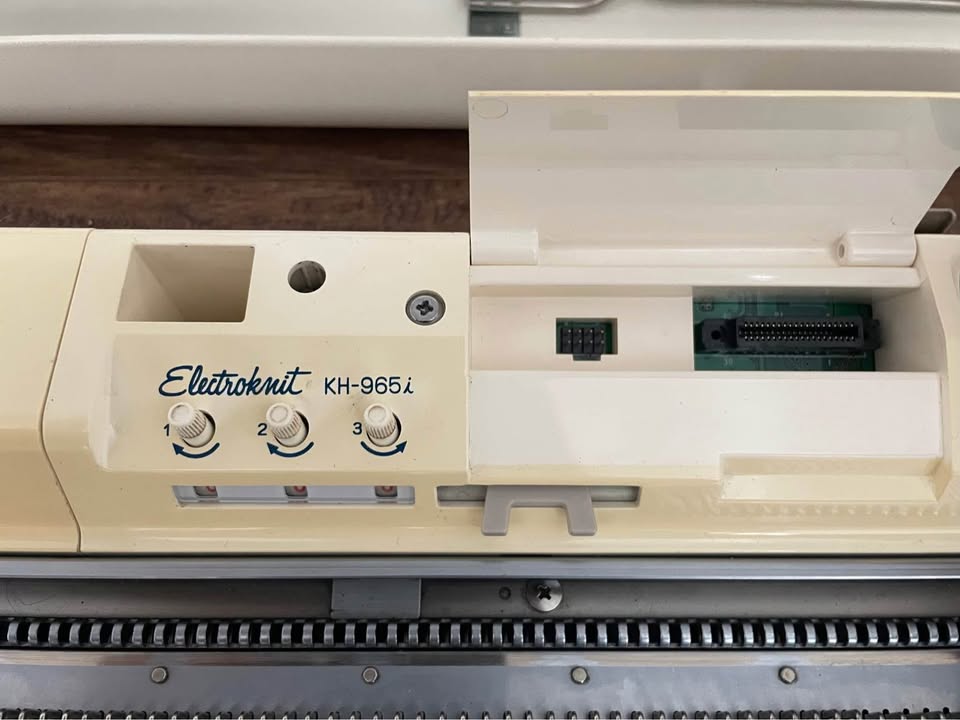
Some think that “i” might stand for is “interactive” or “interface” and the difference is that KH965i has a compartment to insert the PPD disk, however, KH965 has the same disk port (and the manuals for these machines both mention the compartment and disk port). So, basically, KH965i can accept files from external sources without any modifications to the machine.

Knitters who prefer a more advanced way or pattern transfer use a special cable instead of the PPD disk. This cable is inserted into the slot for the disk for file transfer through special software.

The KH965i model has also the capability of inserting the cable into the machine itself (originally assumed to be for the FB 100 disk drive and file transfer). And this is one of the main differences between KH965 and KH965i.

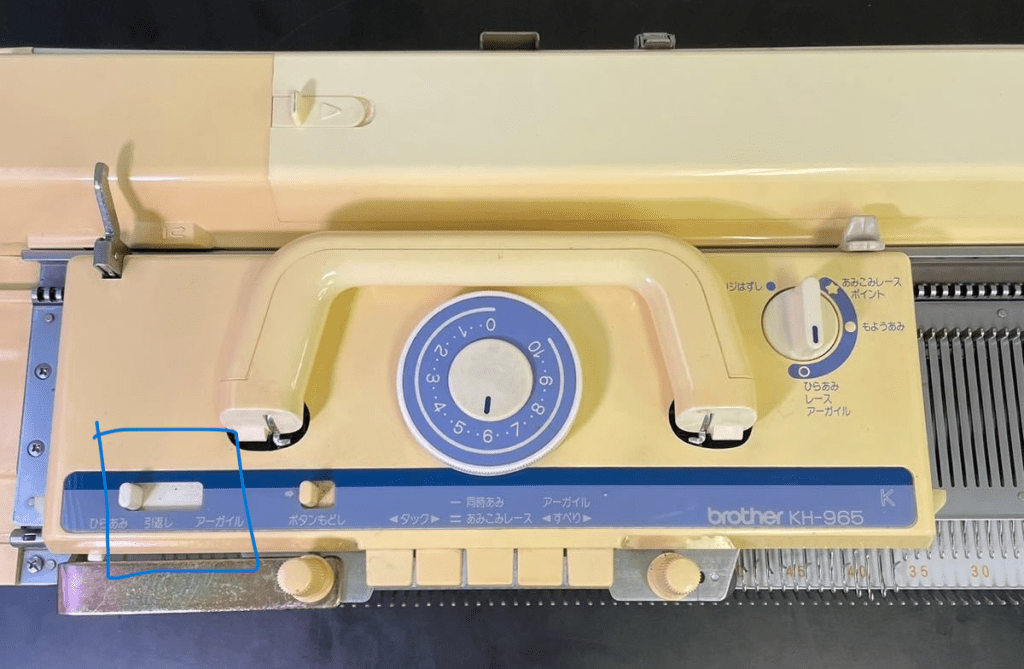
Another critical difference is the settings on the selection dial on the carriage. Brother KH965 does not have a KCII setting…

…unlike Brother KH965i.

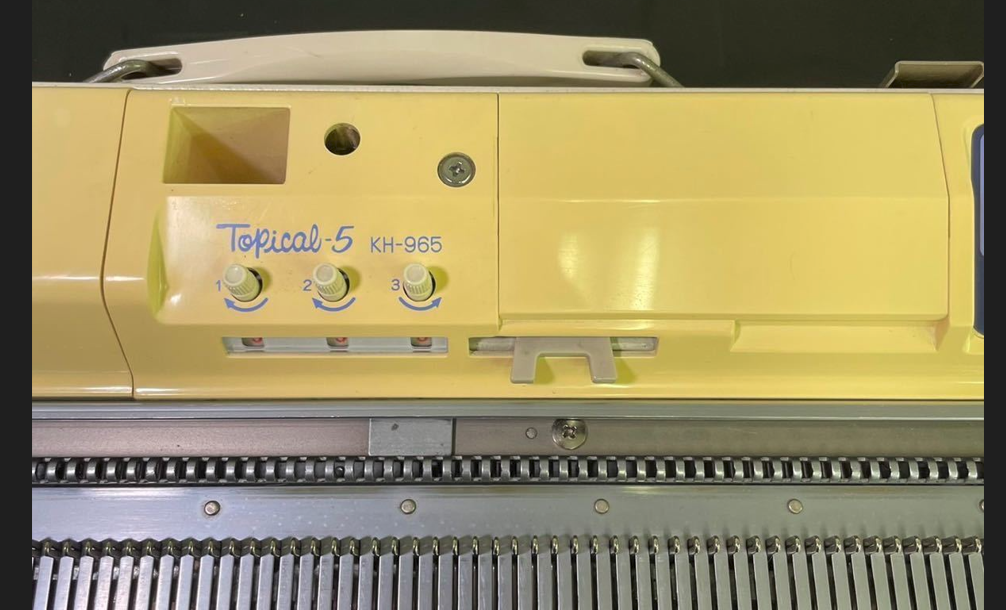
However, KH965 released to the Japanese markets (Topical-5) noticeably has also 4 positions on the selection dial, which probably implies KCI and KCII settings (Sorry – I would be more sure but I don’t read Japanese).

Thus, it seems that even if your KH965 does not have “i” next to its name, it might still have functionalities of the KH965i machine.

Thus, to identify whether you have a KH965 or KH965i, look for:

  • KCII option on the selection cam on the carriage (or four different options on that dial)
  • A port on the back panel of the machine.

All other functionalities of the KH965 and KH965i are the same (namely, memory, functions of the buttons on the panel, etc).

I really hope you are a lucky knitter who has Brother KH965(i) in their collection!

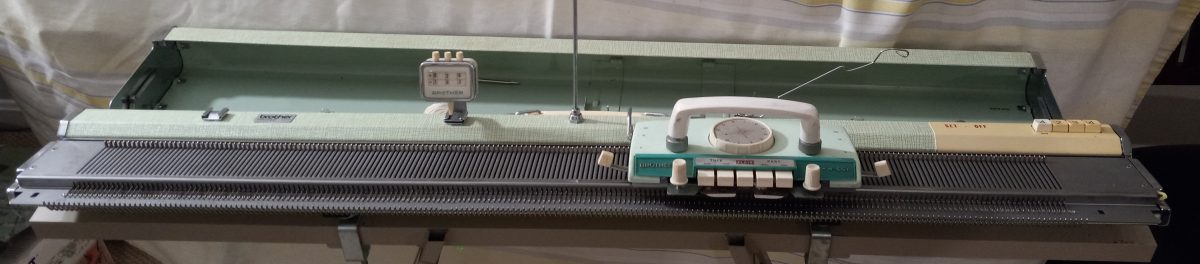
Brother KH551 knitting machine serviced in November 2023

Brother KH551 is a standard gauge knitting machine with 4-pushbutton-based patterning mechanism. This blog is dedicated to one specific machine I serviced. If you want to know more about the Brother KH551 knitting machine model, refer to my Knitting Machine Encyclopedia article.

The machine (including carriage and all needles) was cleaned and serviced. All levers and the buttons on the carriage were checked and they moved and worked without problems. These levers were also tested while knitting. All needles were also checked while knitting on a full bed. No faulty needles were detected.

The 15 needles on each side (30 total) came from my refurbished stack. Thus, when I was knitting on the full bed, I was inspecting the edges especially closely to make sure all these refurbished needles worked well. Also, because of such a high number of refurbished needles, I am including the set of 5 spare needles (instead of usual 3).

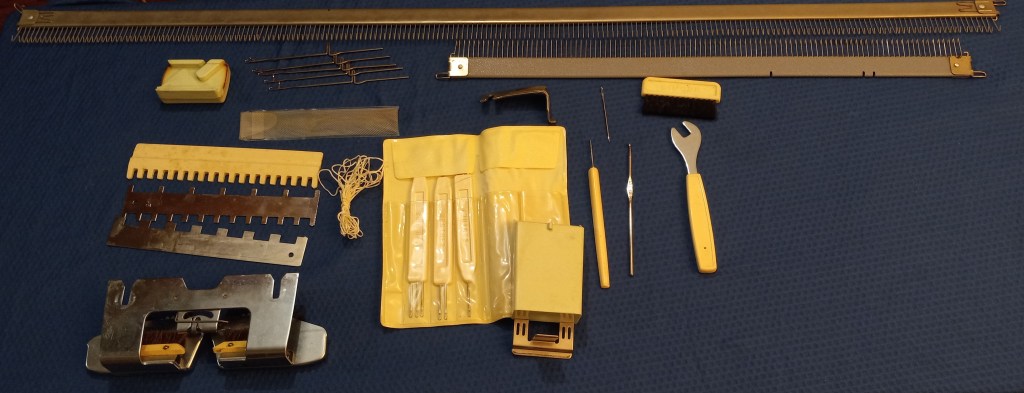
The machine comes with all major assesories.

Several missing minor assesories are:

  • A hard copy of the manual is not included but can be found online.
  • Sinker plate yarn hangers, left and right. It can honestly be replaced with a regular paper clip (just unbent them to a desired shape). The manual describes their usage on p. 18. manual
  • The tool storage box is not included
  • Oil is not included also but I recommend Hoppe’s Elite Gun Oil.

Additionally, the small cast-on comb is not all metal – I pulled it out from my own stash.

On the full bed, I knitted stockinet, tuck, slip and hold patterns (see the video of tests – all went well). Butterfly stitch is my favorite on this machine.

Now about flaws and imperfections:

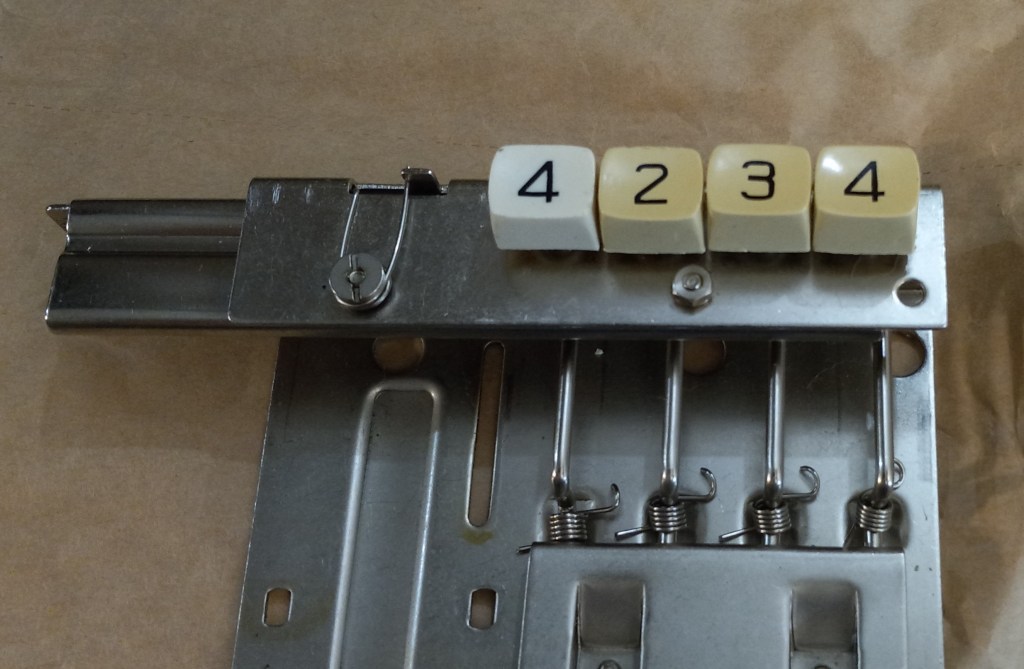
I had to replace the push-buttons but I did not have a part for the button marked #1. So, I replaced it with the button marked as #4 but it is of different shade of white. If you want, you can put a sticker on it with “#1” (I prefer not to put stickers on machines since it damages and stains the vintage plastic).

Despite being vintage, this machine will still serve your craft needs for many years especially if regularly serviced.

Happy Knitting!

First steps of testing new-to-you ribber.

If you just purchased or snatched a ribbing attachment to your knitting machine, I can imagine how happy you are!

If your ribber came to you fully serviced and tested, you still need to learn yourself how to use it and attach to you machine. So, follow the steps below. However, if your ribber came to you AS IS, follow the steps outlined in my other article on how to clean and service it before you start the knitting tests.

  1. The first most important step is attaching your ribber to the main knitting machine bed. Your ribber manual is the best source for this. If you are a visual learner, there are plenty of youtube video on how to do it for your particular ribber.
  2. Before you even attach the ribber carriage, main carriage and the connecting arm together, you ABSOLUTELY have to make sure the distance between the main and ribber bed is the optimum. Too wide or too narrow distance between the beds will cause all kinds of problems: yarn is not latching onto the needles, resulting in dropped stitches, grinding noise, difficulties to move the carriage, bent latches, etc. for Brother knitting machines, the best manual that explains how to do it is for the Brother KR810 ribber (available online, just Google it). There are also a lot of YouTube resources on how to establish the optimum distance.
  3. Check all magnets on connecting arm and carriages to make sure nothing got stuck to them.
  4. Once you are satisfied with the distance, make sure the connecting arm is attached to the main carriage properly. (Poorly attached connecting arm will manifest itself in dropped stitches, grinding noise, difficulties in moving in one or both directions, damaged needles or needle latches). Follow manual instructions to the dot. Once you attached the connecting arm to the main carriage, run through the needles (no yarn) to make sure nothing is touching the connecting arm. Start with 20-30 needles and if everything is good, add another portion of 20-30 needles, and so on.
  5. Attach the ribber carriage (unless you have a vintage, earlier model, of ribber, in which case you don’t need to do that) to the connecting arm/main carriage assembly. Again, follow instruction to the dot. Then run again the carriage assembly through just the ribber needles. For this purpose, only bring 20-30 needles to working position and run the carriages through. If everything seems smooth, add another section of 20-30 needles, and so on.
  6. Start knitting on a small swatch. Start with 1×1 rib on every other needle. (When setting up the ribber and knitting the first cast-on rows, it is extremely important to move the needles to the B working position as close as possible. Otherwise the carriage might bend the latches.) Use very thin yarn at first. Preferably the yarn that is no prone to static. (Quick side note on how to check the static of the yarn: bring a small strand of yarn to the crack between the beds and if the yarn sticks to one of the beds, yep, you probably have static. Change the yarn or apply wax). Do not use cotton yarns. Thin smooth acrylic yarn should work. Starting with the very thin and smooth yarn will prevent you from having problems related to JUST yarn: static, tension, friction if yarn has texture. (Please, do not think that knitting swatch is a waste of your yarn or time. There are several learning opportunities. For example, you will also learn how to choose the right tension for the yarn you chose, practice transferring the stitches (by hand or using a transfer carriage), whether there is static with this yarn, etc.) Follow the cast-on and knit instructions to the dot. Knitting just a small swatch will let you 1) check whether all buttons and functions move freely on the ribber carriage and 2) master the cast-on procedure.
  7. Knit on a full bed using the yarn you had success on with the swatch. Start with the 1×1 rib on every other needle. I do not recommend knitting on ALL needles on the ribber – leave 1-3 on each end in non-working position. It will be easier to attach wire-weight-hangers and will also ensure you all stitches are knitted before the carriages returns in the opposite direction. Knitting on the full bed will show you whether all needles function well (If a needle is bend, misaligned, or has a sticky latch, stitches will not form properly. You might also see dropped stitches, tucked-stitches or lots of pull stitches. ) And also discover (if any) additional problems with the setup. (All minor problems not seeing while knitting the swatch might manifest in a full bed in a more pronounced way). The panels knitted on the full bed during your tests can be converted to hats (knit 100-120 rows for one-layered hat with a brim and 200+ rows for a double-layered hat). During your tests on a full bed you’ll also learn how to hang and rehang the wire-hangers with weights to ensure nice edges, how to recognize dropped stitches, how to catch dropped stitches on the very ends of the panel and what to do to prevent them, etc. Knitting on a full bed when you are just starting is a whole new game.

Let me know how the first test went!

Tension spring for Brother Knitting machine

Carriages of Brother knitting machines have several types of springs to ensure smooth needle handling. This article is about a medium size spring, part of the intricate mechanism of Brother knitting machine carriages. These springs can be purchased in my store.

In particular, this short blog article is about a tension spring responsible for smooth the movement of the middle button on the carriage. (At the end of this article, I show other places in the carriage where the same type of spring can be used). This button is typically used to knit fair isle or/and to reset all other buttons.

To expose that spring, one needs to remove the plastic carriage cover (this step NOT covered in this article) and then remove the metal cover.

For that purpose, remove the two screws marked below.

The plate will then hang by the springs marked in the picture below but they do not have to be removed. Just push the metal plate out of the way. If the springs detach, they are easily to put back. Just take a picture of the agreement before removing the cover.

Once the cover is removed, you will see the springs right away. In my case, one of the springs was simply missing and the mechanism was not retracting automatically the way it was supposed to.

So the replacement spring was placed where one was missing. I made a short video showing where the spring was installed.

“How” the spring was installed is NOT shown in that video because it is kind of hard to capture how to attach the spring. But the loops of the spring need to grab the posts marked in the picture below.

The same spring can be used in positions shown below. The springs marked with crosses are either small/bigger in size or a spring without the loops (springs for the buttons) and thus, cannot be used.

Brother KR850 ribber prepared for Judith in December 2023

Brother KR850 ribber fits numerous standard-gauge Brother knitting machines. Read more about Brother KR850 ribber in my Knitting Machine Encyclopedia. The blog below is dedicated specifically to the ribber serviced in December 2023 for my customer.

Brother KR850 was serviced and tested for Judith in December 2023. My store offers other ribbers for Brother and other knitting machines.

This ribber comes with all assesories including a hard copy of the manual (not shown in the pictures).

The bed, carriage, and assesories were cleaned, inspected and tested. All needles were cleaned and inspected individually, first visually and then by knitting on a full bed 1×1 ribbing (in two different combinations to make sure all needles were tested).

Swatch test was performed first. Swatch tests are useful to ensure that the carriage functions work well. In the case of swatch tests, we do not have to worry about artifacts and problems (such as the correct tension of the yarn, yarn thickness, yarn texture, correct number of barrel weights, side weights, etc.) associated with large number of needles in working positions.

Then the machine was tested on a full bed in two different configurations to ensure that all needles form nice and correct stitches. Carriage is very easy to move on swatch and on a full bed.

All tests went great. See the video of these tests in my youtube channel.

When knitting on the ribber, tension, the correct number of weights and the distance between the ribber and the main bed play a very important role. This machine handled really well two different distances between the ribber/machine beds and three different yarns (with different thicknesses and texture, see my video). One of the yarns was a mohair-containing fuzzy yarn. The machine handles it well too although some tests on the correct tension was needed as well as some wax (fuzzy yarns are more prone to static formation than other yarns).
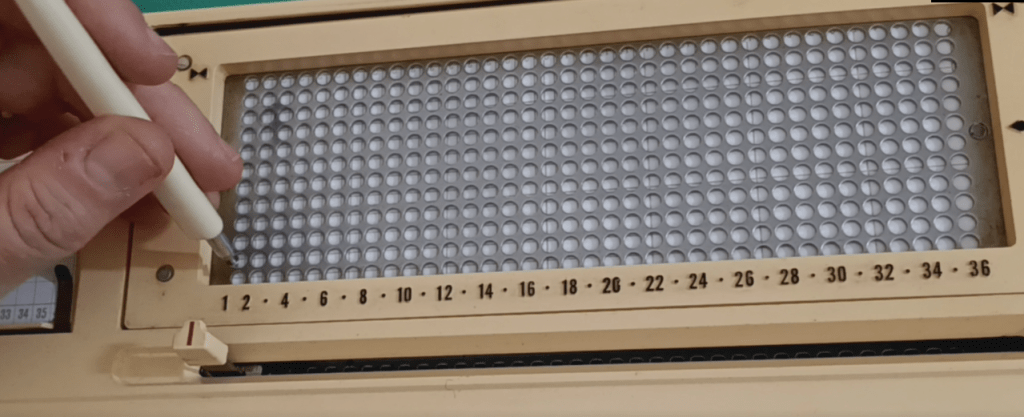
The machine will come in its original packaging: two Styrofoam forms to fit all assesories …

… and pads inside the bottom of the cardboard box to support and protect the machine.

The only obvious flaw was the tape attached to one of the cast-on combs. I did not remove it because actually it is convenient to have that tape to store the fine bar ( the long plastic and very fragile rod-like bar) more easily (often it is overlooked during unpacking and thrown away).

This machine would serve long years especially if regularly oiled, cleaned and stored in controlled environment.

Brother KH588 machine serviced in December 2023

This machine was ordered as a Christmas present from a loving husband to his crafty wife.

It is a very nice vintage setup with blue hues. This post is dedicated to this particular machine. To know more about this model, read in my Knitting Machine Encyclopedia about its pros and cons.

The machine was cleaned from old dust and gunk and tested. The sponge in the retaining bar was replaced and will come inserted into the machine. I completely replaced the weaving brushes on the sinker plate as the old ones completely decomposed.

All needles were removed, cleaned and inspected, first visually and then by knitting on a full bed. The full-bed knitting tests were on stockinet, tuck, slip and holding patterns. The video with all these tests demonstrates that the machine did not have any problems knitting these stitches and none of the needles showed any signs of forming misshapen stitches.

Lace carriage was not tested but all knobs and levers move without problems.

While knitting on a full bed all patterning buttons, knobs and levers were tested in action (with the exception of the N/MC lever but it moves freely) and are fully functional.

The machine comes with all major assesories (lace carriage, rails, row counter, sinker plate) and the majority of the minor assesories.

The row counter is from the new stock – the original row counter was missing from the setup.

The minor assesories missing are:

  • the assesories kit: it is simply a cover with pockets to keep assesories inside
  • the lid for the assesories box. The plastic was so weak that it crumbled when the machine arrived to me and I had to discard it.
  • hard copy of the manual will not be included but it is available online for free. I strongly recommend following the manual step-by-step as it is the best resource to start knowing your knitting machine.

The 3/1 needle selection/transfer tool is missing the one-prong therefor I will include a universal stitch transfer tool as well.

I will include an old wax in its tube that came with the machine. Also, there is half a bottle of still decent looking oil. I will include it as well. If it runs out, I recommend using Hoppe’s Elite Gun Oil, available on Amazon and in local hardware stores.

The manual lists mostly basic patterns but additional patterns are in this brochure.

Despite working flawlessly, the machine had some minor imperfections:

The pattern center panel has two cracks: on the right-hand side and in the middle. additionally the knob on the AB lever is from another machine and thus is not blue in color (the original knob was missing).

The assesories box has a crack on the side and a broken piece on the bottom. The plastics from the 1960s and 1970s were not as weathering resistant as current plastics and thus severely degrade with time especially when exposed to the UV light and moisture.

The case has some minor scuffs on the outer side.

Some of the stains on the lid will remain as they did not come off completely (and I do not subject the old plastics to extensive exposure to harsh solutions).

The lid has some minor rust stains on the inside.

The ratchet tool has a minor crack.

None of these imperfections and some minor missing assesories affected the functioning of the machine, as you can see in my test videos.

Brother KH840 cleaned and tested in September 2023

Brother KH840 knitting machine is a knitting machine capable of creating patterns using a punch-card-reading mechanism. The machine has 200 needles, spaced 4.5 mm apart, which makes Brother KH840 a standard machine. Read more about this model in my Knitting Machine Encyclopedia.

Now about this particular Brother KH840 machine. This Brother Knitting machine was cleaned, serviced and tested by me in September 2023.

Removed, inspected and cleaned all needles. The ones that were bent were replaced with the new stock. I replaced sponge in the retaining bar.

The carriage, sinker plate and then punchcard reader were cleaned, serviced and oiled.

I also knitted on the whole bed (using all 200 needles) to make sure all needles form nice and even stitches. I knitted the whole bed using tuck-, slip- and fair isle patterning. See a video I created of these tests. I did not test lace and weave capabilities of this machine. All levers and knobs move freely on lace carriage.

This machine comes with all major …(lace carriage, cast-on combs and extension rails)…

… and minor assesories.

All minor accessories fit into a built-in compartment. All major assesories fit into the case lid when now in use.

A couple of very minor assesories missing are:

  • Bottle with oil (it was too old, and I had to discard it. I recommend using Gun Oil).
  • Wax
  • Cast-on thread (any silky and strong thread will work fine).
  • Hard copy of the manual will not be provided but I can be downloaded online for free from here.

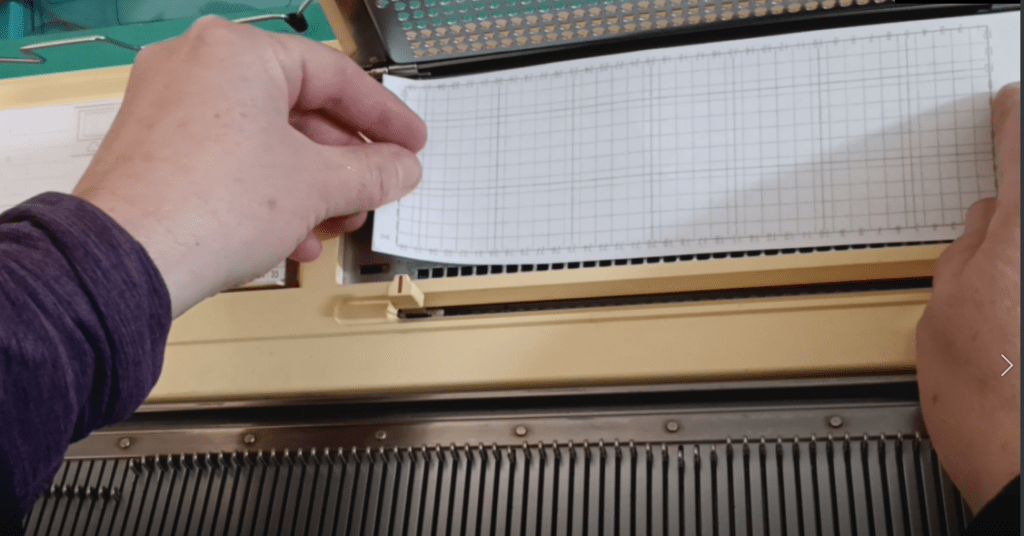
The machine comes with a set of punch cards but they might be slightly different from what is shown in the manual. Please, swatch before knitting for garments and knitted panels.

About imperfections:

Everything works great on this machine. The only minor flaw (with the exception of minor bumps on the case) is the small rust spots on the sinker plate and tension mast. They can be barely seen and when I used this machine to knit a cowl, there was no static and everything worked smoothly.

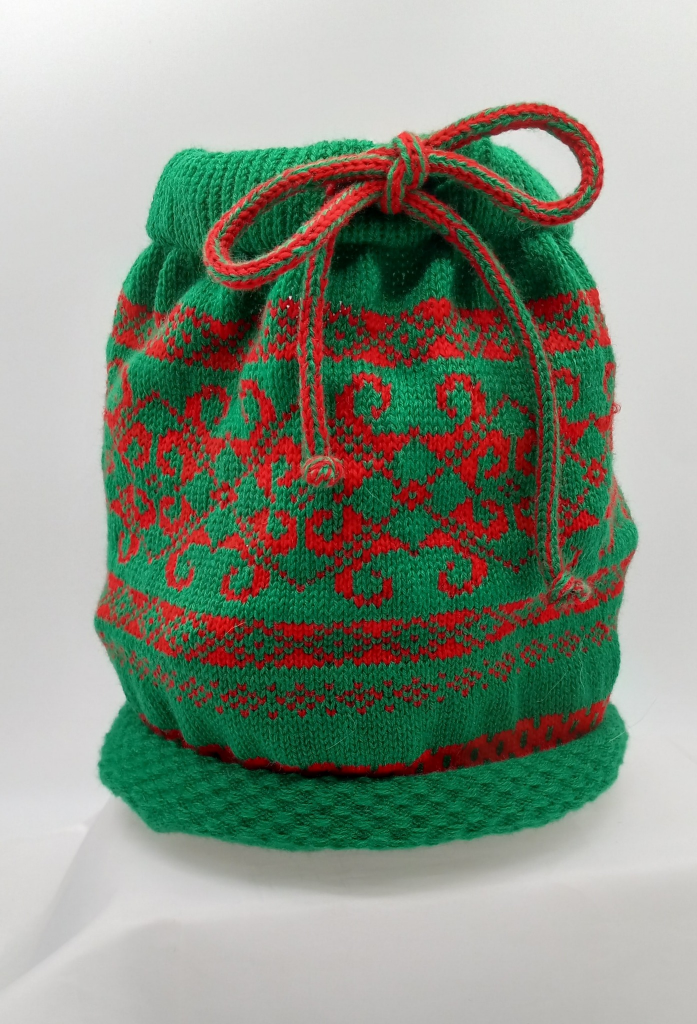
Overall I did not encounter any problems with this machine (with the exception of couple of minor scratches on the case). I hope you will be a proud owner of it to make a lots of fun and warm garments. Like the one I created (shown below) while testing this machine.