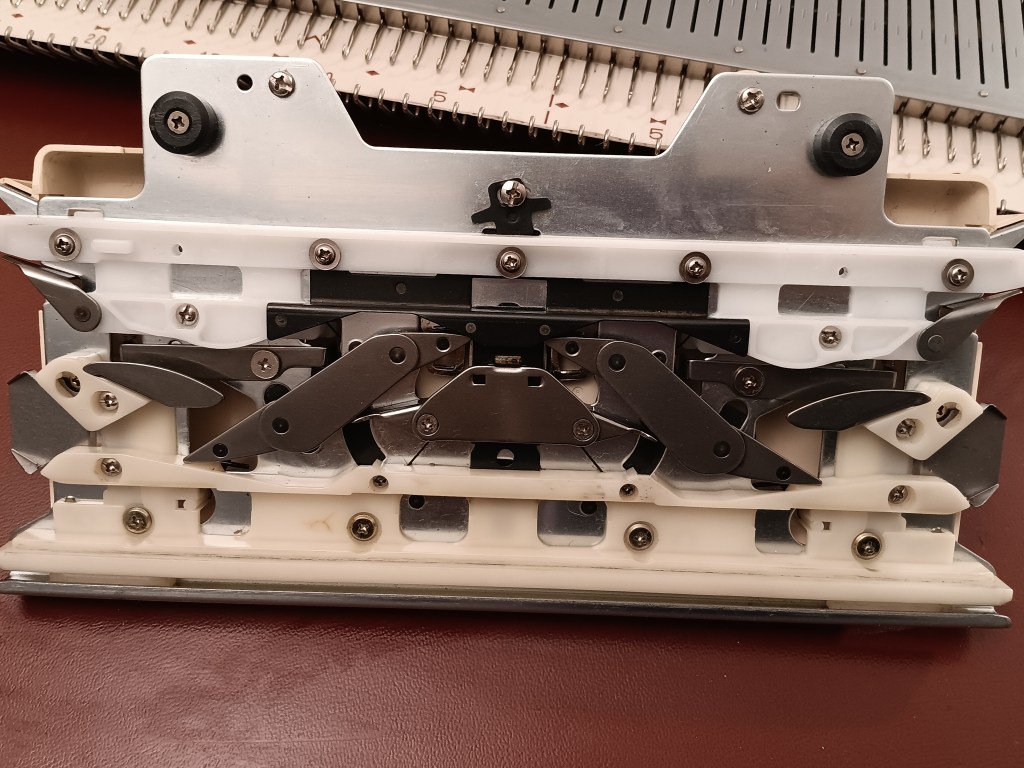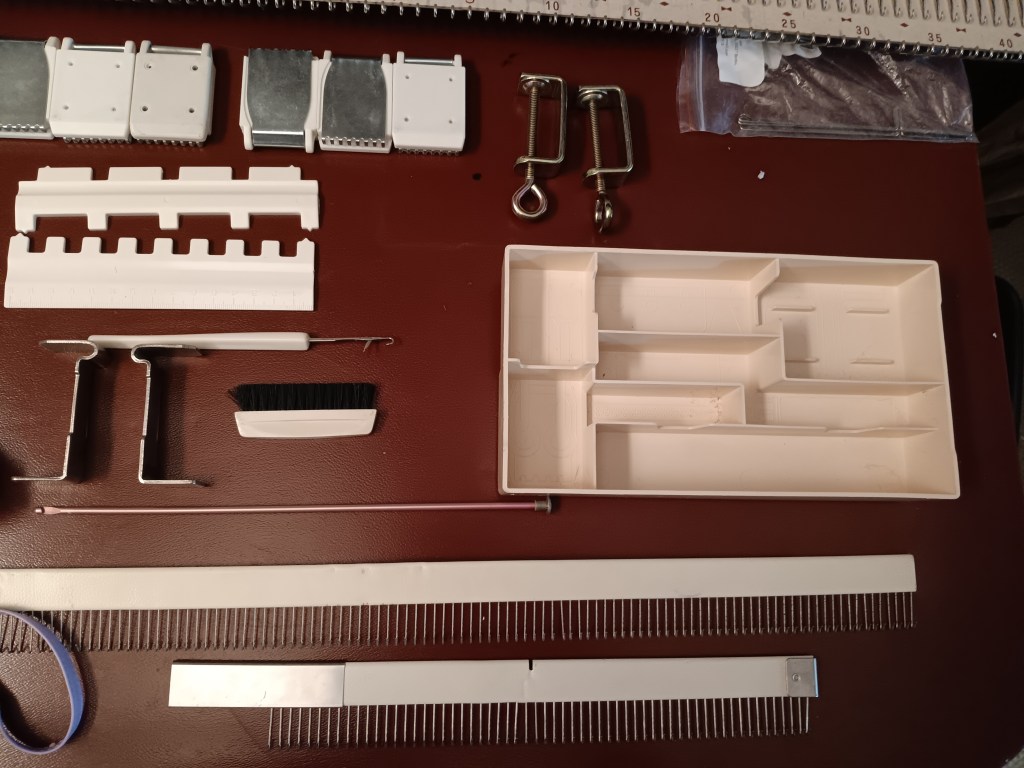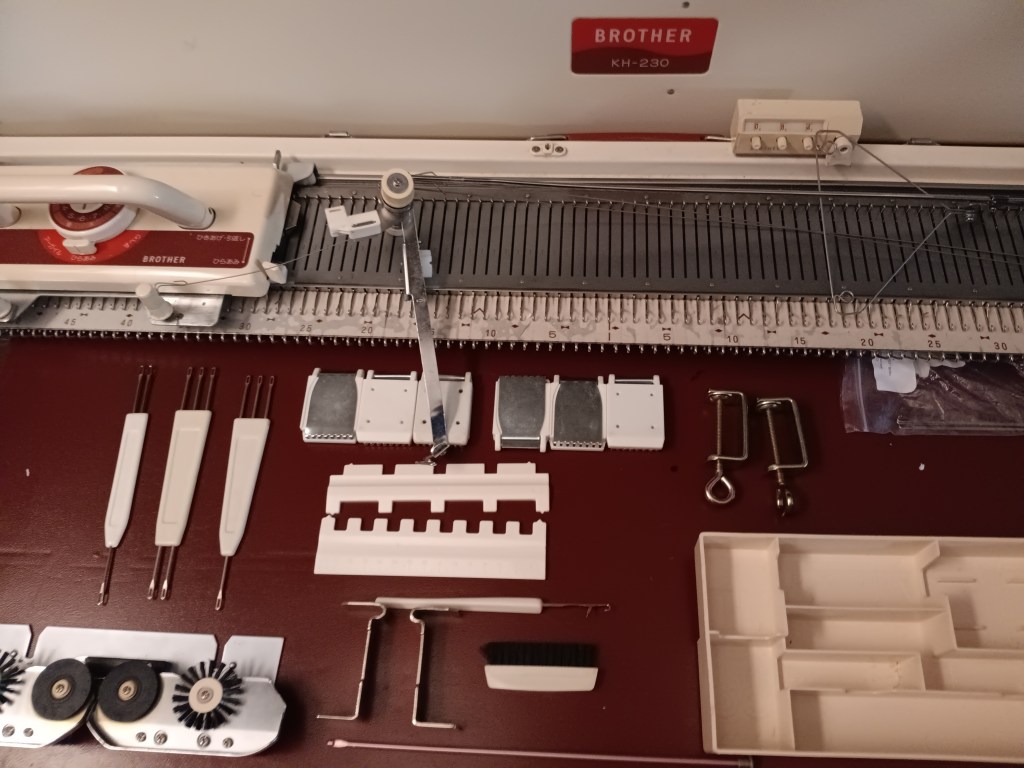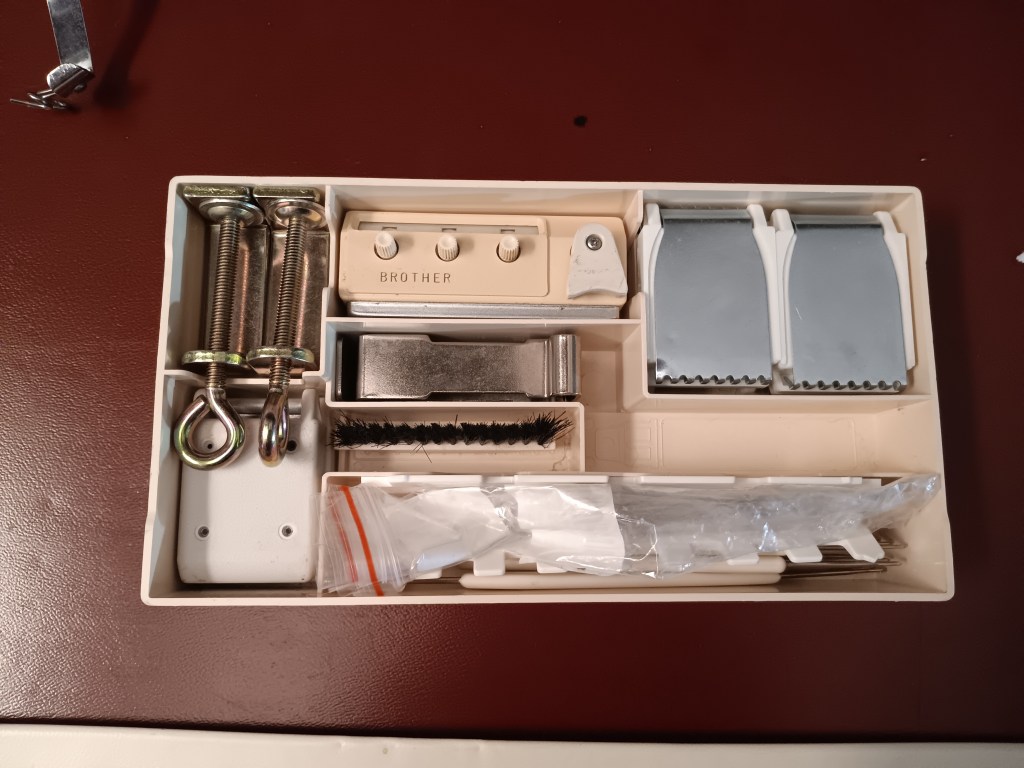
Brother electronic knitting machines: description, comparison, pros and cons.

… still in progress. Stay tuned as I collect more information.

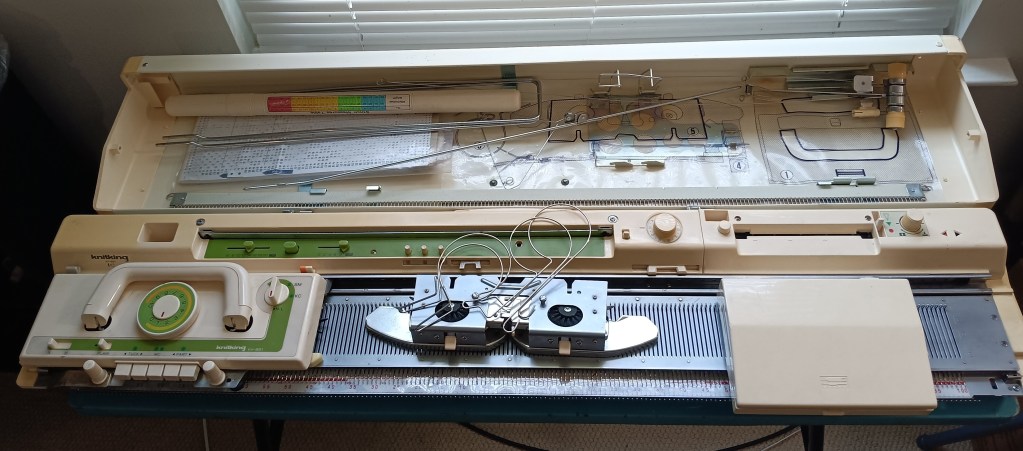
If you already read my post on how to choose a knitting machine and decided that you want an electronic knitting machine and in particular a Brother one, you are in the right place then.

I would strongly recommend electronic knitting machines to both computer/electronics savvy and non-savvy knitters.

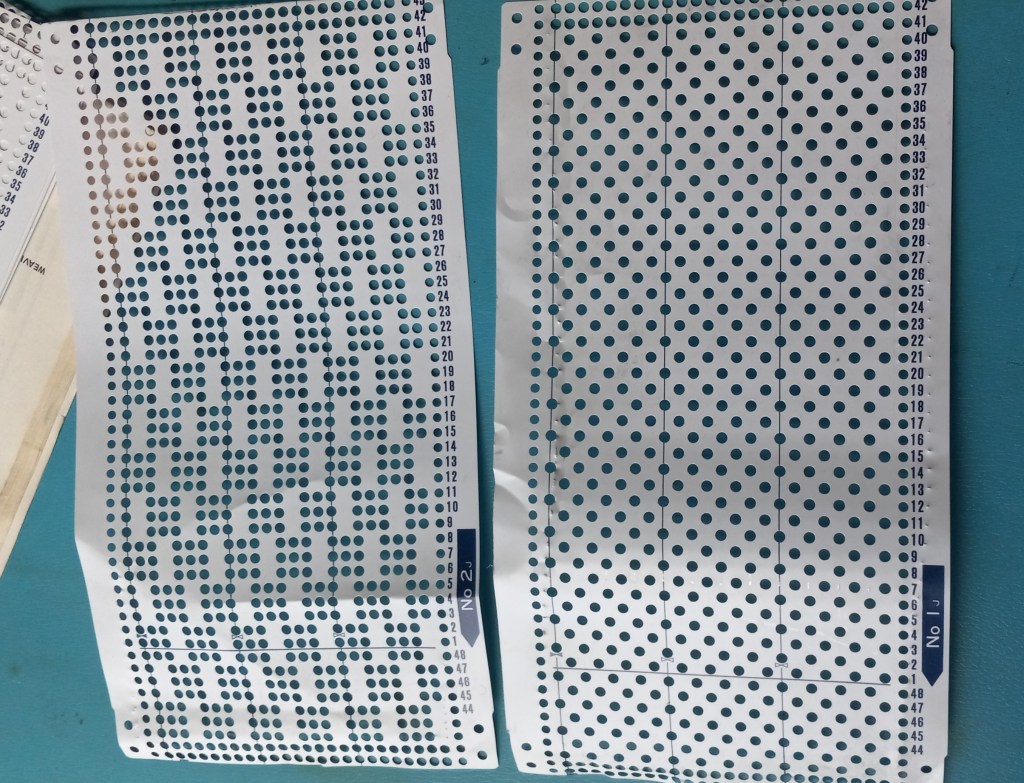
People who are just users of electronics can have a lot of fun with the over 500 of various built-in patterns (only 50 for KH900 and non for KH910).

On top of that, computer-savvy people can create their own patterns in various programs, download them onto the machine, and knit wonderful custom things. Some even hack/modify the electronics to get the machine to read the patterns automatically from the computer.

Pros of Brother electronic knitting machines:
– Electronic brother machines have a lot of built-in fair-isle, weaving-, tuck-, part/slip-, and lace patterns (the exception is KH 910 – more on that later).
– All electronic Brother machines can be accessorized with a color changer (4-color changer for most KH9xx machines and 6-color changer for KH970). 4-color changers are easy to find and are pretty affordable.
– All electronic Brother knitting machines can be easily accessorized with ribbers (KR830, KR850, KR880 and KR900), which are also easy to find.
– Custom patterns with different colors could be created using various software and then transferred to the machine (read a separate article on that).

– Electronics can also be modified and the patterns can be read by the machine directly from the computer. Thus, no need of transfers (some machines do not have enough memory to accept a large pattern. In this case, the pattern needs to be split into several transfers, which adds uncertainty to inexperienced knitters).

Cons of electronic knitting machines:
– Brother KH910 without conversion (aka hacking) to AYAB can only use mylar sheets to knit patterns. Those are hard to find. But still possible. It does NOT have any built-in patterns. Because of all of this, and because of only the 60-stitch repeat pattern built-in mechanism, machine knitters learned how to hack the electronics, forgo the mylar sheets, and just pass on the patterns from the computer.
– Brother KH930: has over 500 built-in patterns. It is a bit more desirable than KH910 because of this. It, however, has limited memory and large custom patterns need to be uploaded in parts. but there are ways to go around it. KH940 is identical to KH930 but has a bit more of memory (but harder to find than KH930) and a whole pattern for, let’s say, medium size throw can be loaded in one file transfer.
– electronics can be finicky sometimes and, thus, need lots of TLC and attention (like, making sure the machine it turned off and not left ON overnight; if the machine feels warm, stop knitting and turn the machine off). However, replacement motherboards are still available or the machine can be converted to AYAB.

– KH970 are very desirable but also hard to find. However, be aware that some knitters love it and some hate. The electronic console is not as straightforward/intuitive to learn. This machine can still be connected to DAK. AYAB is not recommended because this machine is so expensive and because it has so many prebuilt-in patterns.

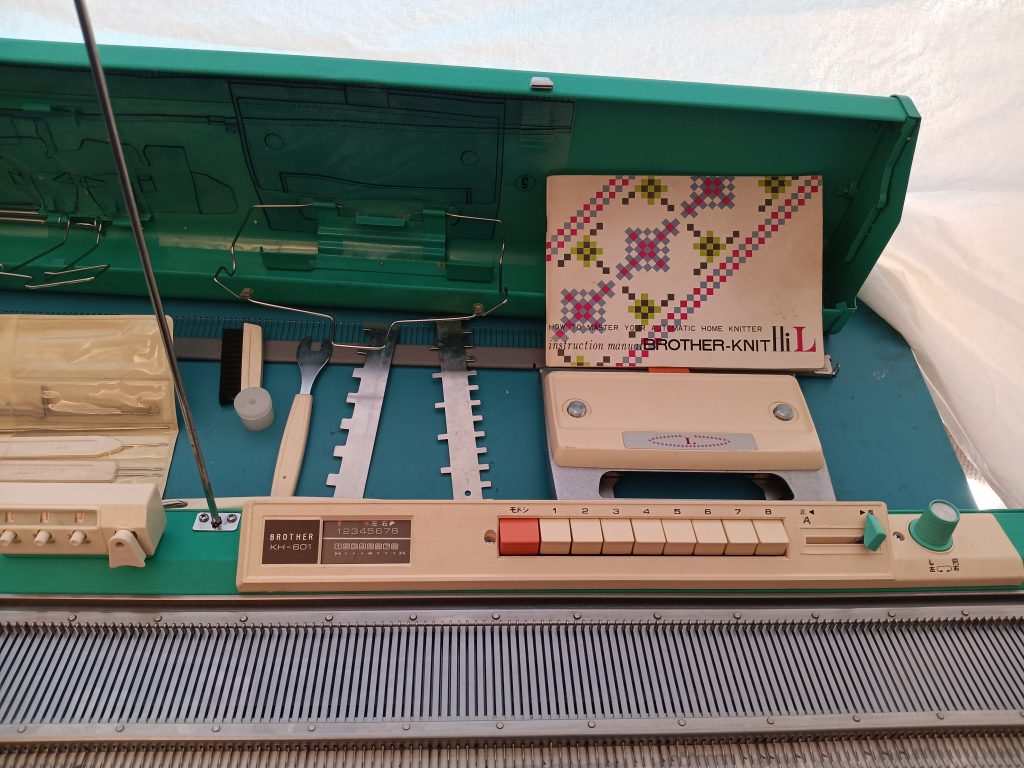
Brother KH601 knitting machine serviced in May 2024

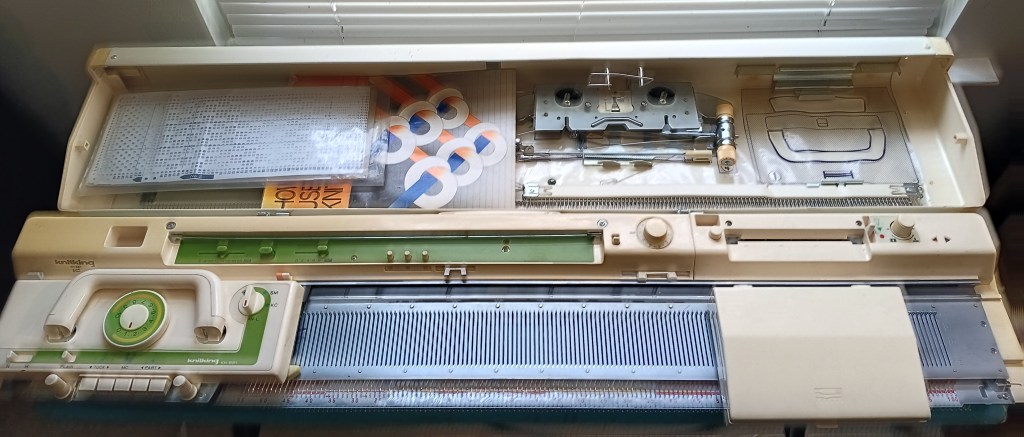
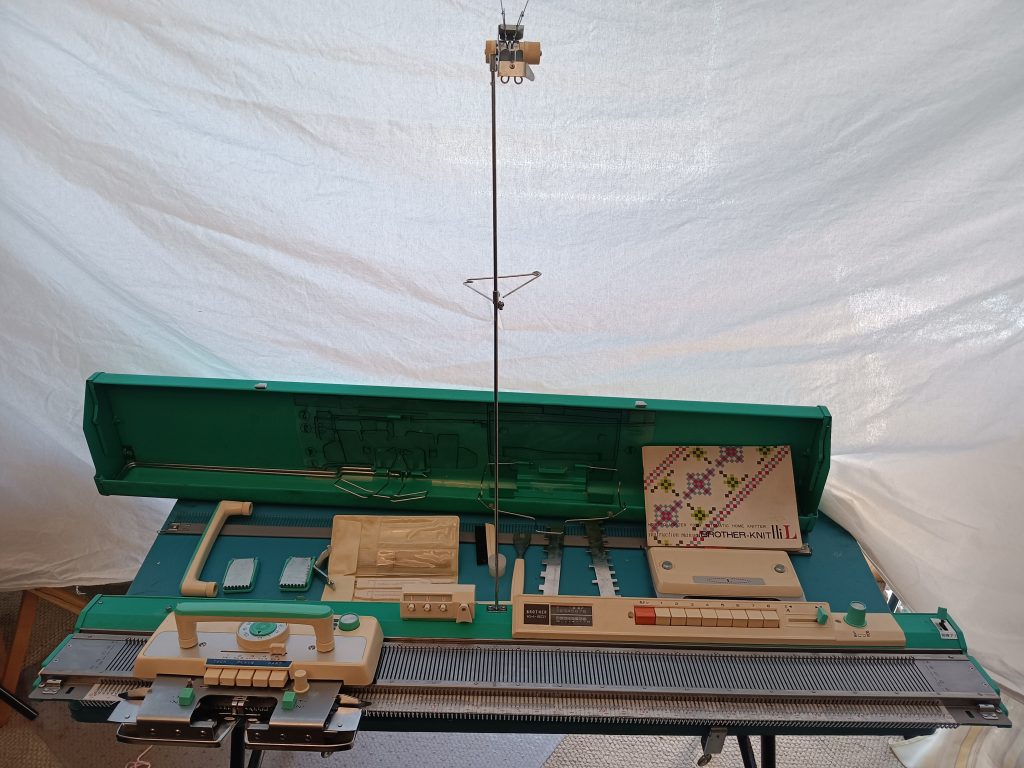
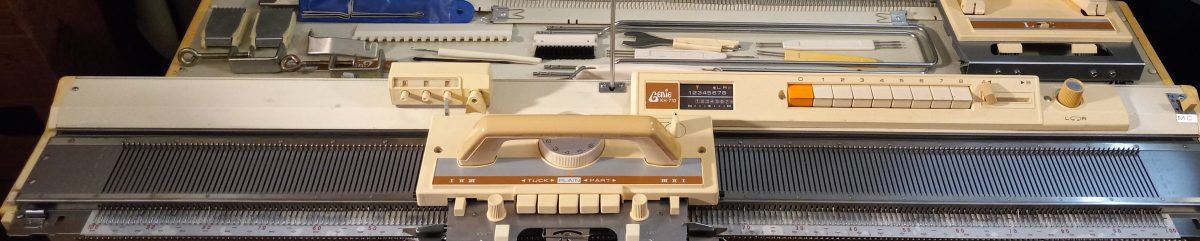
Brother KH601 knitting machine was released by Brother in the 1970s. It is a standard-gauge knitting machine with the needle selection performed by the pattern center and the 8-push buttons. Read more on pros and cons of this model in my Knitting Machine Encyclopedia.

The machine discussed in this blog was refurbished by me in May 2024. I lenjoyed working with this model and learning its mechanisms.

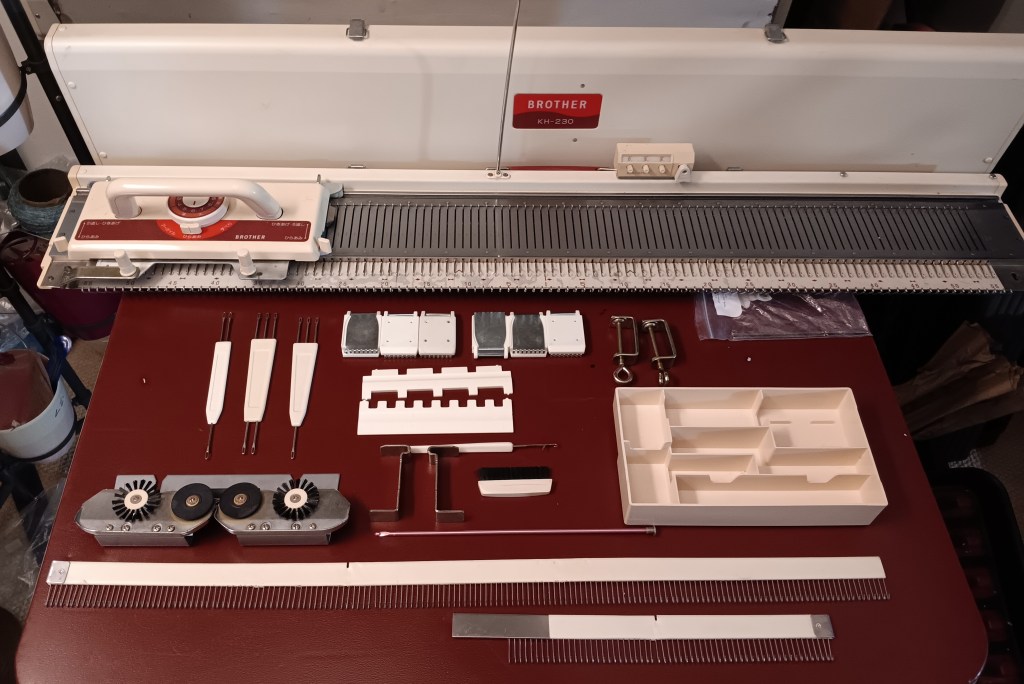
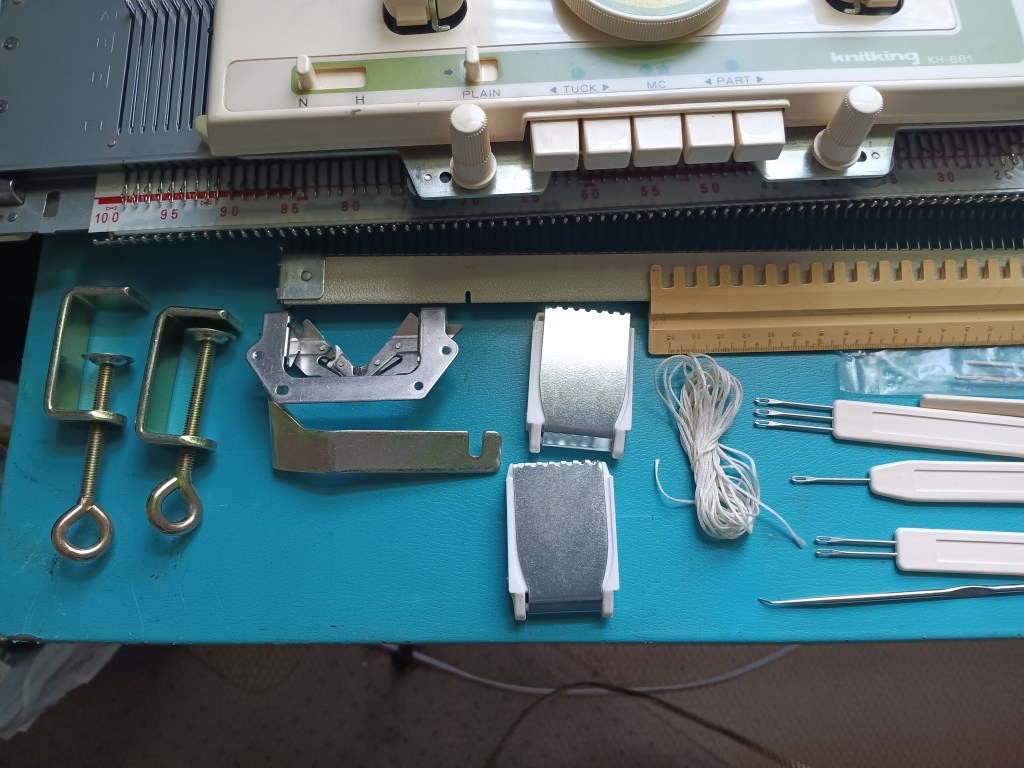
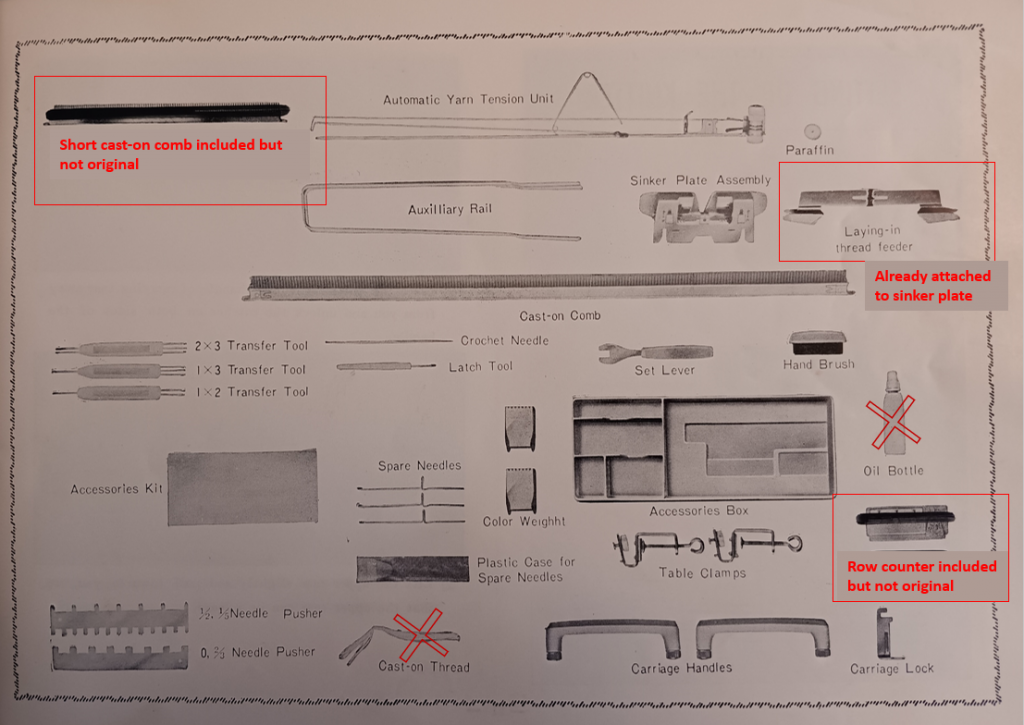
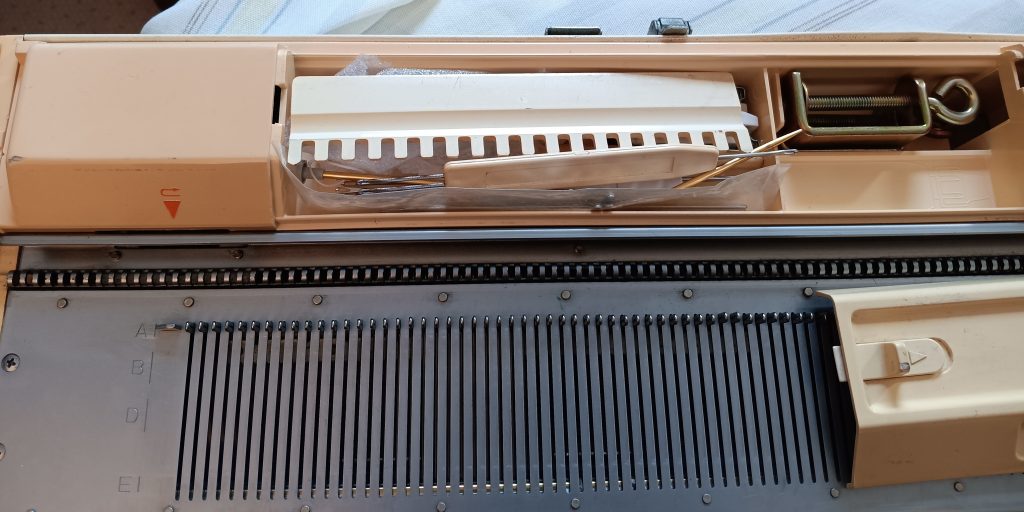
The machine comes with all major accessories (lace carriage, cast-on combs, extension rails, tension mast). The standard set includes one long cast-on comb (for the full bed) and one short one. The short one did not come with this machine so I will include a cast-on comb from my stash but its color is slightly different: greenish (while the original is greyish).

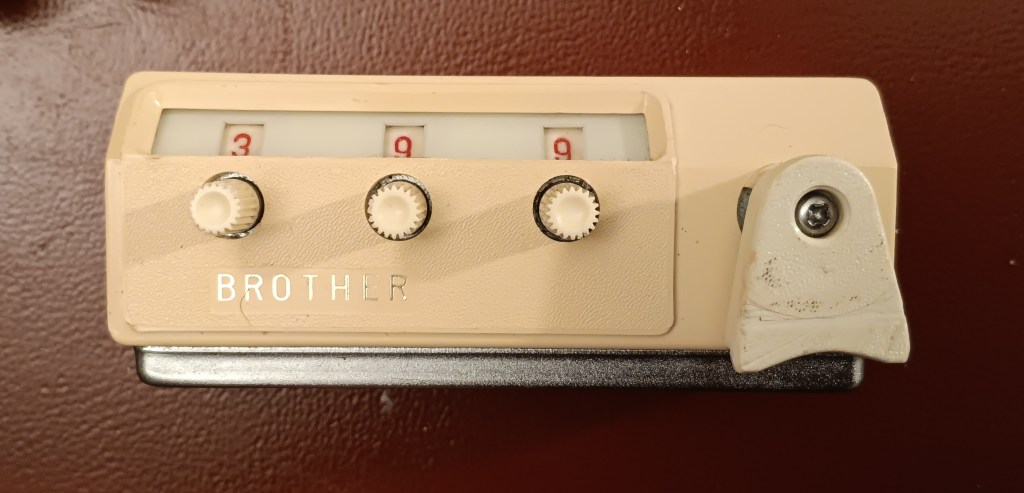
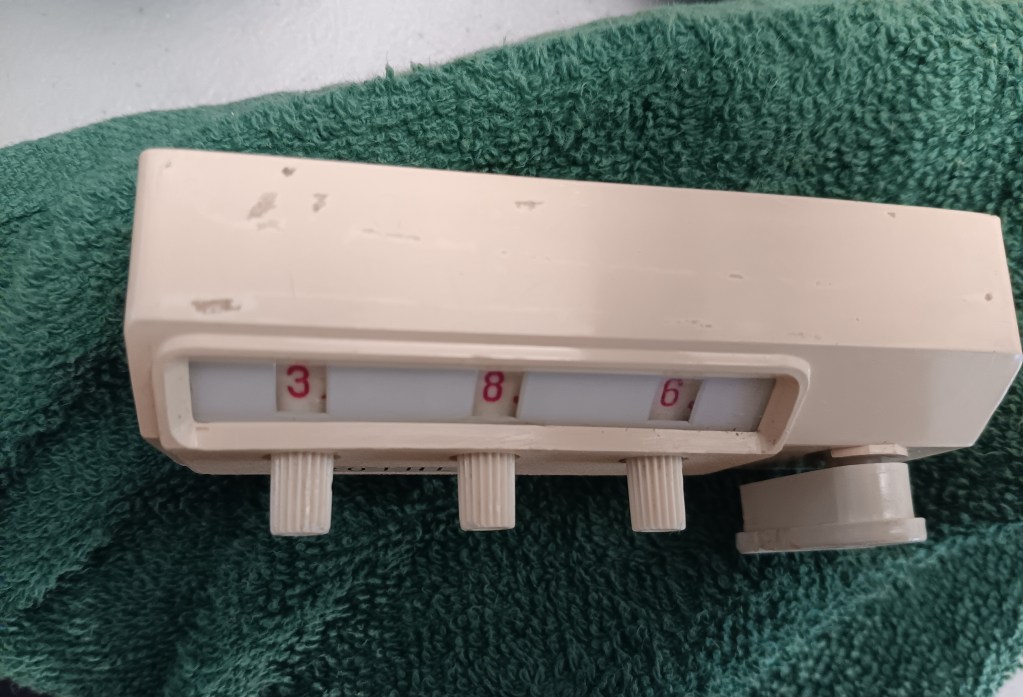
Most minor accessories are included as well. The row counter is not the original one (the original emerald-color one was missing – so I included a brand new cream-colored row counter from my stash). A hard copy of the manual will be included as well.

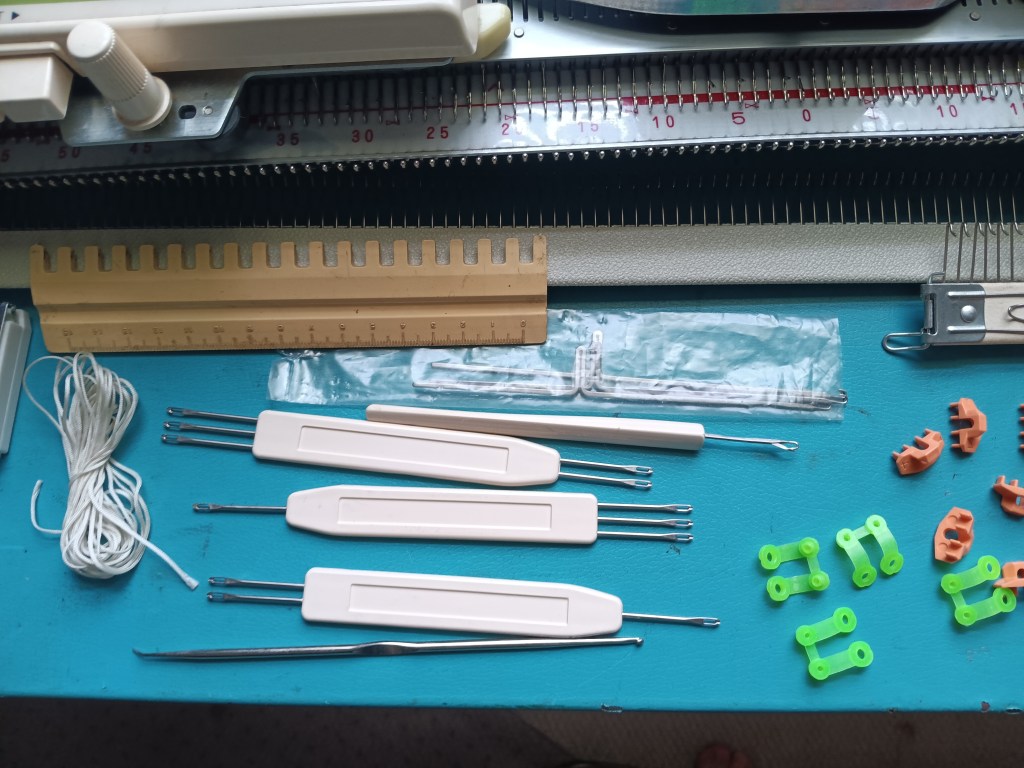
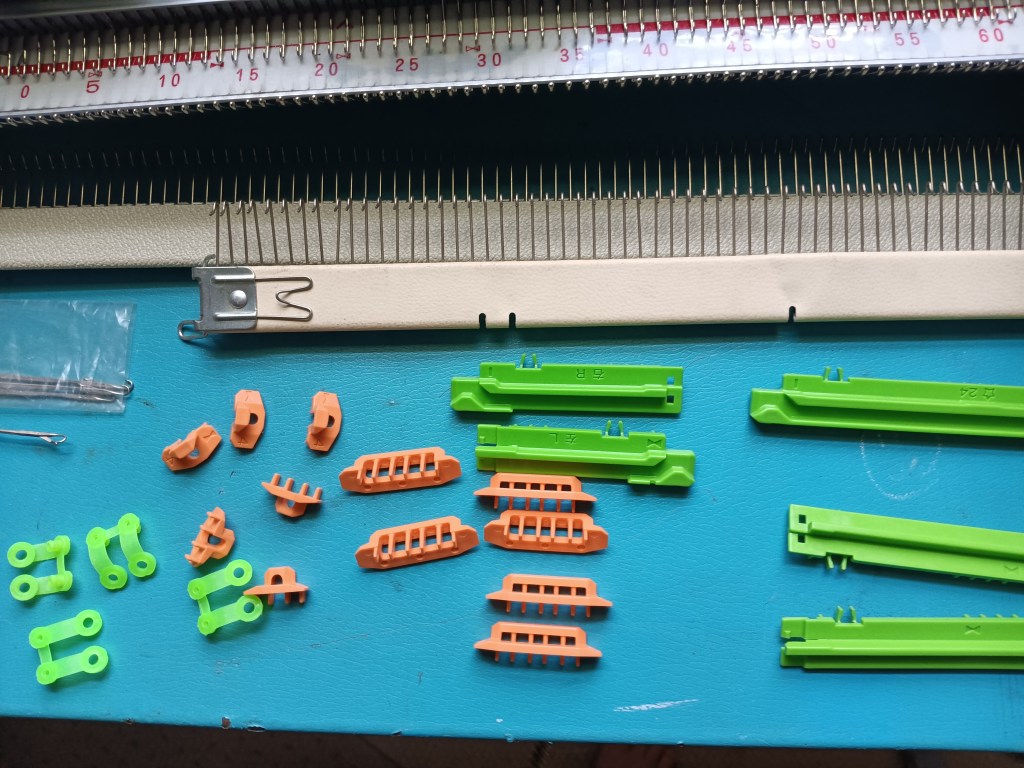
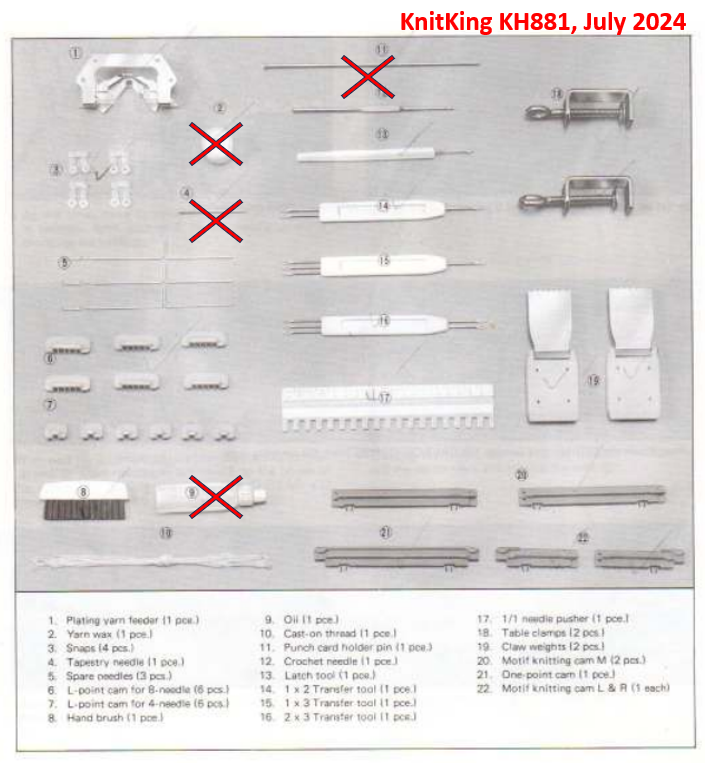
The accessories that are NOT going to be included are: cast-on thread (any strong thin yarn will work) and a bottle with oil (use Gun Oil instead). Laying-in thread feeders are already attached onto the sinker plate. Also, the machine did not come with the 1×1 needle ruler and I think this is such a basic tool that I included one from my personal stash. It is not metal like the original needle selection rulers but does the job.

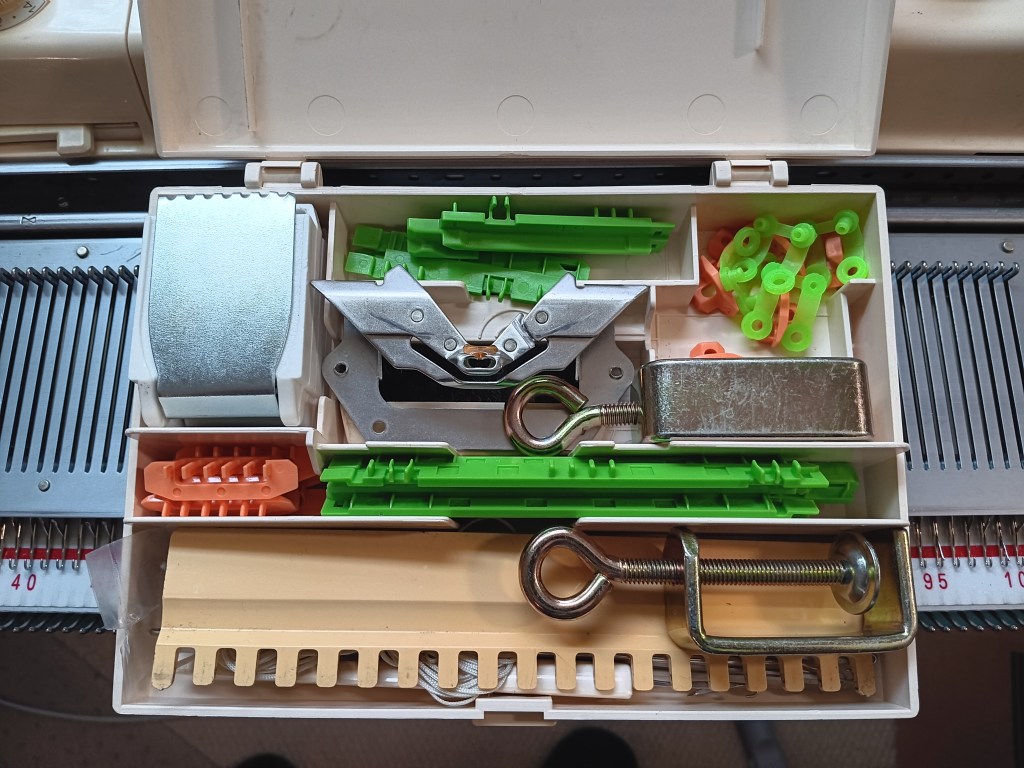
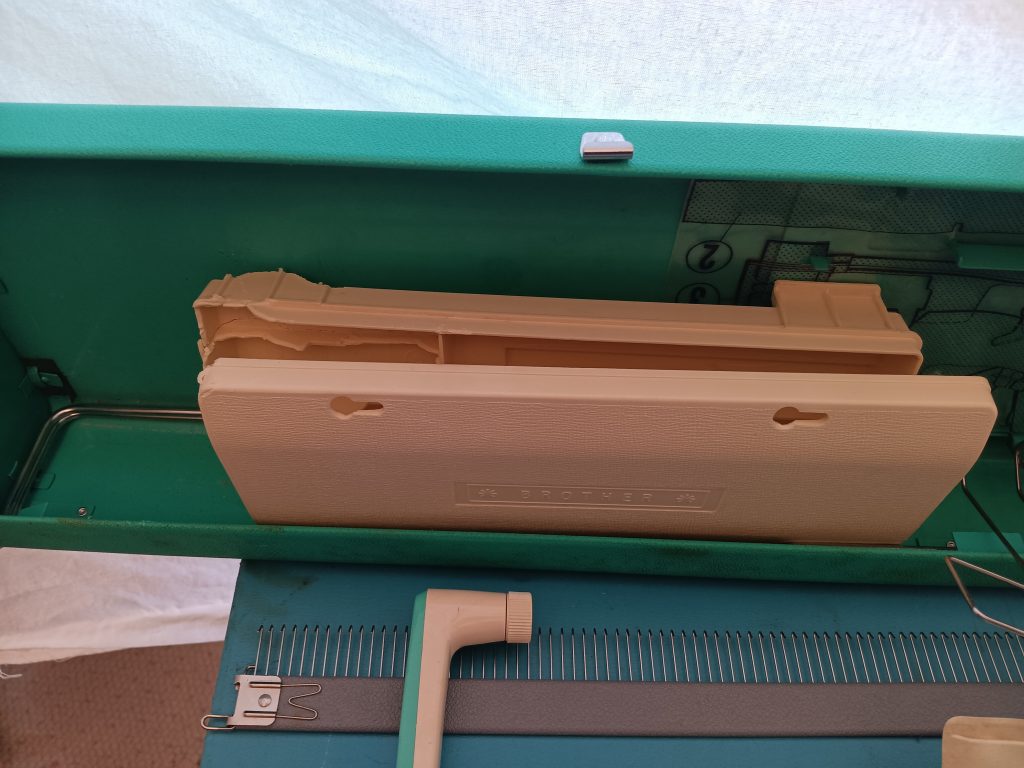
All minor accessories fit into the toolbox. Unfortunately, the old plastic became fragile and the box has several cracks and misses pieces that cracked. It still holds all the tools well and will be included with the machine.

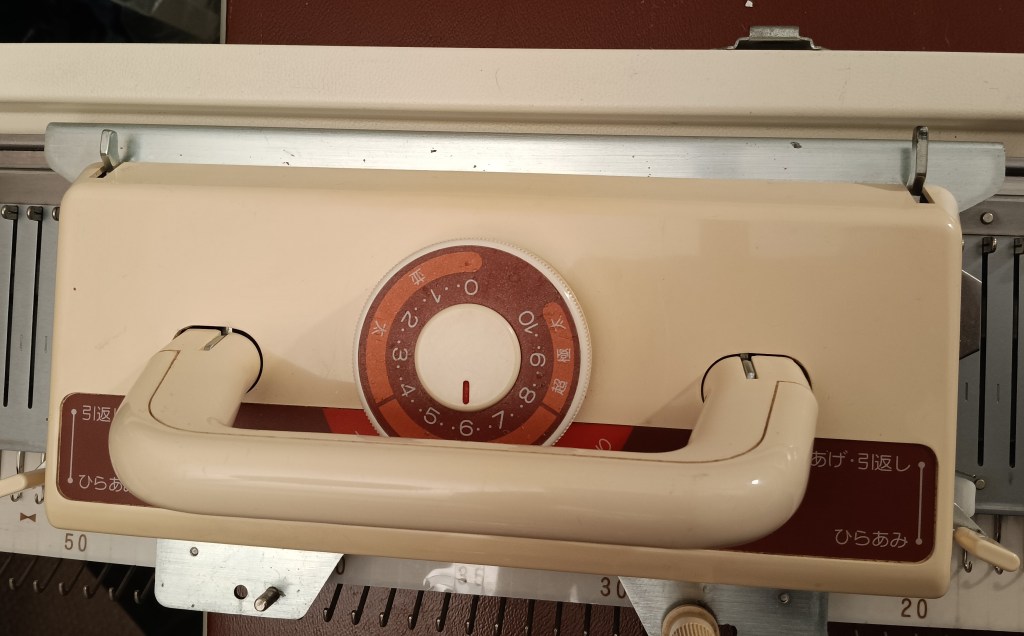
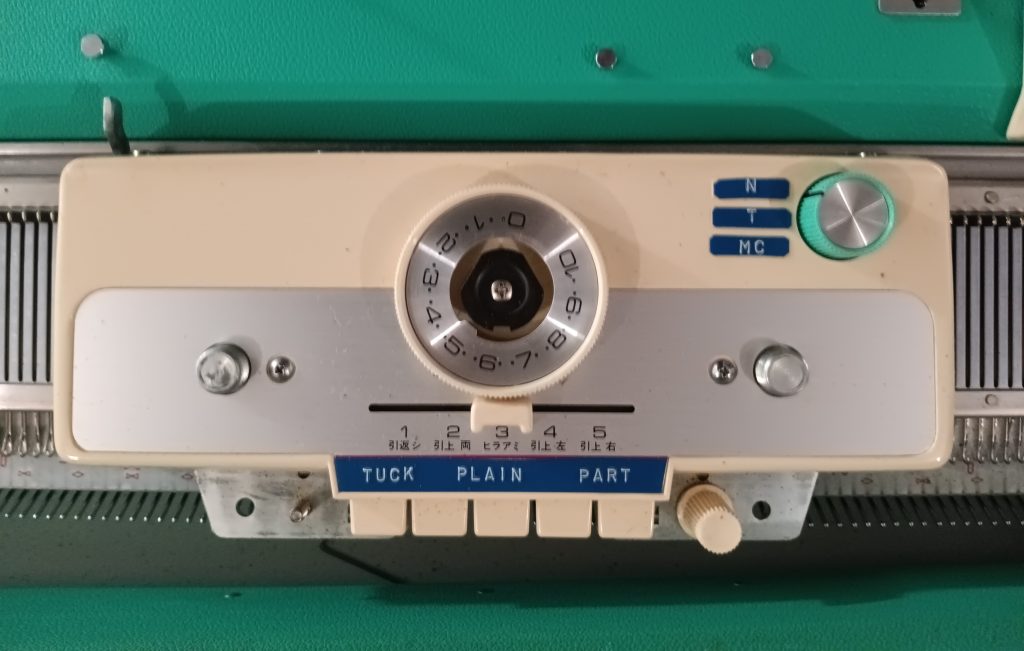
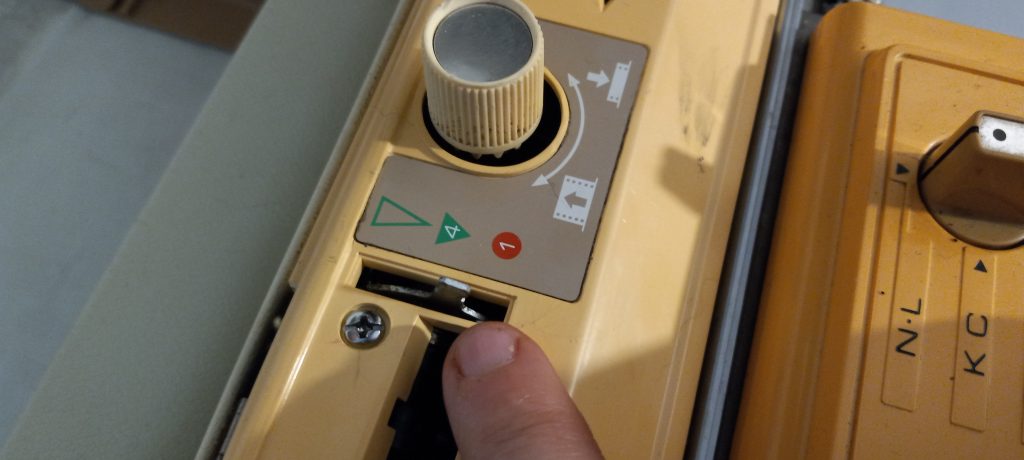
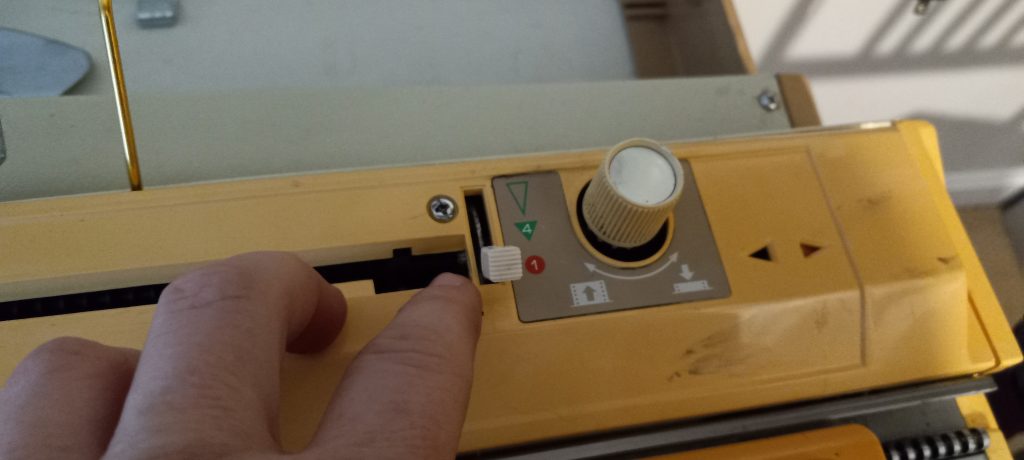
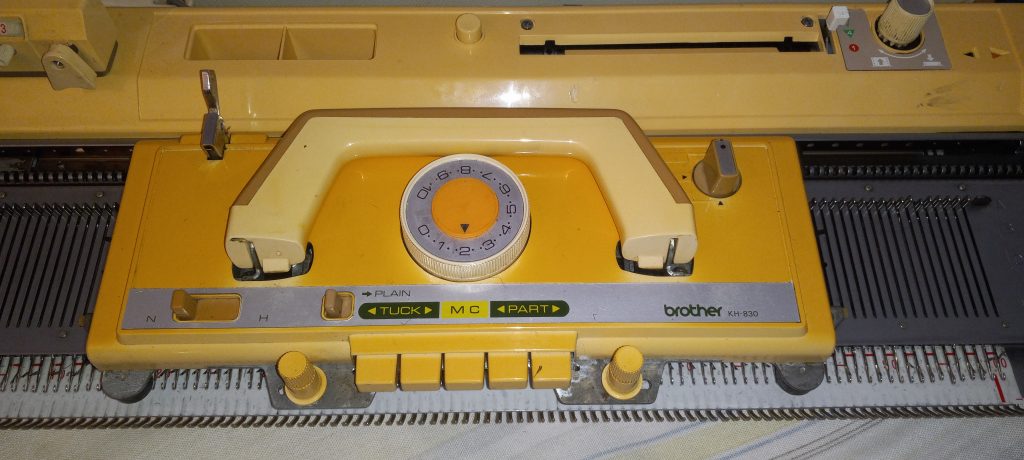
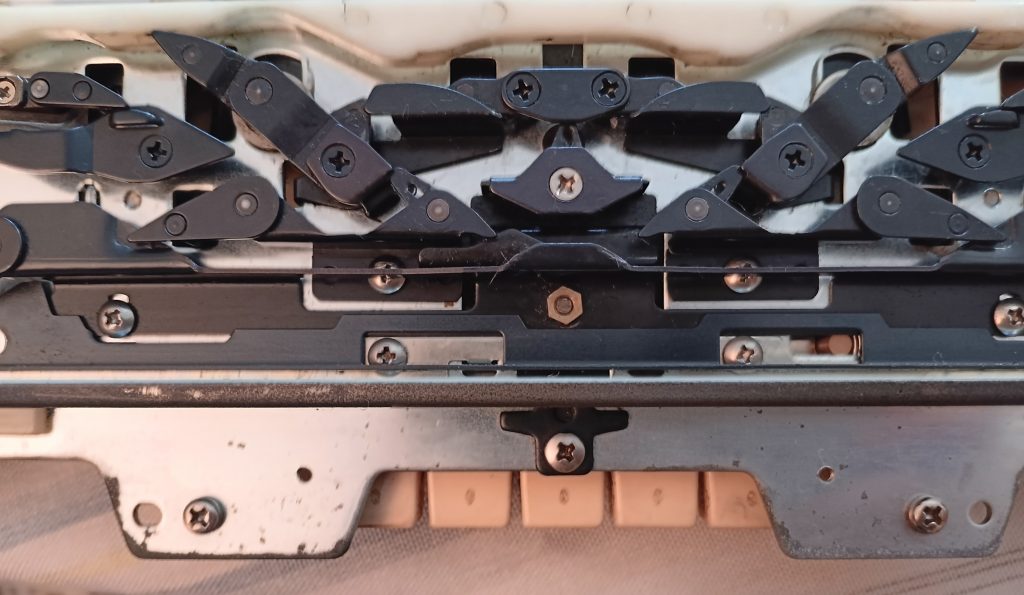
The carriage of KH601 differs a bit from all other 8-pusbutton machines I knitted on (KH5552-KH588-KH710): it has a sliding hold cam lever in the middle of the carriage right under the tension dial instead of two levers on the side.

The writings on the carriage and on the pattern center are in Japanese. But the previous owner left some marks in English – so it will be easy to understand and follow the manual.

The hard copy of the manual that came with this machine shows a slightly different carriage (a more standard for 8-pushbutton machines – with side levers rather than with a slide lever above the buttons on the carriage). There is a one-page insert (provided by the manufacturer, I believe) that shows the setting for this particular carriage.

I recommend using the manual for the KH800 to guide you on the HCL position (the sliding lever above the TUCK, PLAIN, and PART buttons) during patterned knitting.

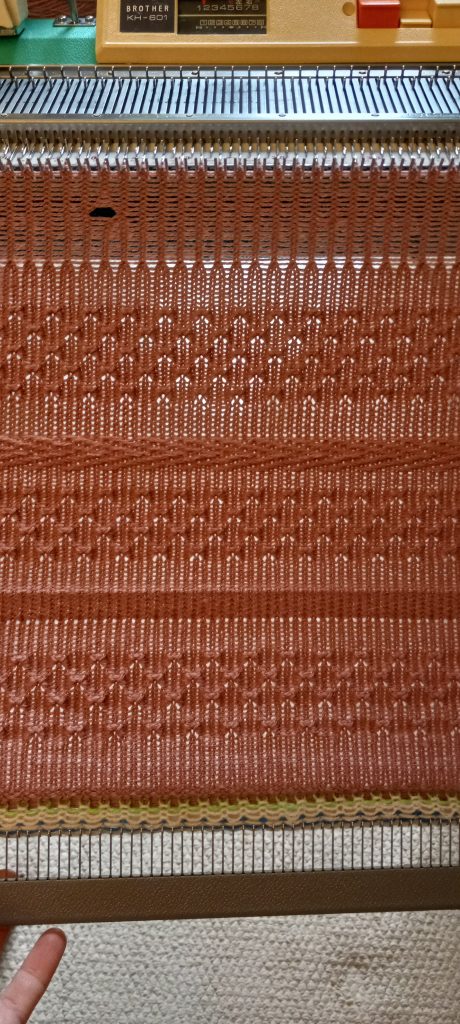
I thoroughly cleaned the machine, inspected and cleaned all the needles, replaced the sponge in the retaining bar, and cleaned and serviced the carriage (ensured all the levers, knobs, and buttons move freely). I then tested the needles by knitting various patterns on a full bed watch the video of these tests here).

All tests were passed with flying colors! The patterns I tested were the “butterfly” pattern with needles being held and then knitted, a 1×1 tuck pattern (the trickiest to execute out of all tuck-pattern, in my opinion) and a slip-stitch siz-zag pattern. All neeles worked great!

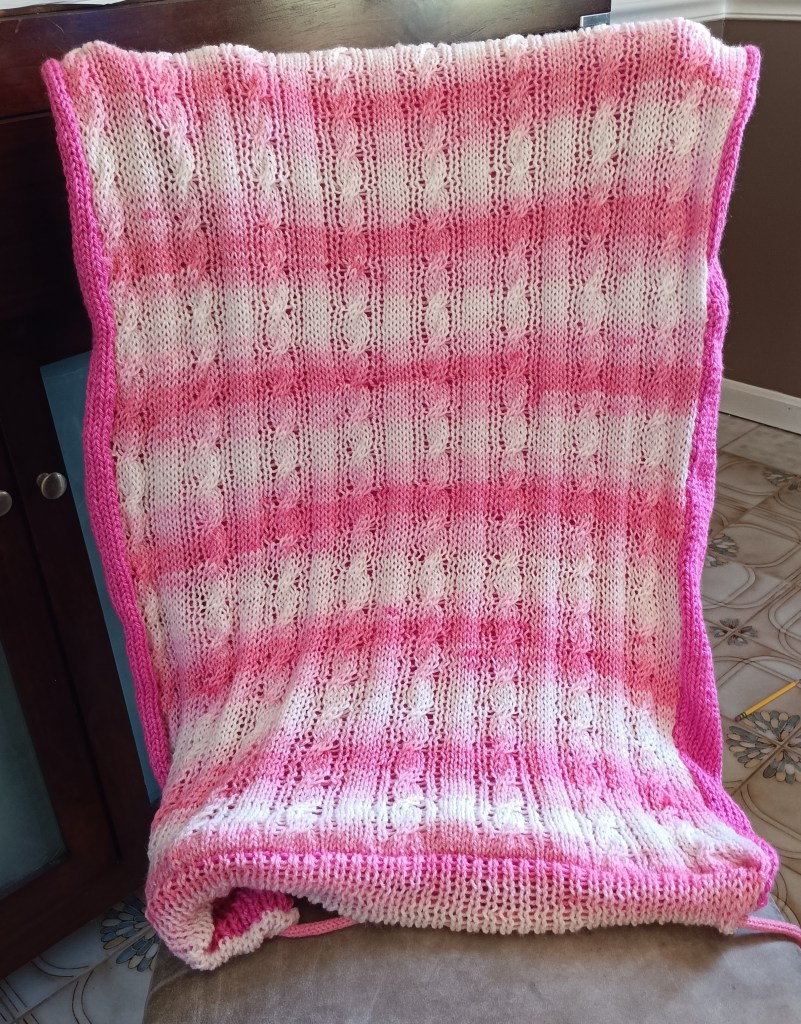
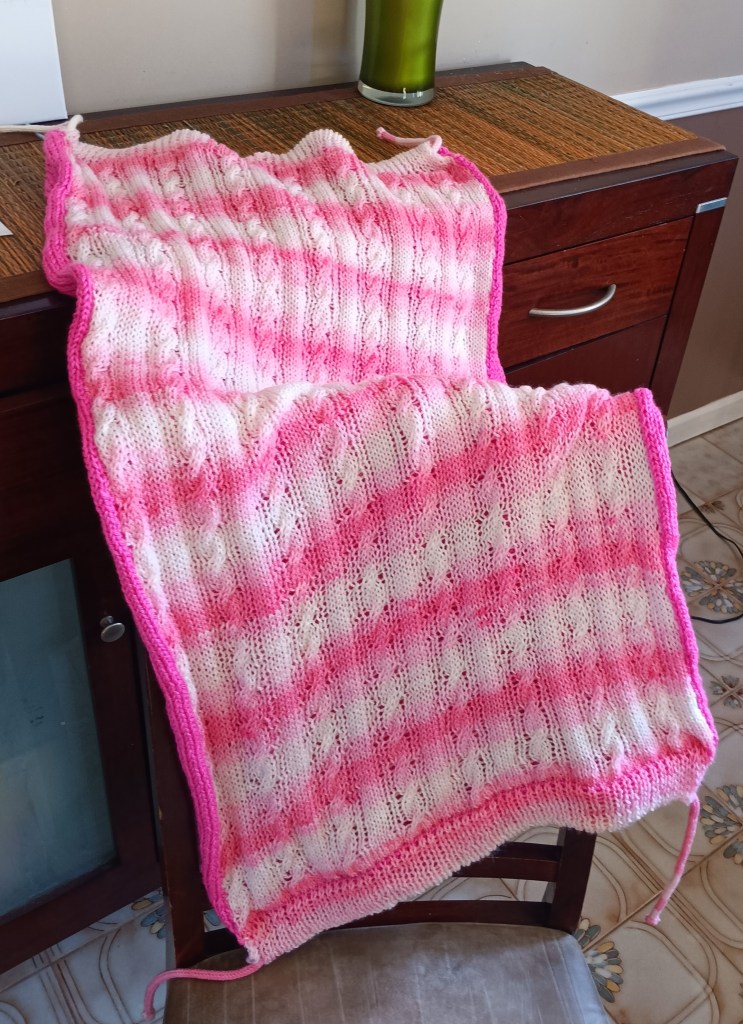
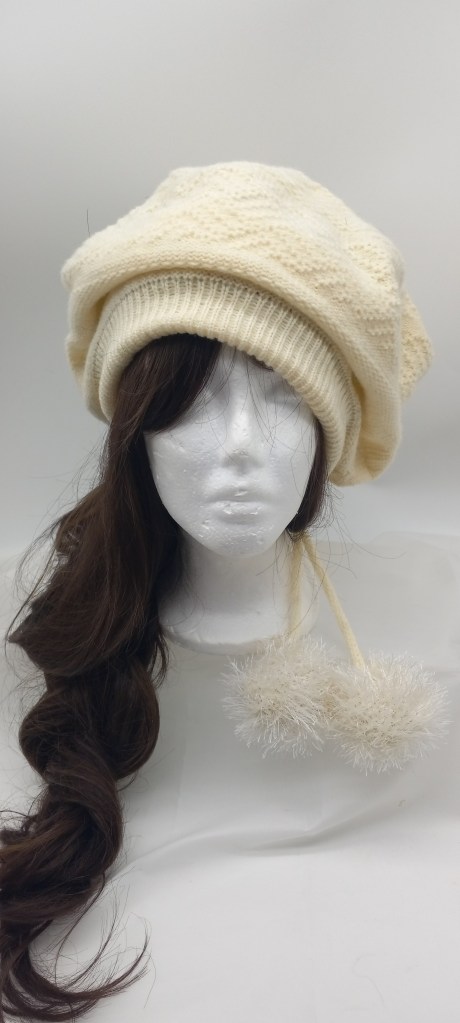
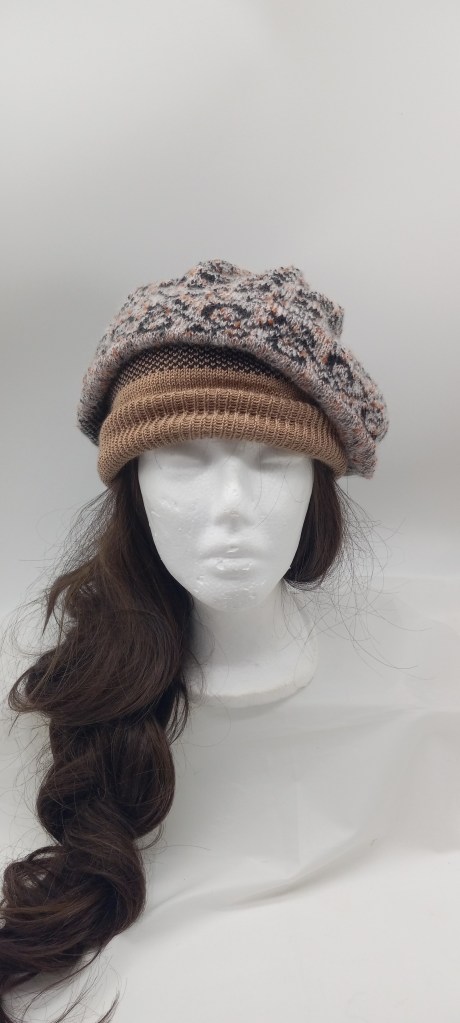
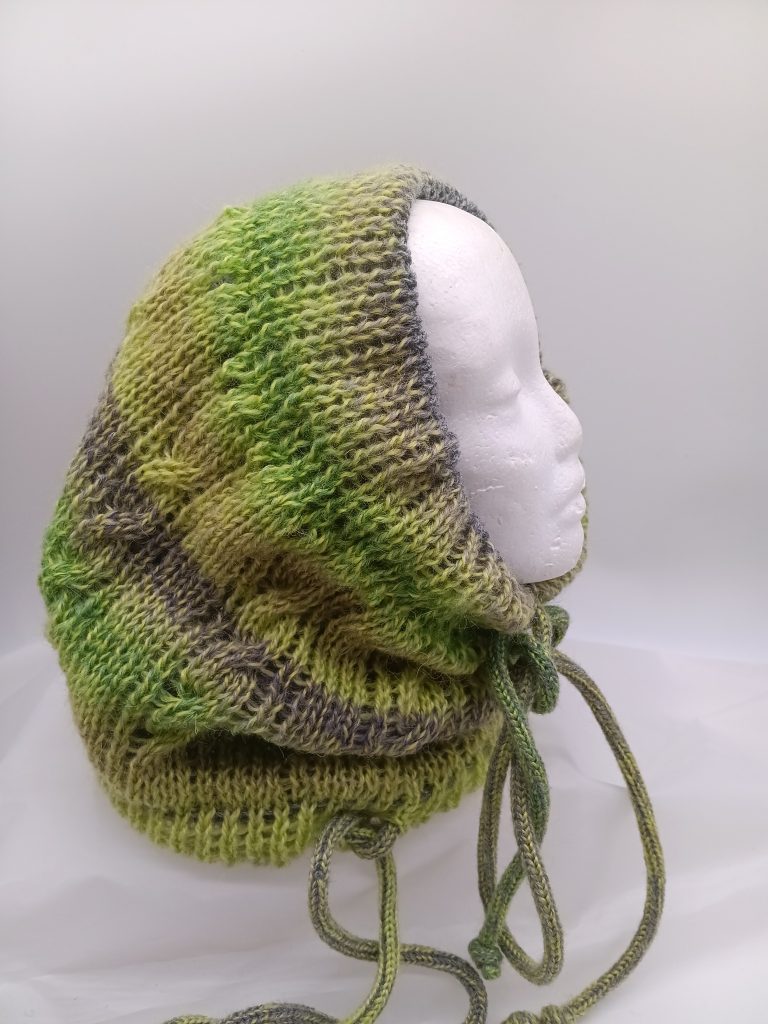
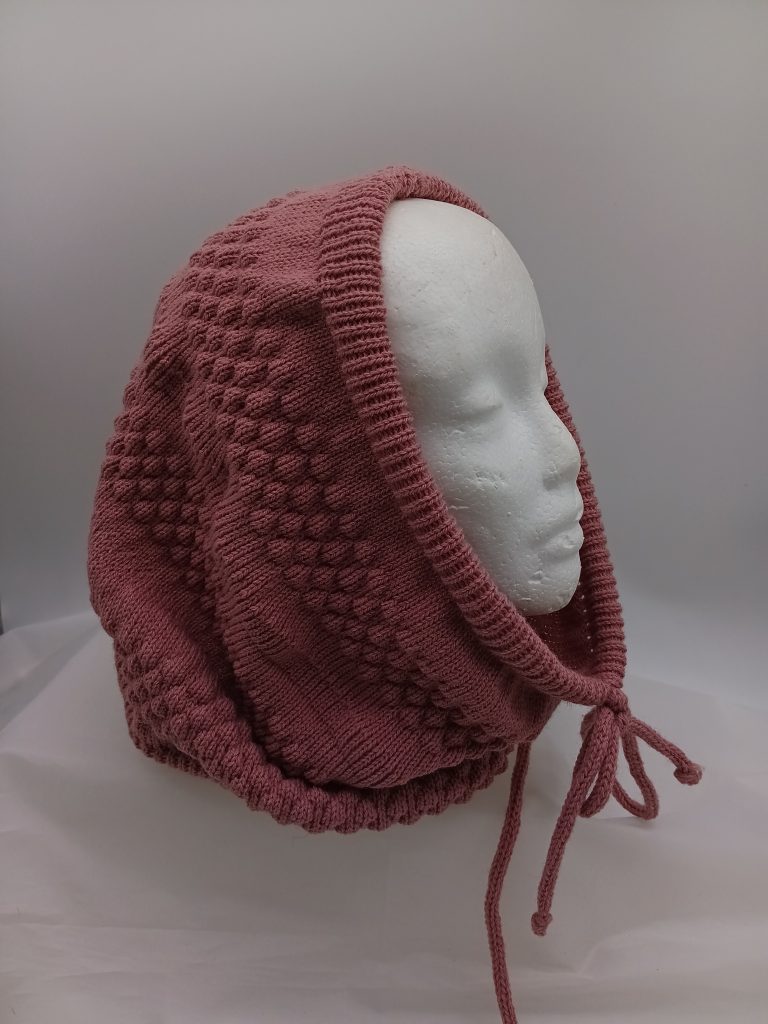
The knitted fabric was then converted into a reversible cowl/neck warmer/hood.

Now about imperfections:

  • Buttons #6 and #7 in the pattern center are a bit sluggish when are revered to the unpushed position. But only if they are unpushed by themselves. When pushed and then unpushed together, they are pretty perky. My video shows this flaw at the end but it did not affect the patterning or the knitting of the machine.
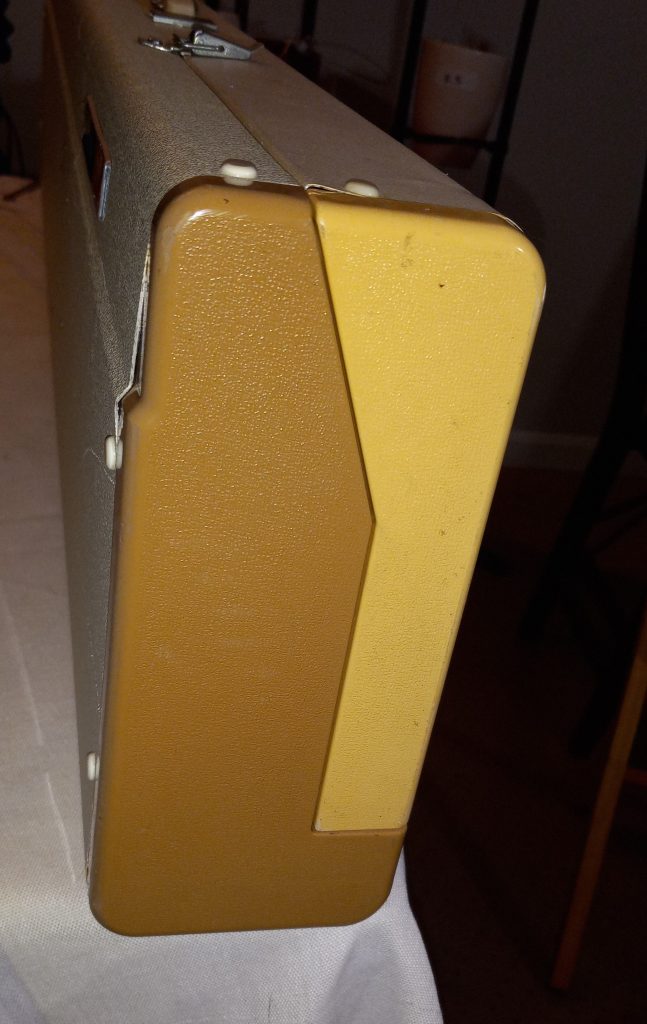
  • There are some minor scratches, stains, and bends on the case and the lid (not shown here but I will document them when I pack the machine).
  • The cracked tool storage box, with some especially fragile cracked areas, is missing. The lid for the storage box is a bit cracked too (not shown).
  • The greenish cover for the tension dial has a small broken nugget that holds it in place. It sometimes gets loose. I did not glue it completely because it needs to be removable in case the carriage requires disassembling. It does not affect the functioning of the carriage or the tension dial.
  • The carriage has minor rust and metal discoloration spots. It did not affect the functioning of the carriage.

Overall, this machine behaved very well. With regular oiling and cleaning, it will serve your knitting needs for many years!

This machine as well as other machines with punchcard patterning capabilities can be purchased from my Etsy store, or in my independent shop (for less).

Not sure which machine is right for you? Read how to choose the right machine for your needs. Regardless of the machine you choose, check out easy-for-beginners projects for your first knitting machine. Also, check my website for a blog article on the first steps with your new-to-you knitting machine.

Have questions? Get in touch with me through FaceBook: https://www.facebook.com/MightyKnittyMachines

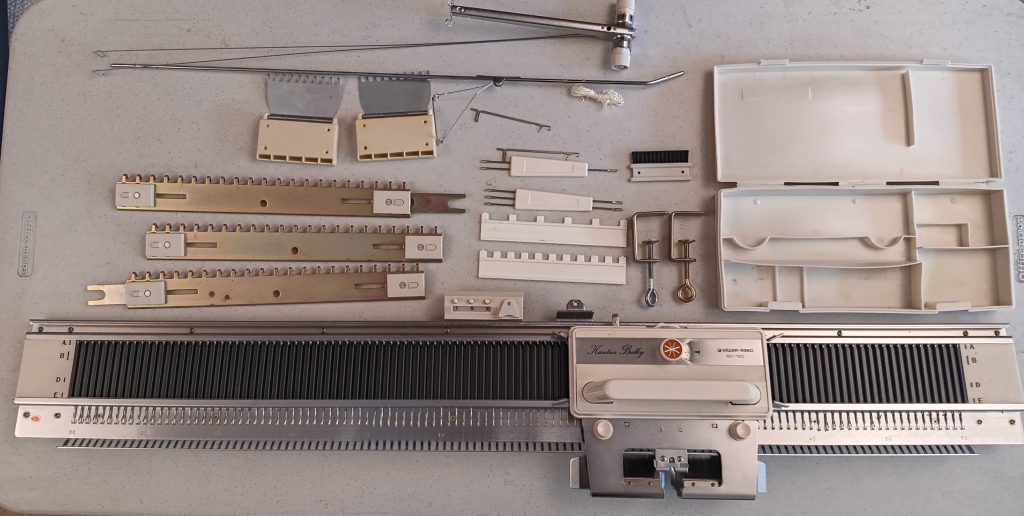
Silver Reed SK120 knitting machine refurbished in May 2024

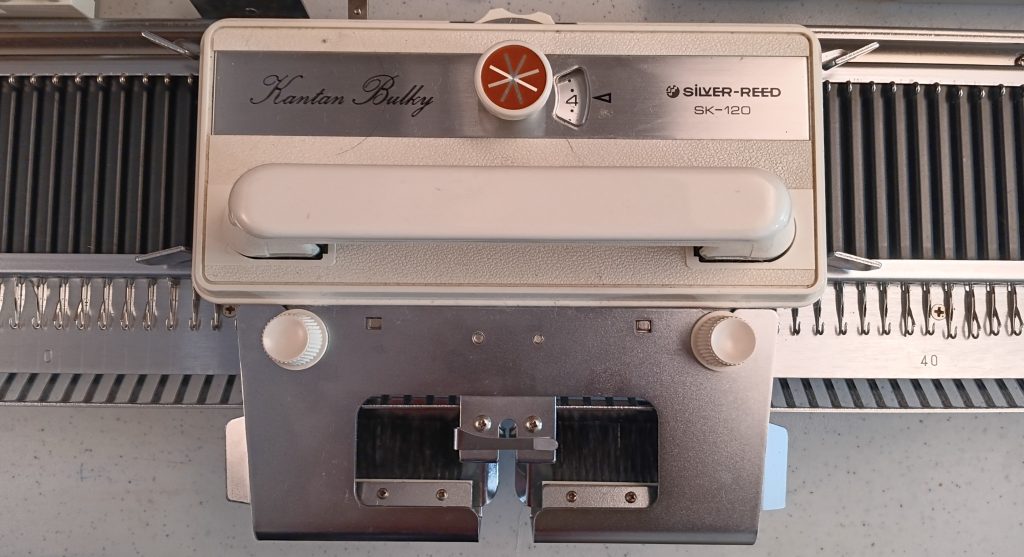
Silver Reed SK120 knitting machine is a flat-bed metal knitting machine with needles 8.0 mm apart. The bed contains 120 large needles. Read more about this model in my Knitting Machine Encyclopedia, including its pros and cons. The rest of the blog is dedicated to a specific Silver Reed Sk120 machine I serviced and tested in May 2024.

I loved working on this machine especially because of its simplicity. The machine I worked on was also marked as Kantan Bulky. This machine comes with all accessories except oil (use gun oil instead). All minor accessories fit into a toolbox, with an attached lid. The box is in great shape.

A hard copy of the manual will not be included but it can be found online for free.

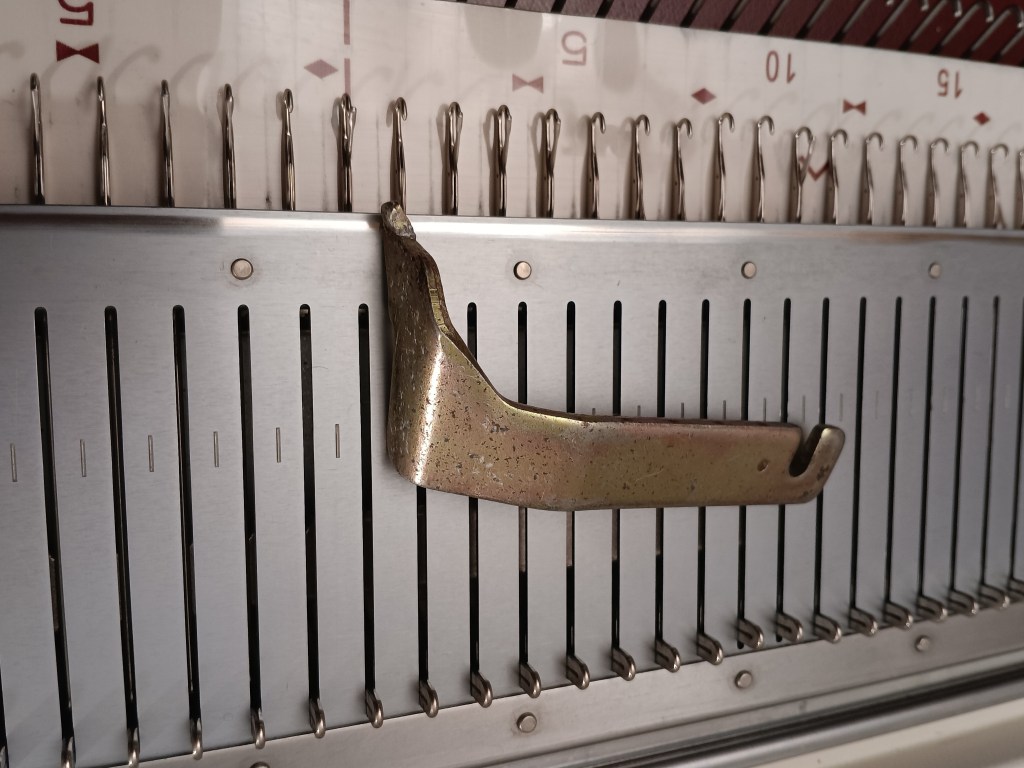
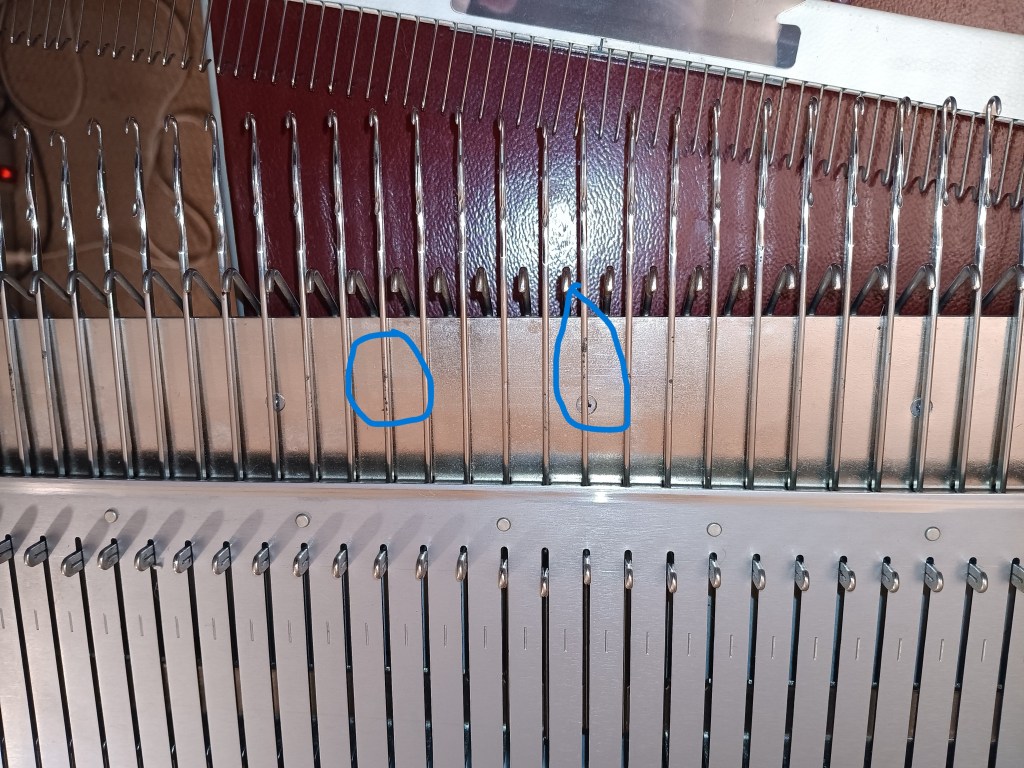
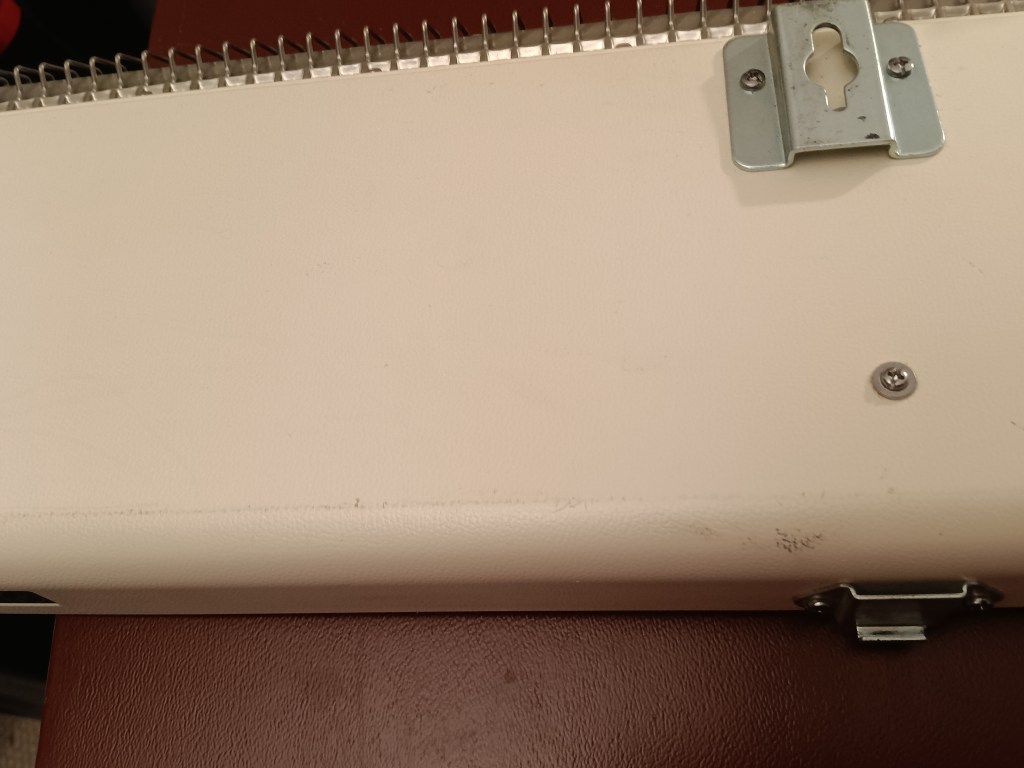
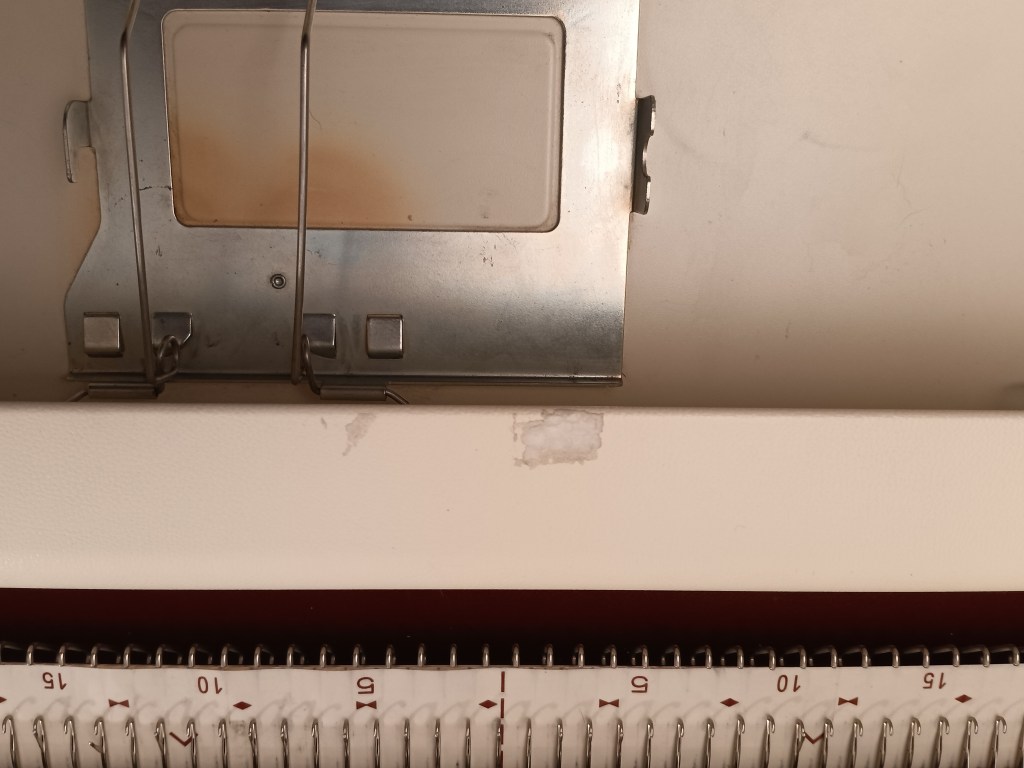
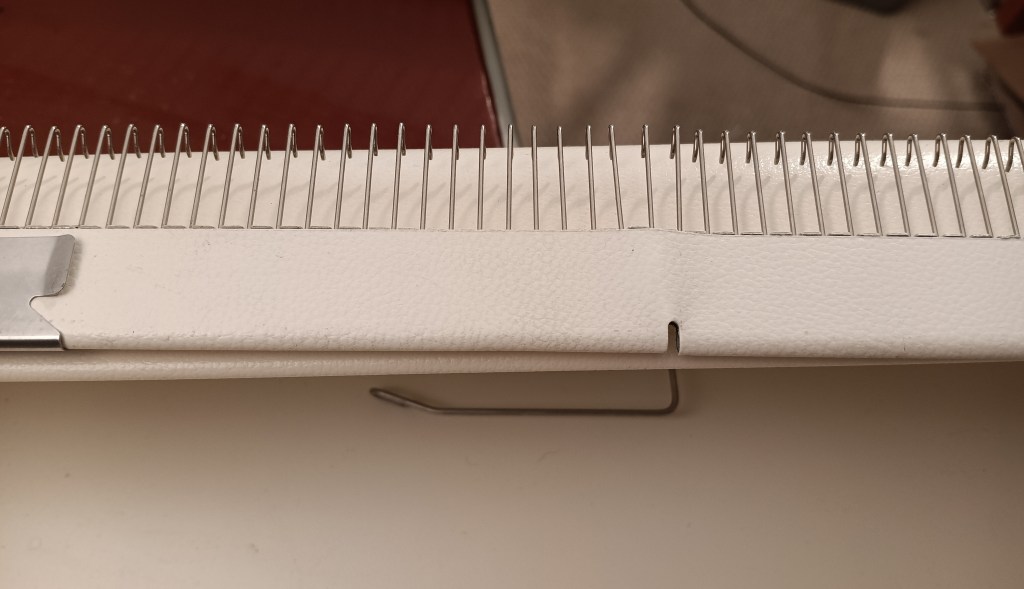
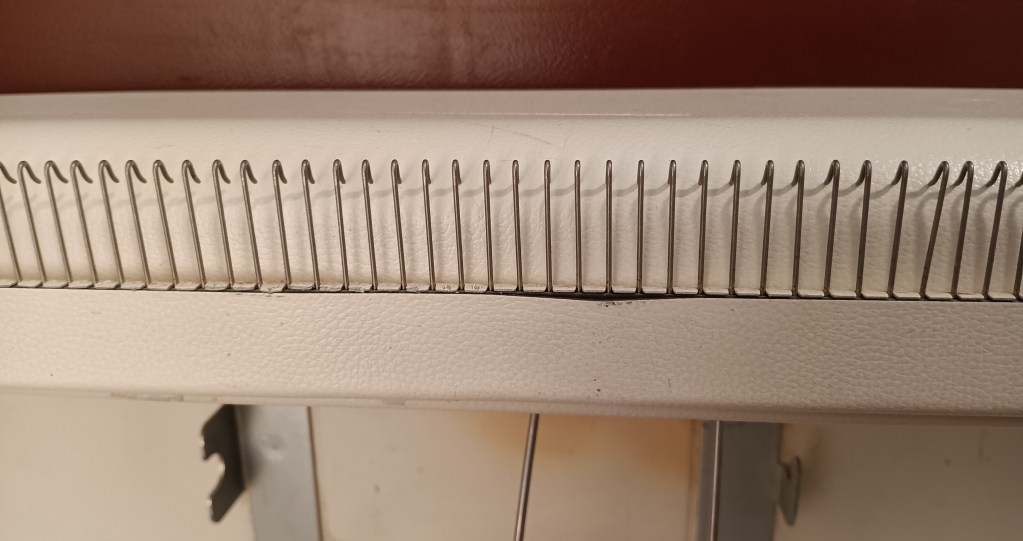
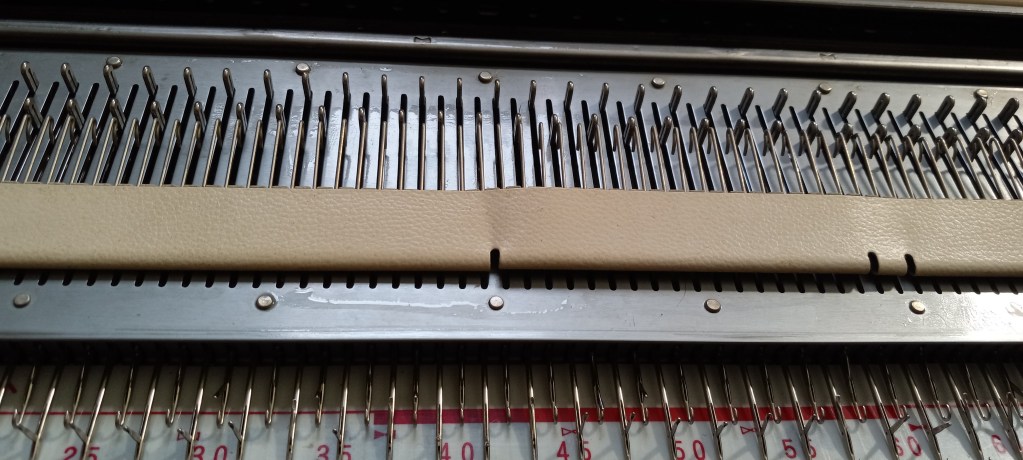
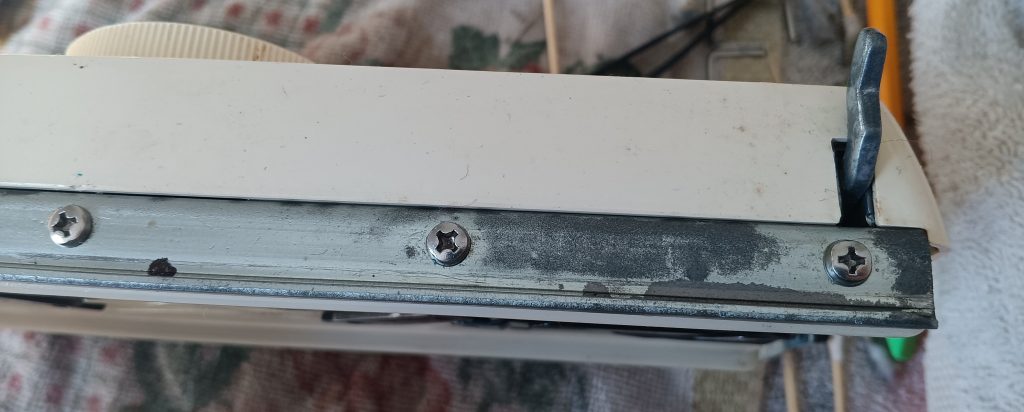
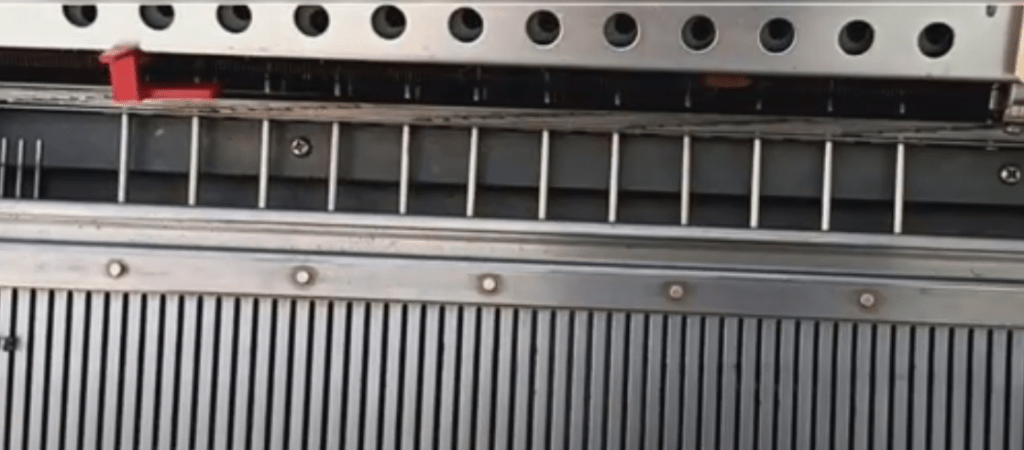
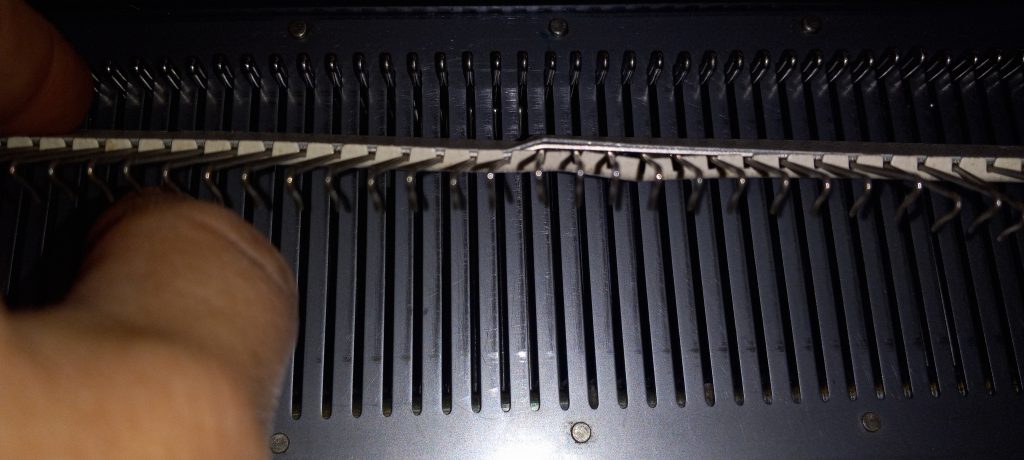
I cleaned and inspected all needles and then tested them by knitting on a full bed (to ensure all needles form nice stitches). I replaced a sponge bar. The retaining bar is very narrow for this machine. Thus, it was a challenge to find such a narrow sponge. After a long online search and consultation with numerous online chats and forums, I settled on a window seal strip with the glue on one side. It is more rubbery than spongy. It was also somewhat hard to insert but I finally got a hang of it (used a thin plastic knife and gently stuck it one inch at a time. Check out a short video I created to help other knitters insert the sponge into an unusual retaining bar of Silver Reed SK120.

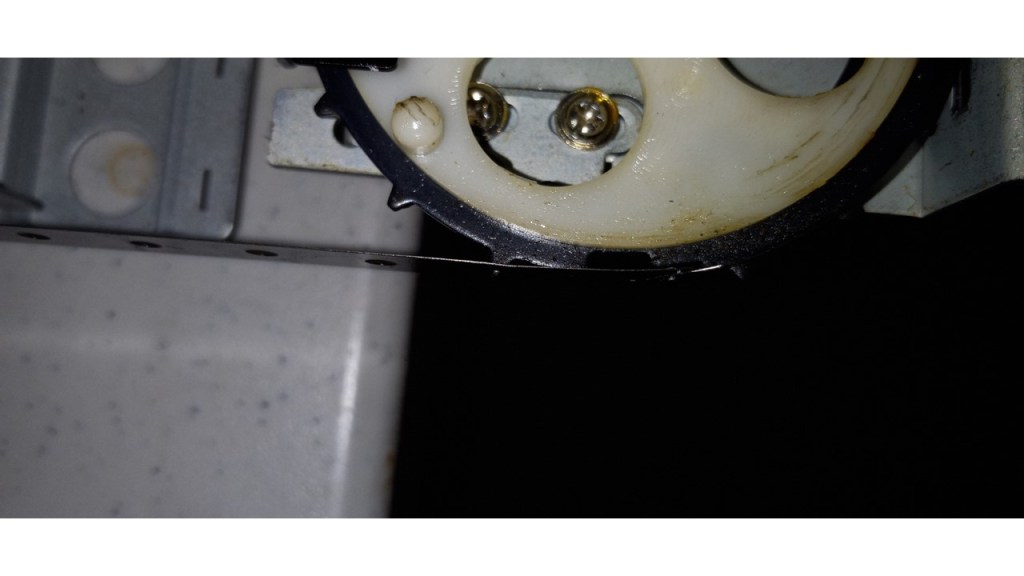
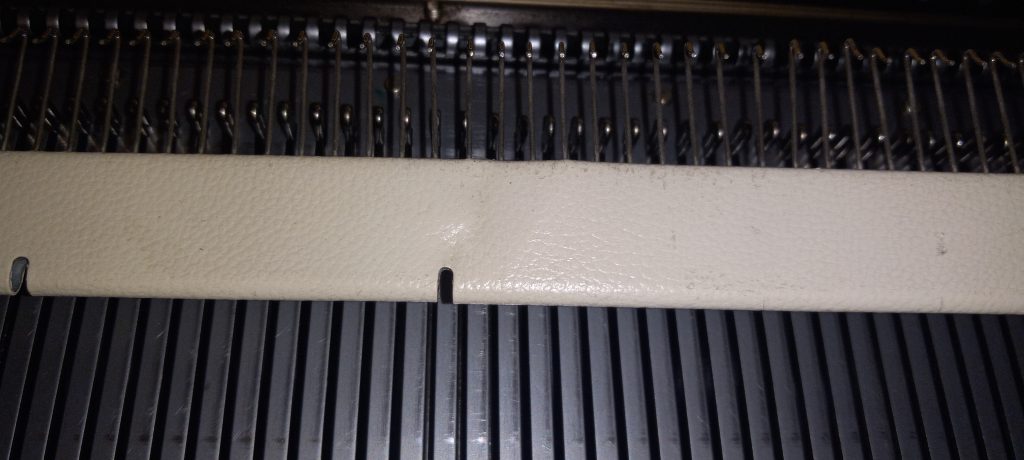
Although not ideal, this rubbery strip did a good job. Why not ideal: it seems that the needles rub against it and remove small chunks (see the picture below). Because of this, I feel the rubbery strip will need to be replaced a bit more often than on other knitting machines. But I will include the extra strip that I have left – enough for 2-3 more replacements. Additionally, the machine needs to be cleaned after each use. I gently vacuum it with the soft brush of my regular vacuum to remove these things after each use.

The machine handled thick yarns very well. The yarns I tried on this machine are:

  • Alara 50% acrylic/ 50% merino worsted yarn (50 g/ 100 m). I knitted a top of a hat.
  • Think, sport-weight like, 100% acrylic yarn. Those yarns often cause lots of static, which causes carriage jams.
  • Textured acrylic blend
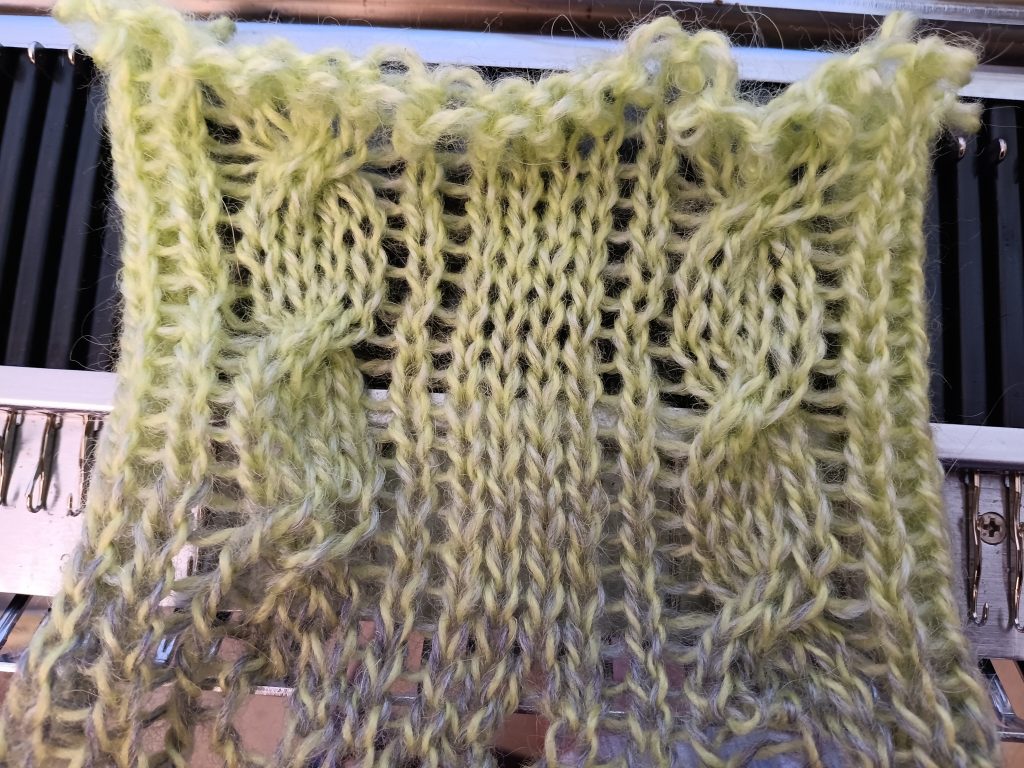
  • Mohari-blend fuzzy yarn – made a two-layered neck warmer, transferrable to hood/cowl.

The machine handled all these yarns well (see the video of these tests). In some cases, I needed to apply extra wax and oil the machine well. The sturdy table will help a lot when operating on this machine with thick yarns on a full bed. I strongly recommend using every other needle on worted yarns.

Below are the things I made while testing this machine:

If you are considering purchasing this wonderful machine, do not forget to read in my Knitting Machine Encyclopedia about pros and cons of the Silver Reedk Sk120 bulky knitting machine.

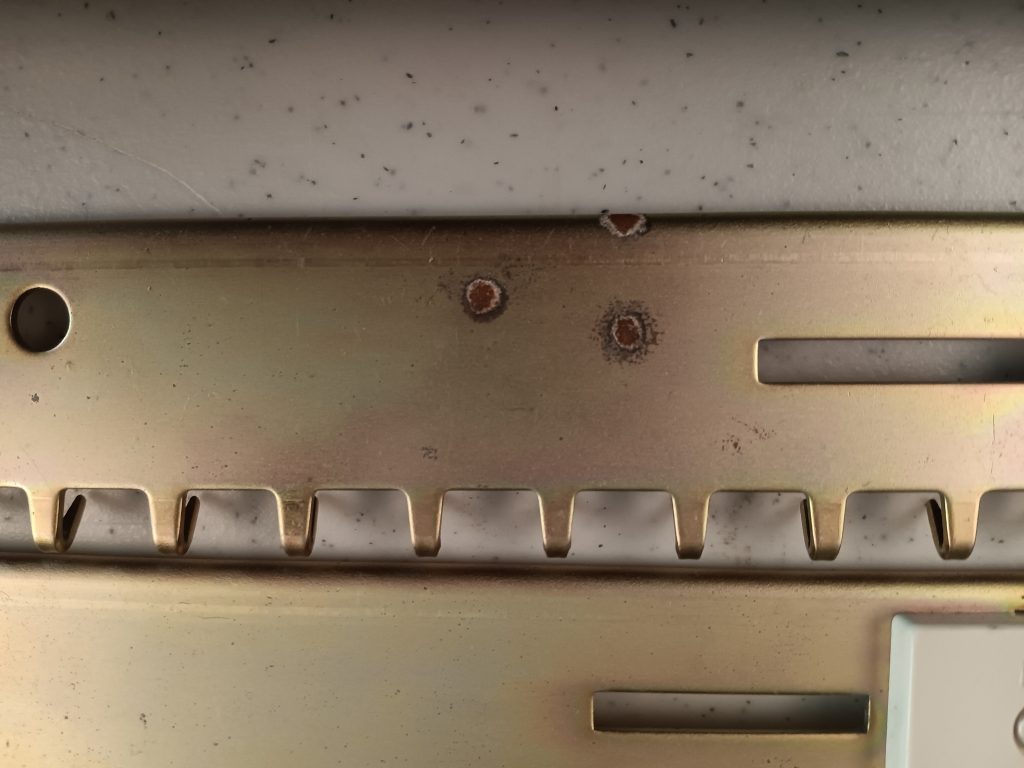
The only imperfection about this machine was a minor rust spot on the cast-on comb.

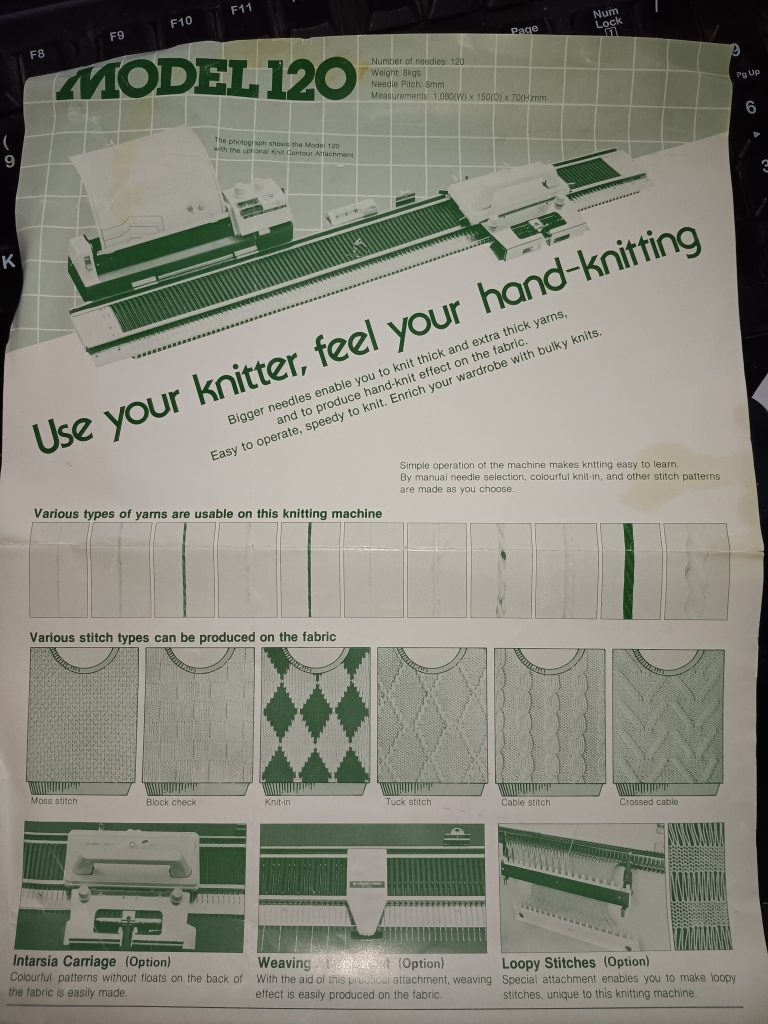
In conclusion, the most exciting feature of this machine is that it creates a fabric that looks and feels like hand-knitted. This personal observation is even supported by the marketing brochure from the 1970s I found in my stash.

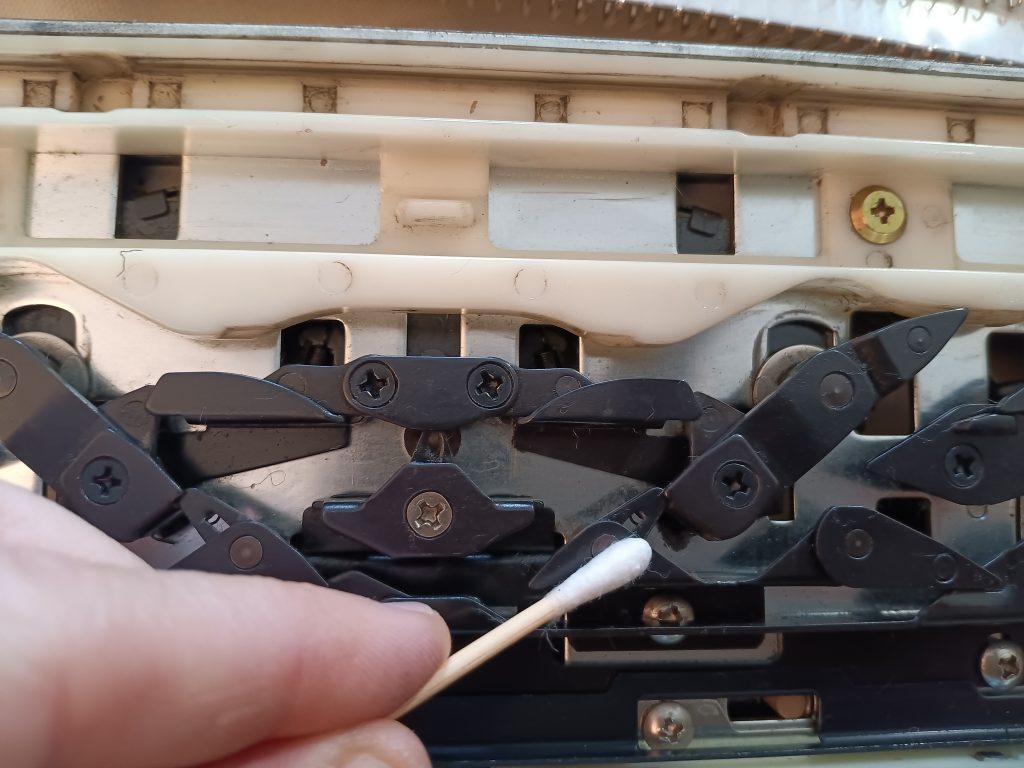
Patterning mechanism of Brother KH800 and Brother KH801 knitting machines.

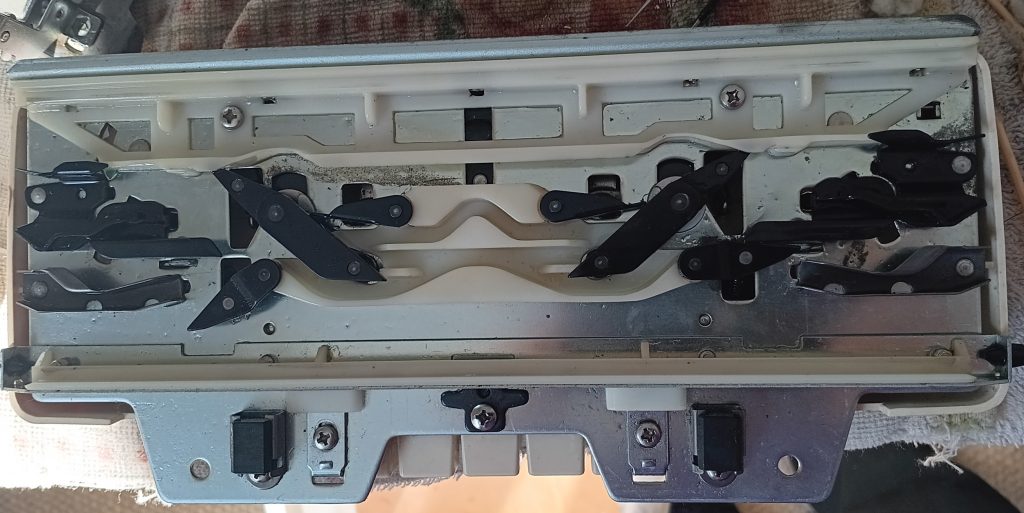
Brother knitting machines with model numbers KH800 and KH801 have a very unique patterning mechanism: a combination of a punchcard reader with the ratchet tool activating the needle being pushed forward (also known as “needle selection”)

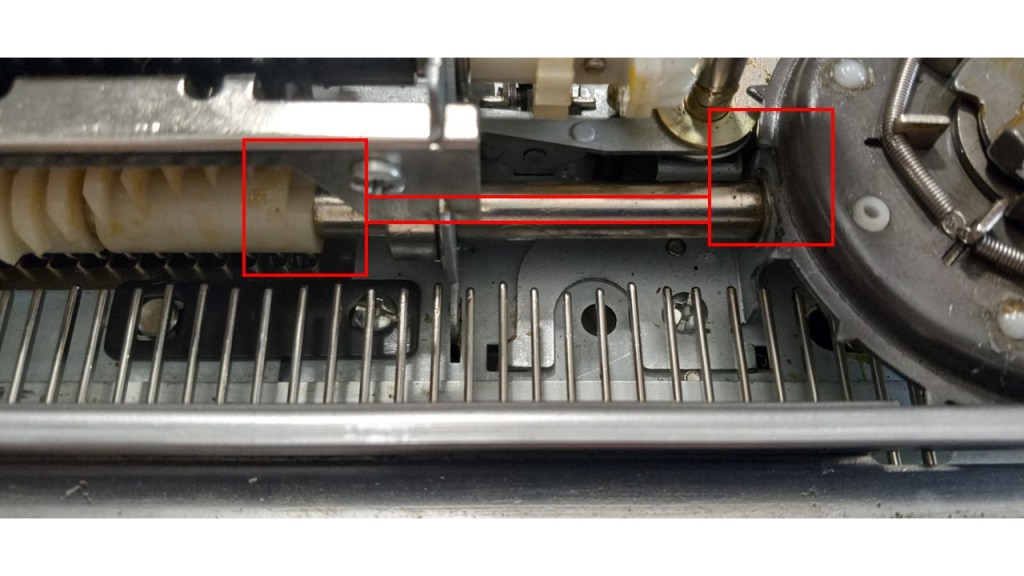
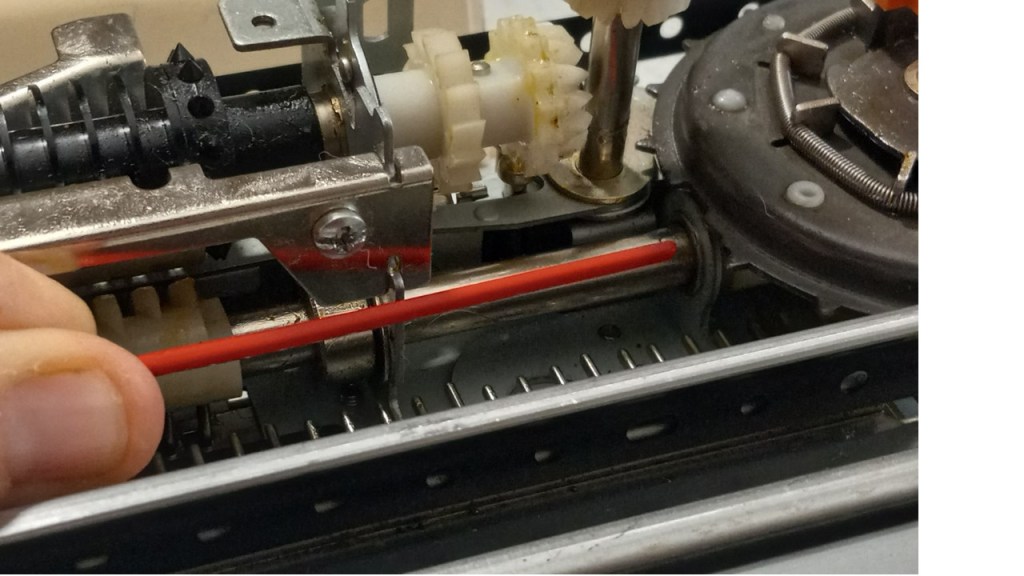
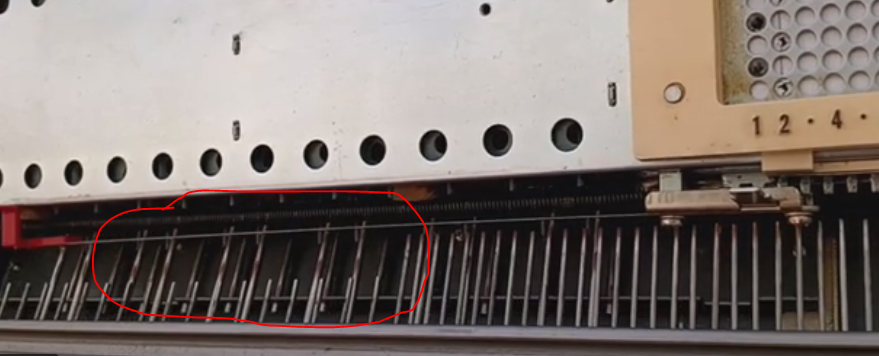
When I was refurbishing a Brother KH800, I had to open the case up to see why the machine was mispatterning. I, thus, had a lot of fun looking at how the patterning works. (By the way, mispatterning was due to the selection strips/plates being tucked together – nothing that a good layer of Kroil oil can’t fix).

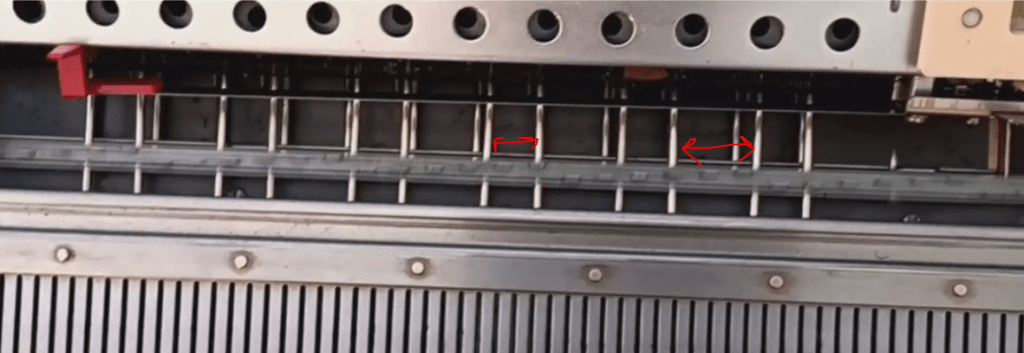
Brother KH8000 and KH801 accept punchcards with 12 holes. There are also twelve selection rods.

Punchcard-reader pins poke through the holes in the punchcard when the ratchet tool is moved.

This pattern is then transferred to the patterning rods, which move according to the holes in the punchcard (see the video).

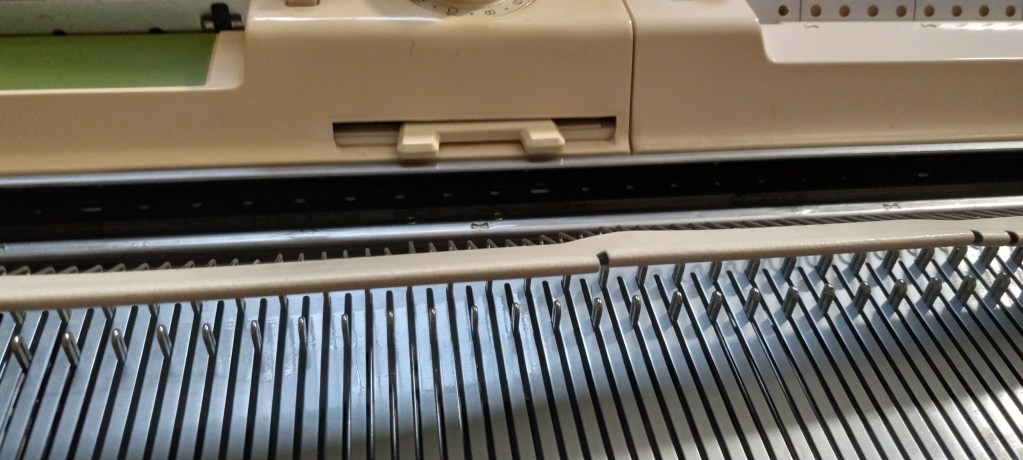
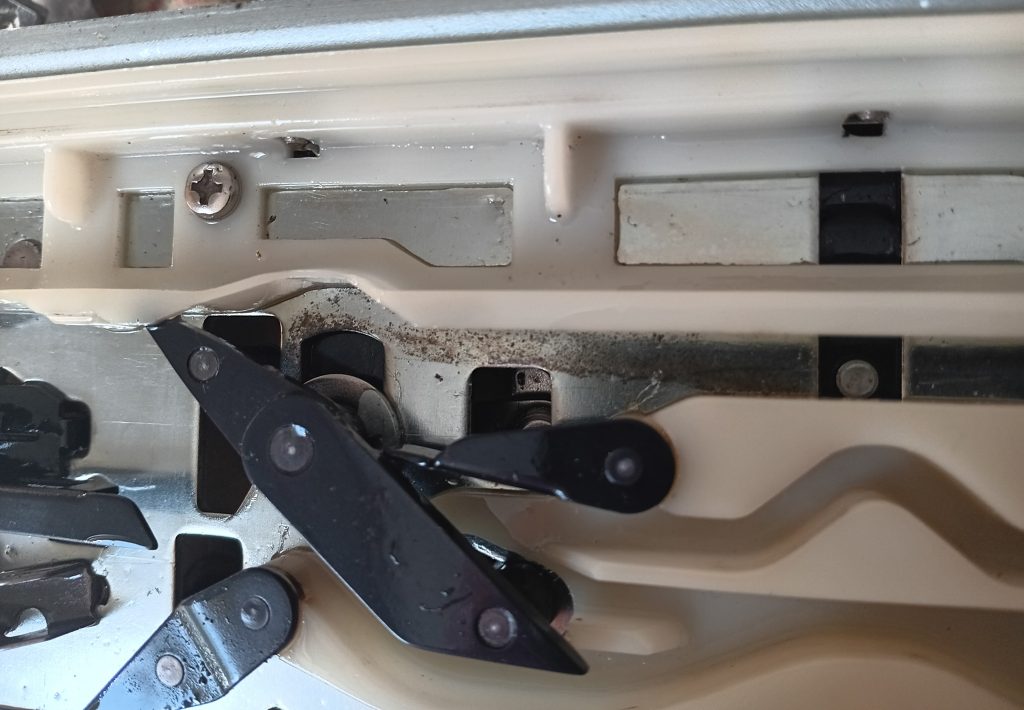
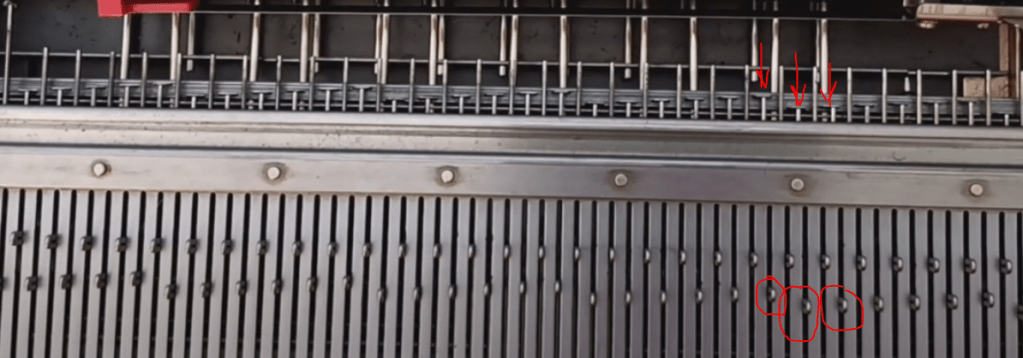
Notice in the picture below how the distance between the rods is no longer even because some of the rods were activated and some were not. This “activation selection” is determined by the punchcard pattern. I was testing this machine with the punchcard with every other hole unpunched.

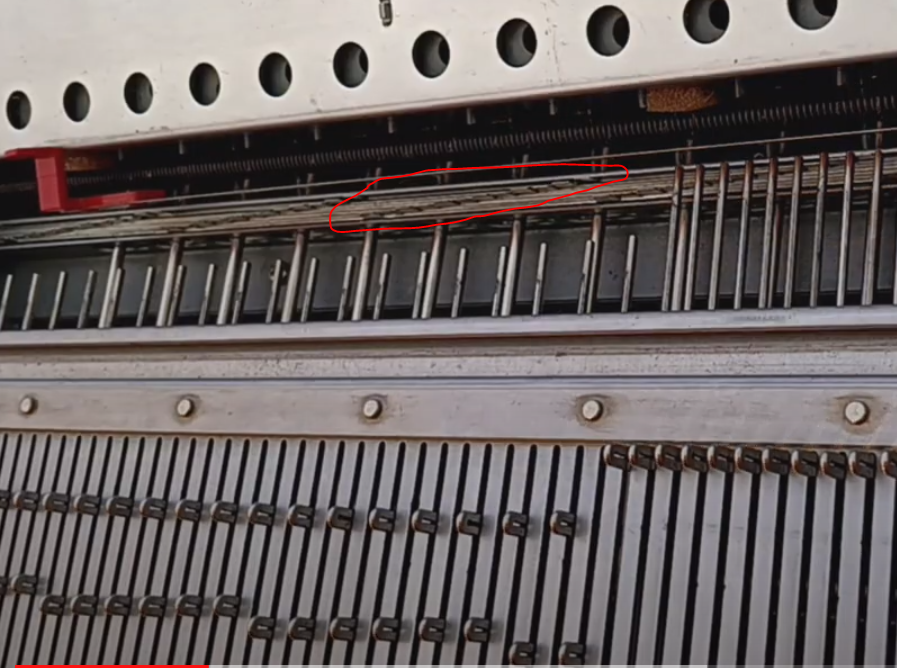
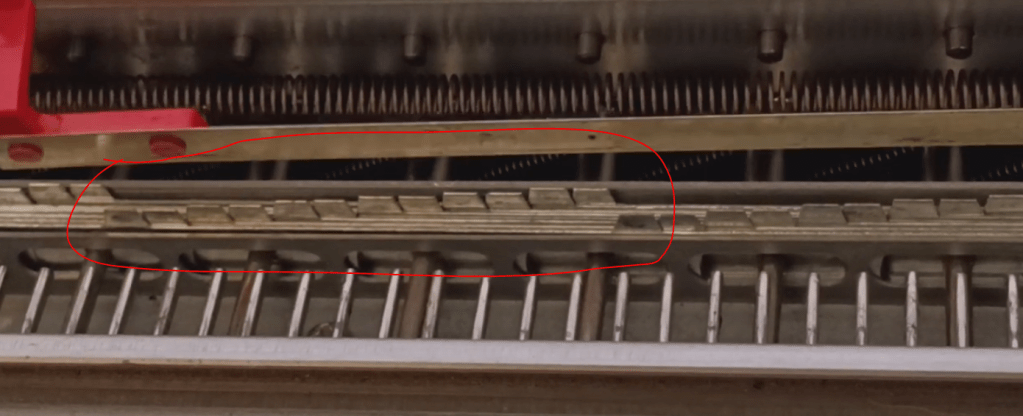
These rods determine which tabs are pushed towards the needles.

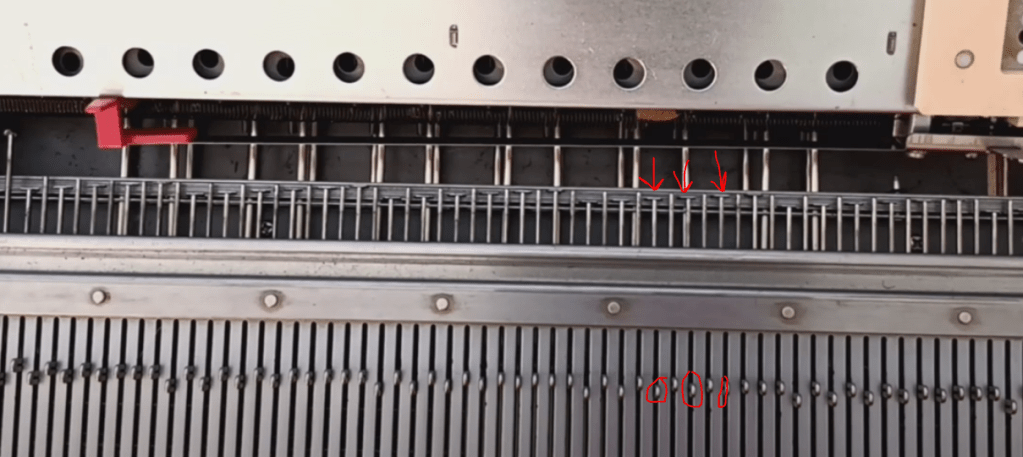
Notice below how these tabs push forward only every other needle….

…according to our punchcard pattern.

Here is a closer look at these patterning tabs. Notice they are grouped in twelve.

Another view from a different angle:

So, if your machine mispatterns, it is very likely due to this mechanism. The good news is: it is probably easy to fix since everything is 100% mechanical.

Although I did not really open up any of the pushbutton machines (4-button like KH551 or 8-button like KH581, KH585, KH588, KH710, etc.) to watch their needle selection mechanism, I suspect that it is performed the same way as on Brother KH800 and KH801.

Even 24-stitch punchcard-reading knitting machines (KH8XX series, like KH840 and KH891) have similar patterning rods.

Simple projects for absolute beginners in flat-bed machine knitting.

This article lists several short overviews of projects very friendly for machine knitters who are just beginning to knit on their machines and are tired of just making swatches. Each project builds on the skills introduced in the previous one.

Enjoy, and let me know how it went!

1. Cord

Knitting a cord on your flatbed knitting machine is very easy and fast. These cords can be used for a variety of projects. I use them to insert into hats, bags, and socks as strings but also for decorations.

Read step-by-step instructions here.

2. Cowl/neck warmer.

This project can be done on a full bed of any flat-bed machine (mid, standard or bulky gauge) with or without patterning capabilities. No swatches are needed. While working on this project, you will learn how to 1) cast on with waste yarn, 2) create mock-ribbing, 3) fold the knitted fabric over, 4) cast off, 5) knit a cord (also a skill from the previous tutorial), and 6) make a buttonhole. You will need to know on your own how to sew panels together (mattress stitch or whatever stitch you feel comfortable with). You will also learn about how 1) your machine knits across the full bed, and 2) how all your needles function (whether you have sticky latches or badly forming stitches). It is a fun project and can be done with any yarn of your choice (as long as it knits on the machine of your choice).

Read the full description here.

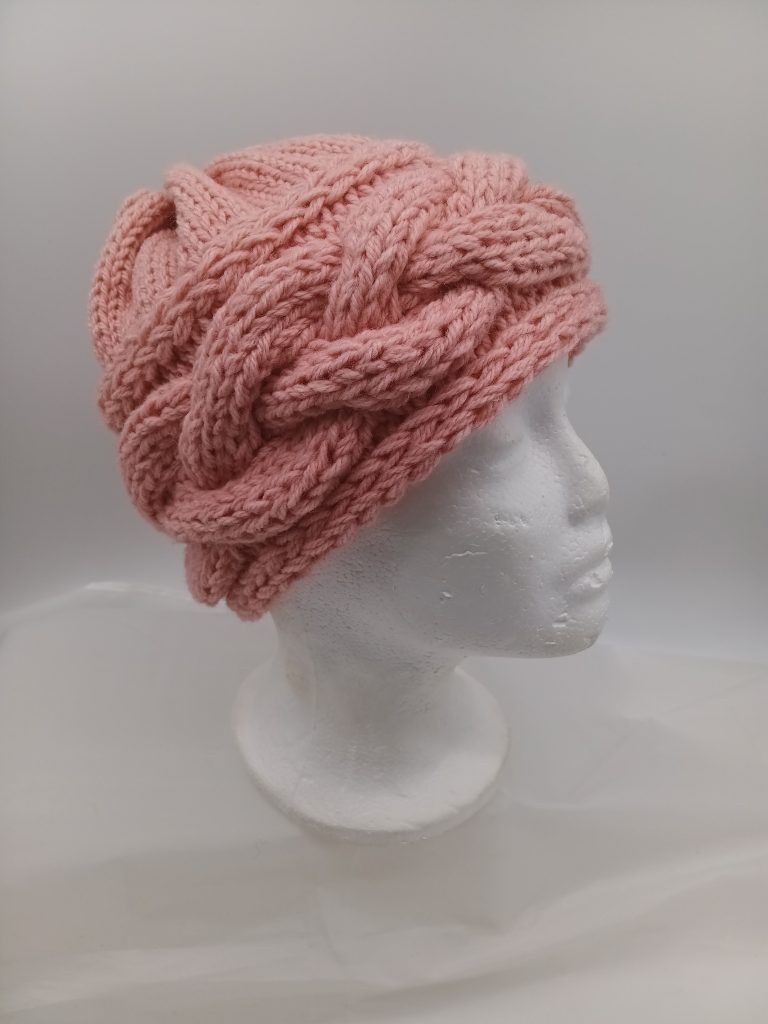
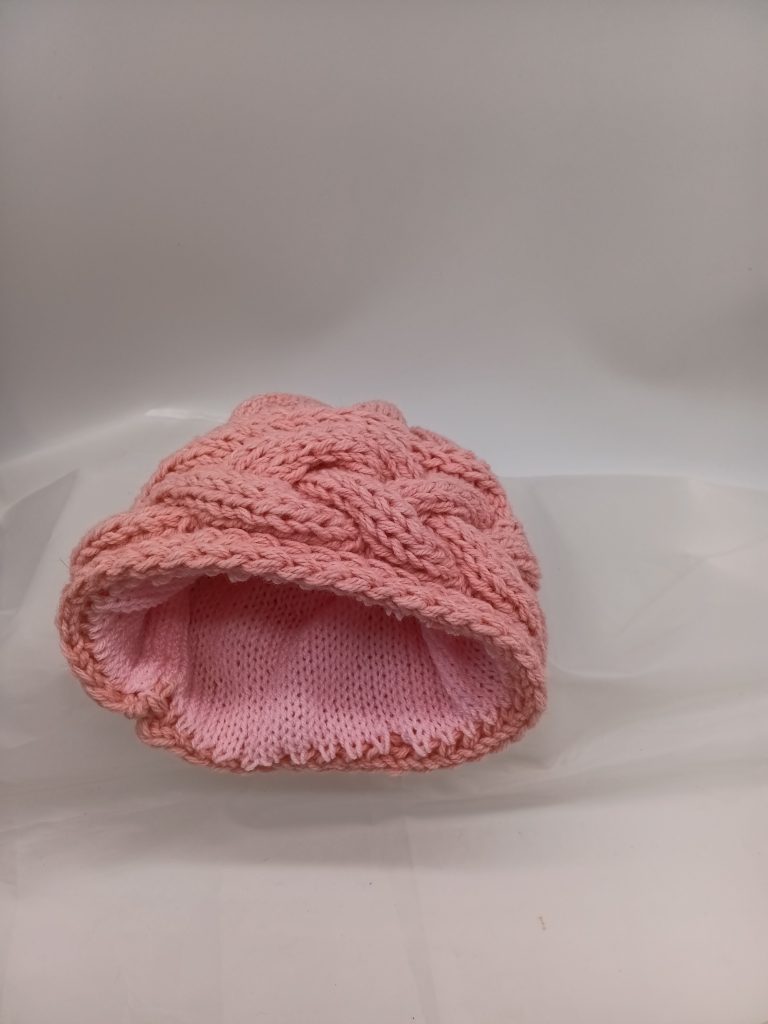
3. Vintage girl’s hat, bandana- or headscarf-like shape, with cables

With this simple project, you will learn increases/decreases, buttonhole making, and simple cables. Optional ribbing on the front can be done by hand, on the ribber, or left as is. It can be done on standard, mid-gauge, or bulky knitting machines in a similar way. No gauge calculations are needed.

4. Mock-ribbing, mock-purl stitches double-sided blanket.

This is a very simple project, but it requires a lot of yarn. So it is good for destashing. You will use the skills from the previous projects (making cord, mock-ribbing, and folding the fabric on the machine as well as making cables). It can be done on any machine using ALL needles. If you are using the same two contrasting yarns, no swatch is needed: just keep track of how many rows you knit. If using yarns of a different weight, a swatch is recommended to calculate the appropriate number of rows.

Read the full description here or watch a video tutorial.

3. Simple 1 x 1 rib hat.

For this project, you will need a flatbed knitting machine and a ribber attached to it. By doing this project you will learn how to operate your machine with the ribber, how to adjust/attach side weights, and how to cast on and cast off. It is a fun and very easy project to do. The knitted panel can be finished as a hat or as a neck warmer

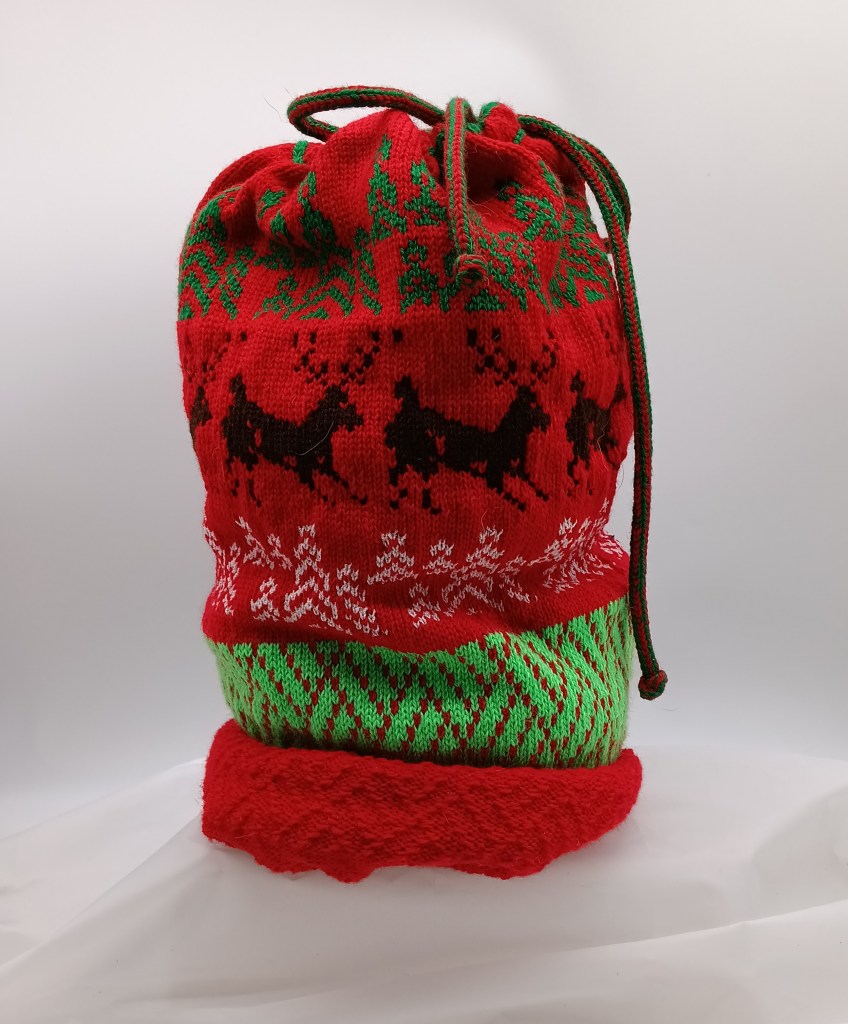
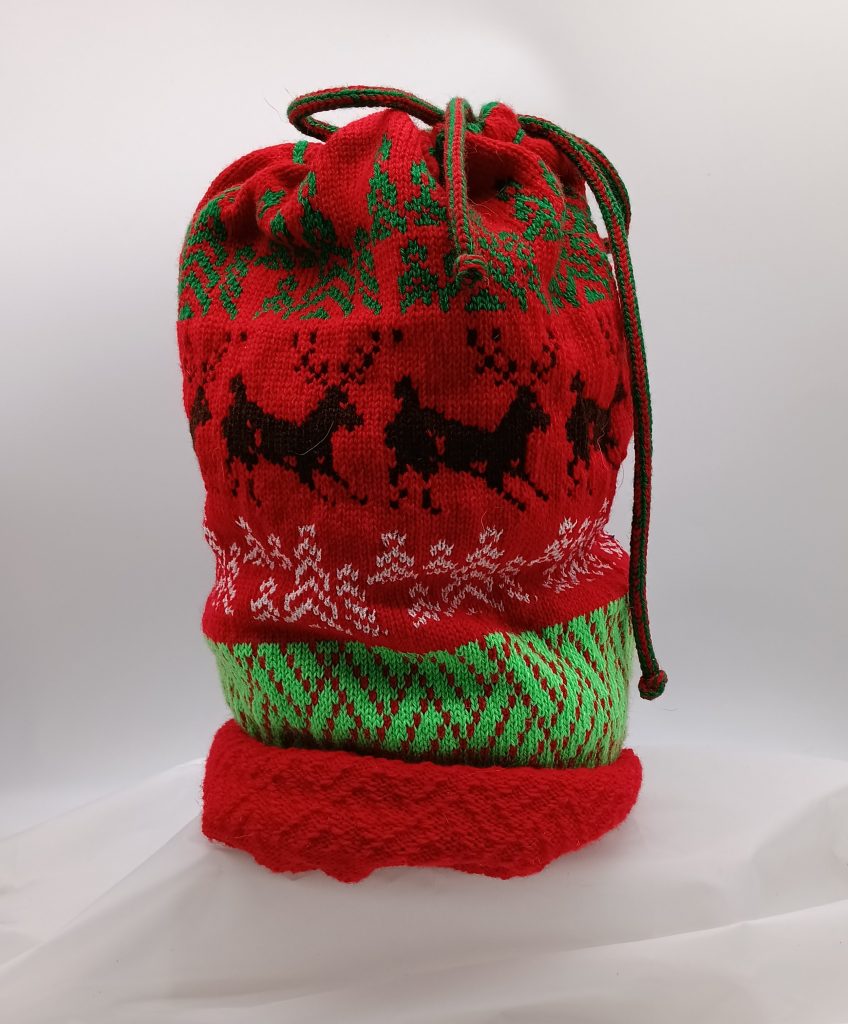
5. Christmas Bag for presents and decor.

With this project, you will learn how to make a two-color cord, knit mock-ribbing, to make a buttonhole, basic fair-isle patterning, as well as optional tuck- and slip-stitch patterning, cord making, as well as optional usage of garter bar (but can be done without it as well). You will need to know how to insert the cord into the folded fabric, and how to sew panels together (using basic stitching like back-stitch or mattress stitch).

Best if done on a punch card or electronic knitting machine for faster fair-isle patterning with two colors.

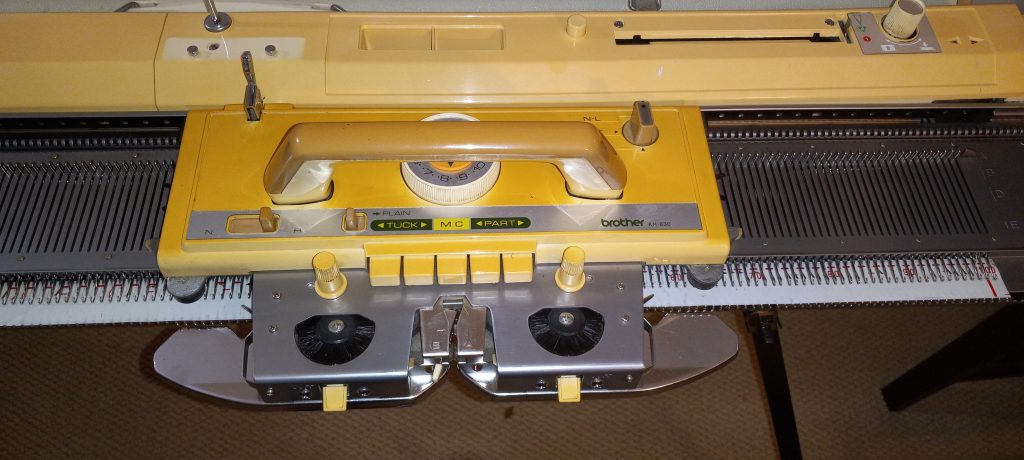
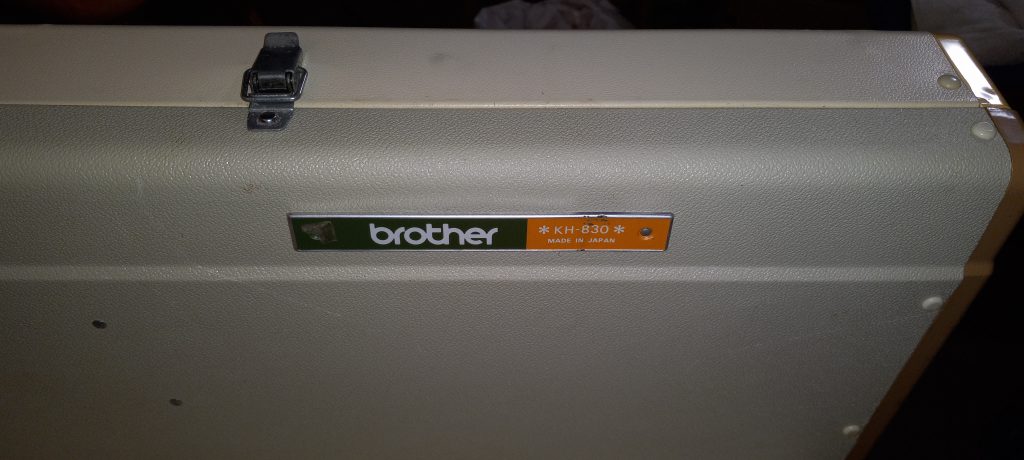
Brother KH830 knitting machine refurbished in January 2024

Brother KH830 is a knitting machine with 200 needles, positioned 4.5 mm apart. This machine is capable of automatic patterning and needle selection performed using a punchcard reading mechanism.

The post below is dedicated to this specific machine. To read details (including the pros and cons of the Brother KH830 model in general, refer to a blog article dedicated to this model.

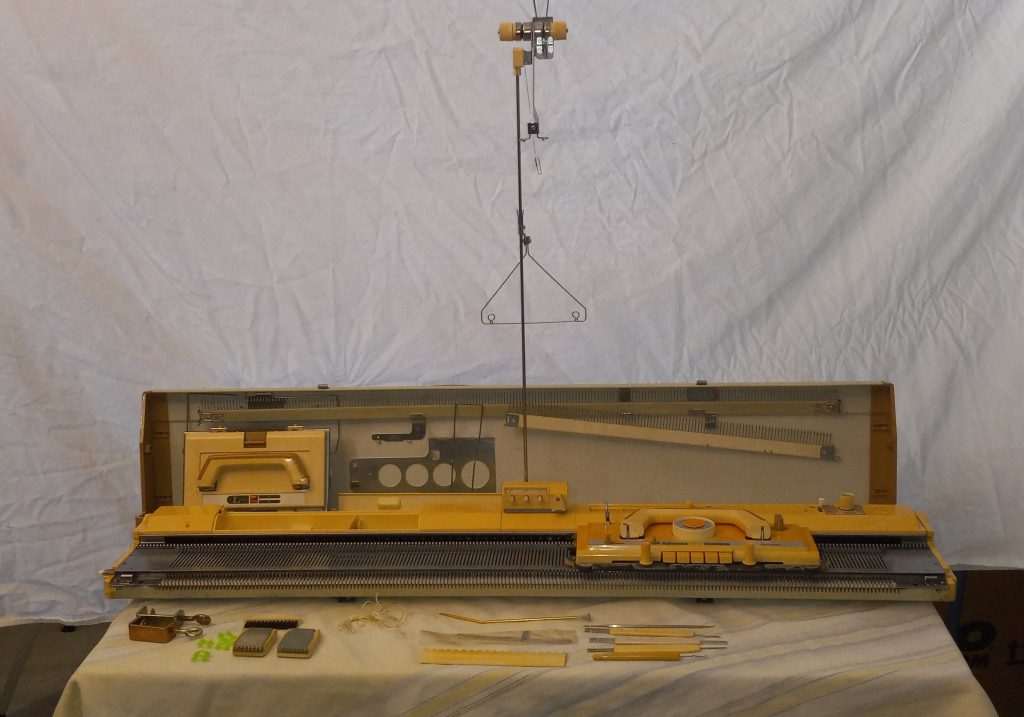
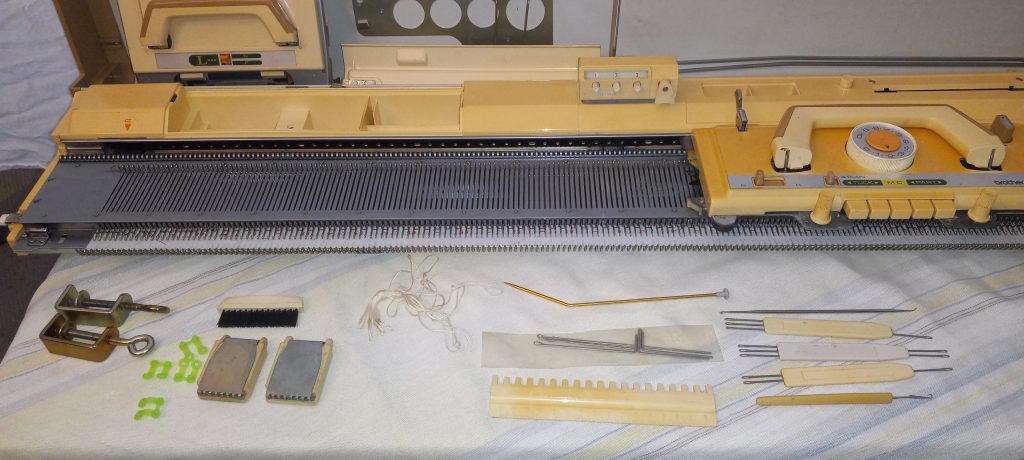
Brother KH830 knitting machine tested by me in January 2024 comes with all major assesories: tension mast, cast-on combs, lace carriage, row counter, and extension rails.

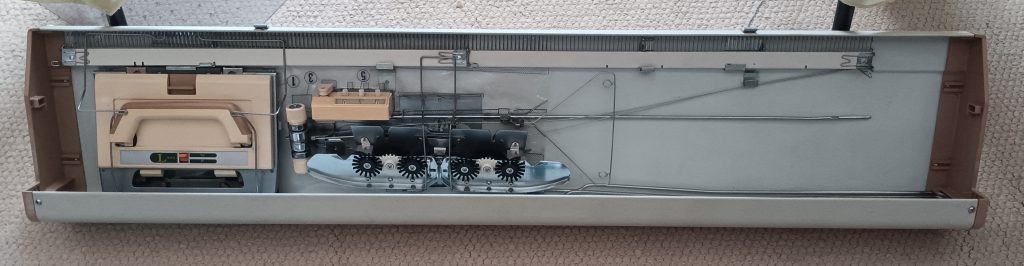
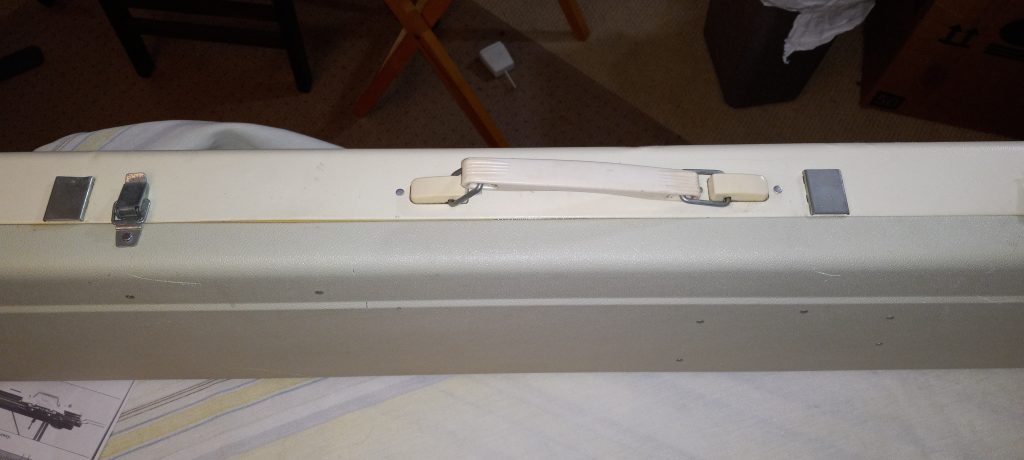
All major assesories fit nicely into the lid. I did not knit lace during my tests by all knobs and levers move freely on the lace carriage.

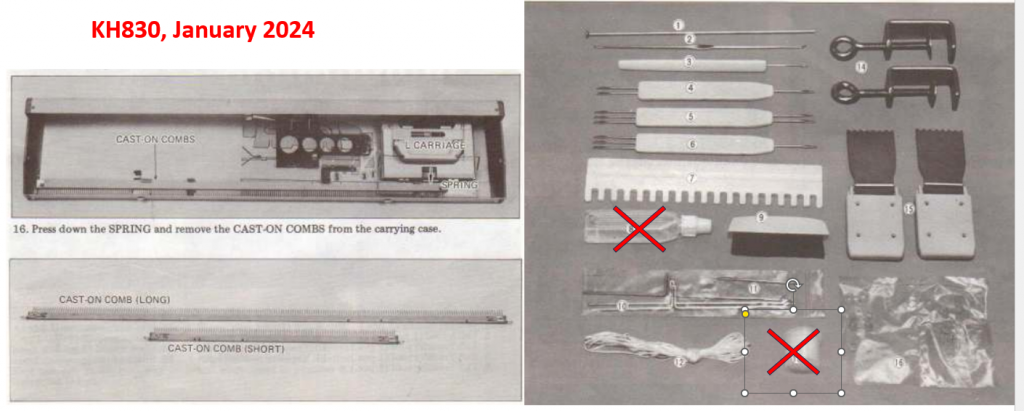
Almost all minor assesories are included as well.

The minor assesories that will not be included are:

  • Hard copy of the manual but it can be found online for free.
    • Tapestry needle (any needle will work).
    • Wax and wax container
    • Oil (the one that came with the machine was too old). Use Hoppe’s Elite Gun Oil from Amazon instead.
    • The rod for the card reader was missing. So, I used a hand-knitting needle instead and it worked fine: all the tests shown in my video were performed with my custom-made card-reader rod.

All tools and minor assesories fit into the built-in storage box.

Additionally, I included brand new (new stock) claw weights because the old ones had bent teeth. The little knob for the card reader was cracked, So I replaced it with the freshly 3d printed one.

I cleaned the machine, replaced the sponge in the retaining bar, and cleaned and inspected all needles.

To test the machine’s functions, I knitted on a full bed using tuck-, slip- and fair isle patterning (see the video of these tests). I knit on a full bed while testing my machines because I want to make sure all needles knit and form stitches correctly (without sticky latches and without forming tuck stitches). In the test video, you will see how I identified two flawed needles. I ran this test until I could obtain a knitted panel without any tucked or mispatterned stitches.

This model already has built-in (or preinstalled by the previous owner) Garter carriage bars.

The following paragraphs list minor flaws I identified:

The card needs to be guided into the card reader with a bit more attention than usual. Because if you don’t pay attention, it might get inserted a bit crooked and mess up your patterning. So, carefully line up with the whole and then watch if the card goes in smoothly. If the card is lopsided in one direction, pull gently to straighten.

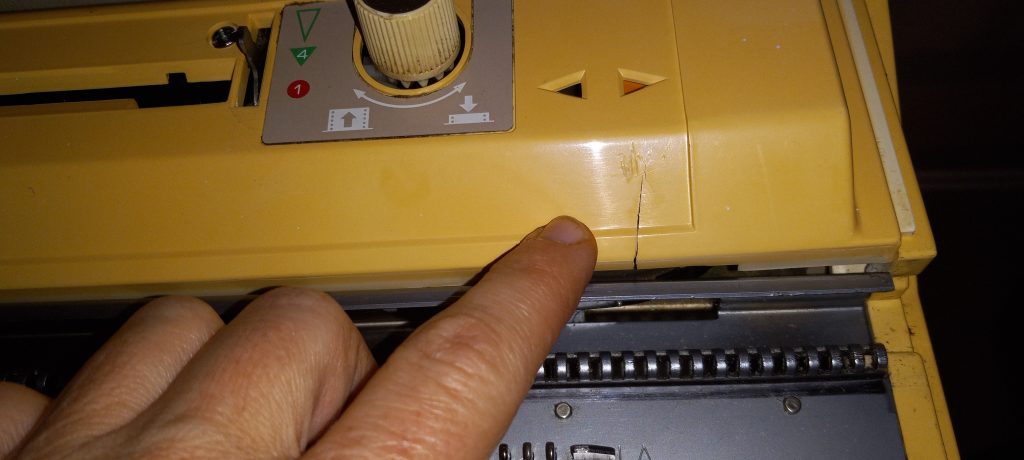
There is a minor crack on the plastic panel to the right of the card reading mechanism. There is also a minor scuff (in front) and a microcrack (to the left) of the punchcard reading mechanism. Those did not affect knitting.

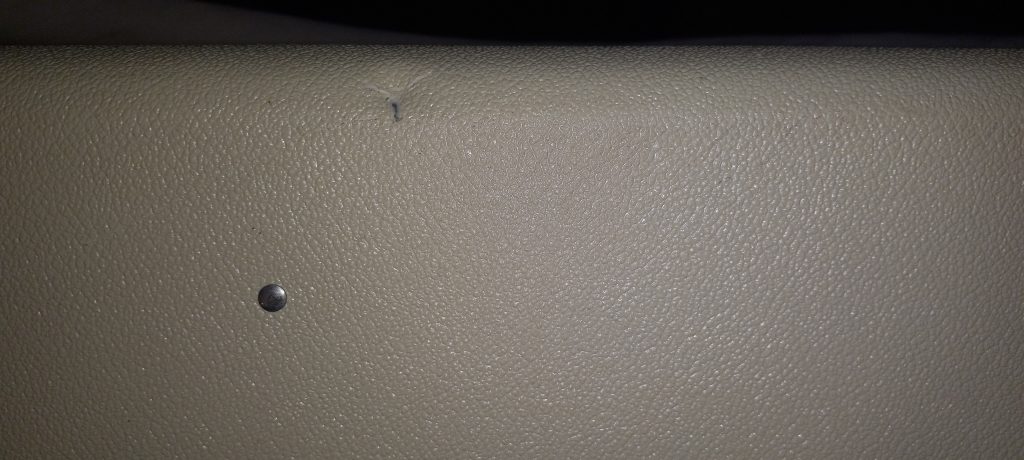
There are a couple of minor scuffs on the front panel and on the case as well. The pictures below show the most noticeable out of all of them.

The end caps of the bottom and top parts mismatch in color (the machine came to me this way) but the case still closes well without any problems. There are only some minor gaps probably due to the age of this machine.

One of the cast-on combs has minor bents but it does not prevent them from being used effectively (for all my tests I used those combs shown below).

The carriage has some minor rust or wear/tear rust spots. (These spots are pretty typical for these vintage machines.) I treated them with protective oil. I did not observe any static while knitting or any other problems.

Despite these minor flaws, this machine worked great. I knitted the Christmas-themed bag that I will use next year to put presents in 🙂 I hope you soon will be able to make something even more beautiful.

Brother KX350 knitting machine

Brother KX350 knitting machine is a plastic flat needlebed machine with 130 needles, positioned 7 mm apart. The article below is dedicated to the machine I serviced and tested in January 2024. If you want to know the pros and cons of the Brother KX350 knitting machine mode, read my Knitting Machine Encyclopedia.

On this machine, I cleaned and inspected all needles. I cleaned the needle bed and the carriage. I inserted a new needle-retaining sponge.

The machine will come with all assesories shown in the manual.

The tapestry needle will be plastic. The oil in the bottle that came with this machine still looks good (transparent and not yellow), so it will be included as well but there is only half a bottle left. I recommend purchasing Hoppe’s Elite Gun Oil

However, the hard copy of the manual will not be included but it is available online for free.

To ensure that all functions of the carriage work well, I first knitted a swatch (with a pretty thick yarn – two strands of 50 g/150 m (1.76 oz/109 yards) per skein- all went well (watch the vidhttps://youtu.be/ANFTFSCiwqseo).

After a successful swatch (knitted with a relatively thick yarn), I proceeded (with the same yarn) on a full bed (all needles) to test whether all needles formed nice stitches without unprompted tucking. All tests went well – watch a video of my tests.

All levers, knobs, and buttons move freely on the carriage (it is demonstrated in my full video). I also knitted using the HOLD and PART functions of the carriage.

When I test my machines, I like to learn something new in terms of knitting, come up with a new design or test a new feature of the machine.

So, this time, I came up with my own pattern for a large dog sweater and I knitted it. I used the partial knitting function, HOLD position functions, mock ribbing, and cast-off. The picture below shows my (unfortunately, unhappy) model who will be wearing her new sweater. There are a couple of design flaws that I will be improving but while the next beta version is in progress, this one will keep my dog belly warm. Check out this booklet for lots of other patterns possible to make on this machine.

A couple of imperfections of this machine:

There are really no flaws. However, I wanted to mention that no original box came with this machine but it will come well-packed for shipping.

No hard copy of the manual is a bummer but this machine is easy to use and straightforward and with the hints provided by the manual online, new knitters should have no problems starting using KX350.

Overall, Brother KX350 is not only a perfect machine for beginning machine knitters, but for experienced knitters too: KX350 takes thick yarn and can be a quick tool to test a pattern (like I did with the dog sweater).
Unpacking instructions for my customers

All machines and large accessories (ribbers, color changers, carriages, and knit leaders) are shipped insured. I take very detailed pictures while I pack for insurance purposes. Often, shipping companies like to blame packers for the damage they cause saying that the damage occurred due to insufficient packaging material used.

Well, I shipped several dozen machines and I know how to pack them well. However, damage still happens because machines and ribbers are heavy and the package can be dropped.

Therefore, when you sign off on your package or the package shows up at your door, please, take a picture of how it was delivered. Then inspect the package and take pictures, especially if you see some dents, large scratches, rips, or holes on the outside of the package. If you don’t see any signs of damage on the box itself, please take a general shot picture preferably from 4 different angles.

While unpacking the machine, please, take pictures as well. If you see obvious signs of damage, take pictures of that place from several angles.

You do not need to send me the pictures right away. Wait until you check if the machine is working or not, unless the damage is obvious or structural.

Please, do not discard the packaging materials and the box until the operation of the machine is fully confirmed (just in case something needs to be sent back, etc.), or until we sort out the insurance claim in the case of the damage.

These are all the precautions we need to take in case we’ll need to file an insurance claim. They are very picky.

In most cases, everything gets delivered fine because I pack my machines really well. Ribbers are especially robust than some others during travels.

Please fill out the form below to acknowledge that you understand these instructions and will follow them. Please, write “I read the instructions and I understand them,” followed up with your name.

← Back

Thank you for your response. ✨

Steps I take when cleaning and servicing ribbers

.. this article is a constant work in progress as I collect more information and personal experience…

… Please, read the whole article first before proceeding.

First cleaning steps:

  1. Check against the manual if all parts are present. (If your ribber did not come with a hard copy of the manual, google its model number and you will find free pdf file of the manual). The most critical ones are carriage, side brackets, connecting arm, at least one cast-on comb with a wire, setting plates, weights and table clamps. If others are missing, you can probably manage to knit without them. If something is missing, search on the Internet to purchase them and while they are arriving, work on the steps below.
  2. Clean/wipe the visible dirt from all parts.
  3. Remove all needles, clean/wipe them and inspect. I visually inspect if there is deep rust (if there is just shallow rust – I gently polish the needles with fine sand-paper), obvious bends.
  4. Vacuum from underneath of the ribber bed and from the top (simply run the narrowest attachment your vacuum have over the needle bed).
  5. If you have a brush with long wire, insert it into the slot for the retaining bar and move it back and forth, in and out. Vacuum again. Repeat several times until you see no more lint/dirt coming out.
  6. Inspect the metal parts of the needle bed as well as connecting arm and carriage (especially from underneath) for any major or minor rust. Major rust – medium size to large orange spots. Minor rust – series of small to medium sized black-ish dots. Read a separate article on my recommendation on how to deal with rust.
  7. Insert the needles back in. While doing it, check if the latches move freely. Insert the retaining bar. It goes on top of the needles. For Brother ribbers, the groove of the plastic retaining bar should be facing you. When all needles are inserted, look if the distances between the needles are even. If not, you might have a bend needles you did not catch.

If all parts are present, you are now ready to start your first tests. They are outlined in my other article.

If you are passing this ribber to somebody else, repeat the wiping, vacuuming and visual needle inspection again.

Brother KR850e ribber serviced and tested in January 2024

The article below is dedicated to the ribber refurbished for a customer in January 2024. For specifics of Brother KR850 ribbing attachments, read my KM Encyclopedia.

Brother KR850e, tested and serviced in January 2024, underwent all my usual tests: inspecting all needles, cleaning the bed and tools from old grease and lint and testing on all needles (made two hats while doing it – read below). Read in detail the typical steps I undertake while servicing the ribbers. Also, check out the tips on the first tests for your new ribber.

The setup includes all assesories mentioned in the manual. The hard copy of the manual is included as well. The machine will also come with its original box and Styrofoam pads.

Although the Styrofoam linings have seen better days and are a bit dusty but still service it protective purpose.

The functioning of the carriage was checked by knitting a 1×1 rib swatch on just 20-30 needles and on a full bed (all needles with the exception of 2 and 3 needles on each side for the ease of knitting). These tests were performed with 3 different yarns: thicker acrylic with some polyester (not as stretchy), thin wool-containing (wool is sometimes staticky) and thin 100 acrylic yarn (probably most stretchy out of the latter two). Watch the full video of theses tests in my YouTube channel.

All needles were inspected very thoroughly before and after all the tests to ensure no bent ones and no sticky latches.

Even on a full bed, the carriage-setup (ribbing carriage, connecting arm and a main carriage) was very easy to move – watch the video: I could move it with just one hand. (but of course it is always a combination of yarn, tension and potential static)

Both swatch knitting and knitting on a full bed (1×1 rib, in two different needle configurations to ensure all needles got tested) showed excellent performance from the ribber and not flawed stitches.

Below are the items I knitted while testing this ribber. They are going to the local charity.

Now about the imperfections and minor flaws of this ribber:

1. Couple of large barrel weights have small cracks.

2. Some of the tools (especially with plastic components) have visible scratches (too many to list here).

3. Cast-on combs have some minor rusty spots (even my brand new (but old stock) cast-on combs have some black rust spots. Probably due to age.) I covered the spots with corrosion stopping oil, which offers temporarily protection from further rust. Despite these cosmetic imperfections, the combs are smooth and function well: the yarn did not snag on them.

4. Connecting arm has some minor rust spots as well (they might not show well on the pictures below because they are very small).

5. The carriage has some minor rust spots too as well las some minor scuffs. But under-carriages looks very nice. Plastic components of the bed and the ribber itself show typical yellowing/aging from the exposure to the sun light.

The ribber worked well even with these rust spots, so I do not anticipate any future issues. Honestly, almost all ribbers that come to my possession have some sort of rust issues. Since the quality of the metal on the parts for the vintage machines is much better than the quality of the metal on the parts for modern machines (Chinese knock-offs/copies), my strong preference still goes to the vintage parts (even with minor rust) than to more modern new/old stock parts. Also, extensive polishing/rubbing (with the goal to remove rust completely) damages surrounding yet-uncorroded surfaces, making them prone to corrosion. So, if i do not see a lot of issues with the moving levers and knobs as well as with static (or static is manageable), I only gently polish the rust and cover it with protective oil. More tips on rust are in my other article.

Bottom line: since the sinker plate and the carriage did not have any issues, I did not replace them. With Regular oiling and wiping and storage in dry place, these parts will serve you a very long life. I did not have any issues with the static as well but I did have a wax in my tension mast just to make sure because of the dry season and because my shop is right by the fire place room (dry air causes more static).

Despite all these flaws, the ribber worked well. I used all the assesories and tools that will be included with this ribber.

Happy knitting! Do not forget to use the tips on how to learn to operate new-to-you ribber to avoid frustration and damage to new-to-you ribber.