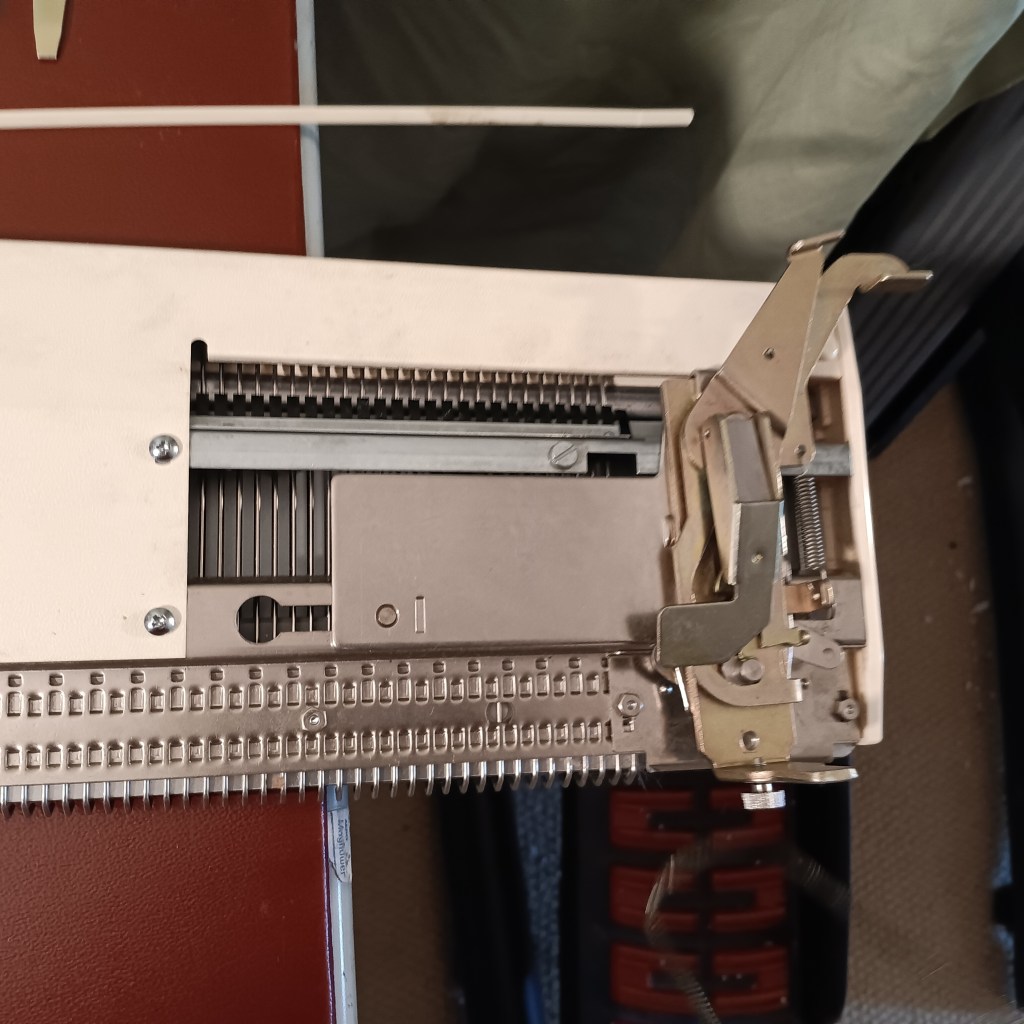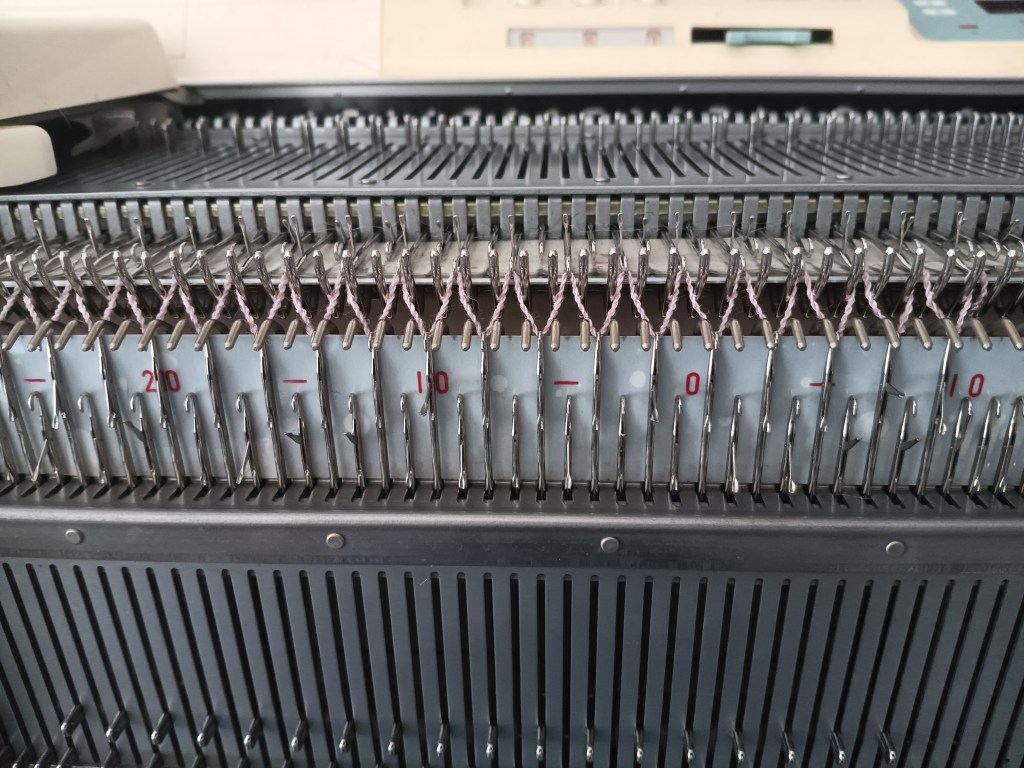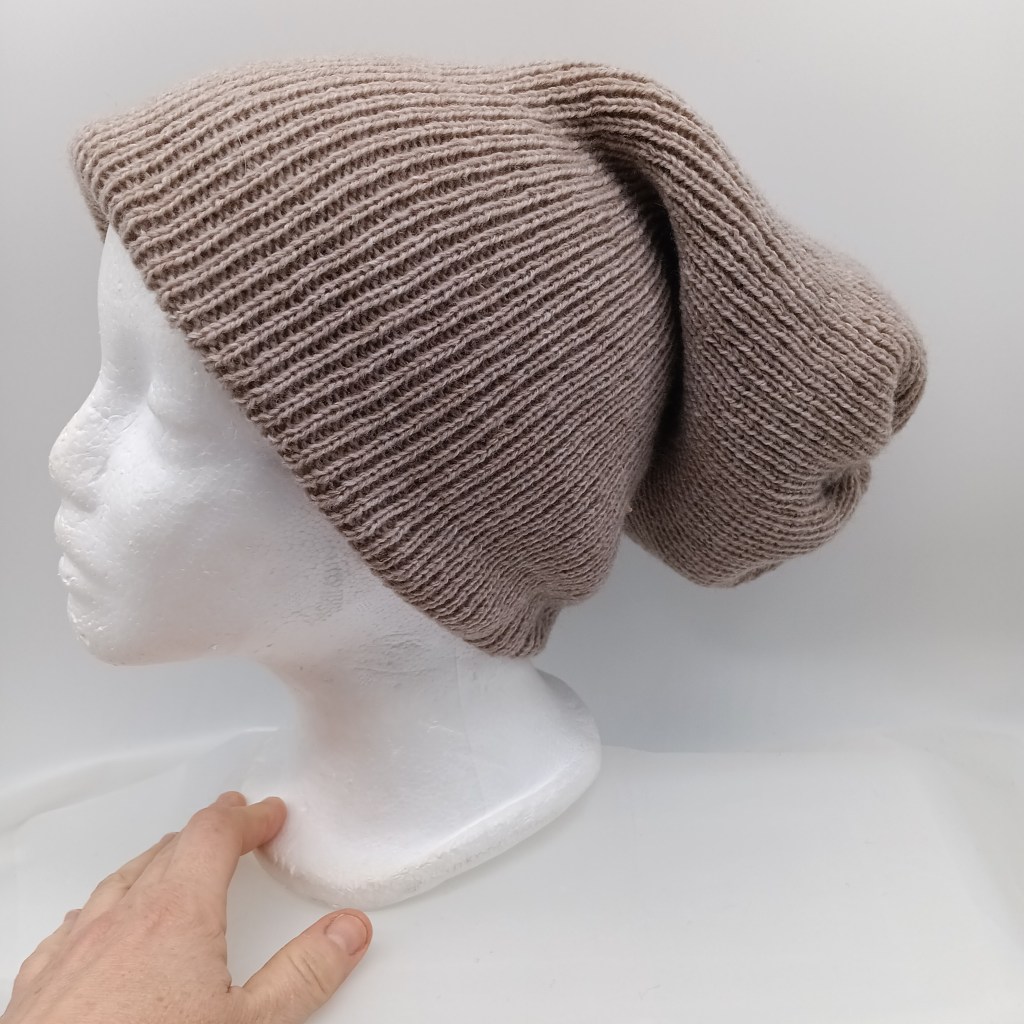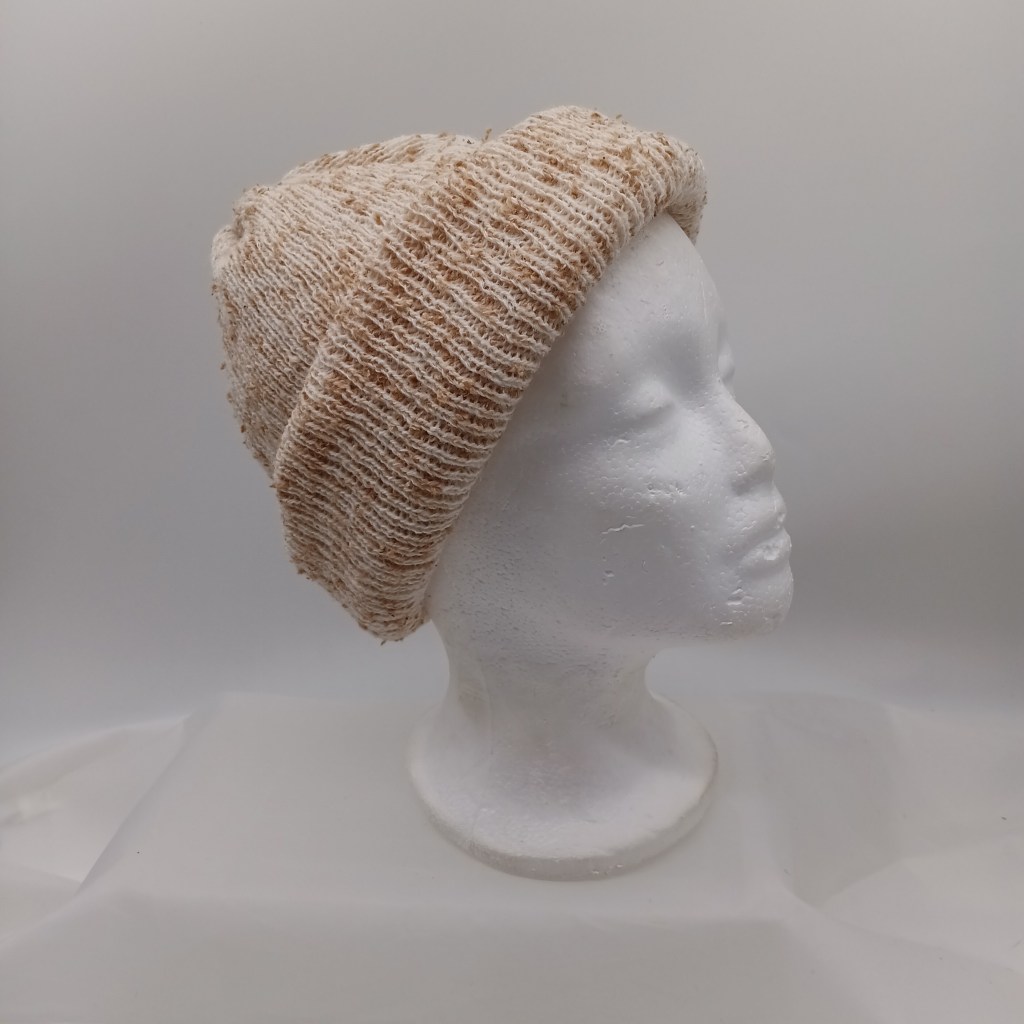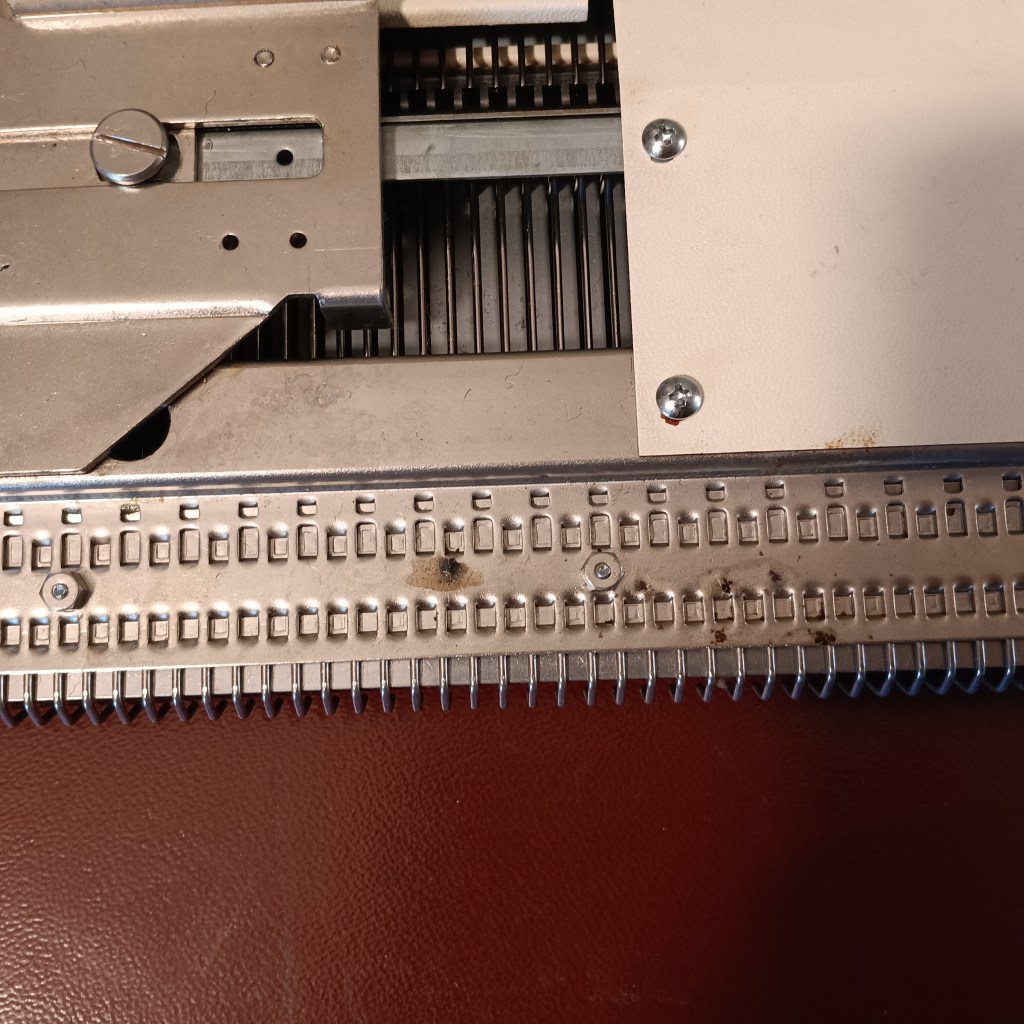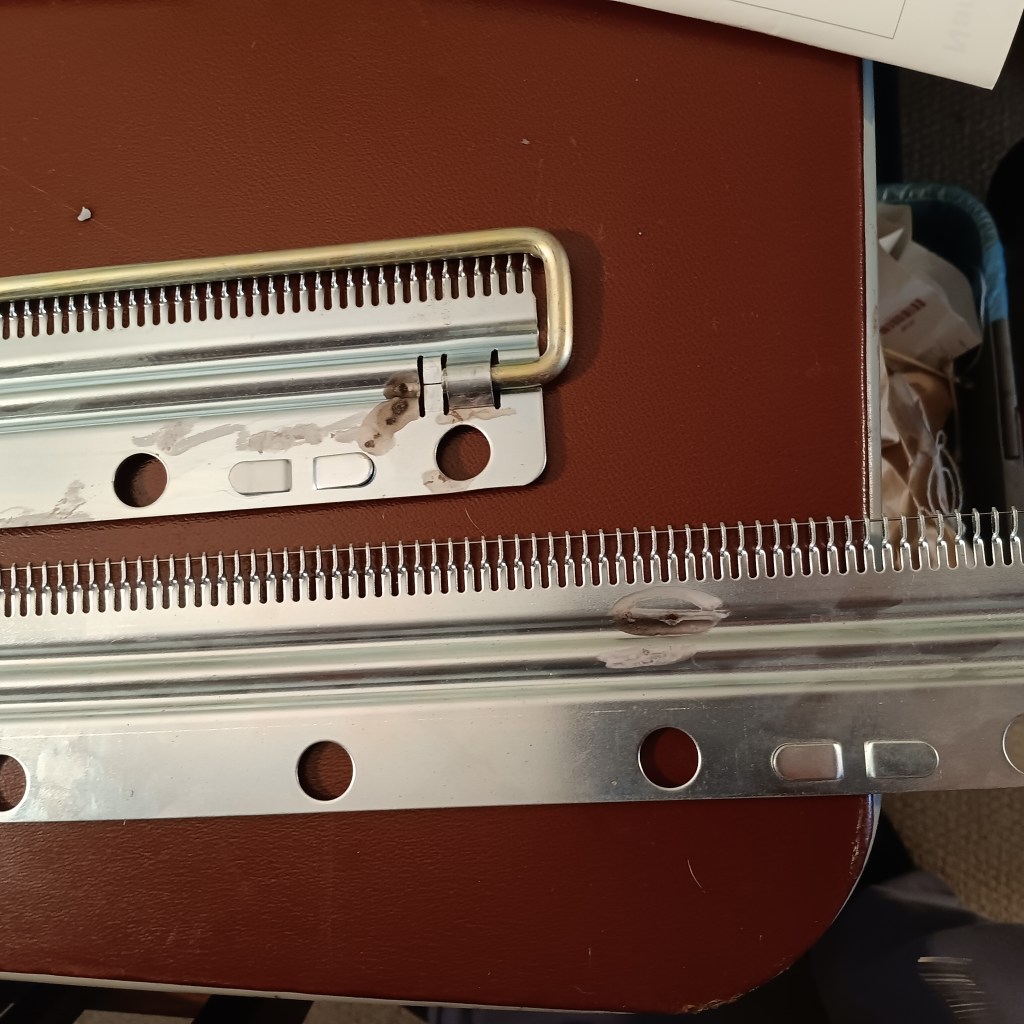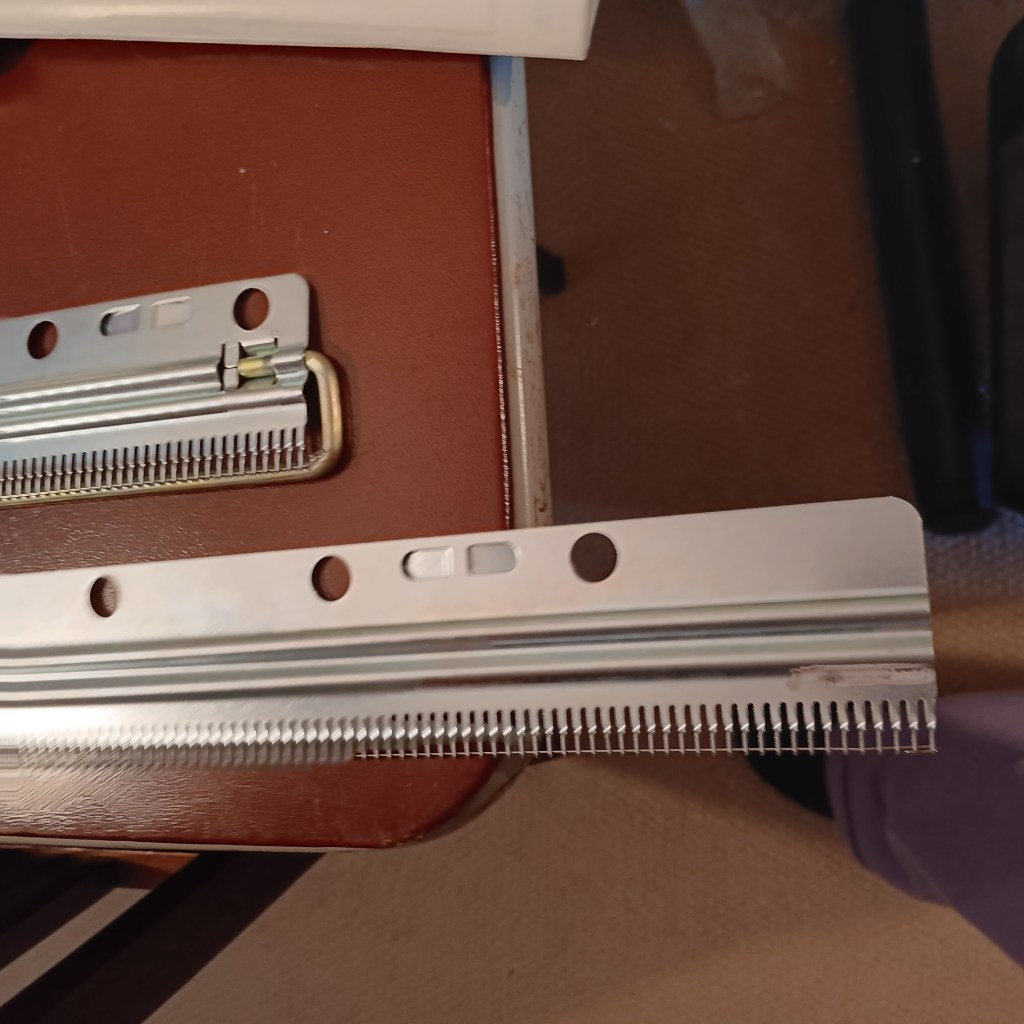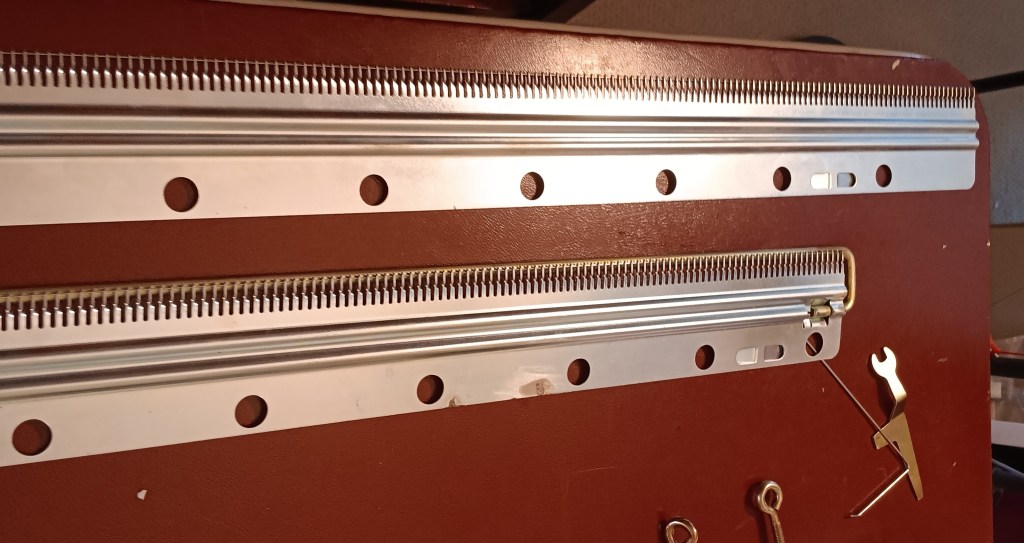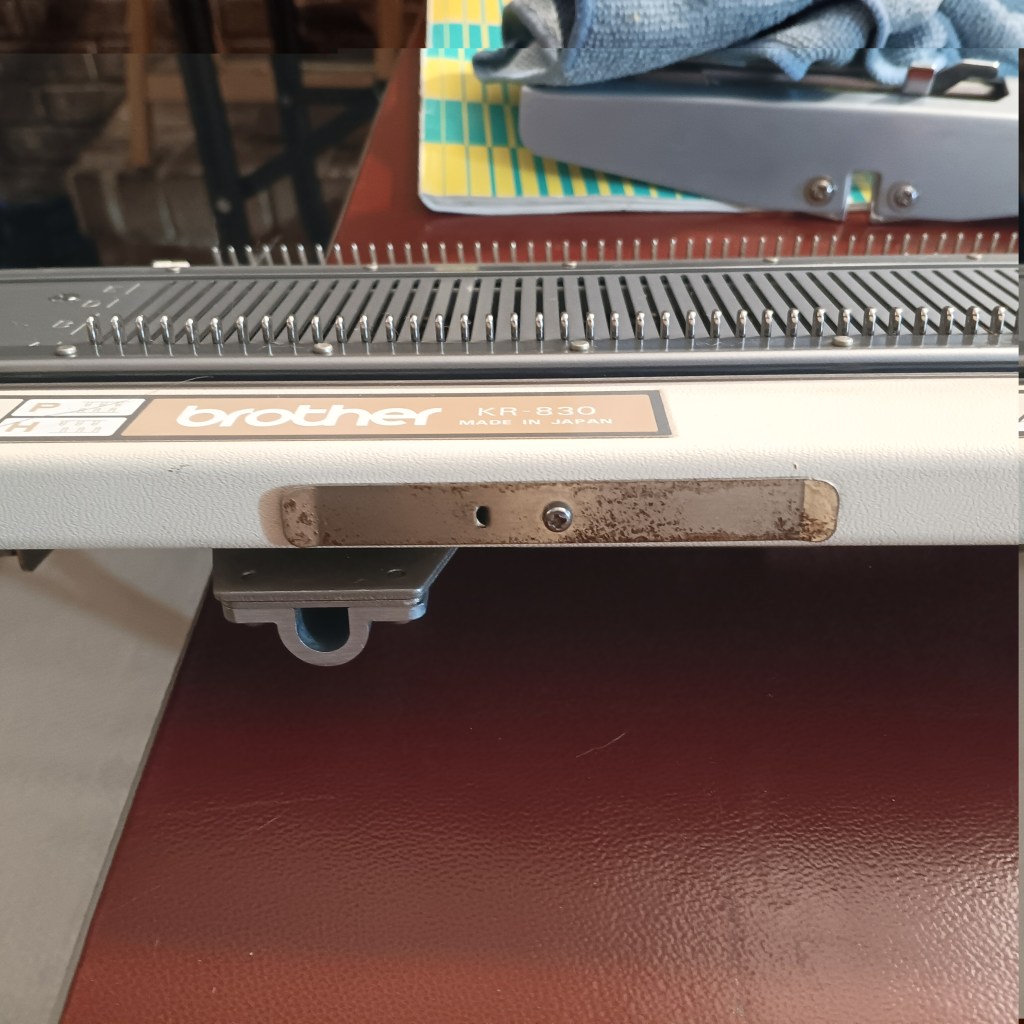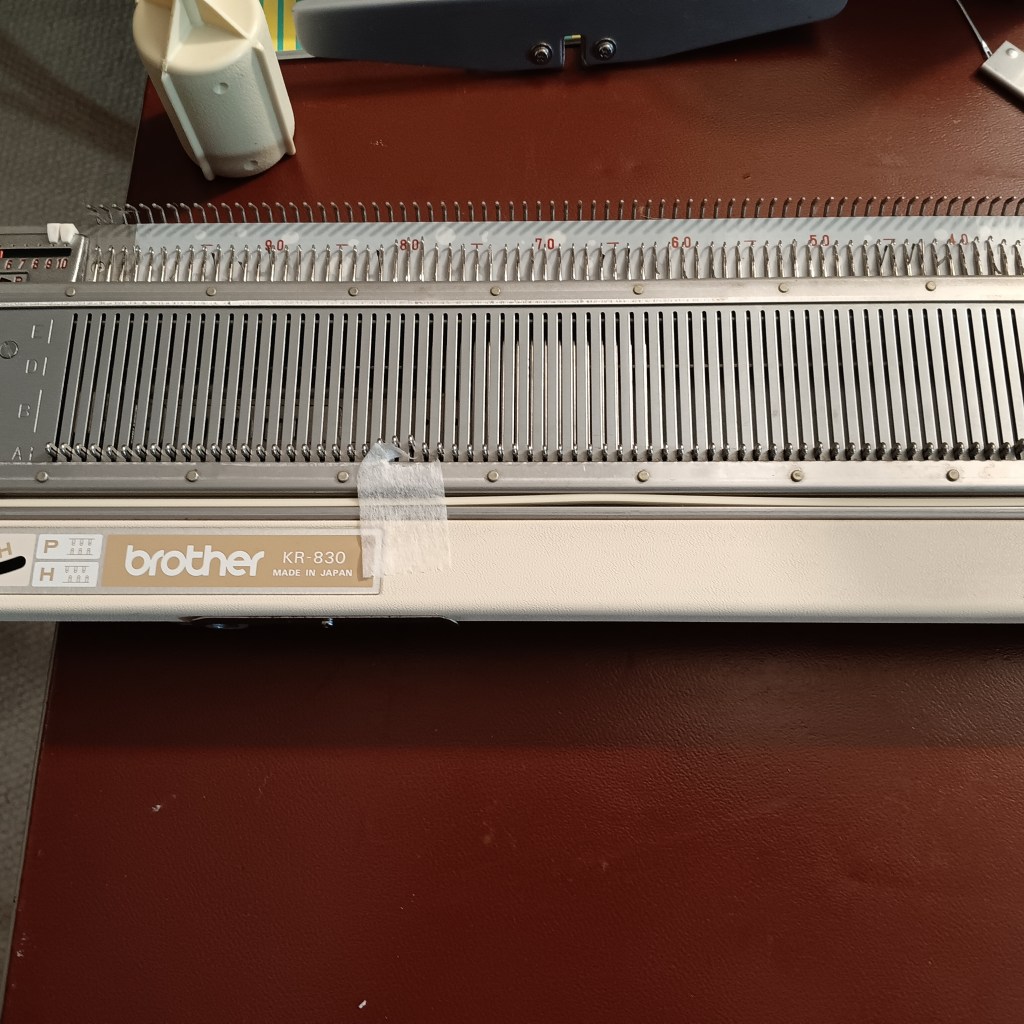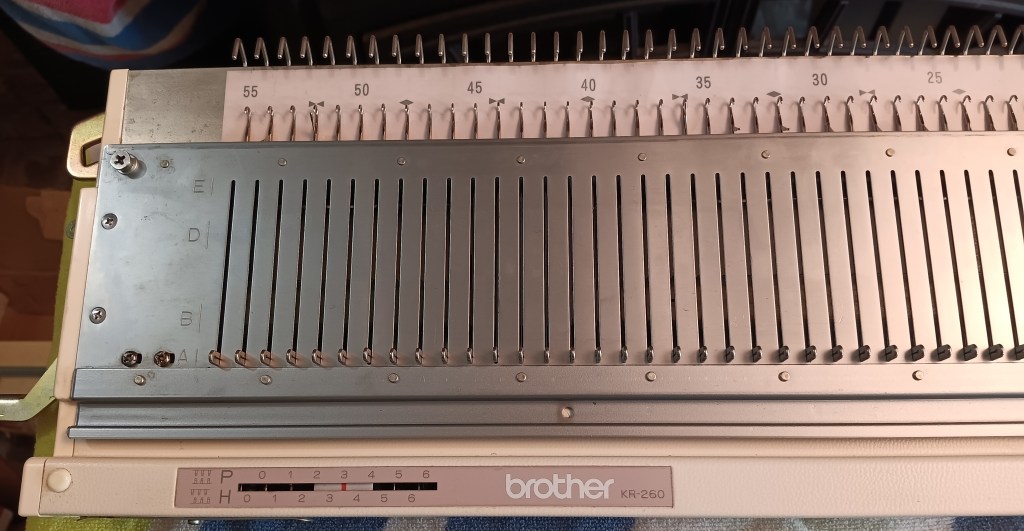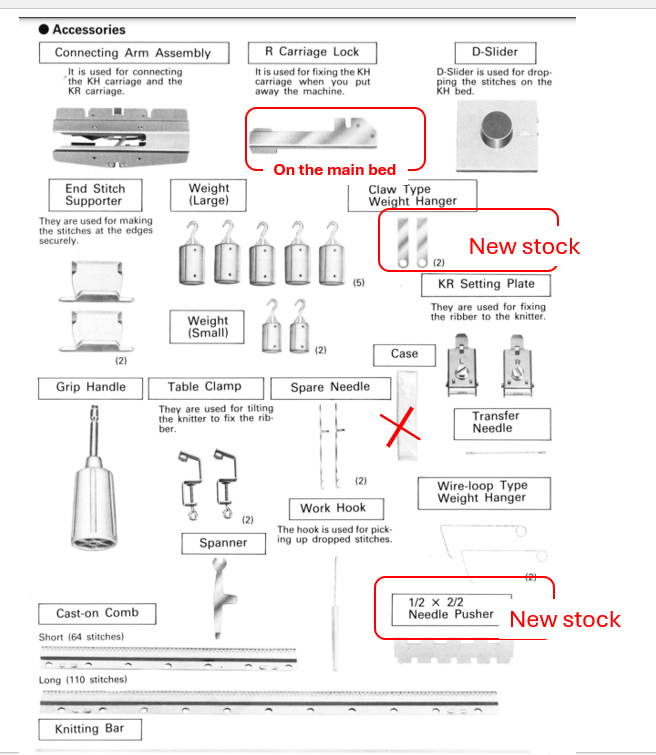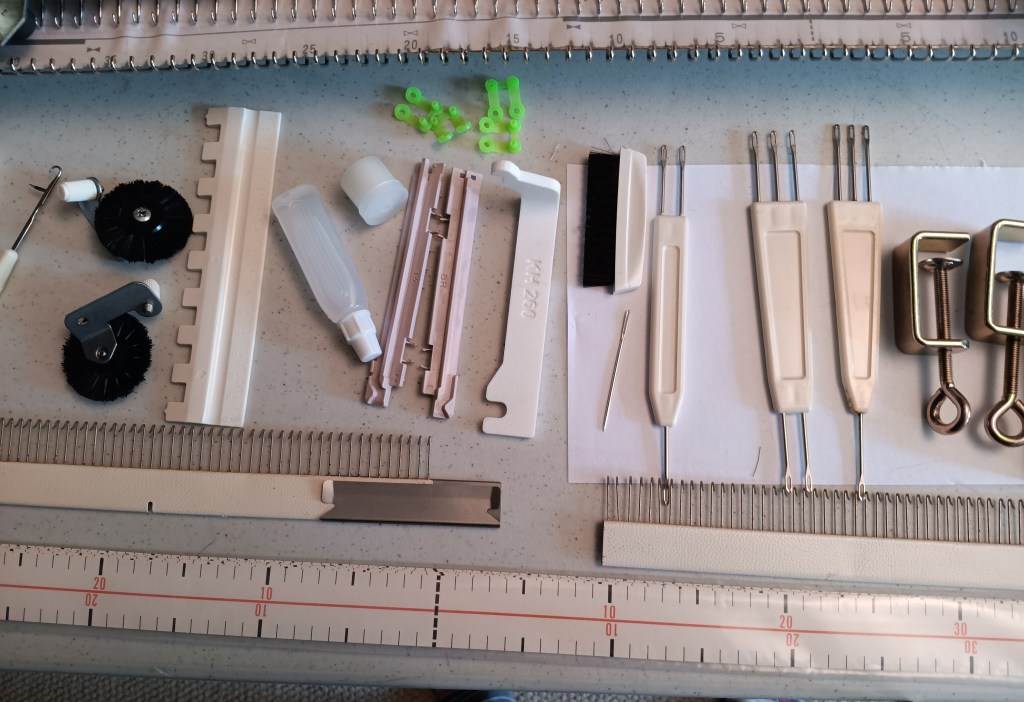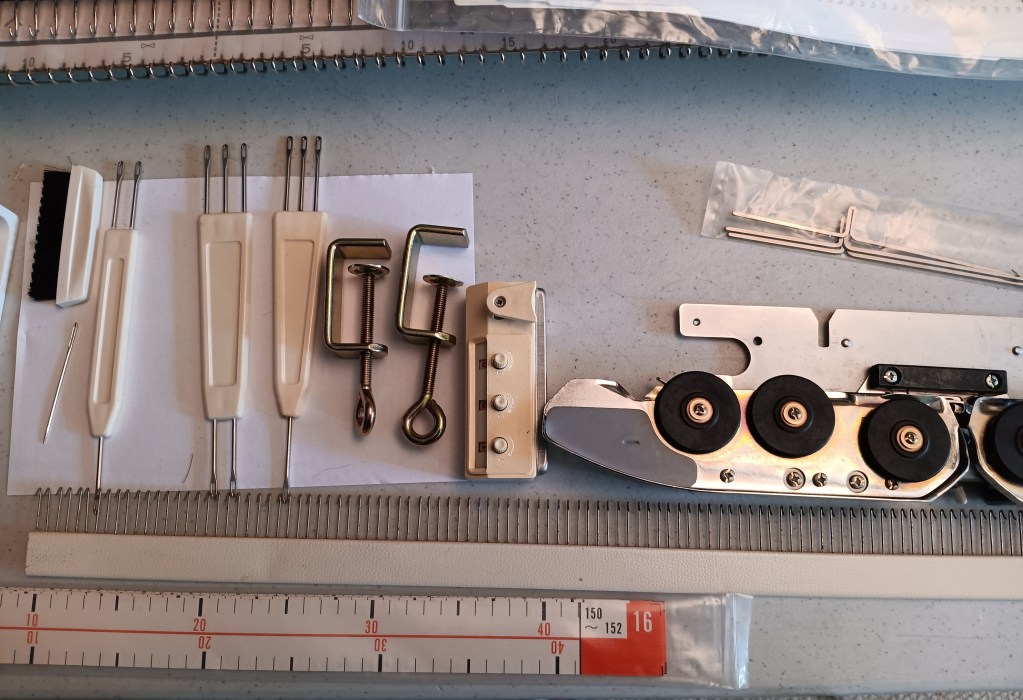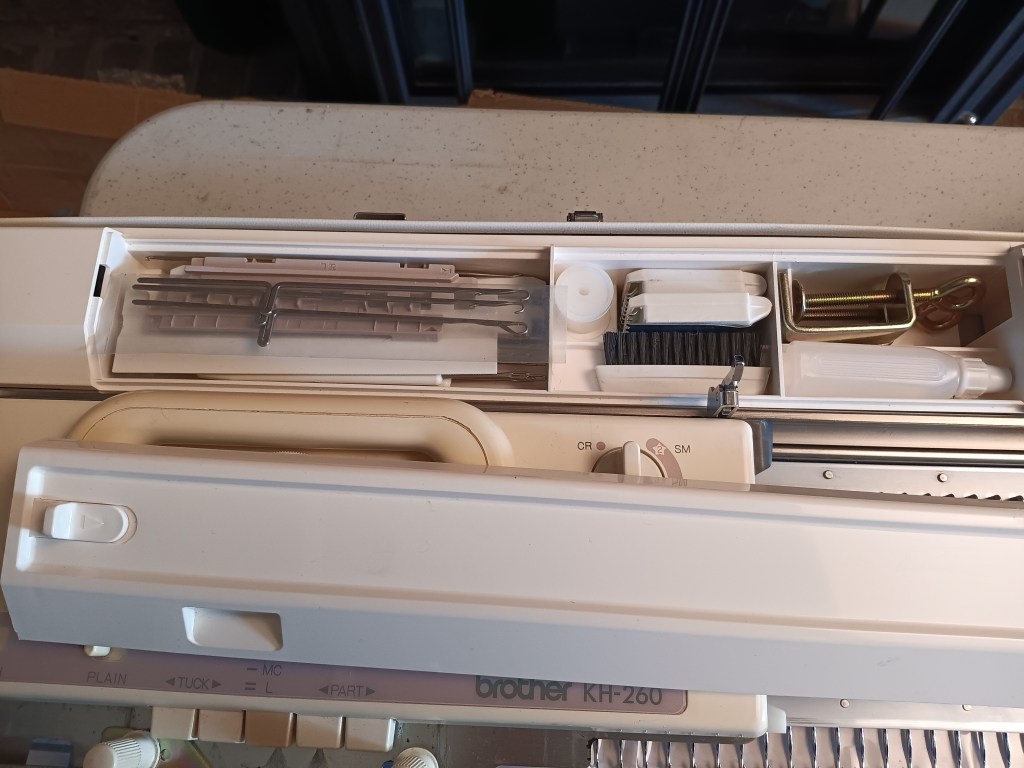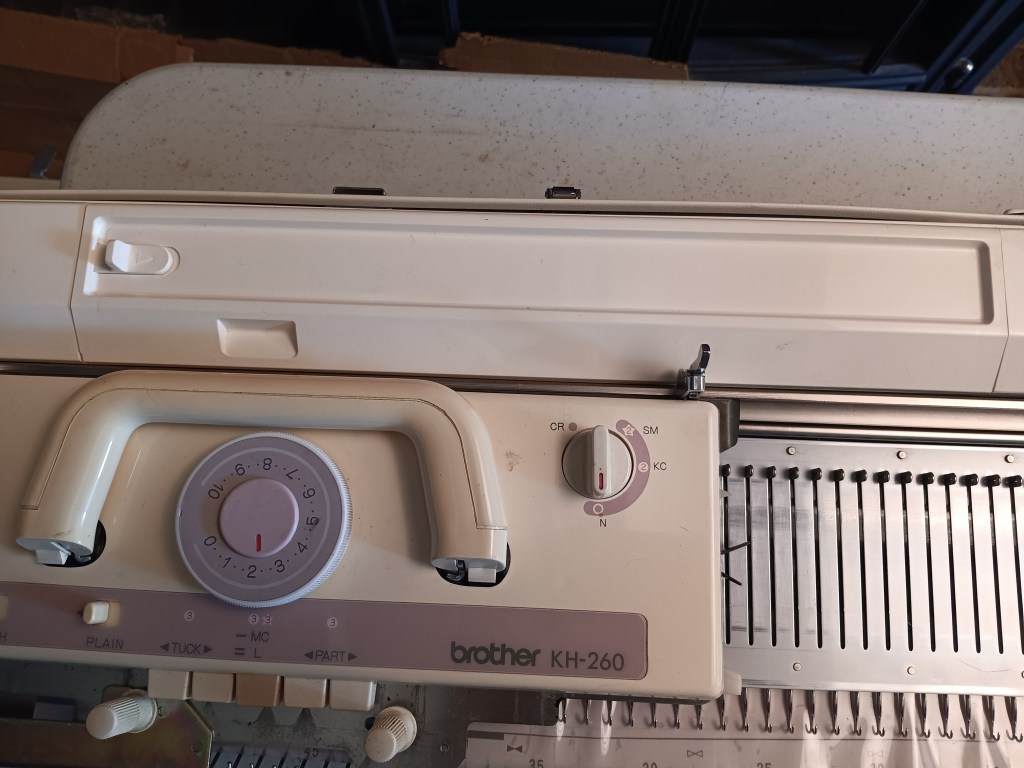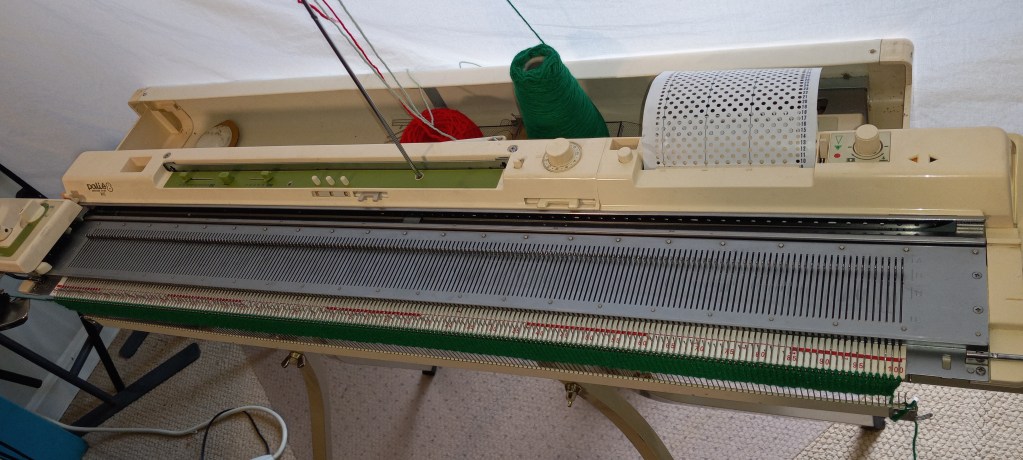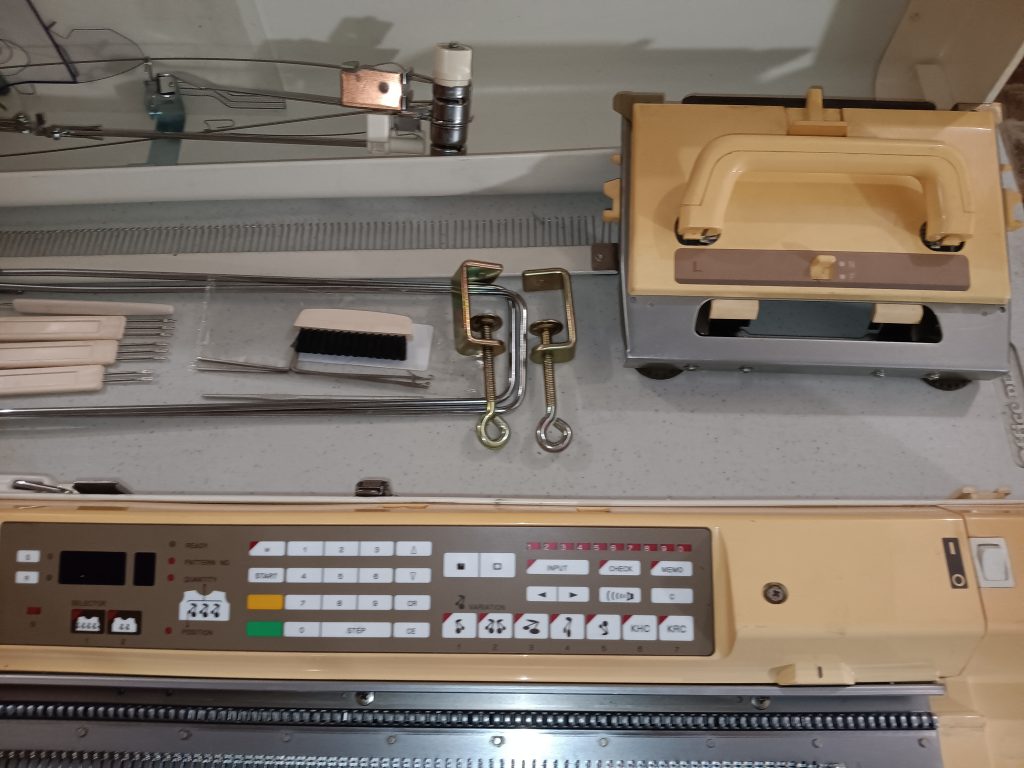
All Brother punch-card knitting machines have 200 needles. Except for the Brother KH260 model, all other punch-card Brother knitting machines are standard gauge (4.5 mm distance between needles).
Below is a summary of which punchcards were released for specific machines. Keep in mind that all these cards are interchangeable.
Miscellaneous
Card Set, letter
Standard-gauge machines
Brother KH830-836
D
Brother KH840
G
Brother KH860,881
J
Brother KH890,891
M
Brother KH864/868
S
KnitKingKK93/KH893
R
Bulky-gauge machines
Brother KH260
P
Miscalleneous
Garter Carriage
B-KG
Ribbers
Needle positions for Brother and KnitKing knitting machines.
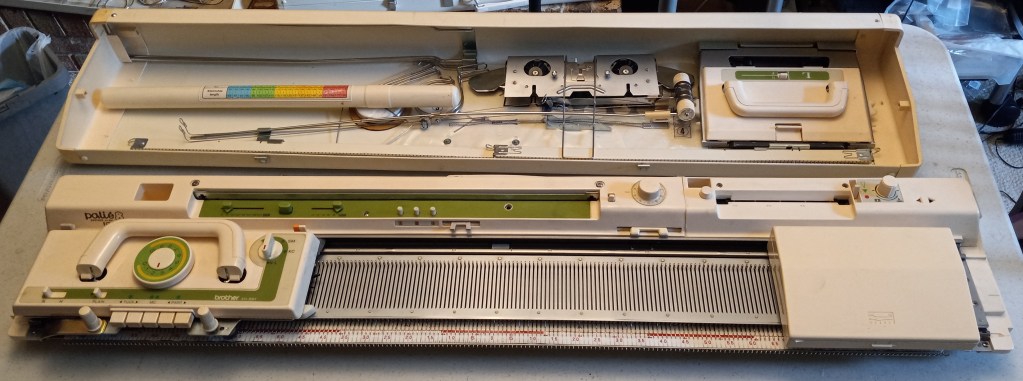
Brother KH881 is a standard-gauge knitting machine with 200 needles and a built-in knit leader. Read more about the pros and cons of the Brother KH881 knitting machine model in a separate blog post. This post is specifically about Brother KH881 serviced and fully tested in my shop in July 2024.
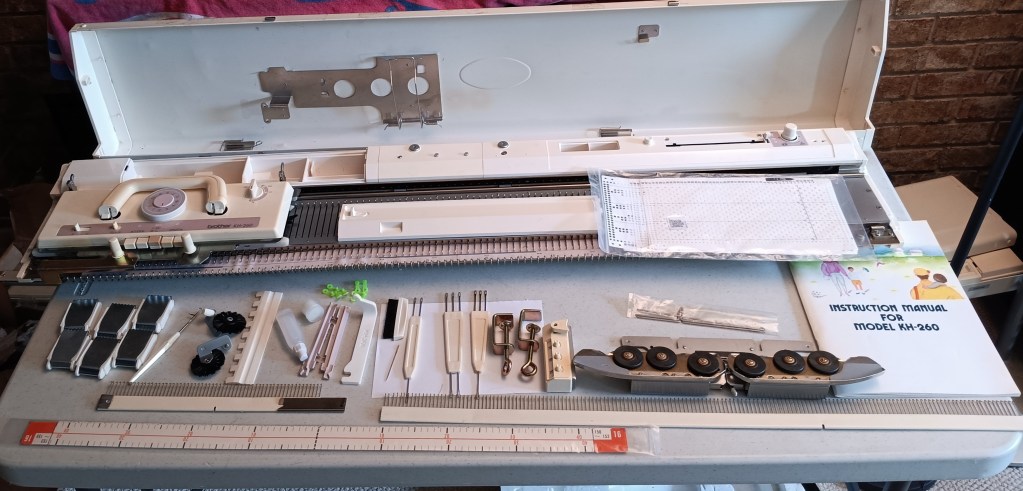
Brother KH881 came to me without a lot of accessories and even without a carriage. I found a replacement carriage and all minor missing accessories.
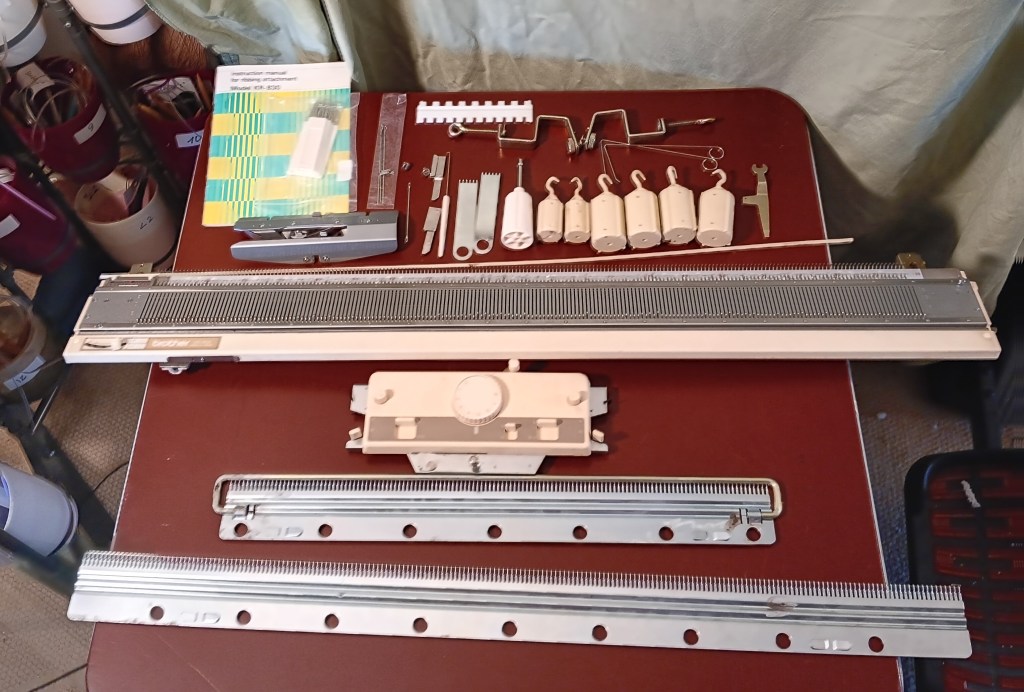
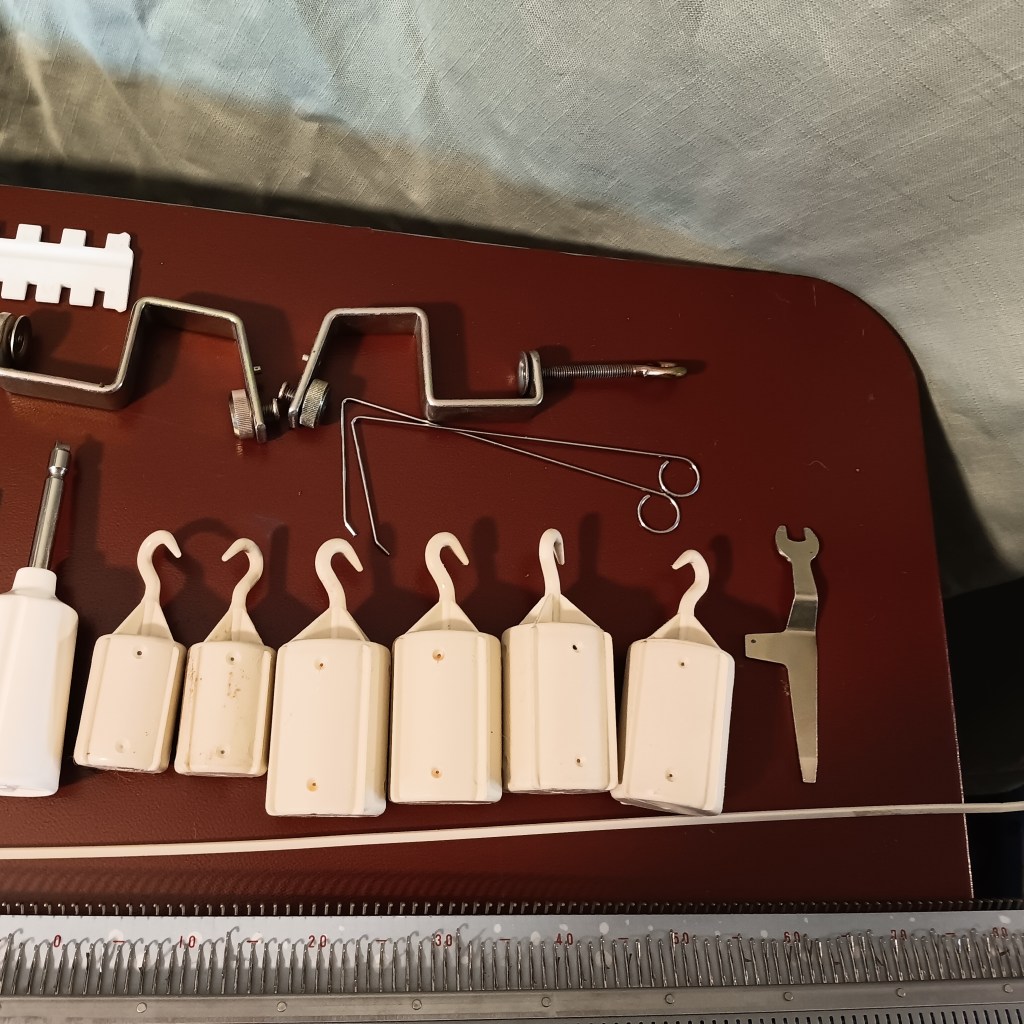
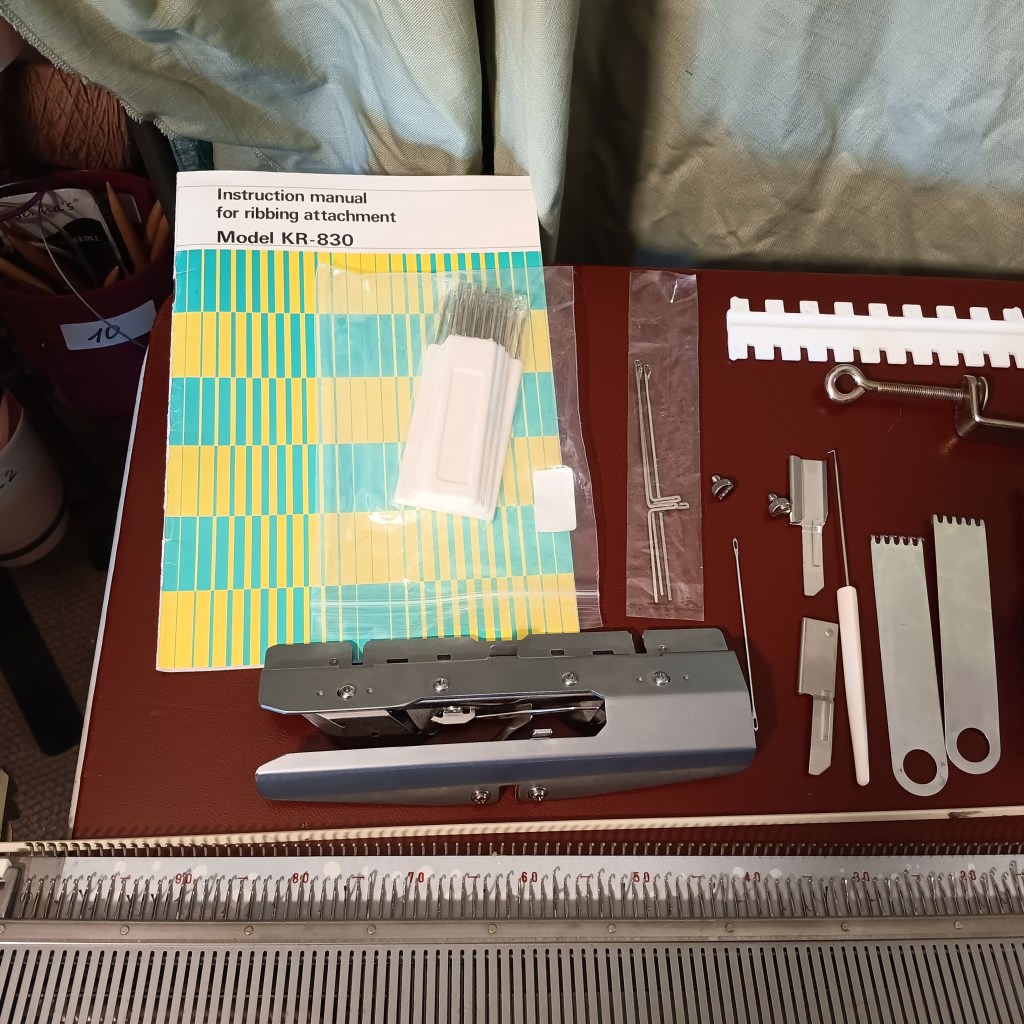
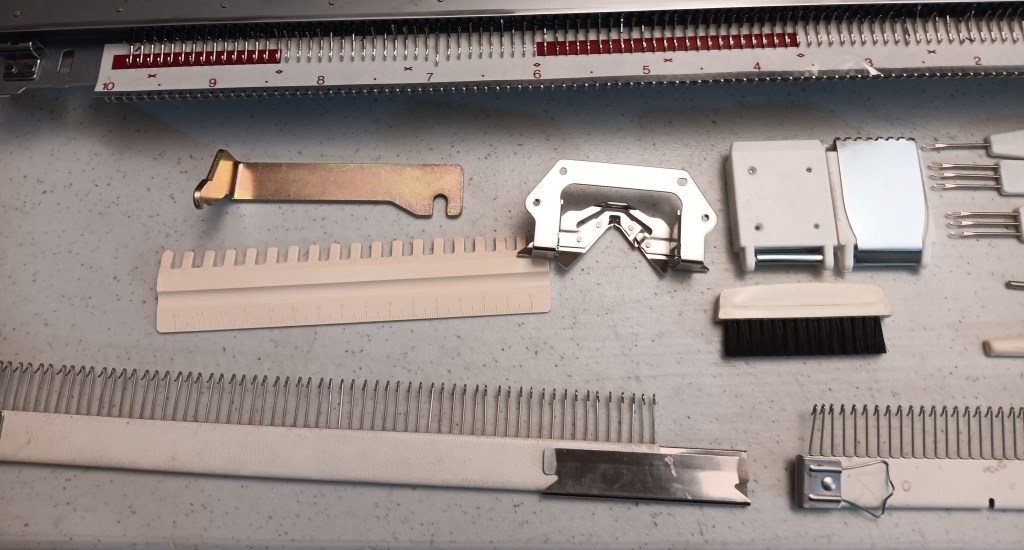
Most of the other major accessories were present with the machine and almost all accessories will be included.
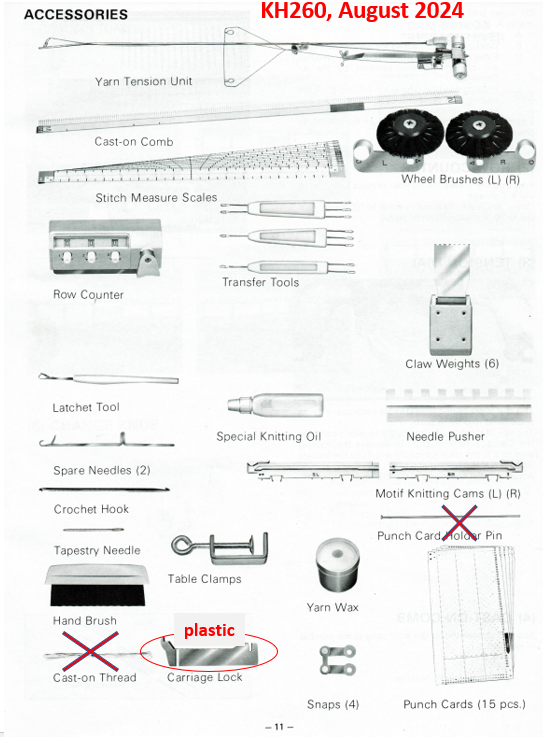
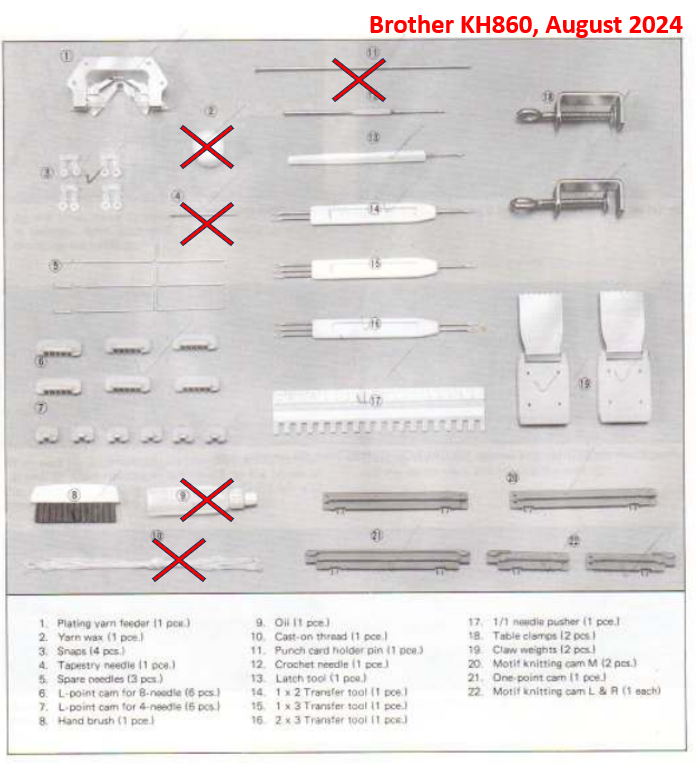
The still missing minor accessories are:
oil: it was old and I had to toss it away (use a Gun oil available on Amazon instead)
cast-on thread (you can use any silky and strong yarn)
the wax is technically not included but there was a piece still attached to the tension mast and it worked well while I knitted. I will include the plastic case for the wax.
A punchcard holder pin is also not included. All the tests shown in my video for this machine were performed without this rod.
These minor accessories are stored in a special toolbox.
The toolbox sits on the needle bed when the machine is stored away.
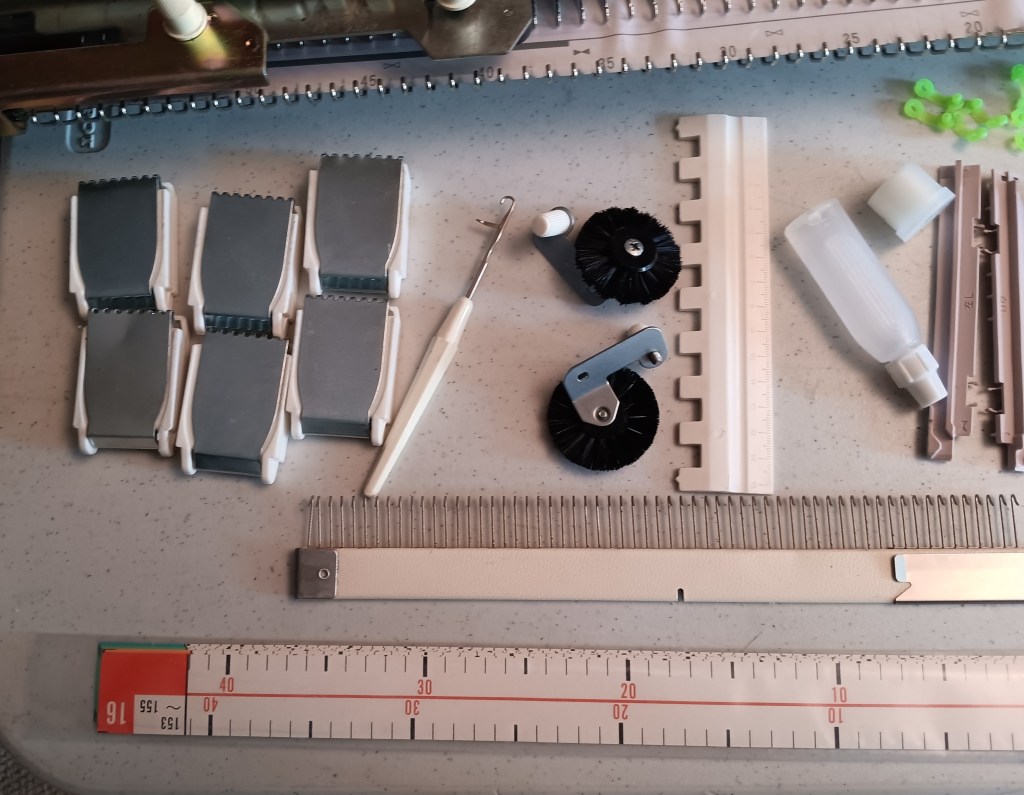
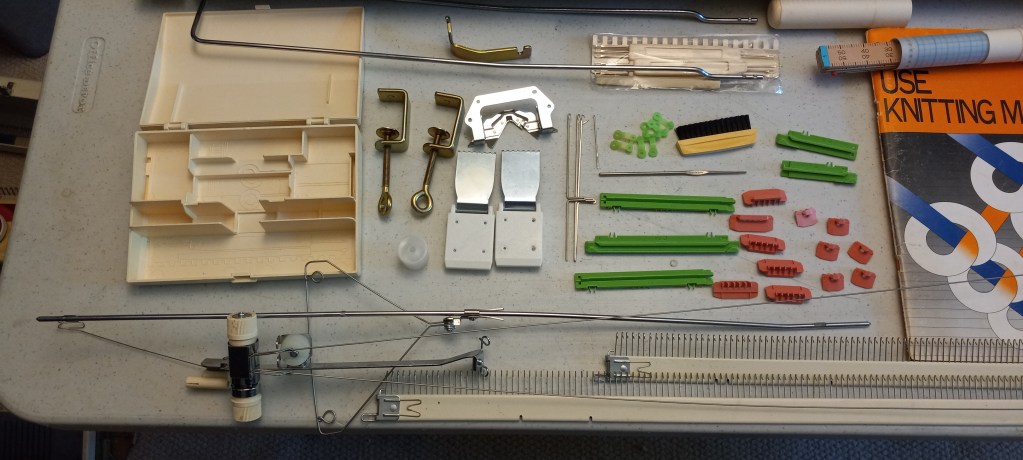
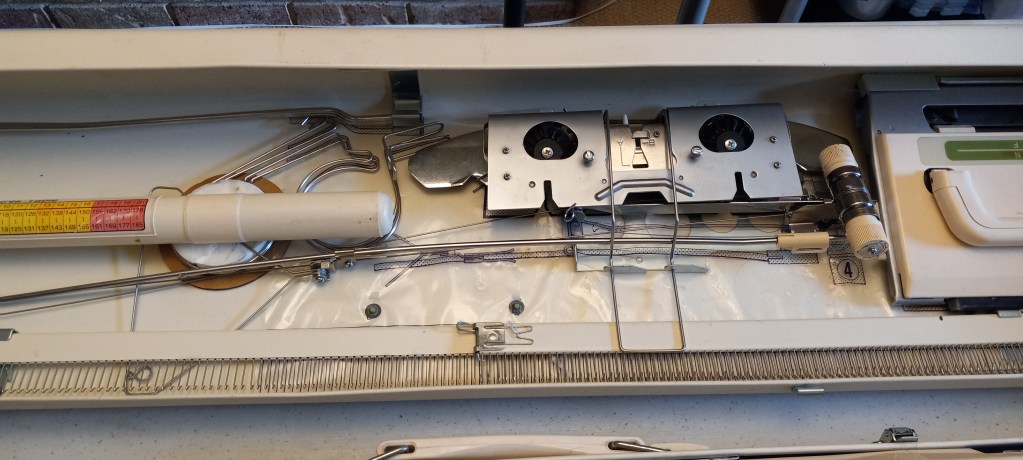
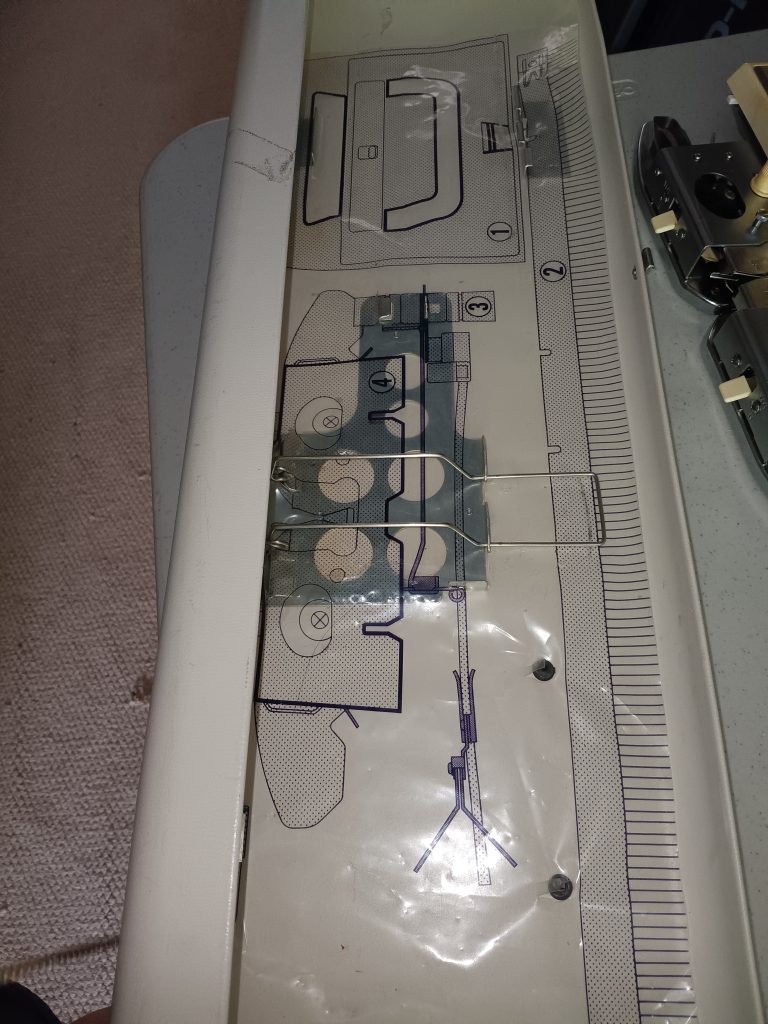
All major accessories are included as well: lace carriage, tension mast, knit leader sheet guides, row counter, cast-on combs, and extension rails. The major accessories fit nicely into the lid. The lace carriage was not tested but it is much simpler than the main carriage, so no problems are anticipated and I checked that all buttons move freely.
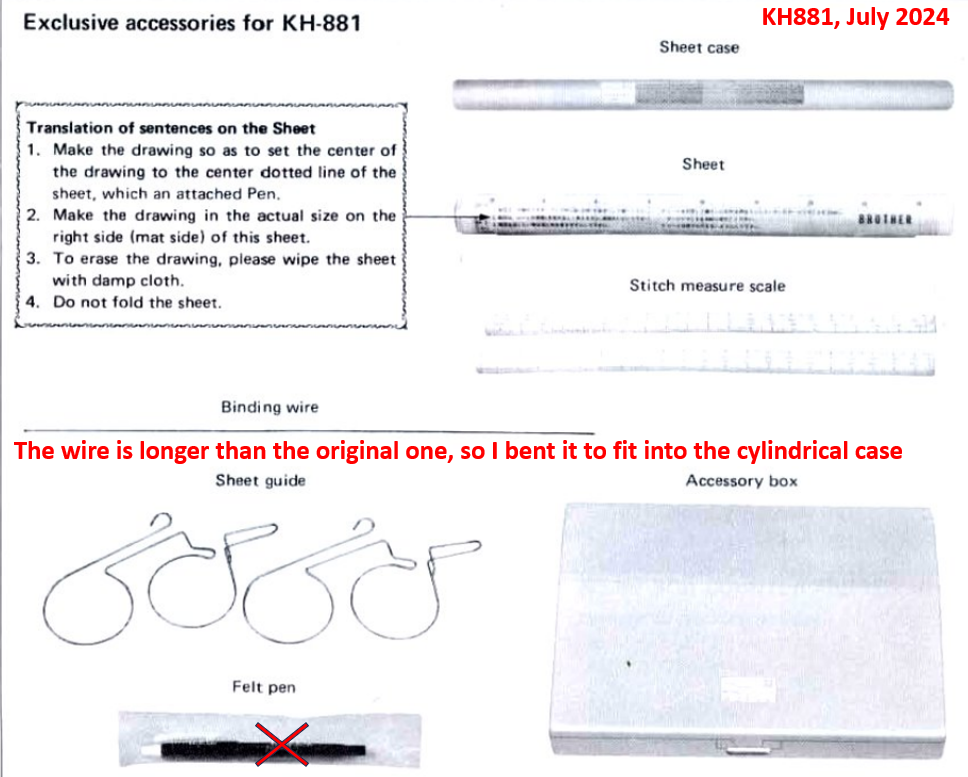
For the knit leader, the only missing accessory is a felt pen (it didn’t write – too old, so I also tossed it away). I read in the online forums that washable Crayola markers work as well as whiteboard markers. To remove, machine knitters advise to use a gum eraser. Depending on the pen, rubbing alcohol on a cotton swab works well too.
The binding wire was originally missing but I included a binding wire from a set from the KL116 knit leader.
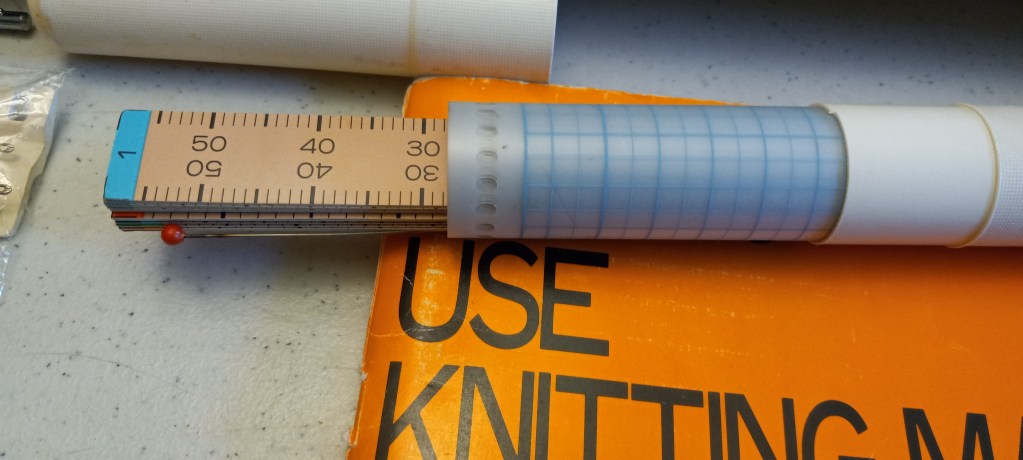
The wire I included is a bit longer than the wire that came with KH881. So I bent it to fit into the sheet case. It is very easy to unbend it. The purpose of this wire is to temporarily “seam” the knitted panels together.
So, the punchcard set is brand new – never used. It contains 20 cards, 6 of which are for lace knitting. The machine will come with the original hard copy of the knit leader manual and the hard copy of the instruction manual as well.
THE WORK DONE ON THIS MACHINE:
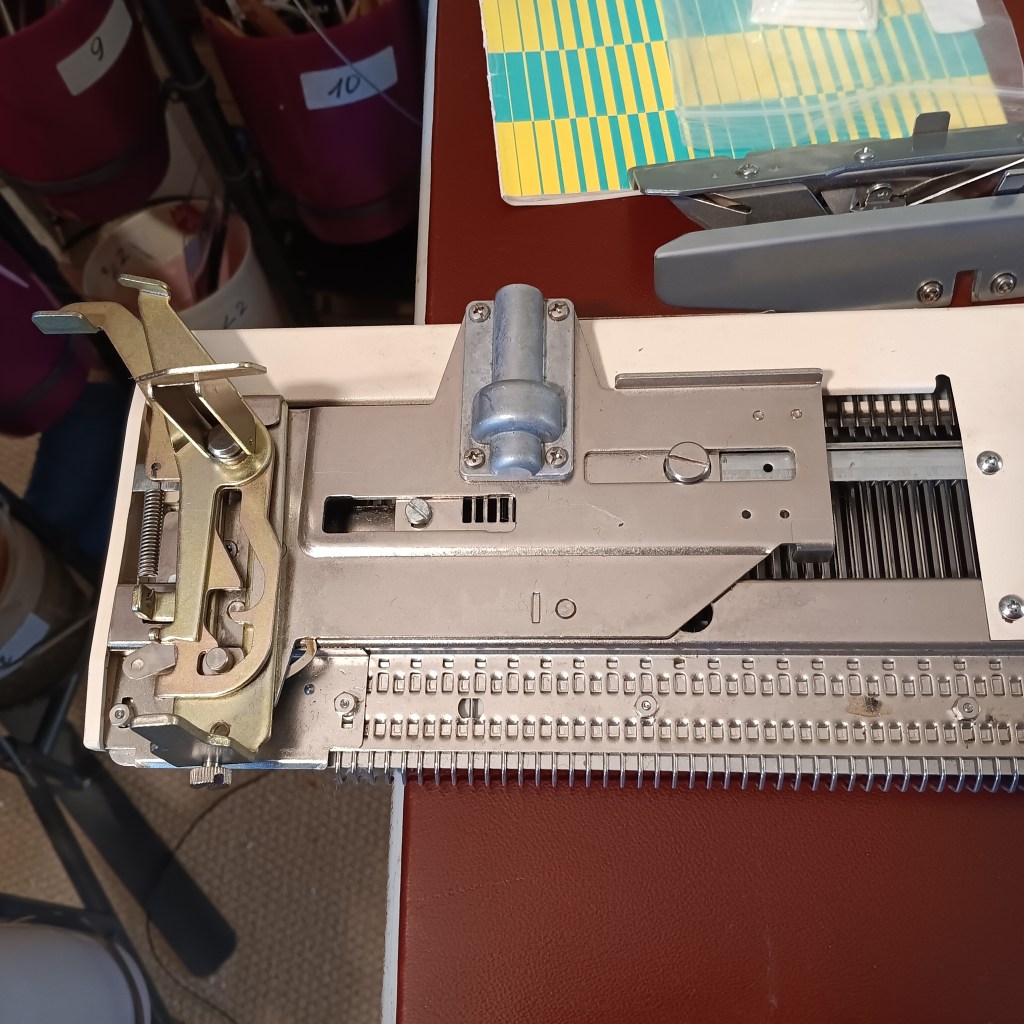
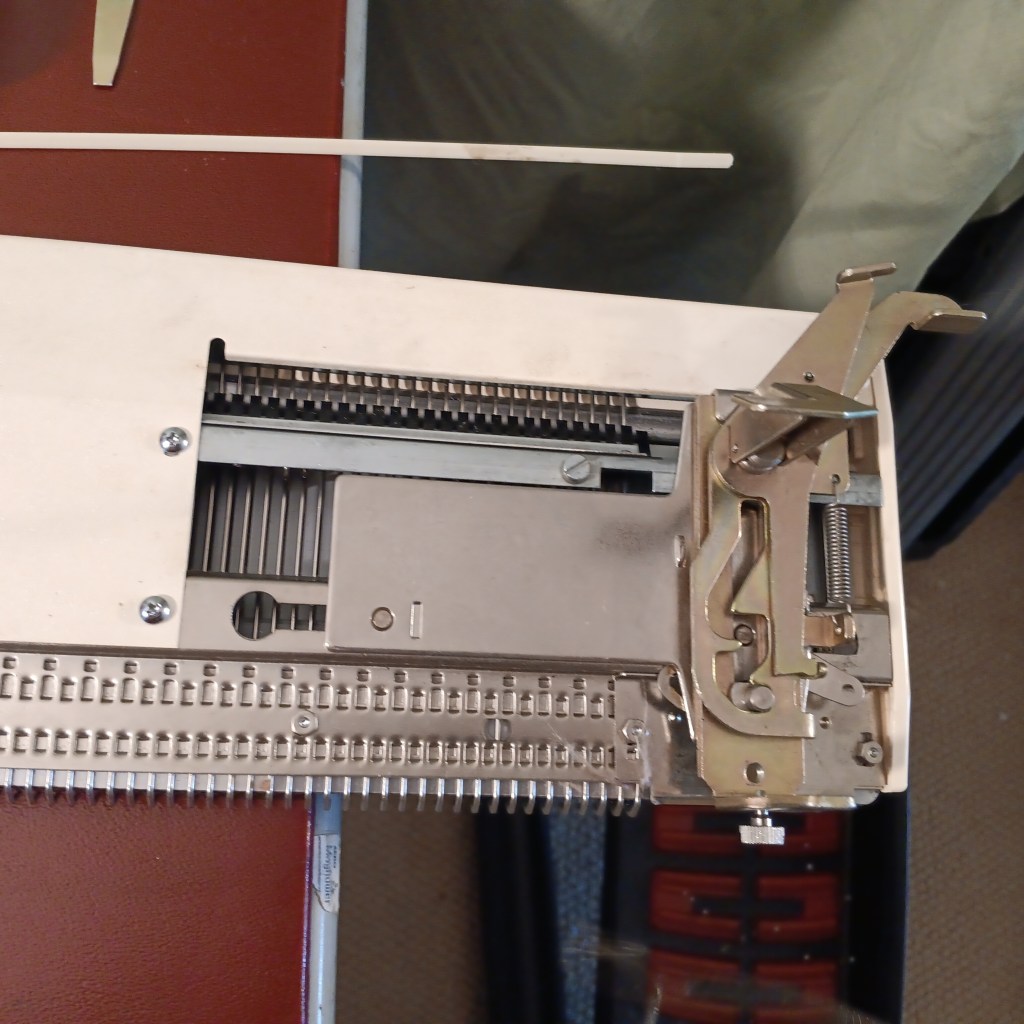
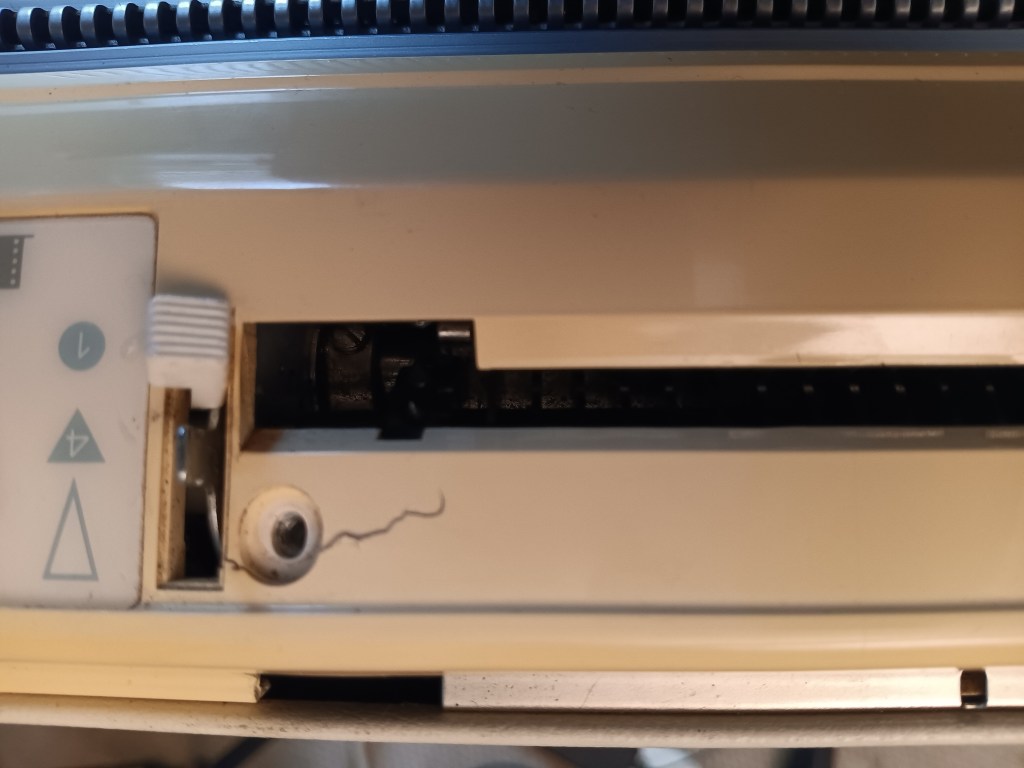
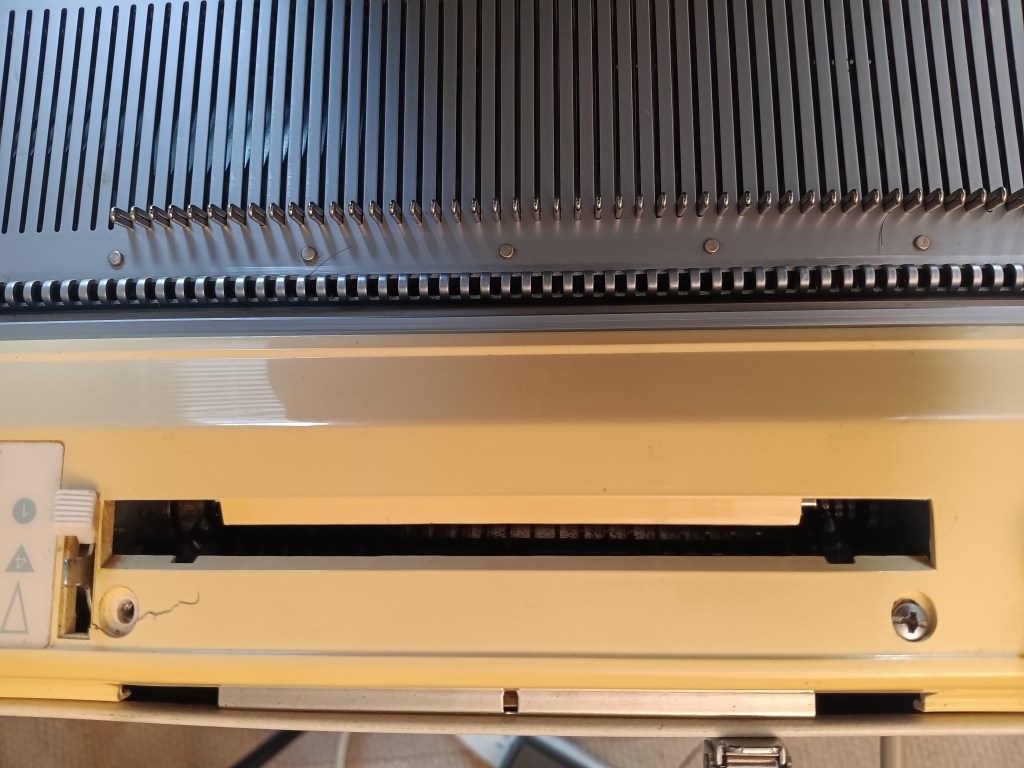
The machine was deeply cleaned, all needles were inspected, and faulty needles were replaced. The sponge it replaced in the retaining bar. This machine was given a lot of TLC, in particular to the punch card reader and the needle replacement mechanism to ensure they function well. I then ran tests on a full bed to again ensure needle selection on the full bed and that all needles form stitches as they are supposed to.
The knit leader was not tested but I checked and all the buttons and levers move freely and advance when triggered.
Now about the tests:
I tried 4 different yarns on this machine: one blend, and three acrylic yarns. The thicknesses varied too. The machine formed stitches wonderfully with all these yarns. I knitted on a full bed using tuck-stitch, slip-stitch, and fair isle. I used card #1 and other cards (with a 24-stitch repeat pattern) too. I like using card#1 (which has a 2-stitch repeat pattern and thus, every other needle is selected) because it immediately shows incorrectly selected needles. Additionally, any errors will be shown on the fabric (especially in Fair Isle).
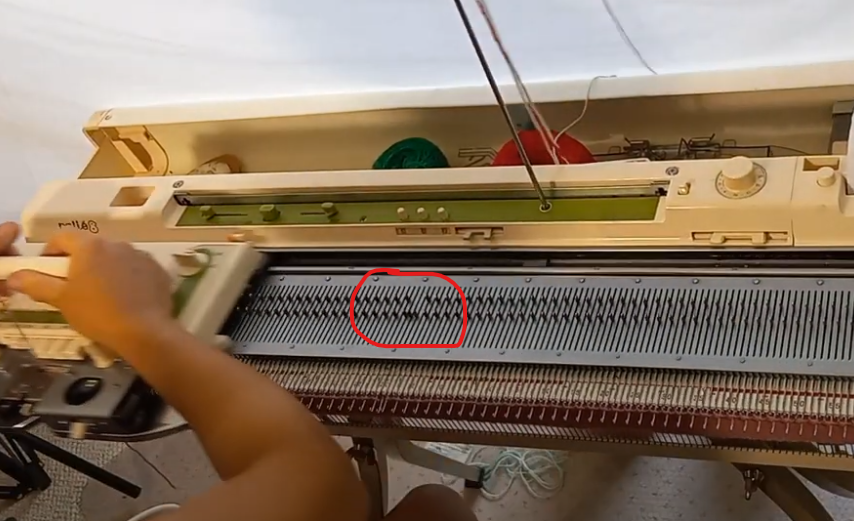
There was only one hick-up during these tests. When I was knitting tuck-stitch with the 2-stitch repeat pattern (using card #1), I did not notice right away that in one place, one needle is selected incorrectly. There was a 3-needle cluster (around left-hand side needle #20) that I did not catch.
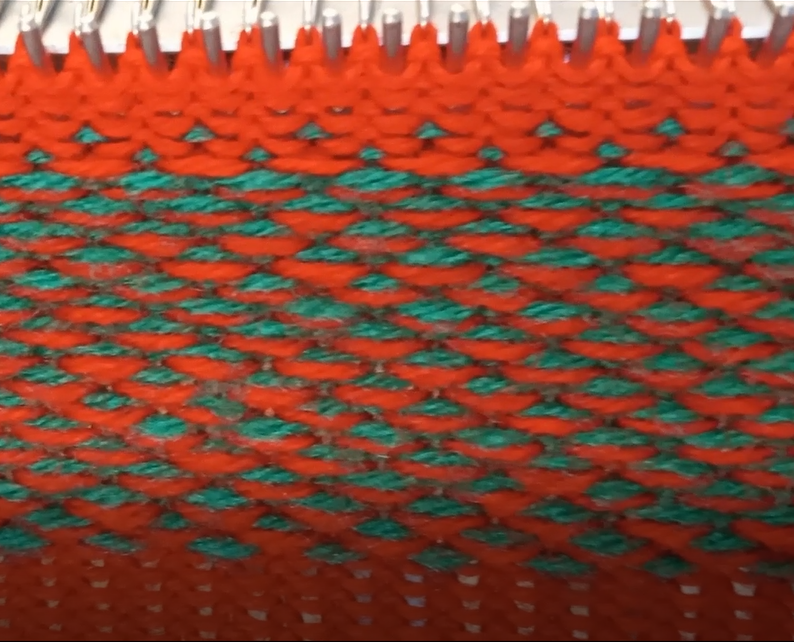
Three-needle cluster due to the faulty (and not correctly selected) needle during the tuck-stitch knitting on the full bed.
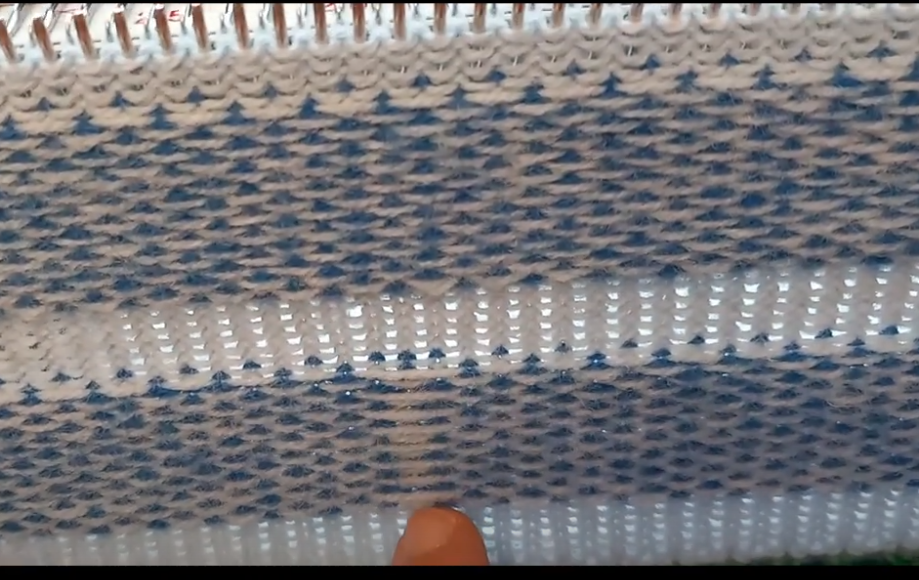
… And the knitted fabric did not show this flaw (tuck stitch hides the errors well – see the picture below).
Even though the needle was NOT selected correctly around needle #20, the error did not translate in the pattern: all stitches look the same.
So, when I started knitting fair-isle with the same punchcard and 2-stitch repeat pattern, the same needle was not being selected correctly.
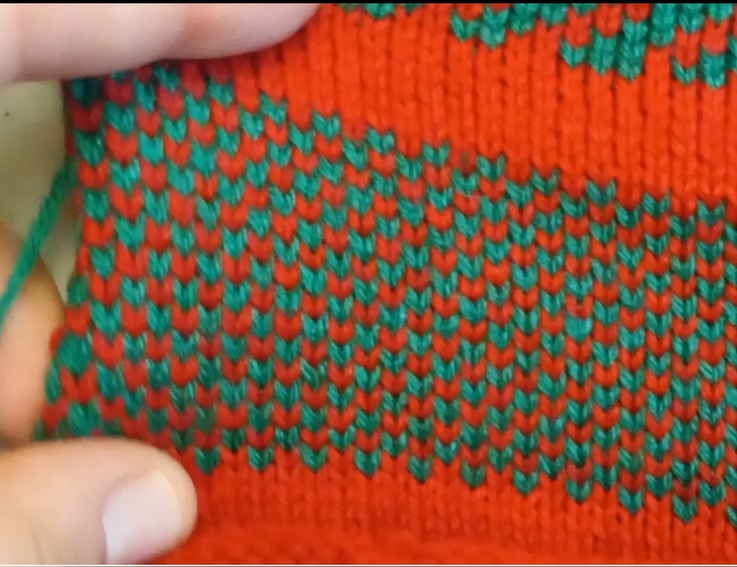
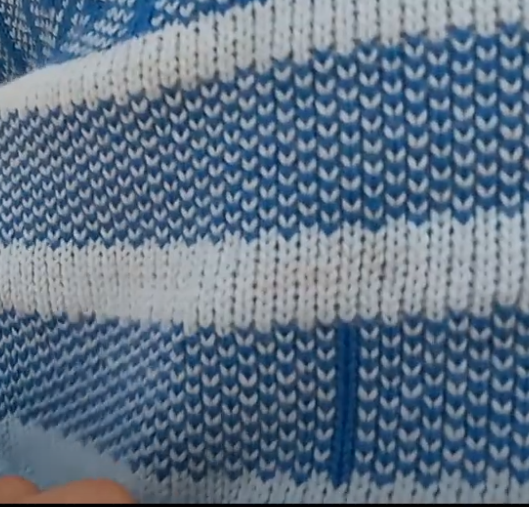
… But this time, I was able to clearly see the incorrectly formed stitches (due to the color contrast of the two yarns).
The reason for mispatterning was a bent needle: the end of the needle that gets pushed by the selection plates was out of place due to this bent. After the faulty needle was replaced, I encountered no more problems with the needle selection.
The top pattern was knitted after the faulty needle was replaced: notice long floats around needle #20 are no longer present.
Below is the image showing how the incorrectly-selected needle manifested itself in the pattern.
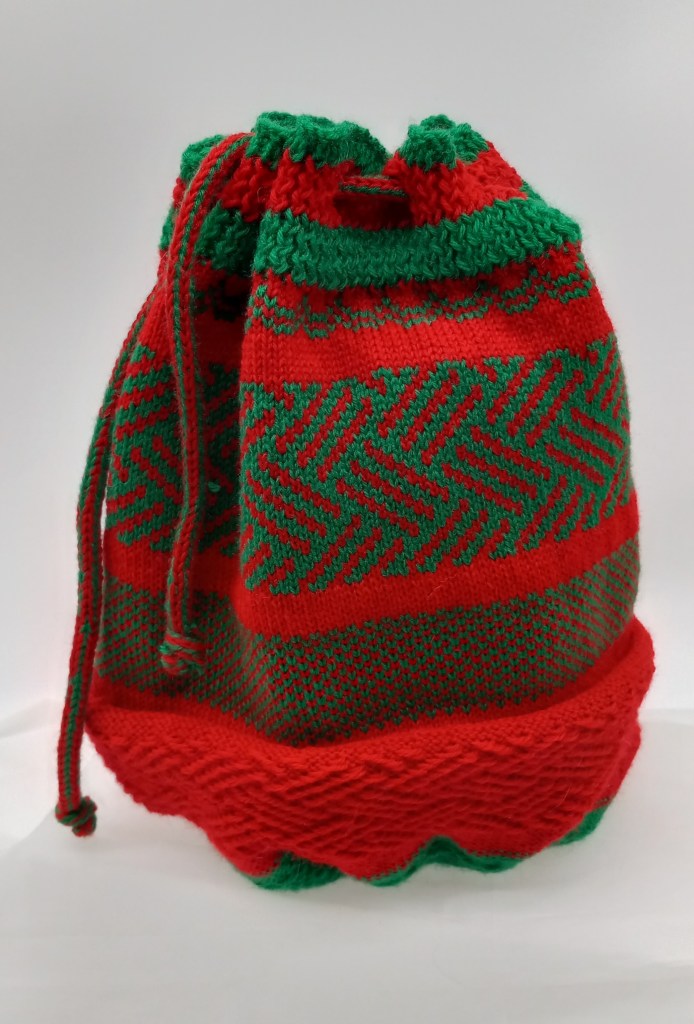
Below are the things I made from the panels I knitted while testing this machine with various yarns.
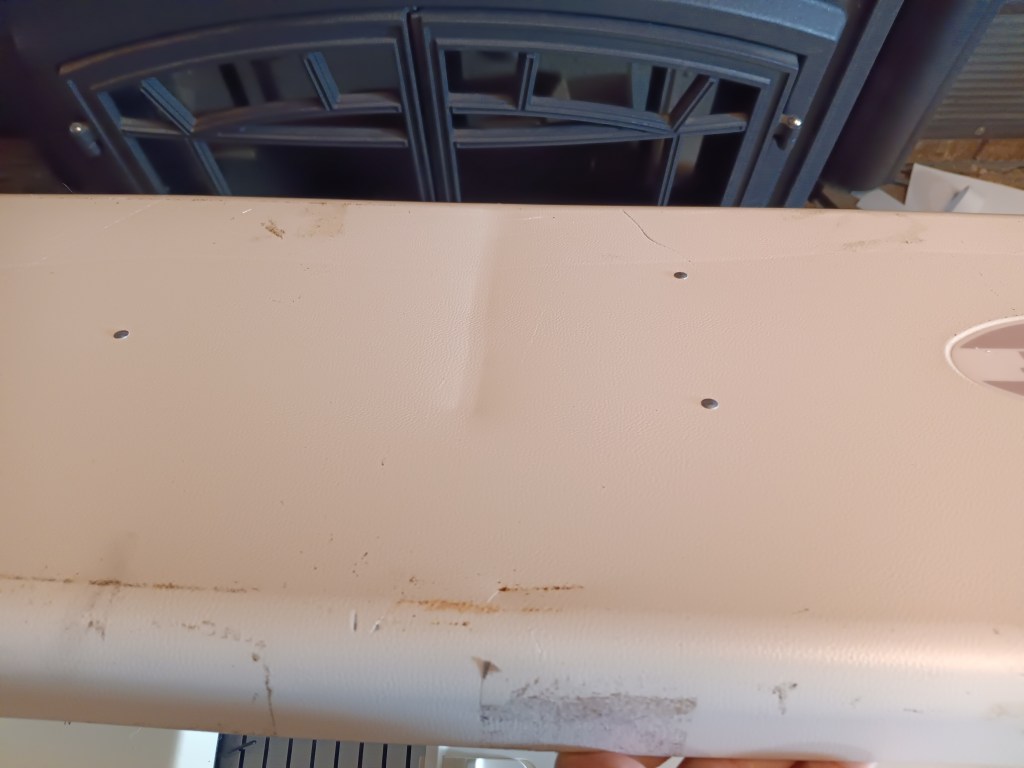
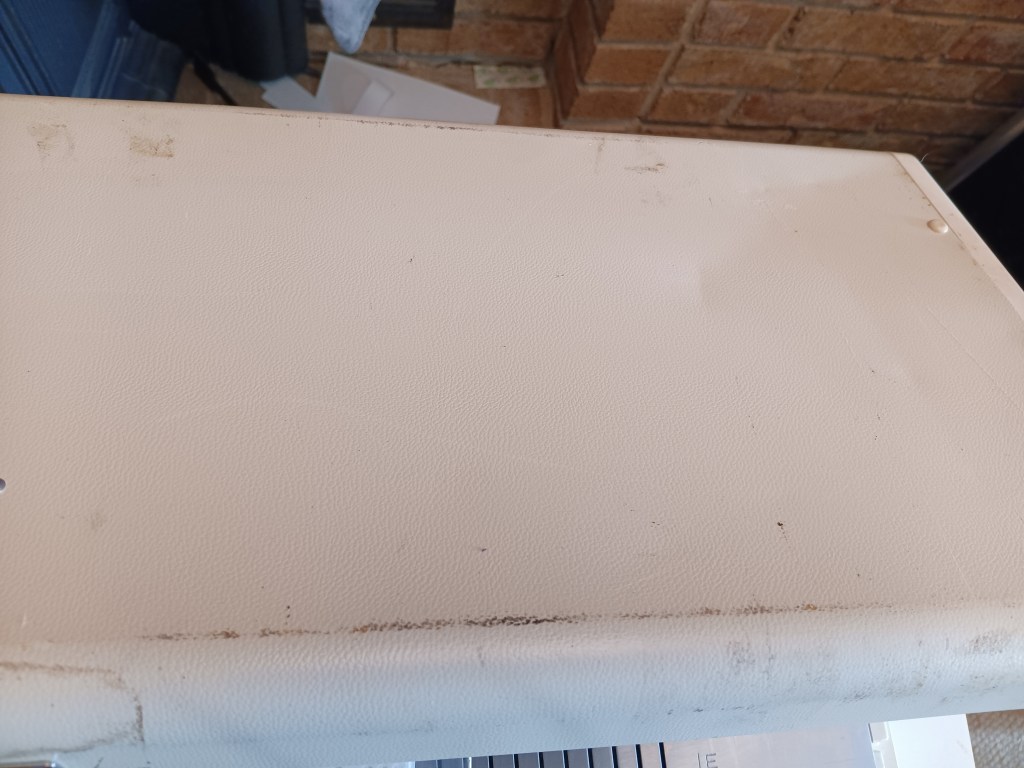
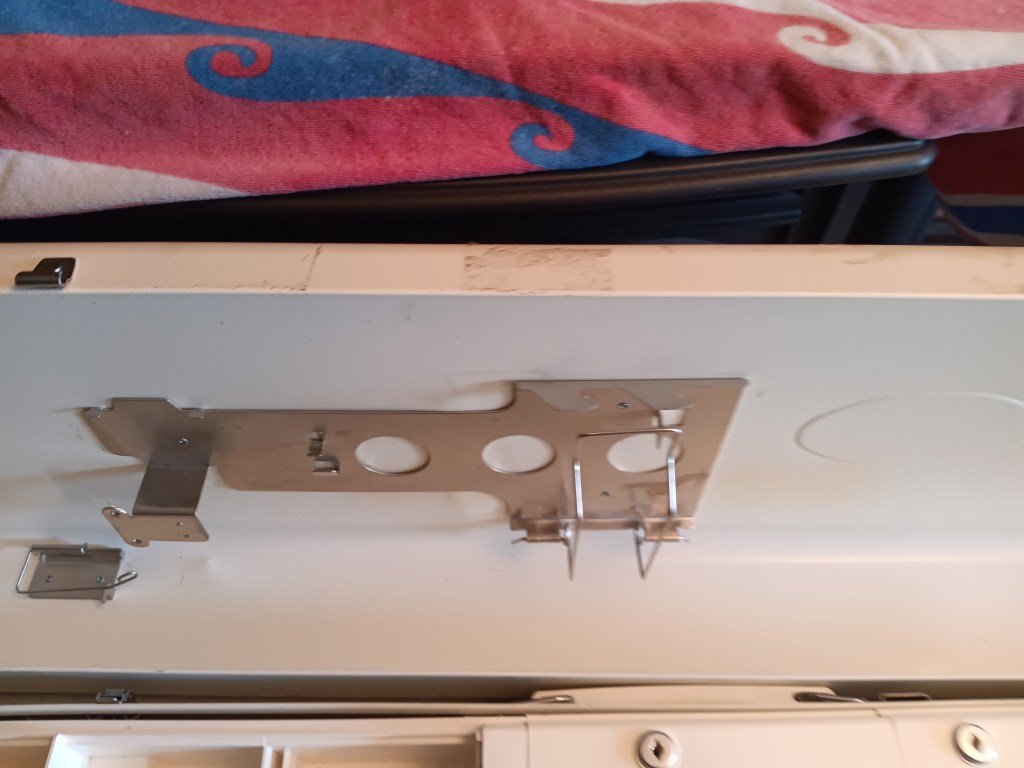
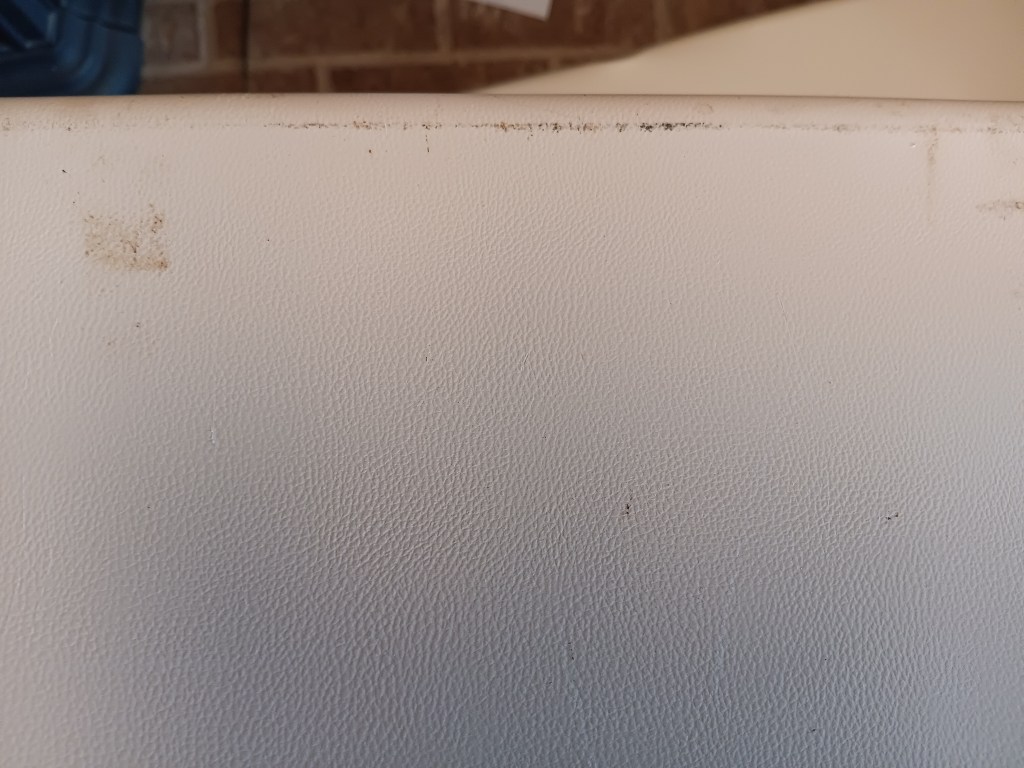
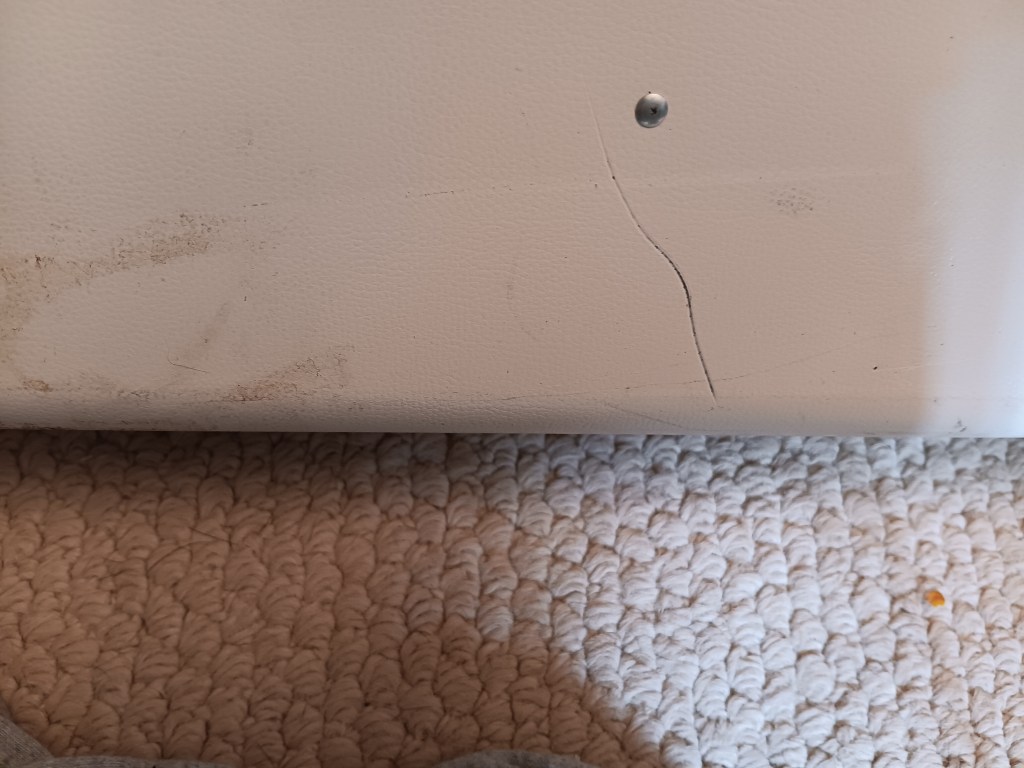
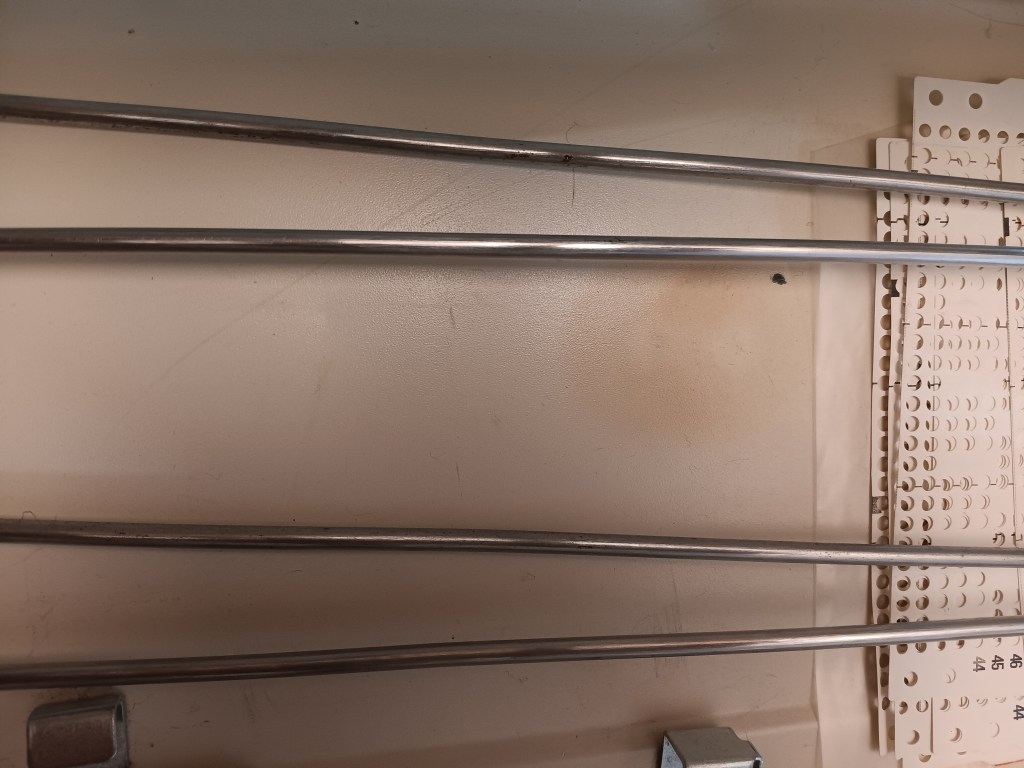
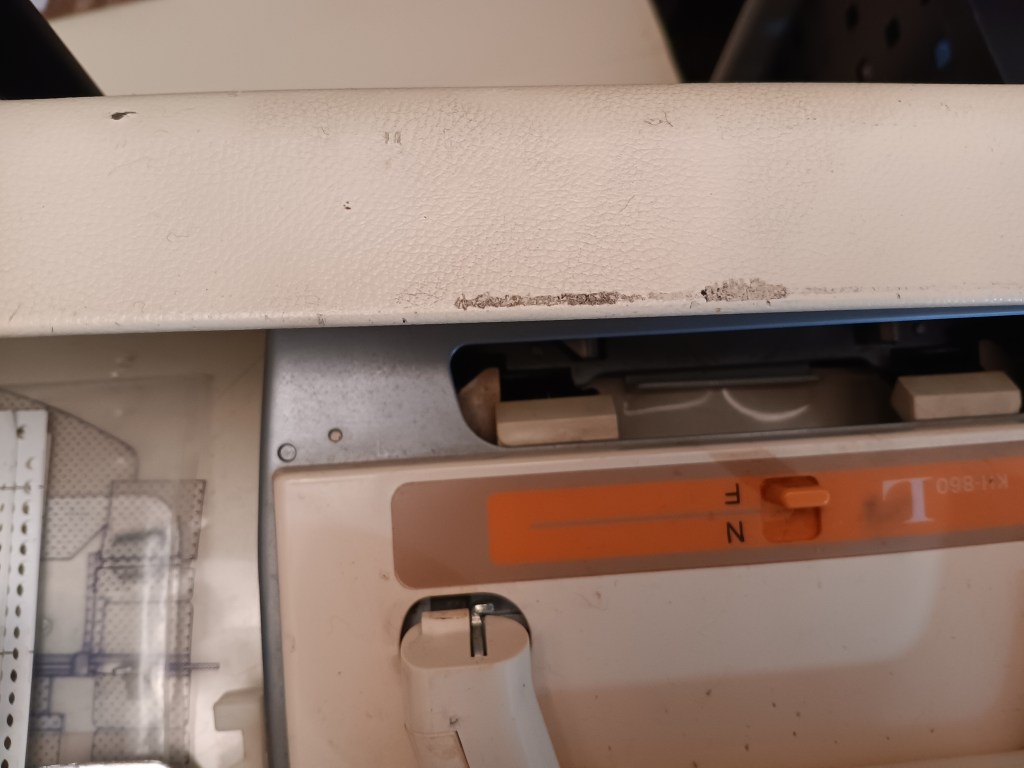
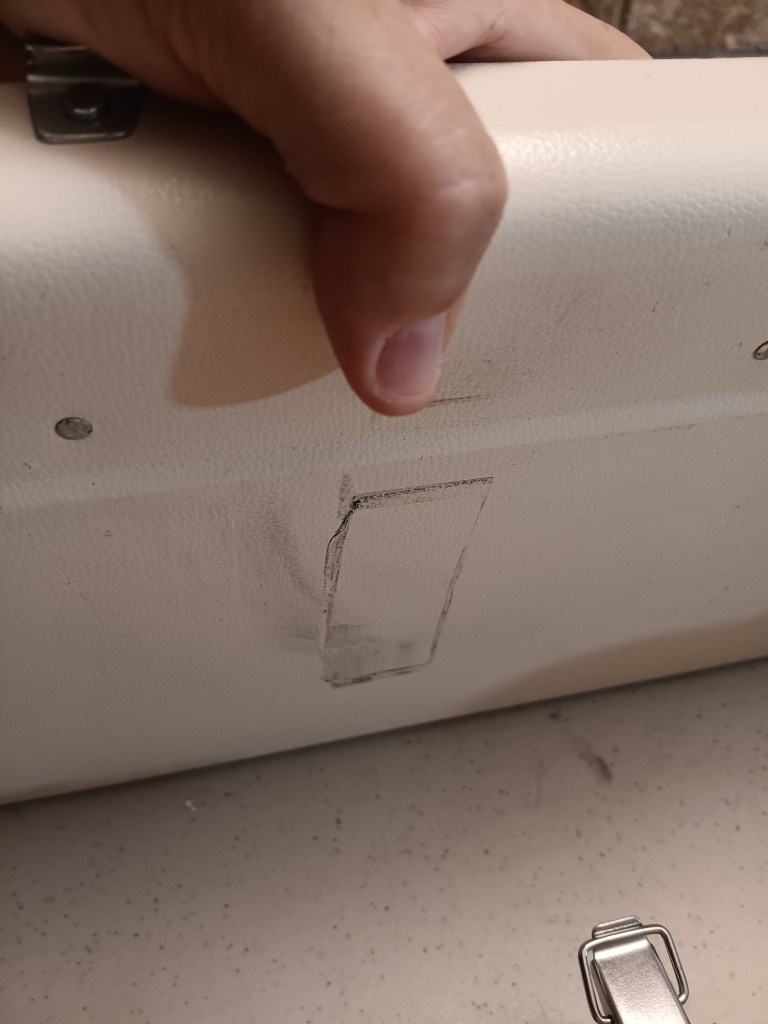
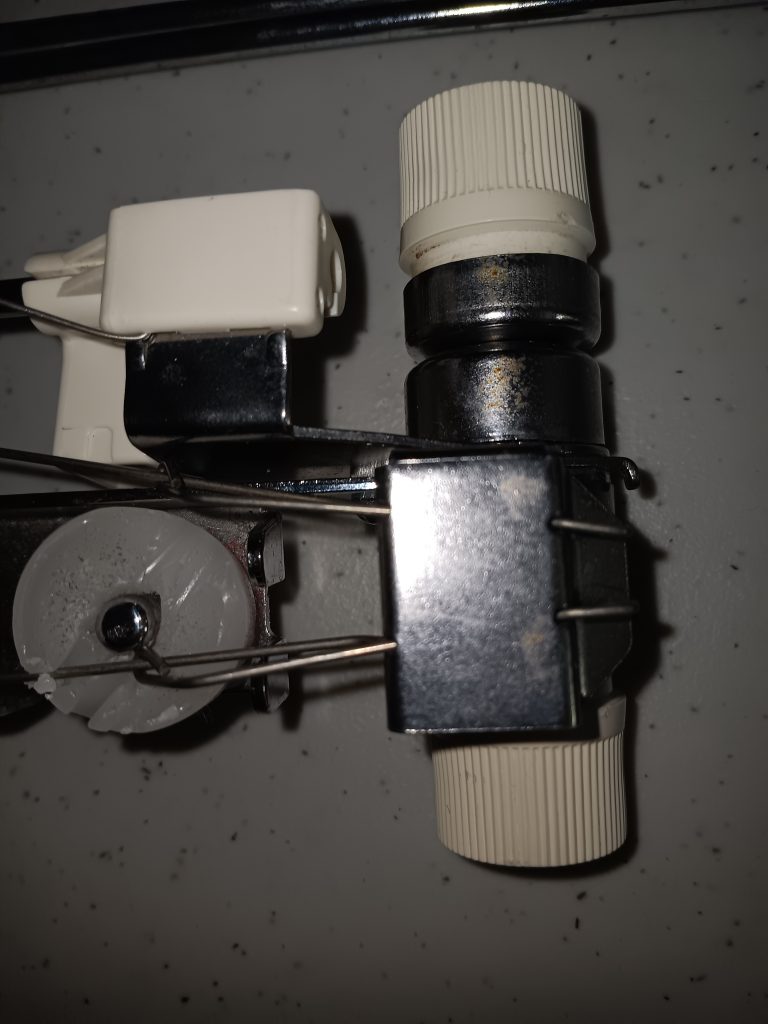
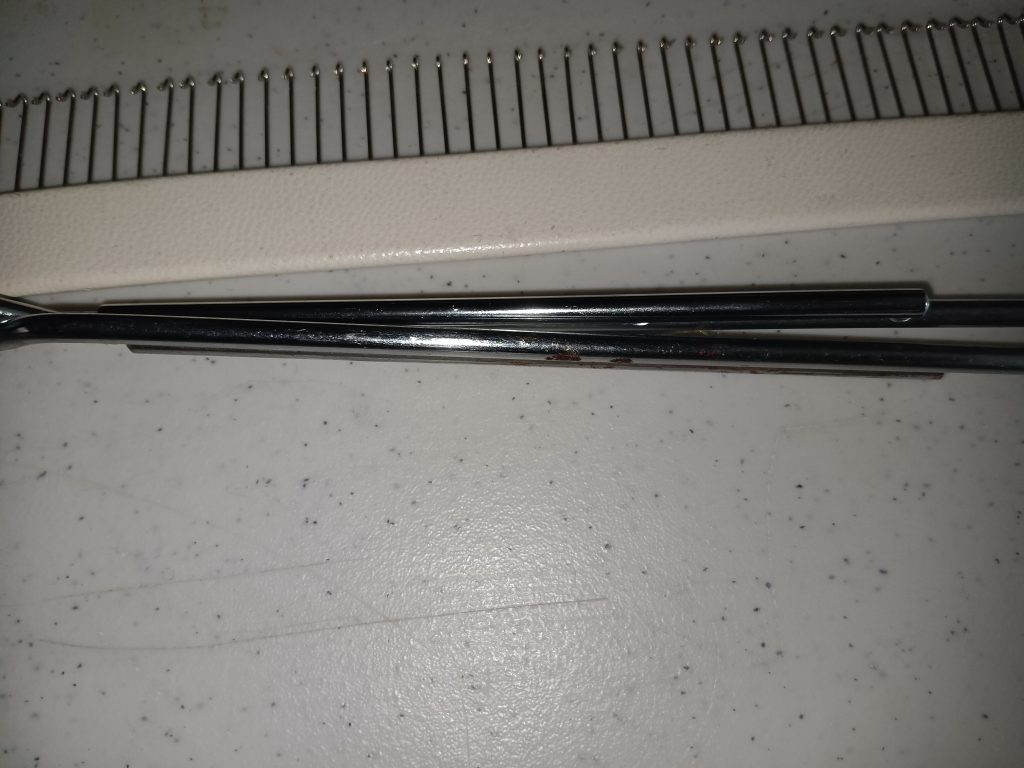
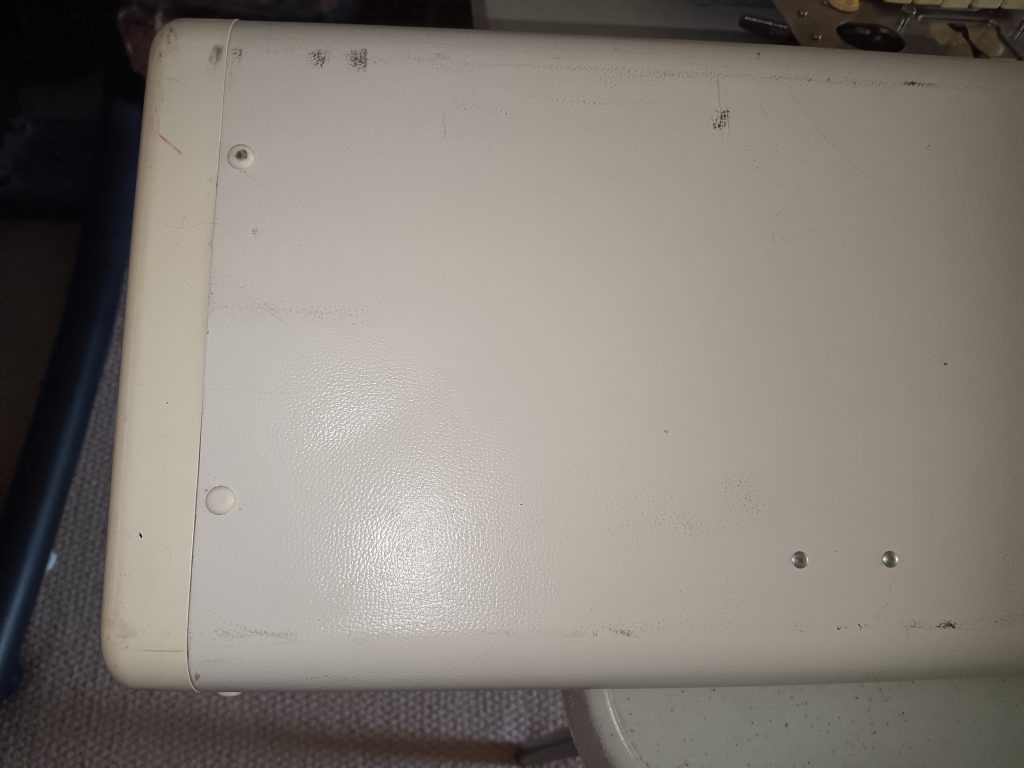
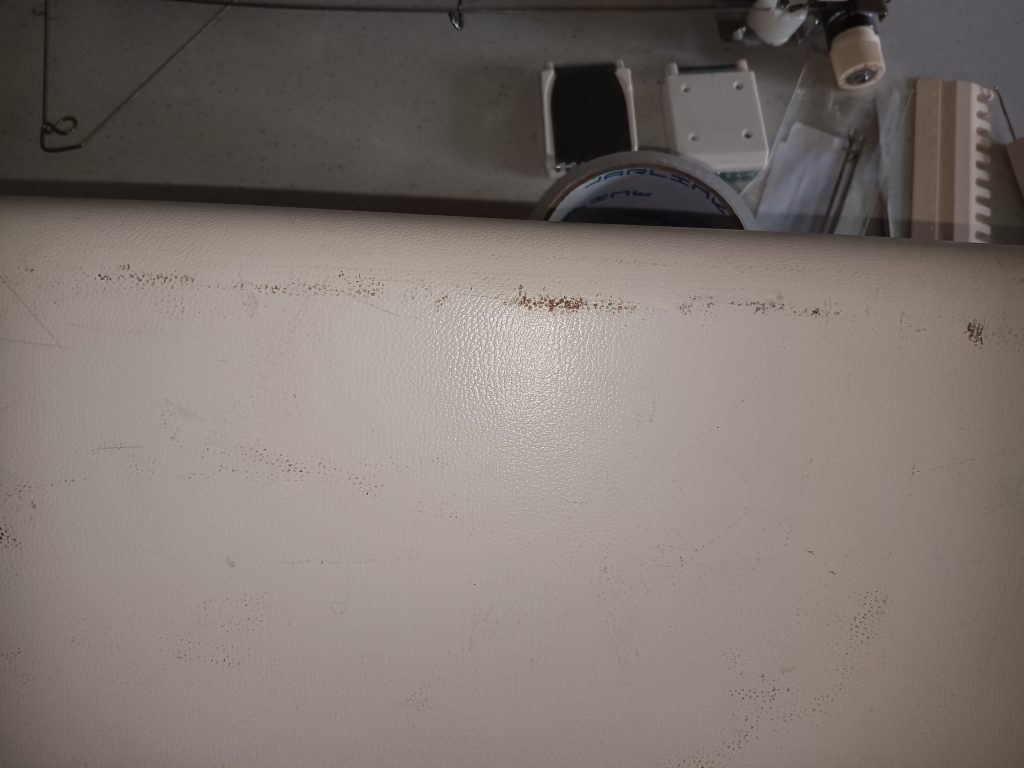
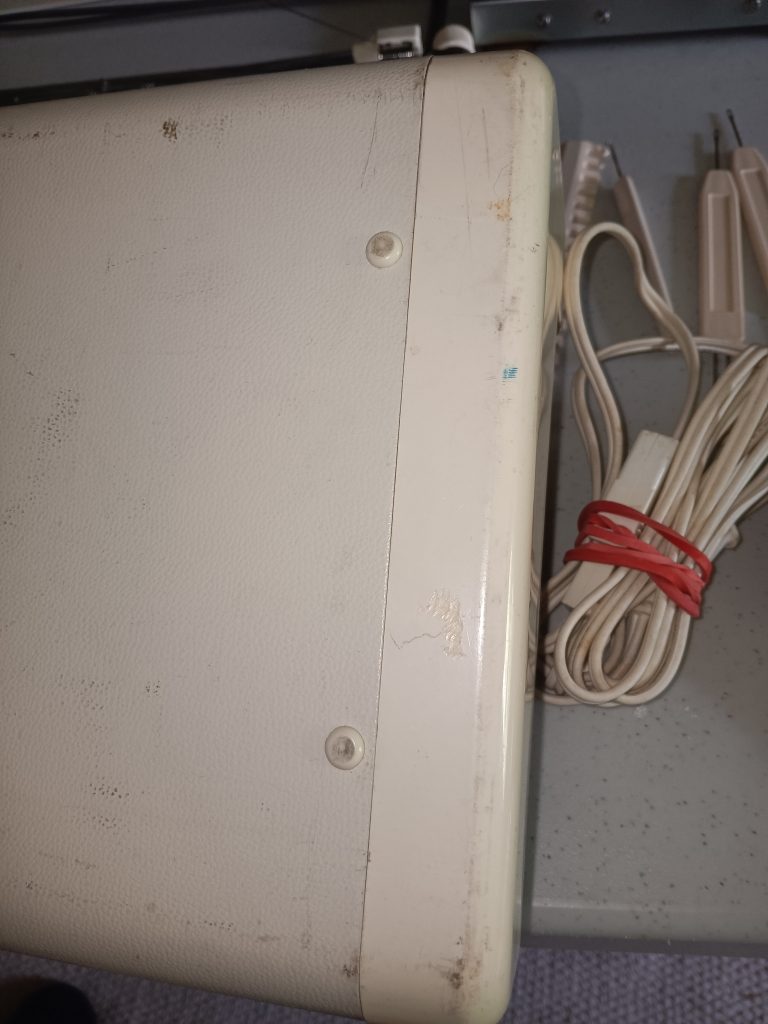
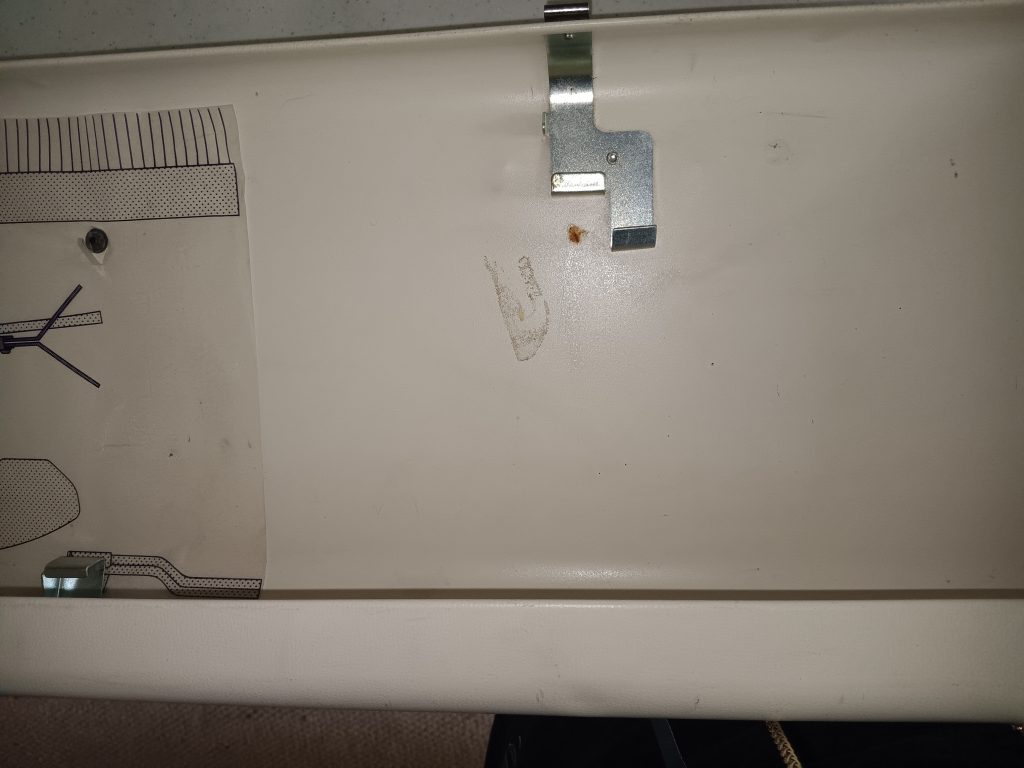
Now about imperfections: they are mostly related to the case (minor stains, scratches, and slight bends). See the pictures below.
Additionally, there were some very minor rust spots on the case, which I covered with a special coating to inhibit the corrosion and to cover it up as well (not shown) These rusty imperfections are not visible.
I hope you will consider this machine for your knitting needs.
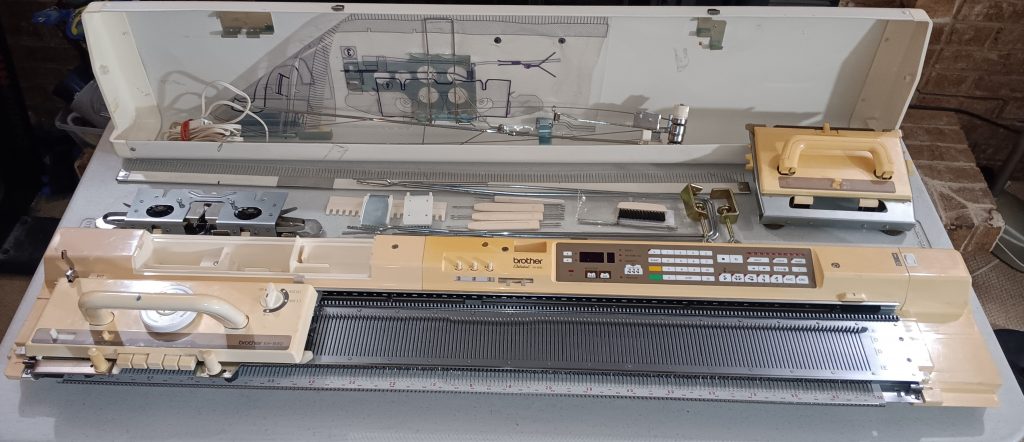
Brother KH930 is a wonderful knitting machine with electronic patterning and needle selection capabilities. Read more about this model in my Knitting Machine Encyclopedia. This post is about the Brother KH930 machine serviced and tested by me in June 2024.
I cleaned the machine. I removed, cleaned, and inspected all needles, and replaced faulty ones. Replaced the sponge in the retaining bar. Assembled a set of accessories (read more on that below).
I then tested the machine on a full bed. I knitted slip- (part), tuck- and fair isle patterns on all 200 needles (to ensure all needles form correct stitches). I used built-in patterns in the machine’s memory. See the video of these tests. All stitches formed wonderfully. The carriage moved very freely.
Lace carriage was not tested but all buttons move freely.
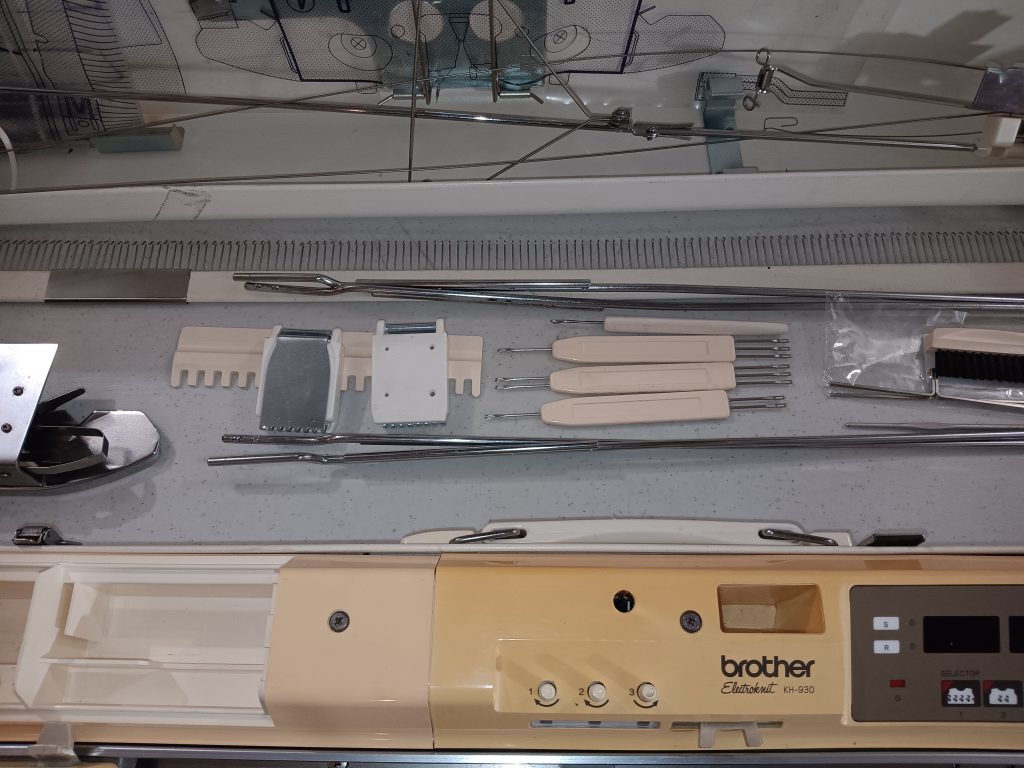
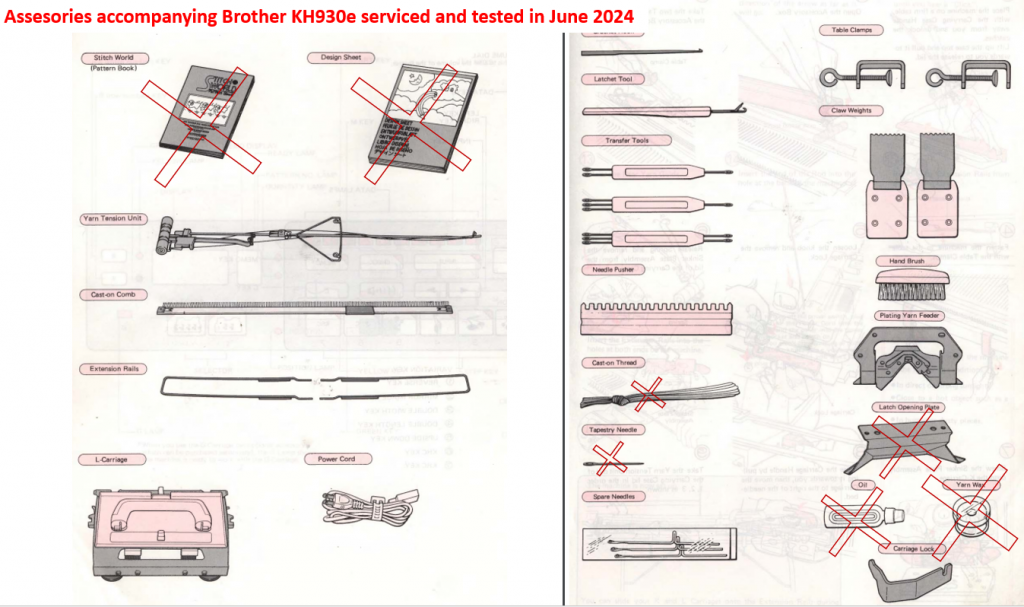
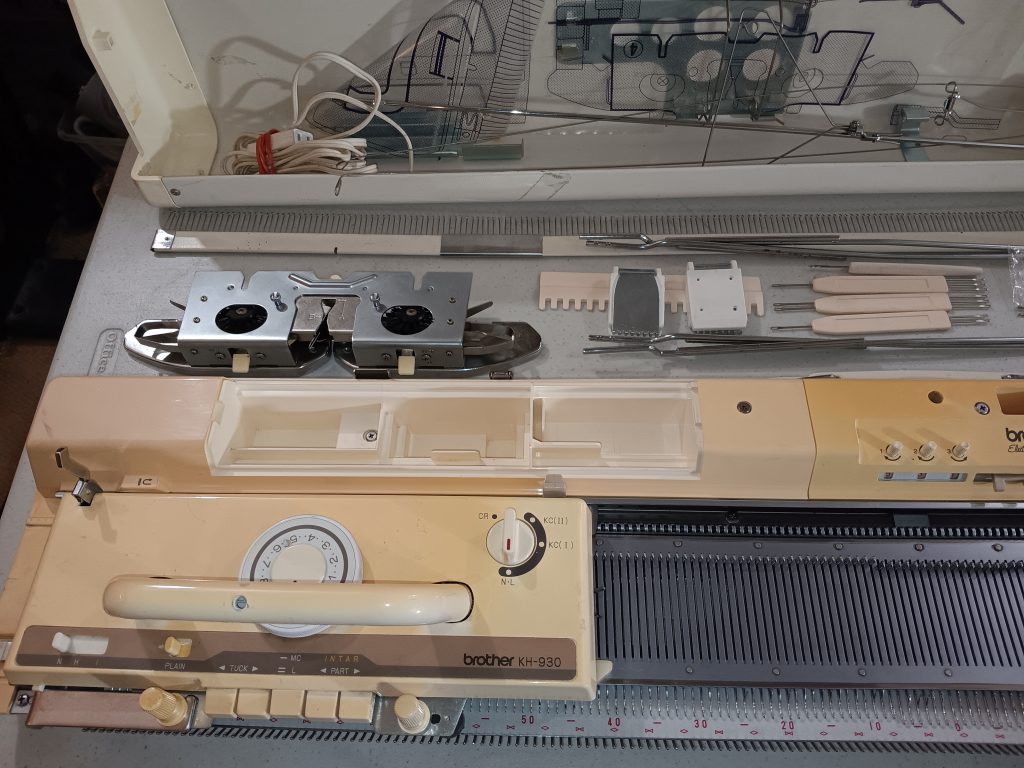
The machine came without most accessories so I put together the set from my stash. So a lot of minor accessories are brand new. All major accessories are included. Some minor accessories are missing.
The missing tools are:
unravel cord (any smooth and strong yarn will do; I often use thin acrylic yarn).
wax for the yarn (but the tension mast came with some wax already attached to it. I’ll pass it on on the mast).
oil (buy gun oil on Amazon instead)
tapestry needle (any needle will work)
latch opening tool (you can substitute it easily with a thin piece of plastic – cut a credit card/grocery rewards card in two triangles and use it instead).
design paper (it is simply a large graph paper – any graph paper will work if you want to draw your own pattern).
None of the missing minor accessories are critical. The machine can fully function and be used without them.
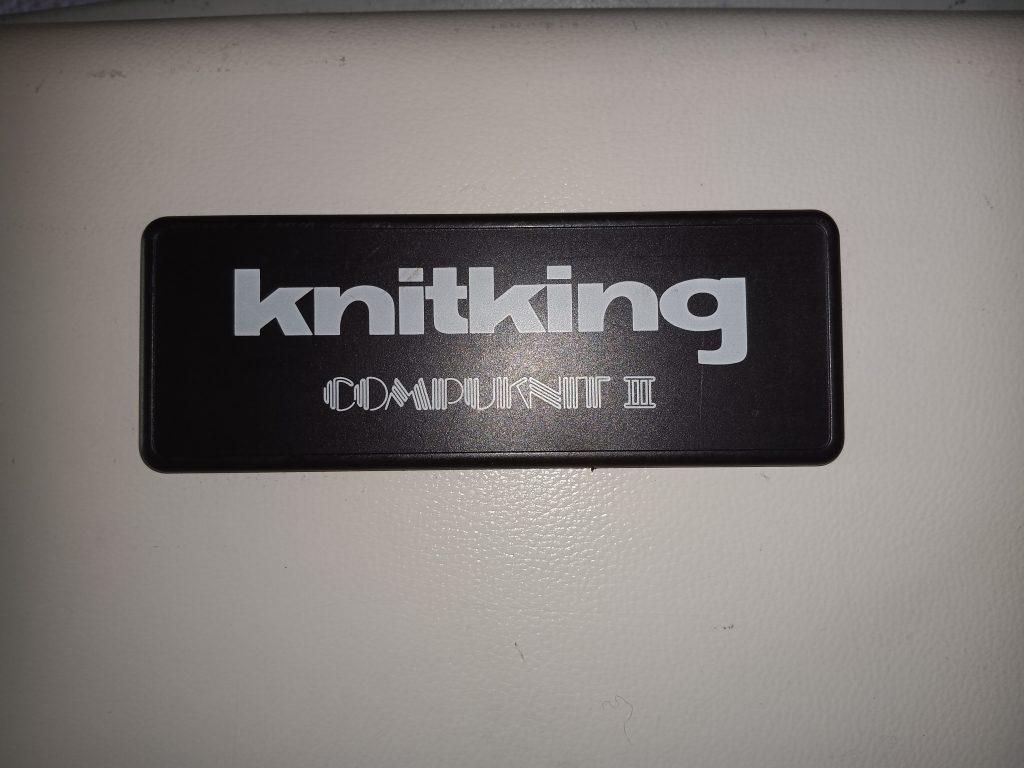
A brand new set of needle transfer tools and selection ruler as well as brand new claw weights are included. The machine also came without a lid. The case lid that will come with this machine is from a KnitKing CompuKnit III model (which is the same machine). So, please, do not be confused about the name when you see it on the lid.
The other minor imperfections of the machine are:
The tension mast has very minor rust spots.
There is very minor rust on the extension rails.
The case has some minor bumps, scratches, stains and one medium-size dent. The case itself has also lots of minor scratches and some stains (too many to show).
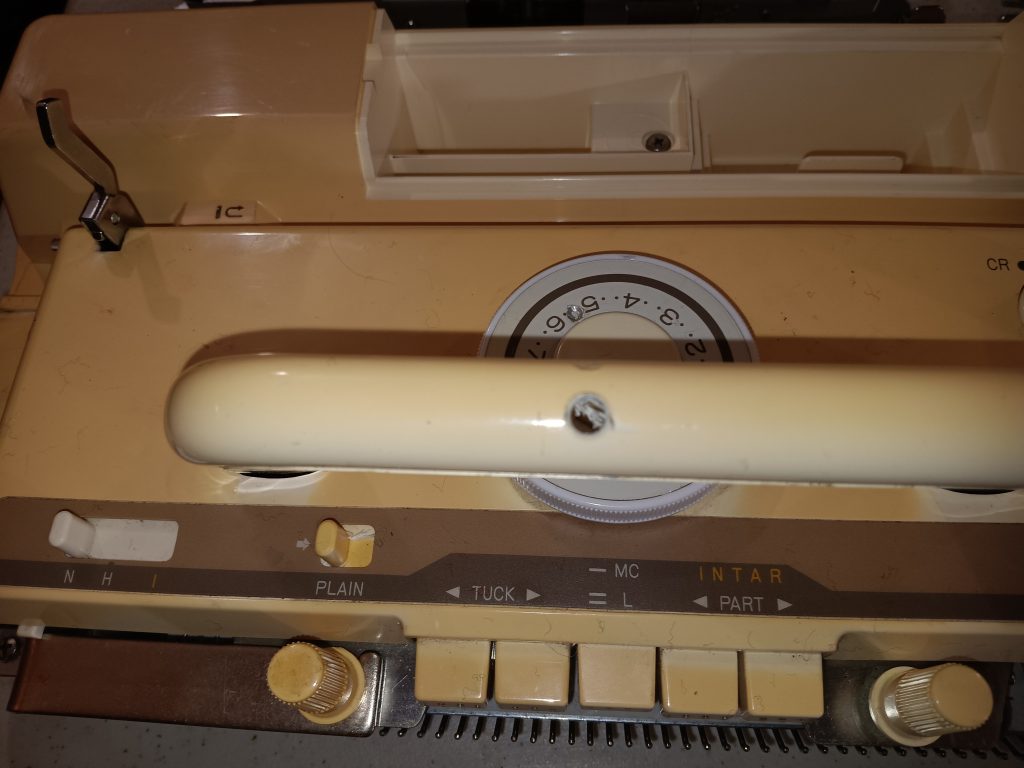
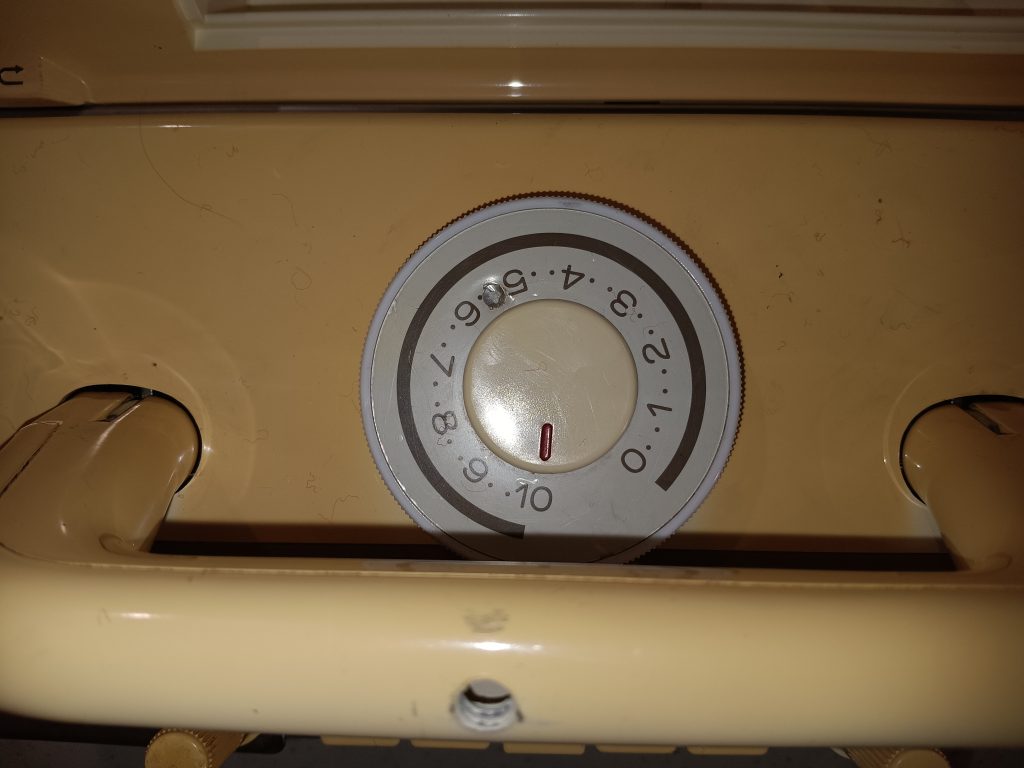
The handle on the main carriage has a hole – probably the machine was attached to the motor by the previous owner. The tension dial has an indent between numbers 5 and 6.
None of these minor flaws affected the working of the machine. Do not wait – purchase this hard-working beauty before it is gone!
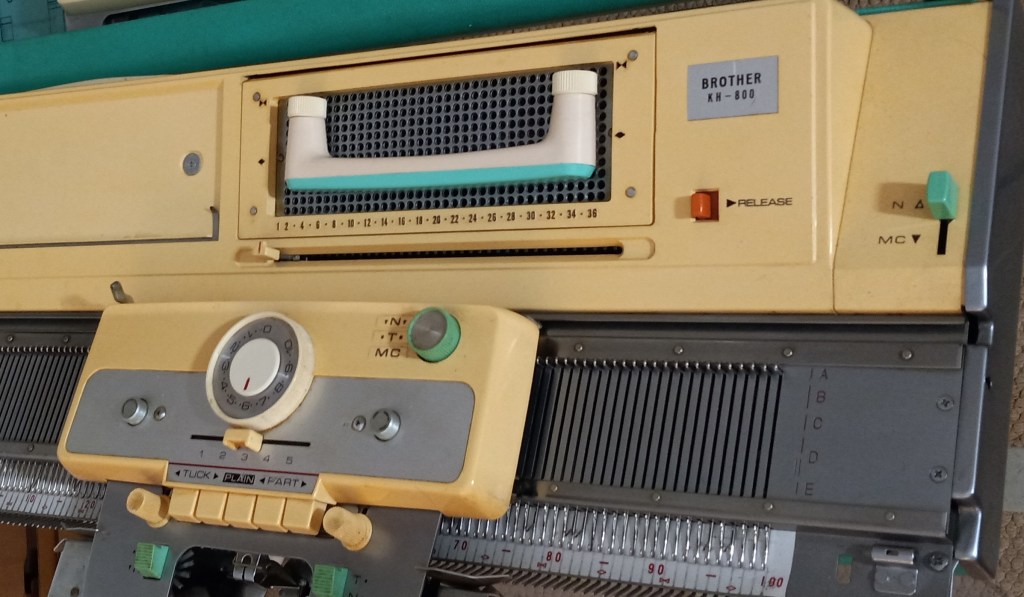
These unique knitting machines, Brother KH800 and KH801, make it super easy to make punch cards and knit various patterns.
However, as I started to explore the steps on how to knit these various patterns, I discovered that the manual does not really present all the steps clearly, especially for the two-color fair isle knitting. So, a combination of researching manuals of similarly (with a ratchet) working push-button machines and my own trial & error, will be presented to you below as an attempt to ease up your learning of how to operate these wonderful machines. I also made a video of how I knitted a fair isle on my own Brother KH800 machine.
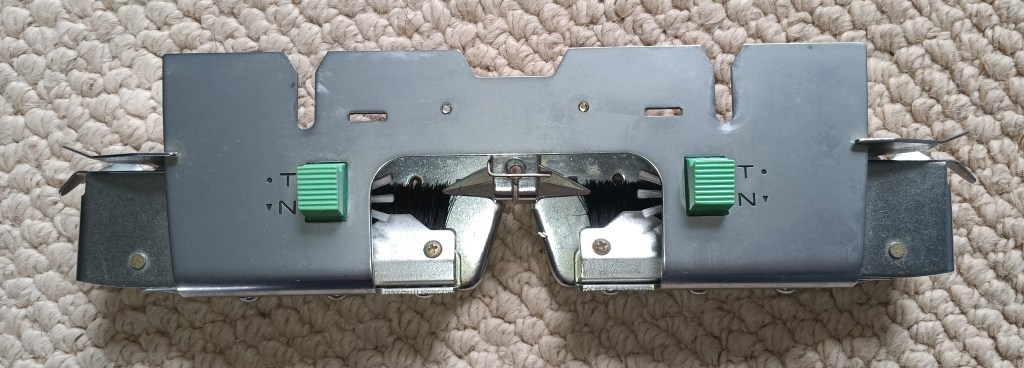
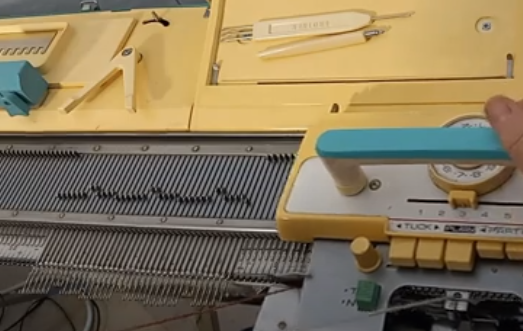
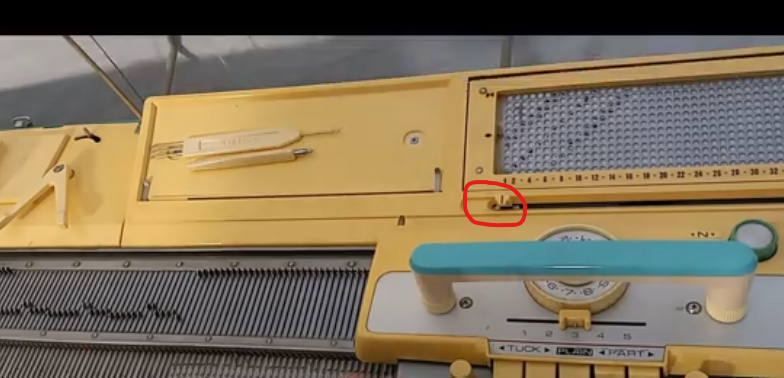
Before you even start, take a look at your main carriage. Find the N/T/MC knob in the top-right corner (we’ll need the MC settings). Please find the button on the carriage (we’ll need to push both PART buttons in). The slide lever on the carriage is on the settings “3”.
The change lever on the right-hand side of the needle bed in the top corner should be moved to MC.
These are the components we need to pay attention to to change to knit fair isle on Brother KH800 and KH801 knitting machines.
Preparation: knit several rows of stockinet in the main color. The second yarn is threaded into the left-hand side wire of the tension mast.
Step 1. The carriage is on the left side. On the carriage, set the change knob to MC and establish the desired tension (a two-color fair isle is recommended to knit at higher tension numbers). MC change lever is also at the MC setting. Holding cam lever (HCL) is at the setting “3”. Insert a desired punchcard and pull the step indicator up (“unlock” position) so it advances every time we knit one row.
Step 2. Move the carriage to the right. All needles will shift to DI position. Push both PART buttons on the carriage. Double-check your tension. Guide/insert the second yarn into the slot on the left side of the sinker plate.
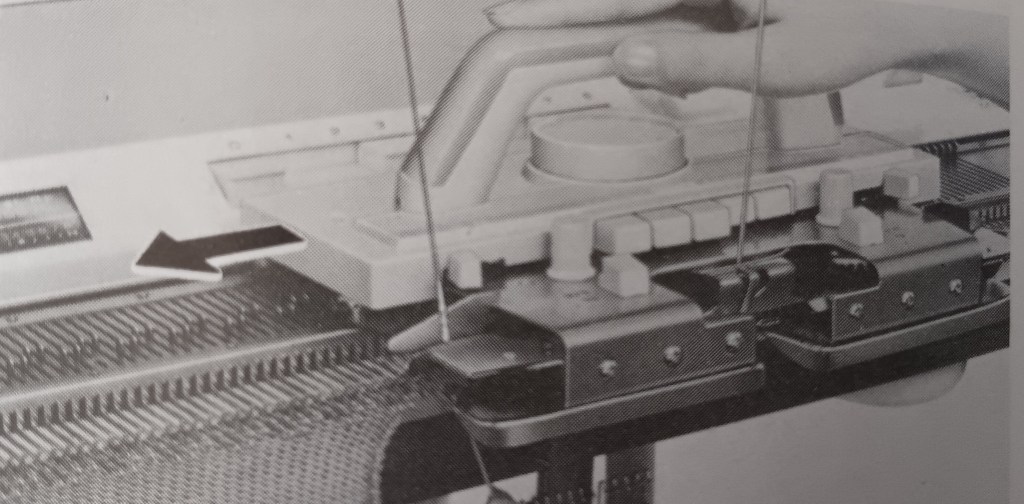
The manual for the KH800/KH801 knitting machines does a very poor job of showing how to insert/guide the second yarn into the slide slot of the sinker plate. I found an excellent demonstration in the manual for the KH710 knitting machine, which has very similar steps to the knitting fair isle. Also, watch my video on how I did it.
Step 3. Move the ratchet tool to move the needles according to the punch card. Notice they will split into the DI and DII positions. The needles that will knit with the second yarn remained in the DI position. The needles that will knit with the main yarn will move to the DII position. Move the carriage to the left while holding the second yarn gently (watch the video).
Step 4. Before moving the carriage back to the right, activate the needle selection for the second row: move the ratchet tool. As you move the carriage to the right, place the contrasting yarn onto the right-hand side guide of the sinker plate. Also, make sure that the row indicator moves after you pass the V-shaped trigger. If the row indicator does not move, pull it upwards.
Continue these steps.
The same approach can be used on fair isle patterning on pushbutton machines, like Brother KH585, KH588, KH581, KH552, KH601, etc. The carriages for the pushbutton machines and for the 12-stitch punchcard models KH800 and KH801 are the same (except for the slide lever – the 8-pushbutton machines have side levers for the same purpose). Thus, after the needle selection, all consequent actions are very similar for all these machines.
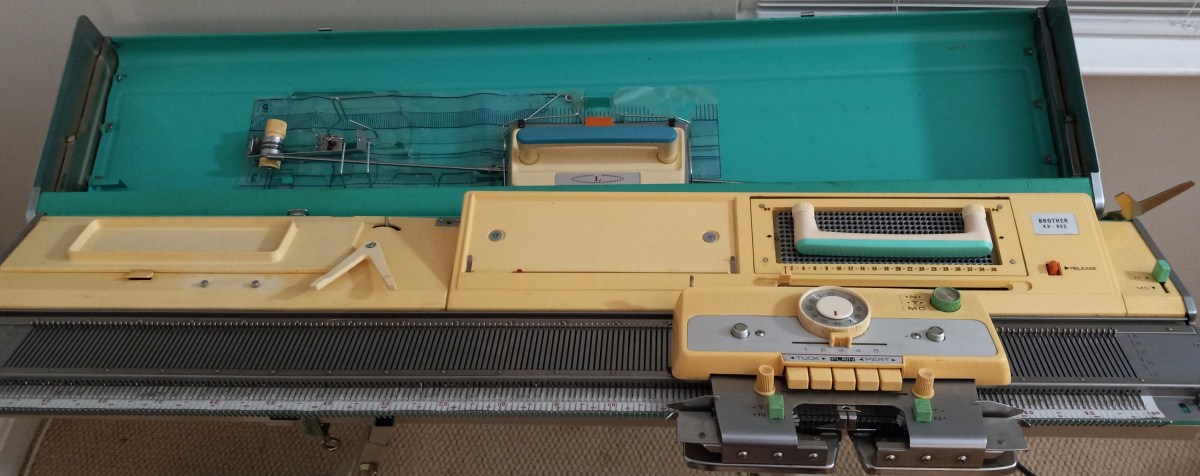
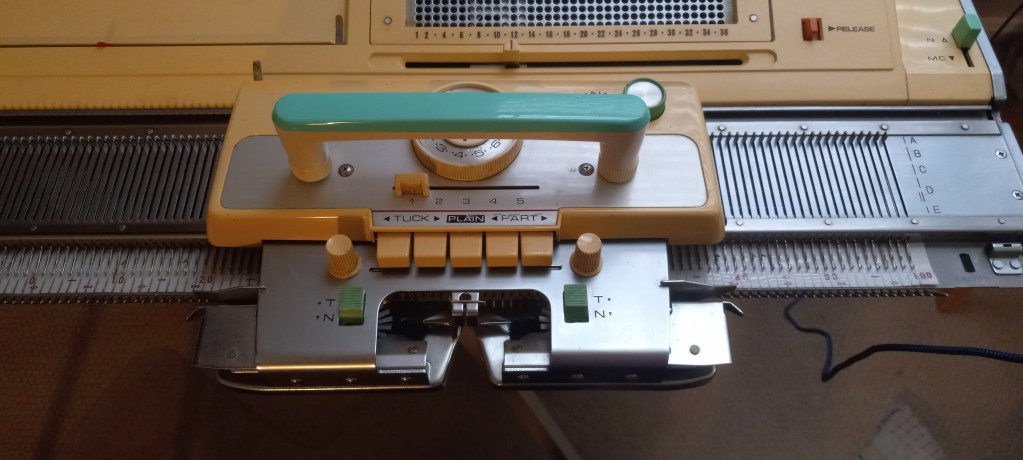
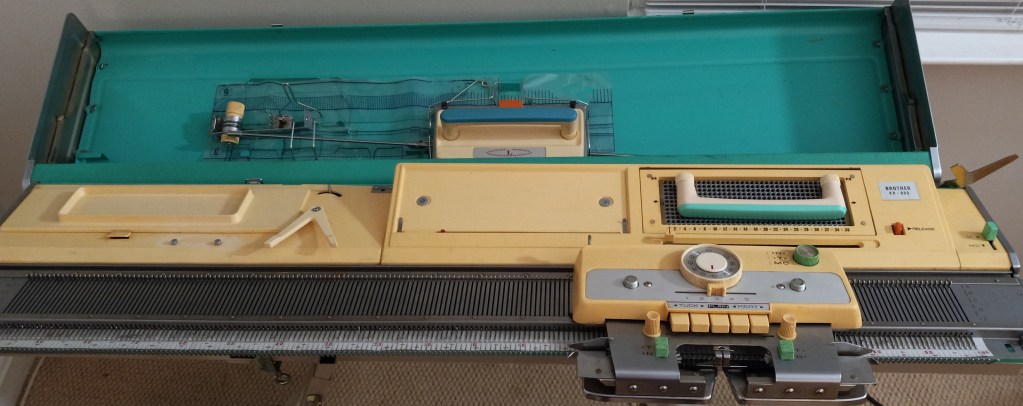
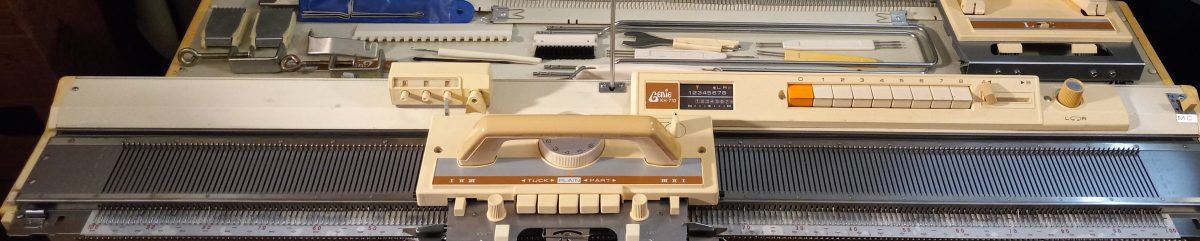
This blog is about a specific Brother KH800 knitting machine, which I cleaned, serviced, and tested in March 2024.
To learn about the Brother KH800 model, with all its pros and cons, read my Knitting Machine Encyclopedia.
All needles were removed, cleaned, serviced, and inspected. The sponge in the retaining bar was replaced. The case and the lid were wiped thoroughly but I did not subject the case and the lid to excessive rubbing to remove all staining. So some stains remain. The same applies to the plastic panel: I was able to remove most of the dirt and grime but some minor staining might still be visible.
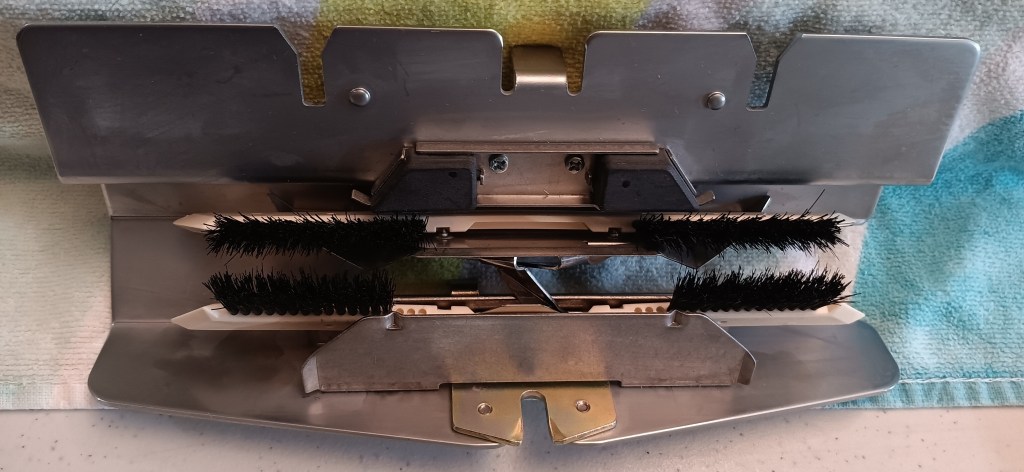
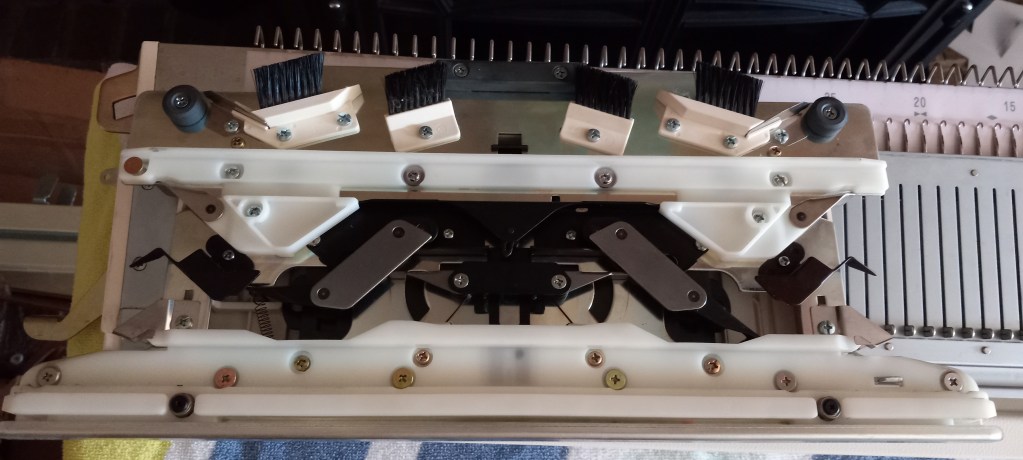
I installed new weaving brushes (it is typically a pain in the butt to do it – so take good care of them). The old ones completely fell apart. They are not black as the original ones but white with strong bristles.
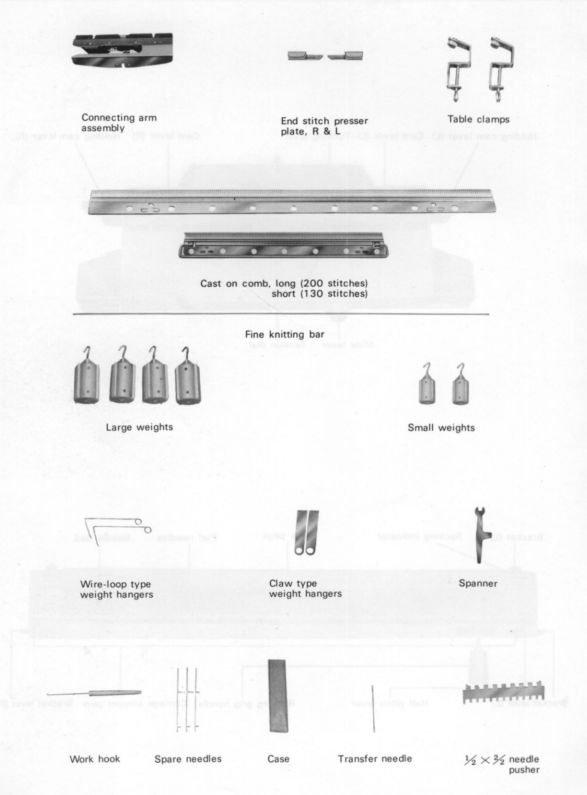
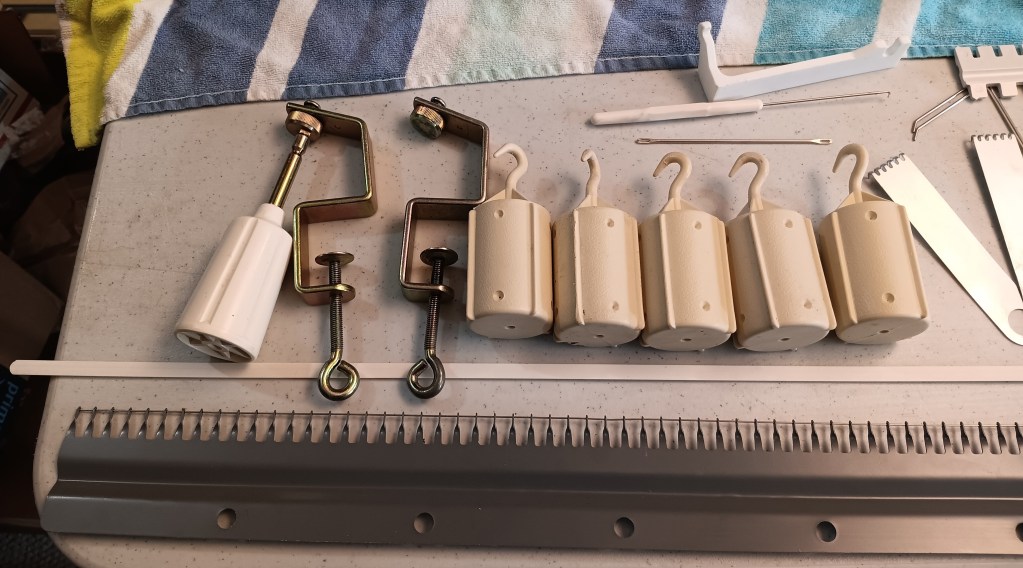
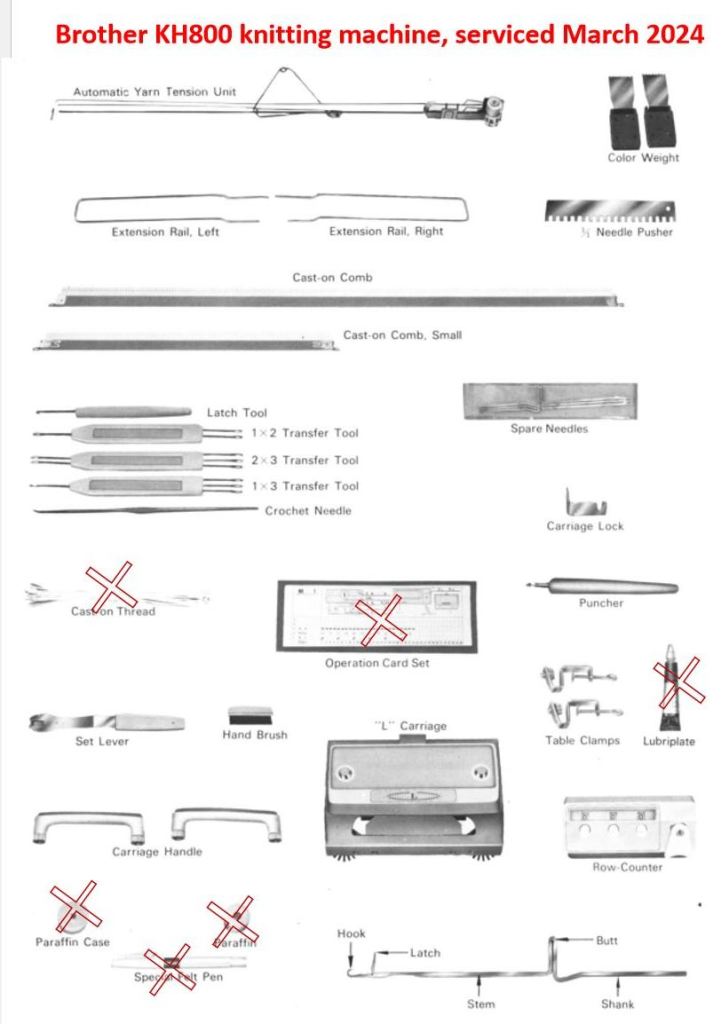
The machine will come with all major accessories (which fit inside the knitting machine case lid):
extension rails (to accommodate the lace carriage if you are using one or to accommodate the main carriage when you are knitting on the full bed)
tension mast
lace carriage
big and small cast on combs
Most critical minor accessories are included too:
metal 1×1 needle pusher
claw weights (greenish. like the machine)
latch and transfer tools as well as crochet needle
set of 3 spare needles
carriage lock
puncher
table clamps
set lever (also known as ratchet tool)
cleaning hand brush (good for cleaning carriage and removing some lint between the needles)
two carriage handles (one for the main carriage and one for the lace carriage)
row counter (I specifically looked for a greenish row counter to match the machine)
The minor accessories that are NOT included are marked below. These minor accessories do not affect the functioning of the machine. But read below about the punch and pattern cards.
The parafin is only needed for the yarns that are prone to static. The pen is actually for the knit leader and not for the machine. The greaze was old and I tossed it away. Any gun oil will work to service this machine. Any strong thin yarn can serve as a cast-on or waste-yarn thread.
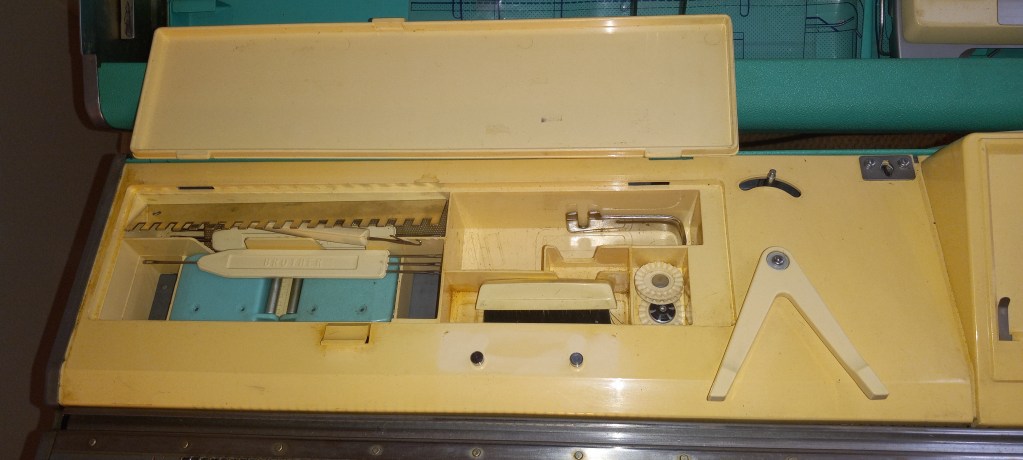
All minor advisories are stored inside the built-in box with the lid.
The handles for both carriage are screw on and are also stored in this storage box. The carriage moves very smoothly on the needlebed.
The machine did not come with the original hard copy of the manual. It can still be found online for free. I can include a printed copy that came with this machine – just let me know but it might add to the weight (1-2 lbs) of the shipping package.
Even though the original pattern and punchcards are missing, it is very easy to make your own cards. I made a video on how to do it and described it in another blog. Follow the links for free pdf-files for the blank and pre-patterned cards. In my video, I printed out and used those cards.
Also, the cards are very easily to make (punch). Simply insert the cut-out of a new card into the punchcard reader and punch the wholes either using the punch provided or using a simple pencil. I describe it in my other blog and show it in my video as well.
The machine can be easily attached to a knit leader using the triangular tripper and the rod above it. Read on the manual of a specific knit leader on how to attach the machine to it.
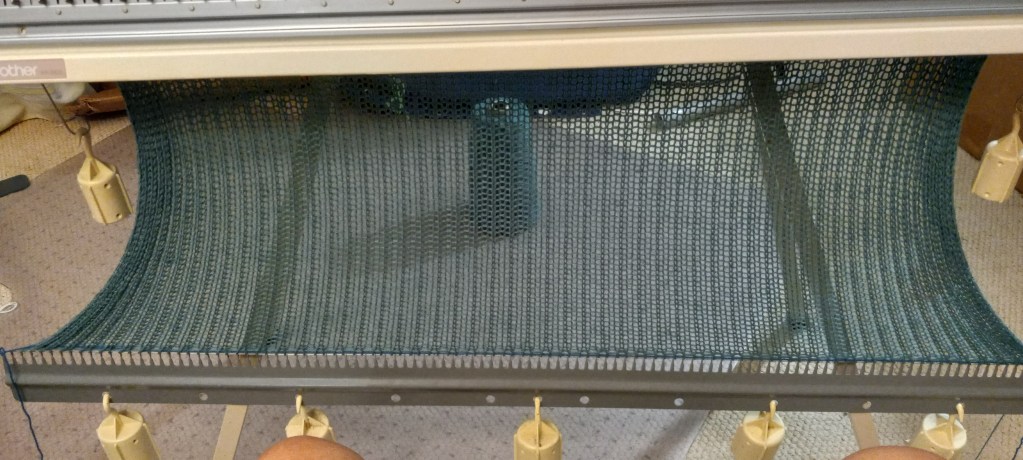
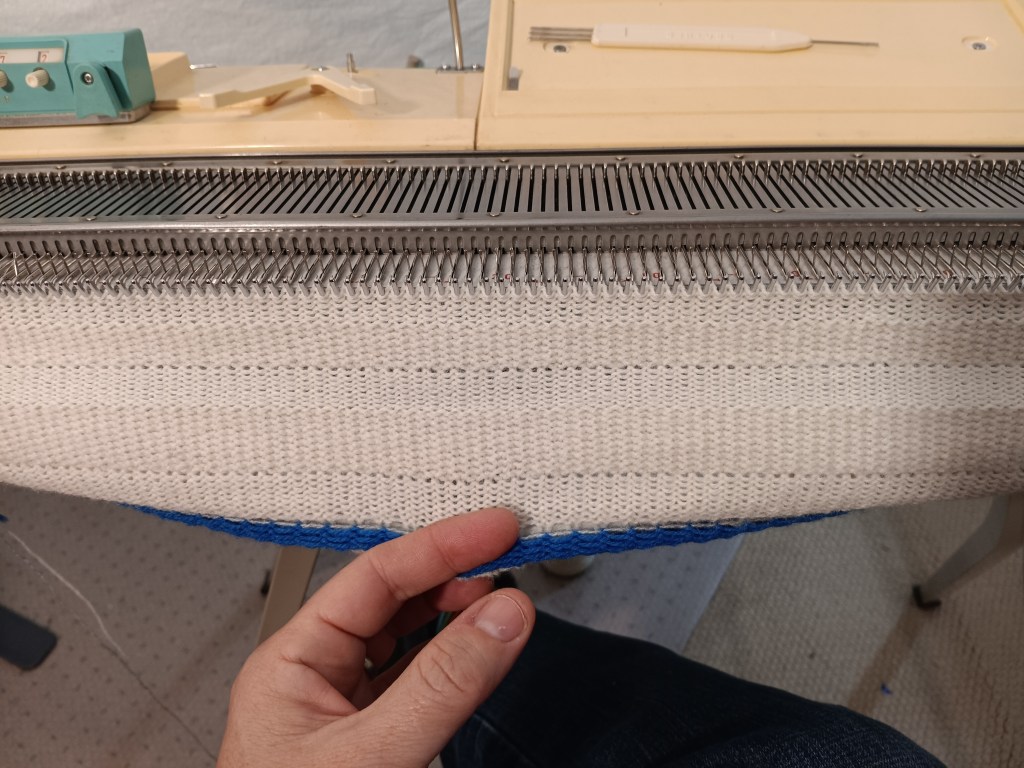
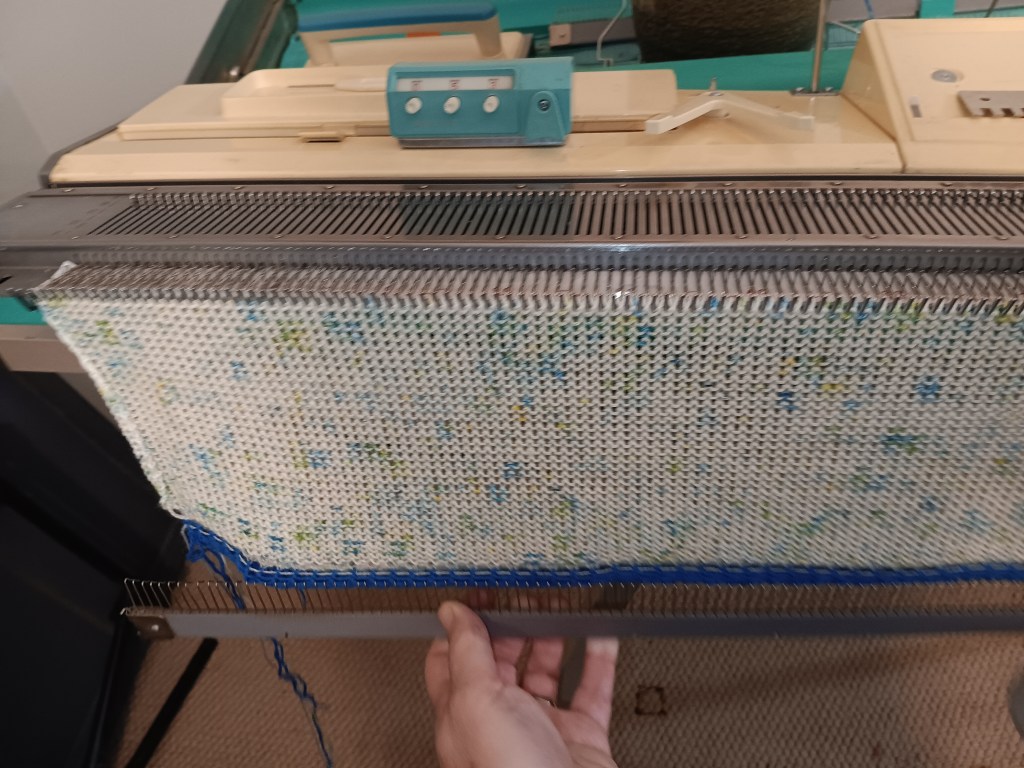
I knitted several swatches (tuck, slip, stockinet and fair isle) on this machine to ensure the carriage functions properly. I also knitted on the full bed to ensure all needles form proper stitches and that the patterning mechanism works well on the whole needlebed. Watch the video of all tests. The picture below shows the tuck-stitch fabric knitted during these tests.
Check out my blog and a video (…coming soon) on the fair isle patterning on this machine. It was quite interesting.
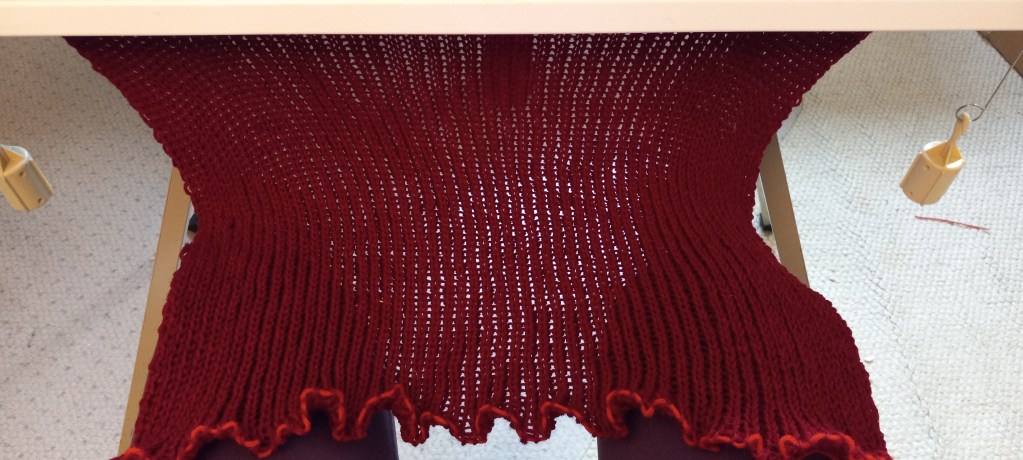
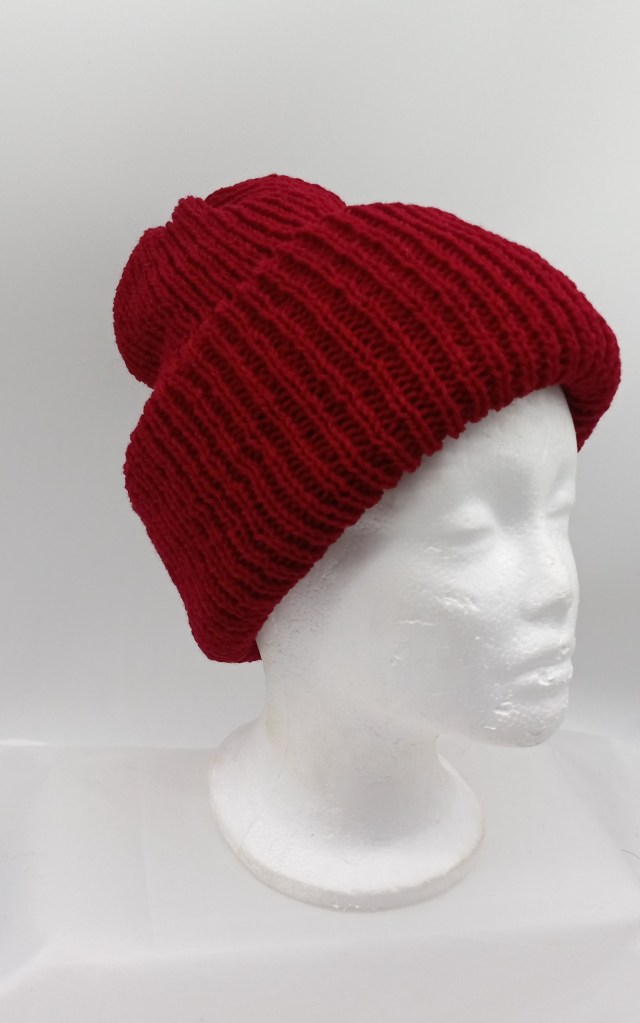
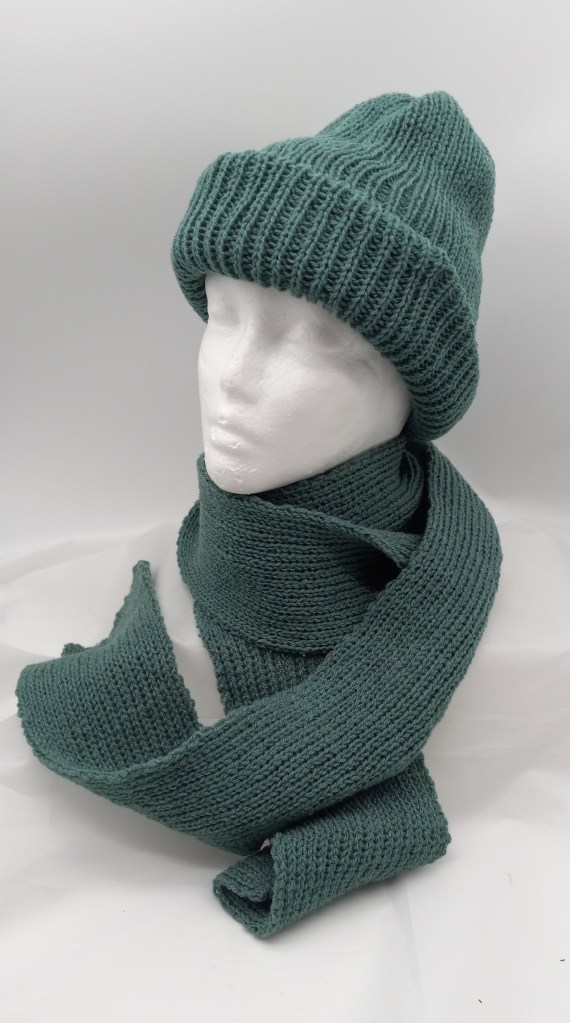
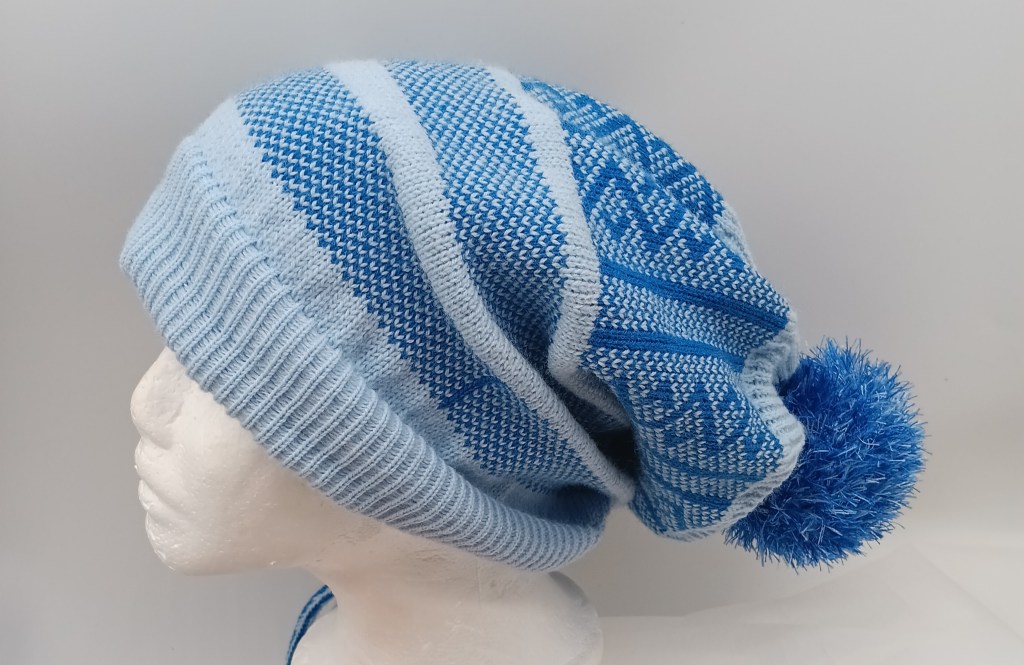
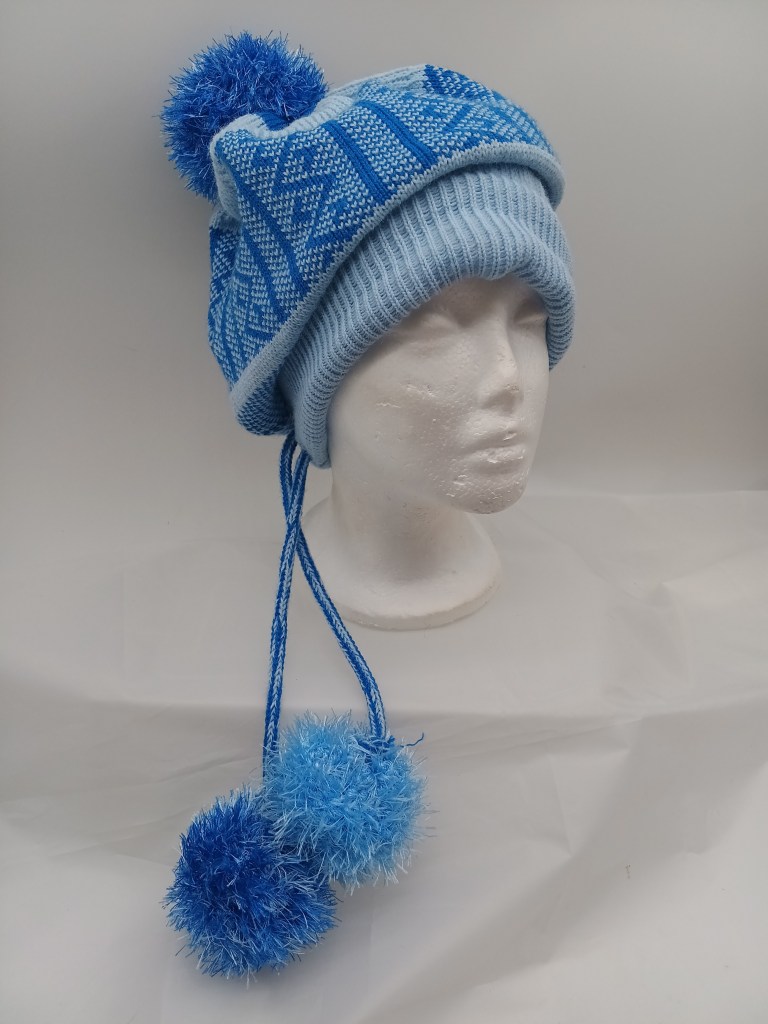
The panel I knitted during all these tests was converted to this 3-in-1 berett/cowl/hood shown below.
Turned out pretty good!!
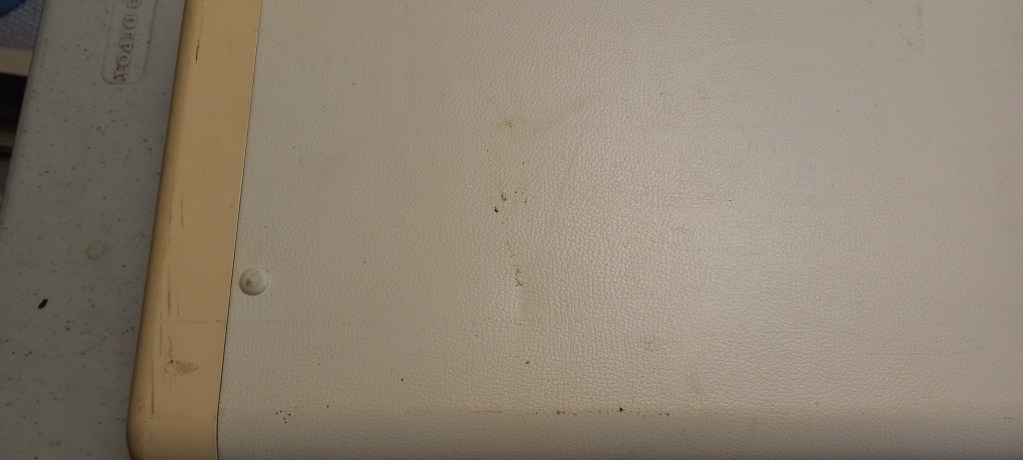
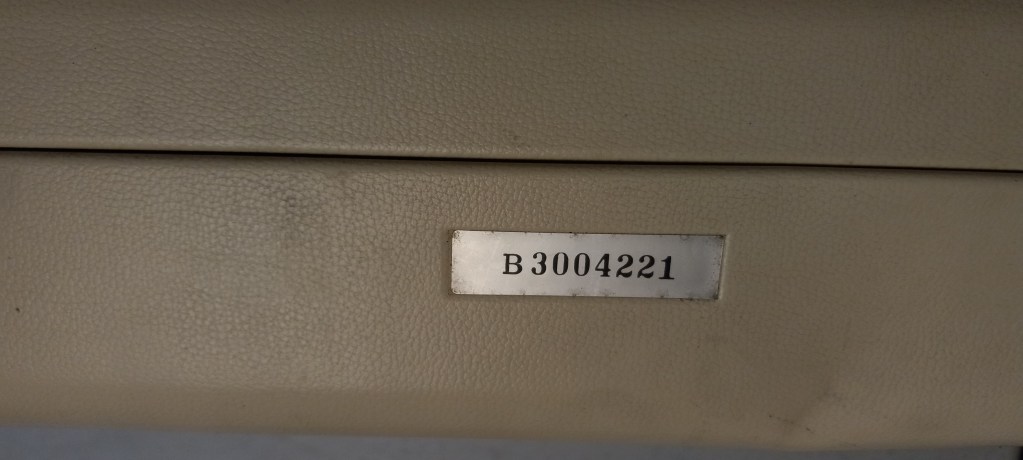
Now about imperfections:
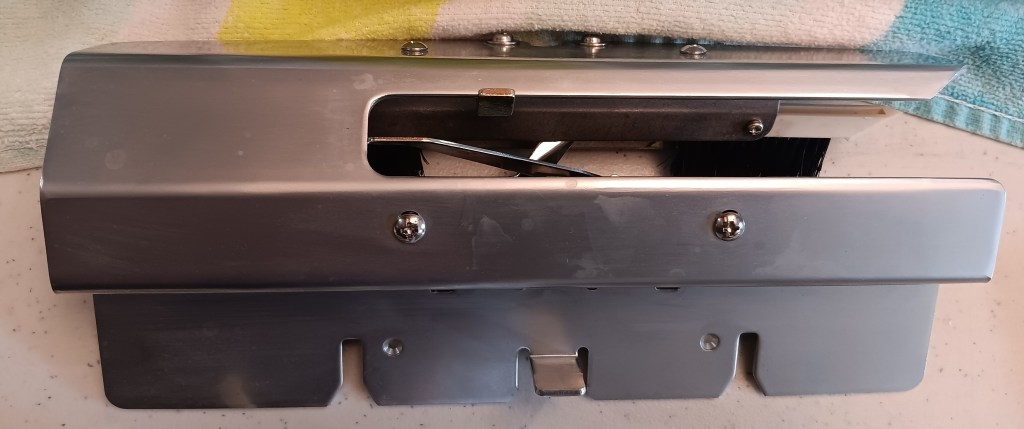
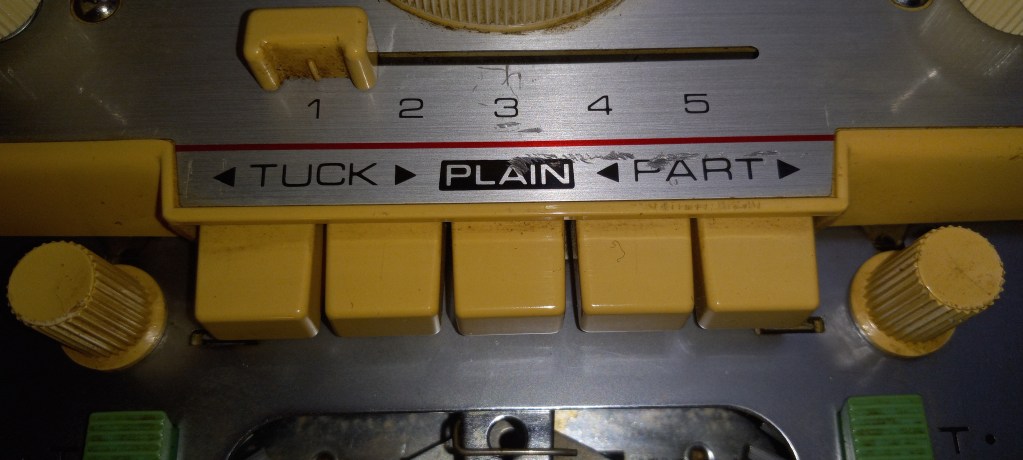
The most obvious imperfection is the scratches on the main carriage. They seem to be just cosmetic and did not affect the functioning of the machine.
All other impefections are also cosmetic. Like some minor dents and scratches on the lid and the case (not shown).
The table below lists the lengths and widths of various knitting machines I measured myself. Use this table as a reference to ensure you purchase the correct retaining bar for your machine.
… this article is in constant progress as I learn about various knitting machines and their retaining bars.
Almost all knitting machines and ribbers have retaining bars. Some machines have retaining bars with a sponge attached to them. Some machines (the majority of plastic flatbed machines) have only a long and narrow sponge (without the metal holder). Ribbers come with either a “retaining bar+sponge” assemble or only with the plastic retaining bar (no sponge strip).
The main role of these retaining bars is to hold the needles in place and to prevent it from bouncing up and down when knitting.
Below are the situations when you want and need to remove (and inspect in many cases) the retaining bar:
When you just purchased your machine (especially used and NOT recently serviced), the first thing you need to do is to remove your retaining bar and inspect it. I made a short video on how to do it because I have been asked about it so many times by my customers.
When you need to replace faulty needles.
When you need to clean your machine.
When you notice your knitting machine mispatterning without any good reason.
Hopefully, you purchased your knitting machine new or recently serviced. In this case, the sponge should be 1-2 cm above the metal edge of the retaining bar.
But in most cases, this is not the case. Thus, it is possible that when you remove the retaining bar, you will see a disintegrated sponge. I’ve seen some spongy strips being just a gooey mess. The old sponge needs to be removed as soon as possible (since it often corrodes the needles) and replaced.
There are two ways to approach this replacement.
First approach: just replace the spongy strip
If you decide to replace the sponge, you will need to remove all this goo. I first use a flat-head screwdriver to scrape all the residue out of the retaining bar canal. Then, I use “Goo Gone” to remove the rest of the residue. I typically do it outside because it is a very messy process. I pour a thin layer of “Goo Gone” liquid into the retaining bar and wait for hours. Then I scrape the remains of the old sponge again with the screwdriver. Lastly, I wash the retaining bar with soap and water, wipe it really well and let it dry (or blow dry it). You can purchase just the sponge in my store.
I sometimes read in forums that some thrifty machine knitters get a simple weather stripping and use them as sponge strips. Well, those have different dentistry and sometimes do not have a silky ribbon on one side. Also, they are not suited to be exposed to oils and might decompose rapidly leaving a sticky (potentially unremovable) residue inside your machine.
I read that experienced machine knitters use different ways to attach the spongy strip to the retaining bar. (By the way, the width of the spongy strip is not as critical and it can be a little bit narrower than the channel of the retaining bar but not by much). I tried different glues and my current choice is hot glue. Some machine knitters use wood glue. I apply the glue to the metal part of the retaining bar and attach the strip to the metal by the sponge side (not the silky ribbon side). I then tape the ends if the sponge to the plastic ends. I like using medical tape. Only one layer of the tape is enough to secure the ends of the sponge. More layers will only get stuck when you insert the newly refurbished retaining bar back into the machine. To avoid stripping this tape, push it down on the ends of the retaining bar while inserting it into the machine.
Second approach: buy a new retaining bar
Or if you do not feel like dealing with all this mess, you can purchase a retaining bar with a sponge already in it. Before you order a new retaining bar, make sure you measure the dimensions of your old bar: its width and its length.
Most commonly used by machine knitters Brother, Studio/Silver Reed/Singer, and Toyota knitting machines have somewhat similar retaining bars but there are some differences depending on the model and the gauge of the machine.
For the retaining bars for these machines, there are three different lengths (41, 43, and 47 inches) and two different widths (0.375 and 0.5 inches). This is why it is important to measure your old retaining bar to ensure that you are getting the retaining bar suitable for your machine. Most JUKI, Toyota, Silger/Silver Reed/Studio, Artisan knitting machines use 0.375-inch wide retaining bars. The lengths are either 41 or 43 inches (depending on the model).
I’ve read stories on FaceBook groups, where the new machine knitters were puzzled by the fact that they JUST replaced the sponge bar and the needles do not move, advance, or retract the way they are supposed to. I especially see I happen to be the owner of 8-push button Brother knitting machines. There is somewhere out there some incorrect information on the retaining bar for these machines. 4-push-button machines use a 0.375-inch wide retaining bar and the 8-pushbutton machines use a 0.25-inch wide retaining bar. (I’ve refurbished over a dozen pushbutton machines and I know the difference first-hand).
Brother ribbers use plastic retaining bars without sponges. When (re) inserting the retaining bar into the Brother ribbers, the concave surface (the “channel”) should face you.
There are machines with unique retaining bars – I will update the blog soon when I learn more. I am also putting a table on machines (and models) and retaining bar compatibility. Stay tuned!
In the meantime, enjoy your adventure in retaining/sponge bar replacement!
PS. I measured several dozens of retaining bars with my calipers. Even though the “official” measurement is 0.375 and 0.5 inches, mine are measured as 0.40-0.41 and 0.44-0.46 inches respectively. This inaccuracy in inches makes me like the mm scale (aka metric) a bit better. So the narrower retaining bars are 10.0-10.5 mm while the wider are 11-12 mm wide. Who knew that just 1 mm would make such a difference but it does! I had an incorrect bar installed on my KH581 8-pushbutton machine and the needles would not go back from E to B (or A) position!!!
Just a quick note on the differences between Brother knitting machines under the model numbers KH965, KH965e, and KH965i. The reason there is a lot of discrepancies and misunderstandings about the additional “i” in the model number is that these machines are very scarce and because the functionality seems to be . They are very desirable and those that are still available on the used market are still in great shape.
First, about “e” :
Even if Brother KH965e indeed exists, it would simply mean an anniversary edition since “e” stands for “eleganza” (the latest anniversary edition model to the best of my knowledge is KH950E). This machine would be identical to the functionality of the KH965 knitting machine but the color combination of the carriage, end caps, and control panel might be different (like in the case of KH930/930e and KR850/850e setups). However, I’ve seen only the KH260/KH260e, KR850/850e and KH930/KH930e combinations. Brother KH965 was released to the market significantly later (by about 5 years), so there will be no even for an “anniversary edition”. If you’ve seen the KH965e model and want to prove me wrong, shoot me a message.
Now about “i”:
The differences between the KH965 and KH965i models of electronic brother knitting machines are subtle and might vary depending on which market the machine was made for.
Some think that “i” in KH965i stands for “intarsia”. However, both KH965 and KH965i have built-in intarsia knitting capabilities according to the instructions (as well as their a bit older analogs, KH930 and KH940).
I researched pictures of a lot of pictures of various KH965(i) machines and all of them have the intarsia option. … which kind of makes sense because KH965(i) is an updated version of KH930/KH940, which also had this option.
Some think that “i” might stand for is “interactive” or “interface” and the difference is that KH965i has a compartment to insert the PPD disk, however, KH965 has the same disk port (and the manuals for these machines both mention the compartment and disk port). So, basically, KH965i can accept files from external sources without any modifications to the machine.
Knitters who prefer a more advanced way or pattern transfer use a special cable instead of the PPD disk. This cable is inserted into the slot for the disk for file transfer through special software.
The KH965i model has also the capability of inserting the cable into the machine itself (originally assumed to be for the FB 100 disk drive and file transfer). And this is one of the main differences between KH965 and KH965i.
Another critical difference is the settings on the selection dial on the carriage. Brother KH965 does not have a KCII setting…
…unlike Brother KH965i.
However, KH965 released to the Japanese markets (Topical-5) noticeably has also 4 positions on the selection dial, which probably implies KCI and KCII settings (Sorry – I would be more sure but I don’t read Japanese).
Thus, it seems that even if your KH965 does not have “i” next to its name, it might still have functionalities of the KH965i machine.
Thus, to identify whether you have a KH965 or KH965i, look for:
KCII option on the selection cam on the carriage (or four different options on that dial)
A port on the back panel of the machine.
All other functionalities of the KH965 and KH965i are the same (namely, memory, functions of the buttons on the panel, etc).
I really hope you are a lucky knitter who has Brother KH965(i) in their collection!
Brother KH551 is a standard gauge knitting machine with 4-pushbutton-based patterning mechanism. This blog is dedicated to one specific machine I serviced. If you want to know more about the Brother KH551 knitting machine model, refer to my Knitting Machine Encyclopedia article.
The machine (including carriage and all needles) was cleaned and serviced. All levers and the buttons on the carriage were checked and they moved and worked without problems. These levers were also tested while knitting. All needles were also checked while knitting on a full bed. No faulty needles were detected.
The 15 needles on each side (30 total) came from my refurbished stack. Thus, when I was knitting on the full bed, I was inspecting the edges especially closely to make sure all these refurbished needles worked well. Also, because of such a high number of refurbished needles, I am including the set of 5 spare needles (instead of usual 3).
The machine comes with all major assesories.
Several missing minor assesories are:
A hard copy of the manual is not included but can be found online.
Sinker plate yarn hangers, left and right. It can honestly be replaced with a regular paper clip (just unbent them to a desired shape). The manual describes their usage on p. 18. manual
The tool storage box is not included
Oil is not included also but I recommend Hoppe’s Elite Gun Oil.
Additionally, the small cast-on comb is not all metal – I pulled it out from my own stash.
On the full bed, I knitted stockinet, tuck, slip and hold patterns (see the video of tests – all went well). Butterfly stitch is my favorite on this machine.
Now about flaws and imperfections:
I had to replace the push-buttons but I did not have a part for the button marked #1. So, I replaced it with the button marked as #4 but it is of different shade of white. If you want, you can put a sticker on it with “#1” (I prefer not to put stickers on machines since it damages and stains the vintage plastic).
Despite being vintage, this machine will still serve your craft needs for many years especially if regularly serviced.