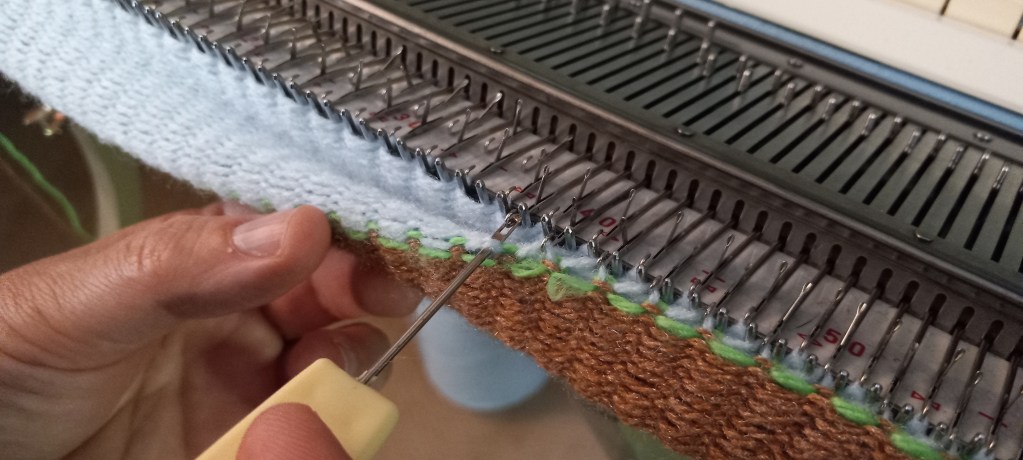
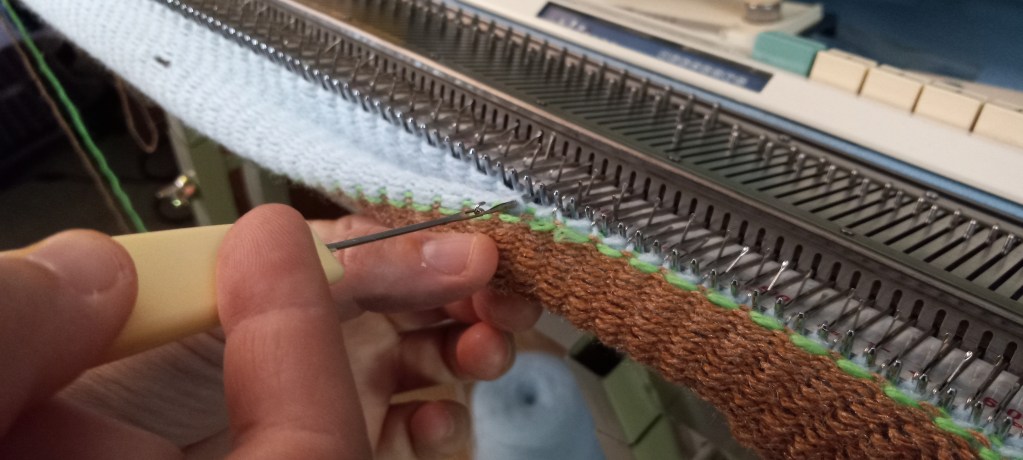
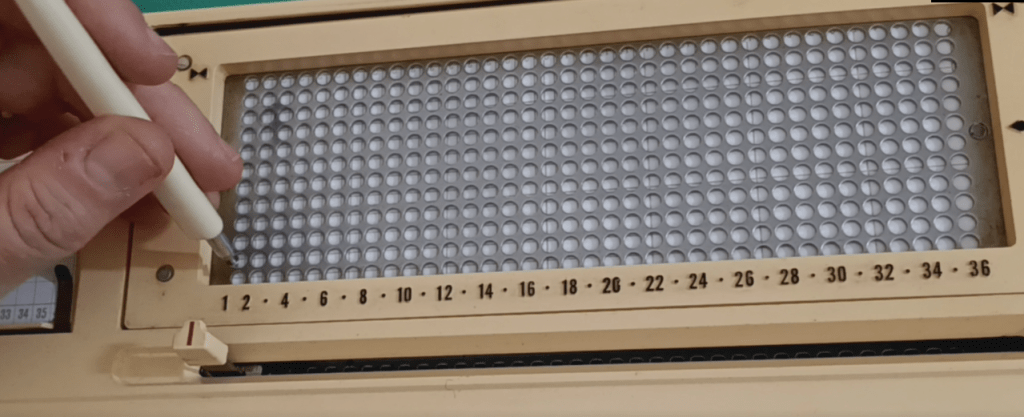
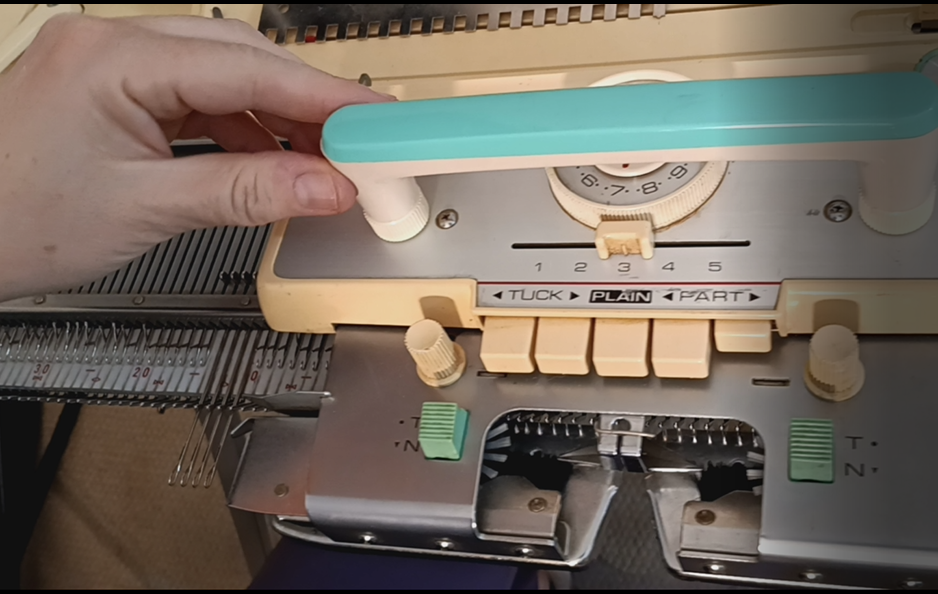
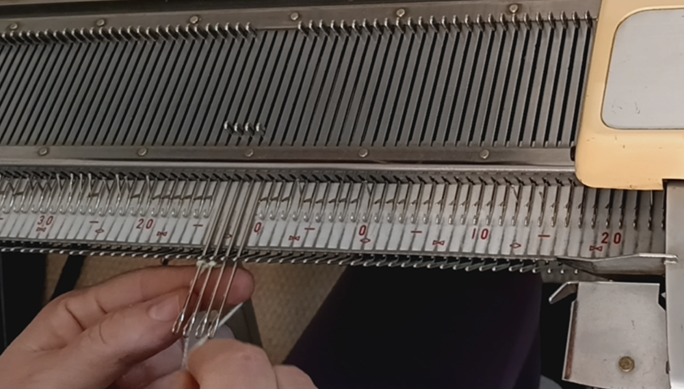
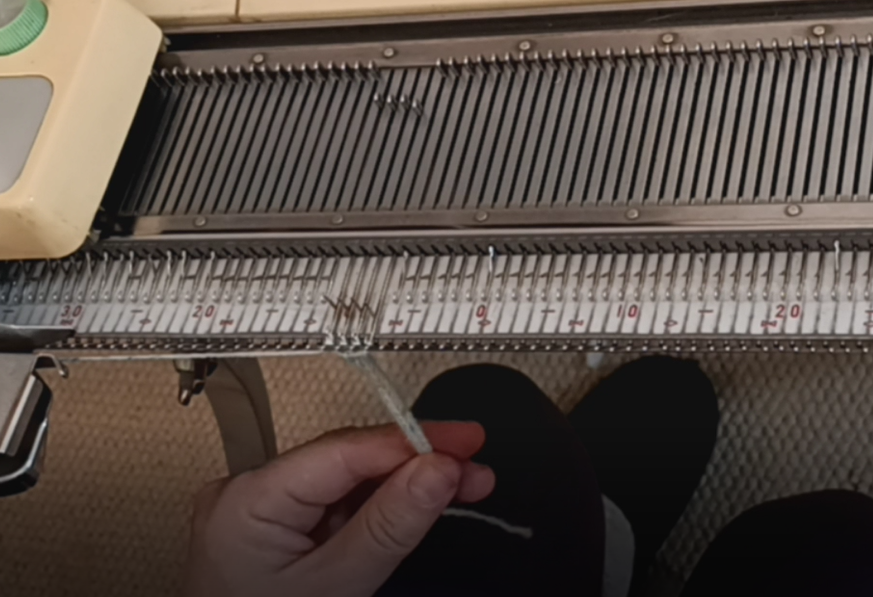
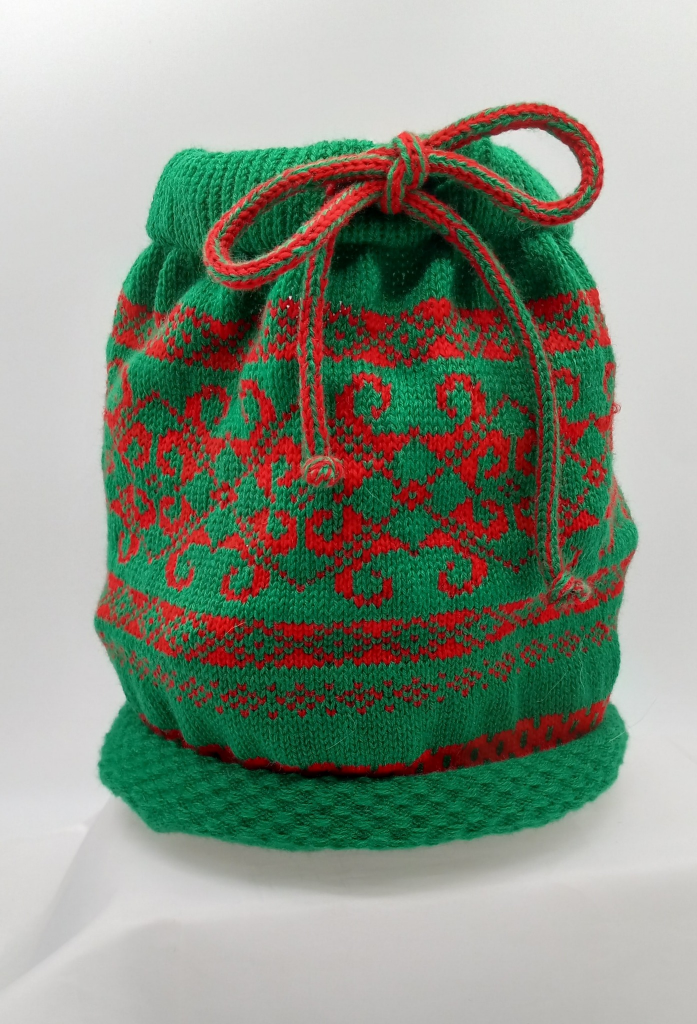
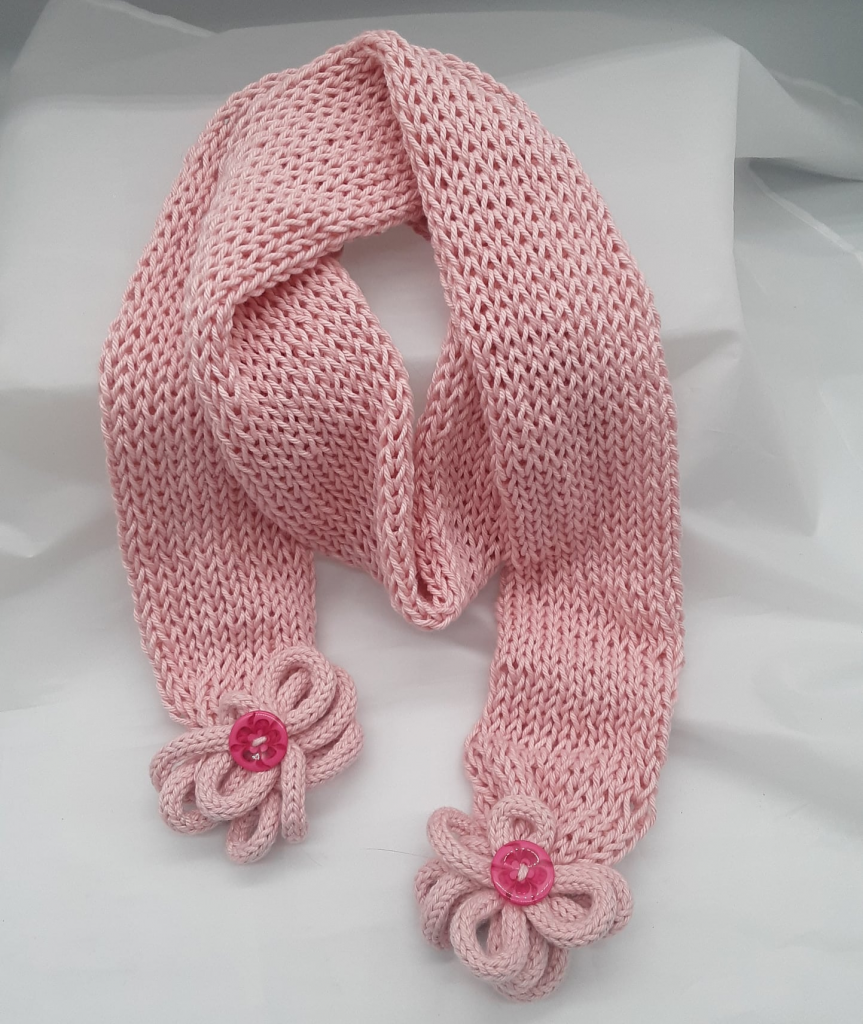
It is very easy to make horizontal button holes for small buttons when knitting projects using garter carriages. This blog is a text version of the video posted on the same subject.
First, decide the position of the button holes. Pick two stitches (in my demo, I decided to pick two sets of two stitches where I knew the machine needles, not the carriage’s, would knit). Move the left stitch out of these two to the stitch to the left of it and the right stitch to the right of it. Push the freed needles back to B position.
Knit one row with your usual pattern. The needles that were empty, now have yarn hooked on them (no stitch formed). Using a double eyelet tool, take the yarn off one hook, twist it, and then put back into a needle. You just formed a loop. Do it for the remainin needles in the button hole.
… in progress as I am still learning and discovering …
I’ve spent the last two weeks fixing, disassembling, servicing, and cleaning all kinds of Garter carriages. I went through a mix of emotions: from agony of trying to identify the problem to fix to make the garter carriage work to complete awe watching the garter carriage knit a whole baby blanket just after I pressed all the necessary buttons.
In fact, it was so relaxing to watch Garter Carriage knit that my family would find me drinking coffee in front of it (instead of TV or a FaceBook page). Check out my pages with my projects, advice/notes, and patterns.
While being enthralled, I knitted swatches, hats, custom patterns, multicolor (just stripes, not using a true 2-color GC), blankets on all 200 needles…. So, below are my observations and notes.
Garter carriage is a bulky (meaning, big) carriage but unlike a main machine carriage, it knits on its own but slow. Garter arriages are temperamental. In fact, VERY! Som below I am compling a list of commonly appearing quesionts, my observations, and knowldge (acquired by making a LOT of mistakes).
The garter carriage moves too slowly.
If you want you GC to move faster, adjust the dial on its power supply. Right (“H”) is to increase the speed. If this does not change the speed, it is very likely that either the motor is malfunctioning or there is gunk in the carriage preventing it from moving faster.
The garter carriage stopped and is not moving.
The service manual describes some of the possible reasons:
Check if the power supply is actually working. My carriage stopped working literally in the middle of a project, and i could not figure out what was going on until I decided to try a different power supply. Well, the previous power supply decided to die without a warning.
The motor is not running. There are several reasons for that: bad motor, incorrect connection to the electrical outlet, yarn sensor is down, your row counter is at zero, a knot in the yarn feeder… Refer to the service manual for more detailed information.
What might cause garter carriage to randomly drop stitches?
bad (bent needle): it might have a sticky latch, be bent, misaligned or stuffed with lint. Check this first.
yarn is too thick. Solution: decrease tesion (increase the number on the dial) or switch the yarn. I was able to use yarns on garter carriage that a regular standard-gauge machine cant. BUt there is always a limit.
problematic yarn: fuzzy, or with boucle, or staticky, or stretchy yarn, or simply yarn that does not want to knit on the garter carriage (it happened to me; I put it in a bag and marked “GC cannot knit”).
check sponge bar: the spongy part needs to be about 1 cm above the metal sides. also: is it still spongy? is it even across the length of the retaining bar?
gate pegs might be bent or out of line. Check gate pegs from different angles.
clean the brushes from fluff and dust.
insufficient or too much weight
Overall, Garter carriages are quite temperamental.
Why does my garter carriage turn in the wrong place?
There are actually a lot of reasons for that, and they depend on the situation.
old grease and gunk. Solution: open up your carriage and clean it up.
if you recently disassembled your garter carriage, check if the turning cams are installed correctly
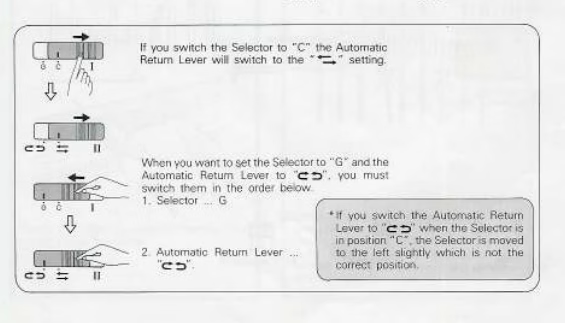
check the manual: it says for the automatic “turn” function, the slider needs to be moved to “G” first otherwise it causes problems.
make sure your needlebed DOES NOT miss any needles. It will trigger the turning cams incorrectly.
Are extension rails necessary?
It depends on the width of what you are knitting and also on your comfort level. It also depends on your machine. For example, the needlbed of the Brother KH930 is pretty wide (beyond where the needles are nested). In additional, the end cap on the right-hand side is wide too. So, even if you are moving the garter carriage past the sensor (to activate the “GC ON” light on the machine), rails are not necessarily. Thus, even if you are knitting on the full bed (like shown in this video), rails are not all that necessary.
What are good yarns to use with the garter carriage?
Gareter carraiges can handle yarns thicker than the standard machines can. Mostly because it knits one stitch at a time and pulls the yarn to form one one stitch at a time. Couple of examples: For example, I made a wonderful blanket with “we love yarn” (400 g/1312 m; 100 g/328 m) per ball) which is considered pretty thick for standard-gauge machines. This yarn creates beautiful texture and is machine washable at 104 F. I made a blanket with the cream yarn with tension 9 for the border and 10 for the main body. One skein of mega ball was enough. Two color garter carriages will need thinner yarns (for both feeders). But in both cases, knitters need to experiment with yarns and tensions. The golden rule: if the machine struggles, increase the number on the tension dial (which loosens the tension). Still struggle: the yarn is not compatible with your garter carriage.
Do I need to remove the ribber bracket to use the GC on my machine?
Just the brackets should not affect GC functioning. However, some believe that the best angle for GC to work properly is when the machine is flat. Thus, use the flat table clamps, not the S-curved ones (those that we use to attach our machines to ribbers).
Do I need to use cast-on comb?
Yes and no. Some knitters like to hang the cast-on comb on the 3rd or further rows. Some knit without it. I found that with thicker yarns and for two-color carriage, cast-on combs benefit me. Again: try and see for yourself.
Why are GC needles so expensive?
Simple answer: supply and demand.
My garter carriage is mispatterning.
Again, there are several reasons, including, gunked-up machine. But also:
you forgot to activate the GC light on the machine (if your machine is electronic)
The carriage is very easy to remove from the needlebed if it is jammed
manual and pattern cards are available online for free
sturdy end caps
excellent for those who like the satisfaction of manual stitch manipulations
excellent for beginners
it is significantly faster to perform needle selection than manually and than the Brother pushbutton knitting machines (which involves the lever movement every time the needles need to be brought forward)
no ratchet tool is required to move the needles forward (like in Brother push-button machines)
needle selection pattern versus turn knob combinations is show on the front panel: no need to constantly refer to the manual
ribbers were available to convert the machines into double-beds
CONS:
bunch of knobs, buttons and levers might at first seem confusing
vintage row counter if mispalced is hard to find
somewhat limited patterning capabilities: manual needle selection is needed for complex patterns and patterns with more than 8 needle repetitions
colored fair isle requires manual yarn manipulation (the knitter will need to lay the yarn onto the needles with open latches; might seem tedious on larger projects, but makes it easy to knit single motif patterns)
limited number of add-ons: only ribber (no knit leaders, no color changers, no lace carriages, etc).
If you are new to machine knitting on flatbed machines and you just got a machine, consider the beginner-friendly projects I recommend to all my students and customers. These projects can be done on any machine with any gauge. Also, if you are unsure how to choose a knitting machine, check out an article I put together.
…stay tuned for more insights as I test other turn-knob knitting machines.
Knitting machines with punchcard capabilities have carriages with drums that glide on the back rail and also assist in needle selection when they are passed over a punchcard reading mechanism pegs.
Well, since these patterning drums are such a prominent feature (which also makes these machines stand out from Brother punchcard knitting machines), a lot of cons and pros are associated with them.
PROS:
needle selection is localized to drums/carriages, thus fewer (theoretically) things can go wrong;
Drums assist the carriage in sliding on the needle bed
CONS:
Yarn and debris can’t tangle around these drums
These drums often freeze up when the machine is not in use for a prolonged time due to solidified old grease/oil.
Here are my other observations/feedback so far:
Pegs on the drums pass the needles to either B position or C position.
When the patterning dial is in the fair isle position, the mani yarn goes onto the needles in C position.
I see blog posts stating that some of the clanking noise might be due to the static in the yarn. To solve this issue, attach wax to the tension mast so the yarn passes through it.
But some knitters experience that noise even when there is no yarn in the carriage. Sometimes, if the carriage was not recently serviced or the sponge in the retaining bar is old, you might hear some clanking noise. I am discussing this issue (as well as how to address/minimize it) in my video.
When the ribber connecting arm is attached (from SRP50 ribber – maybe others, still researching), the carriage cam dial does not turn from L to Stockinet freely. You will need to disconnect the connecting arm, and the problem will be solved.
All Brother punch-card knitting machines have 200 needles. Except for the Brother KH260 model, all other punch-card Brother knitting machines are standard gauge (4.5 mm distance between needles).
Below is a summary of which punchcards were released for specific machines. Keep in mind that all these cards are interchangeable.
Miscellaneous
Card Set, letter
Standard-gauge machines
Brother KH830-836
D
Brother KH840
G
Brother KH860,881
J
Brother KH890,891
M
Brother KH864/868
S
KnitKingKK93/KH893
R
Bulky-gauge machines
Brother KH260
P
Miscalleneous
Garter Carriage
B-KG
Ribbers
Needle positions for Brother and KnitKing knitting machines.
…this post is a collection of tests and tricks I use when I test knitting machines I refurbish. It is a continuous work in progress as I learn more about various knitting machines.
Preparation for the knitting:
After you have fully serviced your machine (read the list of steps I follow in here – sponge bar section is especially important), place the carriage onto the need bed (while ALL needles are in non-working position A). and move it across the needle bed (without the sinker plate attached). Ensure that the carriage runs smoothly on the needle bed. Apply oil if necessary according to the instructions if you feel that your machine does NOT run smoothly. Also, check the contact points (between the carriage and the needle bed) for gunks/rust/debris since they can contribute not only to poor movement of the carriage but also to static accumulation and other problems down the road.
Attach the sinker plate to the carriage according to the instructions. Run the carriage + sinker across the bed (the needles are still in non-working position A).
Using a 1×1 needle selection comb (AKA ruler) move 20-30 needles to the B position (15 needles from the left of the “0” mark and 15 needles to the right). You will have every-other-needle in the B position. Run the carriage over the needles, first, without the sinker plate. You will see how the needles move while you run the carriage. If everything goes well, run the carriage with the sinker plate attached to the carriage.
Move the remaining needles to B position. You will now have 30 needles next to each other, all in B position. Run the carriage and then carraige+sinker over these needles. Watch the needles move freely. If the needles move freely with only the carriage but not with the carriage+sinker, you might have a damaged sinker plate.
If steps 1-4 did not give you any trouble, you are ready to knit your first swatch.
Knitting a first swatch:
Review the manual which yarn is best with your machine. When choosing yarn for your first swatch, stay on the thinner side – we want to have our first knitting steps go smoothly and not go wrong because of the poor yarn choice. Once you learn to know your machine, you will know which yarns it can handle (and what to do so the machine can handle these yarns). For standard machines, I recommend sock-yarn-thickness and even thinner, for bulky and medium gauge machines – use sport-weight yarn.
If your yarn came in a cone or a cake – you can skip this step. If your yarn is in a skein or a ball, you need to use a yarn winder to rewind your yarn into a cake or onto a cone. The reason is that during machine knitting you want as even yarn tension as possible.
Bring 20-30 needles upfront and select every other needle (move them to the working position B). Run the carriage back and forth to even out the needles.
Cast-on: I recommend using a cast-on method with a cast-on comb. Most Brother knitting machines have cast-on combs. Silver/Silver Reed/Studio cast-on combs do not typically come with cast-on combs. Cast-on combs can be purchased online. Or you can use an e-wrap cast-on method. Refer to the instruction manual of your machine for the recommended cast-on method.
Once the first initial row is knit, knit several rows on every other needle. It will give you a good feel for the yarn thickness, tension and carriage behavior. Adjust tension as needed. The carriage needs to run smoothly.
Bring the remaining needles to the working position. Increase the number on the tension dial. On all needles, the yarn tension needs to be looser than on every other needle. Knit several rows.
If all these tests are successful, you can now start experimenting with patterning as well as knitting on a full bed.
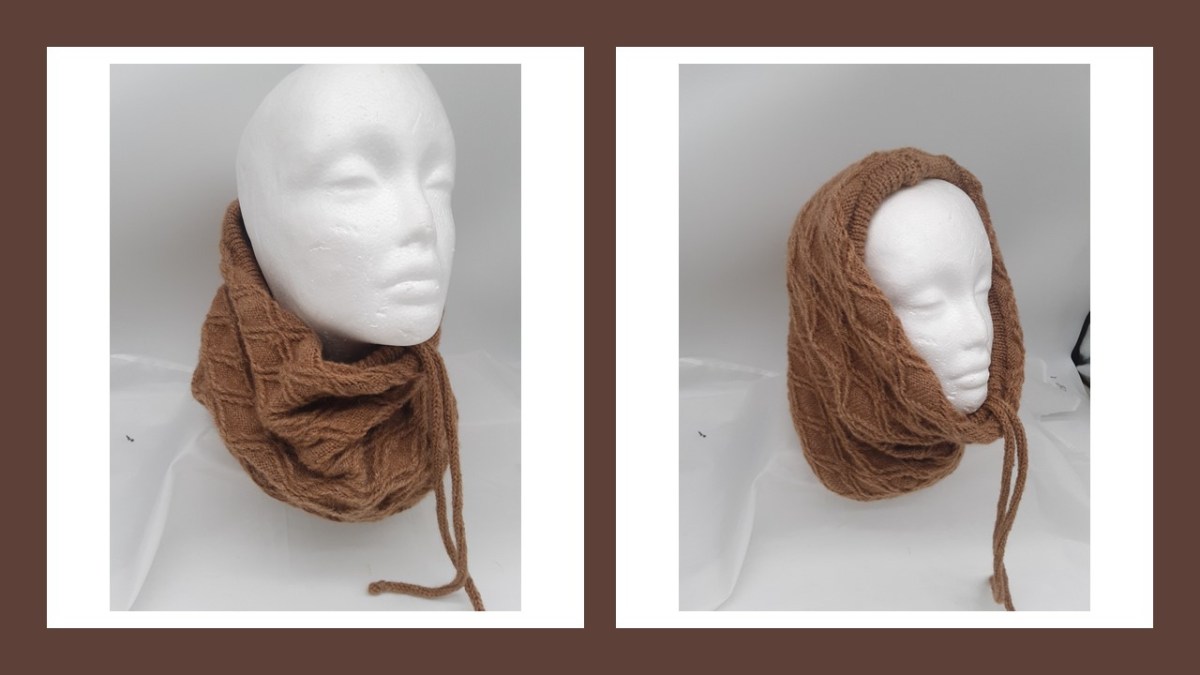
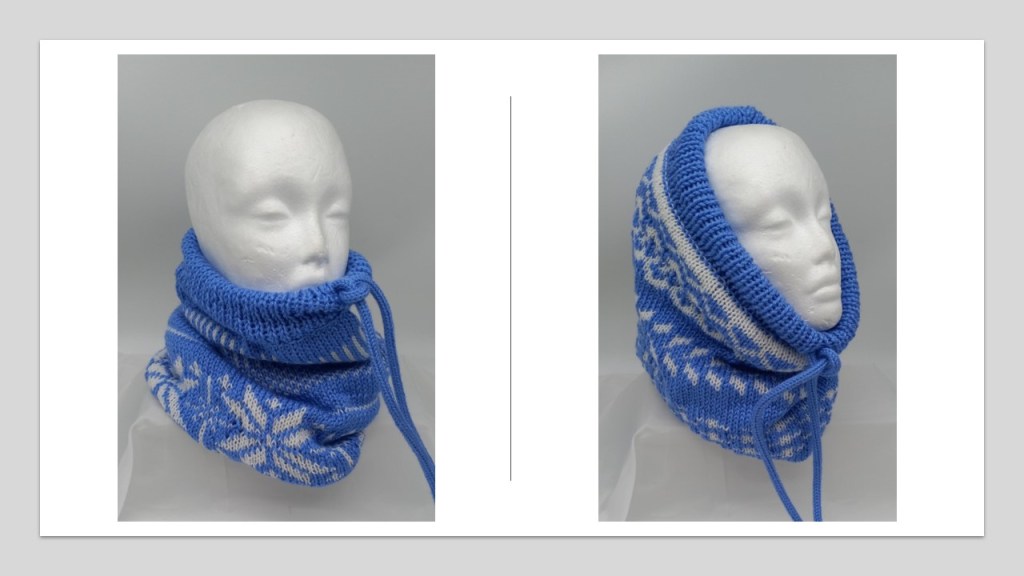
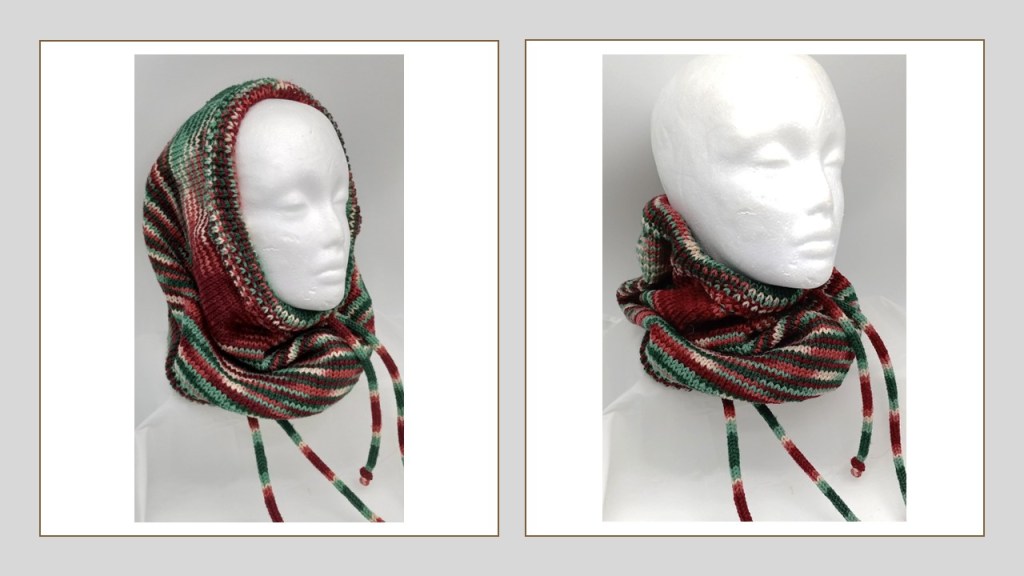
I knitted several variations of these cowls/neck-warmers. In fact, this is my favorite project to do while I am testing knitting machines. The reasons are:
This project is done on a full bed, thus, I am checking whether all needles function and knit properly.
This project can be done on any-gauge flat-bed knitting machine (mid, standard or bulky gauge) with or without patterning capabilities. Just choose the correct yarn for your gauge.
No need to count your rows and stitches to calculate gauge, and no worries about changing tensions
While knitting this hat, you will learn about the appropriate tension for the yarn I chose and how your machine will handle different yarns. I start with knitting on every other needle which is easier on the carriage if the yarn is too thick (thus, if you are experiencing problems with knitting on every-other-needle, that means the yarn is definitely too thick).
It is a very easy project and fun. You will not only know you knitting machine better but in the process, you will make something wearable either for yourself, your friends, and relatives or for charity.
While working on this project you will learn how to 1) cast on with waste yarn, 2) create mock-ribbing, 3) fold the knitted fabric over, 4) cast off, 5) knit a cord and 6) make a buttonhole. You will need to know the basic stitches of sewing knitted fabric, like back-stitch, and mattress stitch, and, what yarn is good for you machine.
Below are the instructions on how I knitted the cowl/neck warmer/hood/hat below.
If some steps are unclear, refer to the video tutorial I created. These steps were performed on the Brother machine. Thus, some steps are specific to Brother machines only (like cast-on combs and the part button) but if you already know how to start knitting without the cast-on comb and how to make your machine knit in partial mode in one way, you can easily adjust those instructions below.
Additionally, the project I describe below was made on the standard-gauge knitting machine.
Step 1: Cast-on and knitting mock-ribbing.
With your 1×1 needle selection ruler, bring every-other-needle to the working position (typically B-position).
Run the carriage from right to left and back to even out all needles.
Rezero the row counter.
Thread the waste yarn into the carriage and knit one row.
Hang the cast-on comb
Knit several rows until you are sure all stitches are established well.
Knit one row of contrasting strong yarn or with an unravel cord.
Rezero the row counter again.
Thread the main yarn into the carriage. Hang an optional barrel weight onto the middle of the cast-on comb.
Knit 10 rows.
Make a buttonhole. We will use it to insert the cord into the folded mock-ribbing. For this purpose, remove the stitch closest to the zero-position and put it onto the next needle in working positions. Move the just-emptied needle back to the B-position (standard working position).
Knit 10 more rows.
Fold the mock-ribbing. First, remove the cast-on comb. Then, using a one-eyelet tool, transfer the stitches that are right above the contrasting yarn (remember – the one row we knitted in sub-step 7 above?) onto the needles in non-working positions. Watch this step in the video at approximately 3 min 25 s position. After the stitches were transferred, make sure the needle is in the B-position. Continue for the rest of the fabric.
Grab the stitch right above the contrasting yarn….
…and put it on to empty the needle (in A, non-working, position) on the right.
Then push it to the B position.
Step 2: Knitting the main section
Optional: After the mock ribbing was folded, attach the cast-on comb to the section knitted with waste yarn. Increase the tension dial number by 1-3 numbers and knit one row. Because we just went from knitting on every-other-needle to knitting on all needles, it might be too tight to knit this very first row on the full bed. This is what we are loosening the yarn tension.
Knit 80 rows. (In my demo, I knitted simple stockinet stitch. But you can knit any pattern you desire.) It is about 7-8 inches of the knitted fabric. If you want to make a longer cowl/neck-warmer, or a deeper bonnett, knit more rows. Also, if knitting on a bulky or mid-gauge machine, you might need fewer rows. 7-8 inches of the knitted fabric is a good approximation to get a good size cowl/neck warmer/hat/hood.
Step 3: Second mock-ribbing
Using a one-eyelet tool, transfer the stitches from the every-other-needle to the neighboring needle. Move the needle without the stitch to A position (non-working position, pushed all the way in). Watch the video at 6 min 54 s if this step is unclear. I am also showing in the video that you can use an adjustable stitch transfer tool to move 2-4 stitches at a time. The adjustable tool can be purchased in my independent store or in my Etsy store.
Continue for the rest of the needles. Optional but helpful: hang a claw-weight on the edge of the knitted fabric next to the stitches you are transferring. The transfer will go a bit smoother without snagged yarn.
Increase the yarn tension by 2, i.e., decrease the tension dial by the number 2.
Knit 10 rows on every other needle.
Make a buttonhole as described above in step 1.11. After that knit 10 more rows. Or continue knitting for 10 more rows without making the buttonhole. Maybe you do not want the cord in the second ribbing. I also show in the video that the cord can be inserted into the mock-ribbing fabric without the buttonhole. So, at the end of this step you should have 20 rows of mock ribbing.
Folding the second mock-ribbing: using a one-eyelet tool, transfer stitches from the 1st row of this mock ribbing to the needle in the working position. (See the video for details). In words: find the stitch right above the hole (created when we transferred every other needle) onto the working needle right above it. Continue for the rest of the panel. Even out the needles to be as close to the B-position as possible.
Optional: Hang the cast-on comb with the weight onto the just-folded fabric. Loosen the yarn tension (increase the tension on the carriage dial by 1-2 numbers).
Knit one row.
Step 4: Cast-off
Remove the yarn from the carriage. Let it hang free on the side.
Remove the cast-on comb.
Using the one-eyelet tool, remove the stitch on the very edge of the needle bed and transfer it to the next needle. Manually knit a stitch on this needle (see the video for visual reference). The manipulations in this step are similar to the cast-off in hand-knitting. Continue for the rest of the needle bed.
Close the last stitch and take the panel off the bed. Secure the last stitch with a knot.
Hint: when making a stitch, push the last needle (with a needle with two stitches) to the A-position. In this case, it creates a long stitch and a loose cast-off seam.
Optional: hang the claw weight on the fabric below the last needle in the working position. It will create tension on the fabric for easier removal of the stitches from the needles. Rehang as you cast-off the stitches.
Step 5: Sewing the panels together.
Remove the contrasting yarn by pulling it out of the knitted panel.
Remove the waste-yarn-knitted section. It will come off very easily after the contrasting thread is removed.
Fold the fabric with the right sides touching each other (stockinet sides, in my case).
Start sewing the fabric at the folded section. Match the internal sides of the folded section first. I like using backstitch for such seams (but it actually does not matter how it looks because this will be hidden inside the fold), moving to the outside edges. I like using a mattress-like stitching technique on the outer edges of the folded section of my knitted panel. After the fold, keep on sewing, again with the stitch of your choice. I like back-stitch – it creates very knit edges and seams on both sides.
After reaching the second folded section, again, sew first the internal panels of the fold using a back-stitch and then the external sides using a mattress stitch. Hide the ends of the yarn used to sew the panels.
Step 5: Cord making
Make two cords, roughly 30 inches long. Use your favorite method or make it on your flat-bad knitting machine (follow the steps outlined in my other article).
Secure the ends of the cord: make a knot and then sew through the knot with the remaining yarn (watch my video on cord-making).
Step 6. Inserting the cords.
Insert a safety pin into the knot of the end of the cord.
Insert the safety pin head into the “button hole” we created.
Thread the safety pin with the cord through the fold and pull out from the fold through the “button hole”.
Do the same with the second cord on the second fold. Hint: if you forget to make a button hole, the 1×1 mock stitch ribbing is loose enough where you can insert the head of the safety pin through the stitches.
Happy Knitting!
The same approach can be used for patterned panels, like those shown below.
It can also be done on bulky and mid-gauge machines. Choose a variegated yarn for best effect:
.. this article is a constant work in progress as I collect more information and personal experience…
… Please, read the whole article first before proceeding.
Abbreviations used below:
KM = knitting machine
If you purchased your KM serviced from a reputable seller, you can this post and go straight to the post where I recommend the very first steps/tests with your new KM.
If you were not as lucky and got a machine that still needs TLC, below are the steps you can follow. A lot of new machine knitters get a machine from friends and relatives or just find one on a garage sale and feel very overwhelmed. Well, I hope the steps below will help you to guide your approach to cleaning and testing your KM.
First inspection, cleaning, and servicing steps:
Check against the manual if all parts are present. (If your KM did not come with a hard copy of the manual, search its model number and you will easily find a free PDF file of the manual). The most critical ones are a carriage and a sinker, they are a MUST-HAVE. The secondary is a tension mast (I managed to knit on a machine by just holding the yarn in my hand and creating tension by hand, but this is far from ideal but doable if you have to.). Also nice to have are claw weights. If others are missing, you can probably manage to knit without them. If the major parts are missing, search on the Internet to purchase them and while they are arriving, work on the steps below.
Clean/wipe the visible dirt from all parts.
Remove the retaining bar (metal strip sitting on top of the needles). Push it on the side until the other end shows up and then pull completely out. The manual should mention the retaining bar in the section about needle replacement. If you have a long-tail brush, insert it into the channel for the retaining bar and clean the gunk out of there. DO NOT RUN THE CARRIAGE ON THE NEEDLE BED UNTIL YOU INSERT A RETAINING BAR WITH THE NEW SPONGE BAR. I have a separate blog post dedicated to the retaining and sponge bars and how to clean/refurbish/restore them.
After the sponge bar is out, remove all needles, clean/wipe them, and inspect. I visually inspect if there is deep rust (if there is just shallow rust – I gently polish the needles with fine sand-paper), and obvious bends. Wipe all the needles while inspecting them. Check if the latches move freely back and forth and do not stick (sticky latches can lead to incorrectly formed stitches, especially to tucked stitches).
Vacuum the needle bed from the top (simply run the narrowest attachment your vacuum has over the needle bed). If you are brave, and if the machine has them, unscrew the top plastic panels, detach all the plastic components from the machine’s front panel, and vacuum underneath.
If are you even braver, remove the plastic end-caps and vacuum from the sides as well. But: if the machine is clean under those long front panels, you probably don’t need to remove the end caps, which is good news because they are kind of a pain to deal with.
While the panels are out of the way, check if the punchcard reading mechanism moves freely. Often those gunk-up too (or freeze simply due to time) and need to be cleaned. There are video resources available online on how to clean the punchcard reading mechanism. However, I do not recommend disassembling the punchcard mechanism completely without trying less drastic measures (like simply spraying with Kroil oil and cleaning with wipes and Q-tips). It is often not even needed to go that deep and the error of assembling those intricate mechanisms back happens quite often.
Then check if the buttons on the carriage move freely (middle button and tuck/part buttons). Those often get stuck as well. Kroil Oil will take care of that: spray the Kroil oil over the frozen parts and try to jiggle them every several hours. Reapply Kroil oil as needed.
Check the undercarriage for visible lint, dust, dirt, etc. Clean with Q-tips if needed. If the carriage is very dirty, use the UP lubricant/cleaner for a faster (but significantly smellier process). Make sure all levers on the undercarriage move symmetrically when you press the buttons on the carriage. Move the levers with your finger or a tool and ensure they move freely and snap back to the original positions without lag.
Inspect and clean the sinker plate. Often yarn is caught
Insert back all the freshly inspected and cleaned needles.
Insert a refurbished or new retaining bar with the new sponge. (Read my other blog post on how to clean/refurbish/restore them.) I will soon have some sponges and complete retaining bars in my store. Make sure the retaining bar is inserted correctly (with the spongy part touching the needles and the retaining bar being on TOP of the needles.)
Put together all large plastic pieces (covers, boxes, and lids) if you removed them for cleaning.
Place the carriage onto the needle bed.
Attach the sinker plate according to the instructions.
Once you are satisfied with all the cleaning, you can start testing your machine. Please read the first tests I do for my freshly-refurbished knitting machines in my other article.
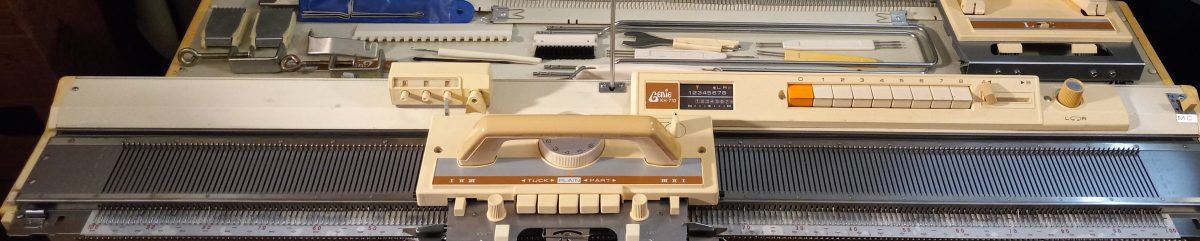
Brother KH800 and KH801 knitting machines have unique designs for needle selection: they accept 12-stitch punchcards that are positioned flat on the special panel on the machine (called “card presser”).
Brother KH800 pattern center with the 12-hole card pressure in the middle.
If your machine came with original punchcards, you are super lucky! If you did not get the punchcards, or you want to make more cards for your own custom patterns, it is very easy to do.
Below are step-by-step instructions. You can also watch a video I made with these steps.
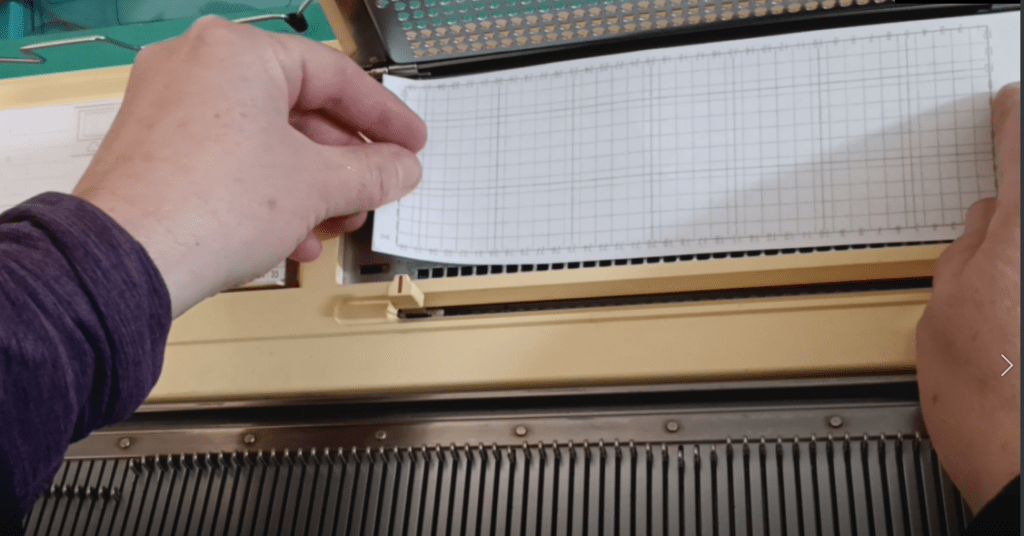
You need to cut a piece of paper, 20.5 x 6.5 cm (8 x 2.5 inches). Regular printer paper will work. Or print this file which shows blank cards for KH800. Another option is to print a standard set of cards (from the file downloaded here) and then punch the holes using the steps I will describe below.
Insert the cut-out punch card into the pattern card cassette holder. The manual describes all the steps of inserting the card really well. The only difference from the manual is that you will have to push the paper through the setting pins.
If your machine comes with a special puncher, you are again lucky. You can now use it to punch your pattern through the holes. If your machine did not come with it, you can use a marker with a relatively thick end. Ideally, find a marker that no longer draws (dried up or broken) so it does not draw on the machine.
Continue punching holes according to your desired pattern.
The holes do not have to be fully complete: they just need to be open enough for the patterning rods to go through upon activation.
Watch in the second half of my video how I tested and ensured that the rods indeed went through.
Happy punching and Happy knitting!
Also, read or watch about the patterning mechanism of Brother KH800/801.
If you own a Brother flat-bed knitting machines, like pushbutton KH551, KH585, KH588 and KH710, or Brother punchcard machine like KH830, KH840, KH860, KH890, etc., or even electronic models, like Brother KH910, KH930, KH940, KH950, KH965, and even KH970, you can make cords on these machines in just quick 5 minutes or less.
The steps are outlined below. Or, if you are a visual learner or some terms in this article are not quite clear, watch this video.
1. Move the carriage to the right-hand side of the needle bed and press the right-hand side PART button.
2. Move to the most forward position 3-4 needles and perform an e-wrap cast-on with the short end of the yarn being on the left side. This post does not go into details into e-wrap cast-on, so if you are unsure how to do it, there are a lot of online resources on it.
3. Thread the long piece of the yarn through the carriage as usual.
4. Move the carriage from left to right while pulling the short end of the yarn down. After the first tow is knitted, if you prefer, attach the claw weight to the formed stitches. Or, pull the knitted fabric down by a free hand.
5. Continue knitting with the carriage moving it side to side while pulling the formed cord with the free hand.
6. When a desired cord length is achieved, cast off with your desired method. Tie a knot on each end and fasten the knot by sewing several stitches over the know with the yarn left on each end.
The cord can be used for hoods, hats, neck warmers, or for decorations.