Blog

Brother electronic knitting machines: description, comparison, pros and cons.

… still in progress. Stay tuned as I collect more information.

If you already read my post on how to choose a knitting machine and decided that you want an electronic knitting machine and in particular a Brother one, you are in the right place then.

I would strongly recommend electronic knitting machines to both computer/electronics savvy and non-savvy knitters.

People who are just users of electronics can have a lot of fun with the over 500 of various built-in patterns (only 50 for KH900 and non for KH910).

On top of that, computer-savvy people can create their own patterns in various programs, download them onto the machine, and knit wonderful custom things. Some even hack/modify the electronics to get the machine to read the patterns automatically from the computer.

Pros of Brother electronic knitting machines:
– Electronic brother machines have a lot of built-in fair-isle, weaving-, tuck-, part/slip-, and lace patterns (the exception is KH 910 – more on that later).
– All electronic Brother machines can be accessorized with a color changer (4-color changer for most KH9xx machines and 6-color changer for KH970). 4-color changers are easy to find and are pretty affordable.
– All electronic Brother knitting machines can be easily accessorized with ribbers (KR830, KR850, KR880 and KR900), which are also easy to find.
– Custom patterns with different colors could be created using various software and then transferred to the machine (read a separate article on that).

– Electronics can also be modified and the patterns can be read by the machine directly from the computer. Thus, no need of transfers (some machines do not have enough memory to accept a large pattern. In this case, the pattern needs to be split into several transfers, which adds uncertainty to inexperienced knitters).

Cons of electronic knitting machines:
– Brother KH910 without conversion (aka hacking) to AYAB can only use mylar sheets to knit patterns. Those are hard to find. But still possible. It does NOT have any built-in patterns. Because of all of this, and because of only the 60-stitch repeat pattern built-in mechanism, machine knitters learned how to hack the electronics, forgo the mylar sheets, and just pass on the patterns from the computer.
– Brother KH930: has over 500 built-in patterns. It is a bit more desirable than KH910 because of this. It, however, has limited memory and large custom patterns need to be uploaded in parts. but there are ways to go around it. KH940 is identical to KH930 but has a bit more of memory (but harder to find than KH930) and a whole pattern for, let’s say, medium size throw can be loaded in one file transfer.
– electronics can be finicky sometimes and, thus, need lots of TLC and attention (like, making sure the machine it turned off and not left ON overnight; if the machine feels warm, stop knitting and turn the machine off). However, replacement motherboards are still available or the machine can be converted to AYAB.

– KH970 are very desirable but also hard to find. However, be aware that some knitters love it and some hate. The electronic console is not as straightforward/intuitive to learn. This machine can still be connected to DAK. AYAB is not recommended because this machine is so expensive and because it has so many prebuilt-in patterns.

Brother punch-card knitting machines: quick reference

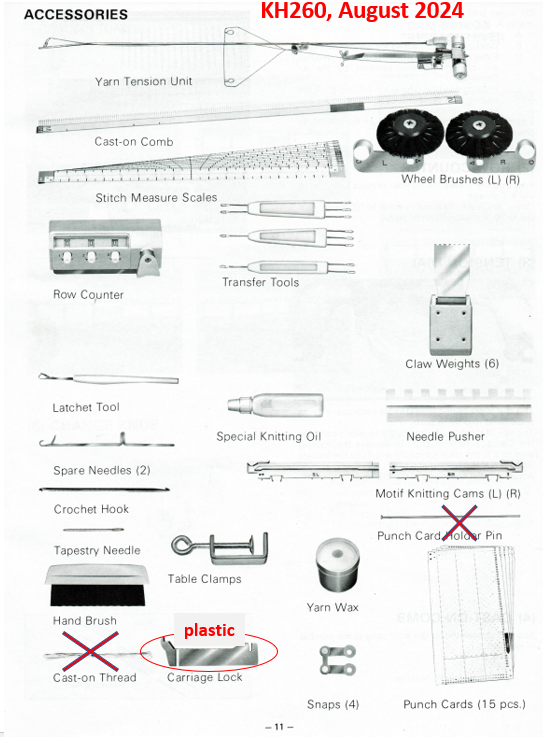
All Brother punch-card knitting machines have 200 needles. Except for the Brother KH260 model, all other punch-card Brother knitting machines are standard gauge (4.5 mm distance between needles).

Below is a summary of which punchcards were released for specific machines. Keep in mind that all these cards are interchangeable.

Miscellaneous
Card Set, letter
Standard-gauge machines
Brother KH830-836D
Brother KH840G
Brother KH860,881J
Brother KH890,891M
Brother KH864/868S
KnitKingKK93/KH893R
Bulky-gauge machines
Brother KH260P
Miscalleneous
Garter CarriageB-KG
Ribbers

Needle positions for Brother and KnitKing knitting machines.

Machines/Ribbers Model numbers
Needle Positions

12-stitch punchcard machines
KH800, KH801ABCDIDIIE

24-stitch punchcard machines
Bulky: KH260
Standard: KH810, KH811, KH820, KH821, KH830, KH831, KH836, KH840, KH850, KH851, KH860, KH864, KH871, KH881, KH890, KH891, KH893, KH894


A


B


D


E

Ribbers matching the Brother and KnitKing punchcard knitting machines
KR810, KR830, KR840, KR850, KR890, KR900, RK900ABDE
A – non-working position
B – standard working position
D, DI, DII – patterning positions
E – holding position

More summary information on punchcard knitting machines is coming up.

Brother KH881 serviced and tested in July 2024

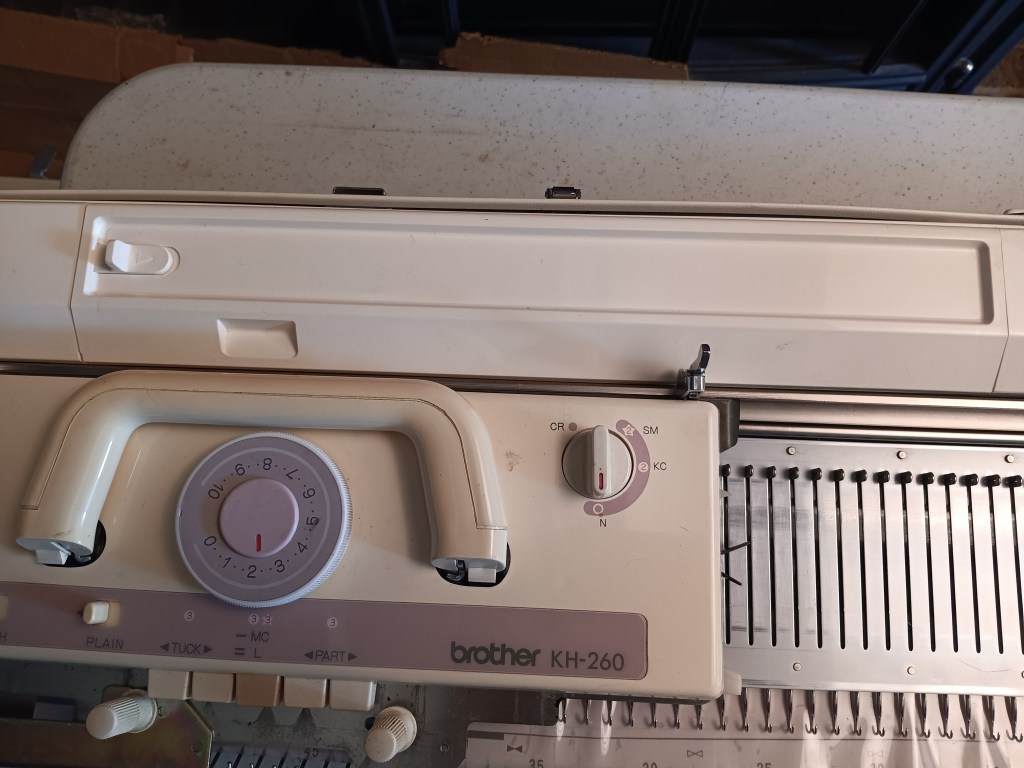
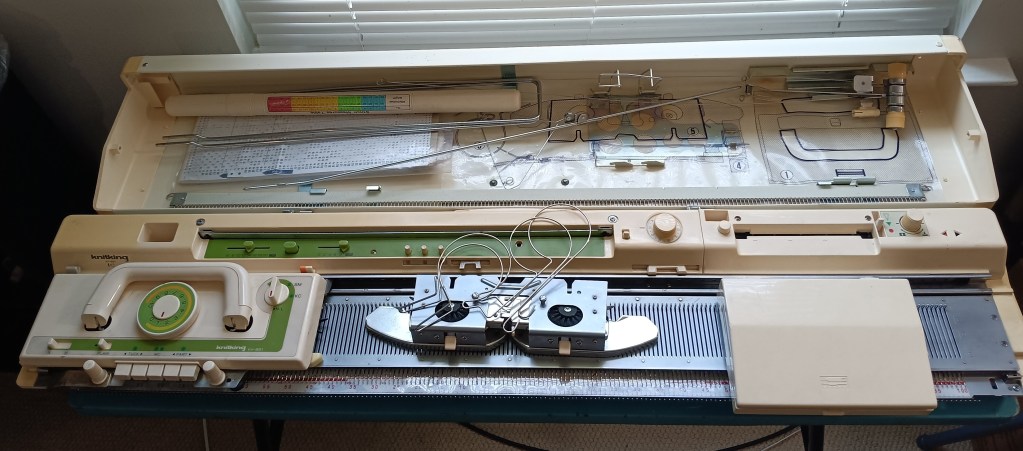
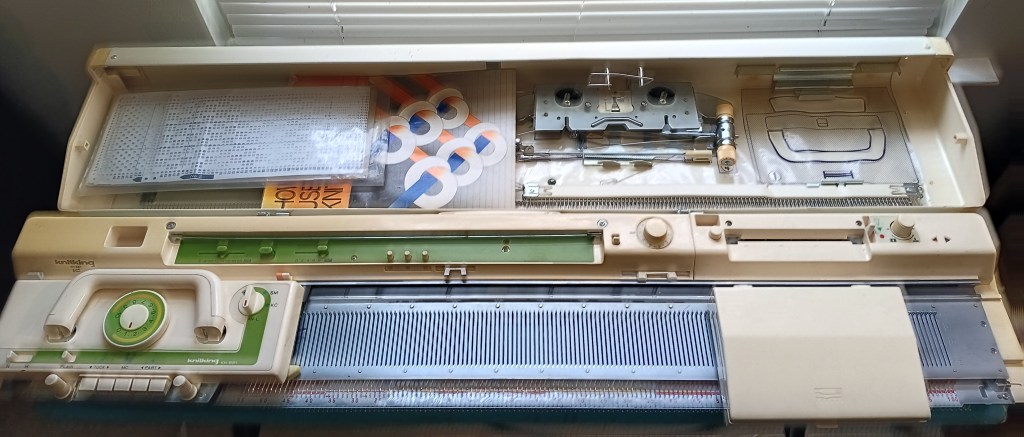
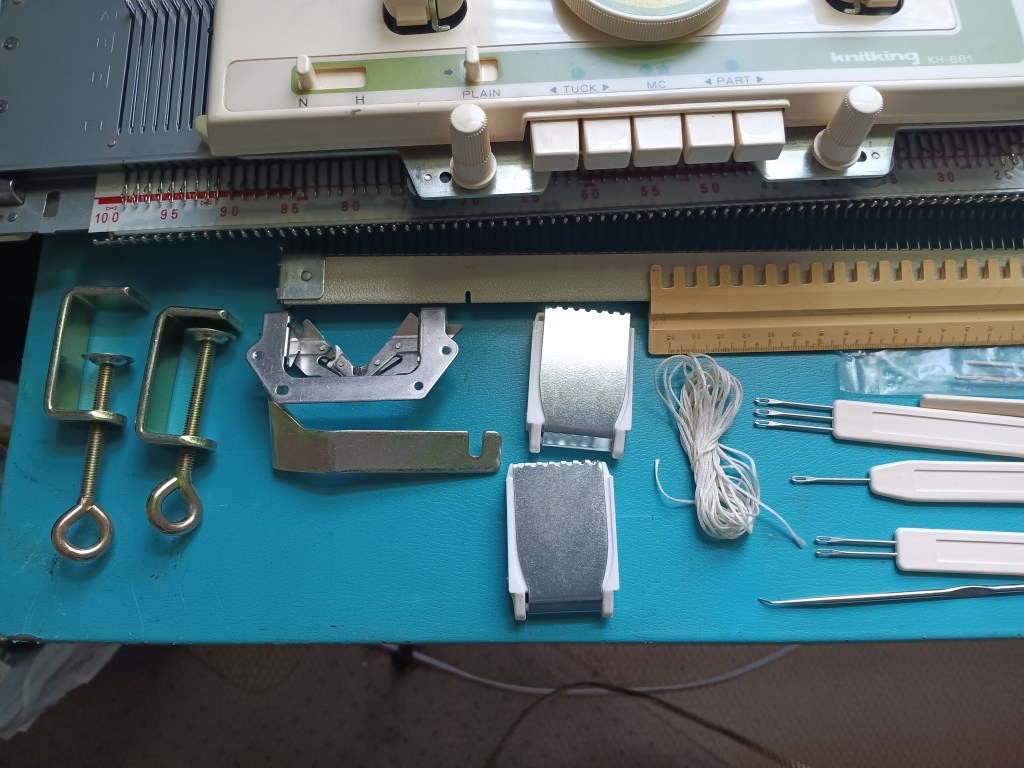
Brother KH881 is a standard-gauge knitting machine with 200 needles and a built-in knit leader. Read more about the pros and cons of the Brother KH881 knitting machine model in a separate blog post. This post is specifically about Brother KH881 serviced and fully tested in my shop in July 2024.

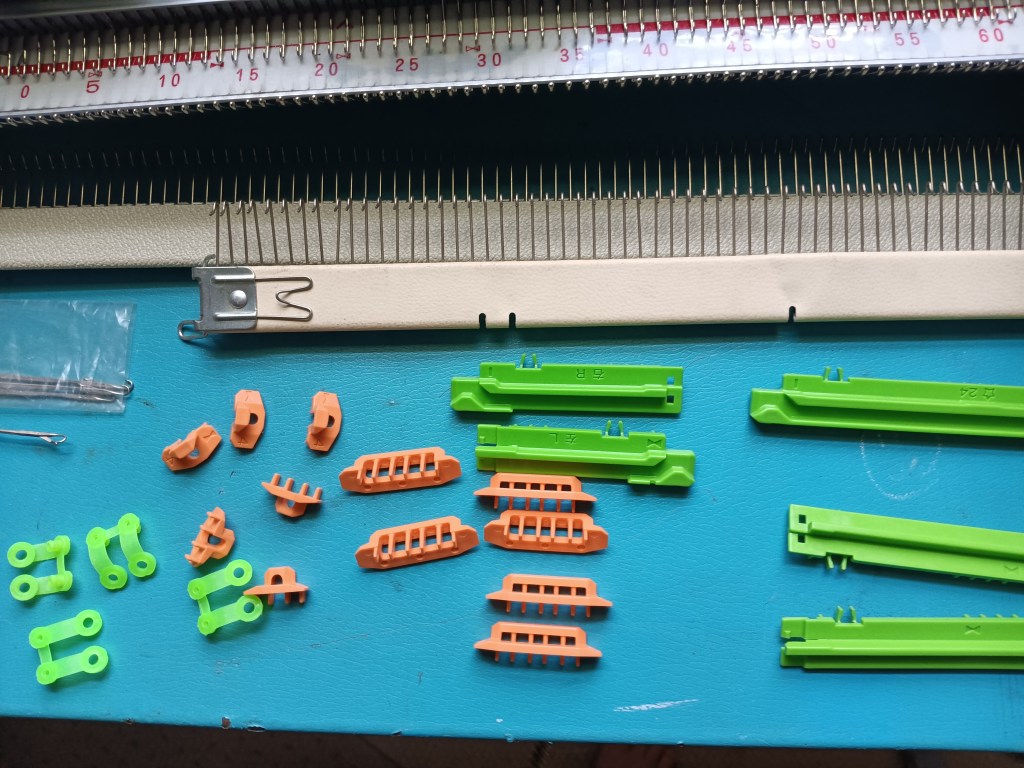
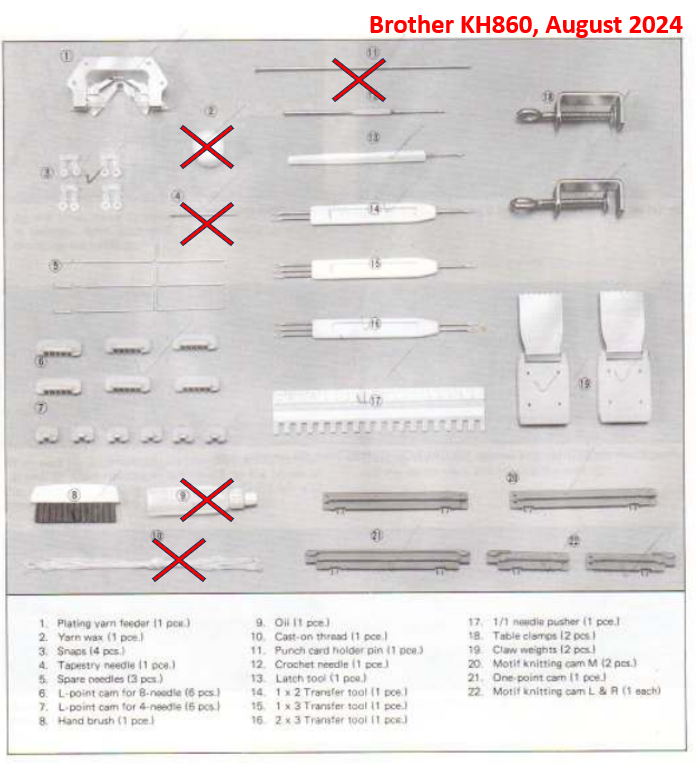
Brother KH881 came to me without a lot of accessories and even without a carriage. I found a replacement carriage and all minor missing accessories.

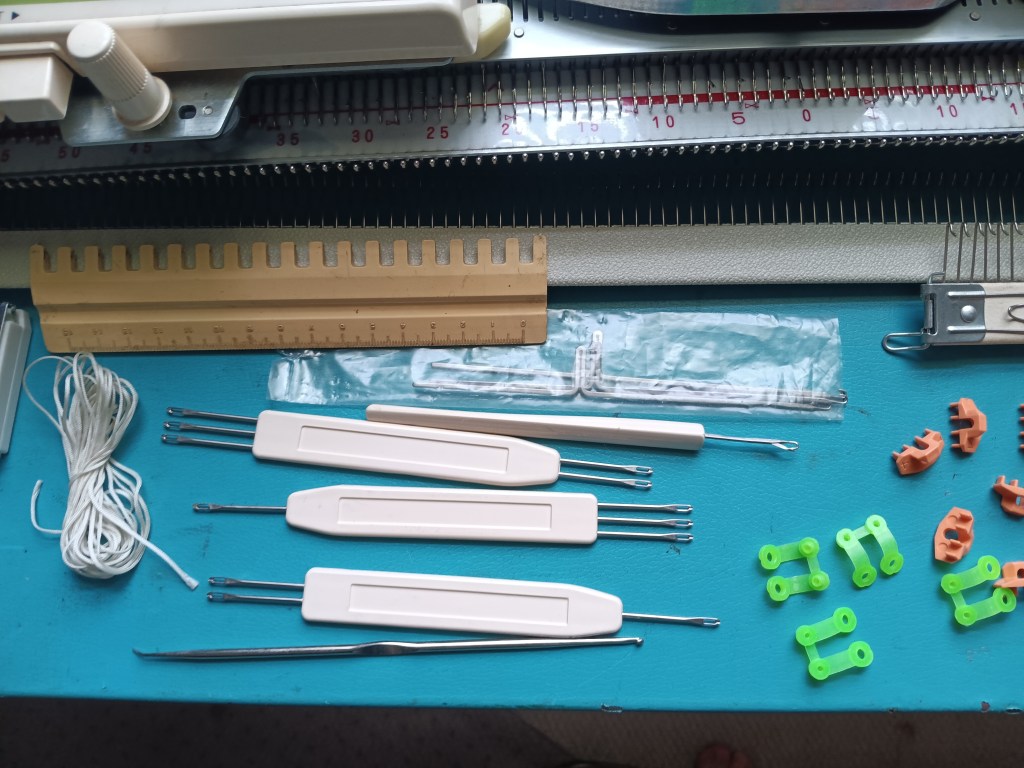
Most of the other major accessories were present with the machine and almost all accessories will be included.

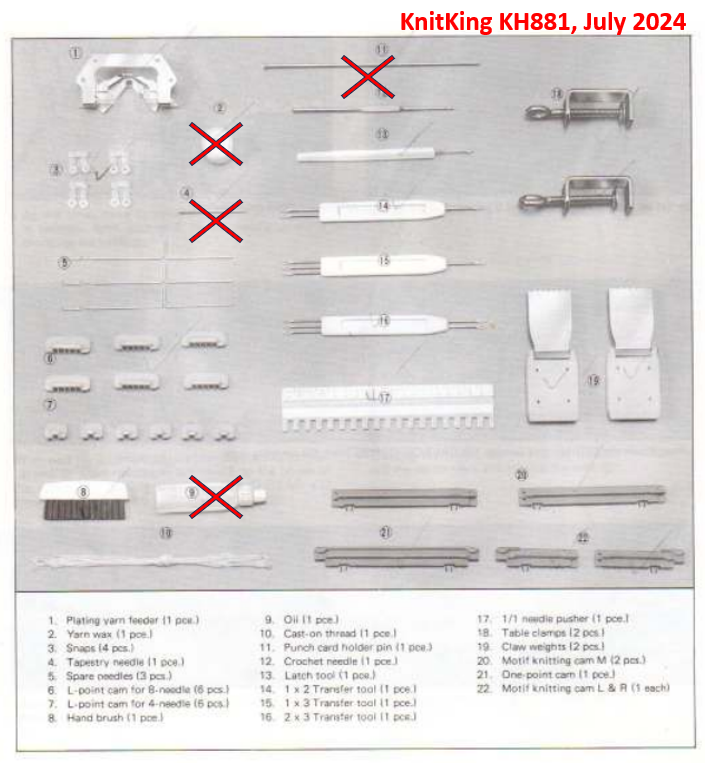
The still missing minor accessories are:

  • oil: it was old and I had to toss it away (use a Gun oil available on Amazon instead)
  • cast-on thread (you can use any silky and strong yarn)
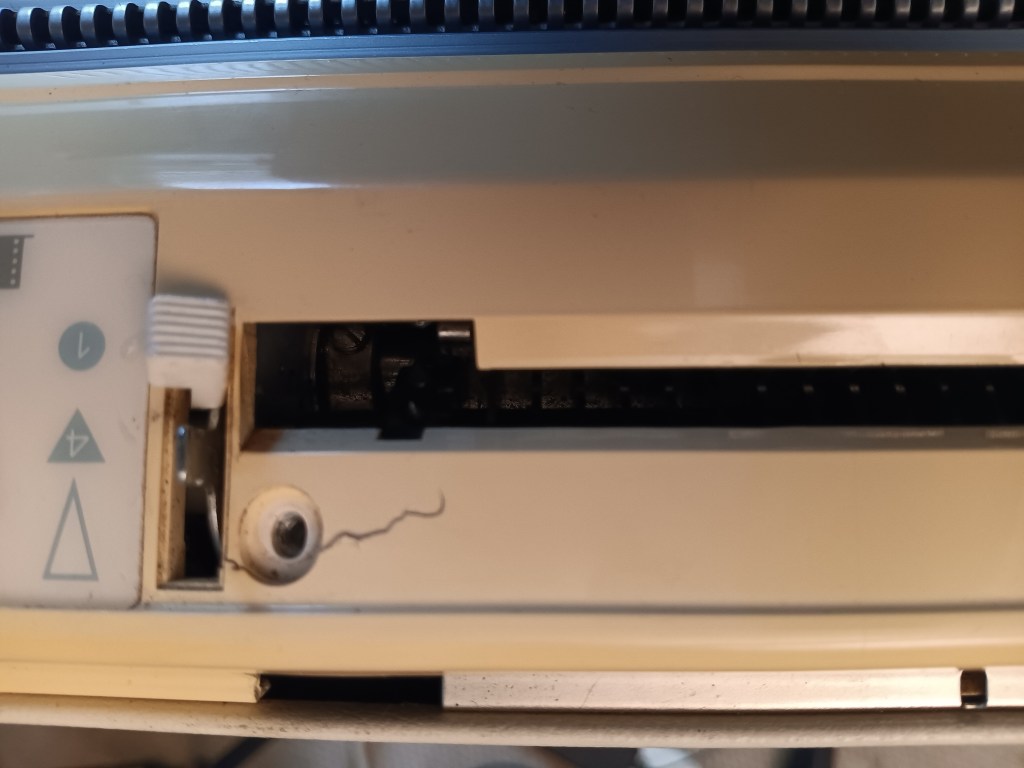
  • the wax is technically not included but there was a piece still attached to the tension mast and it worked well while I knitted. I will include the plastic case for the wax.
  • A punchcard holder pin is also not included. All the tests shown in my video for this machine were performed without this rod.

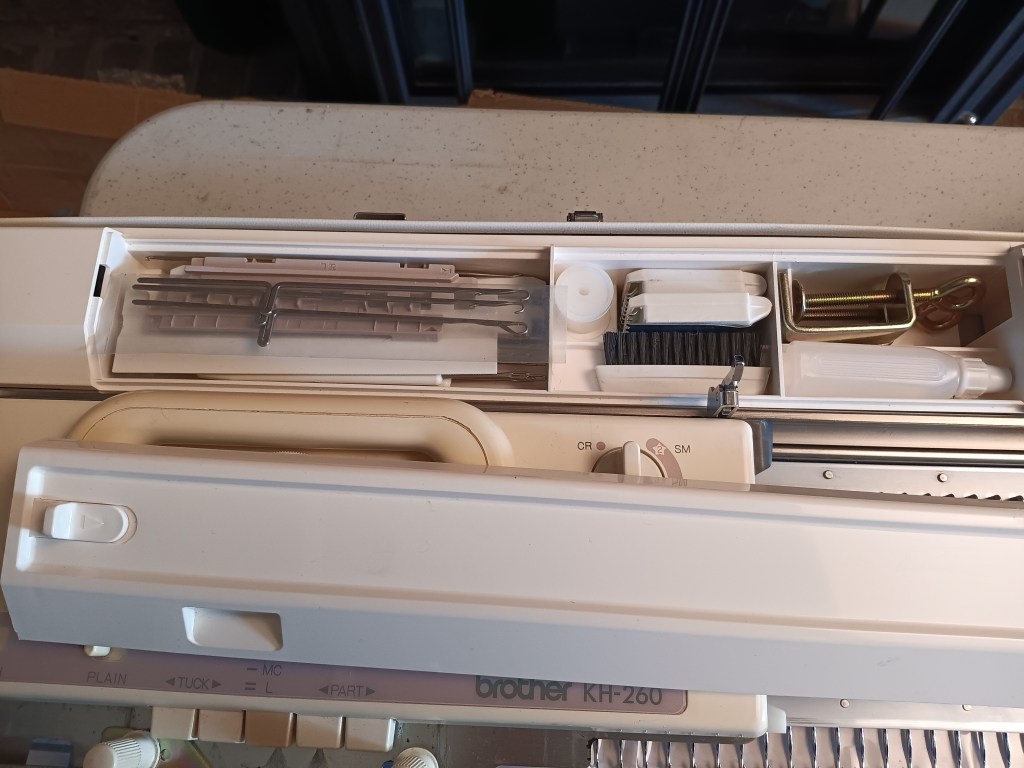
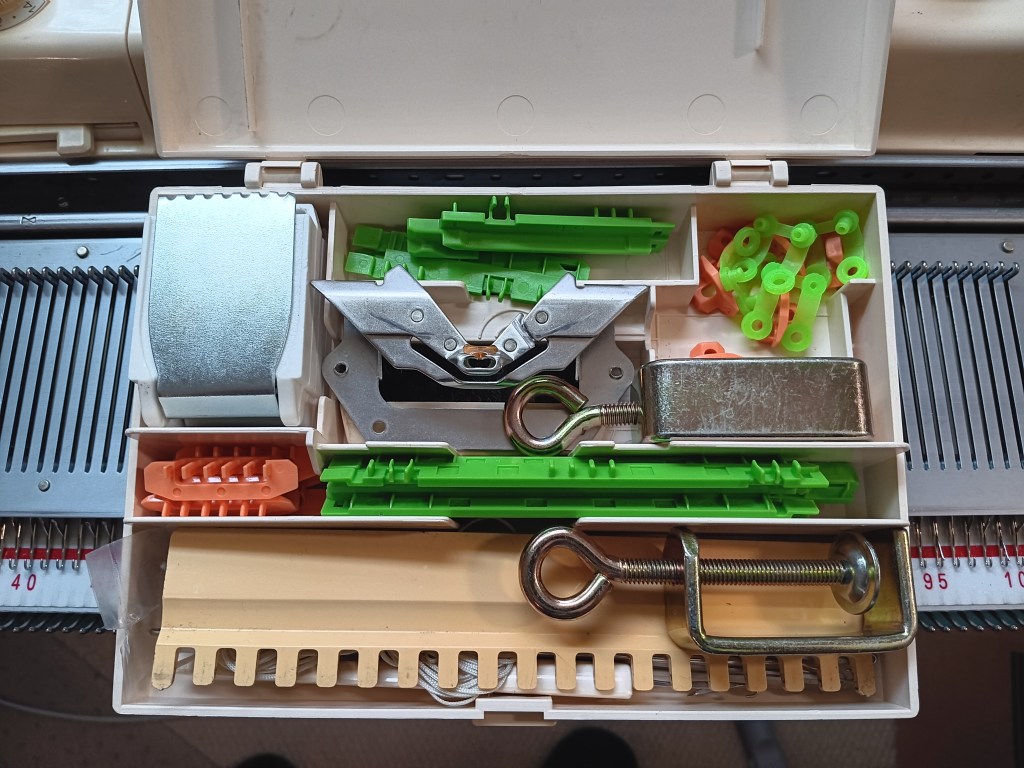
These minor accessories are stored in a special toolbox.

The toolbox sits on the needle bed when the machine is stored away.

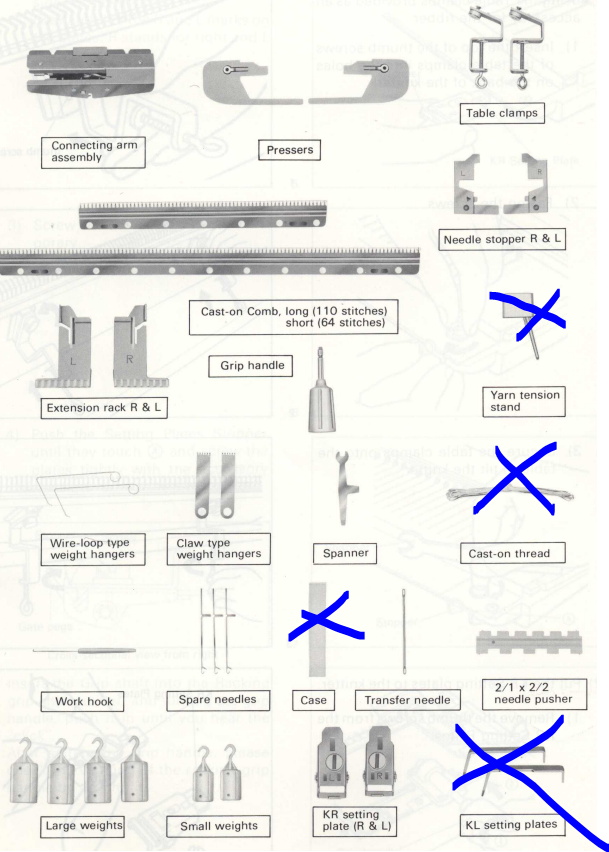
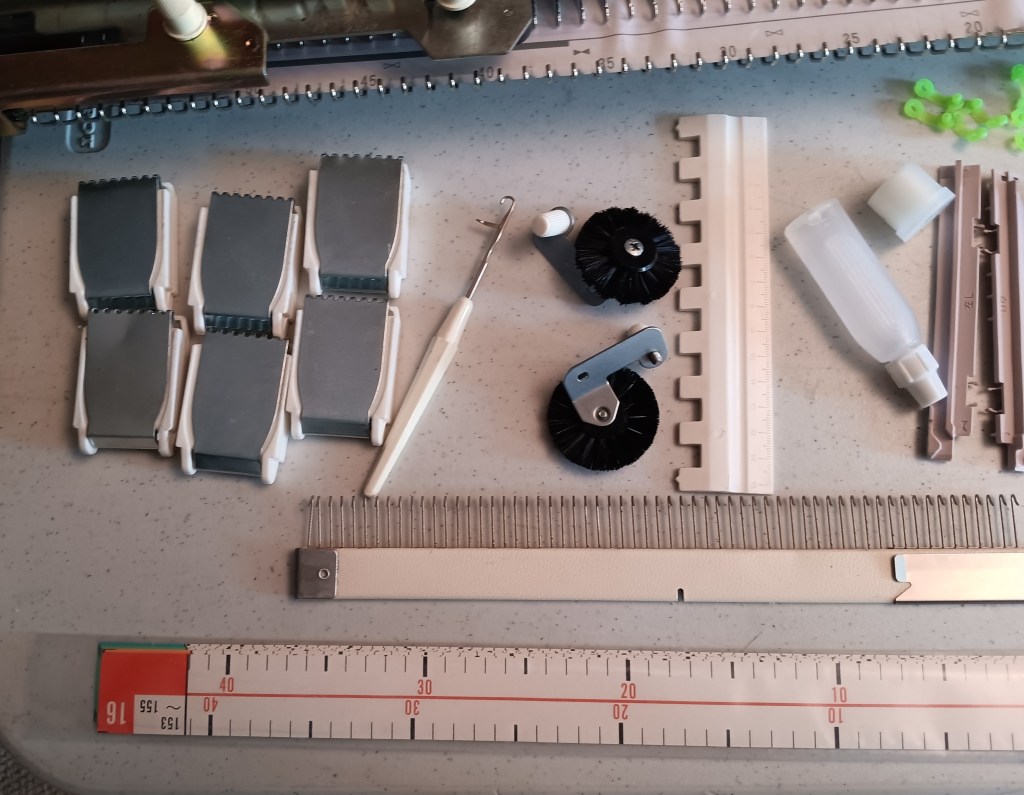
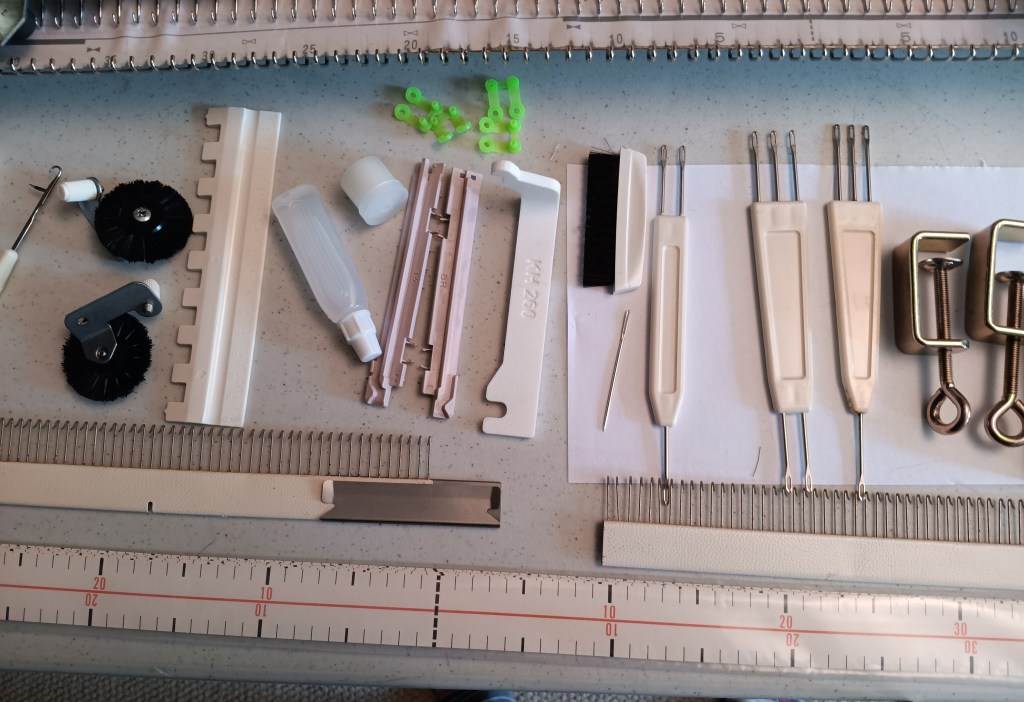
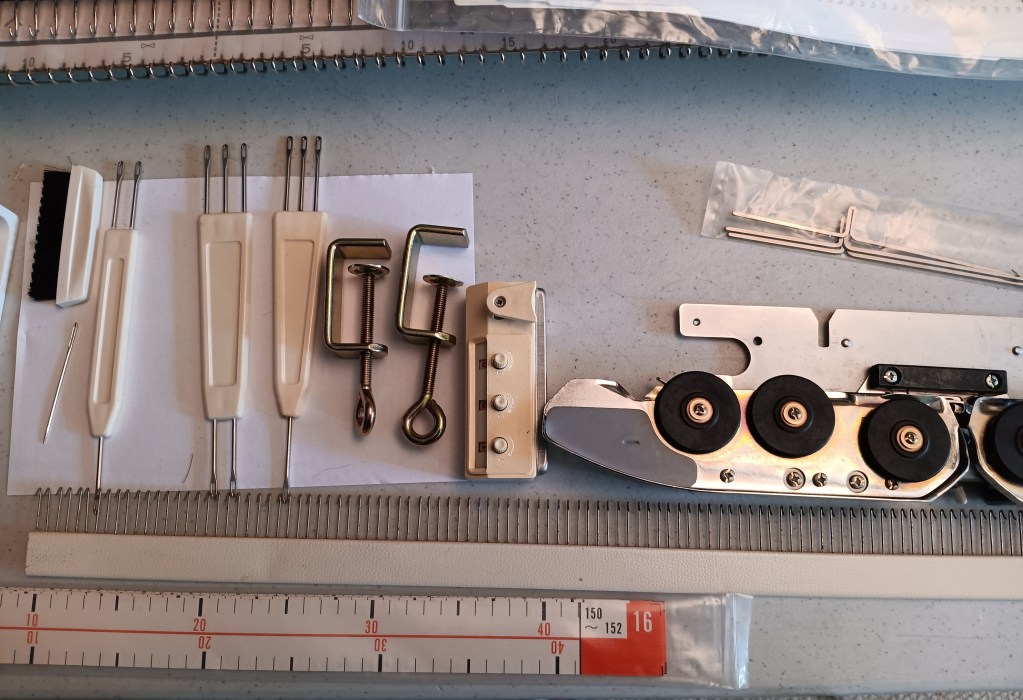
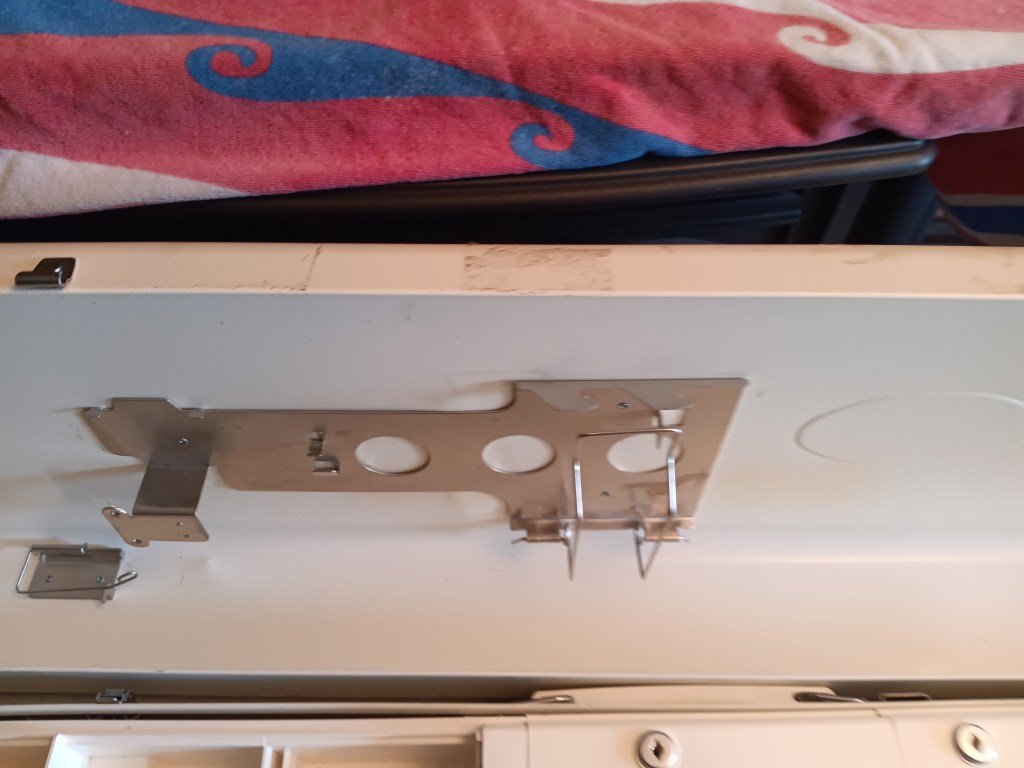
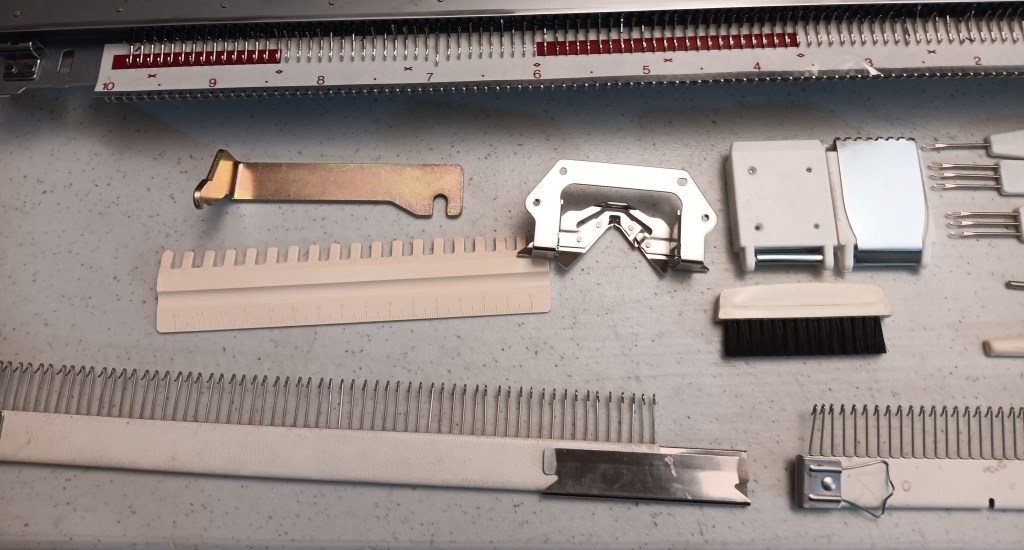
All major accessories are included as well: lace carriage, tension mast, knit leader sheet guides, row counter, cast-on combs, and extension rails. The major accessories fit nicely into the lid. The lace carriage was not tested but it is much simpler than the main carriage, so no problems are anticipated and I checked that all buttons move freely.

For the knit leader, the only missing accessory is a felt pen (it didn’t write – too old, so I also tossed it away). I read in the online forums that washable Crayola markers work as well as whiteboard markers. To remove, machine knitters advise to use a gum eraser. Depending on the pen, rubbing alcohol on a cotton swab works well too.

The binding wire was originally missing but I included a binding wire from a set from the KL116 knit leader.

The wire I included is a bit longer than the wire that came with KH881. So I bent it to fit into the sheet case. It is very easy to unbend it. The purpose of this wire is to temporarily “seam” the knitted panels together.

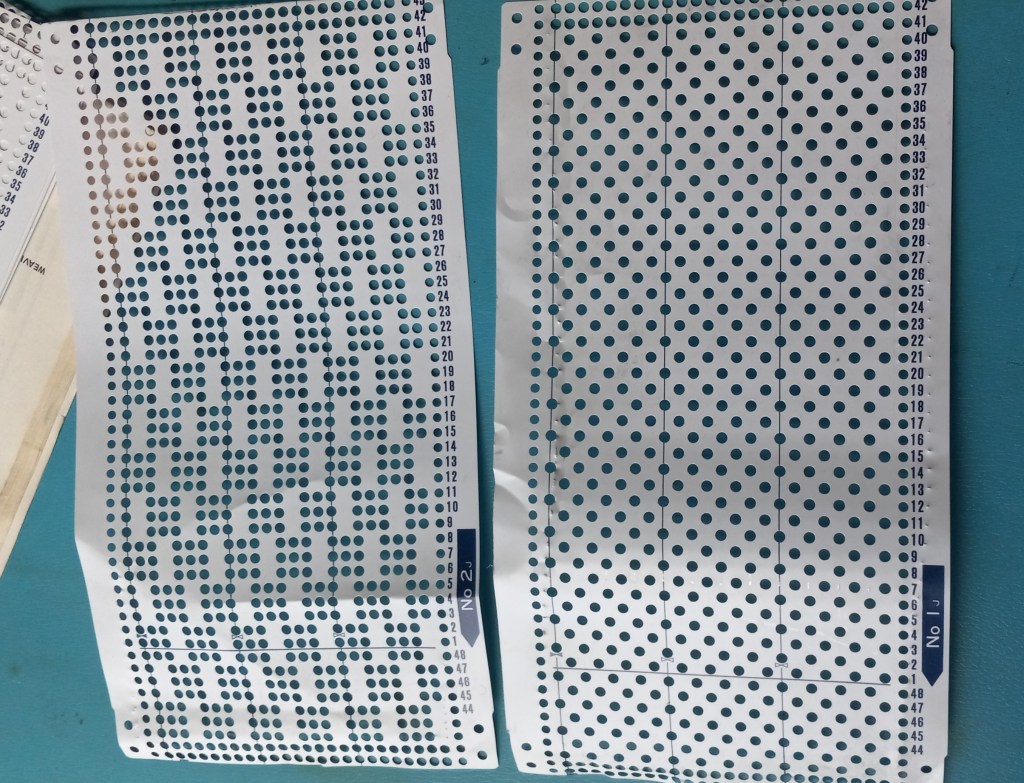
So, the punchcard set is brand new – never used. It contains 20 cards, 6 of which are for lace knitting. The machine will come with the original hard copy of the knit leader manual and the hard copy of the instruction manual as well.

THE WORK DONE ON THIS MACHINE:

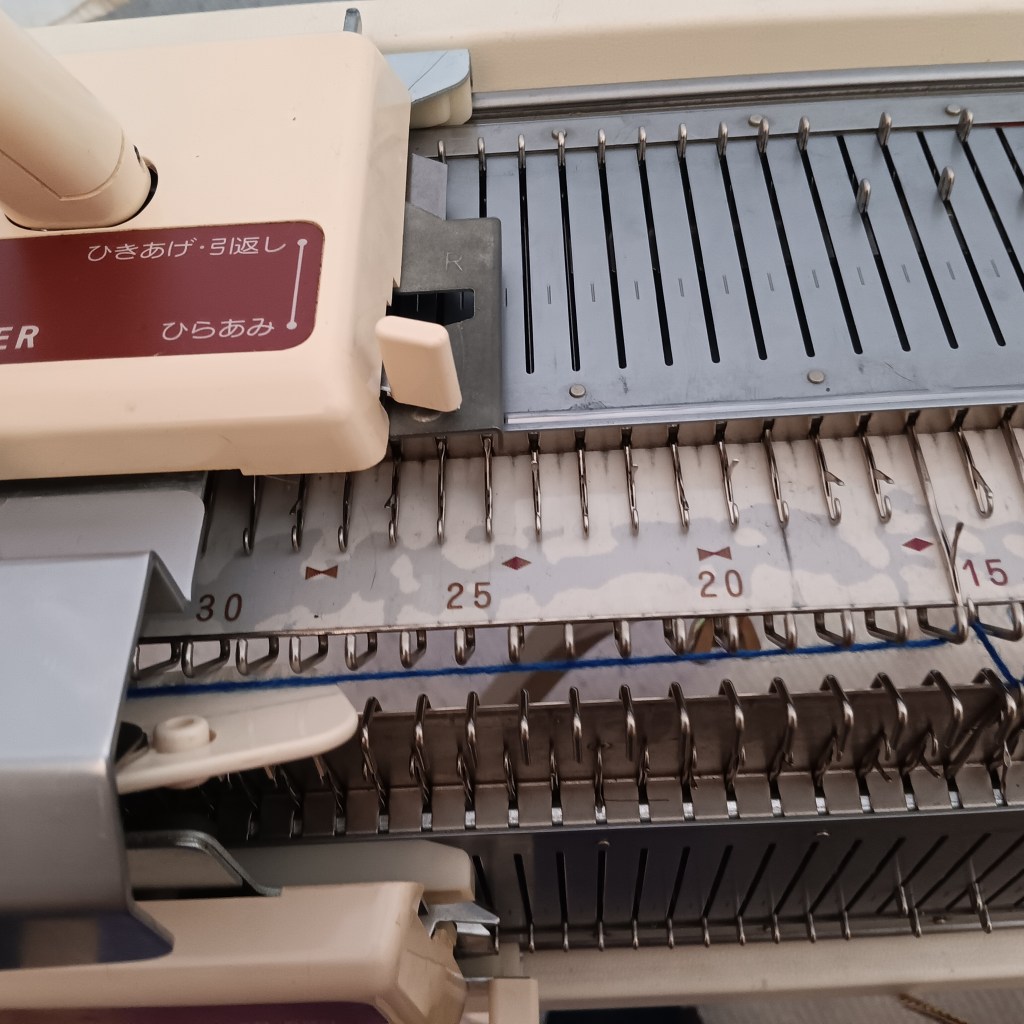
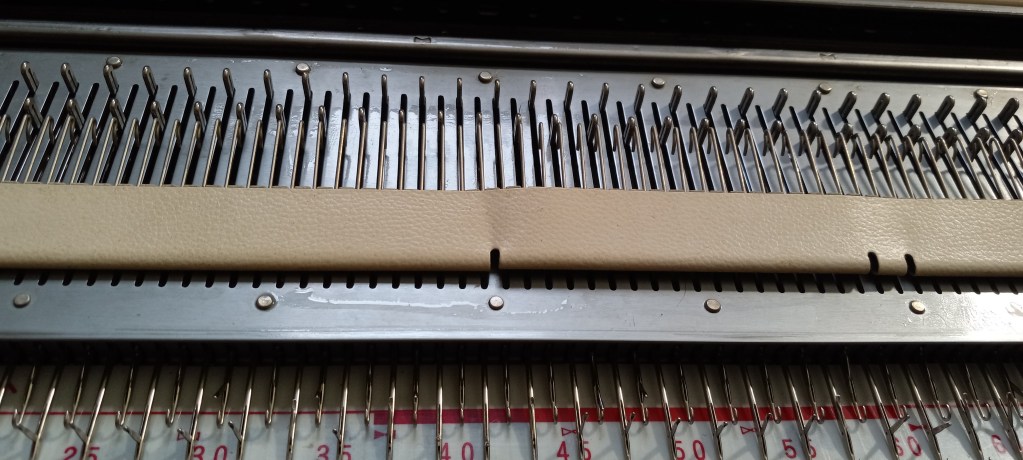
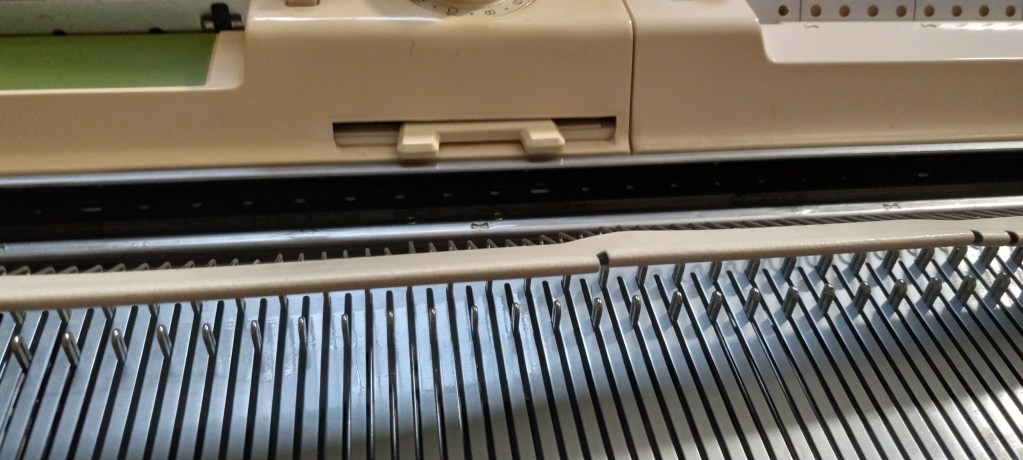
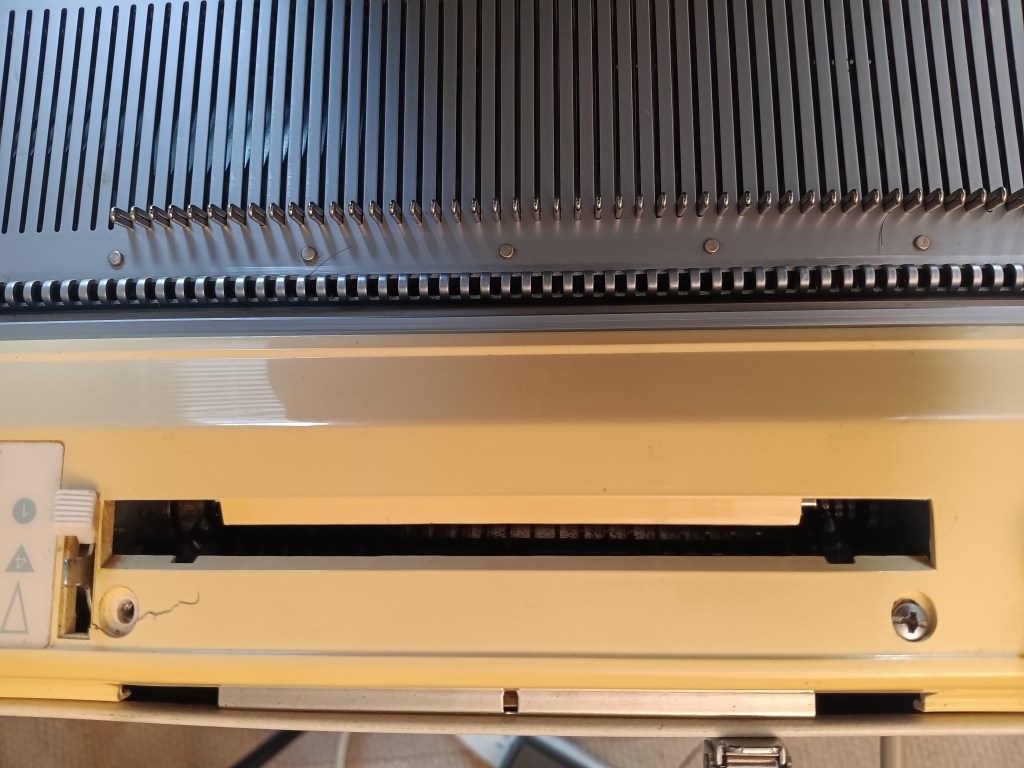
The machine was deeply cleaned, all needles were inspected, and faulty needles were replaced. The sponge it replaced in the retaining bar. This machine was given a lot of TLC, in particular to the punch card reader and the needle replacement mechanism to ensure they function well. I then ran tests on a full bed to again ensure needle selection on the full bed and that all needles form stitches as they are supposed to.

The knit leader was not tested but I checked and all the buttons and levers move freely and advance when triggered.

Now about the tests:

I tried 4 different yarns on this machine: one blend, and three acrylic yarns. The thicknesses varied too. The machine formed stitches wonderfully with all these yarns. I knitted on a full bed using tuck-stitch, slip-stitch, and fair isle. I used card #1 and other cards (with a 24-stitch repeat pattern) too. I like using card#1 (which has a 2-stitch repeat pattern and thus, every other needle is selected) because it immediately shows incorrectly selected needles. Additionally, any errors will be shown on the fabric (especially in Fair Isle).

Watch the full video of these tests.
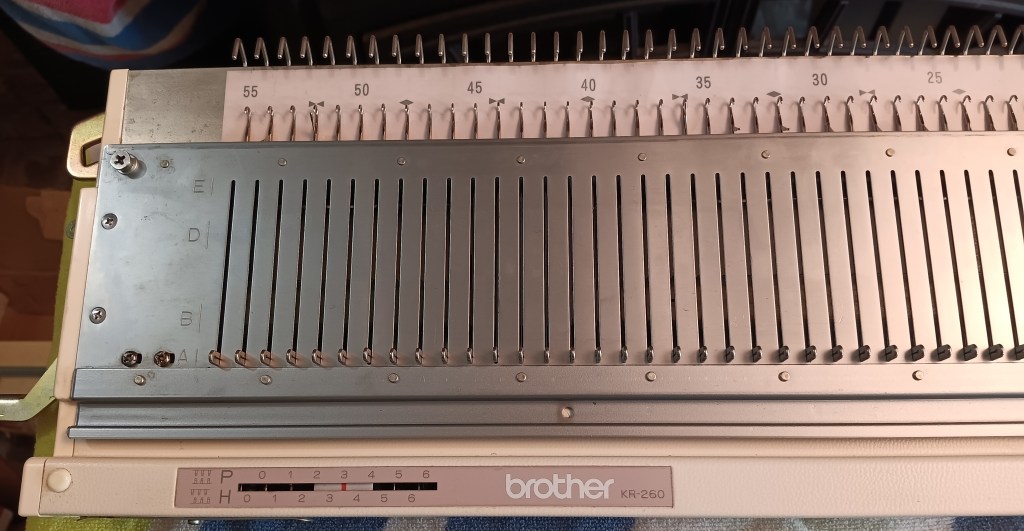
There was only one hick-up during these tests. When I was knitting tuck-stitch with the 2-stitch repeat pattern (using card #1), I did not notice right away that in one place, one needle is selected incorrectly. There was a 3-needle cluster (around left-hand side needle #20) that I did not catch.

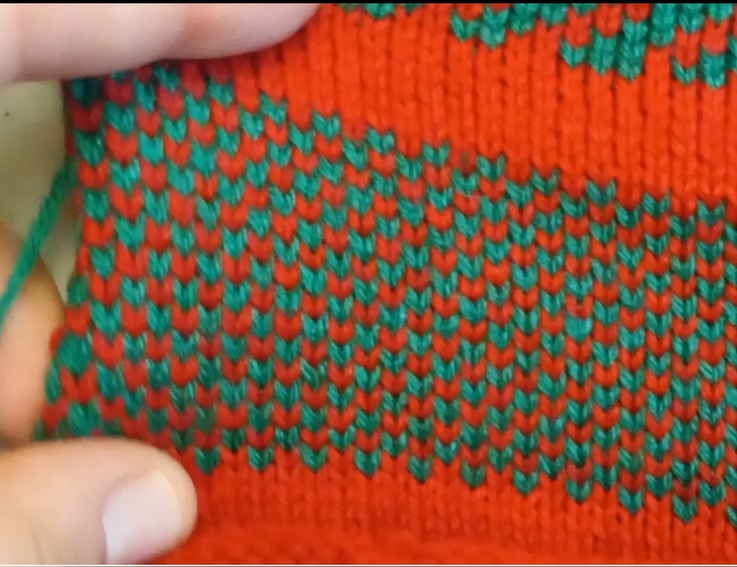
Three-needle cluster due to the faulty (and not correctly selected) needle during the tuck-stitch knitting on the full bed.

… And the knitted fabric did not show this flaw (tuck stitch hides the errors well – see the picture below).

Even though the needle was NOT selected correctly around needle #20, the error did not translate in the pattern: all stitches look the same.

So, when I started knitting fair-isle with the same punchcard and 2-stitch repeat pattern, the same needle was not being selected correctly.

… But this time, I was able to clearly see the incorrectly formed stitches (due to the color contrast of the two yarns).

The reason for mispatterning was a bent needle: the end of the needle that gets pushed by the selection plates was out of place due to this bent. After the faulty needle was replaced, I encountered no more problems with the needle selection.

The top pattern was knitted after the faulty needle was replaced: notice long floats around needle #20 are no longer present.

Below is the image showing how the incorrectly-selected needle manifested itself in the pattern.

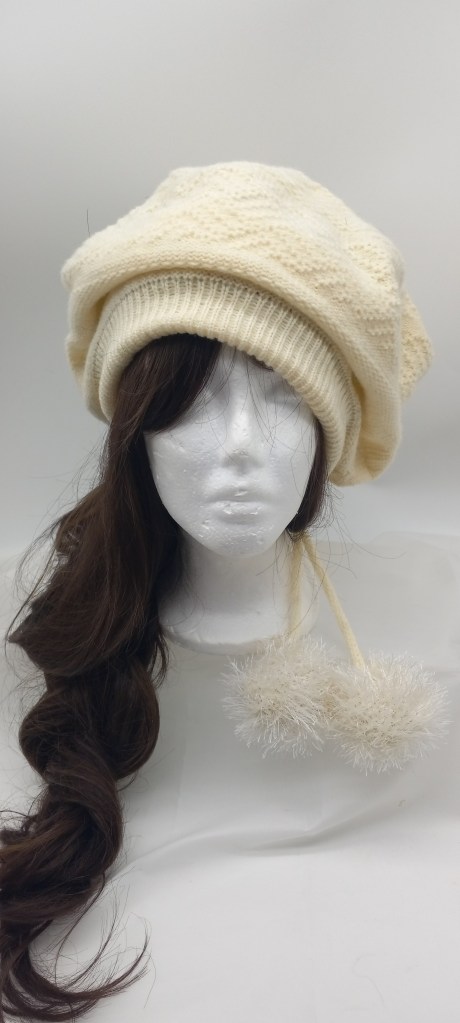
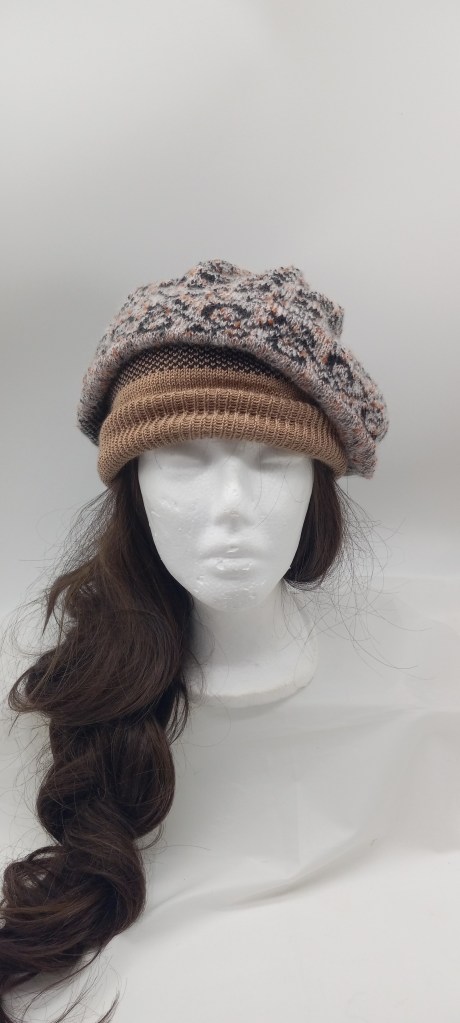
Below are the things I made from the panels I knitted while testing this machine with various yarns.

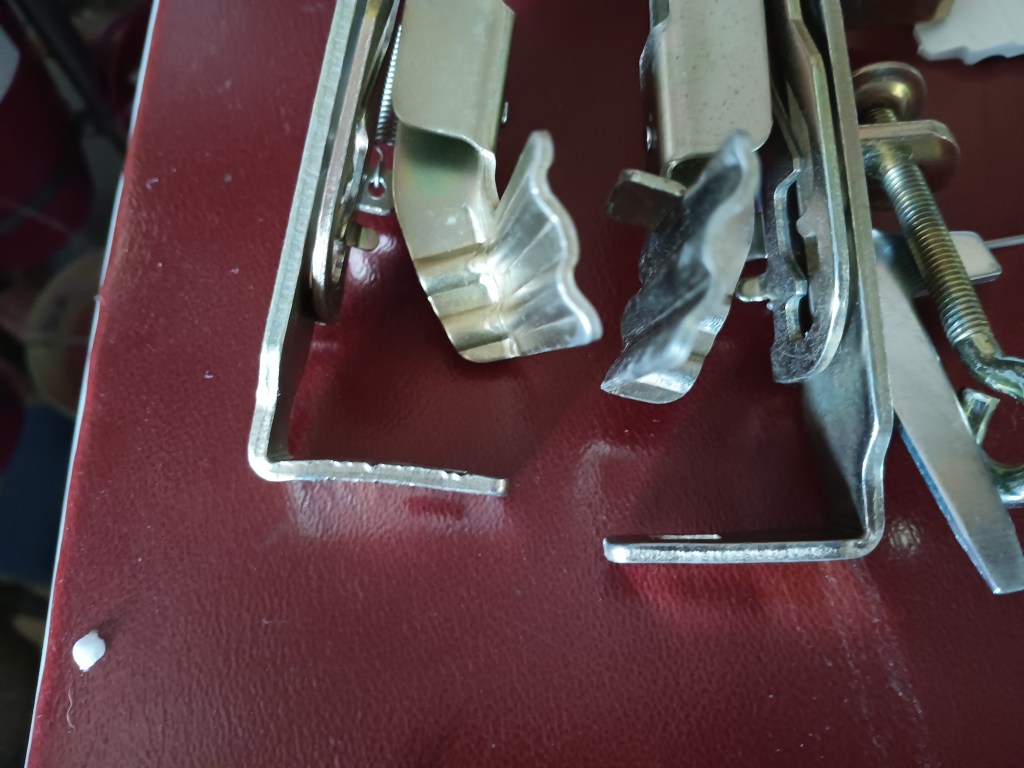
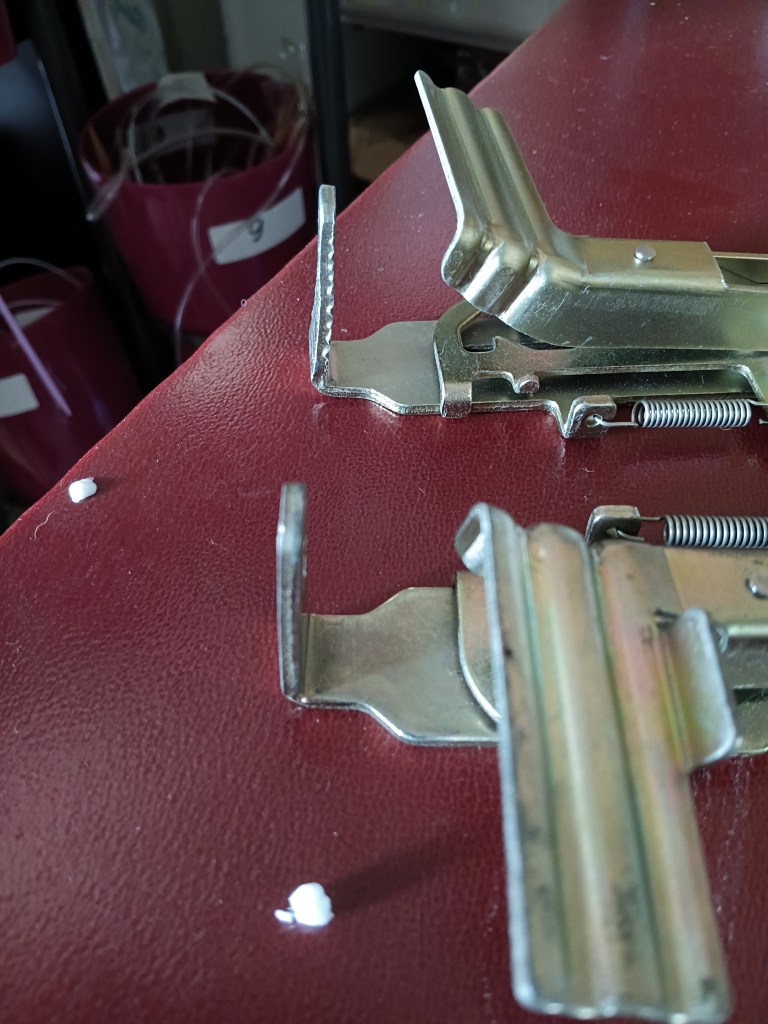
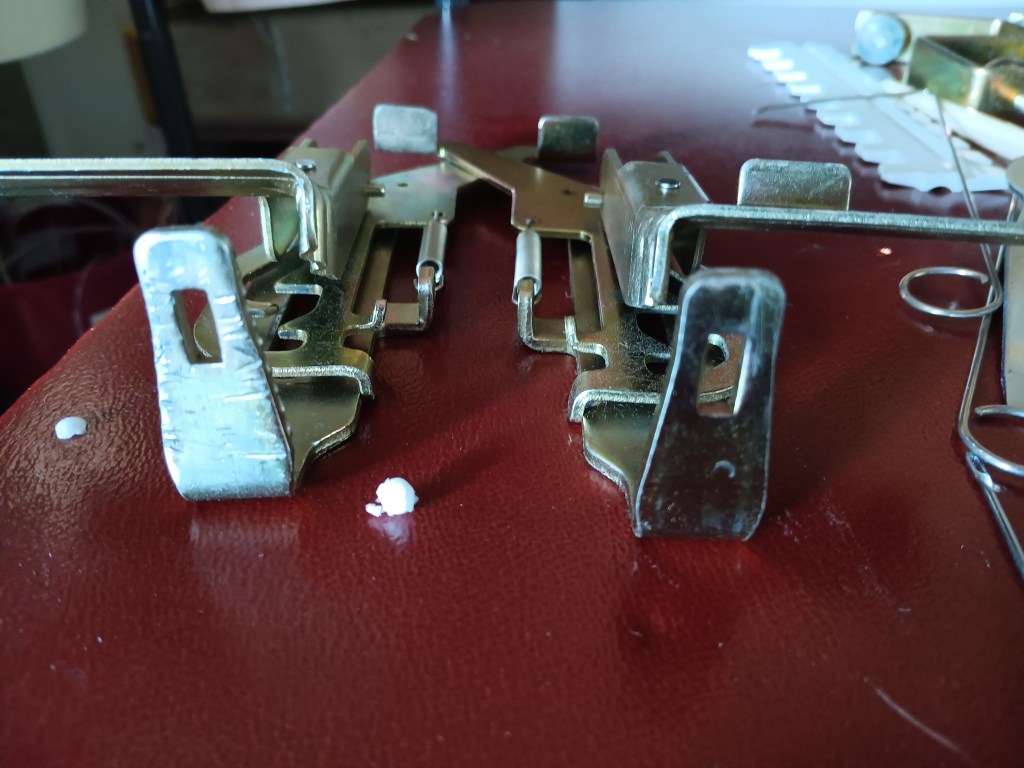
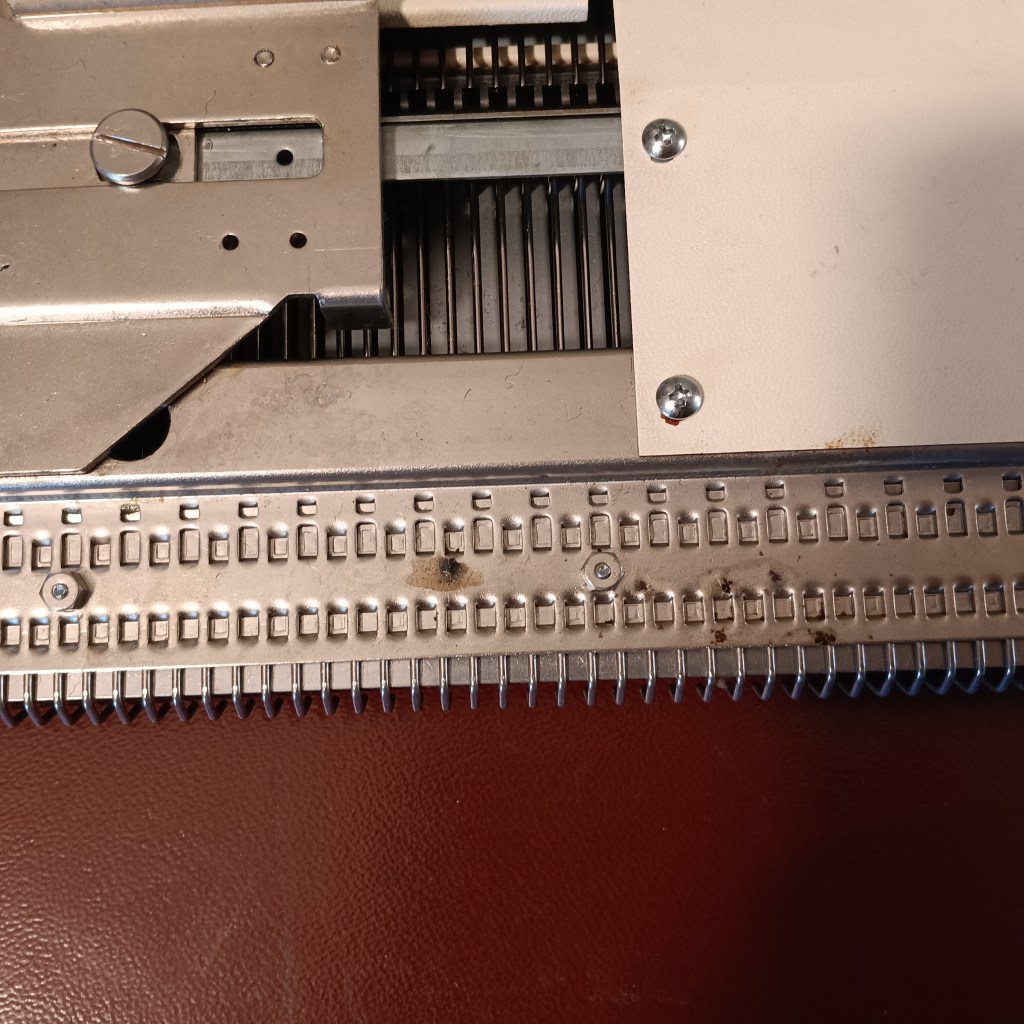
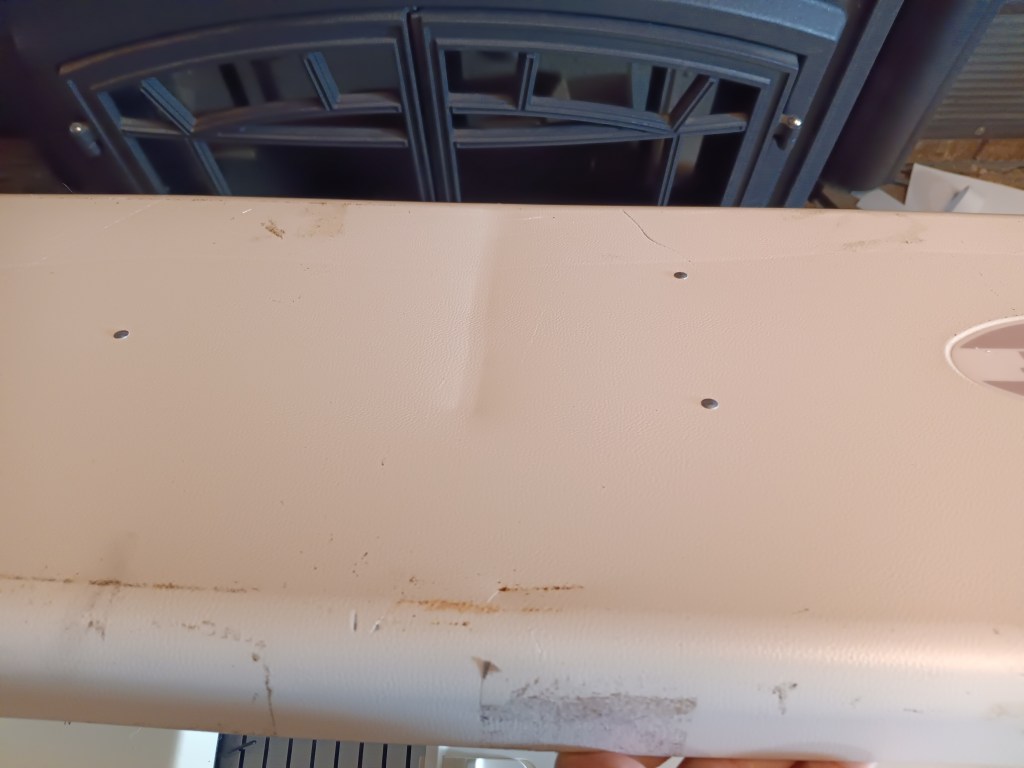
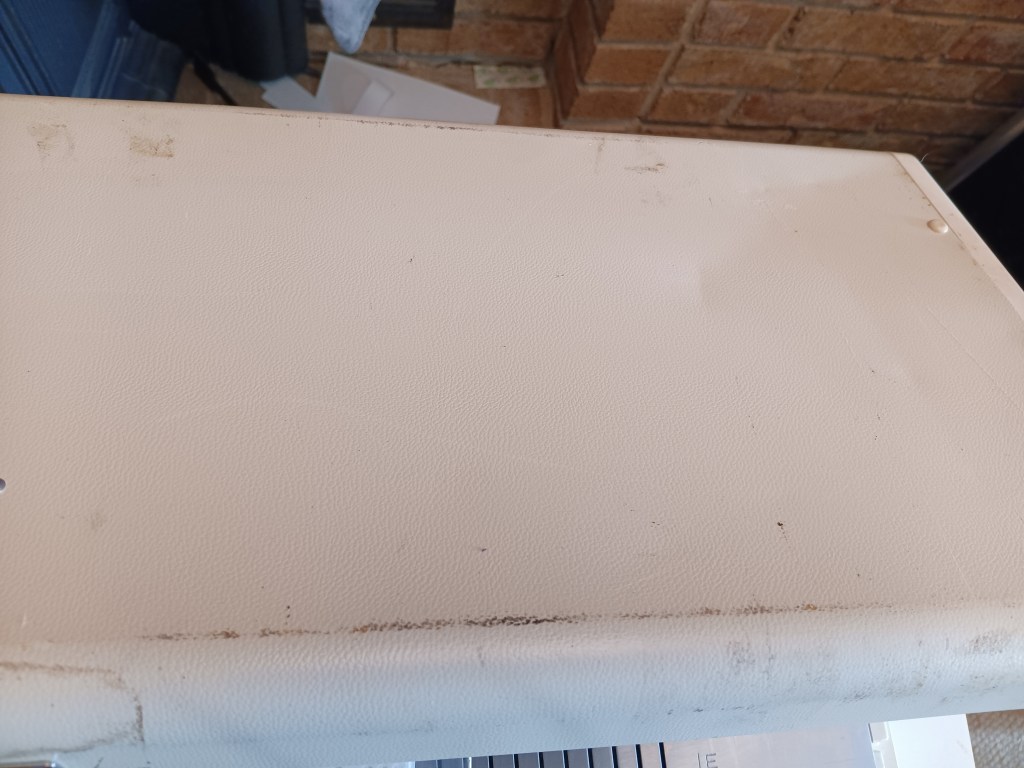
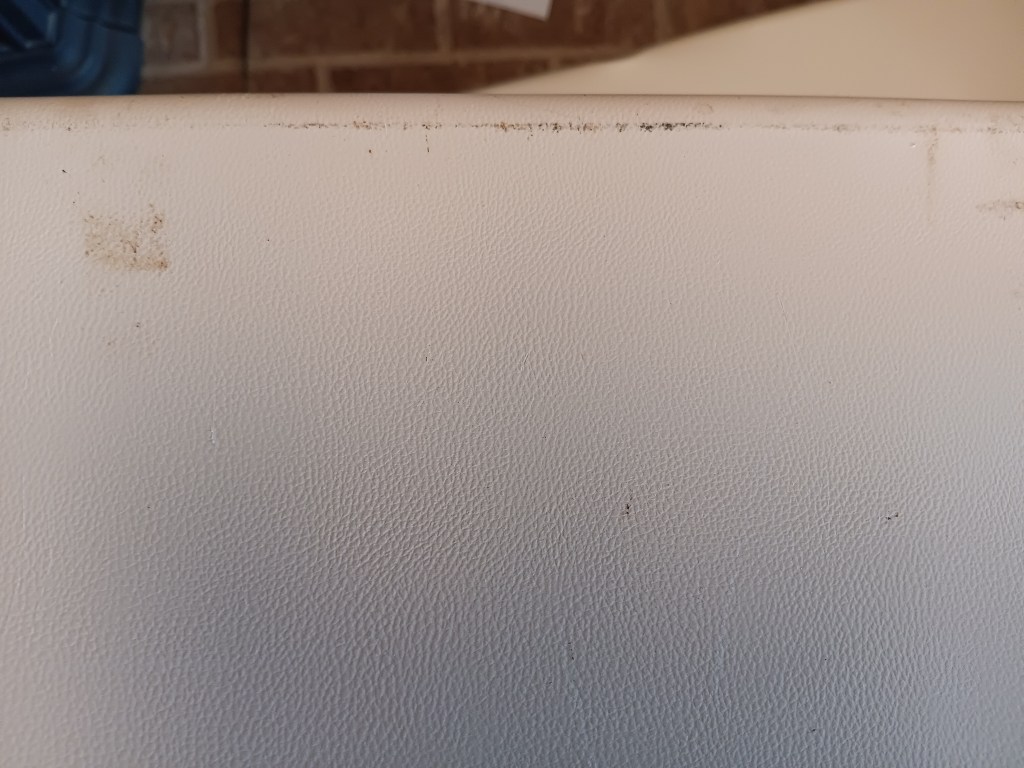
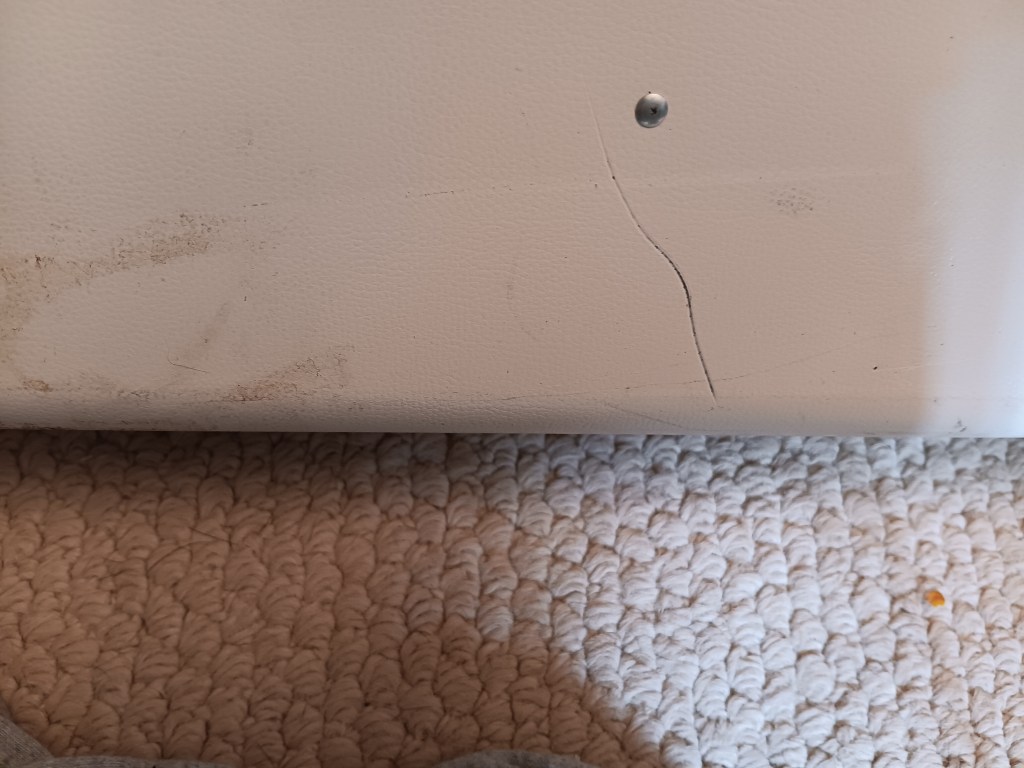
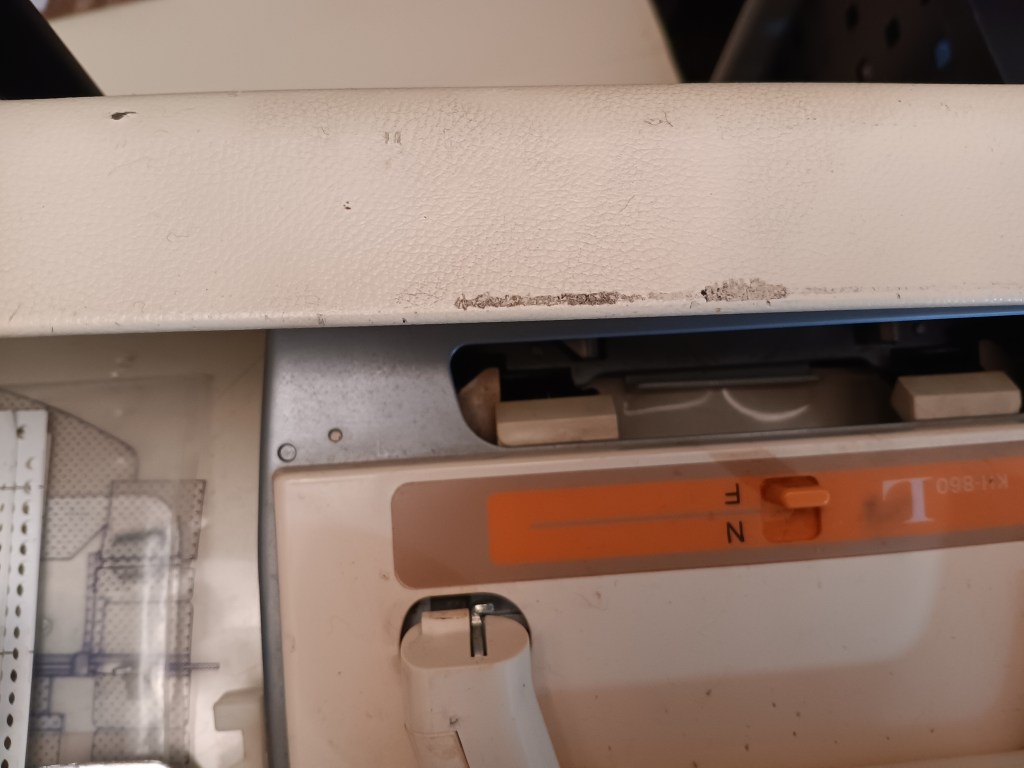
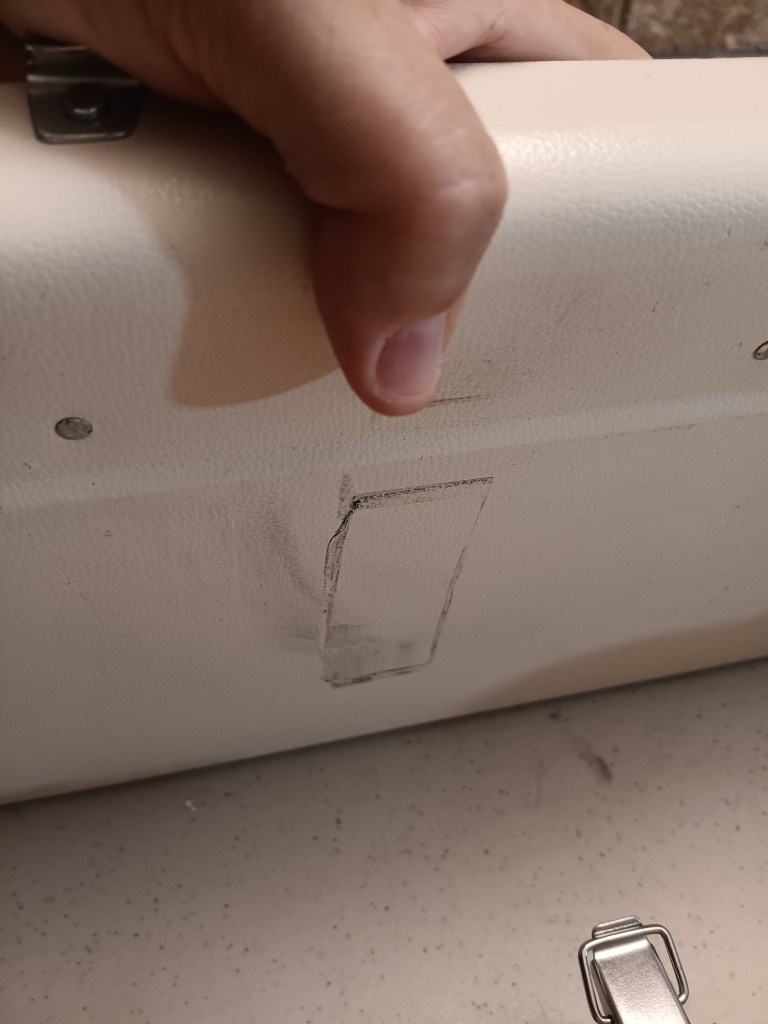
Now about imperfections: they are mostly related to the case (minor stains, scratches, and slight bends). See the pictures below.

Additionally, there were some very minor rust spots on the case, which I covered with a special coating to inhibit the corrosion and to cover it up as well (not shown) These rusty imperfections are not visible.

I hope you will consider this machine for your knitting needs.

Happy Knitting!

Brother KH930 serviced and tested in June 2024

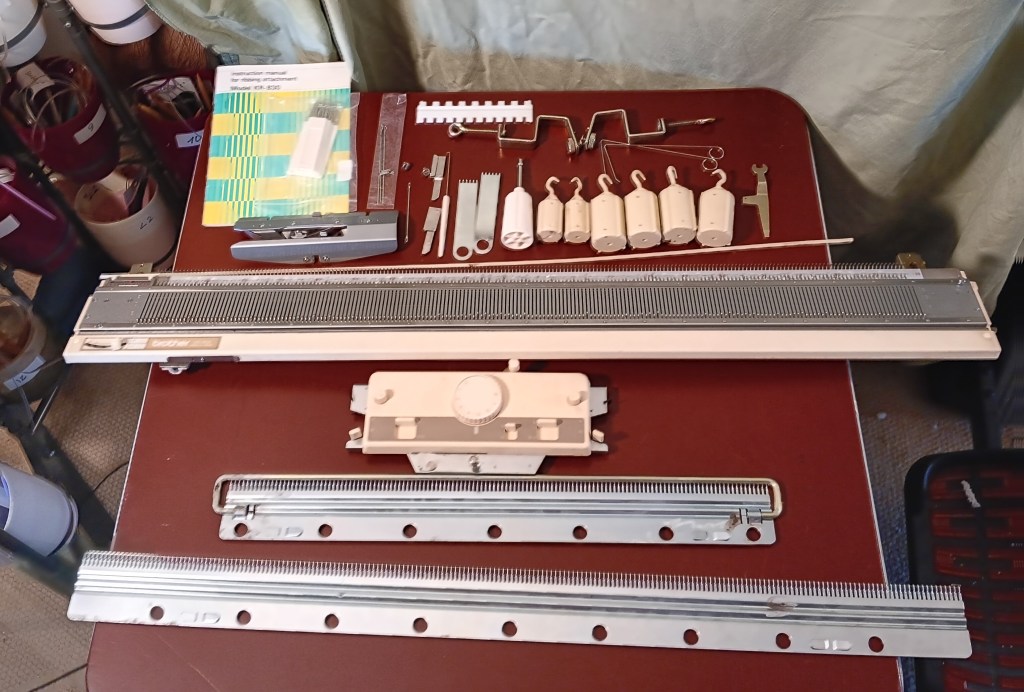
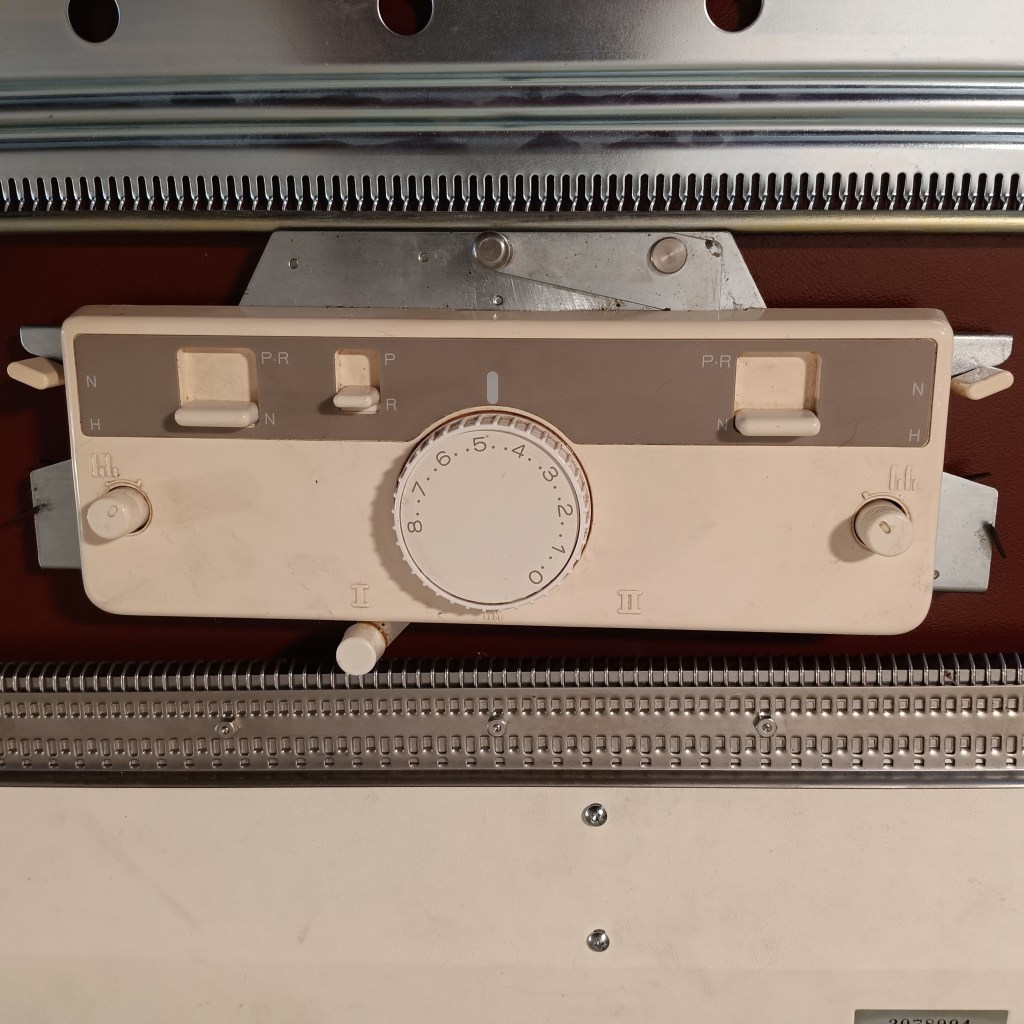
Brother KH930 is a wonderful knitting machine with electronic patterning and needle selection capabilities. Read more about this model in my Knitting Machine Encyclopedia. This post is about the Brother KH930 machine serviced and tested by me in June 2024.

I cleaned the machine. I removed, cleaned, and inspected all needles, and replaced faulty ones. Replaced the sponge in the retaining bar. Assembled a set of accessories (read more on that below).

I then tested the machine on a full bed. I knitted slip- (part), tuck- and fair isle patterns on all 200 needles (to ensure all needles form correct stitches). I used built-in patterns in the machine’s memory. See the video of these tests. All stitches formed wonderfully. The carriage moved very freely.
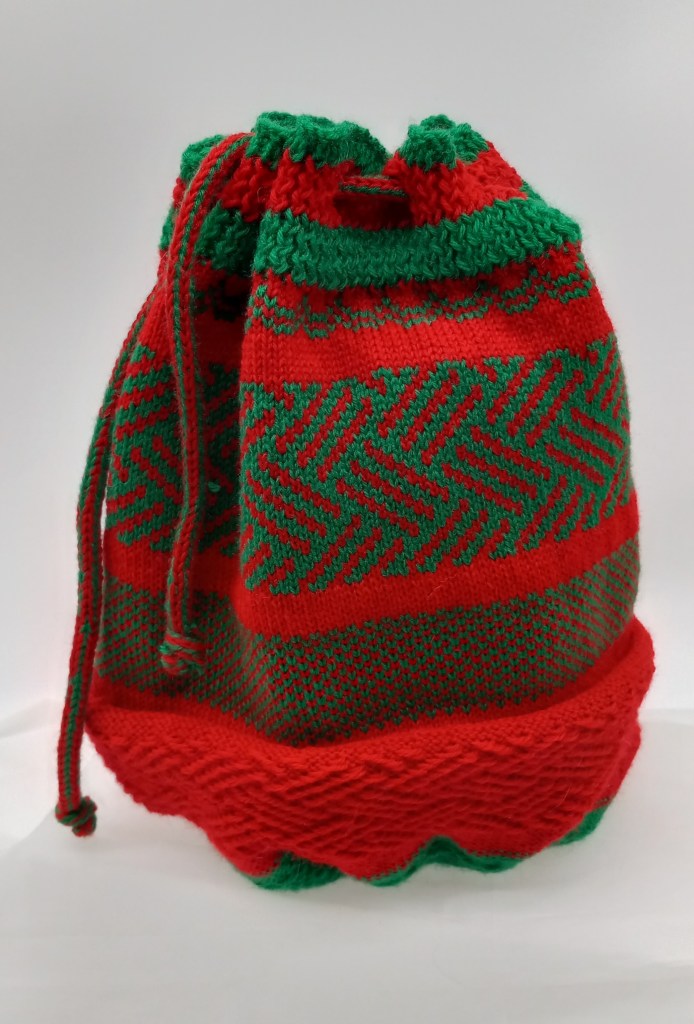
Lace carriage was not tested but all buttons move freely.

The machine came without most accessories so I put together the set from my stash. So a lot of minor accessories are brand new. All major accessories are included. Some minor accessories are missing.

The missing tools are:

  • unravel cord (any smooth and strong yarn will do; I often use thin acrylic yarn).
  • wax for the yarn (but the tension mast came with some wax already attached to it. I’ll pass it on on the mast).
  • oil (buy gun oil on Amazon instead)
  • tapestry needle (any needle will work)
  • latch opening tool (you can substitute it easily with a thin piece of plastic – cut a credit card/grocery rewards card in two triangles and use it instead).
  • hard copy of the manual (but can be downloaded for free)
  • stitch book (a pdf copy is available for free)
  • design paper (it is simply a large graph paper – any graph paper will work if you want to draw your own pattern).

None of the missing minor accessories are critical. The machine can fully function and be used without them.

A brand new set of needle transfer tools and selection ruler as well as brand new claw weights are included. The machine also came without a lid. The case lid that will come with this machine is from a KnitKing CompuKnit III model (which is the same machine). So, please, do not be confused about the name when you see it on the lid.

The other minor imperfections of the machine are:

The tension mast has very minor rust spots.
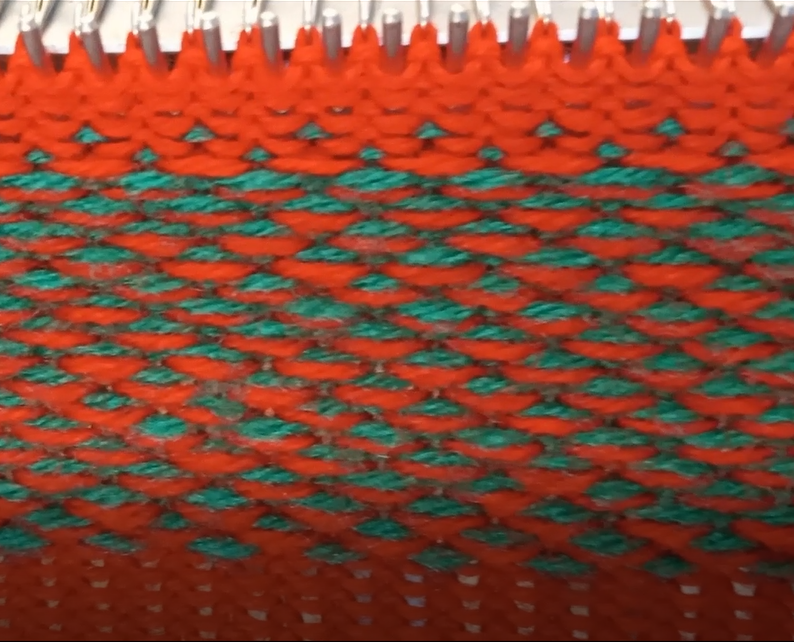
There is very minor rust on the extension rails.
The case has some minor bumps, scratches, stains and one medium-size dent. The case itself has also lots of minor scratches and some stains (too many to show).
The handle on the main carriage has a hole – probably the machine was attached to the motor by the previous owner. The tension dial has an indent between numbers 5 and 6.

None of these minor flaws affected the working of the machine. Do not wait – purchase this hard-working beauty before it is gone!

Brother KR830 refurbished in May 2024

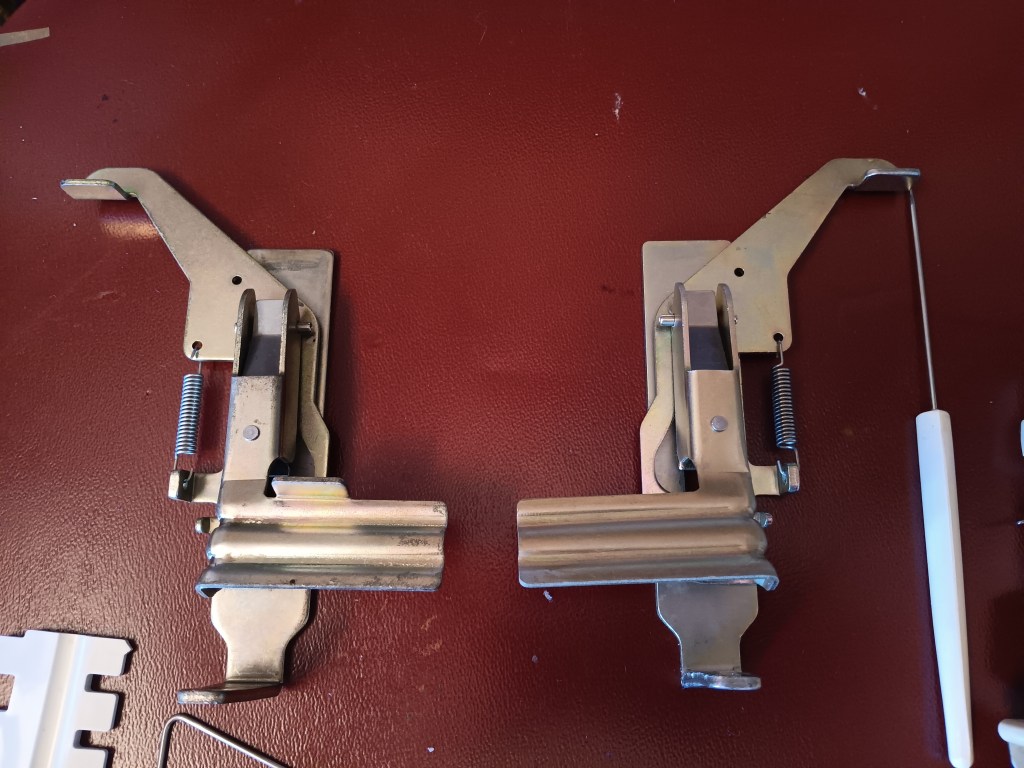
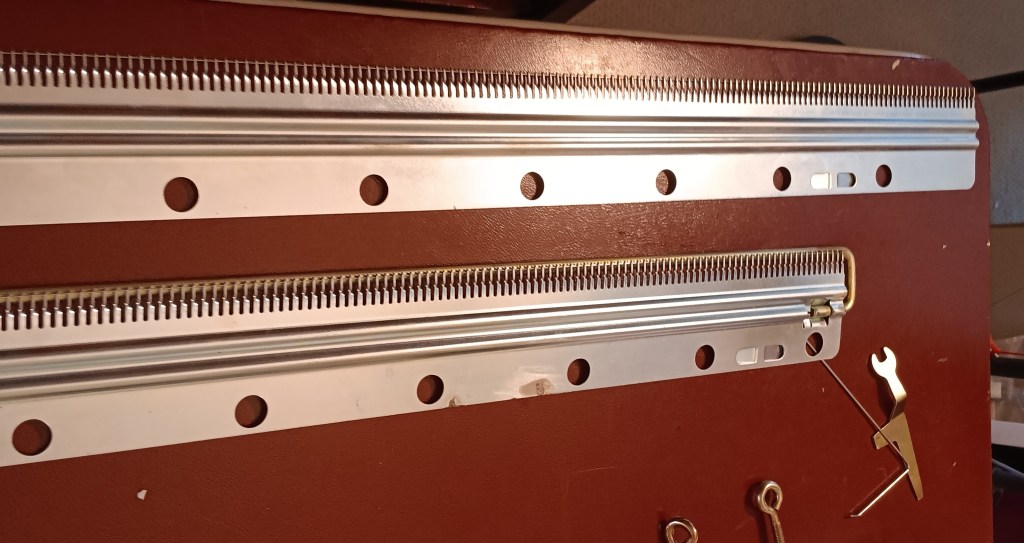
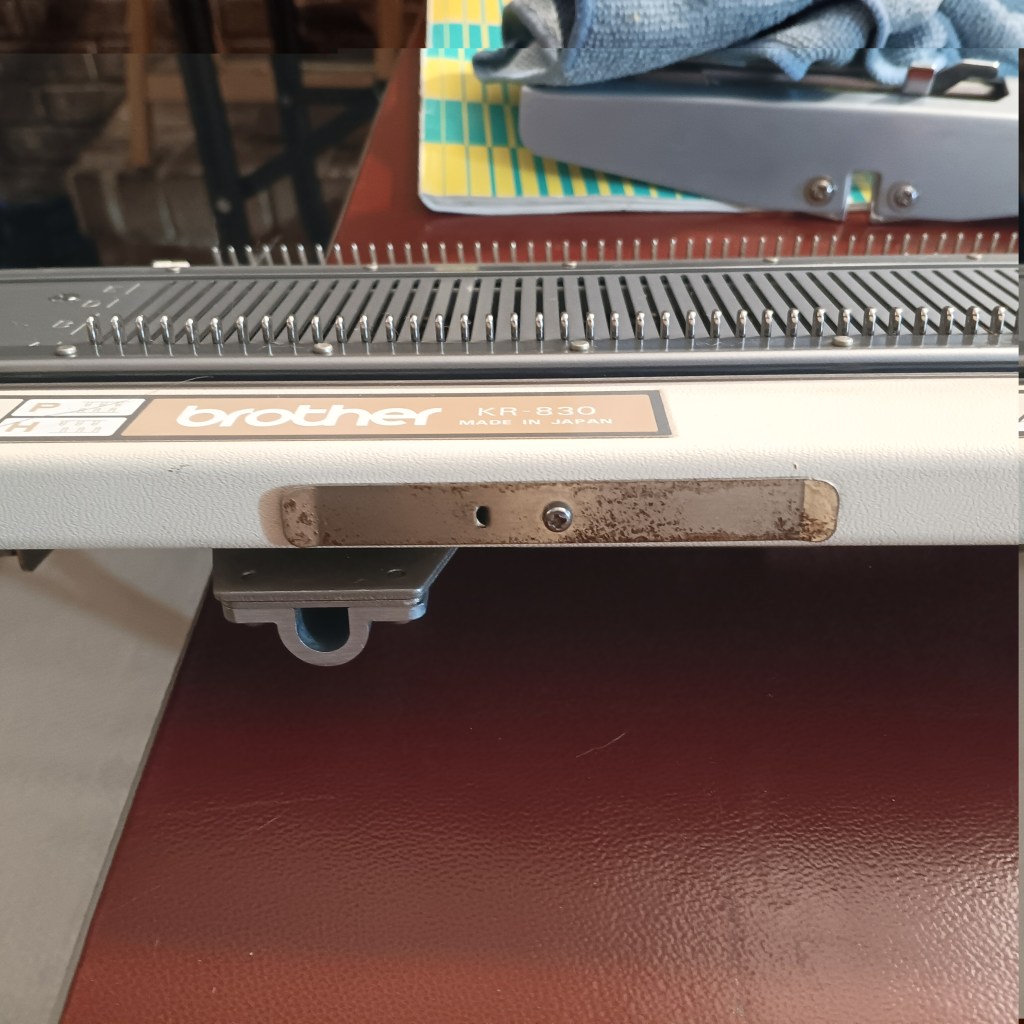
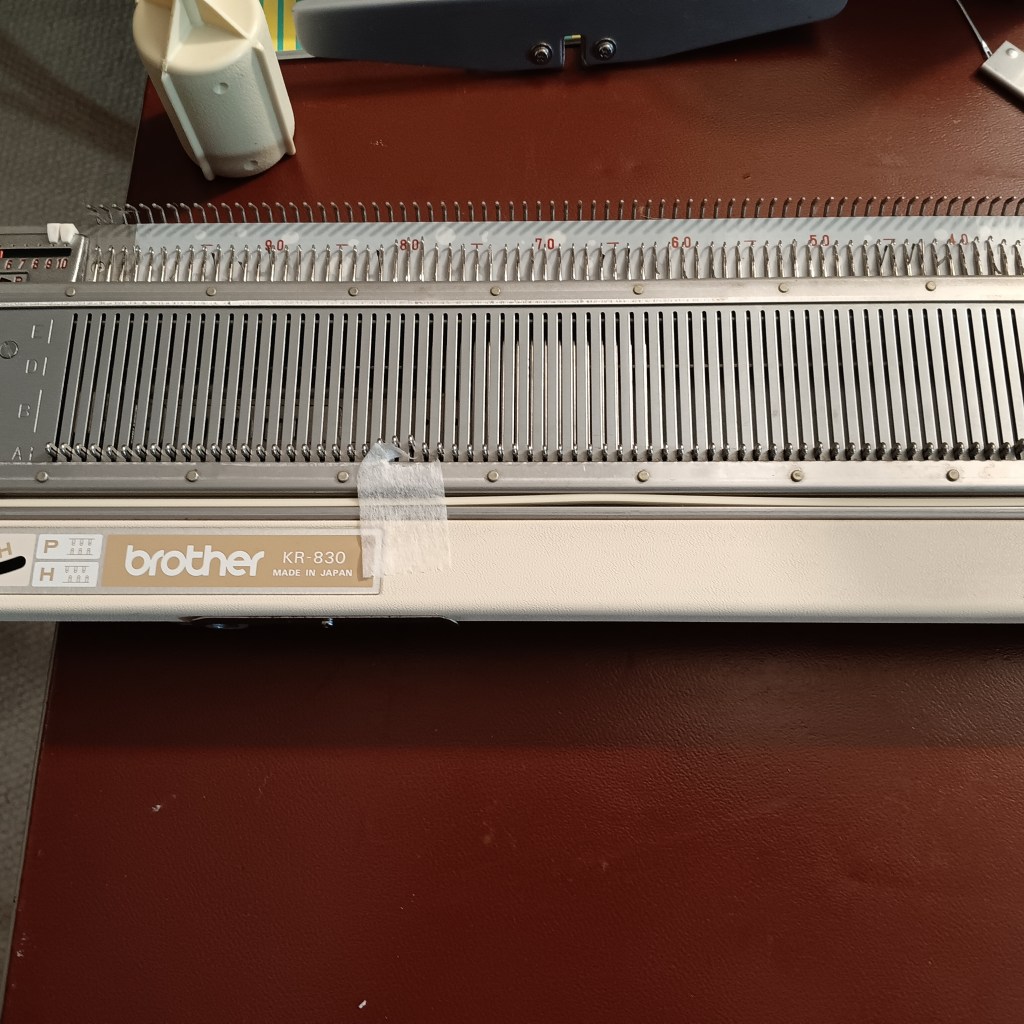
Brother KR830 ribbing attachment is typically used with Brother Knitting machines, with model numbers KH8XX and KH9xx. To learn more about the pros and cons of the Brother KR830 ribber, refer to my Knitting Machine Encyclopedia.

This article is dedicated to a specific ribbing attachment, serviced and tested in May 2024 for Mercedes.

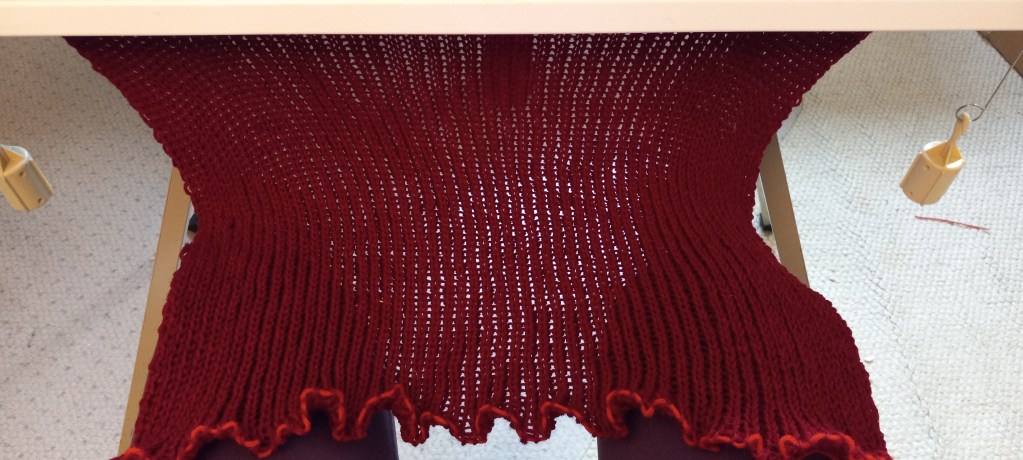
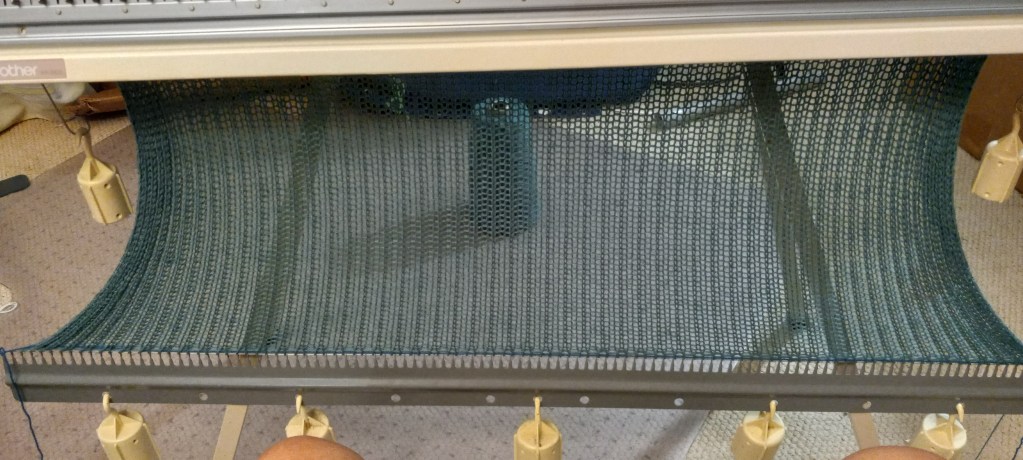
The machine was cleaned, all needles were inspected and then tested by knitting a 1×1 ribbing on the full bed. I did it in two different needle configurations to ensure I tested all needles. I also used two different yarns. Watch a video of all my tests.

I used my own Brother machine to test the ribber and to set up an optimum distance from the main bed.

You will need to do it on your own machine. I like this video, which explains really well how to do it.

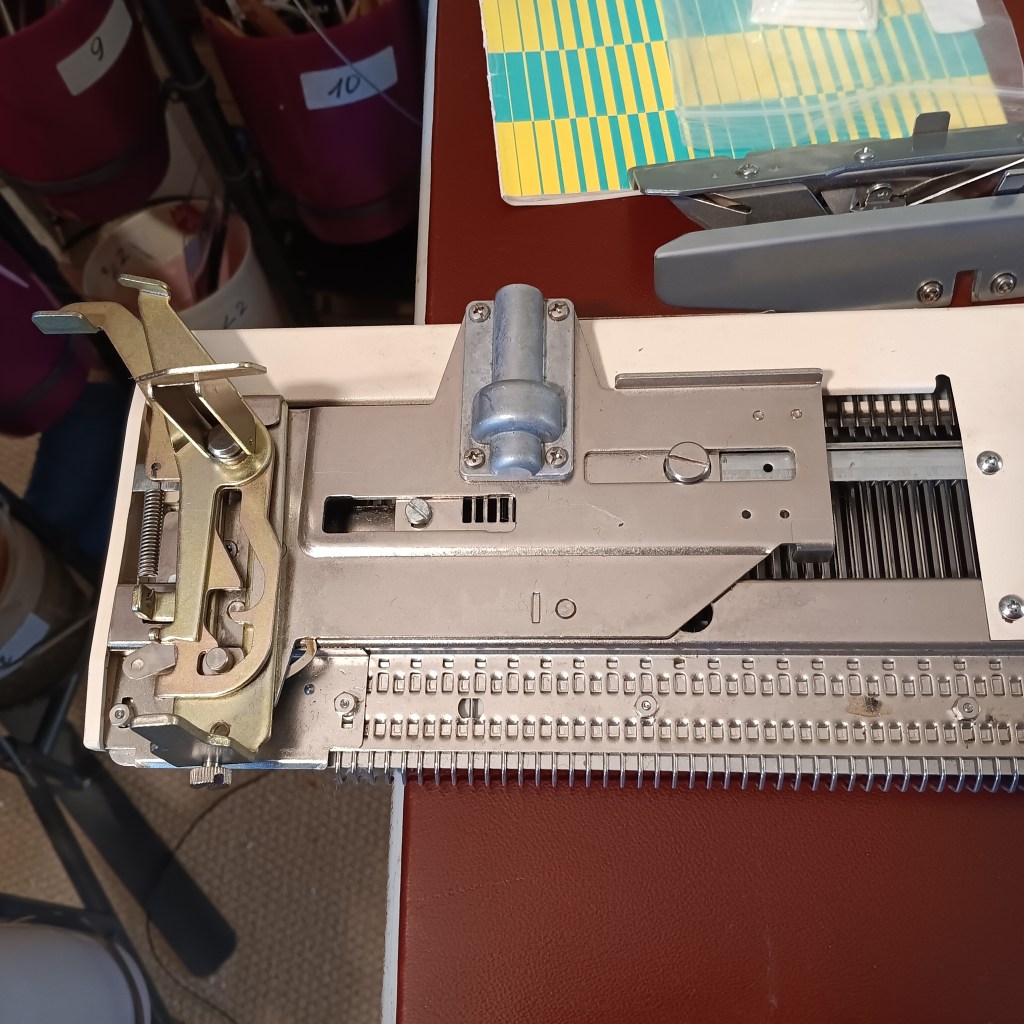
The levers, brackets, knobs and buttons on the ribber and on the carriage move really well.

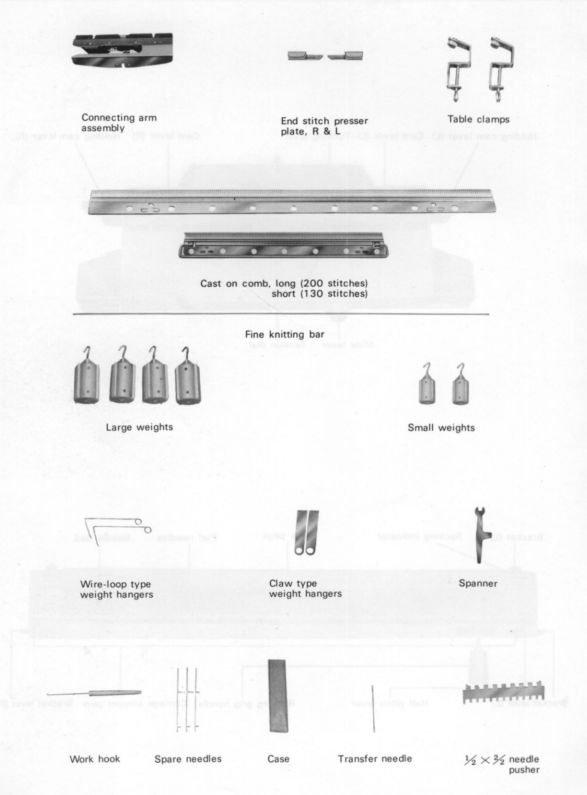
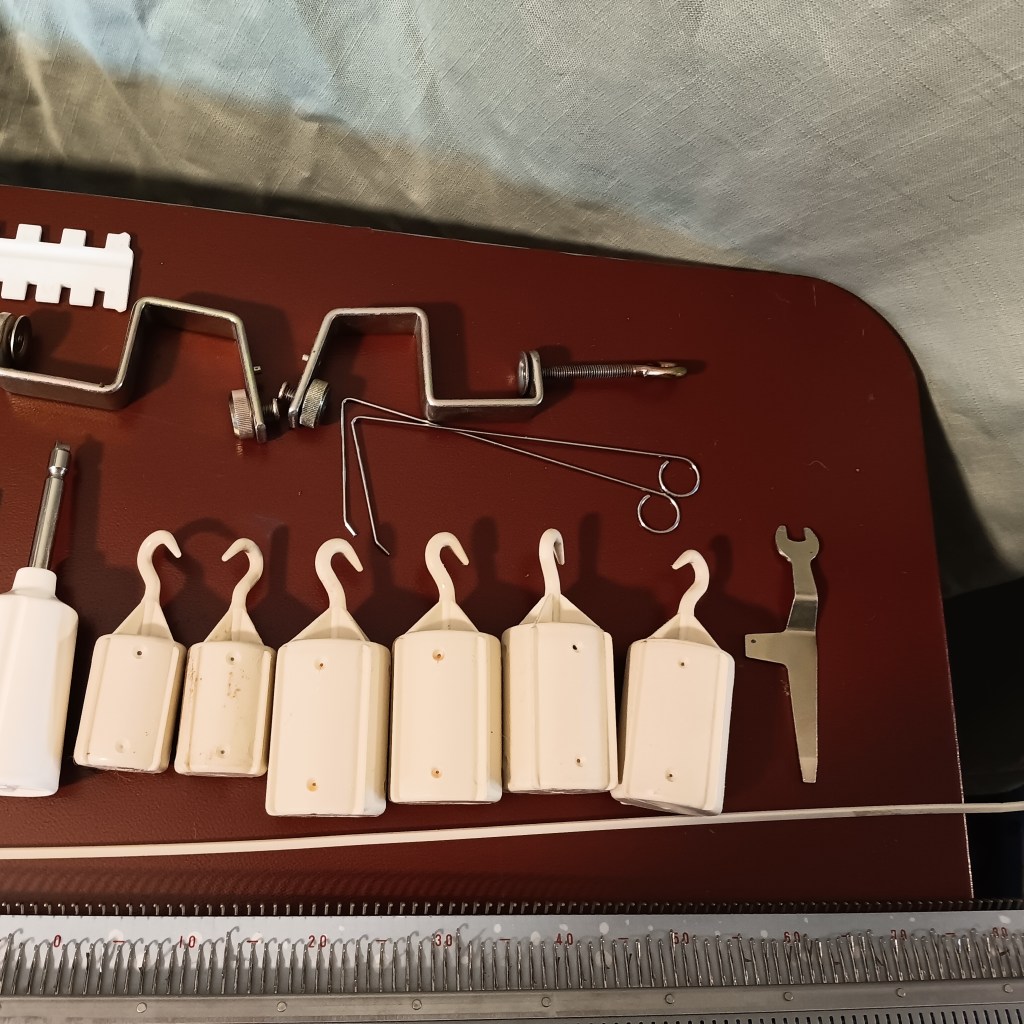
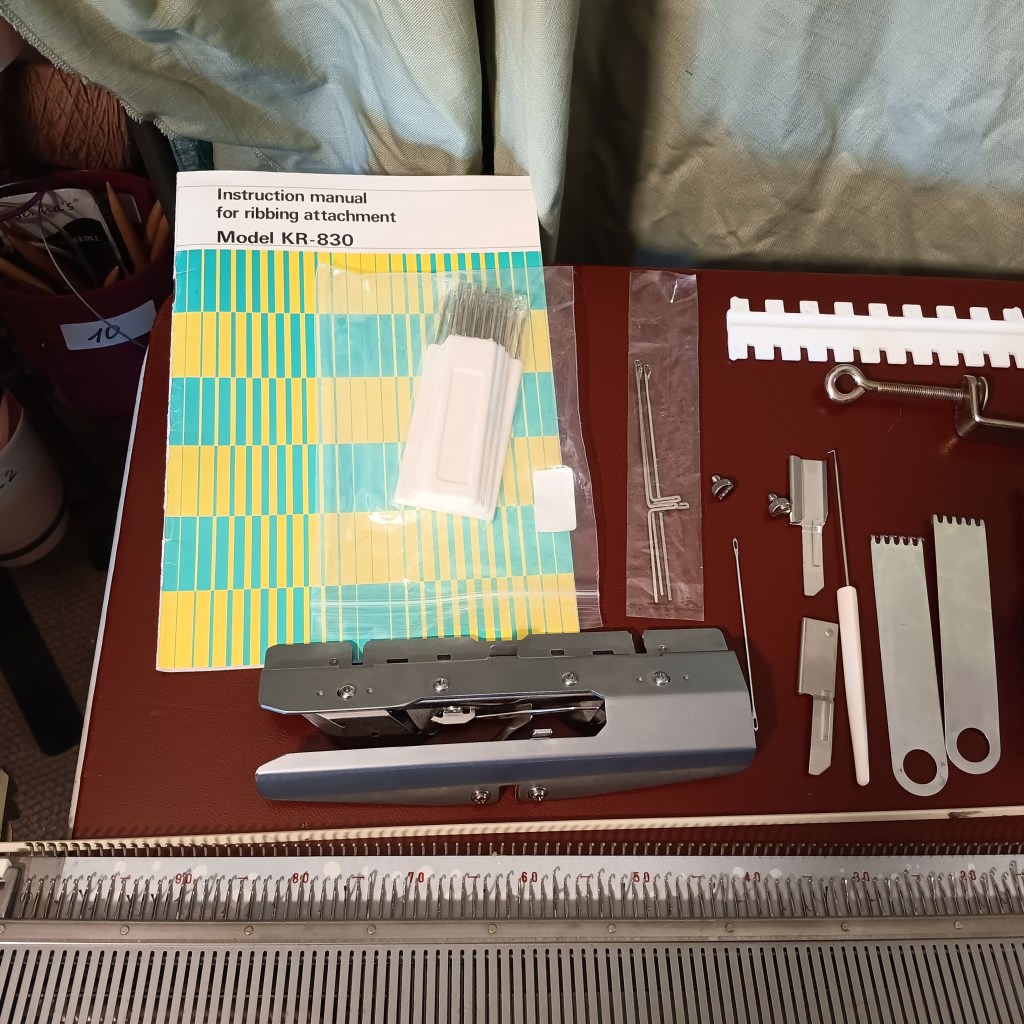
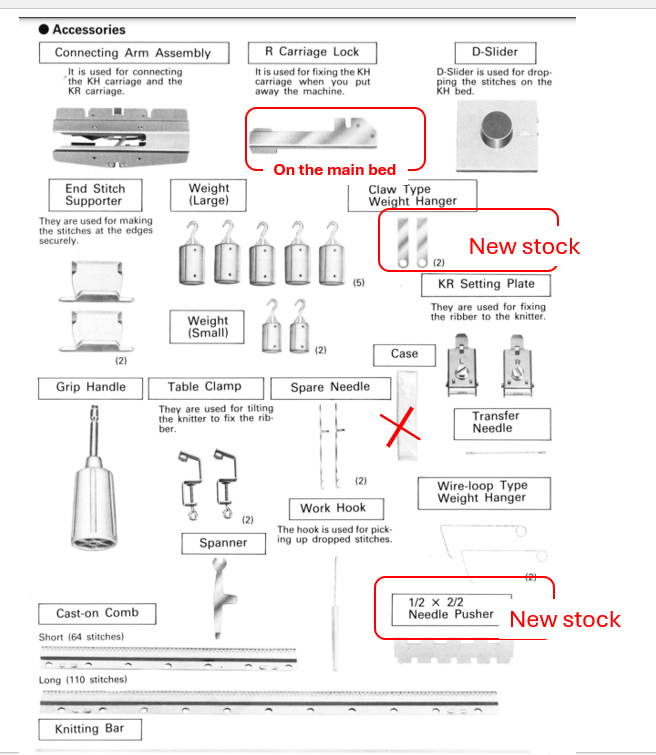
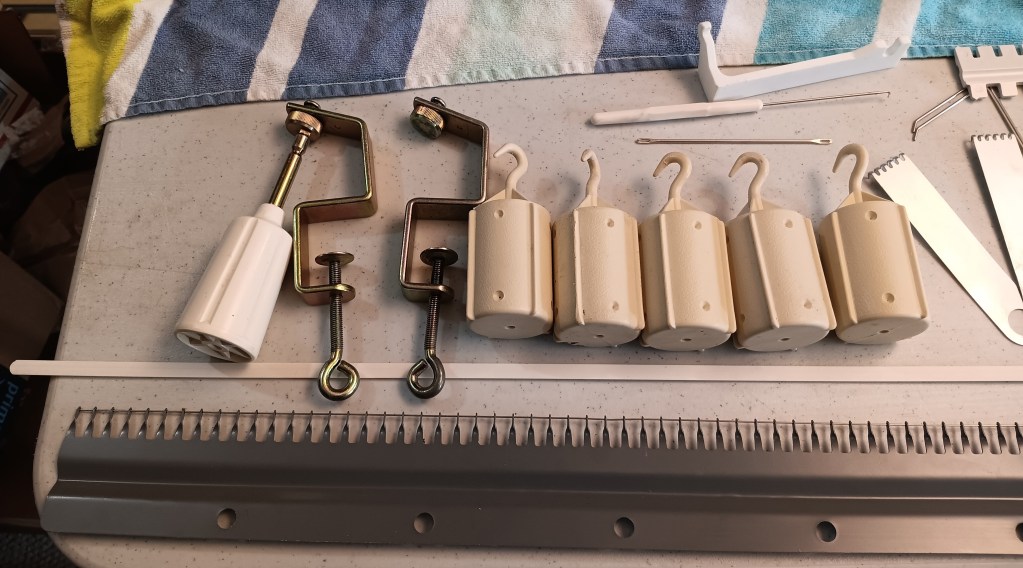
The ribber will come with all the accessories mentioned in the manual:

A hard copy of the manual (in English) will be included as well.

The ribber managed two different yarns (smooth and fuzzy) wonderfully. Again, refer to the video of all my tests. Just make sure you establish the correct distance between the ribber and the main bed as well as use the correct yarn tension. additionally do not forget to oil your machine and maybe even wax the yarn if you experience static or hear grinding sounds of your ribber.

When I tested the ribber, the last 3-5 needles sometimes were left in the non-working position. I did that so I could insert the wire hangers. You will see in my video that if I did not have any space to the side of the knitted panel, it would be hard to insert these changes. And they are absolutely needed to create neat edges and to ensure the yarn does not hang on the pegs.

The carriage slides very smoothly across the ribber. If you start knitting and the carriage is not moving smoothly, check the distance between the ribber and the machine, check if the connecting arm is attached correctly, wax your yarn, and decrease the tension of the yarn.

The ribber will be packed in the original cardboard packaging with the original Styrofoam inserts. They are in pretty rough shape (a bit dirty) but they still do a good job protecting the ribber and the parts.

Now about imperfections:

  • The hard copy of the manual shows some discoloration. But the pages are not damaged and the text is still clear.
  • Some of the barrel weights have cracks but it does not affect their functioning.
  • There might be some spots and staining on the plastic of the ribber. I typically do not rub too much on the plastic to remove the dirt spots because I do not want to damage the old brittle plastic by excessive rubbing. Some scratches are present too. None of this affects the functioning of the ribber.
  • I greased and lubed all the parts so you will see some residual freeze/lubricant remaining.
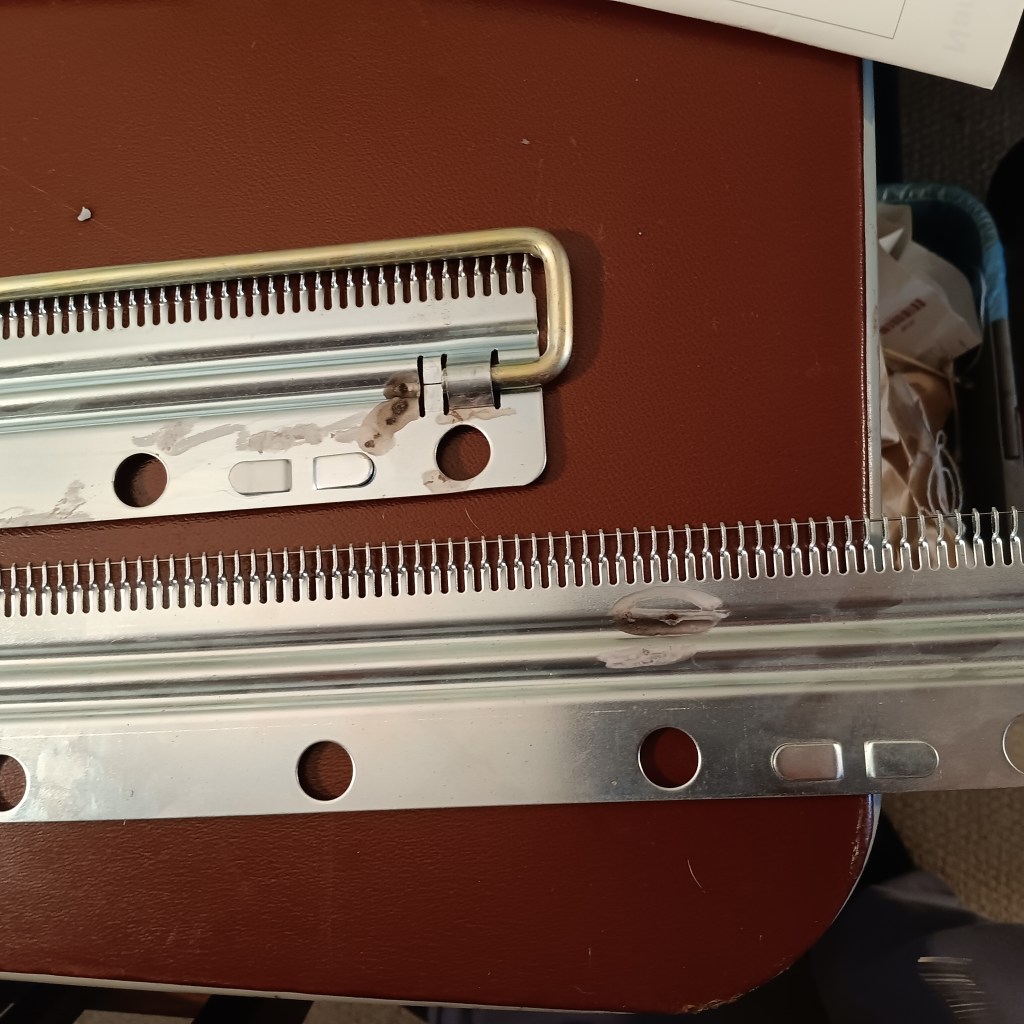
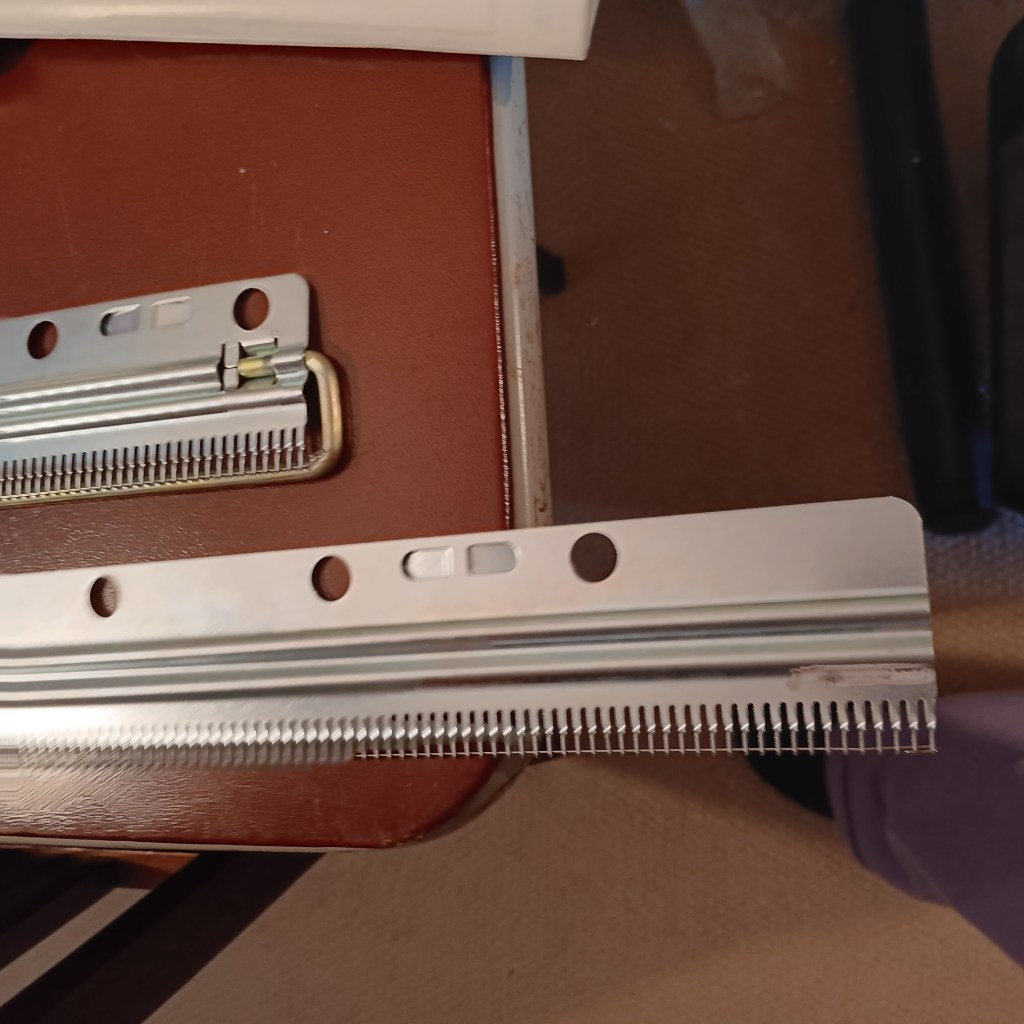
  • Cast-on combs have some minor rust spots but it does not affect their functioning.

I enjoyed working with this ribber! Hope you will too! Happy Knitting!

Brother KH601 knitting machine serviced in May 2024

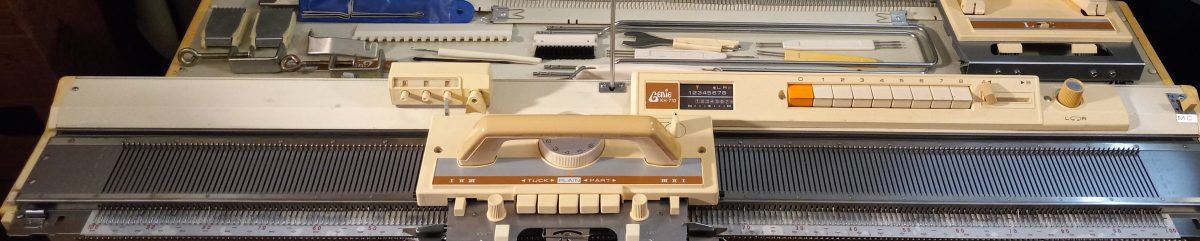
Brother KH601 knitting machine was released by Brother in the 1970s. It is a standard-gauge knitting machine with the needle selection performed by the pattern center and the 8-push buttons. Read more on pros and cons of this model in my Knitting Machine Encyclopedia.

The machine discussed in this blog was refurbished by me in May 2024. I lenjoyed working with this model and learning its mechanisms.

The machine comes with all major accessories (lace carriage, cast-on combs, extension rails, tension mast). The standard set includes one long cast-on comb (for the full bed) and one short one. The short one did not come with this machine so I will include a cast-on comb from my stash but its color is slightly different: greenish (while the original is greyish).

Most minor accessories are included as well. The row counter is not the original one (the original emerald-color one was missing – so I included a brand new cream-colored row counter from my stash). A hard copy of the manual will be included as well.

The accessories that are NOT going to be included are: cast-on thread (any strong thin yarn will work) and a bottle with oil (use Gun Oil instead). Laying-in thread feeders are already attached onto the sinker plate. Also, the machine did not come with the 1×1 needle ruler and I think this is such a basic tool that I included one from my personal stash. It is not metal like the original needle selection rulers but does the job.

All minor accessories fit into the toolbox. Unfortunately, the old plastic became fragile and the box has several cracks and misses pieces that cracked. It still holds all the tools well and will be included with the machine.

The carriage of KH601 differs a bit from all other 8-pusbutton machines I knitted on (KH5552-KH588-KH710): it has a sliding hold cam lever in the middle of the carriage right under the tension dial instead of two levers on the side.

The writings on the carriage and on the pattern center are in Japanese. But the previous owner left some marks in English – so it will be easy to understand and follow the manual.

The hard copy of the manual that came with this machine shows a slightly different carriage (a more standard for 8-pushbutton machines – with side levers rather than with a slide lever above the buttons on the carriage). There is a one-page insert (provided by the manufacturer, I believe) that shows the setting for this particular carriage.

I recommend using the manual for the KH800 to guide you on the HCL position (the sliding lever above the TUCK, PLAIN, and PART buttons) during patterned knitting.

I thoroughly cleaned the machine, inspected and cleaned all the needles, replaced the sponge in the retaining bar, and cleaned and serviced the carriage (ensured all the levers, knobs, and buttons move freely). I then tested the needles by knitting various patterns on a full bed watch the video of these tests here).

All tests were passed with flying colors! The patterns I tested were the “butterfly” pattern with needles being held and then knitted, a 1×1 tuck pattern (the trickiest to execute out of all tuck-pattern, in my opinion) and a slip-stitch siz-zag pattern. All neeles worked great!

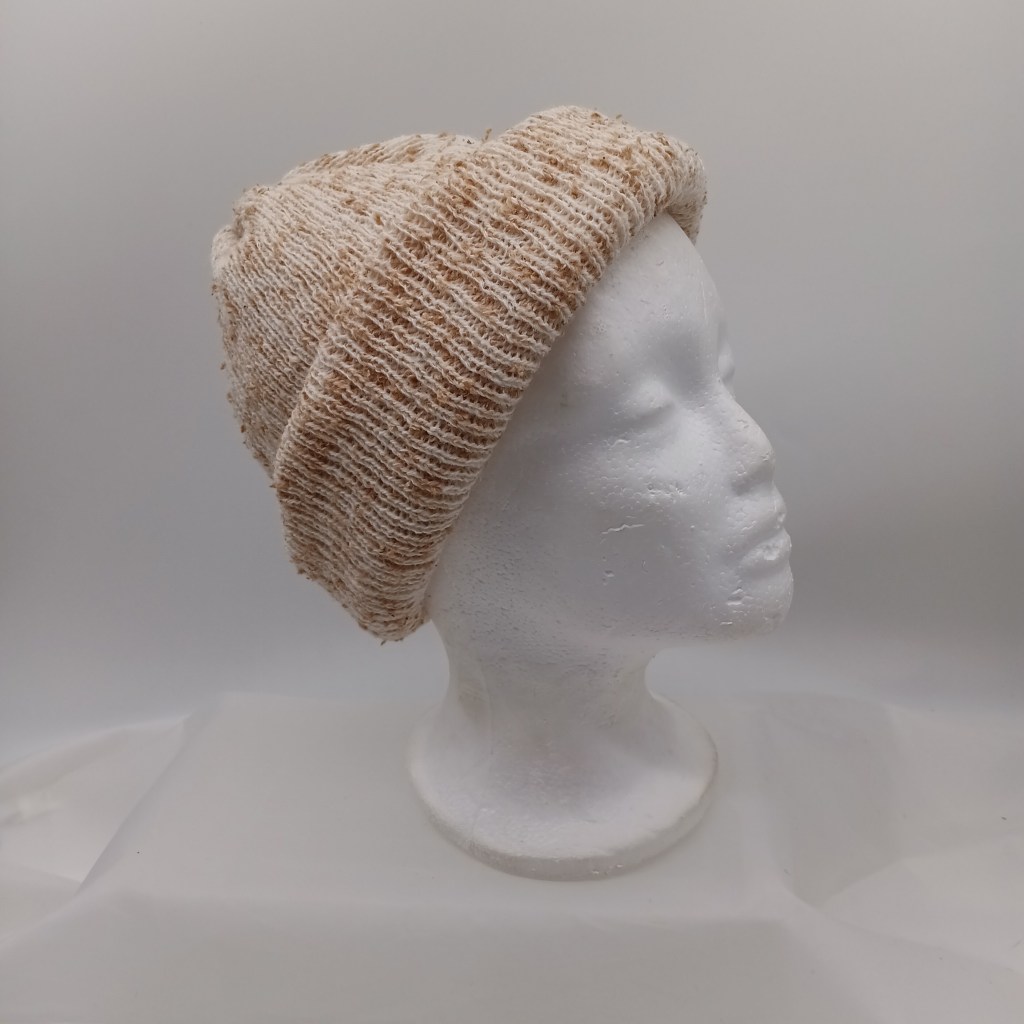
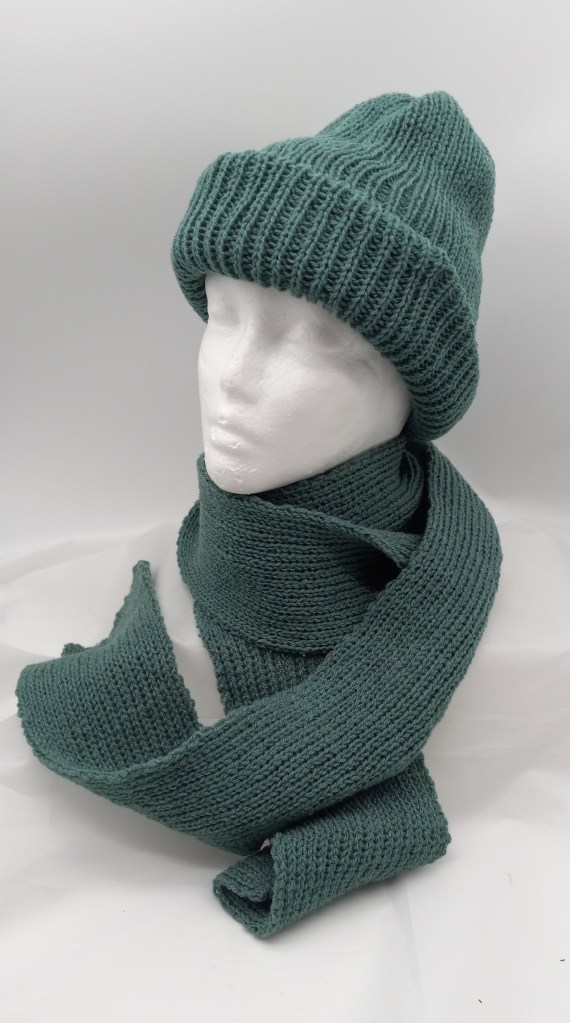
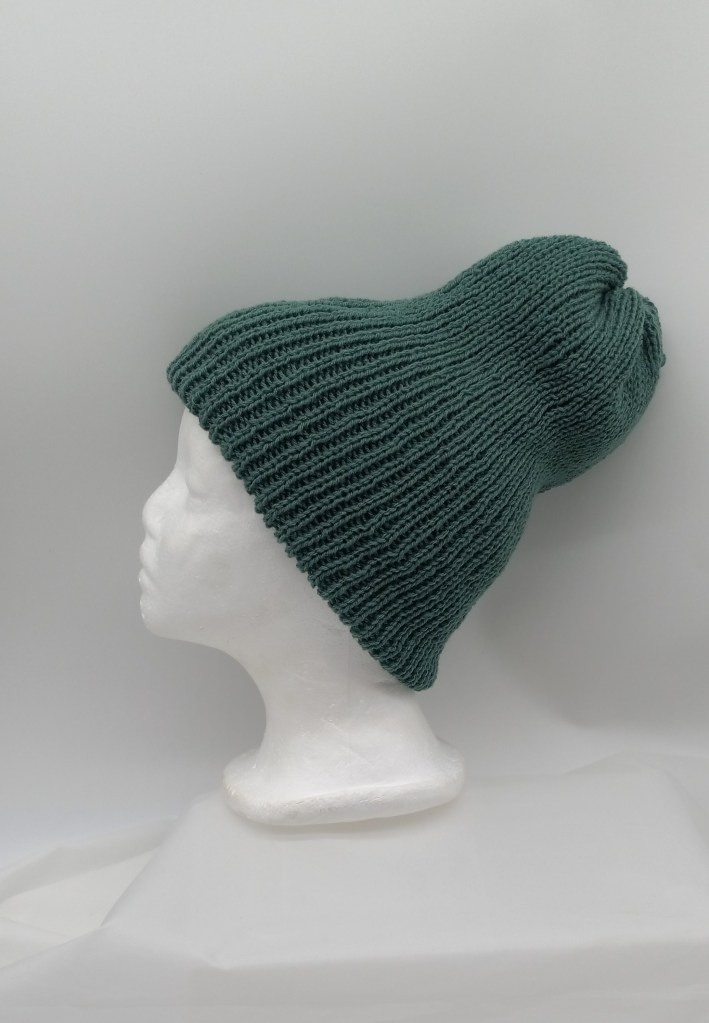
The knitted fabric was then converted into a reversible cowl/neck warmer/hood.

Now about imperfections:

  • Buttons #6 and #7 in the pattern center are a bit sluggish when are revered to the unpushed position. But only if they are unpushed by themselves. When pushed and then unpushed together, they are pretty perky. My video shows this flaw at the end but it did not affect the patterning or the knitting of the machine.
  • There are some minor scratches, stains, and bends on the case and the lid (not shown here but I will document them when I pack the machine).
  • The cracked tool storage box, with some especially fragile cracked areas, is missing. The lid for the storage box is a bit cracked too (not shown).
  • The greenish cover for the tension dial has a small broken nugget that holds it in place. It sometimes gets loose. I did not glue it completely because it needs to be removable in case the carriage requires disassembling. It does not affect the functioning of the carriage or the tension dial.
  • The carriage has minor rust and metal discoloration spots. It did not affect the functioning of the carriage.

Overall, this machine behaved very well. With regular oiling and cleaning, it will serve your knitting needs for many years!

This machine as well as other machines with punchcard patterning capabilities can be purchased from my Etsy store, or in my independent shop (for less).

Not sure which machine is right for you? Read how to choose the right machine for your needs. Regardless of the machine you choose, check out easy-for-beginners projects for your first knitting machine. Also, check my website for a blog article on the first steps with your new-to-you knitting machine.

Have questions? Get in touch with me through FaceBook: https://www.facebook.com/MightyKnittyMachines

Silver Reed SK120 knitting machine refurbished in May 2024

Silver Reed SK120 knitting machine is a flat-bed metal knitting machine with needles 8.0 mm apart. The bed contains 120 large needles. Read more about this model in my Knitting Machine Encyclopedia, including its pros and cons. The rest of the blog is dedicated to a specific Silver Reed Sk120 machine I serviced and tested in May 2024.

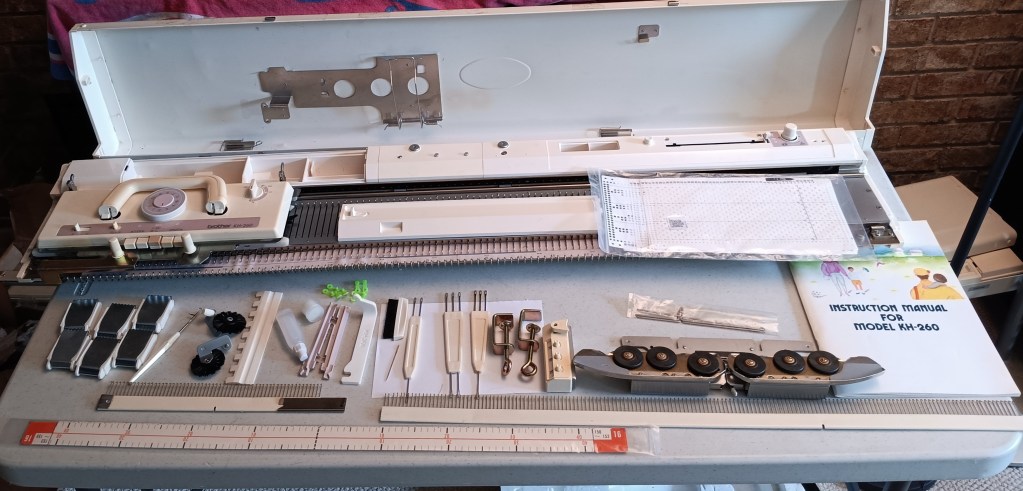
I loved working on this machine especially because of its simplicity. The machine I worked on was also marked as Kantan Bulky. This machine comes with all accessories except oil (use gun oil instead). All minor accessories fit into a toolbox, with an attached lid. The box is in great shape.

A hard copy of the manual will not be included but it can be found online for free.

I cleaned and inspected all needles and then tested them by knitting on a full bed (to ensure all needles form nice stitches). I replaced a sponge bar. The retaining bar is very narrow for this machine. Thus, it was a challenge to find such a narrow sponge. After a long online search and consultation with numerous online chats and forums, I settled on a window seal strip with the glue on one side. It is more rubbery than spongy. It was also somewhat hard to insert but I finally got a hang of it (used a thin plastic knife and gently stuck it one inch at a time. Check out a short video I created to help other knitters insert the sponge into an unusual retaining bar of Silver Reed SK120.

Although not ideal, this rubbery strip did a good job. Why not ideal: it seems that the needles rub against it and remove small chunks (see the picture below). Because of this, I feel the rubbery strip will need to be replaced a bit more often than on other knitting machines. But I will include the extra strip that I have left – enough for 2-3 more replacements. Additionally, the machine needs to be cleaned after each use. I gently vacuum it with the soft brush of my regular vacuum to remove these things after each use.

The machine handled thick yarns very well. The yarns I tried on this machine are:

  • Alara 50% acrylic/ 50% merino worsted yarn (50 g/ 100 m). I knitted a top of a hat.
  • Think, sport-weight like, 100% acrylic yarn. Those yarns often cause lots of static, which causes carriage jams.
  • Textured acrylic blend
  • Mohari-blend fuzzy yarn – made a two-layered neck warmer, transferrable to hood/cowl.

The machine handled all these yarns well (see the video of these tests). In some cases, I needed to apply extra wax and oil the machine well. The sturdy table will help a lot when operating on this machine with thick yarns on a full bed. I strongly recommend using every other needle on worted yarns.

Below are the things I made while testing this machine:

If you are considering purchasing this wonderful machine, do not forget to read in my Knitting Machine Encyclopedia about pros and cons of the Silver Reedk Sk120 bulky knitting machine.

The only imperfection about this machine was a minor rust spot on the cast-on comb.

In conclusion, the most exciting feature of this machine is that it creates a fabric that looks and feels like hand-knitted. This personal observation is even supported by the marketing brochure from the 1970s I found in my stash.

Needle positions of various flat-bed knitting machines and ribbers

Brother Knitting machines

A – non-working position

B – standard working position

C, DI, DII – patterning positions

E – holding position

Machine Model number
Needle Positions
Basic (manual) knitting machines
KM100, KH355, KH360, KH370, KH380, KH390, KH395ABCD
KH210, KH220, KH311ABCDE
KX350, KX395ABDE
KX355unknown
4-Pushbutton machines
KH35, KH212, KH218no indicators
KH511ABCDE
KH521, KH531, (Profile) KH551ABCDIDIIE
8-Pushbutton machines
KH110, KH120, KH552, Profile 585, KH587, KH588, KH705,
(Genie) KH710, KH601
ABCDIDIIE
KH561, KH571, KH581, (Profile) KH583, (Profile) KH585ABCDE
KH811 (also 24-stitch punchcard)ABDE
12-stitch punchcard machines
KH800, KH801ABCDIDIIE
24-stitch punchcard machines
Bulky: KH260
Standard: KH810, KH811, KH820, KH821, KH830, KH831, KH836, KH840, KH850, KH851, KH860, KH864, KH871, KH881, KH890, KH891, KH893, KH894
ABDE
Electronic machines
KH900, KH910, KH920, KH930, KH940, KH950, KH965, KH970ABDE
Ribbers
KR551ABC
KR110, KR120, KR586, KR710, KR810, KR830, KR840, KR850, KR890, KR900, RK900ABDE
KR582unknown

KnitKing Knitting machines

A – non-working position

B – standard working position

C, DI, DII – patterning positions

E – holding position

Machine Model numberNeedle Positions
24-stitch punchcard machines
Bulky:
Standard: KH881, KK91
ABDE
Electronic
Compuknit IV,ABDE

Silver Reed Knitting machines

Machine Model number
Needle Positions
SK120,ABDE

Two-color Fair Isle patterning on Brother KH800 and KH801 knitting machines.

These unique knitting machines, Brother KH800 and KH801, make it super easy to make punch cards and knit various patterns.

However, as I started to explore the steps on how to knit these various patterns, I discovered that the manual does not really present all the steps clearly, especially for the two-color fair isle knitting. So, a combination of researching manuals of similarly (with a ratchet) working push-button machines and my own trial & error, will be presented to you below as an attempt to ease up your learning of how to operate these wonderful machines. I also made a video of how I knitted a fair isle on my own Brother KH800 machine.

Before you even start, take a look at your main carriage. Find the N/T/MC knob in the top-right corner (we’ll need the MC settings). Please find the button on the carriage (we’ll need to push both PART buttons in). The slide lever on the carriage is on the settings “3”.

The change lever on the right-hand side of the needle bed in the top corner should be moved to MC.

These are the components we need to pay attention to to change to knit fair isle on Brother KH800 and KH801 knitting machines.

Preparation: knit several rows of stockinet in the main color. The second yarn is threaded into the left-hand side wire of the tension mast.

Step 1. The carriage is on the left side. On the carriage, set the change knob to MC and establish the desired tension (a two-color fair isle is recommended to knit at higher tension numbers). MC change lever is also at the MC setting. Holding cam lever (HCL) is at the setting “3”. Insert a desired punchcard and pull the step indicator up (“unlock” position) so it advances every time we knit one row.

Step 2. Move the carriage to the right. All needles will shift to DI position. Push both PART buttons on the carriage. Double-check your tension. Guide/insert the second yarn into the slot on the left side of the sinker plate.

The manual for the KH800/KH801 knitting machines does a very poor job of showing how to insert/guide the second yarn into the slide slot of the sinker plate. I found an excellent demonstration in the manual for the KH710 knitting machine, which has very similar steps to the knitting fair isle. Also, watch my video on how I did it.

Step 3. Move the ratchet tool to move the needles according to the punch card. Notice they will split into the DI and DII positions. The needles that will knit with the second yarn remained in the DI position. The needles that will knit with the main yarn will move to the DII position. Move the carriage to the left while holding the second yarn gently (watch the video).

Step 4. Before moving the carriage back to the right, activate the needle selection for the second row: move the ratchet tool. As you move the carriage to the right, place the contrasting yarn onto the right-hand side guide of the sinker plate. Also, make sure that the row indicator moves after you pass the V-shaped trigger. If the row indicator does not move, pull it upwards.

Continue these steps.

The same approach can be used on fair isle patterning on pushbutton machines, like Brother KH585, KH588, KH581, KH552, KH601, etc. The carriages for the pushbutton machines and for the 12-stitch punchcard models KH800 and KH801 are the same (except for the slide lever – the 8-pushbutton machines have side levers for the same purpose). Thus, after the needle selection, all consequent actions are very similar for all these machines.

Happy Knitting!

First steps of testing and learning a new-to-you knitting machine.

…this post is a collection of tests and tricks I use when I test knitting machines I refurbish. It is a continuous work in progress as I learn more about various knitting machines.

Preparation for the knitting:

  1. After you have fully serviced your machine (read the list of steps I follow in here – sponge bar section is especially important), place the carriage onto the need bed (while ALL needles are in non-working position A). and move it across the needle bed (without the sinker plate attached). Ensure that the carriage runs smoothly on the needle bed. Apply oil if necessary according to the instructions if you feel that your machine does NOT run smoothly. Also, check the contact points (between the carriage and the needle bed) for gunks/rust/debris since they can contribute not only to poor movement of the carriage but also to static accumulation and other problems down the road.
  2. Attach the sinker plate to the carriage according to the instructions. Run the carriage + sinker across the bed (the needles are still in non-working position A).
  3. Using a 1×1 needle selection comb (AKA ruler) move 20-30 needles to the B position (15 needles from the left of the “0” mark and 15 needles to the right). You will have every-other-needle in the B position. Run the carriage over the needles, first, without the sinker plate. You will see how the needles move while you run the carriage. If everything goes well, run the carriage with the sinker plate attached to the carriage.
  4. Move the remaining needles to B position. You will now have 30 needles next to each other, all in B position. Run the carriage and then carraige+sinker over these needles. Watch the needles move freely. If the needles move freely with only the carriage but not with the carriage+sinker, you might have a damaged sinker plate.
  5. If steps 1-4 did not give you any trouble, you are ready to knit your first swatch.

Knitting a first swatch:

  1. Review the manual which yarn is best with your machine. When choosing yarn for your first swatch, stay on the thinner side – we want to have our first knitting steps go smoothly and not go wrong because of the poor yarn choice. Once you learn to know your machine, you will know which yarns it can handle (and what to do so the machine can handle these yarns). For standard machines, I recommend sock-yarn-thickness and even thinner, for bulky and medium gauge machines – use sport-weight yarn.
  2. If your yarn came in a cone or a cake – you can skip this step. If your yarn is in a skein or a ball, you need to use a yarn winder to rewind your yarn into a cake or onto a cone. The reason is that during machine knitting you want as even yarn tension as possible.
  3. Bring 20-30 needles upfront and select every other needle (move them to the working position B). Run the carriage back and forth to even out the needles.
  4. Cast-on: I recommend using a cast-on method with a cast-on comb. Most Brother knitting machines have cast-on combs. Silver/Silver Reed/Studio cast-on combs do not typically come with cast-on combs. Cast-on combs can be purchased online. Or you can use an e-wrap cast-on method. Refer to the instruction manual of your machine for the recommended cast-on method.
  5. Once the first initial row is knit, knit several rows on every other needle. It will give you a good feel for the yarn thickness, tension and carriage behavior. Adjust tension as needed. The carriage needs to run smoothly.
  6. Bring the remaining needles to the working position. Increase the number on the tension dial. On all needles, the yarn tension needs to be looser than on every other needle. Knit several rows.

If all these tests are successful, you can now start experimenting with patterning as well as knitting on a full bed.