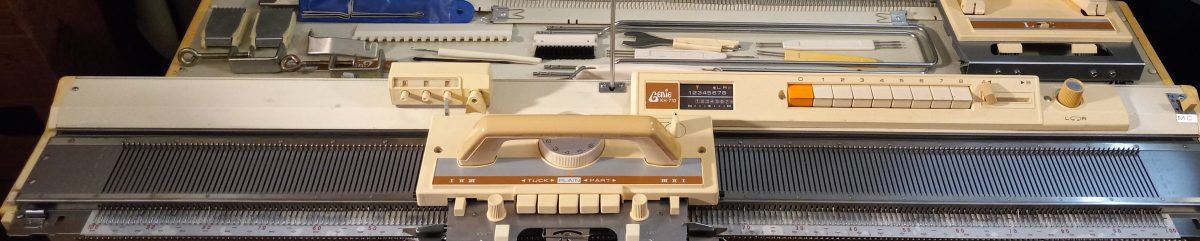
Brother KH830 is a knitting machine with 200 needles, positioned 4.5 mm apart. This machine is capable of automatic patterning and needle selection performed using a punchcard reading mechanism.
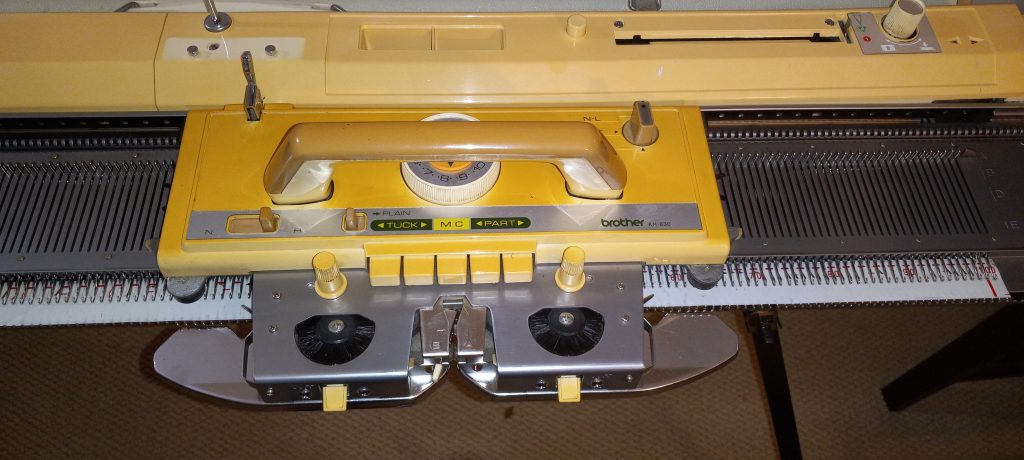
The post below is dedicated to this specific machine. To read details (including the pros and cons of the Brother KH830 model in general, refer to a blog article dedicated to this model.
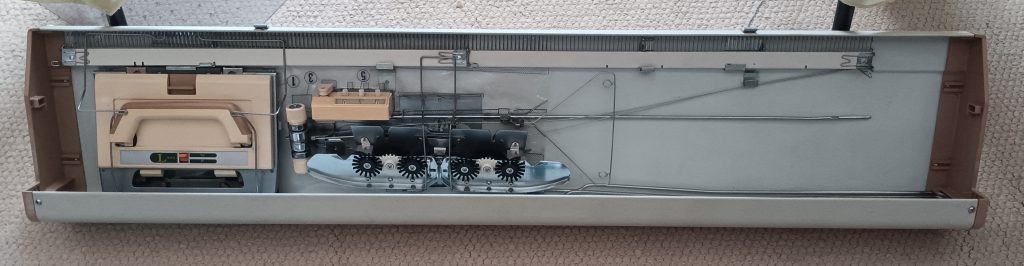
Brother KH830 knitting machine tested by me in January 2024 comes with all major assesories: tension mast, cast-on combs, lace carriage, row counter, and extension rails.
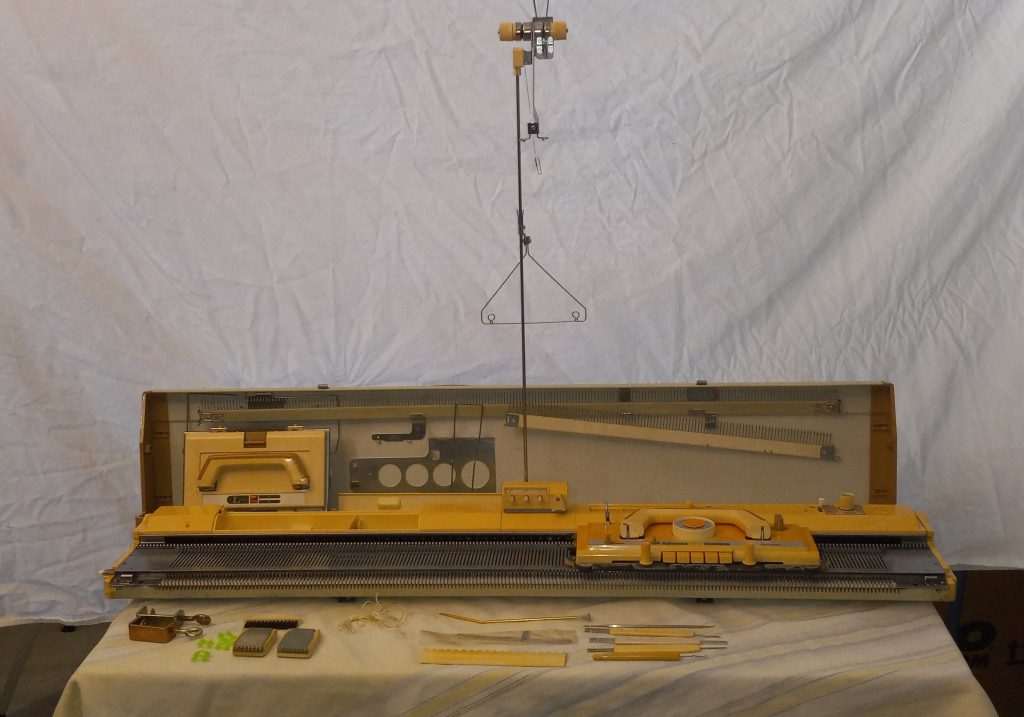
All major assesories fit nicely into the lid. I did not knit lace during my tests by all knobs and levers move freely on the lace carriage.
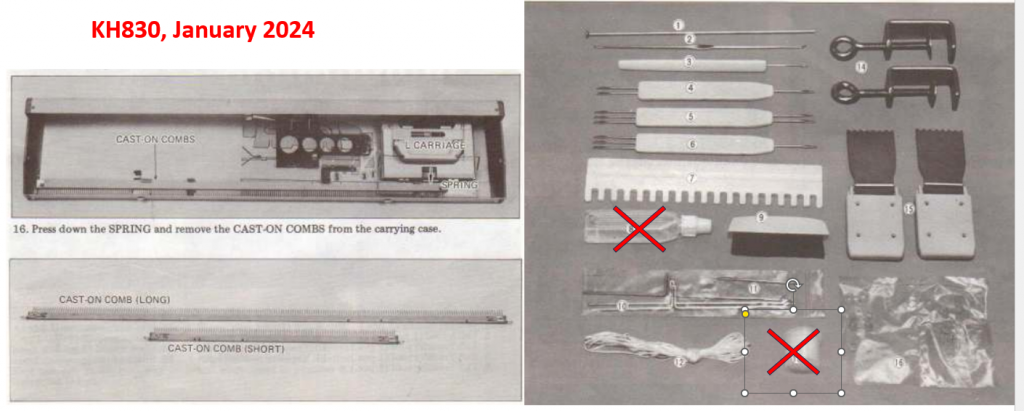
Almost all minor assesories are included as well.
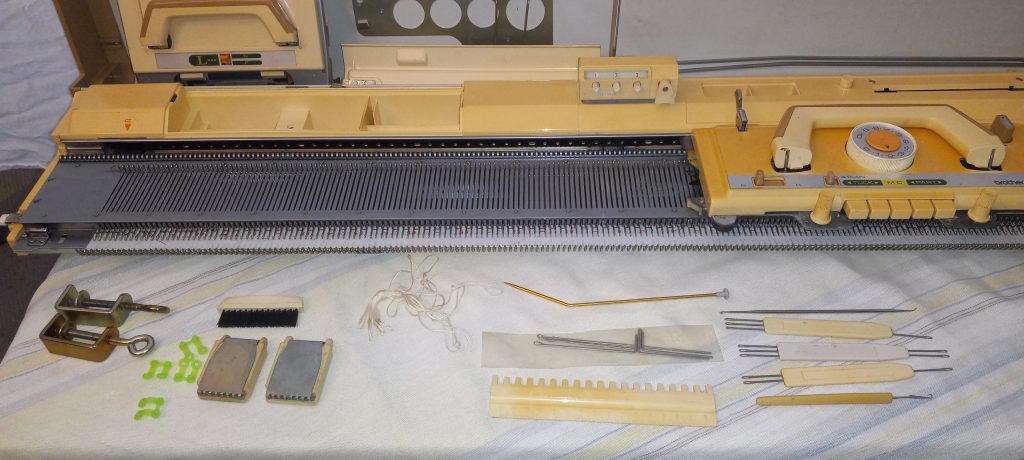
The minor assesories that will not be included are:
- Hard copy of the manual but it can be found online for free.
- Tapestry needle (any needle will work).
- Wax and wax container
- Oil (the one that came with the machine was too old). Use Hoppe’s Elite Gun Oil from Amazon instead.
- The rod for the card reader was missing. So, I used a hand-knitting needle instead and it worked fine: all the tests shown in my video were performed with my custom-made card-reader rod.
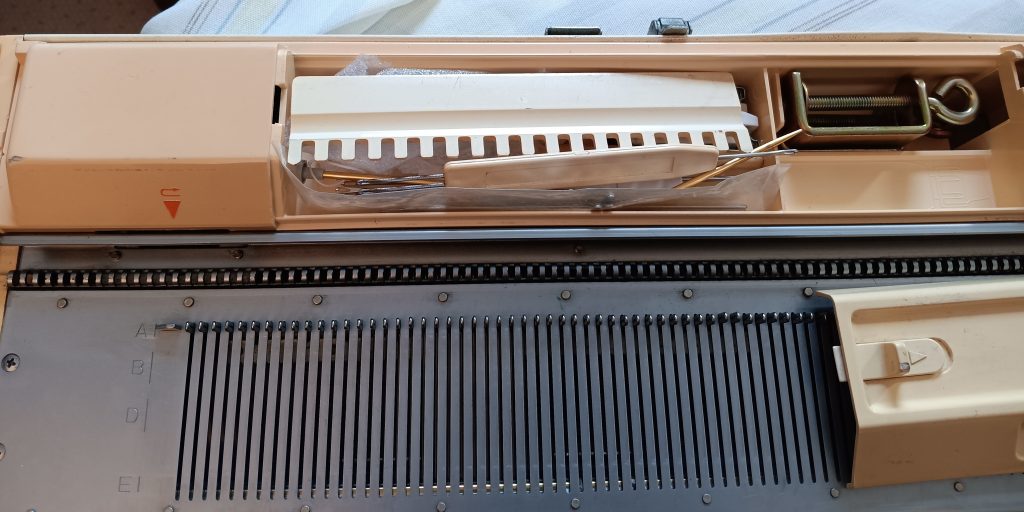
All tools and minor assesories fit into the built-in storage box.
Additionally, I included brand new (new stock) claw weights because the old ones had bent teeth. The little knob for the card reader was cracked, So I replaced it with the freshly 3d printed one.
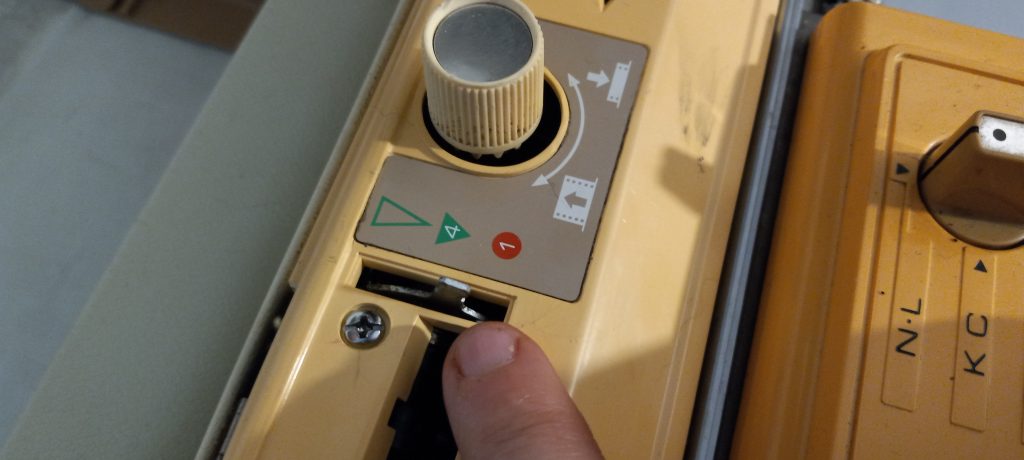
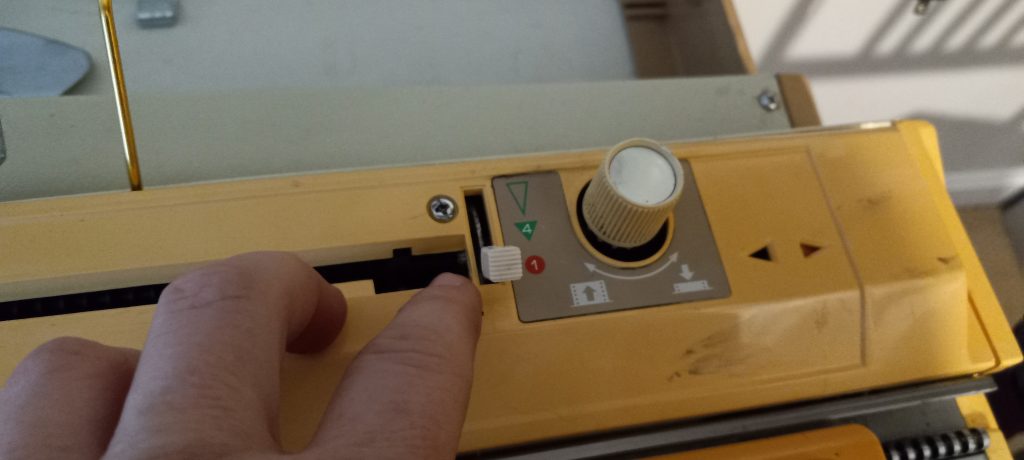
I cleaned the machine, replaced the sponge in the retaining bar, and cleaned and inspected all needles.
To test the machine’s functions, I knitted on a full bed using tuck-, slip- and fair isle patterning (see the video of these tests). I knit on a full bed while testing my machines because I want to make sure all needles knit and form stitches correctly (without sticky latches and without forming tuck stitches). In the test video, you will see how I identified two flawed needles. I ran this test until I could obtain a knitted panel without any tucked or mispatterned stitches.
This model already has built-in (or preinstalled by the previous owner) Garter carriage bars.
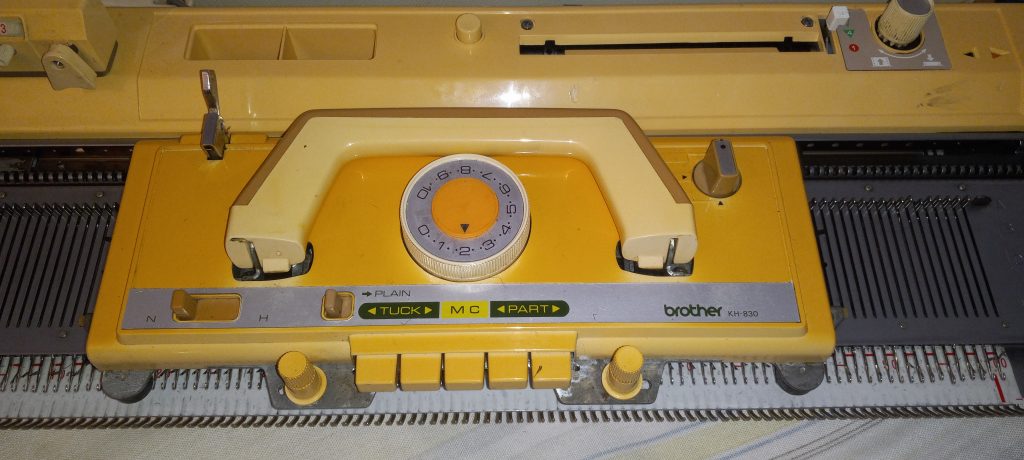
The following paragraphs list minor flaws I identified:
The card needs to be guided into the card reader with a bit more attention than usual. Because if you don’t pay attention, it might get inserted a bit crooked and mess up your patterning. So, carefully line up with the whole and then watch if the card goes in smoothly. If the card is lopsided in one direction, pull gently to straighten.
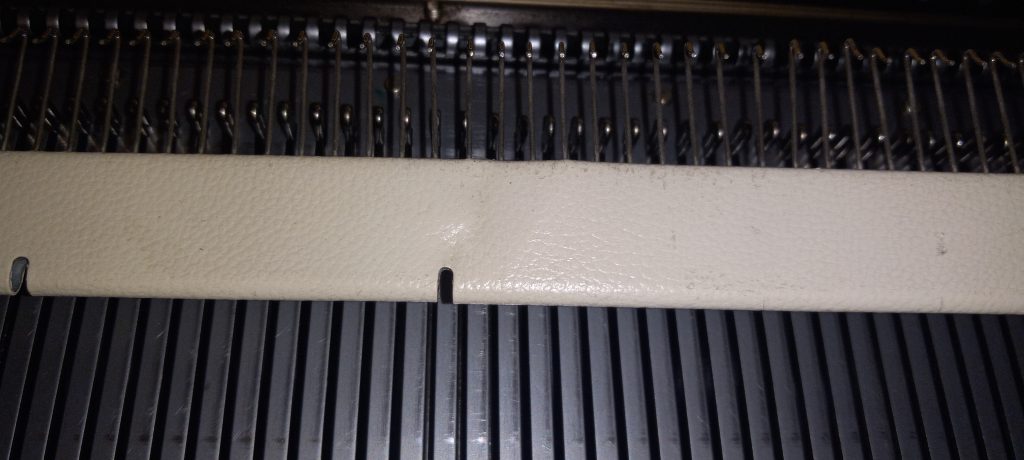
There is a minor crack on the plastic panel to the right of the card reading mechanism. There is also a minor scuff (in front) and a microcrack (to the left) of the punchcard reading mechanism. Those did not affect knitting.
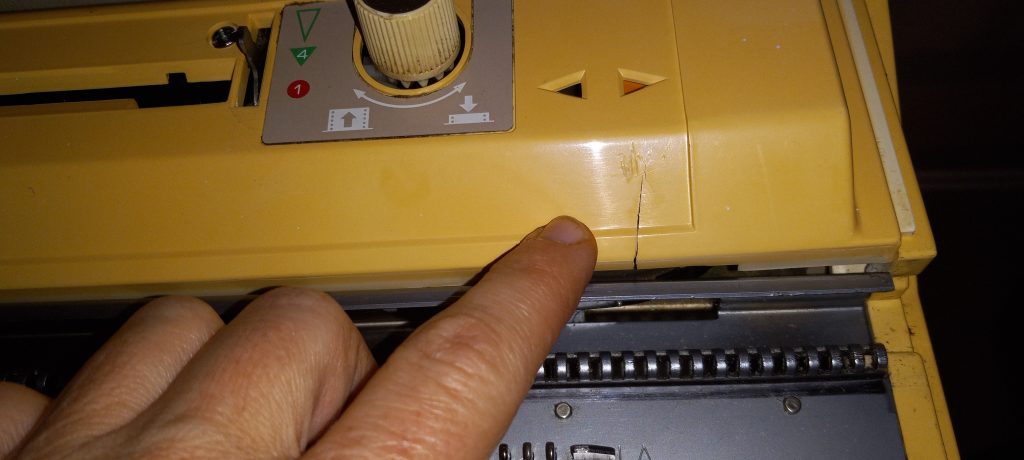

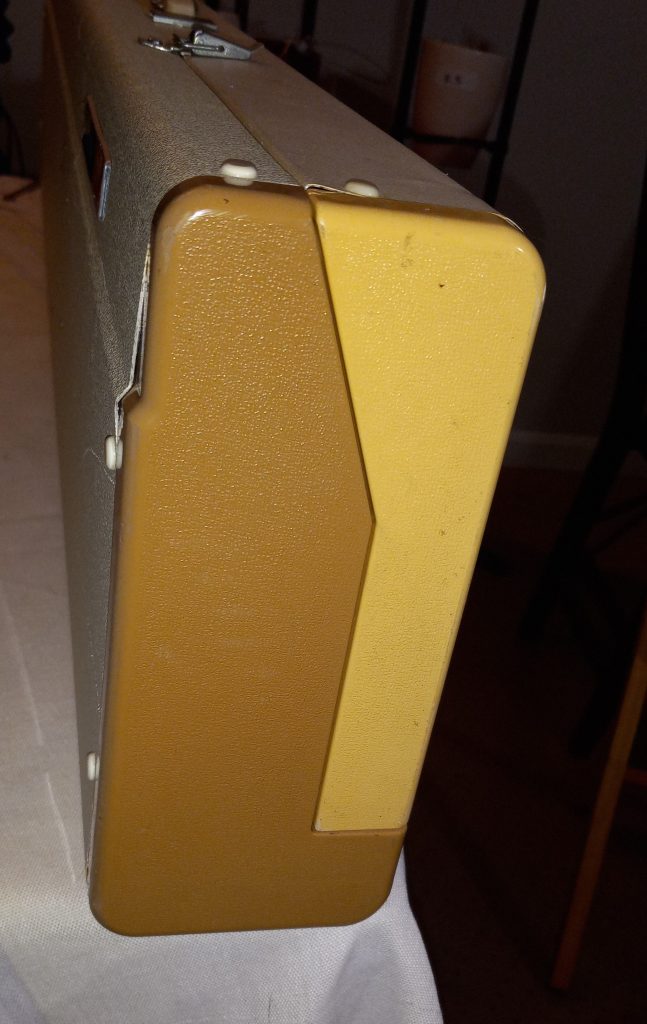
There are a couple of minor scuffs on the front panel and on the case as well. The pictures below show the most noticeable out of all of them.

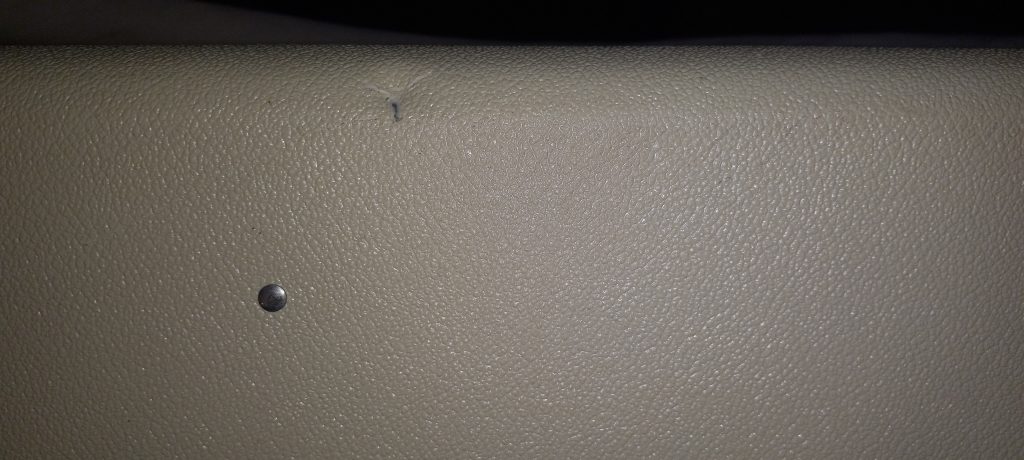
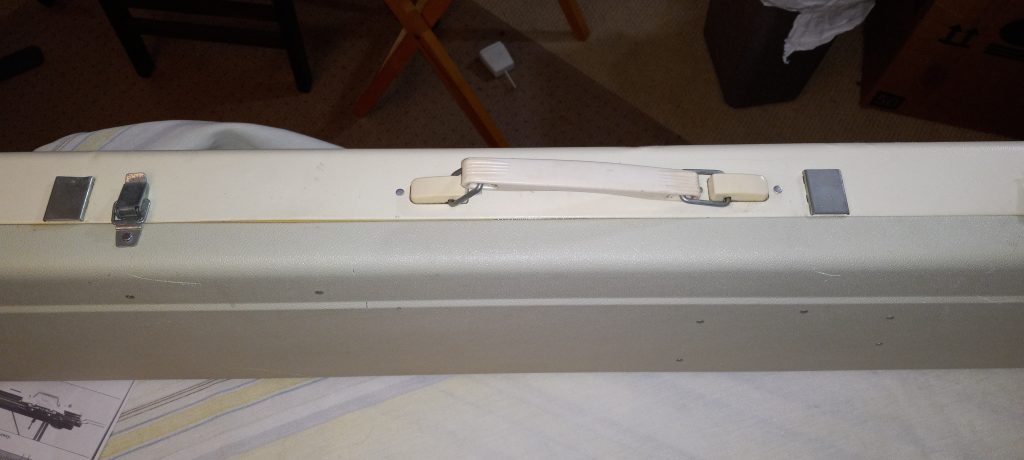
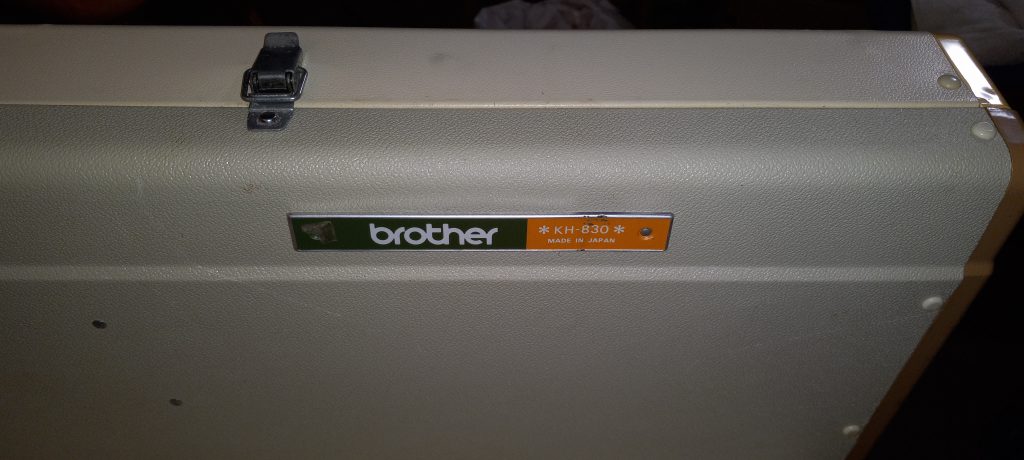
The end caps of the bottom and top parts mismatch in color (the machine came to me this way) but the case still closes well without any problems. There are only some minor gaps probably due to the age of this machine.
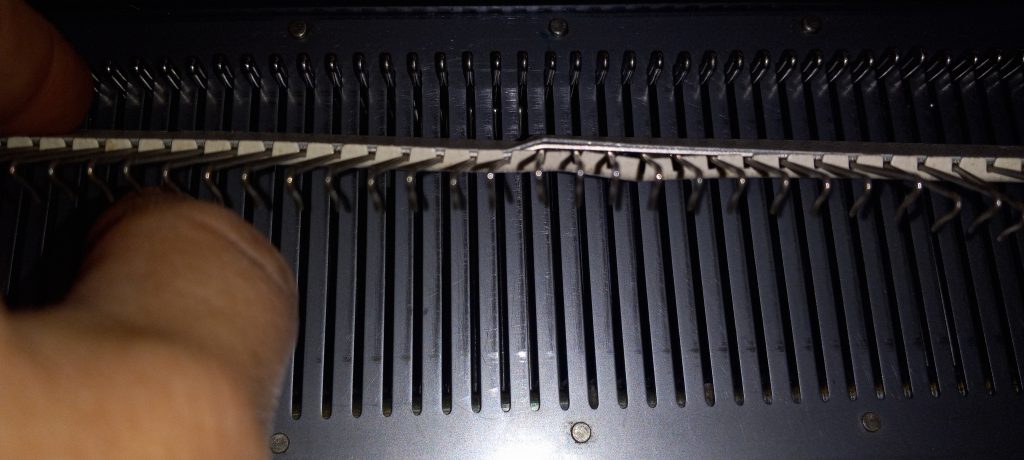
One of the cast-on combs has minor bents but it does not prevent them from being used effectively (for all my tests I used those combs shown below).
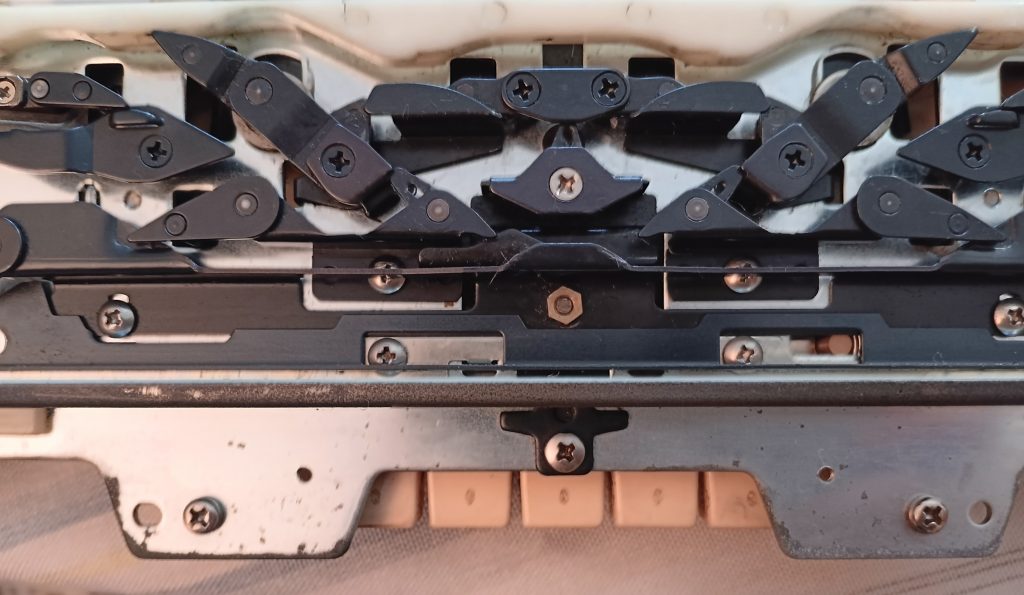
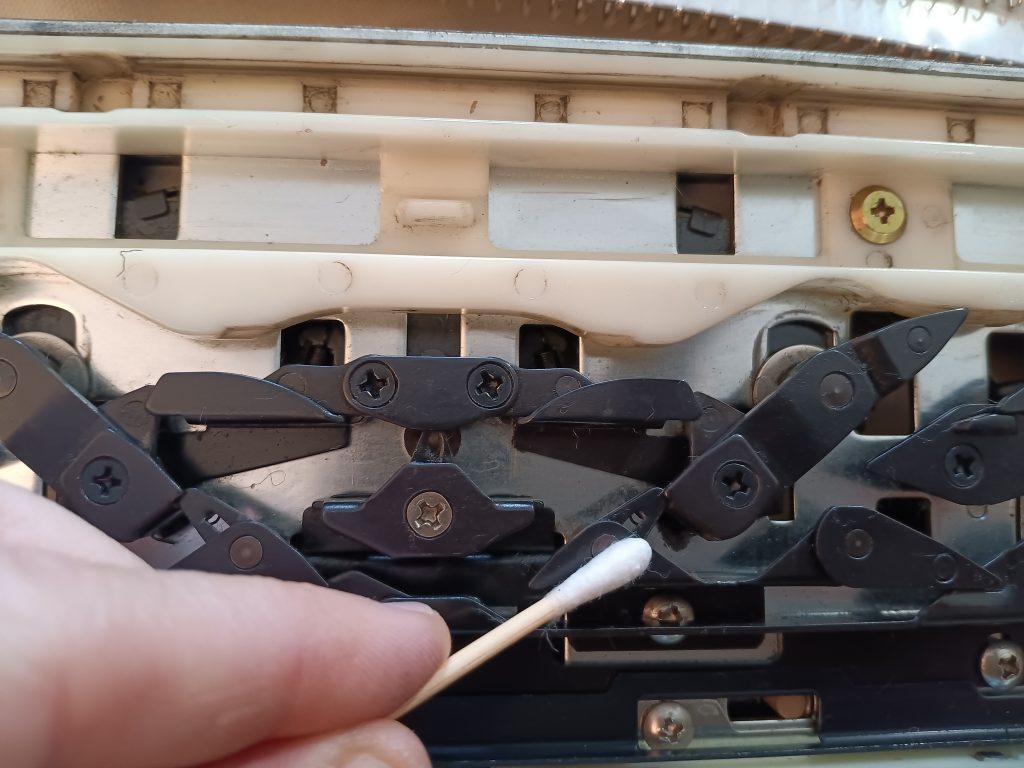
The carriage has some minor rust or wear/tear rust spots. (These spots are pretty typical for these vintage machines.) I treated them with protective oil. I did not observe any static while knitting or any other problems.
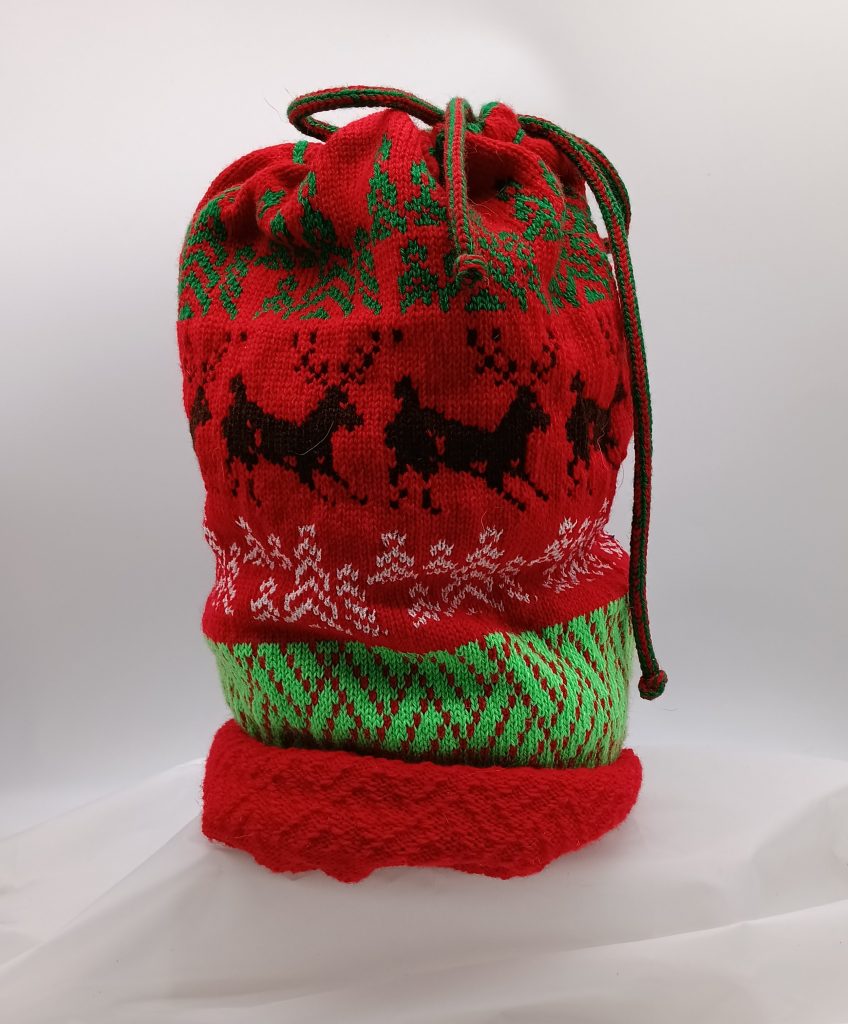
Despite these minor flaws, this machine worked great. I knitted the Christmas-themed bag that I will use next year to put presents in 🙂 I hope you soon will be able to make something even more beautiful.