
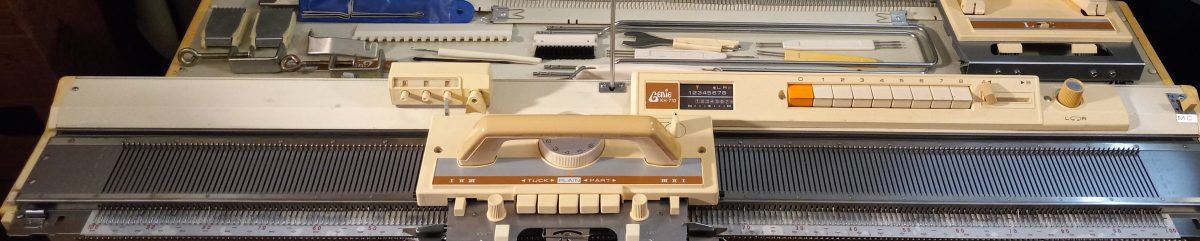
Brother KH881 is a standard-gauge knitting machine with 200 needles and a built-in knit leader. Read more about the pros and cons of the Brother KH881 knitting machine model in a separate blog post. This post is specifically about Brother KH881 serviced and fully tested in my shop in July 2024.

Brother KH881 came to me without a lot of accessories and even without a carriage. I found a replacement carriage and all minor missing accessories.

Most of the other major accessories were present with the machine and almost all accessories will be included.
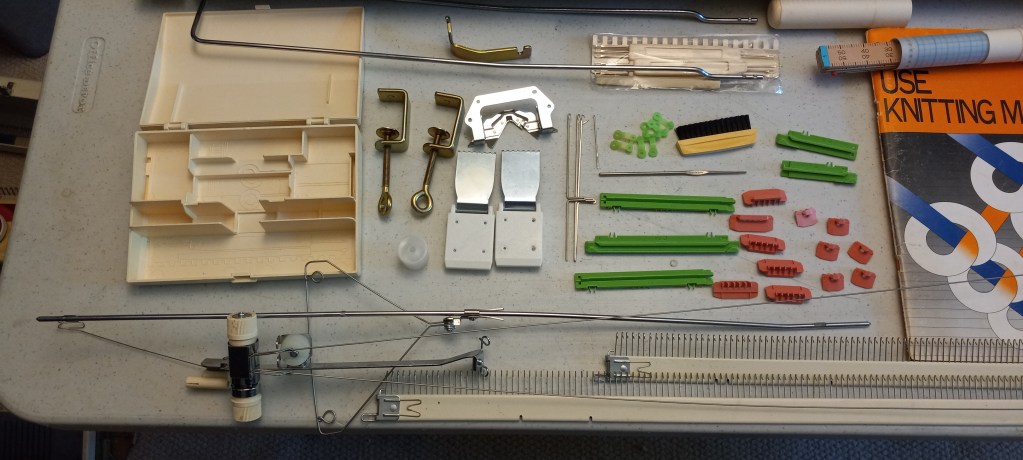

The still missing minor accessories are:
- oil: it was old and I had to toss it away (use a Gun oil available on Amazon instead)
- cast-on thread (you can use any silky and strong yarn)
- the wax is technically not included but there was a piece still attached to the tension mast and it worked well while I knitted. I will include the plastic case for the wax.
- A punchcard holder pin is also not included. All the tests shown in my video for this machine were performed without this rod.

These minor accessories are stored in a special toolbox.

The toolbox sits on the needle bed when the machine is stored away.
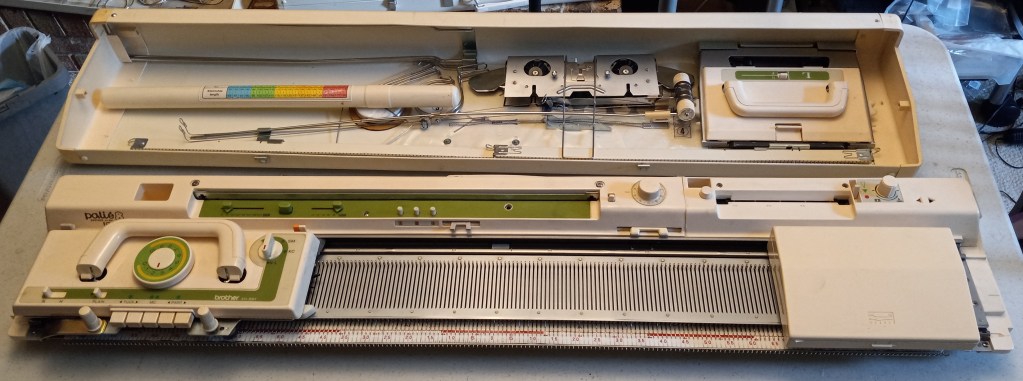
All major accessories are included as well: lace carriage, tension mast, knit leader sheet guides, row counter, cast-on combs, and extension rails. The major accessories fit nicely into the lid. The lace carriage was not tested but it is much simpler than the main carriage, so no problems are anticipated and I checked that all buttons move freely.
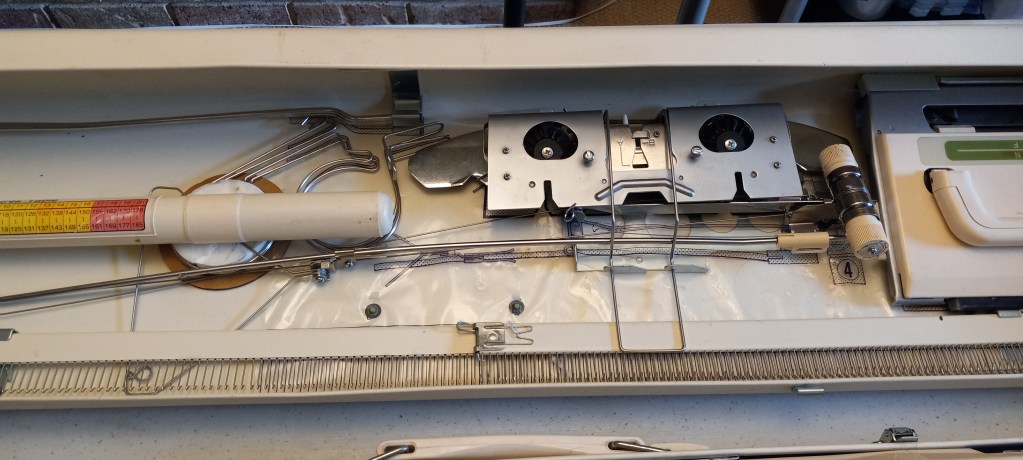
For the knit leader, the only missing accessory is a felt pen (it didn’t write – too old, so I also tossed it away). I read in the online forums that washable Crayola markers work as well as whiteboard markers. To remove, machine knitters advise to use a gum eraser. Depending on the pen, rubbing alcohol on a cotton swab works well too.
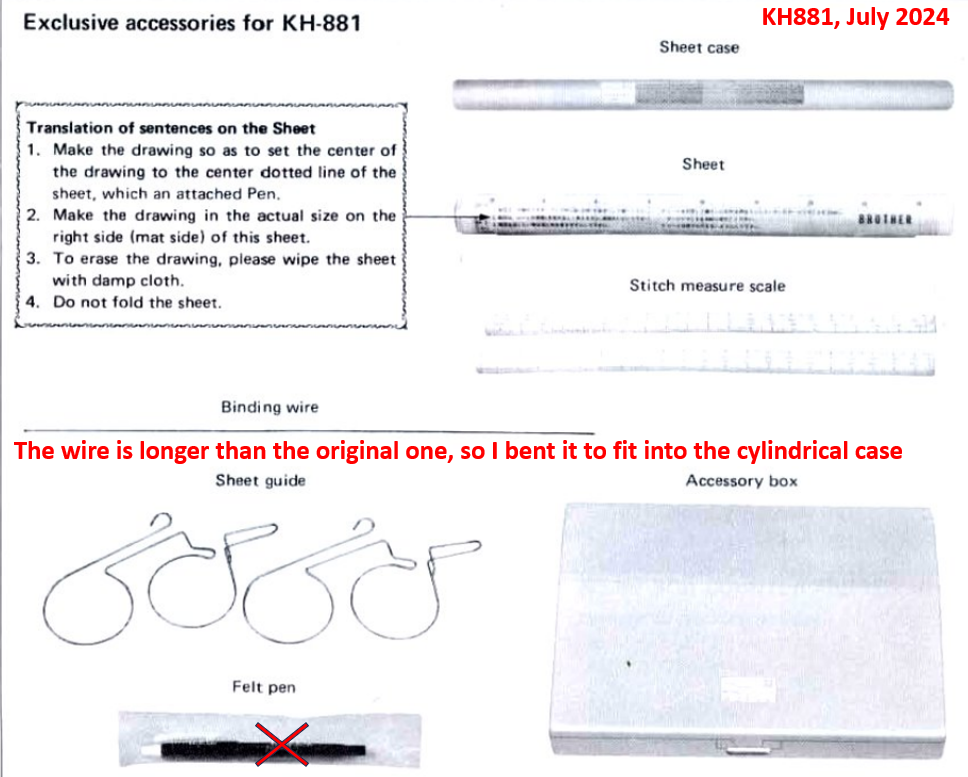
The binding wire was originally missing but I included a binding wire from a set from the KL116 knit leader.
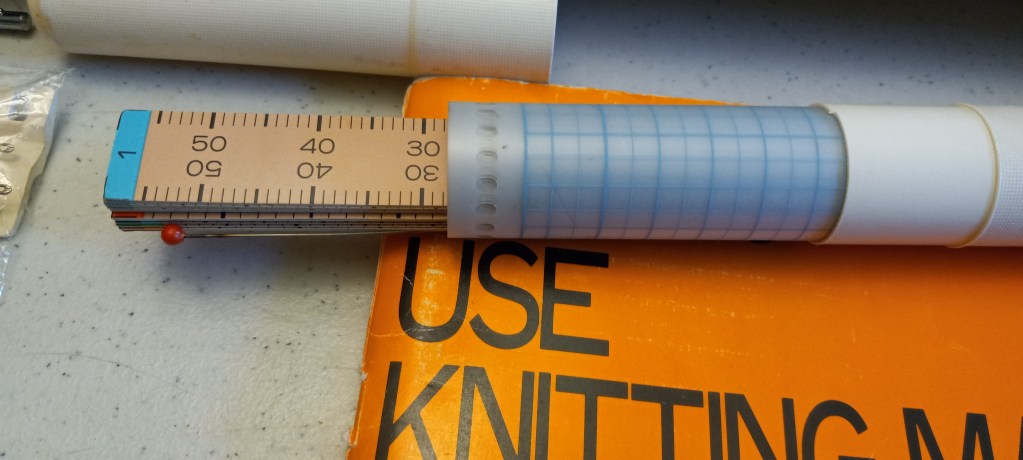
The wire I included is a bit longer than the wire that came with KH881. So I bent it to fit into the sheet case. It is very easy to unbend it. The purpose of this wire is to temporarily “seam” the knitted panels together.
So, the punchcard set is brand new – never used. It contains 20 cards, 6 of which are for lace knitting. The machine will come with the original hard copy of the knit leader manual and the hard copy of the instruction manual as well.
THE WORK DONE ON THIS MACHINE:
The machine was deeply cleaned, all needles were inspected, and faulty needles were replaced. The sponge it replaced in the retaining bar. This machine was given a lot of TLC, in particular to the punch card reader and the needle replacement mechanism to ensure they function well. I then ran tests on a full bed to again ensure needle selection on the full bed and that all needles form stitches as they are supposed to.
The knit leader was not tested but I checked and all the buttons and levers move freely and advance when triggered.
Now about the tests:
I tried 4 different yarns on this machine: one blend, and three acrylic yarns. The thicknesses varied too. The machine formed stitches wonderfully with all these yarns. I knitted on a full bed using tuck-stitch, slip-stitch, and fair isle. I used card #1 and other cards (with a 24-stitch repeat pattern) too. I like using card#1 (which has a 2-stitch repeat pattern and thus, every other needle is selected) because it immediately shows incorrectly selected needles. Additionally, any errors will be shown on the fabric (especially in Fair Isle).
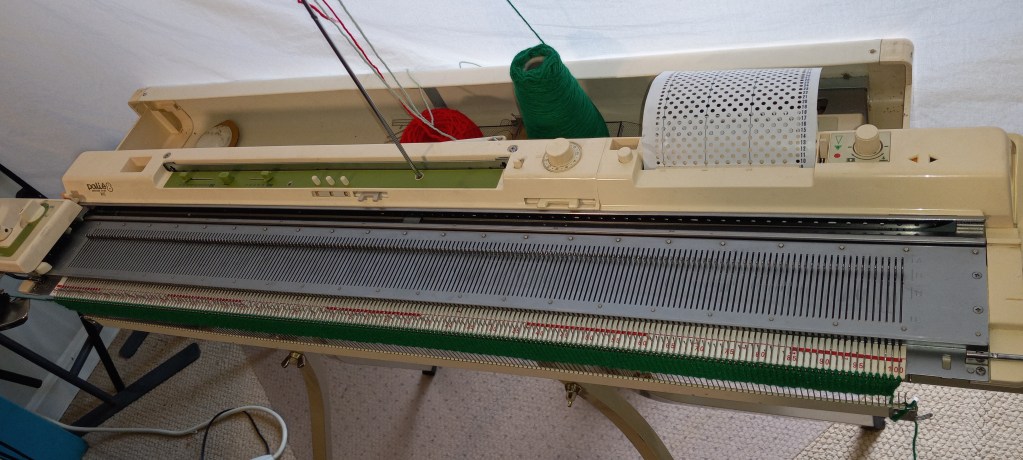
Watch the full video of these tests.
There was only one hick-up during these tests. When I was knitting tuck-stitch with the 2-stitch repeat pattern (using card #1), I did not notice right away that in one place, one needle is selected incorrectly. There was a 3-needle cluster (around left-hand side needle #20) that I did not catch.
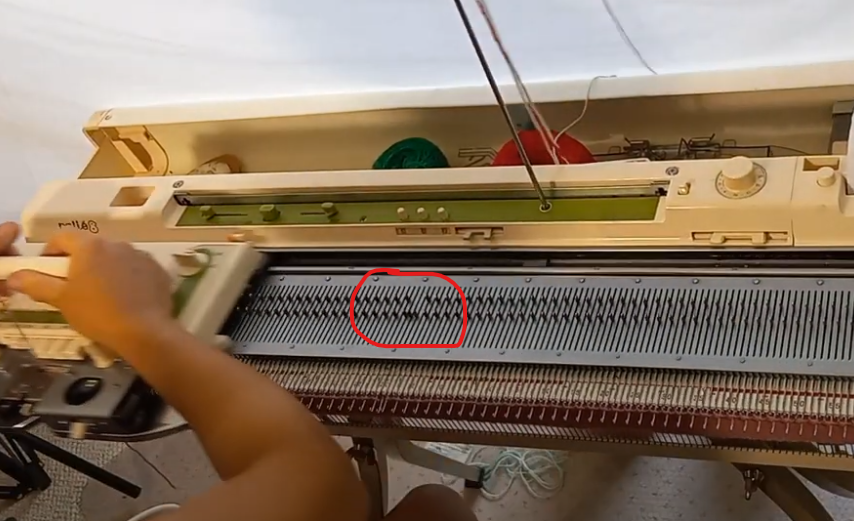
… And the knitted fabric did not show this flaw (tuck stitch hides the errors well – see the picture below).

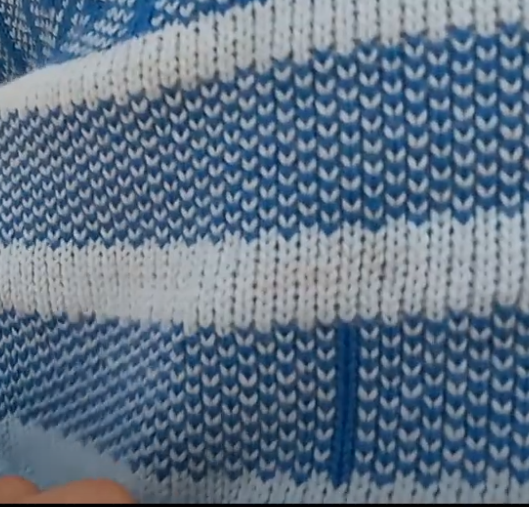
So, when I started knitting fair-isle with the same punchcard and 2-stitch repeat pattern, the same needle was not being selected correctly.

… But this time, I was able to clearly see the incorrectly formed stitches (due to the color contrast of the two yarns).
The reason for mispatterning was a bent needle: the end of the needle that gets pushed by the selection plates was out of place due to this bent. After the faulty needle was replaced, I encountered no more problems with the needle selection.
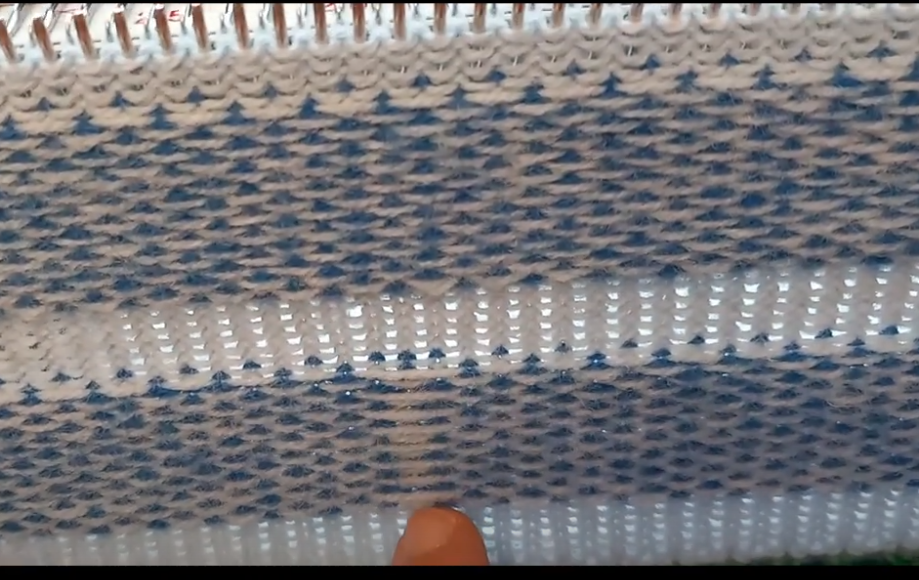
Below is the image showing how the incorrectly-selected needle manifested itself in the pattern.
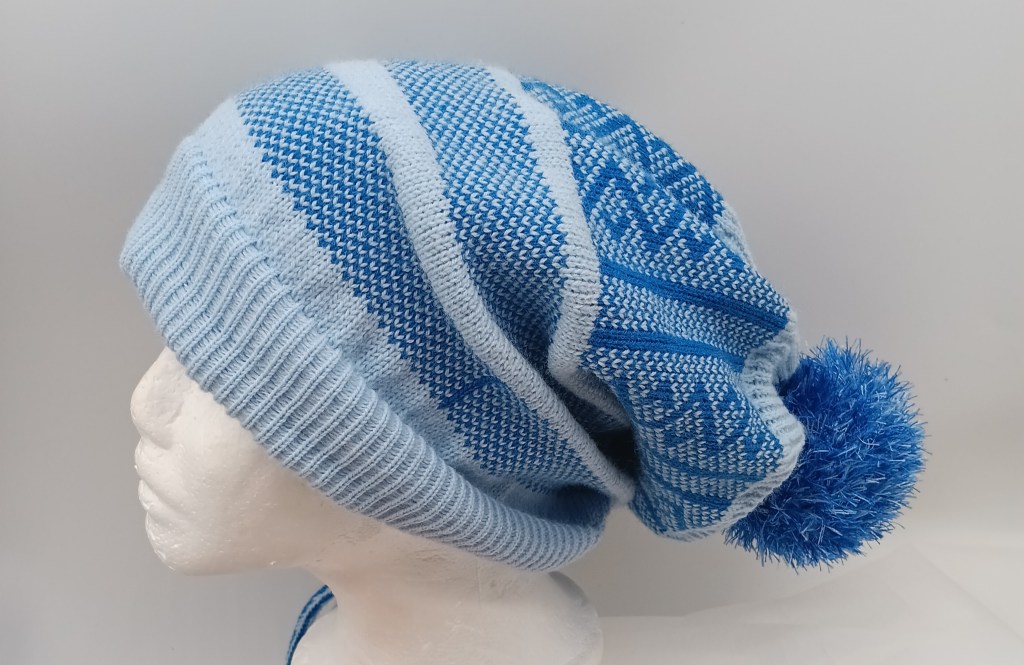
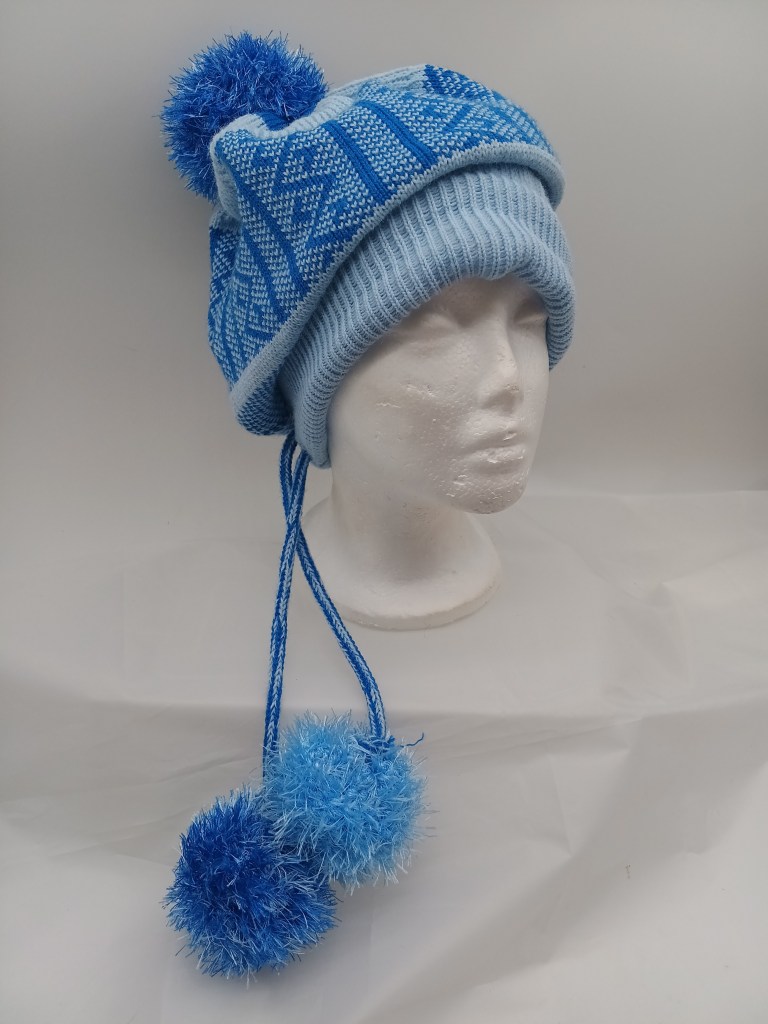
Below are the things I made from the panels I knitted while testing this machine with various yarns.





Now about imperfections: they are mostly related to the case (minor stains, scratches, and slight bends). See the pictures below.
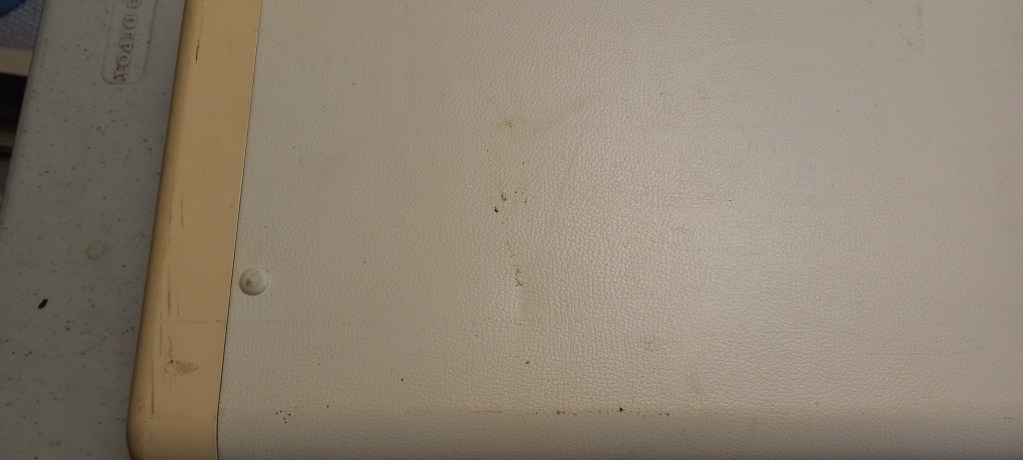
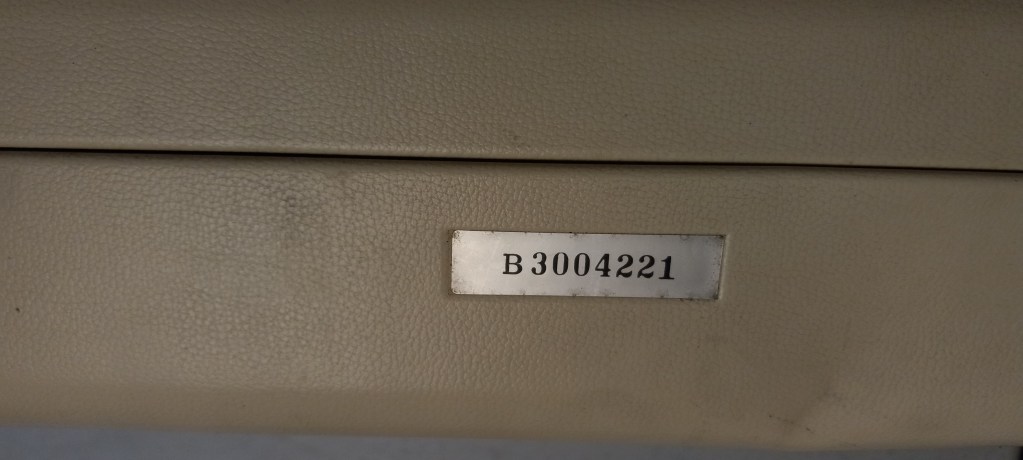
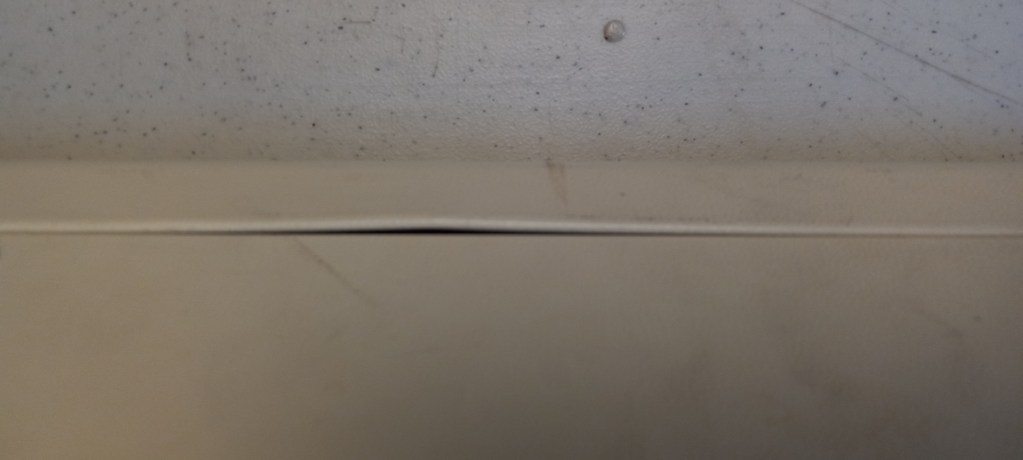
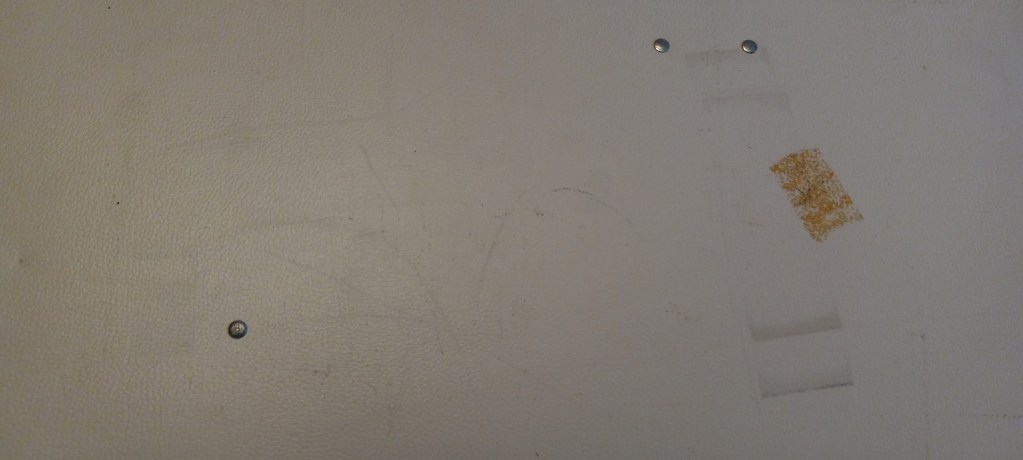

Additionally, there were some very minor rust spots on the case, which I covered with a special coating to inhibit the corrosion and to cover it up as well (not shown) These rusty imperfections are not visible.
I hope you will consider this machine for your knitting needs.
Happy Knitting!

