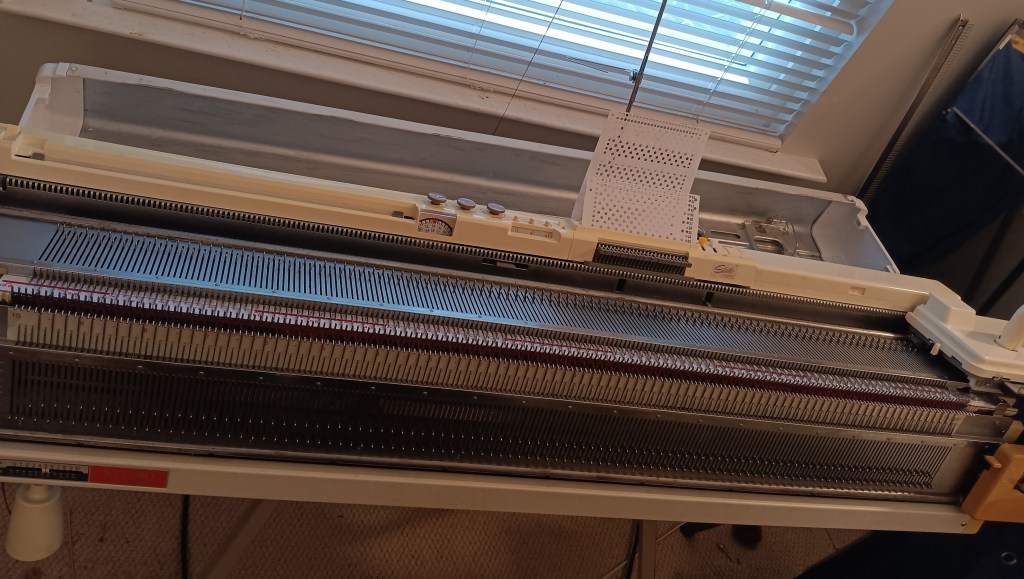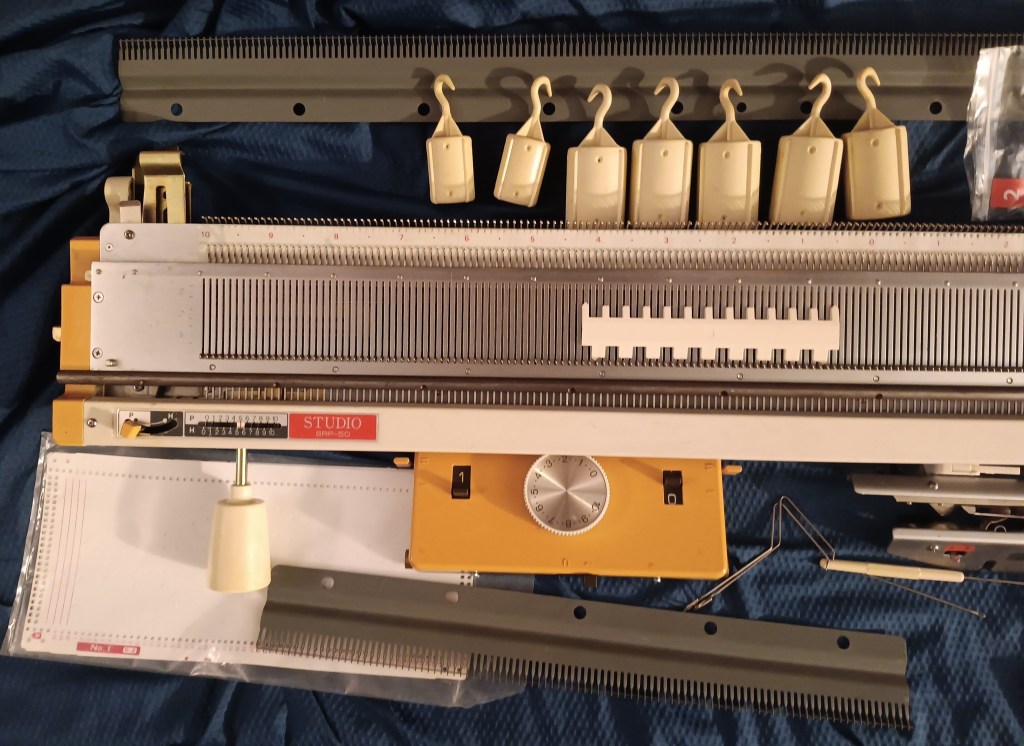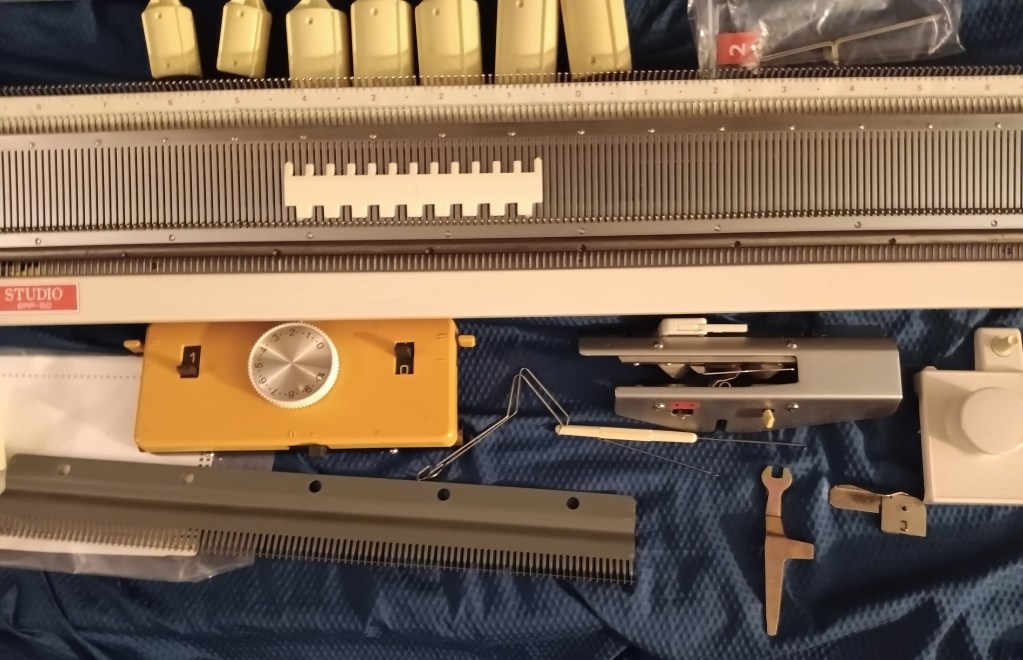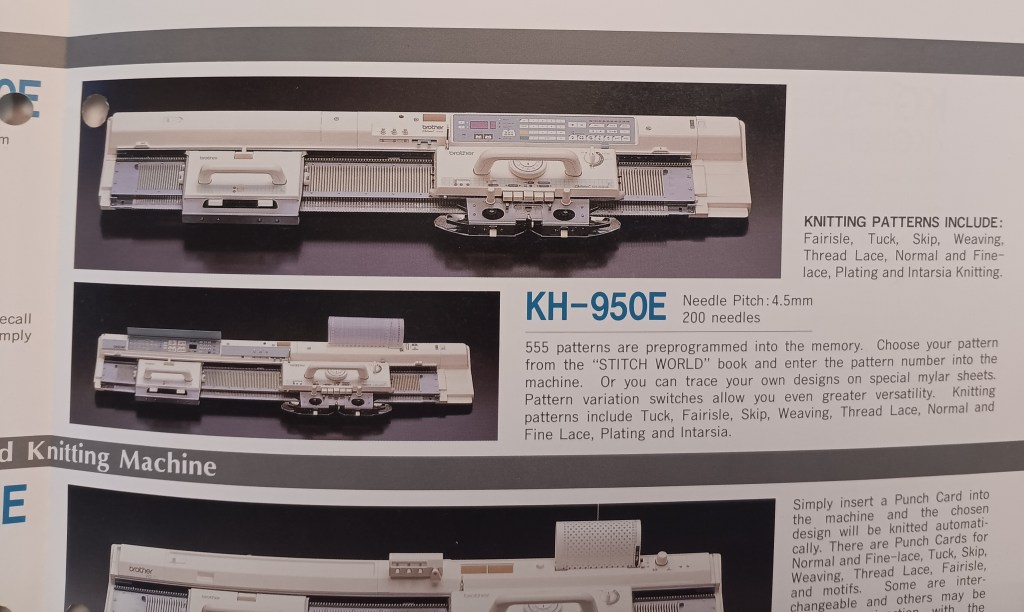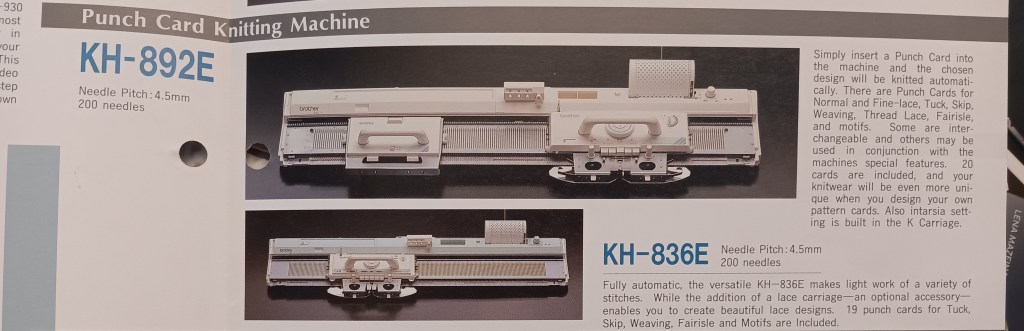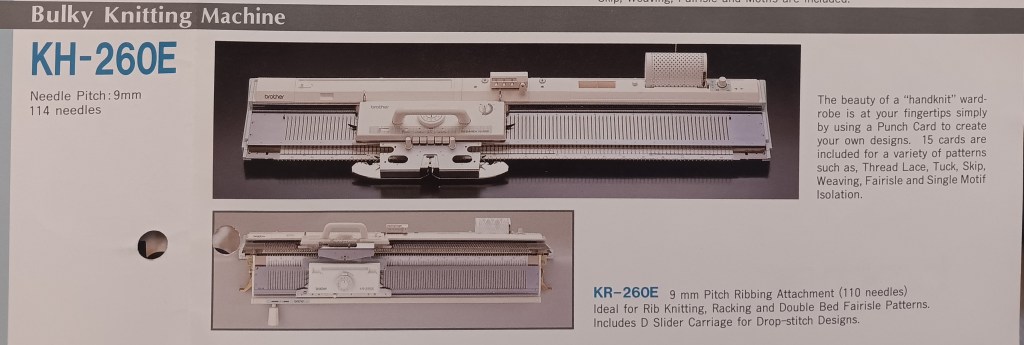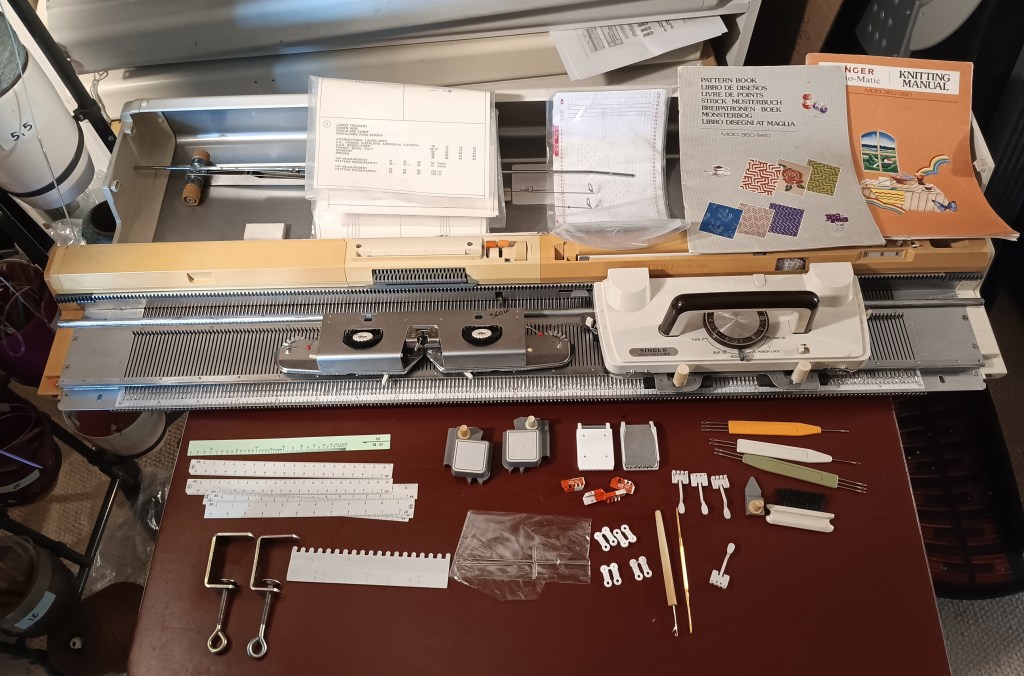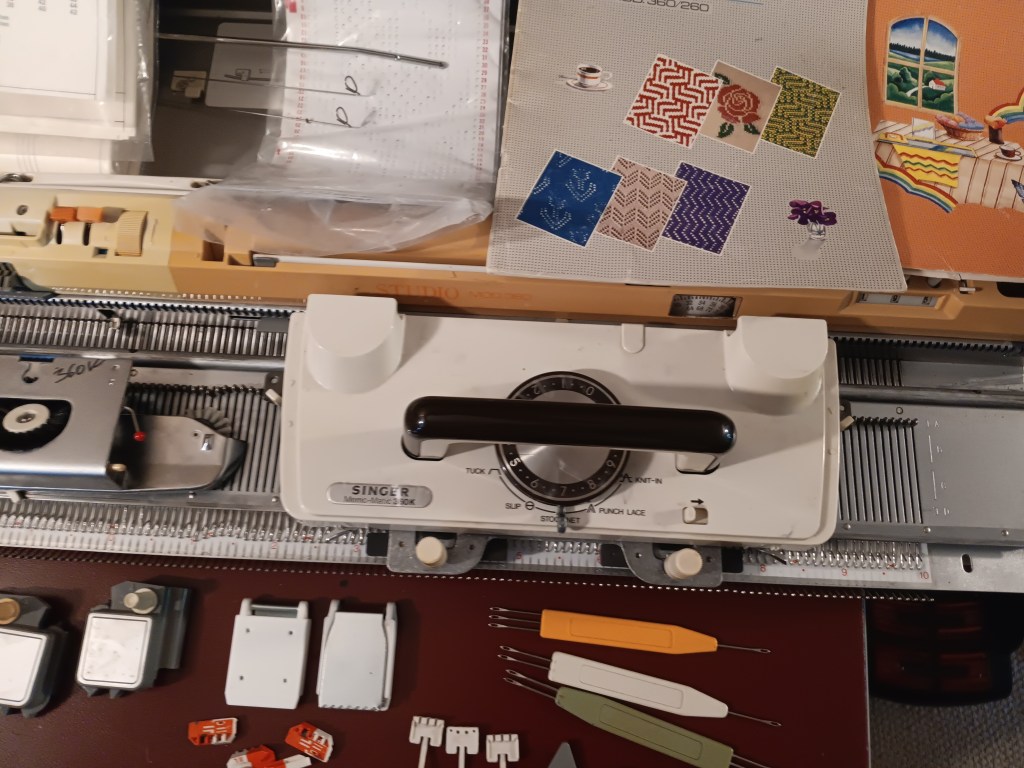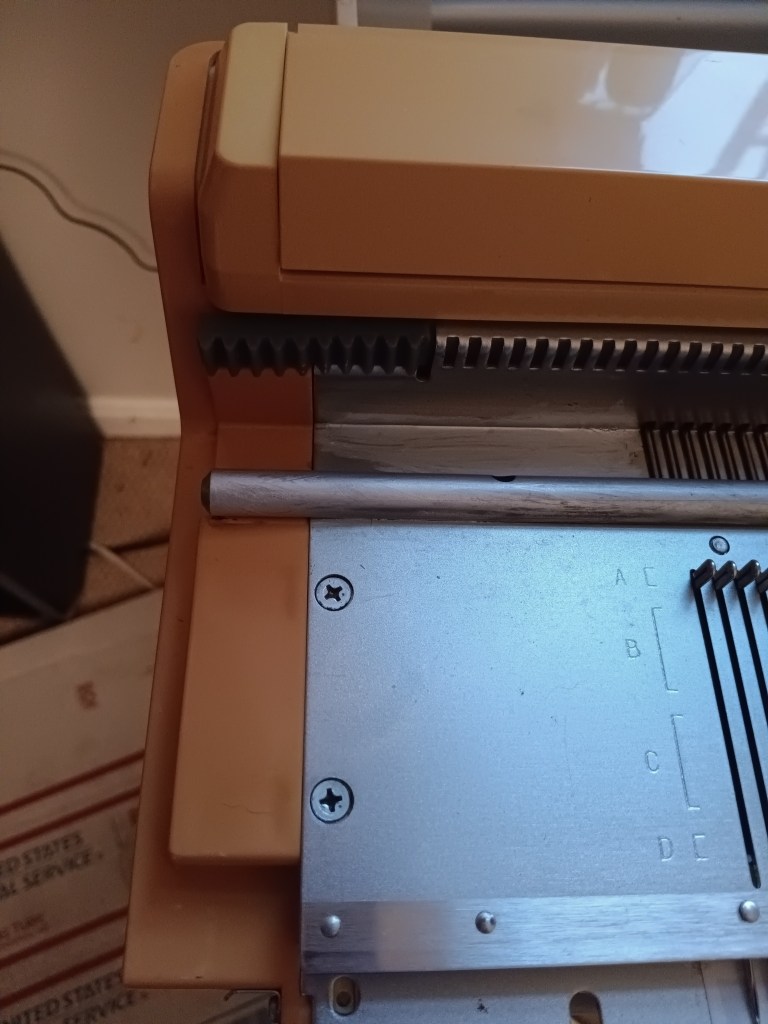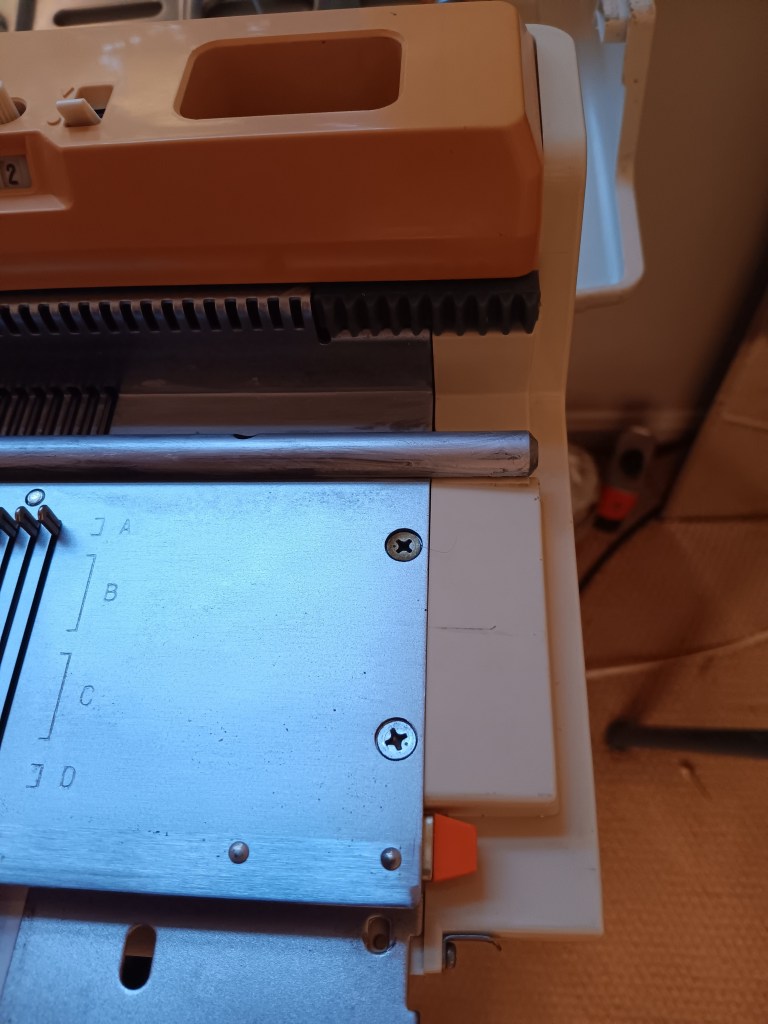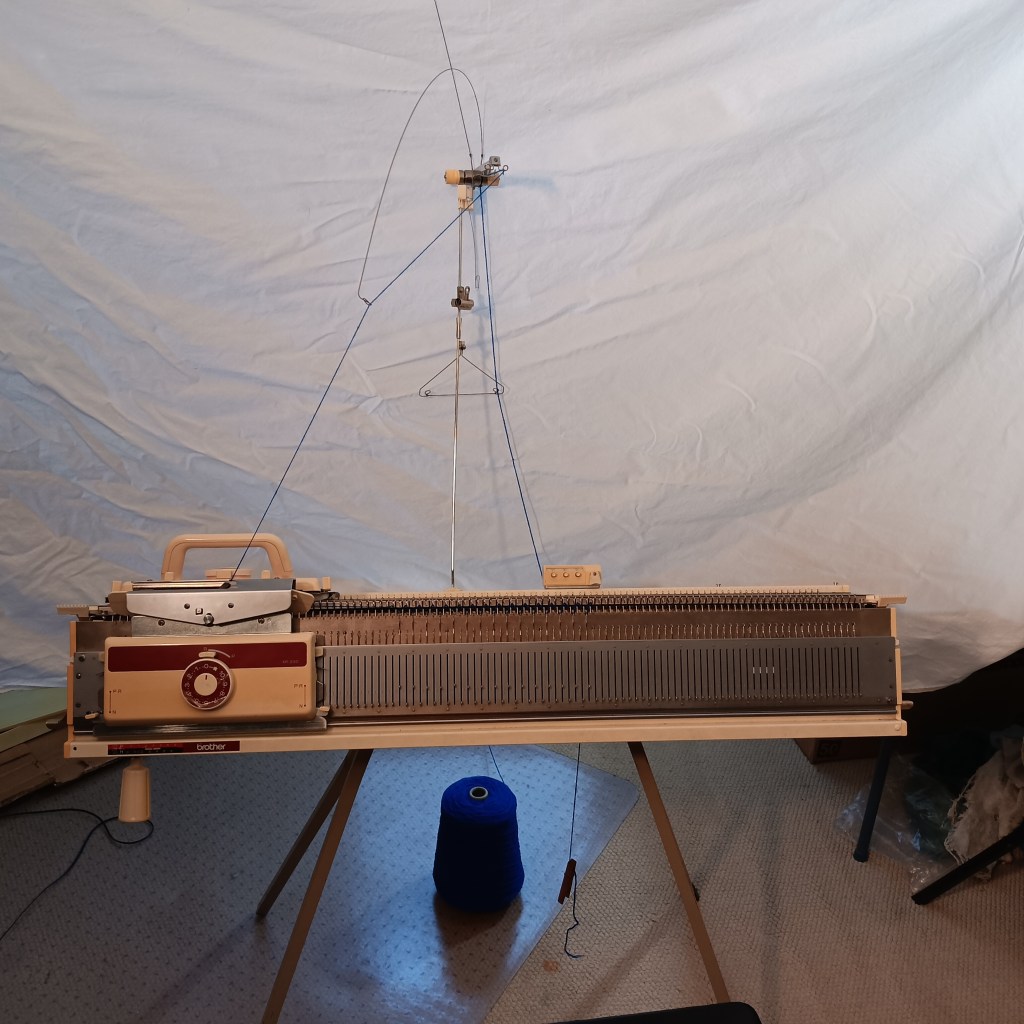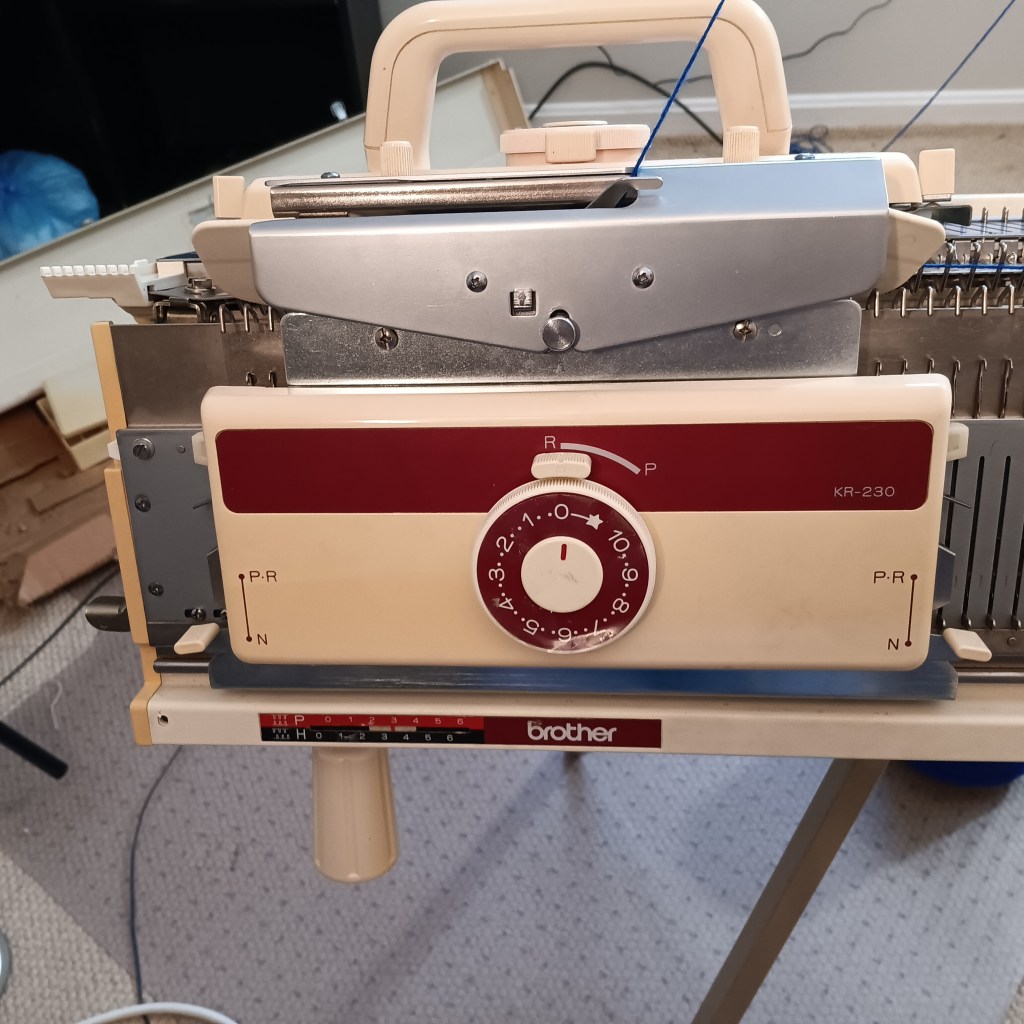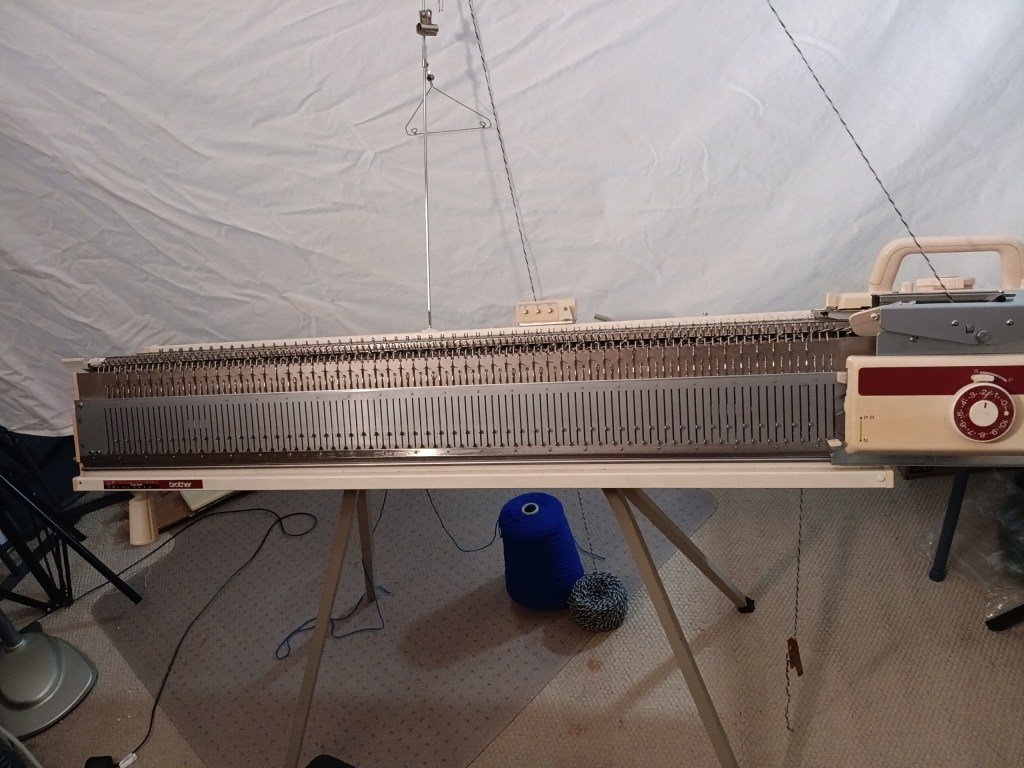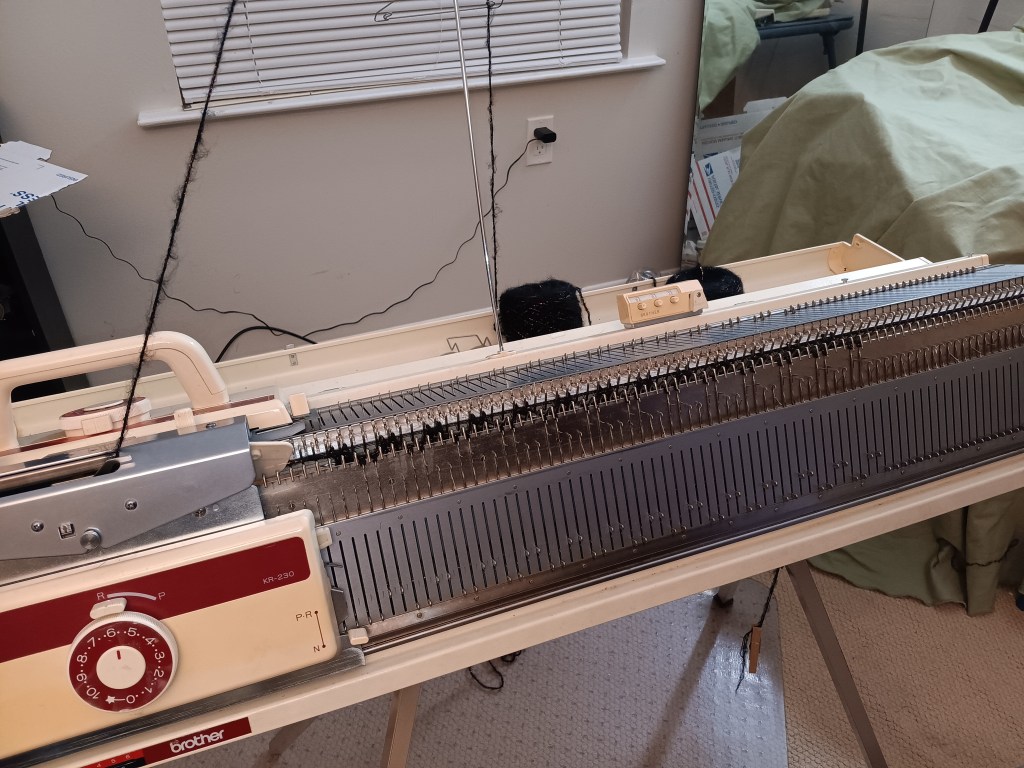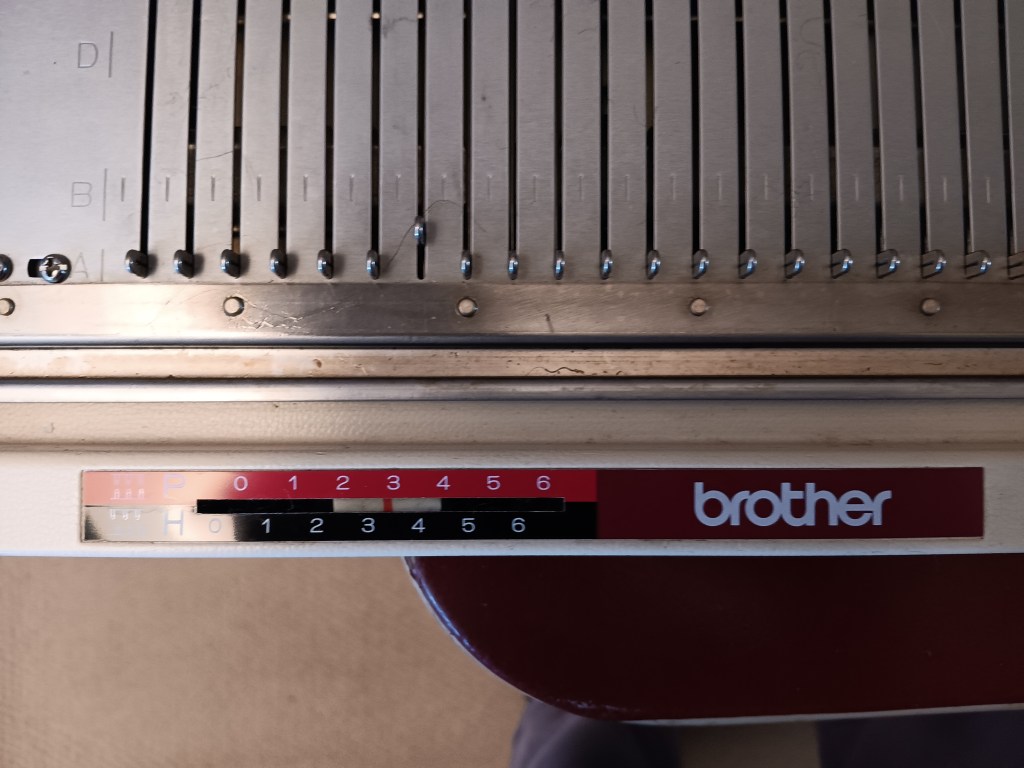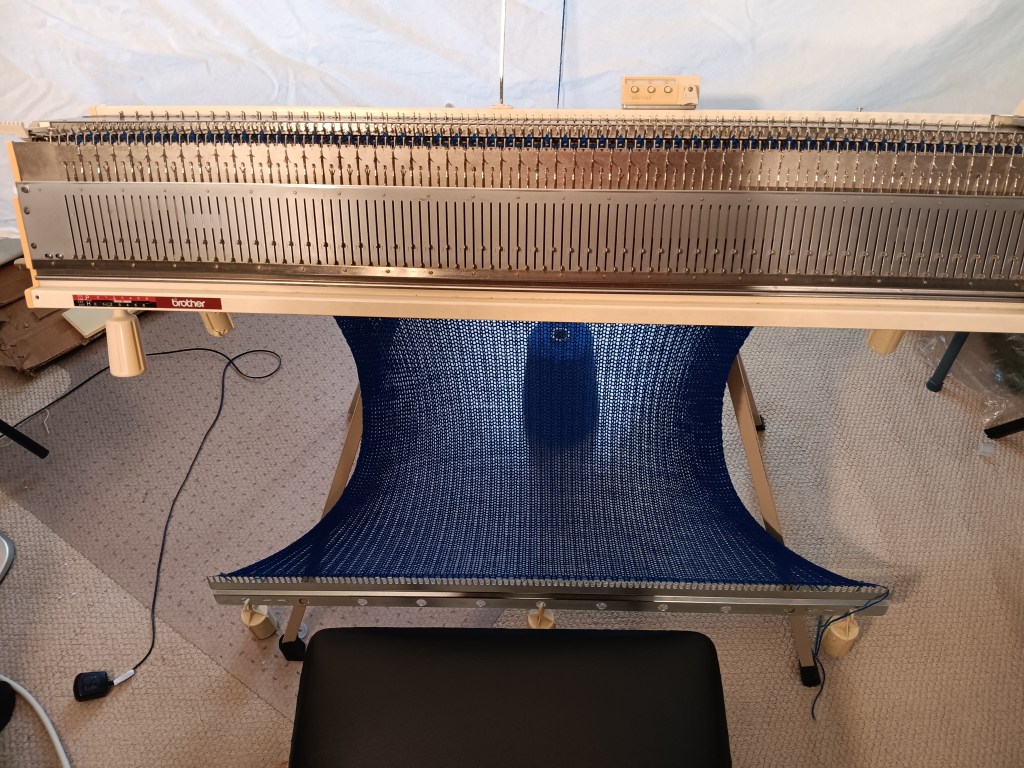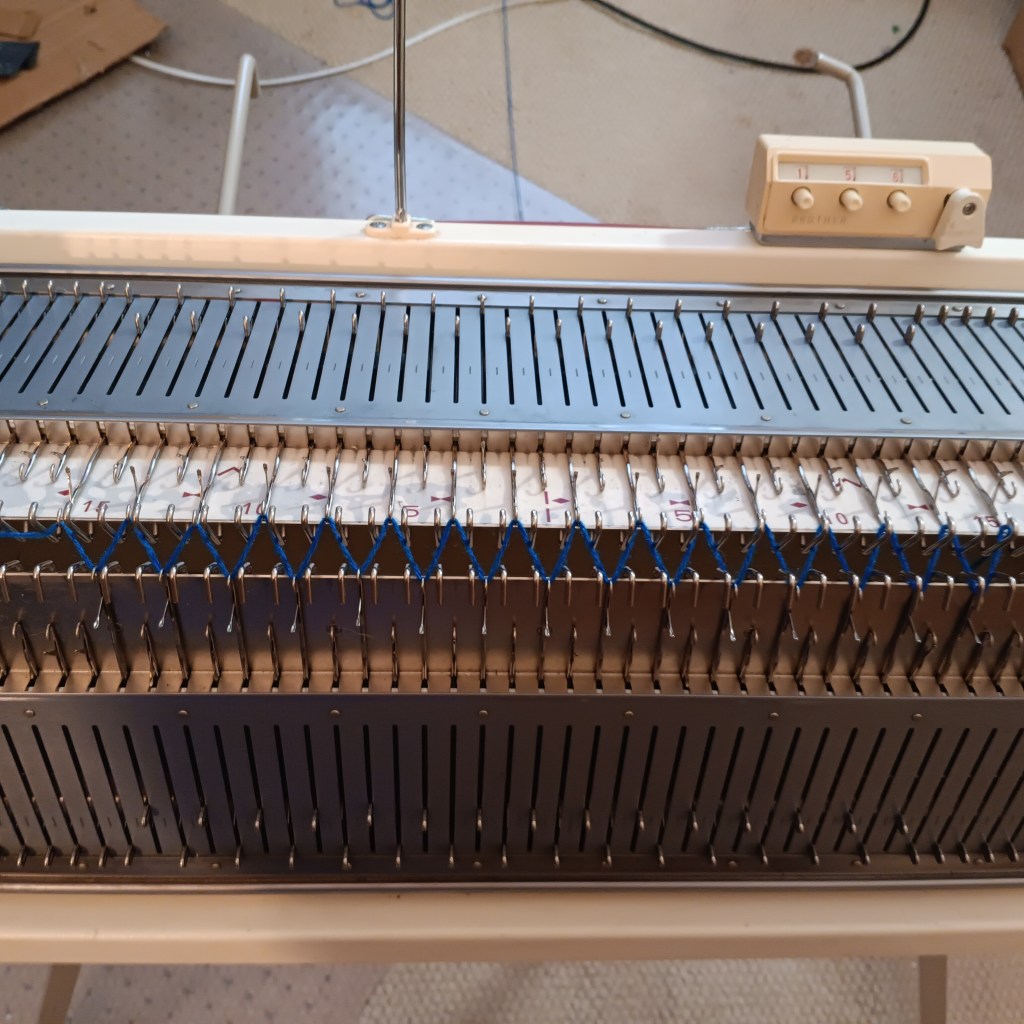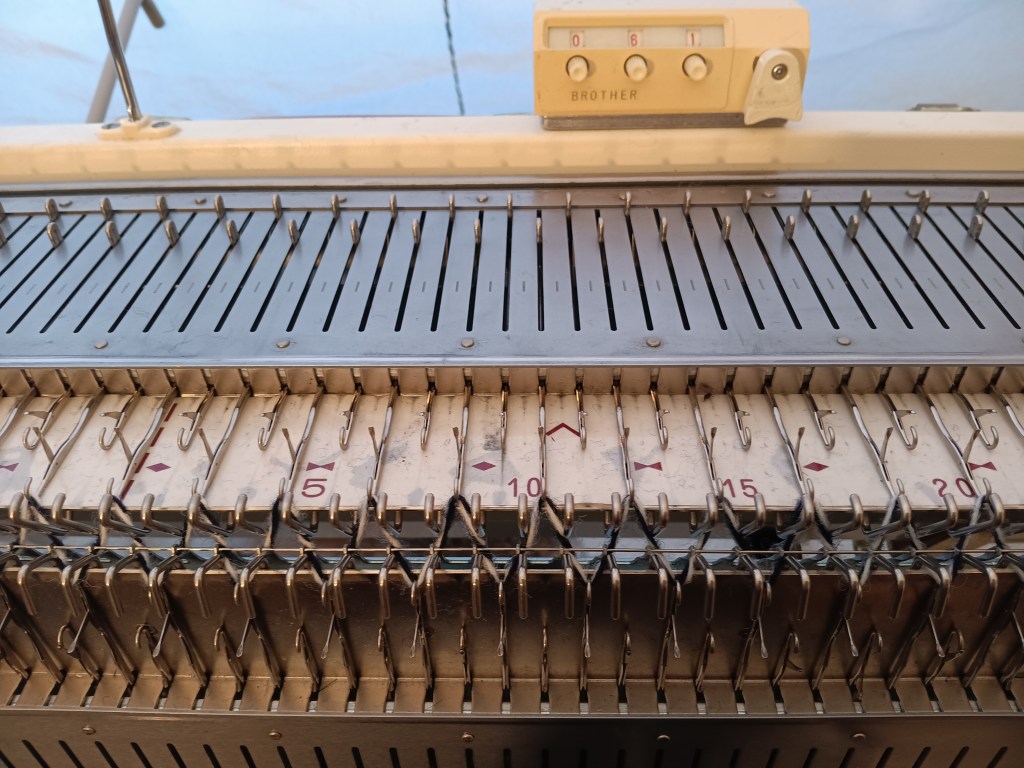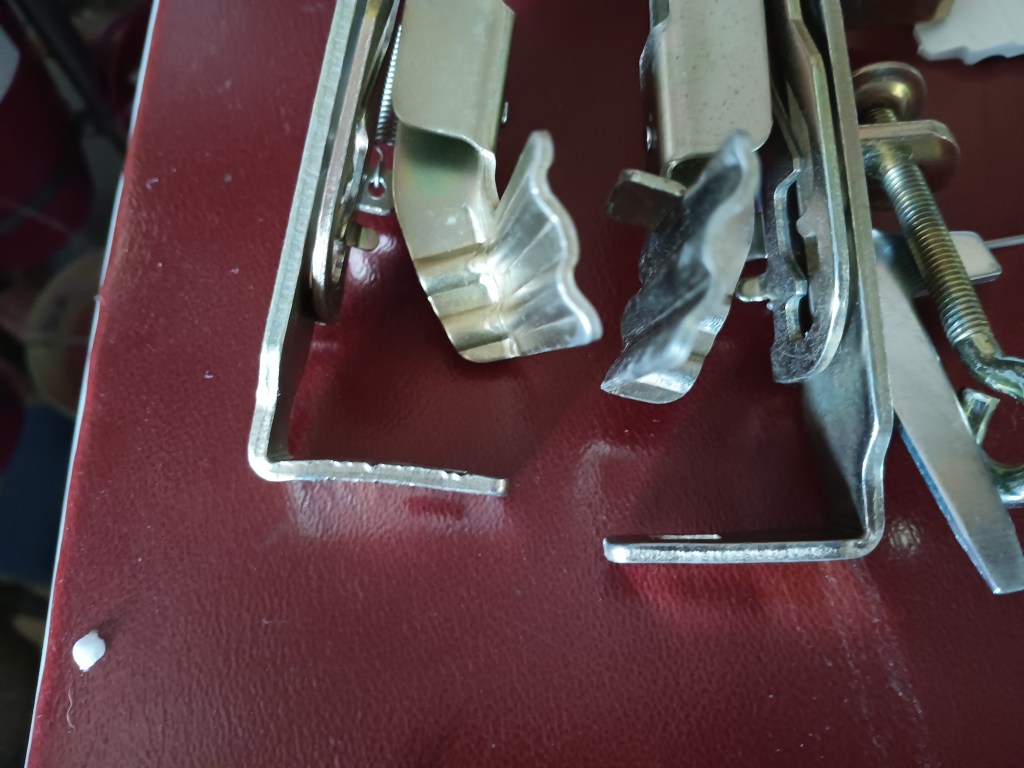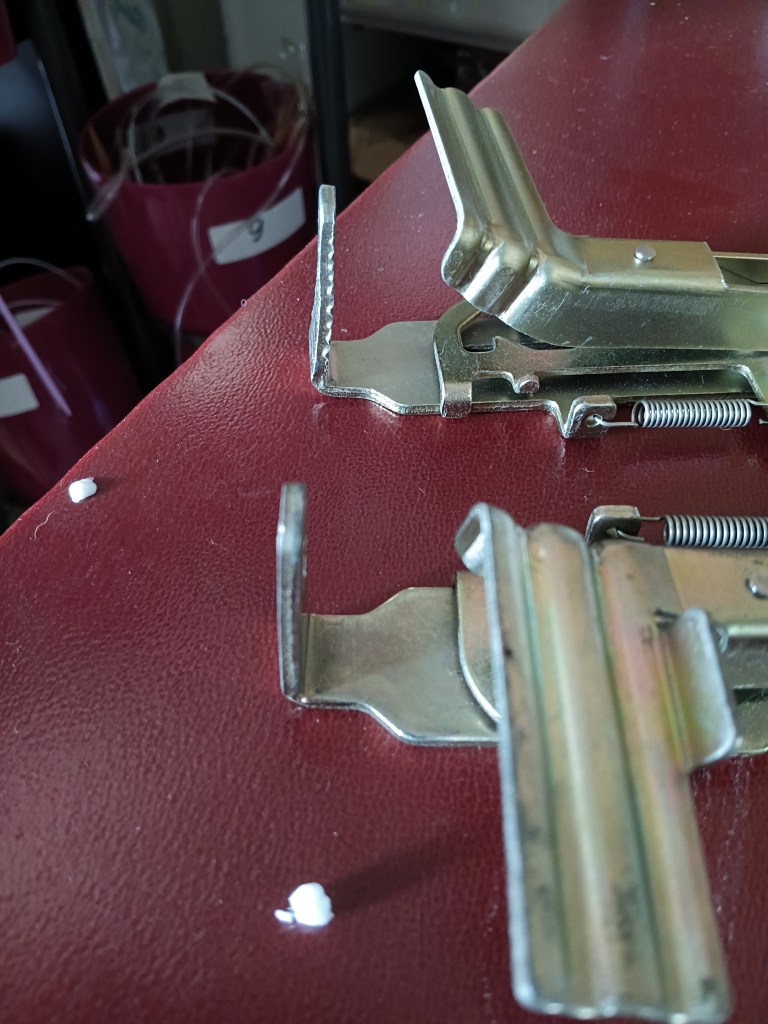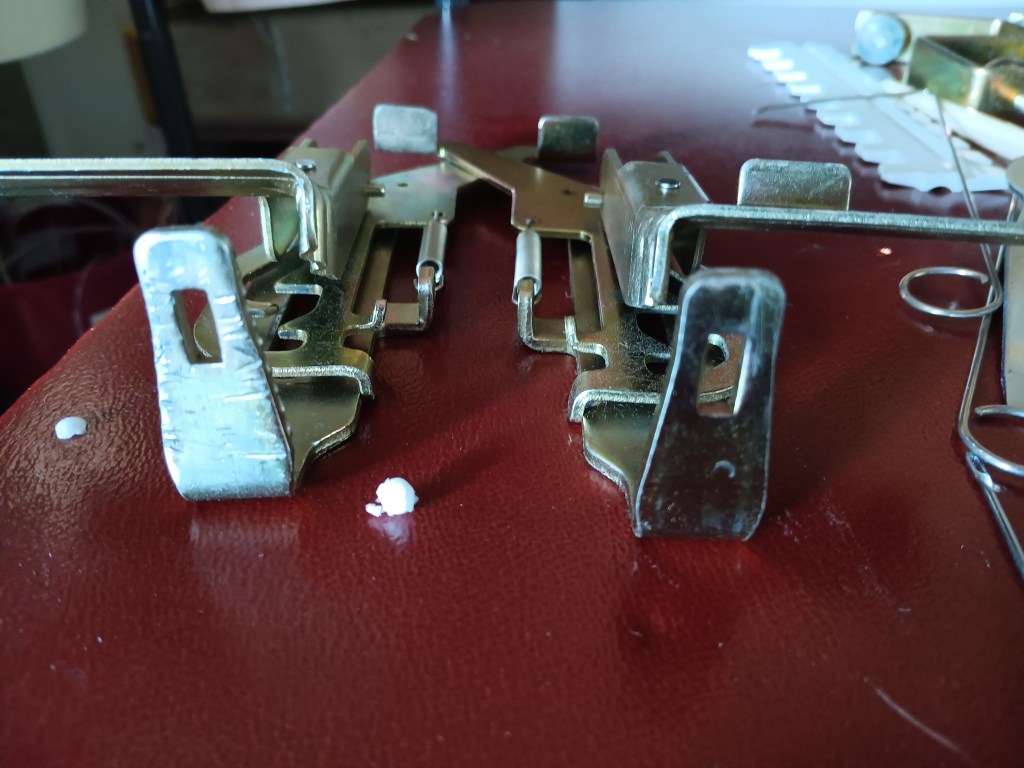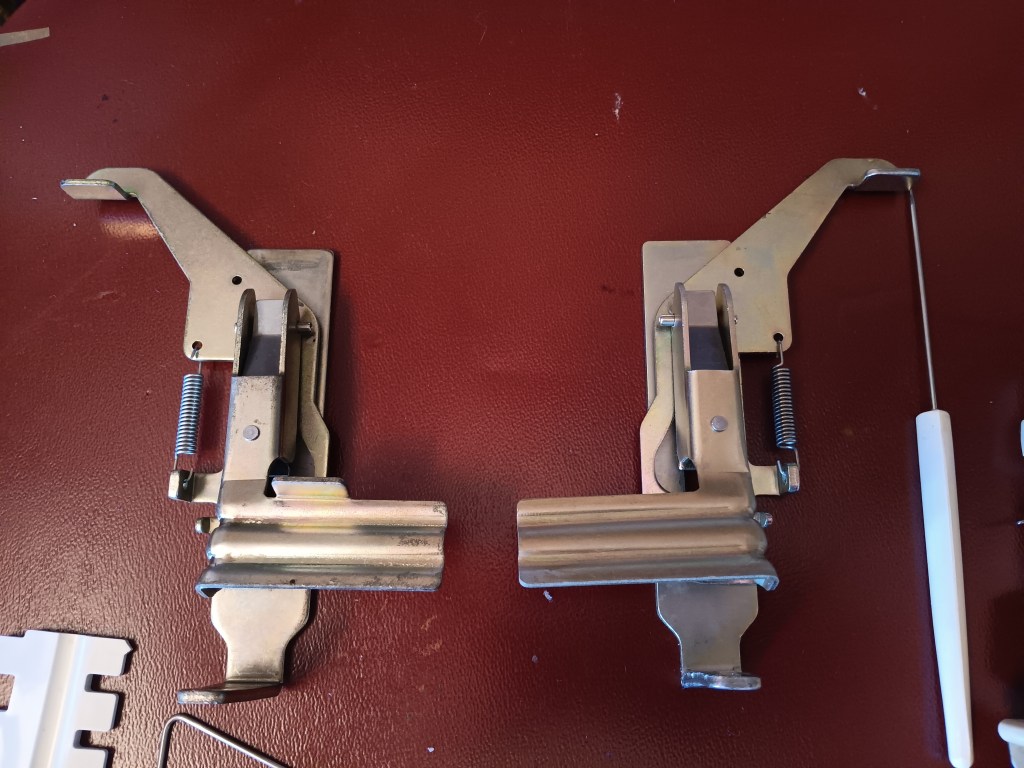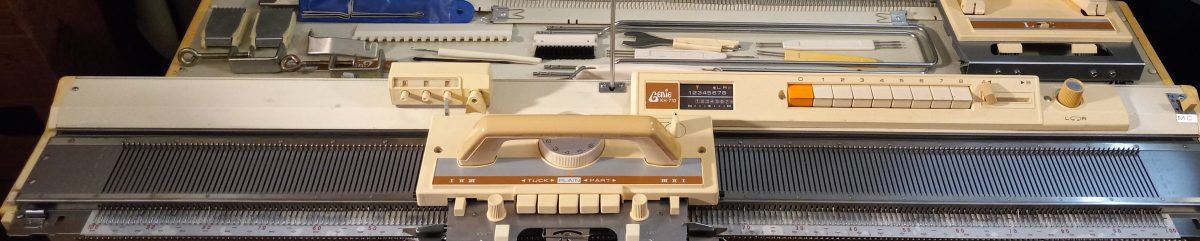
Brother Profile 551 (Or KH551) knitting machine is a standard-gauge knitting machine with 200 needles, 4.5 mm apart. Read more about the pros and cons of this model in my Knitting Machine Encyclopedia.
The article below is dedicated to a specific machine tested and serviced in my shop in October 2025.
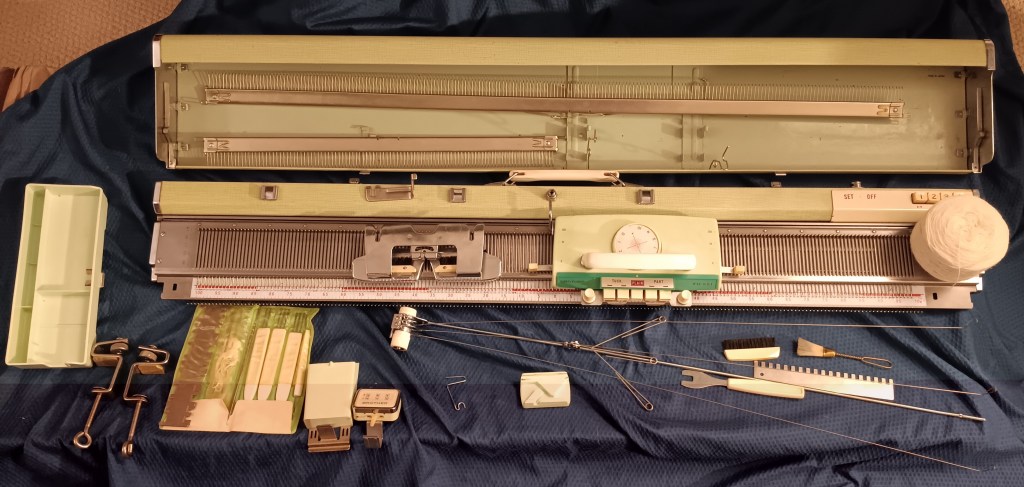
The machine was cleaned and oiled. All needles were removed, cleaned, and inspected individually. Their latches and straightness were checked and confirmed. The carriage was cleaned and serviced (oiled and inspected). The sponge in the metal retaining bar was replaced with a new one.
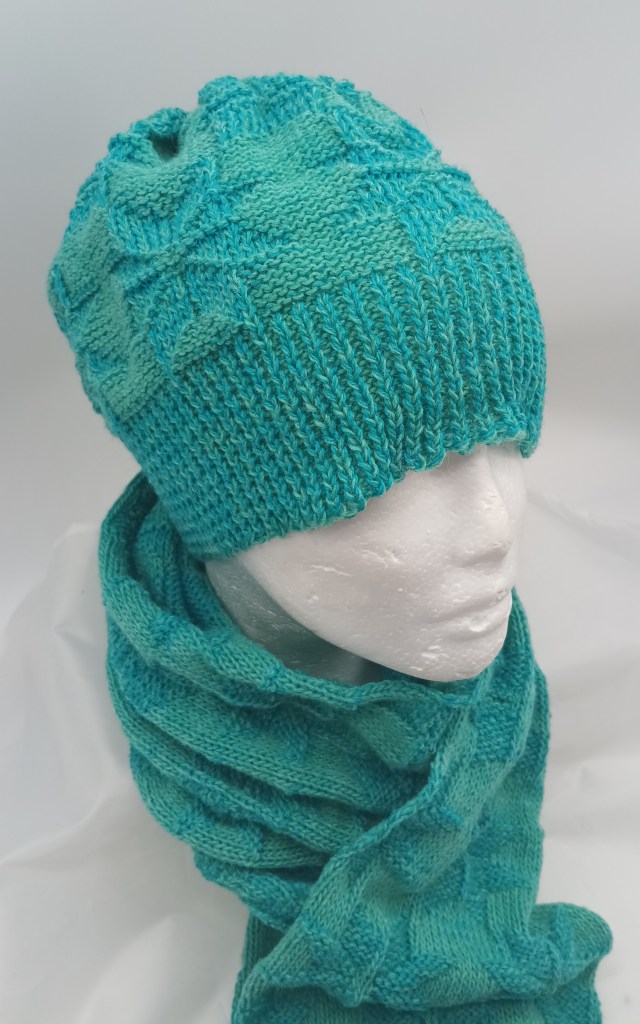
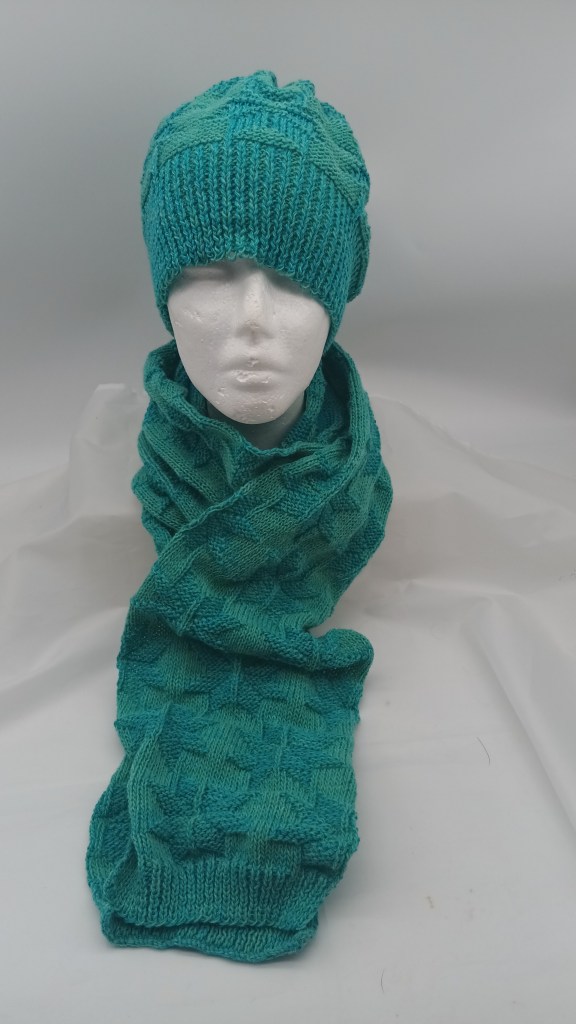
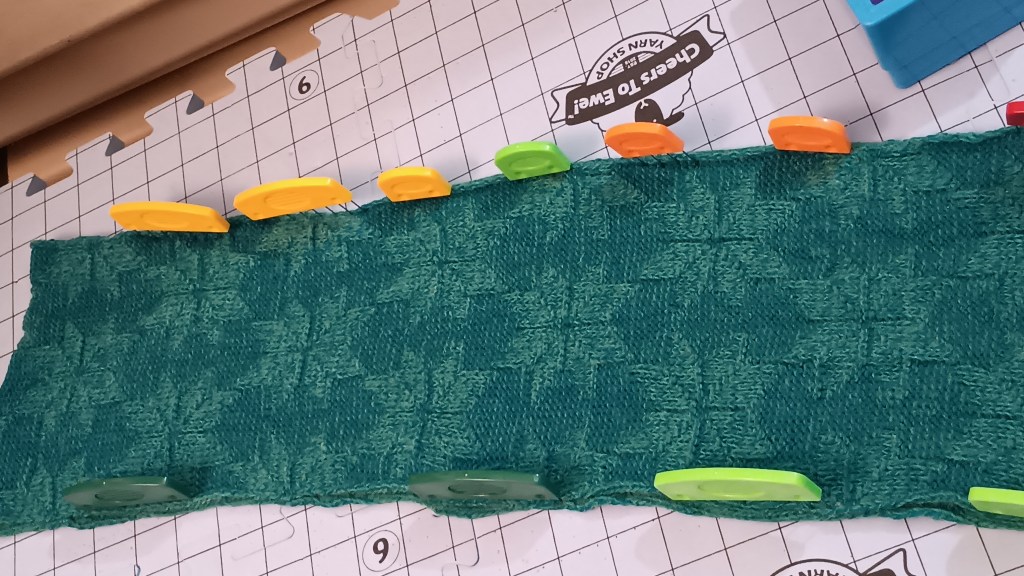
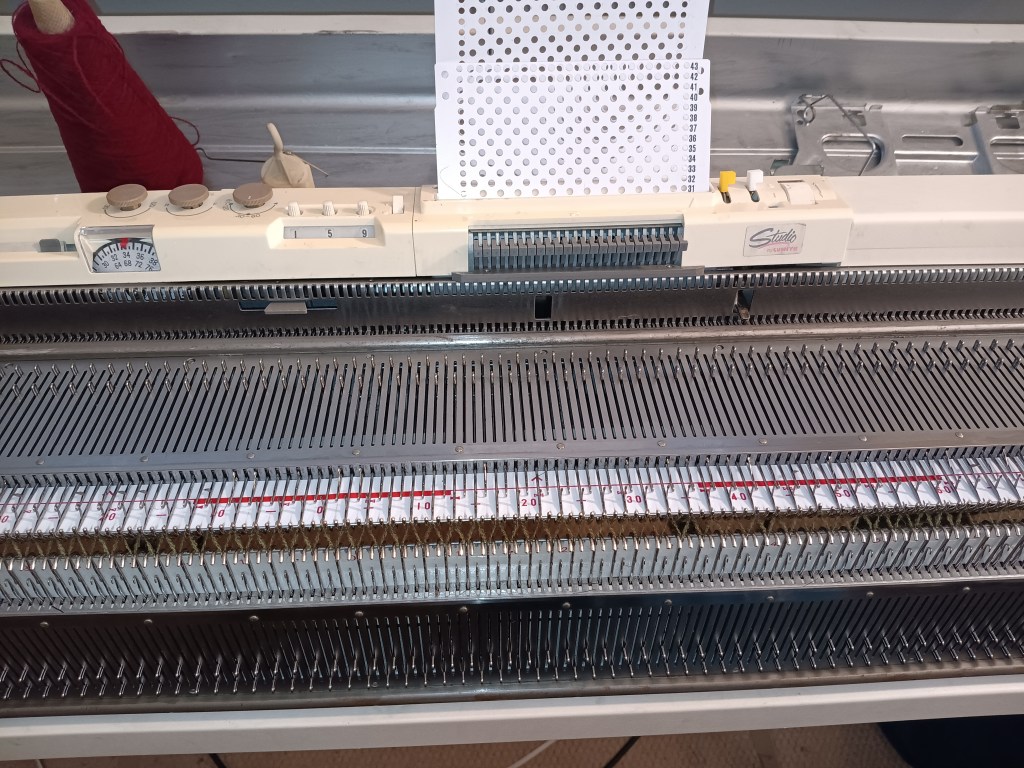
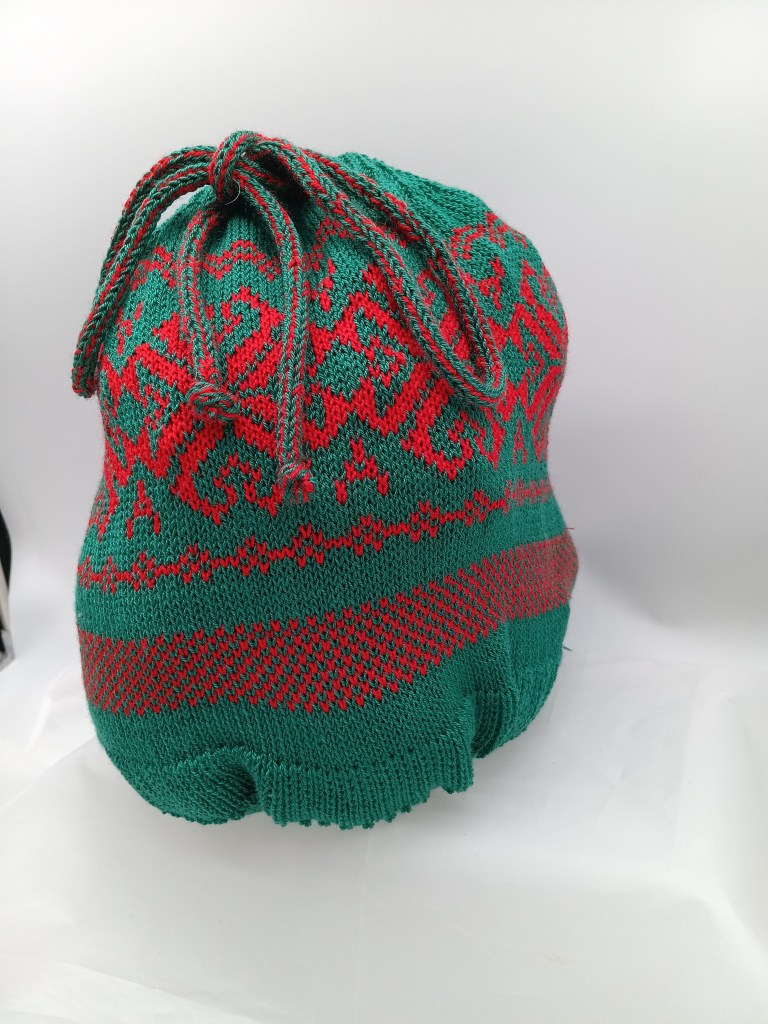
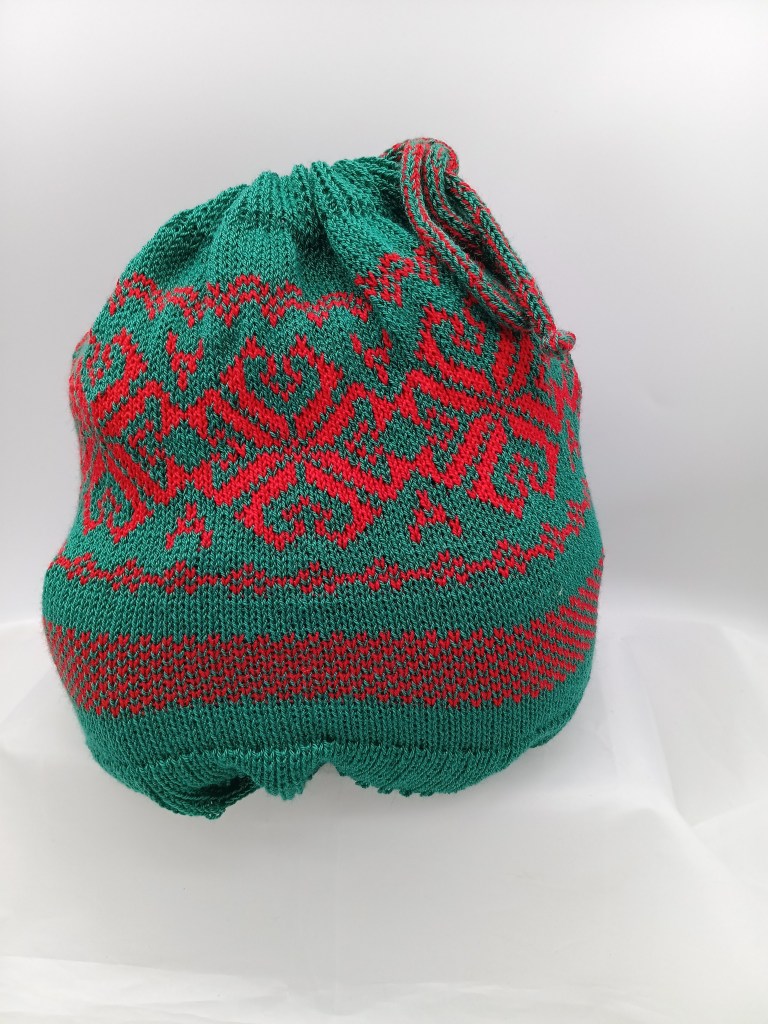
I first knit a swatch while testing the machine to demonstrate that the carriage, all its levers, buttons and knobs as well as the needle selection mechanism, work well.
Additionally, I tested the machine on all needles to ensure the needles form correct stitches. The video of these tests is posted on my YouTube channel. I used several different yarns. All tests went really well. I tested the machine using several different yarns. I will include a skein of one of the yarns I used and liked the most for this machine.

In the video, you will see that I first checked how smoothly the carriage runs on the needlebed. I moved forward (to B position) one section of needles at a time and ran the carriage in different settings across these needles. Thus, I ran the carriage across the needlebed after moving the Russel levers to I, II< and III positions and pushed the “tuck” and “part” buttons on the carriage.
When knitting the “butterfly” pattern (the very first “holding” pattern) I deviated from the pattern and instead of alternating between pressing buttons 1 and 3, I pressed 1 and 3 and then 2 and 4 to demonstrate that machine, buttons and needle selection function properly.
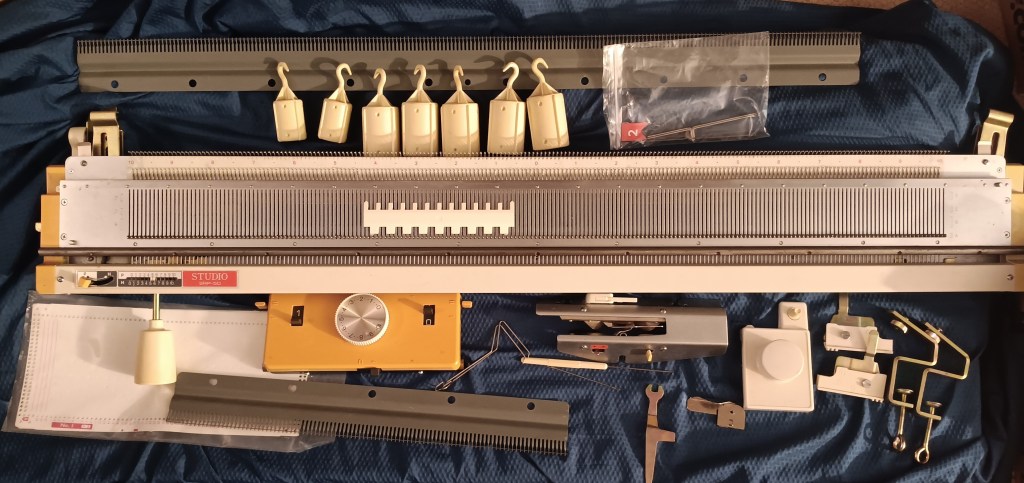
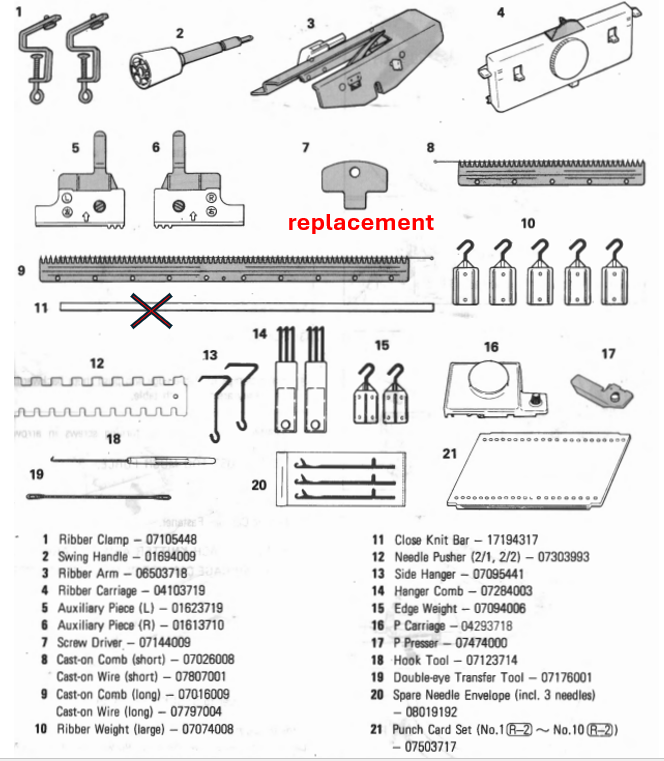
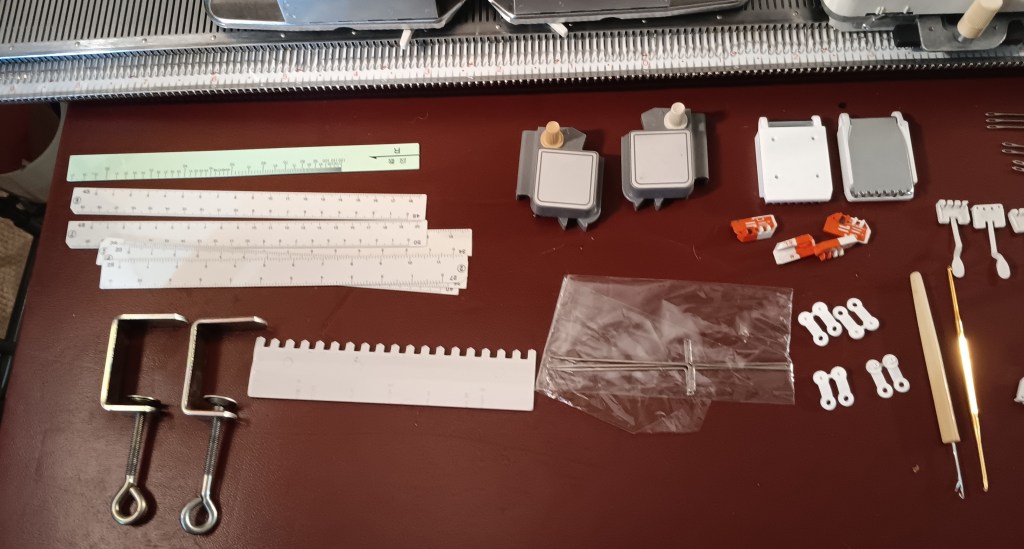
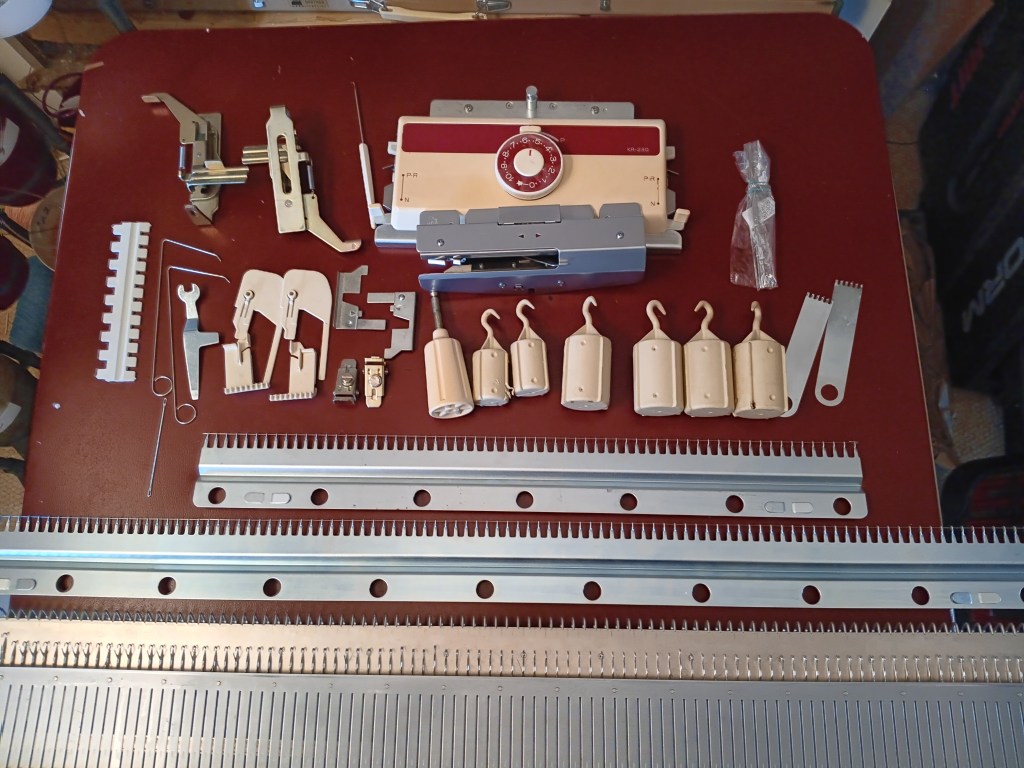
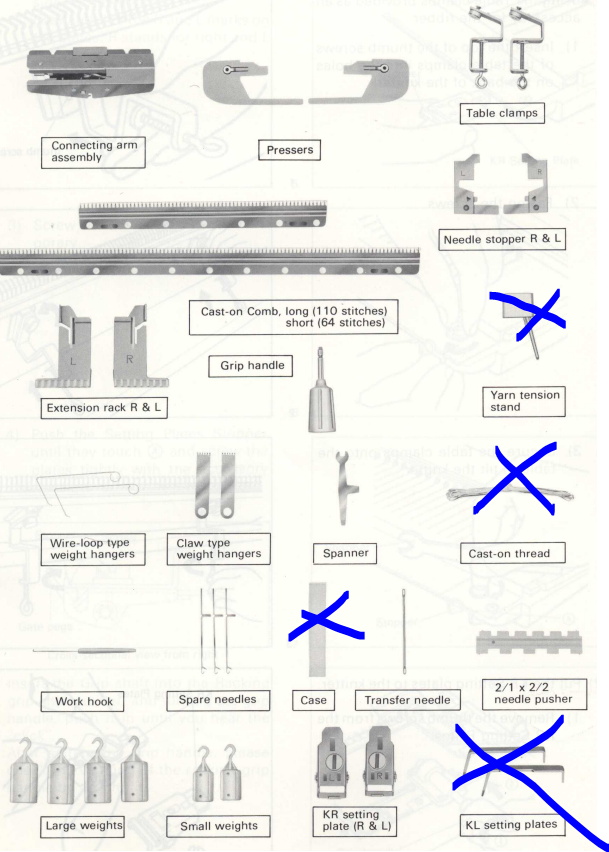
The machine will come with all major accessories and almost all minor.
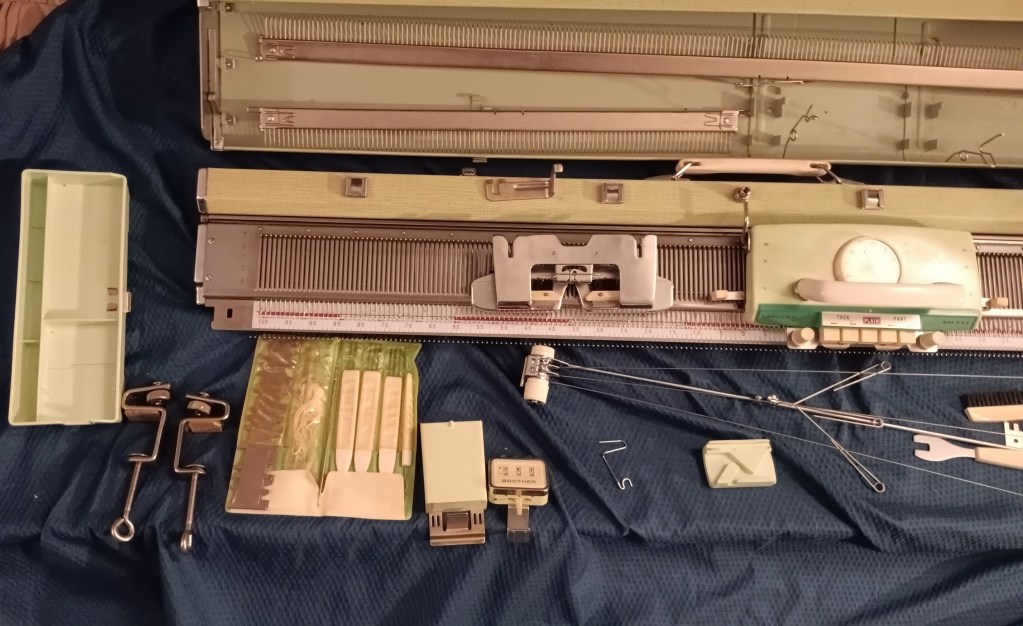
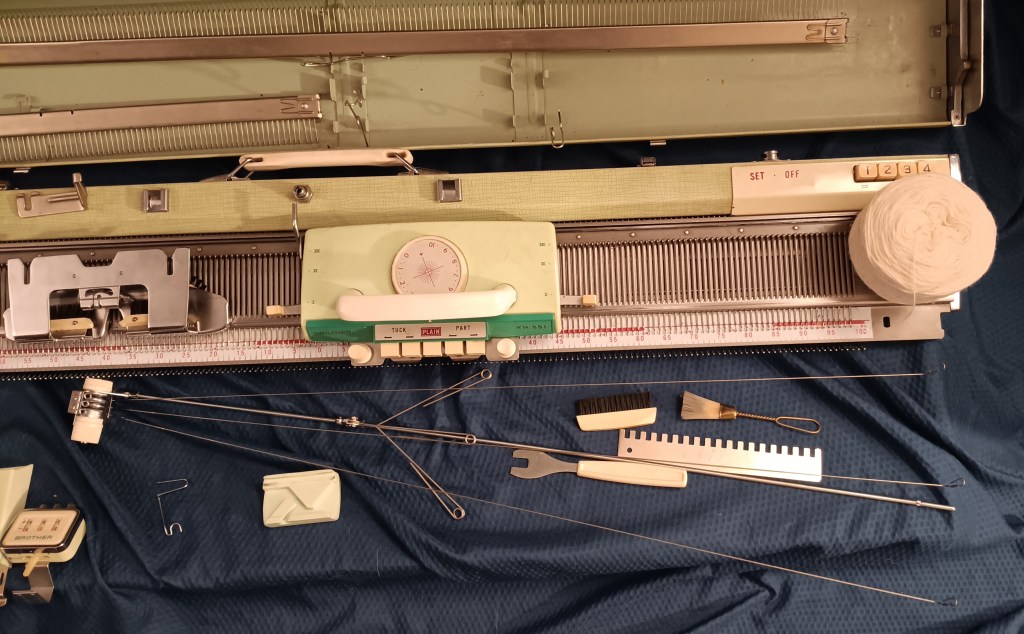
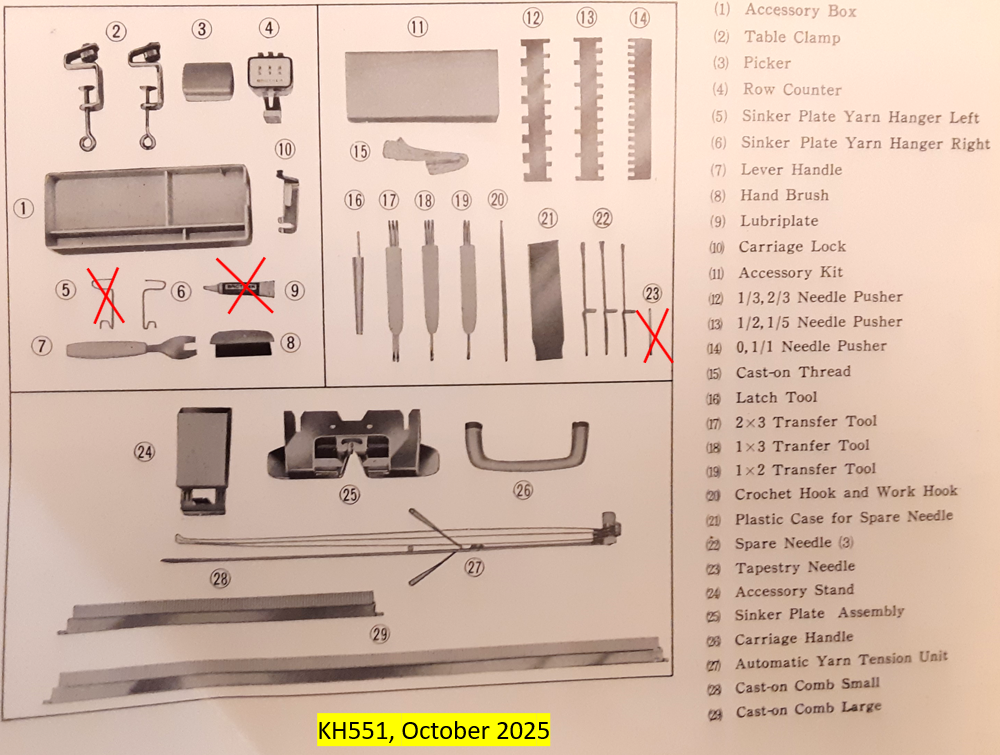
The accessories that are not included are:
- one of the yarn hangers, used in the plating type of knitting (page 19 in the manual). On one of the previous machines, I used a paper clip. My experience also shows that knitters rarely use these.
- oil. It was too old and I discarded it. Use Hoppe’s gun oil available on Amazon.
- A tapestry needle was rusty and I discarded it as well. Any needle will suffice.
- A hard copy of the manual will not be provided.
The original manual can be found online, but the resolution is poor. For patterns, it is better to use this manual, which is for the 8-pushbutton machine, but the functions of the carriage are all the same. When converting those patterns, in the pattern table, cut the number of buttons by half and just follow the rest of the directions.

I noticed that the claw weights do not come with this machine. But you can easily order them on Amazon (as well as a smaller cast-on comb for swatches). The price on Amazon is even better than I would offer.
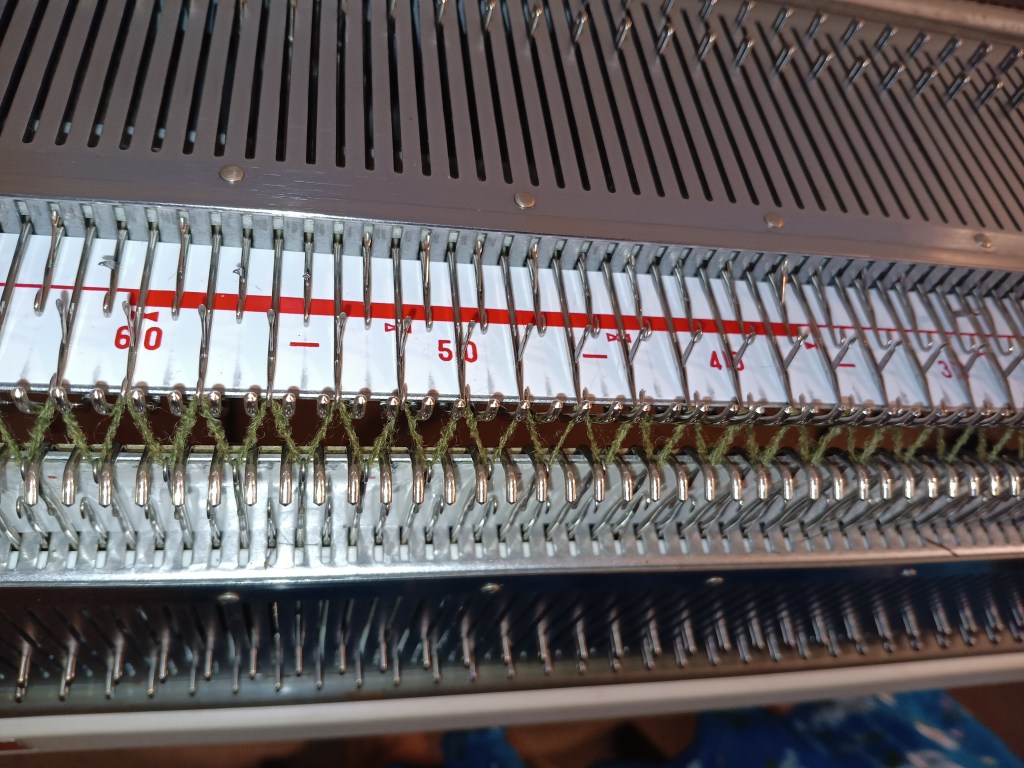
When knitting tuck patterns, especially on every other needle, watch that the stitches come off the round section of the needles. Always remember that the tuck (other stitches too, but tuck especially) is always an interplay between the correct yarn, tension, carriage settings, and static, among a few aspects. I will include a skein of yarn I used for my tets to use as a reference yarn.

A couple of hints to avoid mistakes with the set lever and pushbuttons:
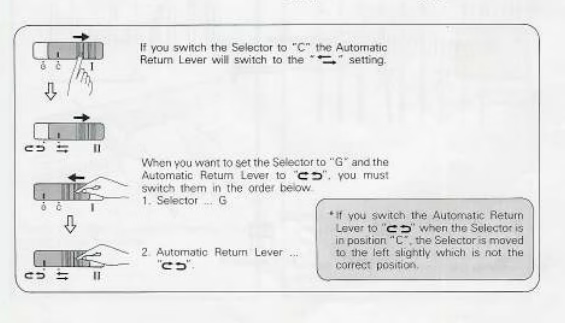
- Make sure the ratchet tool goes ALL THE WAY to the left when activating the needle selection and all the way to the right (to the OFF position); otherwise, incorrect (or incomplete) selection might happen.
- general rule of thumb: tuck requires higher tension (smaller number on the tension dial) than stockinet. So does slip/part.
- Notice in the video that I am adjusting the tension as I am going from stockinet to tuck/slip.
- For consistency, I recommend the very last two needles (on each side) to be in B position. For example, in the video when i was knitting tuck stitch, I was checking if the last needles are in B or C position. I like my last needles to be in B position, so I moved the needles pushed to C position up.
PROS:
- Overall the machine is in great shape with no visible rust
- cast on combs are in great shape: all teeth are straight, and there are only a couple of minor scratches
- Most of the tools are original
Imperfections:
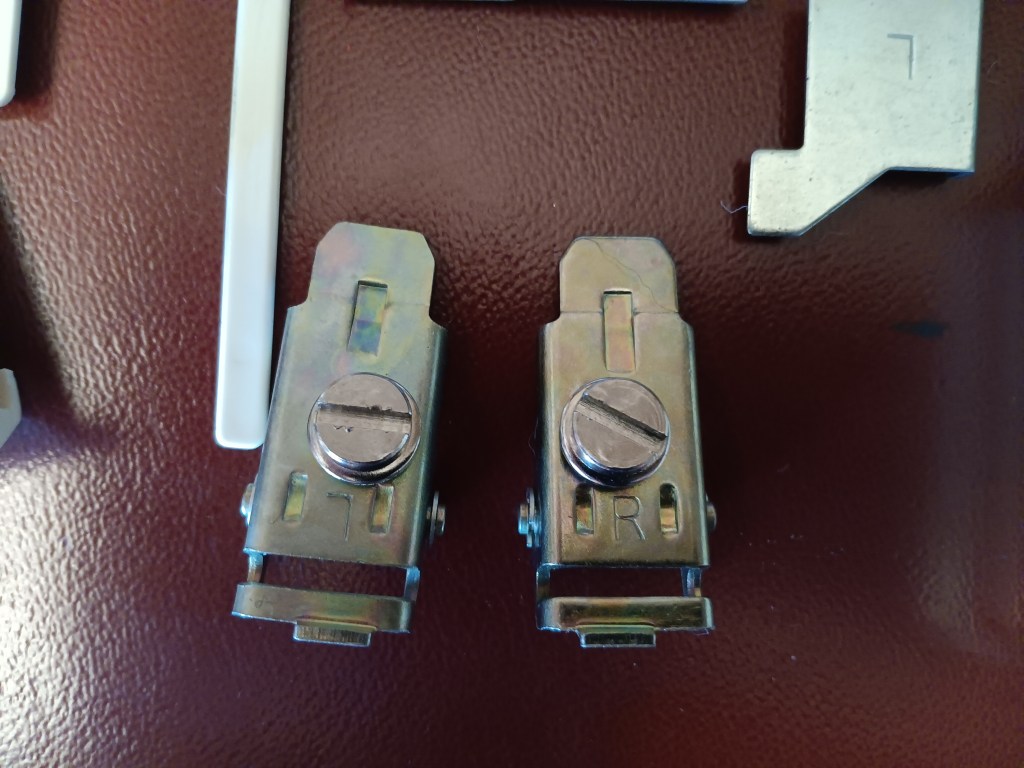
- couple of missing minor accessories and a hard copy of the manual
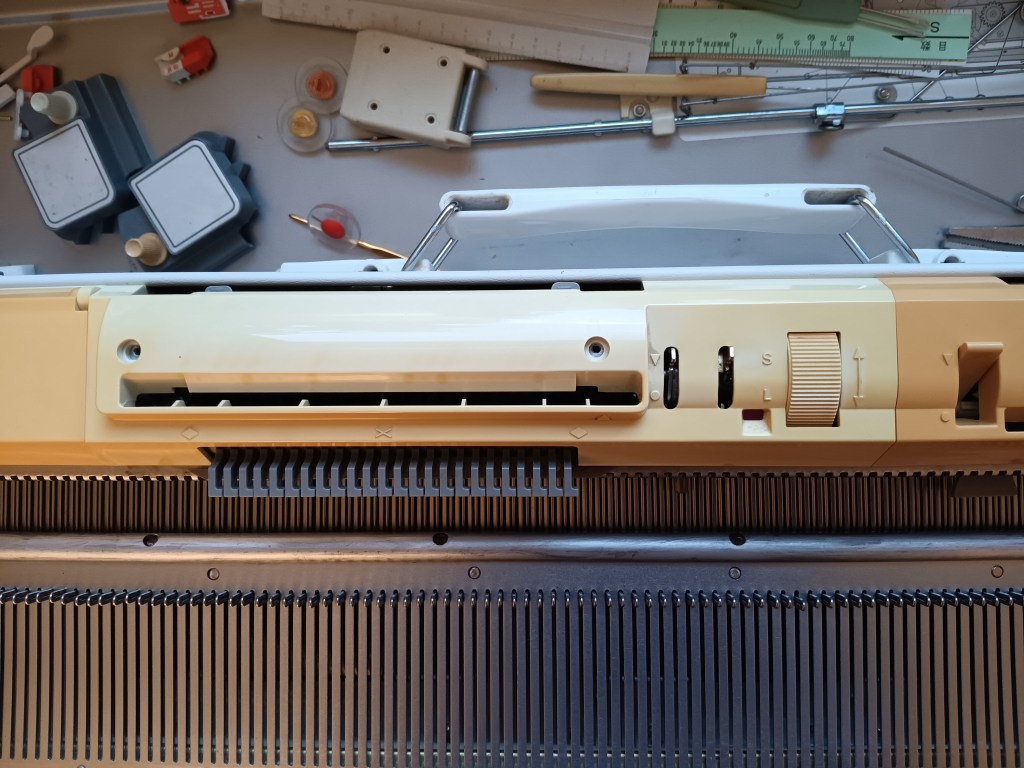
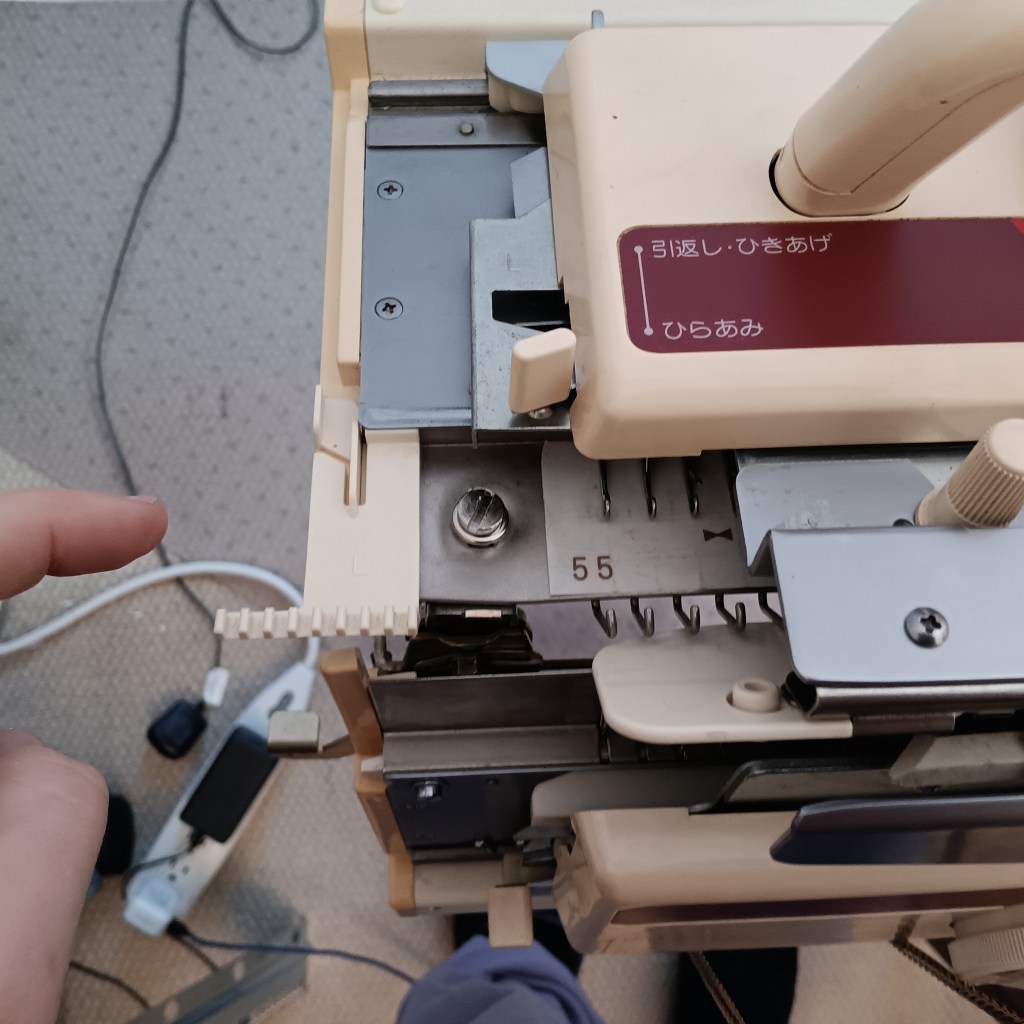
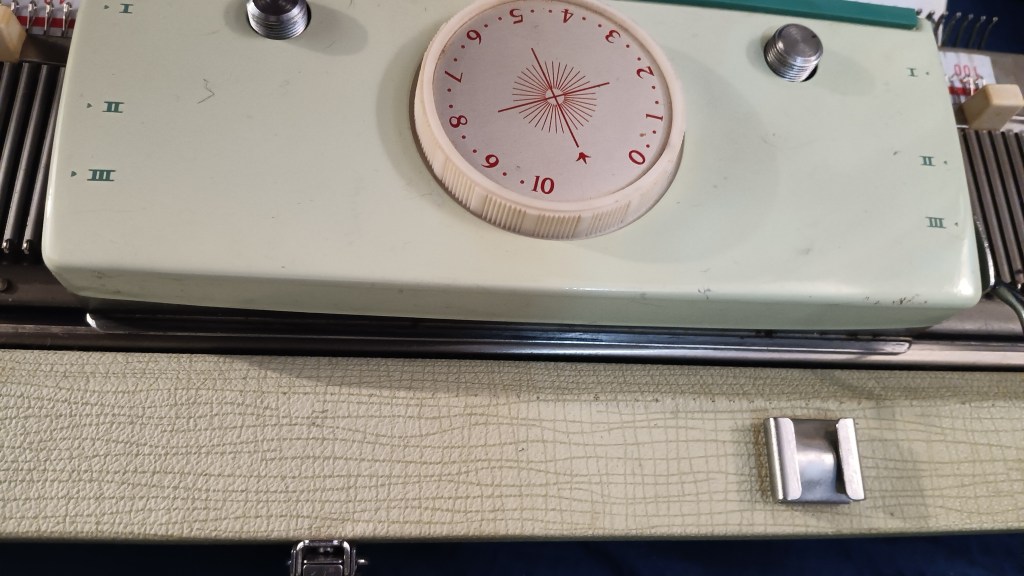
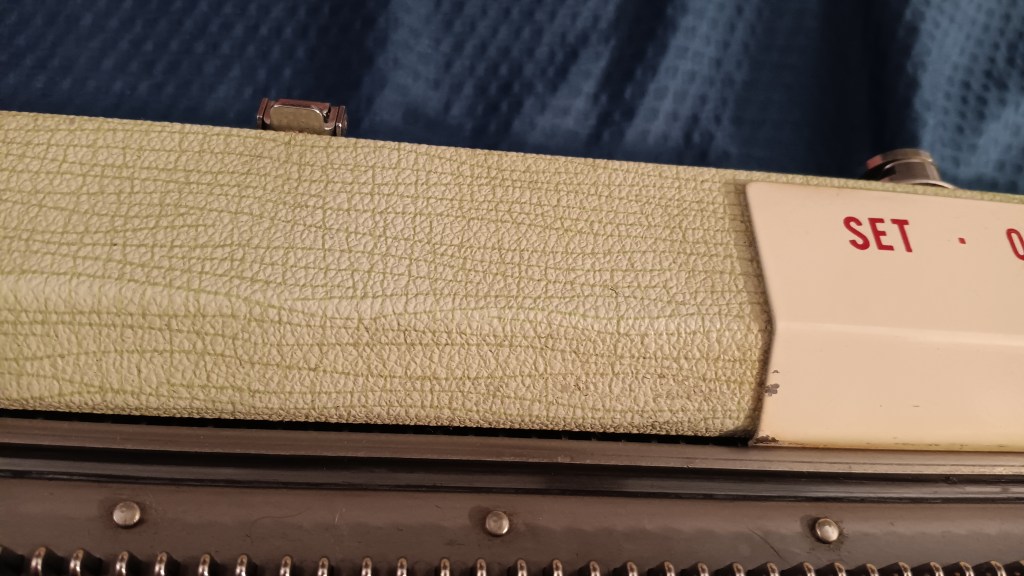
- minor scratches (some of them are shown below)
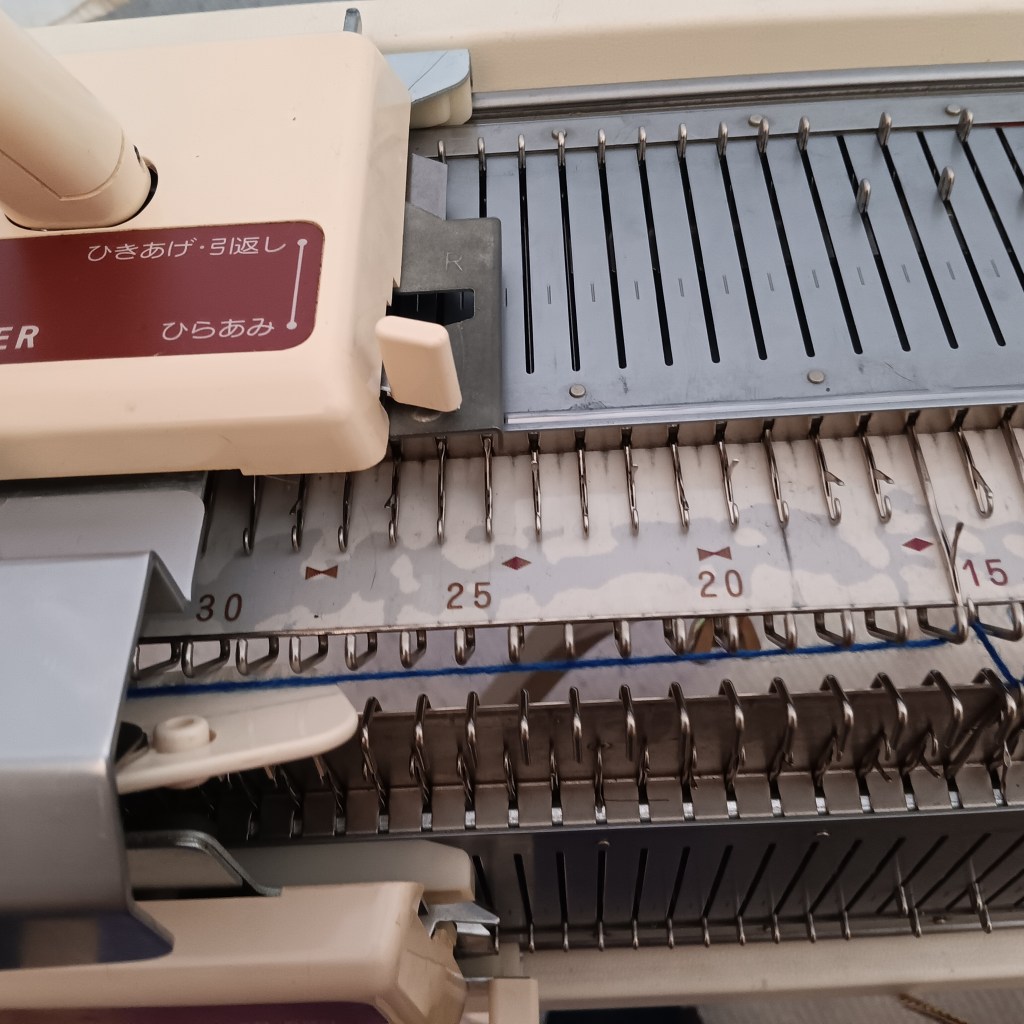
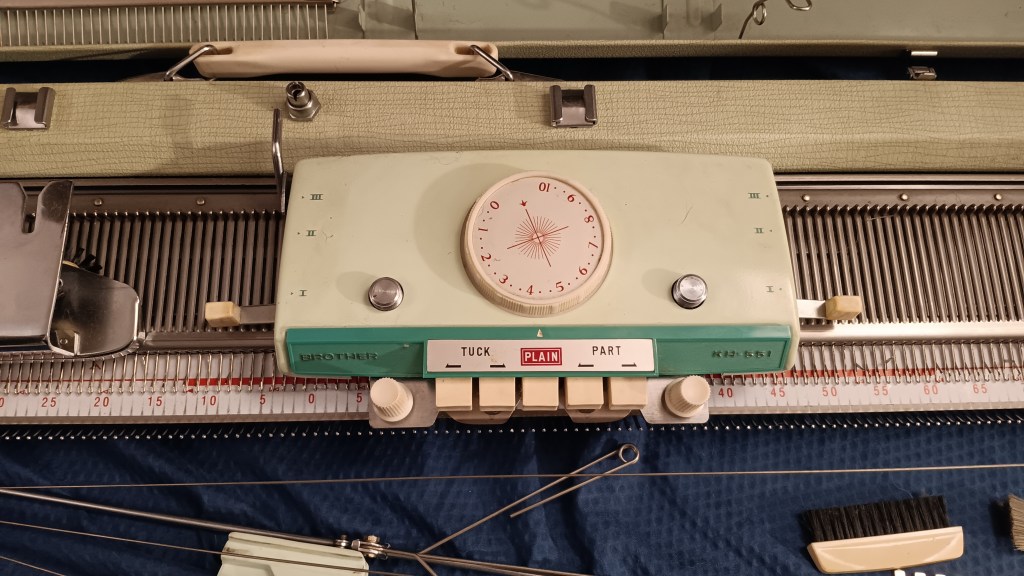
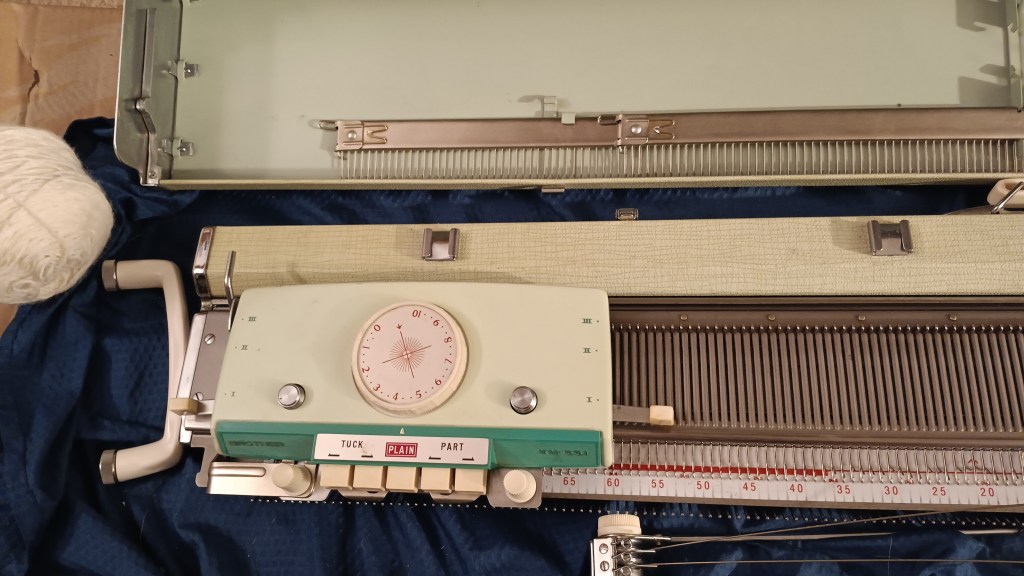
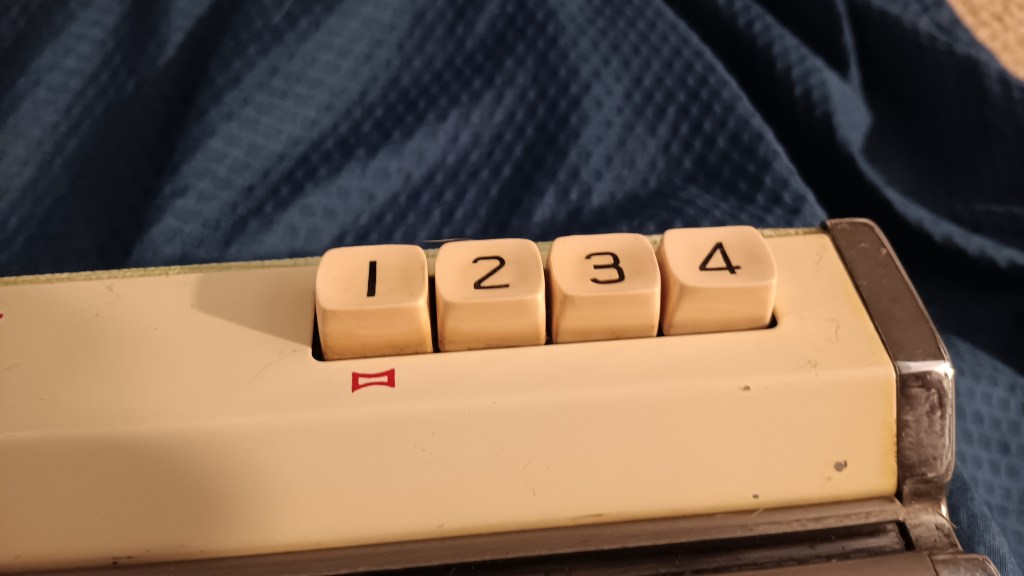
- some minor discoloration on the pushbuttons (shown below)
- cast on combs have just couple of minor scratches (not shown)
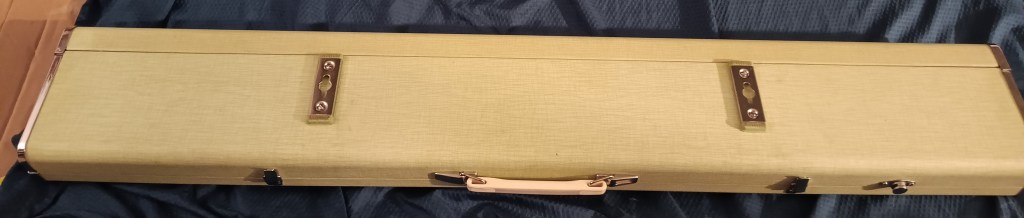
- The case and the lid are in great shape with only minor, barely noticeable, scratches (not shown)
Picture showing minor scratches on the carriage:

Picture showing pushbutton up close to demonstrate the minor discoloration and minor scratches:
Please keep in mind that my house is a dog-friendly household, so some dog hair is unavoidable.
Hope all looks good and if it does – Happy Knitting!