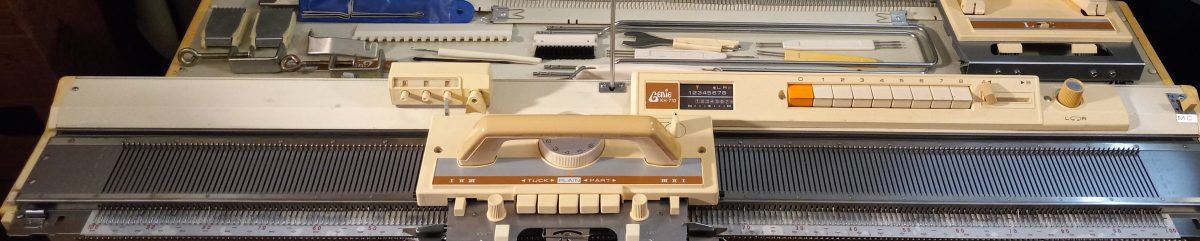
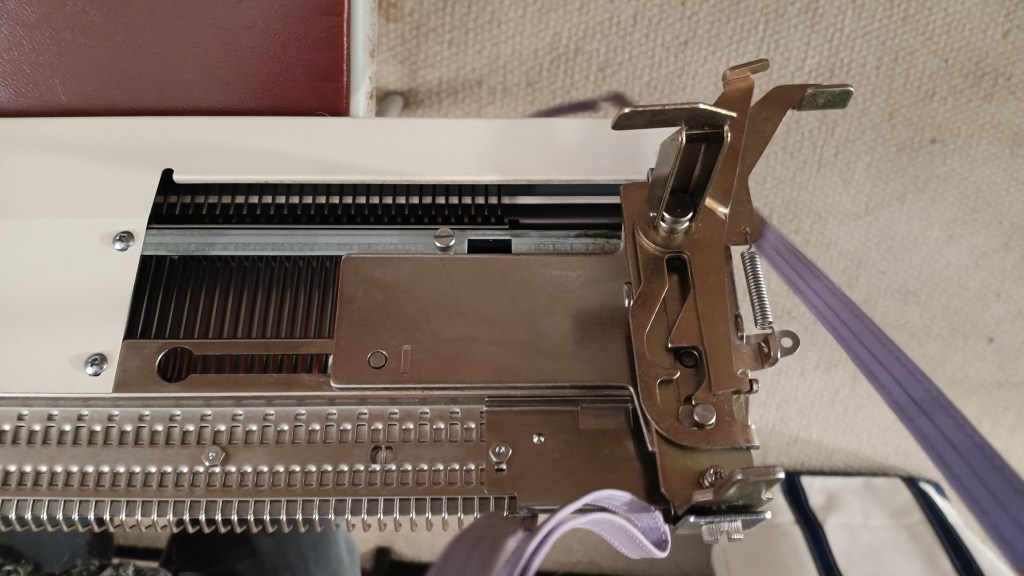
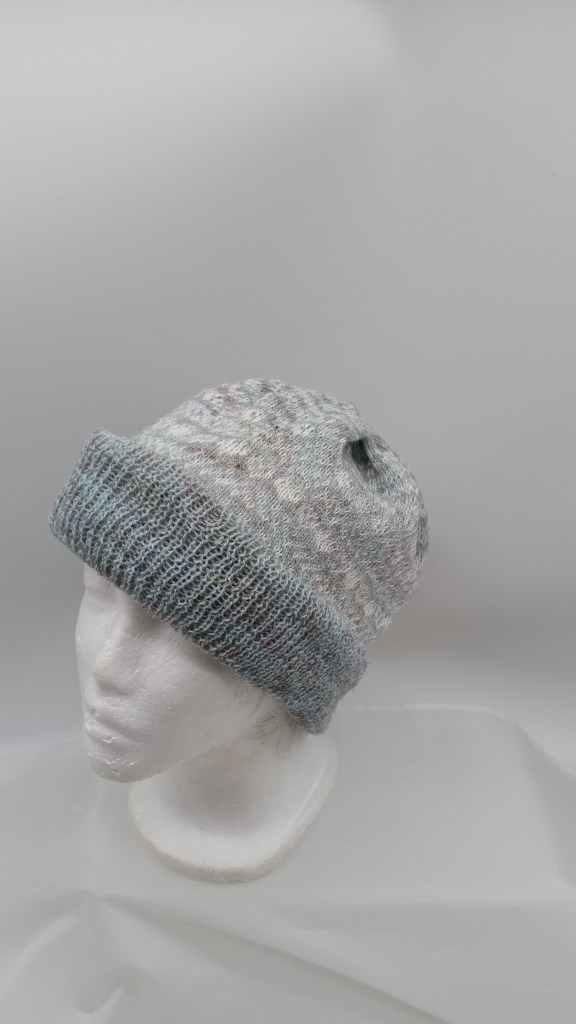
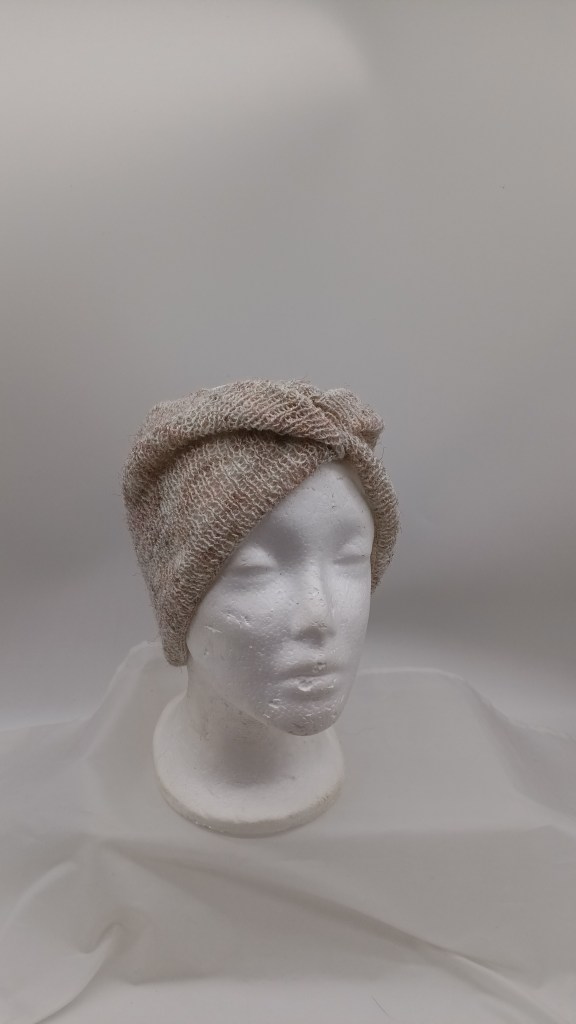
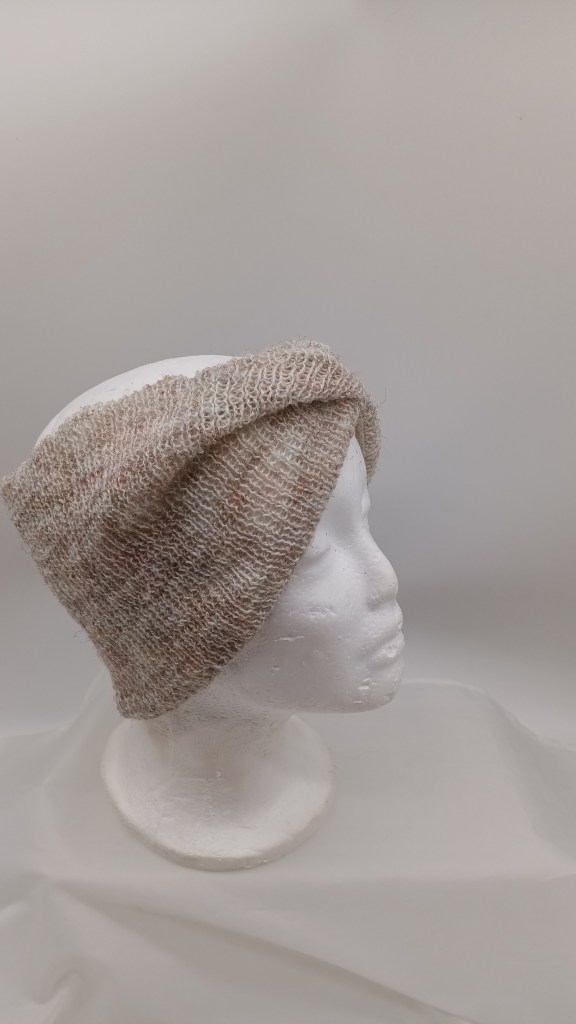
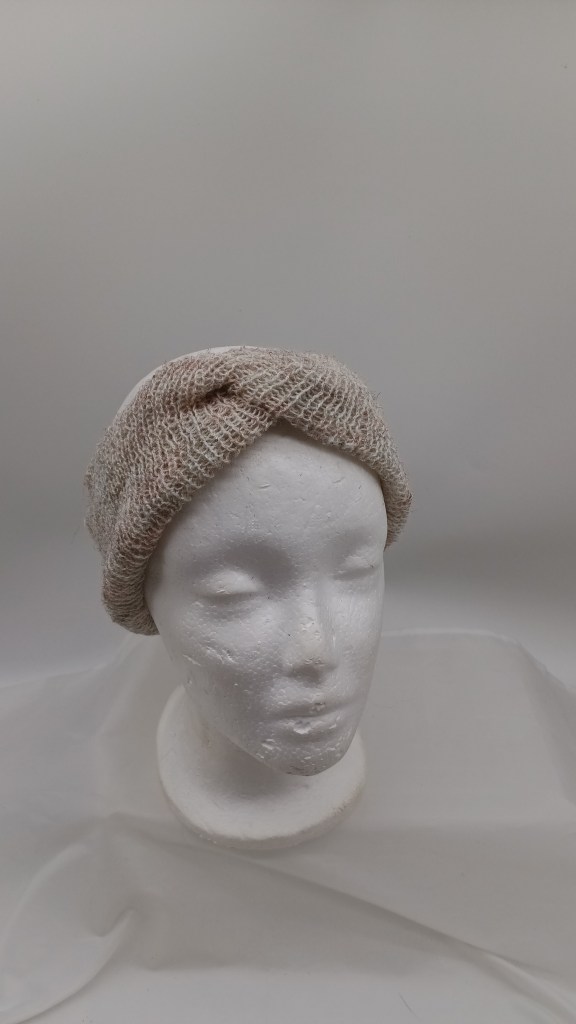
It is very easy to make horizontal button holes for small buttons when knitting projects using garter carriages. This blog is a text version of the video posted on the same subject.
First, decide the position of the button holes. Pick two stitches (in my demo, I decided to pick two sets of two stitches where I knew the machine needles, not the carriage’s, would knit). Move the left stitch out of these two to the stitch to the left of it and the right stitch to the right of it. Push the freed needles back to B position.
Knit one row with your usual pattern. The needles that were empty, now have yarn hooked on them (no stitch formed). Using a double eyelet tool, take the yarn off one hook, twist it, and then put back into a needle. You just formed a loop. Do it for the remainin needles in the button hole.
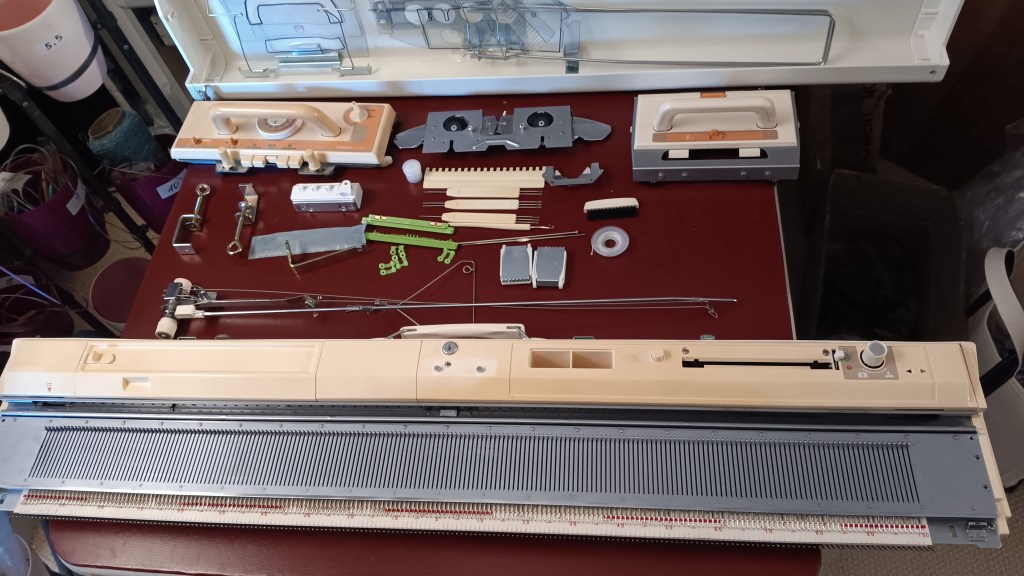
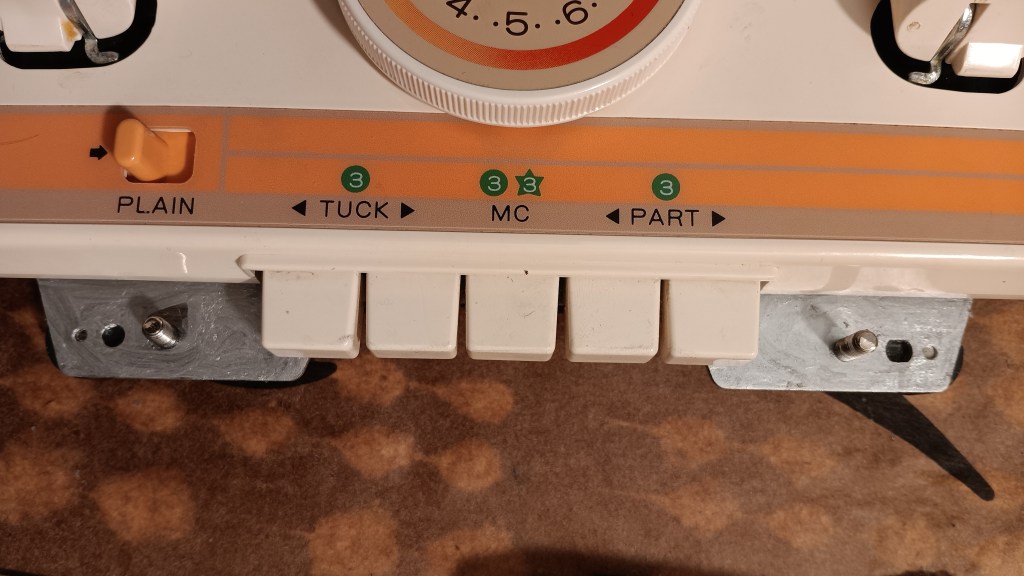
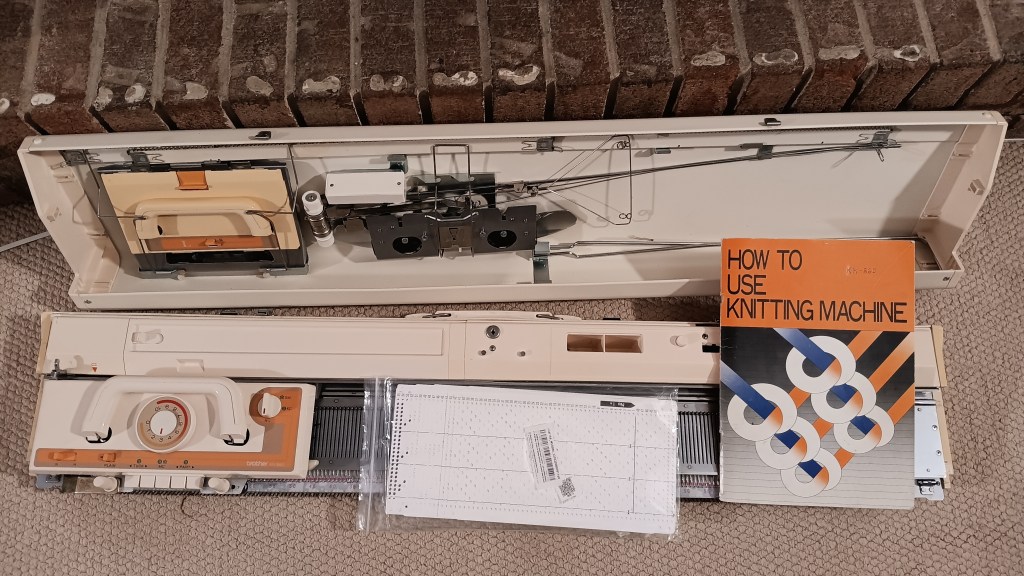
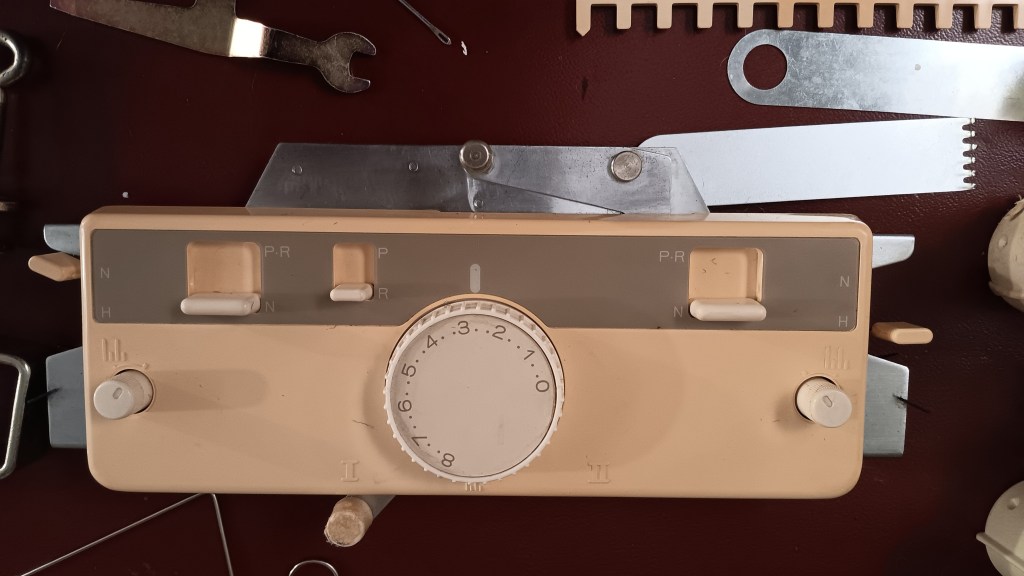
Brother KH840 knitting machine is a standard-gauge machine with 200 needles, 4.5 mm apart, and punchcard reading capabilities for patterning. Read more about the pros and cons of this model in my Knitting Machine Encyclopedia. This post is dedicated to a specific Brother KH840 serviced and tested in my shop in November/December 2025.
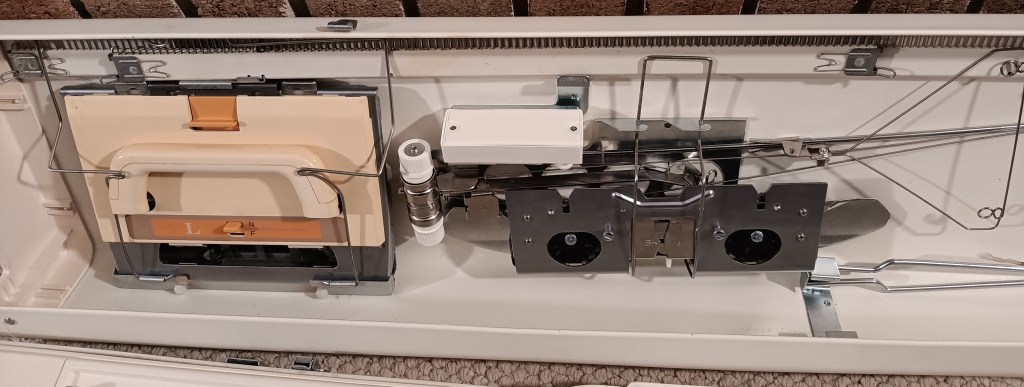
Per my usual routine, I deep-cleaned the punchcard reader, the timing belt cams, and the carriage. I removed all needles, cleaned them, and inspected. First visually and then while knitting on the full bed to ensure all needles (even after they passed the visual inspection) form the correct stitches. See the video of these tests. I knitted tuck, slip/part, and two-color fair isle. All tests went great with no mispatterning.
In the video, I forgot to attach the row counter during my tests. But a new row counter (new stock) will be included with the setup. The lace carriage was not tested but all buttons and levers move freely. It is a simple carriage and does not need extensive testing.
I treated minor rust spots on the inside of the case cover with a protective coating and Rustoleum. The needlebed itself did not have any rust spots.
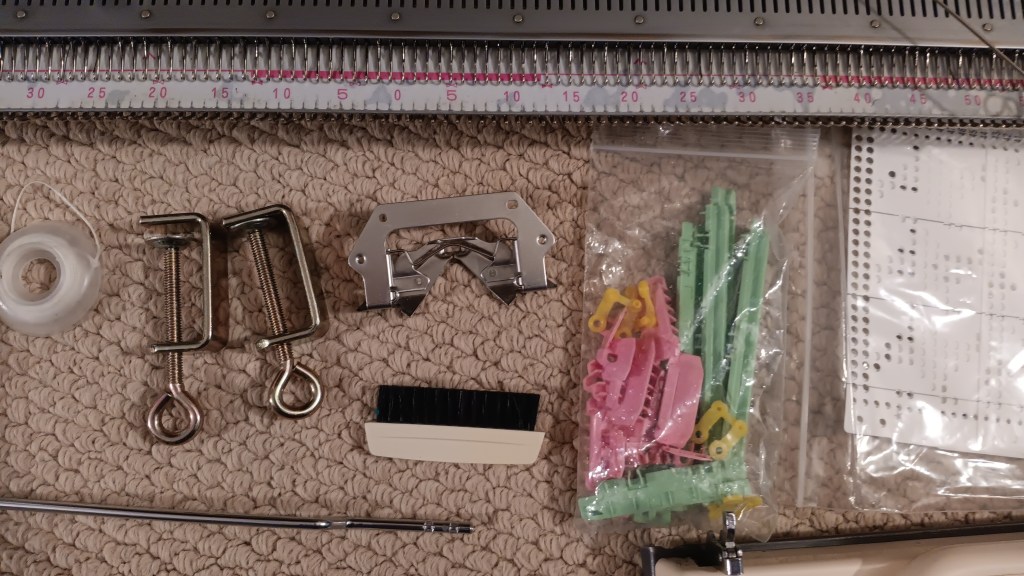
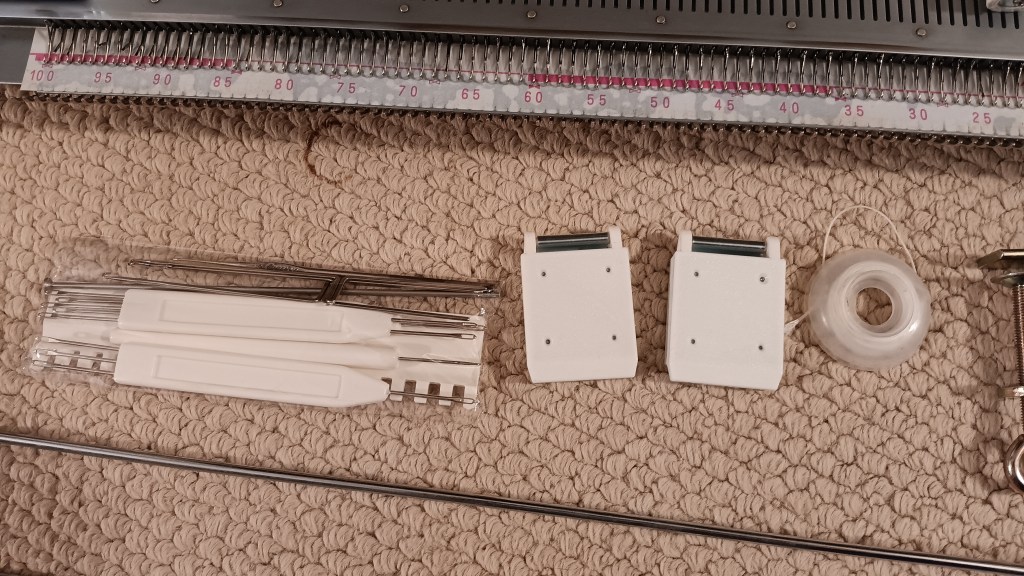
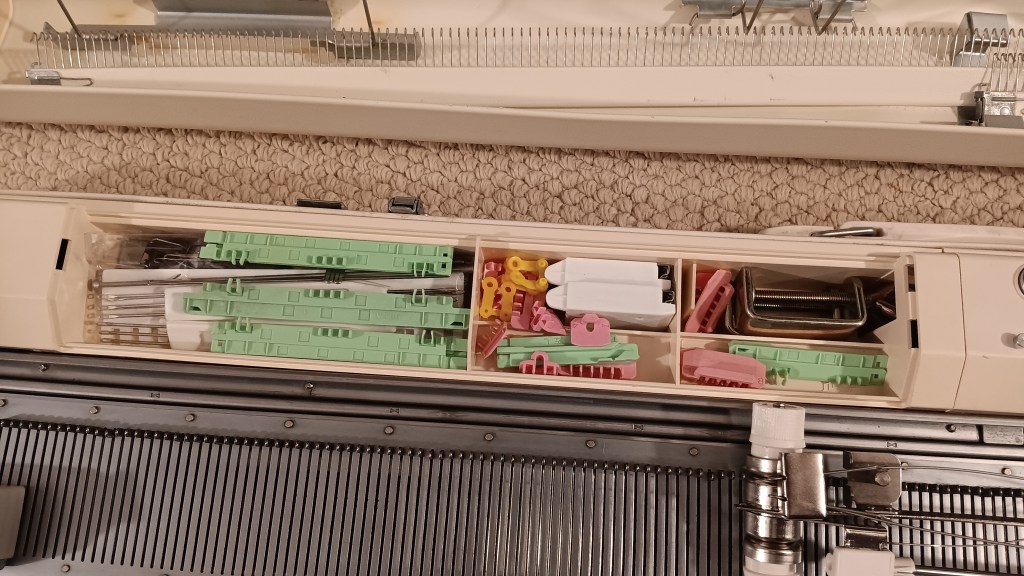
The machine will come with all major accessories and with only some minor accessories missing.
The lid has new plastic end caps. The old ones were cracked. Thus, you might see some color difference between the case end caps and the lid end caps. I also attached the lid end caps with brand new snap clips instead of old, yellowed ones.
Table clamps, row counter and claw weights are new (new stock).
The missing accessories are:
Tapestry needle (any needle of your choice will work)
Lubricating oil (use Hoppe’s oil available on Amazon)
The cast-on combs are not original to the KH840 setup but I am including a two-part Brother cast comb with a clip for extension.
All 25 punchcards are included but they are not the original Brother KH840 cards but they are for the Brother punchcard machine. The lace card #25 was damaged, so I replaced it with a card from another set. Some cards match those in the manual, and some don’t.
Imperfections:
The case has some very minor scratches (not shown)
some mismatched discoloration because of the age-related yellowing and some parts being new(er).
handle for the main carriage has some very minor scratches
After this thorough cleaning, the machine behaved really well despite some minor imperfections.
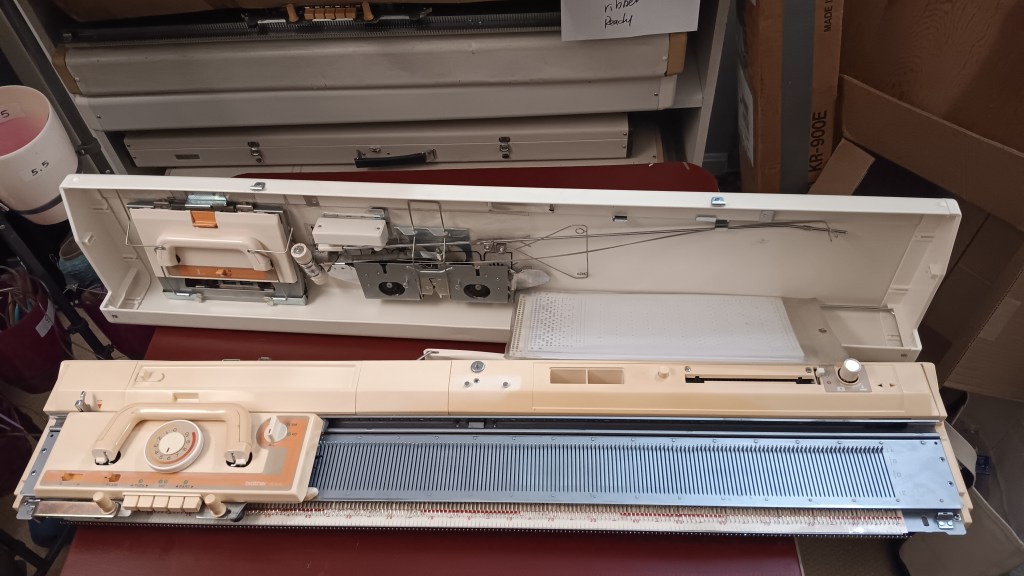
Brother KH860 knitting machine combined with Brother KR830/850 ribbing attachment is a powerful standard-gauge knitting setup capable of producing garments, blankets, and other knitted items. Read more about pros and cons of KH860, KR83,0 and KR850 in my Knitting Machine Encyclopedia. The post below is dedicated to the particular setup serviced and tested in my shop in November 2025.
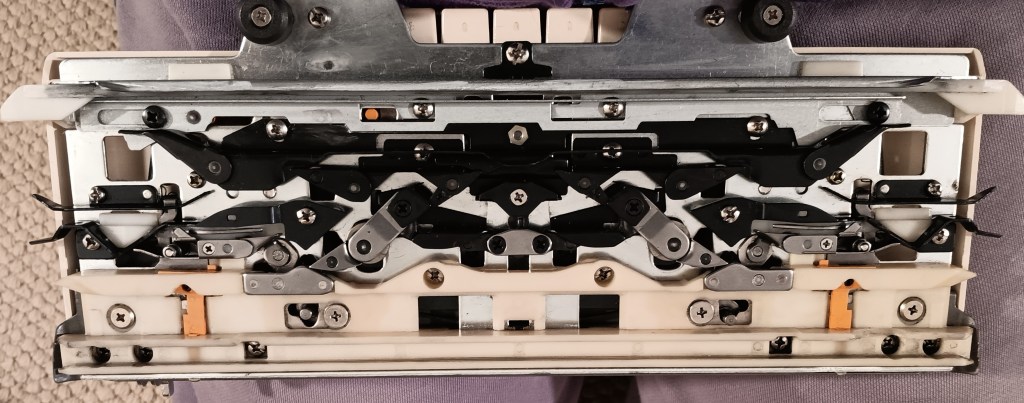
A typical first step for any needlebed is to remove, clean and inspect all needles. Bent needles or those with bad latches are replaced with new stock. Then I clean the needlebeds and carriages from old gunk and grease. I opened both carriages and cleaned under the lids as well. All the needles were then tested while knitting various fabrics: tuck, slip, fair isle and ribbing (see the videos of the ribber and the machine).
Knitting machine:
I replaced the end caps for the lid and the main bed as they were cracked. You might see slightly different colors between left- and right-hand side plastic caps.
The machine was tested on all needles. I knitted tuck-, slip- (same as part) and two-color fair isle. I discovered several faulty needles during these tests and replaced all of them.
Punchcare reader was cleaned from old grease, insides were cleaned from lint and old gunk. Its functionality and needle selection were tested using card #1, where every other needle is selected on every other row (easy to see if there are any problems).
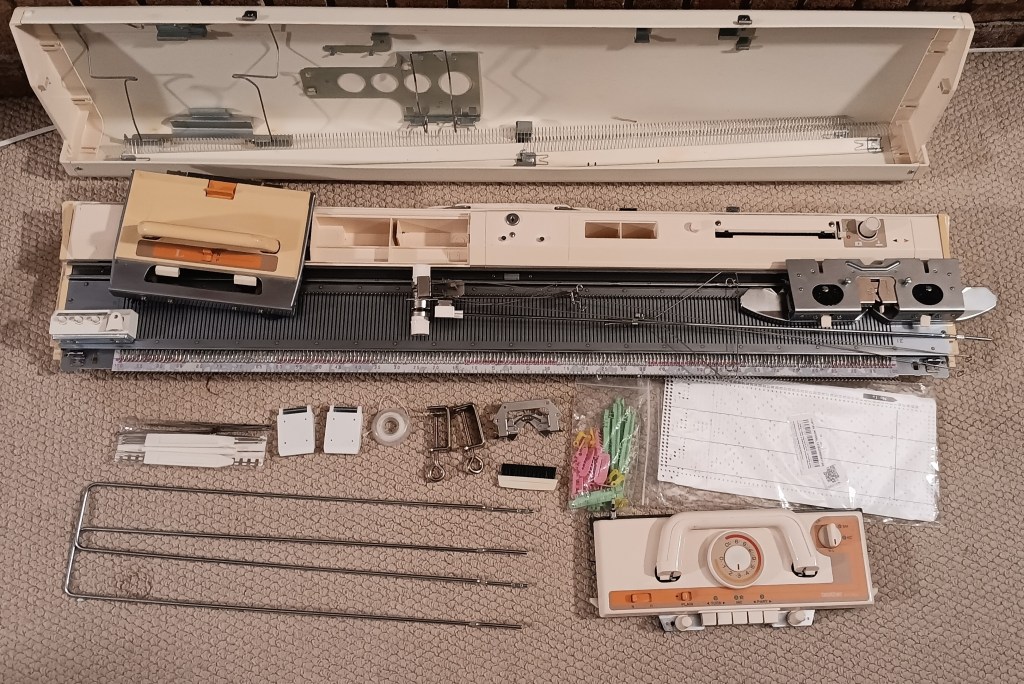
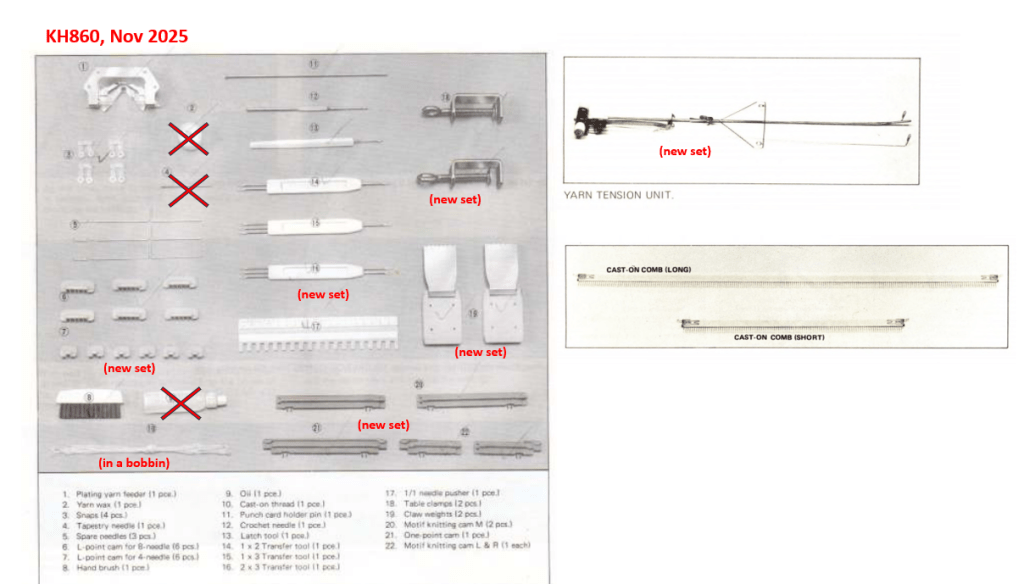
The machine came without many accessories, but I collected a nice, almost all-new stock of accessories.
The missing items are: oil (use Hope’s oil, available on Amazon); a tapestry needle (any needle of your choice will work); and wax.
Brand new (new stock) Brother row counter. Because it is new, its color is lighter than the plastic panels of the needle bed (they show yellowish discoloration due to the sunlight, which is typically seen with these machines).
The cast-on combs are in good shape, too.
New tension mast (new stock). A tension mast that came with this machine did not include a slot for the wax and a slot for the garter carriage sensor. The only “original” accessory is probably the carriage lock.
This KH860 does not include built-in garter carriage rails (in the past, I worked with some KH860 that indeed include those).
Imperfections:
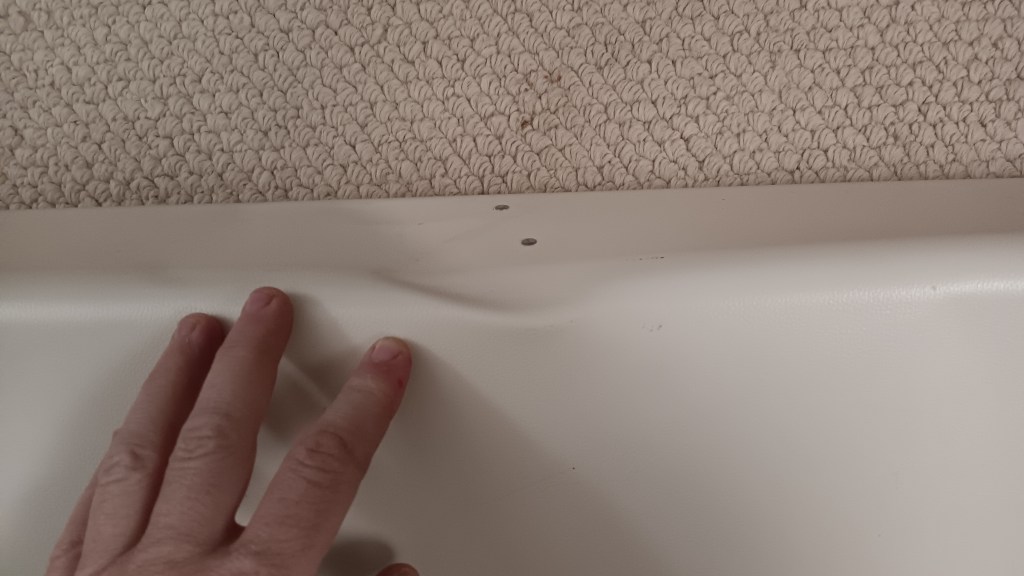
Overall, the machine is in great shape. The case and the case lid are in good shape. The lid has one medium-sized ben,t but overall is almost free from scratches and scuffs.
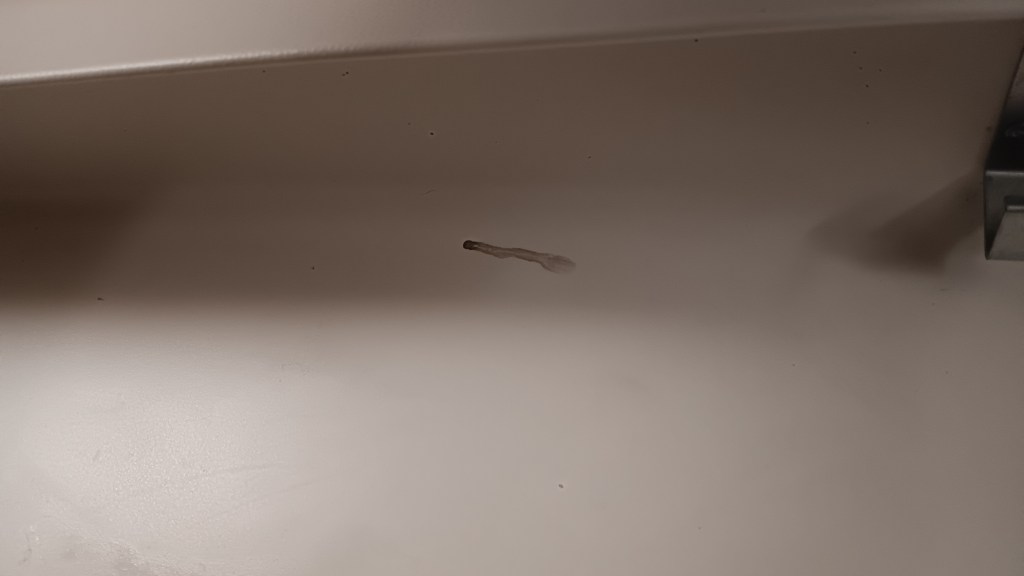
2. Carriage has some minor rust spots on the plate where the sinker plate attaches, which I treated but not painted with Rustoleum (it sometimes creates too thick of a layer and might prevent smooth gliding). No rust inside the carriage or on the undercarriage side.
3. The lace carriage has a superficial crack and some minor scuffs on the handle.
4. The retaining bar with a newly replaced sponge strip goes in with a bit of effort. This configuration is the only one out of several I tested (I had to reglue several different sponges) that provides 100% accurate patterning on the whole bed. If the tape on the ends wears out (which happens if you remove the retaining bar often to replace needles, etc.), just tape with very thin medical tape with just one (non-overlapping) layer. Medical tape is the best because if it comes off, it is not as gluey as other tapes (like electrical tape).
Despite all the imperfections and a couple of missing minor accessories, the machine works great (see the video). The carriage slides on all needles (without yarn) very easily, with just one hand, with different carriage settings. Even with the yarn, it glides easily.
RIBBER:
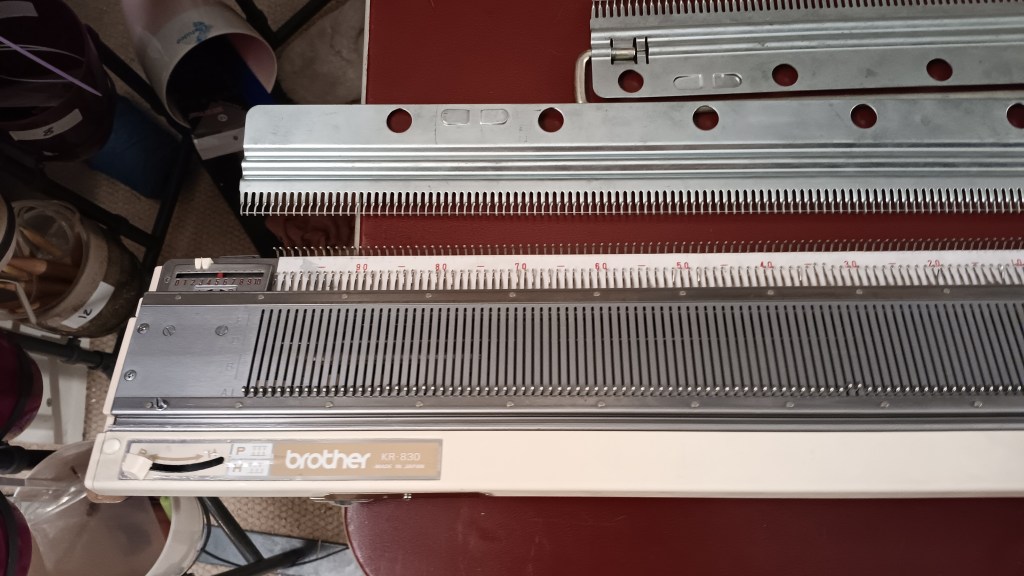
The ribber bed is KR830 model but the carrigae is for the KR850 (the lili buttons are a give-away).
The carriage was deep-cleaned and inspected. All buttons, levers, and pressers work and move smoothly (see the video).
The ribber brackets were cleaned of old grease to ensure smooth movement (but you don’t want it too smooth to prevent the ribber from unplanned sliding down).
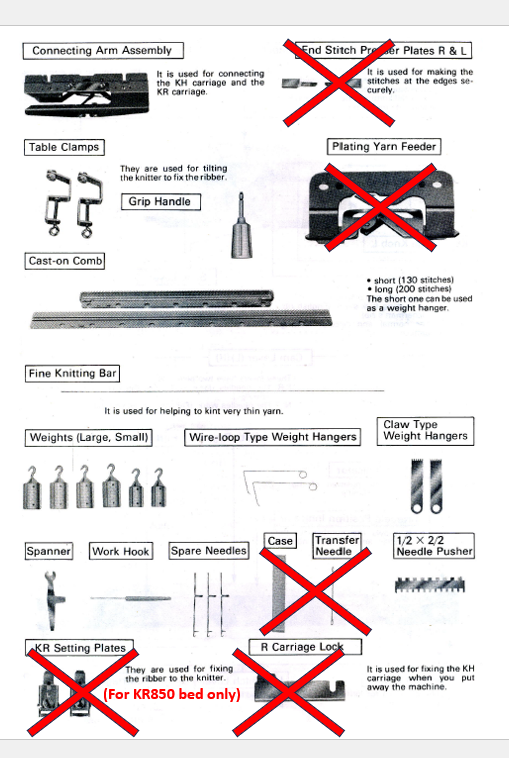
The machine comes with all accessories (including a hard copy of KR850 manual; KR830 can be found online). When attaching the needlebed, refer to the KR830 manual. When operating the carriage, refer to the KR850 manual. I do not have a plating feeder at the moment; that is an accessory to the KR850 carriage. Nor do I have the pressers (when I knitted, I did not use them at all). My understanding is that these are not all that critical. Most knitters do not get that advanced in choosing plating.
KR830 accesories
KR850 accessories
The ribber was tested using two different combinations of every other needle (it is easier to knit on every other needle than on all needles: problems associated with yarn and tension selection are less pronounced) to ensure that all needles form the correct stitches. I used two separate yarns but they are only different by color.
BTW, I am including the yarn I used while testing the ribber (the bluish one) for you to practice with a knwon-to-work thread
I am also including a manual for the KR850 for the carriage functions. I do not have a spare manual for the KR830 but it is available online for free. The only difference between KR830 and KR850 beds is the brackets: how they are inserted and attached to he main bed. All other settings and functions are the same. As a result, some of the accessories that typically come with the KR850 ribber bed will not be included with this KR830 bed.
Imperfections of the ribber:
The cast-on combs are not as smooth as I wished, but the yarn does not get pulled. So I left them alone.
The knob for the I-II change lever (at the bottom of the carriage) is in a bit rough shape. But it sits pretty tightly, so I left it along.
When attaching the connecting arm to the main carriage, sometimes the plastic from the oister screw-on knobs comes off as small shavings (the metal screws rub against the thread on the oister knobs). It is pretty typical for these old machines.
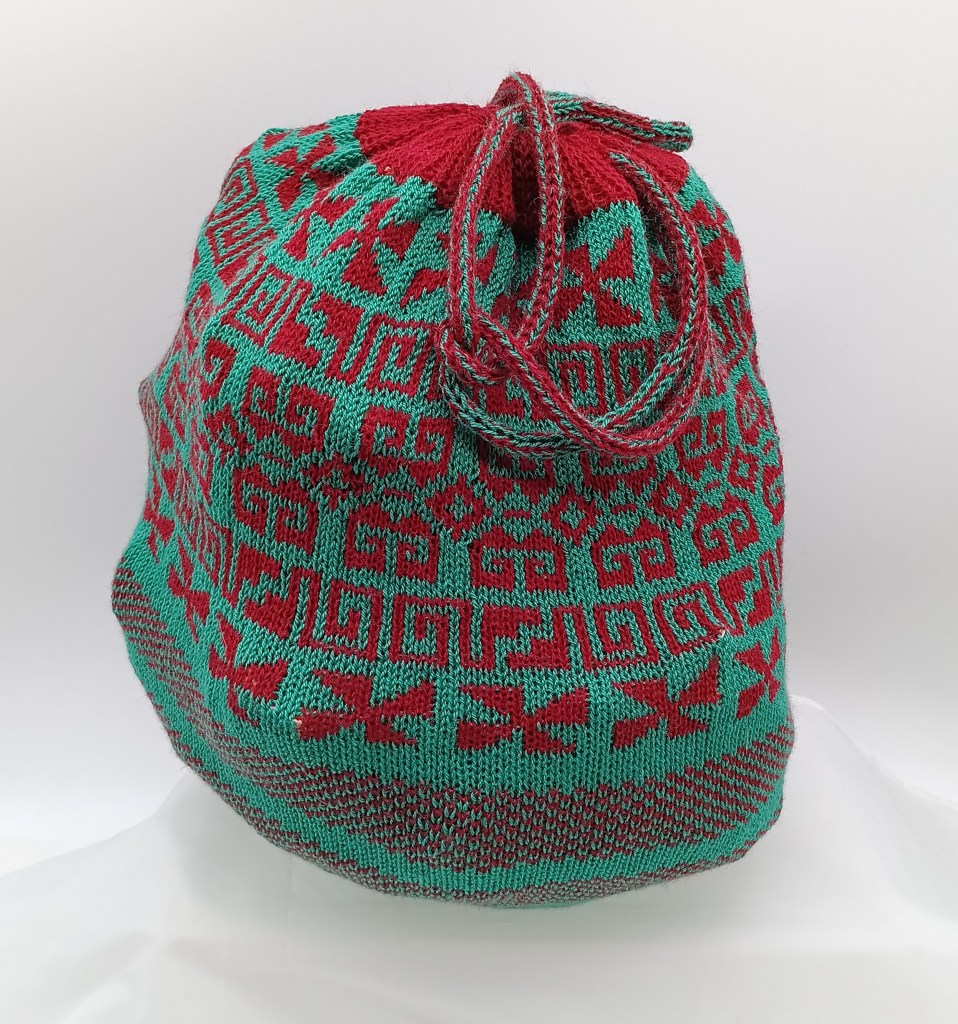
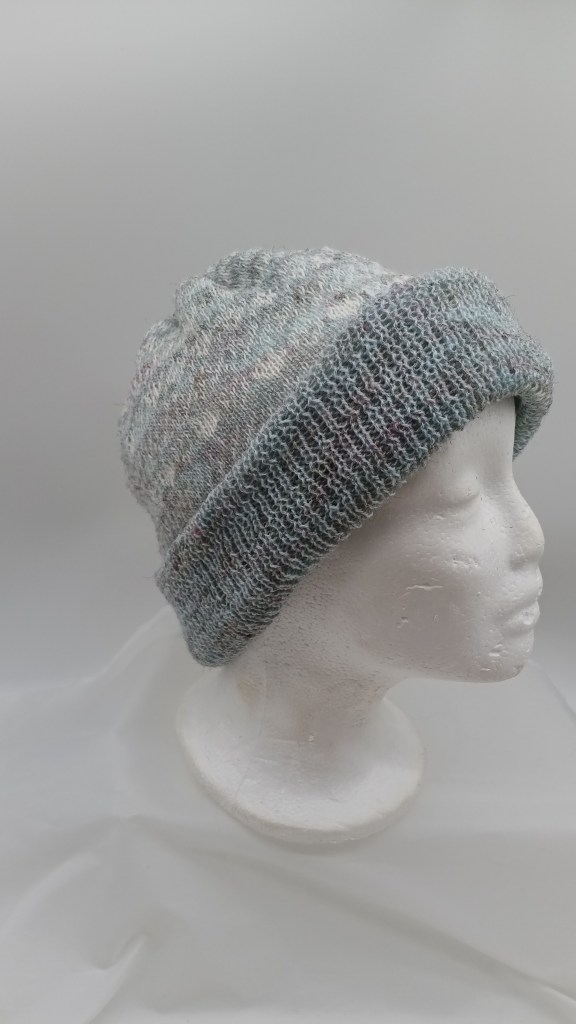
These imperfections are mostly cosmetical. They still did not interfere with me knitting several pieces of fabric that I converted into the items below.