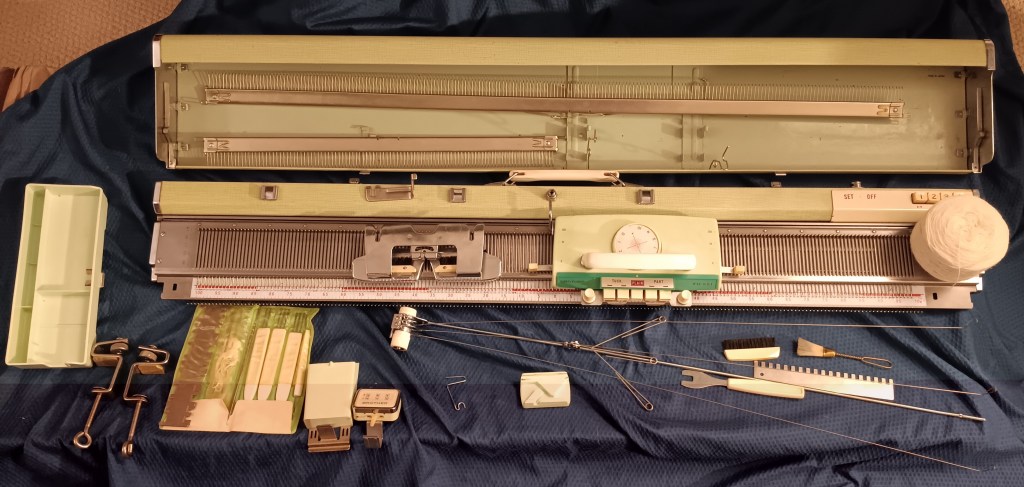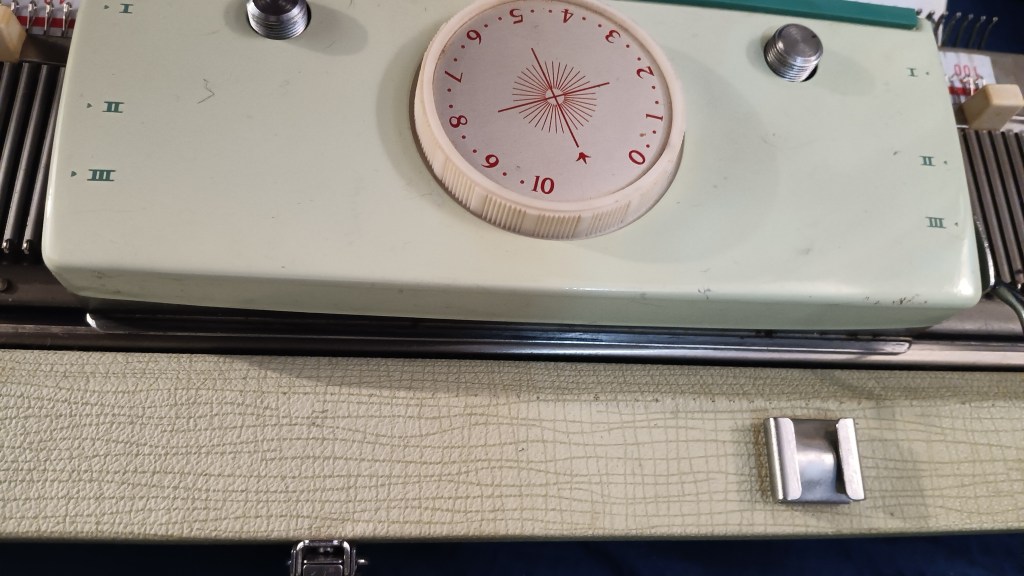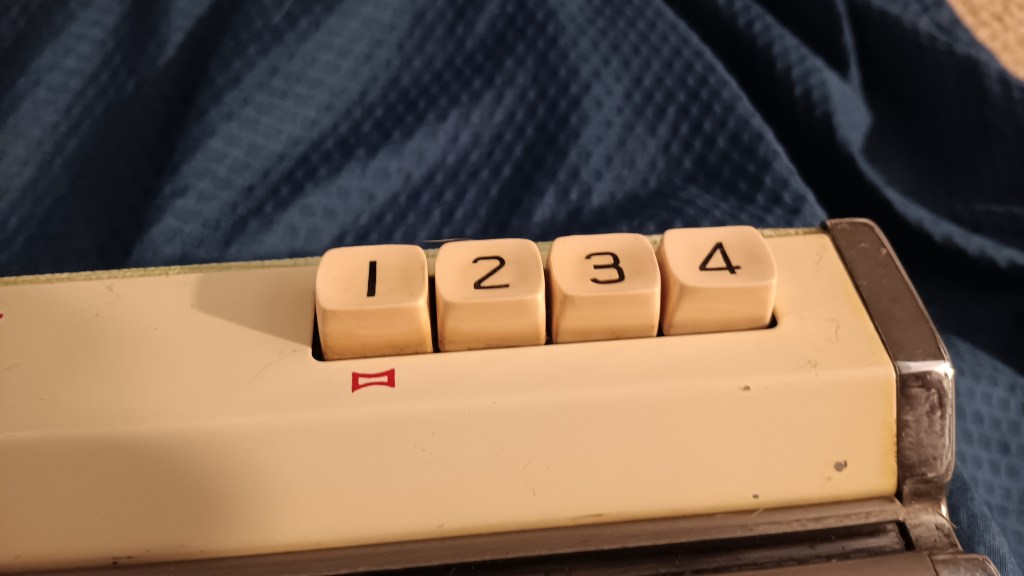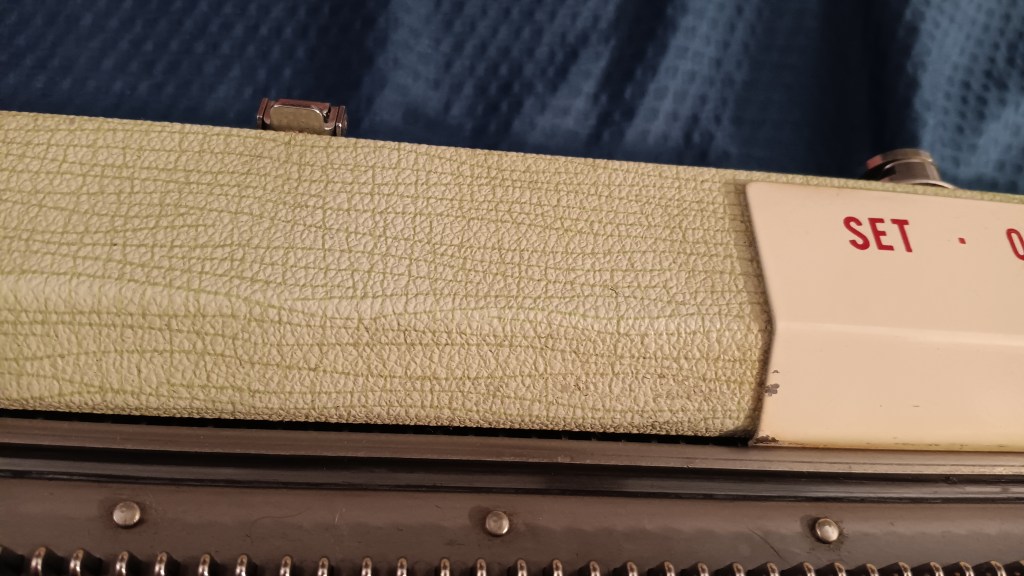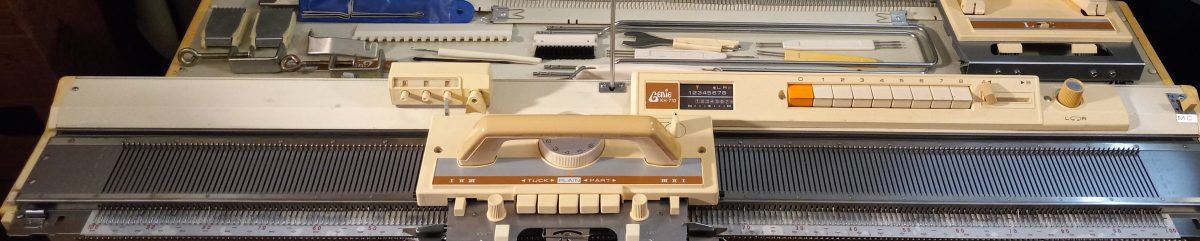
Studio by White SK740 knitting machine restored in my shop

Studo by White SK740 knitting machine is a standard-gauge knitting machine manufactured by the Silver Reed company under the Studio brand name. The machine has 200 needles, 4.5 mm apart, which makes it a standard-gauge knitting machine. Read more about this model in my Knitting Machine Encyclopedia. Also, read the general details and pros and cons of a similar machine, Singer mod. 740. The post below is dedicated to a specific Studio by White SK740 knitting machine, refurbished, served, and tested in my shop.
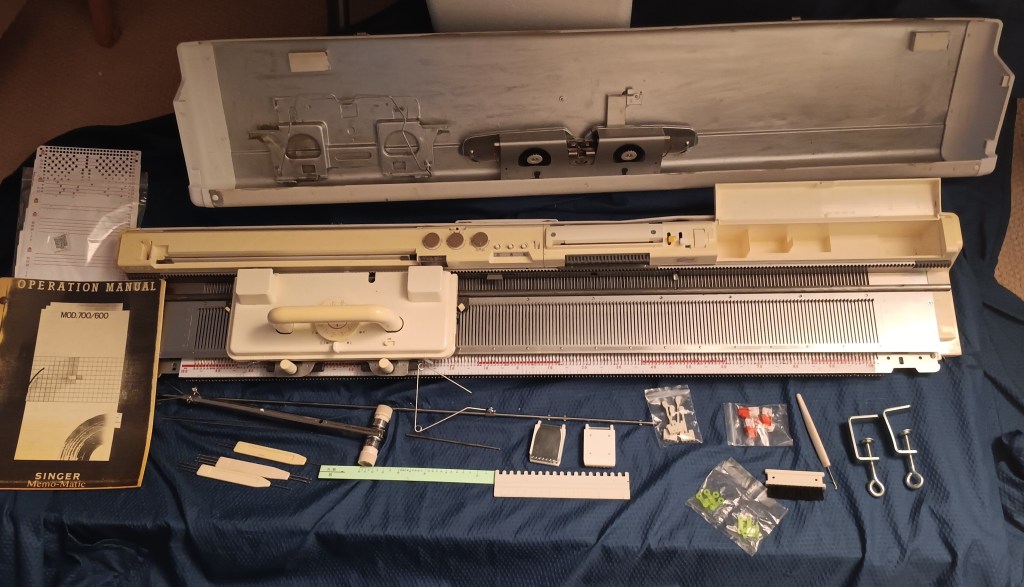
I performed the regular maintenance on this machine.

  • The drums were oiled, inspected, and serviced to ensure they move freely.
  • All needles were removed, cleaned, and individually inspected.
  • The spongy strip in the metal retaining bar was replaced.
  • The side racks were also replaced with new ones.
  • Deep cleaned inside.
  • Cleaned the punchcard mechanism
  • Thoroughly wiped on the outside (I do not apply too many harsh chemicals to not cause further long-term damage to already fragile plastic components)
  • The machine was oiled thoroughly. Some lubricating oils might still bleed during your first knits. Just wipe them with a cloth.
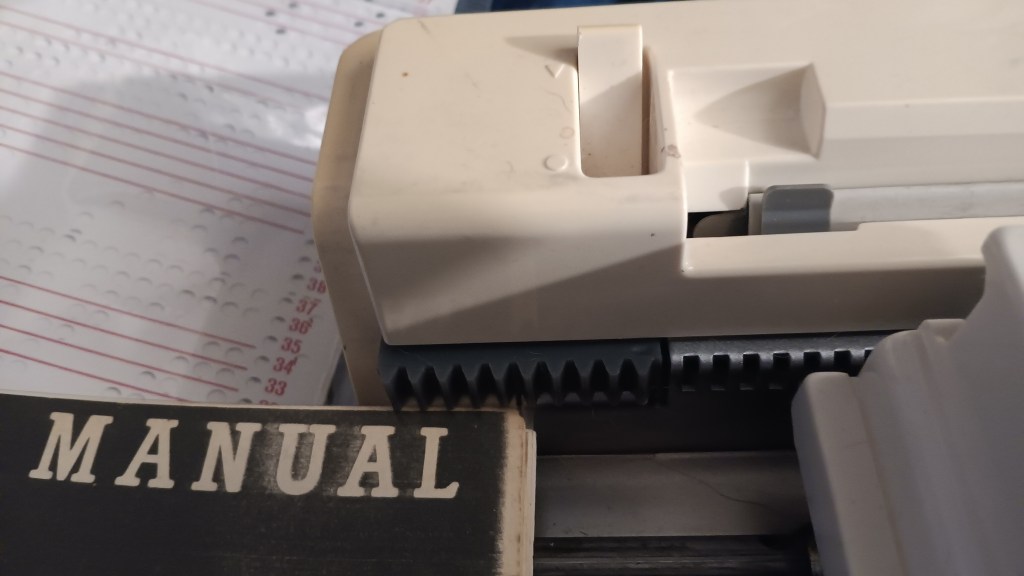
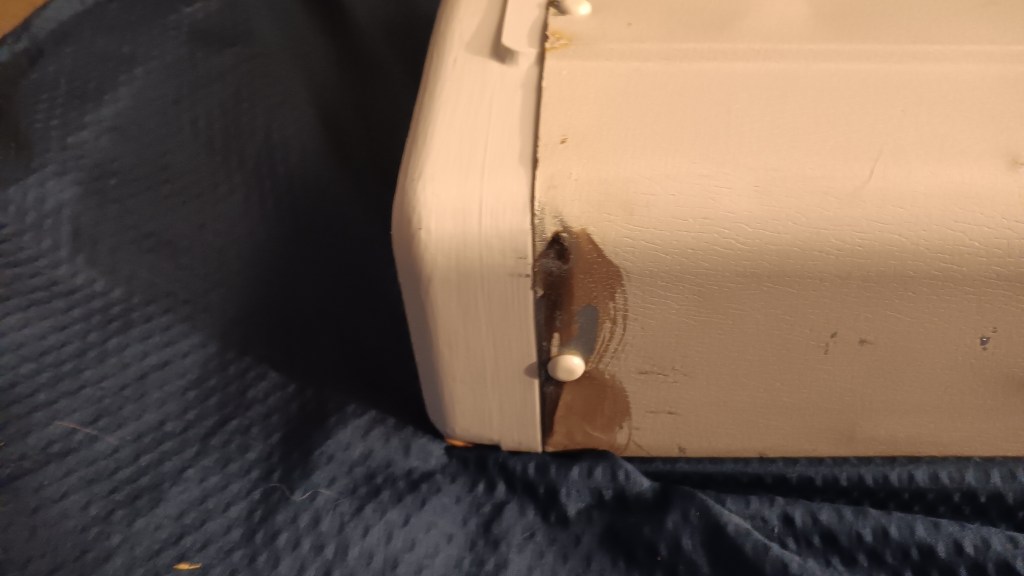
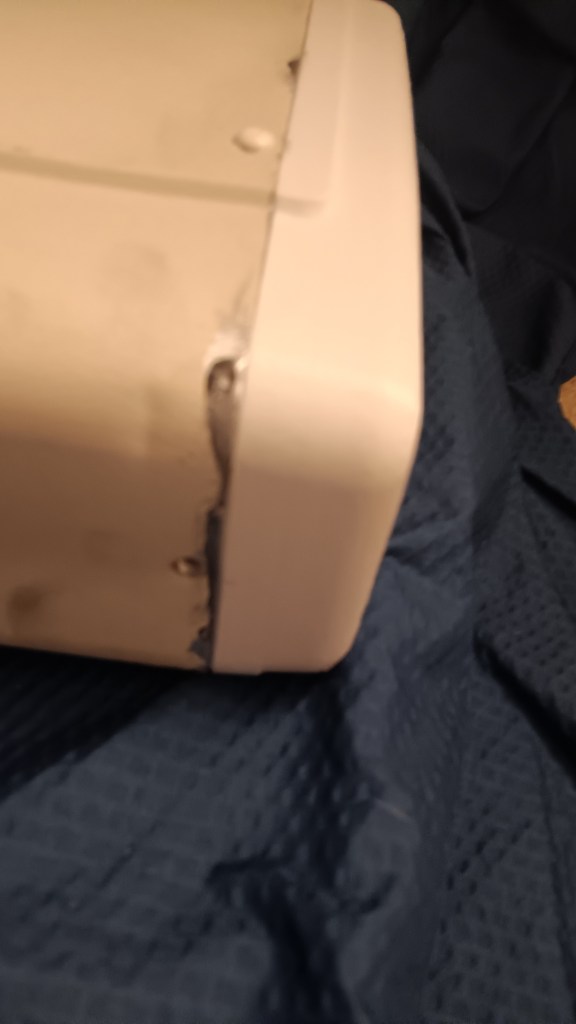
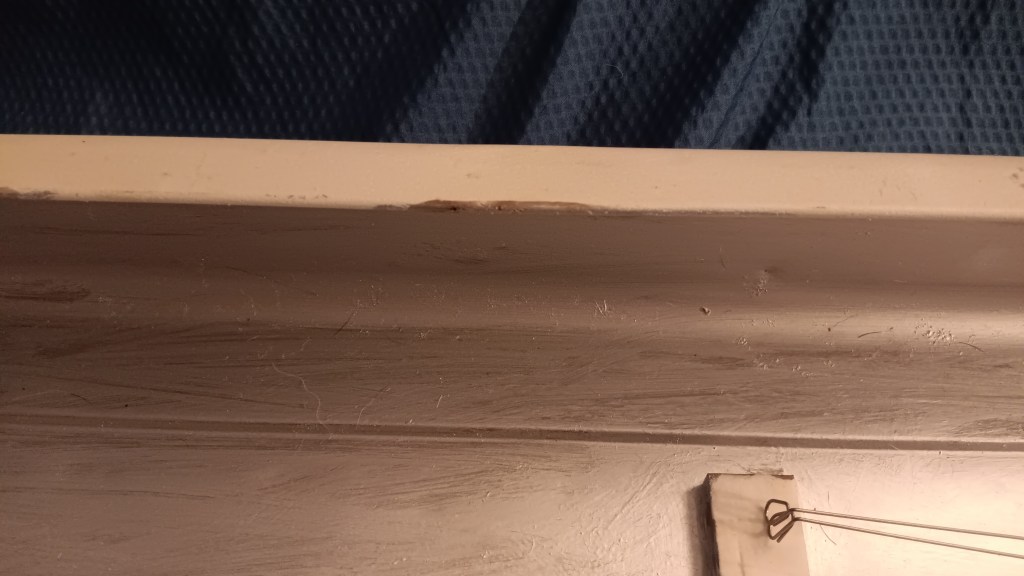
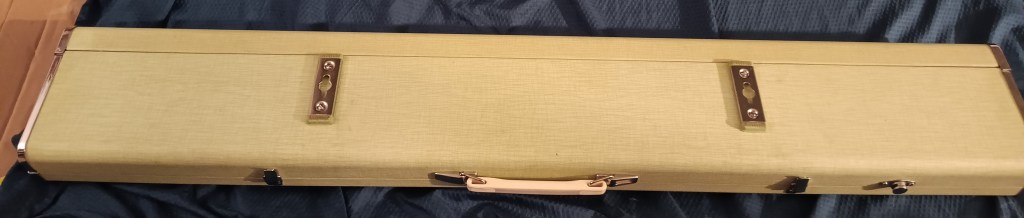
The lid for the machine was rusted, so I covered the rust on the lid with a special coating and then applied silver-colored Rust-Oleum. It might not look super artistic and pretty, but the rust is stopped and the cover looks very presentable.
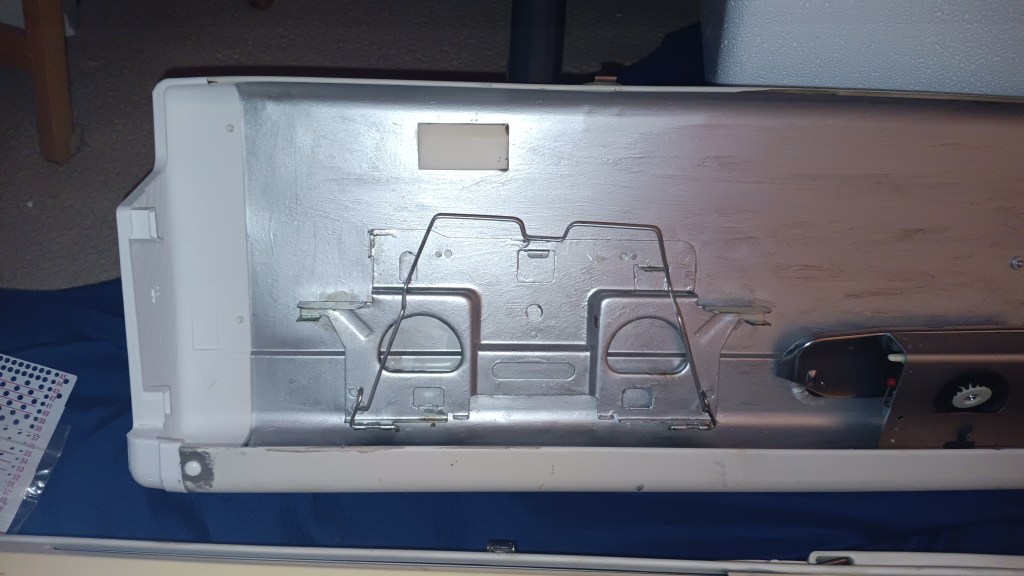
End caps on the main bed have discoloration. End caps on the lid are new (I specially 3D printed them out of a very durable material because they were cracked). The plastic rivets are also brand new.

Additional maintenance performed:

  • completely replaced the plastic top cover for the carriage; replaced with new stock
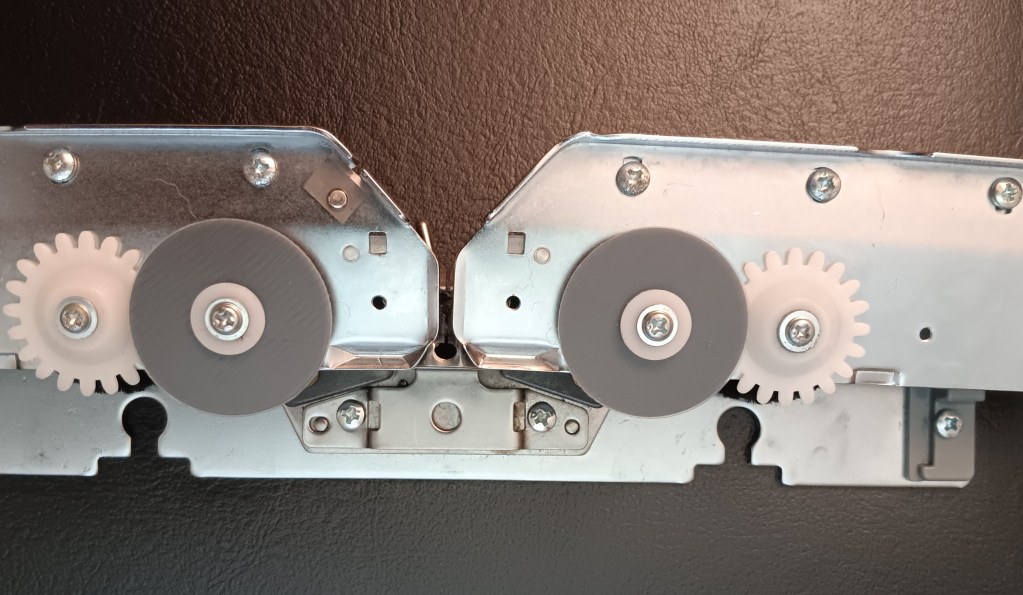
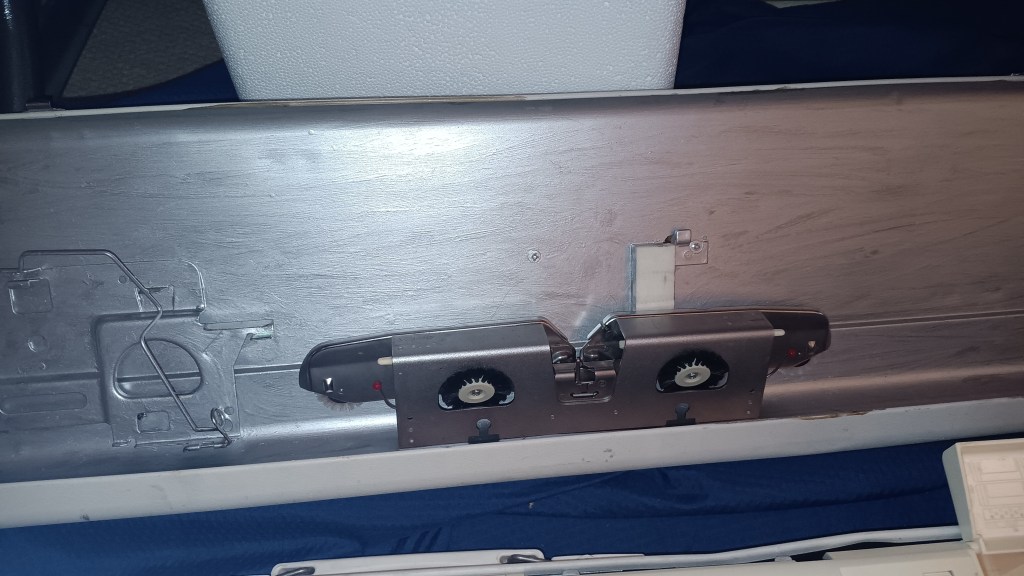
  • I installed new rubber wheels on the sinker plate
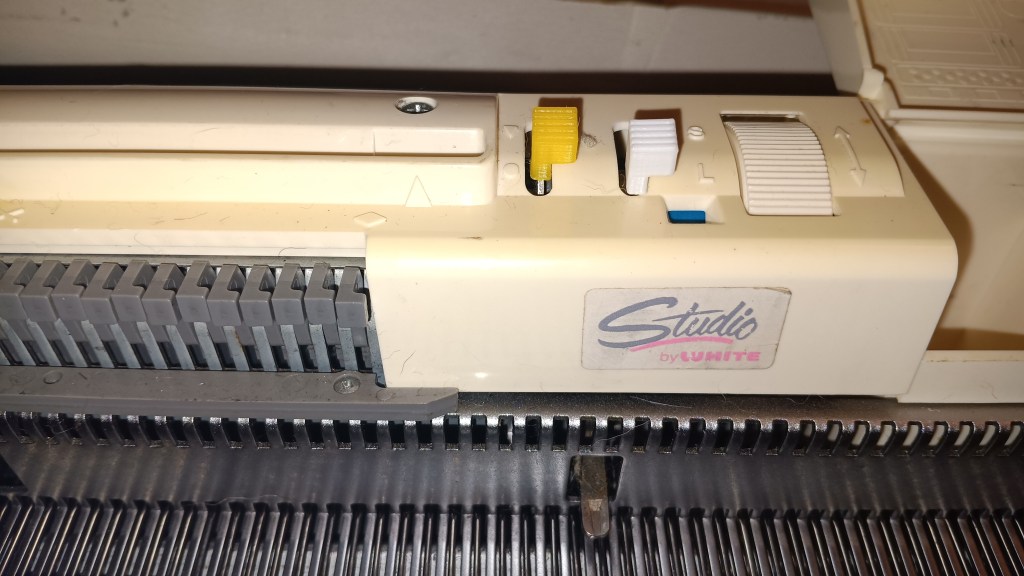
  • The lever covers (little knob-like plastic pieces) are replaced with new 3D printed ones.
  • I cleaned the minor rust spots inside the punchcard mechanism and then covered them with Rust-Oleum to stop further corrosion
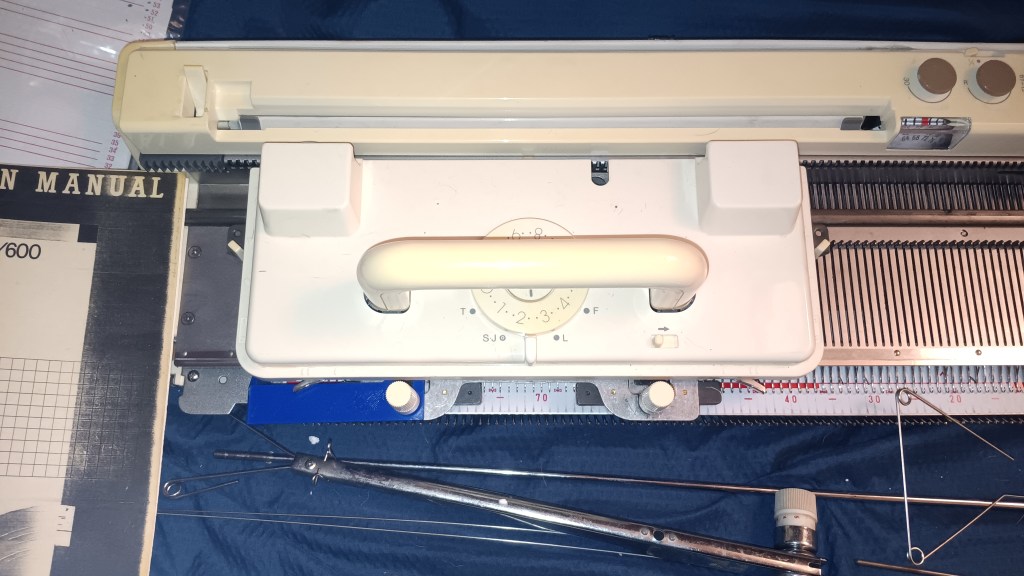
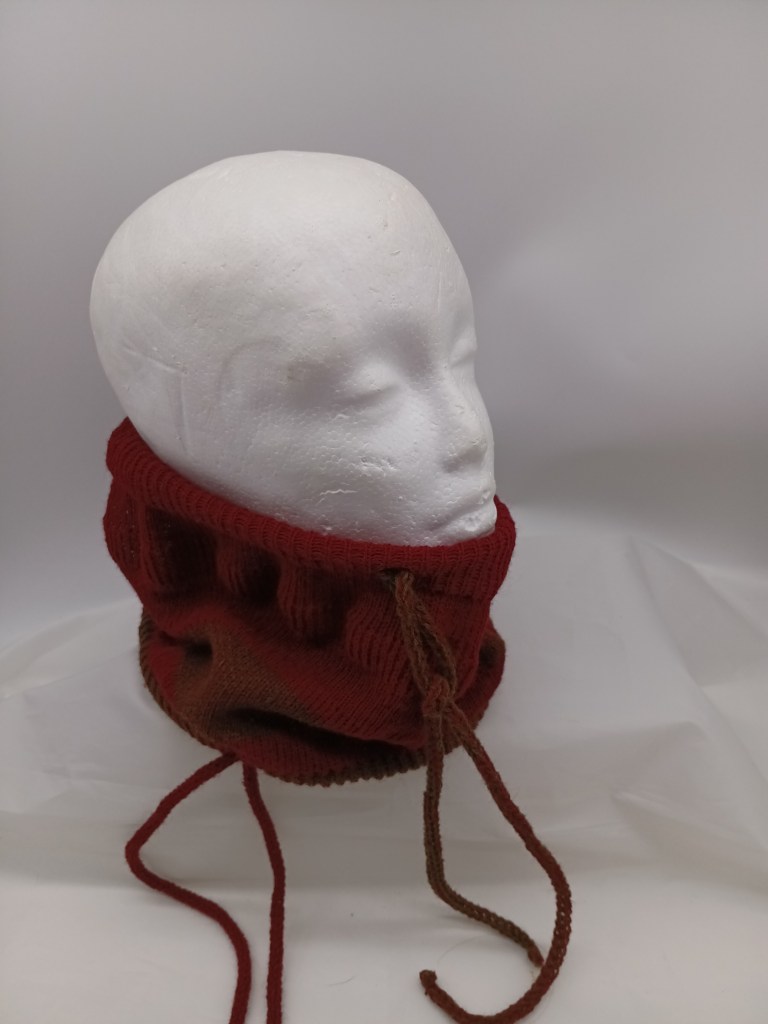
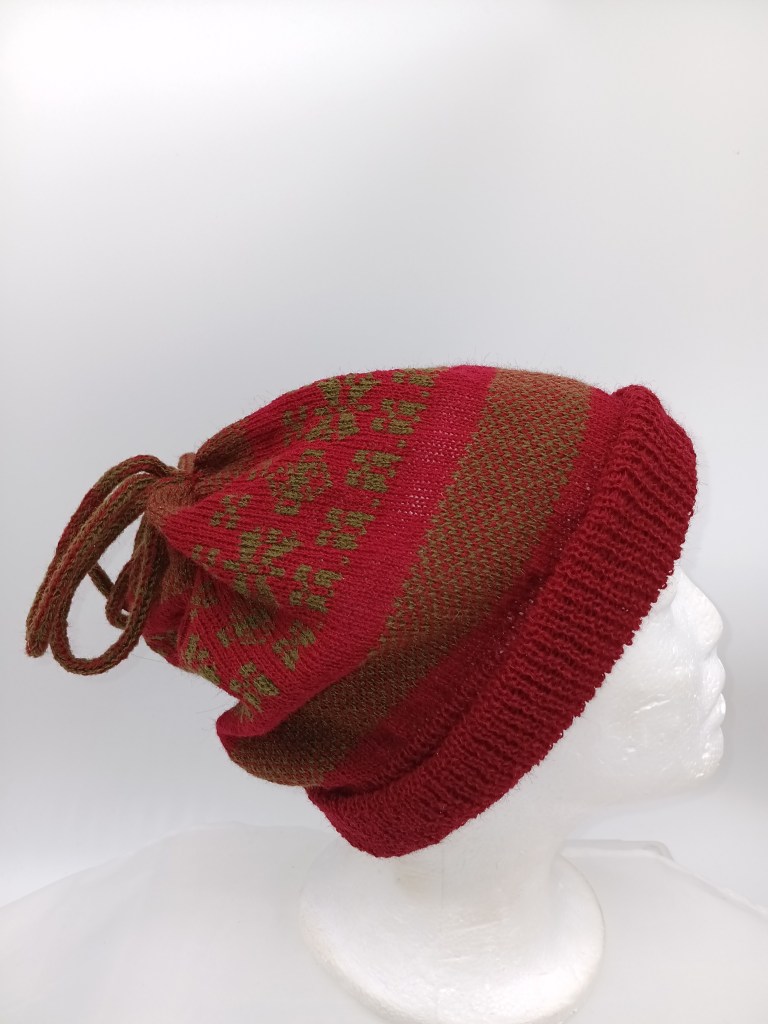
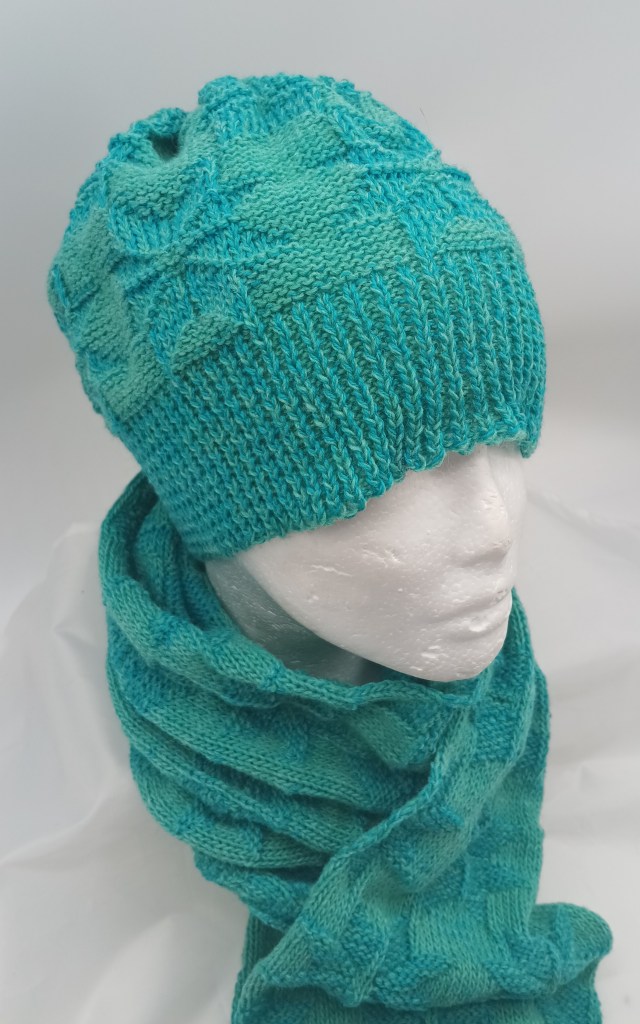
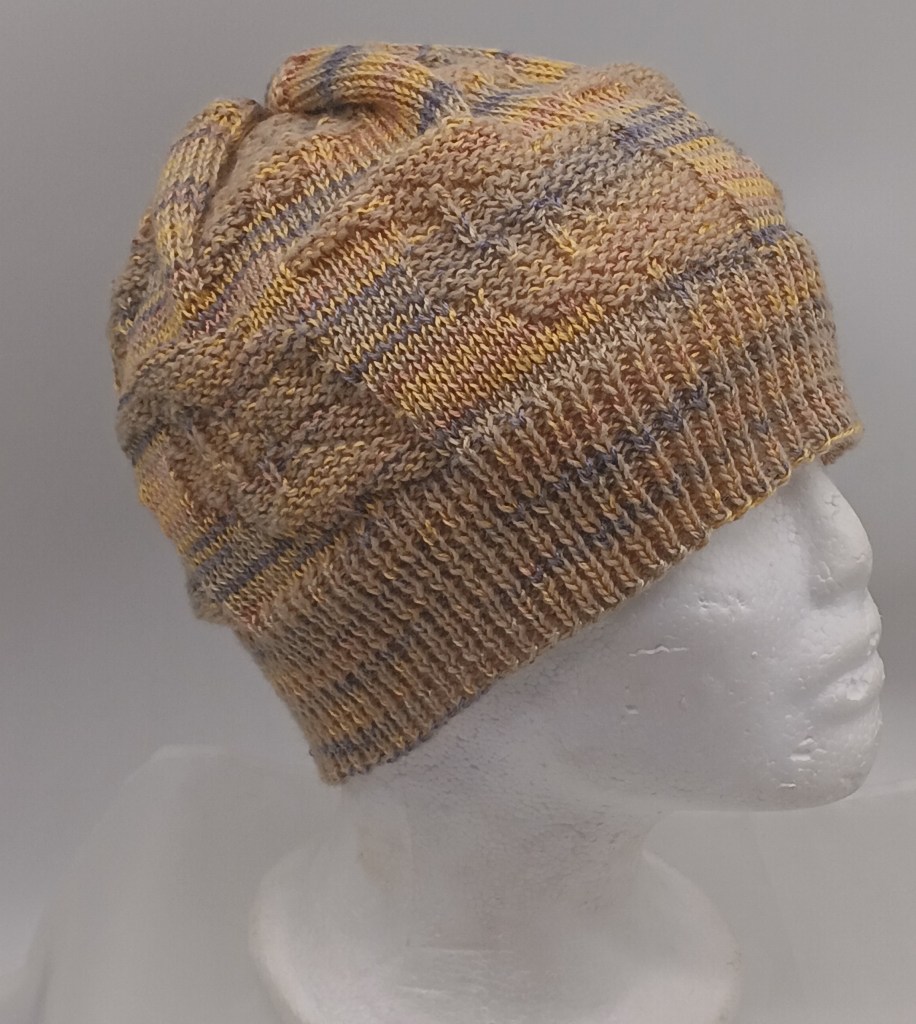
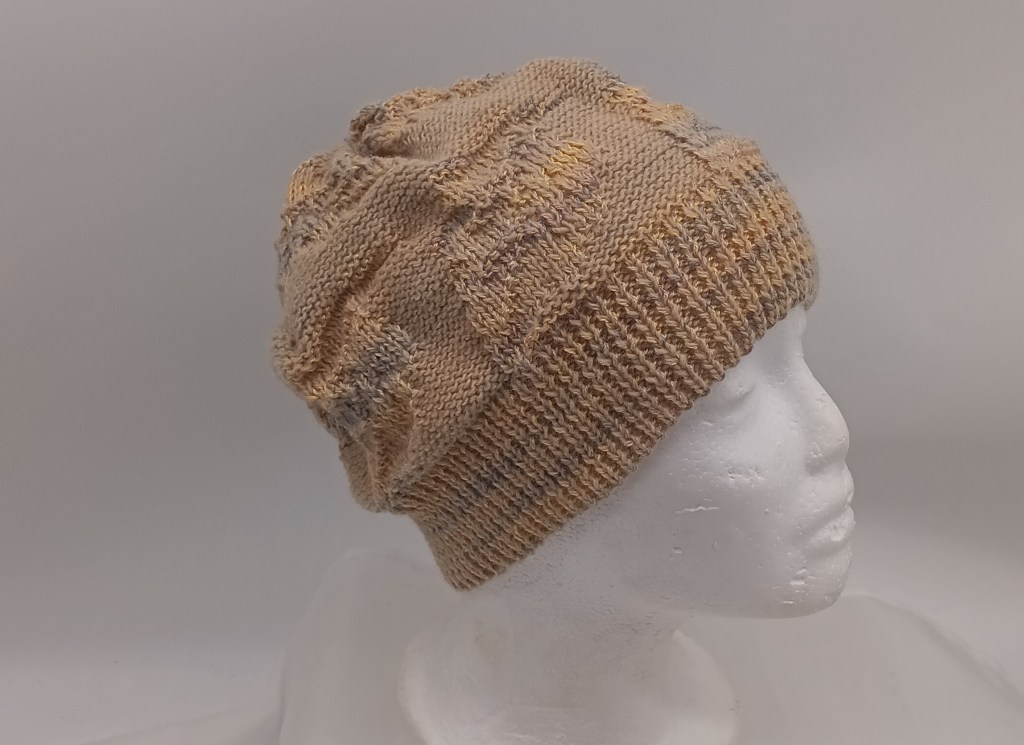
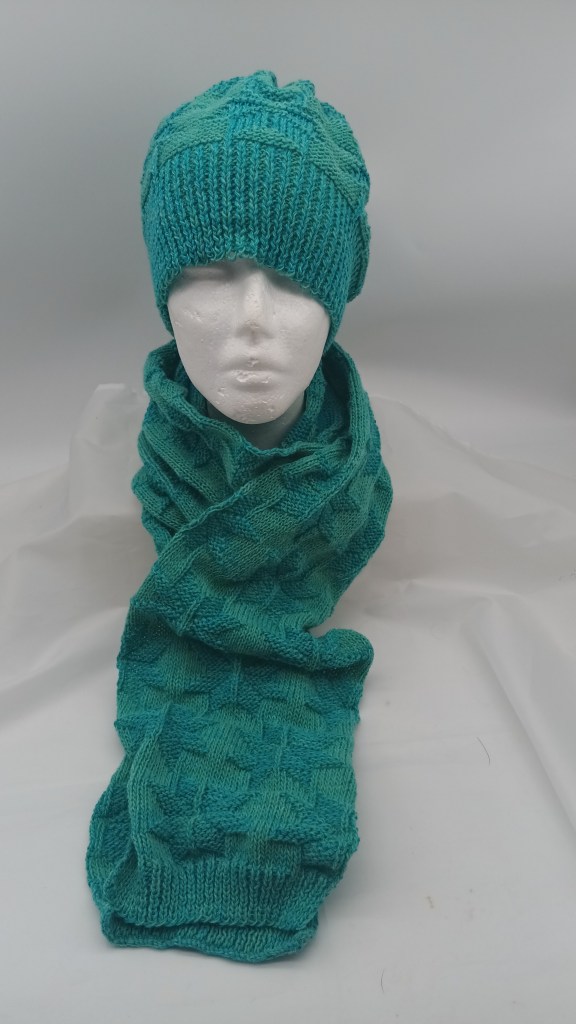
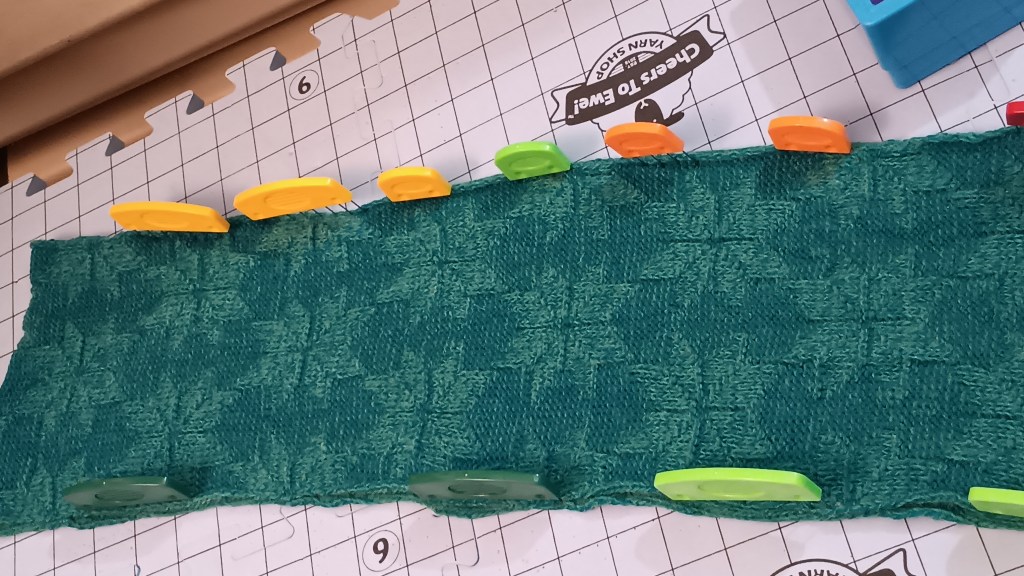
I tested the machine by knitting several patterns on all needles. The video of these tests can be seen here. I demonstrated that the machine successfully knitted tuck, slip/part, and fair isle patterns. I made three different items (hats and neck warmers) from the panels I knitted while testing this machine.
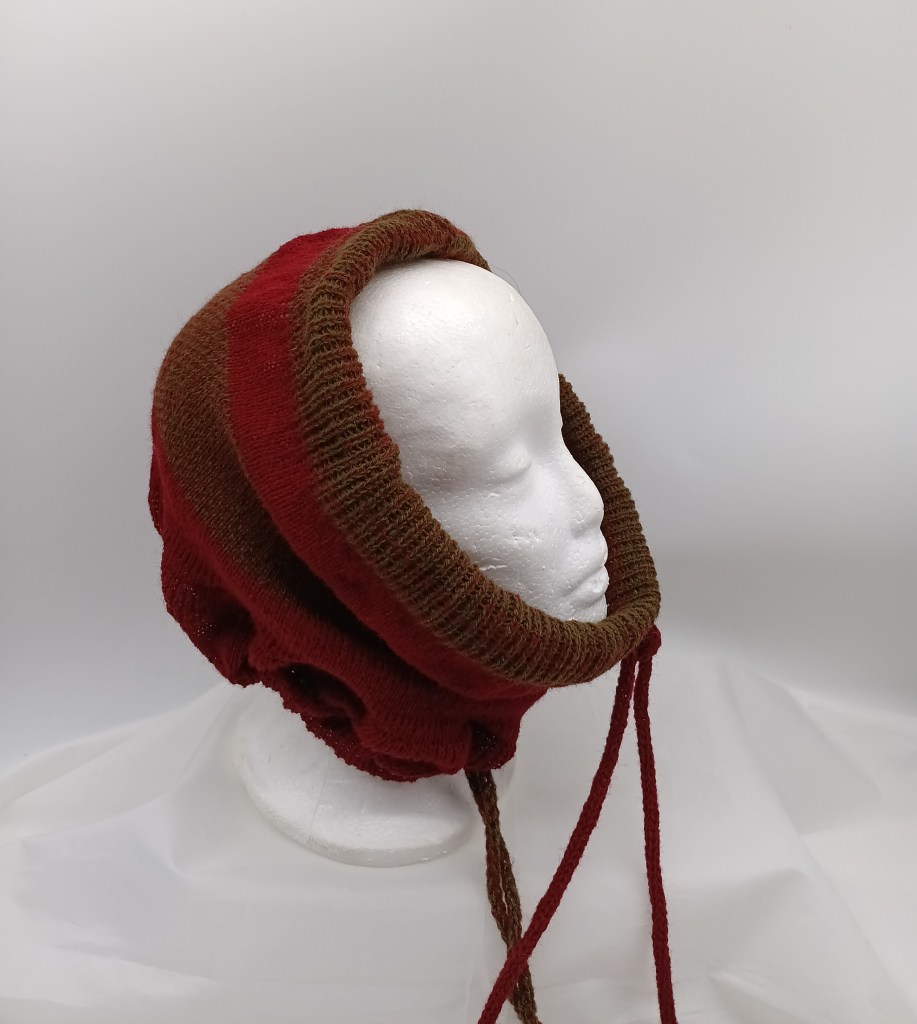
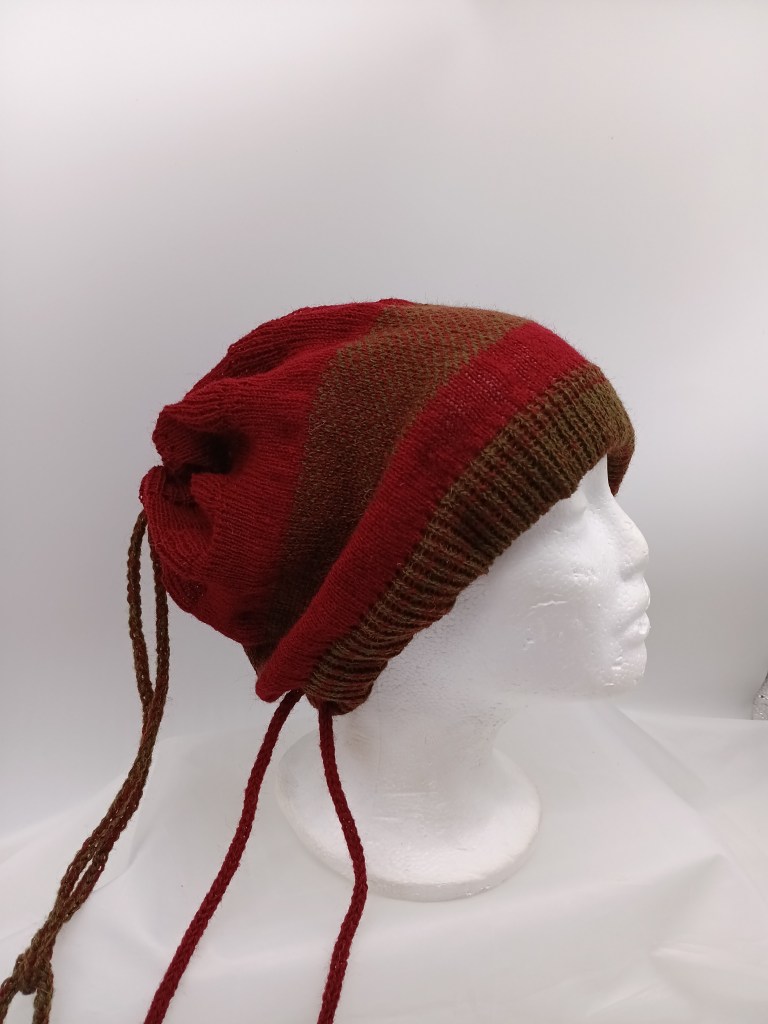
The brim on the last hats was made with the matching Studio SRP50 ribber (which is also available for purchase).

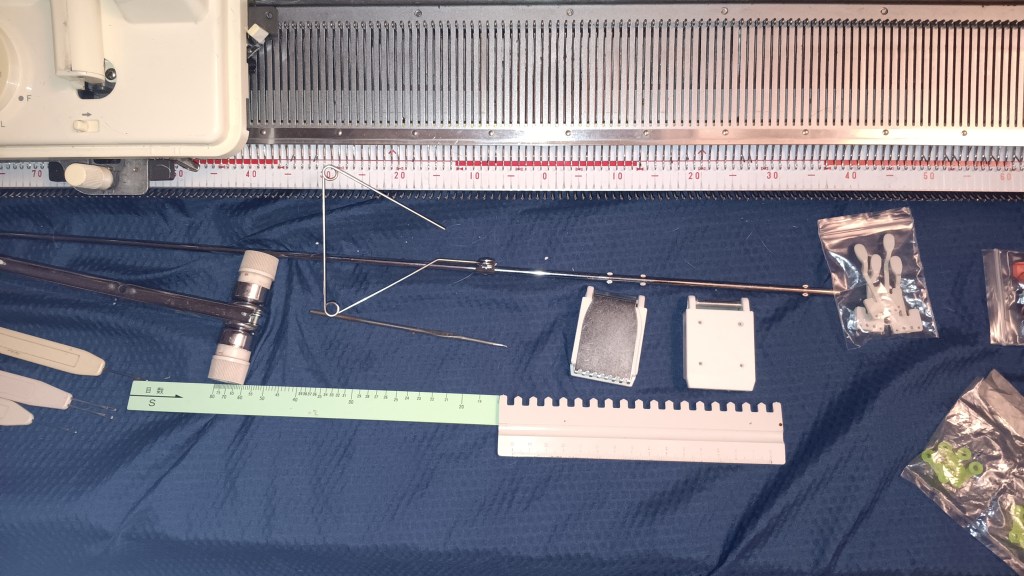
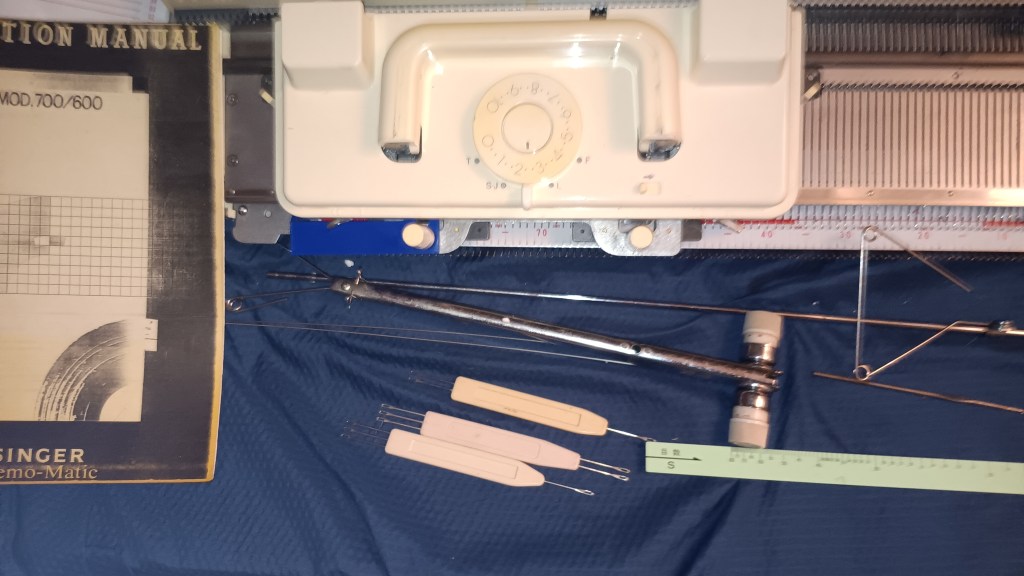
The machine will come with all the major accessories needed to knit.
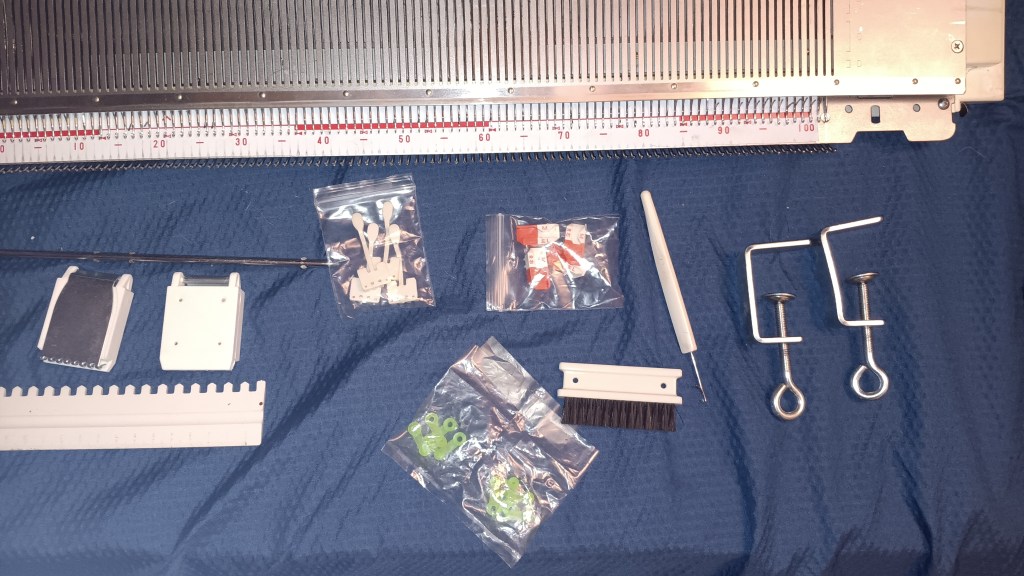
Some of the accessories will not be included and this is why the price is lower than other machines of the same type sold in my shop. Also none of the missing accessories and imperfections prevented me from knitting and making beautiful things on this machine.

They are:

  • cast-on thread (any silky and strong thread can be used)
  • tapestry needle (any needle of your choice will work)
  • pattern paper for the knit leader
  • stitch scale
  • oil (it was old and I discarded it; use Hoppe’s oil from Amazon)
  • Magic Cams: They can be purchased on Amazon for under $30. They are neded for single motif knitting.

The knit leader accessories are missing, but my experience shows that knitters who are just starting do not even use the knit leader for garments. In fact, I do all my calculations for sweaters still by hand (its just how I was taught and I am just used to it).

All accessories fit inside the built-in box:

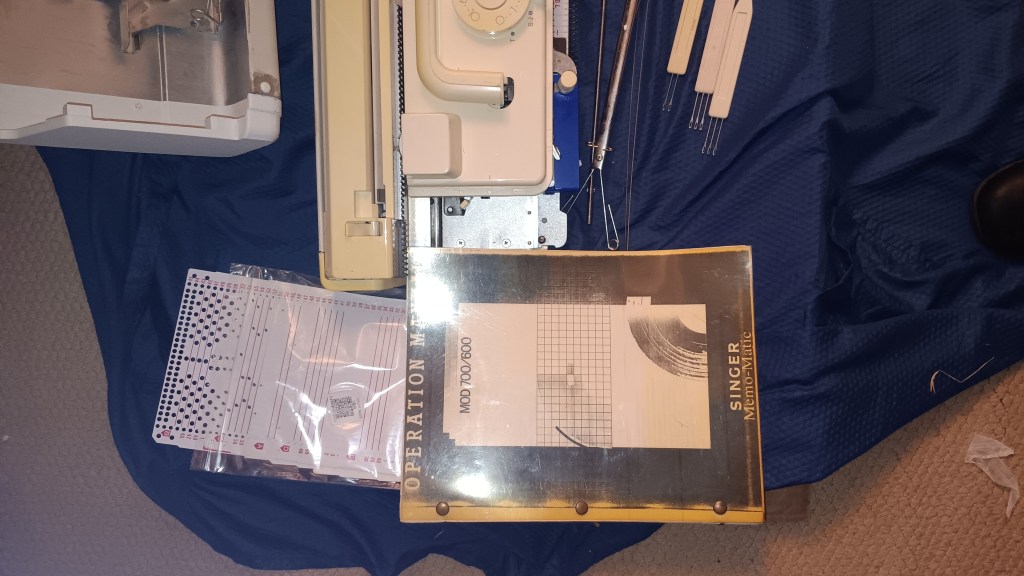
Twenty punch cards will be included. The fifteen cards are generic ones with just one line on them, but most correspond to the cards mentioned in the pattern book for Studio mod. 700 machine. The other five cards were made in the 1980s specifically for the Studio/Silver Reed/Singer machines. The markings on these cards are in red, and they have three lines. These are not generic but cards from a special edition set that I am including to complement the punchcards set to 20.

Some other imperfections (besides missing accessories) of this machine:

Some of the silver-colord rustoleum pain blead on to the cover because I also had to cover some rust spots on the cover.

Table clamps need to be whiggled in a bit with force, but i like that they sit tightly.

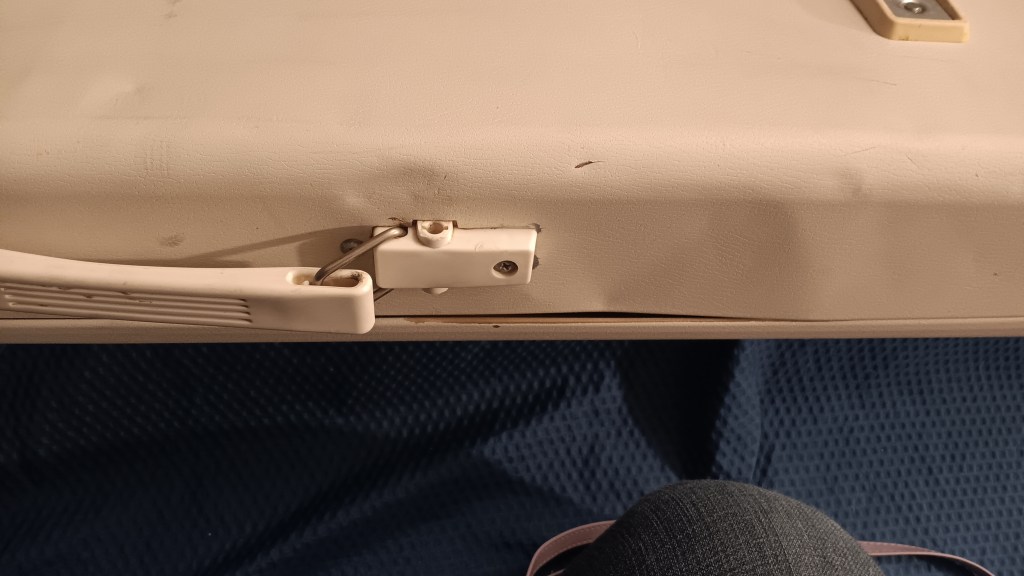
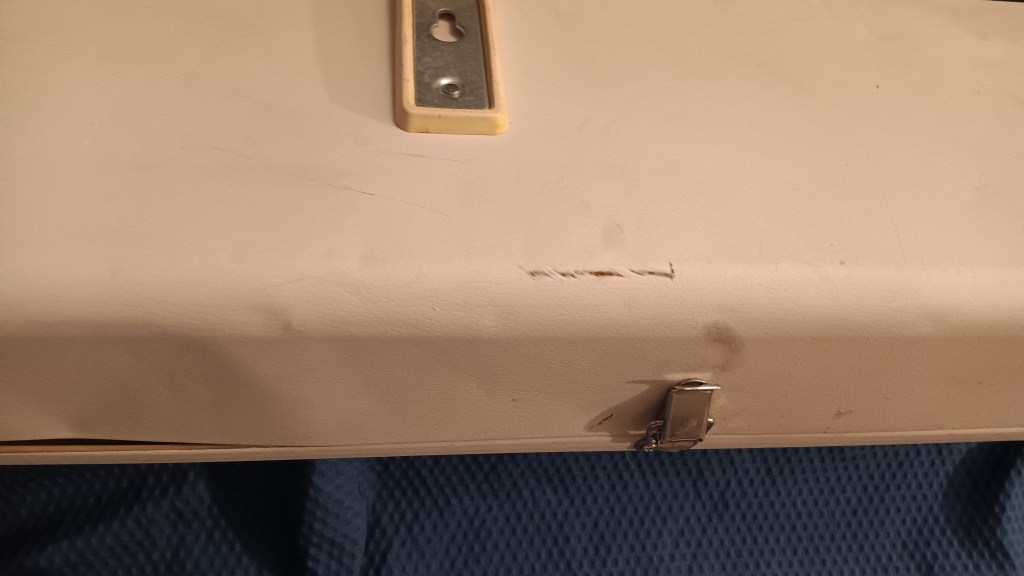
There are some dents on the case, but they do not prevent the machine from functioning and closing well.

Hoping you will adopt this great machine for your knitting needs.
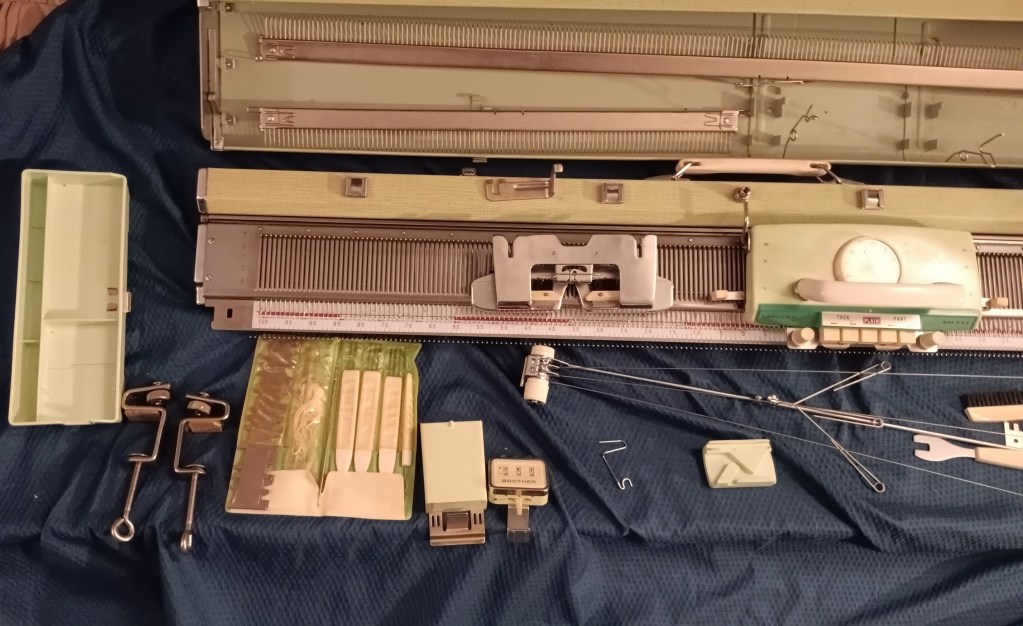
Brother Profile 551 tested and serviced in my shop in October 2025

Brother Profile 551 (Or KH551) knitting machine is a standard-gauge knitting machine with 200 needles, 4.5 mm apart. Read more about the pros and cons of this model in my Knitting Machine Encyclopedia.

The article below is dedicated to a specific machine tested and serviced in my shop in October 2025.

The machine was cleaned and oiled. All needles were removed, cleaned, and inspected individually. Their latches and straightness were checked and confirmed. The carriage was cleaned and serviced (oiled and inspected). The sponge in the metal retaining bar was replaced with a new one.

I first knit a swatch while testing the machine to demonstrate that the carriage, all its levers, buttons and knobs as well as the needle selection mechanism, work well.

Additionally, I tested the machine on all needles to ensure the needles form correct stitches. The video of these tests is posted on my YouTube channel. I used several different yarns. All tests went really well. I tested the machine using several different yarns. I will include a skein of one of the yarns I used and liked the most for this machine.

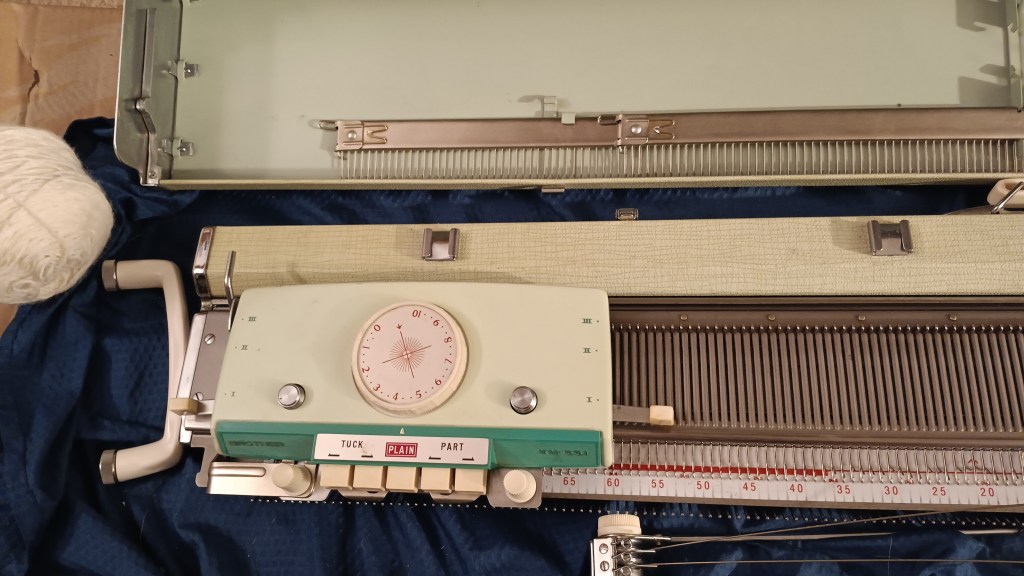
In the video, you will see that I first checked how smoothly the carriage runs on the needlebed. I moved forward (to B position) one section of needles at a time and ran the carriage in different settings across these needles. Thus, I ran the carriage across the needlebed after moving the Russel levers to I, II< and III positions and pushed the “tuck” and “part” buttons on the carriage.

When knitting the “butterfly” pattern (the very first “holding” pattern) I deviated from the pattern and instead of alternating between pressing buttons 1 and 3, I pressed 1 and 3 and then 2 and 4 to demonstrate that machine, buttons and needle selection function properly.

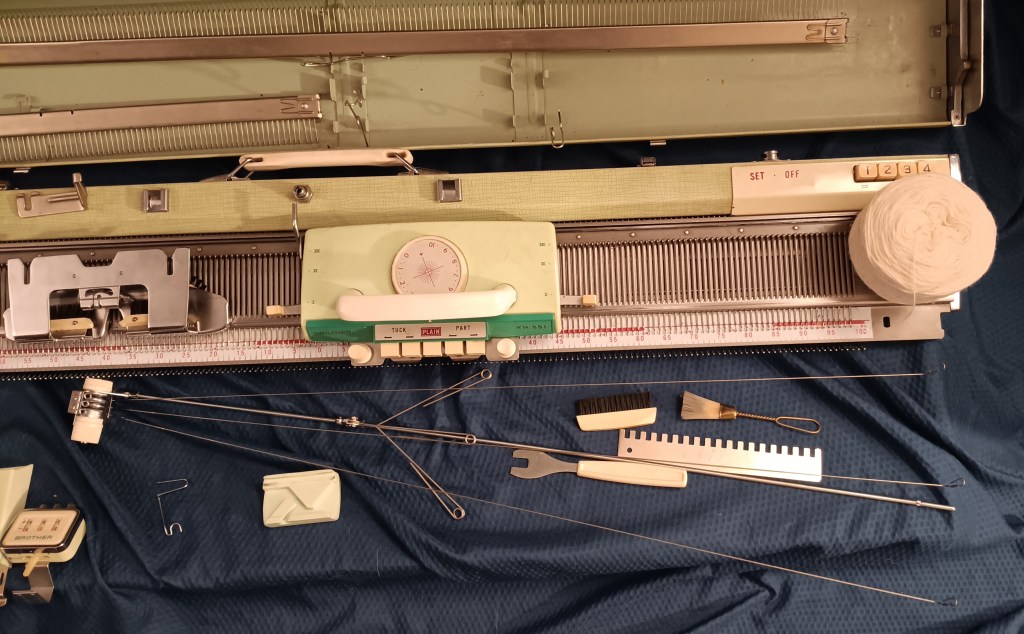
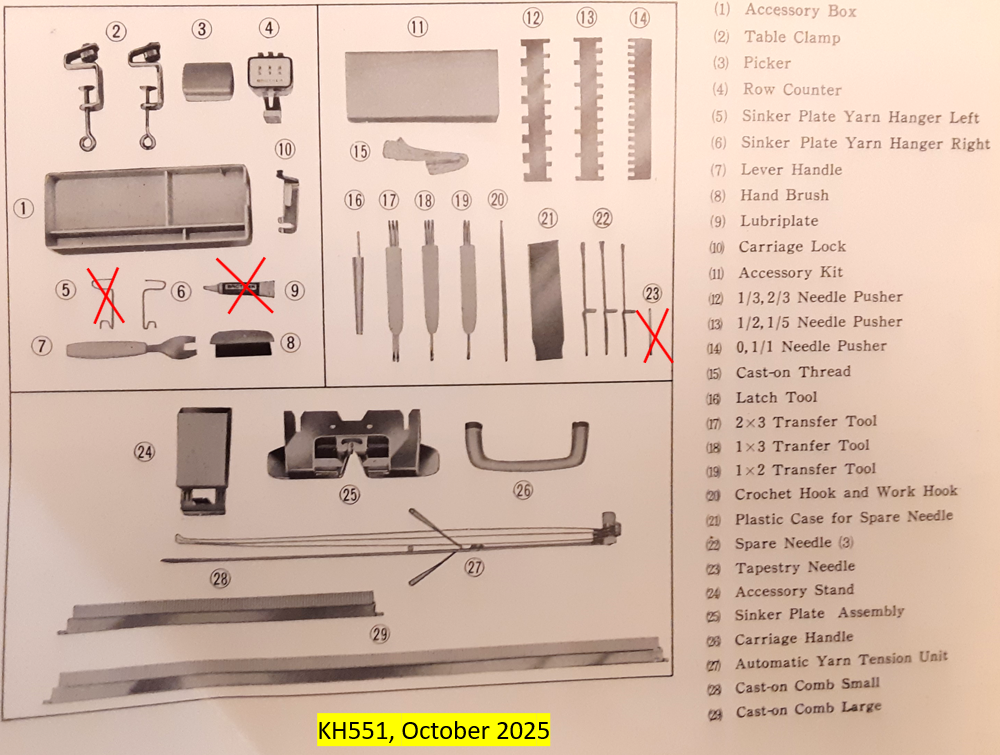
The machine will come with all major accessories and almost all minor.

The accessories that are not included are:

  • one of the yarn hangers, used in the plating type of knitting (page 19 in the manual). On one of the previous machines, I used a paper clip. My experience also shows that knitters rarely use these.
  • oil. It was too old and I discarded it. Use Hoppe’s gun oil available on Amazon.
  • A tapestry needle was rusty and I discarded it as well. Any needle will suffice.
  • A hard copy of the manual will not be provided.

The original manual can be found online, but the resolution is poor. For patterns, it is better to use this manual, which is for the 8-pushbutton machine, but the functions of the carriage are all the same. When converting those patterns, in the pattern table, cut the number of buttons by half and just follow the rest of the directions.

I noticed that the claw weights do not come with this machine. But you can easily order them on Amazon (as well as a smaller cast-on comb for swatches). The price on Amazon is even better than I would offer.

When knitting tuck patterns, especially on every other needle, watch that the stitches come off the round section of the needles. Always remember that the tuck (other stitches too, but tuck especially) is always an interplay between the correct yarn, tension, carriage settings, and static, among a few aspects. I will include a skein of yarn I used for my tets to use as a reference yarn.

A couple of hints to avoid mistakes with the set lever and pushbuttons:

  • Make sure the ratchet tool goes ALL THE WAY to the left when activating the needle selection and all the way to the right (to the OFF position); otherwise, incorrect (or incomplete) selection might happen.
  • general rule of thumb: tuck requires higher tension (smaller number on the tension dial) than stockinet. So does slip/part.
  • Notice in the video that I am adjusting the tension as I am going from stockinet to tuck/slip.
  • For consistency, I recommend the very last two needles (on each side) to be in B position. For example, in the video when i was knitting tuck stitch, I was checking if the last needles are in B or C position. I like my last needles to be in B position, so I moved the needles pushed to C position up.

PROS:

  • Overall the machine is in great shape with no visible rust
  • cast on combs are in great shape: all teeth are straight, and there are only a couple of minor scratches
  • Most of the tools are original

Imperfections:

  • couple of missing minor accessories and a hard copy of the manual
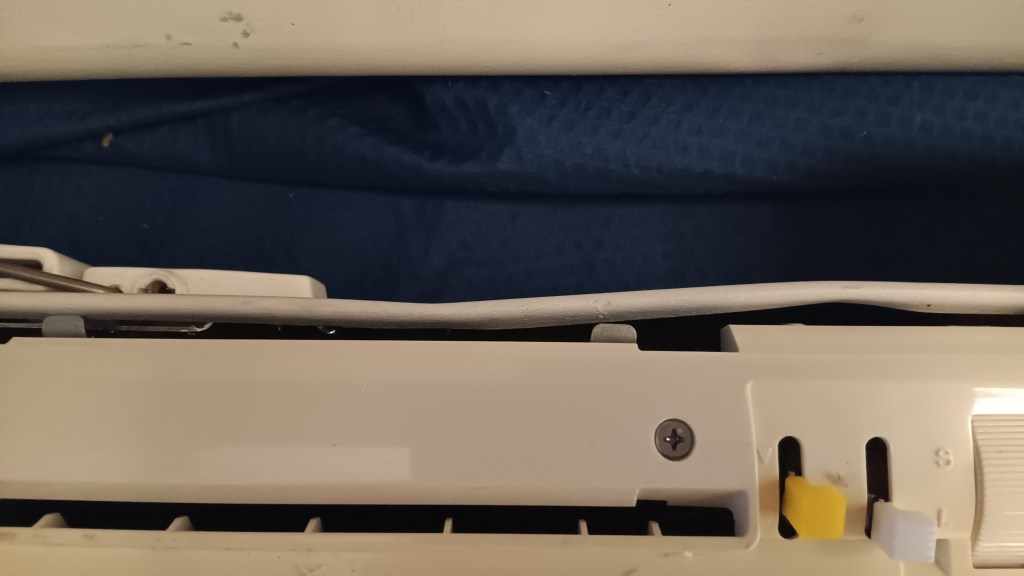
  • minor scratches (some of them are shown below)
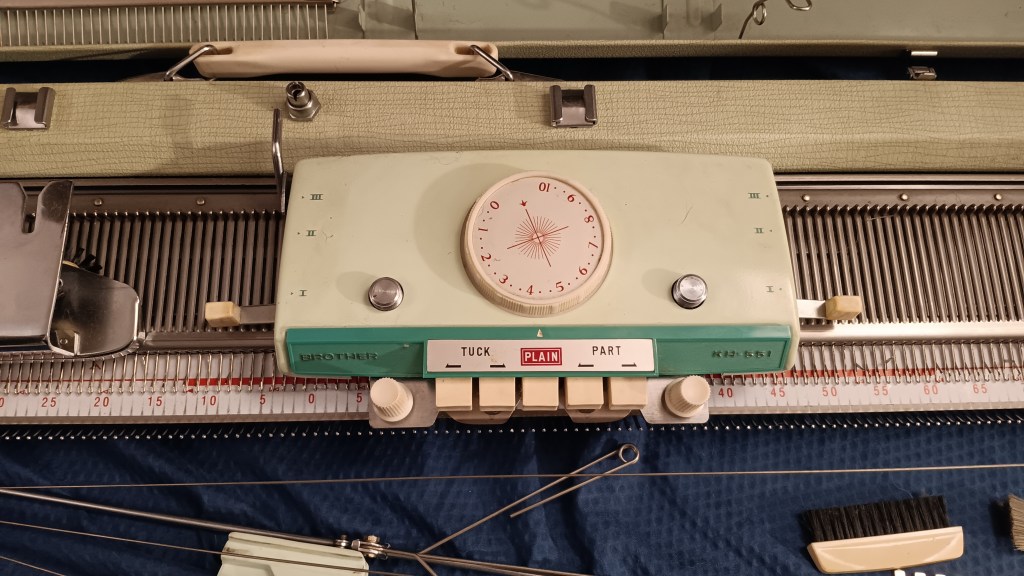
  • some minor discoloration on the pushbuttons (shown below)
  • cast on combs have just couple of minor scratches (not shown)
  • The case and the lid are in great shape with only minor, barely noticeable, scratches (not shown)

Picture showing minor scratches on the carriage:

Picture showing pushbutton up close to demonstrate the minor discoloration and minor scratches:

Please keep in mind that my house is a dog-friendly household, so some dog hair is unavoidable.

Hope all looks good and if it does – Happy Knitting!

Hats with snowflakes knitted with two-color garter carriage

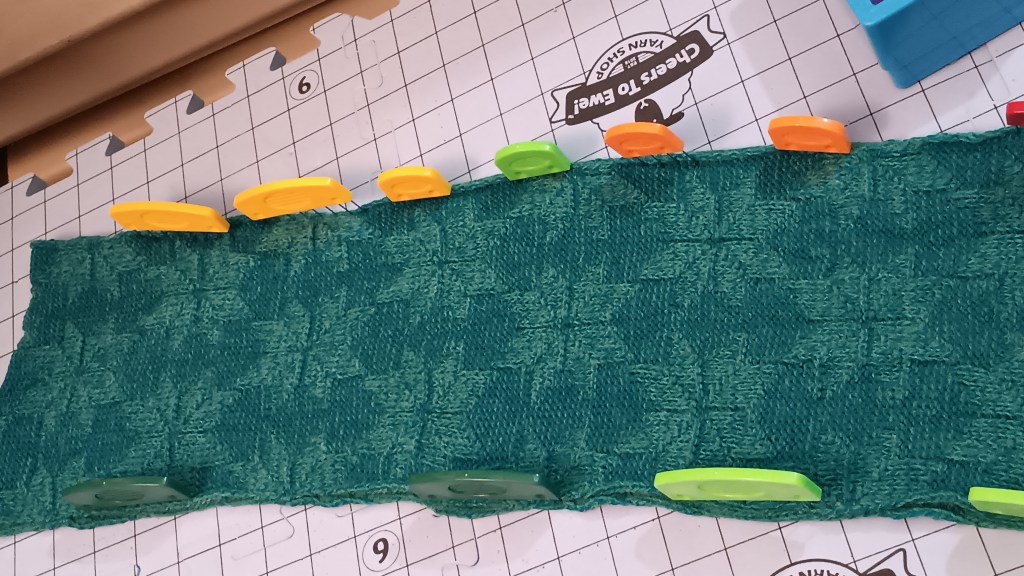
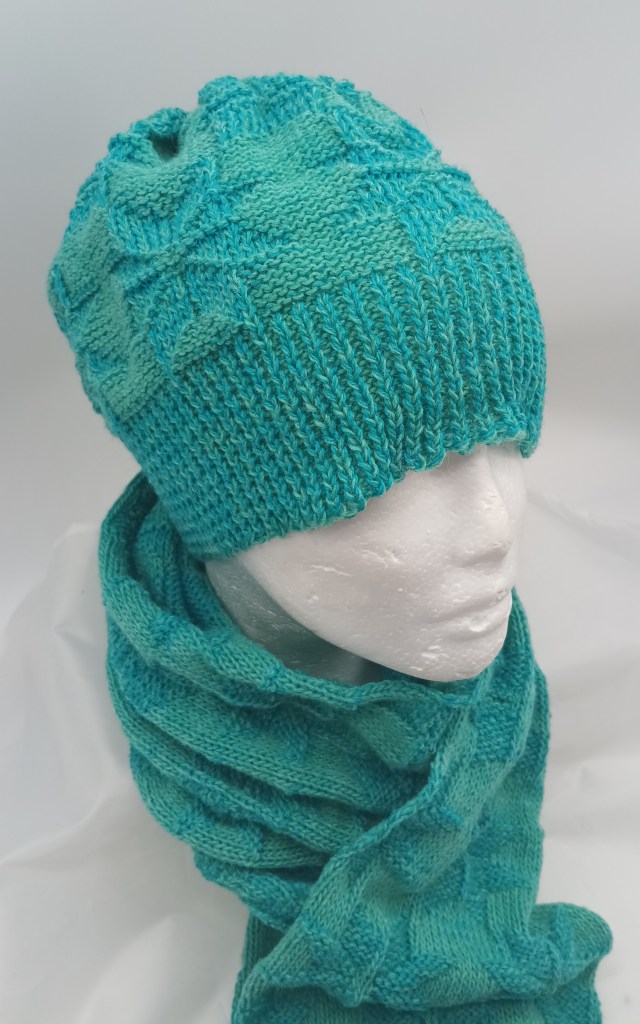
I loved this pattern so much that I tried a few combiantions of yarns and i am will experimenting. Basically, all hats have 21 rows of 1×1 ribbing (pattern 532 in the stitch book), then one full pattern with snoflakes (pattern #541 in the stitch book). For bigger/deeper hats I sometimes finished with 1×1 ribbing.

Color combo #1: The main yarn (on the right-hand side) is 50/50% wool/acrylic blend for handknitting. It is a teal color more on the green spectrum

Color combo #2:

Diary of my two-color garter carraige projects

What the two-color garter carriage did for me is hard to put in words. My journey with knitting machines started when i realized i had too much yarn on hands. After experimenting the crap out of Addi (I knitted sweaters, with cables, after NUMEROUS hats, scarves, and fingerless gloves) and Brother KX350 (also seaters with cables and socks), I needed more challenging projects. I could not decide which machine to choose, so to try them all I ended up buying multiple second-hand knitting machines… All kinds… So many that I started running out of space so I had to pass along all those machines. I cleaned them, tested them, figured out what I like about them, and did not. Moved on to the next one. … But I still really never had a chance to sit down and experiment and craft with all that yarn I accumulated…

Then I discovered Garter carriage. Thank god, out of a dozen garter caraiges I picked up along with the mahcines, one was fully operations (I am still fixing 11 others). The minute it created the perfect 1×1 ribbing, without curse words and snags that I was getting on the ribber, I was in love. I immediately knitted a blanket, and, as usual, multiple scarves and hats. I would not say I got bored (there were so many patterns and projects still to experiment with). But I saw the wonderful effects that two-color garter carriages created, so I wanted to continue to experiment (and along the way, to use all that yarn I have). So, I got the adapter.

After overcoming the initial learning curve, I started enjoying watching my two-color garter carriage making various fabrics so much, that I would bring my coffee into the room and just watch it knit. I would be combing impossible yarn. Consult with my son, who is an artist on colors and designs. Create my own designs… Oh boy. I finally had that long-awaited creativity and experimentation that I was yearning all this time. I still fix my machines and pass them along, but I also create these new designs, comine colors, test new patterns, create my own patterns…. The level of satisfaction it brings is just indescribable. Being creative and crafting, according to smart scientists, increases the levels of dopamine… These levels are now spilling to other areas of my life. Double benefits. Thanks, two-color garter carriage. I cherish and appreciate you!!

Hats with leaves

Hats with snowflakes.

Brother Garter carriages: thoughts and observations

… in progress as I am still learning and discovering …

I’ve spent the last two weeks fixing, disassembling, servicing, and cleaning all kinds of Garter carriages. I went through a mix of emotions: from agony of trying to identify the problem to fix to make the garter carriage work to complete awe watching the garter carriage knit a whole baby blanket just after I pressed all the necessary buttons.

In fact, it was so relaxing to watch Garter Carriage knit that my family would find me drinking coffee in front of it (instead of TV or a FaceBook page). Check out my pages with my projects, advice/notes, and patterns.

While being enthralled, I knitted swatches, hats, custom patterns, multicolor (just stripes, not using a true 2-color GC), blankets on all 200 needles…. So, below are my observations and notes.

Garter carriage is a bulky (meaning, big) carriage but unlike a main machine carriage, it knits on its own but slow. Garter arriages are temperamental. In fact, VERY! Som below I am compling a list of commonly appearing quesionts, my observations, and knowldge (acquired by making a LOT of mistakes).

The garter carriage moves too slowly.

If you want you GC to move faster, adjust the dial on its power supply. Right (“H”) is to increase the speed. If this does not change the speed, it is very likely that either the motor is malfunctioning or there is gunk in the carriage preventing it from moving faster.

The garter carriage stopped and is not moving.
  • The service manual describes some of the possible reasons:
  • Check if the power supply is actually working. My carriage stopped working literally in the middle of a project, and i could not figure out what was going on until I decided to try a different power supply. Well, the previous power supply decided to die without a warning.
  • The motor is not running. There are several reasons for that: bad motor, incorrect connection to the electrical outlet, yarn sensor is down, your row counter is at zero, a knot in the yarn feeder… Refer to the service manual for more detailed information.
What might cause garter carriage to randomly drop stitches?
  • bad (bent needle): it might have a sticky latch, be bent, misaligned or stuffed with lint. Check this first.
  • yarn is too thick. Solution: decrease tesion (increase the number on the dial) or switch the yarn. I was able to use yarns on garter carriage that a regular standard-gauge machine cant. BUt there is always a limit.
  • problematic yarn: fuzzy, or with boucle, or staticky, or stretchy yarn, or simply yarn that does not want to knit on the garter carriage (it happened to me; I put it in a bag and marked “GC cannot knit”).
  • check sponge bar: the spongy part needs to be about 1 cm above the metal sides. also: is it still spongy? is it even across the length of the retaining bar?
  • gate pegs might be bent or out of line. Check gate pegs from different angles.
  • clean the brushes from fluff and dust.
  • insufficient or too much weight

Overall, Garter carriages are quite temperamental.

Why does my garter carriage turn in the wrong place?

There are actually a lot of reasons for that, and they depend on the situation.

  • old grease and gunk. Solution: open up your carriage and clean it up.
  • if you recently disassembled your garter carriage, check if the turning cams are installed correctly
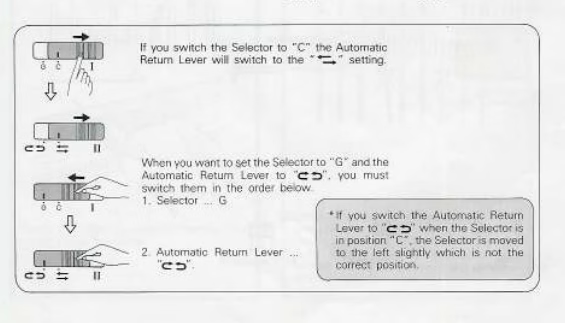
  • check the manual: it says for the automatic “turn” function, the slider needs to be moved to “G” first otherwise it causes problems.
  • make sure your needlebed DOES NOT miss any needles. It will trigger the turning cams incorrectly.
Are extension rails necessary?

It depends on the width of what you are knitting and also on your comfort level. It also depends on your machine. For example, the needlbed of the Brother KH930 is pretty wide (beyond where the needles are nested). In additional, the end cap on the right-hand side is wide too. So, even if you are moving the garter carriage past the sensor (to activate the “GC ON” light on the machine), rails are not necessarily. Thus, even if you are knitting on the full bed (like shown in this video), rails are not all that necessary.

What are good yarns to use with the garter carriage?

Gareter carraiges can handle yarns thicker than the standard machines can. Mostly because it knits one stitch at a time and pulls the yarn to form one one stitch at a time. Couple of examples: For example, I made a wonderful blanket with “we love yarn” (400 g/1312 m; 100 g/328 m) per ball) which is considered pretty thick for standard-gauge machines. This yarn creates beautiful texture and is machine washable at 104 F. I made a blanket with the cream yarn with tension 9 for the border and 10 for the main body. One skein of mega ball was enough. Two color garter carriages will need thinner yarns (for both feeders). But in both cases, knitters need to experiment with yarns and tensions. The golden rule: if the machine struggles, increase the number on the tension dial (which loosens the tension). Still struggle: the yarn is not compatible with your garter carriage.

Do I need to remove the ribber bracket to use the GC on my machine?

Just the brackets should not affect GC functioning. However, some believe that the best angle for GC to work properly is when the machine is flat. Thus, use the flat table clamps, not the S-curved ones (those that we use to attach our machines to ribbers).

Do I need to use cast-on comb?

Yes and no. Some knitters like to hang the cast-on comb on the 3rd or further rows. Some knit without it. I found that with thicker yarns and for two-color carriage, cast-on combs benefit me. Again: try and see for yourself.

Why are GC needles so expensive?

Simple answer: supply and demand.

My garter carriage is mispatterning.

Again, there are several reasons, including, gunked-up machine. But also:

  • you forgot to activate the GC light on the machine (if your machine is electronic)
  • bad garter carriage needle: replace it
  • not super fresh sponge in the retaining bar
  • bent or defective main bed needles