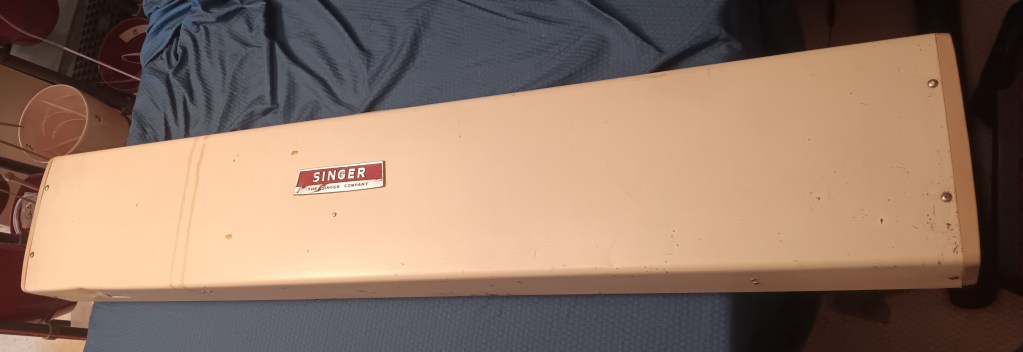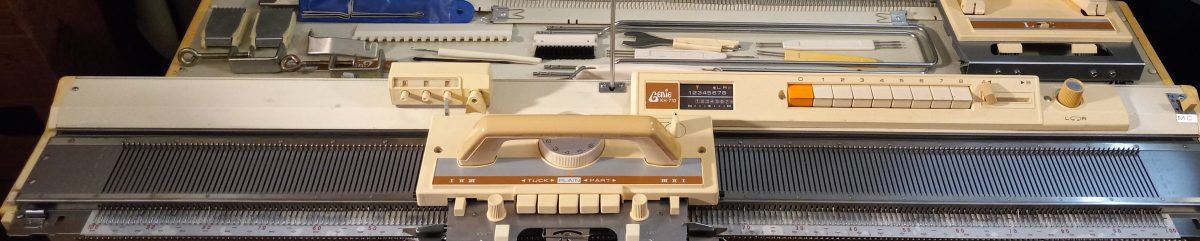
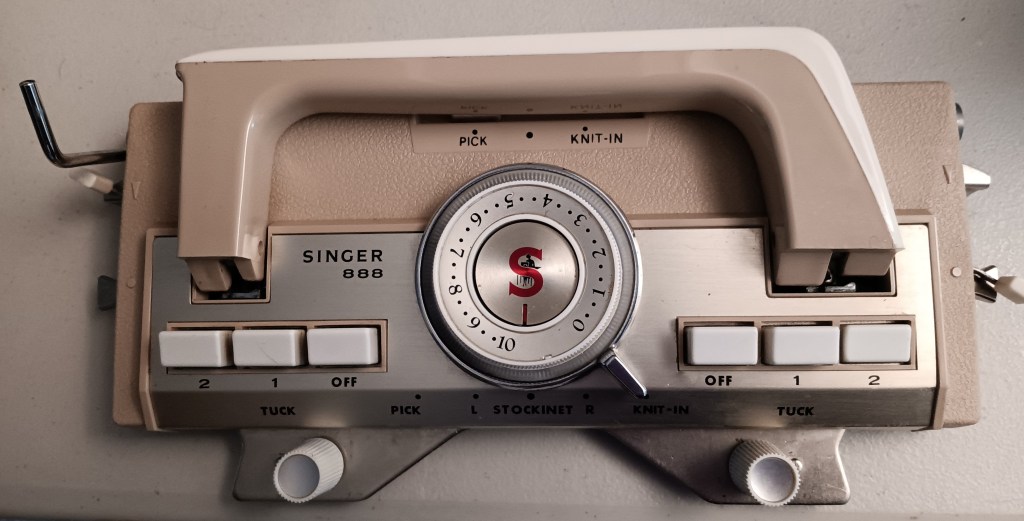
Singer 888 knitting machine model has 200 needles, 4.5 mm apart, which makes it a standard-gauge knitting machine. It was released to the market in the mid-to-late 1960s. It has turn knobs, controlling needle selection and, thus, patterning when knitting. Read more about this model in my Knitting Machine Encyclopedia. The rest of the post below is dedicated to a specific Singer 888 knitting machine, serviced and tested in my shop.
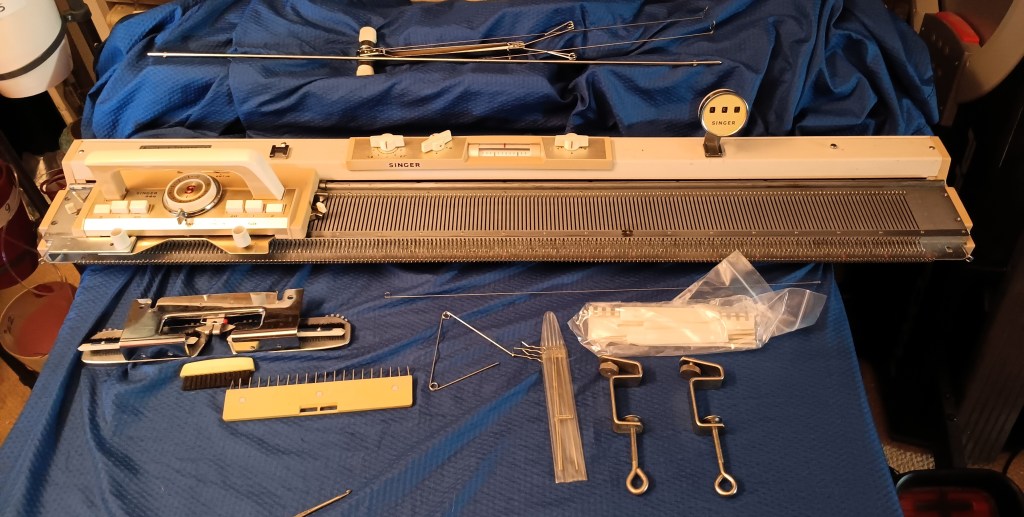
Just a quick disclosure: I was nervous starting testing this machine with so many buttons and levers and moving parts, but as I started working with it fell in love with this machine. Patterning was so easy and kind of almost meditating. Check out the video of these tests.
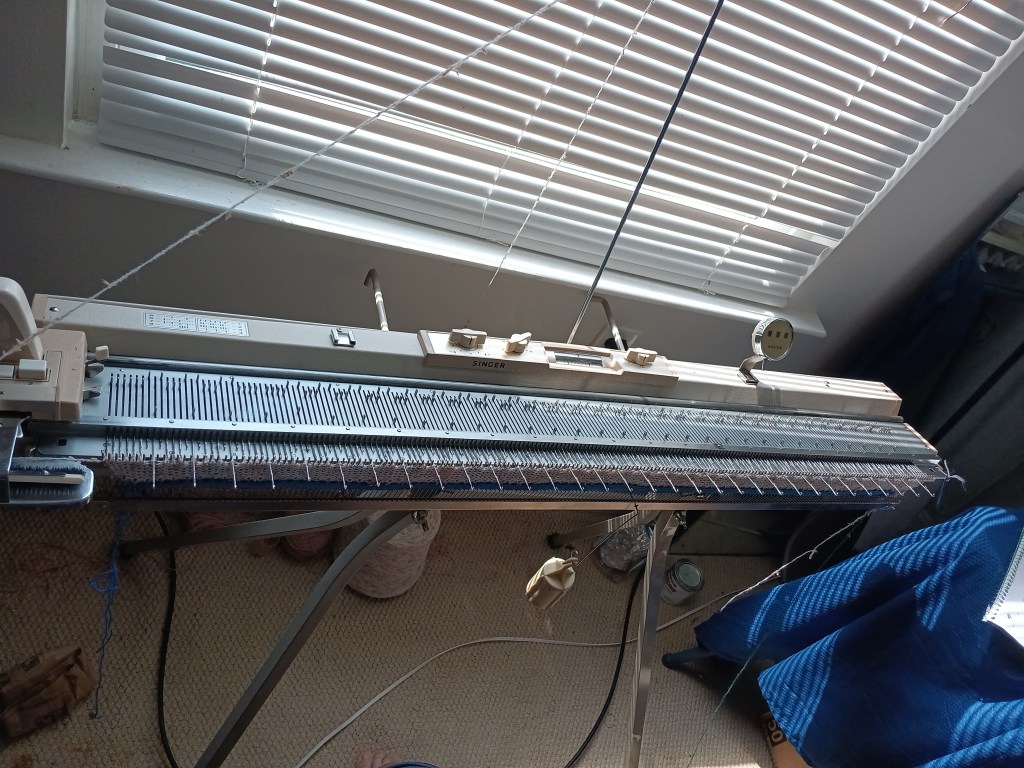
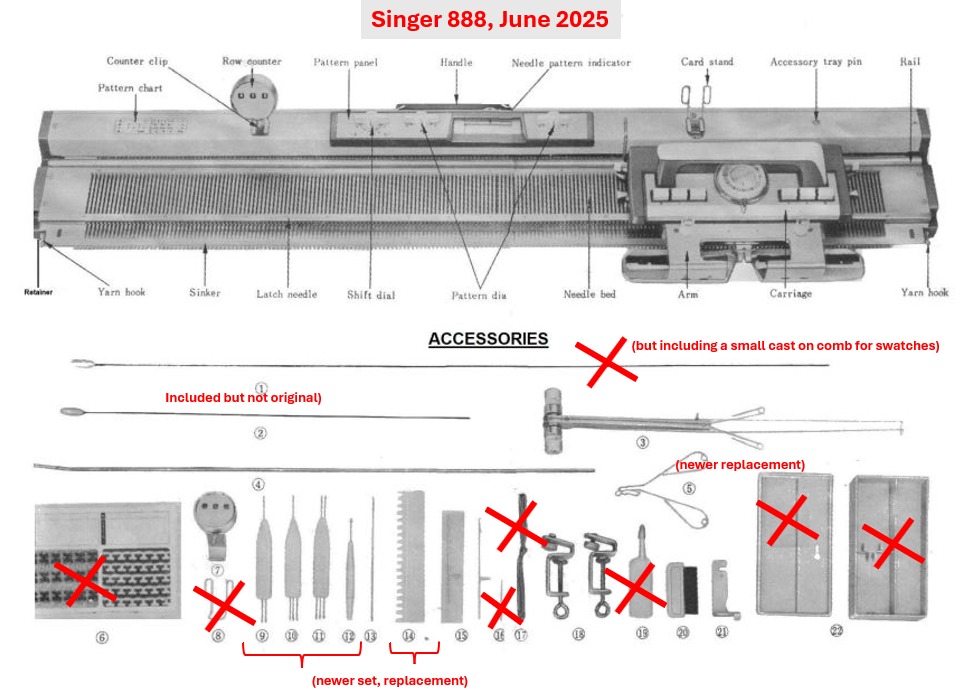
The machine will come with almost all and most critical major (carriage, sinker plate, row counter, tension mast) and almost all minor accessories (table clamps, transfer tools, needle selection ruler, replacement needles). A lot of accessories were missing when I got the machine, but I was able to outsource most of them.
All levers, knob, dials, and buttons on the carriage move freely.
The hard copy of the manual will not be included. However, it can be found online (look on that site for the info on Knitmaster ES-302, Studio SK-302, and Silver SK-302 knitting machines as they are similar to Singer 888). Silver SK-301, Studio SK301, Silver 303, Silver 305 and Empisal Knitmaster mod. 305 are also similar turn-knob machines that will provide a lot of useful tips if instructions for the 302-series models.
The case to store tools is not included. The tools will be secured to ship even without the case. Oil was too old, and I tossed it away. For maintenance, get a Hopp’s gun oil on Amazon. The clips to hold the pattern cards also did not come with the machine. Tapestry needle and cast-on thread are not included. Any needle and any silky and strong thread will work.
The table clamps are original. The transfer tools were missing, but I am including a new set, which also comes with a new needle selection ruler. Only one, 100 stitches, cast-on wire will be included. It came with the machine but does not seem to be the original (the bead on the end is not oval; a wire is simply bent into a knot). As a courtesy, i am including a small cast-on comb to quickly cast on for swatches while learning the machine. I am not sure if using case-on wires is a popular cast-on method since I most often see e-wrap based cast ons. However, for quick swatches and quick tests, the cast-on comb-based is my favorite.
The pattern cards also did not come with this machine, but they are also available online.
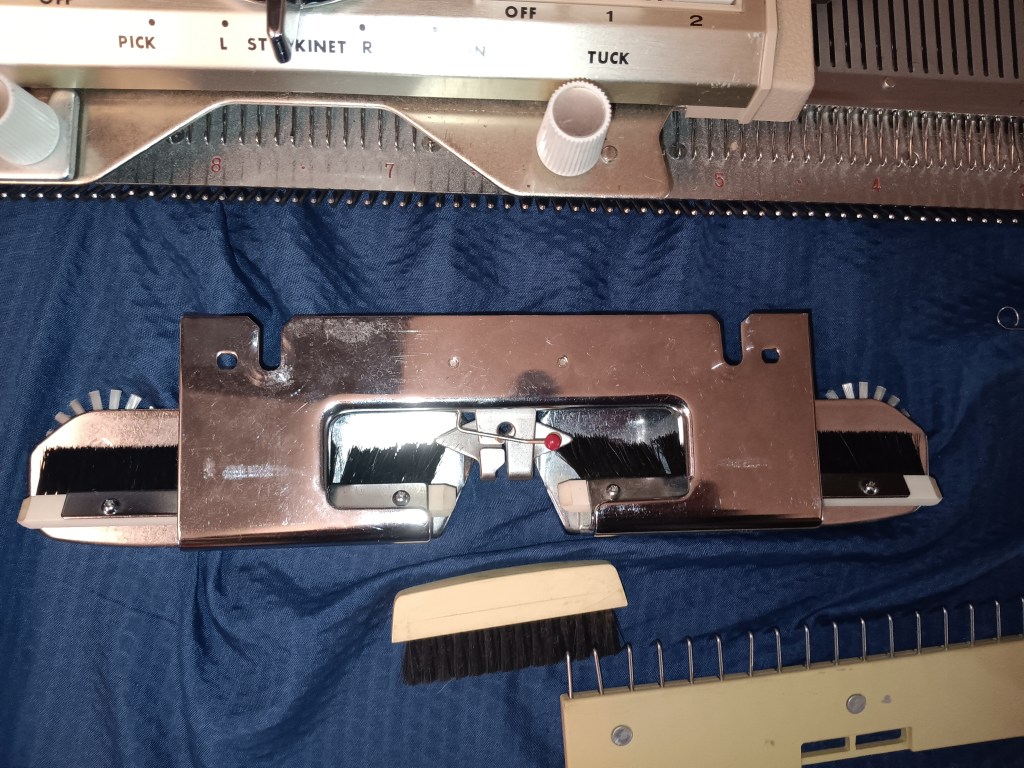
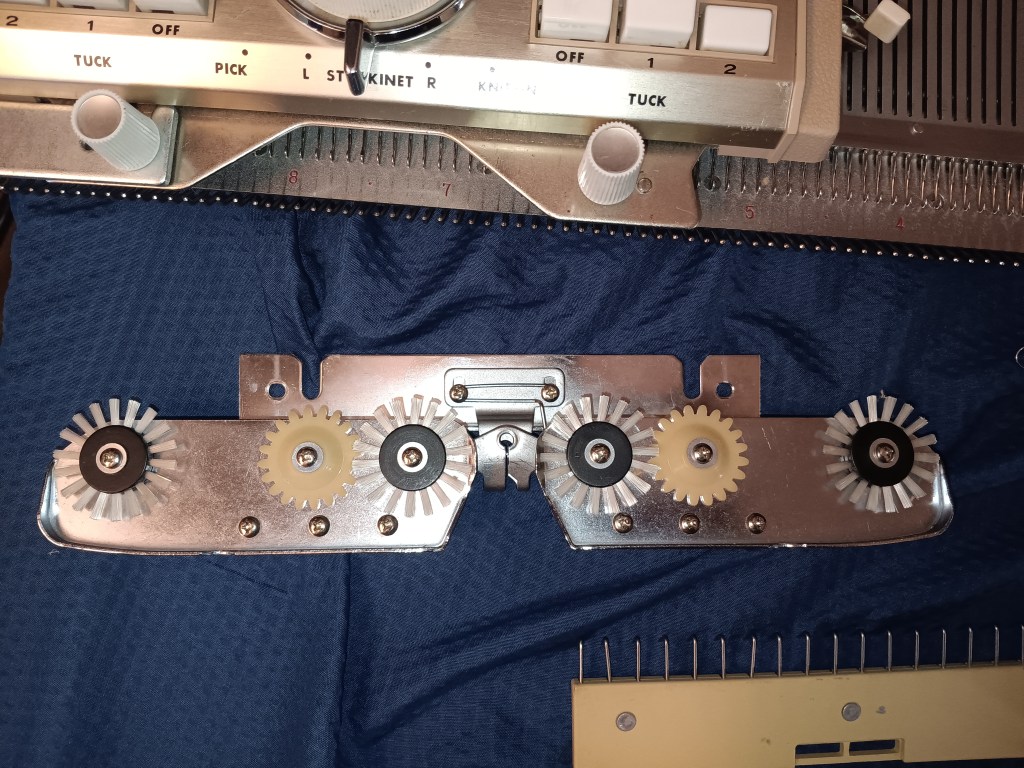
The needle bed, all needles, the patterning center, and the inside of the machine were thoroughly inspected and cleaned. The carriage was thoroughly oiled to ensure all buttons, dials, and levers move freely.
The sinker plate and all its wheels are in great shape.
I knitted several swatches with different patterns to ensure that the carriage performs the needle selection and patterning well.

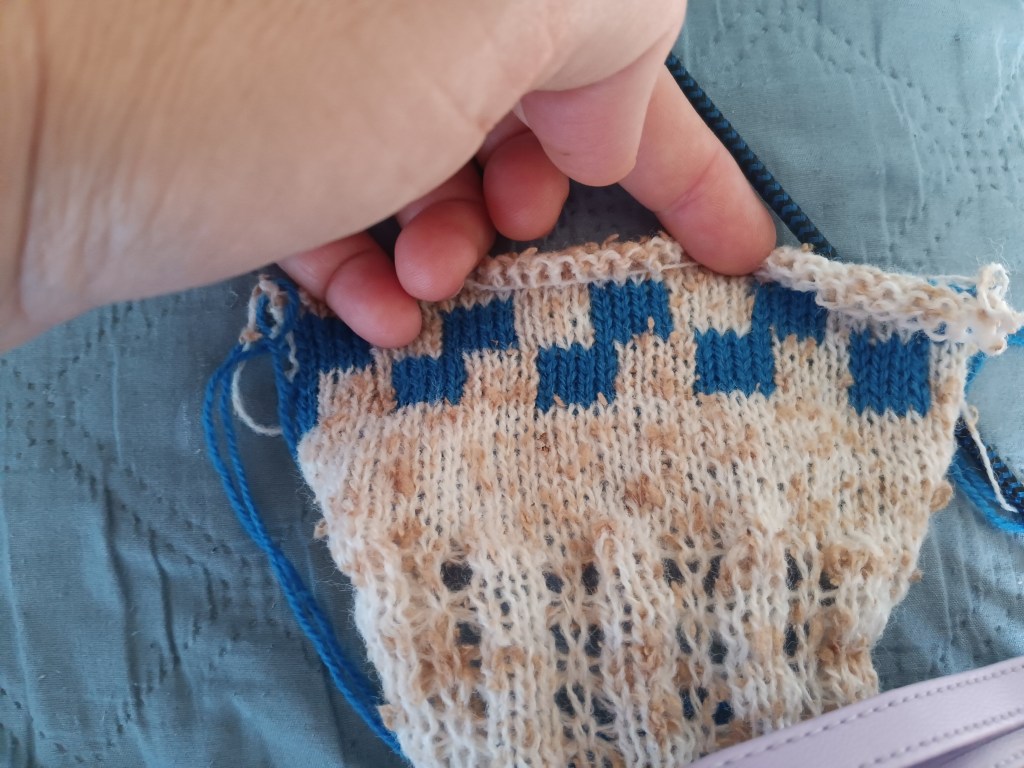
Then I knitted on the full bed to ensure that all needles form correct stitches. I knitted on all 200 needles, stockinette, tuck, and slip-stitch. The two-color fair isle was only done on a swatch.
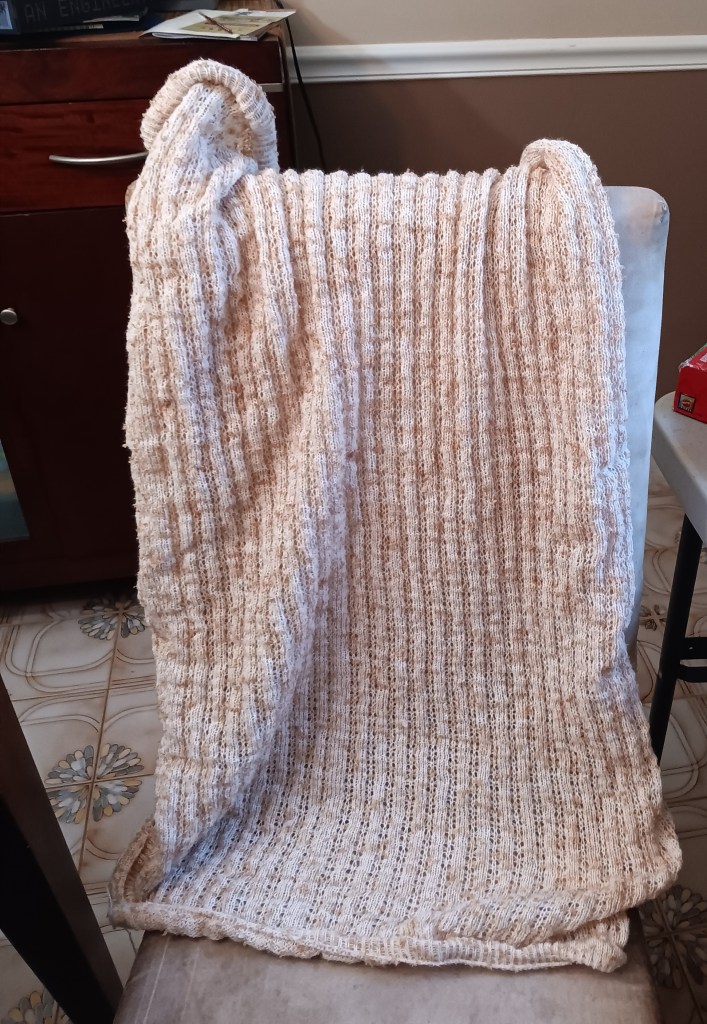
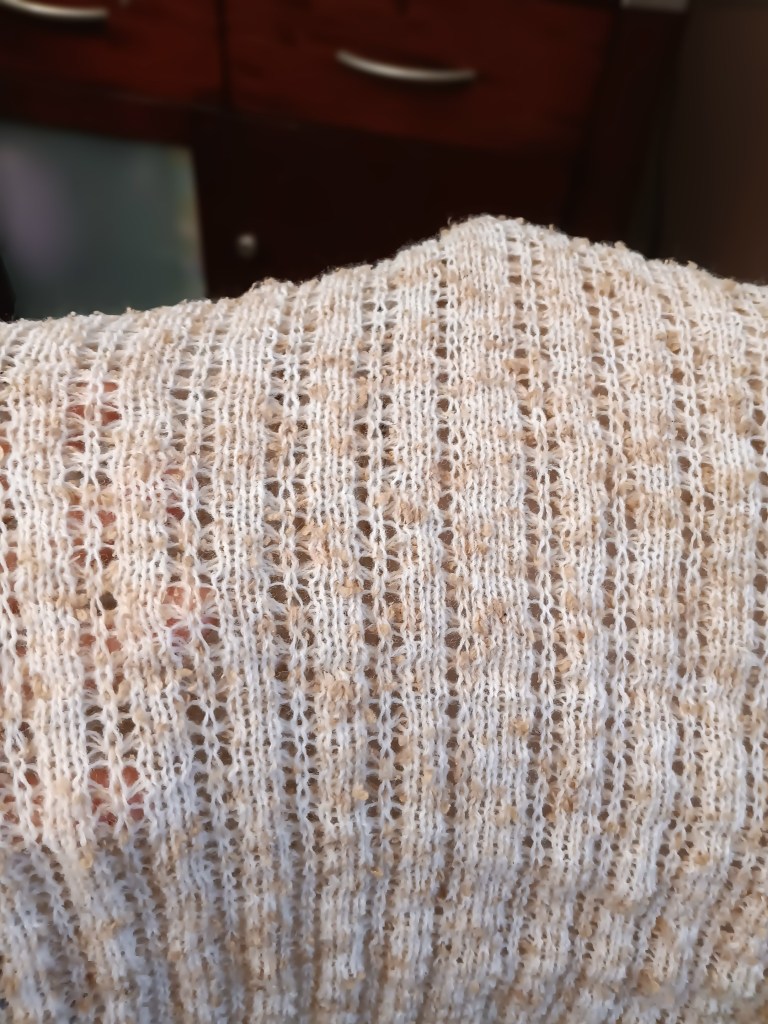
I like making something from the knitted panels I knit while testing the machines. This time, I made a very light-weight but still warm baby blanket for a friend.
Now, about imperfections of this machine:
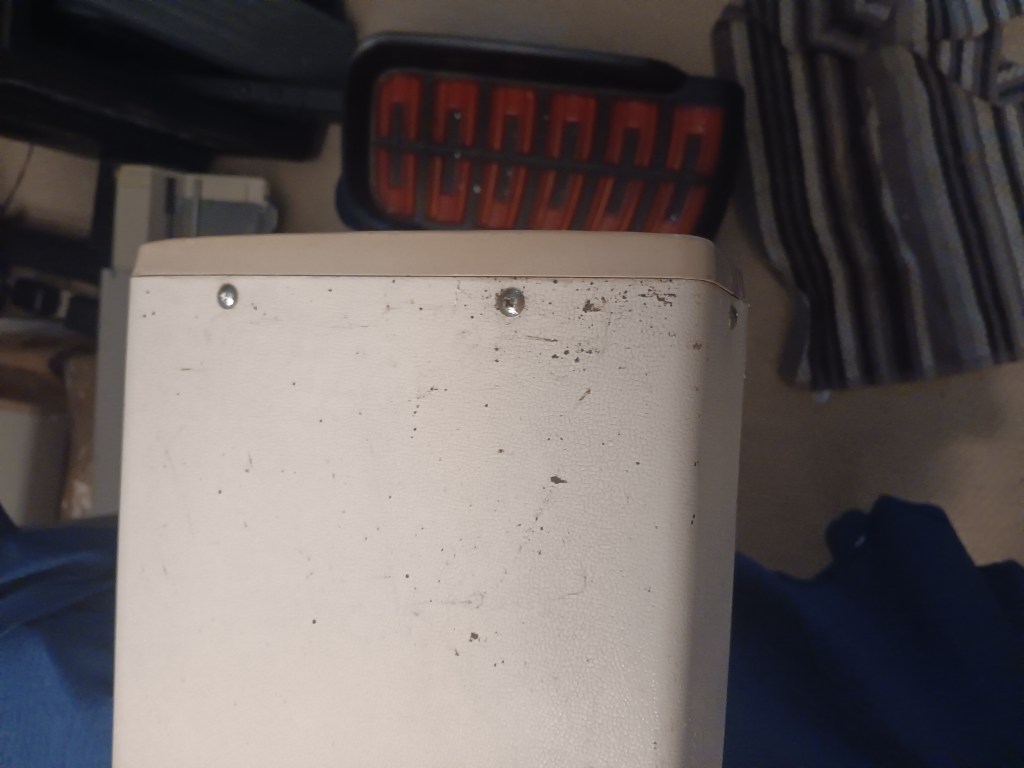
- There is some staining on the case that I could not remove. I, however, do not use harsh chemicals because I fear damaging the original coating more than I dislike the stains.


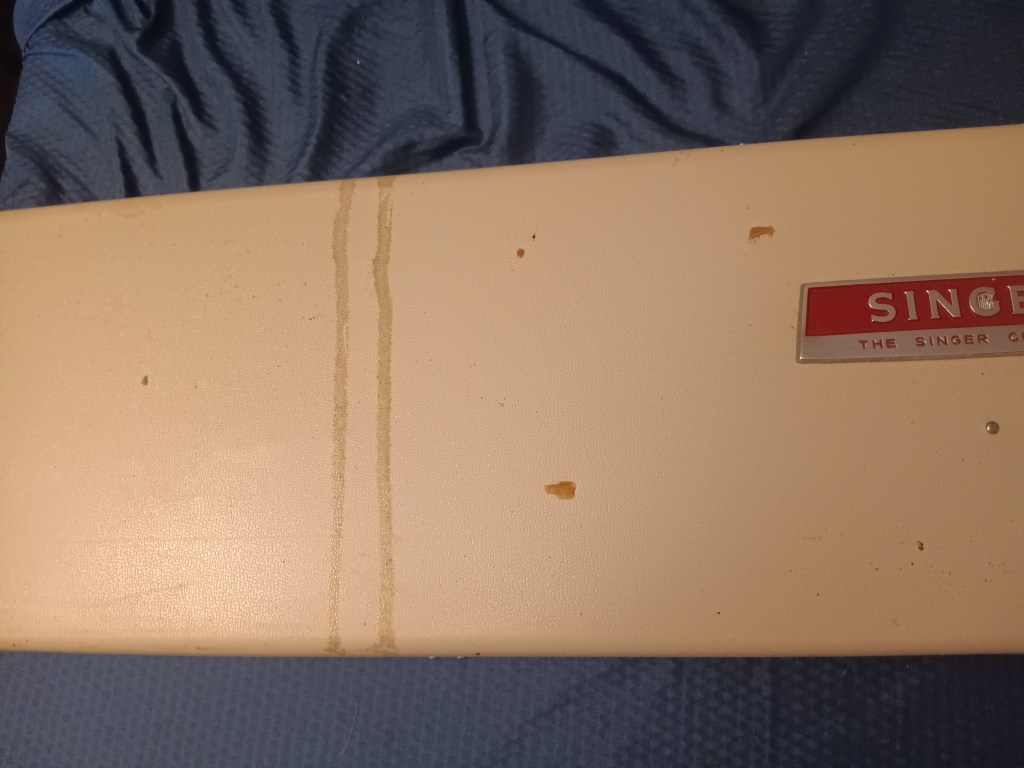
- The lid has some staining, too.
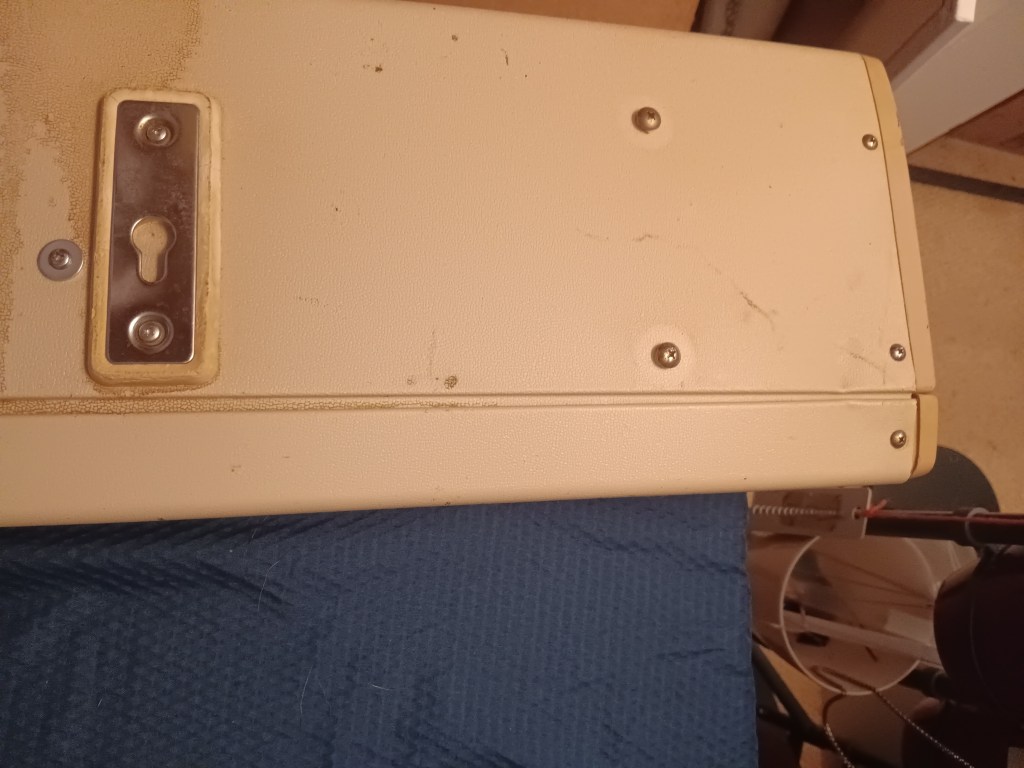

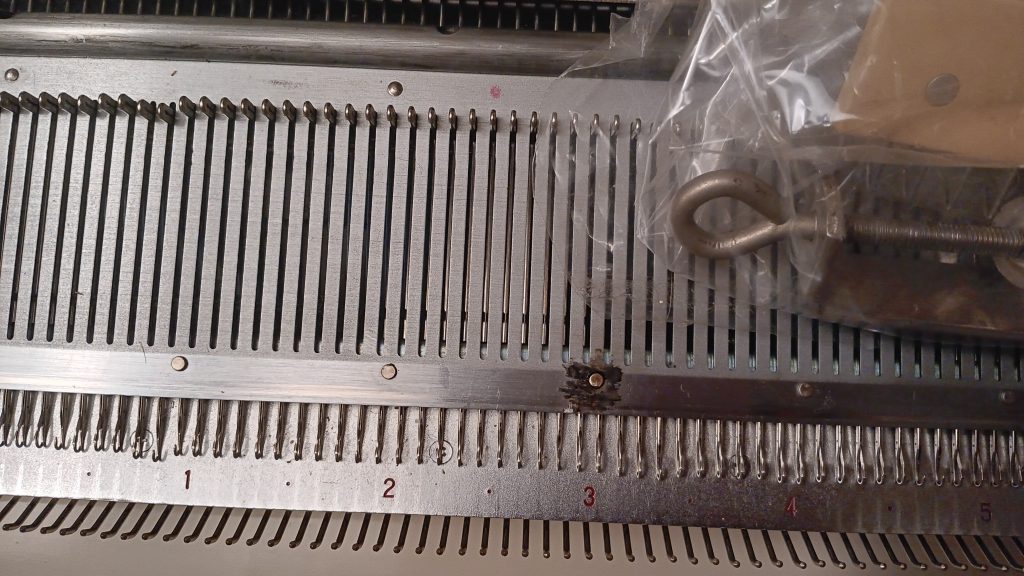
- A couple of stains on the bed, which are black because I covered them with the protective coating.
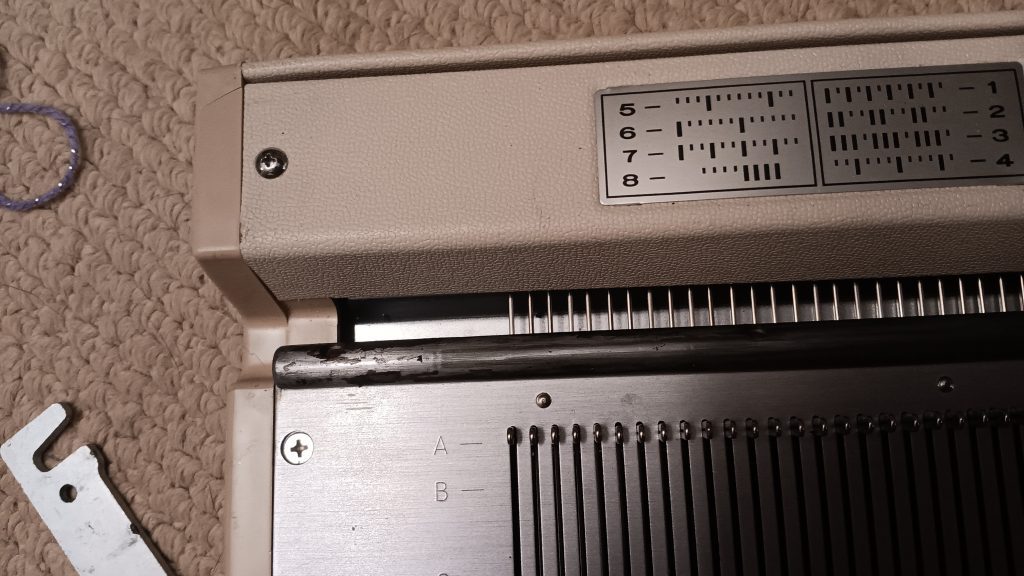
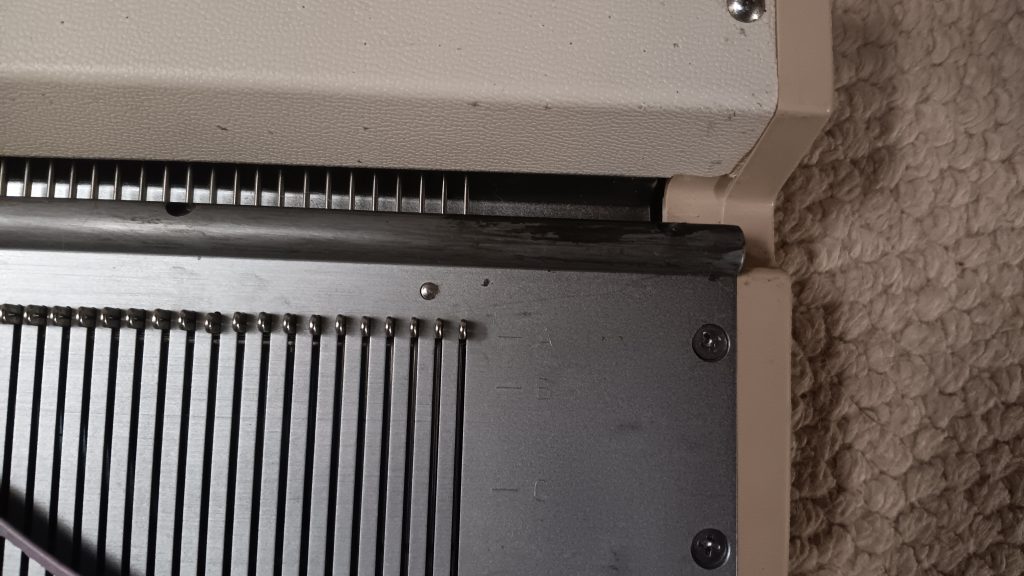
- The underside of the carriage has some discoloration and scratches on the metal. Discoloration looks a bit like rust (but is still smooth), so I covered it with a protective coating. None of these affected knitting: the carriage still glides smoothly, and no static is forming (although static accumulation can also depend on the yarn).
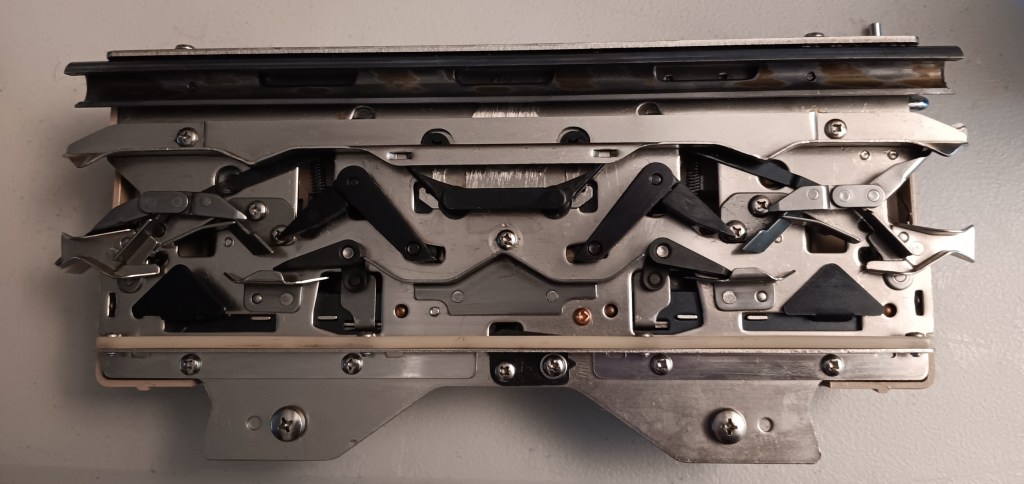
These minor flaws and imperfections do not affect the functioning of the machine at all.
It is a lovely, light-weight and straightforward machine to use. It is easier to pattern in my opinion than the pushbutton Brother machines since no additional steps (like turning the ratchet) are required.