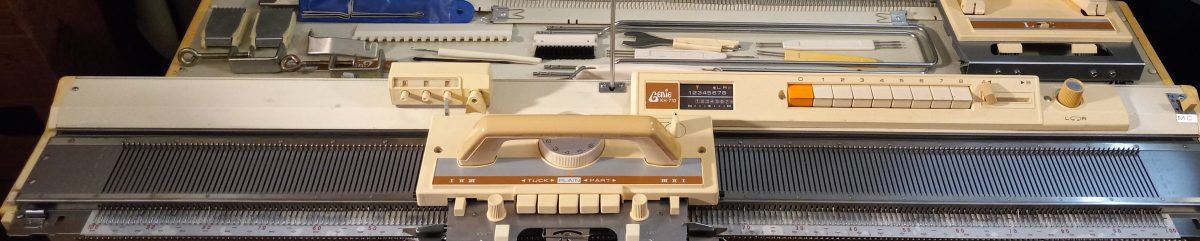
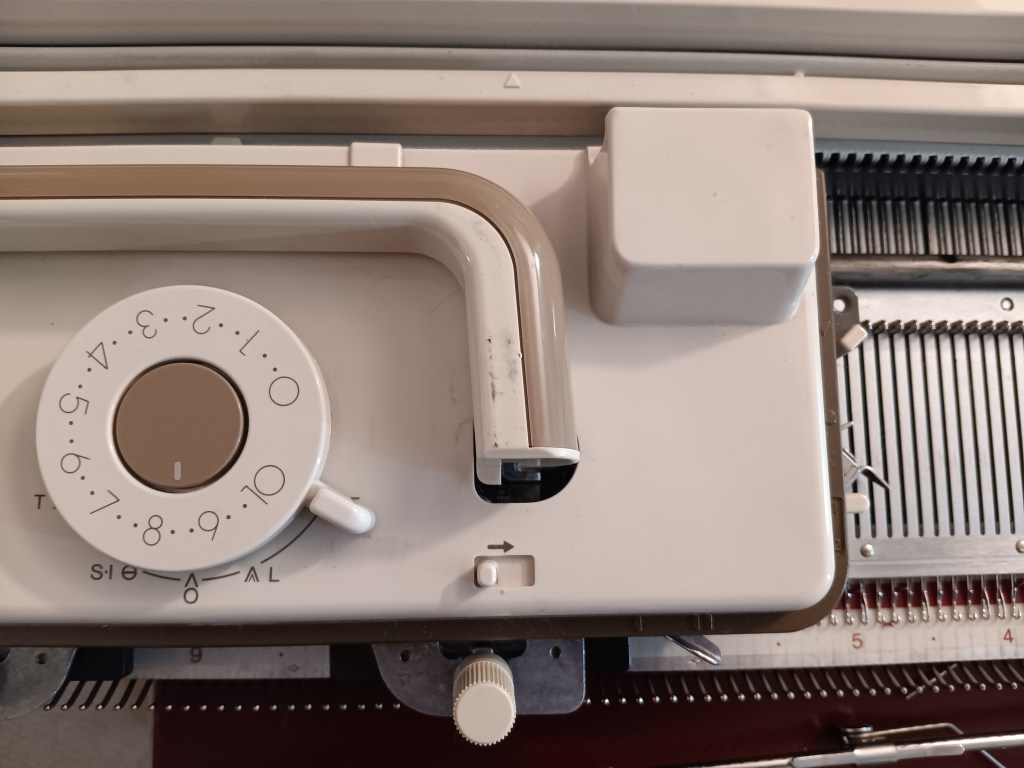
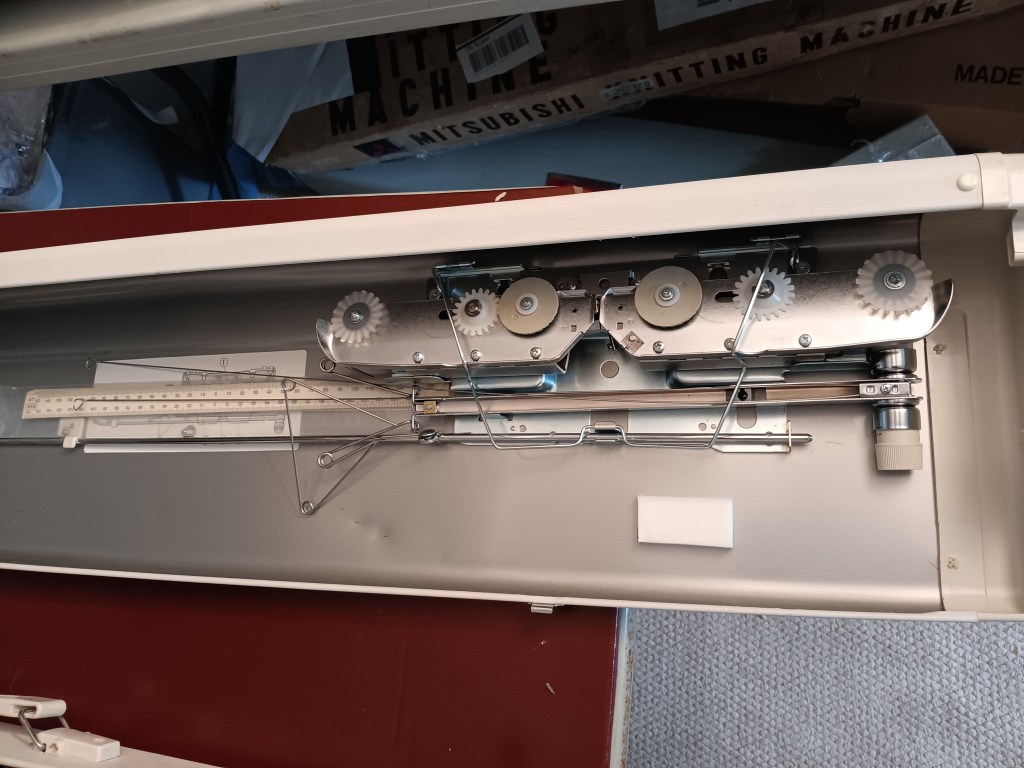
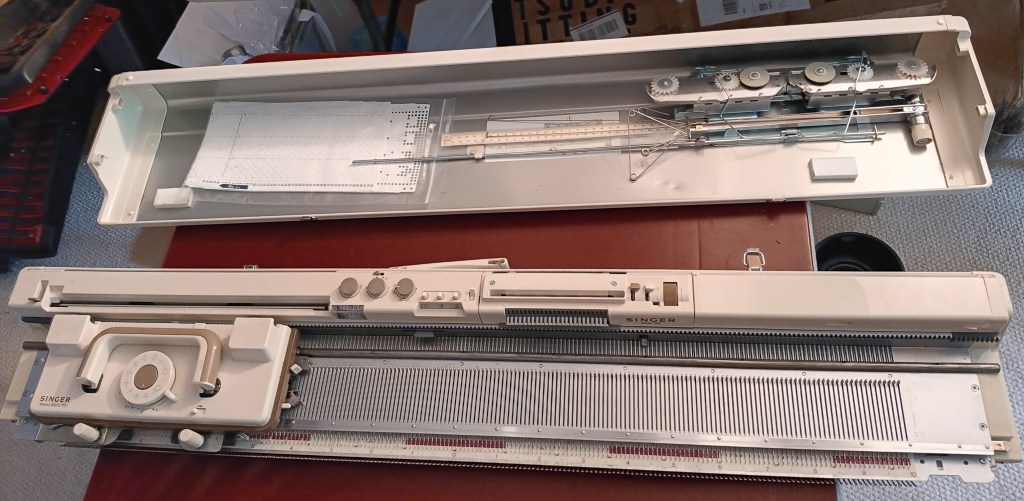
Knitting machines with punchcard capabilities have carriages with drums that glide on the back rail and also assist in needle selection when they are passed over a punchcard reading mechanism pegs.
Well, since these patterning drums are such a prominent feature (which also makes these machines stand out from Brother punchcard knitting machines), a lot of cons and pros are associated with them.
PROS:
needle selection is localized to drums/carriages, thus fewer (theoretically) things can go wrong;
Drums assist the carriage in sliding on the needle bed
CONS:
Yarn and debris can’t tangle around these drums
These drums often freeze up when the machine is not in use for a prolonged time due to solidified old grease/oil.
Here are my other observations/feedback so far:
Pegs on the drums pass the needles to either B position or C position.
When the patterning dial is in the fair isle position, the mani yarn goes onto the needles in C position.
I see blog posts stating that some of the clanking noise might be due to the static in the yarn. To solve this issue, attach wax to the tension mast so the yarn passes through it.
But some knitters experience that noise even when there is no yarn in the carriage. Sometimes, if the carriage was not recently serviced or the sponge in the retaining bar is old, you might hear some clanking noise. I am discussing this issue (as well as how to address/minimize it) in my video.
When the ribber connecting arm is attached (from SRP50 ribber – maybe others, still researching), the carriage cam dial does not turn from L to Stockinet freely. You will need to disconnect the connecting arm, and the problem will be solved.
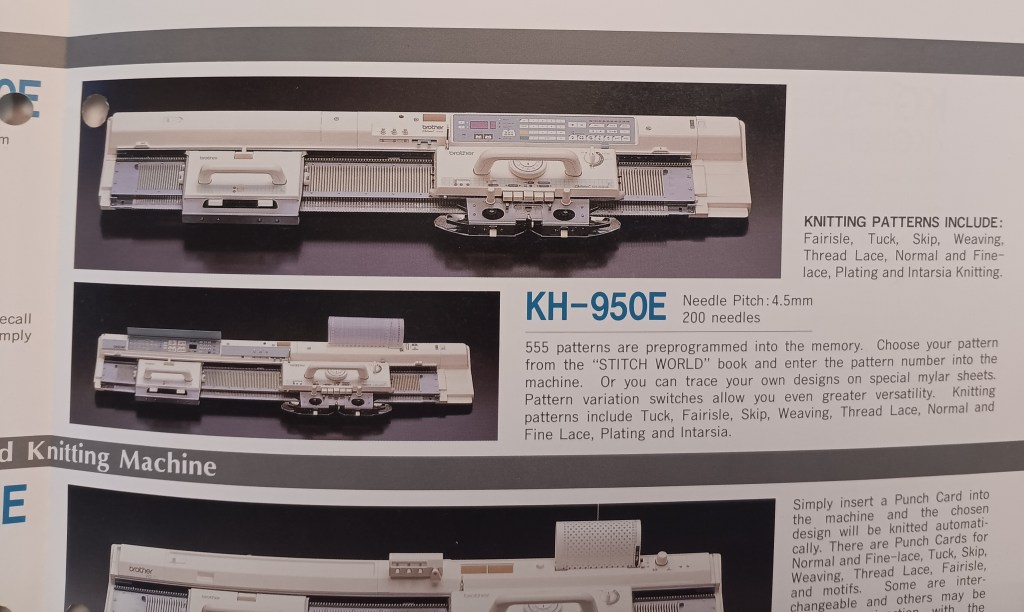
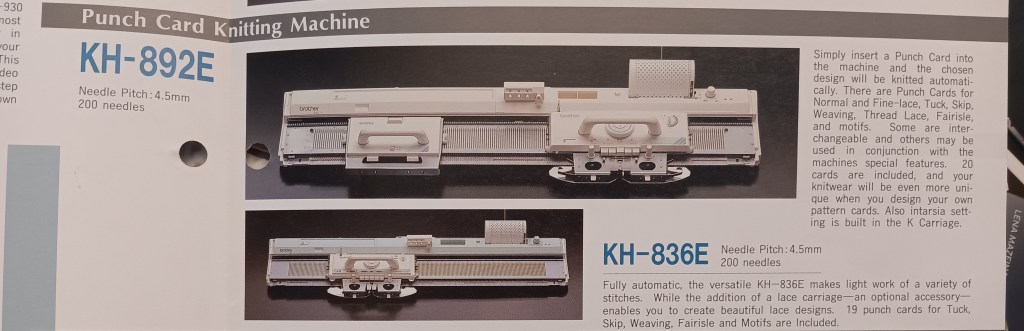
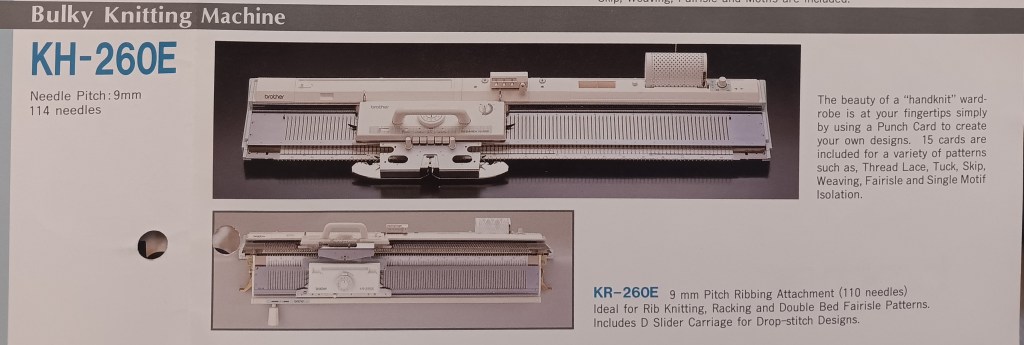
I found a brochure in my stash showing which knitting machines and their accessories were released as anniversary editions (which means the machines had a slightly different color combination but the same functions as their non-anniversary sisters).
Brother KH-260E knitting machine and Brother KR-260E ribbing attachment
Garter carriages KH-93E and KG-89II
Knit leader KL-116E and Color changers KRC-900E and KHC-820AE
Although the color combination is not seen very well in this brochure, all anniversary editions have baby-blue color: buttons, electronic panel, logo, etc.
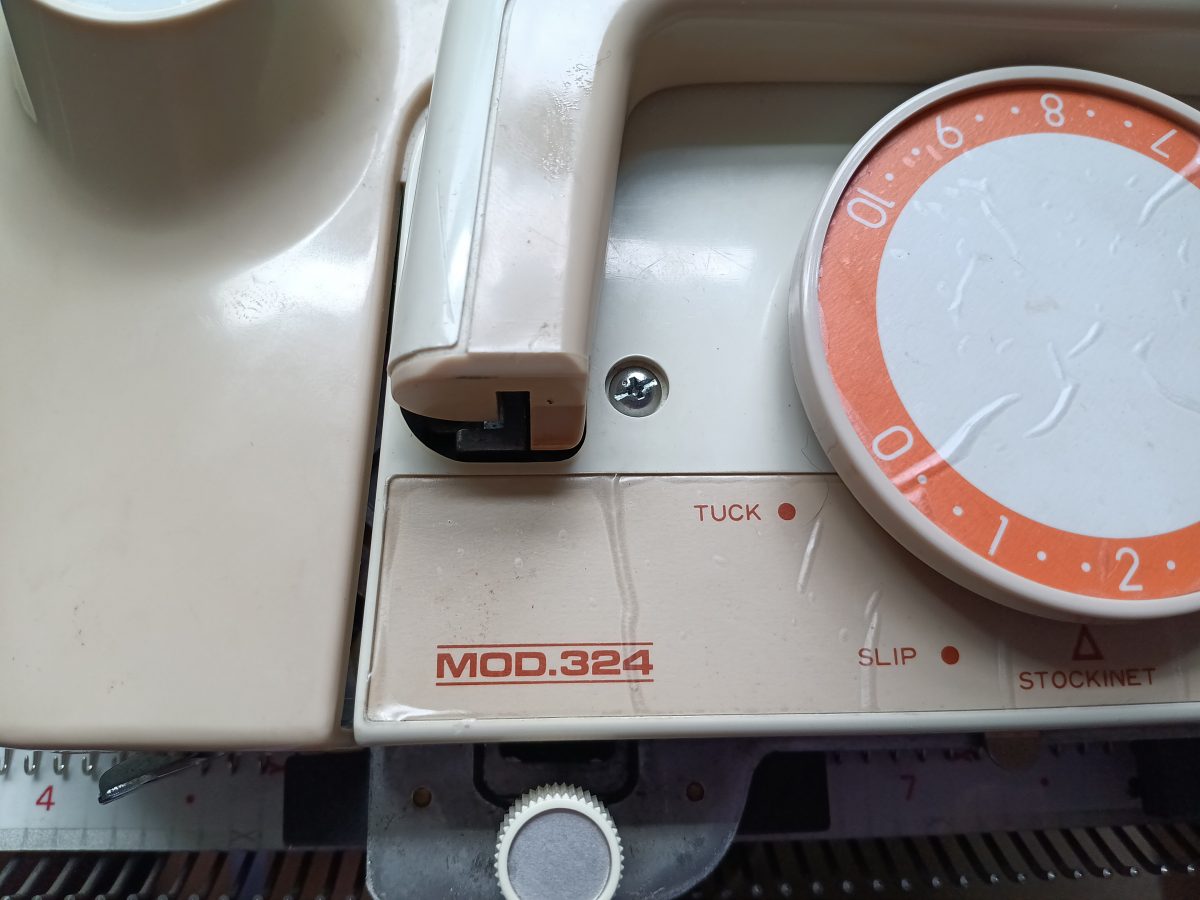
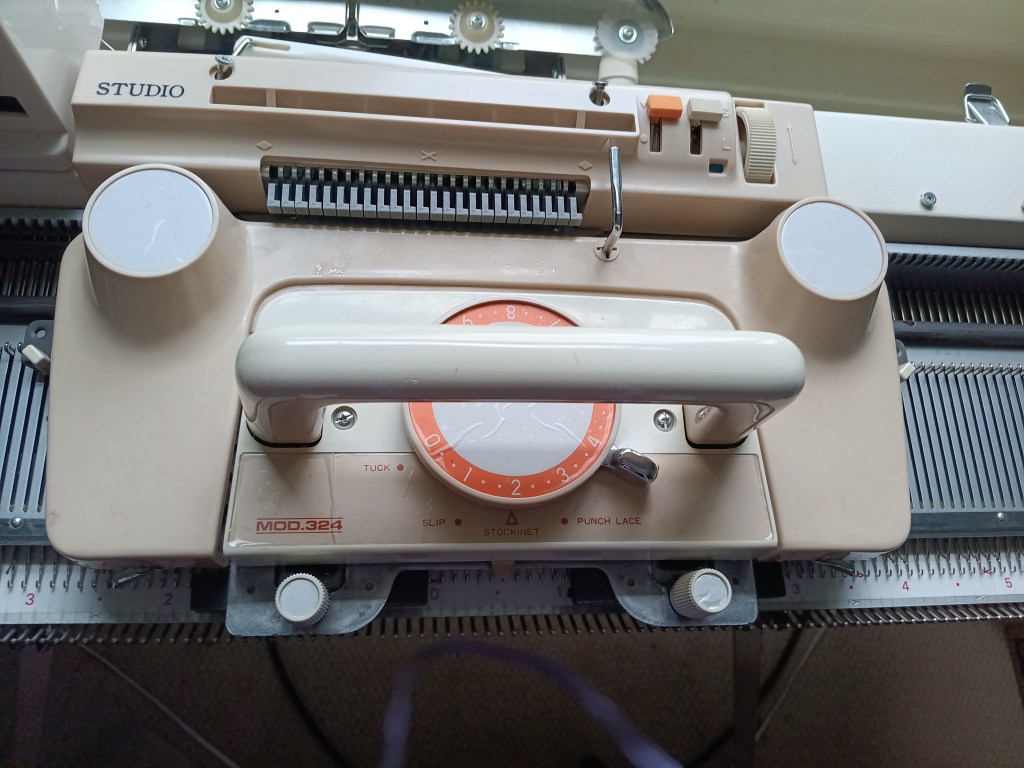
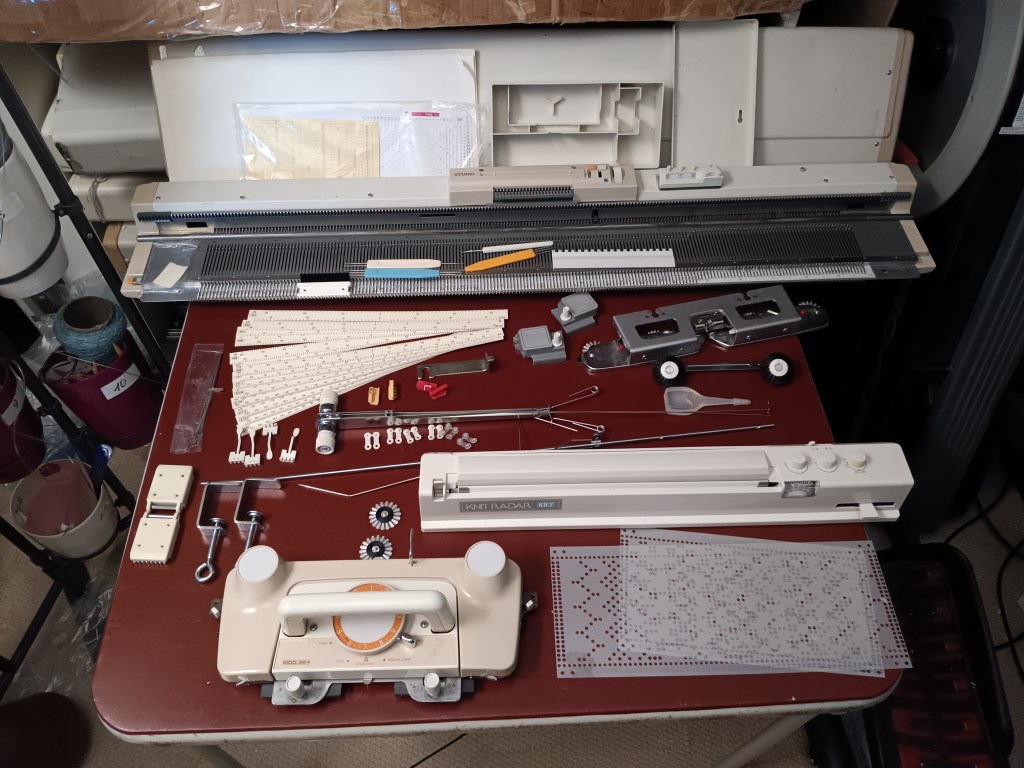
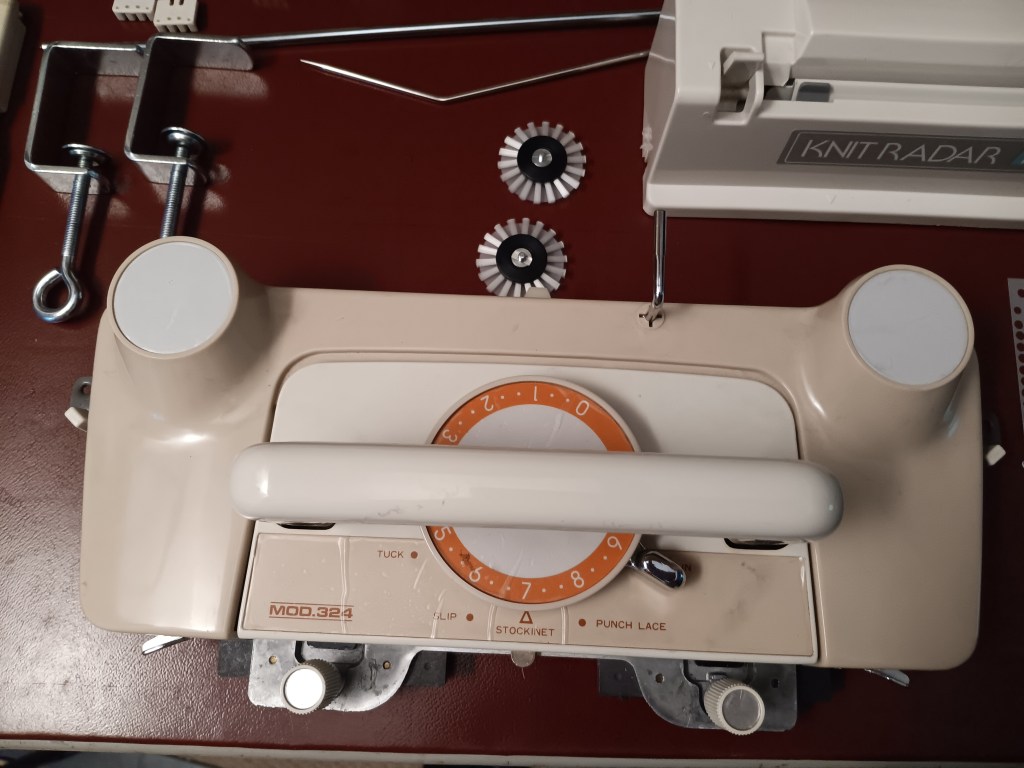
Studio mod. 324 knitting machine is a standard-gauge knitting machine with 200 needles. Read more about this model in my Knitting Machine Encyclopedia. This post is dedicated to a specific machine serviced and tested in my shop in May 2025.
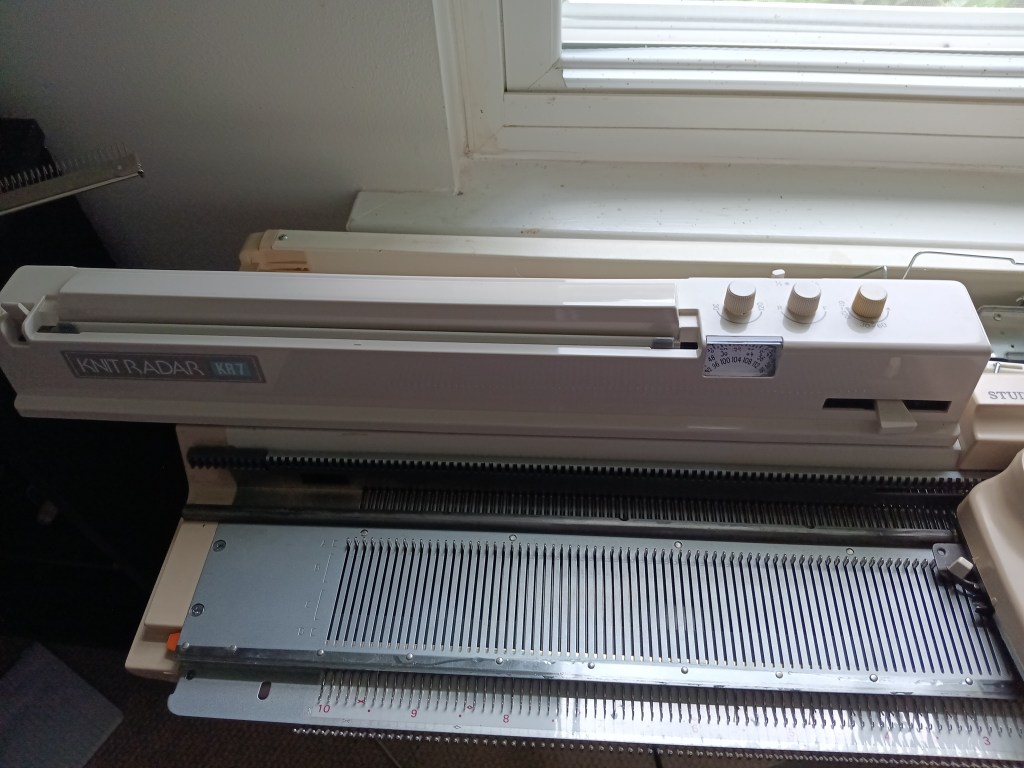
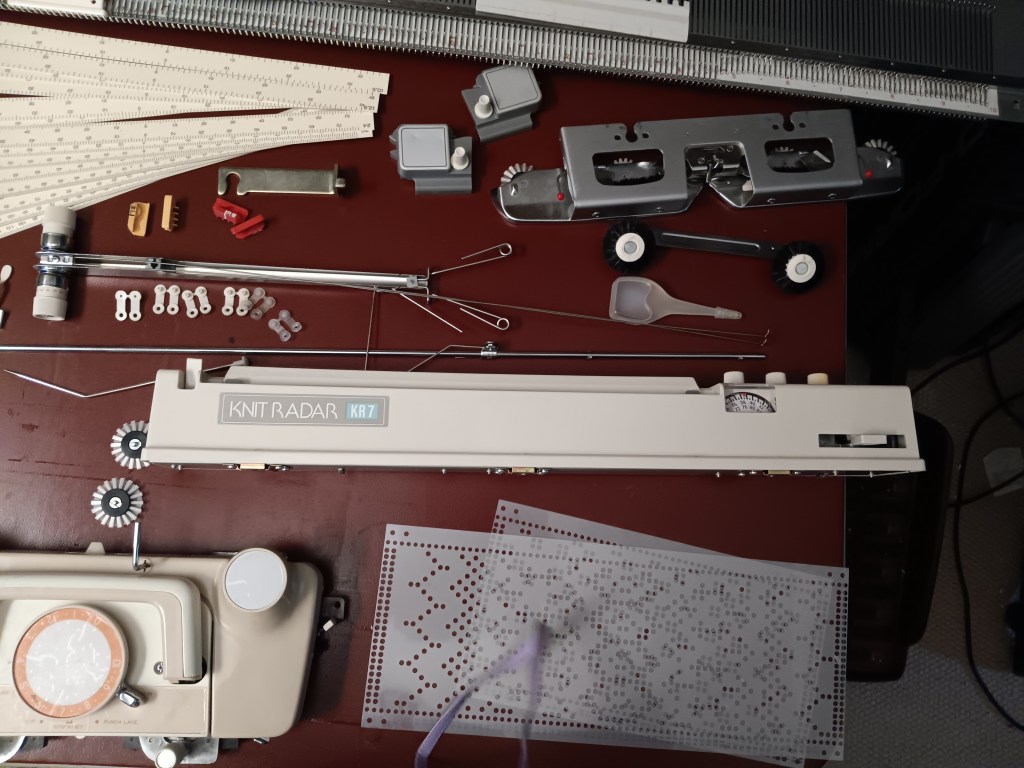
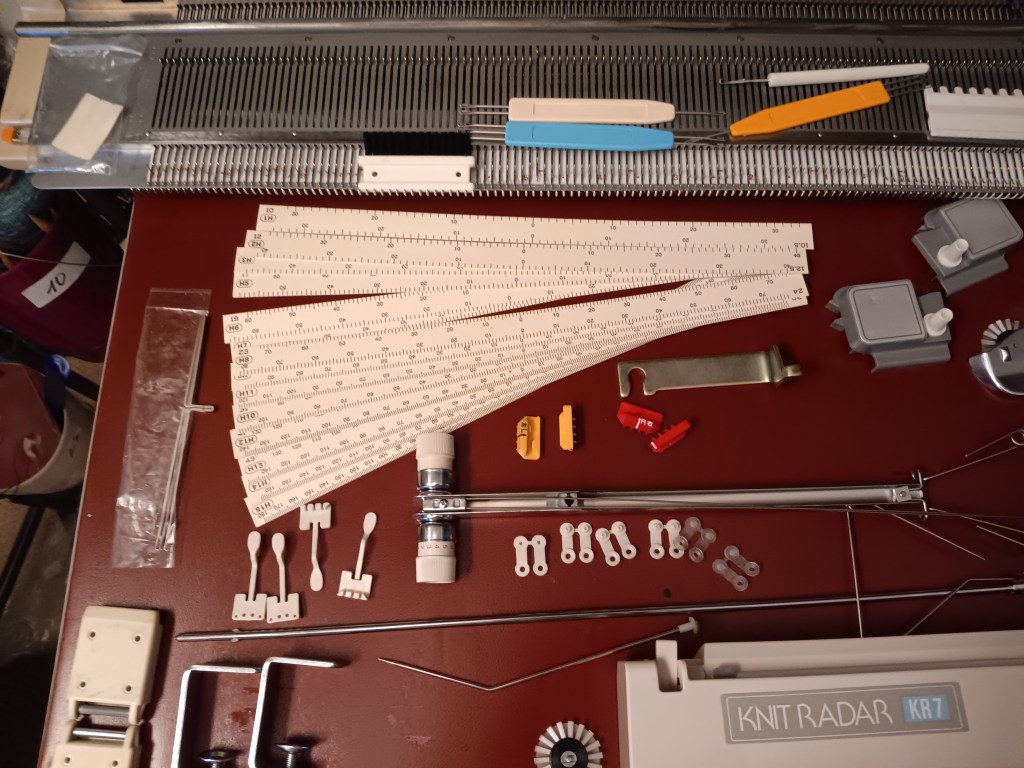
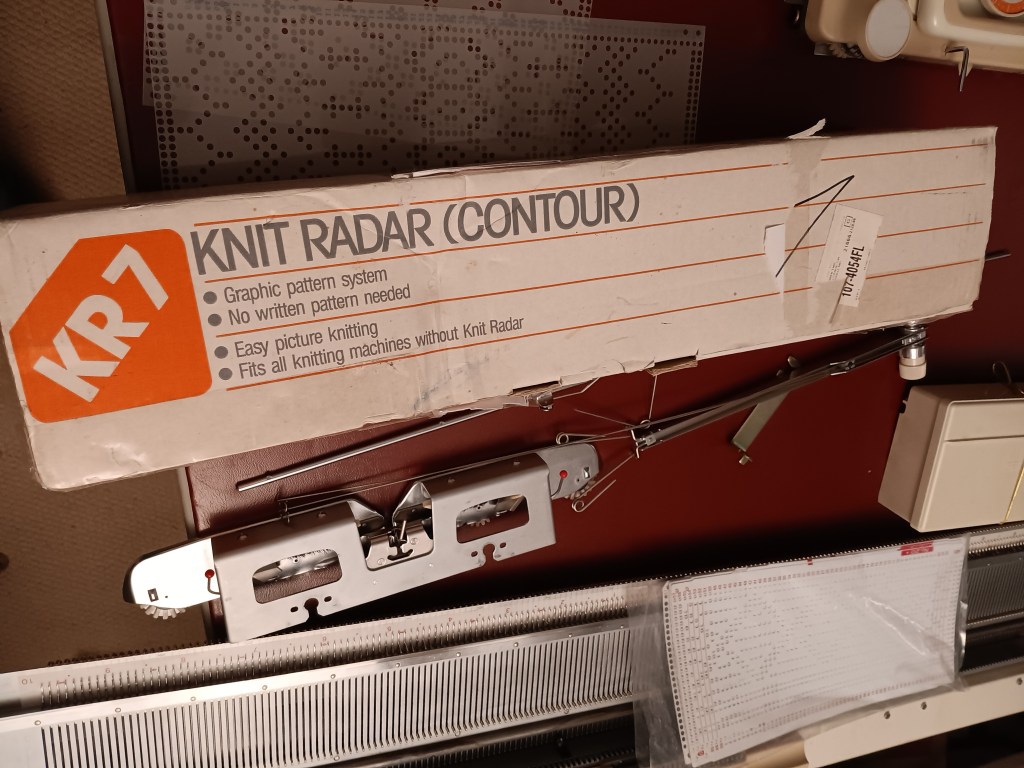
The setup will include the machine with all major accessories and a stand-alone knit radar (model KR7).
The machine, the carriage, the card reader, and the knit radar were thoroughly cleaned. I opened the carriage and cleaned it of old gunk. The atterning drums move freely (see the test video) so do all levers, knobs and buttons on the carriage.
All needles were removed, cleaned, and inspected. All latches were checked on how they move (sticky latches form tucked or other incorrect stitches). All faulty needles were replaced.
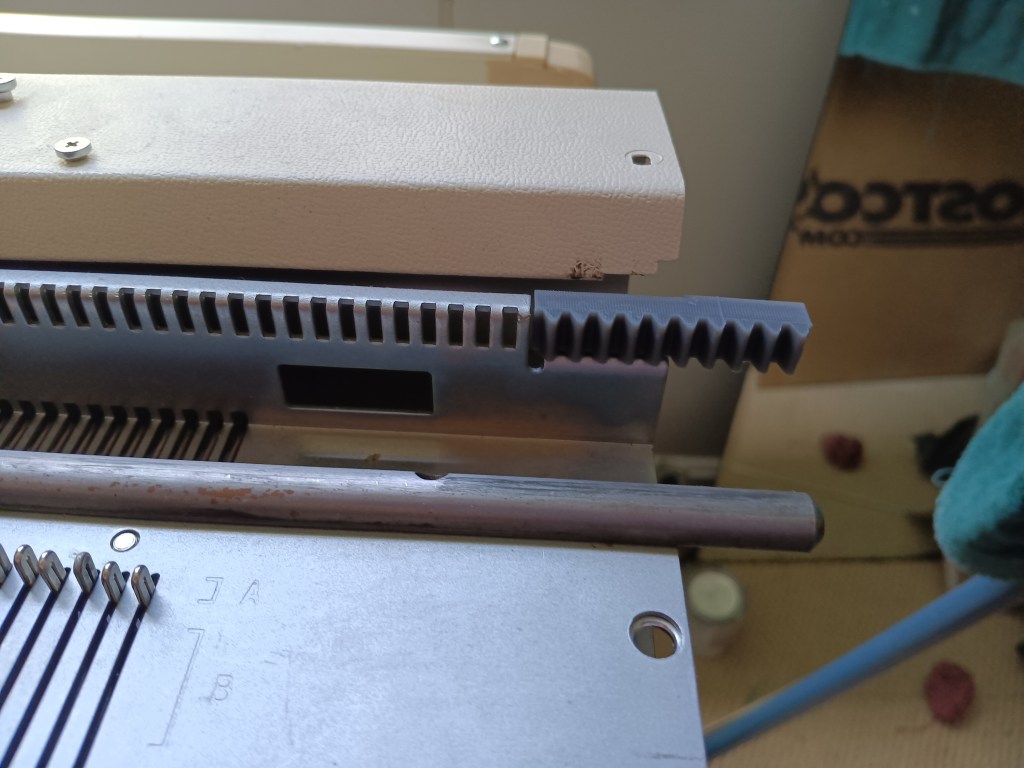
I replaced the end racks as well. Some minor discoloration spots, which seemed like rust, were covered with a protective coating.
A new sponge was attached to the original metal retaining bar.
With regards to the minor accessories for the machine:
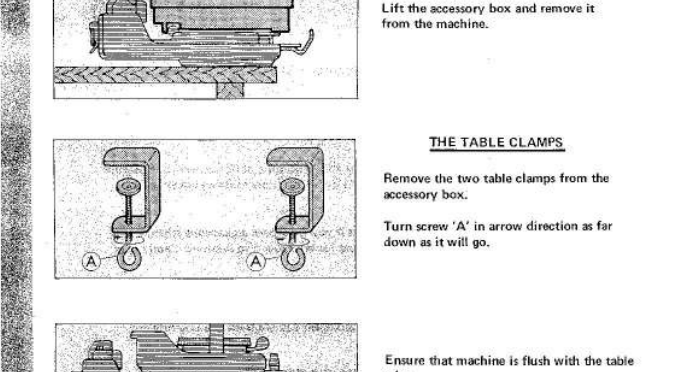
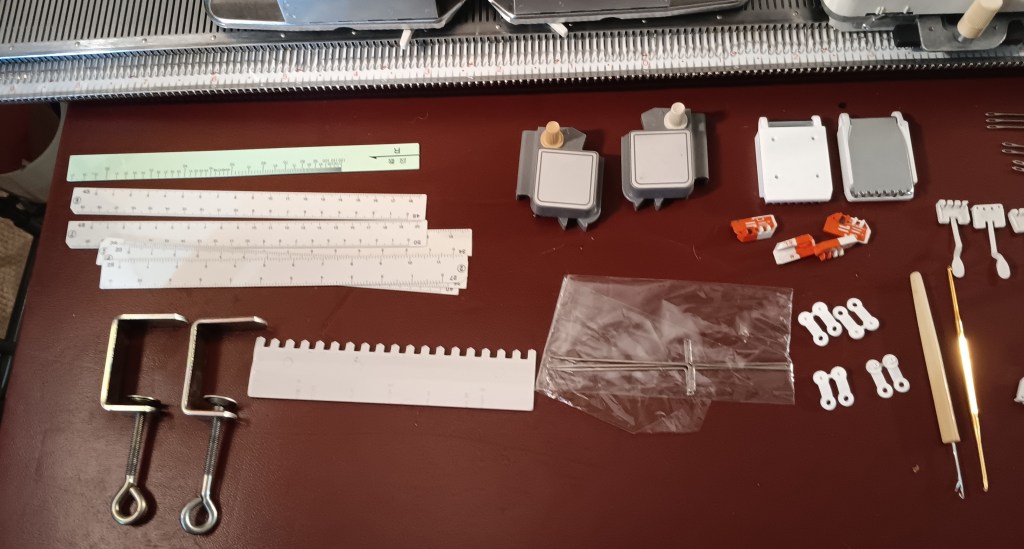
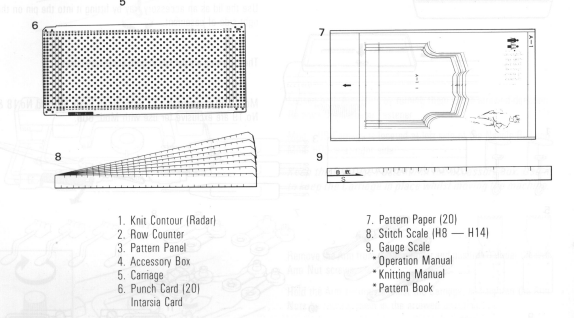
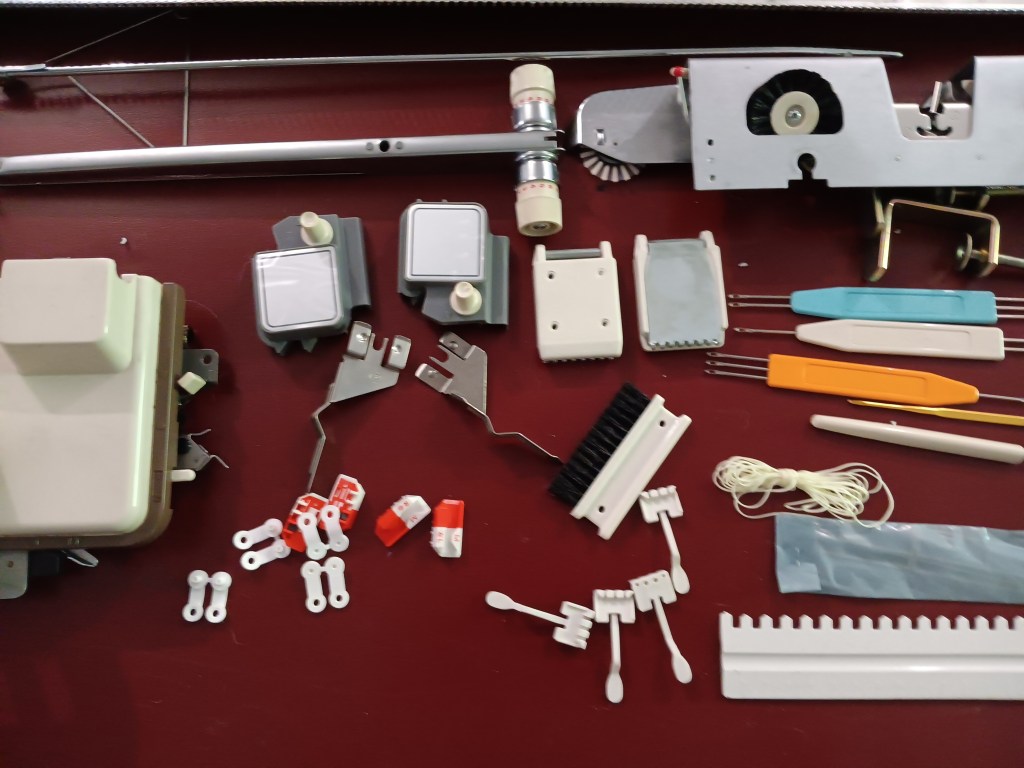
The machine came with almost all of them. Even the oil looks good, so it will be included (which I normally do not do and recommend getting Hopp’s gun oil off Amazon). The table clamps and the claw weights are new (new stock). The hard copy of the manual was missing, and I do not have one in my collection either. But it can be found online for free. This original manual does not list all accessories on one page. Thus, I borrowed the accessory diagram from the manual of another similar machine. But that machine has a slightly different set of accessories (I know – confusing).
So, the accessories that were supposed to be included but will not be are:
crochet hook (any will work, and honestly, with all the machine knitting work I do, latch hook and needle transfer tools are the most handy tools);
tapestry needle (any needle of your personal choice will work)
cast on cord (any silky and strong yarn will work)
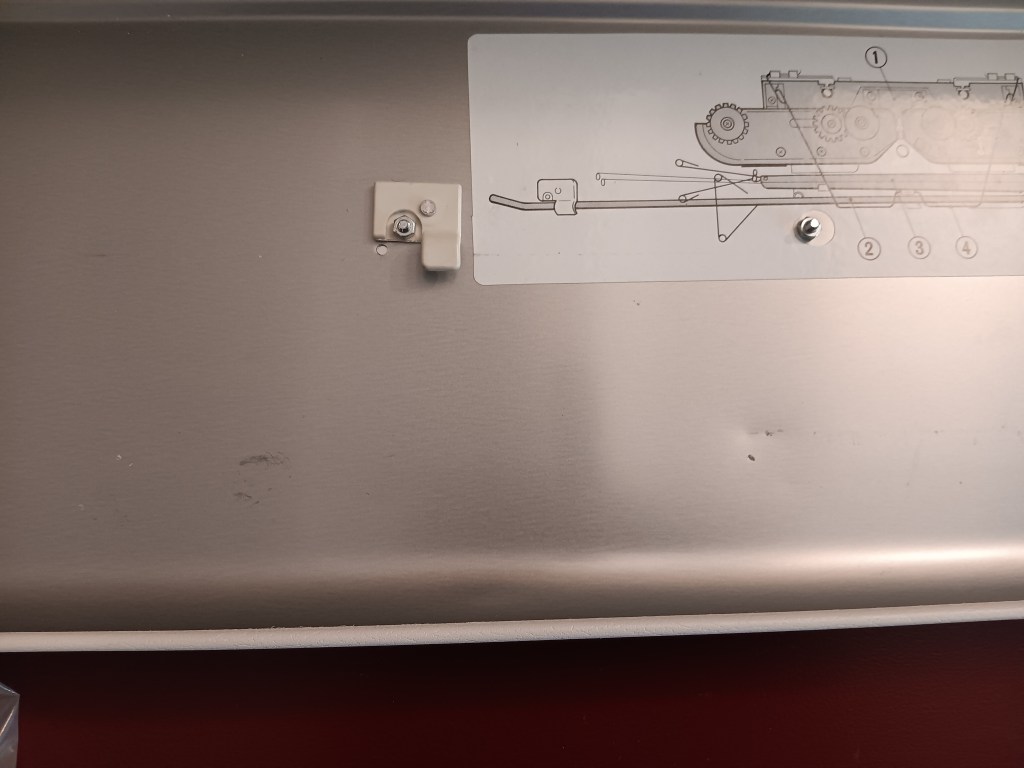
The accessories that are on the diagram below but still not be included are:
rib frame components (they did not come with the machine)
3/1 and 1/3 needle pushers (they also might be for that older machine, and they did not come with this machine either)
needle retaining bar pusher (I honestly have never seen it be included with any of the setups I had experience with. I simply use flat-head screw driver the push the retaiing bar out of its slot.
the intended table clamps are not slanted (the old-fashioned ones) but flat. The diagram above shows slanted table clamps. But this diagram from an earlier model (it still reflects all accessories correctly, just not as accurately). The original manual shows flat table clamps.
The weaving and round brushes are original as well. The only briefly explains what the round brushes are for (and it is also buried inside a lot of other info). There is a diagram showing that these brushes are used for tuck and plating knitting/patterning. I did not test plating, but tuck-knitting was performed without these brushes and it knitted very well on several different yarns.
The toolbox to store accessories is in great shape. All accessories fit nicely into the box.
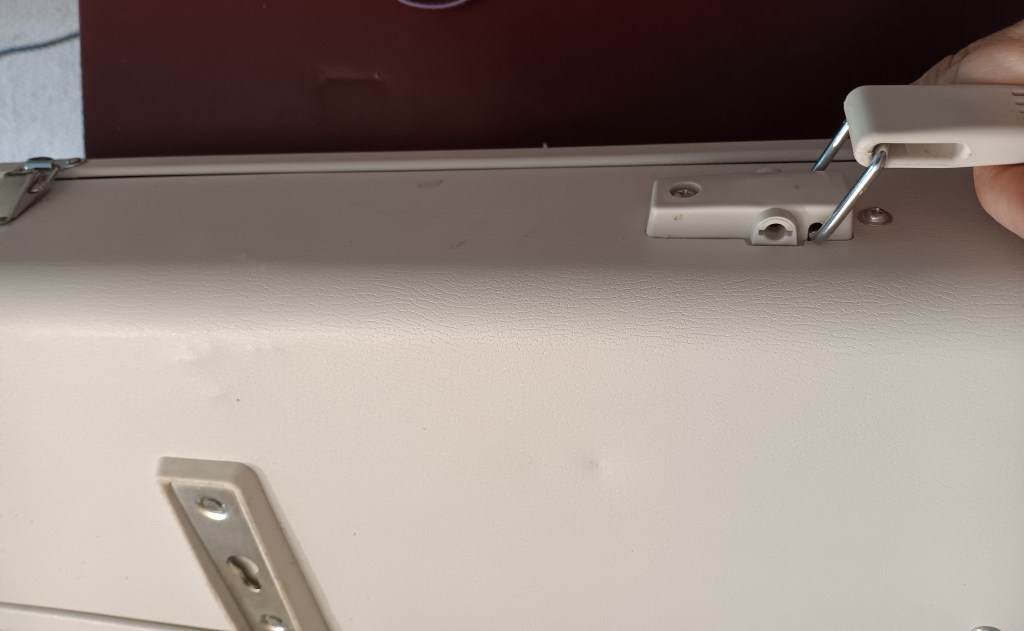
Apparently, the lid can be hooked onto the one of the sticking metal “screws” to use as a tool tray (refer to the manual).
The punchcard set looks like the original one. It includes the card with the description, which punchcards can be used for what kind of patterning, in case they don’t match what the manual mentions.
I am also including two custom punchcards (as a thank you for waiting for my patience customer! :))
I am also including two extra card clips (transparent ones) as I think the original white ones are kind of hard to clip.
The setup will include a stand-alone knit radar KR7. The hard copy of the manual will not be included but a pdf copy is available online.
As you can see in the video, the carriage moves super smoothly when the needles are in A and B positions (I was able to move it with just one hand). All levers, buttons, and drums move well too, which is extremely important for patterning and advanced knitting.
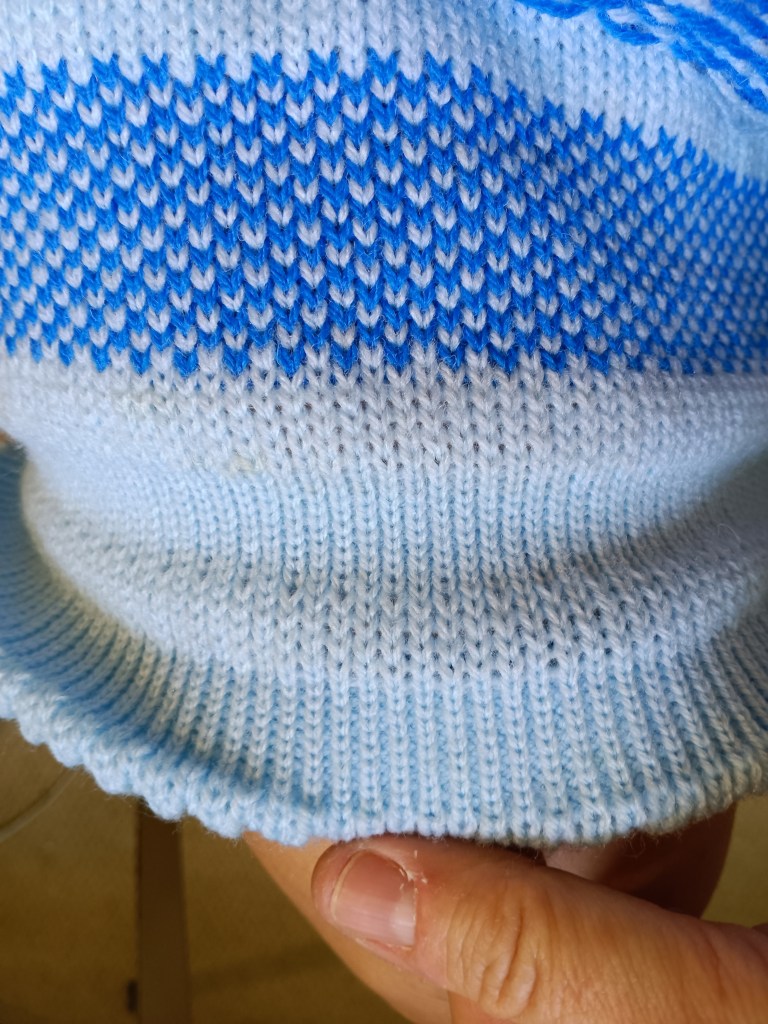
I tested the carriage by knitting swatches using different yarns (not all shown in the video) as well as on the full bed to ensure all needles form correct stitches. I like doing full-bed tests with card #1 because any mispatterning or faults will be noticed immediately (even the tiny random ones): the fabric will not be even.
In the video I show tests with tuck-, slip-, and fair isle stitches/patterns using Etamin yarn (for hand knitting). I also used slightly thicker yarn (sport weight) but it needed the loosest tension possible. These tests are shown at the end of the video. However, it is recommended to use sport-weight yarn on every other needle.
Knit radar:
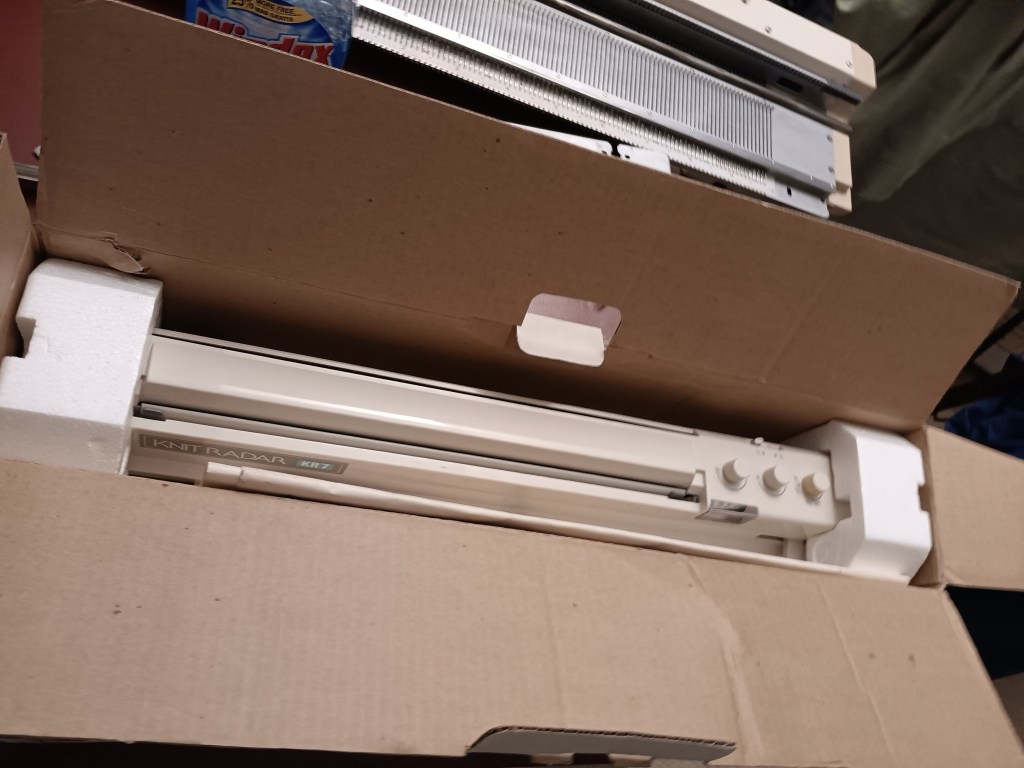
It is in great shape and looks like it has barely been used. It will come in its original (although kind of beat up) packing cardboard box.
However, it did not come with a hard copy of the manual but a good quality online version can be found (for free) here. One plastic panel chipped on the side (not shown) – I glued it together. It is barely visible. It does not affect the functioning of the knit radar.
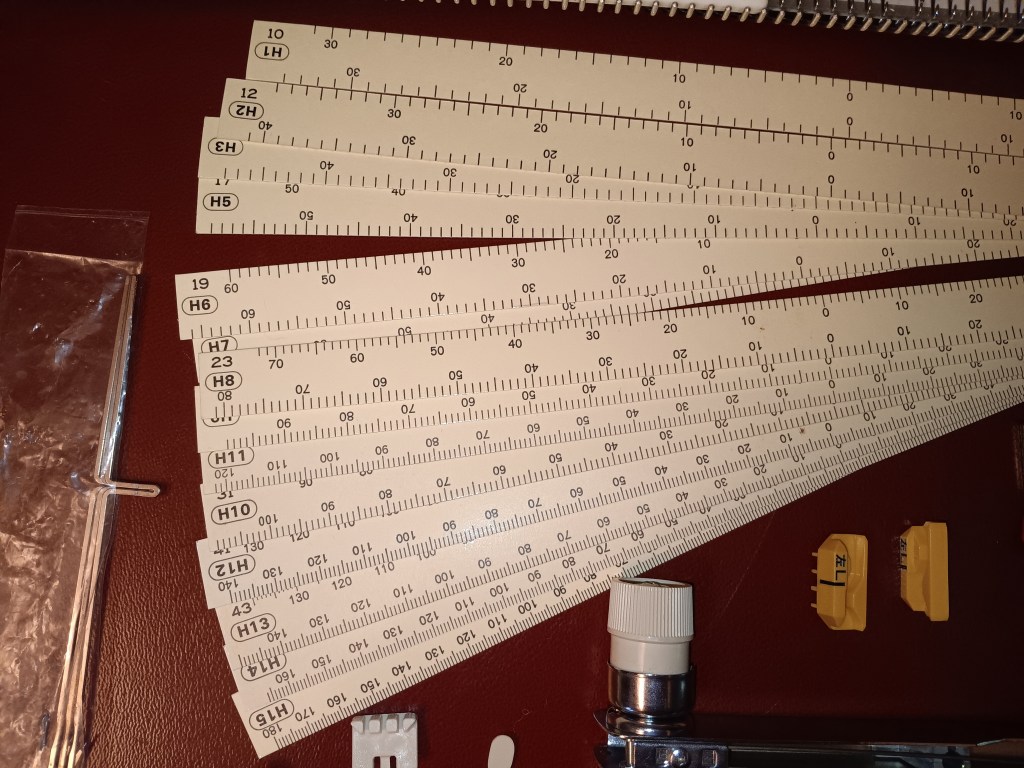
Stitch scale #4 is missing. If I find it, I will ship it later for free.
If I think of something else while I pack the machine, I will post it accordingly.
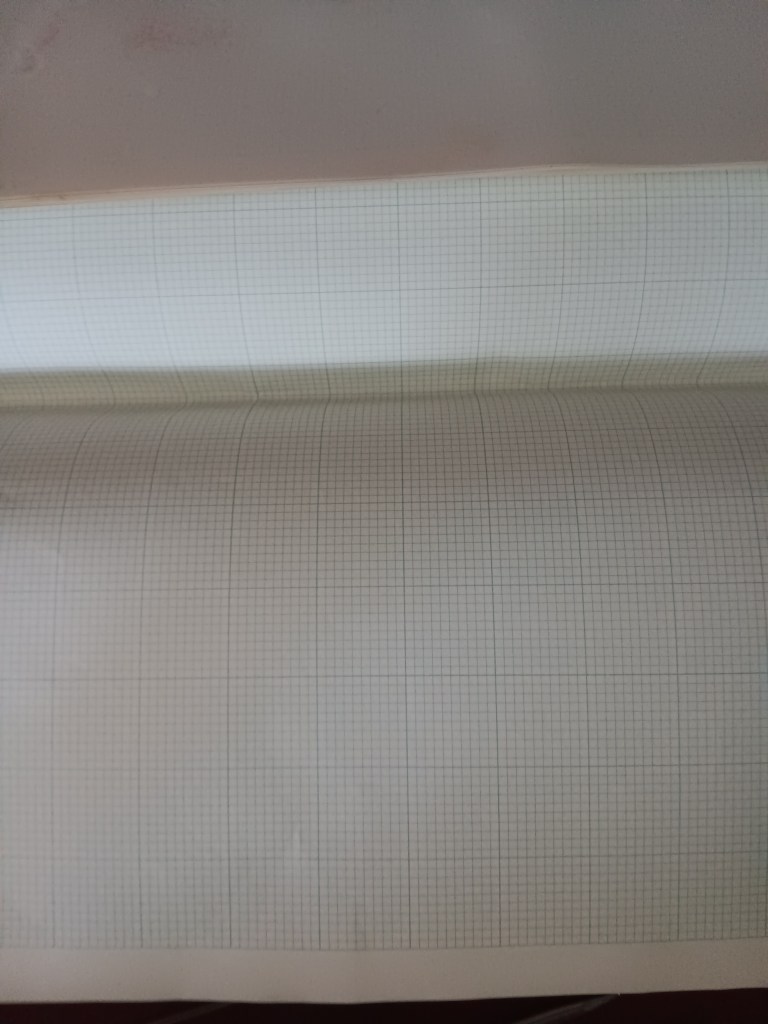
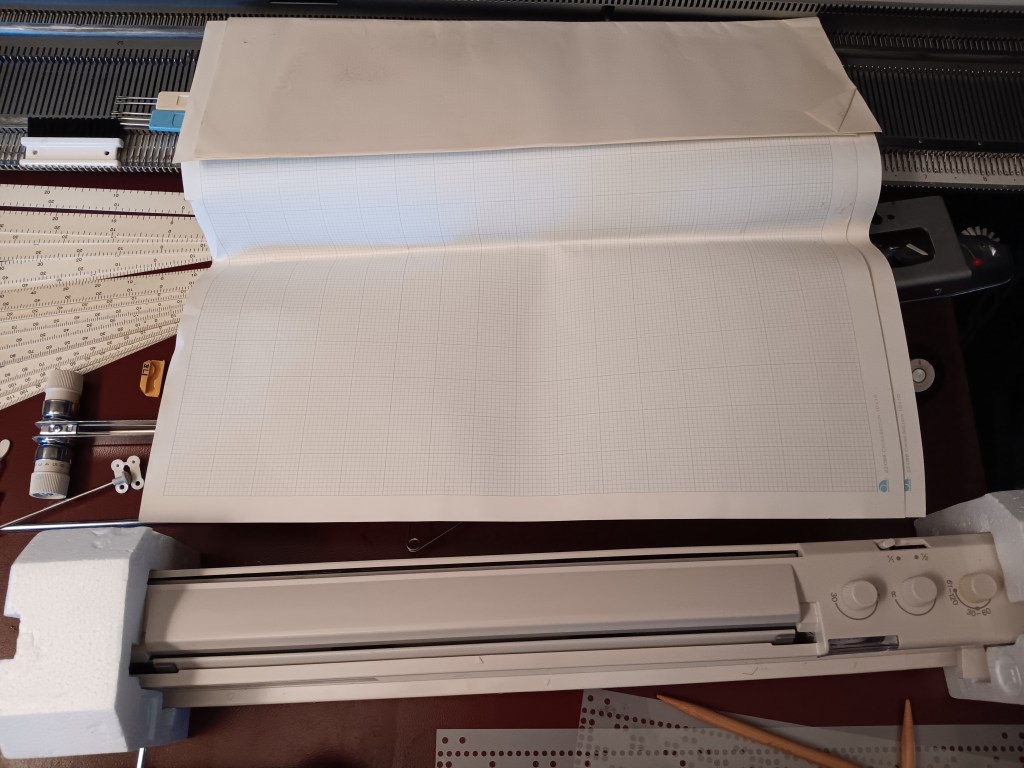
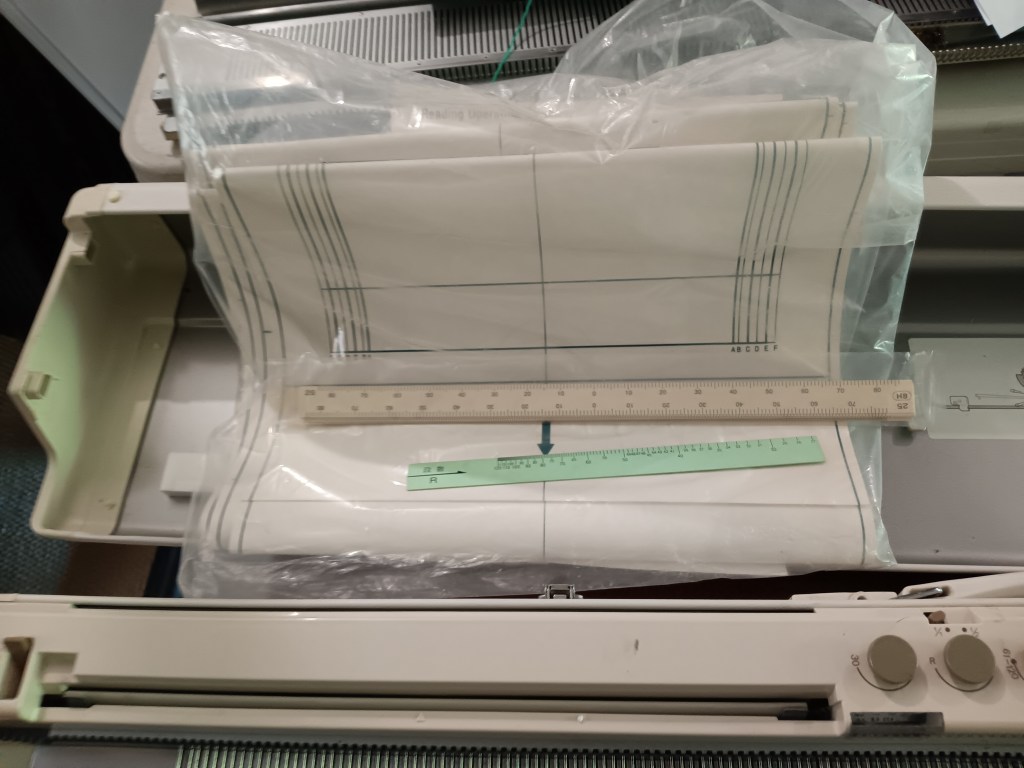
The original pattern paper is missing, but I am including a generous 5-sheet pack of graphed paper. It is wider but can be easily cut. It is the same quality (thickness and feel) as pattern paper for other knit leaders I have (but they are half size).
When I was looking for a replacement pattern paper, I did a lot of research. Even if I found the original paper, the overall opinion in the knitting machine groups is that the models of the closing on those patterns are outdated. So it feels like you will be better off using he graph paper for your own designs than having the original patterns, which would be useless.
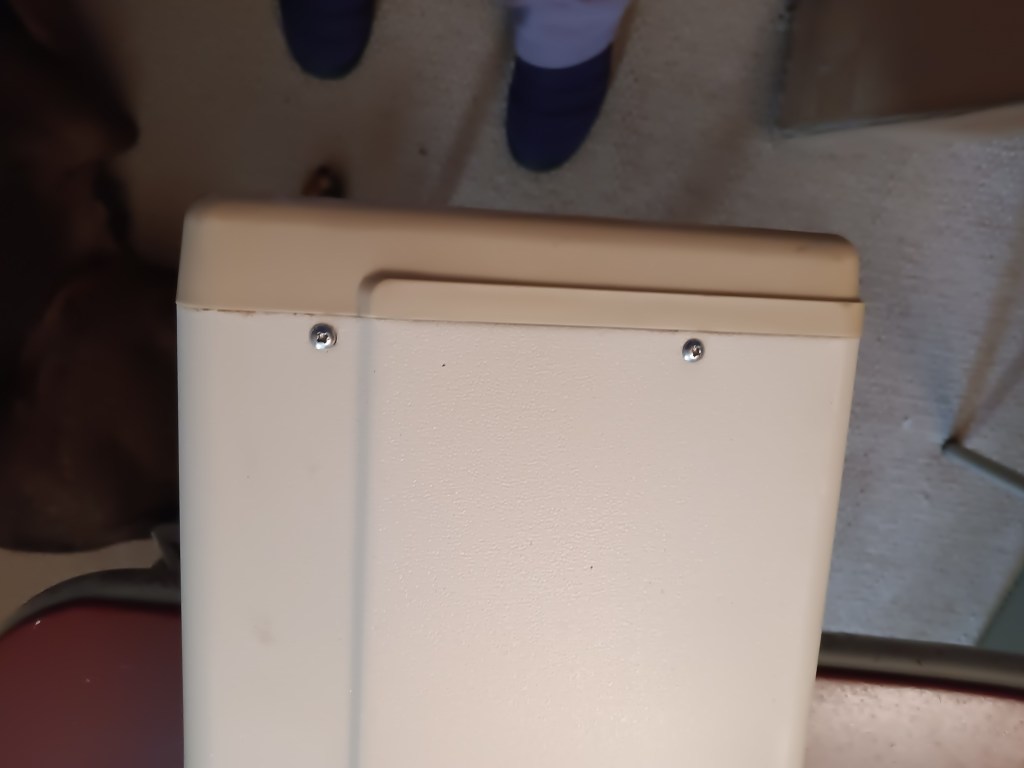
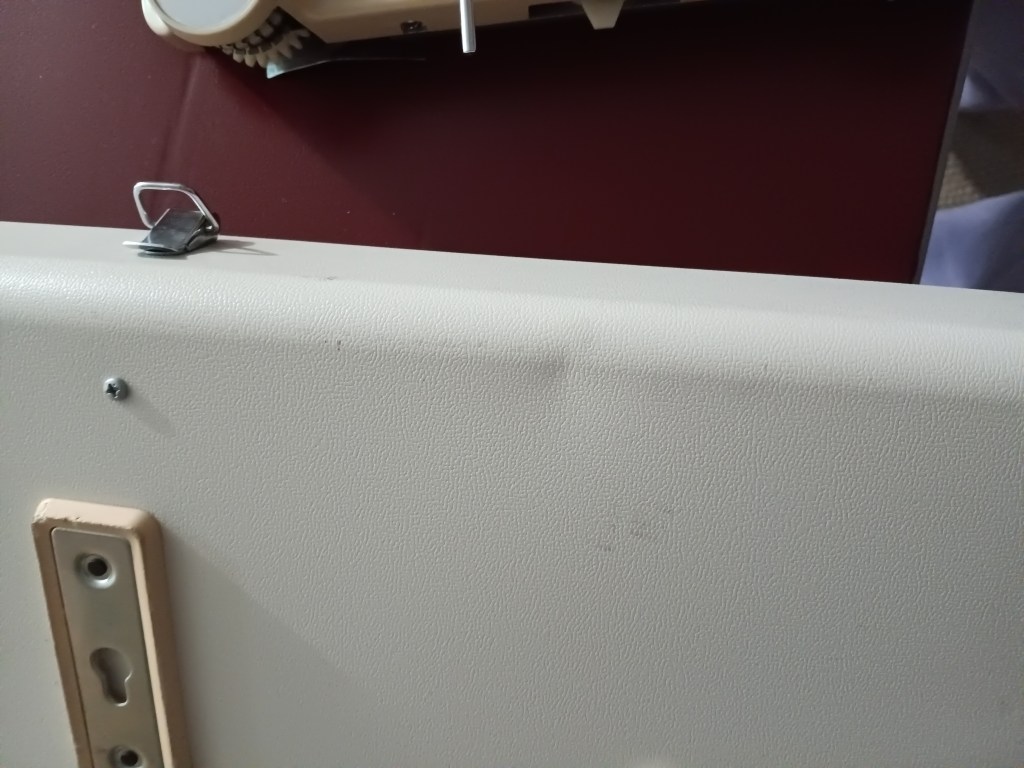
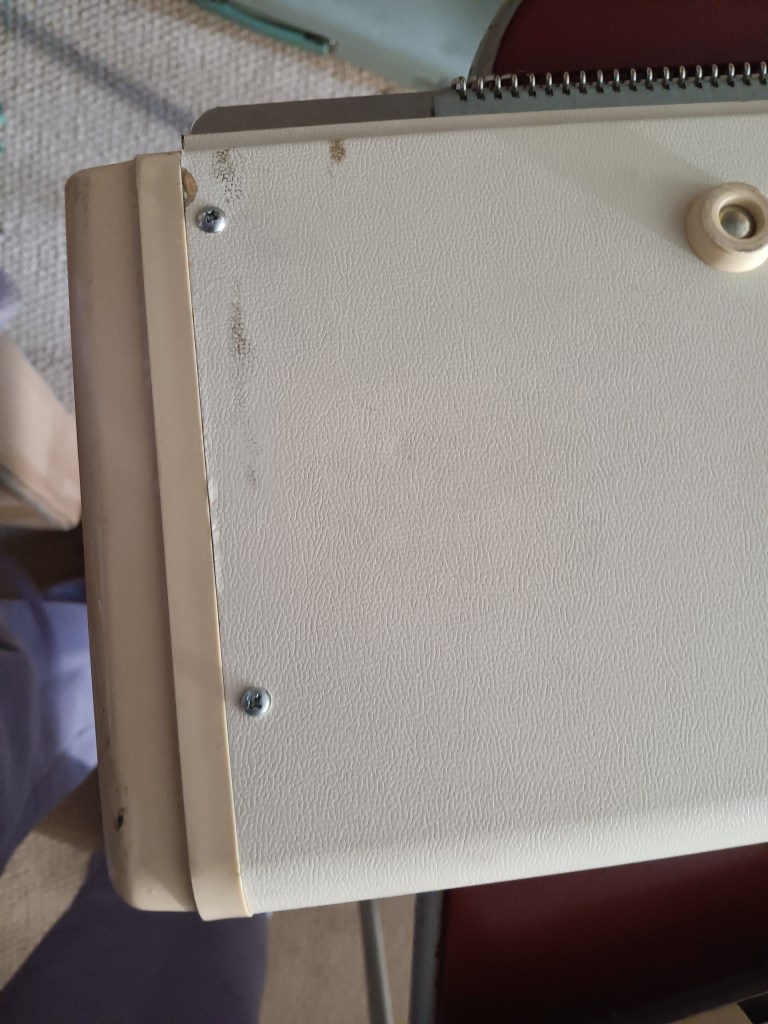
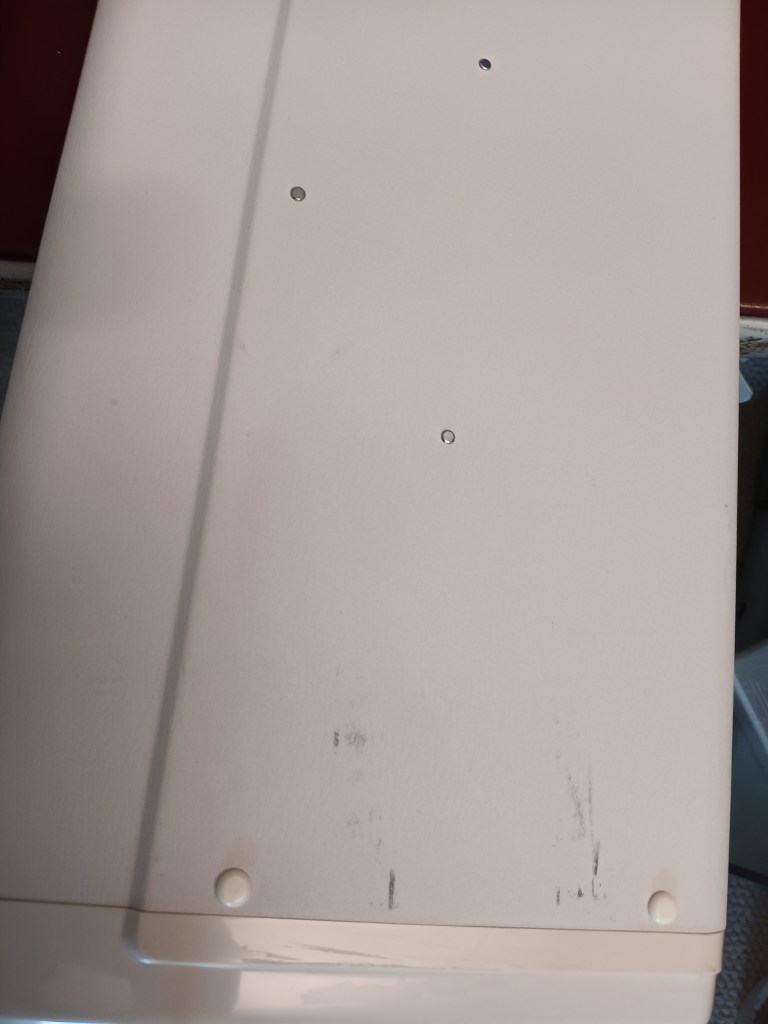
Some imperfections include the missing accessories (described above), some minor scratches and dents on the case, and discoloration on the plastic parts (from exposure to sunlight). Some are shown below.
I enjoyed working with this machine and testing it. It has a lot of life in it – unlimited if well taken for! Happy Knitting!
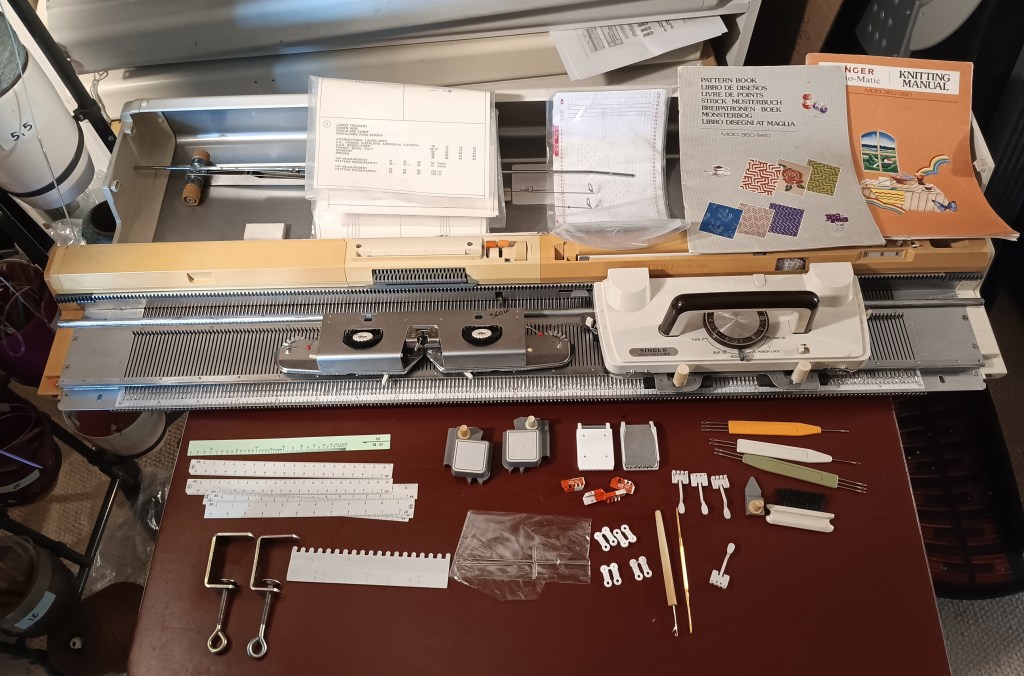
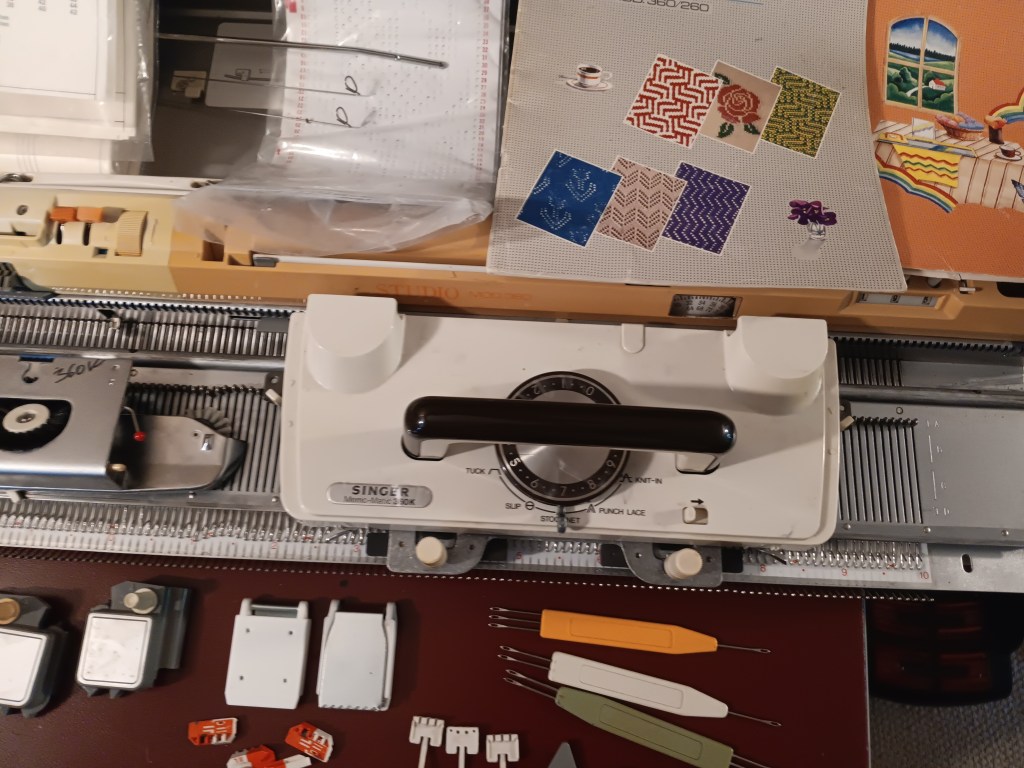
Knitting machine Studio mod. 360 coupled with the Singer MemoMatic 360K carriage, was serviced and fully tested in my shop in May 2025. To read the pros and cons of the Studio mod. 360 and Singer MemoMatic 360K read the corresponding posts in the Knitting Machine Encyclopedia. The post below is dedicated strictly to this specific machine and not the model overall.
This girl was manufactured in the 1980s (45 years ago) so it comes with its own character (read below in Imperfections).
The machine was thoroughly cleaned. I removed all plastic panels and cleaned them. I removed plastic end caps and clean inside the needlebed with the brush until not more lint and dust as coming out. The needlebed was vacuumed from inside and outside. All metal parts were oiled. The punchcard reading mechanism was tuned and cleaned with oil. Same for the carriage. All needles were removed and inspected and then tested on the full bed (knitted on all needles). I identified one faulty needle (the video shows the incorrectly formed stitches) and replaced it.
In fact, tests on full bed were performed using tuck-, slip- and fair-isle stitches. All stitches formed as they are supposed to. There was no mispatterning (see the full video). The video also shows that all buttons, levers and wheels move freely on the knit leader and the paper advances accordingly. Read the manual carefully when setting the knit-leader parameters as some of the knobs move at certain settings. The video also shows that the row counter work great as well.
I replaced bent plastic heel protectors (plastic circles around each wheel with soft brushes on the under side of the sinker plate – now shown). They bent kinda easily when the yarn is tangled around the wheels on the sinker plate.
Installed new end racks. I replaced the sponge in the retaining bar. The retaining bar sits a bit tight so if it needs to be removed, initially use pliers to get the bar the first tug.
The drums on the carriage move freely (see the video). The carriage with and without sinker plate moves freely on the carriage across the needles in A and B positions. Read below about some accompanying clanking noise.
The machine will come with all major accessories.
Those that are not included are:
unravel cord (any smooth and strong thread or yarn will work);
tapestry needle (any needle will work)
punchcard rod (all tests i performed and shown in the video were done without it and it worked well).
oil (I get oil for my knitting machines on Amazon: Hopp’s gun oil)
punchcard set has all 20 cards and they are original Singer/Studio punchcards but some are somewhat different than in the Pattern Book
A hard copy of the machine instruction manual will not be included but it can be downloaded online for free. The hard copies of the knitting manual and the pattern book are included.
Despite some discloration of the plastic and metal of the main bed, the case lid, and the needle bed are in overall good shape.
Imperfections:
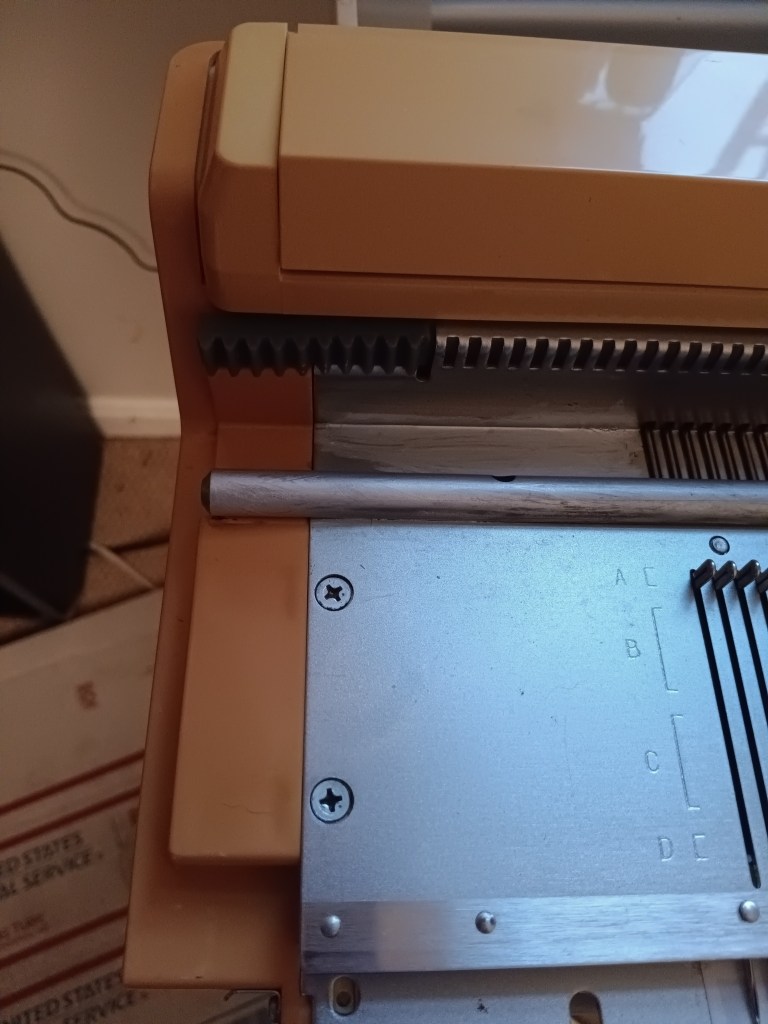
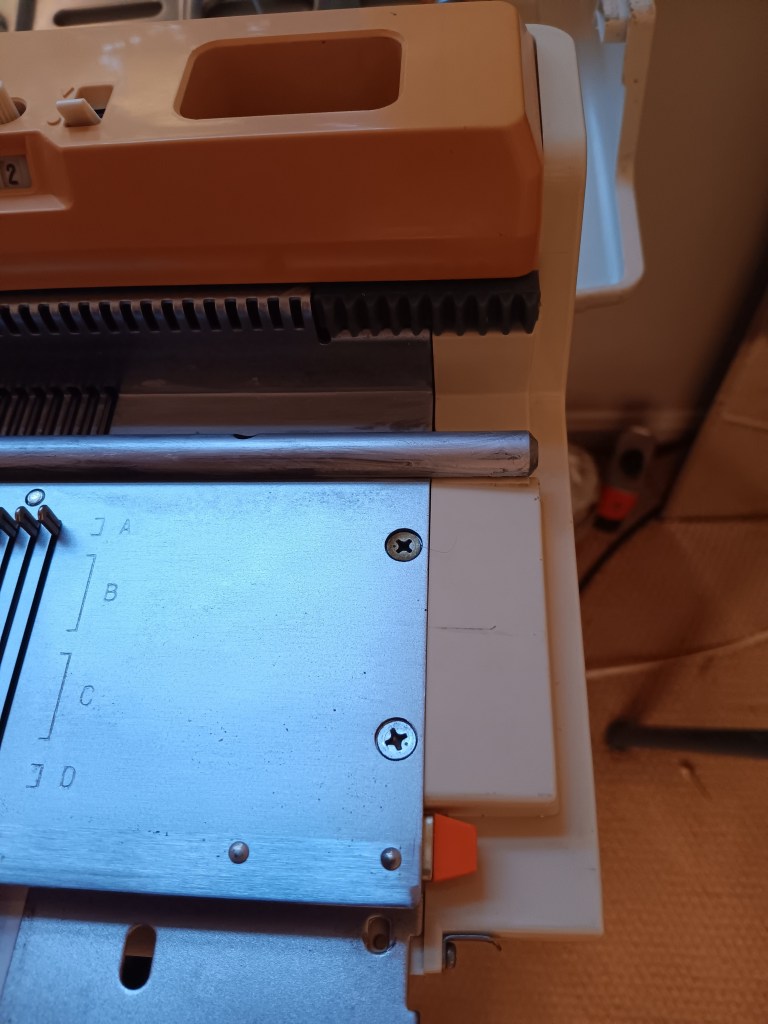
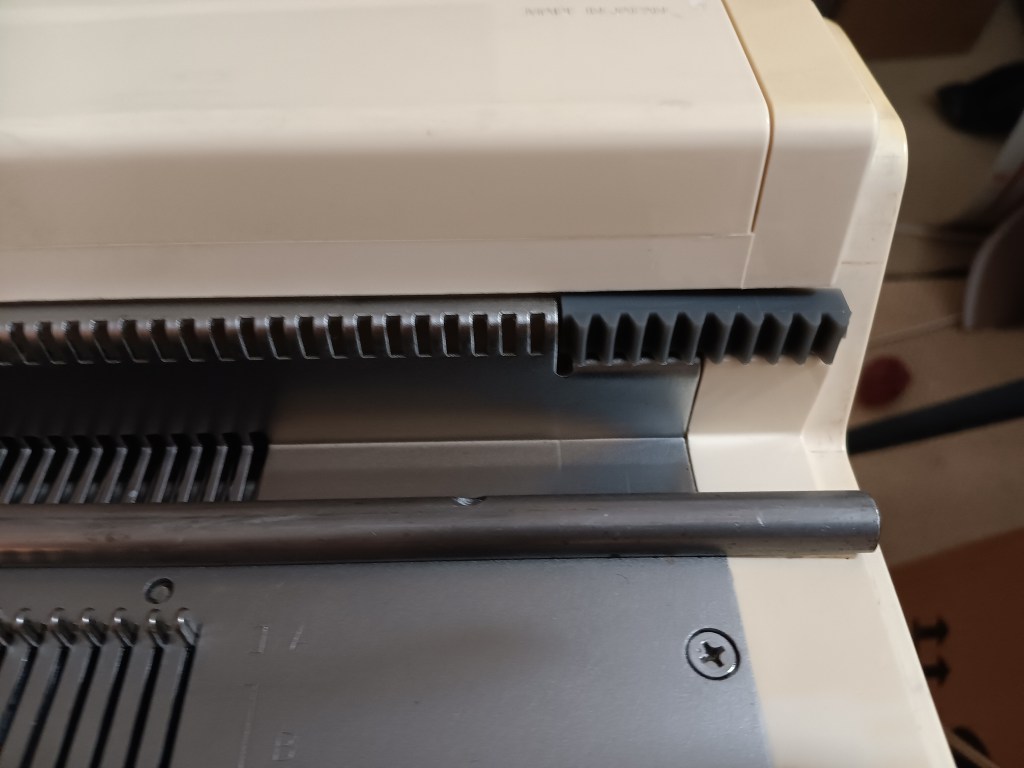
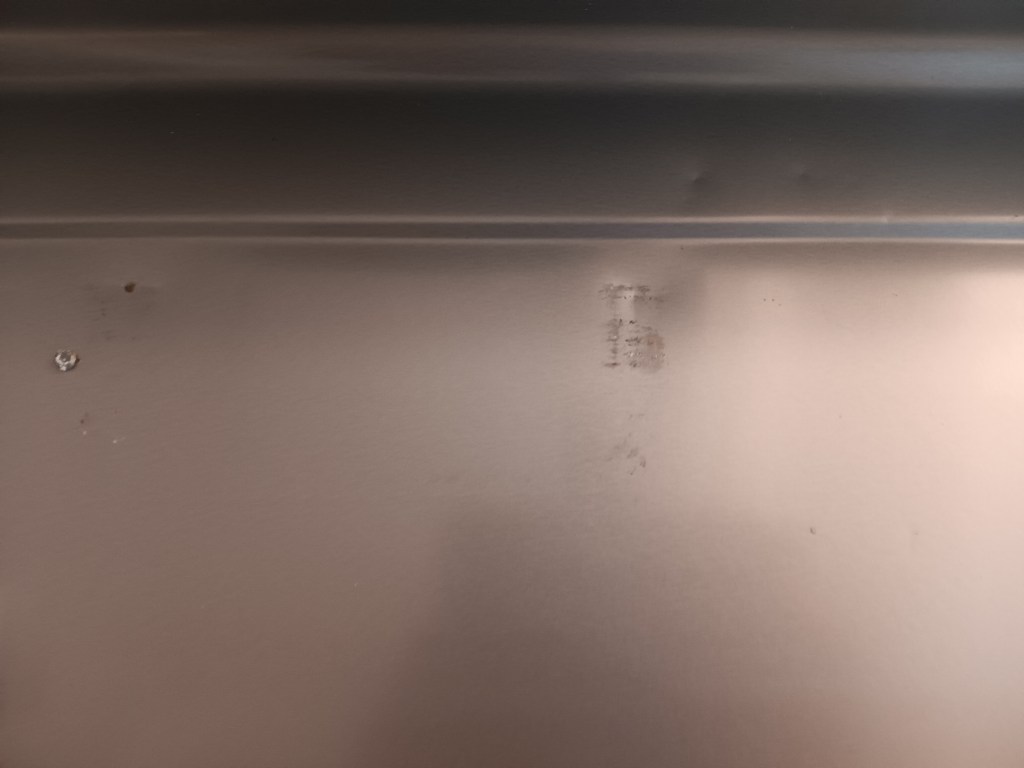
There was some yellow discoloration, which could be potential rust spots. I covered them with a couple of protective coatings. The covered spots are not as noticeable in real life as shown in the pictures below. In fact, when I am looking at the machine right now, I can’t even see it (but I know it was there).
2. One of such spots is actually the railing itself (I needed to be 100% sure that there will be no further degradation due to rust). So I applied a thin layer of protective coating as well.
In some places, the coating comes of, which comes across as some minor debris. Just be aware of it (and not alarmed). Include cleaning the debris and carriage rail in your regular knitting machine cleaning routine.
3. It seems that either the plastic panels (including the end caps) were replaced by the previous owner, or the machine was exposed to the sunlight unevenly. Regardless, you can see that some panels show a different degree of yellowing (discoloration of the old plastic due to exposure to the UV light/rays). However, the plastic does not seem fragile (I’ve seen a LOT of weakened (due to UV) plastic parts). So the difference is only visual/aesthetic.
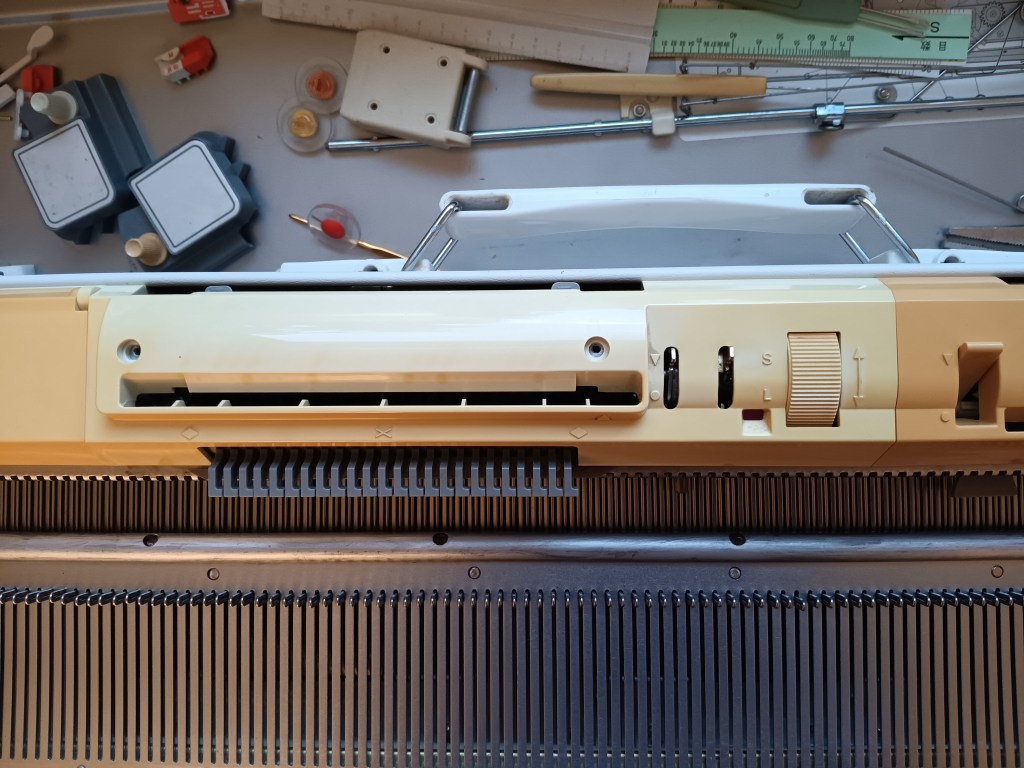
4. When I first started testing the machine by moving an empty carriage on the needlebed (with all needles in A, non-working, position), there was some clanking noise in some areas. I tried various carriages on this machine and they all sound like this. After troubleshooting this issue, I was able to improve it (watch this video on this issue) but due to the nature of this noise, it is not completely eliminated. This video discusses how to prevent/minimize that clanking noise. However, with regular maintenance and paying attention as well as moving the carriage in one smooth motion, this will not be an issue.
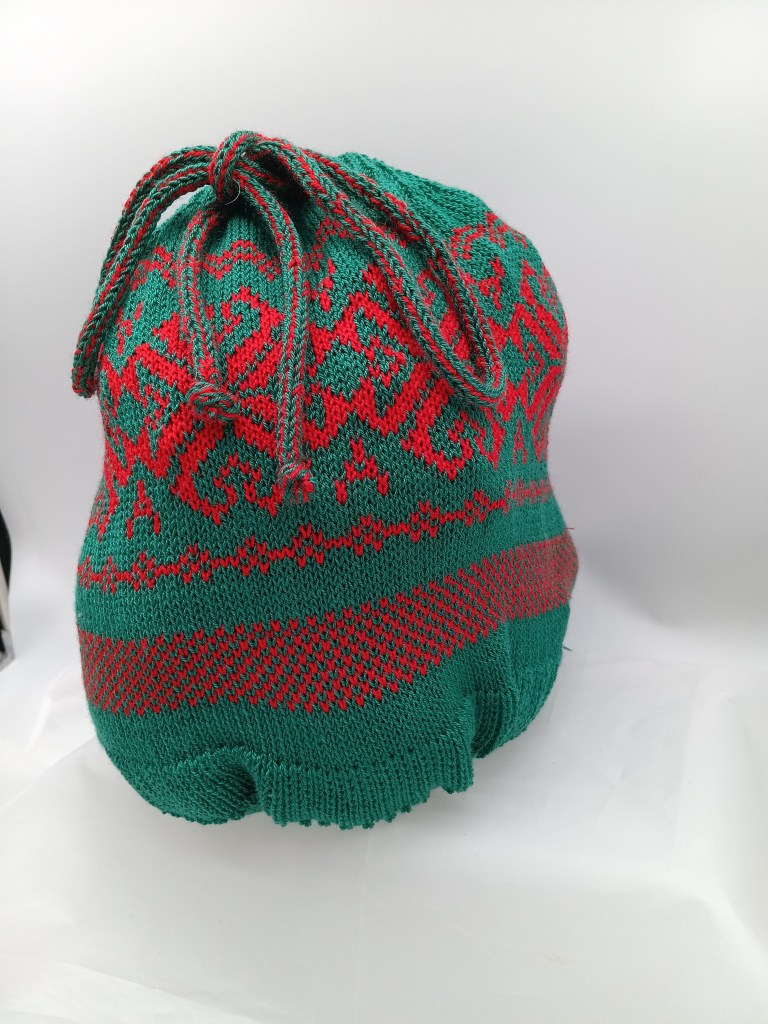
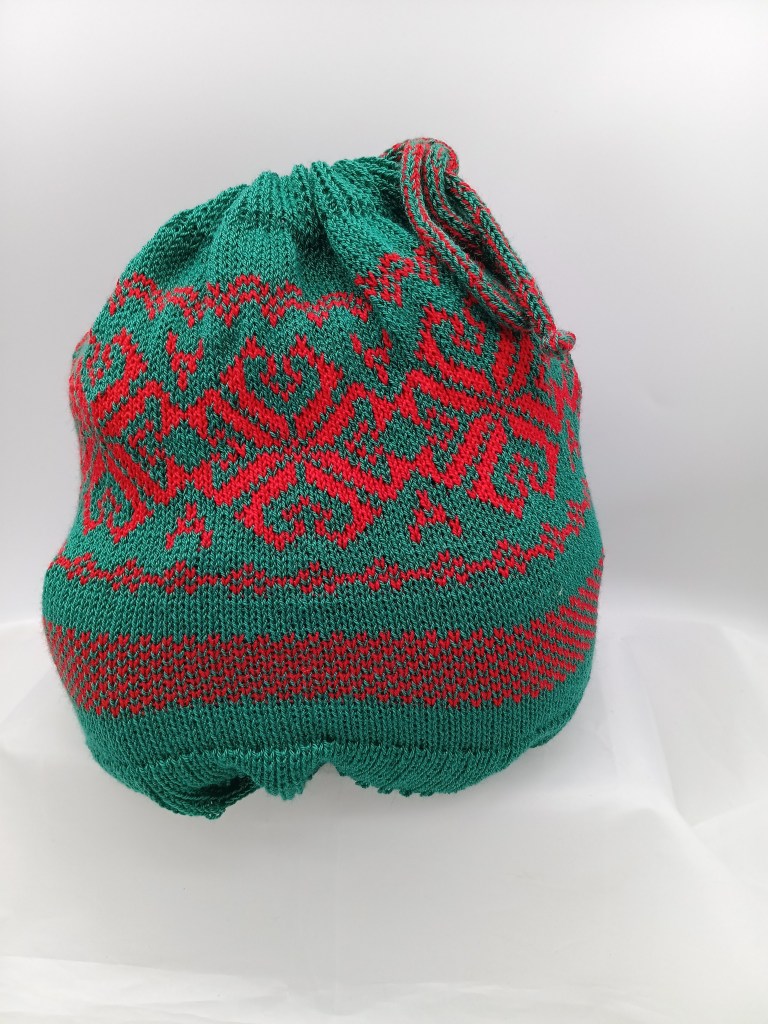
Despite all these imperfections, I enjoyed working with this machine. I made the gift bag below using various stitches shown in my test video (working on the pattern now).
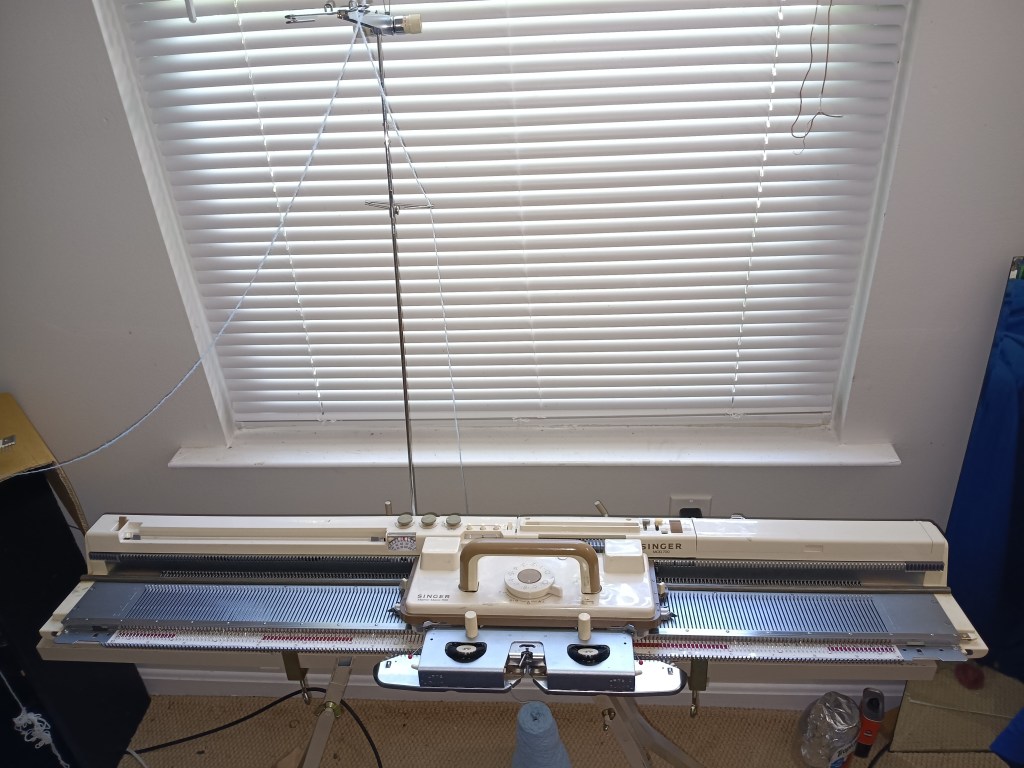
Singer MemoMatic 700 is a standard-gauge knitting machine with 200 needles, 4.5 apart. It has a punchcard reader (on the machine body) and patterning drums (on the carriage) which allows the machine to automatically select needles and knit patterns, like tuck, slip/part, fair-isle, weaving, lace, etc. Read more about this model in my Knitting Machine Encyclopedia. The rest of the post below is dedicated to a specific Singer MemoMaic 700 machine serviced and tested in my shop.
The case (including the end caps and the lid) is in great shape with minium scaffs and scratches. The plastic panels are in great shape too, with minimum discoloration due to the exposure to UV.
I cleaned the surface of the machine and the inside of it as well. I serviced and cleaned the punchcard mechanism and fine-tuned it to ensure flawless patterning. I opened the carriage and cleaned it thoroughly too, to ensure the drums and all other internal mechanisms move freely. The rubber wheels on the sinker plate were too fragile, so I replaced them with the old stock.
Installed new end racks (new stock).
I replaced the sponge strip in the retaining bar. I cleaned and inspected all needles to ensure they are not bent, latches move freely, and form correct stitches. Then I knitted on the full bed (i.e., on all needles) using tuck, skip/part, and two-color fair-isle to ensure that all needles indeed form correct stitches. I used several different kinds of yarns (you will even see in the video that the machine handled a couple of minor knits pretty well). I was very pleased by these tests, as the machine indeed handled well all the various yarns and all stitches formed correctly. The video of these tests is here.
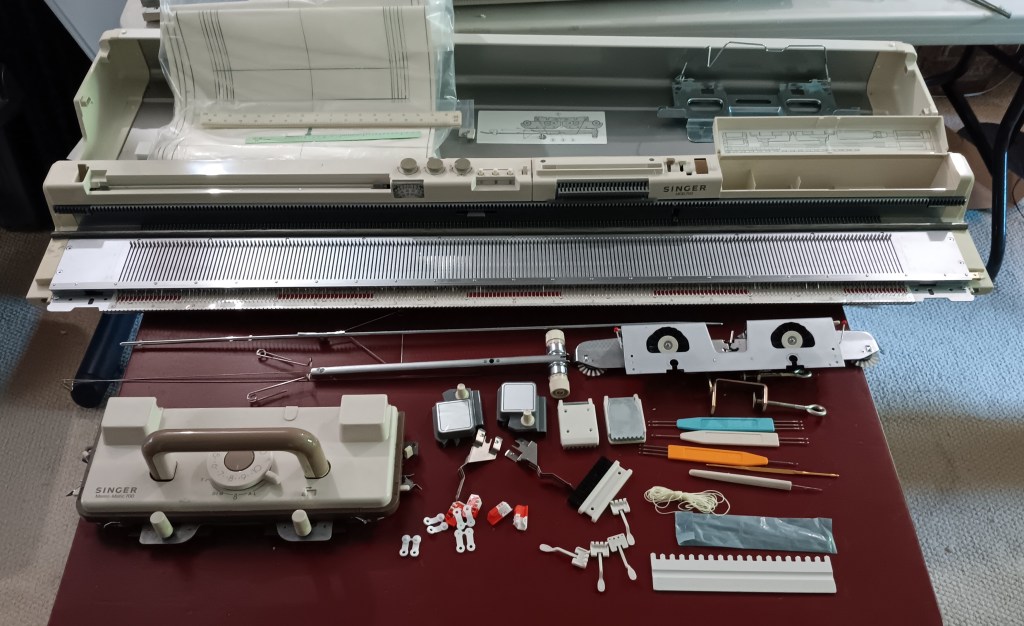
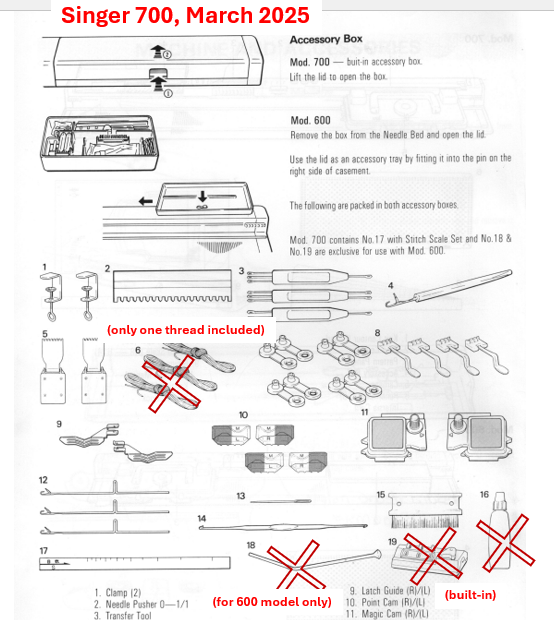
The machine comes with all original accessories for the knit leader.
Knit leader was not tested in action but I checked all buttons, levers and knobs: they all move freely.
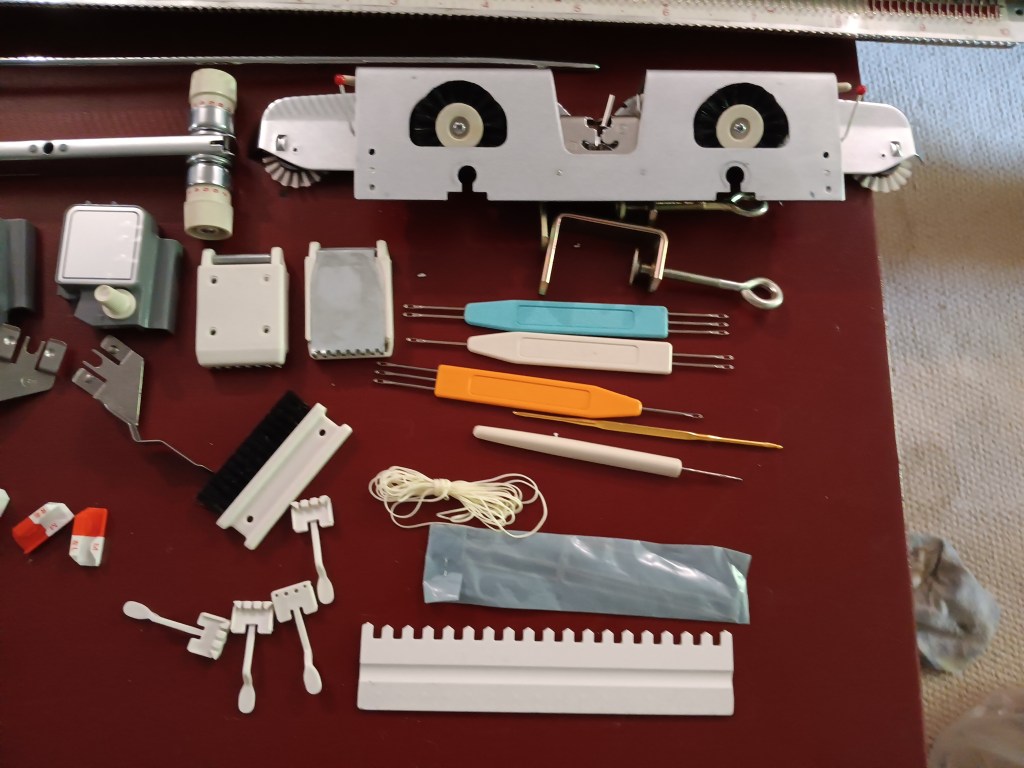
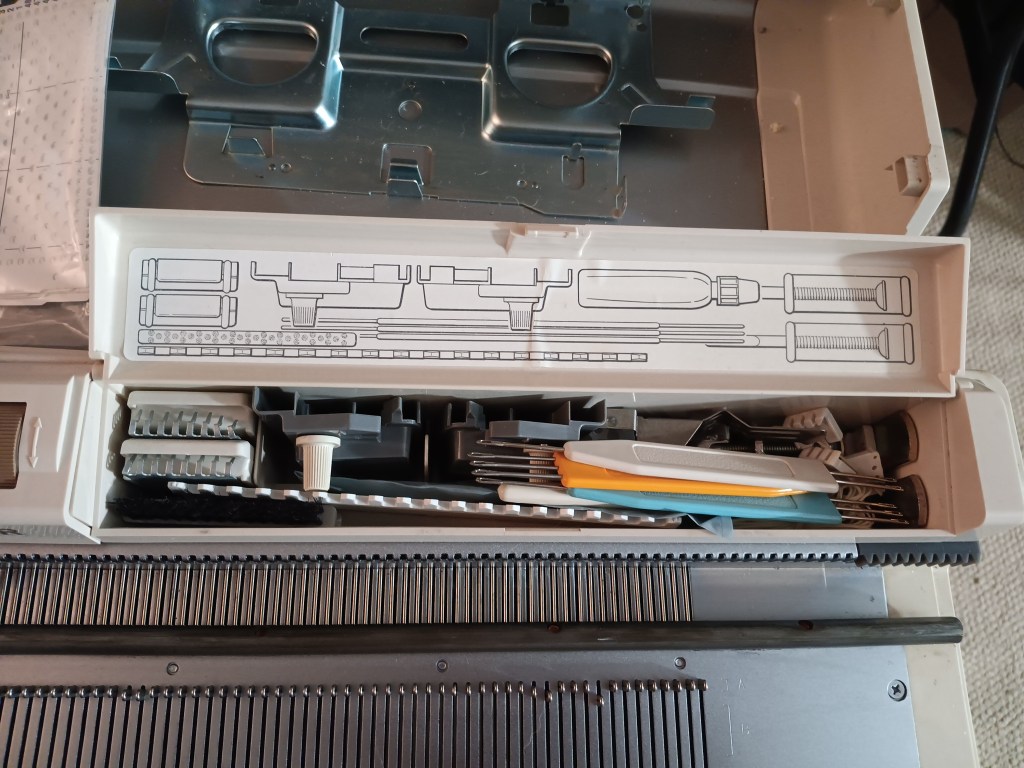
It comes with almost all the machine’s accessories.
The accessories fit nicely into a built-in box.
The standard accessories that are missing are: two cast-on threads (only one is included) and the oil (Hoppe’s Gun oil from Amazon is an excellent substitute).
The carriage lock is now shown in the list of accessories but the original metal carriage lock is included.
Note: The machine did not come with the original punch cards. I am including a generic set of 15 punch cards. Also, hard copies of the manuals are missing as well. But they are available online for free: pattern book, knitting manual, and operation manual.
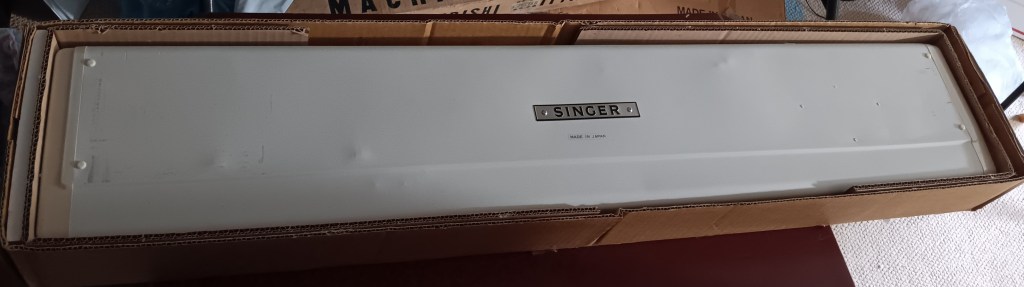
The machine is lucky enough to come with its own cardboard box as well (with a lid).
Now, about Imperfections:
– Because I applied cleaning oils during cleaning, you might notice that some of the oil might bleed out of the carriage (especially when moved back and forth several times), leaving some black-ish residue on the main bed. Just wipe it with a towel and continue knitting. This is not unusual as the oil becomes thinner as the carriage becomes warmer as it moves back and forth.
– when the lid sits on top of the main bed, there is a small lip. It is pretty typical for these old machines and does not affect the works of the machine. However, precuations will be needed when the machine is in storage: put it in a plastic bag when stored for a long time.
– The carriage handle has some minor scratches.
– The case also has some minor scratches and dents. But it is overall in very good shape.
I typically include pictures of an item I made while testing this machine. I indeed made a small blanket and a gift bag, but due to the time contains, they are not quite finished yet.
I think the new owner of this machine will be very pleased with it because it not only looks good, but it works fantastically and has some advanced functions other punchcard machines don’t: like built-in intarsia.