
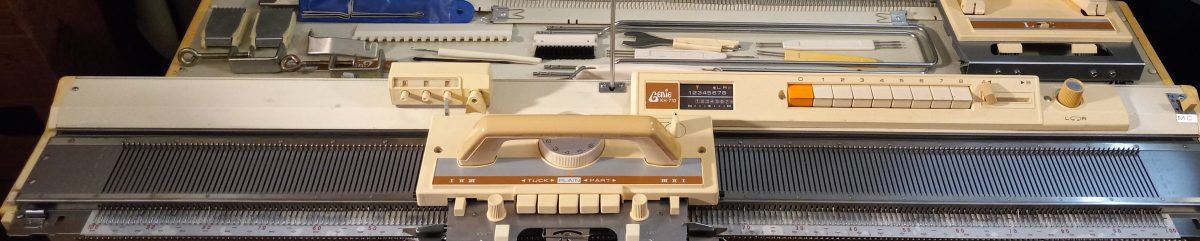
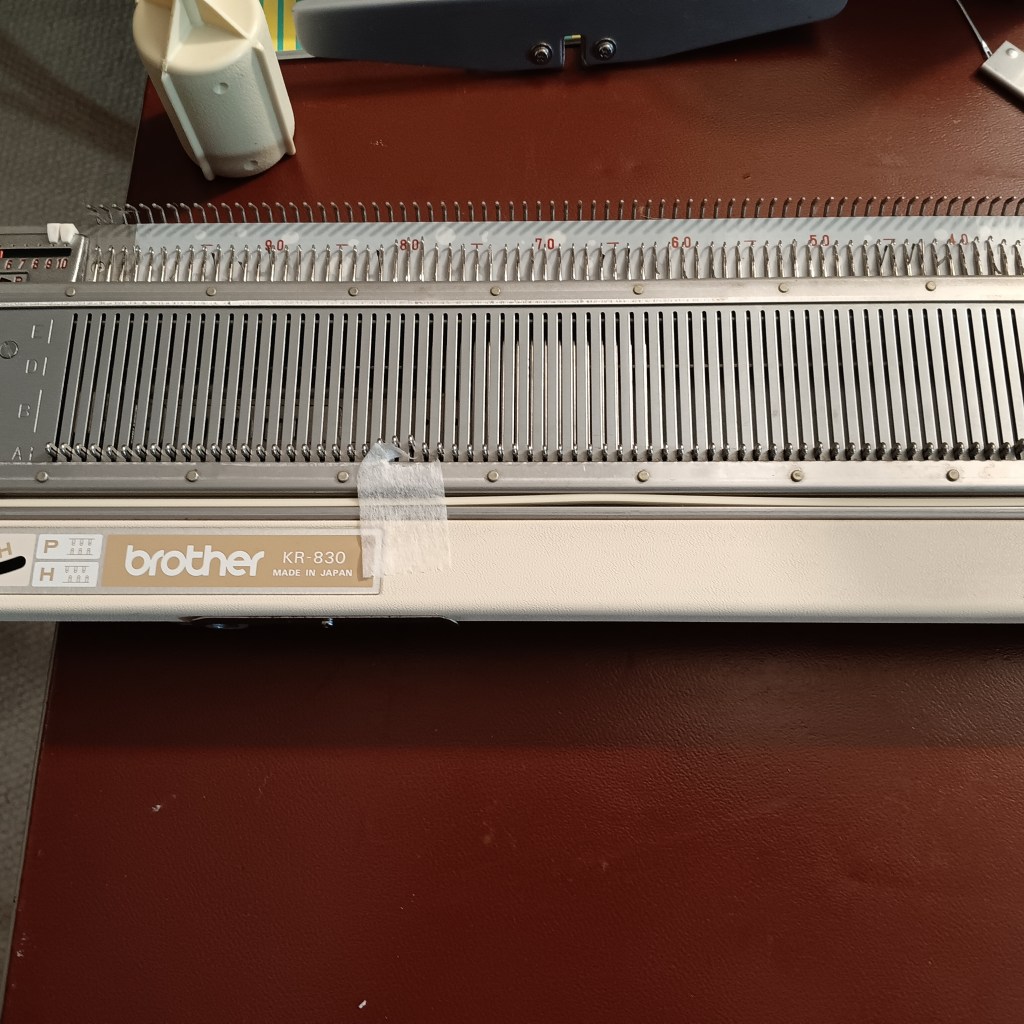
This Brother KR830 ribber was prepared (cleaned, serviced, and tested) in January 2025. This post is dedicated to this specific ribber. Refer to my Knitting Machine Encyclopedia to learn the pros and cons of Brother KR830 ribbers.
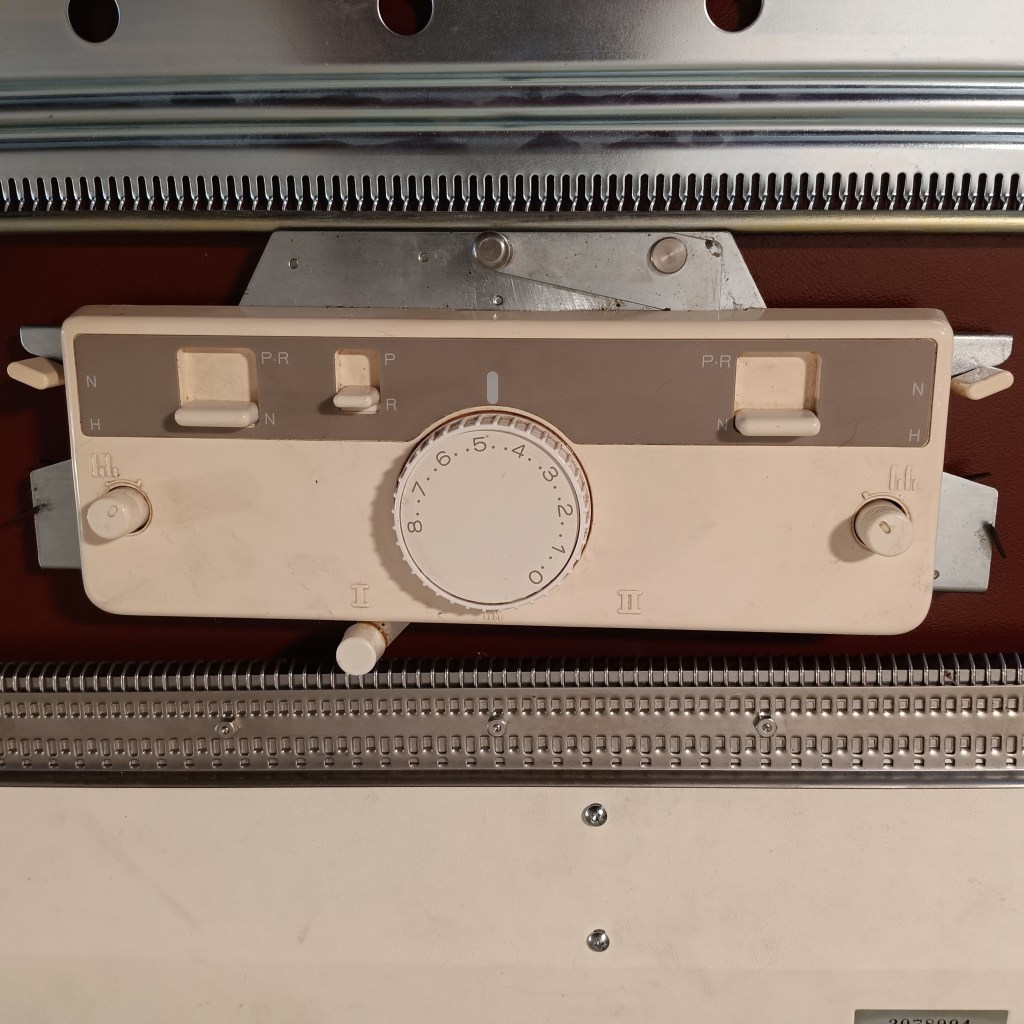
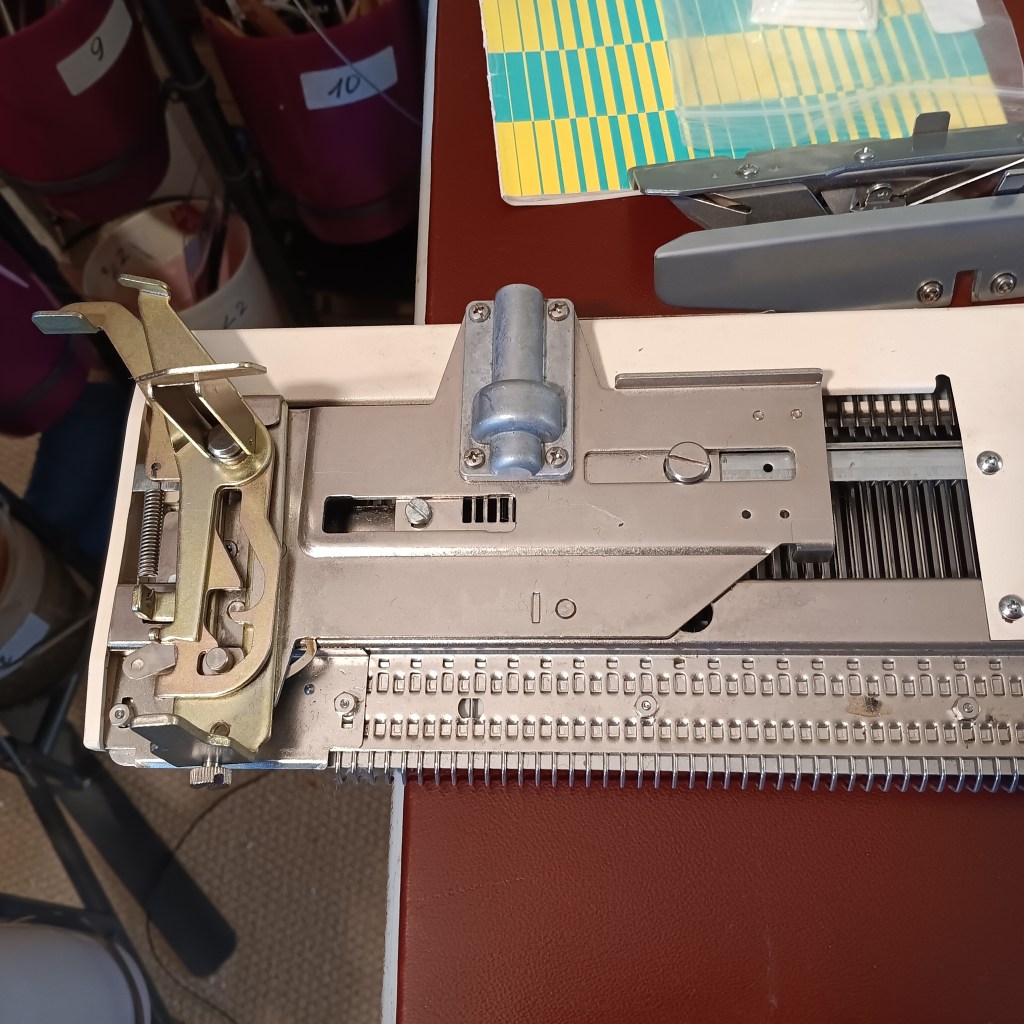
The ribber did not come with a carriage. Thus, I used a carriage from my stash. However, the carriage is from Brother KR850 ribbing attachment (which is a bit more advanced – read here): you can see “lili” buttons on the carriage picture, which are specific to KR850 ribbers only.
However, as shown in my video, KR830 needle bed, KR830 sinker plate, and KR850 carriage worked well in tandem with my Brother KH940 knitting machine. In fact, the carriage slides easily even with the yarn fed through it (as also demonstrated in my video).
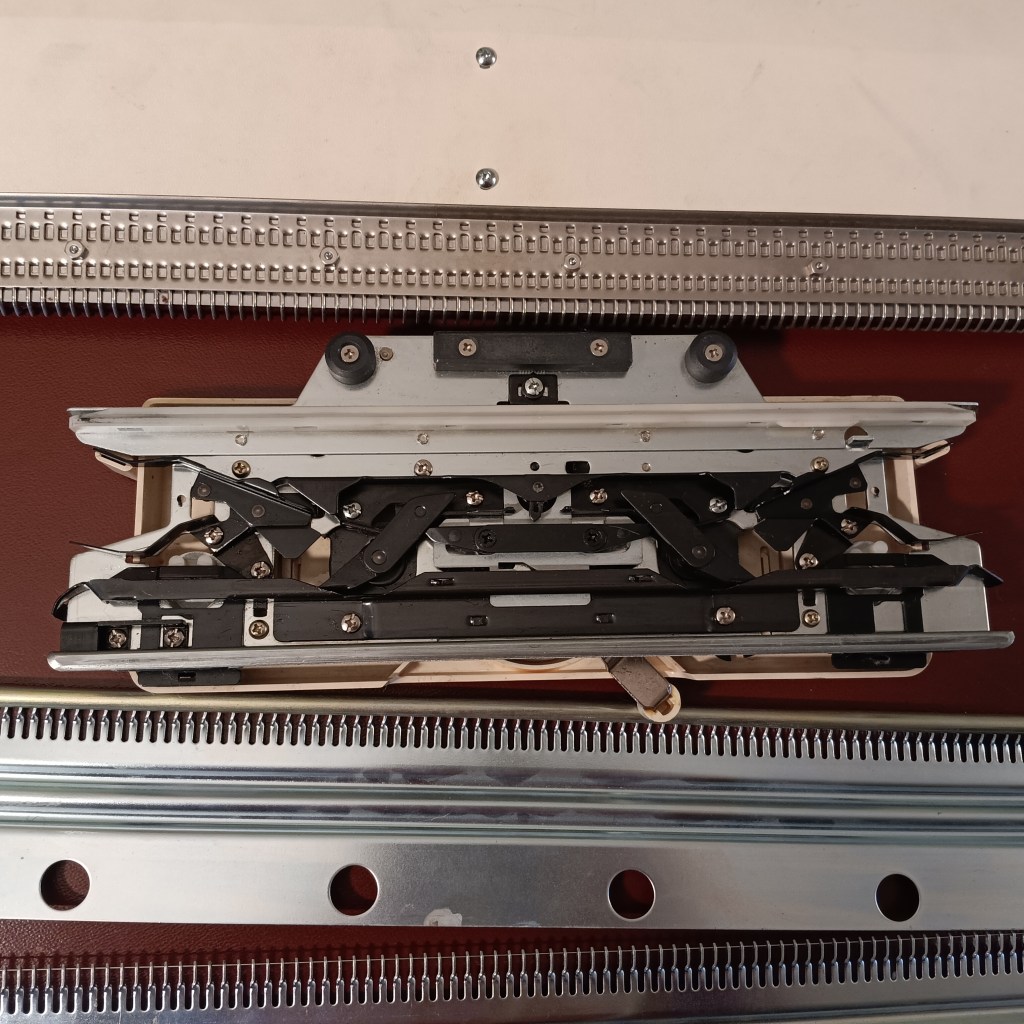
Despite being not for the KR830 machine, the carriage works great and is in great shape. All levers, knobs and buttons move on both sides of the carriage.
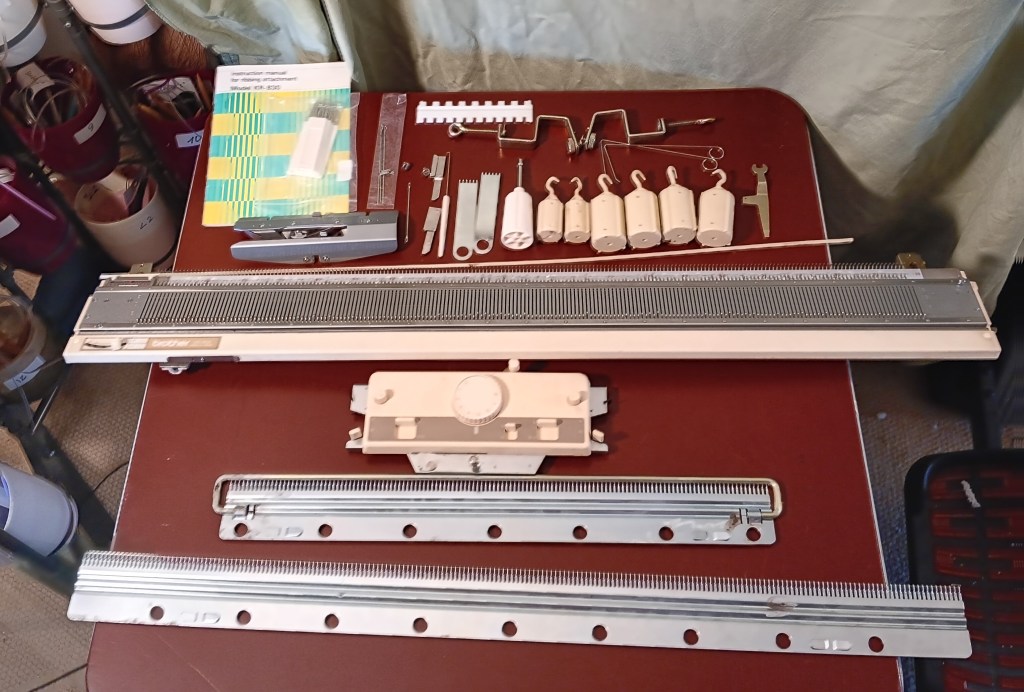
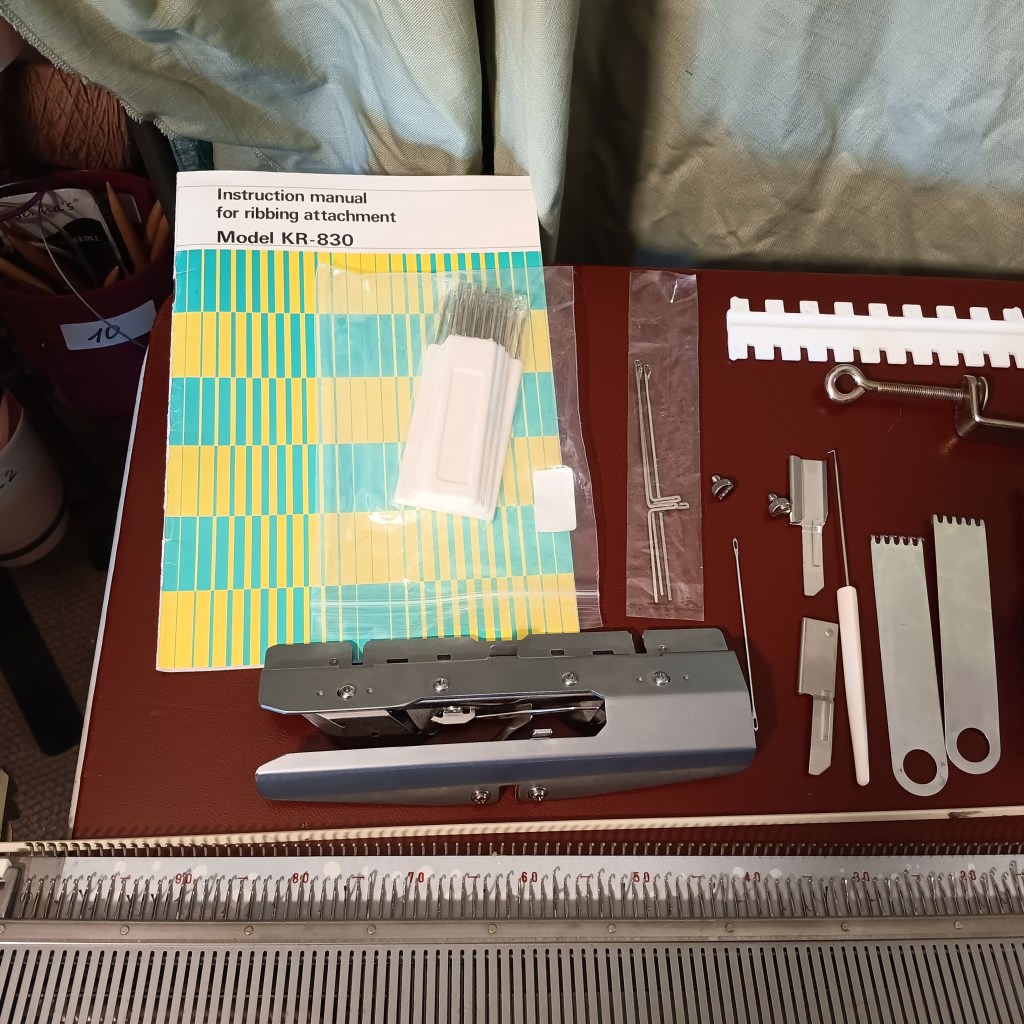
The ribber came without some other accessories. I put together a set of accessories. All major accessories will be included.
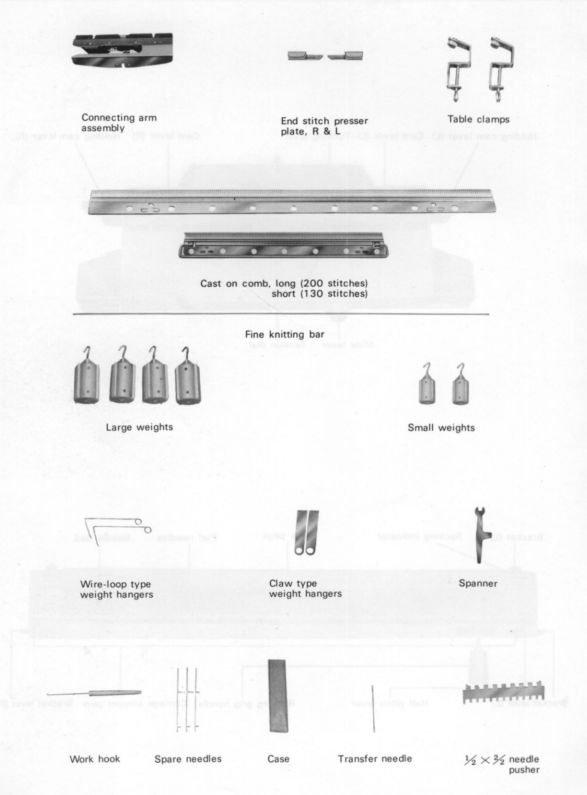
The original cardboard box will not be included. Regardless, the machine will be packed for shipping really well.

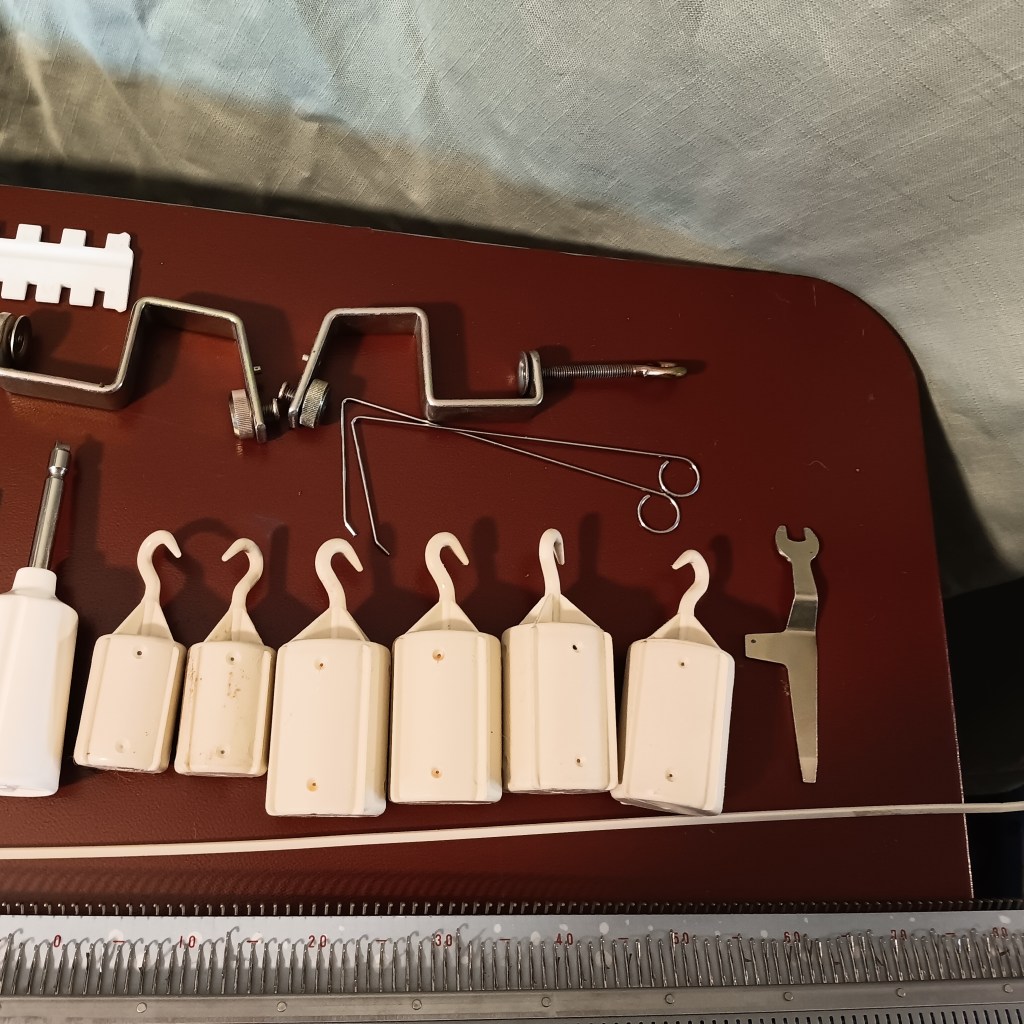
The table clamps are exactly those used during the tests. So the angle between the ribber bed and the main bed will be the same. The needle selection ruler is new stock as well.
The aluminum claw weights are new. The rack lever is new (thus, it is lighter in color than all other plastic components).
The hard copy of the manual for the Brother KR830 will be included as well.
Refer to a free manual available online to learn about the functions of the KR850 carriage.
I cleaned the ribber, thoroughly oiled it, and removed old grease. I inspected all needles (individually and then by knitting on the full bed) and replaced the bent and faulty ones with the needles from a new stock.
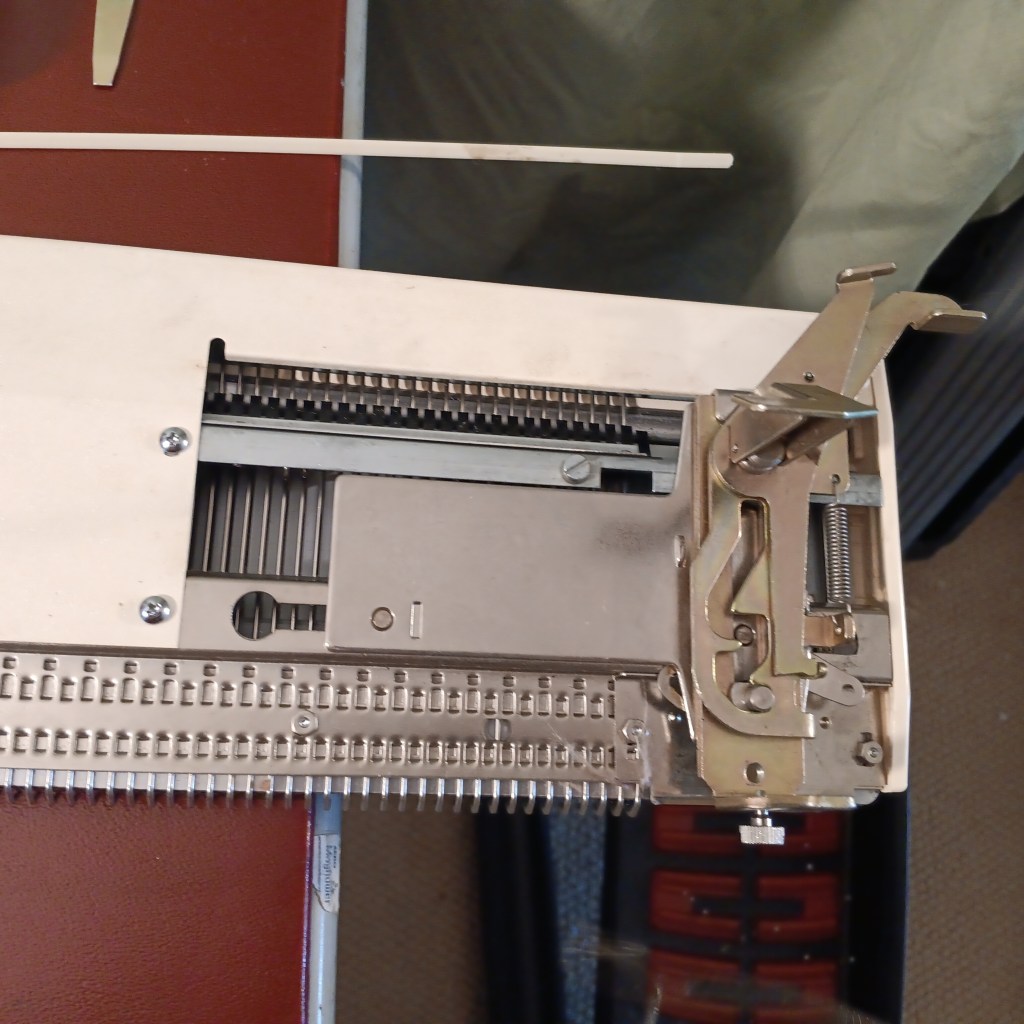

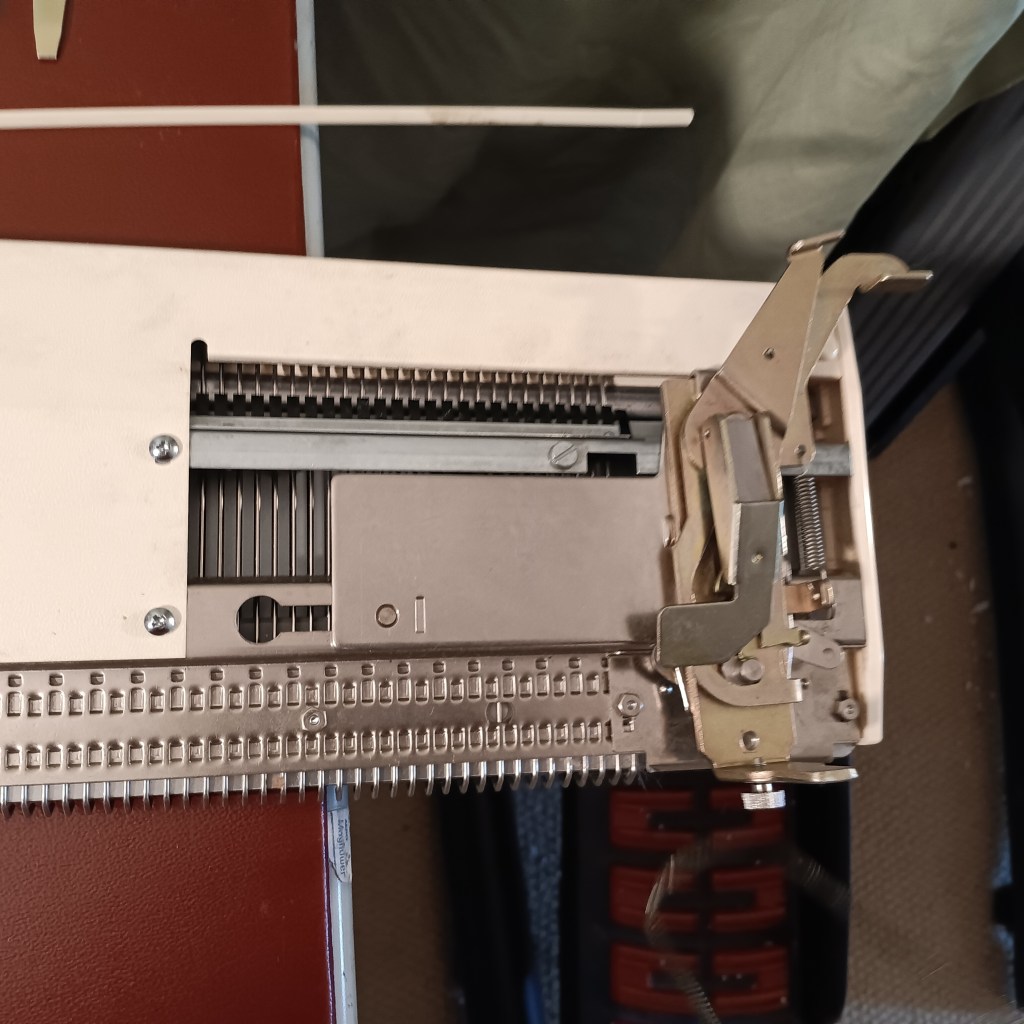
I dedicated a lot of time to adjusting the distance between the main bed and the ribber. It is one of the most important parameters during knitting.
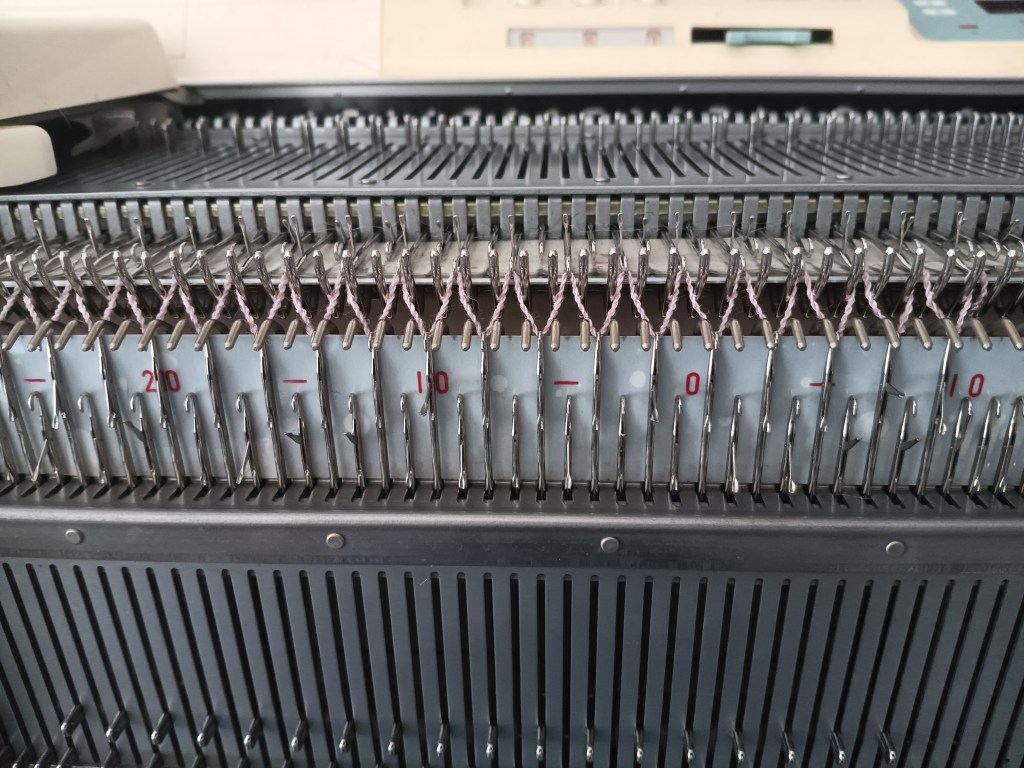

Knitting on a machine attached to a ribber is often an interplay between the yarn the knitter is using, tension, and the angle between the ribber and the main bed. The distance was adjusted for the thin yarn (boucle) and slightly thicker than the sock-yarn-thickness yarn (see my video).
During the tests, while the tension was chosen too loose for my first yarn, I was losing stitches (shown in my video – see a clip starting at 2 min 30 s). But as I adjusted the tension, the knitting became flawless.
I knitted on the full bed to demonstrate that all needles form nice stitches. If the latches did not work well or if the needles were bent, it would manifest itself as tucked or missed stitches.
Typically, it is challenging to need a full ribbing on the full bed (All needles are in working positions). Thus, I chose an every-other needle ribbing pattern and knitted on two different sets of every other needle.
I would not recommend beginners to start knitting on the full bed since there are several challenges associated with it:
- hard to insert the side hanging weights when all (or almost all) needles are in their working positions (you can see of bit of this struggle in the video);
- the knitter needs to pay especially more attention to the carriage position on the edges of the needle bed and to the yarn tension to avoid side floaters (I experienced them – see my video)
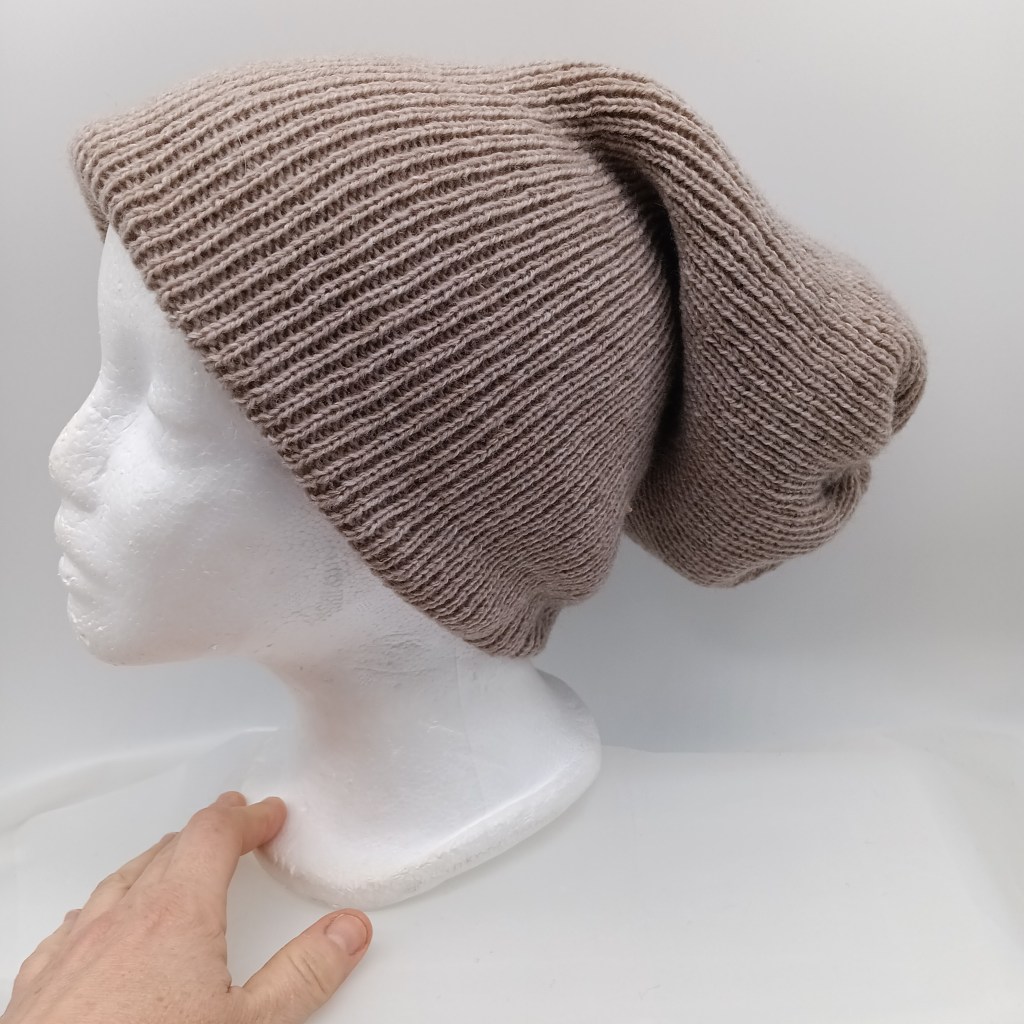
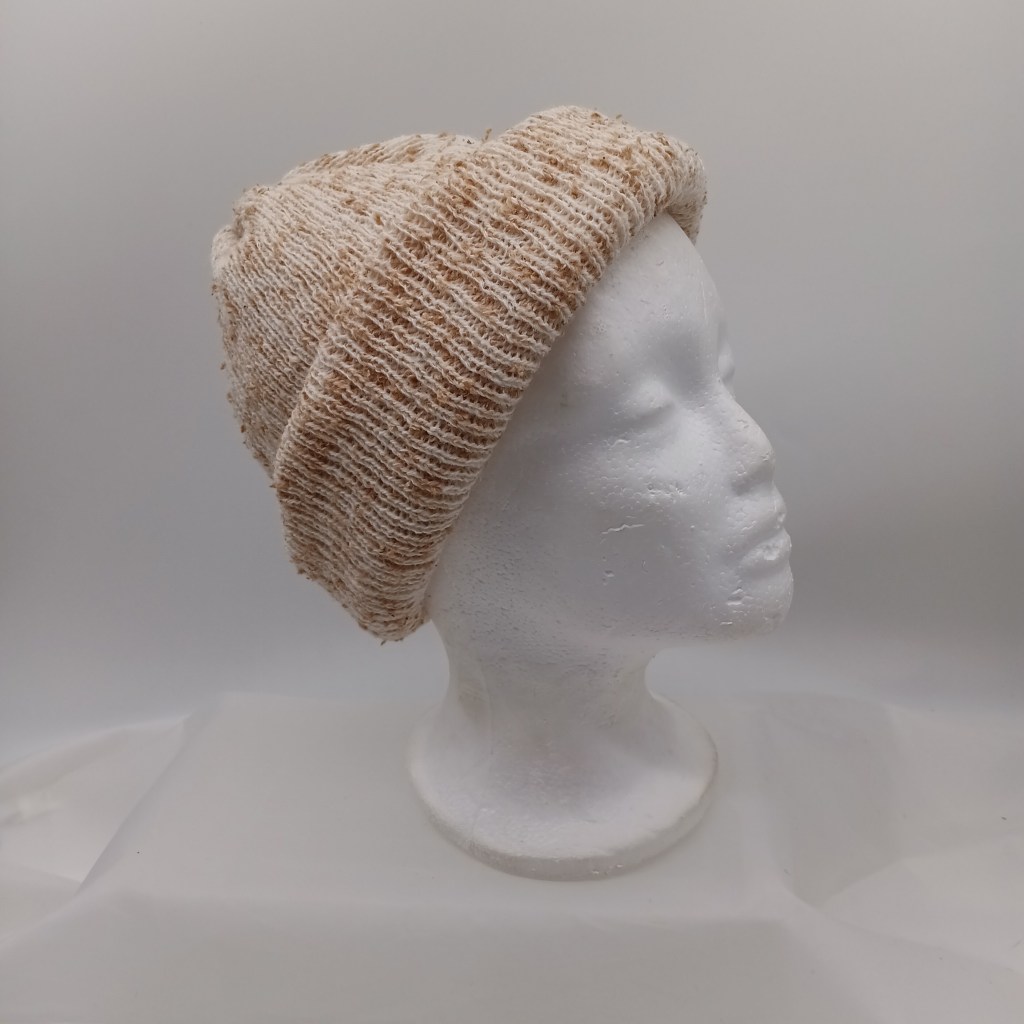
Pattern one (see video) had three needles NOT selected on the ribbing attachment. It used slightly thicker yarn. Pattern two had two needles not selected on the left-hand side of the ribber bed. I used thinner but boucle yarn. Both yarns produced wonderful fabrics. I made two great hats out of the knitted panels.


Imperfections:
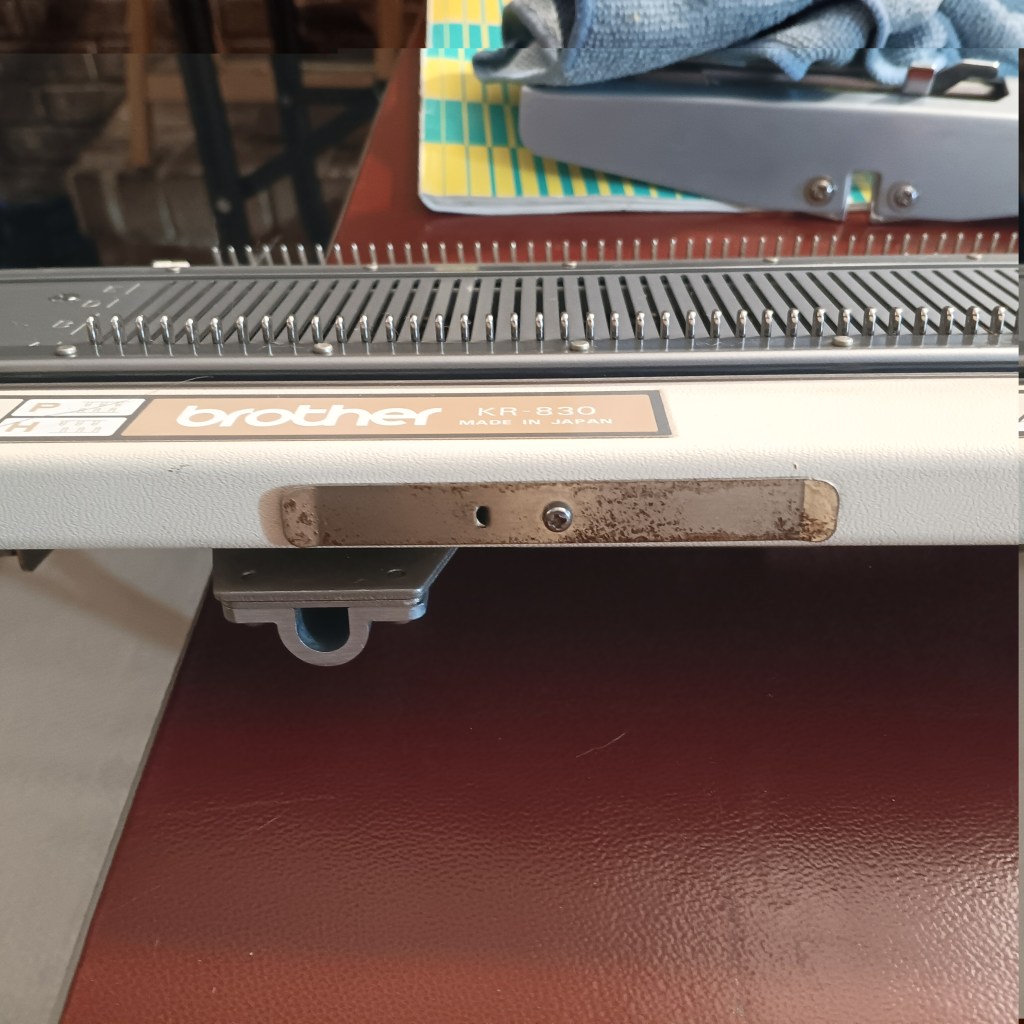
1. The main bed has two minor rust spots underneath that I covered with the rust-stopping liquid. It is not pretty but at least it prevents further corrosion.
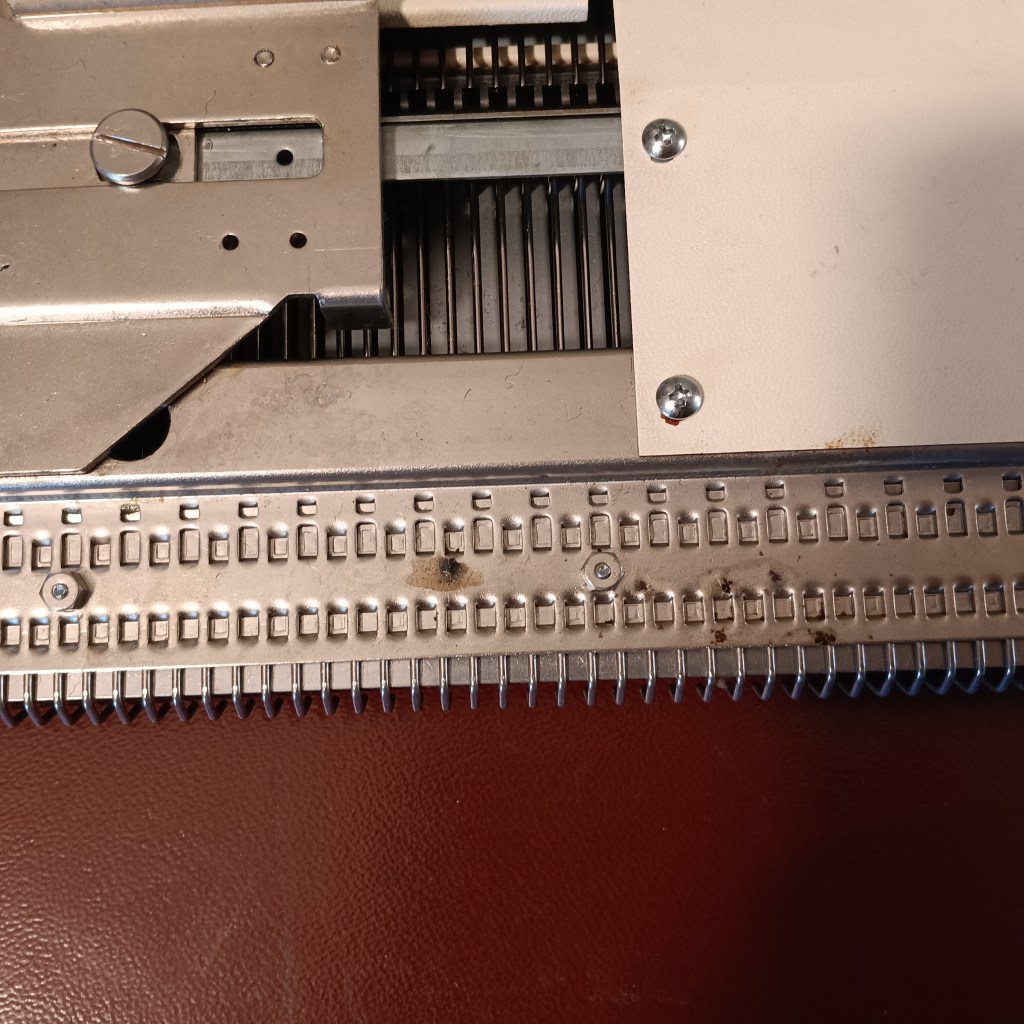
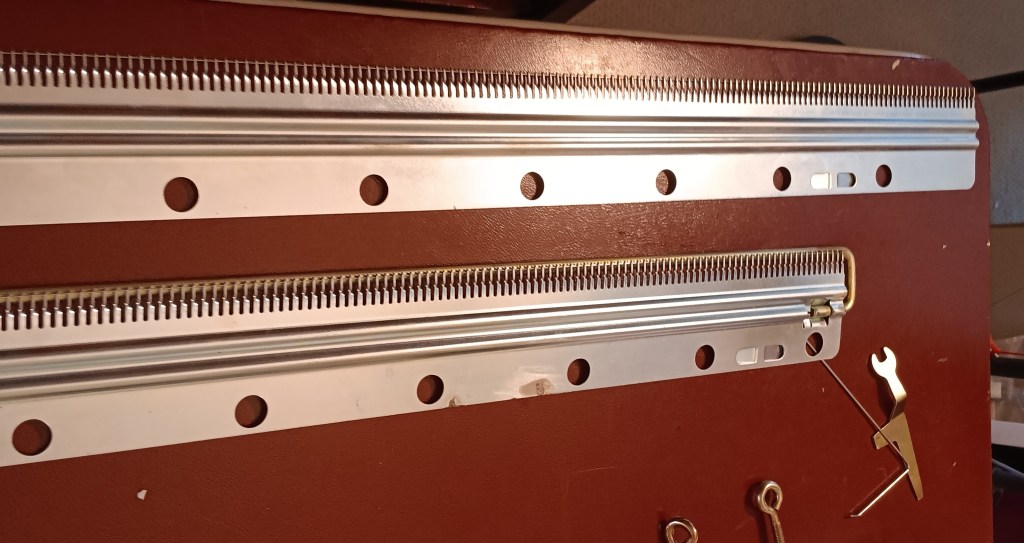
2. The cast-on combs, both small and long, had rust spots that I also covered with Rustoleum. I know it does not look pretty after i applied to liquid but it stops further corrosion. I did not have problems with the yarn catching on the rust spots. These are mostly cosmetic defects.

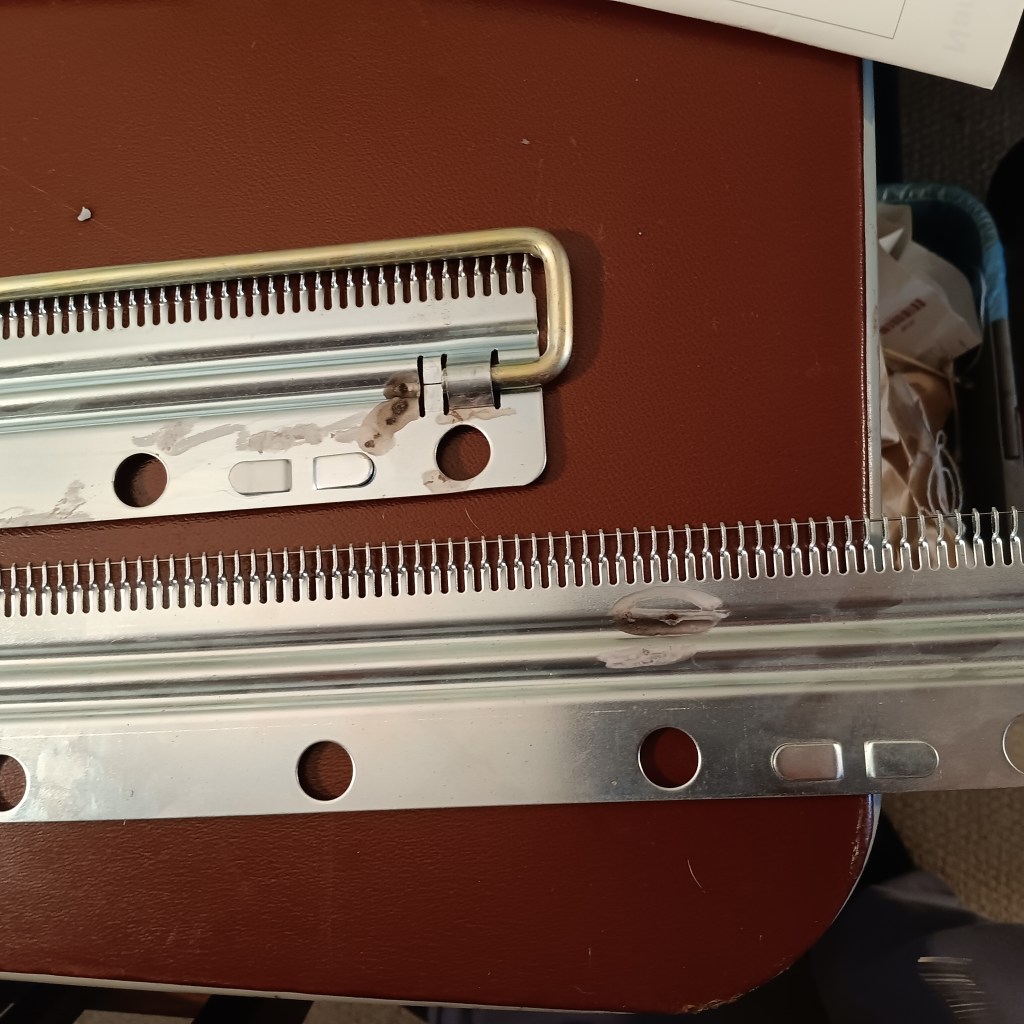

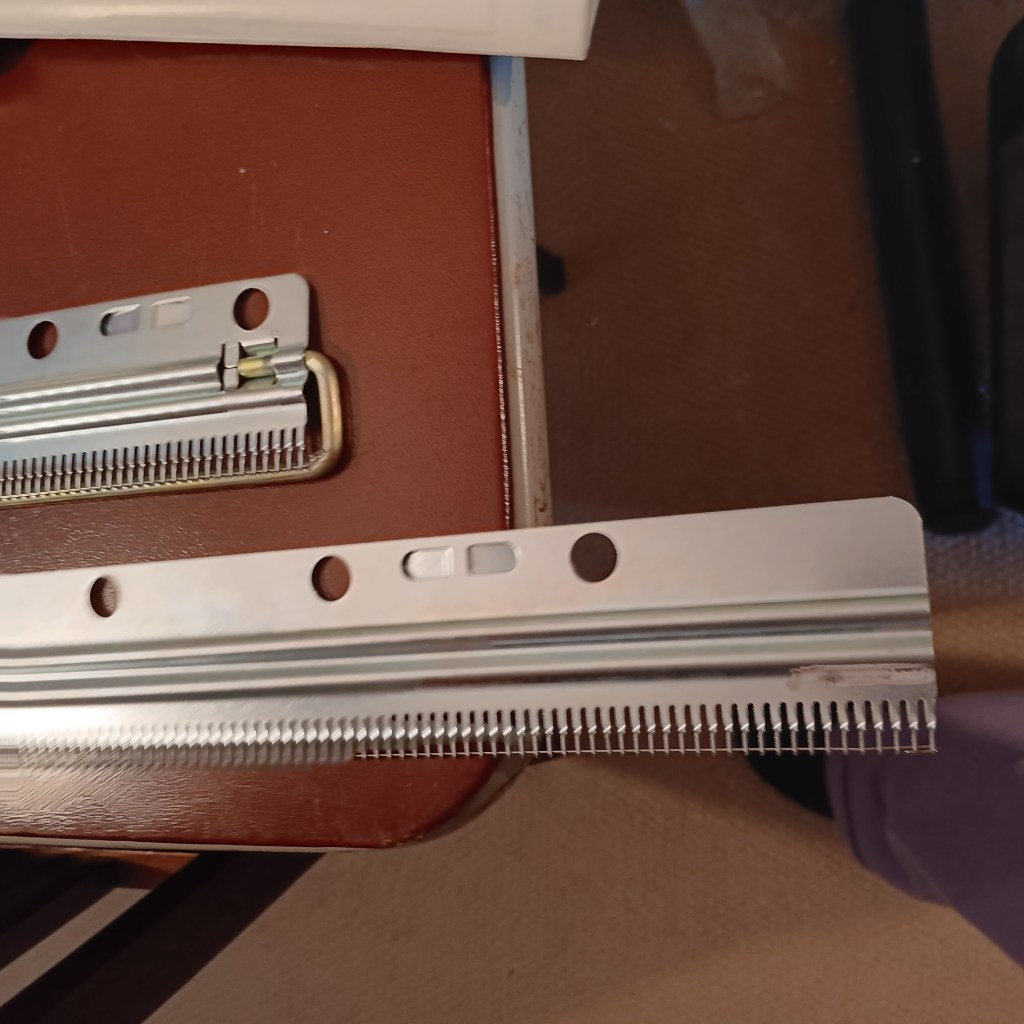
One cast-on comb side has more spots than the other (on both combs).
The yarn holder looks a bit rusted too but is relatively smooth to touch:
The plastic fine knitting bar is packed inside the ribber itself:
BTW, the hats were donated to a woman, who hand-embroiders the textiles ( as a hobby) and then donated to the women who lost hair due to the alopecia.
Overall, I am very pleased with the performance of this ribbing attachment. Hoping you will be too!
