
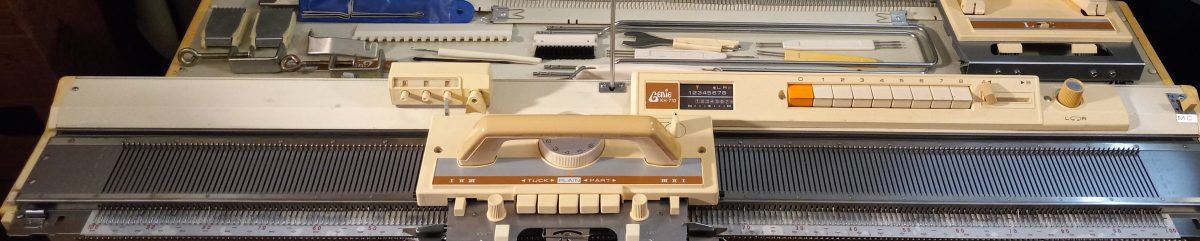
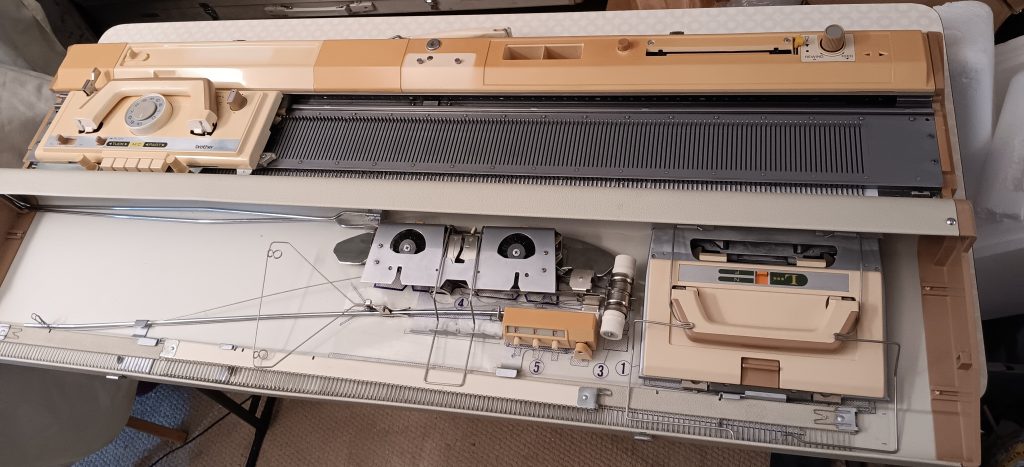
Brother KH830 is a standard-gauge knitting machine with 200 needles, 4.5 mm apart, and punchcard-reading capabilities for automatic knitting of patterned fabric. Read more about this model in my Knitting Machine Encyclopedia. The post below is dedicated to a specific machine, serviced and tested in my shop in April 2026.
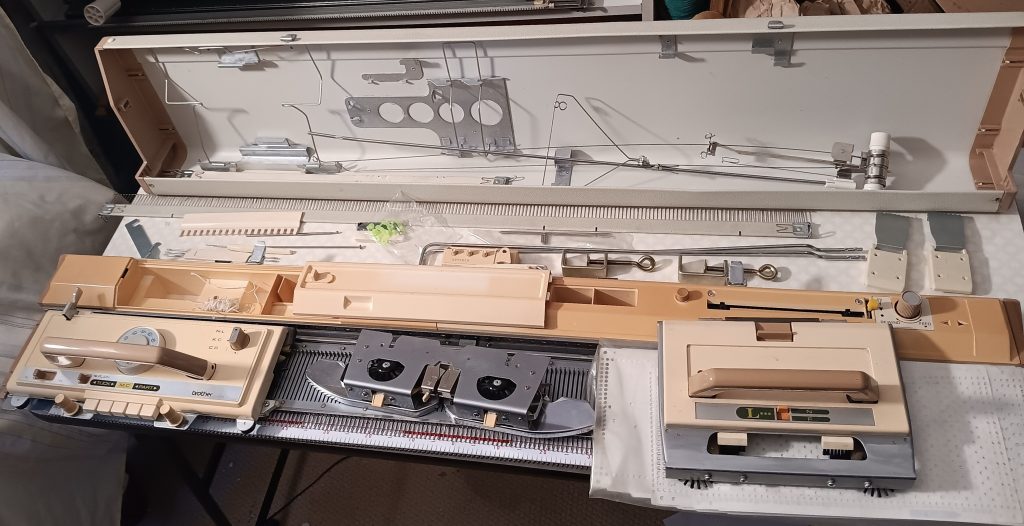
I deeply cleaned this machine and, while disassembling, discovered that the needle retaining spring has some rust. Luckily, it was the only internal part rusted (because of the rusted needle retaining spring, I was extra-extra diligent in checking for rust signs). I replaced the needle retaining spring and treated some very minor rust spots inside (mostly on the case) with Rust-Oleum. The new needle retaining spring works great, helping needles to form correct stitches (watch the video of my tests).
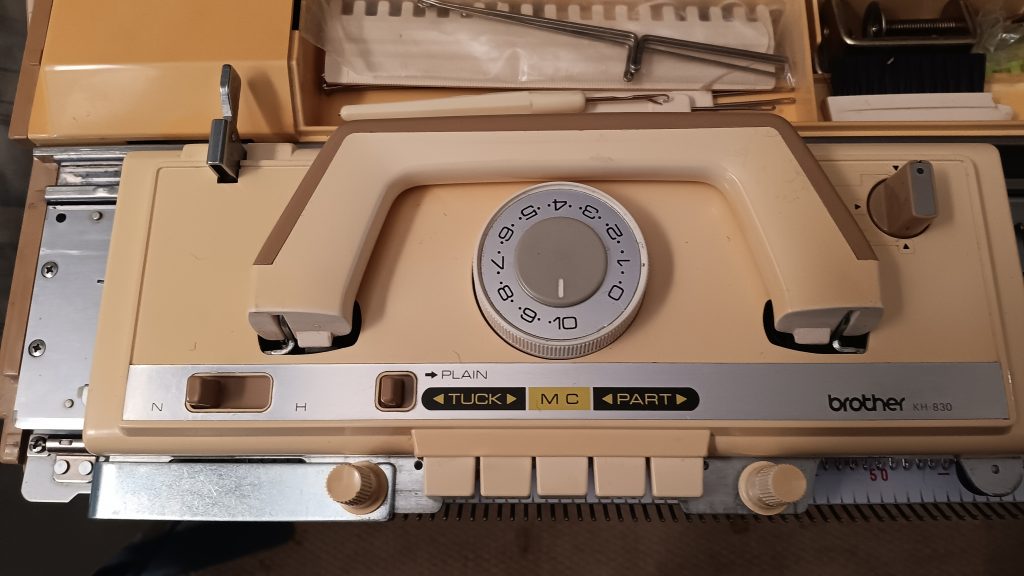
The carriage and the punchcard mechanism were also disassembled and deep-cleaned as well. Additionally, all the needles were removed, cleaned, inspected and polished where needed. The needles were then inspected again when I inserted them into the needle bed, and then tested while knitting. I discovered a couple of faulty needles this way and replaced them (with new stock needles). Read more about knitting tests below.
Since the lace carriages are simpler, they often do not need as deep cleaning as the main carriages. Thus, the lace carriage was tested and then cleaned of old dirt and grease. It works great (see below). BTW, the lace carriage is the original and came with this KH830 setup (sometimes I included carriages from other models).
The whole retaining bar was not refurbished but was replaced completely. So, you’ll get a sponge strip under the plastic ends (not with medical tape around).
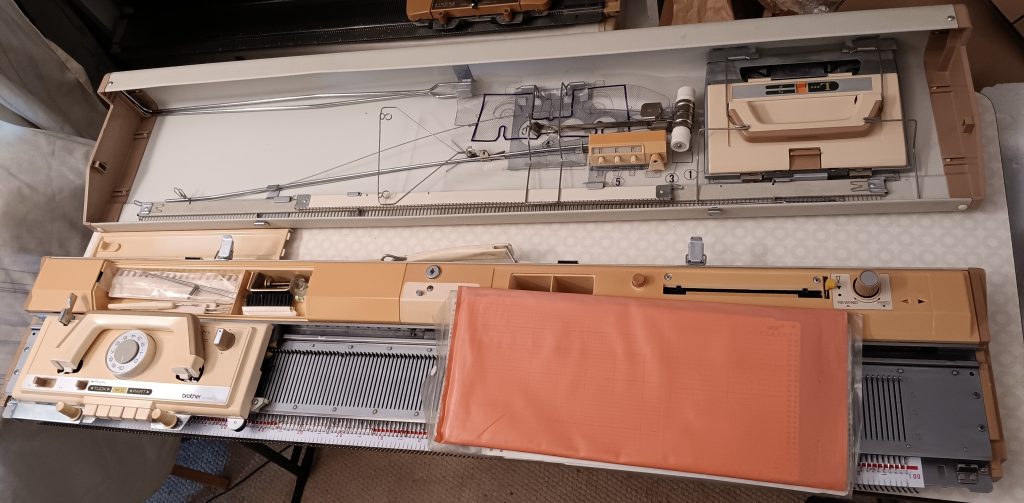
The machine will come with all major and most minor accessories. The missing accessories are:
- wax and wax container;
- tapensry needle (any needle of your choice will work)
- bottle with oil. It was too old to use it. I recommend Hoppe’s gun oil available on Amazon.
- The hard copy of the manual will also not be included, but it is available online for free.
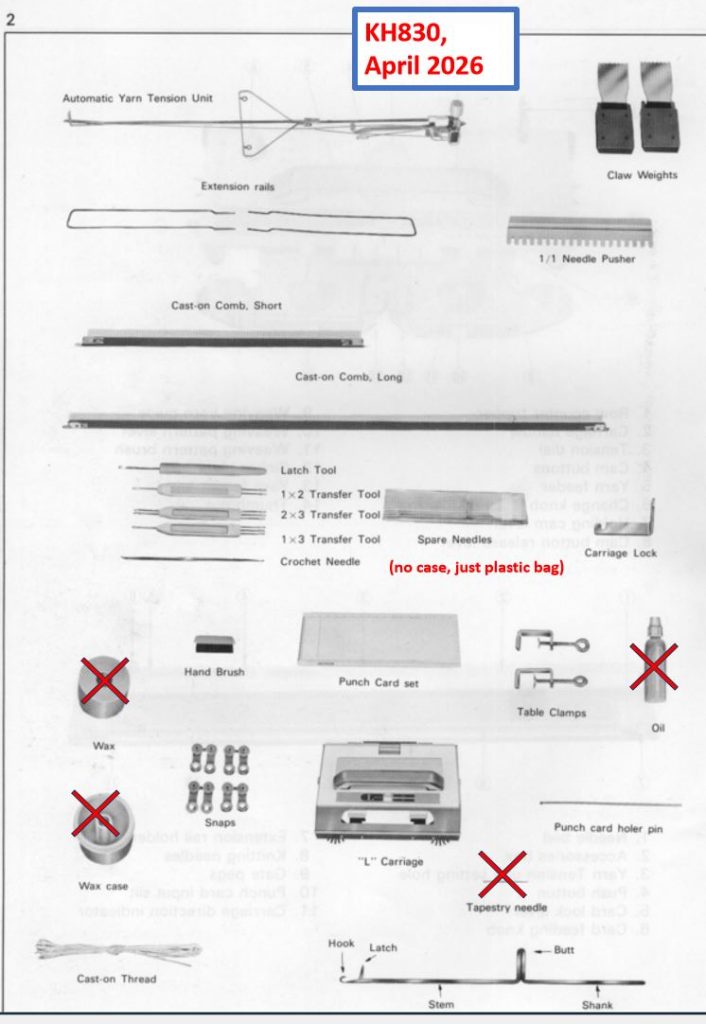
The table clamps, tension mast (look below how white and shiny it is), carriage lock, and extension rails are all new. The needle indicator strip is also brand-new.
Some are brand new from old stock, and some from new stock. You will be the first owner to use them (well, I used them during my tests).
A set of original Brother punchcards (generic ones, especially made recently, are produced from significantly thinner sheets of plastic) is included, but the designs might be slightly different from those shown in the manual. Card #17 is missing, but I am including an additional five cards for fair-isle and lace. I am also including, as promised, a set of original blank Brother cards for making your own designs.
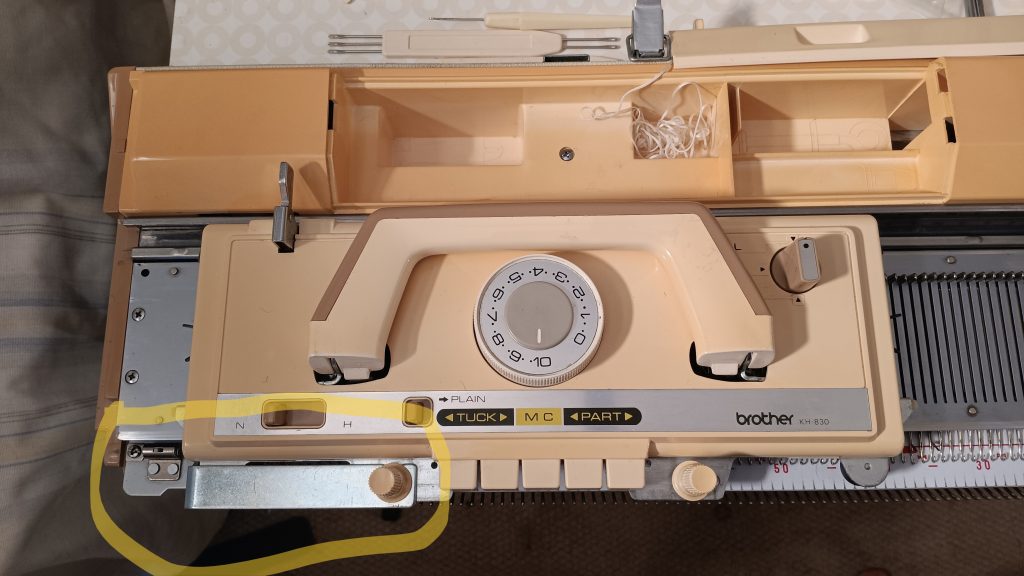
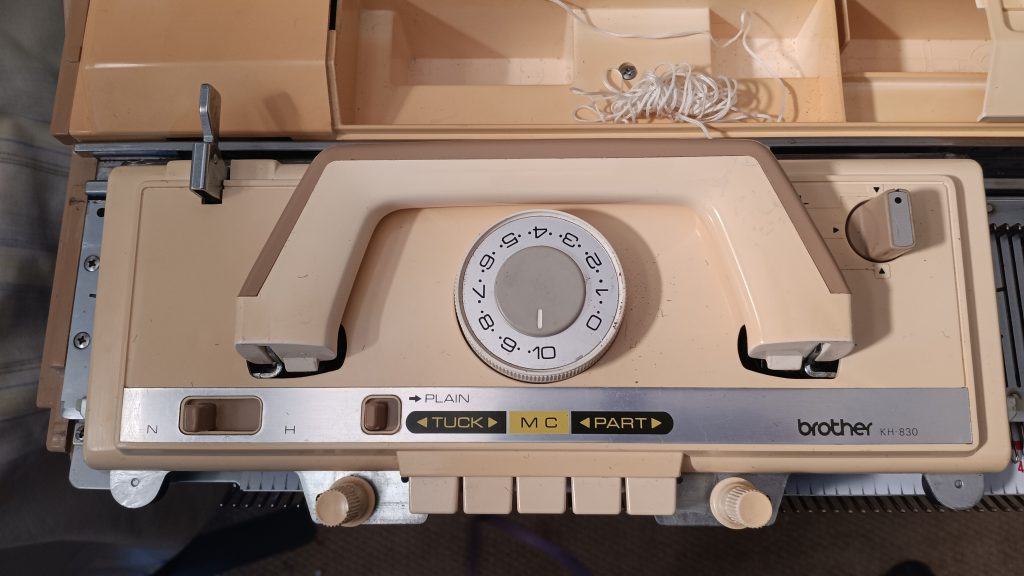
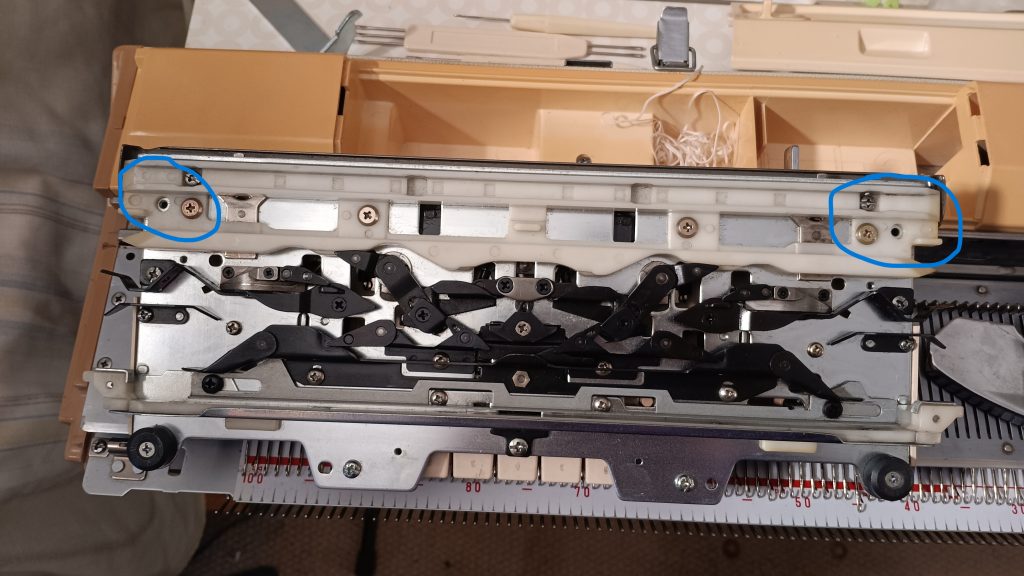
The machine did not come with its own carriage, but I found another carriage for KH830. Therefore, you will see some color differences. Additionally, some people are asking me whether I forgot to include a couple of screws while assembling the carriage back (see below). No, I did not. It was designed this way. The tension dial cap is also a replacement; thus, a slight color mismatch is present there as well.
The cast-on combs are in great shape. However, only the long one is the original one (it is grey-ish in color). The small one is a newer replacement (it is whiter) because the original one was bent out of shape too much.
The little knob/cover for the punchcard reader lever is a 3D-printed replacement. The punchcard rod is included. However, all the tests I performed were done without it (I don’t ever use it on other machines). So it is not a critical accessory at all.
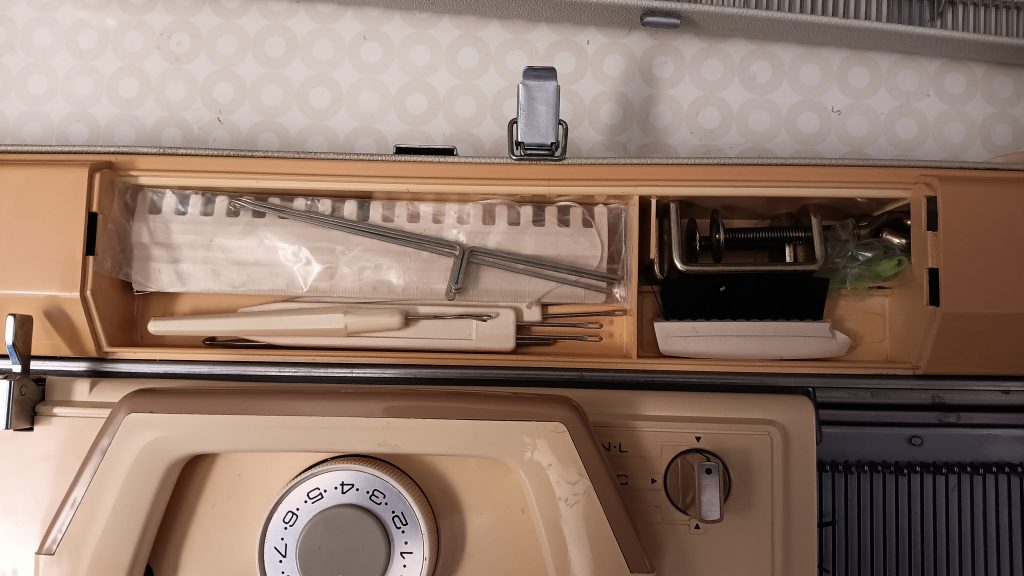
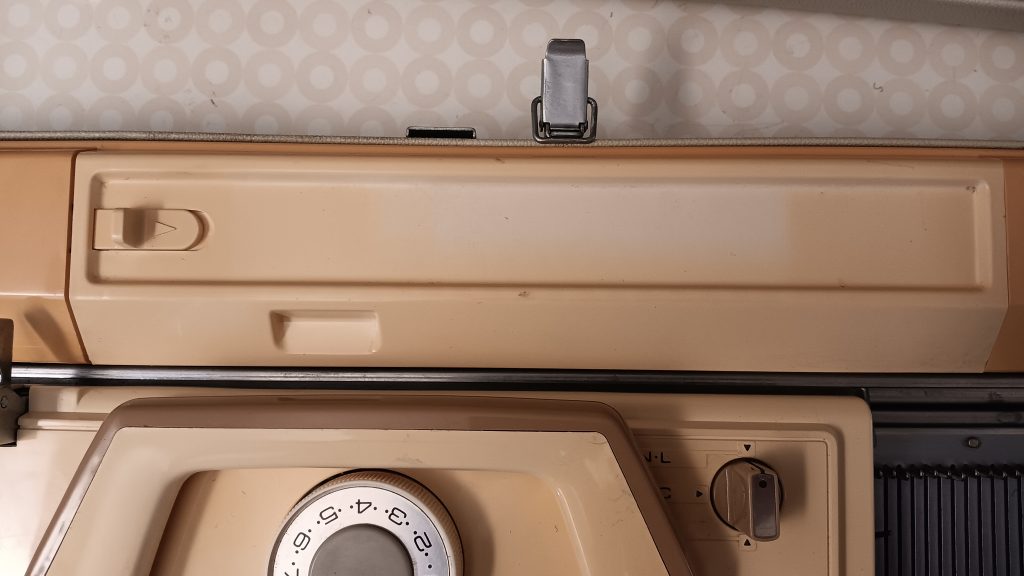
All accessories fit nicely into the toolbox. The lid for the toolbox has a different level of discoloration (despite coming with this machine): I suspect it was either not used a lot (hidden somewhere away from sunlight) or was purchased later in the machine’s life. Thus, discoloration.
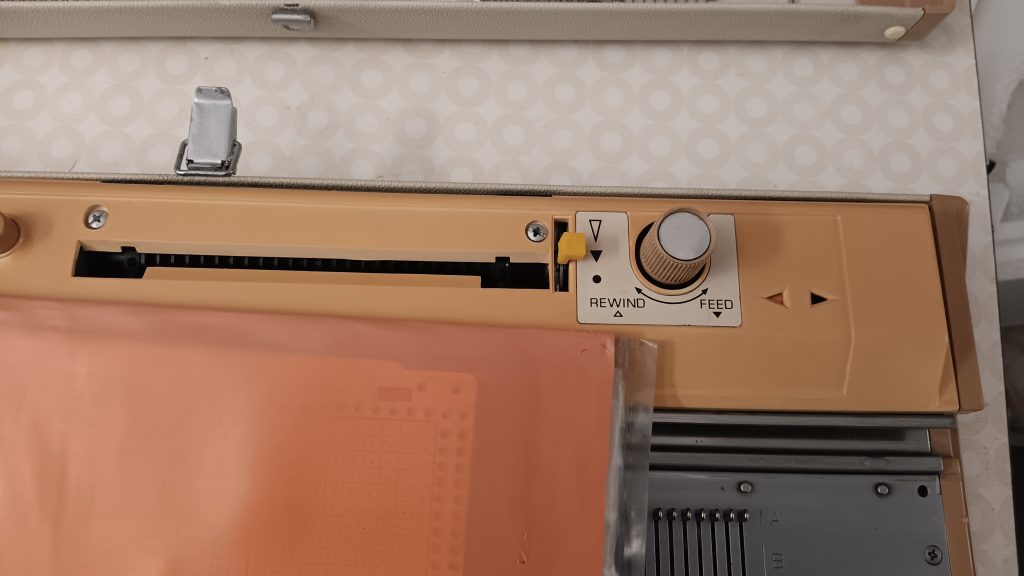
Last about discoloation: the place where the row counter is attached has the most contrast. make sense: the row counter is attached to the front panel, blocking it from the sunlight. Thus, no discoloration due to UV damage.
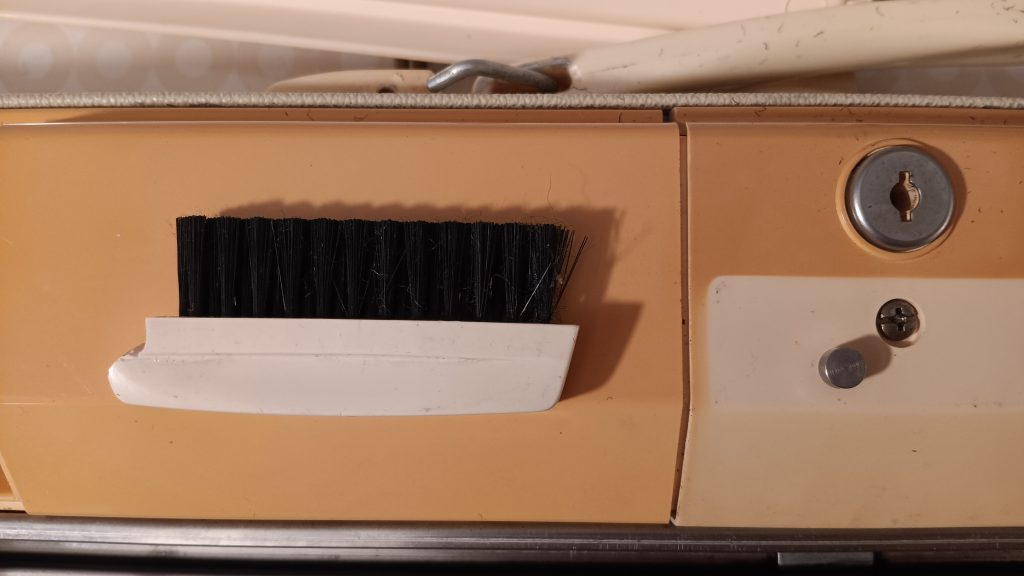
The cleaning brush that came with the machine has a chipped corner. This is the last original Brother brush I have. I am including this one instead of the generic ones because I find original Brother brushes much better (thicker and fuller, and bristles do not fall out easily).
Although I clean and machine before and after, some superficial dust/lint/puff might remain as an aftermath of my tests.
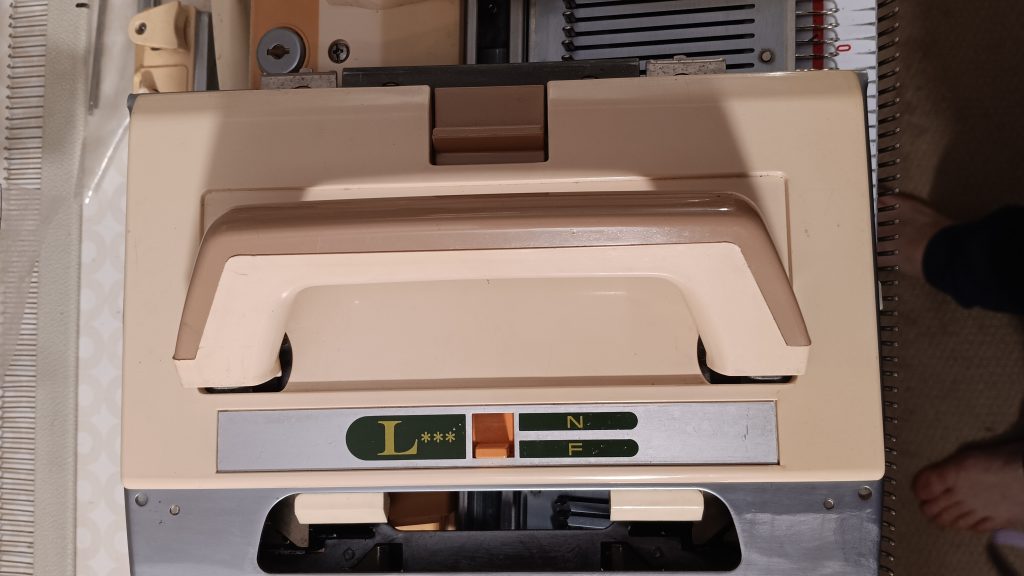
The toolbox has some staining inside (see below). The tool holding compartment (not shown) has some staining inside too: looks like somebody was keeping pens in there.
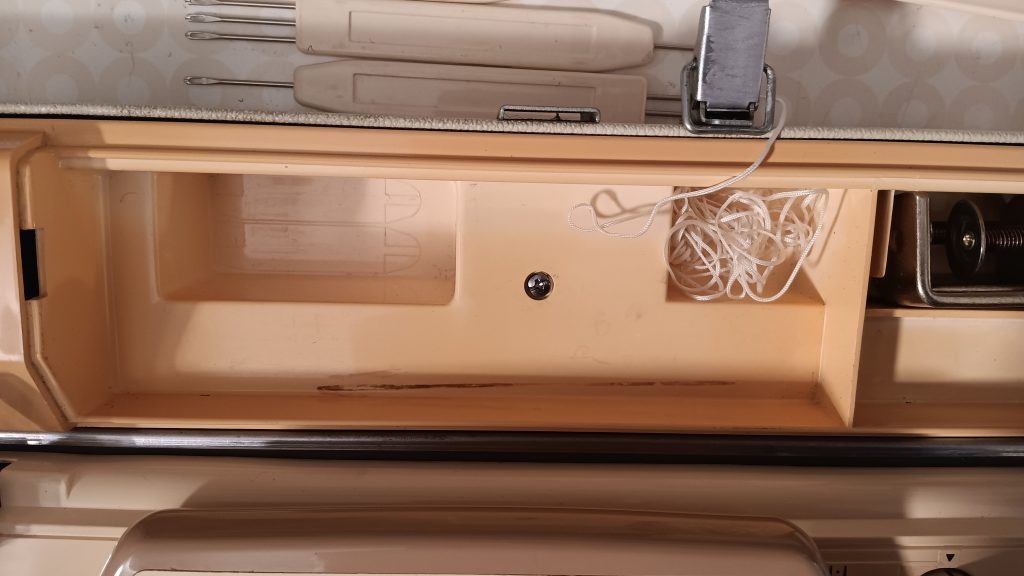
Despite yellowing and discoloration, the plastic parts are still very strong and sturdy.
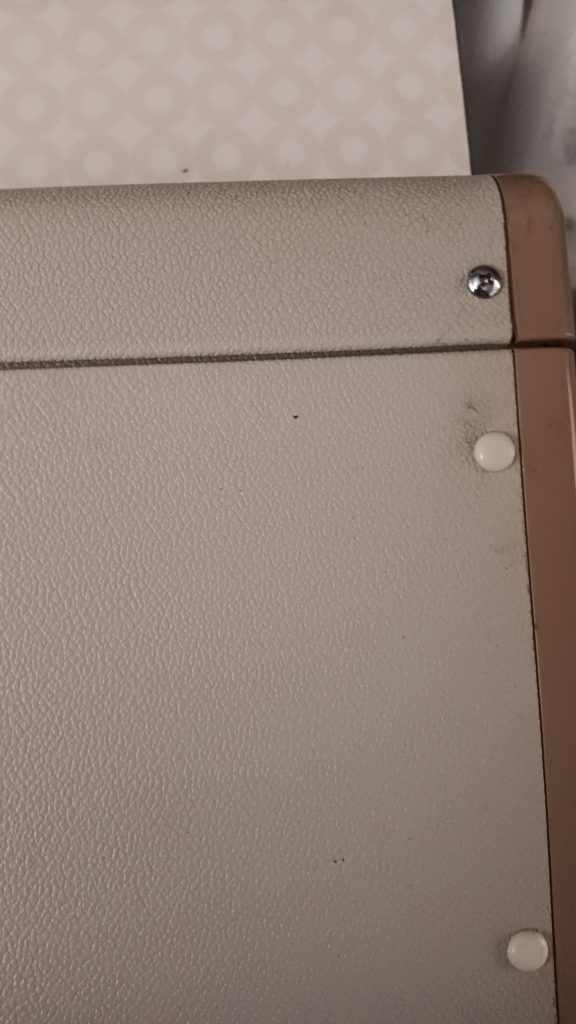
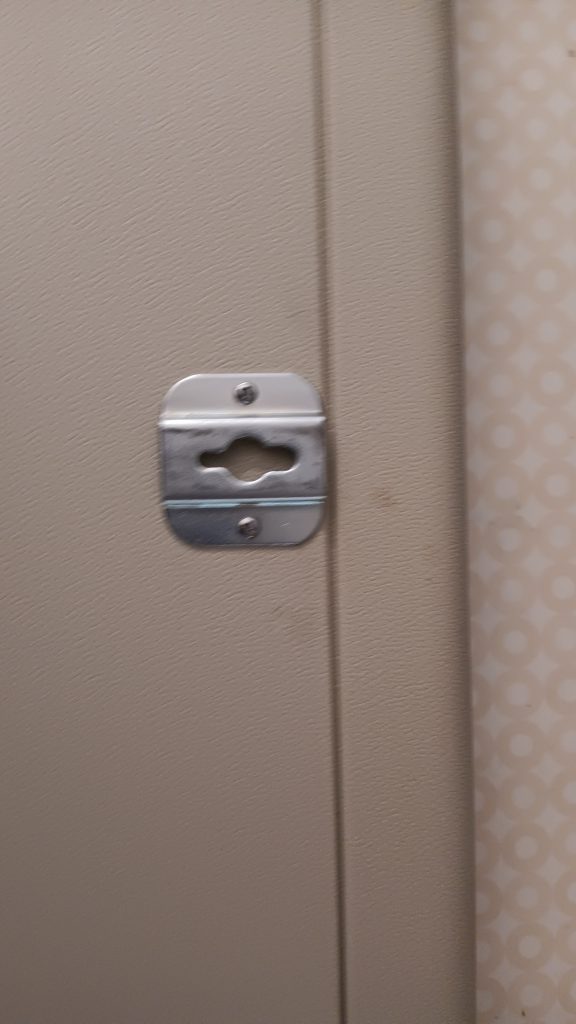
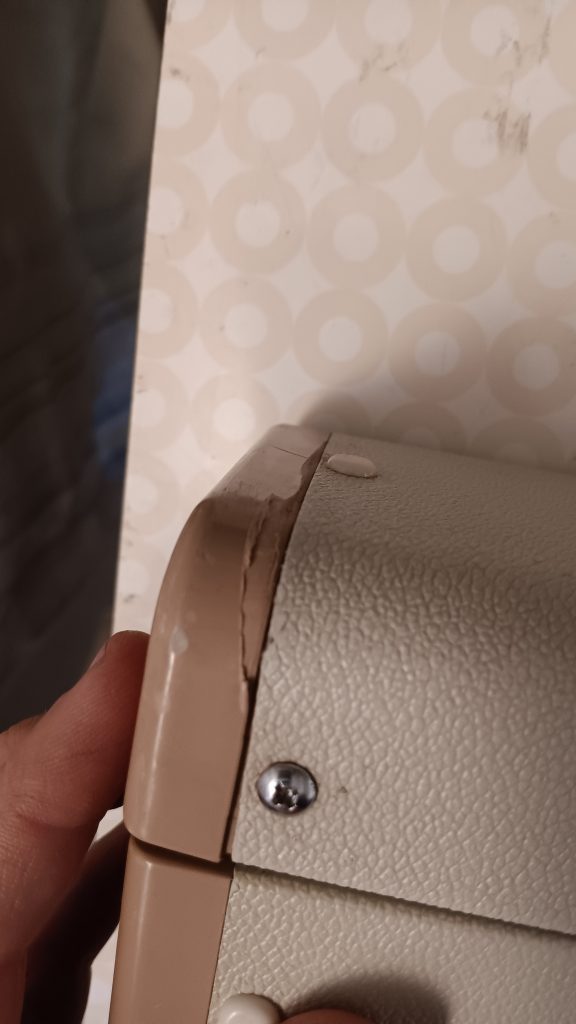
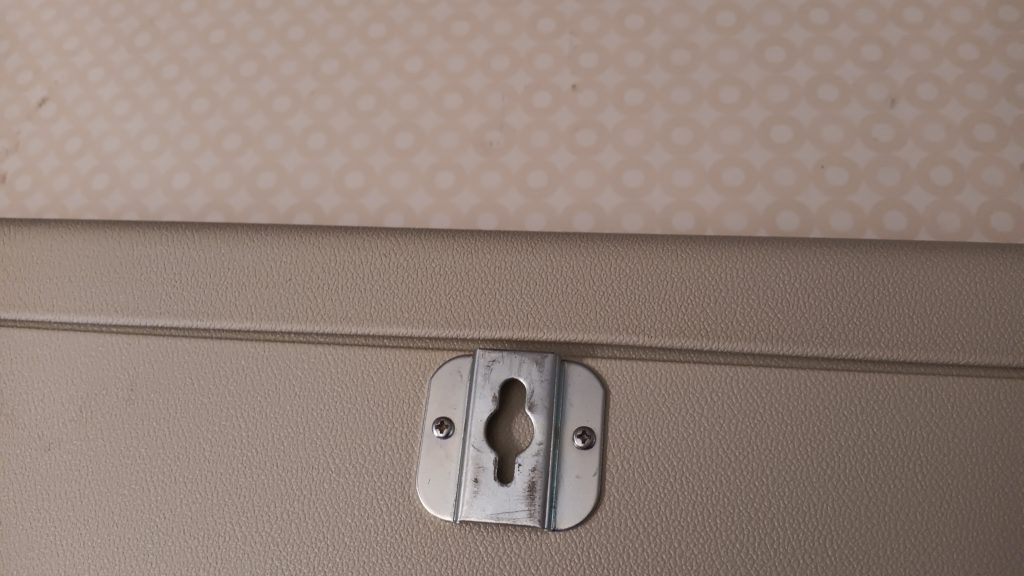
The case overall is in great shape with only minor stains, bumps, and scratches.
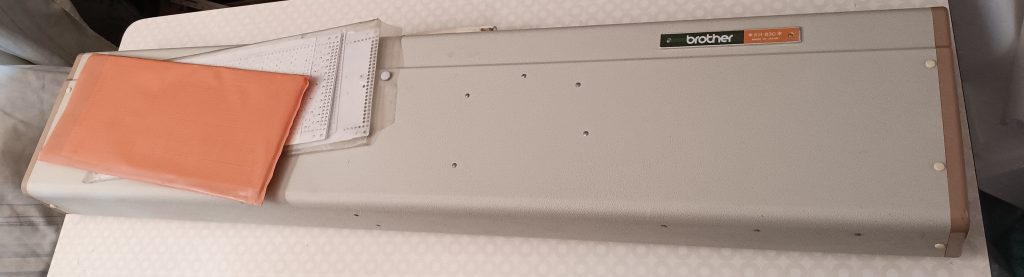
The “most severe” imperfections are shown below.
A couple of comments about the knitting tests. Knitting on a full bed is important to demonstrate that the machine can handle the tension differences (which depend on the weights’ distribution, claw weights position, cast-on comb attachment, edge-weights, etc.) and that all needles produce correct stitches. All the tests I performed went great with this machine. The carriage was running smoothly, and at a perfect combination of yarn, tension, and lubrication could be moved with just one hand.
During the full-bed tests, I like using card #1 because incorrect needle selection will be seen immediately on the needlebed and on the knitted fabric. There was no mispatterning, which indicates a well-serviced punchcard mechanism, timing belt, carriage, and sinker plate.
The timing belt moves smoothly. I recommend moving (very slightly) the carriage back and forth (by just 1-2 mm) to ensure that the carriage is engaged correctly with the timing belt. You can see some of these movements in my video.
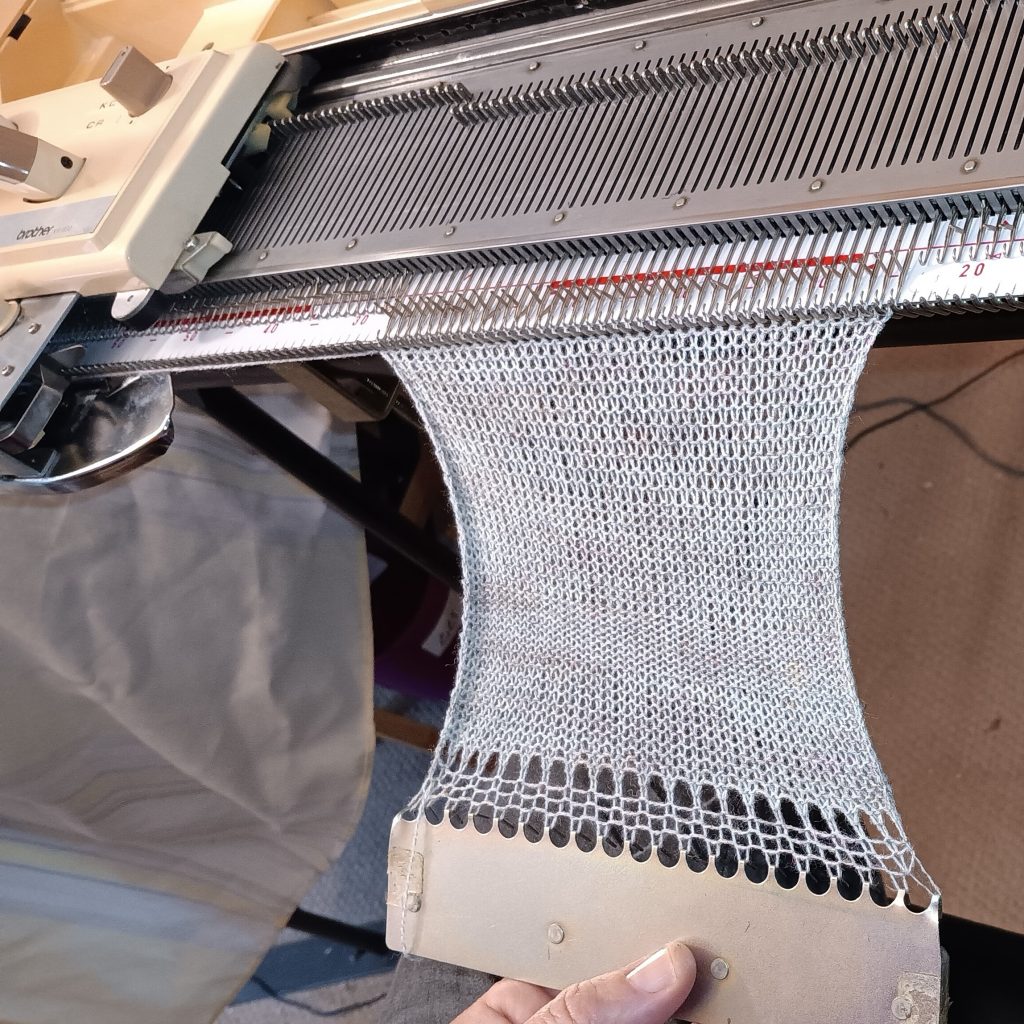
As you can also see in my video, the machine responds really well to changing knitting parameters. It handled the tension changes, as well as knitting using various stitches: slip, tuck, and fair isle. I used three different yarns. The bluish yarn has some texture (small boucle). The pink yarn (used in two-color fair-isle) is a very silky 100% acrylic yarn, prone to static.
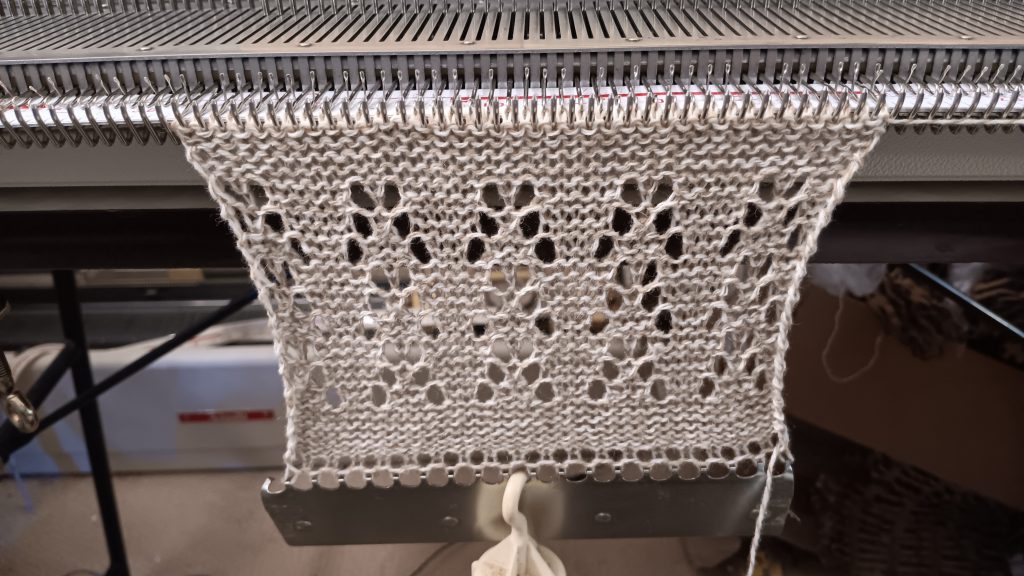
The thickest yarn was used for lace patterns. The card used during my tests is included with your setup.
General recommendations:
- Start with this thin yarn on a small number of needles
- Slip-stitch requires tension that is a bit lower than stockinet
- tuck-stitch requires tension even lower than slip-stitch. Read here on how to get successful tuck-stitch fabric.
Happy Knitting!
